Are you ready to stand out in your next interview? Understanding and preparing for Solid Understanding of Electrical Concepts interview questions is a game-changer. In this blog, we’ve compiled key questions and expert advice to help you showcase your skills with confidence and precision. Let’s get started on your journey to acing the interview.
Questions Asked in Solid Understanding of Electrical Concepts Interview
Q 1. Explain Ohm’s Law and its applications.
Ohm’s Law describes the relationship between voltage, current, and resistance in an electrical circuit. It states that the current flowing through a conductor is directly proportional to the voltage across it and inversely proportional to its resistance.
The formula is: V = IR, where V is voltage (measured in volts), I is current (measured in amperes), and R is resistance (measured in ohms).
Applications: Ohm’s Law is fundamental to electrical engineering. It’s used to:
- Calculate the current flowing in a circuit given the voltage and resistance.
- Determine the voltage required to drive a specific current through a known resistance.
- Calculate the resistance needed to limit current in a circuit.
- Design circuits and choose appropriate components.
Example: If a 12V battery is connected across a 4Ω resistor, the current flowing through the resistor is: I = V/R = 12V / 4Ω = 3A.
Understanding Ohm’s Law is crucial for troubleshooting circuits, designing power supplies, and ensuring the safe operation of electrical equipment. Without it, predicting and controlling electrical flow would be impossible.
Q 2. Describe Kirchhoff’s Voltage and Current Laws.
Kirchhoff’s Laws are fundamental principles governing the behavior of electrical circuits. They provide a framework for analyzing complex networks.
Kirchhoff’s Voltage Law (KVL): The sum of the voltage drops around any closed loop in a circuit is equal to zero. Think of it like a rollercoaster – the total height gained (positive voltage) must equal the total height lost (negative voltage) as you complete a full loop. This law is based on the conservation of energy.
Kirchhoff’s Current Law (KCL): The sum of the currents entering a junction (node) in a circuit is equal to the sum of the currents leaving that junction. This is based on the conservation of charge – charge cannot be created or destroyed, only moved.
Applications: KVL and KCL are invaluable for solving for unknown voltages and currents in complex circuits that cannot be simplified using Ohm’s Law alone. They are the foundation for circuit analysis techniques such as mesh and nodal analysis.
Example: Imagine a circuit with multiple resistors and voltage sources. By applying KVL around different loops and KCL at different nodes, we can set up a system of equations to solve for the unknown voltages and currents in the circuit.
Q 3. What are the different types of AC and DC motors?
AC (Alternating Current) and DC (Direct Current) motors differ fundamentally in their power source and operating principles.
DC Motors:
- Brushed DC Motors: Use brushes and commutator to switch the direction of current in the rotor, creating continuous rotation. Simple, but prone to wear and sparking.
- Brushless DC Motors: Use electronic commutation, eliminating brushes and improving efficiency, lifespan, and precision. Commonly used in robotics and high-performance applications.
AC Motors:
- Induction Motors (Asynchronous): The most common type, utilizing a rotating magnetic field in the stator to induce current in the rotor, creating torque. Robust, simple, and reliable, but less precise in speed control.
- Synchronous Motors: The rotor’s speed is synchronized with the frequency of the AC supply. Used where precise speed control is needed, such as in clocks and some industrial applications.
- Stepper Motors: Rotate in discrete steps, making them ideal for precise positioning and control. Used in printers, 3D printers, and robotics.
The choice of motor depends on factors like power requirements, speed control needs, cost, and application.
Q 4. Explain the working principle of a transformer.
A transformer is a passive electrical device that transfers electrical energy between two or more circuits through electromagnetic induction. It changes the voltage level of an AC signal without changing its frequency.
Working Principle: A transformer consists of two coils, the primary and secondary windings, wound around a common magnetic core. When an alternating current flows through the primary winding, it creates a fluctuating magnetic field in the core. This field induces a voltage in the secondary winding, according to Faraday’s Law of Induction. The ratio of the voltages in the primary and secondary windings is proportional to the ratio of the number of turns in each winding.
Vsecondary / Vprimary = Nsecondary / Nprimary
Where V is voltage and N is the number of turns. Transformers can step up (increase) or step down (decrease) voltage depending on the turn ratio.
Applications: Transformers are ubiquitous in power transmission and distribution, enabling efficient long-distance power transmission at high voltages and then stepping it down to safe levels for domestic and industrial use. They are also used in electronic devices for power supplies and signal processing.
Q 5. What is impedance and how is it calculated?
Impedance (Z) is the measure of opposition to the flow of alternating current (AC) in a circuit. It’s a complex quantity that encompasses both resistance (R) and reactance (X).
Resistance opposes current flow due to material properties. Reactance opposes current flow due to energy storage in inductors and capacitors. Reactance is further divided into inductive reactance (XL) and capacitive reactance (XC).
Calculation:
For a purely resistive circuit: Z = R
For a circuit with resistance and reactance: Z = √(R² + X²), where X = XL – XC.
Inductive reactance: XL = 2πfL (f = frequency, L = inductance)
Capacitive reactance: XC = 1 / (2πfC) (C = capacitance)
Impedance is measured in ohms (Ω), just like resistance.
Applications: Impedance calculations are crucial for designing and analyzing AC circuits, matching impedance in transmission lines to minimize signal loss, and understanding the behavior of filters and resonant circuits.
Q 6. Describe different types of capacitors and their applications.
Capacitors are passive electronic components that store electrical energy in an electric field. They are characterized by their capacitance (C), measured in farads (F).
Types and Applications:
- Ceramic Capacitors: Small, inexpensive, and commonly used for decoupling and bypass applications in electronic circuits.
- Film Capacitors: Offer higher capacitance and stability compared to ceramic capacitors. Used in various applications, including filtering, timing circuits, and power supplies.
- Electrolytic Capacitors: Offer high capacitance in a small package, but have polarity and limited lifespan. Used for energy storage and filtering in power supplies.
- Supercapacitors (Ultracapacitors): Can store much larger amounts of energy than electrolytic capacitors, and charge and discharge much faster than batteries. Used in hybrid vehicles and power backup systems.
Capacitors find applications in various circuits, including filtering, energy storage, timing circuits (oscillators, timers), power factor correction, and coupling and decoupling signals.
Q 7. Explain the concept of power factor and its importance.
The power factor (PF) is the ratio of the real power (P) consumed by a circuit to the apparent power (S) supplied to it. It represents the efficiency of power utilization.
PF = P / S
Apparent power is the product of voltage and current, while real power considers the phase difference between voltage and current.
Importance: A low power factor indicates that a significant portion of the apparent power is not doing useful work, but rather circulating back and forth due to reactive components (inductors and capacitors). This leads to higher current demands, greater losses in transmission lines, and reduced efficiency of electrical systems.
Improving Power Factor: Power factor correction is achieved by adding capacitors to the circuit to compensate for inductive reactance. This reduces the overall reactive power and brings the power factor closer to unity (1), which is ideal.
Example: A motor running at a low power factor may draw a large current, even though it only uses a fraction of that current for mechanical work. Installing power factor correction capacitors significantly reduces the apparent power draw, saving energy and reducing the strain on the power system.
Q 8. How do you calculate the power in a three-phase system?
Calculating power in a three-phase system depends on whether it’s a balanced or unbalanced system and whether the load is delta or wye connected. In a balanced three-phase system, the calculation is straightforward.
Balanced Three-Phase System:
The simplest case is a balanced three-phase system with a purely resistive load. The total power (PT) is three times the power in one phase (Pph). We can calculate the power per phase using:
Pph = Vph * Iph * cos(θ)
Where:
Vphis the phase voltageIphis the phase currentcos(θ)is the power factor (representing the phase difference between voltage and current; for purely resistive loads, cos(θ) = 1)
Then, the total power is:
PT = 3 * Pph = 3 * Vph * Iph * cos(θ)
Alternatively, using line voltage and current:
PT = √3 * VL * IL * cos(θ)
Where:
VLis the line voltageILis the line current
Unbalanced Systems: For unbalanced systems, you need to calculate the power in each phase individually and then sum them to find the total power. This often involves more complex calculations using symmetrical components or other methods.
Example: Imagine a balanced three-phase motor with a line voltage of 480V, a line current of 10A, and a power factor of 0.9. The total power is: PT = √3 * 480V * 10A * 0.9 ≈ 7482 W
Q 9. What are the different types of grounding techniques?
Grounding techniques are crucial for safety and system performance. They provide a low-impedance path for fault currents, preventing dangerous voltage buildup and protecting equipment. Several types exist:
- Plate Grounding: A large conductive plate is buried in the earth, providing a relatively large surface area for current dissipation. This is common for grounding of substations and large structures.
- Rod Grounding: A metallic rod is driven into the earth. It’s simpler and cheaper than plate grounding but less effective for high fault currents.
- Ground Ring: A loop of conductive material is buried around a building or structure, offering a more distributed ground path, reducing the impact of localized soil resistivity variations. It is excellent for lightning protection.
- Water Pipe Grounding: Using metallic water pipes as a ground path. However, this method is becoming less reliable due to the increasing use of plastic pipes.
- Counterpoise Grounding: A system of buried conductors placed parallel to an overhead transmission line, reducing the impact of ground currents on the line. This is particularly important for high-voltage transmission systems.
The best grounding technique depends on factors like soil resistivity, fault current levels, and the specific application. Proper grounding design requires detailed analysis and adherence to relevant codes and standards.
Q 10. Explain the concept of short circuits and their consequences.
A short circuit occurs when an unintended low-resistance path is created between two points of different potential in an electrical system. This causes a surge of current far exceeding the normal operating current.
Consequences:
- Equipment Damage: High short-circuit currents can generate excessive heat, leading to melting of conductors, burning of insulation, and destruction of electrical components.
- Fire Hazards: The intense heat from short circuits can easily ignite flammable materials near the fault location. This can rapidly escalate into a major fire.
- Personal Injury: Short circuits can cause electric shocks, burns, and even fatalities. High current paths through the body can be lethal.
- System Outage: Protection devices like circuit breakers and fuses are designed to trip quickly during a short circuit, preventing further damage. However, this results in an interruption of power supply.
Example: Imagine a frayed wire touching a metal casing. This creates a low resistance path, resulting in a short circuit. The resulting high current can quickly melt the wire, potentially causing a fire if it ignites nearby combustible material. A circuit breaker will likely trip, cutting off the power to prevent further damage.
Q 11. Describe the various types of electrical protection devices.
Electrical protection devices safeguard electrical systems and equipment from overcurrent, overvoltage, short circuits, and other faults. Common examples include:
- Circuit Breakers: These automatically interrupt the circuit when a fault is detected, preventing further damage. They come in various types, including thermal, magnetic, and electronic breakers.
- Fuses: These are sacrificial devices containing a wire that melts and breaks the circuit when an excessive current flows. Once blown, a fuse needs to be replaced.
- Ground Fault Circuit Interrupters (GFCIs): These devices detect small current imbalances between the hot and neutral conductors, indicating a potential ground fault. They quickly shut off power to prevent electric shocks.
- Surge Arresters: These protect equipment from transient overvoltages caused by lightning strikes or switching surges. They divert excess current to ground.
- Relays: (This will be discussed further in the next question) These are used in more complex protection systems to detect various faults and initiate protective actions.
The choice of protection devices depends on the specific application, fault current levels, and the level of protection required.
Q 12. What is a relay and how does it function?
A relay is an electromechanical or electronic device that detects abnormal conditions in an electrical system and initiates a protective action. It acts as a switch, controlled by a small electrical signal that indicates a fault.
Function:
A relay’s function involves sensing a small current from a measuring device (like a current transformer) and responding by closing or opening its contacts. This can trigger actions like tripping a circuit breaker, alerting operators, or activating other safety mechanisms.
Example: An overcurrent relay is set to trip when the current in a circuit exceeds a predetermined value. If a short circuit occurs, the current increases dramatically. The current transformer sends a signal to the overcurrent relay. When the signal exceeds the relay’s setting, it closes its contacts, triggering the circuit breaker to open, interrupting the fault current.
Relays are essential components of sophisticated protection systems in power grids, industrial plants, and other critical electrical infrastructure, allowing for automated fault response and improved safety.
Q 13. Explain the difference between voltage and current.
Voltage and current are fundamental electrical quantities. Think of a water analogy: voltage is like water pressure, and current is like the flow rate of water.
Voltage (V):
Voltage is the electrical potential difference between two points in a circuit. It’s the driving force that pushes electrons through the circuit. A higher voltage means a greater potential difference, leading to a stronger push on the electrons.
Current (I):
Current is the rate of flow of electric charge (electrons) through a conductor. It’s measured in amperes (A). A higher current means more electrons are flowing per unit of time.
Relationship: The relationship between voltage, current, and resistance is described by Ohm’s law: V = I * R, where R is the resistance of the circuit.
Example: A 12V battery connected to a 6Ω resistor will have a current of 2A flowing through it (I = V/R = 12V/6Ω = 2A).
Q 14. What is a PLC and its applications in industrial automation?
A Programmable Logic Controller (PLC) is a digital computer used for automation of electromechanical processes, such as control of machinery on factory assembly lines, amusement rides, or light fixtures.
Applications in Industrial Automation:
- Process Control: PLCs monitor and control industrial processes, maintaining parameters like temperature, pressure, and flow rate within specified limits. Examples include controlling chemical reactors, packaging machines, and water treatment plants.
- Machine Control: They automate the operation of individual machines and robotic systems. Examples include coordinating the movements of robotic arms, controlling conveyor belts, and managing the operation of CNC machines.
- Supervisory Control and Data Acquisition (SCADA): PLCs are often integrated into SCADA systems, enabling centralized monitoring and control of large-scale industrial processes. This allows operators to oversee numerous machines and processes from a central location.
- Safety Systems: PLCs can implement safety interlocks and emergency shutdown mechanisms, ensuring safe operation of industrial equipment and protecting personnel.
PLCs offer flexibility, programmability, and reliability, making them essential for modern industrial automation. Their ability to handle complex control tasks and integrate with other systems has revolutionized industrial processes.
Q 15. Explain the function of a circuit breaker.
A circuit breaker is an automatic electrical switch designed to protect an electrical circuit from damage caused by excess current. Think of it as a safety valve for your electrical system. When the current flowing through the circuit exceeds a predetermined threshold (due to a short circuit, overload, or other fault), the circuit breaker trips, interrupting the flow of electricity and preventing potential hazards like fires or equipment damage.
It works by using an electromagnet or a bimetallic strip. When excess current flows, the electromagnet becomes strong enough to trip a mechanism, or the bimetallic strip bends due to heat generated by the excess current, both causing the contacts to separate and break the circuit. Unlike a fuse, which melts and needs replacement, a circuit breaker can be reset after the fault is cleared, simply by switching it back on. This makes them more convenient and cost-effective in the long run.
For example, if you have too many appliances plugged into one circuit, the circuit breaker might trip to prevent overheating and potential fire. Resetting the breaker after unplugging some appliances solves the problem. This is far safer than having a fire start.
Career Expert Tips:
- Ace those interviews! Prepare effectively by reviewing the Top 50 Most Common Interview Questions on ResumeGemini.
- Navigate your job search with confidence! Explore a wide range of Career Tips on ResumeGemini. Learn about common challenges and recommendations to overcome them.
- Craft the perfect resume! Master the Art of Resume Writing with ResumeGemini’s guide. Showcase your unique qualifications and achievements effectively.
- Don’t miss out on holiday savings! Build your dream resume with ResumeGemini’s ATS optimized templates.
Q 16. How do you troubleshoot a faulty electrical circuit?
Troubleshooting a faulty electrical circuit requires a systematic approach, prioritizing safety above all else. Always turn off the power to the circuit at the breaker box before starting any work. Never assume the power is off; always test with a non-contact voltage tester.
- Visual Inspection: Begin by visually inspecting wires, connections, and components for any obvious signs of damage, such as loose connections, burnt wires, or damaged insulation.
- Testing with a Multimeter: Use a multimeter to check voltage, current, and continuity. Measure the voltage at the outlet or fixture to confirm the presence or absence of power. Check continuity of wires to ensure there are no breaks in the circuit. Measure current draw to identify potential overloads.
- Tracing the Circuit: If the problem isn’t immediately obvious, carefully trace the circuit from the breaker box to the point of failure, checking all connections and components along the way. This may involve using a wiring diagram or schematic.
- Component Testing: If specific components (like switches, outlets, or appliances) are suspected to be faulty, test them individually. Replace any faulty components. For complex systems, consult relevant documentation.
- Seeking Professional Help: If you’re unsure about any step or if the problem persists, it’s crucial to contact a qualified electrician. Working with electricity can be dangerous, and a professional can diagnose and fix problems safely and efficiently.
Example: If a light fixture isn’t working, you would first check the breaker. If it’s tripped, reset it. If not, you’d check the bulb, the switch, and then the wiring to the fixture using a multimeter for voltage continuity.
Q 17. Describe different types of wiring methods.
Wiring methods vary depending on the application, building codes, and safety requirements. Here are some common types:
- Conduit Wiring: Wires are run inside protective metal or plastic pipes (conduits), offering excellent protection against physical damage and environmental factors. This is often used in industrial settings and areas with high risk of damage.
- Surface Mount Wiring: Wires are run along the surface of walls or ceilings, usually secured with cable clips or staples. This is simpler and less expensive than conduit wiring but offers less protection.
- In-Wall Wiring: Wires are embedded within the walls during construction, offering excellent protection and a clean aesthetic appearance. This is the most common method in residential buildings.
- Cable Tray Wiring: This involves running wires within cable trays, usually in commercial and industrial applications. Cable trays provide easy access for maintenance and modifications.
- Busbar Wiring: Used for large-scale power distribution, busbars are heavy-duty metal bars that carry large currents. They are usually found in industrial plants and substations.
The choice of wiring method depends heavily on factors like the environment, the level of protection required, cost considerations, and local building codes. Always ensure your wiring complies with all relevant regulations.
Q 18. Explain the concept of electromagnetic induction.
Electromagnetic induction is the process by which a changing magnetic field produces an electromotive force (EMF) in a conductor. Imagine you have a magnet and a coil of wire. If you move the magnet near the coil, the changing magnetic field around the magnet induces a voltage (EMF) in the wire. This EMF can drive a current if the circuit is closed.
This is the fundamental principle behind many electrical devices. The strength of the induced EMF depends on several factors, including:
- Rate of change of magnetic flux: A faster change in the magnetic field induces a larger EMF.
- Number of turns in the coil: More turns in the coil mean a greater EMF.
- Strength of the magnetic field: A stronger magnetic field induces a larger EMF.
Examples of electromagnetic induction in action include:
- Electric generators: These devices use rotating magnets to induce current in coils of wire, converting mechanical energy into electrical energy.
- Transformers: These devices use changing magnetic fields to transfer energy between two or more circuits, changing voltage levels.
- Wireless charging: Many modern devices use electromagnetic induction to transfer energy wirelessly.
Faraday’s Law of Induction mathematically describes this relationship, quantifying the induced EMF.
Q 19. What are the safety precautions to be followed while working with high voltage systems?
Working with high-voltage systems presents significant risks. Safety must be the absolute top priority. Here are some essential precautions:
- Lockout/Tagout Procedures: Before working on any high-voltage equipment, follow strict lockout/tagout procedures to ensure the power is completely isolated and cannot be accidentally re-energized.
- Personal Protective Equipment (PPE): Use appropriate PPE, including insulated gloves, safety glasses, arc flash protection suits, and safety footwear. PPE is not optional; it’s critical for your safety.
- Proper Training and Certification: Only trained and certified personnel should work with high-voltage systems. This ensures individuals understand the hazards and safe working practices.
- Grounding and Bonding: Properly ground and bond all equipment and tools to prevent static electricity build-up and potential shocks.
- Safe Working Distances: Maintain safe working distances from energized equipment to avoid arc flashes and electrical shocks. Consult safety regulations for appropriate distances.
- Emergency Response Plan: Establish a clear emergency response plan in case of an accident, including procedures for first aid and contacting emergency services.
- Regular Inspections: Conduct regular inspections of high-voltage equipment to identify potential hazards and prevent failures.
Never compromise on safety when dealing with high voltage. An accident can have severe consequences, even fatal ones.
Q 20. What is the difference between a fuse and a circuit breaker?
Both fuses and circuit breakers protect electrical circuits from overcurrent, but they work differently:
- Fuse: A fuse is a simple device containing a thin wire that melts and breaks the circuit when the current exceeds its rated value. Once blown, a fuse must be replaced. Think of it as a one-time safety device.
- Circuit Breaker: A circuit breaker is a more sophisticated device that uses an electromagnet or bimetallic strip to interrupt the circuit when excessive current flows. After tripping, a circuit breaker can usually be reset, making it reusable. This is significantly more convenient and cost effective than repeatedly replacing fuses.
In short: Fuses are simpler, cheaper, and expendable; circuit breakers are more complex, reusable, and more convenient. The choice between them depends on the application and cost-benefit analysis.
Q 21. Explain the working principle of a battery.
A battery is a device that converts chemical energy into electrical energy through a chemical reaction. It does this by using two electrodes (usually different metals) immersed in an electrolyte (a solution that conducts electricity). The chemical reaction at the electrodes generates a potential difference (voltage) between them.
Here’s how it works:
- Electrodes: One electrode, the anode, undergoes oxidation (loses electrons). The other electrode, the cathode, undergoes reduction (gains electrons).
- Electrolyte: The electrolyte provides a medium for the flow of ions (charged particles) between the electrodes, completing the circuit.
- Electron Flow: Electrons released during oxidation at the anode travel through an external circuit (powering a device), before reaching the cathode where they are consumed during reduction.
Different types of batteries use different chemical reactions, resulting in different voltages and energy densities. For example, a simple dry-cell battery uses zinc and carbon electrodes with a paste electrolyte; lead-acid batteries use lead plates and sulfuric acid; lithium-ion batteries use lithium-containing compounds.
The battery’s voltage is determined by the chemical composition of the electrodes and the electrolyte. The battery’s capacity (how much energy it can store) depends on the size and the amount of reactive materials.
Q 22. What is a microcontroller and its applications?
A microcontroller is a small, programmable computer on a single integrated circuit (IC). Think of it as a tiny brain that can control other electronic devices. It’s different from a general-purpose computer like a laptop because it’s designed for specific embedded applications, meaning it’s built into a larger system rather than being a standalone device. It has a central processing unit (CPU), memory (both RAM and ROM), and input/output (I/O) peripherals, all on a single chip.
Applications are incredibly diverse: imagine the microcontroller controlling the timing of your washing machine’s cycle, managing fuel injection in your car, regulating temperature in your refrigerator, or powering the logic of a smart thermostat. They are the unsung heroes in countless devices we use daily. In industrial settings, they automate processes in manufacturing, robotics, and process control. In consumer electronics, you’ll find microcontrollers in everything from remote controls and toys to smartphones and smartwatches.
- Example 1: A simple thermostat uses a microcontroller to monitor room temperature via a sensor and turn the heating or cooling system on or off based on the programmed setpoint.
- Example 2: A modern car contains hundreds of microcontrollers managing engine performance, safety systems (ABS, airbags), entertainment, and communication.
Q 23. Describe different types of semiconductor devices.
Semiconductor devices are electronic components made from materials with electrical conductivity between that of a conductor (like copper) and an insulator (like rubber). Their conductivity can be precisely controlled, making them essential for electronics. They are categorized into several types:
- Diodes: These are one-way valves for electric current; they allow current to flow in one direction but block it in the other. Think of a diode like a check valve in a plumbing system.
- Transistors: These are electronic switches and amplifiers, acting as the fundamental building blocks for most modern electronics. They control larger currents with smaller control signals, enabling amplification and switching functionalities. Imagine a transistor as a water valve that can precisely control water flow.
- Integrated Circuits (ICs): These are miniaturized circuits containing thousands or even billions of transistors and other components on a single chip. Modern microprocessors, memory chips, and microcontrollers are all examples of ICs. They’re like highly complex plumbing systems on a single chip.
- Thyristors: These are high-power switching devices used in applications requiring high currents, like AC motor control. They are similar to transistors but have special switching characteristics. These are used for heavy-duty switching applications.
- Field-Effect Transistors (FETs): These are a type of transistor that use an electric field to control the flow of current, offering advantages like high input impedance and low power consumption.
The specific type of semiconductor device chosen for an application depends on factors like power handling capability, voltage requirements, switching speed, and cost.
Q 24. Explain the concept of signal-to-noise ratio.
Signal-to-noise ratio (SNR) is a measure of the strength of a desired signal relative to the background noise. A higher SNR indicates a clearer, stronger signal, while a lower SNR suggests a weaker signal obscured by noise. It’s usually expressed in decibels (dB).
Imagine you’re trying to hear a friend speaking across a noisy room. The friend’s voice is the signal, and the other conversations and ambient sounds are the noise. A high SNR means your friend’s voice is easily heard above the background noise, while a low SNR means you struggle to understand them due to the overwhelming noise.
Mathematically, SNR is calculated as:
SNR = 10 * log10(Signal Power / Noise Power) dBIn electronics, noise can come from many sources, including thermal noise, interference from other devices, and shot noise. A good SNR is crucial for accurate signal processing, data transmission, and reliable communication. For instance, a radio receiver needs a high SNR to ensure clear reception.
Q 25. What are the different types of sensors and their applications?
Sensors are devices that detect and respond to changes in physical phenomena such as light, temperature, pressure, or motion. They convert these physical changes into electrical signals that can be processed by electronic systems.
- Temperature Sensors (Thermocouples, Thermistors, RTDs): Measure temperature in various applications, from ovens to weather stations.
- Pressure Sensors: Detect pressure changes, used in automotive systems, weather forecasting, and medical devices.
- Light Sensors (Photodiodes, Photoresistors): Measure light intensity, crucial for cameras, lighting systems, and robotic vision.
- Accelerometers: Detect acceleration and tilt, found in smartphones, gaming consoles, and navigation systems.
- Proximity Sensors: Detect the presence of nearby objects without physical contact, used in automatic doors and touchless controls.
- Flow Sensors: Measure the flow rate of liquids or gases, utilized in industrial processes and medical equipment.
The choice of sensor depends on the specific application and the type of physical quantity to be measured. For example, a factory might use a pressure sensor to monitor the pressure in a pipeline, while a smartphone uses an accelerometer to detect its orientation.
Q 26. How do you calculate the efficiency of an electrical motor?
The efficiency of an electrical motor represents how effectively it converts electrical energy into mechanical energy. It’s expressed as a percentage.
Efficiency = (Mechanical Output Power / Electrical Input Power) * 100%
Mechanical output power is typically measured using a dynamometer, which measures the torque and speed of the motor shaft. Electrical input power is determined by measuring the voltage and current supplied to the motor. Losses in a motor result from friction, windage (air resistance), and electrical losses (in windings and other components).
Example: If a motor receives 1000 Watts of electrical power and delivers 800 Watts of mechanical power, its efficiency is (800/1000) * 100% = 80%.
Improving motor efficiency is a critical focus in reducing energy consumption and minimizing operational costs. Design improvements, better materials, and advanced control techniques are constantly being developed to enhance motor efficiency.
Q 27. Explain the concept of harmonic distortion in power systems.
Harmonic distortion in power systems refers to the presence of frequencies in the current or voltage waveform that are multiples of the fundamental frequency (typically 50 or 60 Hz for AC power). These additional frequencies, called harmonics, are caused by non-linear loads, which don’t draw current in a purely sinusoidal pattern.
Imagine a perfect sine wave representing the ideal AC voltage. Harmonic distortion adds distortions or ripples onto that perfect wave. These distortions create extra heat, inefficiencies, and potential equipment damage.
Common sources of harmonic distortion include devices with rectifiers (like computers and variable-speed drives), switching power supplies, and large industrial equipment. These non-linear loads draw current in pulses rather than a smooth sine wave, creating the higher-order frequencies.
Harmonic distortion can lead to several problems, including:
- Overheating of transformers and cables
- Malfunctioning of sensitive electronic equipment
- Increased energy losses
- Resonance problems in power systems
Mitigation strategies include using harmonic filters, employing active power factor correction, and careful load management.
Q 28. Describe different types of transmission lines and their characteristics.
Transmission lines are used to transmit electrical power over long distances. Different types exist, each with unique characteristics:
- Overhead Transmission Lines: These are the most common type, consisting of conductors strung between towers. They are relatively inexpensive to construct but susceptible to weather conditions and environmental factors. They generally use high voltage to minimize transmission losses.
- Underground Transmission Lines: These lines are buried underground, offering protection from weather and improved aesthetics. However, they are more expensive to install and maintain, and fault location and repair are more difficult.
- Submarine Transmission Lines: These are used to transmit power across bodies of water, employing special cables designed to withstand the underwater environment. They are used for connecting islands or areas separated by water bodies.
The choice of transmission line depends on factors such as cost, distance, environmental impact, and reliability requirements. Key characteristics to consider include:
- Resistance: Determines power losses due to heat generation.
- Inductance: Affects voltage drop and power factor.
- Capacitance: Influences charging currents and power flow.
- Line impedance: A complex measure combining resistance, inductance, and capacitance.
Understanding the characteristics of these parameters is critical for efficient and reliable power transmission system design.
Key Topics to Learn for Solid Understanding of Electrical Concepts Interview
- Circuit Analysis: Understanding Ohm’s Law, Kirchhoff’s Laws, and applying them to solve complex circuit problems. Consider both DC and AC circuits.
- AC/DC Theory: Differentiate between AC and DC power, understand waveforms (sine waves, square waves), and analyze their properties and applications in various systems.
- Power Systems: Familiarize yourself with power generation, transmission, and distribution concepts. Understand the role of transformers, power factors, and different types of power systems.
- Electromagnetism: Grasp fundamental principles of magnetism, electromagnetism, and their applications in motors, generators, and transformers. Be prepared to discuss Faraday’s Law and Lenz’s Law.
- Semiconductors and Devices: Understand the behavior of diodes, transistors, and operational amplifiers (op-amps). Be ready to discuss their characteristics and applications in electronic circuits.
- Practical Applications: Relate theoretical concepts to real-world applications. Examples include designing simple circuits, troubleshooting electrical systems, and understanding safety regulations.
- Problem-Solving Techniques: Practice solving circuit analysis problems using different methods. Develop a systematic approach to identifying and resolving electrical issues.
- Electrical Safety: Demonstrate a thorough understanding of electrical safety precautions, codes, and regulations.
Next Steps
Mastering a solid understanding of electrical concepts is crucial for career advancement in engineering, technology, and related fields. It opens doors to diverse and challenging roles, offering significant growth opportunities. To enhance your job prospects, creating an ATS-friendly resume is essential. This ensures your application is effectively screened by Applicant Tracking Systems, maximizing your chances of securing an interview. ResumeGemini can help you build a professional and impactful resume tailored to showcase your electrical engineering expertise. Examples of resumes tailored to highlight a solid understanding of electrical concepts are available to guide you.

Automation Engineer Resume Sample
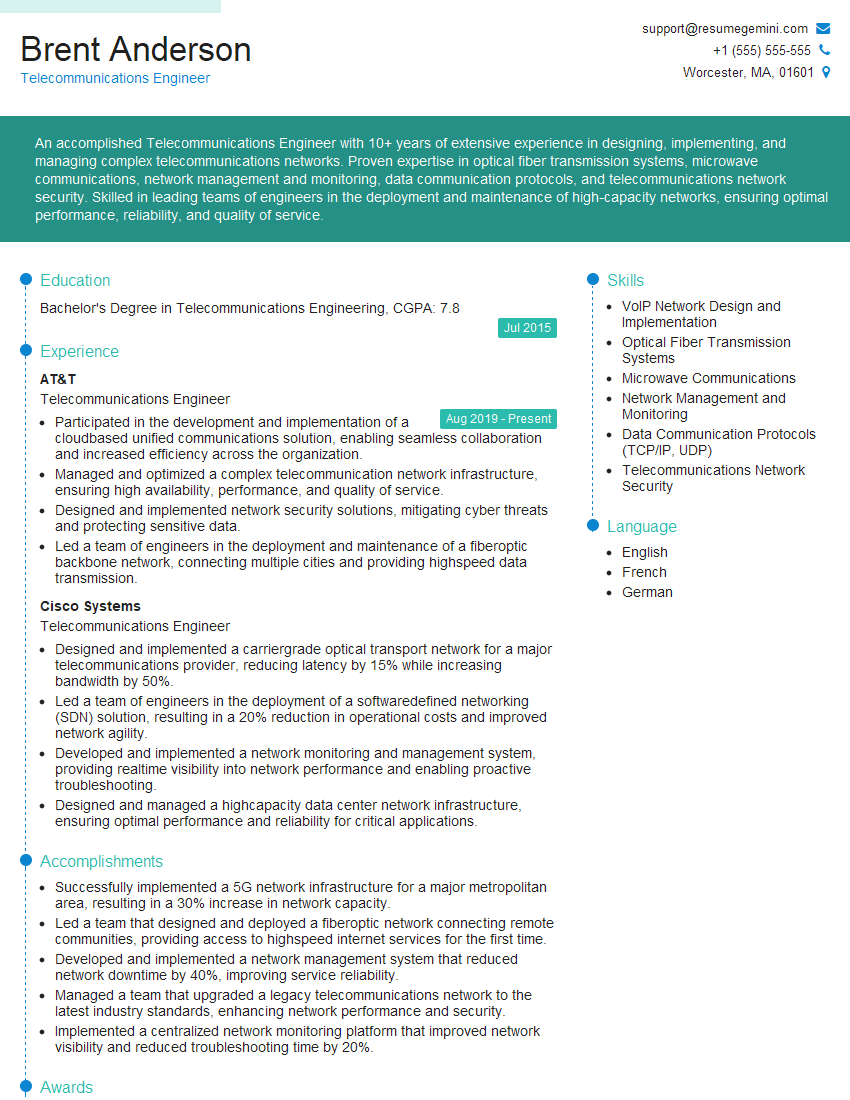
Telecommunications Engineer Resume Sample
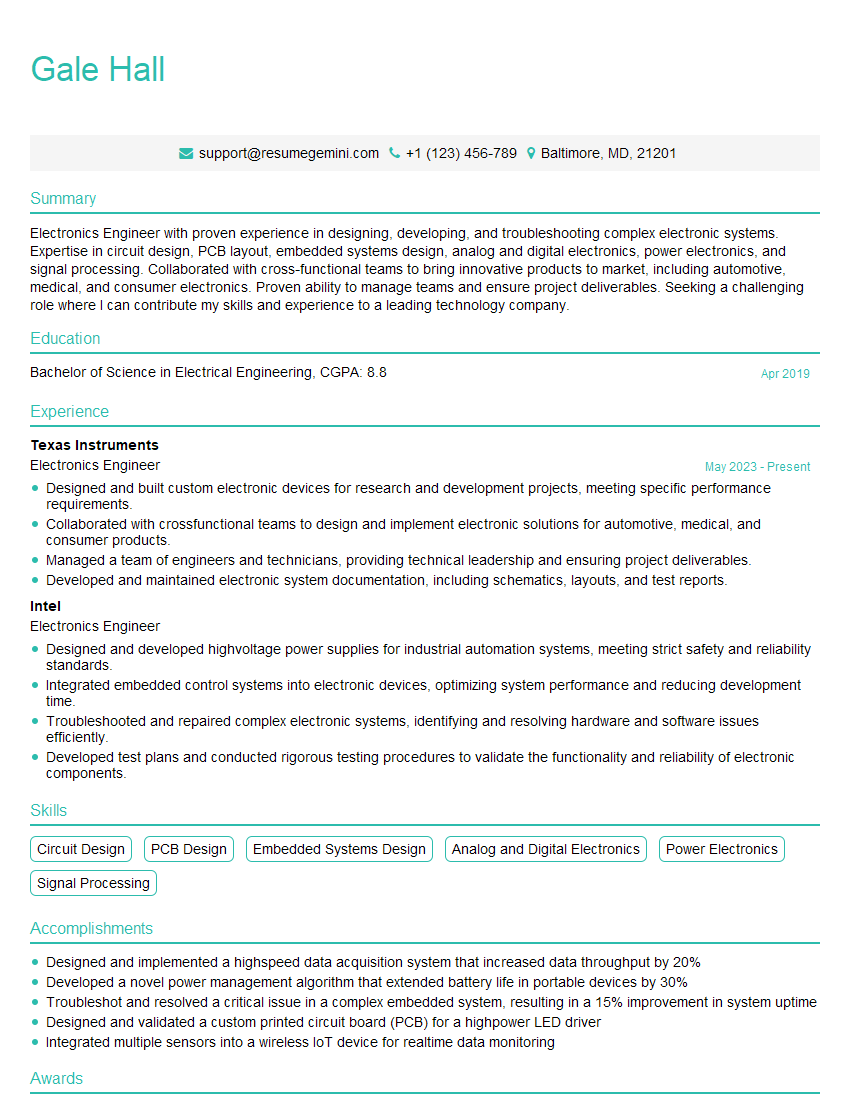
Electronics Engineer Resume Sample

Hardware Engineer Resume Sample
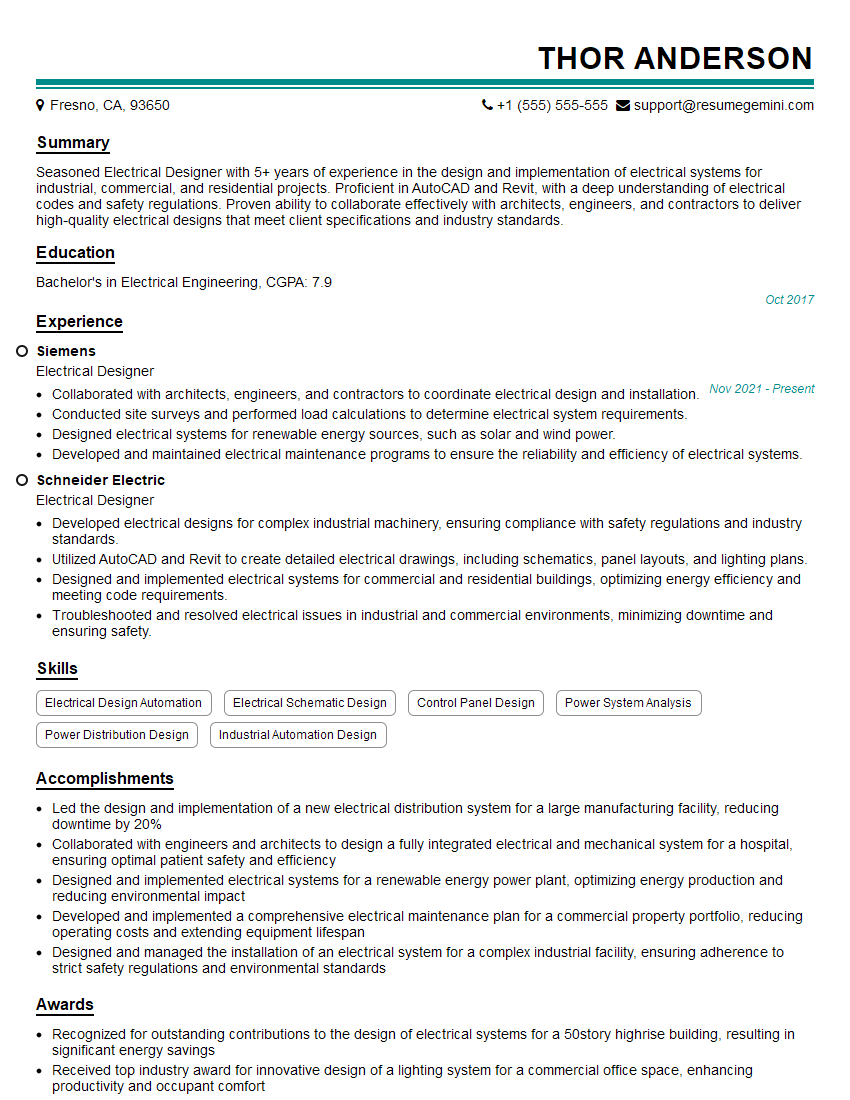
Electrical Designer Resume Sample
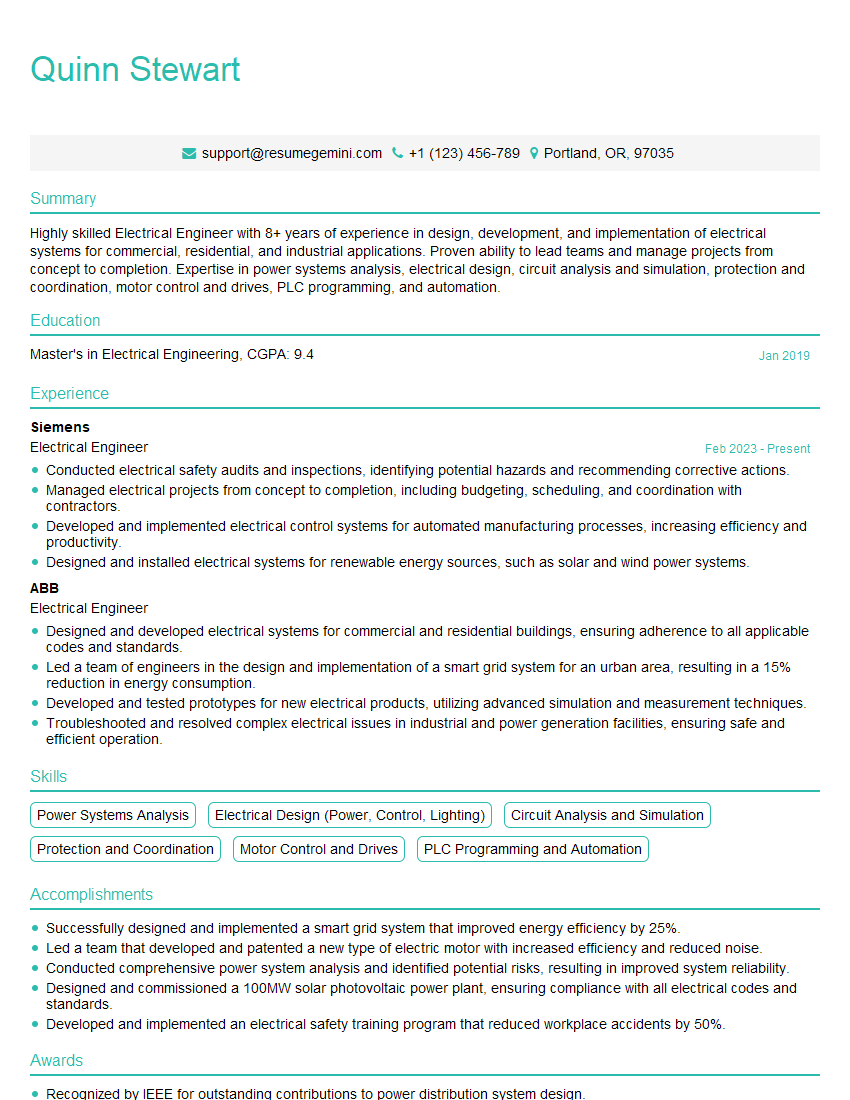
Electrical Engineer Resume Sample
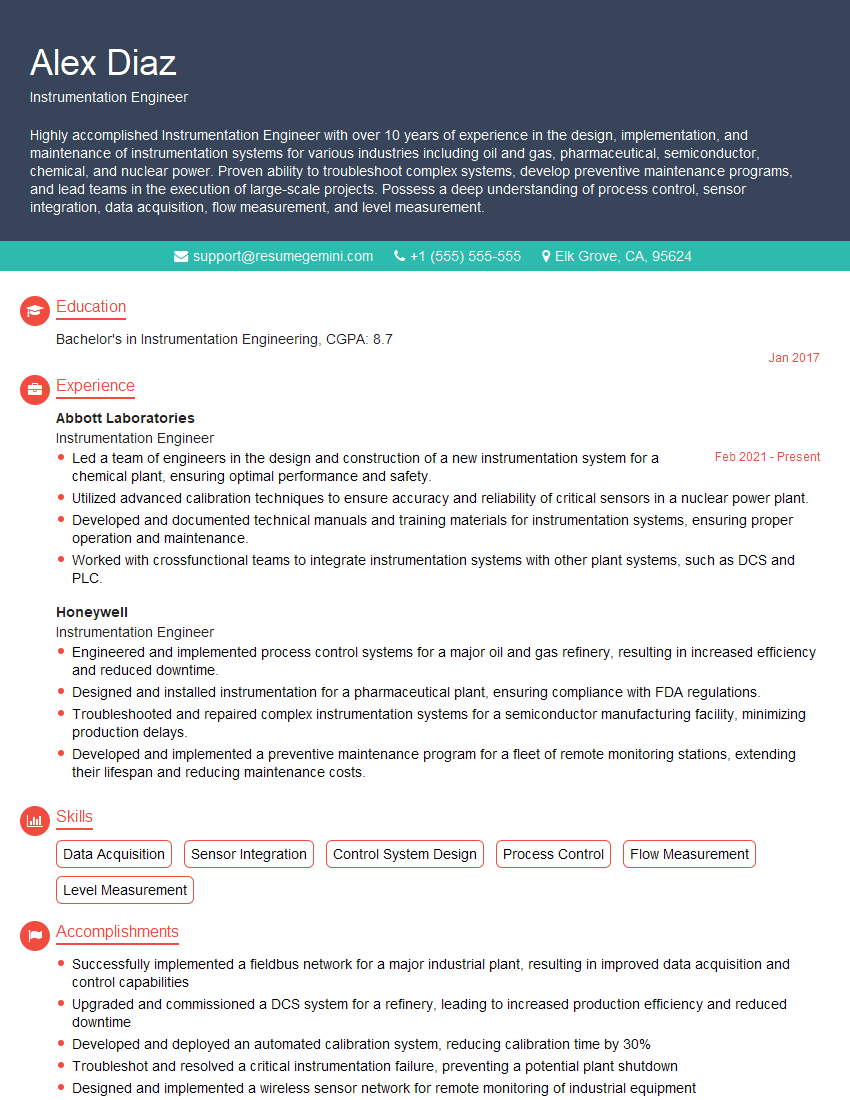
Instrumentation Engineer Resume Sample
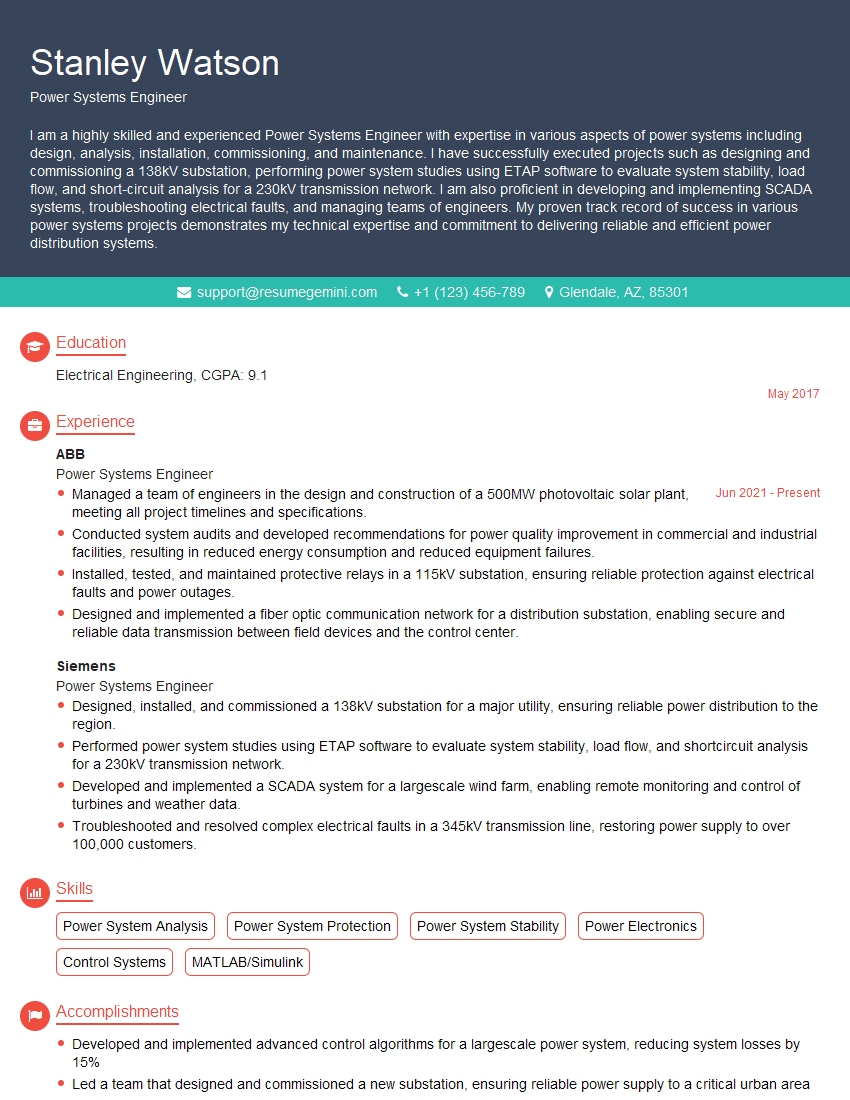
Power Systems Engineer Resume Sample
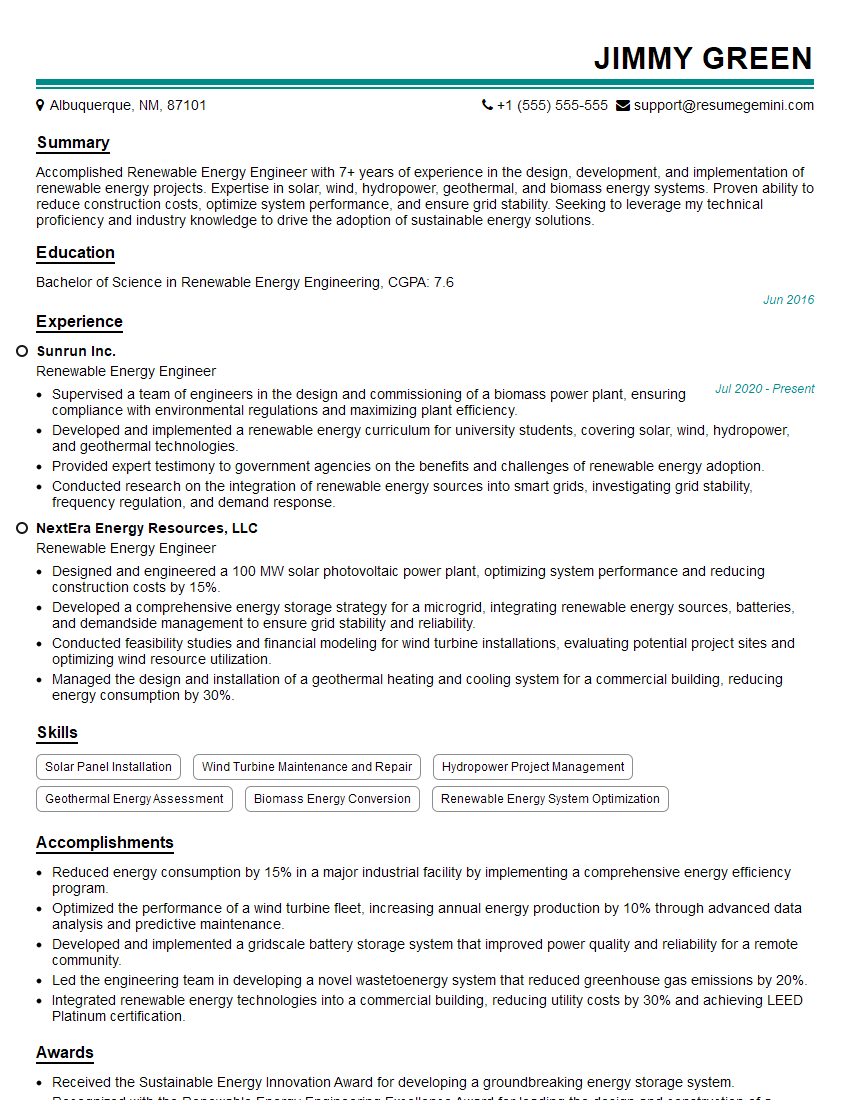
Renewable Energy Engineer Resume Sample
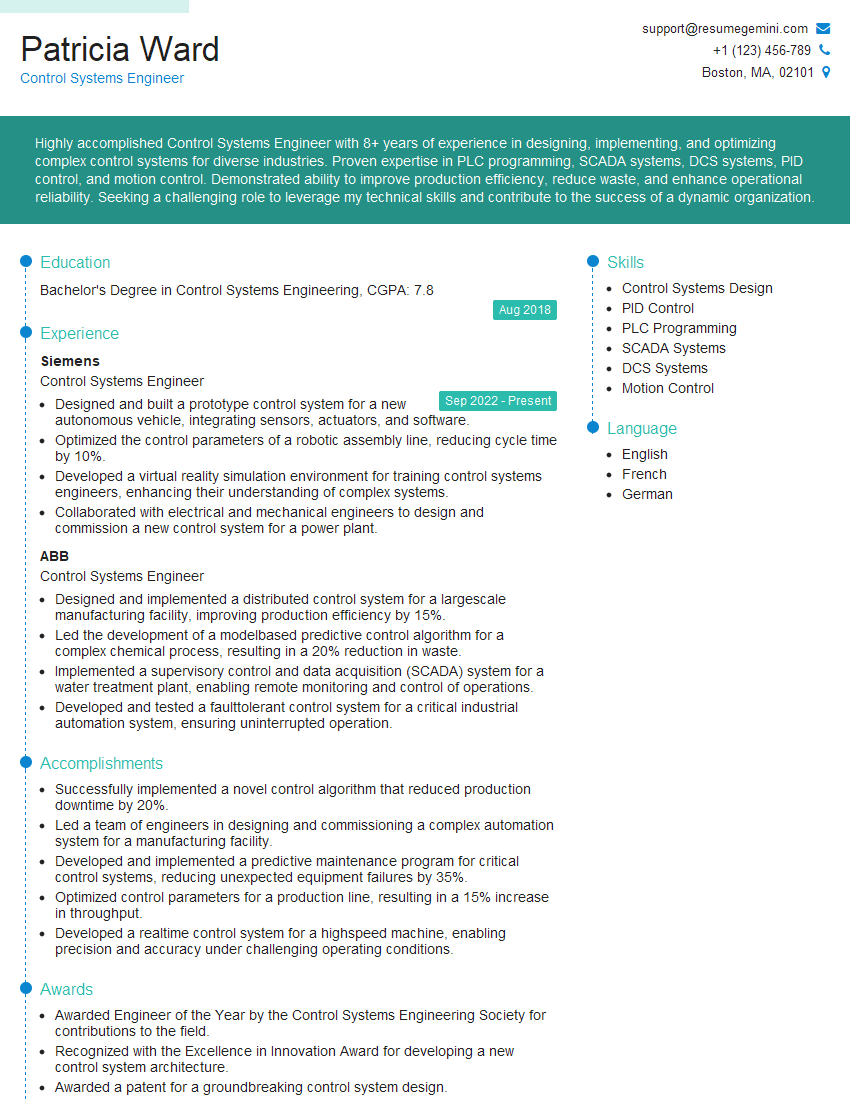
Control Systems Engineer Resume Sample
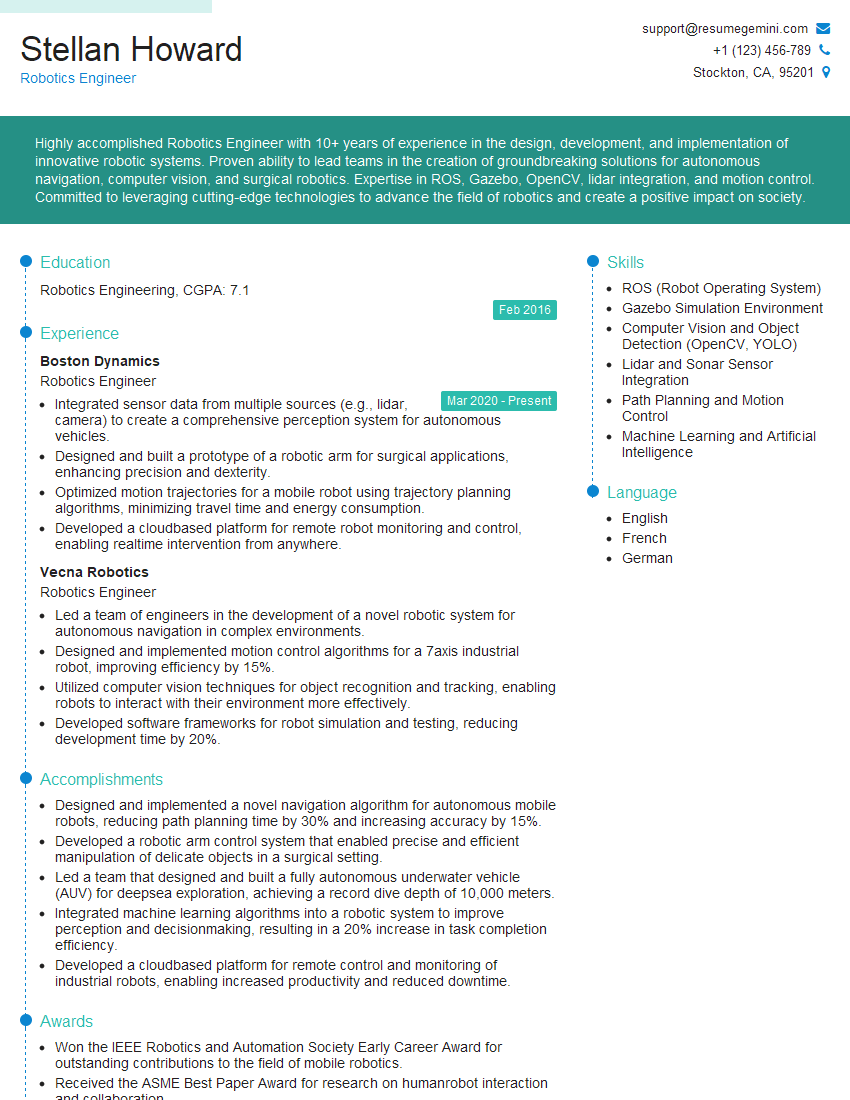
Robotics Engineer Resume Sample
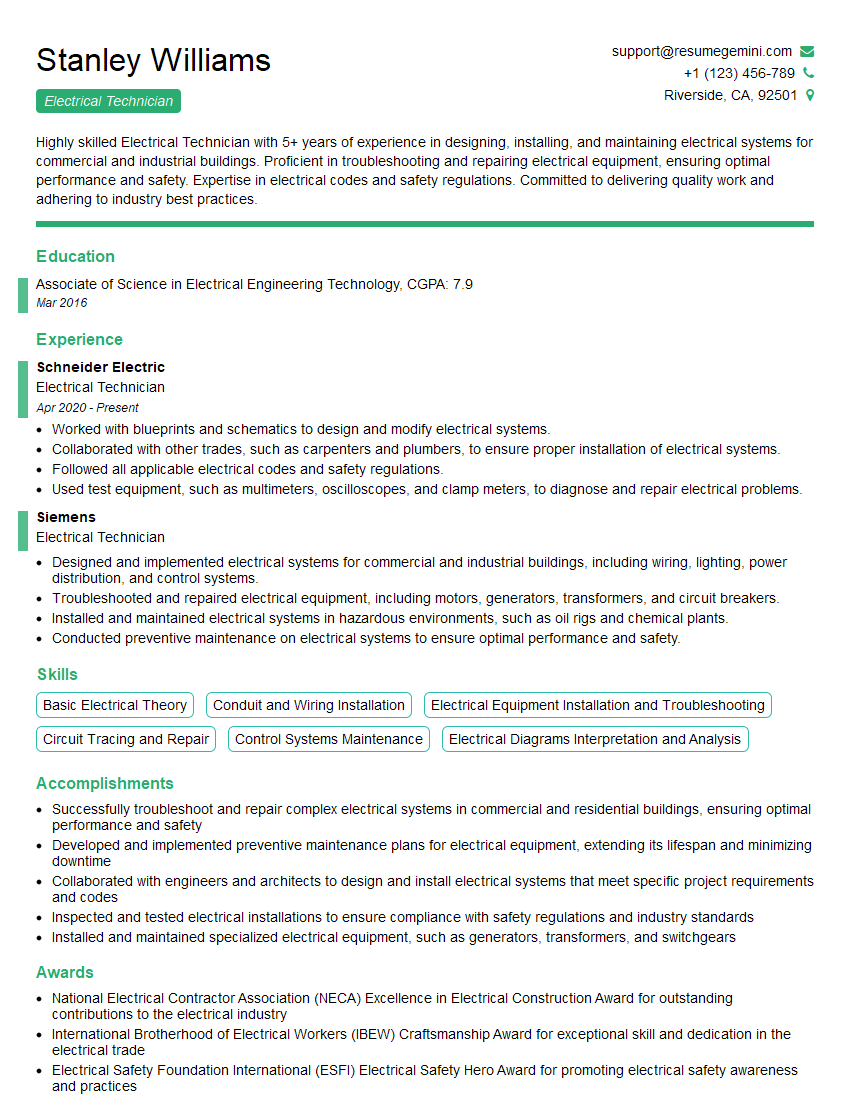
Electrical Technician Resume Sample

Lighting Designer Resume Sample
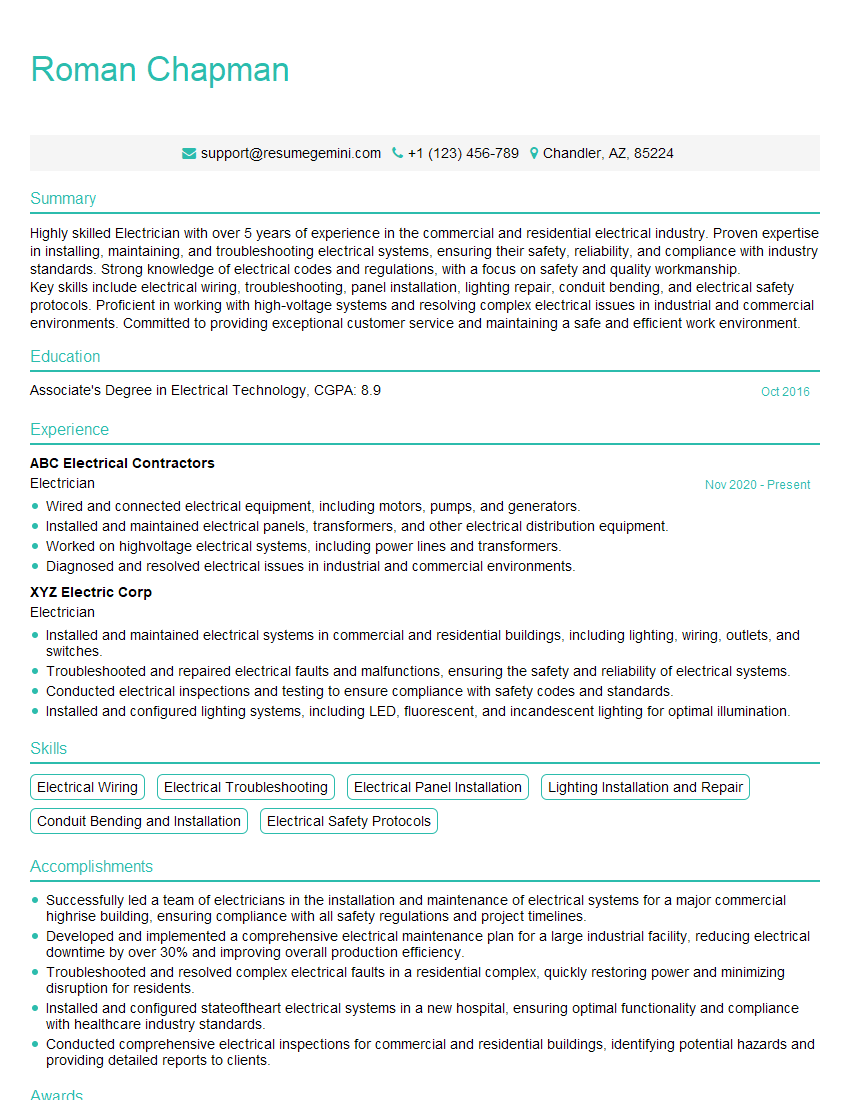
Electrician Resume Sample

Maintenance Electrician Resume Sample
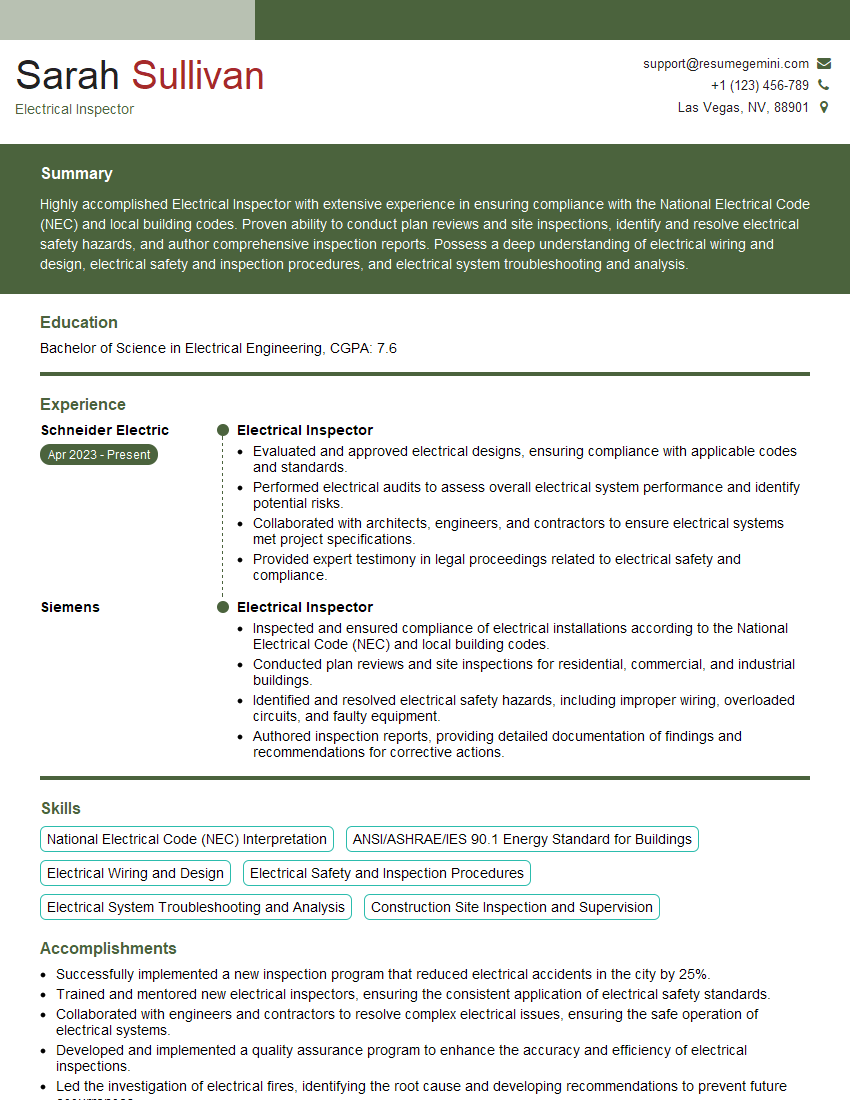
Electrical Inspector Resume Sample
- Automation Engineer
- Telecommunications Engineer
- Electronics Engineer
- Hardware Engineer
- Electrical Designer
- Electrical Engineer
- Instrumentation Engineer
- Power Systems Engineer
- Renewable Energy Engineer
- Control Systems Engineer
- Robotics Engineer
- Electrical Technician
- Lighting Designer
- Electrician
- Maintenance Electrician
- Electrical Inspector
Explore more articles
Users Rating of Our Blogs
Share Your Experience
We value your feedback! Please rate our content and share your thoughts (optional).
What Readers Say About Our Blog
Amazing blog
Interesting Article, I liked the depth of knowledge you’ve shared.
Helpful, thanks for sharing.