Cracking a skill-specific interview, like one for Project Cost Estimating and Budgeting, requires understanding the nuances of the role. In this blog, we present the questions you’re most likely to encounter, along with insights into how to answer them effectively. Let’s ensure you’re ready to make a strong impression.
Questions Asked in Project Cost Estimating and Budgeting Interview
Q 1. Explain the difference between top-down and bottom-up cost estimating.
Top-down and bottom-up cost estimating are two fundamentally different approaches to predicting project costs. Think of it like building a house: top-down starts with the overall blueprint and estimated cost, while bottom-up meticulously prices each brick and board.
Top-down estimating starts with a high-level overview of the project. It uses historical data, analogous projects, or expert judgment to estimate the total cost. This method is quick and efficient for early-stage planning but lacks detail. For example, you might estimate the cost of building a similar-sized house based on past projects, scaling it up or down based on differences in materials or complexity.
Bottom-up estimating, on the other hand, involves breaking down the project into its smallest work packages (tasks). Each task’s cost is individually estimated, and then these individual costs are aggregated to arrive at the total project cost. This is more time-consuming but provides a much more detailed and accurate estimate, especially when dealing with complex or unique projects. Imagine estimating the cost of each room in the house, including materials, labor, and permits for each, then summing up the totals.
The choice between the two depends on the project’s phase, complexity, and available data. Early in the project lifecycle, top-down might suffice, whereas for detailed budgeting and control, bottom-up is essential.
Q 2. Describe your experience with different cost estimating methods (e.g., parametric, analogous, bottom-up).
My experience encompasses a wide range of cost estimating methods. I’ve successfully utilized parametric, analogous, and bottom-up approaches across numerous projects.
- Parametric Estimating: This method uses statistical relationships between historical project data and key project parameters (e.g., size, weight, complexity) to predict costs. For instance, I used this method in a software development project, where lines of code were correlated with development hours and subsequently, cost. The formula was refined iteratively by tracking actuals against the model.
- Analogous Estimating: Here, I leverage the cost data from similar past projects to estimate the cost of a new project. For instance, if I’m estimating the cost of building a similar office space, I can base my estimate on my experience with a previous, structurally similar building project, adjusting for changes in materials or location costs.
- Bottom-up Estimating: I frequently use bottom-up estimating for detailed cost estimation. In a recent construction project, we broke down the project into individual tasks such as foundation, framing, electrical, plumbing, etc. Each task was estimated based on material costs, labor rates, and durations. This allowed us to pinpoint areas of potential cost savings or risk.
The selection of the most suitable method is crucial and depends heavily on the project’s nature, available data, and required accuracy.
Q 3. How do you handle uncertainties and risks in project cost estimation?
Uncertainty and risk are inherent to any project. I address them through a combination of techniques.
- Contingency Reserves: I incorporate contingency reserves into the budget to account for unforeseen events or risks. The size of the reserve is determined by a risk assessment process, considering the likelihood and potential impact of identified risks.
- Sensitivity Analysis: This involves varying key cost drivers (e.g., material prices, labor rates) to see their impact on the overall project cost. This helps to understand the sensitivity of the estimate to various uncertainties.
- Monte Carlo Simulation: For complex projects with high uncertainty, Monte Carlo simulation can provide a probability distribution of the project cost, providing a range of possible outcomes rather than a single point estimate.
- Risk Register: Maintaining a comprehensive risk register that documents identified risks, their likelihood, impact, and mitigation strategies is crucial for proactive risk management.
By combining these techniques, I ensure that the project budget is robust enough to handle potential unforeseen circumstances.
Q 4. What are some common sources of cost overruns, and how can they be mitigated?
Cost overruns are a frequent challenge in project management. Some common sources include:
- Inadequate Planning: Incomplete scope definition, unrealistic schedules, and insufficient resource planning can contribute to cost overruns. Detailed planning and regular monitoring are key.
- Scope Creep: Uncontrolled changes or additions to the project scope often lead to increased costs and delays. Change management processes are necessary.
- Inaccurate Estimation: Underestimation of resources, time, or materials during the planning phase can lead to significant cost overruns. Using robust estimating methods is crucial.
- Poor Communication: Lack of effective communication among stakeholders can lead to misunderstandings and unforeseen costs. Regular communication and transparency are essential.
- External Factors: Inflation, unforeseen material price increases, or regulatory changes can impact project costs. Contingency planning and regular market monitoring are critical.
Mitigation Strategies: To mitigate these risks, rigorous planning, effective change management, meticulous tracking of actual costs against the budget, transparent communication, and thorough risk assessment are essential. Early identification and resolution of issues, coupled with a flexible project management approach, can greatly reduce the likelihood of cost overruns.
Q 5. How do you develop and maintain a project budget?
Developing and maintaining a project budget involves a structured process:
- Defining the Scope: Clearly define the project scope, including deliverables, tasks, and milestones.
- Cost Estimation: Employ appropriate cost estimating techniques (as discussed earlier) to determine the cost of each work package.
- Budget Development: Aggregate the individual work package costs to create a comprehensive project budget. This often includes a Work Breakdown Structure (WBS) to organize costs.
- Budget Approval: Obtain approval from relevant stakeholders for the finalized budget.
- Budget Monitoring and Control: Regularly monitor actual costs against the budget and investigate and address any significant variances. This may involve periodic budget reviews and adjustments.
- Reporting: Regularly report on the project’s financial performance to stakeholders, highlighting any issues or potential problems.
Maintaining the budget involves regular updates, tracking of changes, and proactive management of risks that could impact costs. This could involve incorporating additional contingency reserves or re-estimating the remaining work based on performance to date.
Q 6. Explain the process of Earned Value Management (EVM).
Earned Value Management (EVM) is a project management technique that integrates scope, schedule, and cost to provide a comprehensive view of project performance. It’s like a detailed scorecard that tells you how well you’re doing, both in terms of schedule and cost.
The key components of EVM are:
- Planned Value (PV): The authorized budget assigned to scheduled work to be accomplished for an activity or work breakdown structure component. It represents the planned cost of work up to a certain point in time.
- Earned Value (EV): The value of the work performed expressed in terms of the budget authorized for that work. It reflects the actual progress achieved.
- Actual Cost (AC): The actual cost incurred to complete the work performed.
EVM uses these metrics to calculate key performance indicators (KPIs) such as:
- Schedule Variance (SV): EV – PV. Positive SV indicates ahead of schedule, negative indicates behind.
- Cost Variance (CV): EV – AC. Positive CV indicates under budget, negative indicates over budget.
- Schedule Performance Index (SPI): EV / PV. SPI greater than 1 indicates ahead of schedule, less than 1 indicates behind.
- Cost Performance Index (CPI): EV / AC. CPI greater than 1 indicates under budget, less than 1 indicates over budget.
By tracking these metrics, project managers can monitor progress, identify potential problems early, and take corrective actions to keep the project on track and within budget.
Q 7. How do you perform cost variance analysis?
Cost variance analysis is the process of identifying, analyzing, and addressing the difference between the budgeted cost and the actual cost of a project. This is crucial for understanding where the project is financially and taking corrective action if necessary.
The process typically involves the following steps:
- Calculate Cost Variance (CV): This is done using the EVM metrics: CV = EV – AC.
- Analyze the Variance: Investigate the reasons behind the variance. Is it due to scope changes, schedule slippage, inefficient resource utilization, or external factors?
- Identify Contributing Factors: This step requires careful review of project records, including time sheets, invoices, and progress reports. Detailed discussions with project team members are also beneficial.
- Develop Corrective Actions: Based on the analysis, develop appropriate corrective actions to address the cost variance. These may involve changes to project plans, resource allocation, or risk management strategies.
- Monitor and Evaluate: Monitor the effectiveness of the corrective actions and make further adjustments as needed. Regularly track cost performance to ensure the project stays within budget.
Thorough cost variance analysis provides valuable insights into project performance, enabling proactive management and enhancing the likelihood of successful project completion within budget.
Q 8. Describe your experience with budget tracking and reporting.
Budget tracking and reporting is the lifeblood of successful project management. It involves meticulously monitoring actual project expenditures against the planned budget, identifying variances, and communicating these findings to relevant stakeholders. My approach involves a multi-faceted strategy. First, I establish a clear baseline budget, broken down into manageable work packages or cost centers. Then, I implement a system for regularly collecting actual cost data—this could be through timesheets, purchase orders, or invoice processing systems. I then use this data to create regular reports (weekly, bi-weekly, or monthly depending on project needs) that compare actual spending to the budget. These reports highlight any overruns or underruns, and crucially, explain the reasons behind them. For instance, a recent project involved developing a mobile application. By tracking expenses against each development stage (design, coding, testing, deployment), we identified an unexpected increase in testing costs. This allowed us to proactively investigate the cause (a more complex bug than anticipated) and adjust our approach for subsequent phases.
Beyond simple variance reporting, I also delve into trend analysis. Are certain cost areas consistently exceeding the budget? Are there any emerging patterns that need attention? This predictive capability allows for proactive course correction. Finally, I always ensure that the reporting method is tailored to the audience. Senior management needs a high-level summary, while project teams require detailed breakdowns.
Q 9. What software or tools do you use for project cost estimating and budgeting?
The tools I utilize for project cost estimating and budgeting depend on the project’s complexity and the client’s preferences, but my toolkit typically includes a combination of software and spreadsheet solutions. For instance, I am proficient in Microsoft Project, which allows for detailed task scheduling and resource allocation, leading to accurate cost estimates. This software integrates seamlessly with other Microsoft Office applications for efficient reporting. For larger, more complex projects, I have experience using enterprise-level project management software like Primavera P6, offering advanced features for cost control and earned value management.
Beyond dedicated project management software, I rely heavily on spreadsheets (like Excel or Google Sheets) for creating detailed cost breakdowns, performing sensitivity analyses (what-if scenarios), and visualizing budget data through charts and graphs. These tools are incredibly versatile and allow for customized reporting.
Finally, I’m always open to exploring and incorporating new technologies. I’ve recently started experimenting with cloud-based collaborative tools that improve communication and data accessibility among team members.
Q 10. How do you communicate cost information to stakeholders?
Effective communication of cost information is critical for maintaining stakeholder buy-in and preventing costly surprises. My approach is to utilize various methods, tailored to the specific audience and their preferences. I avoid technical jargon and ensure clarity in my presentations. For instance, for senior management, I provide concise executive summaries with key highlights, focusing on overall budget health and potential risks. I might use high-level dashboards, charts, and graphs to present this information visually.
For project teams, I provide more detailed reports, breaking down costs by task, resource, and phase. This level of granularity enables them to understand the cost implications of their actions and manage their resources effectively. I regularly conduct face-to-face meetings to discuss budget updates, addressing any concerns or questions. Formal reports, emailed or shared via a project management system, serve as a record of communication. I also use visual aids like Gantt charts to illustrate the project schedule and its associated costs, helping visualize the relationship between time and money.
Q 11. How do you identify and manage cost risks?
Identifying and managing cost risks is a proactive process, not a reactive one. I use a combination of techniques to accomplish this. First, I conduct thorough risk assessments during the planning phase, identifying potential cost overruns, delays, and resource constraints. This often involves brainstorming sessions with the project team and soliciting input from subject matter experts. We utilize tools like SWOT analysis and risk register templates to document and prioritize risks. A common risk in software development, for example, is underestimated development time. By thoroughly planning requirements and designing realistic schedules, we attempt to mitigate this.
Once identified, we assign probabilities and impact levels to each risk. Then, we develop mitigation strategies. These strategies might include buffer time in the schedule, contingency reserves in the budget, or insurance policies to protect against unforeseen events. Regular monitoring and reporting are essential. We track the progress of risk mitigation activities and adjust our plans as needed. Throughout the project lifecycle, we’re vigilant in identifying new risks and updating our risk register.
Q 12. What is contingency planning, and how do you incorporate it into a project budget?
Contingency planning is the process of identifying and planning for potential issues that might disrupt a project’s timeline or budget. It’s essentially a proactive approach to risk management. Incorporating contingency planning into a project budget involves allocating a specific amount of money – the contingency reserve – to cover unforeseen costs or delays. The size of this reserve depends on the project’s inherent risk profile; higher-risk projects require larger reserves. For instance, a construction project in a seismically active region would require a larger contingency for potential earthquake-related damage compared to a project in a stable area.
Determining the appropriate contingency reserve requires careful consideration of various factors, including historical data from similar projects, expert opinions, and risk assessment results. The reserve is typically added to the baseline budget, creating a total project budget that incorporates this buffer. It’s crucial to communicate the purpose and usage of the contingency reserve transparently with stakeholders, ensuring its appropriate use and avoiding unnecessary spending.
Q 13. Describe your experience with change management related to project costs.
Change management related to project costs is a crucial aspect of successful project delivery. It involves systematically managing requests for changes to the project scope, schedule, or budget. My approach starts with a clearly defined change management process. This process typically involves submitting formal change requests, evaluating their impact on the project’s cost and schedule, and obtaining appropriate approvals. I use a change control board (CCB) to review and approve these requests.
For each change request, a thorough cost-benefit analysis is conducted. This helps determine whether the benefits of implementing the change outweigh the associated costs. Transparency is key; stakeholders are kept informed about the status of change requests, their cost implications, and any potential delays. I meticulously track all changes, documenting their impact on the original budget and schedule. This information is then incorporated into updated budget forecasts and reports, providing stakeholders with a clear picture of the project’s financial status.
Q 14. How do you deal with scope creep and its impact on project costs?
Scope creep, the uncontrolled expansion of a project’s scope, is a major threat to project cost and schedule. My strategy for managing scope creep is multifaceted. It begins with a well-defined and clearly documented project scope statement. This statement should be unambiguous and include specific deliverables, timelines, and acceptance criteria. This serves as a baseline against which any proposed changes can be measured.
Next, I implement a robust change control process (as described earlier) that requires all scope changes to go through a formal approval process. This process includes impact assessment and cost estimation. Regular communication with stakeholders is crucial. I proactively solicit feedback and address concerns early, minimizing the likelihood of unplanned scope changes. The use of visual aids such as Gantt charts can help visualize the impact of scope changes on the project’s timeline and budget, preventing uncontrolled expansion.
In cases where scope creep has already occurred, I prioritize mitigating its impact. This may involve renegotiating the project timeline, budget, or scope. The goal is to bring the project back on track while minimizing disruption and cost overruns. Post-project reviews are essential to identify the causes of scope creep and implement preventive measures for future projects.
Q 15. Explain the concept of cost baseline.
The cost baseline is the approved budget for a project. It’s a time-phased budget that represents the total approved funding, resource allocation, and anticipated expenditures across the project’s lifecycle. Think of it as the project’s financial roadmap. It’s formally established once the project plan is approved and serves as a critical benchmark against which actual costs are measured. Any deviation from the baseline triggers a review and may require corrective actions.
For example, a software development project might have a cost baseline that allocates $100,000 for development, $20,000 for testing, and $10,000 for deployment, spread across the project’s duration (e.g., monthly or quarterly). This baseline is used throughout the project to track progress and identify potential cost overruns or underruns.
Career Expert Tips:
- Ace those interviews! Prepare effectively by reviewing the Top 50 Most Common Interview Questions on ResumeGemini.
- Navigate your job search with confidence! Explore a wide range of Career Tips on ResumeGemini. Learn about common challenges and recommendations to overcome them.
- Craft the perfect resume! Master the Art of Resume Writing with ResumeGemini’s guide. Showcase your unique qualifications and achievements effectively.
- Don’t miss out on holiday savings! Build your dream resume with ResumeGemini’s ATS optimized templates.
Q 16. How do you reconcile actual costs with the budget?
Reconciling actual costs with the budget involves a continuous process of monitoring, comparing, and analyzing project expenditures. This is usually done through variance analysis. We start by comparing planned costs from the baseline with actual costs incurred. Any difference is the variance. A positive variance (actual cost less than planned cost) indicates an underrun, while a negative variance (actual cost greater than planned cost) indicates an overrun.
For example, if the planned cost for a specific task was $5,000, and the actual cost was $6,000, we have a negative variance of $1,000. We then investigate the root cause of this variance – was it due to unforeseen issues, inaccurate estimations, or changes in scope? Based on the investigation, corrective actions are planned. This might involve adjusting the remaining budget, negotiating with vendors, or optimizing project processes to avoid similar issues in the future.
Tools like Earned Value Management (EVM) are often used for sophisticated cost reconciliation, providing key metrics to assess cost performance.
Q 17. How do you prepare cost reports for management?
Cost reports for management need to be clear, concise, and visually appealing. They should highlight key performance indicators (KPIs) and provide a high-level summary of the project’s financial health. I typically include:
- Executive Summary: A brief overview of the project’s financial status, including overall budget, actual cost, and variance.
- Budget vs. Actual: A comparison of the planned and actual costs, usually presented graphically (e.g., bar chart or line graph).
- Variance Analysis: An explanation of the reasons for any significant variances, along with potential solutions.
- Forecasts: Projected costs for the remaining phases of the project.
- Risk Assessment: Identification of potential cost risks and mitigation strategies.
The level of detail will vary depending on the audience and the project’s complexity. For senior management, a high-level summary might suffice, while more detailed reports might be needed for project teams.
Q 18. What metrics do you use to monitor project cost performance?
Several metrics are crucial for monitoring project cost performance. Key metrics include:
- Cost Variance (CV): The difference between the earned value (EV) and the actual cost (AC). A positive CV indicates an underrun, while a negative CV indicates an overrun.
- Schedule Variance (SV): The difference between the earned value (EV) and the planned value (PV). This helps assess if the project is on schedule, indirectly impacting cost.
- Cost Performance Index (CPI): The ratio of earned value (EV) to actual cost (AC). A CPI greater than 1 indicates favorable cost performance, while less than 1 indicates unfavorable performance.
- Estimate at Completion (EAC): A forecast of the total project cost at its completion, considering the current performance.
- To-Complete Performance Index (TCPI): The CPI needed to complete the project within the budget. A TCPI greater than 1 indicates that more efficient performance is required.
These metrics, combined with regular monitoring and reporting, allow for proactive identification and mitigation of cost issues.
Q 19. How do you handle budget conflicts between different project stakeholders?
Budget conflicts between stakeholders are common. My approach involves:
- Open Communication: Facilitating discussions among stakeholders to understand their individual priorities and concerns.
- Prioritization: Working collaboratively to prioritize project objectives and allocate resources accordingly. This often involves a trade-off analysis, where the value delivered versus cost is assessed.
- Negotiation: Finding mutually acceptable solutions that address the needs of all stakeholders, possibly through compromise or identifying alternative funding sources.
- Documentation: Clearly documenting the agreed-upon budget allocations and any assumptions made.
- Conflict Resolution: If negotiations fail, employing conflict resolution techniques to help stakeholders find common ground. This may involve bringing in a neutral third party to mediate.
The goal is to find a fair and transparent solution that aligns with the overall project objectives and keeps all stakeholders informed and involved throughout the process.
Q 20. Describe a time you had to make difficult decisions regarding project costs.
On a recent infrastructure project, we faced unexpected delays due to unforeseen geological conditions. This significantly increased the cost of excavation and foundation work. The initial budget was insufficient to cover the extra expenses. I had to make a difficult decision: either cut scope to reduce costs or request additional funding.
After carefully evaluating the impact of each option, including potential project delays and reputational risks, I opted to request additional funding while simultaneously working with the engineering team to identify areas where we could optimize processes without compromising quality. This required detailed documentation, justification, and negotiations with stakeholders, but ultimately, we secured the necessary funding and successfully completed the project, albeit with a revised timeline.
Q 21. Explain your understanding of the relationship between project schedule and cost.
Project schedule and cost are intrinsically linked. Changes to the schedule almost always impact the cost, and vice-versa. For example, accelerating a project to meet a tighter deadline often requires allocating more resources (e.g., overtime pay, additional staff), thus increasing costs. Conversely, cutting costs by reducing the workforce or using less expensive materials may extend the project’s duration. This relationship is often represented using a cost-schedule curve.
Effective project management requires careful consideration of this trade-off. We use tools like critical path analysis to identify the most time-sensitive tasks and explore different scheduling options while maintaining cost awareness. Techniques like crashing the schedule (accelerating certain tasks by adding resources) can be applied strategically, but only after careful cost-benefit analysis.
Q 22. How do you incorporate inflation into project cost estimations?
Incorporating inflation into project cost estimations is crucial for ensuring the budget accurately reflects the future cost of resources. Ignoring inflation can lead to significant budget overruns. We typically use two primary methods:
- Inflation Indexing: This involves applying a pre-determined inflation rate to each cost item over the project’s lifespan. For example, if the estimated cost of materials is $100,000 today and the annual inflation rate is 3%, the cost in year two would be approximately $106,080 ($100,000 * 1.032). This requires forecasting inflation rates, which can be based on historical data, government projections, or industry-specific forecasts. Different inflation rates may be applied to different cost categories (e.g., labor costs might inflate differently than materials).
- Contingency Buffer: A more conservative approach involves adding a contingency buffer to account for unforeseen inflationary pressures. This percentage-based adjustment offers a safety net against potential inflation surprises. For instance, a 5% contingency buffer added to a $1 million baseline estimate would yield a $1.05 million budget.
The choice between these methods depends on the project’s duration, the volatility of inflation rates, and the level of risk tolerance. For long-term projects or projects in volatile economies, a combination of both approaches is often preferred.
Q 23. What is your experience with life cycle costing?
Life cycle costing (LCC) is a powerful technique that considers all costs associated with an asset or project throughout its entire life, from conception to disposal. My experience encompasses numerous projects where LCC analysis has been instrumental in making informed decisions. For instance, I recently worked on a building renovation project where LCC analysis revealed that while a cheaper initial material seemed attractive, its shorter lifespan and higher maintenance costs significantly increased the total cost of ownership over 20 years, making a more expensive, durable material the economically superior choice.
The LCC process usually involves several key stages:
- Defining the system boundary: Clearly identifying what elements are included in the cost calculation.
- Identifying all relevant costs: This includes initial investment costs, operation and maintenance costs, repair and replacement costs, and disposal costs.
- Estimating the timing of costs: Determining when each cost will be incurred to enable accurate discounting to present value.
- Analyzing and comparing alternatives: Evaluating the total LCC of different options to make optimal choices.
I’m proficient in using LCC software and spreadsheets to manage the complexities of these calculations and present the findings in a clear and understandable manner to stakeholders.
Q 24. How do you evaluate the accuracy of cost estimations?
Evaluating the accuracy of cost estimations is a critical aspect of project management. We employ several techniques to assess accuracy:
- Variance Analysis: Tracking the difference between estimated costs and actual costs throughout the project’s lifecycle, providing insights into areas of overestimation or underestimation. Significant variances trigger further investigation to identify root causes.
- Estimating Techniques Comparison: Using multiple estimating methods (e.g., parametric, bottom-up, analogous) provides a range of potential costs. Comparing the estimates helps identify potential biases and highlights areas of uncertainty.
- Accuracy Ratio: Calculating the ratio of the actual cost to the estimated cost helps assess the overall estimation accuracy. A ratio close to 1 suggests high accuracy, while deviations indicate potential issues in the estimation process.
- Earned Value Management (EVM): EVM is a powerful technique to monitor cost performance and predict future costs. It allows for early identification of cost overruns or underruns and provides insights into cost performance against the schedule.
- Post-Project Review: A thorough post-project review assesses the estimation accuracy, identifies the reasons for any discrepancies, and informs future estimating processes.
Regular monitoring and reporting are essential for early detection of inaccuracies, allowing for timely corrective actions.
Q 25. Describe your experience with different types of project contracts (e.g., fixed-price, cost-plus).
I have extensive experience working with various project contracts, understanding their implications for cost management.
- Fixed-Price Contracts (Lump Sum): These contracts specify a fixed total price for the project. Risk is primarily borne by the contractor, requiring accurate upfront estimations. I’ve managed numerous fixed-price contracts, focusing on detailed scoping and risk assessment to mitigate the potential for cost overruns. Change management is critical in this contract type, with rigorous procedures for approving any scope variations.
- Cost-Plus Contracts: These contracts reimburse the contractor for all allowable costs plus a predetermined fee or profit margin. Risk is mainly carried by the client. My experience includes projects using this contract type, emphasizing clear cost accounting and regular reporting to maintain transparency and prevent cost escalation. Cost control mechanisms, such as periodic reviews and approvals of cost reports, are essential.
- Time and Materials (T&M) Contracts: These contracts involve payment based on the actual time spent and materials used. They are often used for projects with uncertain scopes. While simple to administer, they can lead to cost overruns if not carefully managed. Detailed tracking of time and materials is necessary to ensure accurate billing and prevent abuse.
The choice of contract type significantly impacts the cost estimation process and requires a clear understanding of the project’s complexity, risk profile, and the client-contractor relationship.
Q 26. How do you use cost-benefit analysis in project decision-making?
Cost-benefit analysis (CBA) is a crucial decision-making tool in project management. It compares the total costs of a project with its expected benefits to determine its economic viability. I regularly utilize CBA in project selection and prioritization.
The process typically involves:
- Identifying all costs: Including direct costs (materials, labor), indirect costs (overhead), and intangible costs (loss of opportunity).
- Quantifying all benefits: These can be monetary (increased revenue, reduced expenses) or non-monetary (improved safety, enhanced reputation), which require careful valuation.
- Discounting future cash flows: Adjusting future costs and benefits to their present value to compare them fairly.
- Calculating the net present value (NPV): Summing the discounted benefits minus the discounted costs. A positive NPV suggests the project is financially sound.
- Assessing the benefit-cost ratio (BCR): Dividing the total present value of benefits by the total present value of costs. A BCR greater than 1 indicates that the benefits outweigh the costs.
For example, in a recent project, we used CBA to compare the costs and benefits of implementing a new software system against the cost of retaining the existing system. The CBA showed a positive NPV and BCR, justifying the investment in the new software.
Q 27. Explain your understanding of Value Engineering.
Value engineering (VE) is a systematic method to improve the value of a project by identifying ways to reduce costs while maintaining or enhancing functionality. It’s a collaborative process that involves all stakeholders. My experience with VE has resulted in significant cost savings without compromising project quality.
The VE process often follows these steps:
- Information gathering: Thoroughly understanding the project’s objectives, requirements, and constraints.
- Function analysis: Defining the essential functions of each project component.
- Creative brainstorming: Generating alternative solutions to achieve the desired functions more cost-effectively.
- Evaluation and selection: Assessing the costs, benefits, and risks of each alternative.
- Implementation: Integrating the selected value-engineered solutions into the project.
A successful VE exercise on a previous project involved substituting a high-cost specialized material with a readily available, equally effective alternative, resulting in substantial cost reductions without impacting performance.
Q 28. How would you explain a complex cost report to a non-technical audience?
Explaining a complex cost report to a non-technical audience requires clear, concise communication. I avoid jargon and use visual aids. For instance, instead of discussing ‘variance analysis’, I’d say, ‘we compared what we expected to spend with what we actually spent, and here’s where the differences are.’
My approach includes:
- High-level summary: Begin with a brief overview of the project’s overall financial status – are we under budget, over budget, or on track?
- Visualizations: Use charts and graphs (e.g., bar charts showing cost by category, line graphs showing budget versus actual costs over time) to present key data effectively.
- Focus on key findings: Highlight the most important information, avoiding unnecessary detail. For example, if a particular cost element is significantly over budget, I’d explain the reason for this and the mitigation plan.
- Analogies and real-world examples: Use relatable analogies to illustrate complex concepts. If discussing cost overruns, I might compare it to exceeding the budget for a home renovation project.
- Q&A session: Allow ample time for questions and answers to clarify any misunderstandings.
The goal is to ensure the audience understands the key financial implications of the project without getting bogged down in technical details.
Key Topics to Learn for Project Cost Estimating and Budgeting Interview
- Cost Estimation Techniques: Understand different methods like parametric estimating, bottom-up estimating, analogous estimating, and their appropriate applications. Be prepared to discuss the strengths and weaknesses of each.
- Budgeting Processes: Familiarize yourself with the lifecycle of a project budget, from initial planning and resource allocation to monitoring, controlling, and forecasting. Practice applying budgeting techniques in various project scenarios.
- Risk Management in Cost Estimating: Learn how to identify, assess, and mitigate potential cost risks throughout the project lifecycle. Understand techniques for incorporating contingency reserves and managing unforeseen expenses.
- Earned Value Management (EVM): Master the principles of EVM, including calculating earned value, schedule variance, cost variance, and using these metrics to monitor project performance and make informed decisions.
- Software and Tools: Demonstrate familiarity with commonly used project management software and budgeting tools (mentioning specific tools is optional, focus on general understanding). Be ready to discuss how you’d utilize these tools in a practical setting.
- Cost Control and Reporting: Understand the importance of accurate cost tracking, regular reporting, and communicating budget updates to stakeholders effectively. Practice presenting cost data in a clear and concise manner.
- Communication and Collaboration: Highlight your ability to effectively communicate cost information to both technical and non-technical audiences, and collaborate with team members to ensure accurate cost estimations and effective budget management.
Next Steps
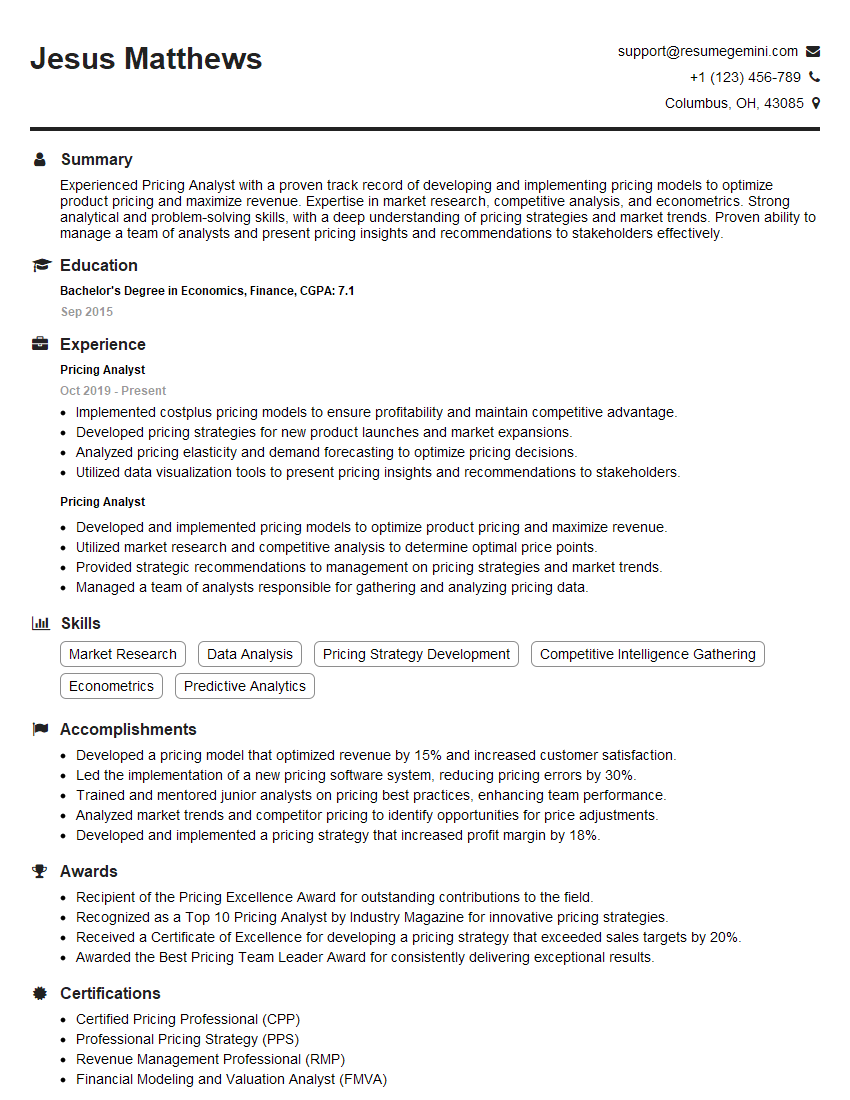
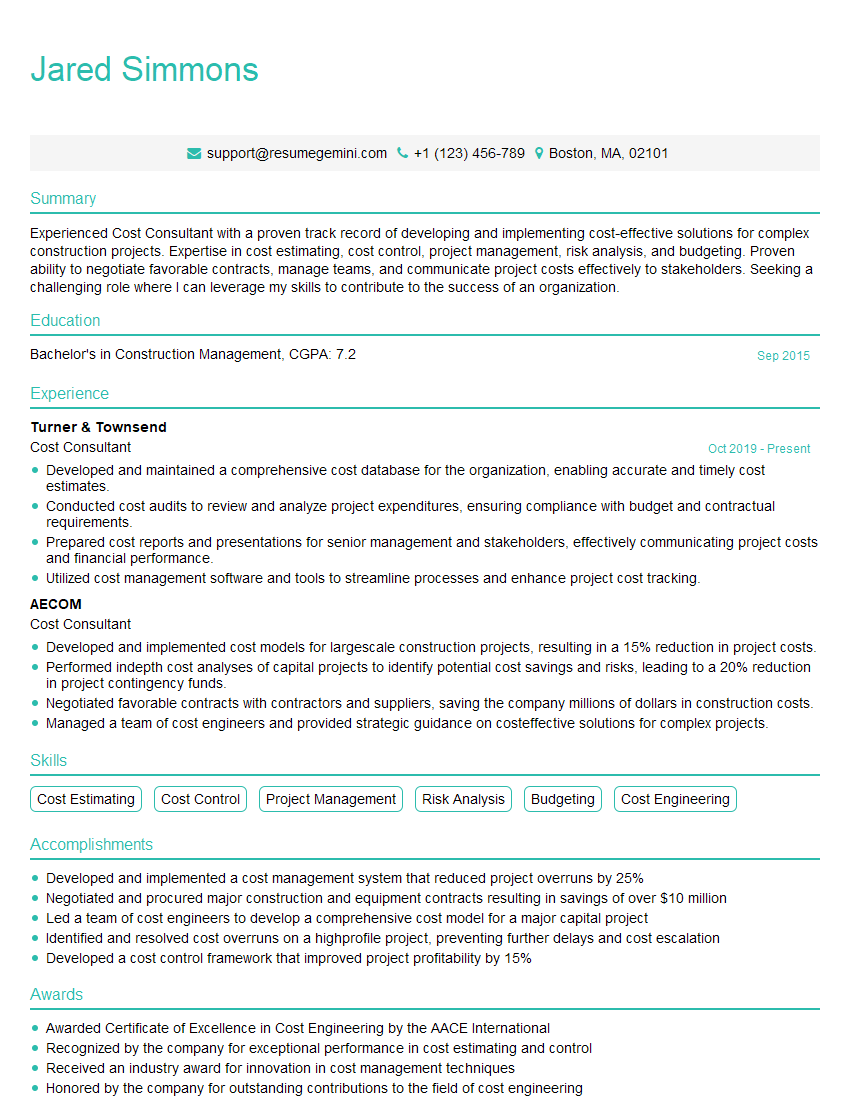
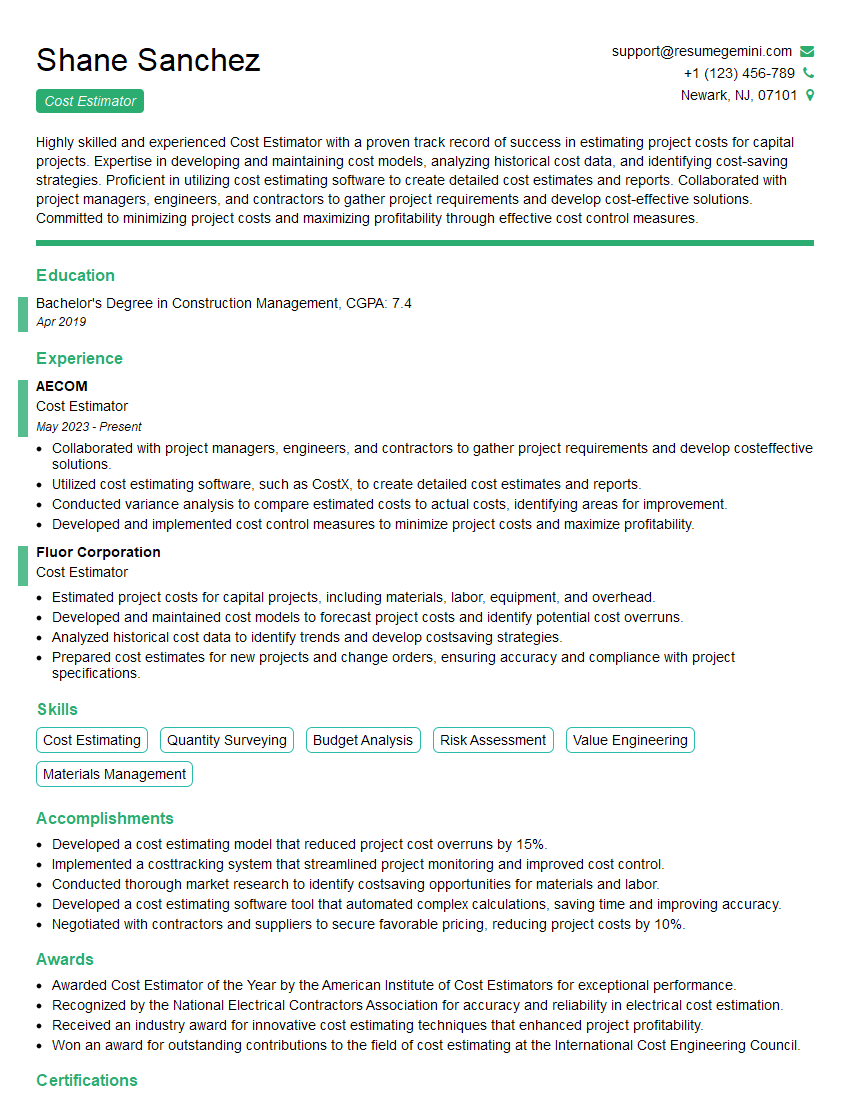
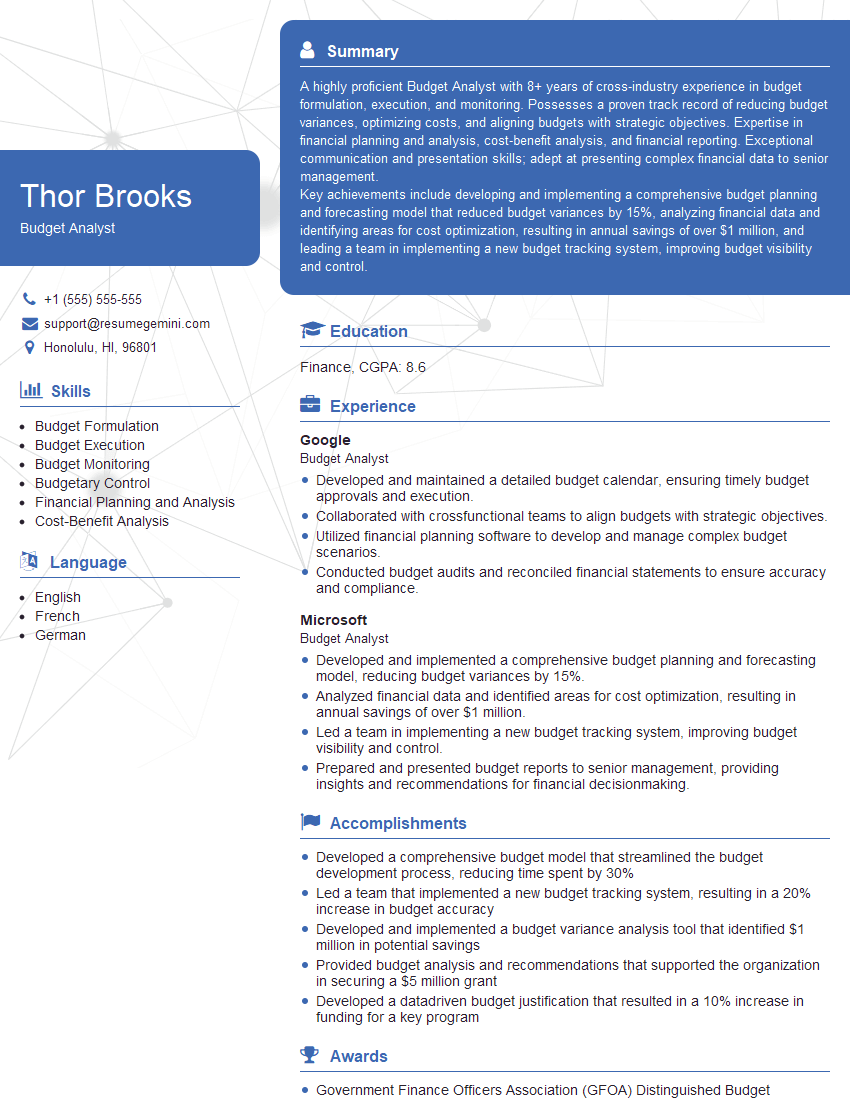
Mastering Project Cost Estimating and Budgeting is crucial for career advancement in project management and related fields. A strong understanding of these concepts significantly increases your value to any organization. To maximize your job prospects, create an ATS-friendly resume that highlights your skills and experience effectively. ResumeGemini is a trusted resource to help you build a professional and impactful resume. They provide examples of resumes tailored to Project Cost Estimating and Budgeting roles, enabling you to create a compelling application that showcases your expertise. Invest time in crafting a strong resume – it’s your first impression with potential employers.


Explore more articles
Users Rating of Our Blogs
Share Your Experience
We value your feedback! Please rate our content and share your thoughts (optional).
What Readers Say About Our Blog
Amazing blog
hello,
Our consultant firm based in the USA and our client are interested in your products.
Could you provide your company brochure and respond from your official email id (if different from the current in use), so i can send you the client’s requirement.
Payment before production.
I await your answer.
Regards,
MrSmith
hello,
Our consultant firm based in the USA and our client are interested in your products.
Could you provide your company brochure and respond from your official email id (if different from the current in use), so i can send you the client’s requirement.
Payment before production.
I await your answer.
Regards,
MrSmith
These apartments are so amazing, posting them online would break the algorithm.
https://bit.ly/Lovely2BedsApartmentHudsonYards
Reach out at BENSON@LONDONFOSTER.COM and let’s get started!
Take a look at this stunning 2-bedroom apartment perfectly situated NYC’s coveted Hudson Yards!
https://bit.ly/Lovely2BedsApartmentHudsonYards
Live Rent Free!
https://bit.ly/LiveRentFREE
Interesting Article, I liked the depth of knowledge you’ve shared.
Helpful, thanks for sharing.
Hi, I represent a social media marketing agency and liked your blog
Hi, I represent an SEO company that specialises in getting you AI citations and higher rankings on Google. I’d like to offer you a 100% free SEO audit for your website. Would you be interested?