Interviews are more than just a Q&A session—they’re a chance to prove your worth. This blog dives into essential Awards for Art Criticism interview questions and expert tips to help you align your answers with what hiring managers are looking for. Start preparing to shine!
Questions Asked in Awards for Art Criticism Interview
Q 1. Describe your understanding of the criteria used to judge art criticism awards.
Judging criteria for art criticism awards vary depending on the specific award, but generally revolve around several key aspects. Think of it like judging a recipe; you need to assess both the ingredients (technical skill) and the final dish (impact and originality).
- Analytical Rigor: Does the criticism demonstrate a deep understanding of the artwork’s context, techniques, and historical significance? Is the argument well-supported with evidence?
- Originality of Insight: Does the criticism offer fresh perspectives or interpretations? Does it avoid clichés and predictable responses?
- Clarity and Writing Style: Is the criticism well-written, engaging, and accessible to a broad audience? Is the language precise and evocative?
- Impact and Influence: Does the criticism contribute to a broader understanding or appreciation of the artwork or artist? Has it sparked dialogue or further research?
- Contextual Understanding: Does the criticism effectively place the art within its historical, social, and cultural context? This is crucial for understanding the art’s meaning and significance.
For instance, an award might prioritize scholarly rigor, favoring detailed formal analyses, while another might focus on accessibility and public engagement. The best criticism balances both.
Q 2. How do you assess the impact of an art piece on its viewer?
Assessing an artwork’s impact on its viewer is a complex process, requiring a blend of observation and interpretation. It’s not just about whether someone ‘likes’ the piece, but rather, how it affects them emotionally, intellectually, and even physically.
- Emotional Response: What feelings does the artwork evoke? Does it inspire joy, sorrow, anger, or contemplation? Consider the use of color, composition, and subject matter in eliciting these responses.
- Intellectual Engagement: Does the artwork stimulate thought or challenge preconceived notions? Does it raise questions or offer new perspectives? Consider the symbolism, narrative, and conceptual framework.
- Physical Response: Does the artwork create a sense of movement, tension, or stillness? Does the scale or materiality of the piece have a physical impact on the viewer?
- Viewer Context: The viewer’s own background, experiences, and beliefs will heavily influence their response. Consider different audiences and their likely reactions.
For example, a powerful photograph of a social injustice might evoke anger and prompt reflection on systemic issues, while a serene landscape painting might promote feelings of calm and peace.
Q 3. What are the key elements of a strong art criticism piece?
A strong art criticism piece is like a well-constructed argument. It needs a clear thesis, supporting evidence, and a logical structure. Key elements include:
- Clear Thesis Statement: The criticism should begin with a central argument or interpretation of the artwork.
- Detailed Description: Provide a thorough and accurate description of the artwork’s visual elements, including composition, color, line, form, and texture.
- Analysis and Interpretation: Go beyond mere description and analyze the artwork’s meaning, symbolism, and significance. Connect the formal elements to the artwork’s overall message or effect.
- Contextualization: Place the artwork within its historical, social, and cultural context. Consider the artist’s background, influences, and intentions.
- Supporting Evidence: Use textual evidence, historical context, and art historical analysis to support your interpretations.
- Logical Structure and Flow: Organize your thoughts in a clear and logical manner, making it easy for the reader to follow your argument.
- Precise and Engaging Language: Write in a clear, concise, and engaging style. Avoid jargon unless necessary and clearly define any technical terms.
Imagine writing about a painting – you’d start by describing it precisely (colors, brushstrokes, etc.), then analyze how these elements contribute to the overall emotional impact and meaning, drawing on historical context and the artist’s background to enhance your understanding.
Q 4. Explain your process for analyzing visual art.
My process for analyzing visual art involves a systematic approach that combines observation, research, and interpretation. It’s iterative, meaning I often revisit stages as my understanding evolves.
- Formal Analysis: I begin by carefully observing the artwork’s visual elements: line, shape, color, texture, composition, and scale. I document my observations, noting any recurring patterns or unusual features.
- Contextual Research: I then research the artwork’s historical, social, and cultural context. This involves investigating the artist’s biography, artistic influences, and the historical period in which the work was created.
- Interpretation and Synthesis: Based on my formal analysis and research, I develop an interpretation of the artwork’s meaning and significance. I consider the possible multiple meanings and ambiguities.
- Critical Writing: Finally, I craft my analysis into a well-structured and engaging piece of writing. I aim for clarity, precision, and originality.
This process is not linear; I often cycle back and forth between these stages as new insights emerge. For instance, a surprising detail in the formal analysis might prompt further research, refining my initial interpretation.
Q 5. How do you balance subjective opinion with objective analysis in your criticism?
Balancing subjective opinion with objective analysis is crucial in art criticism. It’s a delicate dance—acknowledging personal responses while grounding them in evidence and reasoned argument.
Objective analysis focuses on verifiable facts: the artwork’s physical characteristics, historical context, and the artist’s intentions (if known). Subjective opinion enters when interpreting these facts and drawing conclusions about meaning or impact. The key is transparency. I clearly state my subjective impressions while explicitly linking them to objective observations.
For example, I might objectively state: ‘The painting utilizes a predominantly cool color palette with stark contrasts.’ My subjective interpretation might then be: ‘This cool palette contributes to the overall feeling of melancholic isolation depicted in the scene.’ The connection between the objective description and the subjective interpretation is essential.
Q 6. What are some common pitfalls to avoid when writing art criticism?
Several pitfalls can undermine the effectiveness of art criticism. Avoiding these ensures a more insightful and credible analysis.
- Overly Subjective or Emotional Responses: While personal responses are valuable, they should be grounded in objective analysis and well-supported arguments.
- Lack of Contextual Understanding: Failing to research the artwork’s historical, social, and cultural context leads to superficial interpretations.
- Poorly Supported Claims: Assertions must be backed up by evidence, whether from the artwork itself, historical sources, or art historical scholarship.
- Unclear Writing: Ambiguous language, convoluted sentence structures, and a lack of organization hinder effective communication.
- Ignoring Diverse Interpretations: Failing to acknowledge and engage with multiple perspectives limits the scope and depth of the analysis.
- Plagiarism: Always properly cite sources to avoid accusations of plagiarism.
For instance, simply stating ‘I didn’t like the painting’ is insufficient. A strong critic explains *why* they didn’t like it, relating it back to specific elements within the artwork and its context.
Q 7. How do you engage with diverse perspectives and interpretations of art?
Engaging with diverse perspectives is fundamental to art criticism. Art is inherently multifaceted, provoking diverse interpretations based on individual experiences and cultural backgrounds.
I actively seek out and incorporate multiple perspectives by:
- Reading diverse scholarship: Consulting a wide range of art historical texts and critical essays written from various perspectives.
- Considering different audiences: Thinking about how different viewers—with different backgrounds and experiences—might react to the artwork.
- Seeking out differing viewpoints: Engaging in discussions with colleagues, artists, and other viewers to understand multiple perspectives.
- Acknowledging limitations: Recognizing that my own interpretations are shaped by my personal experiences and biases.
- Promoting inclusive language: Using language that is sensitive to and respectful of diverse viewpoints.
For example, when analyzing a piece of art from a non-Western culture, it’s critical to consult scholarly sources from that culture to avoid imposing Western biases and frameworks.
Q 8. Discuss the ethical considerations in art criticism.
Ethical considerations in art criticism are paramount. It’s about maintaining integrity and fairness while engaging with art and the artists who create it. This involves several key aspects. First, transparency: clearly disclosing any conflicts of interest, such as personal relationships with artists or galleries. Secondly, objectivity is crucial, although complete objectivity is arguably impossible. Strive for balanced perspectives, acknowledging both strengths and weaknesses of the artwork, rather than letting personal biases dictate the critique. Thirdly, respectful language is essential. Avoid inflammatory or dismissive language, even when critiquing a piece you dislike. Instead, focus on constructive criticism, offering specific examples to support your points. Fourthly, accurate representation is vital. If referencing historical contexts or artistic movements, ensure factual accuracy to avoid misrepresenting the artist’s work or intentions. Finally, plagiarism is strictly prohibited; all ideas and borrowed materials must be properly cited. Failing to adhere to these ethical principles undermines the credibility of the critic and the field as a whole. For example, a critic reviewing a friend’s work must clearly state their relationship to avoid the appearance of bias.
Q 9. How do you stay current with the ever-evolving art world?
Staying current in the ever-evolving art world requires a multifaceted approach. Regular visits to museums and galleries, both local and international, are essential for firsthand observation of new works and trends. Actively engaging with art publications, both print and online, such as Artforum, Frieze, and The Art Newspaper, keeps me informed about exhibitions, artist profiles, and critical discussions. Following artists and curators on social media platforms provides insights into their processes and current projects. Attending art fairs like Art Basel and Frieze London offers an unparalleled opportunity to witness contemporary art’s pulse. Moreover, participating in conferences, workshops, and lectures keeps me abreast of theoretical advancements and critical discourse. Finally, networking with other critics, curators, and artists fosters valuable knowledge exchange and opens doors to unseen works and emerging trends. It’s a continual process of learning and adaptation.
Q 10. What are some notable art criticism awards and their significance?
Several prestigious awards recognize outstanding achievements in art criticism. The Pulitzer Prize for Criticism, while encompassing various fields, occasionally honors significant contributions to art criticism. The Frank Jewett Mather Award for Distinguished Achievement in Art Criticism, presented by the College Art Association, is a highly coveted award recognizing a sustained body of exceptional work. Many national and international art magazines and organizations also have their own awards, although they may be less widely known. The significance of these awards lies in their validation of the critic’s impact on the field, their contribution to the understanding and appreciation of art, and their influence on shaping the art historical narrative. Receiving such an award elevates the critic’s profile and establishes them as a leading voice in the art world.
Q 11. Explain your experience with writing art reviews for different audiences.
My experience spans writing art reviews for diverse audiences, ranging from academic journals to popular magazines and online platforms. When writing for academic audiences, I employ a more theoretical and analytical approach, using specialized terminology and engaging with complex art historical debates. For example, a piece for a scholarly journal might delve deeply into post-structuralist theories in relation to a contemporary installation. In contrast, writing for a broader audience requires a more accessible style, prioritizing clarity and avoiding excessive jargon. A review for a general interest magazine will focus on conveying the artist’s intent and engaging the reader emotionally, whilst still providing insightful analysis. Finally, online reviews often necessitate conciseness and a visually engaging format, using images and short, impactful sentences to grab the reader’s attention. The key lies in adapting my language and approach to resonate with each specific audience while maintaining intellectual rigor and accuracy.
Q 12. How do you adapt your critical approach to different art forms (e.g., painting, sculpture, performance art)?
Adapting my critical approach to different art forms requires a nuanced understanding of the specific media and conventions involved. While the fundamental principles of critical analysis remain consistent, the methods of application differ. For example, when reviewing a painting, I’d focus on elements like composition, color palette, brushstrokes, and the use of space. Critiquing a sculpture demands an examination of form, texture, material, and its relationship to the surrounding environment. Performance art necessitates an analysis of the artist’s body as a medium, the temporal aspects of the work, and the interaction with the audience. Each art form presents unique challenges and opportunities for critical engagement; the critic must be flexible and adaptable to analyze each work in its own context, appreciating its specific characteristics and inherent limitations.
Q 13. How do you use visual language effectively to support your arguments?
Effective use of visual language is crucial in art criticism, enriching the analytical process beyond mere textual description. Incorporating detailed descriptions of the artwork’s visual elements – color, line, form, composition etc – helps readers visualize what the critic is analyzing. Strategically using imagery, such as high-quality reproductions or diagrams, enhances understanding and engagement. For instance, highlighting a specific detail in a painting with a close-up image allows the reader to focus on the aspects being discussed. Moreover, employing visual metaphors or analogies can be powerful tools to convey complex ideas or observations in a more accessible way. Think of describing the fluidity of a brushstroke by comparing it to the movement of water. Essentially, the goal is to create a synergistic relationship between the written word and the visual elements, leading to a richer and more meaningful critical experience.
Q 14. Describe your familiarity with various art historical movements and their impact on contemporary art.
My familiarity with various art historical movements is extensive and informs my understanding of contemporary art. Understanding movements like Impressionism, Cubism, Surrealism, and Abstract Expressionism, among others, provides a framework for analyzing the historical context of contemporary artworks. For example, recognizing the influence of Surrealism on a contemporary sculptor’s work might help clarify the artist’s use of dreamlike imagery and unexpected juxtapositions. Similarly, understanding the legacy of Minimalism can shed light on the conceptual concerns and austere aesthetics found in contemporary installations. Moreover, tracing the evolution of specific themes, techniques, or styles across different art historical periods aids in developing a more comprehensive understanding of the ongoing dialogues and transformations within the art world. This knowledge provides a crucial lens through which to interpret the innovations and continuities in contemporary practice.
Q 15. How do you incorporate contextual information into your art criticism?
Contextual information is the bedrock of insightful art criticism. It’s not enough to simply describe what’s in a painting; we must understand why it looks that way and what it means within its historical, social, and cultural setting. This involves researching the artist’s biography, their influences, the prevailing artistic movements of the time, and the broader socio-political climate. For instance, analyzing a Picasso Cubist piece requires understanding the impact of WWI on artistic sensibilities, as well as the burgeoning interest in African masks and their influence on the fragmentation of form. I often begin by researching the artist’s life and the specific period in which the artwork was created, consulting academic journals, exhibition catalogs, and reputable online resources. I also look for clues within the artwork itself – brushstrokes, color palette, subject matter – that might allude to its context.
For example, if I’m critiquing a piece of political street art, I’ll research the artist’s activism, the specific social issue being addressed, and the location where the artwork is displayed to understand its impact on the surrounding community. Failing to incorporate this context would result in a shallow, incomplete analysis.
Career Expert Tips:
- Ace those interviews! Prepare effectively by reviewing the Top 50 Most Common Interview Questions on ResumeGemini.
- Navigate your job search with confidence! Explore a wide range of Career Tips on ResumeGemini. Learn about common challenges and recommendations to overcome them.
- Craft the perfect resume! Master the Art of Resume Writing with ResumeGemini’s guide. Showcase your unique qualifications and achievements effectively.
- Don’t miss out on holiday savings! Build your dream resume with ResumeGemini’s ATS optimized templates.
Q 16. How do you handle criticism of your own work?
Criticism is essential for growth, whether it’s directed at my own work or that of others. I view critique not as an attack but as an opportunity for learning and refinement. I actively seek feedback from trusted colleagues and mentors, and I make a point of engaging constructively with any criticism received. It’s crucial to separate valid, well-reasoned critiques from personal attacks. I focus on the specific points raised, considering whether they challenge my assumptions or offer a new perspective. Sometimes, constructive criticism forces me to revisit my analysis, strengthening my arguments and clarifying my points. Other times, I may find the critique to be unfounded, and I’ll calmly explain my reasoning, outlining the evidence supporting my interpretation.
One time, a colleague pointed out a factual inaccuracy in one of my essays. While initially slightly embarrassed, I recognized it as an important learning experience. I corrected the mistake and thanked them for bringing it to my attention. This experience underscored the importance of rigorous research and the value of constructive criticism.
Q 17. How do you identify and evaluate biases in art criticism?
Bias in art criticism is a serious issue that can marginalize artists and distort our understanding of art history. Identifying bias requires self-awareness and a commitment to critical thinking. I actively work to recognize my own biases, which may stem from my cultural background, personal experiences, or even unconscious assumptions. I combat this by consciously seeking out diverse perspectives and engaging with critical analyses that challenge my viewpoints. This involves reading work from scholars and critics with different backgrounds and interpretations.
For instance, I might analyze how Eurocentric art historical narratives have historically privileged certain aesthetics and styles, while silencing others. I might also examine how gender, race, and class biases have shaped critical discourse around particular artists and artworks. By actively acknowledging and critically engaging with these biases, I strive for more inclusive and nuanced interpretations of art.
Q 18. Discuss your understanding of art’s social and political contexts.
Art is deeply intertwined with its social and political contexts. Artworks are not created in a vacuum; they reflect the values, beliefs, and power structures of the societies in which they’re produced. Understanding these contexts is crucial for a complete understanding of the art itself. For example, many Renaissance paintings reflect the power of the Catholic Church and the ideals of humanism. Similarly, the rise of Pop Art in the 1960s can be linked to consumer culture and social change. I actively research the social and political events that shaped the creation and reception of an artwork, considering factors such as class, race, gender, and political ideologies.
Consider the impact of the feminist movement on contemporary art. Many female artists are directly responding to social and political inequalities, exploring themes of gender, sexuality, and representation in their work. By understanding the context, we can better appreciate the significance and meaning of their art.
Q 19. How do you contribute to a wider conversation about art?
I contribute to a wider conversation about art through various avenues. I write articles for art publications, participate in online discussions, contribute to academic journals, and present papers at conferences. I aim to make my writing accessible to a wider audience, using clear and engaging language while maintaining academic rigor. I also actively participate in public discussions about art, engaging with diverse voices and perspectives. My goal is to foster critical thinking and encourage dialogue about art’s role in society.
I recently published an article on the impact of social media on the art market which sparked a lively debate on the platform. Engaging in this type of dialogue allows for a continuous flow of ideas and promotes a more comprehensive understanding of the subject matter.
Q 20. What resources do you use to improve your art criticism skills?
Continuous learning is vital for any art critic. I regularly attend lectures, workshops, and museum exhibitions, attending to the latest research and critical interpretations. I subscribe to various art publications, both print and online, and make use of academic databases to access scholarly articles and journals. Engaging with other critics through discussions and peer review also improves my understanding and approach to criticism.
I also actively engage with diverse art forms to broaden my perspectives and deepen my understanding of different artistic traditions. For example, I might explore different historical periods or even newer mediums like digital art, to constantly challenge my own approach and improve my art criticism.
Q 21. Explain your editing and proofreading practices.
My editing and proofreading practices are rigorous. I follow a multi-stage process. First, I thoroughly review my work for clarity, coherence, and argumentation, ensuring my points are logically connected and well-supported. Next, I meticulously check for grammatical errors, typos, and inconsistencies in style and formatting. I use grammar-checking software as a first line of defense but rely on careful manual review as the final step. Finally, I seek feedback from trusted colleagues or editors, who can offer fresh eyes and identify any remaining issues.
Accuracy is paramount in art criticism. A single factual error can undermine the credibility of the entire analysis. My commitment to rigorous editing and proofreading ensures that my work is accurate, well-written, and readily understandable by a broad audience. I often use a style guide, such as the Chicago Manual of Style, to ensure consistency in my writing.
Q 22. Describe your experience using different art criticism methodologies.
My approach to art criticism draws from a variety of methodologies, blending formal analysis with contextual and theoretical frameworks. Formal analysis, a cornerstone of my practice, involves closely examining the artwork’s elements – line, color, composition, and texture – to understand its visual structure and impact. Think of it like dissecting a sentence to understand its grammar and syntax before understanding its meaning. I then layer this with contextual analysis, researching the historical, social, and cultural factors surrounding the artwork’s creation and reception. For example, understanding the political climate during the creation of a protest painting can drastically alter its interpretation. Finally, I utilize theoretical frameworks, drawing upon art historical scholarship and critical theory (like feminist art theory or post-colonial theory) to provide a deeper understanding and interpretation of the work’s meaning and significance. This multifaceted approach allows me to create a rich and nuanced analysis, avoiding simplistic interpretations.
For instance, while analyzing a contemporary sculpture, I might begin by describing its physical properties (formal analysis). I then research the artist’s background and the socio-political context of the piece’s creation (contextual analysis), perhaps finding it reflects current discussions about environmentalism. Finally, I would weave in relevant theoretical lenses, such as eco-criticism, to illuminate the artwork’s engagement with larger themes of sustainability and environmental responsibility.
Q 23. How would you respond to criticism of your own art criticism?
Criticism of my own work is invaluable for growth. I actively seek feedback, viewing it as an opportunity to refine my thinking and strengthen my arguments. I believe constructive criticism should be engaged with, not dismissed. I carefully consider the points raised, evaluating whether they highlight flaws in my logic, evidence, or interpretation. Sometimes, a critic might point out an oversight in my research or suggest an alternative perspective I hadn’t considered. In such cases, I appreciate the insight and adjust my analysis accordingly. If the criticism seems based on a misunderstanding or misrepresentation of my argument, I’ll politely explain my reasoning, providing additional context or clarifying my position. The goal is to foster a dialogue, ultimately enhancing the quality of my critical work.
For example, if a critic argues that I misinterpret an artwork’s symbolism, I will revisit the artwork, reassess the evidence I presented, and examine the critic’s perspective to see if it warrants a revised interpretation or a more detailed explanation in my work. The process is about intellectual honesty and continuous improvement.
Q 24. How do you handle conflicting opinions from other critics?
Conflicting opinions among critics are common and often enriching. Instead of viewing these differences as a problem, I see them as opportunities for a more complete understanding of the artwork. Each critic brings their unique background, perspectives, and methodologies to the table. The presence of differing interpretations doesn’t necessarily imply that one is right and the other wrong. Often, multiple valid interpretations can coexist, reflecting the artwork’s complexity and the multifaceted nature of artistic expression. My approach is to acknowledge the diverse perspectives, carefully analyze the reasoning behind each opinion, and try to understand the underlying assumptions and methodologies shaping those interpretations.
Consider a painting that evokes strong emotional responses. One critic might focus on the technical skill and formal elements, praising its composition. Another might emphasize its emotional impact, connecting it to specific historical events. Both analyses are valuable and contribute to a fuller understanding of the artwork’s significance.
Q 25. What strategies do you use to develop your analytical skills?
Developing strong analytical skills requires dedicated effort and a multi-pronged approach. Firstly, I consistently engage with diverse art forms, attending exhibitions, visiting museums, and exploring various artistic media. Secondly, I cultivate a habit of close observation, meticulously studying artworks, noting details often overlooked. Think of it as training your eye to ‘see’ more. This includes analyzing the relationship between the elements, considering the artist’s choices, and questioning the work’s purpose and meaning.
Furthermore, I regularly read scholarly articles and books on art history and criticism, expanding my theoretical knowledge and learning from experienced critics. I also actively participate in discussions and debates, both formally (through conferences and seminars) and informally (through conversations with fellow critics and artists). This helps me to refine my critical thinking, identify weaknesses in my arguments, and develop clearer and more persuasive communication skills.
Q 26. Explain your experience collaborating with artists and curators.
Collaborating with artists and curators is a vital part of my work. It fosters a deeper understanding of the creative process and enriches my critical perspective. When collaborating with artists, I aim to build a relationship of mutual respect and understanding. I strive to approach their work with sensitivity and a genuine interest in their artistic vision. The discussions often involve exploring the conceptual framework of their work, understanding their creative choices, and engaging in insightful dialogue about their intentions and artistic goals.
Working with curators often involves contributing to exhibition catalogs, providing essays that contextualize the exhibited artworks. This collaboration allows me to engage with a wider audience and share my knowledge and insights in a more accessible format. The collaborative nature of these projects often results in a richer and more nuanced understanding of the exhibited works, benefiting both the artistic and critical perspectives.
Q 27. Describe a challenging art criticism project and how you overcame the challenges.
One particularly challenging project involved critically analyzing a series of performance art pieces that incorporated elements of audience participation and incorporated technology. The challenge lay in documenting and analyzing a transient art form, where the experience was deeply subjective and time-sensitive. The ephemeral nature of performance art made traditional methods of analysis difficult. I overcame this challenge by employing a multifaceted approach. I conducted multiple viewings of the performance, carefully documenting the sequence of events, the audience’s reactions, and the technical aspects of the piece. I also interviewed both the artist and several audience members to gather different perspectives on the performance’s meaning and impact.
I combined these observational notes with research into the artist’s background, their artistic influences, and the theoretical frameworks relevant to performance art. This allowed me to build a robust analysis that captured both the artist’s intention and the varied audience experiences, demonstrating a full appreciation of this demanding form of art.
Q 28. How do you manage your time effectively when working on multiple art criticism assignments?
Managing multiple art criticism assignments effectively requires meticulous planning and organization. I begin by creating a detailed schedule, breaking down each project into manageable tasks with realistic deadlines. This involves prioritizing assignments based on their urgency and importance. I use project management tools to keep track of deadlines, research materials, and drafts. I also allocate specific time blocks for writing, research, and revision, ensuring that I dedicate sufficient time to each project without feeling overwhelmed. Furthermore, maintaining regular breaks and avoiding multitasking are key to maintaining focus and productivity. This structured approach ensures that all assignments are completed to a high standard and submitted on time.
Think of it like orchestrating a symphony: Each instrument (assignment) needs its own part, rehearsal time, and a conductor (me) to bring everything together harmoniously and on time.
Key Topics to Learn for Awards for Art Criticism Interview
- Understanding the Criteria: Develop a deep understanding of the specific awards you’re applying for. Analyze past winners and their work to discern common themes and strengths.
- Critical Theory & Practice: Demonstrate familiarity with relevant art historical and critical theories. Be prepared to discuss how these theories inform your own critical approach and analysis.
- Methodologies of Art Criticism: Articulate your approach to analyzing artwork, including your chosen methodologies and their strengths and limitations. Be able to justify your critical perspectives.
- Analyzing Diverse Artistic Forms: Showcase your ability to critically engage with a wide range of artistic mediums, from painting and sculpture to performance art and digital media.
- Effective Communication of Critical Analysis: Practice articulating complex ideas clearly and concisely, both verbally and in writing. Be ready to explain your insights persuasively.
- Contextual Understanding: Demonstrate your ability to situate artworks within their historical, social, and cultural contexts. Understanding the broader narrative is crucial.
- Handling Diverse Perspectives: Show your awareness of differing viewpoints and your ability to engage with diverse interpretations of artworks respectfully and critically.
- Problem-Solving & Critical Thinking: Be prepared to discuss how you approach complex artistic issues and the problem-solving skills you use in your critical analysis.
Next Steps
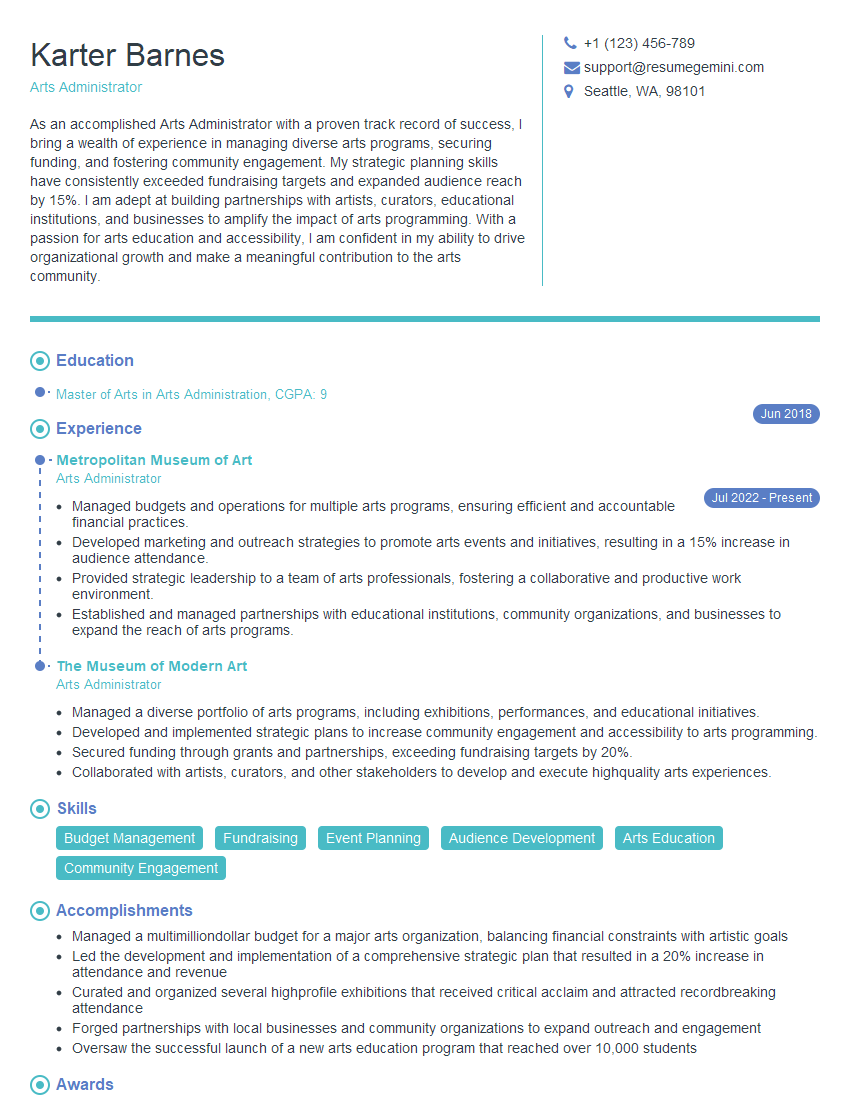
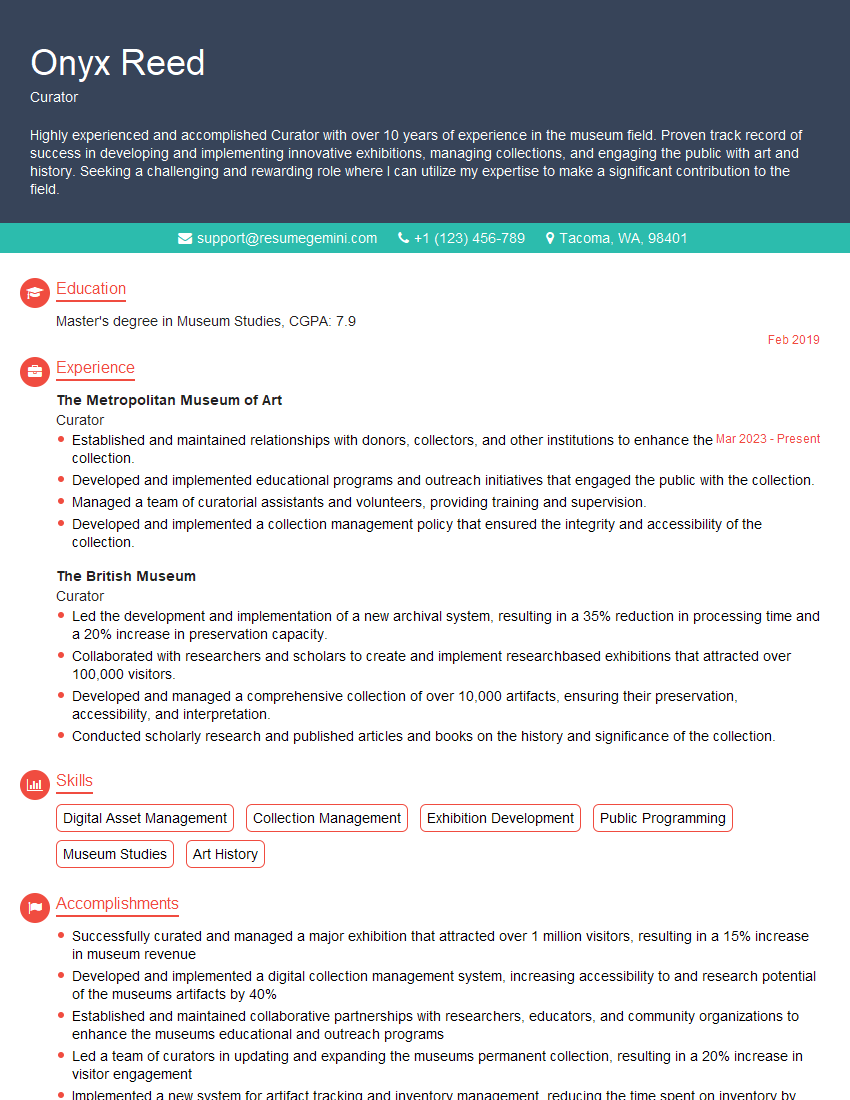
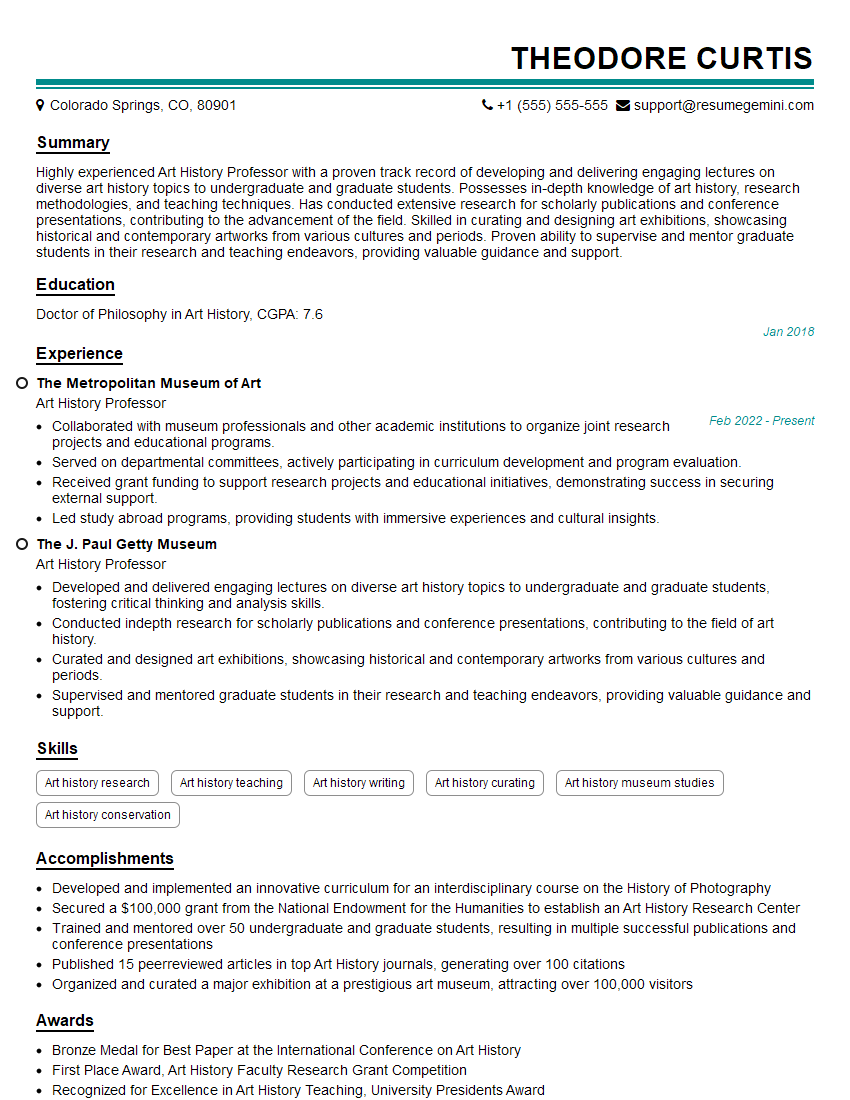
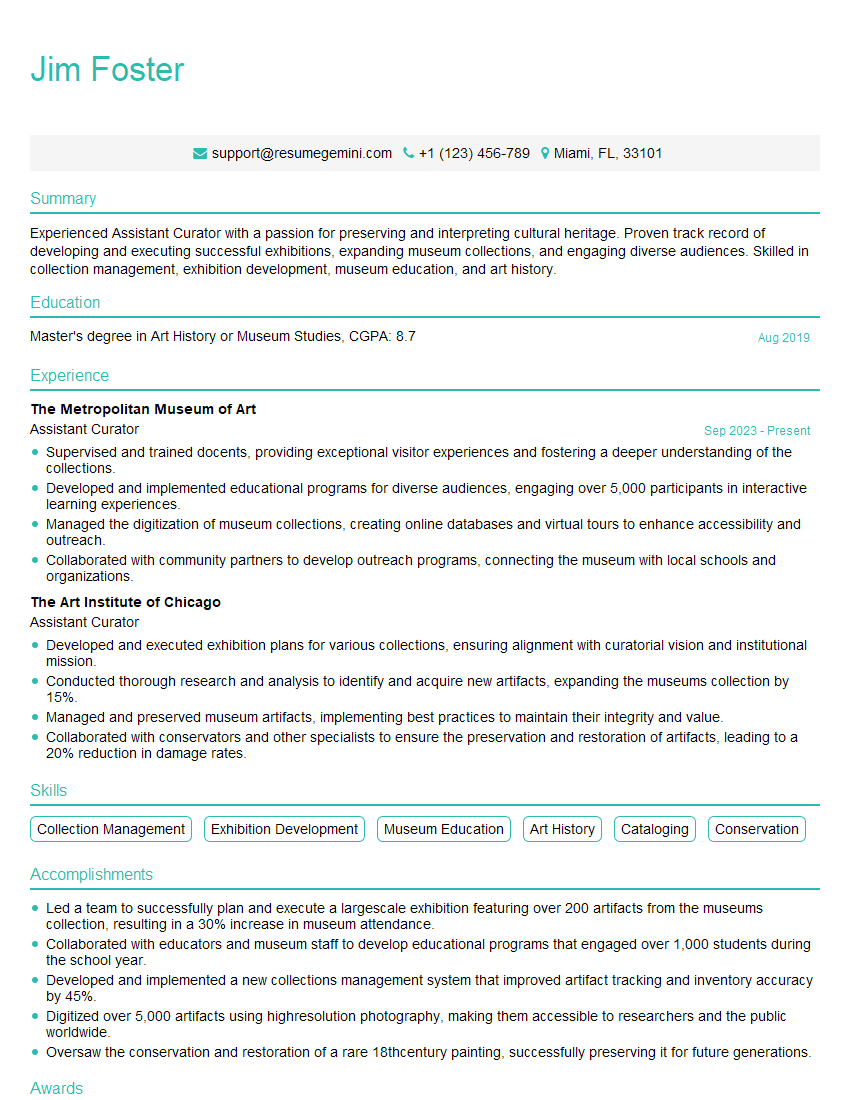
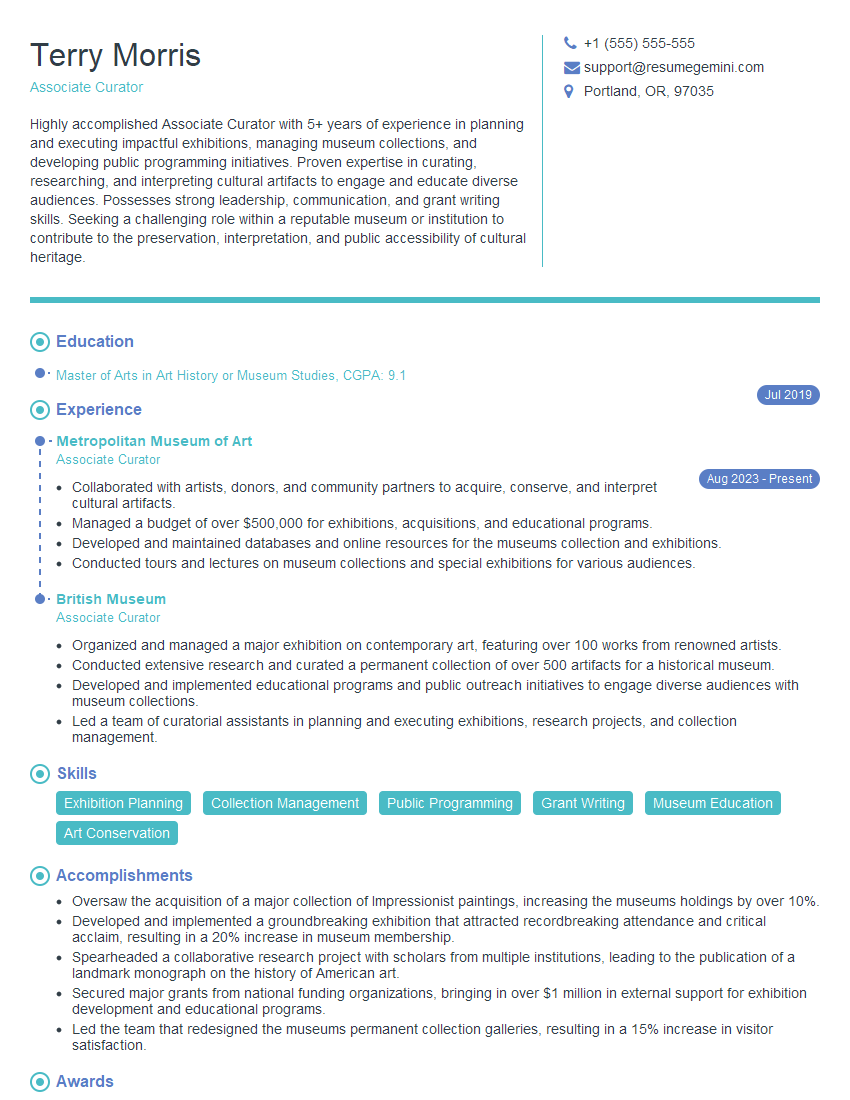
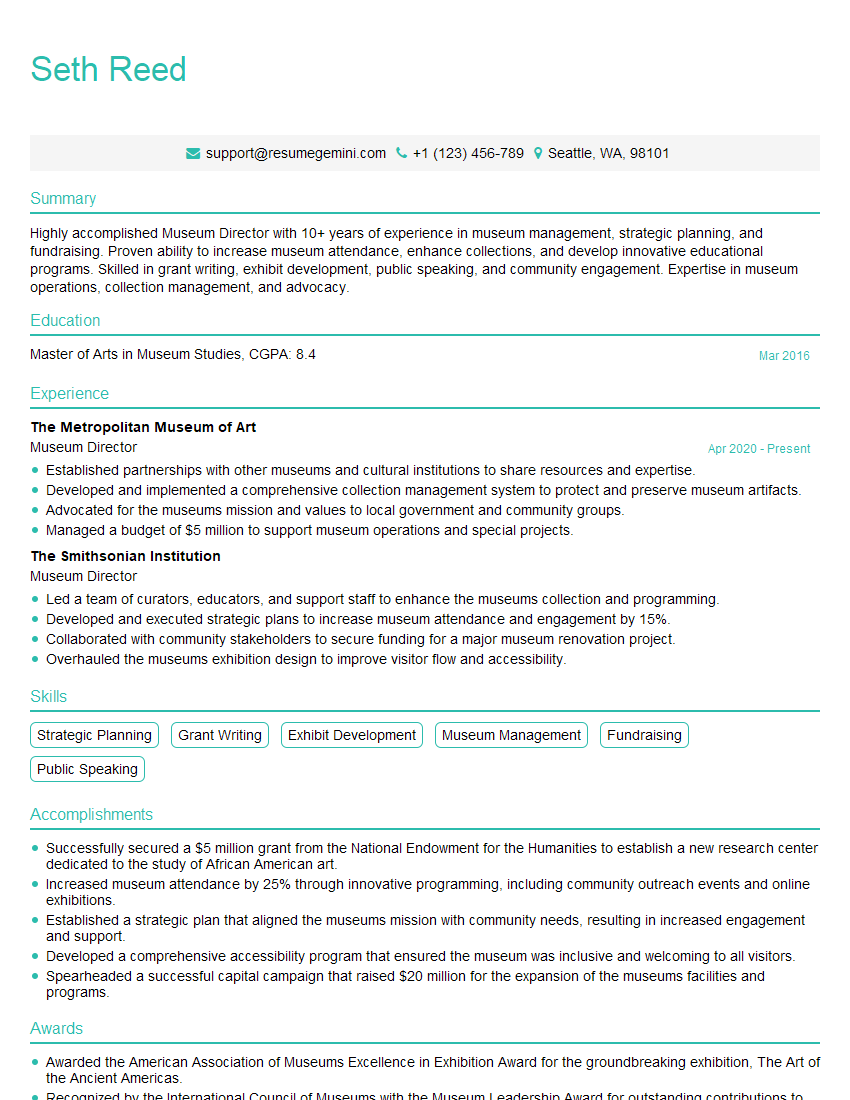
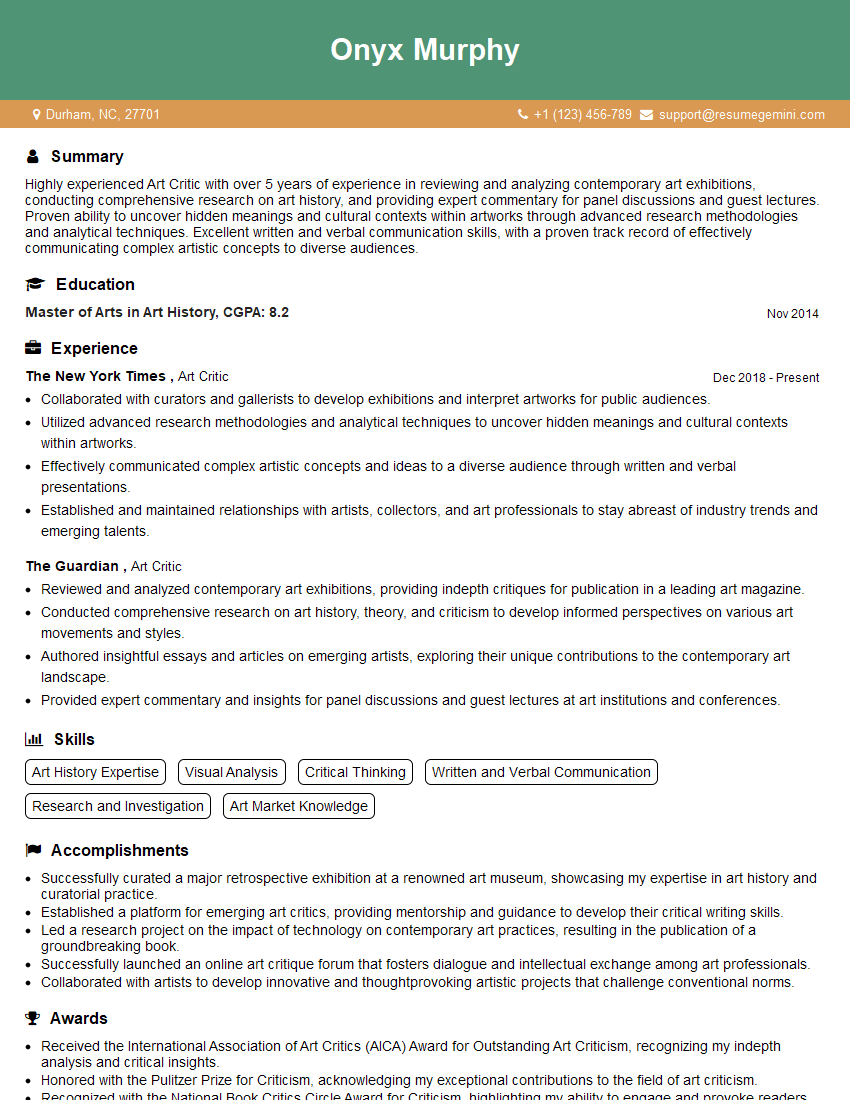
Mastering the art of art criticism is essential for career advancement within the art world, opening doors to influential positions, publications, and collaborations. A strong, ATS-friendly resume is your first impression – it’s your key to unlocking these opportunities. To create a compelling resume that showcases your skills and experience effectively, leverage the power of ResumeGemini. ResumeGemini provides a user-friendly platform for building professional resumes, and we offer examples specifically tailored to those seeking awards in art criticism. Take the next step towards securing your desired role by crafting a resume that truly highlights your expertise.
Explore more articles
Users Rating of Our Blogs
Share Your Experience
We value your feedback! Please rate our content and share your thoughts (optional).
What Readers Say About Our Blog
Amazing blog
hello,
Our consultant firm based in the USA and our client are interested in your products.
Could you provide your company brochure and respond from your official email id (if different from the current in use), so i can send you the client’s requirement.
Payment before production.
I await your answer.
Regards,
MrSmith
hello,
Our consultant firm based in the USA and our client are interested in your products.
Could you provide your company brochure and respond from your official email id (if different from the current in use), so i can send you the client’s requirement.
Payment before production.
I await your answer.
Regards,
MrSmith
These apartments are so amazing, posting them online would break the algorithm.
https://bit.ly/Lovely2BedsApartmentHudsonYards
Reach out at BENSON@LONDONFOSTER.COM and let’s get started!
Take a look at this stunning 2-bedroom apartment perfectly situated NYC’s coveted Hudson Yards!
https://bit.ly/Lovely2BedsApartmentHudsonYards
Live Rent Free!
https://bit.ly/LiveRentFREE
Interesting Article, I liked the depth of knowledge you’ve shared.
Helpful, thanks for sharing.
Hi, I represent a social media marketing agency and liked your blog
Hi, I represent an SEO company that specialises in getting you AI citations and higher rankings on Google. I’d like to offer you a 100% free SEO audit for your website. Would you be interested?