The right preparation can turn an interview into an opportunity to showcase your expertise. This guide to Show Lighting Coordination interview questions is your ultimate resource, providing key insights and tips to help you ace your responses and stand out as a top candidate.
Questions Asked in Show Lighting Coordination Interview
Q 1. What lighting console experience do you possess?
My experience with lighting consoles spans over ten years, encompassing a wide range of models. I’m proficient in operating both smaller consoles like the ETC Ion and larger, more complex systems such as the MA Lighting grandMA2. My expertise extends beyond basic operation to include advanced programming techniques, such as creating sophisticated cue lists, utilizing macros for efficiency, and implementing advanced color mixing and effects. I’m also comfortable working with different console interfaces and adapting quickly to new systems.
For instance, during a recent production of a large-scale musical, I programmed over 500 cues on a grandMA2, coordinating lighting with video and special effects. This required meticulous planning and a deep understanding of the console’s capabilities to ensure smooth transitions and a visually stunning performance.
Q 2. Describe your experience with different lighting fixtures (e.g., LED, moving lights, conventional).
I have extensive experience with a variety of lighting fixtures. My experience includes conventional lighting (e.g., Fresnels, PAR cans, ellipsoidal reflectors), moving lights (both LED and discharge based, including profiles, washes, and beam fixtures from manufacturers like Robe, Clay Paky, and Martin), and LED lighting technology (including both source-four LED fixtures and LED battens). I understand the unique characteristics and capabilities of each type of fixture, allowing me to choose the most appropriate ones for various applications.
For example, I know that using LED fixtures allows for increased energy efficiency and precise color control. I also understand that discharge based moving lights provide a power and intensity that is hard to replicate with other fixtures. Selecting the right fixture depends entirely on the budget and the desired look of the production. Working with different manufacturers’ fixtures requires understanding their specific functionalities and addressing any potential compatibility issues.
Q 3. Explain your process for creating a lighting plot.
Creating a lighting plot is a meticulous process that involves several key steps. First, I thoroughly review the show’s script and concept to understand the director’s vision and the overall mood for each scene. I then design the plot itself, using lighting design software like Vectorworks or WYSIWYG to create a visual representation of the stage and lighting positions. This involves considering factors such as lighting instrument selection, placement, and angles to achieve the desired effects.
Next, I create a detailed fixture schedule, outlining each instrument’s position, type, color, and function. This ensures consistency and organization throughout the production. I also consider safety aspects, ensuring proper weight distribution and avoiding hazards. Finally, I create a comprehensive paperwork package that includes the plot, fixture schedule, and any special instructions for the lighting crew. This documentation is essential for clear communication and efficient execution.
For example, during a recent theatre production, I used WYSIWYG to meticulously plan the lighting for a complex scene with numerous moving parts. The software allowed me to simulate the lighting effects, check for potential obstructions, and ensure a visually seamless transition between scenes.
Q 4. How do you troubleshoot lighting equipment malfunctions during a live show?
Troubleshooting lighting equipment during a live show requires a calm and systematic approach. My first step is to identify the specific problem: Is it a complete blackout, a flickering light, a color issue, or something else? Once the problem is identified, I systematically check the most common causes.
This typically involves checking connections (DMX cables, power supplies), inspecting the fixture itself for any visible damage, and checking the console for errors or misconfigurations. If the problem involves a DMX issue, I use a DMX tester to trace the signal path, identifying any breaks or faulty connections. If the problem is with a specific fixture, I have a backup system in place, using spare parts or alternate fixtures as needed.
I also prioritize safety, never attempting repairs while a fixture is live. Communication with the stage manager and other technical personnel is critical to keep the show running smoothly while addressing the issue. Documentation of all issues and their solutions is essential for future reference and improvement of the show’s technical process.
Q 5. What safety procedures do you follow when working with stage lighting?
Safety is paramount in stage lighting. Before each show, I perform a thorough safety check of all equipment, including cables, connections, and fixtures, ensuring that all are in good working condition and properly grounded. I adhere strictly to all relevant safety regulations, including those pertaining to weight capacity, electrical safety, and the safe handling of equipment.
I also ensure that the workspace is well-lit and free from tripping hazards. All crew members are briefed on safety protocols and proper lifting techniques for heavier fixtures. During the show, I remain vigilant, monitoring the equipment for any signs of malfunction or hazard. I ensure proper usage of safety equipment such as gloves and eye protection when working with potentially hazardous equipment.
Furthermore, I always have a detailed emergency plan in place, knowing how to quickly shut down the entire lighting system in case of an emergency. This includes establishing clear communication channels and procedures with other members of the stage crew.
Q 6. Describe your experience with lighting control protocols (e.g., DMX, Art-Net).
I’m highly proficient in DMX (Digital Multiplex) and Art-Net protocols, the industry standards for controlling stage lighting. DMX is a serial digital communication protocol that allows for controlling many lights with only two wires. Art-Net is a networking protocol that transmits DMX data over ethernet which allows for a more resilient and scalable setup.
My understanding goes beyond basic implementation; I’m experienced in troubleshooting DMX issues, such as signal loss, noise interference, and addressing conflicts. I can identify the source of these issues, whether it be damaged cables, incorrect patching, or conflicts in the DMX universe. I’m also comfortable working with DMX splitters, mergers, and other network devices. I understand the benefits of Art-Net such as its ability to transmit DMX data over long distances and in more complex lighting setups that would require many DMX universes.
For example, I successfully resolved a DMX signal dropout issue during a large outdoor concert by identifying a faulty DMX cable and replacing it quickly.
Q 7. How familiar are you with various lighting design software (e.g., Vectorworks, WYSIWYG)?
I’m highly familiar with several lighting design software packages, including Vectorworks and WYSIWYG. I use these programs extensively for creating lighting plots, generating fixture schedules, simulating lighting effects, and creating 3D models of the stage and lighting equipment. My proficiency extends to utilizing the advanced features offered by these software, including rendering realistic lighting simulations, generating accurate documentation, and effectively managing large and complex lighting designs.
I regularly employ these tools to improve efficiency in my design and programming processes, for example, I am able to create a 3D render of the stage and simulate the lighting design before we ever set foot in the venue. This dramatically reduces the amount of time spent on the ground during the tech process and gives the client a better understanding of what the lighting will look like in advance. The ability to precisely visualize and plan ahead reduces mistakes and greatly improves the overall efficiency of the lighting process.
Q 8. Explain your understanding of color temperature and its impact on lighting design.
Color temperature, measured in Kelvin (K), describes the warmth or coolness of a light source. Lower Kelvin values (e.g., 2700K) represent warmer, more orange-yellow light, like incandescent bulbs, often used to create intimate or nostalgic moods. Higher Kelvin values (e.g., 6500K) represent cooler, bluer light, like daylight, which can feel more energetic or sterile. In lighting design, color temperature is crucial for setting the atmosphere and impacting the audience’s perception. For instance, a romantic scene might use warm light (low K), while a tense scene could benefit from cool light (high K). Choosing the right color temperature dramatically affects the overall mood and visual storytelling.
For example, consider a play: a scene set in a cozy cottage might use warm, amber lighting (around 2700K), creating a feeling of warmth and security. In contrast, a scene set in a sterile laboratory might utilize cooler, daylight-balanced lighting (around 5600K), contributing to the clinical feel.
Q 9. How do you balance the creative aspects of lighting design with technical limitations?
Balancing creative vision with technical constraints is a constant juggling act in show lighting. The creative director might envision a dramatic lighting effect requiring multiple moving lights and complex cueing, but budget limitations, venue restrictions (weight capacity, power availability), or time constraints could prevent its realization. My approach involves open communication with the creative team to understand their artistic goals, followed by a thorough technical assessment of the venue and available resources. We then collaboratively explore alternative solutions that compromise as little as possible on the creative vision while remaining technically feasible. This often involves prioritizing key lighting elements, suggesting more efficient equipment, or modifying the design to fit the limitations. Sometimes, creative problem-solving leads to even better results than the original plan, demonstrating the value of a collaborative approach.
For instance, if the initial design calls for a large number of expensive automated lights that exceed the budget, we might explore using a smaller number of strategically placed fixtures alongside static color washes to achieve a similar visual impact. This requires understanding the strengths and limitations of different lighting instruments and their effective deployment.
Q 10. Describe your experience working with lighting gels and filters.
Lighting gels and filters are essential tools for shaping color and modifying the intensity of light. I have extensive experience using a wide range of gels, from Rosco and LEE filters, to achieve specific color effects, correct color temperature imbalances, or create unique moods. My workflow includes careful selection of gels based on the desired color, ensuring proper diffusion or diffusion-reducing properties are used to manage light spill and create soft or sharp shadows, and always considering the potential for heat buildup from the gels, especially when using higher-wattage fixtures.
A specific example: I once needed to create a sunset effect on stage. I couldn’t just use a single gel, as a realistic sunset has variations in color temperature and intensity. Instead, I layered multiple gels – an orange base, then a warmer amber, and then subtly graduated sections of deep red and purple, strategically placed to simulate the sunset’s gradients. The result was much more believable and aesthetically pleasing than a single gel could have accomplished.
Q 11. How do you ensure lighting is properly rigged and secured for safety?
Rigging safety is paramount. My procedures always start with a thorough risk assessment of the venue, considering weight limits of trusses, the structural integrity of ceilings, and the potential for audience interaction. We utilize high-quality rigging hardware, always ensuring proper safety inspections and documentation of every connection point. The crew is trained in proper rigging techniques, including the use of safety harnesses, load testing, and emergency procedures. We follow all relevant industry safety standards and regulations, including the use of counterweights, safety chains, and regular inspections of all equipment. Detailed rigging plots are created before setup, and any deviations from the plan are documented and communicated to the entire crew.
Imagine rigging a heavy lighting fixture on a truss. We would never rely on just one point of attachment; instead, we use multiple redundant safety cables and ensure that all connections are properly secured with rated shackles and eyebolts. Our goal is to have multiple safety levels to prevent any accidental drops.
Q 12. Explain your understanding of light intensity and its measurement (e.g., lumens, lux).
Light intensity refers to the power of the light emitted by a source. It’s measured in lumens (lm) for the total amount of light emitted by a source and lux (lx) for the amount of light falling on a surface. Lumens indicate the source’s output, while lux measure its impact on a specific area. In lighting design, controlling intensity is crucial for creating visual interest and highlighting certain areas while keeping others in shadow. This is done using dimmer packs, which control the power sent to the fixtures. It’s not simply about brightness; it’s about sculpting light to achieve specific artistic goals. A subtle change in intensity can dramatically impact the mood and storytelling.
For example, a spotlight with a high lumen output might create intense brightness on a particular actor, creating a focal point. Adjusting the dimmer to reduce the lux falling on that actor will create a more subdued mood.
Q 13. How do you manage a lighting crew effectively?
Managing a lighting crew effectively involves clear communication, delegation of tasks based on individual skill sets, and fostering a collaborative environment. I start by establishing a clear hierarchy and chain of command, outlining responsibilities for each crew member. Pre-production meetings are critical to ensure everyone understands the lighting design, their roles, and the schedule. Regular check-ins during the setup and show ensure smooth workflow and address any issues promptly. Positive reinforcement and recognition of good work are essential in boosting morale and productivity. It’s about creating a team where everyone feels valued and empowered to contribute.
I use a combination of verbal instructions, written documentation (like cue sheets and rigging plots), and visual aids (like sketches and diagrams) to ensure everyone is on the same page. Clear and precise communication helps prevent mistakes and delays.
Q 14. How do you handle pressure and tight deadlines in a fast-paced production environment?
Fast-paced production environments demand a calm, organized approach. My strategy involves proactive planning and contingency planning. I meticulously plan each step of the lighting process, creating detailed schedules and checklists to keep track of progress. I anticipate potential problems and develop solutions beforehand. The crew is trained to handle unexpected situations efficiently. Delegating tasks effectively minimizes stress and ensures tasks are completed within time constraints. Personal resilience and stress management techniques – including sufficient breaks and prioritization – help me maintain focus and efficiency under pressure. Adaptability is key; I’m ready to adjust the plan when necessary without compromising safety or the creative vision.
For example, if a lighting fixture fails during a show, having a backup fixture pre-rigged and a crew member assigned to the immediate replacement minimizes downtime. Having clear communication protocols ensures a swift response without creating panic.
Q 15. Describe your experience with lighting for different types of events (e.g., concerts, theatre, corporate events).
My experience spans a wide range of event lighting, from intimate theatre productions to large-scale concerts and corporate galas. Each event presents unique challenges and requires a tailored approach. For example, a concert demands high-energy visuals with dynamic lighting changes synchronized to the music, often utilizing large-scale moving lights and lasers. In contrast, theatre lighting focuses on supporting the narrative, subtly shifting mood and highlighting key moments using more nuanced techniques and color palettes. Corporate events often prioritize a polished, professional aesthetic, potentially incorporating branding elements through gobo projections and carefully selected color schemes.
In a recent concert, I employed a large array of moving heads and strobes to create a fast-paced, exciting atmosphere synced to the music’s rhythm. For a recent corporate event, I worked with a more subdued palette, using warm washes and subtle gobo projections to create an elegant and sophisticated ambiance. The theatre production I worked on utilized a system of carefully positioned and focused lights to highlight the actors and sets, creating depth and visual interest. This versatility is key to my success in this field.
Career Expert Tips:
- Ace those interviews! Prepare effectively by reviewing the Top 50 Most Common Interview Questions on ResumeGemini.
- Navigate your job search with confidence! Explore a wide range of Career Tips on ResumeGemini. Learn about common challenges and recommendations to overcome them.
- Craft the perfect resume! Master the Art of Resume Writing with ResumeGemini’s guide. Showcase your unique qualifications and achievements effectively.
- Don’t miss out on holiday savings! Build your dream resume with ResumeGemini’s ATS optimized templates.
Q 16. What is your process for creating a lighting cue sheet?
Creating a lighting cue sheet is a crucial part of the process. It serves as the roadmap for the entire lighting operation during the event. My process starts with a thorough understanding of the event’s needs – script analysis for theatre, setlist review for concerts, and briefings with clients for corporate events. I then design the lighting plot, specifying fixture positions, types, and color schemes. This is followed by creating the cues themselves, meticulously detailing each lighting change, including the timing, dimmer levels, color, and gobo patterns.
I typically use a lighting console to program the cues, documenting each one with a clear description (e.g., ‘Cue 1: House Lights Down, Spotlights on Lead Singer’). This sheet provides a chronological overview of all the lighting changes, ensuring everyone involved, including the lighting operator, understands the plan. Version control is crucial; I always maintain backups and clearly label different versions to avoid confusion.
Q 17. How do you communicate effectively with other technical crew members?
Effective communication is paramount in a collaborative environment like show lighting. I emphasize clear, concise, and respectful communication with every member of the technical crew. This includes regular meetings before, during, and after rehearsals, using a combination of verbal communication, visual aids like diagrams and cue sheets, and technology like walkie-talkies or headsets for real-time communication during the event.
For instance, I’ll use a pre-show checklist to ensure everyone is on the same page regarding equipment setup and timing. During rehearsals, I provide constructive feedback and clearly explain any adjustments or changes needed. Any technical issues are addressed promptly and systematically, with each team member knowing their role in troubleshooting. This proactive approach minimizes misunderstandings and ensures a smooth and successful show.
Q 18. Explain your understanding of lighting design principles (e.g., contrast, balance, mood).
Lighting design is fundamentally about manipulating light to create specific effects and evoke desired moods. Contrast is critical for drawing the audience’s eye; it involves varying light levels and intensities to create focal points and depth. Balance ensures harmony between different light sources, preventing any single element from overwhelming the overall design. Mood is achieved through color temperature, saturation, and intensity; warm colors create intimacy, cool colors evoke spaciousness, and dark or shadowy areas add mystery.
For example, in a dramatic theatre scene, I might use a strong spotlight on the lead actor to create a sharp contrast against the dimmer background, emphasizing their emotional expression. Balancing this with ambient lighting ensures the scene isn’t overly dark. A romantic scene might utilize warmer colors and softer light levels to create a cozy, intimate mood.
Q 19. How do you adapt lighting design to different venue characteristics?
Adapting lighting design to different venues requires careful consideration of several factors. Firstly, the venue’s size and shape drastically impact light distribution; a large, high-ceilinged space will require more powerful fixtures and careful positioning to ensure even coverage. Secondly, the venue’s existing infrastructure (power outlets, rigging points) dictates fixture choices and placement. Thirdly, the venue’s ambient light levels need to be factored in, sometimes requiring adjustments to the lighting design to compensate for existing light sources.
For example, a lighting design for an outdoor concert would need to account for the potential interference from natural daylight and ambient light sources from the surrounding environment. In contrast, an indoor theatre might require the use of specialized lighting to overcome the inherent limitations of the existing lighting infrastructure.
Q 20. What are your preferred methods for documenting lighting setups?
I rely on a multi-faceted documentation approach. This includes detailed lighting plots using specialized software, clearly showing fixture positions, types, and cable runs. A comprehensive cue sheet, as described earlier, is also essential. Additionally, I often take photographic documentation of the setup, which serves as a quick visual reference and aids in future replications or troubleshooting. For complex setups, I might create 3D models of the lighting design to visualize the overall effect.
Digital backups of all documentation are crucial, ensuring that the information is safe and readily accessible. This approach provides a comprehensive record of the lighting design, simplifying future projects and collaborations.
Q 21. Describe your experience with intelligent lighting systems and their programming.
Intelligent lighting systems, featuring moving heads, LED fixtures, and other programmable units, are indispensable in modern show lighting. My expertise encompasses programming these systems using industry-standard consoles, allowing for precise control over individual fixtures and complex lighting sequences. I’m proficient in programming different lighting effects, including chases, color changes, gobo patterns, and beam shaping.
For example, I’ve used automated moving lights to create dynamic effects in concerts, smoothly transitioning between different looks and highlighting performers throughout the stage. In theatre productions, I used intelligent lights to project custom gobos onto the set, enhancing the visual story and atmosphere. Proficiency in programming these systems allows for incredibly creative and dynamic lighting designs.
Q 22. How do you maintain and troubleshoot lighting equipment?
Maintaining and troubleshooting lighting equipment is crucial for a smooth and successful show. It involves a proactive approach encompassing regular checks and reactive problem-solving during performances.
- Preventive Maintenance: This includes regular inspections of all equipment, checking connections, cleaning lenses, and testing functionality before each event. Think of it like a car – regular servicing prevents major breakdowns. I always check cable integrity, ensuring no fraying or damage which could lead to shorts or failures. I also test lamps and dimmers to identify any failing components before they cause issues during the show.
- Troubleshooting: When a problem arises, a systematic approach is essential. I use a process of elimination, starting with the simplest possibilities like a loose connection or blown bulb, progressing to more complex issues such as faulty dimmers or power supply problems. For example, if a fixture isn’t working, I’d first check the power supply to the circuit, then the dimmer channel, before examining the fixture itself. Documentation is key; I meticulously record all equipment and its placement, making troubleshooting much easier.
- Safety Procedures: Safety is paramount. Before touching any electrical equipment, I always ensure the power is disconnected. I’m familiar with all relevant safety regulations and adhere strictly to them. This includes using appropriate safety equipment such as gloves and insulated tools.
Q 23. How familiar are you with power distribution and circuit calculations?
Power distribution and circuit calculations are fundamental to my work. Understanding these ensures the safety and efficient operation of the lighting system.
- Circuit Calculations: I’m proficient in calculating amperage, wattage, and voltage requirements for each circuit. This involves knowing the power draw of each fixture and ensuring the total load doesn’t exceed the circuit’s capacity. For example, I’d calculate the total wattage of all fixtures on a particular circuit and divide that by the voltage to determine the amperage draw. This information is crucial to avoid overloading circuits and potential hazards.
- Power Distribution: Understanding power distribution allows me to design efficient and safe power distribution systems. This includes the strategic placement of power outlets, the use of power distribution panels, and appropriate cabling. This prevents overloading and ensures that enough power reaches all lighting fixtures.
- Safety Regulations: I’m thoroughly familiar with electrical safety codes and regulations, ensuring all my designs and installations comply with the relevant standards. This is crucial for the safety of both the performers and the audience.
Q 24. Explain your experience with different types of dimming systems.
My experience with dimming systems spans various technologies, each with its own advantages and disadvantages.
- Analog Dimmers: These are traditional dimmers using variable resistors or transformers to control the light intensity. They are relatively simple and cost-effective but can generate heat and have limited control precision. I find them useful in less demanding applications.
- Digital Dimmers: Digital dimmers offer precise control and the ability to be programmed for complex sequences and effects. They’re generally more energy-efficient and can be integrated into computer-controlled lighting systems. Most modern productions use digital dimming, offering greater flexibility and fine-grained control.
- DMX Dimmers: These dimmers are controlled using DMX (Digital Multiplex) signals, allowing for centralized control of numerous lighting fixtures from a single console. This is the industry standard for larger productions, enabling complex and coordinated lighting designs.
- LED Dimming: With the increase in LED lighting, understanding the specific dimming characteristics of LED drivers is crucial. Not all dimming methods are compatible with all LED drivers, so careful consideration is required during the design phase. This can range from simple PWM (Pulse Width Modulation) to more complex techniques.
Q 25. How do you incorporate special effects (e.g., strobes, fog) into your lighting design?
Incorporating special effects enhances the visual impact and storytelling of a production. The key is to integrate them seamlessly with the overall lighting design to avoid distraction or oversaturation.
- Strobes: I use strobes to create moments of high impact, emphasizing dramatic moments or punctuating key actions. I’m careful to use them judiciously, avoiding overuse which can cause eye strain. Timing is crucial; I carefully coordinate strobe effects with other lighting cues and the action on stage.
- Fog/Haze: Fog and haze machines enhance the visibility of light beams and create atmospheric effects. The type of machine (fog, low-lying fog, haze) chosen depends on the desired aesthetic. I use fog carefully to avoid obscuring important parts of the show, always coordinating with the stage manager to ensure the timing and density of the fog complements, rather than conflicts with, the performance.
- Integration: Successful integration of special effects requires meticulous planning and coordination. I carefully map out the placement of effects machines, ensuring they’re strategically positioned to achieve the desired impact without interfering with the performers or other equipment. I also program the effects to synchronize perfectly with the lighting cues and other elements of the production.
Q 26. How would you address a sudden lighting failure during a performance?
A sudden lighting failure requires immediate and decisive action. My response would be based on a methodical approach and a thorough understanding of the system.
- Identify the Problem: I’d quickly assess the nature and extent of the failure. Is it a complete blackout, or a localized issue affecting only certain areas? I’d check the main power supply, circuit breakers, and dimmer racks to pinpoint the source of the problem.
- Implement Backup Systems: A robust lighting system always incorporates backup systems. This could involve redundant power supplies, backup generators, or alternative lighting solutions such as emergency lighting. I’d immediately switch to these backup systems to minimize downtime. Having pre-planned procedures for this is crucial.
- Communication: Clear and immediate communication with the stage manager, sound engineer, and other technical personnel is essential to coordinate the response and inform the performers.
- Problem Resolution: Once the immediate crisis is addressed, I’d work to identify the cause of the failure and implement repairs or replacements as quickly as possible, minimizing disruption to the rest of the performance. A detailed report after the show documenting the issue and corrective actions is essential for future prevention.
Q 27. Describe your experience with creating a lighting design based on a script or concept.
Creating a lighting design based on a script or concept is a collaborative and iterative process. I approach this by carefully analyzing the narrative and visual elements of the production.
- Script Analysis: I read the script multiple times, identifying key scenes, emotional moments, and changes in atmosphere. I pay close attention to the stage directions to understand the director’s vision.
- Concept Development: I collaborate closely with the director and other designers to understand the overall artistic vision. We discuss themes, mood, and the desired emotional impact of the lighting. Mood boards and discussions of color palettes and lighting styles are vital in this stage.
- Lighting Plot: Based on my analysis, I create a detailed lighting plot – a plan indicating the placement of each lighting fixture, its type, and its function within the show. This serves as a blueprint for the entire lighting design.
- Programming and Refinement: Once the lighting plot is finalized, I begin programming the lighting cues on a lighting console. This involves testing, adjusting, and refining the lighting design in collaboration with the director and other creatives to ensure it meets the artistic vision. This is an iterative process, often involving multiple rehearsals and adjustments based on feedback.
Q 28. What is your approach to creating a sustainable and energy-efficient lighting design?
Creating a sustainable and energy-efficient lighting design is a crucial aspect of responsible production. I strive to minimize energy consumption and environmental impact through several strategies.
- LED Lighting: I prioritize using LED lighting fixtures. LEDs are significantly more energy-efficient than traditional incandescent or discharge lamps, reducing overall power consumption and generating less heat.
- Energy-Efficient Dimmers: Using high-efficiency dimmers minimizes energy waste during dimming operations. Digital dimmers are generally more efficient than analog dimmers.
- Power Management: Careful planning of power distribution and circuit loading prevents unnecessary energy waste. Efficient power distribution minimizes losses from long cable runs and ensures that only the necessary lights are powered at any given time.
- Smart Lighting Control: Implementing smart lighting control systems enables precise control over individual fixtures, reducing energy consumption by only lighting what’s needed, when it’s needed.
- Recycling and Disposal: I adhere to responsible recycling and disposal practices for all lighting equipment at the end of its life cycle, minimizing environmental impact.
Key Topics to Learn for Show Lighting Coordination Interview
- Lighting Design Principles: Understanding color theory, lighting instruments (conventional and LED), and their applications in different performance settings.
- Technical Aspects: Familiarity with lighting consoles (e.g., Grand MA, ETC EOS), patching, cueing, and troubleshooting common technical issues. Practical application includes describing your experience setting up and operating a lighting rig for a specific type of show (e.g., concert, theatre).
- Safety Regulations and Procedures: Demonstrating knowledge of relevant safety standards, rigging techniques, and emergency procedures within a lighting environment. This includes understanding weight limits, cable management, and lockout/tagout procedures.
- Collaboration and Communication: Highlighting skills in teamwork, effective communication with lighting designers, stage managers, and other technical crew members. Practical application includes describing scenarios where you successfully resolved conflicts or facilitated efficient communication within a team.
- Scheduling and Budgeting: Understanding the importance of efficient scheduling and managing budgets related to lighting equipment and personnel. This includes experience creating or contributing to lighting budgets and timelines.
- Project Management: Demonstrating experience in planning, organizing, and executing lighting projects from initial design to final performance. This includes outlining your approach to managing multiple tasks and meeting deadlines under pressure.
- Software Proficiency: Showcase your expertise in relevant lighting design and scheduling software (e.g., Vectorworks, WYSIWYG). Practical application includes describing specific projects where you utilized these software packages effectively.
Next Steps
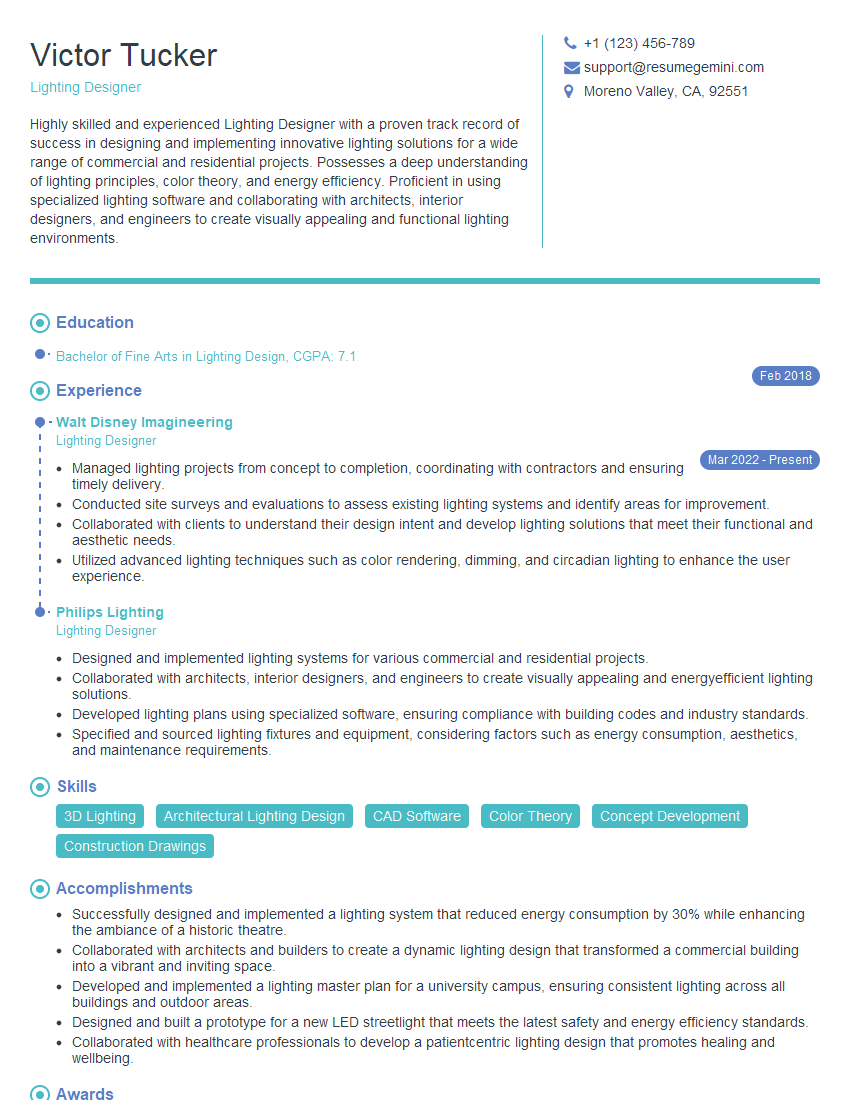
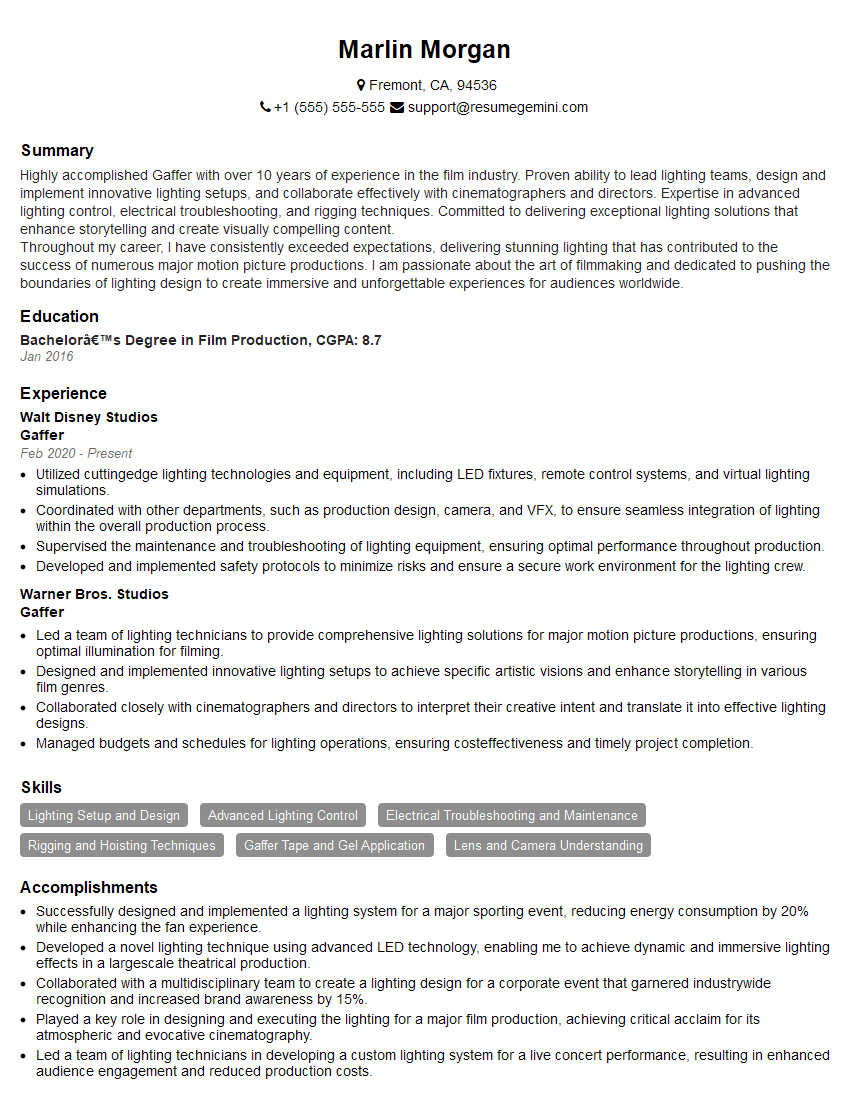
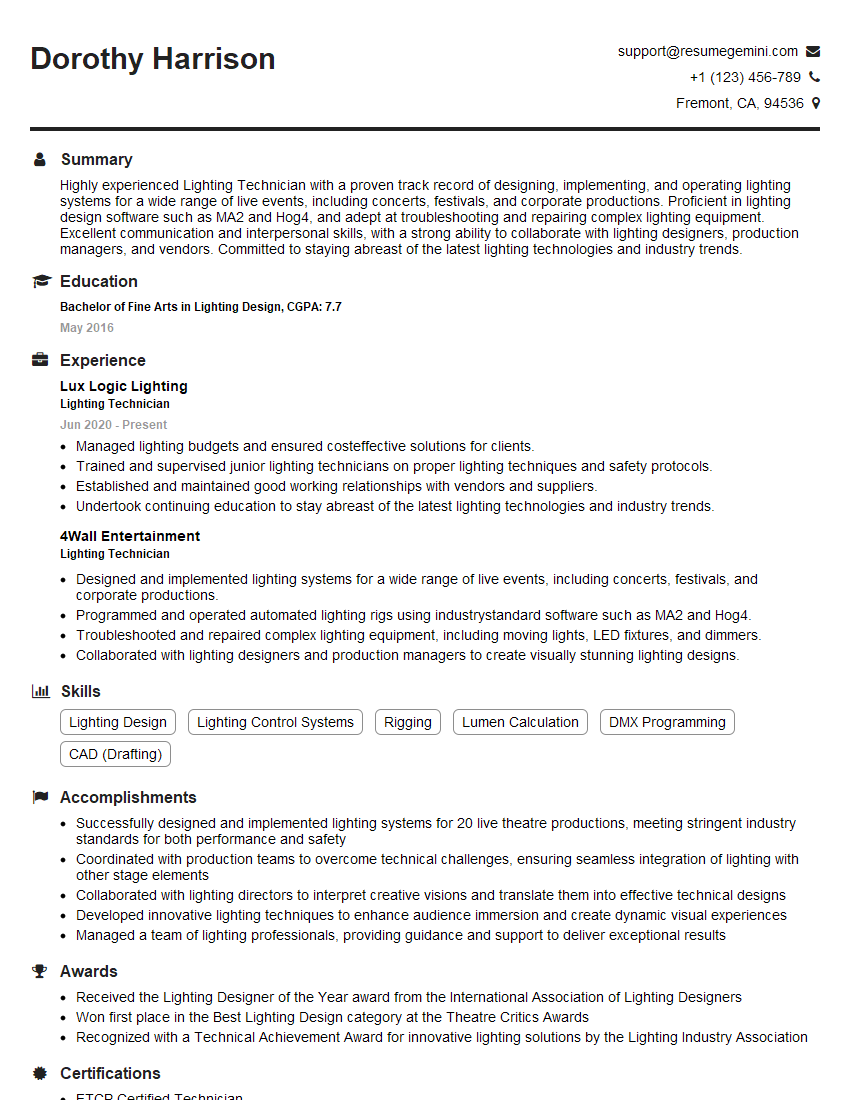
Mastering Show Lighting Coordination opens doors to exciting career advancements, from leading larger-scale productions to specializing in niche areas like architectural lighting. A strong resume is crucial for showcasing your skills and experience to potential employers. Creating an ATS-friendly resume is essential to ensure your application gets noticed. To build a professional and impactful resume, we recommend using ResumeGemini, a trusted resource that can help you craft a compelling narrative of your achievements. Examples of resumes tailored to Show Lighting Coordination are available to help guide you.
Explore more articles
Users Rating of Our Blogs
Share Your Experience
We value your feedback! Please rate our content and share your thoughts (optional).
What Readers Say About Our Blog
Amazing blog
hello,
Our consultant firm based in the USA and our client are interested in your products.
Could you provide your company brochure and respond from your official email id (if different from the current in use), so i can send you the client’s requirement.
Payment before production.
I await your answer.
Regards,
MrSmith
hello,
Our consultant firm based in the USA and our client are interested in your products.
Could you provide your company brochure and respond from your official email id (if different from the current in use), so i can send you the client’s requirement.
Payment before production.
I await your answer.
Regards,
MrSmith
These apartments are so amazing, posting them online would break the algorithm.
https://bit.ly/Lovely2BedsApartmentHudsonYards
Reach out at BENSON@LONDONFOSTER.COM and let’s get started!
Take a look at this stunning 2-bedroom apartment perfectly situated NYC’s coveted Hudson Yards!
https://bit.ly/Lovely2BedsApartmentHudsonYards
Live Rent Free!
https://bit.ly/LiveRentFREE
Interesting Article, I liked the depth of knowledge you’ve shared.
Helpful, thanks for sharing.
Hi, I represent a social media marketing agency and liked your blog
Hi, I represent an SEO company that specialises in getting you AI citations and higher rankings on Google. I’d like to offer you a 100% free SEO audit for your website. Would you be interested?