Unlock your full potential by mastering the most common Measuring and cutting fabrics according to patterns interview questions. This blog offers a deep dive into the critical topics, ensuring you’re not only prepared to answer but to excel. With these insights, you’ll approach your interview with clarity and confidence.
Questions Asked in Measuring and cutting fabrics according to patterns Interview
Q 1. Explain the process of interpreting a pattern for fabric cutting.
Interpreting a sewing pattern is like reading a map for your fabric. It’s a blueprint that guides you to cut the correct shapes and sizes to create a garment. The process begins by carefully examining the pattern pieces, noting their names (e.g., front bodice, back bodice, sleeve), their markings (grainlines, notches, etc.), and the associated size and view (e.g., size 10, view A). Each piece has specific instructions on how to lay it out on the fabric, considering the fabric’s grain. You’ll also need to identify any pattern adjustments or modifications needed before cutting. Imagine baking a cake – the recipe is analogous to the pattern; you need to understand each ingredient and step before starting to mix!
For example, a pattern might instruct you to cut two pieces of fabric for the front bodice, mirroring them to ensure symmetry. Each piece will have a designated grain line indicating the direction of the fabric’s warp yarns, crucial for maintaining the garment’s drape and fit.
Q 2. How do you determine the grain line of a fabric?
The grain line is the direction of the lengthwise yarns (warp) in a woven fabric. It’s incredibly important for garment construction because it dictates the drape and stability of the fabric. It’s typically indicated on the pattern pieces by a parallel line with an arrow pointing along the warp yarns. On the fabric itself, the grain line is usually easily identifiable by running your hand along the fabric; the warp threads feel slightly more taut and aligned. Selvedge (the finished edge of the fabric) runs parallel to the grain line, and provides a great reference point. If there’s no obvious indication, stretching the fabric lightly can help reveal which direction the warp threads are oriented in.
Identifying the grainline incorrectly can lead to a garment that is distorted, doesn’t hang properly, or doesn’t fit correctly. For example, cutting a skirt piece on the bias (at a 45-degree angle to the grainline) instead of on the straight grain will result in a much more flexible and flowing, but also potentially less structured skirt than intended.
Q 3. What are the different types of fabric shears and their uses?
Different fabric shears are designed for specific tasks and fabrics.
- Dressmaker’s shears: These long, sharp shears are excellent for cutting multiple layers of fabric smoothly and precisely. Their longer length provides better leverage and control, particularly useful for larger projects.
- Pinking shears: These shears produce a zig-zag edge that prevents fabric from fraying, often used for finishing seams or creating decorative edges.
- Rotary cutter: A rotary cutter, combined with a cutting mat, allows for fast and efficient cutting of straight lines and curves. This is very popular when cutting multiple fabric layers for quilts or garments.
- Appliqué scissors: These small, sharp shears with a pointed tip are ideal for detailed work like appliqué or snipping threads.
Q 4. Describe your experience using a cutting table and its associated tools.
My experience with cutting tables spans many years. I’m proficient in using large cutting tables with adjustable height, allowing me to maintain good posture during long cutting sessions. A large cutting table is essential for laying out large patterns and getting a good overview of the fabric placement. I’m comfortable using associated tools such as weights to secure pattern pieces (pins can leave holes!), and a measuring tape to double-check fabric placement before cutting. I use a tailor’s square to ensure accurate straight cuts, which is critical for achieving good fit and drape. The rotary cutter and mat system has increased my efficiency significantly, especially on large projects. I’m also adept at maintaining a clean and organized cutting table, which prevents errors and accidents.
For instance, when working on a complex pattern such as a tailored jacket, efficient use of the cutting table is critical to minimize waste and ensure consistent cutting of all pattern pieces.
Q 5. How do you calculate fabric yardage for a given pattern?
Calculating fabric yardage involves understanding your pattern’s requirements and the fabric width. The pattern itself usually provides the estimated yardage needed, but this is often just a guideline. Factors like fabric width (e.g., 45 inches or 60 inches), pattern size, and fabric shrinkage can affect the final yardage. For example, a pattern might suggest 3 yards of 45-inch wide fabric. However, if you’re using 60-inch wide fabric, you may need less because you can fit more pattern pieces onto the fabric. It is best to add extra fabric for matching prints or patterns, and especially for potential error.
To perform accurate calculations, always check the pattern instructions. This will usually contain an accurate calculation given the specified width. It is safer to overestimate than underestimate! Consider adding an extra half-yard to account for pattern matching, design placement, and mistakes. In my experience, meticulously checking pattern instructions, measuring carefully, and adding extra fabric for contingencies ensures successful projects.
Q 6. Explain your process for laying out patterns on fabric efficiently to minimize waste.
Efficient fabric layout is crucial for minimizing waste. It’s a bit like a puzzle! I start by identifying the largest pattern pieces and strategize their placement. I try to arrange the pieces to maximize fabric utilization while considering grainlines, pattern matching (if required), and fabric direction. I often use a full-size pattern layout sheet, or I utilize the cutting table itself. Prioritizing large pieces first means I can see the remaining space more clearly and arrange the smaller pieces effectively. I utilize weights to keep everything securely in place rather than pins. This allows for smoother cutting without leaving holes, and maintains the integrity of the material.
For example, I might place mirror-image pattern pieces close together to conserve space. I carefully check and re-check before cutting, especially when dealing with directional fabrics.
Q 7. How do you handle pattern adjustments for different body sizes or styles?
Pattern adjustments are a common requirement when dealing with different body sizes or styles. This might involve altering existing pattern pieces or creating entirely new ones. There are several techniques to make adjustments. For example, adding or subtracting seams or altering the cutting lines, often with an added seam allowance. Sometimes it’s a case of shifting darts or changing the shape of a particular pattern piece to accommodate a specific body type. There are various commercially available books and online resources offering guidance and techniques for pattern alterations. One common adjustment involves adding fullness to a garment to accommodate larger bust measurements or a more curvy figure.
For instance, when altering a sleeve pattern to accommodate a larger armhole, I might add a small wedge of fabric at the underarm area to achieve the correct fit. Precise measurements, a good understanding of body proportions, and a systematic approach to pattern alterations is crucial for creating well-fitting garments.
Q 8. Describe your experience with various fabric types and their cutting requirements.
My experience encompasses a wide range of fabrics, each demanding a unique approach to cutting. Understanding fabric properties is paramount. For instance, delicate silks require sharp, extremely fine shears and gentle handling to prevent snags and tears. Their drape and potential for slippage necessitate careful pinning and precise cutting. In contrast, heavier fabrics like denim or canvas are more forgiving, allowing the use of rotary cutters for speed and efficiency. However, even with these robust materials, precise cutting is essential to achieve clean seams and prevent fraying. I’ve worked extensively with wovens (like cotton, linen, and twill), knits (jersey, rib knit, interlock), and even specialty fabrics like leather and faux fur, each demanding specific techniques and tools.
For example, when cutting a lightweight chiffon, I use very sharp, thin shears and a self-healing cutting mat to prevent damage to the fabric’s delicate fibers. With heavy canvas, a rotary cutter and a metal ruler provide speed and precision. My experience allows me to instinctively select the right tools and techniques for optimal results, minimizing waste and maximizing fabric integrity.
Q 9. How do you ensure accurate cutting of complex pattern pieces?
Accurate cutting of complex pattern pieces involves a multi-step process emphasizing meticulous preparation and precision execution. First, I carefully lay out the pattern pieces on the fabric, ensuring proper alignment with the grain line and considering fabric nap or direction if needed. This often involves using pattern weights to prevent shifting. For intricate shapes, I utilize notches and markings on the pattern to ensure accurate placement of each component. I also pay close attention to grainlines and directionality, especially for fabrics with distinct patterns or textures.
Secondly, I use sharp shears or a rotary cutter to create clean, precise cuts. A rotary cutter offers speed and efficiency for straight lines and large pieces, but manual shears are crucial for navigating curves and smaller sections. I use a self-healing cutting mat to protect both the blade and my work surface. Finally, I meticulously check each cut piece against the pattern to ensure accuracy before proceeding to the next step. This methodical approach helps to minimize errors and ensures a precise and professional result. Think of it like building a house – a crooked foundation will lead to problems further down the line.
Q 10. What are your strategies for managing fabric handling to prevent damage or stretching?
Careful fabric handling is crucial to prevent damage and stretching. Before cutting, I inspect the fabric for flaws and pre-treat it as necessary. This includes washing and pressing to remove wrinkles and set the fabric’s structure, preventing unexpected shrinkage or distortion during the cutting and construction process. I then lay out the fabric on a clean, flat surface, smoothing it out carefully to remove any creases or folds.
For delicate fabrics, I often use a muslin underlayer to protect the fabric from the cutting surface. During cutting, I use smooth, controlled movements to avoid pulling or stretching. For large pieces, I might utilize fabric weights to keep the fabric from shifting or bunching. After cutting, I carefully handle the fabric pieces, avoiding sharp bends or creases that could damage or distort the material. Proper handling is like treating a precious piece of art – every action must be deliberate and careful.
Q 11. Describe your experience using computerized cutting systems or technologies.
I have experience operating computerized cutting systems, primarily automated cutting tables equipped with software that manages pattern nesting and cutting. This technology offers significant advantages in terms of speed, precision, and efficiency, especially for high-volume production. The software allows for optimizing fabric usage, minimizing waste, and maintaining consistent cutting quality across many pieces. I’m proficient in using various software platforms for generating cutting files and programming the cutting table, including setting blade pressure and speed parameters for different fabric types.
For instance, I can input a digital pattern file and the system automatically nests the pieces, maximizing the fabric yield. The software also allows me to adjust settings to compensate for fabric stretch or shrinkage based on the material properties. This technology greatly enhances accuracy and reduces labor-intensive tasks, allowing for faster turnaround times and consistent results.
Q 12. How do you identify and correct cutting errors?
Identifying and correcting cutting errors is a critical skill. First, I carefully compare each cut piece against its corresponding pattern piece, looking for discrepancies in size, shape, or alignment. Notches and markings are very helpful in identifying misalignments. If an error is found, I assess whether it can be easily rectified or if the piece needs to be re-cut. Small errors, such as slight misalignments, can sometimes be corrected using seam allowances. Larger or more significant errors usually necessitate re-cutting the piece to maintain the garment’s integrity.
If a significant error arises from the original pattern, it is important to make the correction on the master pattern. I would document the corrections for future use, ensuring these corrections are implemented in the next production run. Through experience, you develop an intuitive understanding of potential error sources and strategies for preventing them in future projects. The goal is to always strive for quality over speed.
Q 13. Explain the importance of maintaining consistent cutting techniques.
Maintaining consistent cutting techniques is fundamental for achieving high-quality garments and minimizing waste. Consistency translates to accurate pieces, which leads to well-fitting, professionally constructed garments. Inconsistent cutting can lead to size discrepancies, mismatched seams, and a generally unprofessional final product. Imagine trying to build a tower with unevenly sized bricks – it would be unstable and likely to fall.
Consistency is developed through practice and attention to detail. This includes using sharp tools, employing proper posture and hand movements, and consistently following the same workflow for each cutting project. Using appropriate tools for each fabric, such as sharp shears for delicate fabrics and a rotary cutter for sturdy ones, is part of this consistency.
Q 14. What are the key differences between cutting woven and knit fabrics?
Woven and knit fabrics have distinctly different structures and require different cutting techniques. Woven fabrics are made from interlaced yarns, creating a stable structure that holds its shape well. They typically require precise cutting to maintain sharp lines and angles. Knit fabrics, on the other hand, are made from looped yarns, giving them more stretch and flexibility. They can easily stretch or distort during cutting, requiring careful handling and potentially different tools.
When cutting wovens, a rotary cutter can be used for efficiency, ensuring straight lines. With knits, using sharp shears and employing techniques to minimize stretch and distortion is key. Pinning is crucial for knits to ensure the fabric doesn’t move or shift during the cutting process. Understanding the inherent properties of each fabric type allows for adapting techniques for optimal results. For example, I will always use a sharp blade for both, but I will be much more gentle with the knits and will use a pattern weight to hold it flat rather than pinning it.
Q 15. How do you deal with fabric that is difficult to cut, such as stretch fabrics or leather?
Cutting challenging fabrics like stretch knits or leather requires a different approach than cutting woven fabrics. The key is to minimize stretching and maximize precision.
- Stretch Fabrics: I use sharp rotary cutters or shears with a very sharp blade to prevent fraying. I often use a cutting mat with a non-slip surface to keep the fabric stable. I also pre-stretch the fabric slightly before cutting to account for its tendency to give. Pinning is crucial, using plenty of pins to hold the pattern pieces in place without distorting the fabric. For particularly challenging knits, using a walking foot on a sewing machine to help feed the fabric evenly is extremely helpful before cutting.
- Leather: Leather requires even sharper tools, often specialized leather shears or a very sharp rotary blade. I cut on a self-healing cutting mat to protect the blade and prevent the mat from getting damaged. I also use weights or clamps to hold the pattern pieces in place, as pins can leave holes. Working on a firm, flat surface is crucial to avoid uneven cuts. Often, I will make small test cuts on a scrap piece of the same leather to determine the best cutting technique before cutting the main piece.
The goal with both is to make clean, precise cuts to avoid having to make alterations later. Proper tools and techniques are paramount.
Career Expert Tips:
- Ace those interviews! Prepare effectively by reviewing the Top 50 Most Common Interview Questions on ResumeGemini.
- Navigate your job search with confidence! Explore a wide range of Career Tips on ResumeGemini. Learn about common challenges and recommendations to overcome them.
- Craft the perfect resume! Master the Art of Resume Writing with ResumeGemini’s guide. Showcase your unique qualifications and achievements effectively.
- Don’t miss out on holiday savings! Build your dream resume with ResumeGemini’s ATS optimized templates.
Q 16. How do you ensure the quality of your cutting work meets production standards?
Maintaining quality in cutting is paramount for efficient production and a good final product. I consistently ensure quality by adhering to several key practices:
- Accurate Pattern Placement: Precisely laying out patterns to minimize waste and ensure consistent sizing is essential. I always double-check measurements and alignment before cutting.
- Sharp Tools: Using sharp blades consistently is non-negotiable. Dull blades lead to frayed edges, inaccurate cuts, and potential damage to fabric. I regularly inspect and sharpen my tools or replace them as needed.
- Consistent Cutting Technique: Maintaining a smooth, consistent cutting motion helps to create clean, even cuts. Rushing through the process leads to errors.
- Regular Quality Checks: Throughout the process, I conduct regular quality checks, inspecting cut pieces for flaws such as uneven edges, incorrect sizes, or fabric damage. Addressing these issues immediately prevents larger problems downstream.
- Adherence to Standards: I always follow the established cutting standards and guidelines provided by the company, ensuring uniformity and consistency across all cut pieces.
Through these methods, I contribute to minimizing errors, rework, and ultimately, waste, ensuring our production meets the highest standards.
Q 17. Explain your experience with different types of cutting tools (e.g., rotary cutters, electric shears).
My experience encompasses a range of cutting tools, each suited for different fabrics and situations.
- Rotary Cutters: These are my go-to for most woven fabrics due to their efficiency and precision. I’m proficient with different sizes, allowing me to choose the appropriate blade for the task at hand.
- Electric Shears: Ideal for cutting through multiple layers of heavy fabric or difficult-to-cut materials like denim or canvas. They save time and effort on large projects. However, I’m aware of their limitations with delicate fabrics.
- Fabric Shears: Essential for precision cutting and detailed work, such as trimming seam allowances or cutting curves. I always keep several pairs on hand, each dedicated to different types of fabric to avoid cross-contamination of fibers.
- Pinking Shears: Used to finish raw edges of fabric and prevent fraying. I use these frequently with woven fabrics, especially those prone to unraveling.
My selection of tools depends entirely on the project’s demands. I always prioritize safety and the appropriate tool for the job to ensure efficiency and quality.
Q 18. How do you work effectively as part of a cutting team to maintain production efficiency?
Effective teamwork is essential in a cutting room environment. My approach focuses on collaboration and efficiency.
- Clear Communication: I maintain open communication with team members, ensuring everyone understands their roles, tasks, and the overall production goals.
- Efficient Workflow: We work together to optimize workflow, ensuring a smooth transition of tasks and minimizing delays. We help each other and share tips for improving productivity.
- Mutual Support: We support each other, offering assistance when needed and sharing knowledge and expertise to help each other solve challenges.
- Maintaining Order: We keep our workspace organized and clean to prevent errors, reduce potential for injury, and maintain efficiency.
- Problem-Solving: When issues arise, we work collaboratively to identify the root cause and implement the best solution to minimize impact on production.
A collaborative approach, respectful communication, and a shared commitment to quality ensure a highly efficient and productive cutting team.
Q 19. Describe a time you had to troubleshoot a problem during the cutting process. What was your solution?
During a large order of a delicate silk fabric, we encountered a problem with the fabric slipping and causing misaligned cuts. This led to significant waste and delays.
My solution involved a multi-pronged approach:
- Fabric Preparation: We tried pre-pressing the fabric with a low heat iron. This reduced its tendency to slip considerably.
- Adhesive Spray: We implemented a temporary adhesive spray on the pattern pieces before placement. This helped to secure the pattern to the fabric, preventing slippage during cutting.
- Team Collaboration: We adjusted our cutting technique slightly, using slower, more controlled cuts to minimize movement. Improved communication between team members ensured the entire team utilized the new strategies.
- Improved Communication: We also implemented a more thorough quality check of each piece as it was cut. This immediately alerted us to any discrepancies or errors before they accumulated.
By addressing the slippage issue through careful fabric preparation and revised cutting and communication protocols, we significantly reduced waste and restored production efficiency.
Q 20. How familiar are you with different types of pattern layouts (e.g., nesting, spreading)?
I’m very familiar with various pattern layouts crucial for efficient fabric utilization and minimizing waste.
- Nesting: This involves strategically arranging pattern pieces on the fabric to maximize the use of material. This requires an understanding of fabric grain and pattern piece orientation. I use both manual and computer-aided nesting software to optimize layout and minimize waste. Computer-aided design (CAD) greatly enhances this process, especially for larger production runs.
- Spreading: This refers to the process of laying out multiple layers of fabric evenly and smoothly for cutting. It is crucial to ensure consistent cutting and reduce potential inaccuracies. The key is a controlled and even spreading technique to prevent fabric bunching or wrinkles, which can cause errors in the cutting process.
My expertise in both nesting and spreading ensures minimal fabric waste, leading to significant cost savings and maximizing efficiency.
Q 21. What safety precautions do you take when using sharp cutting tools?
Safety is my top priority when using sharp cutting tools. My precautions include:
- Sharp Tools Only: Using only sharp, well-maintained tools minimizes the risk of slips and accidents. Dull blades require more force, increasing the risk of injury.
- Protective Gear: I always use a self-healing cutting mat to protect my work surface and prevent blade damage. I also wear a protective cutting glove on my non-dominant hand whenever using rotary cutters to minimize the risk of cuts.
- Proper Handling: I always handle cutting tools carefully and with respect. I never leave them unattended, and I pass them carefully to others, blade down.
- Workspace Organization: I maintain a clean and organized workspace to prevent accidents caused by cluttered areas. This is crucial for efficient work and minimizing potential hazards.
- Regular Breaks: Long periods of cutting can lead to fatigue and increase the risk of errors. I take regular short breaks to maintain focus and minimize the chances of accidents.
Adhering to these safety protocols protects myself and my colleagues from potential injuries, creating a safer and more productive work environment.
Q 22. How do you handle fabric shrinkage or stretching during the cutting process?
Addressing fabric shrinkage and stretch during cutting is crucial for achieving accurate garment construction. It involves pre-shrinking the fabric and carefully accounting for its inherent properties.
Pre-shrinking: Before cutting, I always pre-shrink the fabric. This involves washing and drying the fabric according to the manufacturer’s instructions, or using a test swatch to determine the ideal method. This eliminates post-production shrinkage surprises. For example, a linen fabric might require a pre-wash to avoid significant shrinkage after the garment is sewn.
Grainlines and Bias: Understanding the fabric’s grain is critical. Cutting along the lengthwise grain minimizes stretching, while cutting on the bias (at a 45-degree angle) requires extra care due to its increased stretch. I use chalk and a ruler to carefully mark grainlines on the fabric before cutting to ensure consistent results.
Layout Planning: Careful pattern layout minimizes waste and accommodates the fabric’s directional stretch. Laying out pattern pieces strategically considers the stretch characteristics of the fabric and ensures a consistent cut. If there’s a highly directional stretch, I’ll ensure that the grainline on each piece aligns correctly. For example, with a one-way stretch knit, I’ll ensure that the stretch direction runs parallel across the garment for a smooth finish.
Cutting Techniques: Using sharp shears and employing a smooth, even cutting action is vital. This prevents stretching during the cutting process. Using rotary cutters with a self-healing mat can also be beneficial for precise and consistent cuts on larger quantities.
Q 23. Explain your understanding of different types of fabric finishes and how they affect cutting.
Fabric finishes significantly impact the cutting process. Different finishes affect the fabric’s drape, texture, and handling. Understanding these characteristics is essential for efficient and accurate cutting.
- Pre-shrunk: Fabrics labeled ‘pre-shrunk’ have undergone a process to minimize shrinkage. These generally require less pre-treatment before cutting.
- Mercerized: Mercerization increases fabric luster and strength. Mercerized fabrics are generally more resistant to stretching during cutting.
- Calendered: Calendering smooths the fabric’s surface, often producing a crisp finish. This can affect draping; the fabric might have less give and require more careful handling.
- Water-Repellent: Water-repellent finishes can make the fabric slightly stiffer. This might require adjustments in cutting techniques for certain patterns or fabrics.
- Stiff/Heavy fabrics: These require sharper tools and potentially different cutting techniques to avoid unnecessary stress on the fabric. For example, a heavy denim requires sharper shears and a firm, steady hand.
I always carefully examine the fabric before cutting, noting any irregularities in its texture or finish that might influence how I handle it.
Q 24. How do you maintain the accuracy of your cutting measurements?
Maintaining accuracy in cutting is paramount. I employ several methods to ensure precision.
- Sharp Tools: Using sharp shears or rotary cutters is fundamental. Dull blades cause ragged edges and inaccurate cuts. I regularly sharpen my tools to maintain their effectiveness.
- Accurate Measurements: I always double-check my pattern measurements and carefully align them with the fabric grain before cutting. I use accurate measuring tools, and I routinely check their calibration.
- Consistent Cutting Techniques: Maintaining a consistent cutting technique is essential to minimize variations in cut pieces. A smooth, even action with the shears or rotary cutter produces consistent results.
- Checking Against the Pattern: After cutting each piece, I carefully compare it with the pattern to ensure accuracy. Any discrepancies are noted and addressed immediately.
- Quality Control Checks: Regular checks during the cutting process help to identify and rectify errors early on. This prevents further issues down the line.
Q 25. What software or technology are you proficient in for pattern making or cutting?
While my primary skillset is hands-on cutting, I’m proficient in using Computer-Aided Design (CAD) software for pattern making. I have experience with Lectra Modaris, a leading software in the industry for pattern design and grading. It’s used for creating digital patterns, automatically grading sizes, and optimizing fabric layouts to minimize waste. For larger-scale operations, I’m familiar with automated cutting systems. These systems use digital patterns and software to control high-speed cutting machines and minimize human error in repetitive cutting tasks.
Q 26. How do you adapt to changes in production schedules or deadlines?
Adapting to changes in production schedules is a crucial aspect of this role. My approach involves prioritizing tasks based on urgency and deadlines.
When a change occurs, I first assess the impact on existing tasks and then prioritize accordingly. I communicate clearly with my team and supervisors to ensure everyone is aware of the adjustments. I’m comfortable working under pressure and I’m adept at re-organizing my workflow to meet new deadlines. For instance, if a rush order comes in, I’ll immediately re-assess my workload and prioritize cutting the necessary fabric. I’ll also communicate with the team to ensure that everyone understands the adjustments in the schedule and their part in meeting the new deadline.
Q 27. How do you prioritize tasks and manage your time effectively in a fast-paced cutting room environment?
In a fast-paced environment, efficient task prioritization and time management are critical. I utilize several strategies:
- Prioritization Matrix: I use a prioritization matrix (like the Eisenhower Matrix – Urgent/Important) to categorize tasks based on urgency and importance, focusing on the most critical tasks first.
- Detailed Planning: I carefully plan my daily tasks, anticipating potential bottlenecks. This proactive approach reduces unexpected delays.
- Batching Similar Tasks: Grouping similar tasks together, like cutting all the same pattern pieces at once, improves efficiency and reduces context switching.
- Timeboxing: Allocating specific time blocks to particular tasks helps maintain focus and prevent multitasking.
- Regular Breaks: Short, regular breaks maintain concentration and improve overall productivity. This prevents burnout in the fast-paced environment.
Q 28. Describe your experience with quality control procedures related to fabric cutting.
Quality control is integrated into every stage of my work. My quality control procedures include:
- Pre-cutting inspection: Before cutting, I carefully inspect the fabric for defects such as holes, stains, or inconsistencies in the weave. I ensure that the fabric is appropriately pre-treated.
- Accurate pattern alignment: I carefully align pattern pieces to the fabric grain and to each other to ensure consistent cuts and minimize waste.
- Regular tool maintenance: Regularly sharpened shears and rotary cutters are essential for clean, precise cuts. Maintaining my tools is key.
- Post-cutting inspection: After cutting, I carefully examine each piece, checking for accurate sizing, straight edges, and the absence of defects. I perform a final check to ensure that each piece matches the pattern piece and that all grainlines are correctly aligned.
- Documentation: I meticulously document any issues or discrepancies found during the cutting process. This information is vital for identifying potential problems and implementing corrective measures.
Key Topics to Learn for Measuring and Cutting Fabrics According to Patterns Interview
- Understanding Pattern Layouts: Grasping the principles of fabric grainlines, pattern pieces, and their arrangement for efficient fabric utilization and minimal waste.
- Accurate Fabric Measurement: Mastering techniques for precisely measuring fabric width, length, and bias, accounting for shrinkage and stretch.
- Pattern Marking and Transfer: Understanding various methods for transferring pattern markings onto fabric (e.g., tracing, chalk, pins) and ensuring accuracy.
- Fabric Handling and Cutting Techniques: Developing proficiency in using rotary cutters, shears, and other tools for clean, precise cuts, considering fabric type and weight.
- Managing Fabric Grain and Stretch: Understanding how to align fabric grain correctly for consistent garment shape and managing stretch fabrics to avoid distortion.
- Troubleshooting Cutting Issues: Developing problem-solving skills to identify and correct common cutting errors, such as inaccurate measurements or improper grain alignment.
- Different Cutting Methods: Exploring various cutting techniques (e.g., single-layer vs. multi-layer cutting) and their suitability for different fabric types and projects.
- Pre-Cutting Preparations: Understanding the importance of pre-cutting checks, like inspecting the pattern and fabric for defects, and preparing the cutting surface.
- Safety Procedures: Prioritizing safety by using appropriate cutting tools correctly and maintaining a tidy workspace.
Next Steps
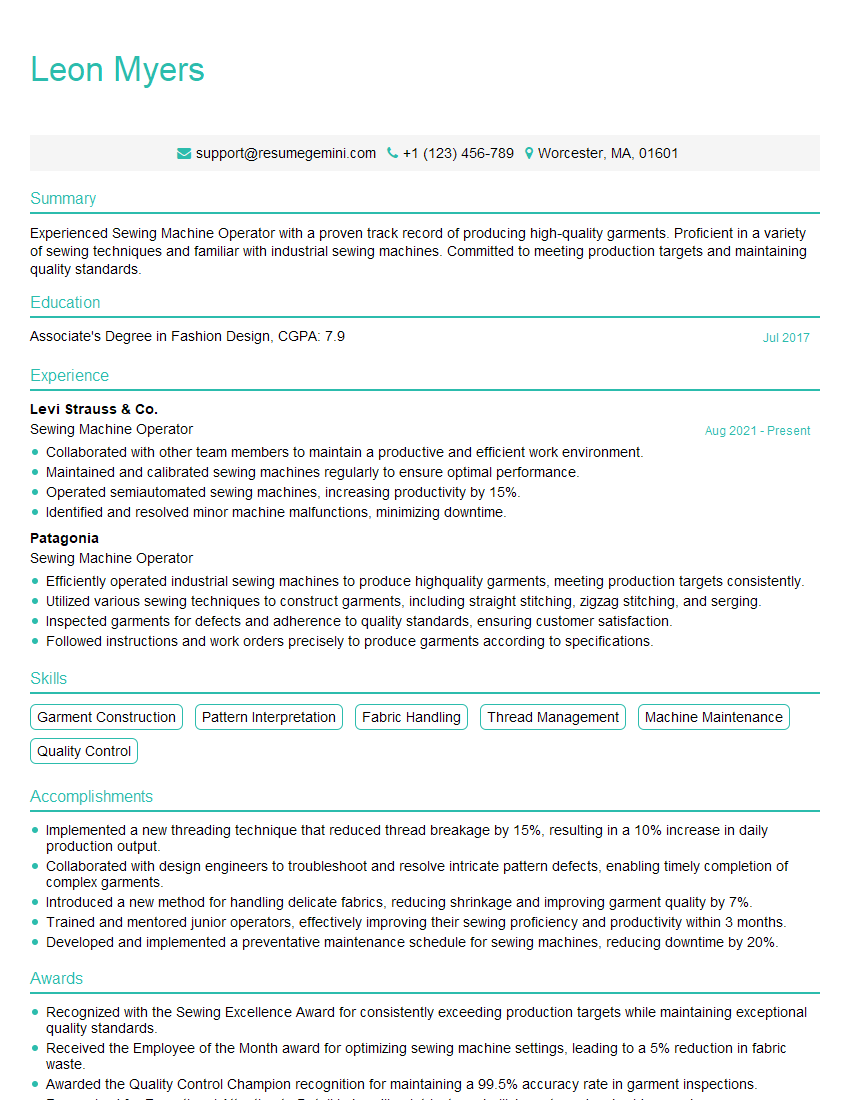
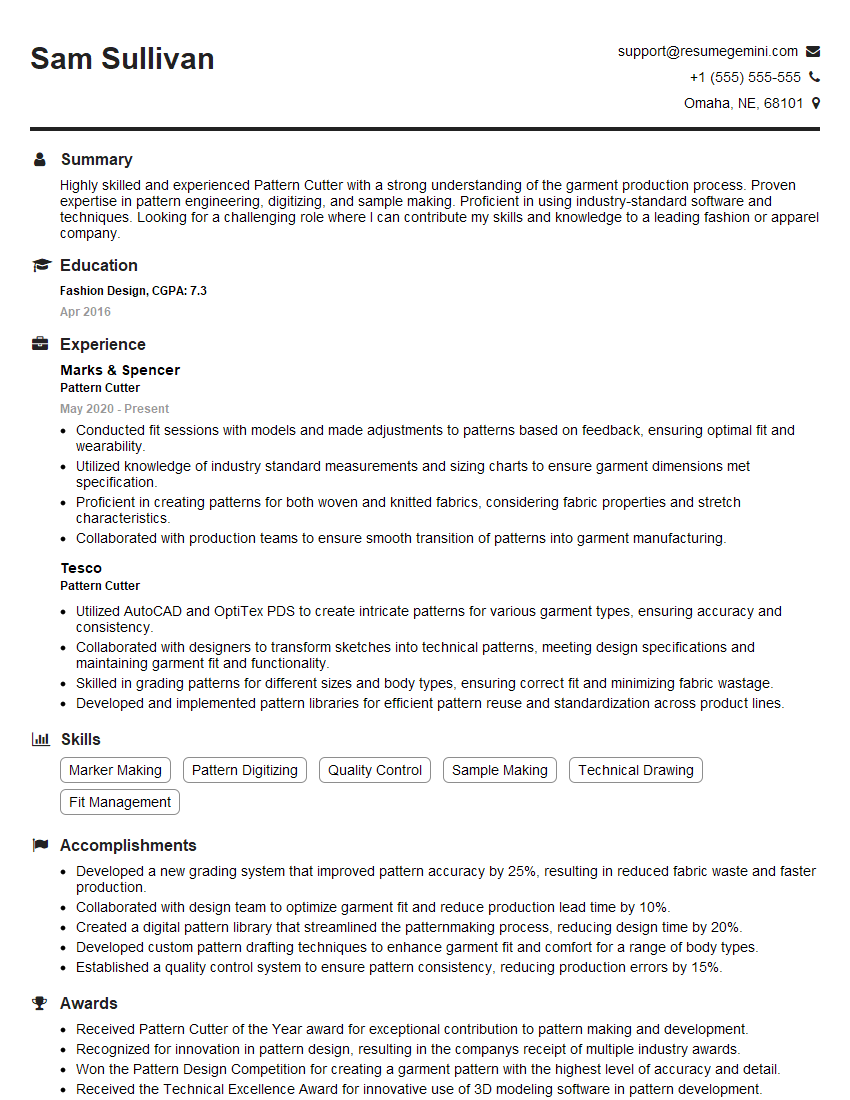
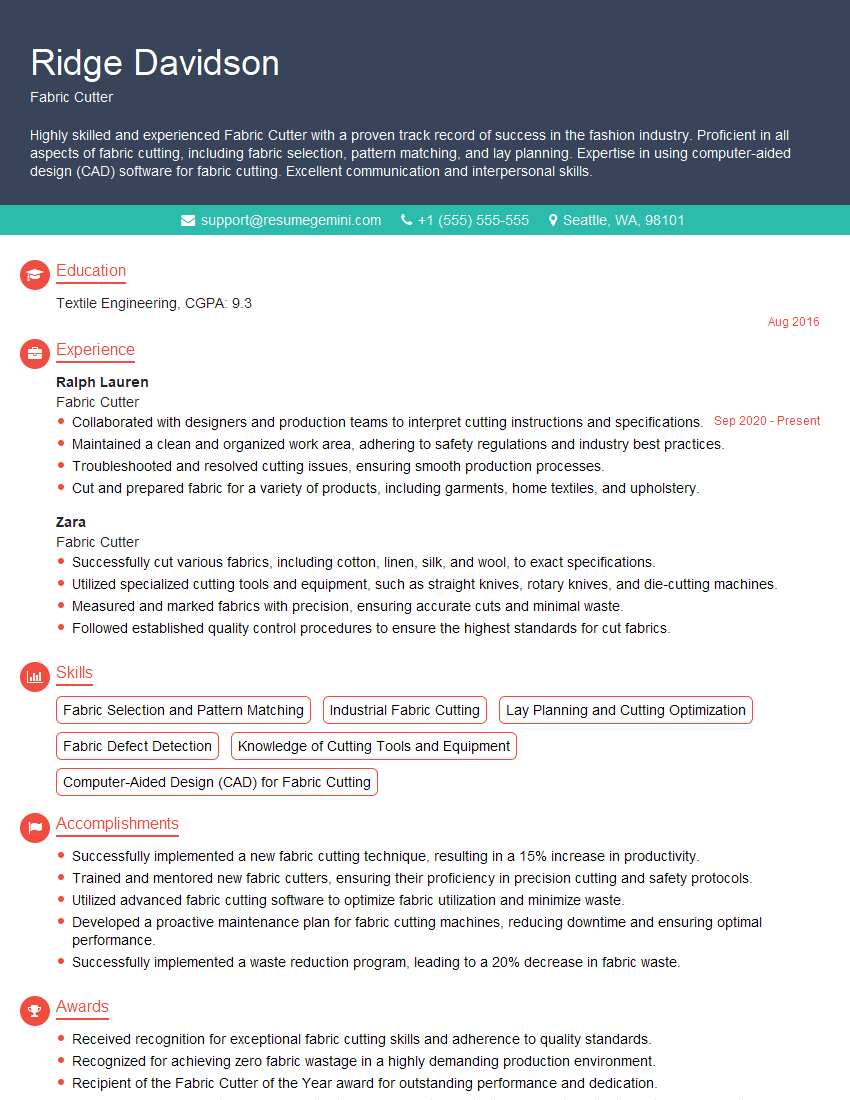
Mastering the art of measuring and cutting fabrics according to patterns is crucial for success in the fashion and textile industries. It demonstrates precision, attention to detail, and a foundational understanding of garment construction. This skill significantly enhances your career prospects, leading to more opportunities and potentially higher earning potential. To maximize your chances, create an ATS-friendly resume that highlights your abilities. ResumeGemini is a trusted resource that can help you build a professional and effective resume. They even provide examples of resumes tailored to roles involving measuring and cutting fabrics according to patterns. Invest time in crafting a compelling resume; it’s your first impression with potential employers.

Explore more articles
Users Rating of Our Blogs
Share Your Experience
We value your feedback! Please rate our content and share your thoughts (optional).
What Readers Say About Our Blog
Amazing blog
hello,
Our consultant firm based in the USA and our client are interested in your products.
Could you provide your company brochure and respond from your official email id (if different from the current in use), so i can send you the client’s requirement.
Payment before production.
I await your answer.
Regards,
MrSmith
hello,
Our consultant firm based in the USA and our client are interested in your products.
Could you provide your company brochure and respond from your official email id (if different from the current in use), so i can send you the client’s requirement.
Payment before production.
I await your answer.
Regards,
MrSmith
These apartments are so amazing, posting them online would break the algorithm.
https://bit.ly/Lovely2BedsApartmentHudsonYards
Reach out at BENSON@LONDONFOSTER.COM and let’s get started!
Take a look at this stunning 2-bedroom apartment perfectly situated NYC’s coveted Hudson Yards!
https://bit.ly/Lovely2BedsApartmentHudsonYards
Live Rent Free!
https://bit.ly/LiveRentFREE
Interesting Article, I liked the depth of knowledge you’ve shared.
Helpful, thanks for sharing.
Hi, I represent a social media marketing agency and liked your blog
Hi, I represent an SEO company that specialises in getting you AI citations and higher rankings on Google. I’d like to offer you a 100% free SEO audit for your website. Would you be interested?