Cracking a skill-specific interview, like one for Cyber Warfare Tactics, requires understanding the nuances of the role. In this blog, we present the questions you’re most likely to encounter, along with insights into how to answer them effectively. Let’s ensure you’re ready to make a strong impression.
Questions Asked in Cyber Warfare Tactics Interview
Q 1. Explain the difference between black box, white box, and grey box penetration testing.
Penetration testing, a crucial part of cybersecurity, comes in three main flavors: black box, white box, and grey box. They differ primarily in the amount of information the tester has about the target system.
- Black Box Testing: Think of this as a real-world attack. The tester has no prior knowledge of the system’s internal workings, architecture, or code. They only interact with it from the outside, just like a malicious actor would. This mimics a real-world attack scenario and is excellent for finding vulnerabilities an attacker might discover.
- White Box Testing: Here, the tester has complete access to the system’s internal workings, including source code, network diagrams, and documentation. This allows for a more thorough and targeted assessment, but it’s less realistic as attackers rarely have this level of access. White box testing is ideal for finding deeply embedded vulnerabilities.
- Grey Box Testing: This sits in the middle. The tester has partial knowledge of the system, perhaps some network diagrams or limited access to certain parts. It’s a more realistic approach than white box, providing a balance between comprehensive testing and mimicking a real-world attack where an attacker might gain partial knowledge through reconnaissance or social engineering.
For example, a black box test might involve attempting to exploit a known vulnerability in a web application without knowing its underlying code, while a white box test might involve directly analyzing the code to identify and exploit vulnerabilities before they’re even publicly known.
Q 2. Describe your experience with common attack vectors, such as phishing, SQL injection, and cross-site scripting.
I have extensive experience with common attack vectors, having encountered and mitigated them numerous times in various penetration testing engagements and incident response scenarios. Let’s look at some key examples:
- Phishing: This is arguably the most prevalent attack vector. I’ve seen sophisticated phishing campaigns using highly convincing emails, websites, and even SMS messages to trick users into revealing credentials or downloading malware. My experience includes analyzing phishing email headers, identifying malicious links, and educating users on how to recognize and avoid such attacks. I’ve also designed and implemented security awareness training programs to counter these threats.
- SQL Injection: A classic database attack, I’ve encountered many variations. My experience encompasses identifying vulnerable web applications, crafting malicious SQL queries to extract sensitive data or manipulate database records, and developing secure coding practices to prevent these attacks. For instance, I’ve used tools to automatically scan for SQL injection vulnerabilities and then manually verified the findings through targeted exploitation attempts.
- Cross-Site Scripting (XSS): I’ve worked extensively with various XSS vulnerabilities, from reflected XSS (easily detectable) to persistent XSS (more difficult to find). My approach involves identifying vulnerable input fields in web applications, injecting malicious JavaScript code, and observing the impact. I’ve also developed and implemented countermeasures such as input validation, output encoding, and Content Security Policy (CSP) to mitigate these risks.
Q 3. What are the key stages of a cyber warfare operation?
A cyber warfare operation, while differing in scale and target, generally follows a structured approach. The key stages include:
- Intelligence Gathering (Reconnaissance): This initial phase focuses on gathering information about the target, its infrastructure, weaknesses, and defenses. This could involve passive techniques like OSINT (Open Source Intelligence) or active techniques like port scanning and vulnerability scanning.
- Vulnerability Assessment: Once intelligence is gathered, a thorough assessment of identified vulnerabilities is performed to prioritize targets based on their potential impact and exploitability. This involves using automated tools and manual techniques to confirm vulnerabilities.
- Exploitation: This stage involves actively exploiting the identified vulnerabilities to gain unauthorized access to the target system. This might involve using exploits, malware, or social engineering techniques.
- Privilege Escalation: Once initial access is gained, attackers often try to gain higher privileges within the system to access more sensitive data or execute further commands.
- Data Exfiltration: After gaining access, the attacker will attempt to extract sensitive data from the compromised system. This could involve transferring data to external servers or using covert channels.
- Maintaining Access (Persistence): Attackers often aim to maintain persistent access to the compromised system for future operations, even after initial intrusion detection. This is often achieved by installing backdoors or using other methods.
- Post-Exploitation Activities: This includes activities like further reconnaissance, data destruction, or denial-of-service attacks.
Understanding these stages is critical for both offensive and defensive cyber operations.
Q 4. How do you identify and assess vulnerabilities in a network?
Identifying and assessing network vulnerabilities involves a multi-faceted approach that combines automated tools and manual techniques. It’s a continuous process, not a one-time event. Here’s a breakdown:
- Network Scanning: Tools like Nmap are used to discover active hosts, open ports, and running services on a network. This provides a baseline understanding of the network infrastructure.
- Vulnerability Scanning: Tools like Nessus or OpenVAS are employed to identify known vulnerabilities in systems and applications. These tools use databases of known vulnerabilities to check for their presence on the network.
- Penetration Testing: As discussed earlier, penetration testing involves attempting to exploit vulnerabilities to assess their impact. This provides a more realistic evaluation of the network’s security posture.
- Manual Analysis: While automated tools are invaluable, manual analysis is crucial. This includes reviewing configurations, examining logs, and investigating suspicious activity. It’s often during this stage that subtle, overlooked vulnerabilities are uncovered.
- Social Engineering Assessments: Evaluating the human element is critical. This includes phishing simulations and social engineering tests to assess employee awareness and susceptibility to manipulation.
After identifying vulnerabilities, their severity is assessed based on factors like exploitability, impact, and likelihood of exploitation. This allows for prioritizing remediation efforts.
Q 5. What are the ethical considerations in cyber warfare tactics?
Ethical considerations in cyber warfare tactics are paramount. There’s a crucial difference between defensive actions to protect your systems and offensive actions aimed at harming others. Key ethical considerations include:
- Legality: Actions must comply with both international and national laws. Unauthorized access, data theft, and disruption of services are illegal in most jurisdictions.
- Proportionality: The response should be proportionate to the threat. Overly aggressive responses can be considered unethical.
- Discrimination: Attacks should target systems and infrastructure, not individuals. Targeting civilians is strictly unethical and often illegal.
- Transparency: When possible, actions should be transparent and their purpose clearly defined. This increases accountability and reduces the potential for escalation.
- Due Diligence: Careful consideration should be given to the potential consequences of actions, ensuring they do not cause unnecessary harm or damage.
Ethical guidelines are crucial to prevent unintended consequences and maintain a responsible approach to cyber operations. A robust ethical framework is vital for any cyber warfare program.
Q 6. Explain your experience with network reconnaissance techniques.
Network reconnaissance is a critical first step in any cyber operation, both offensive and defensive. My experience encompasses both passive and active reconnaissance techniques:
- Passive Reconnaissance: This involves gathering information about the target without directly interacting with its systems. This includes using search engines, social media, and publicly available databases to gather information about the target’s infrastructure, employees, and technologies.
- Active Reconnaissance: This involves directly interacting with the target’s systems to gather information. This could include port scanning (using Nmap), network mapping (using tools like Traceroute), and vulnerability scanning (using tools like Nessus). It’s crucial to ensure that active reconnaissance techniques are used ethically and legally.
For example, I’ve used Shodan to identify publicly accessible devices and services on the target network and then used Nmap to perform more detailed scans to pinpoint vulnerabilities. The key to effective reconnaissance is to be systematic, thorough, and discreet. Leaving no trace is a key element of success in these operations.
Q 7. Describe your experience with exploitation frameworks like Metasploit.
Metasploit is a powerful penetration testing framework that I’ve used extensively. It provides a vast library of exploits, auxiliary modules, and post-exploitation tools. My experience includes:
- Exploit Development: While Metasploit provides many pre-built exploits, I’ve also developed custom exploits for specific vulnerabilities.
- Payload Delivery: I’ve used Metasploit to deliver various payloads, including meterpreter shells, to gain access to target systems.
- Post-Exploitation: Metasploit’s post-exploitation capabilities allow for extensive reconnaissance and privilege escalation once initial access has been gained. This enables identification of critical data and further compromise of the target system.
- Automated Attacks: Metasploit can automate attacks, allowing for efficient testing of various vulnerabilities.
msfconsole is the command-line interface to Metasploit. A typical workflow might involve using search to find relevant exploits, then using use to select an exploit, configuring its options, and finally executing it using run. Post-exploitation might involve commands like getuid to check user privileges or migrate to move to another process.
However, it’s crucial to remember that using Metasploit or any other penetration testing tool requires ethical considerations and permission from the target organization.
Q 8. How do you perform post-exploitation activities?
Post-exploitation activities are the actions a malicious actor takes after successfully compromising a system. Think of it like this: gaining initial access is like unlocking a door; post-exploitation is exploring the house, stealing valuables, and potentially setting up for future intrusions. These activities aim to maintain access, exfiltrate data, escalate privileges, or further compromise the network.
My approach is methodical and focuses on minimizing detection. It typically involves these steps:
- Privilege Escalation: This involves leveraging vulnerabilities to gain higher-level system access, often utilizing tools like
sudo(on Linux/macOS) or exploiting known weaknesses in Windows security. For example, I might identify a misconfigured service that grants excessive permissions. - Lateral Movement: This is the process of moving from one compromised system to another within the network. This might involve using tools like
PsExec(on Windows) to execute commands on remote machines or leveraging network shares. A successful lateral movement strategy can lead to compromise of the entire network. - Data Exfiltration: Once access is established, the goal is to steal sensitive information. This could range from financial records to intellectual property. Methods include using tools that encrypt and compress data for covert transfer through various channels such as email, cloud storage, or custom-built communication channels.
- Persistence: The aim is to maintain access to the system even after a reboot. Techniques range from modifying system startup scripts to injecting malicious code into legitimate processes. Think of it as leaving a backdoor so you can easily return later.
- Clean-up: This critical step involves removing traces of the attack. However, it’s difficult to completely erase all evidence, especially with advanced forensics techniques.
Throughout the process, I prioritize using techniques that are low-profile and evade detection by security systems, such as using living-off-the-land techniques to blend into the normal operating environment.
Q 9. What are your experience with various malware analysis techniques?
Malware analysis is crucial for understanding how malware operates and developing countermeasures. My experience encompasses both static and dynamic analysis.
- Static Analysis: This involves examining the malware without executing it. I use tools like disassemblers (e.g., IDA Pro) and decompilers to understand the code’s structure, identify suspicious functions, and look for indicators of compromise (IOCs). For instance, analyzing the code might reveal hardcoded IP addresses used for command and control (C2).
- Dynamic Analysis: This involves executing the malware in a controlled environment, such as a virtual machine, to observe its behavior. Sandboxes like Cuckoo Sandbox are invaluable for this. I monitor system calls, network traffic, and file system changes to understand what the malware does. A specific example would be observing the malware attempting to connect to a known malicious domain.
- Behavioral Analysis: This goes beyond simply observing the actions; it involves interpreting the why behind those actions. Why does it connect to this specific server? What data is it trying to exfiltrate? This interpretive aspect is key to building a comprehensive understanding and developing appropriate defenses.
I have extensive experience with various malware families, from simple viruses to sophisticated advanced persistent threats (APTs). This experience allows me to effectively analyze complex malware and devise effective mitigation strategies.
Q 10. How do you develop and implement security countermeasures?
Developing and implementing security countermeasures involves a layered approach, combining preventative, detective, and responsive measures. It’s like building a castle with multiple walls and defenses.
- Preventative Measures: This includes implementing strong access controls, regular software updates, network segmentation, and intrusion prevention systems (IPS). Regular security audits identify vulnerabilities before attackers can exploit them.
- Detective Measures: These are designed to identify malicious activity that’s already occurred. This involves security information and event management (SIEM) systems, intrusion detection systems (IDS), and endpoint detection and response (EDR) solutions. These tools help monitor network and system events, alerting us to suspicious behavior.
- Responsive Measures: This focuses on incident response. A well-defined incident response plan, including clear procedures for containment, eradication, recovery, and post-incident activity, is essential. Regular security awareness training for employees helps reduce the likelihood of human error which is a major factor in many breaches.
The specifics of implementation depend heavily on the environment. A small business will have different needs than a large corporation. However, the fundamental principles of layered security, proactive vulnerability management, and a robust incident response plan are universally applicable.
Q 11. Describe your experience with incident response methodologies.
My incident response methodology follows a structured approach based on widely accepted frameworks like NIST Cybersecurity Framework. It’s a crucial process that involves these key phases:
- Preparation: This is the groundwork—creating a documented incident response plan, establishing communication protocols, and identifying critical systems and data.
- Identification: This phase involves detecting and confirming a security incident. This might involve alerts from security systems or user reports.
- Containment: This is about isolating the affected systems to prevent further damage or lateral movement. This could involve disconnecting infected machines from the network or shutting down services.
- Eradication: This phase focuses on removing the threat and restoring the affected systems to a secure state. This may involve malware removal, patching vulnerabilities, and reinstalling software.
- Recovery: This involves restoring affected systems and data to normal operations. This includes data recovery from backups and testing system functionality.
- Post-Incident Activity: This crucial step involves analyzing the incident to identify root causes, improve security measures, and document lessons learned. This analysis is key to preventing similar incidents in the future.
I have extensive experience leading and participating in incident response efforts, from small-scale breaches to large-scale attacks, successfully minimizing damage and restoring systems to a secure state.
Q 12. Explain your experience with digital forensics and incident investigation.
Digital forensics and incident investigation go hand-in-hand. My experience involves meticulously collecting and analyzing digital evidence to reconstruct events and identify culprits. It’s like being a digital detective, piecing together clues to solve a crime.
The process usually involves:
- Evidence Acquisition: This involves collecting data from various sources, such as hard drives, memory, network devices, and logs. This must be done carefully to maintain the chain of custody and avoid contamination.
- Evidence Preservation: Proper preservation is crucial. Creating forensic images of drives and securing evidence in a tamper-proof manner is essential for maintaining integrity.
- Evidence Analysis: This involves examining the collected data for evidence of malicious activity. Tools like EnCase and FTK are used to analyze disk images, memory dumps, and network traffic. I analyze logs for suspicious activities, correlate events, and reconstruct timelines.
- Reporting: The final step is documenting the findings in a comprehensive report, which includes a detailed description of the incident, methodology, evidence, and conclusions.
I’ve worked on numerous investigations, uncovering details such as attacker techniques, compromised accounts, and the extent of data exfiltration. My expertise in this area has consistently led to successful resolution of security incidents.
Q 13. How do you stay updated on the latest cyber threats and vulnerabilities?
Staying updated on the latest threats and vulnerabilities is paramount. It’s a continuous learning process, not a one-time task. My approach involves a multi-pronged strategy:
- Threat Intelligence Feeds: I subscribe to reputable threat intelligence feeds from organizations like SANS Institute and various cybersecurity vendors. These feeds provide timely information on emerging threats and vulnerabilities.
- Security Conferences and Webinars: Attending industry conferences and participating in webinars keeps me abreast of the latest research and trends in the cybersecurity landscape. This offers invaluable insights from leading experts in the field.
- Vulnerability Databases: I regularly check vulnerability databases like the National Vulnerability Database (NVD) to stay informed of newly discovered vulnerabilities.
- Security Blogs and Newsletters: Following reputable security blogs and newsletters provides insightful commentary and analysis on current events.
- Hands-on Practice: I regularly conduct penetration testing and capture the flag (CTF) exercises to sharpen my skills and remain familiar with the latest attack techniques.
This multifaceted approach ensures I’m always ahead of the curve, adapting my skills and defenses against evolving threats.
Q 14. What are your experience with different types of malware?
My experience encompasses a wide range of malware types, each with unique characteristics and attack vectors:
- Viruses: These self-replicating programs attach themselves to other files and spread rapidly. They often cause system damage or data loss.
- Worms: These are self-replicating programs that spread across networks without requiring user interaction. The infamous Morris worm from 1988 serves as a prime example.
- Trojans: These disguise themselves as legitimate software to trick users into installation. They often provide attackers with remote access to the system, acting as a backdoor.
- Ransomware: This encrypts victim’s data and demands a ransom for decryption. The WannaCry ransomware attack of 2017 is a notorious example of widespread disruption.
- Spyware: These secretly monitor user activity, collecting sensitive information such as keystrokes, browsing history, and passwords.
- Rootkits: These hide their presence on a system, making them extremely difficult to detect. They provide persistent backdoors for attackers.
- Advanced Persistent Threats (APTs): These are sophisticated, long-term attacks often sponsored by nation-states or advanced criminal organizations. They are designed to remain undetected for extended periods, allowing for extensive data exfiltration or system compromise.
Understanding the nuances of each malware type is essential for effective analysis, detection, and mitigation.
Q 15. How do you prioritize vulnerabilities based on risk and impact?
Prioritizing vulnerabilities is crucial in cybersecurity. We don’t have the resources to fix everything at once, so we focus on the most critical threats first. This involves a risk-based approach, considering both the likelihood of exploitation (probability) and the potential impact (severity) of a successful attack.
I use a framework that typically involves these steps:
- Asset Identification and Classification: First, I identify all critical assets and classify them based on their importance to the organization (e.g., financial data, customer information, critical infrastructure). High-value assets naturally receive higher priority.
- Vulnerability Assessment: Next, we use vulnerability scanners and penetration testing to identify weaknesses. This data provides a list of potential entry points for attackers.
- Risk Scoring: Each vulnerability is assigned a risk score based on its likelihood of exploitation and its potential impact. I often use a standardized scoring system like CVSS (Common Vulnerability Scoring System) which quantifies both these factors. A higher CVSS score equates to a higher risk.
- Prioritization Matrix: I organize the vulnerabilities into a prioritization matrix, often visualized as a heatmap, based on their risk scores and the sensitivity of the affected assets. High risk, high impact vulnerabilities get immediate attention.
- Mitigation Planning: Finally, I develop a plan to mitigate the prioritized vulnerabilities, considering factors like urgency, cost, and available resources. This might involve patching, implementing security controls, or compensating controls.
For example, a vulnerability allowing remote code execution on a server holding sensitive customer data would have a much higher priority than a minor vulnerability on an internal, non-critical system.
Career Expert Tips:
- Ace those interviews! Prepare effectively by reviewing the Top 50 Most Common Interview Questions on ResumeGemini.
- Navigate your job search with confidence! Explore a wide range of Career Tips on ResumeGemini. Learn about common challenges and recommendations to overcome them.
- Craft the perfect resume! Master the Art of Resume Writing with ResumeGemini’s guide. Showcase your unique qualifications and achievements effectively.
- Don’t miss out on holiday savings! Build your dream resume with ResumeGemini’s ATS optimized templates.
Q 16. Explain your understanding of threat modeling.
Threat modeling is a proactive approach to identifying and mitigating security risks. It’s like a war game for your systems, helping you anticipate potential attacks before they happen. Instead of reacting to breaches, we actively seek out vulnerabilities.
My approach typically involves these steps:
- Define the system’s scope and boundaries: What are we protecting? This includes all components, data flows, and users.
- Identify threats: What are the potential attacks? This might include data breaches, denial-of-service attacks, or insider threats. I use various techniques, such as brainstorming sessions, threat databases (like MITRE ATT&CK), and past incident reviews.
- Identify vulnerabilities: Where are the weaknesses in our system? This often overlaps with vulnerability scanning but also includes considering design flaws and misconfigurations.
- Determine the impact of a successful attack: What is the potential damage? This helps in prioritizing threats and vulnerabilities.
- Develop mitigation strategies: How can we reduce or eliminate the risks? This might involve implementing security controls (such as firewalls, intrusion detection systems), modifying system design, or developing incident response plans.
- Document and review: The entire process should be documented and regularly reviewed to adapt to evolving threats and technologies.
A simple example: In threat modeling a web application, we might identify the threat of SQL injection. A vulnerability could be a lack of input sanitization. The impact could be database compromise. Mitigation would be implementing proper input validation and parameterized queries.
Q 17. Describe your experience with security information and event management (SIEM) systems.
Security Information and Event Management (SIEM) systems are the central nervous system of a security operation center. They collect and analyze security logs from various sources, providing real-time visibility into network activity and potential threats. Think of them as a sophisticated alarm system for your IT infrastructure.
My experience with SIEMs includes implementing, configuring, and managing them for large-scale organizations. This includes:
- Log Aggregation and Correlation: Consolidating security logs from firewalls, intrusion detection systems, servers, and other devices into a central repository. The system then correlates these events to identify potential security incidents.
- Alerting and Monitoring: Setting up alerts for suspicious activities, such as failed login attempts, unauthorized access, or unusual network traffic patterns. This allows for prompt detection and response to security incidents.
- Incident Response: Using the SIEM’s data to investigate security incidents, identify the root cause, and take remediation actions.
- Reporting and Compliance: Generating reports on security events and metrics to meet regulatory compliance requirements (e.g., PCI DSS, HIPAA).
- Integration with other Security Tools: Integrating the SIEM with other security tools, such as vulnerability scanners, threat intelligence platforms, and SOAR (Security Orchestration, Automation, and Response) solutions, to enhance security posture.
I have hands-on experience with various SIEM platforms, such as Splunk, QRadar, and LogRhythm, and I understand the importance of fine-tuning them for optimal performance and accuracy.
Q 18. How do you use vulnerability scanners and penetration testing tools?
Vulnerability scanners and penetration testing tools are essential for identifying and assessing security weaknesses. They are like a doctor’s checkup for your IT systems, revealing potential health problems before they become critical.
I routinely use vulnerability scanners (like Nessus, OpenVAS) to automate the discovery of known vulnerabilities in software and hardware. These tools analyze systems for known weaknesses based on vulnerability databases. The output provides a list of potential problems that need investigation.
Penetration testing, however, goes beyond automated scanning. It involves actively attempting to exploit vulnerabilities to assess the system’s resilience. I use a range of penetration testing tools (Metasploit, Burp Suite) depending on the target and the scope of the testing. This allows for a more realistic assessment of the actual risk by simulating real-world attacks. Different penetration testing methodologies – like black box, white box, and gray box – are used depending on the client’s requirements and the level of information provided to the penetration tester.
The results from both vulnerability scanning and penetration testing are analyzed to determine the severity and impact of each vulnerability, guiding the prioritization of remediation efforts.
Q 19. Explain your experience with network segmentation and access control.
Network segmentation and access control are fundamental to cybersecurity. They’re like building secure compartments within a ship, limiting the damage if one area is compromised. The goal is to restrict access to sensitive data and resources, minimizing the impact of a successful breach.
Network segmentation divides the network into smaller, isolated segments, limiting the lateral movement of attackers. This is often achieved using VLANs (Virtual Local Area Networks), firewalls, and other network devices. Access control then determines which users or systems can access which segments and resources. This involves using techniques like role-based access control (RBAC), attribute-based access control (ABAC), and strong authentication mechanisms.
My experience includes designing and implementing network segmentation strategies for various organizations. This involves careful consideration of the organization’s structure, business needs, and security requirements. A well-designed segmentation strategy limits the blast radius of a successful attack, ensuring that even if one segment is compromised, the attacker cannot easily access other critical systems. For example, separating the guest Wi-Fi network from the internal network significantly limits the impact of a compromise on the guest network. Similarly, isolating sensitive database servers from the general web servers adds another layer of protection.
Q 20. What is your experience with cloud security best practices?
Cloud security is paramount in today’s environment. It involves applying security best practices to cloud-based infrastructure and applications. It’s essentially the same principles as on-premise security, but with the unique challenges of a shared responsibility model.
My experience encompasses:
- Shared Responsibility Model: Understanding the division of security responsibilities between the cloud provider and the customer. The provider typically handles the security *of* the cloud (physical infrastructure), while the customer is responsible for security *in* the cloud (data, applications, configurations).
- Identity and Access Management (IAM): Implementing robust IAM solutions to control access to cloud resources. This involves using strong passwords, multi-factor authentication, and least privilege access.
- Data Security: Protecting data stored in the cloud through encryption, access controls, and data loss prevention (DLP) measures.
- Security Monitoring and Logging: Using cloud-based monitoring and logging tools to detect and respond to security threats. This includes using CloudTrail (AWS) or similar logging services offered by other providers.
- Compliance: Ensuring compliance with relevant regulations and industry standards (e.g., HIPAA, PCI DSS) in the cloud environment.
- Infrastructure as Code (IaC): Using tools like Terraform or CloudFormation to automate the provisioning and management of cloud infrastructure, ensuring consistency and reducing configuration errors.
I’ve worked with major cloud providers like AWS, Azure, and GCP, implementing secure architectures and configurations to meet client’s security requirements. A common example is ensuring that all storage buckets are encrypted at rest and in transit.
Q 21. Describe your experience with cryptography and secure communication protocols.
Cryptography and secure communication protocols are the cornerstones of modern cybersecurity. They are the locks and keys that protect our data in transit and at rest. They’re absolutely critical to maintaining confidentiality, integrity, and availability.
My experience covers a wide range of cryptographic techniques and protocols:
- Symmetric and Asymmetric Encryption: Understanding the differences and applications of symmetric (like AES) and asymmetric (like RSA) encryption algorithms. Symmetric encryption is faster for bulk data, while asymmetric is used for key exchange and digital signatures.
- Hashing Algorithms: Using hashing algorithms (like SHA-256) to ensure data integrity. This verifies that data hasn’t been tampered with.
- Digital Signatures and Certificates: Implementing digital signatures for authentication and non-repudiation. This confirms the sender’s identity and prevents them from denying they sent a message.
- Secure Communication Protocols: Experience with TLS/SSL, IPsec, and other secure communication protocols to protect data transmitted over networks. Understanding how these protocols work to provide confidentiality and integrity is crucial.
- Key Management: Implementing secure key management practices, ensuring the confidentiality and integrity of cryptographic keys.
For instance, I have designed and implemented secure communication channels using TLS/SSL to protect sensitive data exchanged between web applications and servers. I also have experience in configuring VPNs using IPsec to create secure connections between remote offices and the corporate network. A poorly implemented or configured cryptographic system can negate the security of an otherwise robust architecture, so understanding the nuances and implications is critical.
Q 22. How do you perform a security audit?
A security audit is a systematic examination of an organization’s security posture to identify vulnerabilities and weaknesses. It’s like a thorough medical checkup for your IT infrastructure. The process involves several key steps:
- Planning and Scoping: Defining the audit’s objectives, scope (which systems and processes will be audited), and timeline. This involves identifying critical assets and potential risks.
- Information Gathering: Collecting information about the organization’s security controls, policies, and procedures. This might involve reviewing documentation, interviewing personnel, and conducting network scans.
- Vulnerability Assessment: Identifying security weaknesses in systems, applications, and networks using automated tools and manual techniques. This often includes penetration testing (simulated attacks) to assess the effectiveness of existing controls.
- Risk Assessment: Evaluating the likelihood and potential impact of identified vulnerabilities. This involves prioritizing risks based on their severity and potential damage.
- Reporting and Remediation: Documenting findings, making recommendations for remediation, and working with the organization to implement those recommendations. This often includes prioritization based on risk and feasibility.
For example, a recent audit I conducted for a financial institution focused on their data encryption practices. We discovered inconsistencies in key management, which posed a significant risk. We recommended implementing a centralized key management system and provided a detailed remediation plan.
Q 23. Explain your understanding of different types of cyber attacks and defenses.
Cyberattacks are constantly evolving, but they can be broadly categorized. Think of them as different weapons in an attacker’s arsenal:
- Malware: This includes viruses, worms, Trojans, ransomware, and spyware – malicious software designed to damage, disrupt, or gain unauthorized access.
- Phishing: Deceptive attempts to obtain sensitive information like usernames, passwords, and credit card details by disguising oneself as a trustworthy entity in electronic communication.
- Denial-of-Service (DoS) Attacks: Overwhelming a system or network with traffic, rendering it unavailable to legitimate users. Distributed Denial-of-Service (DDoS) attacks use multiple sources.
- SQL Injection: Exploiting vulnerabilities in database applications to manipulate data or gain unauthorized access.
- Man-in-the-Middle (MitM) Attacks: Intercepting communication between two parties to eavesdrop or manipulate the data.
Defenses are equally diverse and need to be layered, like a castle’s defenses:
- Firewalls: Control network traffic, blocking unauthorized access.
- Intrusion Detection/Prevention Systems (IDS/IPS): Monitor network traffic for malicious activity and either alert or automatically block threats.
- Antivirus and Antimalware Software: Detect and remove malicious software.
- Security Information and Event Management (SIEM): Collects and analyzes security logs from various sources to identify threats and security breaches.
- Employee Training and Awareness: Educating employees about security threats and best practices is crucial.
A robust security strategy employs multiple layers of defense, creating a strong and resilient system.
Q 24. How do you develop and implement a security awareness training program?
A successful security awareness training program needs to be engaging, relevant, and ongoing. Think of it as educating your workforce about the dangers they face online. The key steps are:
- Needs Assessment: Identifying the organization’s specific security risks and employee knowledge gaps.
- Curriculum Development: Creating training materials tailored to the organization’s needs and employee roles. This should include interactive modules, real-world scenarios, and quizzes.
- Delivery Method: Choosing the best method for delivering training – online modules, in-person sessions, or a blended approach.
- Engagement Strategies: Using interactive methods like simulations, games, and phishing campaigns to make the training engaging and memorable.
- Assessment and Evaluation: Measuring the effectiveness of the training through quizzes, simulations, and tracking employee behavior after training.
- Ongoing Reinforcement: Regularly reinforcing security awareness through newsletters, reminders, and updates on emerging threats.
For instance, I once developed a training program that incorporated a simulated phishing campaign. Employees received fake phishing emails, and their responses were tracked to gauge their awareness and ability to identify such attacks. This interactive approach proved highly effective in boosting employee awareness.
Q 25. Describe your experience with compliance frameworks like NIST and ISO 27001.
NIST (National Institute of Standards and Technology) and ISO 27001 are prominent compliance frameworks for information security. NIST provides a broad set of guidelines and standards, while ISO 27001 is an internationally recognized standard that focuses on establishing, implementing, maintaining, and continually improving an Information Security Management System (ISMS).
My experience includes:
- NIST Cybersecurity Framework: I’ve helped organizations implement the NIST Cybersecurity Framework, aligning their security practices with its five core functions: Identify, Protect, Detect, Respond, and Recover. This involved risk assessments, gap analysis, and the development of implementation plans.
- ISO 27001: I have been involved in several ISO 27001 certification audits, helping organizations establish and maintain ISMSs. This entails developing and documenting security policies, procedures, and controls, conducting risk assessments, and ensuring compliance with the standard’s requirements.
Understanding these frameworks allows organizations to establish robust security programs, mitigate risks, and ensure compliance with regulations.
Q 26. How do you communicate technical information to non-technical audiences?
Communicating technical information to non-technical audiences requires clear and concise language, avoiding jargon. Think of it as translating technical concepts into everyday language.
My approach involves:
- Using analogies and metaphors: Relating technical concepts to familiar experiences.
- Visual aids: Employing diagrams, charts, and infographics to illustrate complex ideas.
- Storytelling: Presenting information in a narrative format that is engaging and easy to understand.
- Keeping it simple: Avoiding technical terms and using plain language.
- Focusing on the impact: Explaining the consequences of security breaches in terms that are relatable.
For example, when explaining encryption to a board of directors, I wouldn’t use cryptographic algorithms. Instead, I’d use the analogy of a locked box to protect sensitive information.
Q 27. What are your experience with building and managing security teams?
Building and managing security teams requires strong leadership, technical expertise, and effective communication. I’ve been involved in building high-performing security teams by:
- Defining roles and responsibilities: Clearly outlining each team member’s tasks and accountabilities.
- Hiring and training: Recruiting talented individuals and providing them with ongoing professional development opportunities.
- Collaboration and communication: Fostering a culture of collaboration and open communication within the team and across departments.
- Performance management: Setting clear performance goals and providing regular feedback.
- Mentorship and development: Providing guidance and support to team members, helping them grow professionally.
In one instance, I built a security team from the ground up for a rapidly growing startup. We started with a small core team and gradually expanded, focusing on building expertise in different areas like network security, application security, and incident response.
Q 28. Describe a time you had to deal with a critical security incident. How did you handle it?
During my time at a large e-commerce company, we experienced a significant DDoS attack that brought down our website for several hours. Here’s how we handled it:
- Incident Response Plan Activation: Immediately initiated our incident response plan, which included assembling the incident response team.
- Containment and Mitigation: Worked with our network provider to mitigate the attack by implementing traffic filtering and rate limiting.
- Investigation: Launched a thorough investigation to determine the source, method, and impact of the attack.
- Communication: Kept stakeholders informed about the situation and progress in mitigation efforts. This included regular updates to management and public relations.
- Recovery and Remediation: Once the attack was mitigated, we restored services and implemented security enhancements to prevent future occurrences, including strengthening our DDoS protection infrastructure and refining our incident response plan based on lessons learned.
- Post-Incident Review: Conducted a thorough post-incident review to analyze what happened, identify areas for improvement, and update our incident response plan.
This experience underscored the critical importance of a well-defined incident response plan, clear communication, and the ability to work effectively under pressure.
Key Topics to Learn for Cyber Warfare Tactics Interview
- Network Penetration Testing & Exploitation: Understanding common attack vectors, vulnerability analysis, and penetration testing methodologies. Practical application: Explain your experience designing and executing penetration tests to identify vulnerabilities within a network.
- Malware Analysis & Reverse Engineering: Analyzing malicious code, identifying its functionality, and understanding its propagation methods. Practical application: Describe a project where you analyzed malware, extracted key indicators of compromise (IOCs), and determined its impact.
- Incident Response & Forensics: Investigating security incidents, collecting and analyzing digital evidence, and implementing containment and recovery strategies. Practical application: Detail your experience in responding to a simulated or real-world security incident, emphasizing your problem-solving skills.
- Threat Intelligence & Analysis: Gathering, analyzing, and interpreting threat data to proactively mitigate risks. Practical application: Discuss how you would use threat intelligence to inform security strategies and improve organizational resilience.
- Defensive Security Measures: Implementing and managing security controls like firewalls, intrusion detection systems (IDS), and intrusion prevention systems (IPS). Practical application: Explain your experience configuring and managing security tools to enhance network defenses.
- Cloud Security & Defenses: Understanding cloud security models, vulnerabilities, and best practices for securing cloud environments. Practical application: Discuss your knowledge of securing cloud-based infrastructure and mitigating specific cloud security risks.
- Ethical Hacking & Vulnerability Management: Employing ethical hacking techniques to identify vulnerabilities and develop remediation strategies. Practical application: Describe your experience using ethical hacking methodologies to discover and report vulnerabilities.
Next Steps
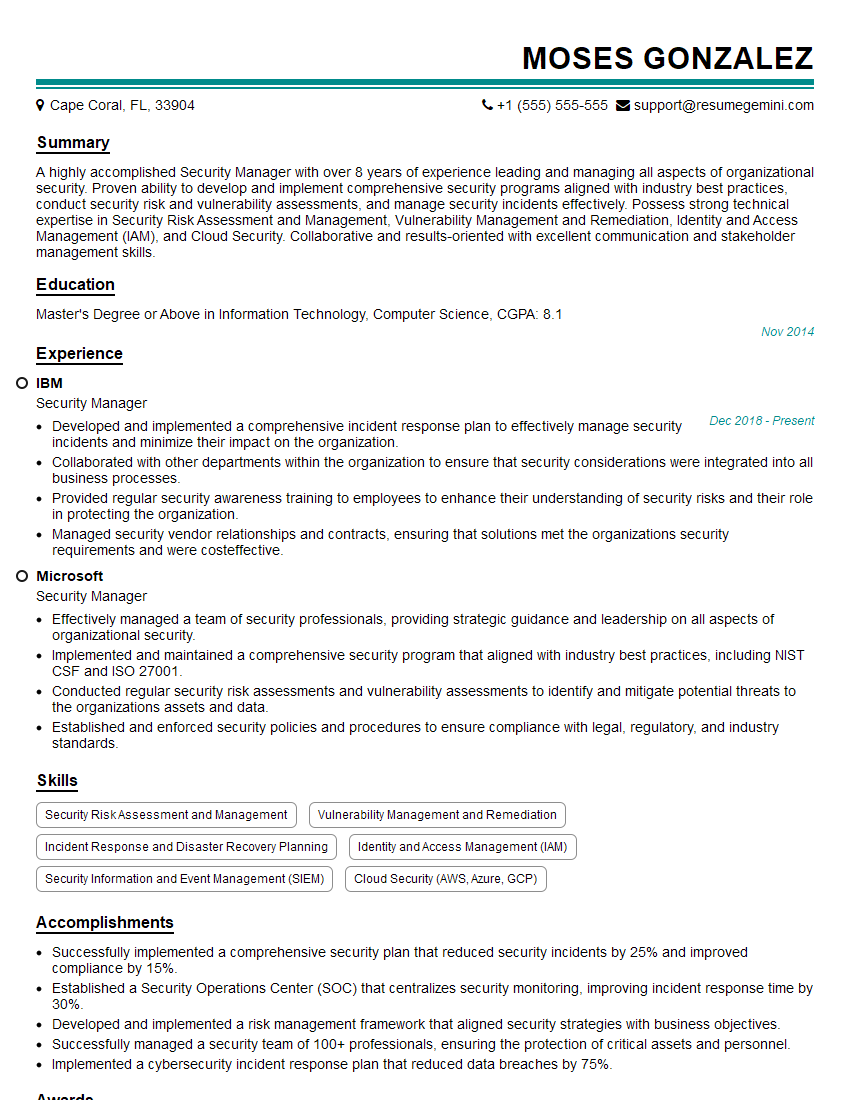
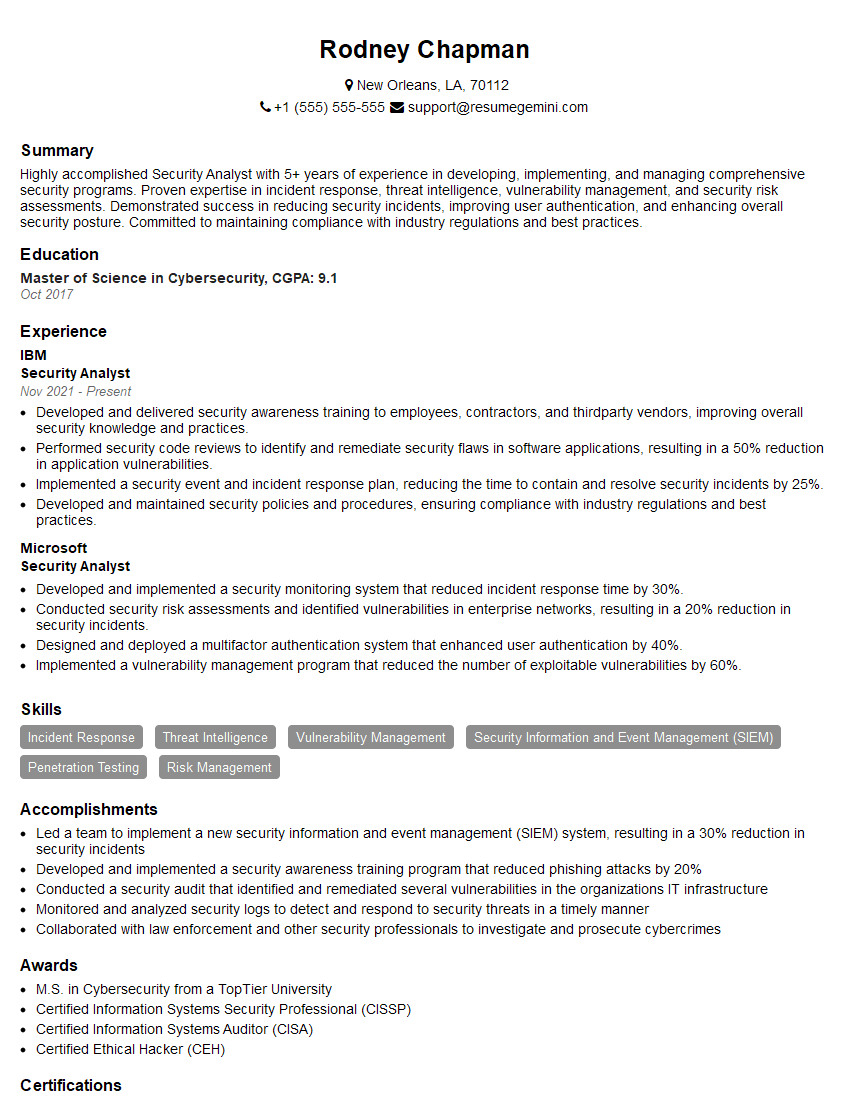
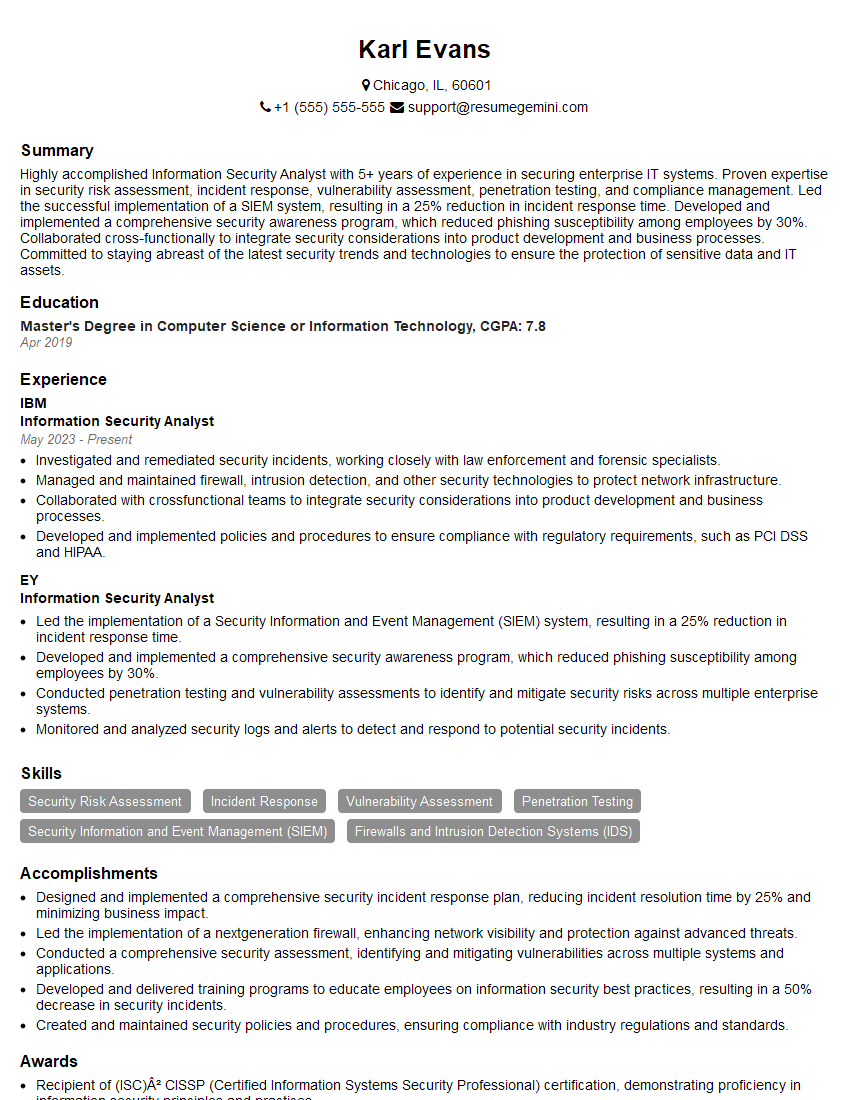
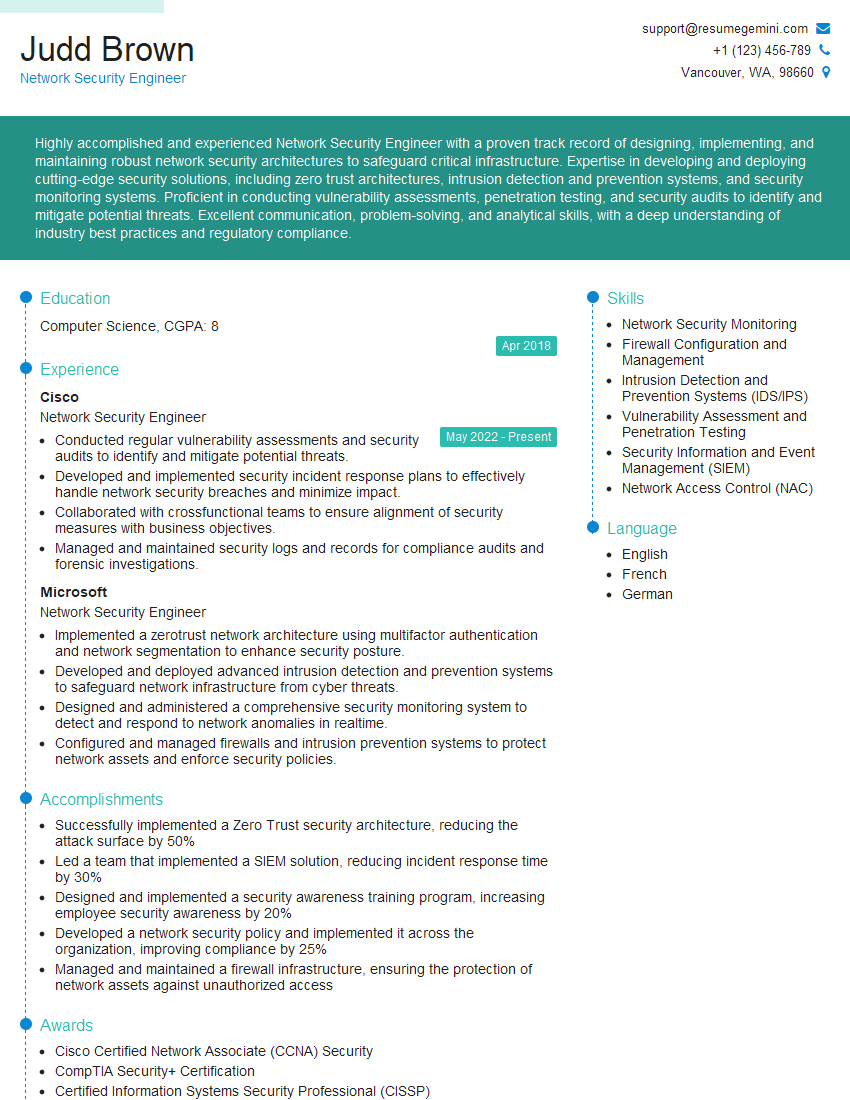
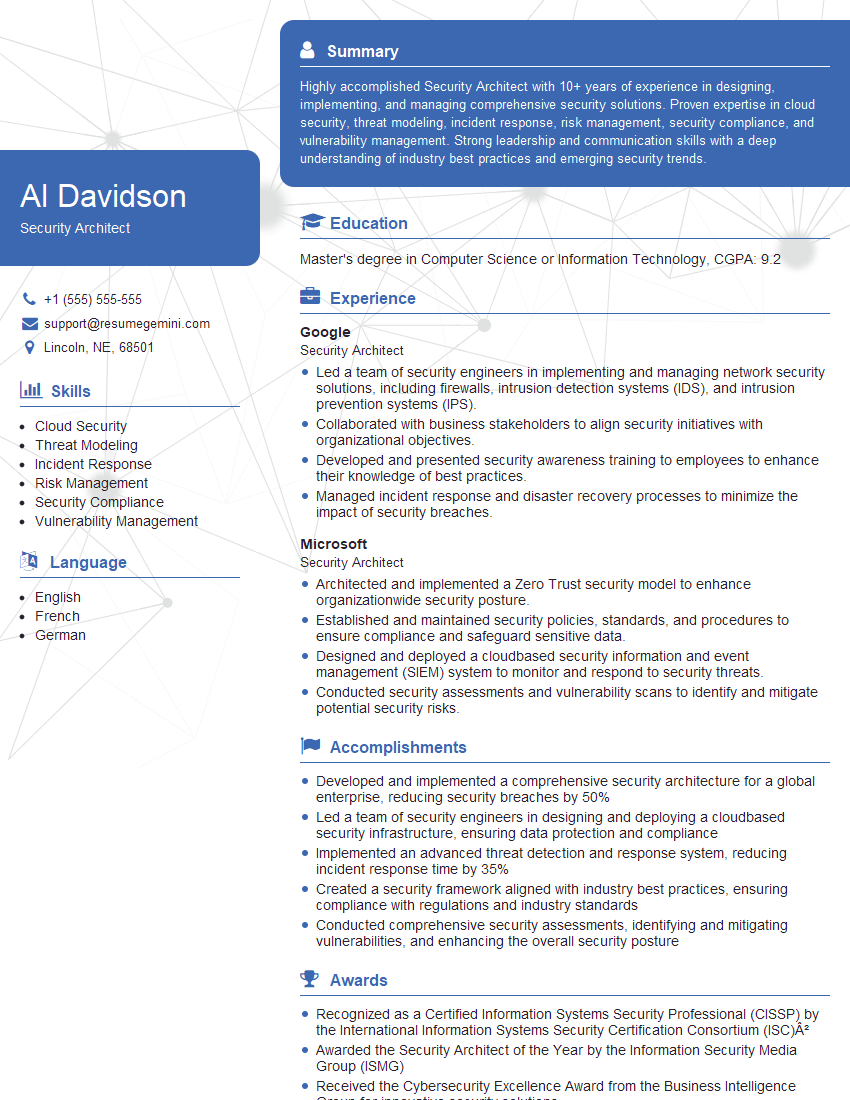
Mastering Cyber Warfare Tactics is crucial for a thriving career in cybersecurity, opening doors to high-demand roles and significant professional growth. To maximize your job prospects, a well-crafted, ATS-friendly resume is essential. ResumeGemini is a trusted resource to help you build a professional resume that highlights your skills and experience effectively. We provide examples of resumes tailored specifically to Cyber Warfare Tactics positions to help you showcase your qualifications in the best possible light. Invest time in crafting a compelling resume; it’s your first impression and a key step towards landing your dream job.
Explore more articles
Users Rating of Our Blogs
Share Your Experience
We value your feedback! Please rate our content and share your thoughts (optional).
What Readers Say About Our Blog
Amazing blog
hello,
Our consultant firm based in the USA and our client are interested in your products.
Could you provide your company brochure and respond from your official email id (if different from the current in use), so i can send you the client’s requirement.
Payment before production.
I await your answer.
Regards,
MrSmith
hello,
Our consultant firm based in the USA and our client are interested in your products.
Could you provide your company brochure and respond from your official email id (if different from the current in use), so i can send you the client’s requirement.
Payment before production.
I await your answer.
Regards,
MrSmith
These apartments are so amazing, posting them online would break the algorithm.
https://bit.ly/Lovely2BedsApartmentHudsonYards
Reach out at BENSON@LONDONFOSTER.COM and let’s get started!
Take a look at this stunning 2-bedroom apartment perfectly situated NYC’s coveted Hudson Yards!
https://bit.ly/Lovely2BedsApartmentHudsonYards
Live Rent Free!
https://bit.ly/LiveRentFREE
Interesting Article, I liked the depth of knowledge you’ve shared.
Helpful, thanks for sharing.
Hi, I represent a social media marketing agency and liked your blog
Hi, I represent an SEO company that specialises in getting you AI citations and higher rankings on Google. I’d like to offer you a 100% free SEO audit for your website. Would you be interested?