Unlock your full potential by mastering the most common Installing and repairing HVAC equipment interview questions. This blog offers a deep dive into the critical topics, ensuring you’re not only prepared to answer but to excel. With these insights, you’ll approach your interview with clarity and confidence.
Questions Asked in Installing and repairing HVAC equipment Interview
Q 1. Explain the difference between a heat pump and a furnace.
The main difference between a heat pump and a furnace lies in how they heat your home. A furnace burns fuel (natural gas, propane, or oil) to generate heat, which is then distributed through ductwork. Think of it as a big, efficient heater. A heat pump, on the other hand, moves heat rather than generating it. In heating mode, it extracts heat from the outside air (even in cold temperatures) and transfers it inside, using a refrigerant as a heat-carrying medium. In cooling mode, it reverses the process, moving heat from inside to outside. This makes heat pumps more energy-efficient than furnaces in many climates, especially those with milder winters, because they can both heat and cool.
In short: Furnaces generate heat; heat pumps move heat.
Q 2. Describe the process of charging an air conditioning system.
Charging an air conditioning system, also known as refrigerant charging, is a precise process that requires specialized equipment and knowledge. Improper charging can damage the system or lead to inefficient operation. The process typically involves:
- Identifying the refrigerant type: Different AC systems use different refrigerants (e.g., R-410A, R-22). Using the wrong refrigerant can severely damage the system.
- Checking for leaks: Before charging, a thorough leak check using a leak detector is crucial. Leaks need to be repaired before adding any refrigerant.
- Evacuating the system: This removes air and moisture from the lines, which can contaminate the refrigerant and damage the compressor.
- Adding refrigerant: Refrigerant is added in a controlled manner, usually using a set of scales and gauges to measure the precise amount needed. This often involves referencing the manufacturer’s specifications for the specific system.
- Checking system performance: After charging, the system’s performance is checked to ensure proper cooling and optimal pressure readings. This might involve checking the subcooling and superheat.
Improper charging can lead to reduced cooling capacity, compressor damage, and environmental harm. For example, undercharging can lead to frosting on the evaporator coil, while overcharging can cause high pressure and compressor failure. Always consult the manufacturer’s service manual for precise instructions.
Q 3. How do you troubleshoot a malfunctioning thermostat?
Troubleshooting a malfunctioning thermostat starts with a systematic approach. I would first visually inspect the thermostat for any obvious issues like loose wires, damaged displays, or incorrect settings.
- Check the power supply: Ensure the thermostat is receiving power. A simple test is checking the circuit breaker or fuse at the electrical panel.
- Inspect the wiring: Carefully examine the wiring connections at the thermostat and the HVAC unit. Loose or corroded connections are common causes of problems. Always switch off power before handling wires.
- Test the batteries (if applicable): If it’s a battery-powered thermostat, replace the batteries with fresh ones.
- Verify the system mode: Ensure the thermostat is set to the correct mode (heat, cool, auto, etc.).
- Check for calibration issues: If the temperature displayed on the thermostat differs significantly from the actual room temperature, the thermostat may need recalibration.
- Try a factory reset: Many thermostats have a factory reset option that can resolve software glitches.
If the problem persists after these checks, you may need more advanced troubleshooting techniques or the assistance of a qualified technician. A multimeter can help to verify the voltage at the thermostat and continuity of the wiring.
Q 4. What are the common causes of a refrigerant leak?
Refrigerant leaks are a common problem in HVAC systems, and they have several potential causes:
- Corrosion: Over time, copper tubing can corrode, especially in areas with high humidity. These pinhole leaks are difficult to spot.
- Mechanical damage: Accidental damage during installation or maintenance, such as kinks or punctures in the tubing, can lead to leaks.
- Component failure: Leaks can originate from faulty components like compressors, expansion valves, or condenser coils. Worn-out seals or gaskets are a major culprit.
- Improper installation: Poor workmanship during the initial installation, such as insufficient brazing or improper flaring of copper tubing, can create weak points and potential leak locations.
- Vibration: Excessive vibration can cause fatigue and eventually lead to cracks in the tubing or component connections.
Finding the exact location of a leak often requires using specialized leak detection equipment, such as electronic leak detectors, dye tracing, or nitrogen pressure testing. Remember, only qualified technicians should handle refrigerant leak repairs.
Q 5. Explain the function of a condenser coil.
The condenser coil is a crucial part of an air conditioning system. Its primary function is to release heat from the refrigerant into the outdoor air. As the refrigerant, which is under high pressure, flows through the condenser coil, it releases heat and changes from a high-pressure gas to a high-pressure liquid. This process is essential for removing heat from inside your house and cooling the space. The heat is then dissipated into the surrounding air by means of the coil’s fins.
Think of it as a radiator, but instead of cooling engine coolant, it cools refrigerant. A dirty or clogged condenser coil will significantly reduce the efficiency of the system. Regular cleaning is vital for optimal performance.
Q 6. How do you diagnose a problem with airflow in a duct system?
Diagnosing airflow problems in a duct system requires a systematic approach. I’d begin by visually inspecting the system for any obvious obstructions, such as debris, collapsed ducts, or closed dampers. The next step would involve using tools to measure airflow at various points in the system:
- Using a manometer: This device measures pressure differences across the system. Significant pressure drops can indicate blockages or leaks in the ductwork.
- Measuring airflow velocity: Using an anemometer, I can measure the air velocity in different ducts to assess whether the airflow is evenly distributed throughout the system.
- Checking registers and vents: Obstructed registers or vents can significantly impact airflow in specific rooms. I’d check for debris and proper positioning.
- Inspecting the fan motor and blower wheel: If the fan motor or blower wheel is malfunctioning, this will significantly impact airflow.
- Checking the return air vents: Insufficient return air can restrict the system’s ability to circulate air properly.
By combining visual inspection with airflow measurements, you can pinpoint the location and cause of the airflow problem. Common causes include dirty filters, clogged ducts, leaks, or improperly sized ductwork.
Q 7. Describe the safety precautions you take when working with refrigerants.
Safety is paramount when working with refrigerants. These substances can be harmful if mishandled. My safety precautions include:
- Proper personal protective equipment (PPE): This includes safety glasses, gloves, and appropriate respiratory protection, especially when working with older refrigerants like R-22.
- Understanding refrigerant properties: Familiarizing myself with the specific properties of the refrigerant being used, including toxicity and flammability, is crucial.
- Working in a well-ventilated area: Proper ventilation helps to prevent the buildup of refrigerant vapors, which can cause respiratory problems or even asphyxiation.
- Using leak detection equipment carefully: Following the manufacturer’s instructions for using leak detectors is vital to ensure accurate readings and safe operation.
- Following proper recovery and recycling procedures: Refrigerant must be properly recovered and recycled according to environmental regulations and best practices. Never vent refrigerant into the atmosphere.
- Following all safety guidelines and regulations: Adherence to all local, state, and federal regulations is mandatory. This includes proper handling, storage, and disposal of refrigerants.
Ignoring these precautions can lead to serious health consequences and environmental damage. Proper training and certification are essential for anyone working with refrigerants.
Q 8. What are the different types of refrigerant used in HVAC systems?
HVAC systems utilize various refrigerants, each with specific properties affecting their efficiency and environmental impact. Older systems often used refrigerants like R-22 (HCFC-22), but due to its ozone depletion potential, it’s being phased out. Common modern refrigerants include R-410A (a blend of HFCs), which is widely used in many residential and light commercial systems, and R-32 (a single HFC), known for its higher efficiency and lower global warming potential. There are also natural refrigerants like R-744 (carbon dioxide) and ammonia (R-717), gaining popularity due to their environmentally friendly nature, though they require specialized handling and equipment. The choice of refrigerant depends on factors like system design, efficiency requirements, and environmental regulations.
- R-22 (HCFC-22): Older systems, being phased out.
- R-410A: Common in residential and light commercial systems.
- R-32: Increasingly popular for its efficiency and lower environmental impact.
- R-744 (CO2): Natural refrigerant, requires specialized equipment.
- R-717 (Ammonia): Natural refrigerant, suitable for large-scale applications.
Q 9. How do you determine the appropriate size of an HVAC system for a building?
Sizing an HVAC system correctly is crucial for optimal performance and energy efficiency. Undersized systems struggle to keep up, leading to uncomfortable temperatures and increased wear. Oversized systems cycle on and off too quickly, reducing efficiency and potentially causing moisture problems. Accurate sizing involves calculating the building’s heating and cooling load, considering factors like:
- Building size and insulation: Well-insulated buildings require less heating and cooling.
- Climate: Extreme temperatures necessitate larger systems.
- Number of windows and their orientation: South-facing windows gain more solar heat.
- Occupancy: More occupants generate more heat.
- Appliance usage: Ovens and other heat-producing appliances contribute to the heating load.
Professionals use specialized software and manual J calculations to estimate the heating and cooling loads. This calculation considers all the above factors to determine the necessary BTU (British Thermal Unit) output required for heating and cooling the space adequately. Using this information, the proper system size can be selected to meet the needs of the building comfortably and efficiently. Ignoring this critical step can lead to expensive repairs and energy waste.
Q 10. Explain the process of brazing copper pipes.
Brazing copper pipes is a crucial skill in HVAC installation, requiring precision and safety precautions. It’s a process of joining copper pipes using a filler metal (typically brass) and heat. Improper brazing can result in leaks and system failure. Here’s a step-by-step process:
- Prepare the pipes: Clean the ends thoroughly with a wire brush or sandpaper to remove any dirt or oxidation. This ensures a strong bond.
- Assemble the pipes: Ensure the pipes are properly aligned and secured using clamps or other appropriate methods before applying heat.
- Apply flux: Apply flux to the cleaned surfaces. Flux cleans and protects the copper from oxidation during the brazing process.
- Heat the pipes: Use a brazing torch to evenly heat the pipes until the flux melts and the copper turns a dull red. This requires experience to avoid overheating.
- Introduce the filler metal: While maintaining the heat, feed the filler metal into the joint. Capillary action will draw it into the joint, creating a strong, leak-proof connection.
- Cool gradually: Allow the joint to cool slowly, avoiding drafts that can cause stress and cracking.
- Inspect the braze: After cooling, inspect the joint for any imperfections or leaks. Use nitrogen pressurization to test for leaks.
Safety is paramount. Always wear appropriate personal protective equipment (PPE), including safety glasses, gloves, and a respirator to protect against fumes. Proper ventilation is crucial during the brazing process. Remember, practice and experience are vital to mastering this skill.
Q 11. How do you test for electrical continuity in an HVAC system?
Testing for electrical continuity in an HVAC system involves verifying that there are no breaks or interruptions in electrical circuits. A multimeter is the essential tool for this. Set the multimeter to the continuity setting (usually represented by a diode symbol or the letters ‘Ω’ with a sound indicator). Place the probes on each end of the wire or component being tested; a continuous tone or a near-zero resistance reading indicates proper continuity.
For example, to check the continuity of a heating element:
- Disconnect power: Always disconnect the power supply to the heating element before testing to ensure safety.
- Connect the multimeter: Connect the multimeter probes to the terminals of the heating element.
- Check the reading: A continuous tone or a reading close to zero ohms indicates good continuity. An open circuit (no tone or infinite resistance) suggests a broken element.
Continuity testing is essential for troubleshooting electrical problems, identifying faulty wiring, and ensuring safe and efficient operation. Remember to always follow safety procedures and work on de-energized equipment.
Q 12. What are the common causes of a frozen evaporator coil?
A frozen evaporator coil is a common HVAC problem with several potential causes. The evaporator coil is responsible for absorbing heat from the air, and ice formation restricts its ability to do so, reducing system efficiency and potentially causing damage. Common causes include:
- Restricted airflow: Dirty air filters, clogged air vents, or restricted airflow through the evaporator coil prevent sufficient heat absorption, leading to freezing.
- Low refrigerant charge: Insufficient refrigerant restricts the coil’s heat-absorbing capacity, resulting in lower temperatures and freezing.
- Faulty defrost cycle: In systems with electric defrost, a malfunctioning defrost system prevents the removal of ice buildup.
- Leaking refrigerant: A leak reduces refrigerant charge and further compromises heat absorption.
- Incorrect airflow across the coil: Problems with the blower motor or airflow design can prevent even heat transfer.
Troubleshooting involves checking for restricted airflow, verifying refrigerant charge, testing the defrost cycle functionality (if applicable), and inspecting for leaks. Ignoring a frozen evaporator coil can lead to compressor failure and more extensive damage. Proper diagnosis and timely repair are crucial.
Q 13. Describe the different types of HVAC system controls.
HVAC system controls manage the operation and maintain the desired temperature and air quality. They’ve evolved from simple thermostats to sophisticated digital systems. Types include:
- Thermostats: These control the system’s on/off cycles, maintaining a set temperature. Simple mechanical thermostats use a bimetallic strip, while modern digital thermostats offer programmable settings, remote access, and energy-saving features.
- Programmable thermostats: Allow users to schedule different temperatures for various times of the day, optimizing energy efficiency.
- Smart thermostats: Connect to Wi-Fi, offering advanced features like remote control, geofencing (automatically adjusting settings based on user location), and learning algorithms to optimize energy consumption.
- Zone controls: Divide a building into different zones, each with its thermostat, allowing for individual temperature control in different areas.
- Building Management Systems (BMS): Complex systems that oversee multiple HVAC units, monitors energy consumption, and automatically adjust settings based on various factors.
The choice of control system depends on the size and complexity of the HVAC system and the user’s needs. Smart thermostats are becoming increasingly popular due to their convenience and energy-saving capabilities.
Q 14. How do you handle a customer complaint about an HVAC system?
Handling customer complaints professionally is vital for maintaining a positive reputation. My approach involves:
- Listen actively and empathize: Let the customer fully explain their concerns without interruption. Show empathy and acknowledge their frustration.
- Gather information: Ask clarifying questions to thoroughly understand the issue. Note details such as the nature of the problem, its frequency, and any relevant observations.
- Troubleshoot and diagnose: Based on the information gathered, diagnose the problem. This might involve inspecting the equipment, checking system logs, or performing relevant tests.
- Explain the findings clearly: Explain the cause of the problem in plain language, avoiding technical jargon. Explain the proposed solution and its cost implications.
- Offer solutions and set realistic expectations: Provide solutions, whether it’s a simple repair, part replacement, or a scheduled service. Set realistic expectations for the timeframe for the resolution.
- Follow up: After the issue is resolved, follow up with the customer to ensure their satisfaction. This shows you care and helps prevent future problems.
A positive resolution even with a challenging complaint helps build trust and loyalty. Maintaining a professional, respectful, and solution-oriented approach is crucial for customer satisfaction.
Q 15. Explain the principles of heat transfer.
Heat transfer is the movement of thermal energy from a hotter region to a colder region. This fundamental principle governs how HVAC systems operate. There are three primary modes:
- Conduction: Heat transfer through direct contact. Think of a metal spoon heating up in a hot cup of coffee – the heat moves directly through the spoon’s material.
- Convection: Heat transfer through the movement of fluids (liquids or gases). Your furnace uses convection; hot air rises, circulating heated air throughout your home.
- Radiation: Heat transfer through electromagnetic waves. The sun warming your face is a prime example of radiation. While less dominant in HVAC, radiant heating systems utilize this principle.
In HVAC, we leverage all three. Conduction occurs within the heat exchanger of your furnace or air conditioner. Convection is crucial for distributing heated or cooled air via ductwork. Radiant heating systems directly use radiation.
Career Expert Tips:
- Ace those interviews! Prepare effectively by reviewing the Top 50 Most Common Interview Questions on ResumeGemini.
- Navigate your job search with confidence! Explore a wide range of Career Tips on ResumeGemini. Learn about common challenges and recommendations to overcome them.
- Craft the perfect resume! Master the Art of Resume Writing with ResumeGemini’s guide. Showcase your unique qualifications and achievements effectively.
- Don’t miss out on holiday savings! Build your dream resume with ResumeGemini’s ATS optimized templates.
Q 16. What are the common causes of a malfunctioning blower motor?
A malfunctioning blower motor can stem from several issues. Troubleshooting often involves systematically checking these areas:
- Power Supply: Ensure the motor receives power. Check the circuit breaker, wiring, and capacitor (a common culprit for blower motor failures). A faulty capacitor can prevent the motor from starting.
- Motor Bearings: Worn-out bearings create loud noises and reduce efficiency. This often requires motor replacement.
- Overheating: A motor that overheats can be due to poor ventilation, restricted airflow, or internal motor issues. Check for debris around the fan and ensure proper airflow.
- Wiring Issues: Look for frayed, loose, or damaged wiring leading to the motor. A simple wire connection fix might resolve the issue.
- Internal Motor Problems: Sometimes, the motor itself may be failing due to age or wear and tear. This usually necessitates motor replacement.
For example, I once diagnosed a non-starting blower motor as a simple capacitor issue. A quick replacement solved the problem, saving the homeowner a significant expense compared to a full motor replacement.
Q 17. How do you perform a preventative maintenance check on an HVAC system?
Preventative maintenance is crucial for extending the lifespan and efficiency of an HVAC system. My checklist includes:
- Air Filter Replacement: Dirty filters restrict airflow, reducing efficiency and straining the system. I recommend monthly checks and replacements as needed, depending on the filter type and household conditions.
- Coil Cleaning: Clean evaporator and condenser coils to ensure efficient heat transfer. Dirty coils significantly impact the system’s cooling and heating capacity.
- Ductwork Inspection: Check for leaks, blockages, or damage. Improper sealing leads to energy loss and uneven temperature distribution.
- Blower Motor Inspection: Examine belts, bearings, and overall functionality for smooth operation and correct speed. Listen for unusual noises.
- Refrigerant Level Check: Low refrigerant levels significantly reduce system performance. This requires specialized tools and gauges.
- Electrical Connections: Inspect wiring for loose or damaged connections. Loose connections can lead to overheating and fire hazards.
Performing these checks annually (or more often in high-use environments) helps prevent major breakdowns, save energy costs, and prolong the system’s lifespan.
Q 18. Describe your experience with different types of HVAC systems (e.g., split systems, heat pumps, packaged units).
My experience encompasses a wide range of HVAC systems:
- Split Systems: I’ve installed and repaired numerous split systems, familiar with both heat pump and air conditioning variations. I understand the intricacies of refrigerant lines, indoor/outdoor units, and control systems.
- Heat Pumps: I’m proficient in diagnosing and fixing heat pump issues, including refrigerant leaks, reversing valve problems, and defrost cycles. I understand their efficiency benefits and potential limitations.
- Packaged Units: I’ve worked extensively with rooftop units and other packaged systems, particularly in commercial settings. I’m familiar with the complexities of their integrated design and specialized maintenance.
Each system has unique challenges. For example, troubleshooting a heat pump requires a deeper understanding of the reversing valve and defrost cycle than repairing a simple air conditioner.
Q 19. What are the different types of ductwork materials and their applications?
Ductwork materials vary depending on application and budget:
- Galvanized Steel: A robust and durable option, ideal for high-pressure systems and longer runs. Susceptible to rust over time if not properly coated.
- Aluminum: Lighter and less expensive than steel, but less durable and prone to dents. Often used in residential applications.
- Flexible Ductwork: Used for short runs and tight spaces. Prone to leaks and reduced efficiency if not properly sealed. Often used for connecting components.
- Fiberglass: Good insulation properties, but less durable than metal. Generally used in residential applications.
The choice of material impacts the system’s efficiency and longevity. A properly designed and installed duct system is critical for optimal performance.
Q 20. Explain the importance of proper ventilation in an HVAC system.
Proper ventilation is paramount for indoor air quality and system efficiency. It involves:
- Fresh Air Intake: Introducing outside air to dilute indoor pollutants and prevent stagnation. This is often accomplished through dedicated outdoor air intakes.
- Exhaust Air Removal: Removing stale, humid, or polluted air from the building. Bathroom and kitchen exhaust fans are common examples.
- Balancing Airflow: Ensuring even distribution of air throughout the space to prevent pressure imbalances and stagnant zones.
Inadequate ventilation can lead to moisture buildup, mold growth, and poor air quality, negatively impacting occupant health and system efficiency. For example, a poorly ventilated bathroom can cause condensation and mold problems, requiring costly repairs.
Q 21. How do you interpret an HVAC system schematic?
HVAC schematics use standardized symbols to represent components and their connections. Understanding these symbols is crucial for troubleshooting and installation. I start by:
- Identifying Components: Locate the symbols for the furnace, air handler, condenser, evaporator, and other key components. The legend often includes a key to clarify these symbols.
- Tracing Refrigerant Lines: Follow the lines representing the refrigerant flow. Look for leaks or irregularities in these lines.
- Following Airflow Paths: Trace the ductwork and air passages. Identify potential restrictions or leaks.
- Analyzing Control Circuits: Examine the wiring diagrams to understand the control logic and interconnections between components.
The schematic provides a blueprint of the system. By carefully studying it, I can diagnose malfunctions and plan repairs or installations more effectively. It’s like a map that guides me through the complexities of the HVAC system.
Q 22. Describe your experience with troubleshooting electrical issues in HVAC equipment.
Troubleshooting electrical issues in HVAC systems requires a systematic approach, combining safety precautions with a deep understanding of electrical circuits and HVAC components. I always start by ensuring the power is completely disconnected before working on any electrical components – safety is paramount.
My troubleshooting typically involves using multimeters to check voltage, current, and resistance. For example, if a unit isn’t turning on, I’d first check the power supply at the breaker box and then trace the wiring back to the unit, checking for continuity and voltage at each connection point. I’m proficient in identifying faulty capacitors, relays, contactors, and other electrical components. I also understand the importance of properly grounding the system to prevent electrical shock and ensure safe operation.
I’ve successfully diagnosed and repaired issues ranging from simple blown fuses and faulty wiring to more complex problems like short circuits in control boards and issues with the compressor’s starting capacitor. In one instance, a commercial rooftop unit failed to start. Through systematic testing, I pinpointed a faulty contactor – replacing it restored full functionality.
Q 23. What software or tools are you familiar with for HVAC design or diagnostics?
My experience encompasses a range of software and tools vital for HVAC design and diagnostics. I’m proficient in using software packages like Carrier HAP (Heating, Air Conditioning, and Refrigeration) software for design calculations and load estimations. This allows me to accurately size equipment for optimal efficiency and performance in various building types.
For diagnostics, I rely heavily on advanced multimeters capable of accurately measuring voltage, current, and resistance in AC and DC circuits. I also utilize specialized tools like refrigerant gauges for leak detection and pressure readings in refrigeration cycles. Manometer sets help in airflow analysis within ductwork, identifying restrictions and ensuring proper airflow across the coils. Finally, I’m familiar with various manufacturers’ diagnostic software, which allows for direct communication with units to read error codes and access more detailed operational data. This can significantly streamline troubleshooting, as many modern units offer self-diagnostic capabilities.
Q 24. How do you maintain proper documentation and records for your work?
Maintaining accurate and comprehensive documentation is critical for accountability, efficiency, and future reference. I utilize a combination of digital and physical methods to ensure a complete record of my work. Every job starts with a thorough assessment, which is documented digitally using a tablet and specialized HVAC software. This includes photos of the system’s condition, detailed notes on existing components, observations about potential issues, and measurements taken.
Once the work is completed, I generate a comprehensive report detailing the services performed, parts replaced, findings from diagnostics, and any recommendations for future maintenance or repairs. This report includes all relevant data such as model numbers, serial numbers, and timestamps. This information is also recorded electronically for future retrieval and analysis. Physical documentation, such as invoices and signed work orders, is filed for easy access. This ensures that all work is traceable, verifiable, and easily accessible for customers and for my own professional records.
Q 25. Explain your understanding of building codes related to HVAC installations.
I have a strong understanding of building codes relevant to HVAC installations, including local, state, and national standards like the International Mechanical Code (IMC) and the International Energy Conservation Code (IECC). These codes dictate safety standards, installation practices, and energy-efficiency requirements for HVAC systems. This knowledge ensures that all installations and repairs I perform comply with all applicable regulations.
I understand the importance of proper sizing of equipment, safe refrigerant handling, proper ventilation, and electrical code compliance. For instance, I know the specific requirements for proper clearances around equipment for service and maintenance access, as specified by the IMC. Familiarity with local codes is also crucial. I understand that different areas may have unique requirements regarding permits, inspections, and specific equipment standards. Before any work begins, I ensure thorough knowledge of all applicable codes to prevent errors and ensure a safe and compliant system.
Q 26. Describe a time you had to troubleshoot a complex HVAC problem. What was your approach?
One challenging case involved a large commercial chiller exhibiting fluctuating temperatures and erratic operation. The initial diagnosis pointed to a possible refrigerant leak, but multiple leak detection tests yielded inconclusive results. The system’s control logic was complex, making it difficult to isolate the exact fault. My approach was systematic and methodical. I started by reviewing the chiller’s operational logs and error codes. This gave me a baseline of historical data to analyze patterns in the system’s performance.
Next, I conducted a thorough visual inspection of all components, checking for signs of wear, damage, or leaks. I used advanced diagnostic tools to monitor pressure and temperature readings at various points within the system, providing real-time data during operational cycles. I also consulted the chiller’s technical manuals and schematics. After carefully analyzing the data, I realized that a faulty sensor was providing incorrect readings to the control system, causing the chiller to cycle erratically. This sensor was replaced, and the chiller resumed normal operation without any further issues. This case highlighted the importance of a systematic approach and the reliance on both observation and advanced diagnostic technologies in troubleshooting complex HVAC problems.
Q 27. What are your salary expectations?
My salary expectations are commensurate with my experience and skill set, and are in line with the market rate for experienced HVAC technicians in this region. I’m open to discussing a competitive compensation package that reflects my value and contributions to the company.
Key Topics to Learn for Installing and Repairing HVAC Equipment Interviews
- Refrigerant Handling and Safety: Understanding different refrigerants (R-410A, R-22, etc.), proper handling procedures, leak detection methods, and safety regulations (EPA Section 608 certification).
- HVAC System Components and Functionality: Thorough knowledge of compressors, condensers, evaporators, expansion valves, blowers, and their interrelation within various HVAC systems (split systems, heat pumps, etc.). Practical application: Diagnosing malfunctions by understanding component interactions.
- Installation Techniques: Proper installation procedures for different HVAC systems, including brazing, soldering, pipefitting, electrical wiring, and mounting techniques. Practical application: Explaining the steps involved in installing a new air conditioning unit, addressing potential challenges.
- Troubleshooting and Repair Procedures: Diagnosing common HVAC problems (e.g., low refrigerant, faulty compressor, electrical issues), utilizing diagnostic tools, and performing effective repairs. Practical application: Describing a challenging repair you’ve completed and the steps taken to resolve it.
- Electrical Systems in HVAC: Understanding basic electrical principles, wiring diagrams, safety precautions, and troubleshooting electrical components within HVAC systems. Practical application: Explaining how to safely diagnose and repair an electrical fault in a furnace.
- Blueprint Reading and System Design: Ability to interpret HVAC blueprints, understand system design principles, and calculate load requirements. Practical application: Explaining how you would approach designing an HVAC system for a new building.
- Energy Efficiency and Sustainability: Knowledge of energy-efficient HVAC practices, including proper sizing, maintenance, and the use of energy-efficient components. Practical application: Discussing ways to improve the energy efficiency of an existing HVAC system.
Next Steps
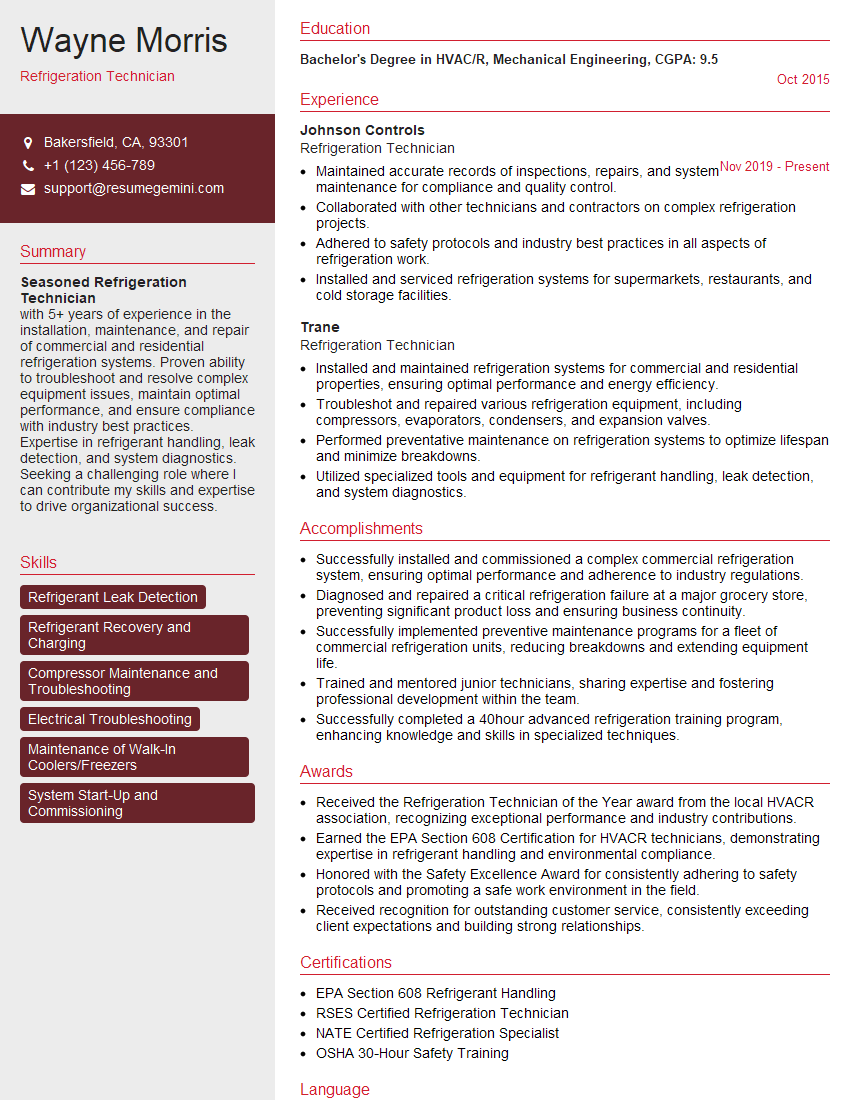
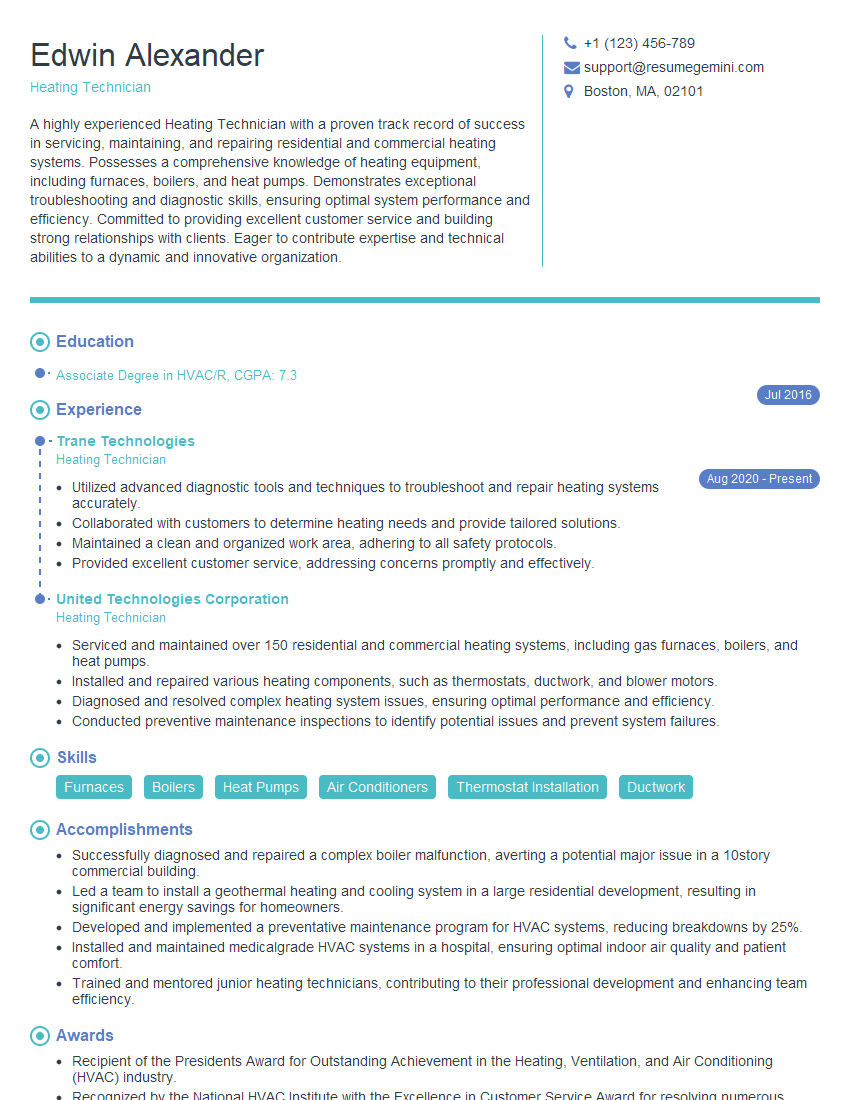
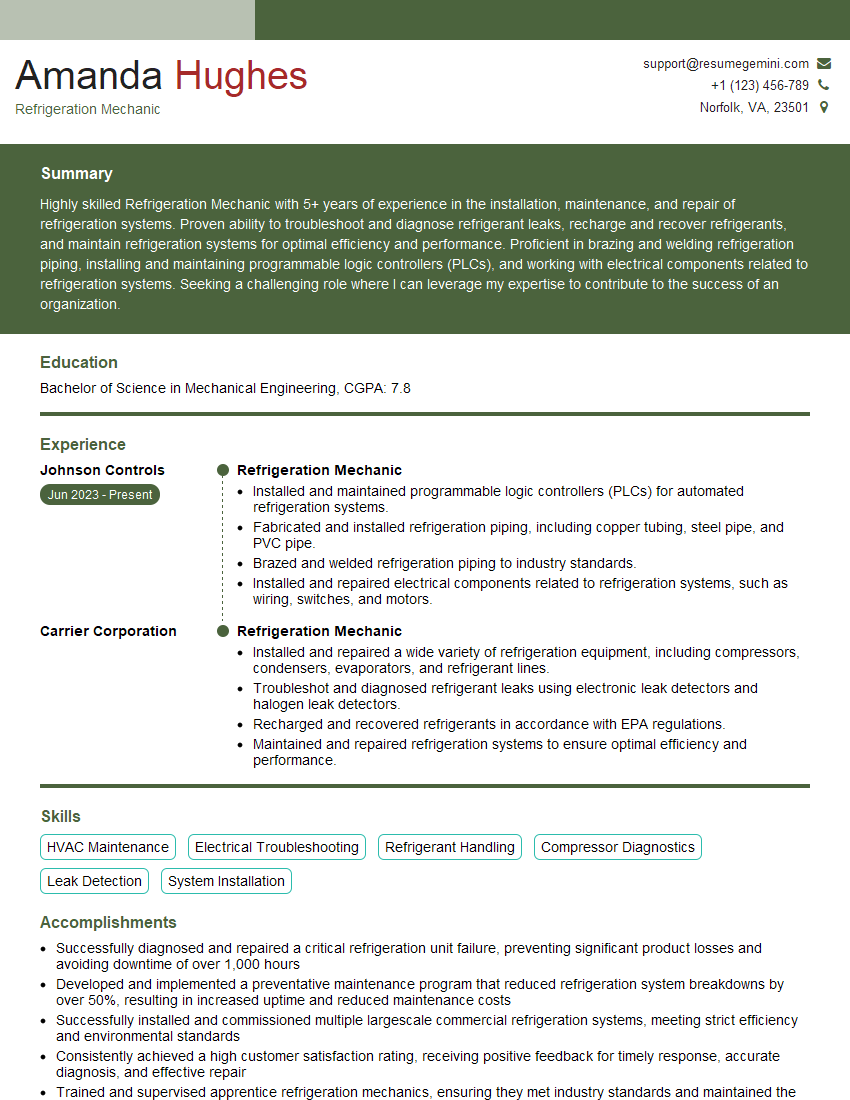
Mastering the installation and repair of HVAC equipment opens doors to a rewarding and stable career with excellent growth potential. A strong understanding of these skills is highly sought after, leading to increased earning potential and career advancement opportunities. To maximize your job prospects, it’s crucial to present your skills effectively. Creating an ATS-friendly resume is key to getting noticed by potential employers. ResumeGemini is a trusted resource that can help you build a professional, impactful resume designed to catch the attention of recruiters. Examples of resumes tailored to Installing and repairing HVAC equipment are available to help you get started.
Explore more articles
Users Rating of Our Blogs
Share Your Experience
We value your feedback! Please rate our content and share your thoughts (optional).
What Readers Say About Our Blog
Amazing blog
hello,
Our consultant firm based in the USA and our client are interested in your products.
Could you provide your company brochure and respond from your official email id (if different from the current in use), so i can send you the client’s requirement.
Payment before production.
I await your answer.
Regards,
MrSmith
hello,
Our consultant firm based in the USA and our client are interested in your products.
Could you provide your company brochure and respond from your official email id (if different from the current in use), so i can send you the client’s requirement.
Payment before production.
I await your answer.
Regards,
MrSmith
These apartments are so amazing, posting them online would break the algorithm.
https://bit.ly/Lovely2BedsApartmentHudsonYards
Reach out at BENSON@LONDONFOSTER.COM and let’s get started!
Take a look at this stunning 2-bedroom apartment perfectly situated NYC’s coveted Hudson Yards!
https://bit.ly/Lovely2BedsApartmentHudsonYards
Live Rent Free!
https://bit.ly/LiveRentFREE
Interesting Article, I liked the depth of knowledge you’ve shared.
Helpful, thanks for sharing.
Hi, I represent a social media marketing agency and liked your blog
Hi, I represent an SEO company that specialises in getting you AI citations and higher rankings on Google. I’d like to offer you a 100% free SEO audit for your website. Would you be interested?