Unlock your full potential by mastering the most common Drainage and Water Management Systems interview questions. This blog offers a deep dive into the critical topics, ensuring you’re not only prepared to answer but to excel. With these insights, you’ll approach your interview with clarity and confidence.
Questions Asked in Drainage and Water Management Systems Interview
Q 1. Explain the difference between sanitary and storm drainage systems.
Sanitary and storm drainage systems serve distinct purposes and are designed differently. Sanitary sewers carry wastewater from homes and businesses – things like toilets, sinks, and showers. This wastewater contains human waste, detergents, and other pollutants, requiring treatment before it can be safely released into the environment. Storm drains, on the other hand, manage stormwater runoff from rainfall. This runoff flows over surfaces like roads, roofs, and pavements, carrying pollutants like oil, sediment, and litter. They typically discharge directly into rivers, lakes, or the ocean, sometimes after minimal treatment.
The key difference lies in their purpose and the treatment they receive. Sanitary sewers are designed to handle smaller volumes of highly contaminated wastewater, while storm drains manage larger volumes of less concentrated but still potentially harmful runoff.
Think of it like this: your kitchen sink drains into the sanitary sewer, while the rainwater running down your street flows into the storm drain. Keeping them separate is crucial for preventing the overflow of untreated sewage, which can severely contaminate water bodies.
Q 2. Describe your experience with various drainage system design methods (e.g., hydraulic modeling).
My experience with drainage system design methods encompasses a wide range of approaches, with significant emphasis on hydraulic modeling. I’m proficient in using software like HEC-RAS (Hydrologic Engineering Center’s River Analysis System) and SWMM (Storm Water Management Model). I’ve used these tools to simulate the flow of water through complex drainage networks, accounting for factors such as rainfall intensity, pipe size and slope, infiltration rates, and ground elevation.
For example, in a recent project involving a large urban development, I utilized HEC-RAS to model the impact of increased runoff on an existing creek. The model helped to identify potential flooding risks and optimize the design of new culverts and channels to mitigate these risks. In another project, I used SWMM to design a sustainable drainage system for a greenfield site, incorporating features like bioswales and infiltration basins to manage stormwater on-site.
Beyond hydraulic modeling, I also have expertise in other methods such as the rational method for calculating peak runoff rates, and the use of empirical equations for designing specific drainage components, like inlets and manholes. The choice of design method depends on the specific project’s complexity and data availability. In situations with limited data, simpler methods may suffice, while complex projects often require sophisticated modeling.
Q 3. How do you determine the appropriate pipe size for a drainage system?
Determining the appropriate pipe size for a drainage system involves a careful consideration of several factors. The primary factor is the design flow rate, which represents the maximum amount of water the system is expected to handle during a design storm event (a storm of a specific intensity and duration, often determined by local regulations). This flow rate is usually calculated using hydrological modeling techniques, as discussed previously.
Once the design flow rate is known, we can use Manning’s equation, a widely used empirical formula in hydraulics, to determine the required pipe diameter. The equation considers the pipe’s slope, roughness (related to the pipe material), and the desired flow velocity. It’s crucial to ensure that the flow velocity remains within acceptable limits – too low a velocity can lead to sediment deposition, while too high a velocity can cause erosion and damage.
Q = (A * R^(2/3) * S^(1/2)) / n
Where:
- Q = flow rate
- A = cross-sectional area of the pipe
- R = hydraulic radius (A/P, where P is the wetted perimeter)
- S = pipe slope
- n = Manning’s roughness coefficient
Often, iterative calculations are required to find the optimal pipe diameter. Software packages can simplify this process by automatically calculating the required diameter based on the input parameters. It’s also important to consider factors like future growth in the area, allowing for sufficient capacity expansion in the long term.
Q 4. What are the common challenges faced in designing drainage systems in urban areas?
Designing drainage systems in urban areas presents several unique challenges. One of the most significant is the high degree of imperviousness – large areas covered by roads, buildings, and pavements reduce the land’s ability to absorb rainfall, leading to increased runoff volumes and higher flood risks. Another major hurdle is the complex network of existing infrastructure; integrating a new drainage system with existing utilities (water mains, gas lines, etc.) requires meticulous planning and coordination.
Limited space is another factor that makes urban drainage design challenging. Finding sufficient space for drainage infrastructure in densely populated areas can be difficult, often necessitating innovative solutions like underground storage tanks or green infrastructure approaches. Pollution from various sources adds complexity, requiring careful consideration of water quality and the implementation of measures to prevent or mitigate the impact of pollutants.
Furthermore, climate change is exacerbating these challenges, with increased frequency and intensity of rainfall events demanding that systems be designed to handle higher flow rates than previously anticipated. Finally, budgetary constraints and the need to balance infrastructure investment with other urban priorities are often critical factors.
Q 5. Explain your understanding of stormwater management best management practices (BMPs).
Stormwater Best Management Practices (BMPs) are techniques designed to reduce the quantity and improve the quality of stormwater runoff. The goal is to manage stormwater closer to its source, mimicking natural hydrological processes as much as possible. BMPs can be categorized into structural and non-structural approaches.
Structural BMPs involve the use of physical infrastructure, such as:
- Retention/detention ponds: These store stormwater temporarily, allowing it to infiltrate or slowly release into the drainage system.
- Bioswales: Vegetated channels that filter and slow down the flow of stormwater.
- Infiltration basins: Depressed areas designed to allow stormwater to infiltrate into the ground.
- Green roofs: Vegetated roofs that absorb rainfall and reduce runoff.
- Permeable pavements: Surfaces that allow water to penetrate, reducing surface runoff.
Non-structural BMPs involve implementing management practices, such as:
- Street sweeping: Removing pollutants from streets to prevent them from entering the drainage system.
- Public education campaigns: Raising awareness about the importance of stormwater management and responsible practices.
- Land use planning: Incorporating stormwater management considerations into land development regulations.
Selecting the appropriate BMPs depends on factors like site conditions, available space, budget, and environmental goals. Often, a combination of structural and non-structural BMPs is used to achieve optimal results. Implementing BMPs not only reduces flooding but also enhances water quality and provides environmental benefits, such as improved habitat and reduced pollution.
Q 6. How do you manage construction impacts on existing drainage systems?
Managing construction impacts on existing drainage systems requires proactive planning and careful execution. Before construction begins, a thorough assessment of the existing drainage network is crucial. This involves identifying the location of all drainage structures (pipes, inlets, manholes, etc.) and assessing their condition. Detailed plans outlining how construction activities will interact with the drainage system need to be developed.
During construction, several measures should be implemented to minimize impacts. These include:
- Protecting existing drainage structures: Using barriers, shoring, or other protective measures to prevent damage.
- Diverting runoff: Temporarily diverting stormwater runoff away from construction areas using pumps, ditches, or other temporary systems.
- Sediment control measures: Implementing measures like silt fences and sediment basins to prevent erosion and sediment from entering the drainage system.
- Regular inspections: Regularly monitoring the drainage system for any signs of damage or blockage.
- Post-construction inspection: Upon completion of construction, a thorough inspection of the drainage system is needed to ensure its functionality and repair any damage caused during the construction phase.
Effective communication and coordination between the construction team and the drainage authority are vital for successful management of construction impacts. Failure to take these steps can result in damage to existing infrastructure, water quality problems, and flooding, leading to project delays and significant costs.
Q 7. Describe your experience with different types of drainage structures (e.g., culverts, inlets).
My experience with various drainage structures is extensive, encompassing design, installation, and maintenance aspects. I’ve worked with a wide range of structures, including:
- Culverts: These are closed conduits used to convey water under roads, railways, or other obstacles. I’ve designed culverts using different materials (concrete, corrugated metal, plastic) selecting the appropriate size and shape based on hydraulic calculations and site-specific conditions.
- Inlets: These are structures that receive stormwater from the surface and convey it to the drainage network. My work has included designing and specifying various types of inlets, including grate inlets, curb inlets, and combination inlets, considering factors like capacity, debris management, and ease of maintenance.
- Manholes: These are access points for inspection and maintenance of the drainage network. I’ve been involved in designing and specifying the location and size of manholes, ensuring sufficient access for cleaning and repairs.
- Stormwater detention basins: These are larger storage structures designed to temporarily store stormwater runoff, reducing the peak flow rate downstream. I’ve worked on the design of basins of varying sizes, taking into account factors like hydraulic capacity, water quality treatment, and aesthetic considerations.
Understanding the hydraulic characteristics of each structure is crucial for effective drainage design. For example, the design of a culvert involves calculating the flow velocity, ensuring that it remains within the range to avoid erosion or sedimentation. Proper selection and design of inlets are crucial to prevent clogging and ensure efficient conveyance of stormwater. All these structures should be designed and constructed to meet relevant codes and standards to ensure safety and durability.
Q 8. How do you assess the hydraulic capacity of a drainage system?
Assessing the hydraulic capacity of a drainage system involves determining its ability to convey a specific volume of water within a given timeframe. This is crucial for ensuring the system can handle peak flows during rainfall events and prevent flooding. We use several methods, depending on the complexity of the system.
- Manning’s Equation: This empirical formula is frequently used for open channels, calculating flow based on channel geometry (cross-sectional area, wetted perimeter, hydraulic radius), channel roughness (Manning’s n), and slope. For example, a larger cross-sectional area and a smoother channel (lower Manning’s n) will result in higher capacity.
- Horton’s Infiltration Equation: To account for water infiltration into the ground, which reduces the flow in the system, we incorporate Horton’s equation. This considers the initial infiltration rate, final infiltration rate, and the decay constant. This data informs how much water is retained versus how much contributes to surface runoff, which directly impacts the design capacity of the drainage network.
- Hydraulic Modeling Software: For complex systems, software like HEC-RAS (Hydrologic Engineering Center’s River Analysis System) or SWMM (Storm Water Management Model) is employed. These programs simulate water flow through the network under various scenarios, including different rainfall intensities and durations. They help predict water levels and velocities at different points, allowing for design optimization and risk assessment. For instance, these tools help identify bottlenecks or areas prone to inundation, guiding strategic improvements like channel widening or the addition of storage basins.
In essence, determining hydraulic capacity involves a careful balance between empirical formulas, hydrological data analysis, and sophisticated software simulations to ensure the drainage system is resilient and efficient.
Q 9. What software are you proficient in for drainage and water management design?
My proficiency in software for drainage and water management design is extensive. I’m highly skilled in using:
- HEC-RAS (Hydrologic Engineering Center’s River Analysis System): This is my go-to for modeling unsteady flow in rivers and open channels, essential for flood plain analysis and designing effective drainage systems. I’ve used it to simulate various hydrological scenarios and optimize the design of many projects.
- SWMM (Storm Water Management Model): For urban drainage systems, SWMM is my preferred choice. I’m adept at building complex models incorporating different components like pipes, channels, and storage units to accurately predict system performance under varying rainfall conditions. I often use it to analyze existing infrastructure and identify areas for improvement.
- ArcGIS: I’m proficient in using ArcGIS for GIS-based data management, spatial analysis, and visualization. This is crucial for visualizing drainage basins, performing hydrological modeling, and integrating diverse datasets related to land use, soil type, and elevation to optimize drainage system design.
- AutoCAD: I use AutoCAD to produce detailed design drawings, including cross-sections, longitudinal profiles, and other technical documentation necessary for construction and project management.
My expertise extends beyond just using these software packages; I understand their underlying principles, limitations, and how to interpret the results effectively to make informed engineering decisions.
Q 10. Explain your experience with the analysis of hydrological data.
Analyzing hydrological data is fundamental to my work. It’s the cornerstone of effective drainage design. I’ve worked with various datasets, including:
- Rainfall data: This includes intensity-duration-frequency (IDF) curves, rainfall time series, and radar data. I analyze this to determine design rainfall events based on return periods and probabilities. For instance, a 100-year rainfall event is critical for designing systems to withstand extreme events.
- Streamflow data: I’ve used streamflow data to assess river discharge, identify flood peaks, and calibrate hydrological models. This is essential for sizing channels and culverts appropriately. Analyzing flow patterns helps predict inundation risks and informs the placement of control structures.
- Evaporation and infiltration data: I incorporate data on evaporation and infiltration rates to refine hydrological models and improve their accuracy. This is particularly important in areas with high evapotranspiration or highly permeable soils.
My experience includes using statistical methods like regression analysis and frequency analysis to extract meaningful insights from hydrological data and to effectively incorporate uncertainty in designs. I ensure the data quality is robust, using appropriate statistical techniques to identify outliers and gaps.
Q 11. How do you perform a drainage area delineation?
Drainage area delineation is the process of identifying the specific area contributing runoff to a particular point in a drainage system. This is critical for sizing drainage structures and understanding the hydrological processes at play. I typically use the following techniques:
- Topographic maps and DEMs (Digital Elevation Models): These are fundamental tools. I use them in GIS software (like ArcGIS) to identify watershed boundaries by tracing the flow paths from higher elevations to lower elevations using tools like flow accumulation and watershed delineation algorithms. Think of it like tracing the downhill path of water droplets to their convergence point.
- Field surveys: While DEMs are valuable, field surveys can refine the delineation. This may involve establishing physical markers and observing the actual flow paths, especially in complex terrains.
- Hydrological models: Software like HEC-HMS (Hydrologic Modeling System) can be used to simulate the flow paths and refine the delineation based on simulated runoff behavior. The model results can validate the area determined through map analysis.
The accuracy of the delineation directly influences the accuracy of hydrological modeling and ultimately, the design of the drainage system. An inaccurate delineation can lead to undersized or oversized structures and compromises the system’s efficiency and safety.
Q 12. What is your experience with water quality modeling?
My experience with water quality modeling is significant, focusing primarily on the impact of drainage systems on receiving water bodies. I’ve worked with models like:
- QUAL2K: This model simulates water quality parameters like dissolved oxygen, nutrients (nitrogen and phosphorus), and temperature in rivers and streams. I utilize this to assess the impact of pollutant loadings from drainage systems on the water quality of receiving waters, focusing on the impact of stormwater runoff and combined sewer overflows.
- SWMM (Storm Water Management Model): As previously mentioned, SWMM includes water quality modules. I integrate these to simulate the transport of pollutants through urban drainage networks, informing design choices that minimize water quality degradation.
My work often involves calibrating and validating these models using field data. This ensures the models accurately reflect real-world conditions. For example, I’ve used water quality modeling to evaluate the effectiveness of best management practices (BMPs) like bioswales and infiltration basins in reducing pollutant loads before they reach sensitive ecosystems.
Q 13. Describe your understanding of groundwater flow and its impact on drainage systems.
Groundwater flow significantly impacts drainage systems. Understanding this interaction is crucial for effective design. Groundwater can act as both a source and a sink for surface water.
- Groundwater recharge: During heavy rainfall, excess water can infiltrate the ground, recharging groundwater aquifers. This can reduce the surface runoff volume that needs to be managed by the drainage system. However, this also means that groundwater levels can rise and potentially lead to issues like basement flooding or seepage into structures.
- Groundwater discharge: Groundwater can discharge into surface water bodies, affecting the baseflow in streams and rivers. This can impact the overall drainage system performance, particularly during dry periods. Understanding the interaction between groundwater and surface water is important for managing overall water resources.
- Seepage and infiltration: Seepage from drainage structures or infiltration into the ground can reduce the efficiency of the drainage system. Design must account for the permeability of the soil and the potential for water to infiltrate and affect the groundwater flow regime.
I integrate groundwater considerations into my designs through the use of groundwater flow models and by collaborating with hydrogeologists. This allows for a holistic approach to water management, avoiding unintended consequences related to groundwater levels and quality.
Q 14. How do you incorporate sustainable design principles in drainage projects?
Sustainable design principles are at the heart of my approach to drainage projects. I strive to minimize environmental impact and enhance the resilience of the system. Key elements include:
- Low Impact Development (LID) techniques: I frequently incorporate LID techniques like green roofs, bioswales, permeable pavements, and rain gardens. These mimic natural hydrological processes, reducing runoff volume and improving water quality. They often provide additional environmental benefits like increased biodiversity and carbon sequestration.
- Water sensitive urban design (WSUD): I adopt WSUD principles that integrate water management into the overall urban design, promoting water conservation and minimizing environmental impacts. For example, this may involve using water-sensitive urban design principles to reduce surface runoff and improve groundwater recharge within new developments.
- Water reuse and recycling: Where feasible, I explore opportunities for water reuse and recycling, reducing the demand on municipal water supplies. This might involve reusing treated stormwater for irrigation or industrial purposes.
- Nature-based solutions: I prioritize nature-based solutions, using natural processes and ecosystems to manage water, such as restoring wetlands or creating riparian buffers to reduce the impact of runoff on downstream water quality.
Sustainable drainage systems are not just about managing water; they are about creating more resilient and environmentally friendly communities. My designs aim to achieve a balance between functionality, sustainability, and cost-effectiveness.
Q 15. Explain your experience with the design and implementation of green infrastructure.
My experience with green infrastructure design and implementation spans over a decade, encompassing a wide range of projects from small-scale rain gardens to large-scale urban water management systems. I’ve been involved in every stage, from initial site assessments and hydrological modeling to detailed design, construction oversight, and post-implementation monitoring. Green infrastructure, unlike traditional grey infrastructure (concrete pipes and channels), utilizes natural systems like bioswales, permeable pavements, and green roofs to manage stormwater.
For example, in one project, we replaced a conventional stormwater drainage system in a rapidly developing suburban area with a network of bioswales and rain gardens. This not only significantly reduced the volume of stormwater runoff entering the local river, mitigating flood risks, but also enhanced the aesthetic appeal of the neighborhood and provided valuable habitat for local wildlife. Another project involved designing a green roof for a large commercial building, reducing the building’s energy consumption and improving air quality. My expertise includes selecting appropriate plant species for various climate conditions and soil types, designing effective infiltration systems, and ensuring the long-term sustainability of these green infrastructure elements.
Career Expert Tips:
- Ace those interviews! Prepare effectively by reviewing the Top 50 Most Common Interview Questions on ResumeGemini.
- Navigate your job search with confidence! Explore a wide range of Career Tips on ResumeGemini. Learn about common challenges and recommendations to overcome them.
- Craft the perfect resume! Master the Art of Resume Writing with ResumeGemini’s guide. Showcase your unique qualifications and achievements effectively.
- Don’t miss out on holiday savings! Build your dream resume with ResumeGemini’s ATS optimized templates.
Q 16. Describe your experience with the regulatory aspects of drainage and water management.
Navigating the regulatory landscape of drainage and water management is crucial for successful project delivery. My experience encompasses working with various federal, state, and local agencies, including the Environmental Protection Agency (EPA), Department of Transportation (DOT), and numerous water resource management boards. I’m familiar with regulations concerning stormwater permits (like NPDES permits in the US), water quality standards, wetland protection, and endangered species considerations. I understand the importance of conducting thorough environmental impact assessments, preparing detailed permit applications, and ensuring compliance throughout the project lifecycle. For instance, in one project, we had to obtain multiple permits to construct a new drainage channel through a protected wetland area. This required careful planning, collaboration with regulatory agencies, and the implementation of mitigation measures to minimize environmental impacts. This experience has instilled in me the ability to proactively anticipate and address potential regulatory hurdles.
Q 17. How do you manage risks and uncertainties in drainage and water management projects?
Managing risks and uncertainties is paramount in drainage and water management projects. These projects often involve complex hydrological systems and unpredictable weather patterns. I utilize a multi-faceted approach to risk management, including:
- Comprehensive Risk Assessments: Identifying potential hazards such as extreme rainfall events, soil instability, and construction delays.
- Probabilistic Modeling: Employing hydrological models to simulate various scenarios and assess the probability of different outcomes.
- Contingency Planning: Developing backup plans to address unexpected events, such as deploying temporary pumping systems during floods.
- Stakeholder Engagement: Engaging with communities and stakeholders to identify and address concerns.
- Regular Monitoring and Evaluation: Continuously monitoring the performance of drainage systems to detect and address potential issues promptly.
For example, during a recent project involving a coastal drainage system, we incorporated sea level rise projections into our design to mitigate future flooding risks. This proactive approach ensured the long-term resilience of the system.
Q 18. What are the key considerations for designing drainage systems in environmentally sensitive areas?
Designing drainage systems in environmentally sensitive areas necessitates a holistic approach prioritizing ecological preservation. Key considerations include:
- Minimizing Impervious Surfaces: Reducing the amount of impermeable surfaces (like concrete) that increase runoff.
- Protecting Wetlands and Water Bodies: Avoiding impacts to sensitive ecosystems and implementing measures to reduce pollution.
- Erosion and Sediment Control: Employing best management practices to prevent soil erosion and water contamination.
- Water Quality Management: Implementing filtration and treatment measures to remove pollutants from runoff.
- Habitat Restoration: Incorporating features like riparian buffers to enhance biodiversity.
In a project involving a drainage system near a protected estuary, we utilized bioretention cells to filter stormwater runoff, reducing nutrient loading and protecting the sensitive ecosystem. Careful consideration of the local flora and fauna was crucial in designing the system to minimize disruption to wildlife habitats.
Q 19. Explain your experience with the operation and maintenance of drainage systems.
My experience in operation and maintenance (O&M) encompasses both proactive and reactive strategies. Proactive O&M involves regular inspections, cleaning, and repairs to prevent system failures. Reactive O&M addresses issues as they arise, often involving emergency repairs after severe weather events. I have expertise in developing comprehensive O&M plans that include:
- Inspection Schedules: Establishing regular inspection routines to detect and address minor issues before they escalate.
- Cleaning and Debris Removal: Regular cleaning of drainage channels and other infrastructure components.
- Repair and Replacement: Timely repairs or replacements of damaged components.
- Equipment Maintenance: Maintaining pumps, valves, and other equipment in optimal operating condition.
- Data Monitoring: Monitoring water levels, flow rates, and other key performance indicators to optimize system performance.
In one project, we implemented a remote monitoring system for a large drainage network, enabling us to detect and respond to problems promptly, thereby reducing the risk of flooding and improving system efficiency.
Q 20. Describe your experience with the development of drainage master plans.
Developing drainage master plans involves a comprehensive assessment of existing conditions, future needs, and potential challenges. My experience includes leading teams to conduct hydrological modeling, hydraulic analysis, and cost-benefit assessments. A typical master plan includes:
- Inventory of Existing Infrastructure: Mapping and assessing the current state of drainage systems.
- Future Land Use Projections: Forecasting how future development will affect drainage requirements.
- Hydrological Modeling: Simulating rainfall runoff and assessing flood risks.
- Hydraulic Analysis: Analyzing the capacity and performance of drainage systems.
- Prioritization of Projects: Identifying and prioritizing projects based on risk, cost, and benefits.
- Implementation Strategies: Developing a detailed plan for implementing recommended improvements.
For example, in one municipality, I led the development of a drainage master plan that addressed chronic flooding issues caused by aging infrastructure and rapid urbanization. The plan prioritized improvements based on their effectiveness in mitigating flood risks and their cost-effectiveness.
Q 21. How do you use GIS in drainage and water management projects?
GIS (Geographic Information Systems) is an indispensable tool in drainage and water management projects. I leverage GIS to:
- Data Management: Storing, managing, and analyzing large datasets of hydrological, topographical, and infrastructure data.
- Spatial Analysis: Conducting spatial analysis to identify areas at risk of flooding, erosion, or other hazards.
- Hydrological Modeling: Integrating GIS with hydrological models to improve accuracy and efficiency.
- Design and Planning: Using GIS for designing drainage systems and optimizing their location and layout.
- Communication and Visualization: Creating maps and visualizations to communicate project findings and plans to stakeholders.
In one project, we used GIS to create a detailed drainage map showing the location of all drainage infrastructure, enabling efficient planning and execution of maintenance activities. GIS also played a key role in identifying areas prone to flooding, allowing for targeted mitigation measures.
Q 22. Explain your experience with the use of LIDAR or other surveying techniques for drainage projects.
LIDAR (Light Detection and Ranging) is invaluable for creating highly accurate digital elevation models (DEMs) crucial for drainage design. I’ve extensively used LIDAR data in several projects to identify slopes, delineate watersheds, and pinpoint areas prone to flooding or ponding. For example, in a recent project involving a large urban development, LIDAR provided precise topographic information, allowing us to optimize the placement of storm drains and culverts, minimizing disruption to existing infrastructure and ensuring efficient water flow. Beyond LIDAR, I’m proficient in utilizing total stations and GPS surveying techniques to gather ground control points and verify LIDAR data accuracy, ensuring the reliability of the final design. In situations where LIDAR is cost-prohibitive, I leverage traditional surveying methods, supplemented with drone-based imagery for cost-effective data acquisition and analysis.
Q 23. What is your understanding of infiltration and its impact on drainage systems?
Infiltration is the process of water penetrating the soil surface. It plays a critical role in drainage systems because it reduces runoff volume, lessening the load on drainage infrastructure. High infiltration rates mean less water needs to be conveyed through pipes and channels. Conversely, low infiltration rates, often associated with compacted soils or impervious surfaces, lead to increased runoff and potential flooding. My understanding of infiltration is integrated into every drainage design. We use soil tests to determine infiltration capacity and employ techniques like bioretention areas and permeable pavements to enhance infiltration, mitigating the impact of rainfall on the drainage system. For example, in a project involving a school campus, we incorporated a rain garden to increase infiltration, reducing the strain on the underground drainage network and creating a beautiful, sustainable landscape feature.
Q 24. How do you design for flood control in drainage systems?
Designing for flood control involves a multi-faceted approach. It begins with understanding the hydrological characteristics of the area, including rainfall intensity, frequency, and duration. We then employ various strategies to manage peak flows. These include increasing the capacity of drainage channels, implementing detention basins to temporarily store excess water, using overflow weirs to control release rates, and employing appropriate sizing of pipes and culverts based on hydraulic modelling. Hydraulic modelling software is crucial, simulating various rainfall scenarios and evaluating the system’s performance under extreme conditions. For instance, in a project involving a coastal community, we designed a system of interconnected detention basins and improved drainage channels capable of handling extreme high tide events combined with heavy rainfall, preventing flooding in vulnerable areas. The design incorporated real-time monitoring systems to provide early warnings during extreme weather events.
Q 25. Explain your experience with the use of different types of pumps for drainage systems.
My experience encompasses a range of pumps, each suited to specific applications. Submersible pumps are ideal for deep wells or basins, while centrifugal pumps are commonly used for larger volumes and higher discharge pressures. I’ve also worked with screw pumps for handling large debris and wastewater pumps for sanitary applications. Selection criteria include flow rate, head pressure, energy efficiency, and the nature of the fluid being pumped. For example, in a wastewater treatment plant project, we used a combination of submersible pumps for primary treatment and centrifugal pumps for sludge transfer, optimizing the entire pumping system for efficiency and reliability. Regular maintenance schedules and redundancy are incorporated to minimize downtime and ensure the system operates consistently.
Q 26. Describe your experience with the design and implementation of drainage systems in different soil types.
Soil type significantly influences drainage design. Well-drained sandy soils require less extensive systems than poorly drained clay soils. I have designed systems for various soil types, employing site-specific solutions. For sandy soils, drainage is typically straightforward, perhaps requiring only ditches or perforated pipes. Clay soils, on the other hand, require more intricate designs with subsurface drainage systems incorporating gravel backfill and appropriate pipe slopes to ensure efficient water removal. In areas with expansive soils, special considerations are needed to prevent damage to infrastructure caused by soil movement. A recent project involved designing a drainage system for a housing development situated on clay soil. We used detailed soil investigations to inform the design of a system of French drains and perforated pipes wrapped in geotextile fabric, preventing soil clogging and maintaining system performance over the long term.
Q 27. How do you ensure the long-term sustainability of drainage systems?
Long-term sustainability necessitates a holistic approach. This includes using durable materials resistant to corrosion and degradation, implementing regular maintenance programs, and incorporating features that promote natural processes. Employing sustainable practices like permeable pavements and bioretention areas minimizes environmental impact and reduces reliance on energy-intensive pumping systems. Regular inspections and preventative maintenance are essential for early detection and repair of issues, preventing costly repairs and system failures in the future. In one project, we incorporated a comprehensive maintenance plan into the design phase, which included a schedule for inspecting pipes, cleaning debris, and replacing worn components. This plan significantly extended the lifespan of the drainage system, reducing long-term maintenance costs.
Q 28. What is your approach to problem-solving in a complex drainage project?
My approach to problem-solving is systematic and data-driven. It begins with a thorough understanding of the problem, gathering all relevant data through site investigations, hydrological analyses, and stakeholder consultations. Then, I develop various solutions, evaluating their feasibility, cost-effectiveness, and environmental impact. Computer modeling is critical for simulating the performance of different scenarios. Once a preferred solution is identified, detailed design drawings and specifications are prepared. Throughout the process, open communication with stakeholders is crucial for ensuring buy-in and a successful outcome. For example, in a project involving a complex intersection with recurring flooding, we employed a combination of data analysis, hydraulic modeling, and stakeholder input to develop a phased implementation plan that addressed immediate flooding concerns while planning for long-term solutions. The iterative approach ensured that changes and unforeseen issues were effectively managed.
Key Topics to Learn for Drainage and Water Management Systems Interview
- Hydrology and Hydraulics: Understanding rainfall patterns, runoff calculations, and hydraulic modeling techniques is crucial for designing effective drainage systems. Consider exploring different hydrological models and their applications.
- Drainage System Design: Learn about different drainage system types (e.g., surface drainage, subsurface drainage, combined systems), their design considerations (e.g., pipe sizing, slope calculations, inlet design), and best practices for sustainable drainage. Practical application includes analyzing site conditions and selecting appropriate drainage solutions.
- Water Quality Management: Explore techniques for controlling pollutants in stormwater runoff, including best management practices (BMPs) such as bioretention cells, constructed wetlands, and infiltration basins. Understanding water quality regulations is also essential.
- Sustainable Drainage Systems (SuDS): Familiarize yourself with the principles of SuDS, which aim to manage rainfall closer to its source, minimizing runoff and improving water quality. This includes understanding the various SuDS techniques and their effectiveness.
- Computer Modeling and Simulation: Gain proficiency in using software packages for hydraulic modeling and drainage system design. Understanding the limitations and assumptions of these models is equally important.
- Construction and Maintenance: Know the practical aspects of constructing and maintaining drainage and water management systems. This includes understanding construction materials, techniques, and common maintenance issues.
- Project Management and Cost Estimation: Understand the project lifecycle, from initial planning and design to construction and completion. This includes developing project timelines, budgets, and risk assessments.
Next Steps
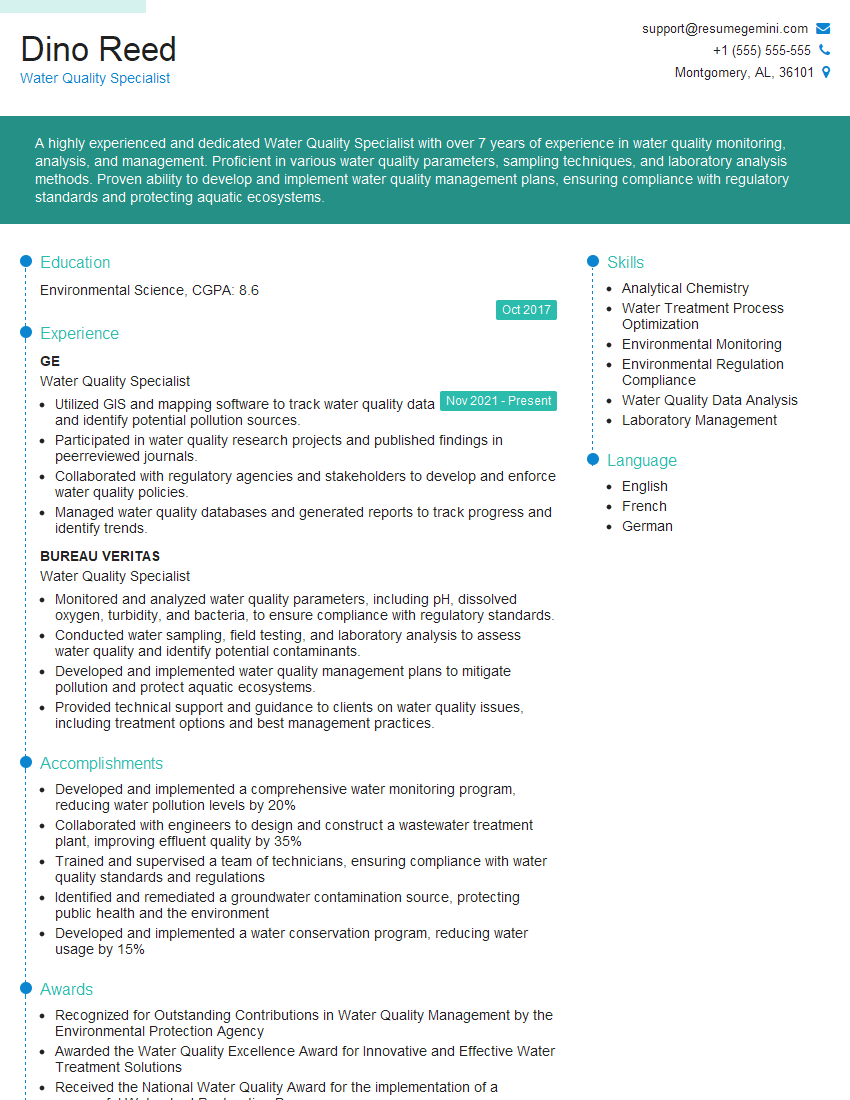
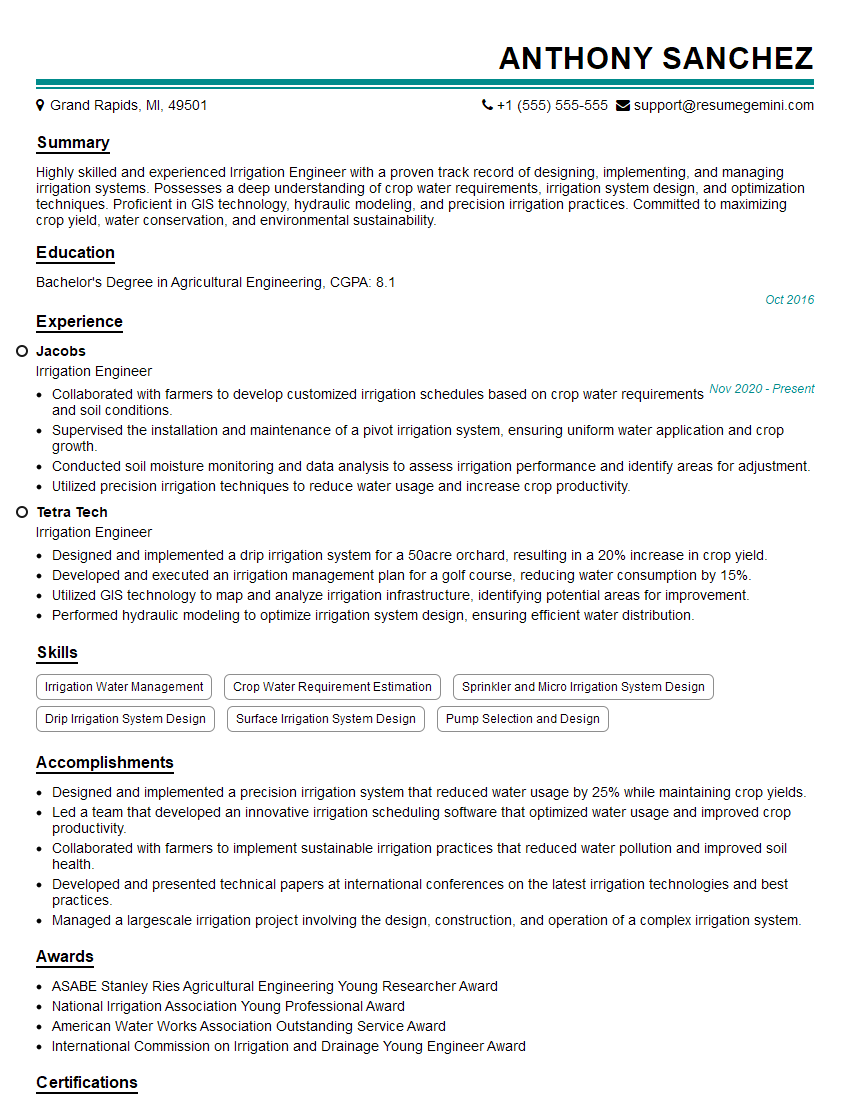
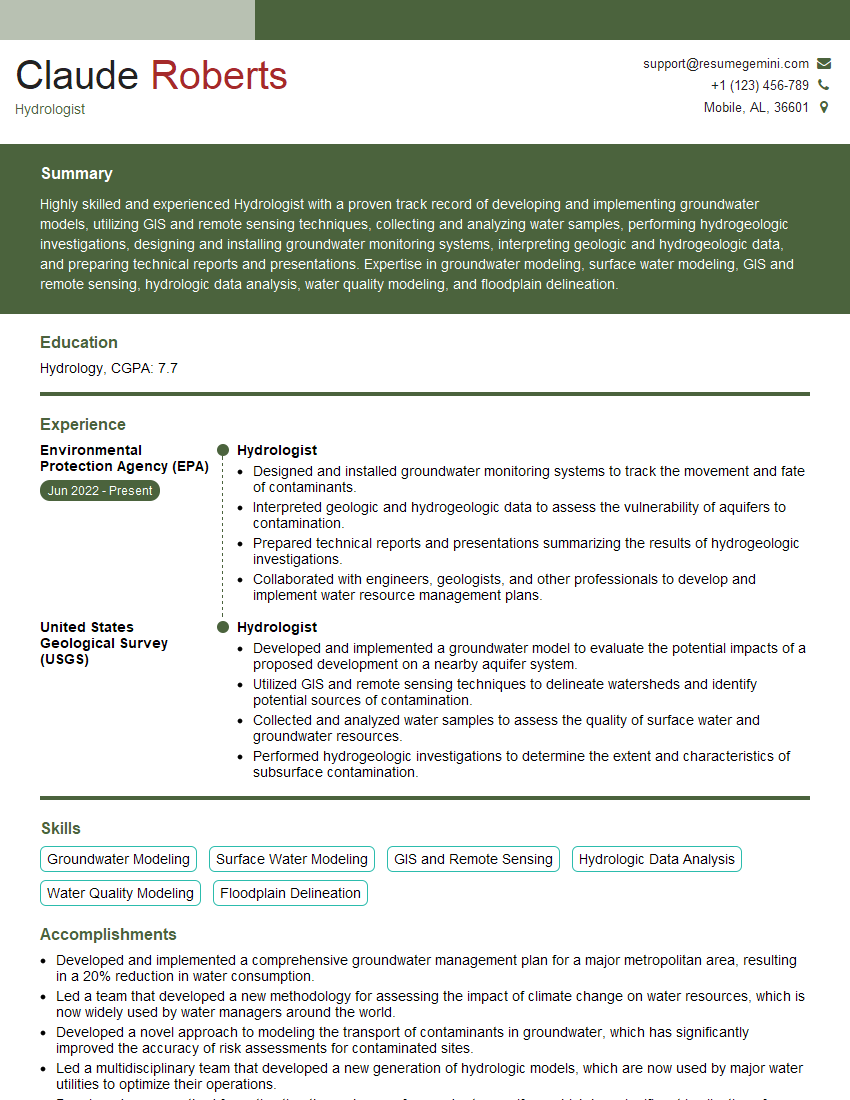
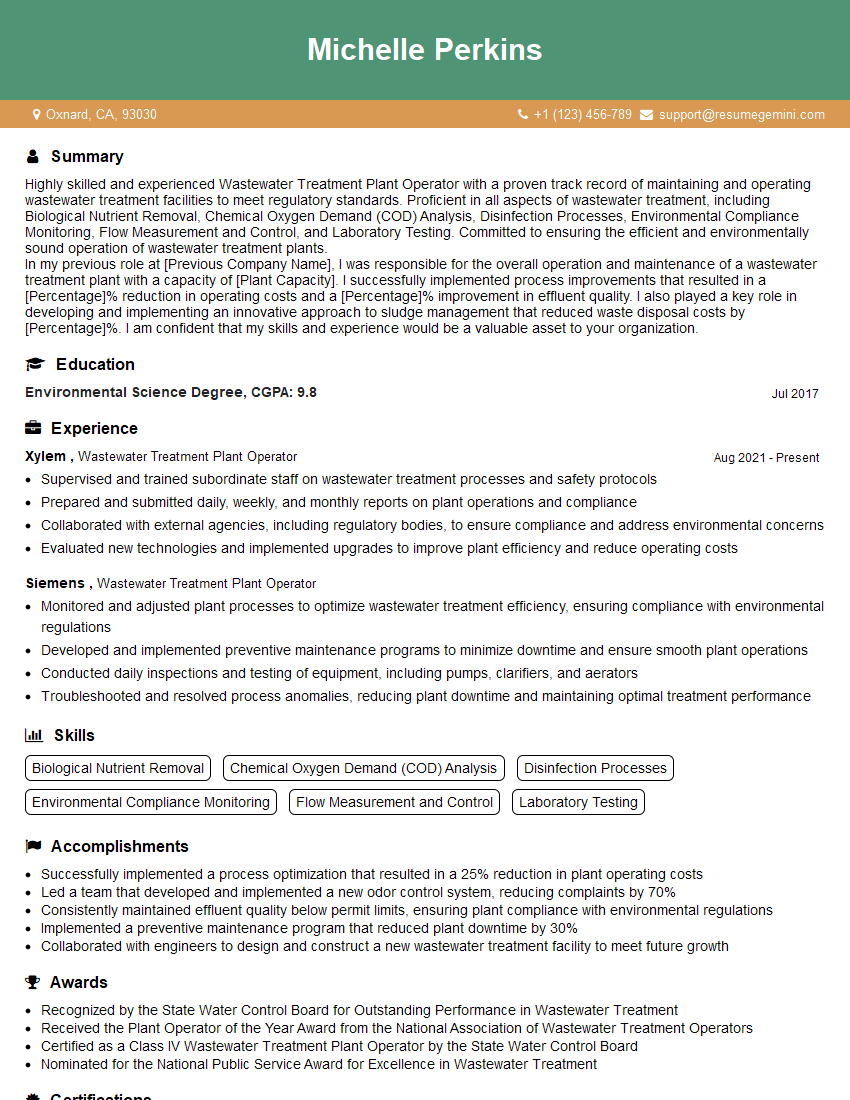
Mastering Drainage and Water Management Systems opens doors to exciting career opportunities in a growing field focused on addressing crucial environmental challenges. A strong understanding of these systems is highly valued by employers seeking skilled professionals. To maximize your job prospects, create an ATS-friendly resume that highlights your skills and experience effectively. ResumeGemini is a trusted resource that can help you build a professional and impactful resume. They provide examples of resumes tailored to the Drainage and Water Management Systems field, ensuring your application stands out from the competition. Invest time in crafting a compelling resume – it’s your first impression and a key to unlocking your career potential.

Explore more articles
Users Rating of Our Blogs
Share Your Experience
We value your feedback! Please rate our content and share your thoughts (optional).
What Readers Say About Our Blog
Amazing blog
hello,
Our consultant firm based in the USA and our client are interested in your products.
Could you provide your company brochure and respond from your official email id (if different from the current in use), so i can send you the client’s requirement.
Payment before production.
I await your answer.
Regards,
MrSmith
hello,
Our consultant firm based in the USA and our client are interested in your products.
Could you provide your company brochure and respond from your official email id (if different from the current in use), so i can send you the client’s requirement.
Payment before production.
I await your answer.
Regards,
MrSmith
These apartments are so amazing, posting them online would break the algorithm.
https://bit.ly/Lovely2BedsApartmentHudsonYards
Reach out at BENSON@LONDONFOSTER.COM and let’s get started!
Take a look at this stunning 2-bedroom apartment perfectly situated NYC’s coveted Hudson Yards!
https://bit.ly/Lovely2BedsApartmentHudsonYards
Live Rent Free!
https://bit.ly/LiveRentFREE
Interesting Article, I liked the depth of knowledge you’ve shared.
Helpful, thanks for sharing.
Hi, I represent a social media marketing agency and liked your blog
Hi, I represent an SEO company that specialises in getting you AI citations and higher rankings on Google. I’d like to offer you a 100% free SEO audit for your website. Would you be interested?