Every successful interview starts with knowing what to expect. In this blog, we’ll take you through the top Hardwood Floor Care interview questions, breaking them down with expert tips to help you deliver impactful answers. Step into your next interview fully prepared and ready to succeed.
Questions Asked in Hardwood Floor Care Interview
Q 1. What types of wood are best suited for high-traffic areas?
For high-traffic areas, you need hardwood species known for their durability and resistance to scratches and dents. Think of it like choosing the right material for a playground – you wouldn’t use something delicate!
- White Oak: A classic choice, boasting exceptional hardness and density. It’s a workhorse that stands up to heavy foot traffic beautifully. I’ve seen white oak floors in commercial spaces that look fantastic even after years of use.
- Red Oak: Similar to white oak in durability, but with a slightly more pronounced grain pattern and often a warmer reddish hue.
- Maple: Exceptionally hard and dense, maple offers a lighter, cleaner look. It’s less prone to dents, making it perfect for active households or commercial settings.
- Brazilian Cherry (Jatoba): A more exotic option, known for its rich color and exceptional durability. It’s a premium choice, but its resistance to wear makes it worth the investment for high-traffic areas.
Choosing the right wood is crucial; a less durable species in a high-traffic area would require significantly more maintenance and potentially premature replacement.
Q 2. Explain the process of sanding and finishing a hardwood floor.
Sanding and finishing transforms a raw hardwood floor into a beautiful, protected surface. It’s a multi-step process requiring precision and attention to detail. Think of it as preparing a canvas before painting a masterpiece.
- Preparation: This includes removing existing finishes, cleaning the floor thoroughly, and repairing any significant damage like gaps or loose boards.
- Sanding: We use progressively finer grit sandpaper, starting with a coarser grit to remove imperfections and ending with a fine grit for a smooth surface. This is done using various sanding machines, from drum sanders for large areas to edge sanders for walls and corners. The goal is an absolutely smooth, even surface for the finish to adhere to perfectly.
- Screening: After sanding, we use a fine screen to remove any dust particles and ensure the surface is perfectly smooth. This is critical for a flawless finish.
- Applying the Finish: This is done in multiple thin coats, allowing each coat to dry completely before applying the next. The number of coats depends on the type of finish and the desired level of protection.
- Buffing (if necessary): Some finishes require a buffing step between coats to create an even surface and enhance durability.
- Final Cleaning: Once the finish is completely cured, the floor is thoroughly cleaned to remove any dust or residue.
Proper sanding is paramount; rushing this step leads to an uneven finish and shortens the lifespan of your floor.
Q 3. What are the different types of hardwood floor finishes available?
Hardwood floor finishes are the protective layer that shields your investment from wear and tear. Choosing the right one depends on your lifestyle, budget, and aesthetic preferences.
- Polyurethane: The most common type, polyurethane finishes are durable, water-resistant, and available in various sheens (gloss, semi-gloss, satin, matte). It’s a good all-around choice, providing excellent protection and a wide range of looks.
- Water-Based Polyurethane: A more eco-friendly option, it offers similar durability to oil-based polyurethane with lower VOCs (Volatile Organic Compounds), making it better for indoor air quality. Cleaning up is much easier as well.
- Oil-Based Polyurethane: Offers superior durability and a richer, warmer look than water-based options, but has stronger fumes during application and is more challenging to clean up. This is a fantastic option for very high traffic areas but comes with increased cost and potential for issues if proper safety precautions are not in place.
- Shellac: A traditional finish, shellac provides a beautiful, warm finish but is less durable than polyurethane and requires more maintenance. It’s more common in restoration projects than new installations due to its beauty and suitability for historic floor restoration.
- Varnish: Similar to shellac, but generally more durable. This is a less popular finish compared to polyurethane in modern installations.
The finish you select significantly impacts the floor’s longevity and appearance. Consider factors like your family’s lifestyle and the level of protection needed.
Q 4. How do you identify and repair common hardwood floor problems (e.g., scratches, dents, water damage)?
Identifying and repairing hardwood floor problems requires a keen eye and the right tools. It’s detective work combined with practical skills.
- Scratches: Minor scratches can often be buffed out using a scratch remover. Deeper scratches might require sanding and refinishing the affected area.
- Dents: Small dents can sometimes be raised using steam or a special dent puller. Larger dents usually necessitate sanding and refinishing.
- Water Damage: Water damage can cause warping, cupping, or crowning. The extent of the damage dictates the repair; minor damage might involve sanding and refinishing, while severe damage could necessitate board replacement.
- Loose Boards: Loose boards indicate a problem with the subfloor or installation. Often, re-gluing and clamping the board solves the issue. In more significant cases subfloor repairs are needed before re-installation of the affected boards.
Prevention is key. Regular cleaning and maintenance are the best ways to minimize these problems. Think of it like regular car maintenance – preventative care saves you big repairs down the line.
Q 5. Describe your experience with various wood flooring installation methods.
My experience encompasses a variety of hardwood flooring installation methods, each with its own advantages and disadvantages. The best method depends on the project’s specifics.
- Nail Down: This traditional method involves nailing the planks directly to the subfloor. It’s a robust and stable option, suitable for many applications. It can, however, lead to squeaking if not installed properly.
- Glue Down: The planks are adhered to the subfloor using a specialized adhesive. It provides excellent stability and minimizes squeaking. The subfloor needs to be extremely flat and dry for this method to work correctly.
- Floating Floor: The planks are installed over an underlayment without being nailed or glued to the subfloor. This is a faster and simpler installation method but offers less stability than nailed or glued down floors and is more susceptible to damage from impacts and moisture.
- Engineered Wood: Engineered wood flooring offers greater dimensional stability, allowing for installation in various settings, even over concrete subfloors or in basements with more fluctuating humidity levels.
Each method requires careful attention to detail to ensure a successful installation. I adapt my approach based on the specific project requirements, the client’s preferences, and the condition of the subfloor.
Q 6. What safety precautions do you take when working with hardwood floors and finishing products?
Safety is paramount in my work. Hardwood flooring and finishing products present various hazards, and I meticulously follow safety protocols to protect myself and others.
- Respiratory Protection: I always wear a respirator when sanding or working with finishing products to avoid inhaling dust or fumes.
- Eye Protection: Safety glasses are mandatory to protect against flying debris and chemical splashes.
- Hearing Protection: Sanding machines are loud; earplugs or earmuffs are essential to prevent hearing damage.
- Proper Ventilation: When using finishing products, ensuring adequate ventilation is crucial to minimize exposure to fumes. This often requires using fans and opening windows.
- Gloves: I wear appropriate gloves to protect my hands from chemicals, splinters, and irritants.
- Proper Disposal of Materials: All waste materials, including sanding dust and chemical containers, are disposed of according to local regulations.
Safety isn’t just a procedure; it’s a commitment. I prioritize safety in every aspect of my work to ensure a safe and productive work environment.
Q 7. How do you determine the appropriate moisture content for hardwood flooring installation?
The moisture content of hardwood flooring is crucial for a successful installation. Too much moisture leads to expansion and potential problems, while too little moisture can lead to shrinkage and gaps. It’s like Goldilocks and the Three Bears – we need it just right!
We use a moisture meter to measure the moisture content of both the wood flooring and the subfloor. The acceptable moisture content varies depending on the wood species and the climate, but generally:
- Hardwood Flooring: The ideal moisture content is typically between 6% and 8%. This ensures the wood acclimates to the environment without significant expansion or contraction.
- Subfloor: The subfloor moisture content should be appropriate for the type of installation. For example, concrete subfloors should have a moisture content below a certain level (usually determined by a test like a moisture vapor emission rate test) to prevent moisture transfer to the flooring, potentially leading to problems like mold.
Acclimating the wood to the environment before installation is vital. This allows the wood to adjust to the humidity levels of the room, minimizing the risk of future problems. Rushing this step often leads to issues later.
Q 8. What are the best practices for maintaining and cleaning different types of hardwood finishes?
Maintaining hardwood floors depends heavily on the type of finish. There are three main types: polyurethane, oil-based, and wax.
- Polyurethane: This is the most common finish. It’s durable and relatively easy to care for. Regular sweeping or vacuuming with a soft-bristled brush is crucial to prevent dirt and grit from scratching the surface. Damp mopping with a pH-neutral cleaner is recommended, avoiding excessive water which can damage the wood. Think of it like washing your car – you wouldn’t use harsh chemicals or a pressure washer. For tougher stains, a specialized hardwood floor cleaner is usually sufficient.
- Oil-based finishes: These finishes require a more delicate approach. They are more susceptible to damage from harsh chemicals. Regular dusting and occasional cleaning with a specialized oil-based cleaner is key. Avoid excessive water and strong cleaners, as these can strip the oil and leave the wood vulnerable. Imagine these finishes like a well-seasoned cast iron pan – you want to maintain the protective oil layer.
- Wax finishes: These are the most delicate. They need regular waxing and buffing to maintain their protective layer. Avoid harsh cleaners and excessive water. Think of it as polishing fine furniture – it requires consistent and gentle care.
Regardless of the finish, using protective mats in high-traffic areas and felt pads under furniture legs will significantly extend the life of your hardwood floors.
Q 9. How do you handle challenging installations, such as stairs or uneven subfloors?
Installing hardwood flooring on stairs and uneven subfloors requires meticulous planning and execution. Stair installation needs precise cuts and careful attention to detail to ensure a safe and aesthetically pleasing result. I typically use a specialized stair nose coping tool and pre-assemble sections on the ground before attaching them to the staircase to guarantee perfect fits.
Uneven subfloors need to be addressed before installation. This usually involves leveling the subfloor using self-leveling compound or shims. Failing to level the subfloor can lead to squeaking, gaps between planks, and premature wear and tear. Think of it as building a house – you need a solid foundation. A laser level is a valuable tool to help achieve a perfectly flat surface for a successful installation.
Q 10. What is your experience with different types of adhesives and their applications?
My experience encompasses a variety of adhesives, each suited for different applications. I’ve worked with construction adhesives, water-based adhesives, and solvent-based adhesives. The choice depends on the type of wood, the subfloor material, and the desired bonding strength. Water-based adhesives are often preferred for their low VOC content and ease of cleanup, though they might not be suitable for all situations.
For example, when installing engineered wood on concrete, I’ll typically use a moisture-blocking membrane and a high-performance adhesive designed for this specific combination. On the other hand, solid hardwood might require a different type of adhesive depending on the moisture content of the wood and the subfloor. I always consult the manufacturer’s guidelines to ensure compatibility and proper application.
Q 11. How do you ensure proper acclimation of hardwood flooring before installation?
Proper acclimation is crucial for preventing problems after installation. Hardwood flooring needs time to adjust to the temperature and humidity of its new environment. The recommended acclimation period depends on the wood species, the climate, and the type of flooring (solid vs. engineered), but generally ranges from 2 to 7 days. The wood needs to be stored in the room where it will be installed, ensuring good air circulation and protection from direct sunlight and moisture.
I measure the moisture content of the wood using a moisture meter both before and after acclimation to ensure that the wood is properly adjusted. Failure to properly acclimate the wood can result in expansion, contraction, and ultimately, damage to the floor.
Q 12. What is your experience with using different power tools for hardwood floor installation and refinishing?
I’m proficient with a wide range of power tools for both installation and refinishing, including nail guns, chop saws, planers, belt sanders, random orbital sanders, and edge sanders. For installation, nail guns ensure speed and accuracy in securing planks, while the chop saw allows for precise cuts at any angle. In refinishing, belt sanders handle large areas quickly, while the random orbital sander provides a fine finish. Edge sanders are vital for smoothing out the edges of the planks, ensuring seamless transitions and minimizing the risk of splintering.
Safety is always paramount. I always use proper safety equipment, including eye protection, ear protection, and dust masks, regardless of the tool being used.
Q 13. How do you measure and estimate materials for a hardwood flooring project?
Accurate measurement and material estimation are vital for a successful project. I begin by meticulously measuring the area to be covered, accounting for any irregularities or obstacles. I then add extra material to account for waste and potential errors, typically around 5-10%, depending on the complexity of the installation. The type of flooring and pattern also influences the amount of waste.
For example, if I’m using a herringbone pattern, I need to account for more waste than for a straight-line pattern. I also factor in potential damage during transportation and handling. I always double-check my calculations to minimize discrepancies and avoid costly mistakes.
Q 14. What is your experience with repairing damaged hardwood flooring planks?
Repairing damaged hardwood planks requires careful attention to detail. Minor scratches and dents can often be addressed with wood filler or touch-up pens matched to the floor’s color. For more significant damage, like gouges or broken planks, I may need to replace the affected planks. This process often involves carefully removing the damaged plank, selecting a replacement that matches the existing flooring as closely as possible, and then accurately installing the new plank using the appropriate adhesive and fasteners.
In some cases, I may need to use specialized tools to ensure a seamless repair. For instance, a wood chisel might be needed to carefully remove the damaged area without harming the surrounding planks. The key is to match the repair as seamlessly as possible to the existing floor to minimize the visibility of the repair.
Q 15. What is your understanding of different types of wood stains and their effects?
Wood stains are essentially dyes or pigments that penetrate the wood, altering its color and enhancing its natural grain. Different stain types offer varied effects. Water-based stains are easier to clean up, dry quickly, and generally raise the grain less than oil-based stains. However, oil-based stains tend to penetrate deeper, resulting in richer, more durable color. Gel stains are thicker and better at hiding imperfections, ideal for filling in gaps or blemishes. Finally, you have pigmented stains, which contain more pigment for a bolder color, and toner stains, that offer more subtle color changes.
- Water-based stains: Easy cleanup, fast drying, less grain raising, but might require multiple coats for deep color.
- Oil-based stains: Deeper penetration, richer color, more durable, but slower drying and more difficult to clean.
- Gel stains: Excellent for filling imperfections, thicker consistency, excellent hiding power, but can be more expensive.
- Pigmented stains: Intense color, great coverage, but can sometimes appear less natural.
- Toner stains: Subtle color enhancement, good for matching existing floors, less coverage than pigmented stains.
For example, a client might want a light, natural look on oak, so a water-based stain in a light honey tone would be perfect. On the other hand, for a darker, dramatic finish on maple, an oil-based stain with a deep walnut hue might be chosen. The choice depends on the wood type, desired color intensity, and client preference.
Career Expert Tips:
- Ace those interviews! Prepare effectively by reviewing the Top 50 Most Common Interview Questions on ResumeGemini.
- Navigate your job search with confidence! Explore a wide range of Career Tips on ResumeGemini. Learn about common challenges and recommendations to overcome them.
- Craft the perfect resume! Master the Art of Resume Writing with ResumeGemini’s guide. Showcase your unique qualifications and achievements effectively.
- Don’t miss out on holiday savings! Build your dream resume with ResumeGemini’s ATS optimized templates.
Q 16. How do you handle customer concerns or complaints during a project?
Handling customer concerns is paramount. I believe in open communication and transparency from the outset. This means clearly outlining expectations, timelines, and potential challenges before any work begins. If a concern arises, I first listen actively and empathize with the client’s perspective. Then, I thoroughly investigate the issue, explaining the steps I’m taking to resolve it. I always aim to find a mutually agreeable solution, whether it involves adjustments to the work, a partial refund, or additional services. Documentation is key – photos, emails, and detailed records of communication help ensure accountability and clarity.
For example, if a client finds a small gap after installation, I’d immediately examine the issue, explaining possible causes (such as wood expansion/contraction) and propose solutions like wood filler and refinishing the affected area. Transparency prevents small issues from escalating into major conflicts.
Q 17. What is your knowledge of relevant building codes and safety regulations?
My knowledge of building codes and safety regulations is comprehensive and constantly updated. I’m familiar with local, state, and national codes regarding hardwood flooring installation, including those related to moisture content, subfloor preparation, adhesive selection, and proper ventilation. I strictly adhere to OSHA (Occupational Safety and Health Administration) guidelines regarding personal protective equipment (PPE) such as respirators, safety glasses, and hearing protection. I’m also aware of regulations concerning hazardous waste disposal, proper ventilation, and fire safety during sanding and finishing processes. Regularly reviewing updates and attending relevant workshops ensures my compliance and commitment to safety.
Q 18. Explain your experience with different types of wood floor underlayments.
Experience with various underlayments is crucial for a successful hardwood floor installation. I’ve worked with a range of materials, each with specific properties:
- Foam underlayments: Offer excellent sound insulation and cushioning, but can compress over time, potentially leading to unevenness. Different densities exist, influencing performance and durability. Examples include polyethylene foam and closed-cell foam.
- Cork underlayments: Natural, sustainable, offers excellent sound and thermal insulation, and adds a degree of cushioning. It is more expensive than foam.
- Rubber underlayments: Superior moisture resistance and excellent sound dampening properties, providing a more stable base. However, it tends to be denser and more expensive.
- LVL (Laminated Veneer Lumber): A structural underlayment suitable for uneven subfloors, providing a very level surface. This is particularly helpful on older or less stable subfloors.
The choice of underlayment depends greatly on the subfloor condition, the type of hardwood, and the client’s priorities. For example, in a basement with potential moisture issues, a rubber underlayment is preferred. In a quiet residential setting, cork or a high-density foam would be a good choice.
Q 19. What is your process for preparing a subfloor for hardwood flooring installation?
Subfloor preparation is the foundation of a successful hardwood floor installation. A meticulous approach is essential. My process includes:
- Inspection: A thorough inspection to assess the levelness, dryness, and structural integrity of the subfloor. This includes checking for cracks, loose boards, and excessive moisture using a moisture meter.
- Moisture Testing: Determining the moisture content of the subfloor is crucial, ensuring it’s within acceptable limits to prevent problems like cupping or buckling of the hardwood flooring.
- Leveling: Addressing any unevenness using self-leveling compound, or shims to create a smooth and level surface. This ensures even distribution of weight and prevents instability.
- Repairing Damage: Repairing any cracks, holes, or other damage to the subfloor using appropriate patching materials.
- Cleaning: Thoroughly cleaning the subfloor to remove dust, debris, or any contaminants that could affect the adhesion of the hardwood floor.
Skipping these steps can lead to significant problems down the road, so meticulous preparation is always my first priority.
Q 20. How do you manage your time and resources effectively during a project?
Effective time and resource management is crucial for successful project completion. I utilize a project management system that includes detailed scheduling, material lists, and regular progress updates. This system helps me allocate resources efficiently and identify potential delays early on. I carefully plan each step, including material procurement, subfloor preparation, installation, and finishing. I work closely with clients to manage expectations and maintain open communication throughout the project lifecycle. This involves setting clear timelines and regularly communicating any changes or potential issues.
For instance, I might use project management software to track material orders, schedule appointments, and manage my team’s workload. I’ve also found that prioritizing tasks based on urgency and dependency helps ensure smooth workflow.
Q 21. What are the common causes of hardwood floor squeaking, and how do you address them?
Hardwood floor squeaking is a common issue, often stemming from movement between floorboards, joists, or nails. There are several causes:
- Loose nails or screws: Movement between the floorboards and the subfloor leads to friction, causing the squeak.
- Friction between floorboards: Wood expands and contracts with humidity changes, resulting in friction and squeaking.
- Movement between joists and subfloor: Similar to loose nails, friction here can also cause squeaking.
- Insufficient subfloor support: Weak or uneven subfloor can lead to squeaking, particularly in older houses.
Addressing squeaks requires a methodical approach, identifying the cause. It might involve:
- Tightening loose nails or screws: Using a nail gun or screw gun to secure the floorboards to the subfloor.
- Applying lubricating powder or silicone spray: Reducing friction between boards or between the floor and subfloor.
- Installing additional blocking between joists: Adding support to improve stability and reduce movement.
- Repairing or reinforcing the subfloor: Addressing any underlying structural issues that might contribute to squeaking.
In some cases, more invasive methods such as lifting and re-laying boards might be necessary, but always beginning with the less invasive approaches is preferable.
Q 22. How do you work effectively as part of a team?
Effective teamwork for me is all about clear communication, mutual respect, and a shared commitment to excellence. I thrive in collaborative environments where everyone’s skills are utilized to their fullest potential. For instance, on a recent large-scale project, our team included experienced installers, finishers, and a project manager. My role involved precision cutting and laying, while others focused on sanding and finishing. By regularly checking in with each other, sharing progress updates, and addressing challenges proactively, we completed the job ahead of schedule and to the client’s complete satisfaction. This involved active listening, offering constructive criticism, and celebrating successes together. It’s not just about doing the work, but ensuring everyone feels valued and contributing to a positive team dynamic.
Q 23. What are the latest trends and technologies in hardwood floor installation?
The hardwood flooring industry is constantly evolving! One significant trend is the increased popularity of wider planks, which create a more modern and spacious feel. Engineered hardwood is also gaining traction due to its stability and suitability for various climates. Technological advancements are impressive; we’re seeing laser-guided cutting tools for precision installation, reducing waste and ensuring perfect alignment. Another trend is the use of sustainable and eco-friendly materials, like reclaimed wood and bamboo. Finally, digital design tools are revolutionizing planning and visualization. Clients can now see a photorealistic rendering of their floor before installation, eliminating guesswork and ensuring complete satisfaction with the final product. I’ve personally invested in training on using one such software, which greatly enhances my ability to communicate design concepts with clients effectively.
Q 24. Describe your experience with using different types of sealers and finishes.
My experience encompasses a wide range of sealers and finishes, each with unique properties and applications. I’m proficient with water-based polyurethane, known for its low VOCs (volatile organic compounds) and quick drying time, making it ideal for environmentally conscious projects. Oil-based urethanes offer exceptional durability but require longer drying times. I’ve also worked extensively with penetrating sealers, which enhance the natural beauty of the wood while allowing the grain to show through. The choice depends on factors like the wood type, the desired finish (matte, satin, gloss), and the client’s budget and environmental concerns. For example, a high-traffic commercial space might benefit from a durable oil-based urethane, while a rustic farmhouse style might call for a penetrating oil sealer to maintain a natural look. I carefully consider these factors and always advise my clients on the best option for their specific needs.
Q 25. How do you deal with unexpected problems or delays during a project?
Unexpected problems are part of the job, and I’ve developed strategies to handle them effectively. For instance, if I discover damaged subflooring during installation, I immediately document the issue, inform the client, and propose solutions – either repairing the subfloor or suggesting adjustments to the project scope. This requires clear communication and a proactive approach. Similarly, if a delivery is delayed, I explore alternative sourcing options, keeping the client updated every step of the way. My focus is always on minimizing disruption and ensuring the project is completed to the highest standards, even when faced with unforeseen challenges. Thorough planning and contingency strategies help mitigate risks, and open communication with the client builds trust and transparency during unexpected setbacks.
Q 26. What are your strengths and weaknesses as a hardwood floor installer?
My strengths lie in my meticulous attention to detail, my proficiency in various installation techniques, and my ability to work efficiently under pressure. I take pride in delivering high-quality work that exceeds expectations. For example, I recently completed a complex herringbone pattern installation that required exceptional precision and patience. A weakness I’m actively working on is delegation. While I excel at hands-on work, I am learning to delegate certain tasks to improve overall efficiency on larger projects. I am attending workshops and seeking mentorship to strengthen this area of my skillset.
Q 27. What are your salary expectations?
My salary expectations are competitive with the industry standard for experienced hardwood floor installers in this region, considering my skill set, experience, and the complexity of the projects I undertake. I’m open to discussing a specific salary range after learning more about the details of the position and the company’s compensation structure.
Q 28. Do you have your own tools and equipment?
Yes, I own all the necessary tools and equipment required for professional hardwood floor installation, including various saws, nail guns, sanders, and finishing equipment. I regularly maintain and upgrade my tools to ensure they are in top working condition, reflecting my commitment to delivering high-quality results.
Key Topics to Learn for Hardwood Floor Care Interview
- Wood Species Identification and Properties: Understanding different hardwood types (oak, maple, cherry, etc.), their unique characteristics, and how these impact cleaning and maintenance procedures.
- Floor Finishing Types: Familiarity with various finishes (polyurethane, lacquer, oil) and their respective cleaning methods and vulnerabilities. Knowing how to identify the finish type on a floor is crucial.
- Cleaning Methods and Products: Mastering safe and effective cleaning techniques, including dust mopping, wet mopping, and specialized cleaning for various stains and spills. Understanding the appropriate use of cleaning solutions and avoiding damaging chemicals.
- Stain and Scratch Repair: Knowing basic repair techniques for common floor imperfections, including minor scratches, water damage, and scuff marks. Understanding preventative measures is also key.
- Equipment and Tool Usage: Proficiency in operating and maintaining floor cleaning equipment (buffers, polishers, extractors) and hand tools. Safety procedures and proper maintenance are vital.
- Common Hardwood Floor Problems and Troubleshooting: Identifying and addressing issues like squeaking floors, gaps between planks, and water damage. Understanding preventative maintenance to avoid these problems.
- Health and Safety Procedures: Understanding and adhering to all safety regulations related to chemical handling, equipment operation, and personal protective equipment (PPE).
- Customer Service and Communication: Demonstrating excellent communication skills to understand client needs and address concerns professionally and effectively.
Next Steps
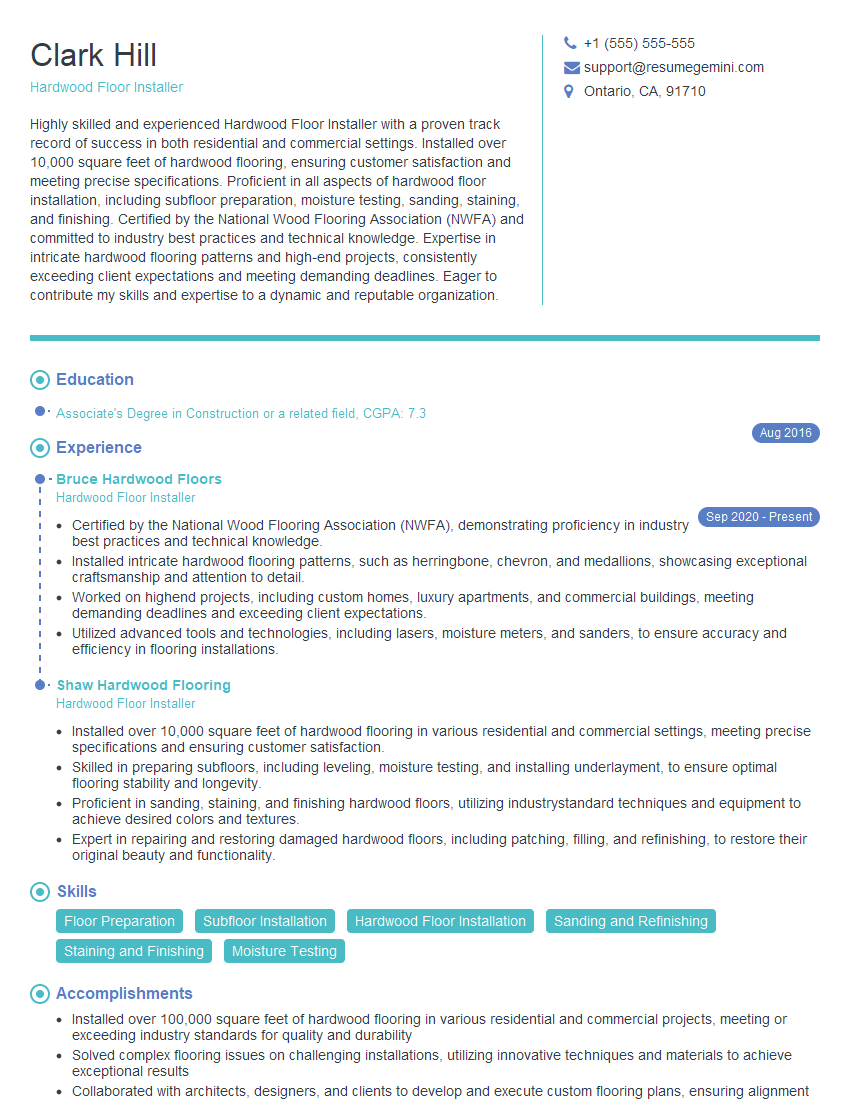
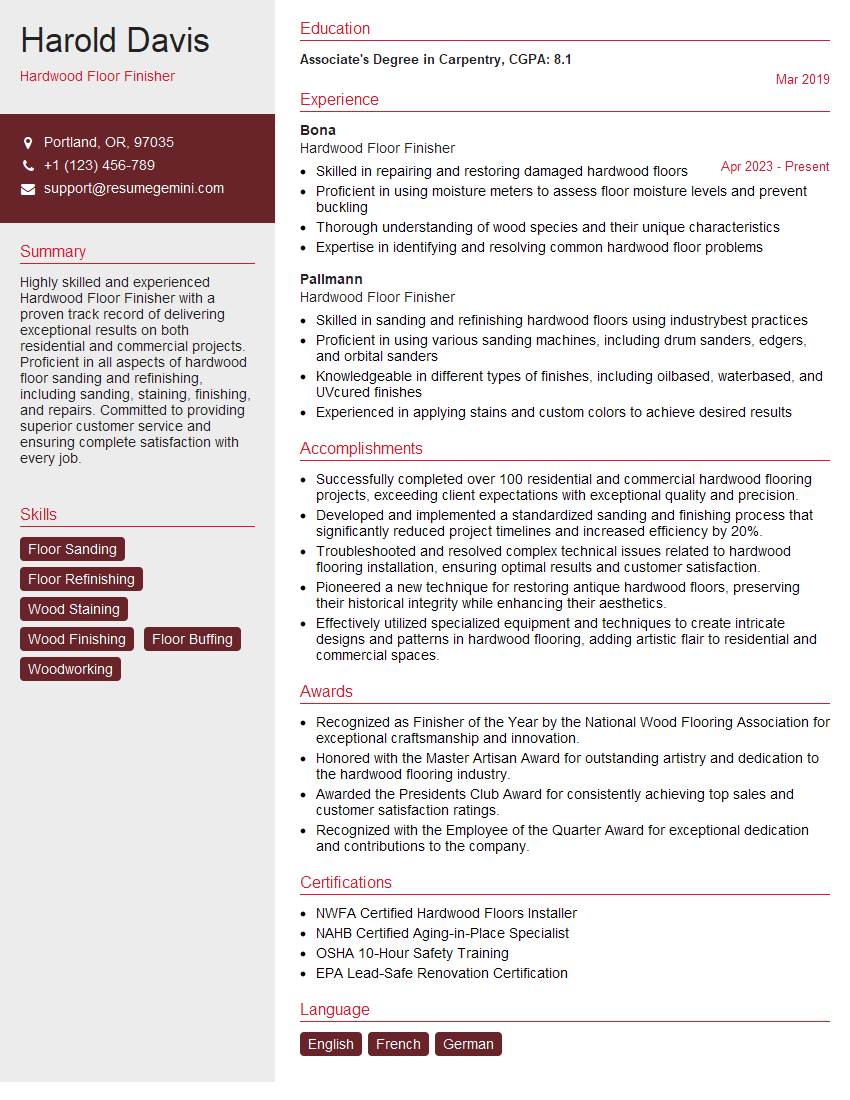
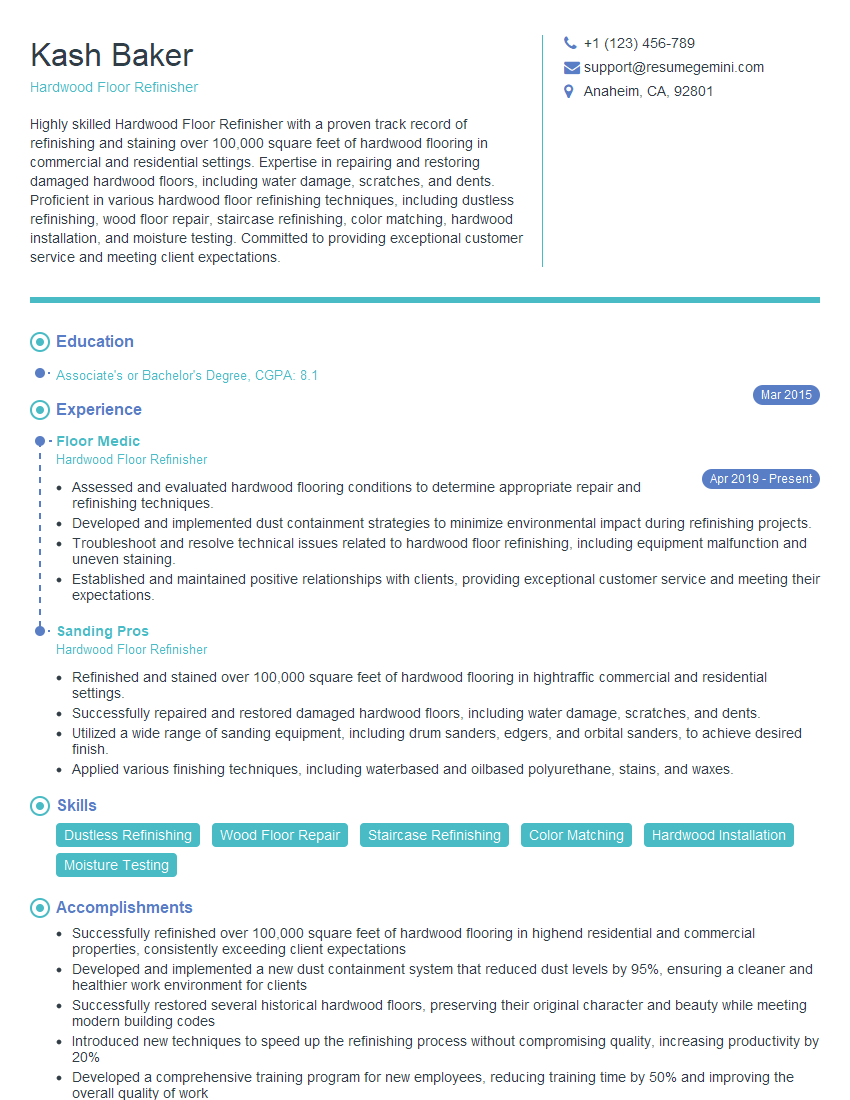
Mastering hardwood floor care opens doors to rewarding careers with excellent growth potential. From entry-level positions to specialized roles, a strong understanding of these skills is highly valued. To maximize your job prospects, create an ATS-friendly resume that showcases your abilities effectively. ResumeGemini is a trusted resource that can help you build a professional and impactful resume. We provide examples of resumes tailored to the Hardwood Floor Care industry to help you get started.
Explore more articles
Users Rating of Our Blogs
Share Your Experience
We value your feedback! Please rate our content and share your thoughts (optional).
What Readers Say About Our Blog
Amazing blog
Interesting Article, I liked the depth of knowledge you’ve shared.
Helpful, thanks for sharing.