Preparation is the key to success in any interview. In this post, we’ll explore crucial Bend Brake Operation interview questions and equip you with strategies to craft impactful answers. Whether you’re a beginner or a pro, these tips will elevate your preparation.
Questions Asked in Bend Brake Operation Interview
Q 1. Describe your experience with different types of press brakes (e.g., hydraulic, mechanical).
My experience encompasses both hydraulic and mechanical press brakes. Hydraulic press brakes, the most common type, utilize hydraulic cylinders to generate the bending force, offering precise control and a wide range of tonnage capabilities. I’ve worked extensively with these, from smaller machines suitable for sheet metal work to larger presses capable of handling heavy-gauge materials. Mechanical press brakes, while less common now, rely on a system of levers and linkages. They are generally simpler in design but can be less precise and require more manual adjustment. I’ve used them primarily for lighter-duty applications and understand their limitations compared to hydraulic systems. The key difference lies in the power source and control – hydraulic systems provide smooth, adjustable power, while mechanical systems are more reliant on precise mechanical adjustments for accurate bending.
For example, I’ve used a 150-ton hydraulic press brake for bending thick steel plates in a fabrication shop, and a smaller 30-ton mechanical press brake for prototyping work with thinner aluminum sheets. This variety of experience has allowed me to understand the advantages and disadvantages of each system, enabling me to select the most appropriate machine for a given job.
Q 2. Explain the process of setting up a press brake for a specific bending operation.
Setting up a press brake for a bending operation is a meticulous process. It involves several key steps:
- Material Selection and Properties: First, identify the material’s thickness, tensile strength, and yield strength, as these properties directly impact bending force calculations and die selection. For instance, bending mild steel requires a different approach than bending stainless steel, due to its higher tensile strength.
- Bend Angle Determination: The desired bend angle needs to be precise. The angle can be specified directly or calculated based on the bend allowance—the amount of material stretching that occurs during bending. Incorrect angle calculations lead to inaccurate parts.
- Die Selection: Appropriate dies (punch and die) are crucial. Die selection depends on the material thickness, bend radius, and bend angle. Too small a die can lead to cracking or deformation, while too large a die will result in a poor bend. I use charts and software to select the right die based on the material and bend parameters.
- Bending Force Calculation: The required bending force is calculated using formulas or software, considering the material properties and geometry. These calculations are essential to avoid overloading the press brake or producing poor-quality bends. The available press brake tonnage must be sufficient for the calculated force.
- Press Brake Setup: This involves positioning the dies, setting the backgauge (which determines the distance from the bend line to the workpiece’s end), and adjusting the press brake’s ram position to achieve the correct bend angle. Accurate backgauge settings are crucial for repeatability and consistency.
- Test Bend: Before full production, a test bend is performed to check for accuracy and to make any necessary adjustments to the dies, backgauge or ram position. This iterative process ensures consistent high quality.
Imagine baking a cake – you need the right recipe (material properties and calculations), the correct oven (press brake), and the right tools (dies) to produce a perfect cake (bent part).
Q 3. How do you determine the appropriate bending force and die selection for a given material and bend angle?
Determining the appropriate bending force and die selection requires a combination of calculation and practical experience. We can’t rely solely on estimation!
- Bending Force Calculation: There are established formulas and software packages (such as those included with CNC press brake controls) that estimate the required bending force. These formulas take into account material properties (thickness, tensile strength, yield strength), bend radius, and bend angle. A safety factor is usually added to account for variations in material properties and machine wear.
- Die Selection: Die selection is crucial for producing a clean, accurate bend. The die opening should be appropriate for the material thickness. Using a die with a too-small opening can lead to cracking or tearing, while a too-large opening will create a poor, uneven bend. V-dies, Gooseneck dies and other specialized dies may be used depending on the application.
- Material Properties: Knowledge of material properties such as tensile and yield strength is essential. These determine how the material will behave under stress during bending. A material with a higher tensile strength requires greater bending force.
- Experience and Judgement: Although formulas help guide the process, practical experience plays a significant role. I’ve often found slight adjustments are necessary based on what I observe during test bends. A skilled operator learns to make small refinements to optimize the process for any given situation.
For example, bending a thicker piece of stainless steel will require a significantly higher bending force and potentially a different die set compared to bending a thinner sheet of aluminum.
Q 4. What safety precautions do you follow when operating a press brake?
Safety is paramount when operating a press brake. I always adhere to the following precautions:
- Lockout/Tagout Procedures: Before any maintenance or adjustments, I always use lockout/tagout procedures to ensure the power is completely disconnected and the machine is locked out to prevent accidental operation.
- Personal Protective Equipment (PPE): I always wear appropriate PPE, including safety glasses, hearing protection, and gloves. Depending on the job, I might also use a face shield or other protective clothing.
- Proper Machine Operation: I follow the manufacturer’s instructions carefully, operating the press brake only within its rated capacity. I never exceed the machine’s maximum tonnage or bend material beyond its capabilities.
- Clear Work Area: I maintain a clean and organized work area, keeping all unnecessary items away from the machine. A cluttered area increases the risk of accidents.
- Two-Hand Operation: Many press brakes have two-hand controls, requiring both hands to be in place before operation. This is a vital safety feature.
- Awareness of Pinch Points: I am always aware of potential pinch points and moving parts. I never place my hands or fingers near the bending area while the machine is in operation.
Following these procedures ensures a safe and productive work environment. I never compromise on safety measures.
Q 5. How do you identify and address common press brake malfunctions?
Identifying and addressing press brake malfunctions requires a systematic approach:
- Visual Inspection: First, I visually inspect the machine for any obvious problems like loose connections, hydraulic leaks, or damaged components.
- Error Codes and Diagnostics: Modern press brakes have diagnostic systems that can provide error codes or fault indicators. Understanding these codes is critical to pinpoint the problem.
- Hydraulic System Checks: Hydraulic leaks or low hydraulic fluid levels can cause malfunctions. I check for leaks and ensure the fluid level is correct.
- Electrical System Checks: Check electrical connections, fuses, and wiring for any issues that could affect the machine’s operation.
- Mechanical System Checks: Inspect moving parts for wear and tear, damage, or misalignment. This often includes checking the ram, backgauge, and die components.
- Troubleshooting Guide: Refer to the manufacturer’s troubleshooting guide to assist with more complex problems. Many guides offer systematic steps for resolving common issues.
- Professional Assistance: If I can’t resolve the problem independently, I consult with experienced technicians or seek professional assistance from a qualified service provider. This avoids costly damage through prolonged incorrect operation.
For example, a sudden loss of power could indicate a blown fuse, a hydraulic leak might cause inconsistent bending force, and a misaligned ram could lead to inaccurate bends.
Q 6. Describe your experience with CNC press brake programming.
I have extensive experience in CNC press brake programming. This involves creating programs that control the machine’s movements, including the positioning of the backgauge, ram descent, and bending parameters. I’m proficient in creating programs for a variety of bending operations, from simple bends to complex shapes involving multiple bends and part rotations. This includes optimizing bend sequences to minimize cycle times while maintaining the highest levels of accuracy. My experience includes both the creation of new programs from scratch and the modification or optimization of existing programs to improve efficiency and part quality.
For example, I recently programmed a CNC press brake to produce a complex part involving five different bends at precise angles and locations. The program was designed to maximize efficiency and minimize setup time, and it allowed for accurate and repeatable bending across multiple parts.
Q 7. What software packages are you proficient in for press brake programming?
I am proficient in several software packages commonly used for press brake programming. This includes:
- Specific CNC Controller Software: This is typically the software provided by the press brake manufacturer. Different manufacturers use different proprietary software and I am familiar with several leading brands. Each has its own specific programming language and interface. It allows for programming the complex bending sequences, utilizing features like automatic die selection and collision detection.
- CAD/CAM Software: I utilize CAD/CAM software (such as AutoCAD, SolidWorks, etc.) to design parts and generate NC code that can then be imported into the press brake’s controller. This allows for seamless integration between design and manufacturing.
- Offline Programming Software: I have experience with offline programming software which allows me to simulate the bending process and make adjustments before loading programs to the actual machine. This significantly reduces the time spent on machine setup and debugging on the shop floor.
My experience with these varied software packages allows me to adapt quickly to different machines and manufacturing environments. I am always seeking new knowledge and am comfortable learning new software as needed.
Q 8. How do you ensure the accuracy and consistency of your bends?
Ensuring accurate and consistent bends relies on a multi-faceted approach encompassing precise machine setup, meticulous material handling, and rigorous quality control. It’s like baking a cake – you need the right recipe (process parameters), the right ingredients (materials), and the right oven (machine) to achieve consistent results.
- Precise Machine Calibration: Regular calibration of the press brake is paramount. This involves verifying the accuracy of the backgauge, the ram’s stroke, and the die’s alignment. Any deviation can lead to inconsistent bend angles. We use calibrated gauges and regularly check against known standards.
- Material Consistency: The material’s properties (thickness, hardness, and surface finish) directly impact bending. Variations in these properties can result in inconsistencies. We employ strict material selection and inspection procedures to ensure uniformity within a batch.
- Process Parameter Optimization: Factors such as bending force, speed, and die selection are optimized based on material type and desired bend angle. We utilize bending simulations and data logging to refine these parameters for each job. For instance, we might adjust the bending pressure for thinner materials to avoid cracking.
- Quality Control Measures: Regular checks, including visual inspection and dimensional measurements of finished parts, are crucial. Statistical Process Control (SPC) charts help us monitor process capability and identify potential sources of variation. This ensures any deviations are caught early in the process.
Q 9. Explain the concept of springback in sheet metal bending and how you compensate for it.
Springback is the elastic recovery of sheet metal after it’s been bent. Imagine bending a spring – once you release the force, it partially returns to its original shape. This phenomenon occurs because the material is deformed beyond its elastic limit but not sufficiently to fully yield.
Compensating for springback is crucial for achieving the desired final bend angle. We employ several methods:
- Pre-bending: We intentionally over-bend the material to account for the expected springback. This requires precise calculation based on material properties and bend angle, often using specialized software or empirical data.
- Die Selection: The die’s geometry influences springback. Specialized dies, such as air-bending dies, can minimize springback through controlled bending pressure and reduced friction.
- Material Testing: Before production, we conduct material testing to quantify springback behavior. This data is then used to calibrate our bending process parameters for accurate results. We might use a small sample to determine the springback factor for a given material and bend radius.
- Software Simulation: Advanced software can simulate the bending process and predict springback accurately. This helps optimize bending parameters before actual production, thereby minimizing waste and maximizing efficiency.
Q 10. How do you measure bend angles and tolerances?
Measuring bend angles and tolerances involves precise tools and techniques to ensure accuracy. We typically use a combination of methods:
- Protractors and Angle Gauges: For simple bends, protractors or angle gauges are adequate for verifying bend angles. However, these have limitations in terms of accuracy.
- Digital Angle Gauges: These offer higher accuracy and are ideal for precise measurement of bend angles in complex parts. We often use these instruments for quality control checks on critical dimensions.
- Coordinate Measuring Machines (CMMs): CMMs provide the highest accuracy for measuring bend angles and overall part dimensions. They are employed for complex parts or in situations demanding extreme precision.
- Go/No-Go Gauges: These gauges are used for simple, repetitive bend angle checks. If the part passes the ‘go’ gauge, the bend angle is within tolerance; if it fails to pass the ‘go’ gauge but fits the ‘no-go’ gauge, it’s outside tolerance.
Tolerances are determined based on the application’s requirements. Tight tolerances might be ±0.5 degrees, while less critical applications may allow tolerances of ±1 or 2 degrees. These are usually specified in the design documentation.
Q 11. What are the different types of bending dies, and what are their applications?
There are several types of bending dies, each suited for different applications:
- V-Dies: These are the most common and relatively inexpensive. They are versatile and suitable for a wide range of materials and bend angles. However, they can create a sharper bend radius than other die types.
- Gooseneck Dies: These dies produce a tighter bend radius compared to V-dies. They are particularly useful for making bends in tighter spaces.
- Air Bending Dies: These use a bottom die with a profile shaped to the desired bend angle. The top punch, together with the ram pressure, acts on the material without fully clamping it. This method reduces springback and minimizes material marking.
- W-Dies: They offer better control over bend geometry and consistency and are specifically designed for sharper bends.
- Multi-stage Bending Dies: These dies allow several bends to be made in one stroke. This improves efficiency, especially in high-volume production.
The choice of die depends on factors such as material thickness, desired bend angle, bend radius, and production volume.
Q 12. Describe your experience with different sheet metal materials (e.g., steel, aluminum, stainless steel).
I have extensive experience working with various sheet metal materials, including steel, aluminum, and stainless steel. Each material presents unique challenges and requires tailored bending techniques:
- Steel: Offers high strength but can be prone to cracking if bent too sharply or with insufficient lubrication. Understanding the grade of steel (e.g., mild steel, high-strength steel) is essential for choosing appropriate bending parameters.
- Aluminum: A more ductile material, meaning it’s more easily bent. However, it’s also prone to scratching or marking. Special care is needed to minimize these cosmetic defects.
- Stainless Steel: Known for its corrosion resistance, stainless steel is harder to bend than mild steel. It often necessitates specialized dies, higher bending forces, and potentially the use of tooling compounds to prevent galling or surface damage.
My experience allows me to adapt bending processes effectively, based on the specific characteristics of each material, maximizing efficiency and ensuring consistent quality.
Q 13. How do you calculate bend deductions for various materials and bend angles?
Bend deduction calculation determines the flat blank size needed to achieve a desired bent part. It’s a crucial step in sheet metal fabrication and involves considering material thickness, bend allowance, and bend angle. There are several methods; I primarily use the following:
Formula-based calculation: This uses a formula that takes into account the material thickness (t), bend allowance (BA), and bend angle (θ):
Bend Deduction = (2 * t) * tan(θ/2)The bend allowance (BA) is typically calculated separately, taking into account the bend radius (R) and material properties. There are different formulas and factors for bend allowance, some accounting for k-factor(material properties and bend geometry). The selection of the appropriate formula depends on the specific material and bending process.
Software-based Calculation: Dedicated sheet metal software packages like SolidWorks or AutoCAD offer built-in bend deduction calculators that automate this process. This improves accuracy and reduces the potential for human error. Inputting material specifications, dimensions, and desired angles allows the software to calculate the needed dimensions for the flat blank.
Both methods need accurate measurements of material thickness, and the chosen formula/software should consider the material’s springback characteristics. Experience plays a crucial role in selecting the appropriate method and adjusting calculations based on observations in real-world bending operations.
Q 14. How do you handle material defects or inconsistencies during bending operations?
Handling material defects or inconsistencies during bending operations requires careful attention to detail and a proactive approach. Our process includes:
- Pre-bending Inspection: Thorough inspection of the sheet metal before bending helps identify defects such as scratches, dents, or variations in thickness. Defective sheets are rejected or set aside for possible repair.
- Process Monitoring: Continuous monitoring during bending allows for the detection of unusual conditions (e.g., excessive noise, unexpected resistance) indicating potential problems. This allows for prompt intervention and prevents further damage to the parts.
- Defect Classification and Response: Depending on the nature and severity of defects, different corrective actions are taken. Minor scratches might be acceptable, while severe dents or tears require rejecting the part. We maintain a documented procedure for handling different types of defects.
- Root Cause Analysis: When defects are frequent or significant, a root cause analysis (RCA) is undertaken to determine the underlying causes (e.g., faulty material, improper machine setup, or operator error). This helps prevent similar problems in the future.
Our approach prioritizes prevention through rigorous material selection and quality control, while ensuring prompt and effective responses to defects that do occur, minimizing waste and upholding quality standards.
Q 15. What is your experience with different types of bending processes (e.g., air bending, bottom bending)?
My experience encompasses a wide range of bending processes, primarily focusing on air bending and bottom bending, which are the most common methods in sheet metal fabrication. Air bending uses a punch and die to bend the sheet metal, relying on the air gap between the punch and die to control the bend angle. This method is versatile and efficient for a variety of materials and thicknesses. Bottom bending, on the other hand, uses a specialized tool to bend the sheet from the bottom, often achieving sharper bends and better control over the bend radius, especially for thicker materials. I’ve also worked with coining, where the sheet is forced into a die cavity to create a highly precise shape, though less frequently than air and bottom bending. In my previous role, for instance, I optimized our air bending process for a particular aluminum alloy, reducing scrap by 15% through careful adjustment of the bending parameters and die selection. For a project involving highly intricate parts in stainless steel, bottom bending proved crucial in achieving the precise radii specified in the design.
Career Expert Tips:
- Ace those interviews! Prepare effectively by reviewing the Top 50 Most Common Interview Questions on ResumeGemini.
- Navigate your job search with confidence! Explore a wide range of Career Tips on ResumeGemini. Learn about common challenges and recommendations to overcome them.
- Craft the perfect resume! Master the Art of Resume Writing with ResumeGemini’s guide. Showcase your unique qualifications and achievements effectively.
- Don’t miss out on holiday savings! Build your dream resume with ResumeGemini’s ATS optimized templates.
Q 16. How do you maintain and lubricate a press brake to ensure optimal performance?
Maintaining a press brake for optimal performance involves a multi-faceted approach. Regular lubrication is key; I meticulously lubricate all moving parts, including the ram, slide, and guideways, using high-quality hydraulic oil and specialized greases according to the manufacturer’s specifications. This ensures smooth operation and prevents premature wear. I also perform regular inspections, checking for signs of wear and tear on the dies, punches, and other components. Daily checks include verifying hydraulic fluid levels and pressure, looking for leaks, and ensuring that all safety mechanisms are functioning properly. Beyond the daily checks, we have a scheduled maintenance program that includes more thorough inspections, cleaning, and potentially replacing worn parts. For example, we replace worn-out die sets proactively rather than waiting for complete failure to avoid costly downtime and potential damage to the machine.
Q 17. Describe your troubleshooting experience with press brake hydraulic systems.
Troubleshooting hydraulic systems requires a systematic approach. My experience starts with a thorough safety check, ensuring the power is off before any hands-on work. I then begin with a visual inspection, checking for leaks, loose connections, and any signs of damage. If a leak is detected, I carefully trace the source to identify the faulty component (e.g., a hose, seal, or valve). Then, I’ll check hydraulic fluid levels and pressure using pressure gauges. If there’s a pressure problem, the issue could range from a clogged filter to a malfunctioning pump. I use diagnostic tools, like pressure gauges and flow meters, to identify pressure drops or restricted flow within the system. For example, I once resolved a problem where the press brake was slow to respond by identifying a leak in a hydraulic line which we replaced immediately. Another time I diagnosed a faulty pressure relief valve by systematically isolating sections of the hydraulic circuit and carefully observing pressure readings. I always document troubleshooting steps and solutions for future reference.
Q 18. How do you interpret engineering drawings and specifications related to bending operations?
Interpreting engineering drawings and specifications is fundamental to my work. I am proficient in reading blueprints, understanding bend allowances, bend deductions, material thicknesses, tolerances, and other critical information needed for accurate bending. I pay close attention to dimensions, annotations, and symbols to ensure the final product meets the design requirements. For instance, I can easily interpret drawings that specify bend radii, bend angles, and the overall dimensions of the finished part. I also understand and utilize different drawing standards (like ASME Y14.5), which ensures consistent interpretation across various projects. A common example is correctly interpreting the bend radius denoted on a drawing which dictates the correct die to be selected and appropriate machine settings.
Q 19. Explain your understanding of bend allowances and how to calculate them.
Bend allowance is the amount of material added to the bend line to compensate for the stretching of the material during the bending process. Accurate calculation is crucial for achieving precise bend angles and overall dimensions. There are several formulas for calculating bend allowance, some more accurate than others, depending on the material and bend angle. A common formula involves considering the bend radius, the material thickness, and the bend angle. For instance, a simple formula might be: Bend Allowance = (Bend Radius + Material Thickness/2) * Bend Angle (in radians). However, the exact formula and method will often differ based on the material and the type of bending. In practice, I use a combination of formulas and industry-standard tables, alongside practical experience, to ensure precise bend allowances are factored into the programming of the press brake. I have often fine-tuned these calculations through trial and error, making minor adjustments based on observation and measurement, to guarantee the best accuracy in production. This iterative process leads to high precision, crucial for functional and aesthetically pleasing end products.
Q 20. What is your experience with using various measuring tools (e.g., calipers, protractors)?
My experience with measuring tools is extensive. I’m proficient in using calipers (both vernier and digital) for precise measurement of lengths, widths, and thicknesses. I use protractors to accurately measure bend angles. I also utilize other tools, including height gauges, depth gauges, and various types of rulers. Accuracy is paramount, and I understand the importance of properly calibrating instruments and using the right tool for the job. For example, using a digital caliper to measure the thickness of a sheet of steel to the nearest hundredth of a millimeter, or using a protractor to meticulously verify the bend angle of a component is a regular part of my workflow. Knowing how and when to use each tool ensures consistency, and minimizes the occurrence of production errors.
Q 21. How do you ensure quality control throughout the bending process?
Quality control is integrated into every stage of the bending process. It begins with verifying the raw materials, checking for any defects or inconsistencies. During the bending process, I regularly monitor the machine parameters, such as tonnage and bend angle, to ensure they are within the specified tolerances. After each bend, I use appropriate measuring tools to verify the dimensions and angles of the finished part, comparing them to the engineering drawings. Statistical Process Control (SPC) charts are often employed to monitor these measurements, which allow us to proactively identify and correct any trends that might indicate a deviation from the desired quality. Finally, random samples are usually inspected for any anomalies before packaging and shipping, guaranteeing consistent, high-quality output. A rigorous quality control process translates into consistently accurate and high quality final products, meeting all client specifications. A simple example is regularly checking the air gap between the punch and die to ensure the programmed bend angle is being achieved. This is often supplemented by measuring actual bend angles with a protractor for a random sample.
Q 22. What are your experience with different types of press brake tooling?
My experience encompasses a wide range of press brake tooling, from standard V-dies and Gooseneck dies to more specialized tooling like bending dies for intricate shapes, and air bending dies for delicate materials. I’m proficient in selecting the appropriate tooling based on material thickness, bend radius, and desired bend angle. For instance, I’ve extensively used V-dies for general-purpose bending, Gooseneck dies for achieving tighter radii in thicker materials, and have experience with custom tooling for unique project requirements. I understand the importance of die maintenance, including regular inspection for wear and tear, ensuring proper alignment, and lubrication to prevent damage to both the tooling and the workpiece. My experience also covers the use of different materials used in die construction, such as hardened steel and carbide, understanding their respective strengths and applications.
- V-Dies: Standard tooling, suitable for a wide range of bending applications.
- Gooseneck Dies: Used for tighter bend radii, especially on thicker materials. They provide better control over the bend and minimize springback.
- Air Bending Dies: Ideal for thin materials where maintaining consistent bend angles is crucial. They reduce marking on the workpiece compared to other methods.
- Specialty Dies: Includes tooling for specific shapes, like embossing dies, or those for creating complex bends in one operation.
Q 23. Explain the difference between air bending and bottom bending.
Air bending and bottom bending are two distinct methods used in press brake operation, each with its advantages and disadvantages. The key difference lies in how the material is bent.
Air bending uses a V-die to create a bend by applying pressure to the material. The punch descends, deforming the material only up to the top of the die. The material doesn’t touch the bottom of the die during the bending process. This method is commonly used for thin gauge materials and produces less marking on the workpiece. The bend is achieved by using the springback of the material to attain the final angle.
Bottom bending, on the other hand, uses a bottoming die that requires the workpiece to completely touch and fully form against the bottom die before the punch descends. This provides high accuracy, and is used for precise, repeatable bends, especially in thicker materials. It leads to more consistent bends and a lower springback effect. However, bottom bending can cause more surface marking and requires more pressure which places higher demands on the press brake.
Think of it like folding a piece of paper: air bending is like gently pressing it to create a crease, while bottom bending is like firmly pressing the paper against a solid surface to create a sharp, defined fold.
Q 24. How do you manage production deadlines and meet output targets?
Meeting production deadlines and output targets requires a structured approach. I use a combination of techniques to ensure efficiency and timely completion of projects. This includes careful job scheduling, prioritization based on urgency and complexity, and continuous monitoring of progress. I utilize production management software to track jobs, materials, and machine time, helping identify potential bottlenecks in advance.
For instance, in a recent project with tight deadlines, I identified a potential delay in the supply of specialized tooling. By proactively contacting the supplier and establishing a clear communication channel, I ensured the timely delivery of the tooling, mitigating the risk of delays. Effective communication within the team is also crucial, to address any issues promptly and share best practices for optimization. A crucial element is accurate estimation of job time; I constantly refine my estimations based on experience and feedback to prevent over or under commitments.
Q 25. Describe your experience working with different types of safety equipment related to press brakes.
Safety is paramount in press brake operation. My experience includes working with a comprehensive range of safety equipment, including light curtains, dual hand controls, and anti-tie-down systems. I’m well-versed in the proper use and regular inspection of each piece of safety equipment, understanding the importance of ensuring they function correctly to prevent accidents. Light curtains, for example, prevent accidental activation if a hand enters the bending zone. Dual hand controls ensure that the press brake operates only when both hands are actively engaged, and anti-tie-down mechanisms ensure workers are not trapped by the machine.
Beyond the standard equipment, I’ve also received and adhered to training and certifications on safe operating procedures, including lockout/tagout procedures for machine maintenance and emergency shutdown protocols. I regularly participate in safety training sessions and stay updated on industry best practices to ensure my safety and that of my colleagues. Always being vigilant and adhering to the principles of safe operating procedures is an integral part of my workflow.
Q 26. How do you maintain a clean and organized workspace?
Maintaining a clean and organized workspace is crucial for efficiency and safety. My approach involves a combination of proactive measures and regular maintenance. I follow a 5S methodology (Sort, Set in Order, Shine, Standardize, Sustain), routinely cleaning and organizing the immediate work area, ensuring that tools and materials are properly stored and easily accessible.
This includes regular sweeping, wiping down surfaces, and proper disposal of scrap metal and waste. I also ensure that the press brake itself is kept clean and free of debris, both inside and out. This not only enhances efficiency but is also a vital part of preventative maintenance. A clean and organized workspace reduces the risk of accidents and ensures that equipment functions optimally. Clear labeling of materials and tools helps everyone access required items quickly and correctly which also minimizes potential downtime due to searching.
Q 27. Describe a time you had to troubleshoot a complex bending problem. What was your approach?
I once encountered a complex bending problem involving a thin stainless steel sheet that was consistently cracking during the bending process. My initial approach was to systematically analyze the potential causes. I started by verifying the selected tooling; I checked that the tooling was correctly sized and aligned. Next, I examined the bending parameters, including the bend angle, tonnage, and bending speed. I then analyzed the material itself, carefully checking its properties and ensuring the material was appropriate for the job.
After ruling out tooling and parameters, I found that the material was exhibiting unusual brittleness. Further investigation revealed the cause was poor material storage— improper handling and exposure to moisture had affected the material’s properties. This issue was addressed by implementing improved storage and handling procedures. By carefully analyzing each element of the bending process, I identified the root cause and implemented a solution, preventing further cracks and completing the project successfully.
Q 28. How do you stay updated on the latest technologies and best practices in press brake operation?
Staying updated on the latest technologies and best practices in press brake operation is an ongoing process. I regularly attend industry conferences and workshops, where I network with other professionals and learn about new developments in tooling, software, and safety procedures. I subscribe to relevant industry publications and online resources, keeping myself informed about the latest advancements in bending technology. I also actively seek out training opportunities on new machines and techniques to enhance my skills and stay competitive. Additionally, I participate in online forums and discussion groups, exchanging knowledge and best practices with fellow professionals in the field. This proactive approach ensures that I maintain a high level of expertise and adopt the most efficient and safe techniques.
Key Topics to Learn for Bend Brake Operation Interview
- Understanding Bend Brake Mechanics: Explore the fundamental principles governing the bending and braking processes, including material properties and stress distribution.
- Practical Application of Bend Brake Techniques: Gain hands-on familiarity with various bend brake operation methods, focusing on techniques for achieving precise bends and minimizing material damage.
- Troubleshooting Common Issues: Learn to identify and resolve common problems encountered during bend brake operation, such as misaligned bends, material cracking, and machine malfunctions. This includes understanding preventative maintenance procedures.
- Safety Procedures and Regulations: Master the safety protocols and regulations associated with operating bend brake machinery, including proper machine guarding, personal protective equipment (PPE) usage, and emergency procedures.
- Material Selection and Properties: Understand the impact of different material properties on the bending process. Learn to select appropriate materials for various applications and anticipate potential challenges.
- Die Selection and Setup: Develop expertise in choosing and correctly setting up dies for various bend angles and material thicknesses, ensuring accurate and consistent results.
- Quality Control and Inspection: Learn the techniques for inspecting finished bends for dimensional accuracy, surface finish, and overall quality, adhering to relevant industry standards.
- Programming and CNC Operation (if applicable): If the role involves CNC bend brakes, gain a thorough understanding of programming techniques, machine operation, and troubleshooting CNC-related issues.
Next Steps
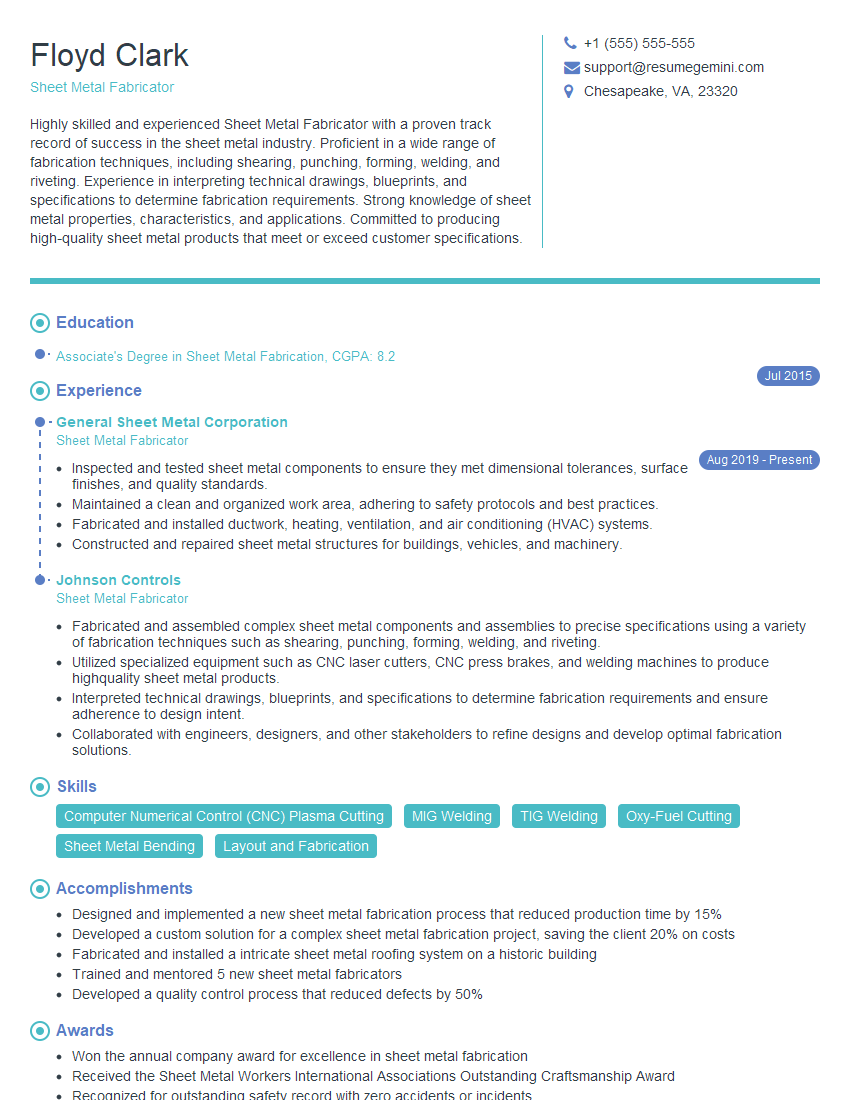
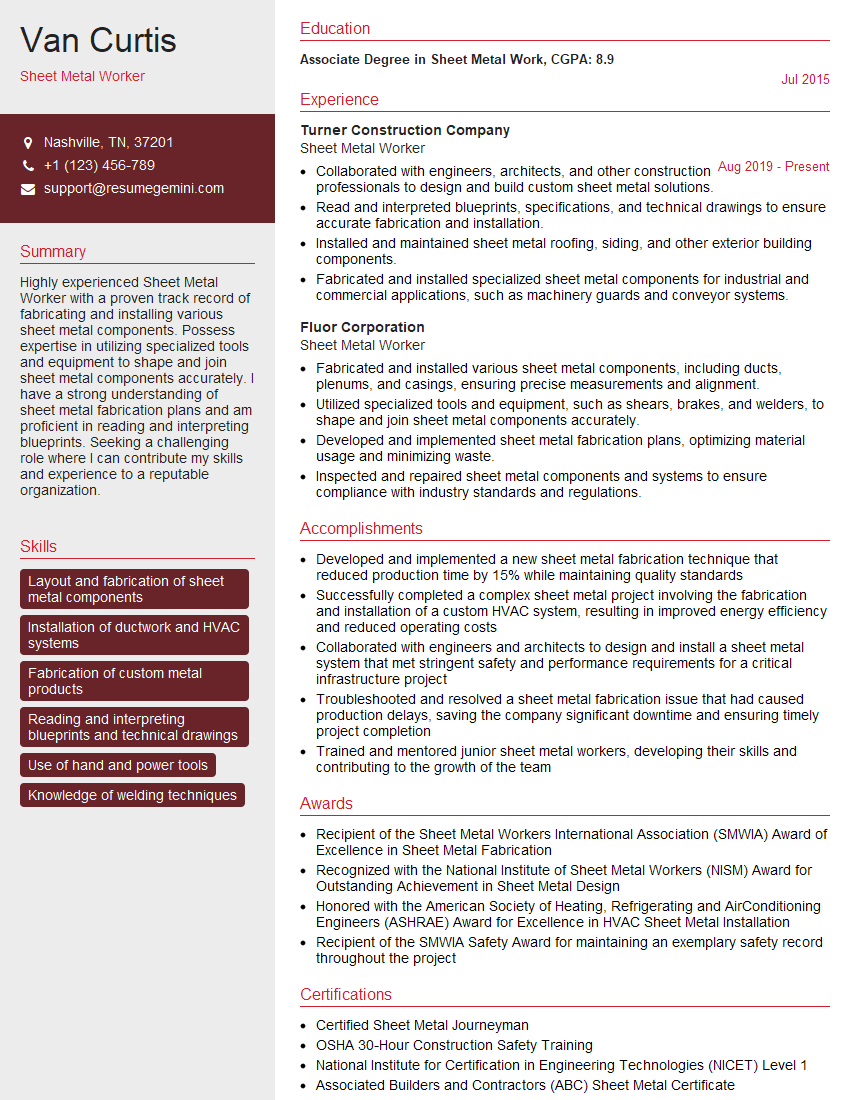
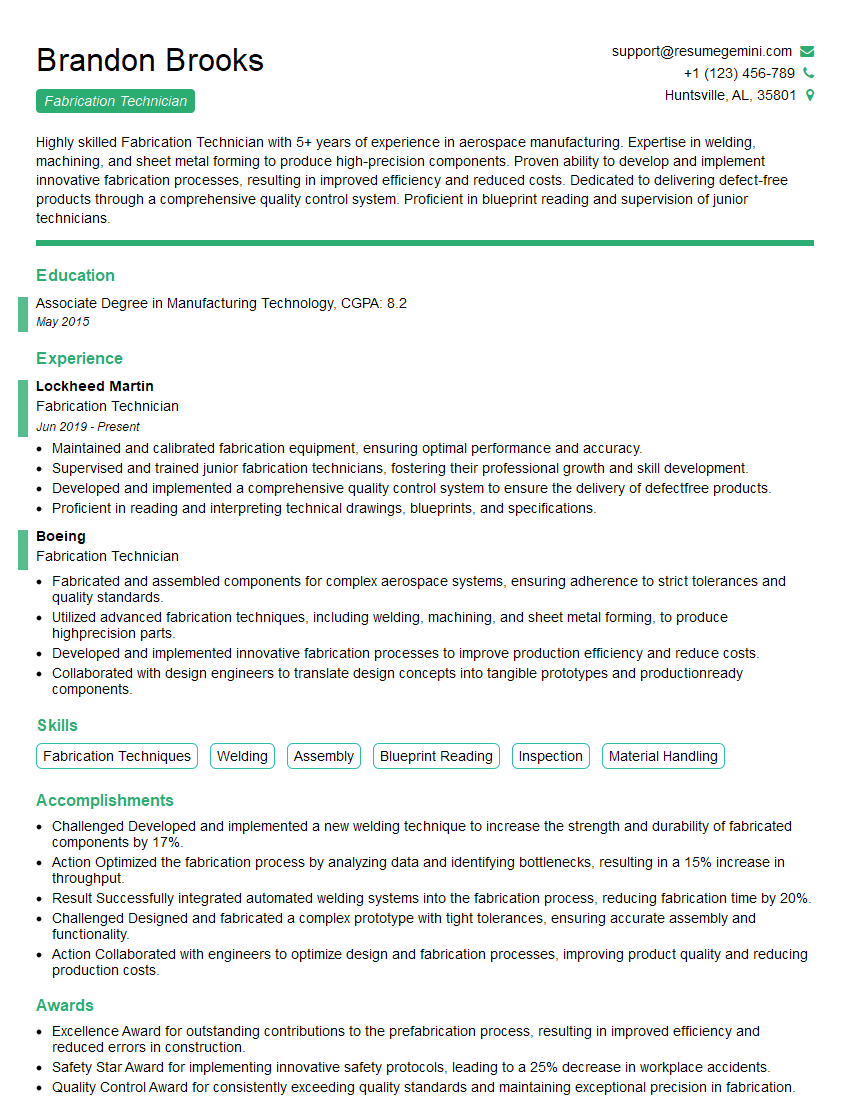
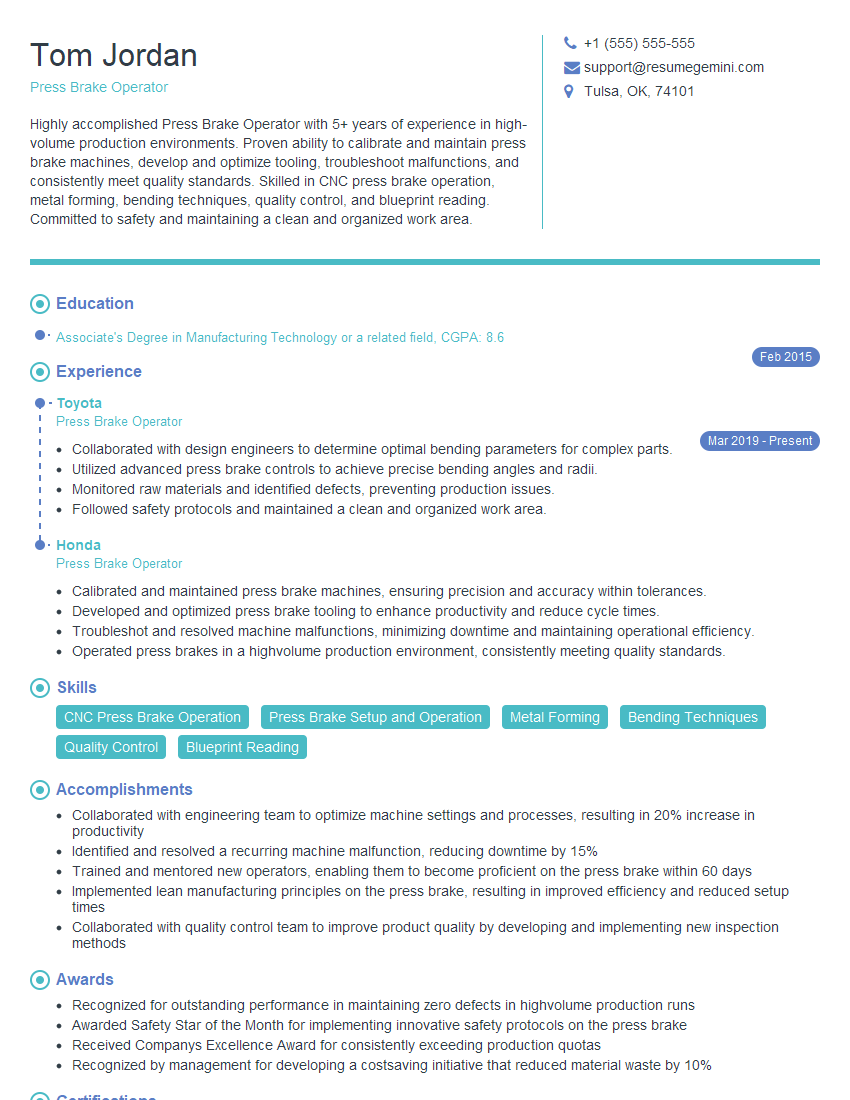
Mastering Bend Brake Operation opens doors to exciting career opportunities in manufacturing and related fields, offering potential for advancement and specialization. A strong resume is crucial for showcasing your skills and experience to potential employers. Creating an ATS-friendly resume significantly increases your chances of getting noticed by recruiters. We highly recommend using ResumeGemini to build a professional and impactful resume that highlights your expertise in Bend Brake Operation. Examples of resumes tailored to Bend Brake Operation positions are available to help you craft your perfect application.
Explore more articles
Users Rating of Our Blogs
Share Your Experience
We value your feedback! Please rate our content and share your thoughts (optional).
What Readers Say About Our Blog
Amazing blog
hello,
Our consultant firm based in the USA and our client are interested in your products.
Could you provide your company brochure and respond from your official email id (if different from the current in use), so i can send you the client’s requirement.
Payment before production.
I await your answer.
Regards,
MrSmith
hello,
Our consultant firm based in the USA and our client are interested in your products.
Could you provide your company brochure and respond from your official email id (if different from the current in use), so i can send you the client’s requirement.
Payment before production.
I await your answer.
Regards,
MrSmith
These apartments are so amazing, posting them online would break the algorithm.
https://bit.ly/Lovely2BedsApartmentHudsonYards
Reach out at BENSON@LONDONFOSTER.COM and let’s get started!
Take a look at this stunning 2-bedroom apartment perfectly situated NYC’s coveted Hudson Yards!
https://bit.ly/Lovely2BedsApartmentHudsonYards
Live Rent Free!
https://bit.ly/LiveRentFREE
Interesting Article, I liked the depth of knowledge you’ve shared.
Helpful, thanks for sharing.
Hi, I represent a social media marketing agency and liked your blog
Hi, I represent an SEO company that specialises in getting you AI citations and higher rankings on Google. I’d like to offer you a 100% free SEO audit for your website. Would you be interested?