Interviews are more than just a Q&A session—they’re a chance to prove your worth. This blog dives into essential Contribution to the Opera Community interview questions and expert tips to help you align your answers with what hiring managers are looking for. Start preparing to shine!
Questions Asked in Contribution to the Opera Community Interview
Q 1. Describe your experience in opera production management.
My experience in opera production management spans over 15 years, encompassing all aspects from initial concept development to final performance. I’ve worked on productions ranging from intimate chamber operas to large-scale staged productions with full orchestras. My roles have included managing artistic teams, coordinating rehearsals, overseeing set and costume construction, and liaising with venues and technical crews. For example, during the production of Tosca at the Grand Opera House, I successfully managed a team of 50+ individuals, coordinating their schedules and ensuring seamless collaboration to deliver a critically acclaimed performance. This involved detailed scheduling, budget management, and proactive problem-solving to overcome challenges like unexpected set malfunctions and performer illnesses. I pride myself on my ability to foster a collaborative and efficient work environment, always prioritizing artistic vision while maintaining budgetary constraints.
Q 2. Explain your understanding of opera vocal techniques.
My understanding of opera vocal techniques is extensive, built upon years of observing and collaborating with leading singers. I’m familiar with various vocal production methods, including breath control, resonance, diction, and phrasing. I understand the specific demands placed on singers by different vocal styles and roles. For instance, the dramatic power required for a Wagnerian soprano differs considerably from the agility and precision needed for a coloratura role. I recognize the importance of vocal health and work closely with singers to ensure they’re adequately prepared and supported throughout the production process. This includes understanding vocal warm-up techniques, hydration strategies, and the potential risks associated with vocal strain. I’ve also collaborated with vocal coaches to address specific technical challenges faced by individual singers during rehearsals.
Q 3. How do you handle scheduling conflicts within an opera production?
Handling scheduling conflicts in opera production requires proactive planning and effective communication. I utilize sophisticated scheduling software to track the availability of all personnel, from singers and conductors to stagehands and technicians. When conflicts arise, I employ a multi-pronged approach. First, I examine the schedules for flexibility, potentially rescheduling rehearsals or finding alternative solutions. Second, I communicate transparently with all stakeholders, ensuring everyone understands the constraints and potential compromises. Finally, if necessary, I may need to negotiate compromises, perhaps adjusting rehearsal times or even adjusting the casting, to achieve a workable solution. For example, when a lead singer was required to attend a prior engagement, we successfully reshuffled rehearsals and implemented understudy rehearsals to mitigate any risk to the overall production schedule.
Q 4. What are the key components of successful opera marketing?
Successful opera marketing requires a multi-faceted approach targeting different audience segments. It involves crafting compelling narratives that resonate with potential patrons. Key components include:
- Targeted advertising: Utilizing digital marketing, print media, and social media campaigns designed to reach specific demographics.
- Public relations: Building relationships with media outlets to generate positive press coverage and reviews.
- Community engagement: Reaching out to local communities through workshops, outreach programs, and collaborations.
- Website and social media presence: Creating engaging online content to build excitement and anticipation for upcoming productions.
- Subscription programs: Offering attractive season ticket packages to encourage repeat attendance.
Q 5. Detail your experience with fundraising for opera productions.
My experience with fundraising for opera productions involves developing and implementing comprehensive strategies to secure funding from diverse sources. This includes cultivating relationships with individual donors, corporate sponsors, and foundations. I prepare compelling proposals that highlight the artistic value and community impact of our productions. I actively seek out grant opportunities and manage grant applications. I’m also adept at organizing fundraising events, such as galas and benefit concerts, to raise crucial funds. For instance, during the fundraising campaign for our production of Aida, I secured a significant grant from a local arts council and successfully organized a gala that exceeded its fundraising target by 20%.
Q 6. How do you manage budgets effectively in an opera environment?
Effective budget management in opera is crucial. I utilize detailed budgeting software to track all income and expenses. I develop contingency plans to address unforeseen costs and ensure adherence to financial guidelines. I work closely with the finance team to monitor spending, reconcile accounts, and manage cash flow. Regular budget reviews are conducted to identify any potential overruns and to make necessary adjustments. Transparency and clear communication are key to ensuring everyone involved understands the budget constraints and contributes to efficient resource allocation. Using a zero-based budgeting approach allows for careful allocation of funds at every stage.
Q 7. Describe your knowledge of opera history and its evolution.
My knowledge of opera history and its evolution is extensive. I understand the historical contexts in which different operatic styles emerged, from the Baroque era with composers like Handel to the Romantic period with Wagner and Verdi, and the 20th-century innovations of Stravinsky and Britten. I’m familiar with the evolution of opera staging, costumes, and musical techniques. I appreciate the social and cultural significance of opera throughout history and its ongoing evolution in modern times. This understanding informs my approach to production, allowing me to approach each work with sensitivity to its historical context while remaining open to innovative interpretations.
Q 8. How do you collaborate effectively with diverse opera teams?
Effective collaboration in opera requires understanding and respecting the diverse skills and perspectives within the team. This includes singers, musicians, stage crew, directors, designers, and administrative staff. My approach centers around clear communication, active listening, and establishing a collaborative environment where everyone feels valued and heard.
- Open Communication: I facilitate regular meetings and open forums for brainstorming and feedback. This ensures everyone’s voice is heard, and concerns are addressed proactively.
- Respectful Dialogue: I encourage respectful and constructive dialogue, focusing on shared goals rather than individual differences. I actively moderate discussions to ensure a safe and inclusive space for all team members.
- Shared Vision: Before commencing a project, I work with the team to define a shared artistic vision. This helps everyone stay aligned with the overall goals and fosters a sense of collective ownership.
- Conflict Resolution Mechanisms: Establishing clear conflict resolution processes – such as mediation – from the start is critical. This helps address disagreements professionally and effectively.
For example, during the production of La Bohème, we had a disagreement between the set designer and the lighting director about the placement of certain lighting rigs. By facilitating a discussion where both parties could clearly articulate their concerns, we found a compromise that satisfied both aesthetic requirements and ensured the safety of the performers.
Q 9. What is your approach to resolving conflicts between opera performers?
Resolving conflicts between opera performers requires a delicate balance of empathy, fairness, and firm guidance. My approach emphasizes understanding the root causes of the conflict rather than simply addressing the symptoms.
- Active Listening: I begin by actively listening to each performer’s perspective, ensuring they feel understood and validated.
- Identifying the Core Issue: Once I understand the perspectives of all involved, I work to identify the underlying cause of the conflict. This often involves addressing issues related to artistic interpretation, stage time, or personal dynamics.
- Mediation and Facilitation: I act as a mediator, guiding the performers towards a mutually acceptable solution. This often involves compromise and finding creative solutions that address the needs of all parties.
- Professional Boundaries: Maintaining professional boundaries while offering support is essential. I remind performers that artistic collaboration involves respecting individual contributions while working towards a cohesive performance.
In one instance, two leading singers disagreed on their portrayal of a romantic scene. By creating a safe space for them to discuss their interpretations, we found a way to integrate their different approaches, resulting in a richer and more nuanced performance.
Q 10. How do you assess the artistic merit of an opera production?
Assessing the artistic merit of an opera production involves a multifaceted evaluation considering various aspects of the performance. It’s not simply about personal preference, but a critical analysis based on established artistic principles.
- Vocal Performance: This includes evaluating the singers’ vocal technique, expression, and dramatic interpretation.
- Orchestral Performance: The precision, dynamics, and overall musicality of the orchestra are crucial.
- Stage Direction: The effectiveness of the director’s vision, the clarity of the storytelling, and the overall visual impact are assessed.
- Set and Costume Design: The coherence of the visual elements with the overall production concept and their contribution to the narrative are important considerations.
- Overall Cohesion: Finally, the integration of all elements—vocal, orchestral, dramatic, and visual— into a unified artistic whole is paramount.
For instance, a production might feature stellar vocal performances, but if the stage direction is weak, the overall artistic impact will suffer. A holistic approach considers all elements in relation to each other.
Q 11. Explain your understanding of opera stagecraft and technology.
Opera stagecraft and technology are inextricably linked, creating an immersive and impactful experience for the audience. My understanding encompasses both the traditional aspects of stagecraft and the integration of modern technology.
- Traditional Stagecraft: This involves a deep understanding of set construction, lighting design, costume design, and stage management. It requires knowledge of practical effects, scene changes, and ensuring the safe operation of all stage equipment.
- Modern Technology: This includes the integration of advanced lighting systems, sound reinforcement, video projections, automation, and digital stage effects. It demands familiarity with relevant software and hardware, including lighting consoles, audio mixing boards, and projection systems.
- Integration: A key aspect is understanding how to seamlessly integrate traditional and modern techniques. This often requires collaboration between different technical teams to ensure a unified and aesthetically pleasing effect.
For example, in a recent production of Carmen, we used a combination of traditional stage sets with video projections to create a dynamic and visually striking backdrop that enhanced the narrative.
Q 12. How do you ensure the safety and well-being of opera performers?
Ensuring the safety and well-being of opera performers is paramount. My approach involves a multi-pronged strategy combining proactive measures and responsive actions.
- Risk Assessment: Before each production, a thorough risk assessment is conducted to identify potential hazards. This includes assessing the stage design, equipment, and potential interactions between performers and the environment.
- Safety Training: Performers are provided with appropriate safety training, including instruction on safe stage movement, handling of props, and emergency procedures.
- First Aid and Emergency Response: Having a readily available first-aid kit and trained personnel on-site is crucial for responding to minor injuries. Establishing clear communication protocols for more serious incidents is equally important.
- Stress Management: Opera can be a demanding profession, both physically and mentally. Support services and stress management resources are essential in promoting the performers’ well-being.
For instance, during rehearsals, we always have a designated first-aider present. We also ensure that any potentially dangerous stage elements are clearly identified and managed.
Q 13. Describe your experience with opera audience engagement.
Opera audience engagement goes beyond simply filling seats; it’s about fostering a connection between the performance and the audience. My experience encompasses a range of engagement strategies.
- Pre-Show Activities: These can include pre-show talks by the director or performers, offering context and insight into the production. Interactive exhibits related to the opera can further enhance the experience.
- In-Show Engagement: Utilizing engaging stage design, dynamic direction, and clear storytelling can directly captivate the audience during the performance itself.
- Post-Show Interactions: Post-show Q&A sessions with the cast and crew provide opportunities for direct interaction and feedback from the audience.
- Digital Engagement: Social media platforms, websites, and email newsletters can connect with audiences before, during, and after the production, increasing engagement and building community.
For example, we organized a pre-show discussion about the historical context of Aida, which significantly increased audience comprehension and enjoyment of the performance.
Q 14. What strategies do you employ to improve opera attendance?
Improving opera attendance requires a multifaceted approach that addresses both the perception and accessibility of opera. Strategies involve promoting the art form to new audiences while enhancing the experience for existing patrons.
- Targeted Marketing: Developing specific marketing campaigns focused on diverse demographic groups is crucial. This may involve using different platforms, messaging styles, and community outreach initiatives.
- Accessibility Initiatives: Offering affordable ticket options, creating sensory-friendly performances, and providing subtitles or audio descriptions enhance accessibility and inclusion.
- Community Engagement: Collaborating with local schools, community groups, and organizations can help expose new audiences to the art form.
- Interactive Experiences: Integrating interactive elements, such as pre-show activities or post-show discussions, can create a more engaging and memorable experience for the audience.
- High-Quality Productions: Ultimately, delivering high-quality artistic productions that are both engaging and memorable is fundamental to attracting and retaining audiences.
For instance, we partnered with a local university to offer discounted tickets to students and offered a pre-show talk by a renowned opera historian, which attracted a new audience segment to the production.
Q 15. How do you maintain accurate records and documentation in opera administration?
Maintaining accurate records in opera administration is crucial for financial transparency, artistic integrity, and legal compliance. Think of it like a meticulously kept score, detailing every note played in the opera’s production.
Financial Records: We utilize specialized software to track income (ticket sales, donations, grants) and expenses (salaries, costumes, venue rental). Every transaction is documented with supporting evidence, creating an auditable trail. For example, we’d meticulously record all grant funds received, linking them to specific budget line items and reporting on their expenditure.
Artistic Records: We maintain detailed records of casting choices, rehearsal schedules, program notes, and copyright permissions. This includes contracts with performers, designers, and composers, all securely stored and easily accessible. Imagine needing to quickly access the copyright agreement for a specific aria – having this readily available is paramount.
Production Records: We document every aspect of the production, from set designs and costume sketches to lighting plots and sound recordings. This archive is invaluable for future productions and research. Think of it as a living history of the opera’s creation.
Digital Documentation: We utilize cloud-based systems to ensure data security and accessibility for authorized personnel. Regular backups and version control are essential to mitigate data loss.
Career Expert Tips:
- Ace those interviews! Prepare effectively by reviewing the Top 50 Most Common Interview Questions on ResumeGemini.
- Navigate your job search with confidence! Explore a wide range of Career Tips on ResumeGemini. Learn about common challenges and recommendations to overcome them.
- Craft the perfect resume! Master the Art of Resume Writing with ResumeGemini’s guide. Showcase your unique qualifications and achievements effectively.
- Don’t miss out on holiday savings! Build your dream resume with ResumeGemini’s ATS optimized templates.
Q 16. Explain your experience in developing opera educational programs.
My experience in developing opera educational programs centers on creating engaging and accessible experiences for diverse audiences. It’s about opening the world of opera to people who might not otherwise experience it.
Pre-performance workshops: I’ve designed interactive workshops for schools and community groups introducing the plot, music, and historical context of an opera before a performance. For example, we might use creative movement to explore the emotions of key characters or play games that help younger audiences understand musical structure.
Post-performance discussions: I’ve led post-performance discussions with the audience and cast, encouraging critical thinking and sparking conversations about the opera’s themes and artistry. This fosters a deeper understanding and appreciation of the art form.
Teacher training programs: I’ve developed teacher training programs equipping educators with the tools to incorporate opera into their curriculum. This included providing lesson plans, multimedia resources, and strategies for engaging students of varying ages and backgrounds.
Community outreach: We have partnered with local libraries, community centers, and senior centers to offer opera appreciation events, utilizing accessible formats and catering to the specific interests of these groups. For instance, we might offer a ‘behind-the-scenes’ tour at the theatre, followed by a tea party-style discussion about the selected opera.
Q 17. How familiar are you with opera copyright and licensing regulations?
My understanding of opera copyright and licensing regulations is comprehensive. It’s a critical aspect of opera production, ensuring we operate legally and ethically. Navigating this landscape requires precision and attention to detail; think of it as a complex musical score demanding precise interpretation.
Public Domain Works: I’m familiar with identifying works in the public domain and the freedoms this allows in production and distribution.
Copyright Permissions: I have extensive experience in securing the necessary permissions and licenses to perform copyrighted works, which involves contacting rights holders and negotiating fair usage agreements. This includes understanding performance royalties, mechanical rights and synchronization rights.
International Copyright Law: I am aware of international copyright laws and the variations that exist across different jurisdictions. This is particularly important when planning international tours or collaborations.
Digital Rights Management: I have experience in navigating the complexities of digital rights management (DRM) as it applies to opera recordings and online distribution.
Q 18. How do you manage risk in opera productions?
Risk management in opera productions is a multifaceted process that requires proactive planning and preparedness. We aim to anticipate and mitigate potential problems, much like a conductor anticipates and corrects any musical inconsistencies in a performance.
Financial Risk: We develop detailed budgets, secure funding from multiple sources, and implement robust financial controls to minimize the risk of financial losses. This includes contingency planning for unforeseen circumstances.
Artistic Risk: We choose productions carefully, balancing artistic ambition with practical considerations. This includes selecting repertoire and artists that align with our resources and capabilities.
Operational Risk: We have comprehensive contingency plans in place to deal with potential technical issues (lighting, sound), performer illness, or unforeseen circumstances. For example, we maintain a readily-accessible list of substitute singers and have a backup plan for all crucial technical aspects.
Safety Risk: We adhere strictly to health and safety regulations and implement safety protocols to protect our performers, staff, and audience members. This includes fire safety drills and emergency procedures.
Insurance: We secure appropriate insurance coverage to protect against financial losses from unforeseen events, including cancellation insurance and liability insurance.
Q 19. Describe your experience with opera grant writing and applications.
Grant writing is a significant part of securing funding for opera productions. Think of it as composing a compelling narrative that convinces funders to invest in our artistic vision.
Research: I thoroughly research potential funding sources, aligning our project proposals with their priorities and guidelines. This includes identifying relevant funding opportunities and understanding their specific requirements.
Proposal Writing: I have a proven track record of crafting compelling grant proposals that clearly articulate our artistic vision, demonstrate our organizational capabilities, and justify our budget requests. These proposals must be persuasive, highlighting the project’s artistic merit and community impact.
Budget Development: I develop detailed and justifiable budgets that clearly outline the costs associated with our projects, including personnel, materials, and venue rental.
Reporting: I diligently submit all required reports to funders, accurately documenting our project activities and expenditures. This transparent reporting strengthens our reputation and increases our chances of receiving future funding.
Q 20. What are your approaches to audience development for opera?
Audience development for opera involves creating welcoming and accessible experiences for a broad range of people. It’s about broadening the appeal of opera to new and diverse audiences.
Community Engagement: We actively engage with local communities through outreach programs, partnerships with community organizations, and events targeting diverse demographics.
Marketing and Promotion: We employ a multi-channel marketing strategy that leverages social media, email marketing, and traditional media to reach potential audiences. This involves crafting targeted messaging that resonates with different audience segments.
Accessible Programming: We offer accessible performances and events, including audio description, sign language interpretation, and sensory-friendly performances to ensure everyone can enjoy the opera.
Educational Initiatives: We develop educational programs to introduce opera to new audiences, fostering an appreciation and understanding of the art form.
Ticket Pricing and Packages: We offer a variety of ticket pricing options, including discounts for students, seniors, and groups to make opera more accessible.
Q 21. How would you handle a last-minute crisis during an opera performance?
Handling a last-minute crisis during an opera performance demands calm, decisive action, and clear communication. It’s about maintaining the show and ensuring the safety and well-being of everyone involved.
Assessment: First, rapidly assess the nature and severity of the crisis. Is it a performer issue, a technical malfunction, or a medical emergency?
Communication: Immediately communicate with relevant personnel – stage manager, technical crew, medical personnel – depending on the nature of the crisis. Clear and concise communication is paramount.
Contingency Plan: Implement the relevant contingency plan. This might involve using a substitute performer, improvising a technical solution, or handling a medical emergency according to established protocols.
Audience Management: If necessary, inform the audience of the situation in a calm and reassuring manner. Transparency builds trust and reduces anxiety.
Post-Incident Review: After the performance, conduct a thorough review of the incident to identify areas for improvement and update our contingency plans to prevent similar issues in the future.
Q 22. How familiar are you with different opera singing styles?
My familiarity with opera singing styles is extensive, encompassing a wide range from the bel canto tradition of the 19th century to contemporary vocal techniques. Bel canto, for example, emphasizes breath control, vocal agility, and a beautiful tone, as famously demonstrated by singers like Maria Callas. In contrast, contemporary styles might incorporate elements of musical theatre or even popular music, demanding a different kind of vocal flexibility. I understand the nuances of different national schools of singing, such as the Italian, German, and French schools, each with its own characteristic approach to vocal production and phrasing. I’m also familiar with the specialized techniques needed for specific operatic roles, recognizing the demands of roles like Brünnhilde in Wagner’s operas, which require exceptional stamina and dramatic power, versus the more intimate demands of a Mozart heroine. My expertise allows me to assess a singer’s strengths and identify areas for improvement, tailored to their specific vocal type and stylistic goals.
Q 23. Explain your experience with opera set and costume design.
My experience in opera set and costume design spans over fifteen years, encompassing collaborations with renowned directors and designers. I’ve worked on productions ranging from grand-scale baroque operas to intimate contemporary pieces. A memorable project involved designing the sets for a production of Puccini’s La Bohème, where I focused on creating a realistic yet evocative portrayal of 19th-century Parisian poverty. This required careful research into period-accurate architecture and textiles, combined with a creative approach to lighting and staging to enhance the emotional impact of the story. In another production of Carmen, I was responsible for the costumes, creating vibrant and historically informed attire that complemented the characters’ personalities and the drama of the story. My design philosophy centers on collaboration: working closely with the director to ensure the visual elements perfectly align with the overall artistic vision. I’m proficient in various design software and adept at managing budgets and timelines, making sure the artistic integrity doesn’t compromise production feasibility.
Q 24. How do you use technology to enhance the opera experience?
Technology plays a crucial role in enhancing the modern opera experience. I’ve been at the forefront of integrating digital tools to elevate productions and audience engagement. For instance, we used high-definition video projections in a recent production of The Magic Flute to create stunning visual effects that seamlessly integrated with the stage action. This allowed for dynamic, flexible sets that enhanced the fantastical elements of the story without the need for extensive and costly physical set changes. Furthermore, we employed augmented reality (AR) technology to offer interactive experiences for audience members, allowing them to explore virtual backstage areas or access behind-the-scenes information through their smartphones. We also utilize sophisticated sound and lighting systems to create immersive and emotionally resonant performances. The use of digital platforms for ticket sales, streaming performances, and engaging with audiences through social media has expanded opera’s reach to a broader and more diverse audience.
Q 25. How do you promote diversity and inclusion in the opera community?
Promoting diversity and inclusion is paramount in the opera world. I actively champion initiatives that ensure equitable opportunities for artists and audiences from all backgrounds. This includes actively seeking out and commissioning works by underrepresented composers and playwrights, and ensuring diverse casting choices that reflect the richness and complexity of our society. I also believe in fostering a welcoming environment for audience members of diverse backgrounds, offering accessible pricing models and providing culturally sensitive outreach programs to engage new audiences. Furthermore, mentorship programs for young artists from marginalized communities are vital for creating pathways to success. Collaboration with community organizations, schools, and local leaders is also key to breaking down barriers and fostering a sense of belonging within the opera community.
Q 26. Describe your experience with opera contract negotiation.
Negotiating opera contracts requires a nuanced understanding of legal frameworks, industry standards, and the specific circumstances of each project. My experience includes negotiating contracts for singers, directors, designers, and other professionals. I always begin by thoroughly reviewing the terms of the contract to identify potential risks and opportunities for negotiation. This includes aspects like fees, payment schedules, performance dates, cancellation clauses, and intellectual property rights. I prioritize maintaining open communication and a collaborative approach throughout the negotiation process. For example, in one contract negotiation for a leading soprano, I successfully secured additional performance fees based on projected ticket sales, demonstrating my ability to achieve favorable results by identifying mutually beneficial terms. Building strong relationships within the opera industry is crucial for successful and ethical contract negotiation.
Q 27. How do you identify and nurture talent within the opera community?
Identifying and nurturing talent is crucial for the future of opera. My approach involves actively scouting emerging artists through attending competitions, masterclasses, and university performances. I’ve established long-term mentoring relationships with promising young singers, providing guidance on vocal technique, performance skills, and career management. I also advocate for opportunities for these emerging artists, including coaching, performance slots in smaller productions, and connecting them with established professionals in the field. This nurturing process isn’t solely about technical skill; it also emphasizes the importance of artistic expression, stage presence, and understanding of the dramatic context of the work. Organizing workshops and masterclasses, providing feedback, and creating opportunities for collaboration are vital aspects of my approach to nurturing new talent.
Q 28. Explain your understanding of opera performance rights and royalties.
Opera performance rights and royalties are governed by a complex interplay of copyright laws and licensing agreements. Understanding these regulations is crucial for protecting the intellectual property of composers, librettists, and publishers, as well as ensuring that performers and producers comply with legal requirements. The performance rights organizations, such as ASCAP, BMI, and SESAC (in the US), manage the licensing of musical works. Royalties are generated through the performance of a copyrighted work, with payments typically determined by factors such as the size of the venue, the attendance, and the specific work being performed. I have extensive experience navigating this legal landscape, ensuring all productions are properly licensed and that royalties are accurately paid to the relevant copyright holders. This involves careful contract review, adherence to licensing agreements, and maintaining accurate records of performances. Ignoring these regulations can lead to legal penalties and reputational damage.
Key Topics to Learn for Contribution to the Opera Community Interview
- Understanding the Opera Ecosystem: Explore the various roles and departments within an opera company (artistic, administrative, technical, fundraising, etc.) and their interdependencies.
- Volunteer and Internship Experiences: Articulate your contributions in a structured manner, highlighting transferable skills like teamwork, communication, event management, and problem-solving gained from volunteer work or internships within the opera world or related fields.
- Passion and Enthusiasm for Opera: Demonstrate genuine interest and knowledge about opera – its history, different styles, and contemporary trends. Be ready to discuss specific operas, composers, or singers that resonate with you.
- Fundraising and Development: Understand the importance of fundraising for opera companies. Discuss strategies for securing donations, grants, and sponsorships if relevant to your experience or aspirations.
- Audience Engagement and Outreach: Discuss strategies for attracting and engaging new audiences, particularly younger demographics. Consider your experience in marketing, social media, or community engagement initiatives.
- Technological Proficiency: Depending on the role, be prepared to discuss your familiarity with relevant technologies used in opera production and administration (e.g., ticketing systems, CRM software, social media platforms).
- Project Management and Collaboration: Explain your experience in planning, executing, and evaluating projects, emphasizing collaboration and teamwork within a potentially diverse team.
Next Steps
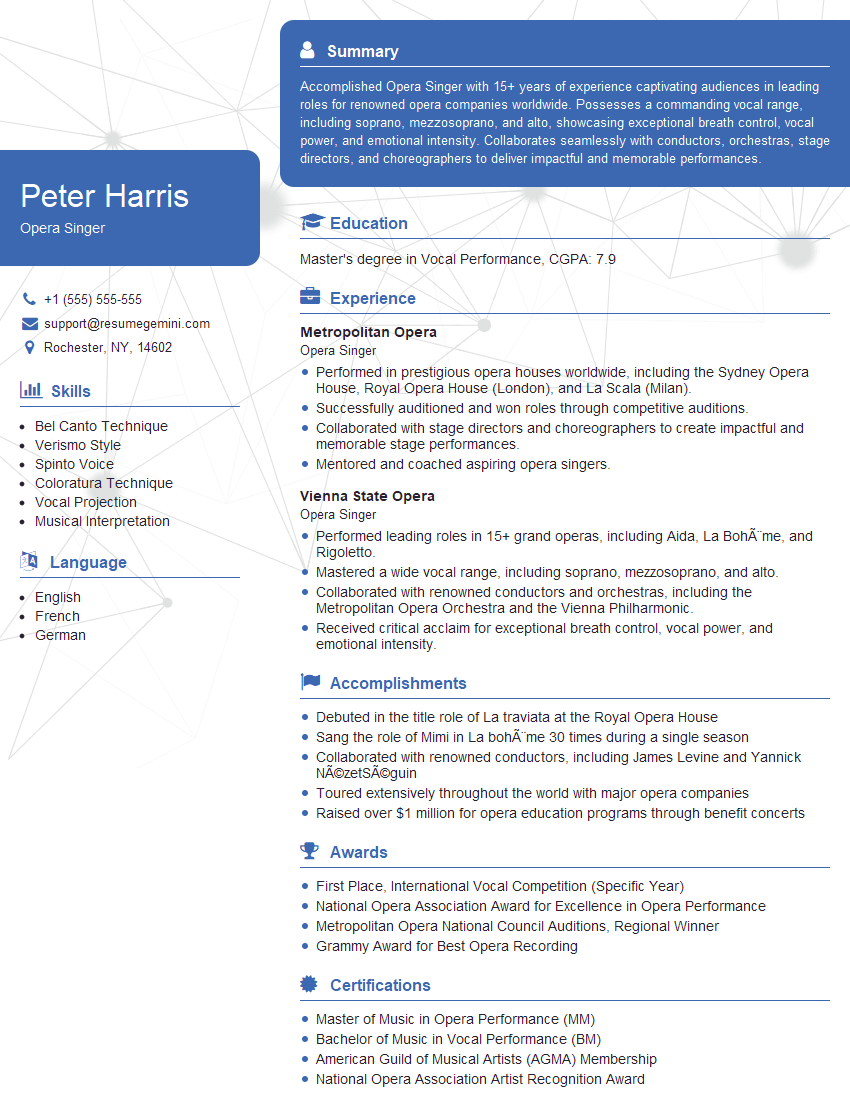
Mastering the intricacies of contributing to the opera community significantly enhances your career prospects within this dynamic field. A strong understanding of the ecosystem and your ability to clearly articulate your contributions are crucial for securing your desired role. To stand out, create an ATS-friendly resume that effectively showcases your skills and experience. We highly recommend using ResumeGemini to build a professional and impactful resume tailored to your specific goals. ResumeGemini offers valuable tools and resources, and examples of resumes specifically tailored to contributions within the opera community are available to guide you.
Explore more articles
Users Rating of Our Blogs
Share Your Experience
We value your feedback! Please rate our content and share your thoughts (optional).
What Readers Say About Our Blog
hello,
Our consultant firm based in the USA and our client are interested in your products.
Could you provide your company brochure and respond from your official email id (if different from the current in use), so i can send you the client’s requirement.
Payment before production.
I await your answer.
Regards,
MrSmith
hello,
Our consultant firm based in the USA and our client are interested in your products.
Could you provide your company brochure and respond from your official email id (if different from the current in use), so i can send you the client’s requirement.
Payment before production.
I await your answer.
Regards,
MrSmith
These apartments are so amazing, posting them online would break the algorithm.
https://bit.ly/Lovely2BedsApartmentHudsonYards
Reach out at [email protected] and let’s get started!
Take a look at this stunning 2-bedroom apartment perfectly situated NYC’s coveted Hudson Yards!
https://bit.ly/Lovely2BedsApartmentHudsonYards
Live Rent Free!
https://bit.ly/LiveRentFREE
Interesting Article, I liked the depth of knowledge you’ve shared.
Helpful, thanks for sharing.
Hi, I represent a social media marketing agency and liked your blog
Hi, I represent an SEO company that specialises in getting you AI citations and higher rankings on Google. I’d like to offer you a 100% free SEO audit for your website. Would you be interested?