Feeling uncertain about what to expect in your upcoming interview? We’ve got you covered! This blog highlights the most important Knowledge of Boat Maintenance interview questions and provides actionable advice to help you stand out as the ideal candidate. Let’s pave the way for your success.
Questions Asked in Knowledge of Boat Maintenance Interview
Q 1. Describe your experience with diagnosing and repairing outboard motors.
Diagnosing and repairing outboard motors requires a systematic approach. I begin by listening carefully to the owner’s description of the problem – is it starting issues, poor performance, unusual noises, or something else? This initial information helps narrow down the potential causes. Then, I visually inspect the engine, checking for obvious problems like loose connections, fuel leaks, or damaged components. I’ll check the spark plugs, fuel lines, and the lower unit for any signs of damage. For example, if the engine won’t start, I’ll first check the battery and its connections. Then I might use a multimeter to test the voltage and check the starter motor. If there’s no spark, I’d move to the ignition system. If the engine runs poorly, I might check the carburetor or fuel injectors for proper fuel delivery, or analyze the compression to check the health of the cylinders. My experience allows me to quickly pinpoint the problem, often saving significant time and money compared to a trial-and-error approach. I’m proficient with various diagnostic tools and can perform repairs ranging from simple tune-ups to more complex overhauls, including lower unit servicing and impeller replacement.
I’ve worked on a wide range of outboard motor brands and models, from small, lightweight engines to larger, high-horsepower units. A particularly challenging repair involved a severely corroded fuel tank on a saltwater boat. It required careful cleaning and rebuilding the fuel system to prevent further corrosion and ensure safe operation.
Q 2. Explain the process of winterizing a boat engine.
Winterizing a boat engine is crucial to prevent damage from freezing temperatures. The process aims to remove all water from the engine’s cooling system and fuel lines. It typically involves several steps. First, I run the engine until it’s thoroughly warmed up. Then, I flush the cooling system with fresh water using a garden hose or a dedicated flushing device to remove any salt or contaminants. After that, I add antifreeze, usually a propylene glycol-based marine antifreeze, to all parts of the cooling system. This includes the block, manifolds, and any other areas where water could accumulate. This antifreeze protects against freezing. For the fuel system, I drain the fuel tanks, ensuring there’s no fuel left inside that could become contaminated. Finally, I fog the engine cylinders to prevent corrosion by spraying a protective fogging oil into the intake manifold. This coats all internal components. For example, in colder climates, I might even disconnect the water line and store it separately to minimize the chance of freezing. Proper winterization not only protects your engine but also extends its lifespan and saves on costly repairs in the spring.
Q 3. How do you troubleshoot a fuel system problem on an inboard engine?
Troubleshooting a fuel system problem on an inboard engine often involves a systematic approach. I start by checking the fuel tank for sufficient fuel, ensuring the fuel shut-off valve is open, and inspecting the fuel lines for any cracks, leaks, or blockages. Then, I examine the fuel filter. A clogged filter is a common culprit, restricting fuel flow. After that, I’d verify fuel pump operation. A faulty pump will fail to deliver fuel to the engine. If the pump seems fine, I move to inspecting the injectors (for fuel-injected engines) or the carburetor (for carbureted engines) to ensure proper fuel delivery and atomization. Tools like fuel pressure gauges are essential for precise diagnostics. For instance, a low fuel pressure reading would point to a problem with the fuel pump or a blocked fuel line. I’d use a pressure gauge to measure fuel pressure and compare it to the manufacturer’s specifications. Finally, I might check for air leaks in the fuel system, as these can lead to poor engine performance. A systematic approach helps to systematically eliminate potential problems and often requires the use of specific diagnostic equipment.
For example, one time I found a small crack in a fuel line that was only visible upon close inspection, causing a significant loss of pressure. A quick replacement solved the problem.
Q 4. What are the common causes of hull leaks and how do you repair them?
Hull leaks can stem from various sources, including impacts, osmosis (in fiberglass hulls), through-hull fittings, or cracks in the hull. Identifying the source is critical for effective repair. I typically start by visually inspecting the hull, both inside and out, looking for any obvious signs of damage, such as cracks, blisters, or water stains. Then, I’ll use methods like pressure testing to pinpoint the exact location of a leak. This involves pressurizing the hull with air and listening for escaping air or using soapy water to detect bubbles. For example, if the leak is due to a through-hull fitting, it might require tightening or replacing the fitting. A hull crack usually needs to be cleaned, filled with epoxy resin and fiberglass cloth, and then sanded and finished. Osmosis (blisters) necessitates a more extensive repair involving grinding away the affected area and applying epoxy resin to seal the underlying structure, potentially followed by fairing and repainting. Smaller leaks might be fixed with specialized marine sealants. The repair method depends entirely on the type, location, and severity of the leak. I always emphasize preventative maintenance as a way to minimize future issues.
Q 5. Describe your experience with fiberglass repair techniques.
My fiberglass repair experience encompasses a wide range of techniques, from minor gelcoat repairs to major structural repairs. I’m proficient in preparing the surface by cleaning, sanding, and filling any gaps or imperfections. I use high-quality marine-grade epoxy resins and fiberglass cloth or mat to reinforce the structure and restore its integrity. For smaller repairs, a simple gelcoat patching technique suffices. However, larger repairs or structural damage require more extensive work and attention to detail, often involving multiple layers of fiberglass cloth and careful sanding and fairing to achieve a smooth, even surface. Color matching is crucial for aesthetic repairs and involves mixing gelcoat pigments to achieve the closest possible match to the existing hull color. I use various tools, such as grinders, sanders, and specialized mixing equipment to perform accurate and professional repairs. A key aspect is understanding the correct curing process of the epoxy resin to guarantee a strong and durable repair. I’ve worked on everything from patching small cracks in a dinghy to rebuilding significant sections of larger boats. My attention to detail ensures a repair that looks good and lasts.
Q 6. How do you perform a pre-purchase boat survey?
A pre-purchase boat survey is a thorough inspection designed to identify any potential problems with a boat before you buy it. The process involves a detailed examination of all aspects of the vessel, both above and below the waterline. This includes the hull, deck, engine, electrical systems, plumbing, and safety equipment. I begin with a visual inspection, looking for signs of damage, corrosion, or wear and tear. I’ll check the engine’s performance and compression, inspect the fuel and water systems, and verify that all safety equipment is in good working order and up to current standards. I’ll test the electrical system, lights, and navigation equipment. A key aspect is carefully examining the hull for any signs of leaks, osmosis, or structural damage. Below the waterline, I might even use specialized underwater inspection tools if necessary. After this thorough examination, I compile a detailed report that outlines any issues identified, their severity, and estimated repair costs. This report helps potential buyers make informed decisions about purchasing the boat. A pre-purchase survey can save buyers from costly surprises after purchase and may even prevent them from buying a boat that requires extensive repairs.
Q 7. Explain your experience with marine electrical systems.
My experience with marine electrical systems is extensive. I’m familiar with both 12-volt and 24-volt systems, including wiring diagrams, circuit breakers, batteries, alternators, and various electrical components. I’m skilled in troubleshooting electrical problems, using multimeters and other diagnostic tools to identify faulty components or wiring issues. I can diagnose problems ranging from simple blown fuses to more complex issues with the charging system or electrical appliances. I’m proficient in working with various wiring techniques, ensuring proper grounding and safety precautions. I can install and maintain various marine electrical components and understand the importance of marine-grade components that are resistant to corrosion and environmental factors. For example, I’ve worked on systems with sophisticated electronics, including GPS, autopilots, and sonar systems. A proper understanding of marine electrical systems is essential for safe and reliable boat operation, and I take pride in providing reliable and safe electrical solutions.
Q 8. What are the safety precautions you take when working with marine batteries?
Marine batteries contain highly corrosive sulfuric acid and can generate explosive hydrogen gas. Safety is paramount. Before working on any marine battery, I always start by ensuring the area is well-ventilated to dissipate any potential hydrogen gas buildup. I wear safety glasses, gloves made of a suitable material like nitrile (to resist acid), and long sleeves to protect my skin. I also make sure to have baking soda and water readily available to neutralize any acid spills.
When disconnecting a battery, I always disconnect the negative (-) terminal first and reconnect it last. This prevents accidental shorts and sparks. I use a battery wrench or pliers specifically designed for this purpose to avoid damaging the terminals. If I need to clean the terminals, I use a wire brush and a battery terminal cleaner, never using open flames near the battery. After completing the work, I inspect the connections and ensure everything is securely fastened.
I regularly check the battery electrolyte level (if it’s not a sealed maintenance-free battery) and add distilled water if necessary, avoiding tap water which contains minerals that can contaminate the battery. Finally, I’m meticulous about proper disposal of old batteries, following local environmental regulations.
Q 9. How familiar are you with different types of marine plumbing systems?
I’m very familiar with various marine plumbing systems, ranging from simple gravity-fed freshwater systems to complex, pressure-regulated systems incorporating hot water heaters and multiple pumps. I understand the differences between different materials like PVC, PEX, and copper, and their suitability for various applications.
I’ve worked with both through-hull fittings (for seawater intake) and their associated seacocks (valves to control water flow), ensuring proper sealing to prevent leaks. I have experience troubleshooting issues like leaks, blockages, and pump failures. My experience includes working with pressure gauges, water tanks, and distribution systems to ensure consistent and reliable water supply. I’m also acquainted with different types of pumps, including diaphragm pumps, impeller pumps, and pressure pumps, understanding their strengths and weaknesses. Understanding the nuances of each system is crucial to prevent problems like corrosion and contamination.
For example, I once had to troubleshoot a slow-draining sink on a sailboat. It turned out a partially blocked drain line needed a thorough cleaning with a specialized plumbing snake.
Q 10. Describe your experience with sail maintenance and repair.
My sail maintenance and repair experience spans a wide range of tasks. This includes inspecting sails for UV damage, tears, chafe, and mildew. I’m proficient in sail cleaning and using specialized cleaning products to remove salt and grime. I have experience in minor repairs like patching small tears using sail repair tape and stronger solutions involving stitching larger repairs with appropriate needles and thread.
I understand the importance of proper sail storage, both on and off the boat, to minimize damage and prolong the life of the sails. For larger repairs or significant damage, I know when to consult a professional sailmaker. I’ve also assisted in the process of sail handling, including raising, lowering, and furling of sails, understanding how the correct techniques can prevent excessive wear and tear. Once I noticed a significant UV degradation along a leech of a mainsail, requiring a section of reinforcement. Proper maintenance and timely repairs save the expense of full sail replacement in the long run.
Q 11. How do you maintain a boat’s running gear?
Maintaining a boat’s running gear is crucial for safe and efficient operation. This includes regular inspection and lubrication of the propeller shaft, strut, and rudder bearings. I check for any signs of wear, corrosion, or damage. I inspect the cutlass bearing (the bearing that allows the propeller shaft to rotate within the hull) for wear and replace it as needed.
Regular greasing of these components prevents premature wear and reduces friction. I also inspect the propeller itself for damage, including bent blades or any sign of corrosion. Any underwater portion of the running gear should be inspected for growth (barnacles, etc.) before launching. I’m also familiar with the importance of proper alignment of the running gear to avoid vibrations and premature wear. Neglecting running gear maintenance can lead to expensive repairs and even catastrophic failures at sea.
Q 12. What are the signs of engine overheating and how do you address them?
Engine overheating is a serious issue that can cause significant damage to your engine. Key signs include a rising temperature gauge, steam or white smoke coming from the engine exhaust, and the engine losing power. You might also hear unusual noises or feel excessive heat radiating from the engine.
The immediate action is to shut down the engine and identify the cause. Possible causes include low coolant levels, a faulty thermostat, a clogged cooling system, a failing water pump, or a problem with the raw water intake. I would first check the coolant level and add coolant if necessary, using the correct type for the engine. Then I would investigate the other potential causes, systematically checking components and using appropriate diagnostic tools as needed. If the problem persists, I wouldn’t restart the engine until it’s been thoroughly inspected by a qualified marine mechanic.
Q 13. How do you perform routine maintenance on a boat’s propeller?
Routine propeller maintenance is vital for preventing damage and ensuring optimal performance. This involves regular inspection for damage, such as bent or damaged blades, and cleaning to remove any accumulated marine growth (barnacles, seaweed, etc.).
I use a wire brush or specialized propeller cleaning tools to remove growth. I’d check for any nicks or dings in the propeller blades that may indicate impacts with debris. For significant damage, professional repair or replacement may be necessary. Keeping the propeller clean minimizes drag and improves fuel efficiency. It’s also important to ensure the propeller is properly tightened to the shaft to prevent it from becoming loose.
Q 14. Explain your experience with marine sanitation systems.
My experience with marine sanitation systems encompasses various types, from simple manual pump-out toilets to more complex electric or vacuum systems. I’m familiar with the components of these systems, including the holding tank, macerator pump (if fitted), deck pump-out fitting, and seacock.
Routine maintenance includes regularly inspecting the holding tank levels, ensuring proper operation of the pump-out system, and checking for leaks. I’m also aware of the importance of proper sanitation practices to prevent clogs and unpleasant odors. I’ve dealt with issues like clogged hoses, malfunctioning pumps, and leaks. Knowing how to correctly winterize the sanitation system to prevent freezing damage is also crucial, especially in colder climates. Proper maintenance of the marine sanitation system is essential for both hygiene and environmental compliance.
Q 15. How do you maintain a boat’s canvas and upholstery?
Maintaining a boat’s canvas and upholstery involves regular cleaning and protection from the elements. Think of it like caring for fine furniture – consistent attention prevents major problems.
- Cleaning: Use a mild soap and water solution, avoiding harsh chemicals. For stubborn stains, consider a specialized marine canvas cleaner. Always rinse thoroughly with fresh water and allow to dry completely. Regular cleaning prevents mildew and degradation. For example, I once had a client whose canvas was severely stained from bird droppings; proper, timely cleaning could have prevented the need for costly repairs.
- Protection: Apply a UV protectant to both canvas and upholstery to prevent fading and cracking from sun exposure. Think of this as sunscreen for your boat’s fabric. This step significantly extends the lifespan of your materials. I typically recommend reapplying this protectant every six months, or more frequently in harsh UV conditions.
- Storage: When not in use, store canvas tops and cushions in a dry, well-ventilated area to prevent mildew growth. Covering them with breathable fabric can add an extra layer of protection. Proper storage prevents mold, which can be incredibly difficult and expensive to remove.
- Repair: Address minor tears or rips promptly using appropriate marine-grade patching materials. Ignoring small problems can quickly lead to larger, more expensive repairs. I’ve developed techniques for patching sailcloth that are almost invisible once repaired.
Career Expert Tips:
- Ace those interviews! Prepare effectively by reviewing the Top 50 Most Common Interview Questions on ResumeGemini.
- Navigate your job search with confidence! Explore a wide range of Career Tips on ResumeGemini. Learn about common challenges and recommendations to overcome them.
- Craft the perfect resume! Master the Art of Resume Writing with ResumeGemini’s guide. Showcase your unique qualifications and achievements effectively.
- Don’t miss out on holiday savings! Build your dream resume with ResumeGemini’s ATS optimized templates.
Q 16. Describe your experience with applying marine paint and gelcoat.
Applying marine paint and gelcoat requires precision and attention to detail. Proper surface preparation is key to a long-lasting, professional finish.
- Surface Preparation: This is the most crucial step. It involves cleaning the surface thoroughly, removing any old paint or gelcoat using a scraper or sander, and then sanding to create a smooth, even surface. Failure to properly prepare the surface will lead to peeling or poor adhesion of the new paint.
- Primer Application: A primer is essential for adhesion and corrosion protection. It acts as a bonding layer between the surface and the topcoat. Choosing the right primer for the substrate (e.g., fiberglass, wood) is critical.
- Paint or Gelcoat Application: Apply thin, even coats, allowing sufficient drying time between coats. Over-application will result in runs and drips. A quality spray gun is preferable for achieving a professional finish, though some smaller projects can be done by brush or roller.
- Finishing: Once the paint is dry, it may need sanding and polishing to achieve a smooth, glossy finish. This step is particularly crucial for gelcoat to restore its high shine.
I have extensive experience with both paint and gelcoat applications on various boat types, from small dinghies to larger yachts. I’ve worked with various paint systems and have developed my own techniques for ensuring a durable, attractive finish.
Q 17. What are the common causes of engine corrosion and how do you prevent it?
Engine corrosion is a major problem in marine environments, primarily caused by saltwater, exposure to the elements, and dissimilar metals. Preventing corrosion is far easier than dealing with the consequences.
- Saltwater Exposure: Saltwater is highly corrosive. Thoroughly rinse your engine with fresh water after each use, paying special attention to hard-to-reach areas. This is the single most important preventative measure.
- Dissimilar Metals: When different metals come into contact in the presence of an electrolyte (like saltwater), galvanic corrosion occurs. Use zinc anodes (sacrificial anodes) to protect more valuable metal components. These anodes corrode instead of your engine parts.
- Exposure to the Elements: Regularly inspect your engine for signs of corrosion and clean it with an appropriate cleaning agent. Consider using protective coatings or covers for added protection when not in use.
- Proper Maintenance: Ensure proper engine maintenance, including regular oil changes, and coolant flushes. These practices will keep your engine running smoothly and prevent additional corrosion-inducing issues.
For example, I once worked on a boat where the engine block had severe corrosion due to neglecting fresh-water rinsing. The repair was significantly costly and time-consuming. Prevention is far more economical and time-efficient.
Q 18. How do you identify and repair damage to a boat’s hull?
Identifying and repairing hull damage requires careful inspection and appropriate repair techniques. The severity of the damage will dictate the type of repair needed.
- Inspection: Begin by thoroughly inspecting the hull both above and below the waterline. Look for cracks, dents, scratches, and any signs of delamination (separation of layers in fiberglass hulls).
- Minor Damage: Small scratches or dents can often be repaired using a marine-grade filler and sanding. Always clean the area thoroughly before applying any repair materials.
- Major Damage: Larger cracks or holes may require more extensive repair, potentially involving fiberglass repair techniques such as patching or laminating. This may necessitate professional assistance.
- Delamination: Delamination, while complex, often requires grinding away the affected area and rebuilding it with new layers of fiberglass and resin. This is a specialist job often best handled by professionals with experience in structural repairs.
I have successfully repaired a variety of hull damage, from minor scratches to significant structural issues. My approach is always to thoroughly assess the damage, and then select the most appropriate and cost-effective repair method.
Q 19. Describe your experience with various types of marine rigging.
Marine rigging encompasses the ropes, wires, and fittings that support a boat’s masts, sails, and other structures. Different types of rigging are used depending on the boat type and sailing style.
- Standing Rigging: This refers to the fixed components of the rigging system, primarily the shrouds, stays, and backstays, that support the mast. These are typically made of stainless steel wire.
- Running Rigging: This consists of the moving parts of the rigging system, including halyards (for raising and lowering sails), sheets (for controlling sail trim), and control lines. These are often made of synthetic fibers like nylon or polyester.
- Wire Rigging: Stainless steel wire is commonly used for standing rigging due to its strength and durability. Regular inspection for corrosion and chafing is crucial.
- Synthetic Rigging: Synthetic fibers offer advantages such as lighter weight and less susceptibility to corrosion. However, they can be susceptible to UV degradation.
My experience includes working with both wire and synthetic rigging systems on various sailboats, from small dinghies to larger cruising yachts. I understand the importance of regular inspection and maintenance to ensure the safety and performance of the rigging system.
Q 20. What are the safety regulations you adhere to when performing boat maintenance?
Safety is paramount during all boat maintenance activities. I adhere strictly to relevant safety regulations and best practices.
- Personal Protective Equipment (PPE): Always wear appropriate PPE, including safety glasses, gloves, and respirators when handling chemicals or working with potentially hazardous materials.
- Working at Heights: When working aloft (above deck), use appropriate safety harnesses and fall protection systems. Never work at heights alone.
- Electrical Safety: Disconnect batteries before working on electrical systems. Use insulated tools and follow proper electrical safety procedures.
- Fire Safety: Have a fire extinguisher readily available and be aware of potential fire hazards when working with flammable materials, such as solvents or paints.
- Environmental Regulations: Dispose of hazardous waste materials responsibly according to local and national regulations. Never discharge harmful substances into the water.
Safety is not just a set of rules, but a mindset. I instill this mindset in my crew members and am committed to maintaining the highest safety standards in my work.
Q 21. How do you maintain and service a boat’s steering system?
Maintaining and servicing a boat’s steering system is crucial for safe and reliable operation. Regular inspection and preventative maintenance are essential.
- Regular Inspection: Inspect the steering cable, linkage, and rudder for any signs of wear, damage, or corrosion. Check for proper lubrication and free movement of all components.
- Cable Lubrication: Regularly lubricate steering cables with a marine-grade lubricant to reduce friction and extend cable life. This is particularly important for cable-steering systems.
- Rudder Inspection: Check the rudder for any damage or play in the rudder bearings. Loose rudder bearings can indicate significant problems that must be addressed promptly.
- Hydraulic Systems: For boats with hydraulic steering, inspect fluid levels and check for leaks. Regular fluid changes are recommended.
- Emergency Steering: Familiarize yourself with the boat’s emergency steering system, and ensure it is in good working order.
I have experience maintaining various types of steering systems, including cable-driven and hydraulic systems. A malfunctioning steering system is a serious safety concern and preventative maintenance is crucial. I use a methodical and step-by-step approach to ensuring optimal performance and safety.
Q 22. What is your experience with different types of boat fuel systems?
My experience encompasses a wide range of boat fuel systems, from simple gravity-fed systems on smaller vessels to complex, high-pressure systems found on larger yachts. I’m proficient in working with gasoline, diesel, and even alternative fuel systems like propane. Understanding the nuances of each is crucial for safe and efficient operation.
- Gasoline Systems: These require careful attention to prevent vapor lock and maintain proper ventilation to avoid explosions. I’m experienced in troubleshooting issues like fuel pump failure, clogged filters, and carburetor problems.
- Diesel Systems: Diesel systems are generally more robust but can suffer from issues like clogged fuel injectors, water contamination (which requires careful draining and filter replacement), and issues with fuel tank ventilation. I have experience with both direct and indirect injection systems.
- Alternative Fuel Systems: While less common, I’ve worked with propane and other alternative fuel systems, understanding their unique safety protocols and maintenance requirements. This includes careful handling of high-pressure lines and proper regulator function.
Regular maintenance, including fuel filter changes and tank cleaning, are critical regardless of the fuel type to ensure optimal performance and prevent costly repairs. I always emphasize preventative maintenance to avoid major breakdowns.
Q 23. Explain your experience with troubleshooting and repairing marine hydraulic systems.
Marine hydraulic systems are complex but fascinating. My experience includes troubleshooting and repairing various components, including hydraulic pumps, cylinders, valves, and steering systems. Diagnosing problems often involves a systematic approach, checking for leaks, low fluid levels, and examining the condition of the hoses and fittings.
For example, I once worked on a yacht experiencing erratic steering. Through a process of elimination—checking the fluid level, inspecting the hoses for leaks, and testing the pump output—I discovered a failing hydraulic valve causing inconsistent pressure. Replacing the valve resolved the issue. I’m comfortable working with both manual and power-assisted steering systems, as well as hydraulic systems used for winches and other deck machinery.
Safety is paramount when working with hydraulic systems due to the high pressures involved. I always follow strict safety protocols, ensuring that the system is depressurized before undertaking any maintenance or repair work.
Q 24. How do you ensure the safety and stability of a boat during maintenance operations?
Safety and stability are my top priorities during any boat maintenance operation. I meticulously plan each job, considering factors like weather conditions, the boat’s stability, and the potential hazards involved. Before starting, I always:
- Assess the environment: Checking weather forecasts, ensuring adequate lighting, and assessing the stability of the boat’s platform.
- Use proper safety equipment: Utilizing personal flotation devices (PFDs), safety harnesses, and fall protection when working at heights.
- Secure the boat: Utilizing appropriate fenders and lines to prevent accidental movement during maintenance.
- Implement proper shoring and jacking systems (if necessary): Ensuring the vessel remains stable and prevents damage during repairs that require raising parts of the hull.
Regularly checking the boat’s stability, especially during tasks involving weight shifting or working near the waterline, is essential. I always prioritize safe work practices to prevent accidents and injuries.
Q 25. Describe your experience with diagnosing and repairing marine air conditioning systems.
Marine air conditioning systems present unique challenges due to the marine environment—salt air, vibration, and limited space. My experience covers diagnosing and repairing various components, including compressors, condensers, evaporators, and control systems. Troubleshooting often involves checking refrigerant levels, identifying leaks using specialized detection equipment, and examining the electrical components for malfunctions.
One common problem is compressor failure due to the high operating temperatures. I’m skilled at diagnosing compressor issues, determining whether repair or replacement is necessary, and ensuring the proper evacuation and charging of the refrigerant according to manufacturer’s specifications. I’m also proficient in working with various types of refrigerants, always adhering to environmental regulations and safety procedures.
Q 26. What is your experience with using diagnostic tools for marine engines?
I am proficient in using various diagnostic tools for marine engines, both analog and digital. This includes:
- Engine analyzers: Reading engine parameters like RPM, fuel pressure, coolant temperature, and oil pressure to identify potential problems.
- Scan tools: Accessing onboard computer systems to retrieve diagnostic trouble codes (DTCs) and interpret engine sensor data. Different manufacturers use different systems, so I’m familiar with several brands, including Yanmar, Volvo Penta, and Mercury.
- Multimeters: Checking voltage, current, and continuity in electrical circuits to identify wiring faults.
- Compression testers: Assessing the health of engine cylinders and detecting problems like worn piston rings or valve issues.
The ability to correctly interpret diagnostic data is as important as the tools themselves. I use a combination of these tools to systematically troubleshoot engine issues, focusing on the most likely causes first.
Q 27. Describe a time you had to troubleshoot a complex marine problem. What was the outcome?
I once encountered a perplexing problem on a sailing yacht with a completely inoperative engine. Initial checks showed no obvious faults. Using a systematic approach, I first checked fuel supply, then the electrical system, and finally the engine’s mechanical components. The diagnostic tools showed no errors, suggesting a more subtle issue.
After several hours of careful inspection, I discovered a tiny crack in the fuel injector line hidden beneath a layer of grime. The crack was barely visible, but it was causing a significant fuel leak, preventing the engine from starting. The solution was simple – replacing the fuel injector line – but locating the problem required patience, attention to detail, and a comprehensive understanding of the engine’s systems.
This experience highlighted the importance of thorough inspection and not prematurely dismissing the possibility of minor but critical issues. It also emphasized the value of meticulous record-keeping, allowing me to easily refer back to troubleshooting steps if a similar issue arises.
Q 28. What are your preferred methods for documenting boat maintenance and repairs?
I maintain comprehensive documentation of all boat maintenance and repairs using a combination of digital and physical methods.
- Digital records: I use a dedicated software application to log all maintenance tasks, including date, work performed, parts replaced, and any relevant diagnostic information. The software allows for easy searching and reporting, facilitating future maintenance planning. I also take digital photographs and videos of critical components during repairs, providing a visual record of the work.
- Physical logs: A physical logbook is kept onboard, providing a quick reference for essential maintenance schedules and any urgent issues. This logbook acts as a backup record in case of digital system failures. It also serves as a means of communication for other crew members.
This dual system ensures complete, easily accessible, and well-organized records that meet the demands of both regulatory compliance and efficient maintenance planning.
Key Topics to Learn for Your Knowledge of Boat Maintenance Interview
- Hull Maintenance: Understanding different hull materials (fiberglass, aluminum, wood), recognizing common hull damage (osmosis, cracks, blisters), and explaining preventative maintenance and repair techniques.
- Engine Systems: Knowledge of inboard, outboard, and sterndrive engines; troubleshooting common engine problems (starting issues, overheating, fuel delivery); describing routine maintenance procedures (oil changes, filter replacements, winterization).
- Electrical Systems: Familiarity with boat electrical systems, including batteries, charging systems, wiring, and navigation lights; troubleshooting electrical faults and understanding safety procedures.
- Plumbing Systems: Understanding freshwater and saltwater systems, including pumps, tanks, and plumbing fixtures; troubleshooting leaks and explaining preventative maintenance.
- Safety Equipment and Procedures: Knowledge of essential safety equipment (life jackets, flares, fire extinguishers, first-aid kit); explaining safety regulations and procedures for operating a boat responsibly.
- Preventative Maintenance Schedules: Demonstrating understanding of creating and following preventative maintenance schedules for various boat systems to maximize longevity and minimize costly repairs.
- Problem-Solving and Diagnostic Skills: Articulating your approach to diagnosing and resolving boat maintenance issues, highlighting your methodical troubleshooting skills and ability to identify root causes.
Next Steps
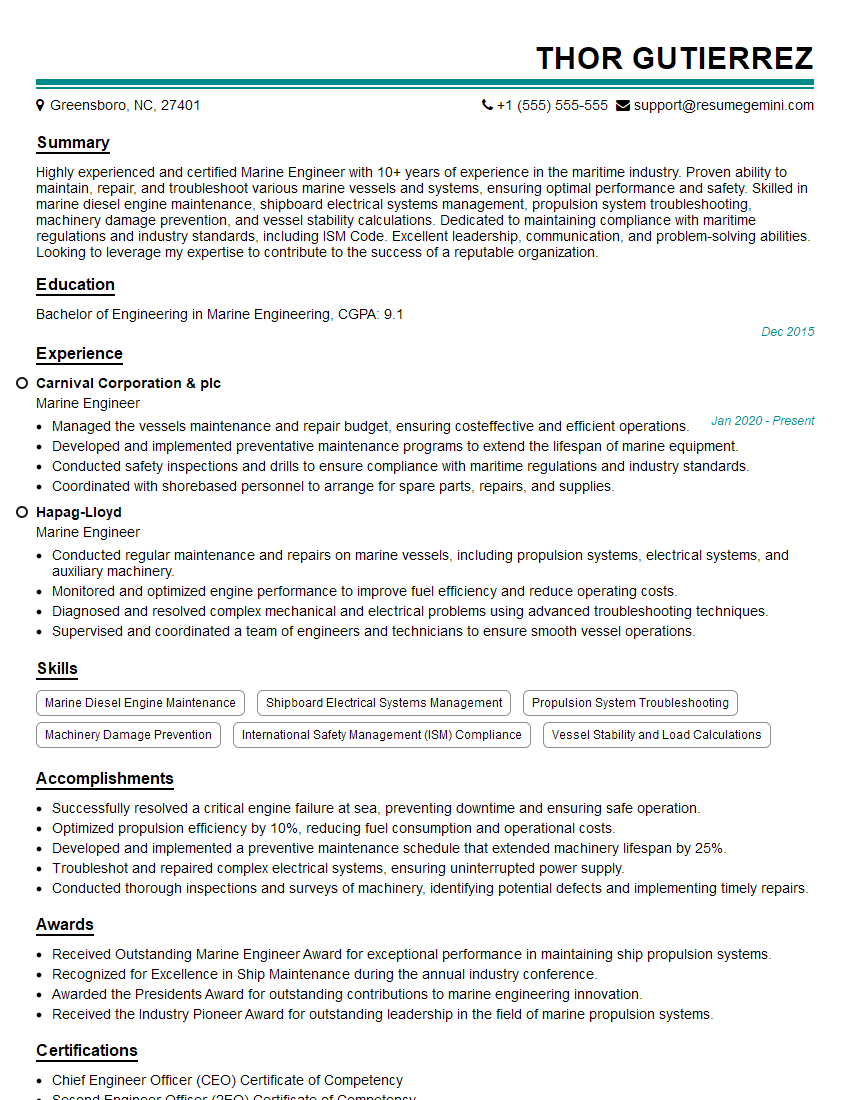
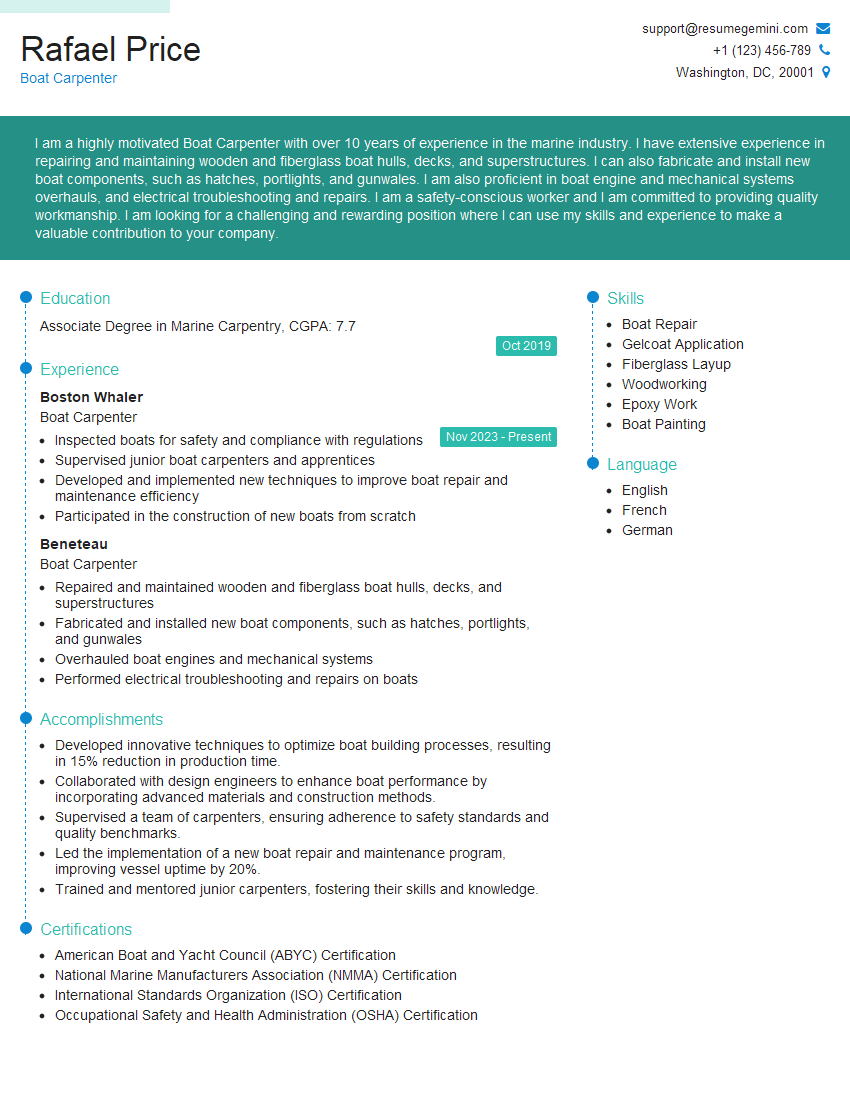
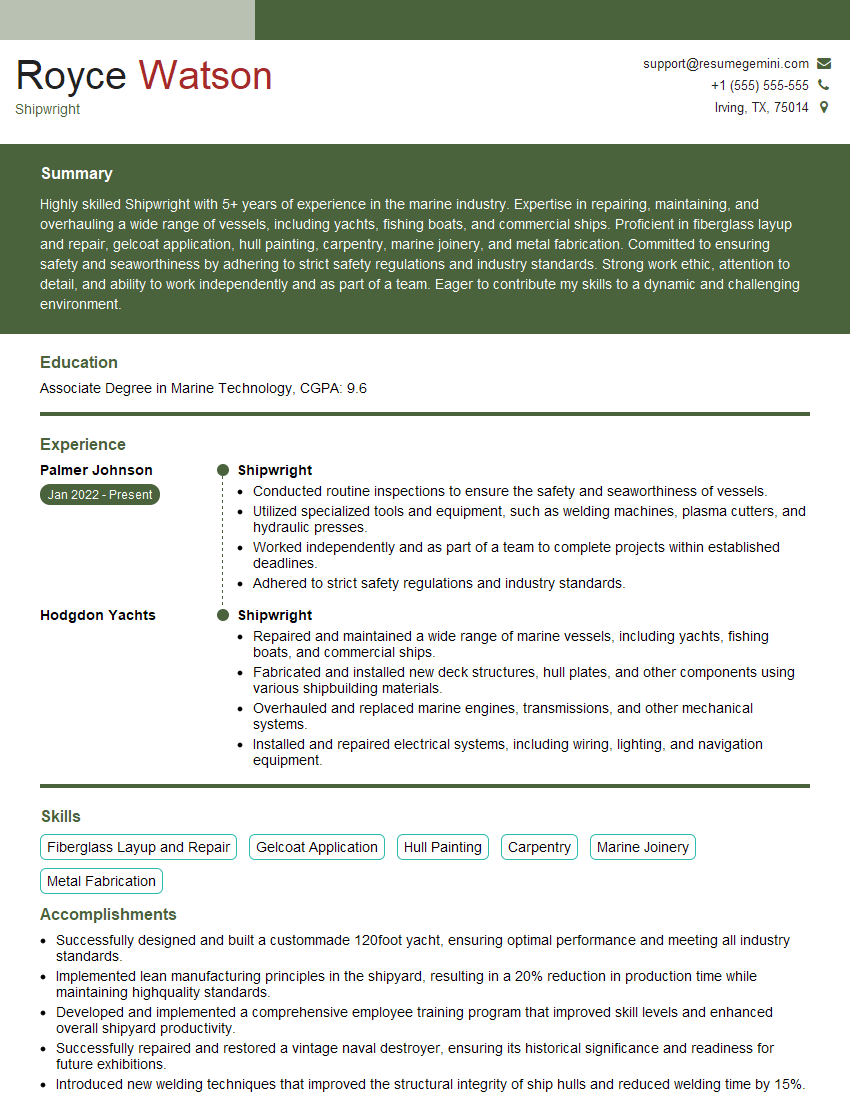
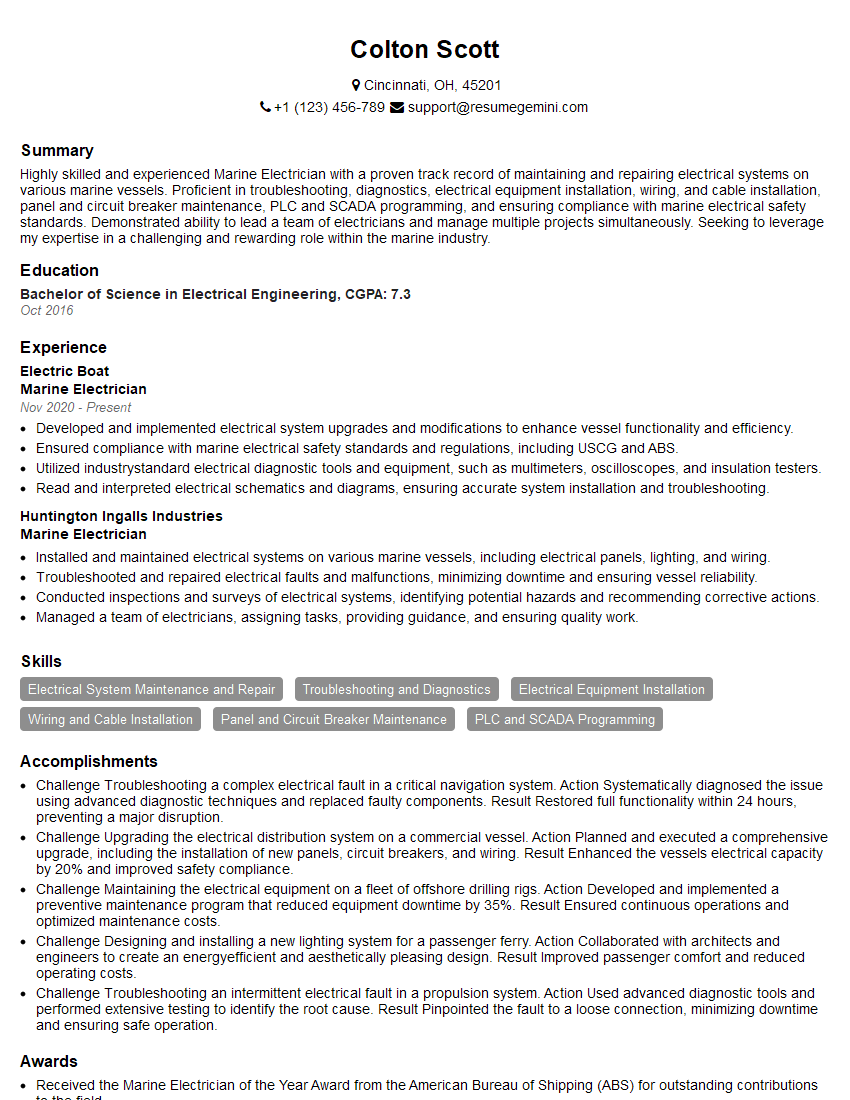
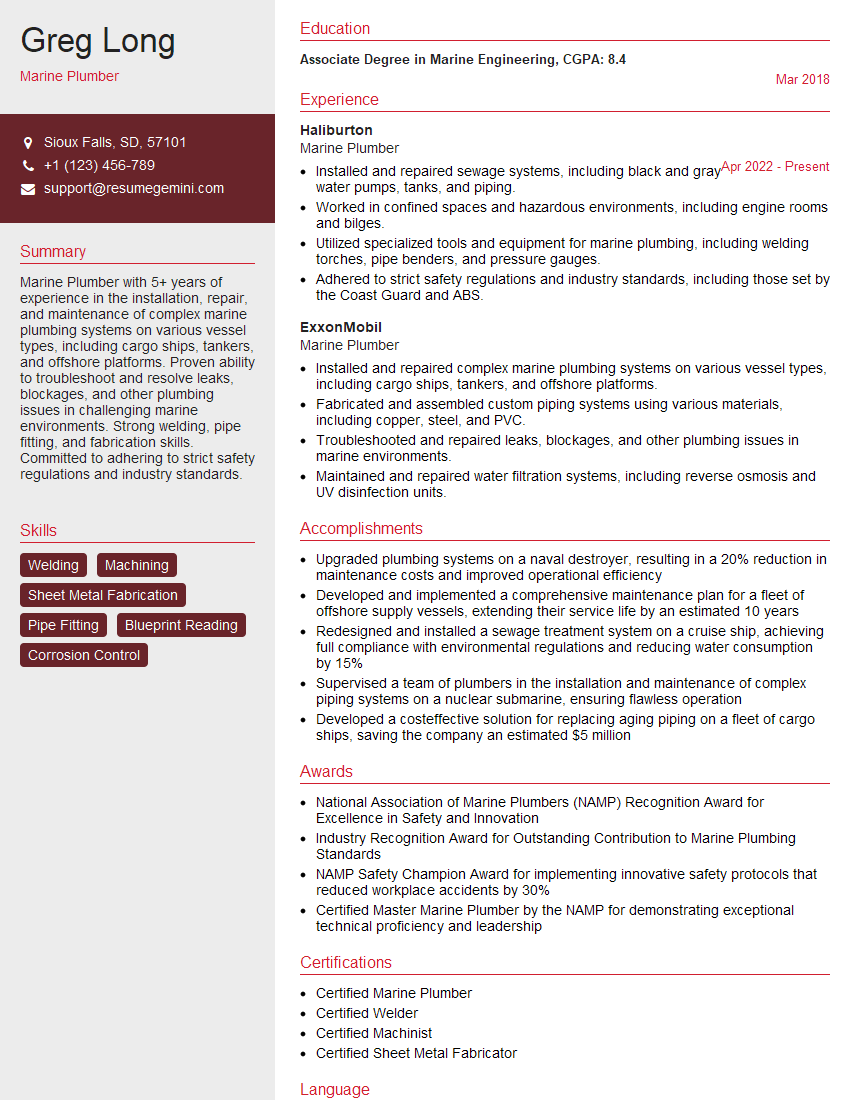
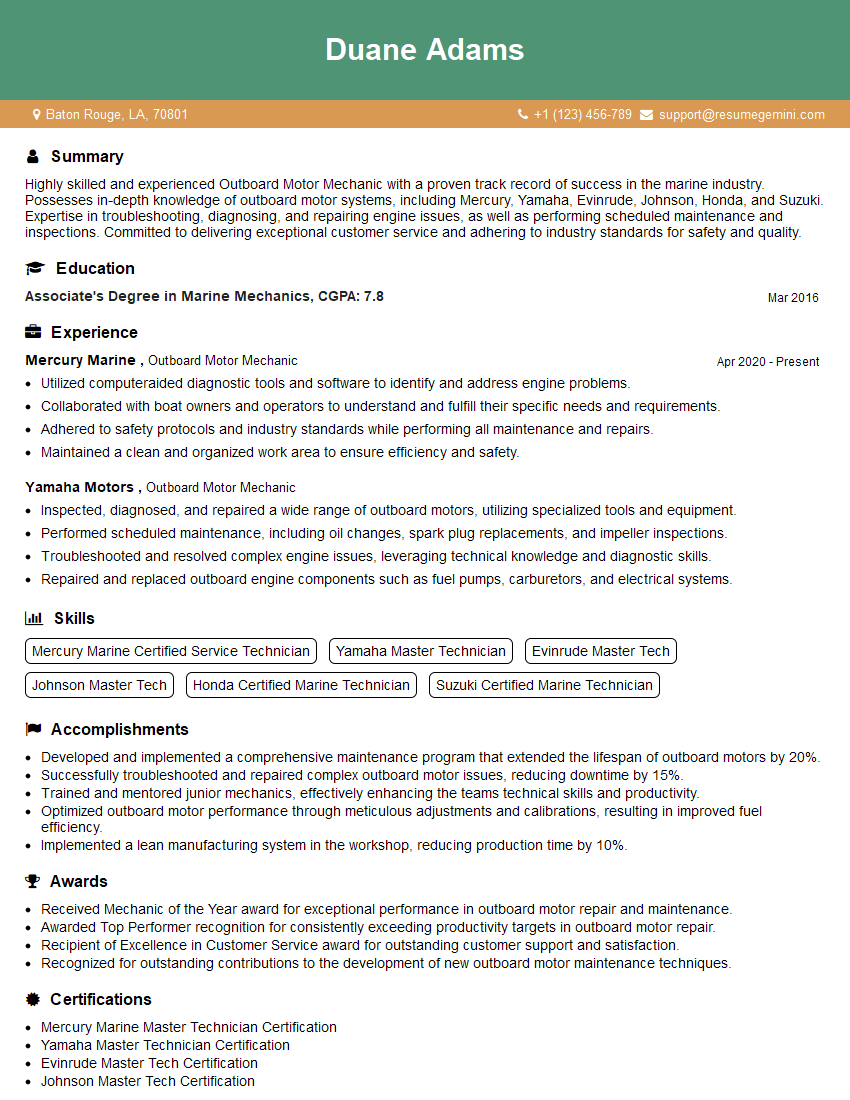
Mastering boat maintenance knowledge is crucial for career advancement in the marine industry, opening doors to higher-paying roles and increased responsibilities. A well-crafted resume is your key to unlocking these opportunities. Make sure your resume is ATS-friendly to ensure it gets seen by potential employers. ResumeGemini is a trusted resource that can help you build a professional and impactful resume that highlights your skills and experience effectively. We offer examples of resumes tailored to Knowledge of Boat Maintenance to guide you through the process. Take the next step towards your dream career – build a winning resume with ResumeGemini today!


Explore more articles
Users Rating of Our Blogs
Share Your Experience
We value your feedback! Please rate our content and share your thoughts (optional).
What Readers Say About Our Blog
Amazing blog
Interesting Article, I liked the depth of knowledge you’ve shared.
Helpful, thanks for sharing.