Interviews are more than just a Q&A session—they’re a chance to prove your worth. This blog dives into essential Knowledge of Taxation Law interview questions and expert tips to help you align your answers with what hiring managers are looking for. Start preparing to shine!
Questions Asked in Knowledge of Taxation Law Interview
Q 1. Explain the difference between progressive and regressive tax systems.
The core difference between progressive and regressive tax systems lies in how the tax burden is distributed across different income levels. A progressive tax system imposes a higher tax rate on higher earners, meaning the wealthy pay a larger percentage of their income in taxes than lower-income individuals. Think of it like a sliding scale: the more you earn, the steeper the climb (percentage-wise) in taxes.
Conversely, a regressive tax system imposes a higher tax rate on lower-income individuals. This means that lower-income individuals pay a larger percentage of their income in taxes compared to higher-income individuals. Sales tax is a classic example: everyone pays the same percentage, but that percentage hits lower-income individuals harder since it represents a larger portion of their overall budget.
Example: Imagine two individuals, one earning $30,000 and another earning $300,000. In a progressive system, the higher earner would pay a significantly higher percentage of their income in taxes. In a regressive system, the lower earner might pay a higher percentage, even though the dollar amount paid is much less.
Q 2. What are the key components of a tax return?
A tax return is a comprehensive document filed with the relevant tax authority (like the IRS in the US) that reports an individual’s or business’s income, deductions, and credits for a specific tax year. The key components generally include:
- Personal Information: Name, address, Social Security number (or equivalent).
- Income Information: Wages, salaries, interest, dividends, capital gains, business income, etc. Each source of income will usually require specific documentation.
- Deductions: Expenses that can be subtracted from gross income to reduce taxable income. These can include things like charitable contributions, mortgage interest, and business expenses.
- Credits: Direct reductions in tax liability. Unlike deductions, credits directly reduce the amount of tax owed, dollar for dollar. Examples include child tax credit or earned income tax credit.
- Tax Calculations: The form guides you through the process of calculating your taxable income and the tax owed (or refund due).
- Payments Made: Record of any estimated taxes paid during the year or tax withheld from wages.
The specific forms and requirements vary depending on the filer’s situation (individual, business type, etc.).
Q 3. Describe the process of calculating taxable income for an individual.
Calculating taxable income for an individual involves a series of steps:
- Determine Gross Income: This is your total income from all sources before any deductions or adjustments.
- Adjustments to Income: Certain expenses, like contributions to a traditional IRA or student loan interest payments, can be subtracted from gross income. This results in your Adjusted Gross Income (AGI).
- Standard Deduction or Itemized Deductions: You can either take the standard deduction (a fixed amount based on your filing status) or itemize your deductions if the total exceeds the standard deduction. Itemized deductions include medical expenses, state and local taxes (with limitations), charitable contributions, and home mortgage interest.
- Exemptions (generally phased out): While previously used to reduce taxable income based on the number of dependents, exemptions have largely been eliminated in recent tax laws. Certain exceptions may still apply for specific situations.
- Calculate Taxable Income: Subtract the standard deduction (or itemized deductions) from your AGI to arrive at your taxable income.
- Determine Tax Liability: Use the appropriate tax brackets (progressive tax system) to calculate your tax liability based on your taxable income.
Example: Let’s say your gross income is $60,000, your adjustments are $2,000, your itemized deductions are $10,000, and you have no exemptions. Your AGI is $58,000 ($60,000 – $2,000). Your taxable income is $48,000 ($58,000 – $10,000). You would then use the tax brackets to determine the exact tax owed based on this taxable income.
Q 4. Explain the concept of depreciation and its impact on tax liability.
Depreciation is the systematic allocation of the cost of a tangible asset (like equipment or buildings) over its useful life. It’s not an expense in the traditional sense because it doesn’t represent cash outflow in a given year. Instead, it’s a way to account for the gradual wear and tear or obsolescence of the asset.
From a tax perspective, depreciation allows businesses to deduct a portion of the asset’s cost each year, reducing their taxable income. This lowers their tax liability and improves cash flow, although it doesn’t affect the overall cost of the asset. There are several methods for calculating depreciation, including straight-line, accelerated (like MACRS), and units of production, each with its own tax implications.
Impact on Tax Liability: By deducting depreciation, businesses reduce their taxable income and therefore their overall tax bill. This is a significant benefit, especially for businesses with substantial capital investments.
Example: A company buys a machine for $100,000 with a useful life of 10 years. Using straight-line depreciation, they can deduct $10,000 per year ($100,000 / 10 years). This $10,000 deduction reduces their taxable income annually, lowering their tax liability.
Q 5. What are the different types of business entities and their respective tax implications?
Different business entities have distinct tax implications:
- Sole Proprietorship: The business is not separate from the owner; profits and losses are reported on the owner’s personal tax return (Schedule C). The owner is personally liable for business debts.
- Partnership: Profits and losses are passed through to the partners and reported on their individual tax returns. Partners are typically personally liable for business debts.
- Limited Liability Company (LLC): Offers some liability protection to the owners (members). Taxation depends on how it’s structured: it can be taxed as a sole proprietorship, partnership, or corporation.
- Corporation (S Corp and C Corp): A corporation is a separate legal entity from its owners (shareholders). C corporations pay corporate income tax on their profits, and shareholders pay taxes on dividends received. S corporations pass through profits and losses to shareholders, avoiding double taxation.
Choosing the right entity is crucial: The choice depends on liability preferences, tax implications (potential for lower taxes), and administrative complexities. Consulting with a tax professional is highly recommended to determine the optimal structure for your business.
Q 6. How does the IRS audit process work?
The IRS audit process begins with the selection of a tax return for review. Selection can be random or based on factors like discrepancies in the return, unusual deductions, or industry-specific red flags. The audit itself can take several forms:
- Correspondence Audit: The simplest form; the IRS requests clarification or additional documentation via mail.
- Office Audit: The taxpayer meets with an IRS agent at an IRS office to discuss the return.
- Field Audit: The most extensive type; an IRS agent visits the taxpayer’s business or home to examine records and conduct a thorough investigation.
During the audit, the IRS agent will examine supporting documentation for income, deductions, and credits. The taxpayer may be asked to provide additional information or clarification. If discrepancies are found, the IRS will issue a notice explaining any proposed adjustments to the tax liability. Taxpayers have the right to appeal the IRS’s findings.
Important Note: Maintaining meticulous and organized records is crucial during an audit. This can significantly streamline the process and increase the likelihood of a favorable outcome.
Q 7. Explain the concept of tax credits and deductions.
Both tax credits and deductions reduce your tax liability, but they do so in different ways:
- Tax Deductions: Reduce your taxable income. They lower the amount of income subject to tax. The benefit of a deduction depends on your tax bracket; a higher tax bracket means a larger tax savings from the same deduction. Think of it as reducing the ‘base’ upon which taxes are calculated.
- Tax Credits: Directly reduce your tax liability dollar-for-dollar. Regardless of your tax bracket, a $1,000 tax credit reduces your tax owed by $1,000. They are more valuable than deductions, especially for lower-income taxpayers.
Example: A $1,000 deduction for a taxpayer in the 22% tax bracket saves $220 (22% of $1,000). However, a $1,000 tax credit saves $1,000 regardless of the tax bracket. This makes credits particularly beneficial for those with lower incomes.
Types of Credits: There are numerous types of tax credits, including the Child Tax Credit, Earned Income Tax Credit, and American Opportunity Tax Credit, each with specific eligibility requirements.
Q 8. What are the implications of non-compliance with tax laws?
Non-compliance with tax laws carries significant consequences, ranging from financial penalties to legal repercussions. Think of it like breaking any other law – there are penalties for not following the rules. The severity of the consequences depends on the nature and extent of the non-compliance.
Financial Penalties: These can include interest charges on unpaid taxes, late payment penalties, and potentially substantial fines depending on the infraction. For example, failing to file your tax return on time can result in penalties calculated as a percentage of the unpaid tax.
Legal Actions: In cases of severe non-compliance, such as tax evasion (intentionally underreporting income or overstating deductions), individuals or businesses can face criminal prosecution, leading to jail time and hefty fines. The IRS or equivalent tax authority can also levy liens against assets to recover unpaid taxes.
Reputational Damage: Public disclosure of tax violations can severely damage an individual’s or business’s reputation, making it difficult to secure loans, attract investors, or maintain positive relationships with clients.
Loss of Business Licenses or Permits: In some cases, non-compliance can lead to the revocation or suspension of necessary business licenses or permits, effectively shutting down operations.
It’s crucial to prioritize compliance to avoid these damaging consequences. Seeking professional tax advice can help prevent costly mistakes.
Q 9. How do you stay updated on changes in tax laws and regulations?
Staying current with ever-changing tax laws and regulations requires a multi-pronged approach. The tax code is incredibly complex, and updates are frequent.
Subscription to Professional Tax Services: Services like Thomson Reuters Checkpoint or Bloomberg Tax provide up-to-date information, analysis, and news on tax law changes. These resources often offer expert commentary and practical guidance.
Professional Development: Attending continuing professional education (CPE) courses and seminars is essential for tax professionals to maintain their knowledge and certifications. These events often focus on recent legislative changes and their practical implications.
Networking with Peers: Staying connected with other tax professionals through professional organizations and conferences allows for sharing of insights and experiences regarding recent developments.
Monitoring Government Websites: Regularly reviewing the websites of the relevant tax authorities (IRS in the US, HMRC in the UK, etc.) is critical for official announcements and updates on tax regulations.
Tax Newsletters and Publications: Subscribing to reputable tax newsletters and publications can provide summaries and analyses of recent tax law changes in an accessible format.
The key is to be proactive and consistent in your efforts to stay informed. Tax law is a dynamic field, and continuous learning is essential.
Q 10. Explain the concept of capital gains and losses.
Capital gains and losses refer to profits or losses from the sale or exchange of capital assets. A capital asset is generally any property owned by an individual or business, excluding inventory and certain other items.
Capital Gains: These are profits realized when an asset is sold for more than its original cost basis (purchase price plus any improvements). For example, if you bought a stock for $100 and sold it for $150, you have a $50 capital gain.
Capital Losses: These occur when an asset is sold for less than its original cost basis. If you sold the same stock for $50, you’d have a $50 capital loss.
Tax Implications: Capital gains are generally taxable, while capital losses can be used to offset capital gains, with limitations. The tax rate on capital gains varies depending on the asset’s holding period (short-term or long-term) and the taxpayer’s income level.
Understanding capital gains and losses is crucial for accurate tax reporting and effective tax planning. For instance, strategic asset allocation can help minimize capital gains taxes or utilize capital losses to reduce overall tax liability.
Q 11. What are the tax implications of owning rental property?
Owning rental property has specific tax implications. It’s treated as a business activity, meaning you can deduct certain expenses to reduce your taxable income.
Deductible Expenses: These include mortgage interest, property taxes, insurance premiums, repairs and maintenance, depreciation, and advertising costs. Depreciation is a way to deduct the cost of the property over its useful life. For example, a landlord can deduct a portion of the building’s cost each year.
Rental Income: All rental income received must be reported, regardless of whether it covers expenses. The net income (rental income minus expenses) is added to your taxable income.
Passive Activity Rules: If you are considered a passive investor (meaning you don’t materially participate in the management of the rental property), there are specific rules about deducting losses. Losses from passive activities can generally only offset income from other passive activities.
Capital Gains/Losses: If you sell the rental property, the profit (or loss) will be treated as a capital gain or loss, subject to the rules discussed earlier.
Accurate record-keeping is crucial for managing the tax implications of rental property. Consulting with a tax professional can help ensure compliance and optimize tax benefits.
Q 12. Discuss the differences between tax evasion and tax avoidance.
Tax evasion and tax avoidance are distinct concepts, although both relate to reducing tax liability. The crucial difference lies in legality.
Tax Evasion: This is the illegal non-payment or underpayment of tax. It involves deliberate actions to mislead the tax authorities, such as falsifying records, concealing income, or claiming false deductions. Tax evasion carries severe penalties, including fines, imprisonment, and reputational damage. Think of it as cheating on your taxes.
Tax Avoidance: This refers to the legal minimization of one’s tax liability through the use of legitimate strategies allowed within the tax laws. This could involve utilizing tax deductions, credits, and other legally permissible methods to reduce your tax bill. It is essentially planning to lower your taxes within the bounds of the law. Think of it as clever tax planning, not tax cheating.
The line between tax avoidance and evasion can be blurry, and engaging in aggressive tax avoidance strategies may attract scrutiny from tax authorities. Professional tax advice is critical to ensure that your tax planning remains within legal parameters.
Q 13. Explain the concept of transfer pricing.
Transfer pricing refers to the pricing of goods, services, and intangible assets transferred between related entities within a multinational group. These entities could be a parent company and its subsidiaries, or sister companies under common ownership. The goal is to ensure that these transactions are priced at arm’s length, meaning at the price that would be agreed upon between unrelated parties in comparable transactions.
Importance of Arm’s Length Pricing: Arm’s length pricing prevents multinational corporations from manipulating prices to shift profits to low-tax jurisdictions. This practice, known as profit shifting, erodes tax bases in high-tax countries and results in lost tax revenue. For example, a company might artificially inflate the cost of goods sold to a subsidiary in a high-tax country to reduce its profits there and increase profits in a low-tax jurisdiction.
Methods for Determining Arm’s Length Prices: Several methods are used to determine arm’s length pricing, including the comparable uncontrolled price (CUP) method, cost-plus method, and transactional net margin method (TNMM). Tax authorities closely scrutinize transfer pricing arrangements to ensure compliance.
Consequences of Non-Compliance: Non-compliance with transfer pricing rules can result in significant adjustments to taxable income, penalties, and disputes with tax authorities in multiple jurisdictions. This is why transfer pricing is a highly specialized and complex area of taxation, often requiring expert advice.
Q 14. How are international tax treaties relevant to multinational corporations?
International tax treaties are agreements between countries that aim to avoid double taxation and prevent tax evasion in cross-border transactions. These treaties are crucial for multinational corporations (MNCs) operating in multiple jurisdictions.
Avoiding Double Taxation: Without a tax treaty, an MNC’s income could be taxed in both its home country and the country where it operates. Treaties establish rules to avoid this double taxation, often through methods such as tax credits or exemptions.
Providing Certainty and Predictability: Treaties provide clarity on tax rules for cross-border transactions, reducing uncertainty and facilitating international business activities. This predictability allows MNCs to better plan their tax affairs.
Preventing Tax Evasion: Treaties often include provisions to prevent tax evasion and ensure that profits are taxed in the country where the economic activity takes place. They can include provisions for exchanging tax information between countries to combat tax avoidance schemes.
Dispute Resolution: Many treaties provide mechanisms for resolving tax disputes between taxpayers and the tax authorities of different countries. This reduces the risk of protracted legal battles.
Understanding and complying with the relevant international tax treaties is vital for MNCs to manage their global tax affairs efficiently and legally. Failure to do so can lead to substantial financial penalties and legal complications.
Q 15. Describe the different types of tax audits.
Tax audits can be broadly categorized into several types, each serving a distinct purpose. The most common are:
- Internal Audits: Conducted by a company’s own accounting or tax department to ensure compliance with tax laws and internal controls. Think of this as a company’s self-check before facing an external audit. It allows for proactive identification and correction of errors.
- External Audits: Performed by independent CPAs or specialized tax firms. These audits are often triggered by a random selection by the tax authority or due to suspicion of non-compliance. They provide an objective assessment of a company’s tax position.
- IRS (or equivalent) Audits: These are audits conducted by the governmental tax authority. They are generally triggered by discrepancies identified during the processing of tax returns or by specific targeting criteria. These can range from simple correspondence audits (checking specific items on a return) to much more extensive field audits.
- Compliance Audits: These audits focus on whether the taxpayer has followed all the relevant tax laws and regulations. This type of audit is common for large corporations and frequently involves reviewing complex transactions to ascertain the correct tax treatment.
- Financial Statement Audits: While not exclusively tax audits, these audits can have significant tax implications. Since tax returns often rely on financial statement data, discrepancies or inconsistencies uncovered during a financial statement audit could trigger a subsequent tax audit.
The type of audit undertaken significantly impacts the level of scrutiny and the required documentation. For example, a correspondence audit might only require a few supporting documents, while a field audit could involve extensive review of records over several years.
Career Expert Tips:
- Ace those interviews! Prepare effectively by reviewing the Top 50 Most Common Interview Questions on ResumeGemini.
- Navigate your job search with confidence! Explore a wide range of Career Tips on ResumeGemini. Learn about common challenges and recommendations to overcome them.
- Craft the perfect resume! Master the Art of Resume Writing with ResumeGemini’s guide. Showcase your unique qualifications and achievements effectively.
- Don’t miss out on holiday savings! Build your dream resume with ResumeGemini’s ATS optimized templates.
Q 16. What is your experience with tax software and accounting systems?
Throughout my career, I’ve gained extensive experience with a variety of tax software and accounting systems. My proficiency includes programs like ProSeries, Lacerte, Thomson Reuters ONESOURCE, and various enterprise resource planning (ERP) systems such as SAP and Oracle. I’m comfortable navigating complex tax calculations within these systems and utilizing their reporting features to generate accurate and timely tax filings.
Beyond the software itself, I understand the importance of data integrity and efficient data management. I’m adept at importing and exporting data between different systems, ensuring consistency and minimizing the risk of errors. In addition, I’m experienced in utilizing data analytics tools to identify potential tax risks and opportunities within large datasets.
For example, in a previous role, I spearheaded the implementation of a new tax software solution, resulting in a 20% reduction in processing time for our annual tax returns. This involved not only learning the new software but also training the team and developing robust data migration protocols.
Q 17. How do you handle complex tax situations?
Complex tax situations require a systematic and multi-faceted approach. My strategy typically involves:
- Thorough Understanding: First, I meticulously gather all relevant information, including financial statements, legal documents, and supporting evidence. This stage is critical to fully grasp the complexity of the situation.
- Research and Analysis: I then conduct in-depth research, utilizing relevant tax codes, regulations, case laws, and professional resources. This ensures the application of the most up-to-date and legally sound interpretations.
- Strategic Planning: Based on my research and understanding, I develop a comprehensive strategy to address the tax implications. This may involve exploring various tax planning options to minimize tax liabilities within legal parameters.
- Documentation and Communication: I meticulously document all findings, analyses, and decisions, ensuring a clear audit trail. Open and transparent communication with clients is also crucial, keeping them informed throughout the process.
- Contingency Planning: Recognizing that unforeseen challenges may arise, I build in contingency plans to address potential obstacles and ensure a successful resolution.
For instance, I recently worked on a case involving an international transaction with intricate transfer pricing implications. By thoroughly researching the OECD guidelines and relevant case laws, we were able to develop a defensible transfer pricing policy, minimizing the client’s exposure to tax audits.
Q 18. Explain the concept of tax shelters.
Tax shelters are strategies used to legally reduce a taxpayer’s tax liability. It’s crucial to understand that the term “shelter” doesn’t imply any illegal activity. Legitimate tax shelters operate within the bounds of the law, utilizing provisions within the tax code to minimize tax burdens.
Examples of legitimate tax shelters include:
- Retirement accounts (401(k), IRA): Contributions to these accounts reduce taxable income in the current year while offering tax-deferred or tax-free growth depending on the type of account.
- Charitable donations: Donations to qualified charities are often deductible, reducing taxable income.
- Tax-advantaged investments: Certain investments, like municipal bonds, offer tax-exempt interest income.
- Depreciation and Amortization: These accounting methods allow for the deduction of the cost of assets over their useful life, reducing taxable income.
However, it’s important to note that aggressive tax shelters that push the boundaries of the law or exploit loopholes may attract scrutiny from the tax authorities. Proper due diligence and transparency are paramount to ensure the legality and effectiveness of any tax shelter strategy.
The line between legitimate tax planning and tax evasion is often blurred, so careful consideration and expert advice are necessary when exploring such strategies.
Q 19. What is your approach to resolving tax disputes?
Resolving tax disputes requires a strategic and measured approach. My methodology prioritizes:
- Assessment and Negotiation: I begin by carefully analyzing the dispute, evaluating the merits of each side’s arguments, and assessing the likelihood of success in various dispute resolution forums. Negotiation is often the first step, aiming for a mutually agreeable solution.
- Documentation and Preparation: Strong documentation is crucial. I meticulously gather and organize all relevant documents, ensuring a clear and compelling presentation of our position.
- Alternative Dispute Resolution (ADR): If negotiation fails, I may recommend ADR methods such as mediation or arbitration, offering a less adversarial way to resolve the dispute than litigation.
- Litigation (if necessary): As a last resort, if all other avenues are exhausted, I’m prepared to represent the client in court or before administrative tribunals. A successful litigation strategy relies on a solid understanding of tax law and effective communication of the case.
Throughout the process, I maintain open communication with the client, keeping them fully informed about the progress and potential outcomes. This ensures that the client remains actively involved in the decision-making process.
Q 20. How do you prioritize tasks and manage deadlines in a high-pressure environment?
Managing deadlines and priorities in a high-pressure environment is essential in tax law. My approach relies on a combination of effective planning and organizational skills:
- Prioritization Matrix: I use a prioritization matrix (like Eisenhower Matrix – urgent/important) to categorize tasks based on urgency and importance, ensuring that time-sensitive and critical tasks receive immediate attention.
- Project Management Tools: I leverage project management software (e.g., Asana, Trello) to track progress, manage deadlines, and ensure team coordination, especially in larger projects involving multiple clients or deadlines.
- Time Blocking: I allocate specific time blocks for particular tasks, minimizing distractions and maximizing productivity. This helps me stay on schedule and avoid rushing at the last minute.
- Delegation (where appropriate): I delegate tasks effectively to team members, leveraging their expertise and freeing up my time to focus on high-level strategic issues.
- Regular Reviews and Adjustments: I regularly review my schedule and make adjustments as needed, anticipating potential roadblocks and proactively addressing them.
For example, during tax season, I often work extended hours. However, effective time management ensures I meet all deadlines without compromising the quality of my work or my well-being. I find that proactively managing my time reduces stress and allows me to work more effectively under pressure.
Q 21. Describe your experience with tax research and analysis.
Tax research and analysis form the cornerstone of my work. My approach involves:
- Identifying the Research Question: First, I clearly define the specific tax issue or question that needs to be addressed. This focused approach ensures efficiency and prevents unnecessary research.
- Utilizing Reliable Sources: I utilize reputable sources such as the Internal Revenue Code, IRS publications, Treasury Regulations, court decisions (e.g., Tax Court cases), and professional journals and publications. I am also well-versed in utilizing specialized tax databases.
- Critical Evaluation: I don’t simply accept information at face value. I critically evaluate the sources and assess the weight of different authorities, considering the potential impact of conflicting interpretations.
- Synthesizing Information: After gathering the necessary information, I synthesize it to develop a coherent and well-supported conclusion. This synthesis process is crucial for presenting findings in a clear and concise manner.
- Documentation and Communication: All research findings are meticulously documented, including the sources consulted and the reasoning behind the conclusions reached. This ensures transparency and allows for easy review and audit.
For example, in a recent research project, I examined the tax implications of a new piece of legislation involving international tax treaties. By carefully analyzing the legislation and relevant case law, I was able to advise the client on how this would affect their tax planning and compliance.
Q 22. Explain the role of tax planning in minimizing tax liability.
Tax planning is the strategic process of legally minimizing your tax liability. It’s not about avoiding taxes altogether, which is illegal, but about understanding the tax laws and structuring your financial affairs to reduce your tax burden. Think of it as a game where you’re playing within the rules to achieve the best possible outcome. Effective tax planning involves proactive strategies implemented *before* the tax year ends, not just reactive measures taken during tax season.
For example, a business owner might choose to invest in equipment that qualifies for accelerated depreciation, lowering their taxable income in the current year. Or an individual might contribute to a tax-advantaged retirement account like a 401(k) or IRA, reducing their current income and thus their current tax liability. The key is to understand deductions, credits, and other provisions within the tax code to your advantage.
- Deductions: Reduce your taxable income directly. Examples include charitable donations and business expenses.
- Credits: Directly reduce the amount of tax you owe. Examples include the child tax credit and the earned income tax credit.
- Tax-advantaged investments: These allow for tax deferral or tax-free growth. Examples include Roth IRAs and municipal bonds.
Proper tax planning isn’t a one-size-fits-all approach. It needs to be tailored to an individual’s or business’s unique financial situation and goals.
Q 23. What is your understanding of the Internal Revenue Code (IRC)?
The Internal Revenue Code (IRC) is the body of federal tax law in the United States. It’s a massive and complex document codifying all the rules and regulations governing federal taxation. Think of it as the rulebook for how the IRS operates. Understanding the IRC is essential for anyone working in tax, whether as a tax preparer, advisor, or lawyer. It covers everything from individual income taxes to corporate taxes, estate taxes, and numerous other areas.
Navigating the IRC requires detailed knowledge of specific sections and their interpretations, as well as a strong grasp of case law and IRS rulings. It’s constantly evolving, with updates and amendments made regularly through legislation. Staying current with these changes is crucial to providing accurate and up-to-date tax advice.
Q 24. How do you handle client communication regarding complex tax matters?
Handling client communication, especially regarding complex tax matters, requires exceptional clarity, patience, and empathy. I prioritize clear and concise explanations, avoiding overly technical jargon whenever possible. I use analogies and real-world examples to make complex concepts easier to understand. For instance, explaining the concept of depreciation using an analogy of a car losing value over time makes it more relatable than simply stating the technical definition.
I ensure all communications are well-documented and readily accessible to the client. I utilize various communication channels such as emails, phone calls, and secure client portals based on client preference and the sensitivity of the information being shared. When dealing with particularly complex issues, I might provide a written summary after discussions to confirm mutual understanding and avoid any misunderstandings.
Active listening and open dialogue are paramount. I encourage clients to ask questions and ensure their concerns are addressed thoroughly before concluding a conversation. I believe building a strong rapport with clients based on trust and transparency is essential for effective communication in a potentially stressful situation.
Q 25. Explain the difference between direct and indirect taxation.
Direct taxes are taxes levied directly on the income or wealth of an individual or organization. The taxpayer is directly responsible for paying the tax. Income tax and property tax are prime examples. Indirect taxes, on the other hand, are levied on goods and services and are often passed on to the consumer as part of the price. Sales tax and value-added tax (VAT) are common examples. The taxpayer doesn’t directly pay the tax to the government, but indirectly contributes through increased prices.
Think of buying a book: if you pay $20 including sales tax, that $20 includes the book’s original price plus the sales tax collected by the seller and remitted to the government. The seller acts as a collector for the indirect tax, while your income tax is paid directly from your earnings.
Q 26. Describe your understanding of GST/VAT.
Goods and Services Tax (GST) and Value-Added Tax (VAT) are both indirect taxes levied on the supply of goods and services. They are consumption taxes, meaning the end consumer ultimately bears the tax burden. However, they differ slightly in their application. VAT, more common globally, is typically levied at each stage of production and distribution, with businesses claiming credits for taxes already paid on inputs. This avoids a cascading effect of multiple taxations. GST often operates similarly but may have specific features depending on the country’s legislation. It might incorporate different tax rates for various goods and services.
For example, in a VAT system, a manufacturer pays VAT on raw materials, then the distributor pays VAT on the manufacturer’s price (but claims a credit for the tax paid by the manufacturer), and finally, the retailer adds VAT to the price before selling to the consumer. The consumer pays the final VAT amount. GST operates on a similar principle, aiming to simplify tax collection and prevent tax evasion.
Q 27. What is your familiarity with different tax forms and schedules?
My familiarity with tax forms and schedules is extensive. I am proficient in using various forms used for individual and business tax returns, including but not limited to:
- Form 1040 (Individual Income Tax Return): Used by individuals to file their annual income tax returns.
- Schedule C (Profit or Loss from Business): Used by self-employed individuals and small business owners to report business income and expenses.
- Form 1120 (U.S. Corporate Income Tax Return): Used by corporations to file their annual income tax returns.
- Form 1065 (U.S. Return of Partnership Income): Used by partnerships to report their income and losses.
- Various Schedules: Numerous schedules accompany the primary forms (e.g., Schedule A for itemized deductions, Schedule D for capital gains and losses).
My knowledge extends to understanding the specific information required for each form and schedule, as well as the proper calculations and reporting requirements. I am also aware of the importance of accurately completing these forms to avoid penalties and ensure compliance with tax laws.
Q 28. Explain the impact of recent tax legislation on businesses.
Recent tax legislation has had a significant impact on businesses, depending on the specific laws enacted. For example, changes to depreciation rules might affect the timing of tax deductions, impacting a company’s cash flow. Amendments to corporate tax rates can affect profitability and investment decisions. New regulations on international taxation can complicate operations for multinational corporations. The implementation of new tax credits or incentives can encourage investment in certain sectors.
For example, the Tax Cuts and Jobs Act of 2017 significantly lowered the corporate tax rate in the US, leading to immediate financial gains for many businesses. However, it also changed other aspects of the tax code, requiring businesses to adapt their tax planning strategies. Staying informed about and adapting to these legislative changes is vital for businesses to maintain tax compliance and optimize their tax positions.
Analyzing the impact requires a thorough understanding of the new laws and their interaction with existing tax structures. This is typically done through detailed financial modeling and analysis, considering both short-term and long-term effects.
Key Topics to Learn for Knowledge of Taxation Law Interview
- Direct Taxation: Understand the principles of income tax, including individual and corporate tax structures, deductions, credits, and tax rates. Practice applying these principles to diverse scenarios.
- Indirect Taxation: Master the concepts of Goods and Services Tax (GST), sales tax, excise duty, and customs duties. Be prepared to discuss their implications for businesses and consumers.
- Tax Compliance and Administration: Familiarize yourself with the process of tax filing, audits, and dispute resolution. Understand the roles and responsibilities of tax authorities.
- International Taxation: Explore the complexities of cross-border transactions, tax treaties, and transfer pricing. This is particularly crucial for roles involving multinational corporations.
- Tax Planning and Strategy: Develop a strong understanding of tax optimization techniques within legal frameworks. Be able to discuss ethical considerations and the importance of compliance.
- Tax Law Interpretation: Practice interpreting tax codes and regulations, applying relevant case laws to specific situations. Develop your analytical and problem-solving skills in this area.
- Specific Tax Laws (depending on your region): Research and understand any specific tax laws relevant to your geographical location or area of expertise. This could include state/provincial taxes, property taxes, or other relevant legislation.
Next Steps
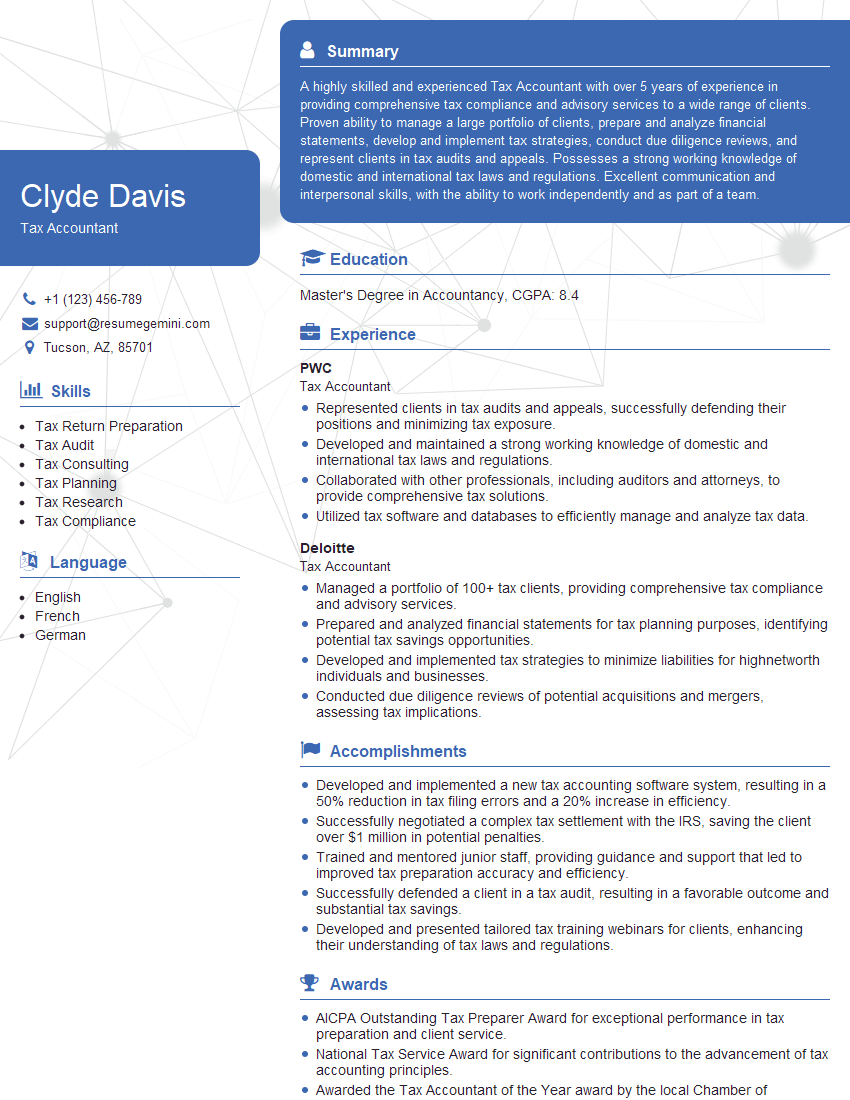
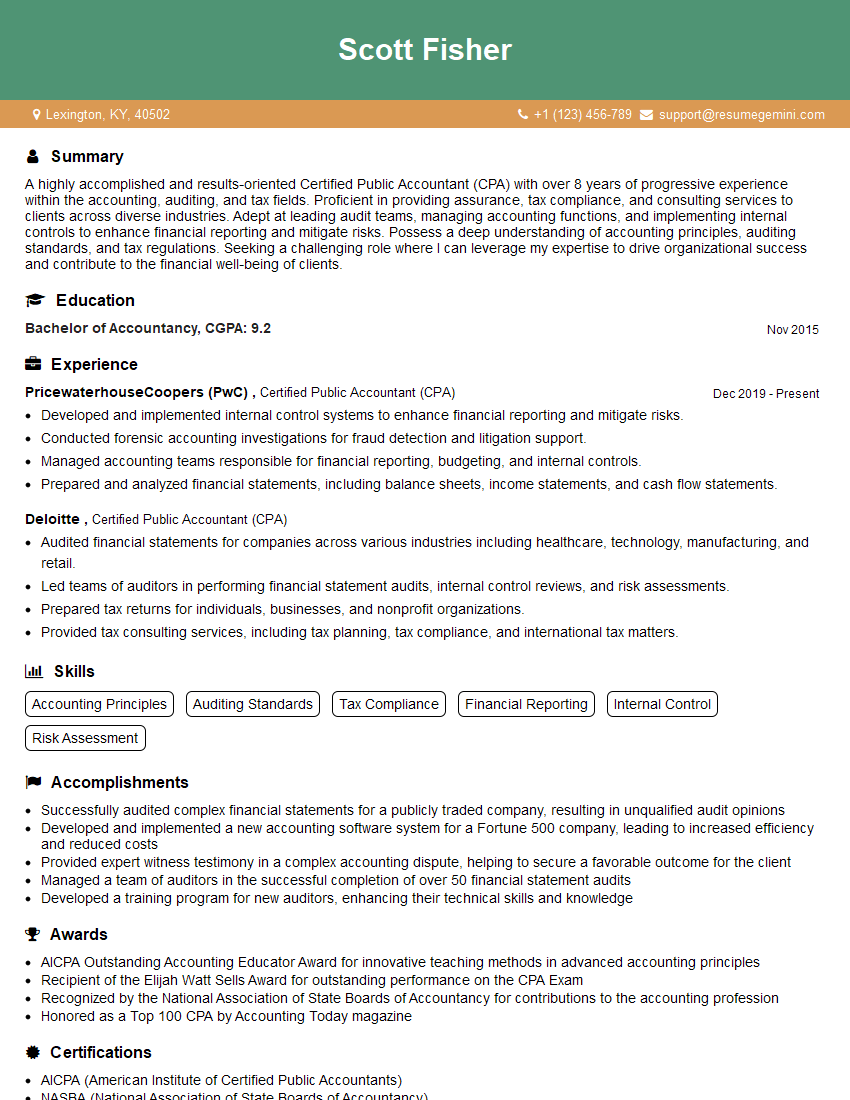
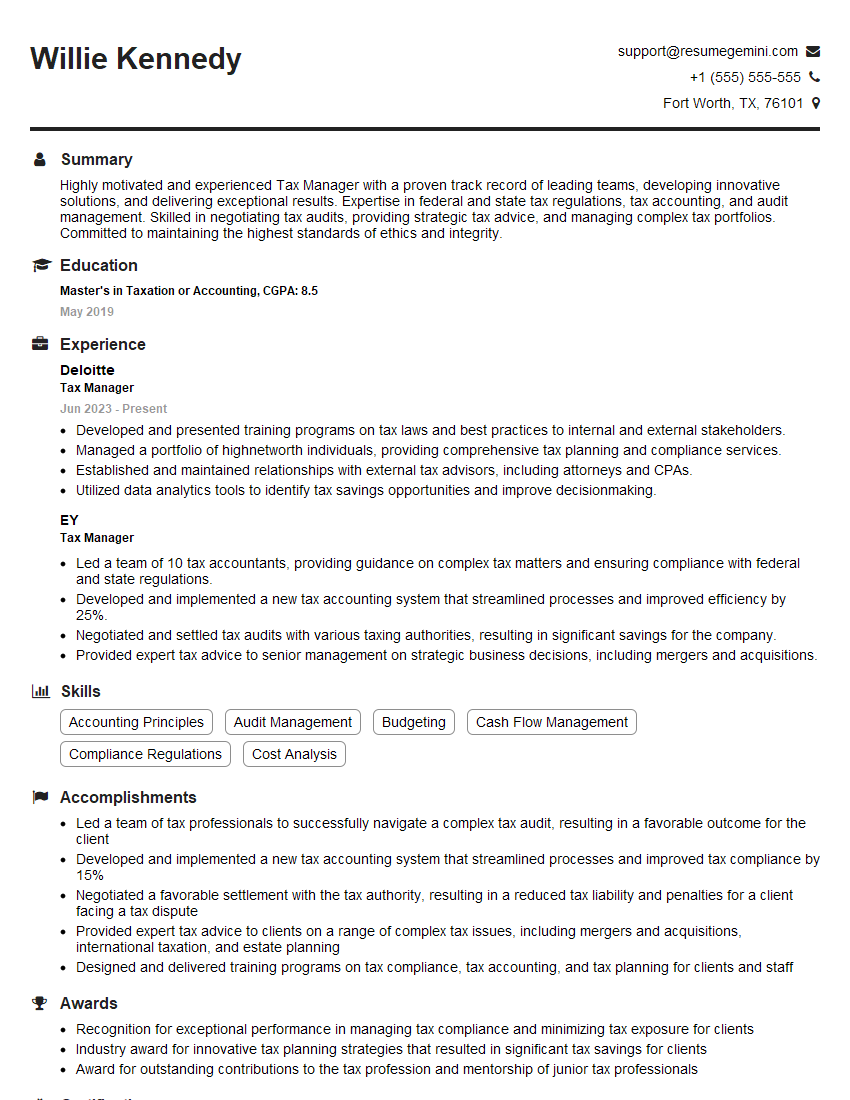
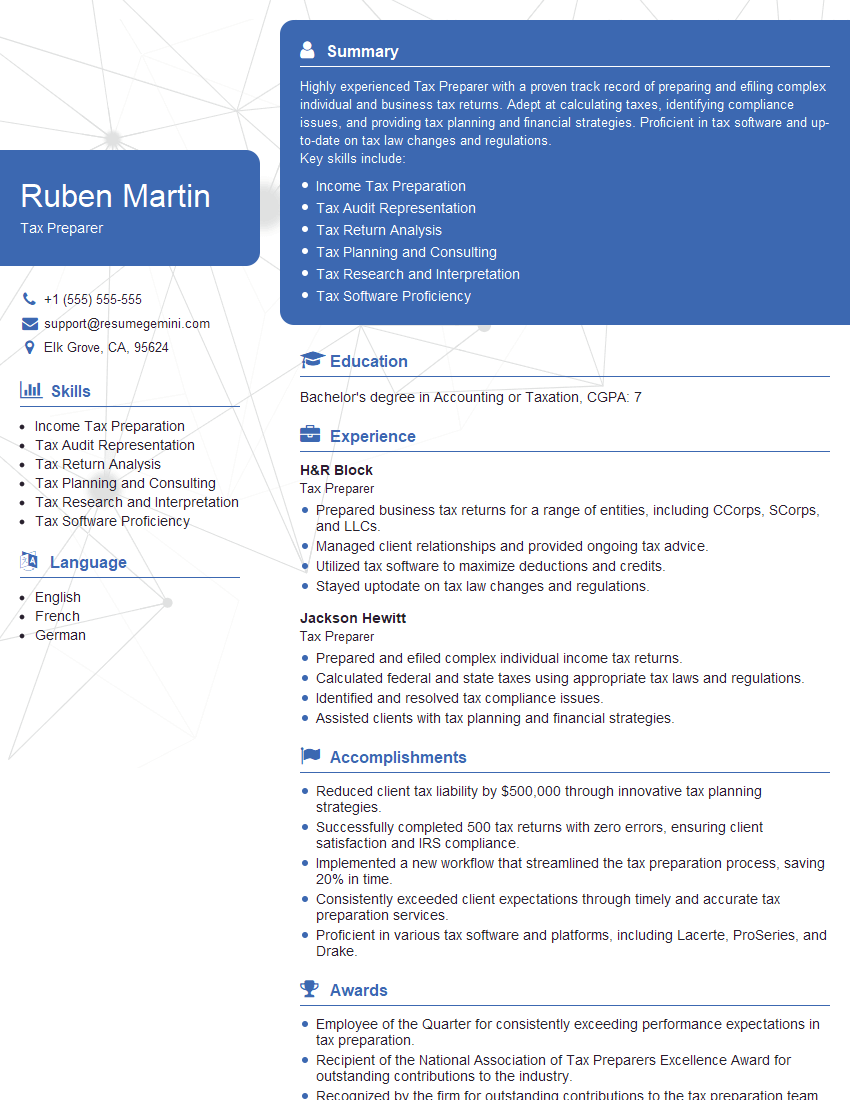
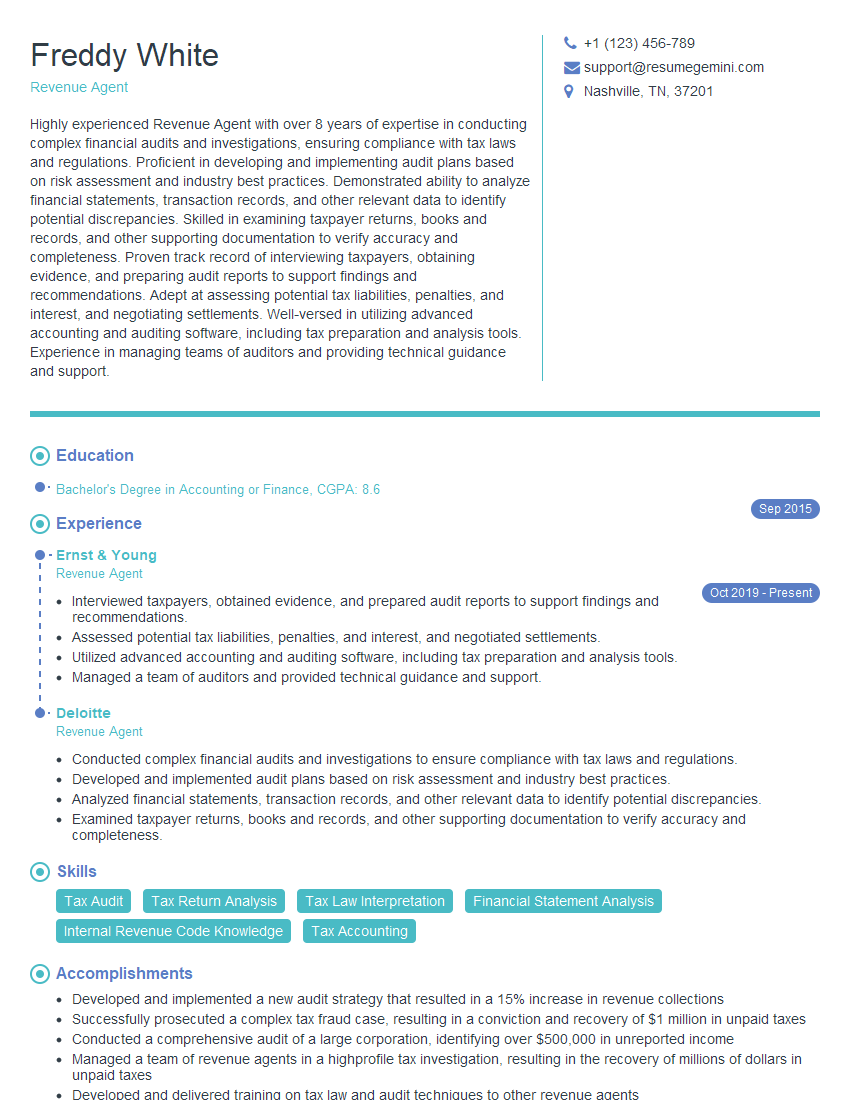
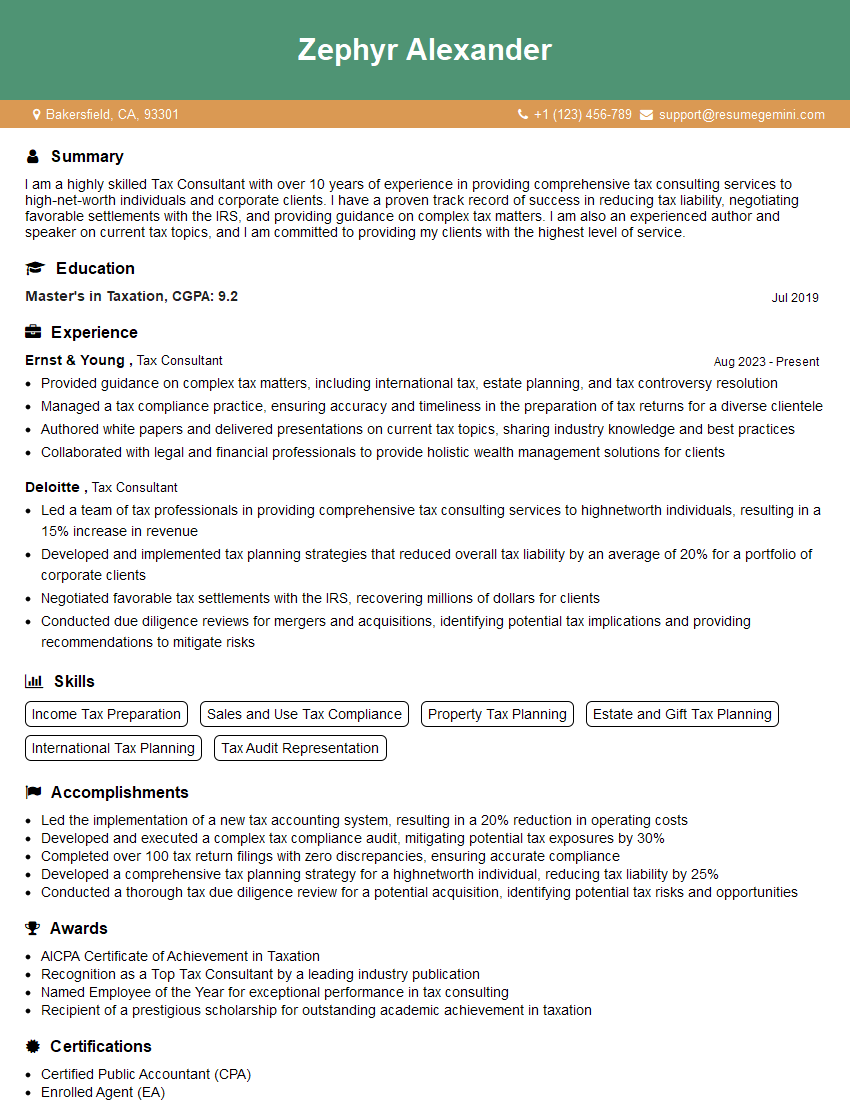
Mastering Knowledge of Taxation Law is crucial for career advancement in finance, accounting, and legal fields. A strong understanding of tax principles opens doors to high-demand roles with excellent compensation and growth potential. To maximize your job prospects, create an ATS-friendly resume that highlights your skills and experience effectively. ResumeGemini is a trusted resource to help you build a professional and impactful resume that catches the eye of recruiters. We provide examples of resumes tailored to Knowledge of Taxation Law to help guide you in crafting your own compelling application materials.


Explore more articles
Users Rating of Our Blogs
Share Your Experience
We value your feedback! Please rate our content and share your thoughts (optional).
What Readers Say About Our Blog
Amazing blog
hello,
Our consultant firm based in the USA and our client are interested in your products.
Could you provide your company brochure and respond from your official email id (if different from the current in use), so i can send you the client’s requirement.
Payment before production.
I await your answer.
Regards,
MrSmith
hello,
Our consultant firm based in the USA and our client are interested in your products.
Could you provide your company brochure and respond from your official email id (if different from the current in use), so i can send you the client’s requirement.
Payment before production.
I await your answer.
Regards,
MrSmith
These apartments are so amazing, posting them online would break the algorithm.
https://bit.ly/Lovely2BedsApartmentHudsonYards
Reach out at BENSON@LONDONFOSTER.COM and let’s get started!
Take a look at this stunning 2-bedroom apartment perfectly situated NYC’s coveted Hudson Yards!
https://bit.ly/Lovely2BedsApartmentHudsonYards
Live Rent Free!
https://bit.ly/LiveRentFREE
Interesting Article, I liked the depth of knowledge you’ve shared.
Helpful, thanks for sharing.
Hi, I represent a social media marketing agency and liked your blog
Hi, I represent an SEO company that specialises in getting you AI citations and higher rankings on Google. I’d like to offer you a 100% free SEO audit for your website. Would you be interested?