Every successful interview starts with knowing what to expect. In this blog, we’ll take you through the top Synchronization Techniques interview questions, breaking them down with expert tips to help you deliver impactful answers. Step into your next interview fully prepared and ready to succeed.
Questions Asked in Synchronization Techniques Interview
Q 1. Explain the concept of race conditions.
A race condition occurs when multiple processes or threads access and manipulate the same shared resource concurrently, and the final outcome depends on the unpredictable order in which these accesses happen. Imagine two chefs trying to add ingredients to the same pot of soup simultaneously – the final soup’s taste will depend entirely on which chef adds their ingredient first, leading to potentially unintended or incorrect results. This unpredictability is the core of the race condition problem.
For example, consider two threads incrementing a shared counter. If both threads read the counter’s value (say, 5), then both increment it in their local memory (resulting in 6 for each), and finally write the value back, the final counter value will be 6, not 7, as expected. This is because the second write overwrote the first.
Race conditions can lead to subtle bugs that are extremely difficult to reproduce and debug, as their occurrence is non-deterministic – they don’t always happen.
Q 2. What are the different types of synchronization primitives?
Synchronization primitives are tools used to control access to shared resources and prevent race conditions. They coordinate the execution of multiple threads or processes. Common types include:
- Mutexes (Mutual Exclusion): Ensure that only one thread can access a shared resource at a time.
- Semaphores: Allow a specified number of threads to access a shared resource concurrently.
- Condition Variables: Enable threads to wait for a specific condition to become true before continuing execution.
- Monitors: High-level synchronization constructs that encapsulate shared data and the operations that access it, ensuring mutual exclusion and controlled access.
- Read-Write Locks: Allow multiple threads to read a shared resource concurrently but restrict write access to a single thread at a time.
- Barriers: Synchronize multiple threads at a specific point in their execution, ensuring all threads reach a certain point before proceeding.
The choice of primitive depends on the specific synchronization needs of the application.
Q 3. Describe the functionality of a mutex.
A mutex, short for ‘mutual exclusion,’ is a synchronization primitive that acts like a key to a shared resource. Only one thread can ‘hold’ the key (acquire the mutex) at any given time. Any other thread attempting to acquire the mutex will block until the key is released (the mutex is released). This ensures that only one thread can access the protected resource at a time, preventing race conditions.
Think of it like a single-occupancy restroom – only one person can be inside at a time. Others have to wait outside until the restroom becomes available.
// Example pseudocode illustrating mutex usage acquire_mutex(mutex); // Acquire the mutex. Blocks if already held. // Access the shared resource. release_mutex(mutex); // Release the mutex.
Q 4. Explain the difference between a mutex and a semaphore.
Both mutexes and semaphores are synchronization primitives, but they differ in their functionality. A mutex is a binary semaphore (a semaphore that can only hold values 0 or 1). It provides mutual exclusion – only one thread can hold the mutex at a time. A semaphore, on the other hand, can hold an integer value representing the number of available resources. Multiple threads can access the resource concurrently, up to the limit set by the semaphore’s value.
Think of a mutex as a single-occupancy restroom, and a semaphore as a parking lot with a limited number of spots. Multiple cars can park (access the resource) as long as there are available spots, but once the lot is full, more cars have to wait.
Q 5. What is a deadlock, and how can it be avoided?
A deadlock is a situation where two or more threads are blocked indefinitely, waiting for each other to release the resources that they need. It’s like a traffic jam where two cars are blocking each other’s paths, preventing any of them from moving forward. This creates a standstill.
Avoiding Deadlocks: Several strategies can be employed:
- Mutual Exclusion: Ensure that only one thread can access a resource at a time.
- Hold and Wait: Prevent threads from holding one resource while waiting for another.
- No Preemption: Resources cannot be forcibly taken from a thread.
- Circular Wait: Prevent circular dependencies among threads waiting for resources.
Techniques like ordering resource acquisition (always acquire resources in the same order) or using timeouts can help break potential deadlocks.
Q 6. Explain the concept of starvation.
Starvation is a situation where a thread or process is perpetually denied access to a shared resource, even though the resource is available at times. This is usually due to other threads or processes constantly acquiring the resource, effectively preventing the starving thread from getting its fair share.
Imagine a long line at a restaurant. If some people keep ordering multiple dishes while others are waiting for their first order, those waiting may never get to eat – they are experiencing starvation.
Proper scheduling algorithms and fairness mechanisms (such as priority scheduling with aging) can minimize or prevent starvation.
Q 7. What is a critical section?
A critical section is a code segment that accesses shared resources. Only one thread should be executing within its critical section at any time to prevent race conditions and ensure data integrity. Synchronization primitives like mutexes are used to protect critical sections, guaranteeing mutual exclusion.
Consider updating a bank account balance. The code that reads the current balance, performs the transaction, and writes back the new balance forms a critical section. If multiple threads attempted to update this balance simultaneously, the final balance would be incorrect. A mutex would be used to protect this critical section and allow only one thread to access it at a time.
Q 8. Describe different strategies for handling critical sections.
Critical sections are parts of a program where shared resources are accessed. Managing access to prevent race conditions and data corruption requires careful synchronization. Several strategies exist:
- Mutexes (Mutual Exclusion): A mutex is a locking mechanism. Only one thread can hold the mutex at a time. Threads attempting to acquire a locked mutex will block until it becomes available. This is the simplest approach for exclusive access.
- Semaphores: Semaphores are more general than mutexes. They’re integer counters that control access to a resource. A semaphore initialized to 1 acts like a mutex. Semaphores can also control access to multiple resources simultaneously (e.g., a semaphore of 5 allows up to 5 simultaneous accesses).
- Condition Variables: Condition variables allow threads to wait for a specific condition to become true before proceeding. They’re often used in conjunction with mutexes. A thread might acquire a mutex, check a condition, and if it’s false, wait on the condition variable. Another thread can signal the condition variable when the condition becomes true, waking up waiting threads.
- Monitors: Monitors encapsulate shared data and the methods to access it, ensuring only one thread can execute a monitor’s method at a time. They often simplify synchronization compared to using mutexes and condition variables directly. Many programming languages provide monitor-like constructs.
- Lock-Free Data Structures: These advanced techniques use atomic operations (operations that are guaranteed to be executed completely without interruption) to avoid the overhead of locks entirely. They’re significantly more complex to implement correctly but can provide better performance in some situations.
Imagine a shared printer. A mutex would ensure only one document prints at a time. A semaphore could allow multiple documents to print concurrently if there are multiple printers.
Q 9. Explain the use of semaphores in producer-consumer problems.
The producer-consumer problem is a classic concurrency problem where one or more producer threads create data and one or more consumer threads consume it from a shared buffer. Semaphores are ideally suited for solving this.
We typically use three semaphores:
empty: Counts the number of empty slots in the buffer. Initialized to the buffer size.full: Counts the number of filled slots in the buffer. Initialized to 0.mutex: A binary semaphore (initialized to 1) that protects access to the buffer itself. This prevents race conditions when producers and consumers modify the buffer simultaneously.
Producer:
wait(empty); // Wait for an empty slot wait(mutex); // Acquire the buffer lock // ... add item to buffer ... signal(mutex); // Release the buffer lock signal(full); // Signal that a slot is now full
Consumer:
wait(full); // Wait for a full slot wait(mutex); // Acquire the buffer lock // ... remove item from buffer ... signal(mutex); // Release the buffer lock signal(empty); // Signal that a slot is now empty
The wait operation decrements the semaphore; if it’s already 0, the thread blocks. signal increments the semaphore, potentially waking up a blocked thread.
Q 10. How would you implement a reader-writer lock?
A reader-writer lock allows multiple readers to access a shared resource concurrently but only one writer at a time. Implementing one typically involves:
- Reader Count: An integer that tracks the number of active readers.
- Writer Lock: A mutex to ensure only one writer can access the resource.
- Reader Mutex: A mutex to protect the reader count and prevent race conditions when updating it.
Reading:
- Acquire the reader mutex.
- Increment the reader count.
- Release the reader mutex.
- Access the shared resource.
- Acquire the reader mutex.
- Decrement the reader count.
- Release the reader mutex.
Writing:
- Acquire the writer lock.
- Access the shared resource.
- Release the writer lock.
A simple implementation (pseudocode):
class ReaderWriterLock { int readerCount = 0; Mutex readerMutex; Mutex writerMutex; void acquireRead() { readerMutex.acquire(); readerCount++; readerMutex.release(); } void releaseRead() { readerMutex.acquire(); readerCount--; readerMutex.release(); } void acquireWrite() { writerMutex.acquire(); } void releaseWrite() { writerMutex.release(); } } Note: This is a simplified example. More sophisticated implementations handle priority issues and starvation to improve fairness.
Q 11. Discuss the challenges of synchronizing threads in a distributed system.
Synchronizing threads across a distributed system is significantly more challenging than in a single-process environment. The key challenges include:
- Network Latency and Partitions: Communication between nodes takes time, and network partitions (loss of connectivity between parts of the system) can make synchronization impossible or lead to inconsistencies.
- Clock Synchronization: Distributed systems often lack a globally consistent clock, making it difficult to establish a reliable ordering of events.
- Fault Tolerance: Individual nodes can fail, requiring mechanisms to handle node failures and maintain consistency despite node outages.
- Concurrency Control: Managing concurrent access to shared resources across multiple nodes requires sophisticated mechanisms like distributed locks or consensus algorithms.
Techniques like Paxos, Raft, and two-phase commit protocols are used to achieve consensus and reliable synchronization in distributed systems, but they add complexity and overhead.
Q 12. What are the common synchronization issues in multi-threaded programming?
Common synchronization issues in multi-threaded programming stem from race conditions, where the outcome depends on unpredictable thread scheduling. These issues manifest in several ways:
- Race Conditions: Multiple threads access and modify shared data concurrently, leading to unpredictable results. Imagine two threads incrementing a shared counter – the final value might not be the expected sum.
- Deadlocks: Two or more threads are blocked indefinitely, waiting for each other to release resources. A classic example is two threads each holding a lock on one resource and waiting for the other.
- Livelocks: Threads repeatedly change their state in response to each other, preventing any progress. This is like two people trying to pass each other in a narrow hallway, continuously yielding to one another but never actually moving.
- Starvation: One or more threads are perpetually denied access to resources, often because of unfair scheduling or high priority threads monopolizing resources.
Proper synchronization mechanisms like mutexes, semaphores, and condition variables are crucial to preventing these issues. Careful design and testing are essential for creating reliable multi-threaded applications.
Q 13. Compare and contrast different synchronization mechanisms like mutexes, semaphores, and condition variables.
Mutexes, semaphores, and condition variables are all synchronization primitives, but they have distinct uses:
- Mutexes (Mutual Exclusion): Provide exclusive access to a shared resource. Only one thread can hold a mutex at a time. They’re the simplest synchronization mechanism for protecting critical sections.
- Semaphores: Generalized counting semaphores allow control over access to multiple resources. A binary semaphore (value 0 or 1) functions like a mutex, while a counting semaphore can manage multiple simultaneous accesses. They’re useful for controlling access to pools of resources (e.g., multiple printer slots).
- Condition Variables: Allow threads to wait for specific conditions to become true. They’re typically used in conjunction with mutexes. A thread might acquire a mutex, check a condition, and wait on a condition variable if the condition is false. Another thread can signal the condition variable when the condition becomes true.
Comparison: Mutexes are simpler but less flexible than semaphores. Condition variables add more complexity but provide finer-grained control over thread synchronization, allowing for more sophisticated coordination patterns.
Analogy: Imagine a restroom with one toilet (mutex), multiple toilets (semaphore), and a waiting area with a bell (condition variable) to signal when a toilet is free.
Q 14. How can you prevent deadlocks using resource ordering?
Deadlocks occur when two or more threads are blocked indefinitely, each waiting for a resource held by another. Resource ordering is a deadlock prevention technique that ensures threads acquire resources in a predefined order. This breaks the circular dependency that causes deadlocks.
Example: Suppose two threads need to acquire locks A and B. If both threads acquire the locks in a consistent order (e.g., always acquire A before B), deadlocks are avoided. If one thread acquires A and then B while the other acquires B and then A, a deadlock can occur.
Implementation: Assign a unique numerical order to each resource. All threads must acquire resources in strictly increasing order. This prevents circular dependencies.
Code Illustration (pseudocode):
Resource resourceA = new Resource(1); // Order 1 Resource resourceB = new Resource(2); // Order 2 //Thread 1 resourceA.acquire(); resourceB.acquire(); // ... critical section ... resourceB.release(); resourceA.release(); //Thread 2 resourceA.acquire(); resourceB.acquire(); // ... critical section ... resourceB.release(); resourceA.release();
As long as all threads follow this order, deadlocks are impossible.
Q 15. Explain how to use monitors for synchronization.
Monitors are high-level synchronization constructs that encapsulate shared data and the procedures that operate on that data. Think of them as smart containers that enforce exclusive access. They provide a mechanism to ensure that only one thread can access the shared resource at any given time, preventing race conditions and data corruption. This is achieved through the use of enter() and exit() methods (or similar equivalents depending on the programming language and library). The enter() method acquires a lock on the monitor, preventing other threads from accessing the shared data. The exit() method releases the lock, allowing other threads to access the resource.
Example: Imagine a shared printer. The monitor would be the printer itself, and the shared data would be the printer’s status (busy/idle) and the print queue. The enter() method would check if the printer is idle. If it’s busy, the thread waits until it becomes available. Once access is granted, the thread prints the document and then calls exit(), releasing the printer for the next thread.
Many languages provide monitor-like features, either directly or through libraries. Java’s synchronized blocks and methods offer a similar level of control over shared resources.
Career Expert Tips:
- Ace those interviews! Prepare effectively by reviewing the Top 50 Most Common Interview Questions on ResumeGemini.
- Navigate your job search with confidence! Explore a wide range of Career Tips on ResumeGemini. Learn about common challenges and recommendations to overcome them.
- Craft the perfect resume! Master the Art of Resume Writing with ResumeGemini’s guide. Showcase your unique qualifications and achievements effectively.
- Don’t miss out on holiday savings! Build your dream resume with ResumeGemini’s ATS optimized templates.
Q 16. Describe how atomic operations can be used for synchronization.
Atomic operations are fundamental instructions that are guaranteed to execute completely without interruption. This is crucial for synchronization because they prevent race conditions where multiple threads are concurrently modifying the same data. The key is that they are uninterruptible; either they finish successfully, or they don’t start at all.
Examples: Common atomic operations include incrementing a counter, setting a flag, comparing-and-swapping values. Many programming languages and hardware architectures support atomic operations directly (e.g., compare-and-swap instruction). These operations typically involve special CPU instructions that ensure atomicity.
Code Example (Conceptual): Imagine an atomic increment operation on a variable counter. If two threads attempt to increment counter simultaneously, using a regular increment operation, the result could be unpredictable (e.g., one increment might be lost). With an atomic increment, only one thread can complete the operation at a time, ensuring the accurate increment.
// Atomic increment operation (pseudocode)atomicIncrement(counter);Atomic operations are extremely useful in building more complex synchronization mechanisms like locks and semaphores.
Q 17. What are the advantages and disadvantages of using locks for synchronization?
Locks are a fundamental synchronization primitive that restrict access to a shared resource to a single thread at a time. They are widely used but have both advantages and disadvantages.
- Advantages:
- Simplicity: Locks are relatively easy to understand and use.
- Efficiency: In many cases, locks provide efficient mutual exclusion. The overhead is minimal once the lock is acquired.
- Widely Supported: Locks are supported in almost all programming languages and operating systems.
- Disadvantages:
- Deadlocks: If two threads hold locks on different resources and try to acquire the locks held by each other, a deadlock can occur. Neither thread can proceed, resulting in a system standstill.
- Priority Inversion: A high-priority thread can become blocked waiting for a low-priority thread to release a lock, leading to unpredictable performance.
- Convoys: If many threads contend for a single lock, the performance can degrade significantly, as threads are forced to wait in a queue.
- Liveness Issues: Incorrectly implemented locks can lead to situations where threads are perpetually blocked.
Consider using more sophisticated mechanisms, like read-write locks or other higher-level synchronization constructs (e.g., semaphores, condition variables), when simple locks become insufficient or lead to performance issues.
Q 18. How do you handle synchronization in real-time systems?
Real-time systems require strict timing guarantees. Synchronization in these systems must be carefully designed to meet deadlines and avoid unexpected delays. The key is to use mechanisms that minimize latency and predictability.
- Prioritized scheduling: Using a real-time operating system (RTOS) with a prioritized scheduling algorithm is crucial. High-priority tasks should be given preference in accessing shared resources.
- Priority inheritance: If a high-priority task blocks on a low-priority task holding a lock, priority inheritance can be employed to temporarily boost the priority of the low-priority task until it releases the lock.
- Static analysis: Tools for static analysis of the code can help detect potential timing issues and deadlocks.
- Interrupt disabling (with caution): In some cases, temporarily disabling interrupts might be necessary for critical sections, but this should be done sparingly to avoid long delays.
- Specialized synchronization primitives: Real-time operating systems often provide specialized synchronization primitives optimized for real-time constraints.
Careful consideration of the timing characteristics of every component in the system is paramount to achieve effective synchronization in real-time systems. Improper synchronization can lead to missed deadlines, and ultimately, system failure.
Q 19. Explain the concept of transactional memory.
Transactional memory (TM) provides a higher-level approach to concurrency control. Instead of using explicit locks, TM allows a group of memory operations to be treated as a single atomic unit. Imagine it as a database transaction—either all operations succeed, or none do. This simplifies concurrent programming by automating synchronization.
How it works: A transaction begins with a begin() operation. The thread then performs a series of read and write operations on shared data. At the end, a commit() operation attempts to atomically apply the changes. If another thread has modified the same data, the transaction might abort (rollback()) and the thread will retry the operations.
Advantages: TM offers simpler code compared to explicit locking, reduces the risk of deadlocks, and can potentially improve performance for certain types of concurrent operations. However, it’s important to note that TM isn’t a silver bullet and might not always be the most efficient solution.
Disadvantages: TM implementations can be complex, and performance can be unpredictable depending on the implementation and the characteristics of the concurrent operations. Also, not all programming languages and platforms have readily available and efficient TM implementations.
Q 20. What are some common synchronization bugs and how can they be debugged?
Synchronization bugs are notoriously difficult to reproduce and debug due to their non-deterministic nature. They are often subtle and appear only under specific timing conditions.
- Race conditions: Occur when multiple threads access and modify shared data concurrently without proper synchronization, leading to unpredictable results.
- Deadlocks: Two or more threads are blocked indefinitely, waiting for each other to release resources.
- Livelocks: Threads are continuously changing state in response to each other, but without making progress.
- Starvation: A thread is repeatedly prevented from accessing a shared resource.
Debugging strategies:
- Reproduce the bug: Carefully try to recreate the error. This might involve running the application multiple times or using specific inputs to trigger the problem.
- Logging and tracing: Add detailed logs that record thread actions, resource acquisitions, and releases. This helps to reconstruct the sequence of events leading to the error.
- Debuggers with threading support: Use debuggers that allow you to step through the execution of multiple threads and inspect their states.
- Static analysis tools: Utilize tools that can detect potential synchronization issues in the code before runtime.
- Synchronization debugging tools: Certain tools can help visualize thread interactions and identify deadlocks or race conditions.
Careful design and rigorous testing are essential to prevent synchronization bugs.
Q 21. Discuss the trade-offs between different synchronization strategies.
The choice of synchronization strategy depends on factors such as the complexity of the concurrent operations, the performance requirements, and the level of programmer expertise.
- Locks: Simplest, but can lead to deadlocks, priority inversion, and convoys. Suitable for simple scenarios where contention is low.
- Monitors: Provide a higher level of abstraction over locks, simplifying the synchronization logic. Good choice when multiple procedures need synchronized access to shared data.
- Semaphores: More general than locks, useful for controlling access to a limited number of resources. They provide greater flexibility but require more careful implementation.
- Condition variables: Allow threads to wait for specific conditions to be met before proceeding. Useful for coordinating tasks based on shared state.
- Read-write locks: Allow multiple readers or a single writer to access a resource concurrently. Can improve performance compared to exclusive locks if read operations are more frequent.
- Transactional memory: Higher-level abstraction that simplifies synchronization but may not be suitable for all scenarios.
The trade-offs involve complexity versus performance and maintainability. Simpler mechanisms often offer better performance but less flexibility. More complex mechanisms, while potentially more efficient in certain circumstances, come with higher complexity and maintenance costs. The best strategy is the one that best suits the specific application requirements.
Q 22. How do you choose the appropriate synchronization primitive for a given problem?
Choosing the right synchronization primitive depends heavily on the specific concurrency problem you’re tackling. It’s about finding the best balance between performance and correctness. Think of it like choosing the right tool for a job – a hammer won’t work for screwing in a screw.
Mutexes (Mutual Exclusion): These are your workhorses for protecting shared resources. If only one thread should access a critical section of code at a time, a mutex is the way to go. Imagine a single-lane bridge – only one car can cross at a time. Example: Protecting access to a shared counter.
Semaphores: These generalize mutexes. They allow you to control access to a resource by a limited number of threads simultaneously. Think of it as a parking lot with a limited number of spaces. Example: Limiting the number of threads accessing a database connection pool.
Condition Variables: These allow threads to wait for a specific condition to become true before continuing. They’re often used in conjunction with mutexes. Imagine a thread waiting for a resource to become available before processing it. Example: A producer-consumer scenario where the consumer waits for the producer to add items to a queue.
Atomic Operations: These operations are guaranteed to be indivisible; they complete without interruption. They’re excellent for simple, fast synchronization needs. Think of it as a quick, atomic transaction. Example: Incrementing a counter atomically.
Read-Write Locks: These allow multiple readers to access a shared resource concurrently, but only one writer at a time. This improves concurrency when reads are much more frequent than writes. Think of a library – multiple people can read books at the same time, but only one person can check a book out at a time. Example: Protecting a shared data structure that is primarily read.
The process usually involves analyzing the access patterns to shared resources, considering performance implications, and carefully selecting the primitive that best fits the constraints of the problem.
Q 23. Describe your experience with concurrent data structures.
I have extensive experience with concurrent data structures, including those found in standard libraries and custom implementations. My work has involved using and developing structures designed to handle concurrent access safely and efficiently. Some examples include:
Concurrent Queues: I’ve used and implemented concurrent queues (e.g., using lock-free techniques or specialized libraries) for producer-consumer scenarios, ensuring that producers can add items and consumers can remove items concurrently without data corruption or deadlocks. This is crucial in systems where data flows continuously (e.g., message queues).
Concurrent Hash Maps: I’ve used concurrent hash map implementations (often provided by standard libraries) to store and retrieve data concurrently from multiple threads. These often employ techniques like fine-grained locking or lock-free algorithms to minimize contention.
Concurrent Skip Lists: For situations requiring sorted data with high concurrency, I’ve leveraged concurrent skip lists. Their probabilistic nature provides excellent performance under high contention while maintaining data ordering.
Custom Data Structures: In some cases, I’ve had to design and implement custom concurrent data structures to meet specific performance requirements or address unusual concurrency challenges. These have often involved careful consideration of locking strategies and the use of atomic operations to ensure thread safety.
In each instance, the choice of data structure and implementation details were driven by performance requirements, the nature of access patterns, and the tradeoffs between concurrency and consistency.
Q 24. Explain the concept of memory barriers and their significance.
Memory barriers are instructions that enforce ordering constraints on memory operations. They ensure that specific memory operations are visible to other threads in a predictable manner. Think of them as traffic signals for memory accesses – they prevent chaos and ensure order.
Without memory barriers, the compiler or processor might reorder memory operations for optimization purposes, leading to unexpected results in concurrent programs. Memory barriers prevent this reordering, ensuring that memory accesses happen in the program’s specified order.
Different Types: There are various types of memory barriers, like acquire barriers (ensuring all previous memory operations are visible), release barriers (ensuring all subsequent operations are visible), and full barriers (both acquire and release).
Significance: Their significance lies in preventing data races and ensuring consistent memory views across threads. Without them, concurrent programs become extremely difficult to debug and reason about.
For example, consider a flag that signals a thread to stop. Without a proper memory barrier, the other thread might not see the flag set even after it’s been set. Memory barriers guarantee that the change in the flag becomes visible to all threads.
Q 25. How do you ensure thread safety in your code?
Ensuring thread safety is paramount in concurrent programming. It’s about preventing data corruption and unexpected behavior that can arise when multiple threads access and modify shared resources. I employ several strategies:
Synchronization Primitives: Correctly using mutexes, semaphores, condition variables, atomic operations, and read-write locks is fundamental. Choosing the right primitive and implementing it flawlessly is key.
Immutability: Making data structures immutable prevents race conditions. If data can’t be modified after creation, there’s no need for synchronization. This simplifies concurrent programming significantly.
Data Locality: Organizing data so that threads access relatively independent portions reduces contention and the need for extensive synchronization. This is a crucial performance optimization strategy.
Careful Locking Strategies: Avoiding deadlocks and livelocks is essential. Using appropriate locking hierarchies (e.g., acquiring locks in a consistent order), and limiting the scope of lock holding to the minimum necessary, helps prevent these issues. Thorough testing and careful design are crucial.
Thread-Local Storage: Using thread-local storage isolates data to a specific thread, eliminating the need for synchronization altogether.
Following these practices meticulously helps me craft robust and reliable concurrent applications.
Q 26. Describe your experience with testing concurrent code.
Testing concurrent code presents unique challenges, as bugs can be non-deterministic and difficult to reproduce. My approach involves several techniques:
Unit Testing: I use unit tests to verify the correctness of individual components, particularly critical sections of code. While unit tests alone can’t guarantee complete thread safety, they form a vital foundation.
Integration Testing: Integration tests help verify the interaction between multiple components. These tests often simulate concurrent access to shared resources under varying load conditions.
Stress Testing: I use stress tests to push the system to its limits, creating scenarios with high concurrency and contention. This helps uncover issues that might only surface under heavy load.
Randomized Testing: To increase the chances of uncovering race conditions and other concurrency bugs, I often incorporate randomized testing. This involves varying the timing and order of operations to expose potential vulnerabilities.
Static Analysis Tools: Tools that analyze code for potential concurrency problems can be invaluable in identifying potential issues early in the development process.
Profiling Tools: Profiling tools can help identify performance bottlenecks and areas of high contention.
Thorough testing is an iterative process, requiring a combination of strategies to ensure robustness.
Q 27. How do you profile and optimize concurrent applications?
Profiling and optimizing concurrent applications require specialized techniques. I utilize several tools and strategies:
Profiling Tools: Performance profilers allow me to identify performance bottlenecks, such as contention on locks or excessive context switching. This gives me a clear picture of where optimization efforts should be focused.
Performance Counters: Operating system performance counters provide detailed information on CPU utilization, cache misses, and other metrics relevant to concurrent performance. This can pinpoint areas of inefficiency.
Lock Contention Analysis: Specific tools can analyze lock contention, highlighting locks that are frequently held and potentially causing performance bottlenecks. This directs attention to critical sections requiring optimization.
Synchronization Optimization: Once bottlenecks are identified, I optimize synchronization, such as reducing lock granularity (using finer-grained locks), improving lock-free data structures, or utilizing more efficient synchronization primitives.
Thread Pooling: Managing thread creation and destruction overhead is critical. Using thread pools minimizes the overhead associated with creating and destroying threads, enhancing performance and resource management.
Optimization is an iterative process – measure, identify bottlenecks, optimize, and re-measure to verify improvements. Using the right tools makes this process much more efficient.
Q 28. What are some best practices for writing concurrent code?
Writing efficient and robust concurrent code requires adhering to best practices. These are some key guidelines I follow:
Keep Critical Sections Small: Minimize the amount of code protected by locks, reducing the time threads spend waiting.
Avoid Shared Mutable State: Whenever possible, use immutable data structures or minimize shared mutable state to reduce the need for synchronization.
Favor Lock-Free Algorithms When Appropriate: Lock-free algorithms can significantly improve performance in certain scenarios. However, they are more complex and should be used judiciously.
Use Appropriate Synchronization Primitives: Choose the right synchronization primitive for each situation (mutexes, semaphores, condition variables, atomic operations, etc.).
Thorough Testing: Rigorously test concurrent code using a variety of techniques to ensure correctness and identify potential issues.
Clear Code and Comments: Write clear, concise code with comprehensive comments to make the code easier to understand, maintain, and debug.
Use Standard Libraries: Leverage the well-tested concurrent data structures and synchronization primitives provided by standard libraries whenever possible.
By following these best practices, I can significantly increase the quality, reliability, and performance of my concurrent applications.
Key Topics to Learn for Synchronization Techniques Interview
- Fundamental Synchronization Primitives: Understand mutexes, semaphores, condition variables, and their respective use cases. Consider the differences in their implementation and the potential pitfalls of improper usage.
- Practical Applications: Explore real-world scenarios where synchronization is crucial, such as concurrent data access in databases, thread safety in multi-threaded applications, and resource management in operating systems. Be prepared to discuss specific examples.
- Deadlocks and Livelocks: Master the concepts of deadlocks and livelocks, including their causes, detection, and prevention techniques. Practice analyzing scenarios to identify potential synchronization issues.
- Memory Consistency Models: Familiarize yourself with different memory consistency models and their impact on concurrent programming. Understand how these models affect the ordering of memory operations and their implications for synchronization.
- Synchronization in Distributed Systems: Explore challenges and solutions for synchronization in distributed environments. Consider concepts like distributed locks and consensus algorithms.
- Performance Considerations: Discuss the performance implications of different synchronization techniques. Understand how to choose the most efficient approach for a given scenario, balancing concurrency and overhead.
- Testing and Debugging Concurrent Code: Learn effective strategies for testing and debugging concurrent programs. This includes understanding race conditions, data corruption, and other common concurrency bugs.
Next Steps
Mastering synchronization techniques is vital for success in a wide range of software engineering roles, opening doors to exciting opportunities and higher earning potential. A well-crafted resume is your key to unlocking these prospects. Make sure your resume is ATS-friendly to ensure it gets seen by recruiters. ResumeGemini can help you build a professional, impactful resume that highlights your skills and experience in synchronization techniques. We provide examples of resumes tailored specifically to this field to give you a head start. Invest in your future – build a winning resume with ResumeGemini today.

Professor Resume Sample
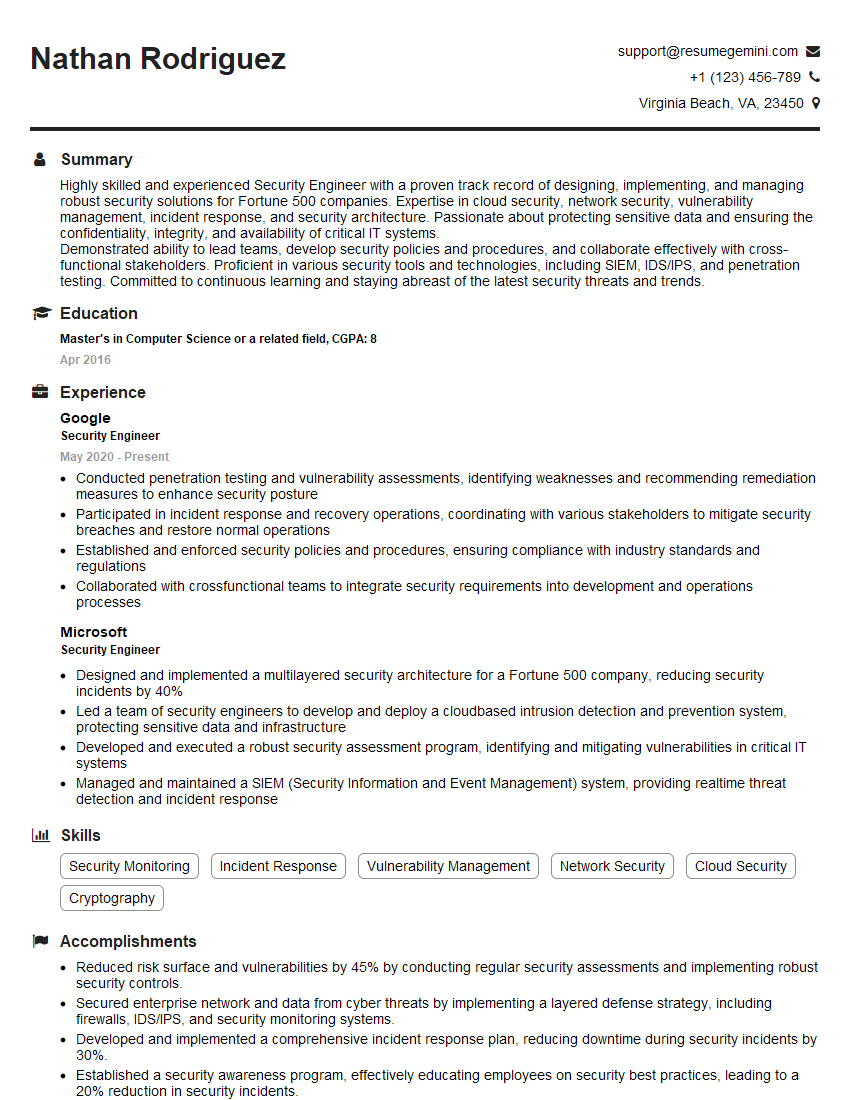
Security Engineer Resume Sample

Research Scientist Resume Sample

Software Engineer Resume Sample
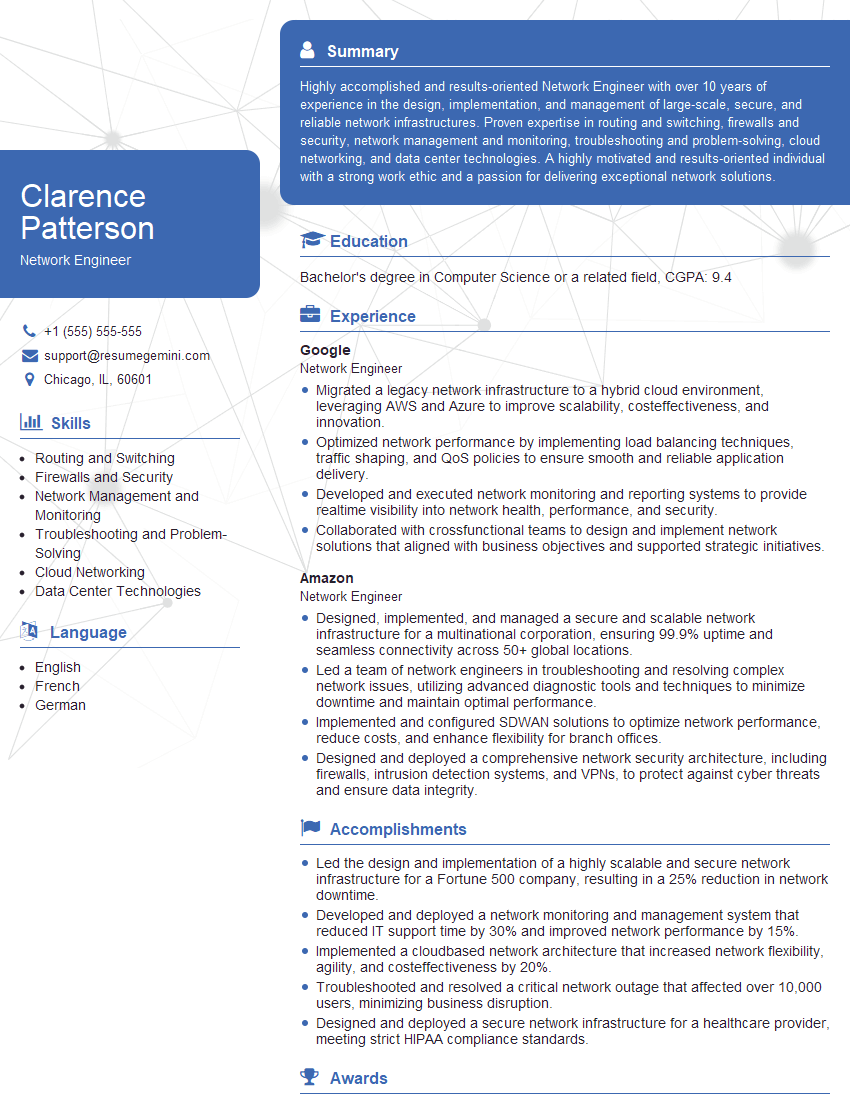
Network Engineer Resume Sample

Game Developer Resume Sample
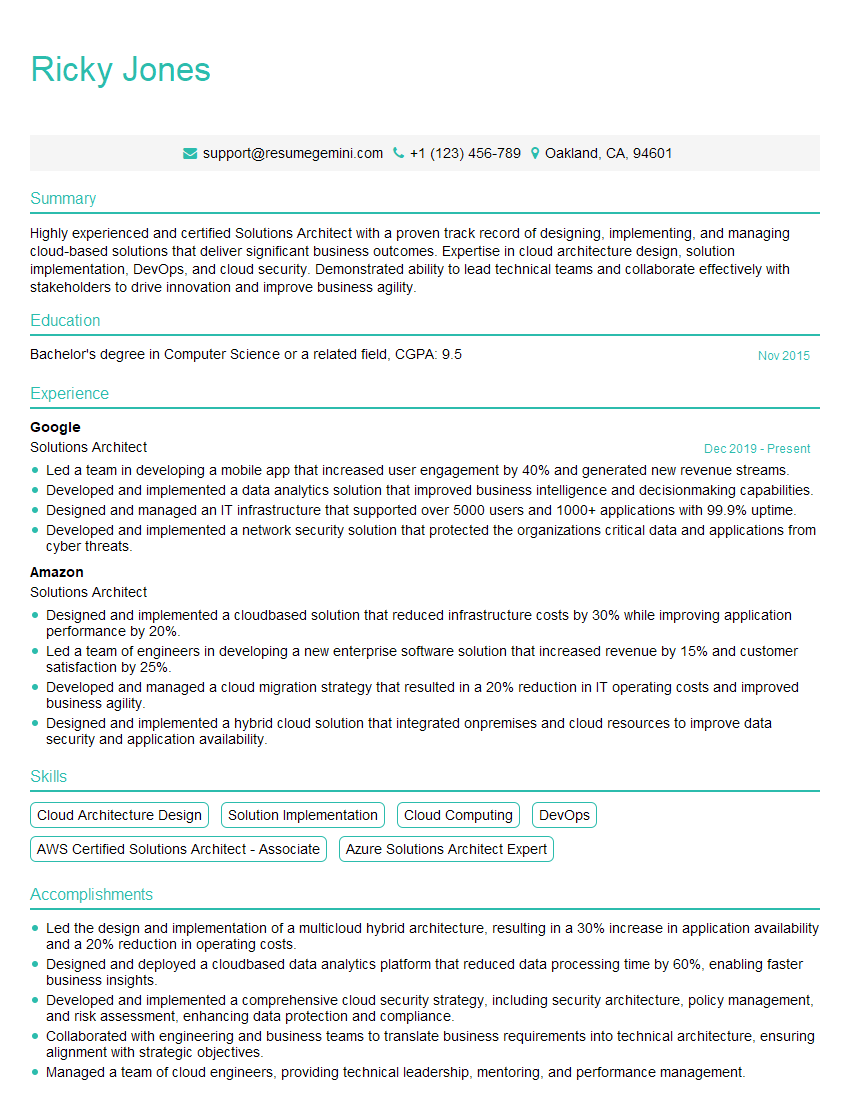
Solutions Architect Resume Sample

Senior Software Engineer Resume Sample

System Architect Resume Sample

Architect Resume Sample
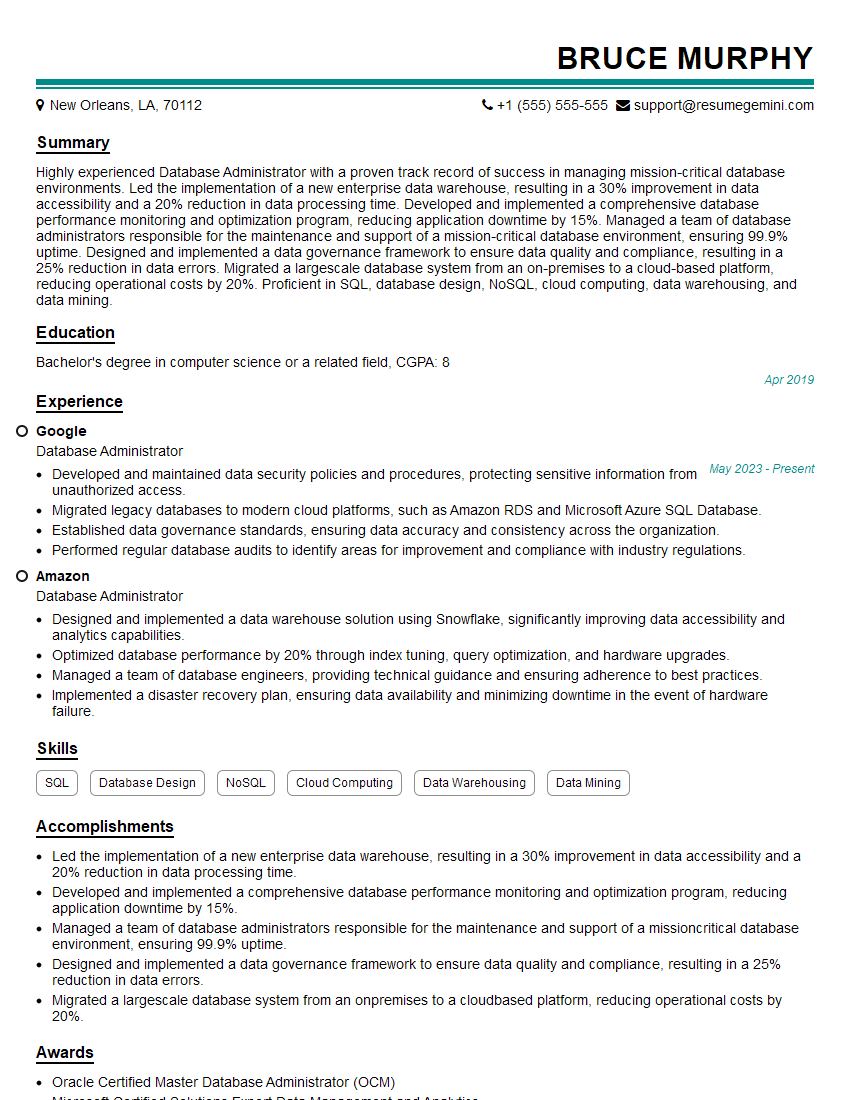
Database Administrator Resume Sample
Embedded Systems Engineer Resume Sample

Technical Lead Resume Sample
DevOps Engineer Resume Sample
Cloud Architect Resume Sample
Explore more articles
Users Rating of Our Blogs
Share Your Experience
We value your feedback! Please rate our content and share your thoughts (optional).
What Readers Say About Our Blog
Amazing blog
Interesting Article, I liked the depth of knowledge you’ve shared.
Helpful, thanks for sharing.