Every successful interview starts with knowing what to expect. In this blog, we’ll take you through the top Defect Reporting and Tracking interview questions, breaking them down with expert tips to help you deliver impactful answers. Step into your next interview fully prepared and ready to succeed.
Questions Asked in Defect Reporting and Tracking Interview
Q 1. Explain the defect life cycle.
The defect life cycle is a structured process that tracks a software bug from its discovery to its resolution and closure. Think of it as a journey a bug takes through various stages. It ensures that defects are handled systematically and efficiently.
- New: The defect is reported and entered into the tracking system. This stage involves providing all necessary details like steps to reproduce, expected vs. actual behavior, and screenshots.
- Assigned: The defect is assigned to a developer or team responsible for fixing it.
- Open: The developer is actively working on resolving the defect.
- Fixed: The developer believes the defect is fixed and marks it as such. This often includes a code change or configuration update.
- Pending Retest: The defect is passed to the tester for verification.
- Retest: The tester verifies the fix. If successful, the defect moves to closure; if not, it is reopened.
- Reopened: If the fix is unsuccessful, the defect is reopened and returned to the developer. This might involve additional information or clarification.
- Closed: The defect is successfully resolved and verified. This marks the end of the defect’s journey.
- Rejected: The defect might be rejected if it’s deemed not a true defect (e.g., a misunderstanding of requirements) or a duplicate.
For example, imagine a user reports that the ‘Submit’ button on a web form doesn’t work. This starts as a ‘New’ defect. A developer is then ‘Assigned’ the task, investigates, and marks it as ‘Fixed’ after making a code change. The tester then ‘Retests’ and, if successful, marks it ‘Closed’.
Q 2. What are the different severity levels of a defect?
Defect severity indicates the impact of a defect on the software’s functionality or user experience. It’s about how bad the problem is.
- Critical: The application is unusable or crashes. Data loss or security breaches are often categorized as critical.
- Major: Significant functionality is impacted, preventing users from completing crucial tasks.
- Medium: Functionality is partially impacted, or the impact is minor, resulting in inconvenience.
- Minor: Minor cosmetic issues (like typos) or very small functional flaws that don’t significantly affect usability.
- Trivial: Negligible impact; basically, cosmetic issues with no functional impact.
Example: A critical severity defect might be a system crash during a payment transaction, while a minor severity defect could be a misspelled word on a webpage.
Q 3. What are the different priorities of a defect?
Defect priority indicates the urgency with which a defect needs to be fixed. It’s about when the problem needs fixing.
- High: The defect must be addressed immediately. It usually blocks further development or significantly impacts the user experience.
- Medium: The defect should be addressed in the next iteration or release.
- Low: The defect can be addressed later, perhaps in a future release, with no immediate urgency.
For instance, a high-priority defect might be a security vulnerability, while a low-priority defect could be a minor aesthetic issue in a seldom-used feature.
Q 4. Describe your experience with different defect tracking tools (e.g., Jira, Bugzilla, Azure DevOps).
I have extensive experience with various defect tracking tools, including Jira, Bugzilla, and Azure DevOps. My experience spans using them across different project lifecycles and team structures.
- Jira: I’ve utilized Jira extensively for Agile projects, leveraging its Kanban boards, sprint management features, and custom workflows to effectively track and manage defects. I am proficient in creating and managing Jira issues, assigning tasks, and utilizing its reporting capabilities for identifying trends and patterns in defect occurrences.
- Bugzilla: I’ve used Bugzilla in projects requiring a more robust and flexible defect tracking system. Its features for managing complex workflows and integrating with other tools proved beneficial in large-scale projects.
- Azure DevOps: My experience with Azure DevOps includes leveraging its integration with other Microsoft tools and using it within a DevOps pipeline. This allowed for seamless integration between defect tracking, code changes, and continuous integration/continuous deployment processes.
In each case, I adapted my approach to the specific tool and project needs, focusing on efficient workflows and effective communication among team members.
Q 5. How do you prioritize defects?
Prioritizing defects requires a balanced consideration of severity and priority, along with the business impact and available resources. I typically use a risk-based approach.
- Severity and Priority Assessment: I carefully evaluate each defect’s severity and priority using the defined scales, assigning weights to each factor.
- Business Impact Analysis: I assess how the defect impacts the user, business goals, and overall product functionality. Defects affecting core functionality or user experience usually rank higher.
- Resource Allocation: I consider the effort required to fix the defect and the available resources (time, developer expertise, etc.).
- Risk Assessment: I consider the risk associated with leaving the defect unfixed. Security vulnerabilities or significant performance issues often receive higher priority.
- Prioritization Matrix: I often use a prioritization matrix to visually represent the defects, making it easier to compare and rank them based on multiple criteria.
This structured approach allows for objective and data-driven decisions in prioritizing defects, ensuring critical issues are addressed first.
Q 6. How do you handle conflicting priorities between different stakeholders?
Handling conflicting priorities requires clear communication, negotiation, and a collaborative approach. I often follow these steps:
- Identify and Document Conflicts: Clearly define the conflicting priorities from each stakeholder, documenting their rationale and concerns.
- Facilitate Discussion: Organize a meeting or discussion with all stakeholders to understand their perspectives and the underlying reasons for their priorities.
- Analyze Trade-offs: Evaluate the pros and cons of addressing each defect based on the cost, effort, and potential impact of delays.
- Negotiate and Compromise: Seek a mutually agreeable solution by considering alternatives, compromises, and prioritization schemes based on collective agreement.
- Document Decisions: Clearly document the final decision, the rationale behind it, and the impact on each stakeholder. This helps maintain transparency and accountability.
Using a collaborative approach helps ensure that all stakeholders are heard and that the final decision reflects a balance of various considerations and mitigates risks.
Q 7. How do you ensure accurate and complete defect reporting?
Ensuring accurate and complete defect reporting is crucial for efficient bug fixing. My approach includes:
- Clear and Concise Description: The defect report should clearly describe the problem using precise language. Avoid jargon and use simple, unambiguous terminology.
- Reproducible Steps: The report must provide step-by-step instructions to reproduce the defect. This allows developers to easily replicate and fix the issue.
- Expected vs. Actual Behavior: Clearly state the expected outcome and the actual behavior observed. This helps define the discrepancy clearly.
- Environment Details: Include details about the operating system, browser version (if applicable), database version, and other relevant environment information. This helps in isolating and reproducing the bug.
- Screenshots and/or Videos: Visual aids significantly improve understanding. Screenshots showing the error message or the problematic behavior are invaluable.
- Log Files: If available, attach relevant log files that provide more detailed information about the error.
- Severity and Priority: Assign appropriate severity and priority levels to help prioritize the bug fix.
- Verification: After the defect is fixed, ensure it’s thoroughly tested and verified before closing it.
Using a standard template or checklist for defect reporting ensures consistency and completeness across all reported bugs.
Q 8. What metrics do you use to track defect resolution?
Tracking defect resolution effectively relies on several key metrics. These metrics provide insights into the efficiency and effectiveness of the entire defect lifecycle, from identification to closure. Key metrics include:
- Defect Density: The number of defects found per unit of code (e.g., lines of code, function points). A lower defect density indicates higher code quality.
- Defect Severity: Categorizes defects based on their impact (e.g., critical, major, minor). Tracking severity helps prioritize fixes.
- Defect Resolution Time: The time taken to fix a defect from its reporting to its verification. Shorter resolution times indicate efficient problem-solving.
- Defect Detection Rate: The percentage of defects detected during different testing phases (unit, integration, system, etc.). A higher rate implies effective testing processes.
- Defect Leakage Rate: The percentage of defects that escape into production. A low leakage rate is crucial for maintaining software reliability.
- MTTR (Mean Time To Resolution): The average time taken to resolve defects. This metric provides a broader perspective on overall efficiency.
By monitoring these metrics, we can identify trends, bottlenecks, and areas for improvement in our development and testing processes. For instance, a consistently high defect density in a specific module might indicate a need for better code reviews or more rigorous testing in that area.
Q 9. How do you identify the root cause of a defect?
Identifying the root cause of a defect is critical for preventing similar issues in the future. My approach involves a structured investigation, often using the 5 Whys technique or a more formal root cause analysis (RCA) methodology.
The 5 Whys Technique: This involves repeatedly asking “Why?” to drill down to the underlying cause. For example, if a user interface element doesn’t display correctly (symptom), we might ask:
- Why doesn’t the element display? (Because the data isn’t being passed correctly.)
- Why isn’t the data being passed correctly? (Because there’s a bug in the data retrieval function.)
- Why is there a bug in the data retrieval function? (Because the code wasn’t properly tested.)
- Why wasn’t the code properly tested? (Because of insufficient test coverage.)
- Why was there insufficient test coverage? (Because of a lack of clear requirements.)
Formal RCA Methodologies: These methodologies (like Fishbone diagrams or Fault Tree Analysis) provide a more structured approach to identifying multiple contributing factors. They often involve collaboration with developers, testers, and other stakeholders to get a complete picture.
Regardless of the technique used, thorough documentation is essential. This allows us to track the investigation, communicate findings effectively, and prevent recurrence.
Q 10. Describe a situation where you had to escalate a defect.
I once encountered a critical defect in a production environment shortly before a major product release. The defect caused a system crash under high load, directly impacting user accessibility. Initial attempts at reproduction in the testing environment were unsuccessful because the test load didn’t replicate the real-world scenario.
Given the severity and the impending release deadline, I escalated the issue immediately. My escalation followed a clear process:
- Detailed Report: I prepared a comprehensive report outlining the defect, its impact, and our attempts to reproduce it.
- Stakeholder Communication: I communicated the issue to the project manager, development lead, and the client representative, providing regular updates.
- Prioritization: The escalation ensured the defect received immediate attention, overriding other less critical issues.
- Collaboration: I worked closely with the development team to identify a temporary workaround and a permanent fix.
The successful escalation led to a quick resolution, preventing significant negative impact. This situation highlighted the importance of clear communication, meticulous reporting, and a well-defined escalation process.
Q 11. How do you handle defects that are difficult to reproduce?
Handling defects that are difficult to reproduce is challenging. My approach involves a systematic investigation using several strategies:
- Detailed Reproduction Steps: Gather as much information as possible from the user who reported the defect, including precise steps, system configuration, and any relevant logs.
- Environment Replication: Try to recreate the user’s environment as closely as possible, including OS version, browser type, hardware specifications, and network conditions.
- Log Analysis: Scrutinize system and application logs for clues about the error condition, focusing on timestamps correlated to the reported failure.
- Monitoring Tools: Employ performance monitoring tools to observe system behavior during testing, potentially identifying performance bottlenecks or resource constraints that trigger the defect.
- Remote Debugging: If possible, use remote debugging tools to step through the code while attempting to reproduce the defect in the user’s environment.
- User Feedback: Maintain close contact with the reporter to collect additional details and attempt to refine reproduction steps.
If all else fails, I might employ a strategy of increased testing frequency to observe the defect naturally or consider using techniques like fuzz testing to induce random inputs and find potential edge cases that lead to the error.
Q 12. Explain your experience with test case management and defect tracking integration.
I have extensive experience integrating test case management (TCM) systems with defect tracking systems. This integration streamlines the defect lifecycle and improves overall efficiency. In my previous roles, I’ve used tools such as Jira, TestRail, and Azure DevOps, successfully integrating them to create a seamless workflow.
Benefits of Integration:
- Automated Defect Reporting: When a test case fails, the TCM system can automatically create a defect in the tracking system, including details like steps to reproduce and screenshots.
- Traceability: Every defect is linked to the specific test case that uncovered it, providing complete traceability throughout the development lifecycle.
- Improved Reporting: The integrated systems generate consolidated reports showing test case execution, defect status, and other metrics, improving data analysis.
- Reduced Manual Effort: Automation reduces the need for manual data entry and minimizes the risk of errors.
Example: In Jira, we can configure a post-function in a workflow transition to create a new Jira issue (defect) when a TestRail test case changes its status to ‘Failed’. This automation minimizes manual effort and ensures consistency.
Q 13. How do you ensure defects are properly assigned and tracked?
Ensuring proper assignment and tracking of defects is crucial for timely resolution. My process involves:
- Clear Assignment Criteria: Establishing clear criteria for assigning defects based on expertise, project roles, or module ownership ensures the right person addresses the issue.
- Centralized Defect Tracking System: Using a robust defect tracking system (like Jira, Bugzilla, or others) provides a single source of truth for all defects, facilitating transparency and better tracking.
- Workflow Automation: Automating workflows (e.g., assigning defects based on predefined rules, sending notifications on status changes) minimizes manual intervention and improves efficiency.
- Regular Monitoring and Reporting: Regularly monitoring the defect queue and generating reports on defect status, resolution times, and other key metrics allows for early identification of bottlenecks and proactive intervention.
- Effective Communication: Maintaining clear communication between developers, testers, and stakeholders using the defect tracking system’s features (e.g., comments, notifications) ensures everyone is on the same page.
This ensures that defects are not overlooked, and accountability is maintained throughout the resolution process.
Q 14. What is your process for verifying defect fixes?
Verifying defect fixes is a critical step to ensure the quality of the software. My process involves:
- Retesting: The most important step is to retest the affected areas using the original test cases that initially revealed the defect. This ensures the bug is truly fixed.
- Regression Testing: After fixing a defect, it’s crucial to conduct regression testing to ensure the fix hasn’t introduced new issues or negatively impacted other functionalities.
- Verification Criteria: Clearly defining verification criteria before retesting ensures the fix meets all the required conditions. This avoids ambiguity and ensures a thorough assessment.
- Test Case Updates: Updating test cases based on lessons learned during defect resolution prevents similar issues from reappearing in the future.
- Documentation: Maintaining detailed documentation of the retesting process, including results and any further issues, helps in tracking and analysis.
This methodical approach ensures that fixes are validated comprehensively, improving software reliability and quality.
Q 15. How do you communicate defect status to stakeholders?
Communicating defect status effectively is crucial for project success. I utilize a multi-pronged approach tailored to the stakeholder’s needs and technical proficiency. For technical stakeholders like developers, I provide detailed bug reports with clear steps to reproduce, expected vs. actual results, screenshots, and relevant log files. My reports follow a consistent format, using a bug tracking system that allows for easy status updates and version control. For less technical stakeholders, like project managers or clients, I summarize the issue in plain language, focusing on the impact and the timeline for resolution. Regular status updates, through email, project management tools, or brief meetings, keep everyone informed and mitigate potential misunderstandings. For example, I might use a traffic light system (red for critical, yellow for high priority, green for low) to give a quick overview of the overall defect situation.
Visual dashboards and reports, which aggregate key metrics like the number of open and closed defects, their severity, and resolution times, are also vital for transparent communication and for proactive risk management. This allows stakeholders to easily monitor progress and understand the overall health of the project.
Career Expert Tips:
- Ace those interviews! Prepare effectively by reviewing the Top 50 Most Common Interview Questions on ResumeGemini.
- Navigate your job search with confidence! Explore a wide range of Career Tips on ResumeGemini. Learn about common challenges and recommendations to overcome them.
- Craft the perfect resume! Master the Art of Resume Writing with ResumeGemini’s guide. Showcase your unique qualifications and achievements effectively.
- Don’t miss out on holiday savings! Build your dream resume with ResumeGemini’s ATS optimized templates.
Q 16. How do you contribute to preventing defects?
Preventing defects is paramount – it’s far more efficient than fixing them later. My contribution begins with proactive involvement in the software development lifecycle (SDLC). I actively participate in requirements gathering and design reviews, identifying potential issues early on before they become defects. This often involves asking clarifying questions, challenging assumptions, and using my experience to anticipate potential problems.
I advocate for robust testing strategies that include unit, integration, and system testing. I also promote the use of static code analysis tools to identify potential problems in the code before it even reaches the testing phase. Furthermore, I champion the use of coding best practices and style guides, ensuring consistency and maintainability, which directly impacts defect prevention. Collaborating closely with developers to understand the code base and the design decisions helps identify potential points of failure early in the process. Finally, regular code reviews provide another layer of defense in spotting defects before they escalate. Think of it like a quality control process applied at each stage of development, akin to a chef tasting a dish at multiple stages of preparation to ensure quality.
Q 17. What is your experience with regression testing and its impact on defect detection?
Regression testing is crucial for ensuring that new code changes haven’t introduced new defects or broken existing functionality. My experience involves designing and executing regression tests using a variety of methods, including automated tests (using tools like Selenium or JUnit) and manual tests. Automated tests help ensure consistent and efficient retesting, especially valuable for large applications or frequent updates.
The impact of thorough regression testing on defect detection is significant. It allows us to identify and resolve issues quickly, preventing them from reaching production and causing problems for end-users. For instance, during a recent project, automated regression tests identified a regression bug in a core module that was inadvertently introduced during a seemingly unrelated code change. If this had gone undetected, it could have caused a major service disruption. I use metrics such as defect detection rate and defect density to measure the effectiveness of the regression testing process. By continuously evaluating these metrics, we are able to identify areas for process improvement and enhance the effectiveness of the regression testing suite.
Q 18. How do you handle a large number of defects simultaneously?
Managing a large number of defects efficiently requires a structured approach. I start by prioritizing defects based on their severity and impact using a well-defined prioritization matrix (e.g., severity x priority). Critical defects impacting core functionality take precedence. I then utilize the defect tracking system’s features to effectively manage the workload. This includes assigning defects to the appropriate developers, setting deadlines, and monitoring progress.
Effective communication is key here. Regular status meetings with the development team help ensure everyone is on the same page and any roadblocks are quickly identified and addressed. Using the defect tracking system’s reporting and filtering capabilities allows me to gain insights into the trends and patterns in the reported defects. This data can help us identify root causes and focus on preventative measures. Think of it as a triage system in a hospital – prioritizing critical cases first while managing the flow of less critical ones.
Q 19. Explain your approach to reporting defects in different development methodologies (e.g., Agile, Waterfall).
My approach to defect reporting adapts to different methodologies. In a Waterfall methodology, defect reporting is more formalized, often documented meticulously in detailed reports with specific formats and IDs. These reports are often used in formal defect review meetings. Tracking is crucial to ensure defects are resolved before the next phase of development.
In Agile methodologies, the emphasis shifts to rapid iteration and quick feedback. Defect reporting is integrated into the sprint cycles. Defect reports might be less formal, often communicated directly to developers in sprint reviews or through the team’s chosen collaborative tools (e.g., Jira). The focus is on quick resolution and continuous improvement. In both cases, I prioritize clear communication, including screenshots and steps to reproduce, regardless of the development methodology.
Q 20. How do you use defect reports to improve the software development process?
Defect reports are a goldmine of information for improving the software development process. By analyzing defect reports, we can identify trends, patterns, and root causes of defects. For example, a recurring defect in a specific module might point to a problem in the design or implementation of that module.
This data-driven approach allows us to make informed decisions to proactively prevent similar defects in the future. We can use this information to enhance our testing strategies, improve code quality, refine our development processes, and provide better training for developers. Think of it as using customer feedback to improve a product – defect reports provide that same invaluable feedback for the development process.
Q 21. What are some common challenges in defect reporting and tracking, and how have you overcome them?
Common challenges in defect reporting and tracking include incomplete or inaccurate defect reports, inconsistent reporting practices, lack of clear priorities, and difficulties in reproducing defects. I’ve overcome these challenges by establishing clear guidelines for defect reporting, providing training to developers on effective reporting, using a robust defect tracking system, and employing techniques like root cause analysis to understand the underlying issues.
Implementing automated testing helps to reduce the manual effort and improve the accuracy of defect reporting. Collaboration with the development team is essential for effectively resolving defects and mitigating future issues. For example, I’ve used regular team meetings and collaborative tools to foster better communication and ensure that defects are resolved quickly and effectively. Proactive communication, clear expectations, and consistent application of process improvements are crucial for maintaining a smooth and efficient defect tracking system.
Q 22. Describe your experience with different defect reporting formats and templates.
My experience spans a variety of defect reporting formats, from simple spreadsheets to sophisticated bug tracking systems like Jira and Bugzilla. I’ve worked with templates ranging from highly structured, field-rich forms requiring detailed information like steps to reproduce, expected vs. actual results, and screenshots, to simpler ones focusing on concise descriptions and severity levels. For example, in one project using Jira, our template included fields for summary, description, steps to reproduce, affected platform, severity, priority, assigned developer, and status. In another project, a simpler CSV-based system was used for tracking defects during initial phases of development. The choice of format always depends on the project’s complexity, team size, and overall development methodology.
I’ve also adapted to different reporting styles, including those that emphasize visual elements (e.g., screenshots, screen recordings) and others relying heavily on textual descriptions. My adaptability allows me to seamlessly integrate into any defect reporting process and contribute effectively regardless of the chosen format.
Q 23. How do you ensure the accuracy and consistency of defect data?
Accuracy and consistency in defect data are paramount. I achieve this through a multi-pronged approach. First, I enforce the use of well-defined templates and guidelines, ensuring everyone uses the same terminology and follows the same reporting structure. This minimizes ambiguity and facilitates consistent data collection. Second, I conduct regular training sessions to educate team members on proper defect reporting procedures. This involves demonstrating best practices and addressing common mistakes.
Third, I implement a review process where senior team members or dedicated QA engineers verify the accuracy of reported defects before they are assigned to developers. This helps to catch errors early on and prevent the escalation of inaccurate information. Finally, I utilize the reporting capabilities of the defect tracking system to generate reports and identify trends. These reports help highlight areas where inconsistencies or inaccuracies might be occurring, allowing for proactive intervention and process improvement.
Q 24. How do you handle situations where you disagree with the severity or priority assigned to a defect?
Disagreements regarding defect severity or priority are handled professionally and constructively. My approach involves first understanding the rationale behind the assigned severity/priority. I might ask clarifying questions to ensure a common understanding of the impact and urgency of the defect. For instance, if a visual glitch is marked as high severity, I would discuss its impact on usability and the user experience. If a minor functionality issue is marked as high priority, I’d explore its potential to block other critical tasks.
Then, I present my counter-argument with supporting evidence, such as user impact assessments or risk analysis, using objective data to support my claim. I encourage collaborative discussion to reach a consensus. Ultimately, the goal is to ensure the defect gets the appropriate attention and resources, while maintaining a respectful and professional communication style. If a resolution can’t be reached, I would escalate the issue to a senior team member or project manager for final decision-making.
Q 25. What is your process for managing duplicate defects?
Managing duplicate defects efficiently is crucial for avoiding wasted effort and maintaining a clear defect backlog. My process starts with a thorough search of the existing defect database before reporting a new defect. Most bug tracking systems have robust search functionality that allows for easy identification of similar or identical defects. I use specific keywords related to the issue’s description and symptoms to ensure a comprehensive search.
If a duplicate is found, I don’t create a new report. Instead, I add a comment to the original report, linking it to the new report’s information, explaining why it’s a duplicate. This maintains a consolidated view of the problem and allows developers to address the single instance of the defect efficiently. In cases where the duplicate defect provides additional information, I update the original report accordingly, thereby enriching the existing information.
Q 26. Explain your experience working with cross-functional teams to resolve defects.
Collaboration with cross-functional teams is integral to effective defect resolution. I leverage clear and concise communication to ensure everyone understands the defect’s nature and impact. I actively participate in defect triage meetings, where developers, testers, and product owners jointly discuss the prioritization and assignment of defects. I utilize the bug tracking system to assign defects to the appropriate individuals and provide regular updates on their progress.
I maintain a proactive communication approach. I follow up with developers on the assigned defects and proactively communicate any roadblocks or challenges encountered during the resolution process. I foster a collaborative environment by actively engaging in discussions and offering support where needed, ensuring effective cross-team communication for faster defect resolution. I’ve found that building strong working relationships with developers through open communication leads to faster resolution times and improved team cohesion.
Q 27. How do you measure the effectiveness of defect reporting and tracking processes?
Measuring the effectiveness of defect reporting and tracking involves analyzing key metrics. These include defect density (number of defects per lines of code), defect detection rate (percentage of defects found during different testing stages), defect resolution time (time taken to resolve a defect), and defect leakage (number of defects that escape to production). These metrics provide insights into the efficiency of the process and help identify areas for improvement.
Furthermore, I analyze trends over time, looking for patterns in defect types, severity, and frequency. This helps in proactively addressing recurring issues and improving the software development lifecycle. Regular review of these metrics with the team allows for informed decision-making regarding process optimization and resource allocation.
Q 28. How do you stay updated on best practices in defect reporting and tracking?
Staying updated on best practices involves continuous learning. I actively participate in industry conferences and webinars focused on software testing and quality assurance. I also follow influential blogs, articles, and online communities dedicated to defect management. I subscribe to relevant newsletters and participate in online courses to expand my knowledge of emerging trends and technologies in defect tracking and management.
Furthermore, I review industry standards and best practices documents, such as those published by organizations like ISTQB (International Software Testing Qualifications Board). This ensures I am always abreast of the latest methodologies and tools available in the field of defect reporting and tracking. This proactive approach ensures that my skills and knowledge remain relevant and applicable to the ever-evolving landscape of software development.
Key Topics to Learn for Defect Reporting and Tracking Interview
- Defect Lifecycle: Understand the complete lifecycle of a defect, from identification and reporting to resolution and closure. This includes understanding different statuses and transitions.
- Defect Reporting Best Practices: Learn how to write clear, concise, and reproducible bug reports. Practice documenting steps to reproduce, expected vs. actual results, and relevant system information.
- Defect Tracking Tools: Familiarize yourself with popular defect tracking systems (e.g., Jira, Bugzilla, Azure DevOps). Understand their functionalities and how to effectively utilize them.
- Prioritization and Triaging: Learn to assess the severity and priority of defects, helping to focus development efforts on the most critical issues.
- Testing Methodologies and their relation to Defect Reporting: Connect your understanding of different testing methodologies (e.g., Agile, Waterfall) with how defects are identified and reported within those frameworks.
- Communication and Collaboration: Mastering effective communication with developers and stakeholders is crucial. Practice explaining complex technical issues clearly and concisely.
- Root Cause Analysis: Develop your ability to identify the underlying cause of defects, not just the symptoms. This shows a deeper understanding of problem-solving.
- Metrics and Reporting: Understand how defect data is used to track progress, identify trends, and improve software quality. Learn to interpret key metrics.
Next Steps
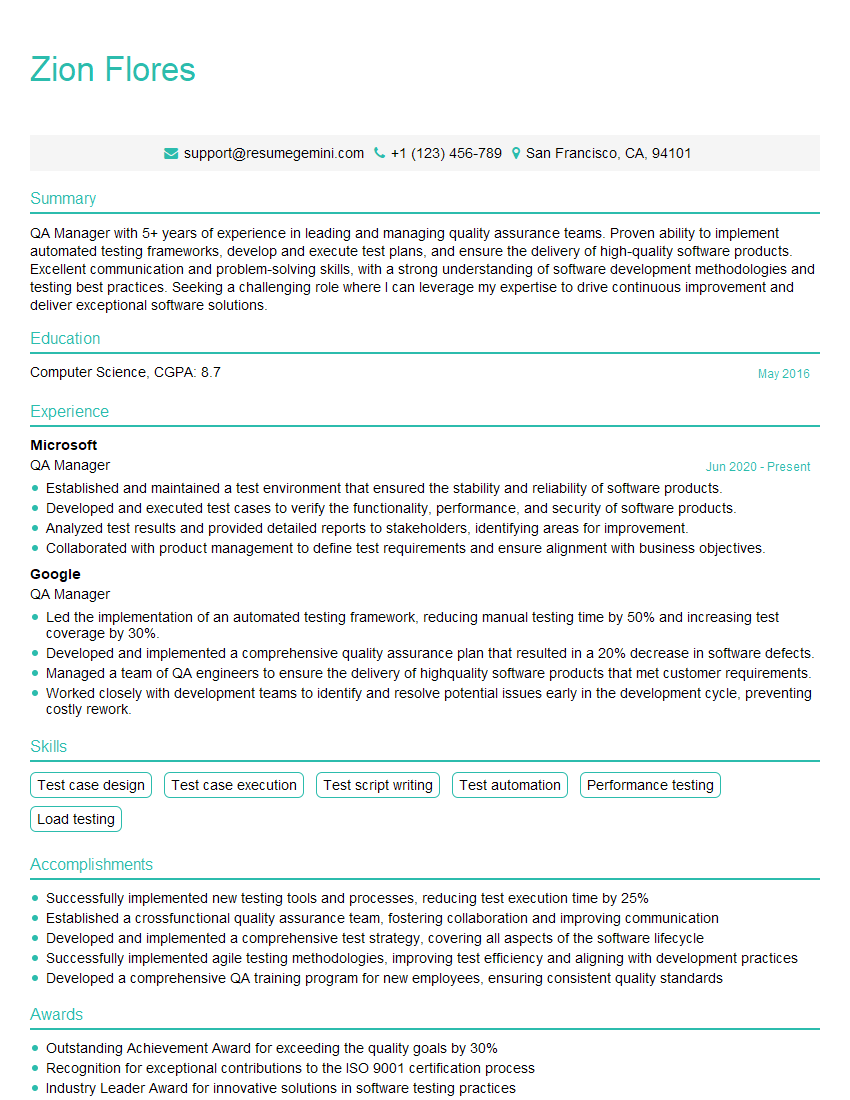
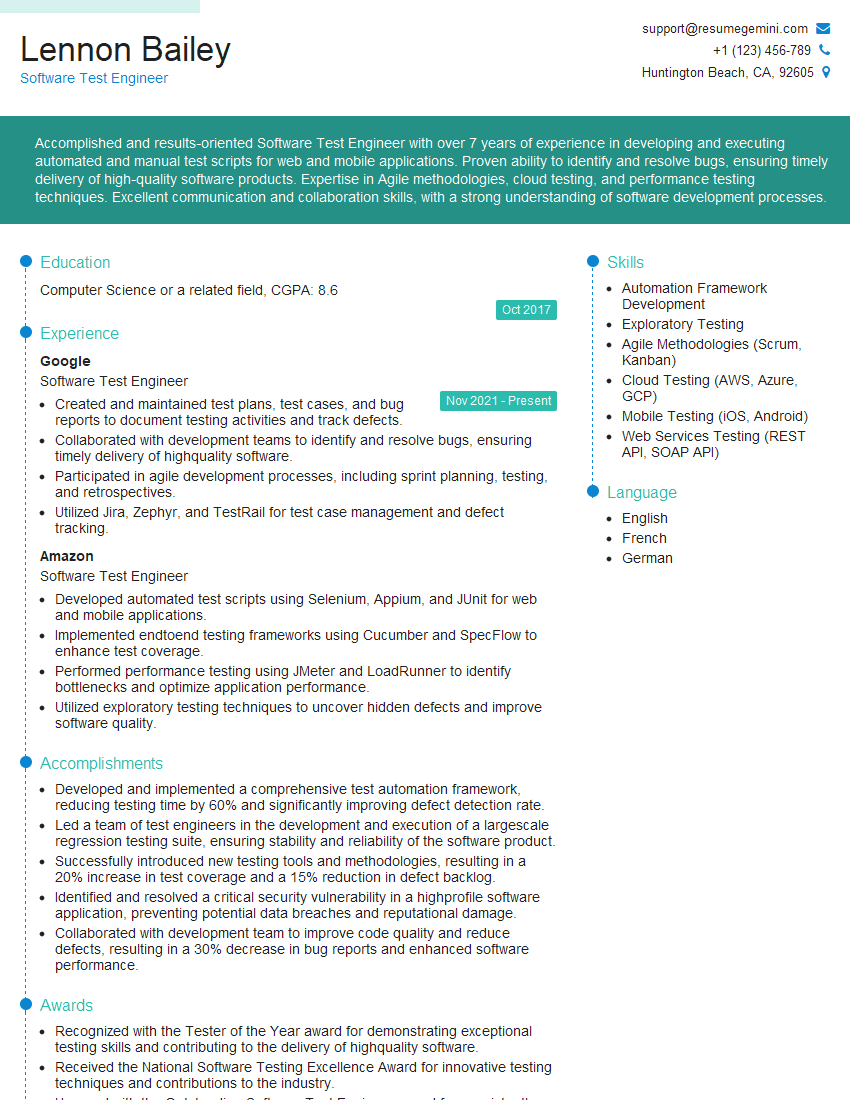
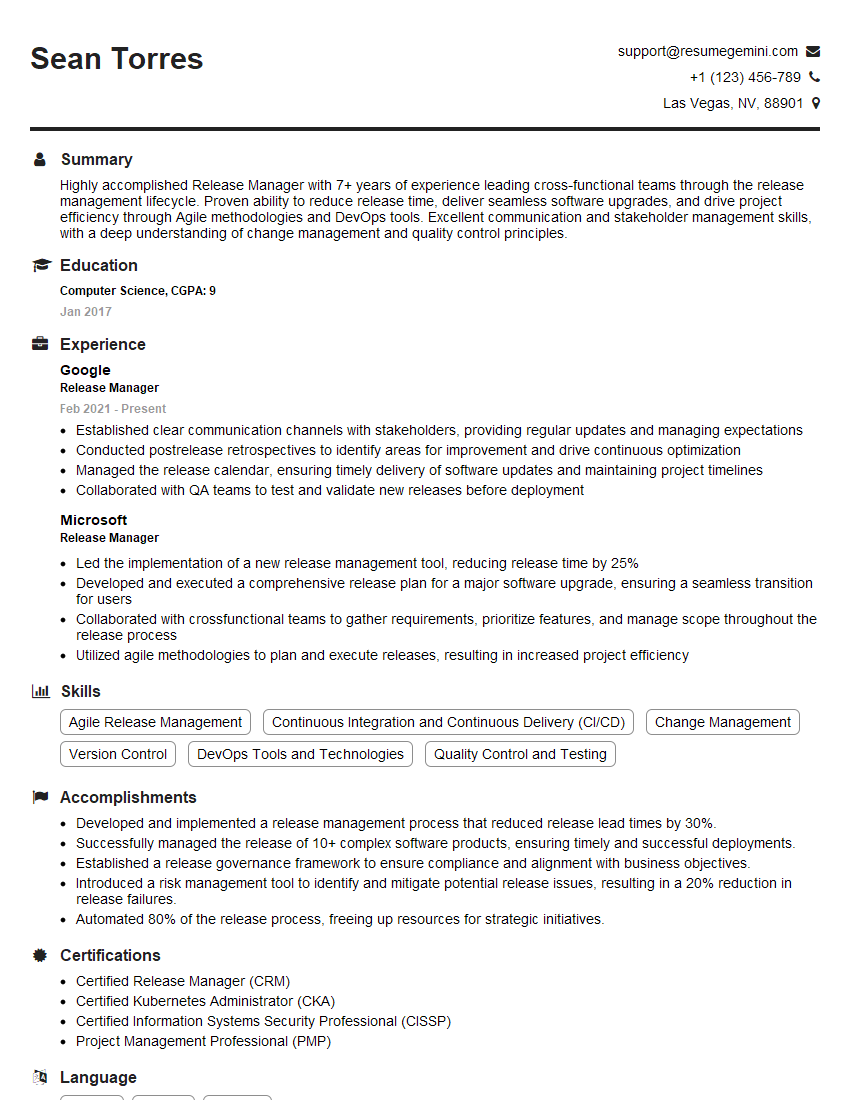
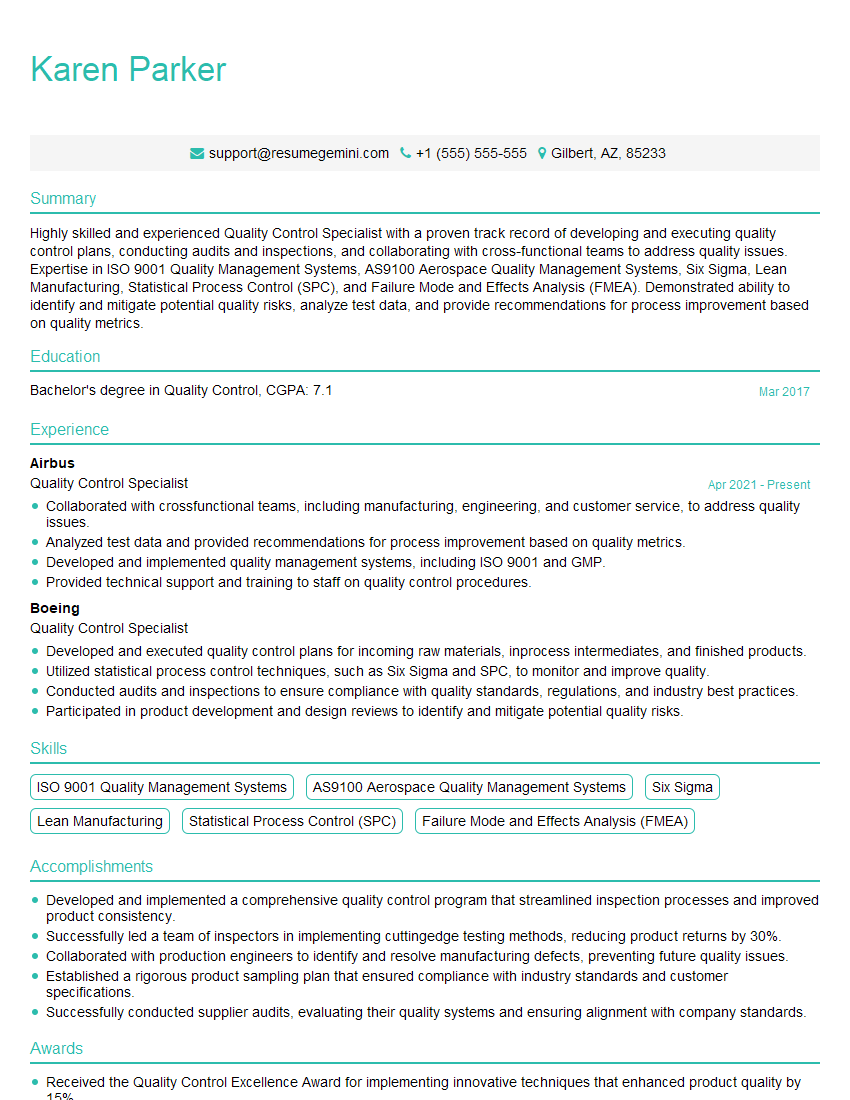
Mastering defect reporting and tracking is crucial for career advancement in software quality assurance and development. It demonstrates attention to detail, problem-solving skills, and effective communication—all highly valued attributes. To significantly boost your job prospects, creating an ATS-friendly resume is essential. ResumeGemini is a trusted resource to help you build a professional resume that highlights your skills and experience effectively. Examples of resumes tailored to Defect Reporting and Tracking roles are available within ResumeGemini, helping you showcase your expertise to potential employers.


Explore more articles
Users Rating of Our Blogs
Share Your Experience
We value your feedback! Please rate our content and share your thoughts (optional).
What Readers Say About Our Blog
Amazing blog
Interesting Article, I liked the depth of knowledge you’ve shared.
Helpful, thanks for sharing.