The thought of an interview can be nerve-wracking, but the right preparation can make all the difference. Explore this comprehensive guide to Understanding of mapping and surveying techniques interview questions and gain the confidence you need to showcase your abilities and secure the role.
Questions Asked in Understanding of mapping and surveying techniques Interview
Q 1. Explain the difference between plane surveying and geodetic surveying.
The key difference between plane surveying and geodetic surveying lies in how they handle the Earth’s curvature. Plane surveying assumes the Earth is flat within the survey area, which is accurate enough for smaller projects where the curvature’s effect is negligible. Think of surveying a small city block – the curvature is insignificant. Geodetic surveying, on the other hand, accounts for the Earth’s curvature, using an ellipsoidal model of the Earth. This is crucial for large-scale projects such as national mapping or surveying vast regions, where ignoring curvature would lead to significant errors. Imagine surveying a long stretch of highway across a large state – the curvature must be considered for accurate measurements.
In simpler terms: plane surveying uses a flat plane as a reference surface, while geodetic surveying utilizes an ellipsoid, a more accurate representation of the Earth’s shape. The choice between the two depends entirely on the scale and scope of the project.
Q 2. Describe the various types of surveying equipment and their applications.
Surveying employs a variety of equipment, each serving a specific purpose. Here are some key examples:
- Total Station: This sophisticated instrument combines a theodolite (for measuring angles) and an electronic distance meter (EDM) (for measuring distances). Total stations are extremely versatile, used in various applications such as setting out buildings, creating topographic maps, and monitoring deformations. Imagine precisely laying out the foundation of a skyscraper – a total station ensures perfect accuracy.
- GPS Receiver (GNSS): Global Navigation Satellite Systems (GNSS) receivers, like those using GPS, GLONASS, or Galileo, utilize signals from satellites to determine three-dimensional coordinates. These are indispensable for large-scale surveys, mapping, and precision agriculture. For example, in precision farming, GPS helps farmers apply fertilizers and pesticides with pinpoint accuracy, minimizing waste.
- Level: A level is used to establish horizontal planes and measure elevations. There are different types, including automatic levels and digital levels. They are vital for tasks like setting benchmarks, establishing levels for construction projects, and creating contour maps. Think of leveling the ground for a building foundation – perfectly level ground is crucial.
- Theodolite: A theodolite precisely measures horizontal and vertical angles. While largely replaced by total stations in many applications, it is still used for certain tasks where a total station may not be necessary.
- EDM (Electronic Distance Meter): EDMs measure distances electronically, often integrated into total stations. They provide fast and accurate measurements, making them crucial for efficient surveying.
Q 3. What are the different coordinate systems used in mapping and surveying?
Several coordinate systems are employed in mapping and surveying, each with its strengths and weaknesses. The most common include:
- Geographic Coordinate System (GCS): This system uses latitude and longitude to define locations on the Earth’s surface, referencing an ellipsoidal model. It’s excellent for global positioning but isn’t ideal for local area mapping due to distortions.
- Projected Coordinate System (PCS): PCS projects the 3D surface of the Earth onto a 2D plane, eliminating distortions within a limited area. Different projections exist (UTM, State Plane), each suited for specific regions. This is often the preferred system for local-scale mapping and engineering projects.
- Universal Transverse Mercator (UTM): A specific type of PCS that divides the Earth into 60 zones, each with its own projection. It’s widely used for large-scale mapping and minimizes distortions within each zone.
- State Plane Coordinate System (SPCS): Similar to UTM, it is designed to minimize distortion but tailored to the boundaries of individual states or regions, leading to enhanced accuracy for regional surveys.
The choice of coordinate system depends on the scale, area, and intended use of the map or survey.
Q 4. How do you perform a traverse survey?
A traverse survey involves establishing a series of connected lines (traverses) to determine the relative positions of points. It’s a fundamental surveying technique, often used for creating detailed maps of areas. Here’s a typical process:
- Reconnaissance: Plan the route of the traverse, selecting suitable points. Consider visibility and accessibility.
- Establish Control Points: Determine the precise coordinates of at least two points, either using existing control points or establishing new ones using GPS.
- Measure Angles and Distances: Using a total station or theodolite, accurately measure the angles between consecutive lines and the lengths of each line.
- Calculate Coordinates: Using trigonometry and the measured angles and distances, calculate the coordinates of each point along the traverse.
- Error Adjustment: Traverse surveys inevitably have small errors due to instrument and human factors. Techniques like least squares adjustment help minimize these errors and ensure geometric consistency.
- Data Processing and Mapping: Process the calculated coordinates using surveying software to generate maps, profiles, and other relevant outputs.
Traverse surveys are extremely valuable for establishing control networks, mapping boundaries, and creating topographic maps. For example, they are frequently used for land surveying, route planning, and construction projects.
Q 5. Explain the process of leveling and its importance.
Leveling is a surveying technique used to determine the difference in elevation between points. It’s crucial for creating contour maps, setting grades for construction, and ensuring proper drainage. The process typically involves:
- Setting Up the Level: The level is set up on a stable base, ensuring it’s roughly equidistant from the backsight (initial point) and foresight (the subsequent point).
- Taking Backsight Readings: A leveling rod is placed vertically on the backsight point, and its reading is recorded.
- Taking Foresight Readings: The leveling rod is moved to the foresight point, and its reading is taken.
- Calculating Elevations: The difference between the backsight and foresight readings, combined with the known elevation of the backsight, determines the elevation of the foresight point.
- Repeating the Process: This process is repeated to establish the elevations of multiple points along a line or across an area.
The accuracy of leveling is paramount in various applications, including construction (ensuring level foundations), infrastructure development (designing roads and canals with correct gradients), and environmental monitoring (tracking changes in land elevation).
Q 6. What are the different types of errors encountered in surveying and how are they mitigated?
Surveying is prone to various errors, which can be broadly categorized as:
- Instrumental Errors: These stem from imperfections in the surveying equipment, such as miscalibration or faulty components. Regular calibration and maintenance of equipment are key to mitigating these errors.
- Natural Errors: These are caused by environmental factors like temperature variations, atmospheric refraction (bending of light), and magnetic declination. Careful observation and the use of appropriate corrections can reduce their impact.
- Personal Errors: These are errors due to human factors, such as incorrect reading of instruments, misalignment of equipment, or mistakes in recording data. Strict adherence to procedures, rigorous checking of data, and employing multiple observers can minimize these errors.
- Systematic Errors: These errors follow a pattern and are often caused by flaws in the equipment or methodology. These can often be detected and corrected through careful analysis of data.
- Random Errors: These are unpredictable errors that occur randomly. They can be minimized through repeated measurements and statistical analysis.
Mitigation strategies involve careful planning, meticulous fieldwork, rigorous data processing, and the application of appropriate error correction techniques. Redundant measurements, statistical analysis (like least squares adjustment), and quality control checks are essential steps in minimizing the effects of all error types.
Q 7. Describe your experience with GPS surveying techniques.
I have extensive experience in GPS surveying, employing both static and kinematic techniques. In static GPS surveying, the receiver remains stationary for an extended period to collect data, allowing for high-precision measurements. This technique is excellent for establishing control points or conducting precise positioning for engineering projects. For instance, I’ve used this method to establish accurate baselines for deformation monitoring of dams and large infrastructure projects.
Kinematic GPS involves continuously moving the receiver while collecting data. This is highly efficient for rapidly surveying large areas, such as creating topographic maps or mapping pipelines. I have utilized this method on numerous projects, including creating detailed topographic maps for urban development and mapping underground utilities.
My experience encompasses working with various GPS receivers, post-processing software, and understanding the nuances of atmospheric corrections and differential GPS techniques. I am proficient in quality control measures and error analysis related to GPS surveying. The accuracy and efficiency offered by GPS technology are pivotal in modern surveying practices, and I strive to leverage its capabilities for optimal results.
Q 8. How do you perform a boundary survey?
A boundary survey precisely defines the limits of a property. It’s like drawing a detailed picture of your land’s edges. This involves meticulous fieldwork and research.
- Research: We begin by researching historical records, deeds, and previous surveys to understand the property’s history and any existing markers. Think of it like piecing together a puzzle to understand the land’s legal past.
- Fieldwork: This is where we hit the ground. Using GPS technology and total stations (instruments that precisely measure distances and angles), we locate and mark existing boundary markers, such as iron pins or stones. If markers are missing, we’ll use sophisticated calculations to re-establish their positions based on the available evidence. Imagine it’s like using detective work to find the exact location of these crucial points.
- Data Processing: The gathered data is processed using surveying software to create a precise map of the property boundaries. This involves complex calculations to account for errors and ensure accuracy. This is the crucial part where we transform the field data into a clear, legally sound representation.
- Final Report: The final product is a detailed survey plat, a legal document showing the property boundaries, along with a written report that explains the methodology and findings. This is like delivering a comprehensive report to a client, ensuring absolute clarity and legal soundness.
For example, I recently conducted a boundary survey for a client who was planning to subdivide their land. My survey precisely defined the boundaries of each resulting parcel, preventing future disputes and ensuring a smooth transaction.
Q 9. What is the significance of scale in map creation?
Scale in map creation is the ratio between the distance on the map and the corresponding distance on the ground. It’s crucial for representing the real world accurately on a smaller, manageable surface. Think of it as a miniature replica, where the scale defines the level of detail and the size of the model.
For instance, a scale of 1:10,000 means that 1 centimeter on the map represents 10,000 centimeters (100 meters) on the ground. A larger scale (e.g., 1:1000) shows more detail but covers a smaller area, while a smaller scale (e.g., 1:1,000,000) shows less detail over a much larger area. Choosing the right scale is crucial for conveying information effectively and making the map useful for its intended purpose.
Incorrect scale can lead to misinterpretations and potentially costly errors in planning and development. For example, using an inappropriate scale in a construction project could result in inaccurate placement of buildings or infrastructure.
Q 10. Explain the concept of map projections and their limitations.
Map projections are methods used to represent the three-dimensional surface of the Earth on a two-dimensional map. Since it’s impossible to perfectly flatten a sphere without distortion, all projections involve compromises. Think of trying to flatten an orange peel – you’ll always end up with some stretching or tearing.
Different projections minimize different types of distortion. Some preserve area accurately, others preserve shape, and some strike a balance. Common examples include Mercator, which preserves direction but distorts area towards the poles, and Lambert Conformal Conic, which is suitable for mapping larger areas in mid-latitudes.
Limitations include:
- Distortion: All projections distort either shape, area, distance, or direction to some degree.
- Complexity: Choosing the appropriate projection for a specific purpose requires understanding its strengths and weaknesses.
- Data limitations: The accuracy of a map is also affected by the quality and resolution of the source data.
For instance, using a Mercator projection to compare the size of countries near the equator versus those near the poles would lead to inaccurate size comparisons. Understanding these limitations is key to interpreting maps correctly and choosing the right projection for the task.
Q 11. How do you interpret topographic maps?
Topographic maps show the shape and elevation of the Earth’s surface. They’re like detailed three-dimensional models, compressed onto a two-dimensional surface. Contour lines are the key to understanding them; they connect points of equal elevation.
Interpreting topographic maps involves understanding several key elements:
- Contour Lines: Closer lines indicate steeper slopes; farther apart lines indicate gentler slopes. A common analogy is a set of level curves on a hill.
- Contour Intervals: The vertical distance between contour lines represents the contour interval. This determines how closely spaced the contour lines are and, consequently, the steepness of the terrain.
- Spot Elevations: Marked points showing precise elevations help to verify contour line accuracy and assist in terrain interpretation.
- Symbols: Topographic maps use symbols to depict features like roads, buildings, streams, and vegetation, enriching the interpretation and contextualizing the terrain.
For example, by examining contour lines on a topographic map, I can determine the steepness of a slope suitable for a road construction project, the potential locations of water sources, and ideal sites for buildings depending on factors such as slope and elevation.
Q 12. Describe your experience with GIS software (e.g., ArcGIS, QGIS).
I have extensive experience with both ArcGIS and QGIS, using them for various mapping and spatial analysis tasks. ArcGIS, with its powerful geoprocessing tools, is my preferred platform for large-scale projects, while QGIS offers an excellent open-source alternative suitable for many tasks.
My experience includes:
- Data Management: Importing, cleaning, and managing various spatial data formats (shapefiles, geodatabases, rasters).
- Data Analysis: Performing spatial queries, overlay analysis, and network analysis to extract meaningful insights from data.
- Cartography: Creating professional-quality maps using advanced symbolization, labeling, and layout tools. I have created maps for urban planning, environmental impact assessments, and infrastructure projects.
- Scripting (Python): I’m proficient in using Python scripting within both ArcGIS and QGIS to automate repetitive tasks and extend the functionalities of the software. This has significantly increased my efficiency in data processing and analysis.
For example, using ArcGIS, I created a detailed land-use map for a local government planning project, integrating data from satellite imagery, cadastral maps, and census data to provide valuable planning insights.
Q 13. Explain the concept of spatial data analysis.
Spatial data analysis involves examining spatial data to identify patterns, relationships, and trends. It’s about looking beyond individual data points to understand how location affects the data and how different elements interact spatially. Think of it as uncovering hidden stories within geographical information.
Techniques include:
- Spatial Queries: Identifying features that meet specific criteria based on their location and attributes (e.g., finding all buildings within a certain distance of a river).
- Overlay Analysis: Combining different layers of spatial data to understand how they relate to each other (e.g., overlaying land-use data with soil type data to find suitable areas for agriculture).
- Proximity Analysis: Measuring distances and calculating areas around features (e.g., creating buffer zones around protected areas).
- Spatial Statistics: Applying statistical methods to spatial data to identify patterns and trends (e.g., analyzing the spatial distribution of crime hotspots).
Spatial data analysis is used in numerous fields, such as urban planning, environmental monitoring, epidemiology, and transportation planning. For instance, I recently used spatial statistics to model the spread of a disease using spatial data analysis to aid in public health interventions.
Q 14. What is remote sensing and how is it used in mapping?
Remote sensing involves acquiring information about the Earth’s surface from a distance, typically using sensors mounted on aircraft or satellites. It’s like having a bird’s-eye view of the planet, capturing vast amounts of information. The captured data is then processed and analyzed to create maps and images.
In mapping, remote sensing provides data for:
- Creating base maps: Satellite imagery provides high-resolution images for creating accurate topographic maps and base maps.
- Monitoring land cover change: By comparing images over time, we can track deforestation, urbanization, and other environmental changes.
- Identifying natural resources: Remote sensing can help locate mineral deposits, assess agricultural yields, and monitor water resources.
- Disaster response: Satellite imagery is critical for assessing damage from natural disasters and planning relief efforts.
For example, I recently used satellite imagery to monitor the deforestation rate in a specific region over a decade, providing crucial data for environmental impact assessments. The change detection capability of remotely sensed data allowed for quantifiable metrics and reports.
Q 15. Describe your experience with LiDAR data processing.
My LiDAR data processing experience encompasses the entire workflow, from data acquisition planning to final product delivery. I’m proficient in using various software packages like LAStools, TerraScan, and ArcGIS Pro to process point cloud data. This involves several key steps:
- Data Preprocessing: This includes noise removal, classifying points into ground and non-ground features using algorithms like progressive TIN densification or morphological filtering. For example, I once worked on a project where removing noise from a dense urban LiDAR dataset was crucial for accurate building model generation. We utilized a combination of filtering techniques to isolate noise points effectively.
- Data Registration and Georeferencing: Accurate georeferencing is critical. I utilize ground control points (GCPs) surveyed with high-precision GPS equipment and then apply rigorous transformations using software like TerraScan to ensure the point cloud accurately aligns with a geographic coordinate system (e.g., UTM).
- Feature Extraction: This stage involves extracting meaningful information from the point cloud. This can include creating digital terrain models (DTMs), digital surface models (DSMs), creating orthomosaics, and identifying objects like trees or buildings. I’ve used these techniques to generate precise elevation models for hydrological modeling and to create accurate 3D city models for urban planning purposes.
- Data Visualization and Analysis: Finally, I utilize GIS software to visualize and analyze the processed data, creating maps and reports for clients. For instance, I once used LiDAR-derived data to analyze changes in coastal erosion over several years, providing crucial information for coastal management.
Career Expert Tips:
- Ace those interviews! Prepare effectively by reviewing the Top 50 Most Common Interview Questions on ResumeGemini.
- Navigate your job search with confidence! Explore a wide range of Career Tips on ResumeGemini. Learn about common challenges and recommendations to overcome them.
- Craft the perfect resume! Master the Art of Resume Writing with ResumeGemini’s guide. Showcase your unique qualifications and achievements effectively.
- Don’t miss out on holiday savings! Build your dream resume with ResumeGemini’s ATS optimized templates.
Q 16. How do you ensure the accuracy and precision of survey data?
Ensuring the accuracy and precision of survey data is paramount. It involves a multi-faceted approach starting even before data acquisition:
- Proper Planning & Design: A well-planned survey minimizes errors. This involves selecting appropriate survey methods and equipment based on project requirements, considering factors like terrain, vegetation, and project scale. For example, for high-precision work, Real-Time Kinematic (RTK) GPS would be used instead of a less accurate method.
- Calibration and Maintenance of Equipment: Regularly calibrating and maintaining all equipment, including total stations, GPS receivers, and levels, is essential. This prevents systematic errors from creeping into the data. Think of it like regularly servicing your car – you want to ensure it’s running smoothly and accurately.
- Redundancy and Check Measurements: Employing redundant measurements and cross-checking data allows for identifying and correcting potential errors. Multiple observations and independent calculations greatly improve reliability. For example, surveying a point using two different instruments and methods will ensure that any major errors are flagged immediately.
- Quality Control (QC) and Quality Assurance (QA): Implementing rigorous QC procedures throughout the process is crucial. This involves checking for outliers, reviewing data consistency, and using statistical analysis to assess the quality of measurements. Software like ArcGIS offers tools for identifying potential errors.
- Error Propagation Analysis: Understanding how errors propagate through calculations is critical. This involves using statistical methods to quantify the uncertainty in the final results and communicating this uncertainty to stakeholders. For example, in determining an area, calculating the uncertainty in each measurement and propagating it to the overall uncertainty in the calculated area is critical.
Q 17. Explain the importance of data quality control in mapping and surveying.
Data quality control (QC) is the backbone of reliable mapping and surveying. Inaccurate data leads to flawed analyses and costly mistakes. QC is an iterative process embedded throughout the entire workflow. Imagine building a house on a faulty foundation – the consequences are severe. Similarly, faulty survey data undermines the entire project.
- Data Validation: This involves checking the data against known standards and specifications, ensuring the data is consistent, complete, and accurate. This might include comparing surveyed coordinates to existing data or checking for inconsistencies in measurements.
- Error Detection and Correction: This step involves identifying and correcting errors using various techniques, ranging from visual inspection to sophisticated statistical methods. For instance, identifying blunders (gross errors) like a misplaced decimal point is a priority.
- Metadata Management: Properly documenting the data, including sources, processing steps, and limitations, ensures transparency and traceability. This allows others to understand and assess the quality of the data.
- Data Transformation and Projection: This involves ensuring that all data is in the correct coordinate system and projection for accurate analysis and integration. Incorrect projections can lead to significant distortions and errors.
Effective QC leads to reliable, trustworthy maps and spatial information used for informed decision-making in various fields, from infrastructure development to environmental management.
Q 18. What are the legal and ethical considerations in surveying?
Legal and ethical considerations are crucial in surveying. Surveys often impact property rights, public safety, and environmental protection. Negligence can have serious consequences.
- Professional Licensing and Standards: Adhering to professional licensing regulations and ethical standards is vital. This involves maintaining competency, following established codes of conduct, and ensuring professional liability insurance.
- Boundary Surveys and Property Rights: Boundary surveys require meticulous accuracy and strict adherence to legal procedures. Errors can lead to costly disputes and legal challenges. I have experience preparing legal descriptions that are accurate and unambiguous and adhere to all necessary legal requirements.
- Data Privacy and Security: Protecting sensitive spatial data is crucial. This includes compliance with data privacy regulations and implementing appropriate security measures to prevent unauthorized access and misuse of information.
- Environmental Impact Assessments: Surveys often inform environmental impact assessments. Ethical considerations require a balanced approach, minimizing environmental disturbance during data collection and responsible use of collected data. For example, minimizing vegetation damage when establishing survey control points in ecologically sensitive areas.
- Transparency and Disclosure: Being transparent with clients about the limitations of the survey and potential uncertainties is vital for building trust and ensuring responsible use of survey results. For example, explicitly communicating the accuracy of measurements and any limitations in the dataset.
Q 19. How do you manage large datasets in a GIS environment?
Managing large datasets in a GIS environment requires efficient strategies and appropriate tools. Large datasets can overwhelm systems if not handled carefully.
- Data Compression and Storage: Utilizing efficient data compression techniques, such as using appropriate file formats (e.g., GeoTIFF for raster data, shapefiles for vector data) and cloud storage solutions (e.g., cloud-based GIS platforms like ArcGIS Online or similar services) are critical for managing large files.
- Data Partitioning and Tiling: Breaking down large datasets into smaller, manageable units improves processing speed and reduces memory requirements. Tile-based processing techniques are beneficial for very large raster datasets.
- Database Management Systems (DBMS): Utilizing a DBMS, such as PostGIS (a spatial extension for PostgreSQL), allows for efficient storage, retrieval, and analysis of spatial data. This offers superior performance over direct file access.
- Data Indexing and Spatial Indexing: Implementing efficient indexing schemes, such as spatial indexes (R-trees, quadtrees), significantly speeds up data retrieval and query processing. This is particularly beneficial when dealing with spatial queries such as finding all points within a specific area.
- Parallel Processing and Distributed Computing: Utilizing parallel processing techniques and distributed computing frameworks (e.g., Hadoop, Spark) enable processing large datasets across multiple machines, reducing processing time dramatically.
Choosing the right approach depends on the specific dataset, hardware resources, and the analysis requirements. For instance, for very large LiDAR point clouds, I might use parallel processing techniques to speed up point cloud classification.
Q 20. Describe your experience with different map projections (e.g., UTM, Albers).
Map projections are crucial for representing the three-dimensional Earth on a two-dimensional map. Different projections have different strengths and weaknesses, making the choice of projection dependent on the project’s specific needs.
- UTM (Universal Transverse Mercator): UTM is a cylindrical projection that divides the Earth into 60 zones, each spanning 6 degrees of longitude. It’s widely used for large-scale mapping because it minimizes distortion within each zone, making it suitable for regional and local mapping projects. I’ve used UTM extensively for cadastral mapping and infrastructure projects.
- Albers Equal-Area Conic: The Albers Equal-Area Conic projection is a conic projection that preserves area. This makes it ideal for mapping areas that span large latitudinal extents, like states or countries, where preserving area is more important than preserving shape. I’ve utilized Albers for mapping ecological zones and analyzing spatial distributions of resources.
- Other Projections: My experience also includes working with other projections, such as Lambert Conformal Conic, State Plane Coordinates, and geographic coordinates (latitude/longitude). The selection always depends on the specific needs of a particular project. A project focused on navigation might need a projection that minimizes angular distortion, while a project focused on land area calculations would need an equal-area projection.
Understanding the properties of each projection and their limitations is vital to avoid misinterpretations and ensure accurate analysis. For instance, while UTM minimizes distortion within a zone, it’s important to be mindful of the distortion that increases towards the edges of the zone.
Q 21. How do you handle conflicting data sources in mapping projects?
Handling conflicting data sources is a common challenge in mapping projects. Discrepancies can arise from different data sources having varying accuracies, resolutions, or update frequencies.
- Data Source Evaluation: The first step is critically evaluating each data source, assessing its accuracy, reliability, and currency. This may involve examining the metadata, understanding data acquisition methods, and checking for known errors or limitations.
- Data Integration and Reconciliation: Various techniques can be employed for data integration, such as spatial joins, overlay analysis, and data fusion. The most suitable method depends on the nature of the conflict and the desired outcome. For example, using weighted averaging to integrate datasets with different accuracies, or using more recent high-resolution data to resolve conflicts with older lower-resolution data.
- Spatial Data Consistency Checks: Implementing spatial consistency checks, such as topology rules and geometric validity checks, help identify and address inconsistencies and errors during data integration. For example, identifying overlaps or gaps in different layers.
- Conflict Resolution Strategies: Decisions on how to resolve conflicts often require expert judgment and knowledge of the project context. Strategies might include prioritizing data from a more reliable source, using spatial interpolation to fill gaps, or creating a new composite layer that integrates the best features of multiple data sources. This might involve a collaborative process involving different stakeholders.
- Documentation and Transparency: Thoroughly documenting the conflict resolution process and its rationale is important for transparency and to ensure traceability of the data’s origins and processing. This ensures that users understand the limitations of the final dataset.
Q 22. What are the different methods for determining elevation?
Determining elevation, or the height of a point above a reference surface (usually mean sea level), relies on several methods. These methods broadly fall into two categories: direct and indirect measurement.
Direct Measurement: This involves physically measuring the vertical distance. Think of a simple measuring tape used to find the height of a building from the ground. More sophisticated direct methods include:
Leveling: This uses a level instrument and leveling rod to establish a precise elevation difference between points. It’s like using a perfectly balanced seesaw – the instrument ensures both ends are at the same height.
Trigonometric Leveling: This method uses angles and distances measured with a theodolite to calculate the elevation difference. Imagine aiming a laser pointer at a point and knowing the distance and angle, you can calculate the height difference.
Indirect Measurement: These methods infer elevation from other measured quantities. Key examples are:
GPS/GNSS: Global Navigation Satellite Systems utilize satellite signals to determine three-dimensional coordinates, including elevation, with remarkable accuracy. It’s like triangulating your position using signals from multiple satellites in space.
Photogrammetry: This technique uses overlapping photographs to create three-dimensional models, from which elevations can be extracted. We’ll discuss this in more detail later.
LiDAR (Light Detection and Ranging): This technology uses laser pulses to measure distances and create highly accurate elevation models. It’s like using a super-fast laser tape measure to scan the entire landscape.
Q 23. Explain the principles of photogrammetry.
Photogrammetry is the science of making measurements from photographs. It’s a powerful tool for creating detailed maps and 3D models. The core principle lies in using overlapping images to create a stereoscopic view. This allows for the extraction of three-dimensional information, including elevation, from two-dimensional photos. Imagine viewing a picture with both eyes; each eye sees slightly different perspectives, allowing your brain to perceive depth. Photogrammetry mimics this process.
The process generally involves:
Image Acquisition: Capturing overlapping aerial or ground photographs using cameras, drones, or even satellites.
Image Orientation: Determining the position and orientation of each camera during image capture. This is done using ground control points (GCPs), points with known coordinates, and specialized software.
3D Model Creation: Using specialized software to process the images and generate a 3D point cloud or digital surface model (DSM). The software matches common features between overlapping images, using the parallax (difference in apparent position) to determine elevations.
Data Extraction: Extracting specific information from the 3D model, such as elevations, contours, volumes, or orthorectified images.
Photogrammetry is widely used in various applications, including topographic mapping, volumetric calculations, disaster assessment, and even archaeological surveying. For instance, I once used photogrammetry to create a detailed 3D model of a historic building for restoration purposes, providing accurate measurements that would have been difficult to obtain through traditional surveying methods.
Q 24. Describe your experience with AutoCAD or similar CAD software.
I have extensive experience with AutoCAD, including versions 2018 through 2023. My proficiency encompasses 2D drafting, 3D modeling, and data management. I’m comfortable creating detailed drawings, working with various data formats (DXF, DWG), and customizing settings for specific projects. I’ve used AutoCAD to:
Create site plans, including contours, utilities, and building footprints.
Develop detailed construction drawings for civil engineering projects.
Import and manipulate survey data from total stations and GPS equipment.
Generate reports and presentations using AutoCAD’s annotation and plotting features.
Beyond AutoCAD, I also possess experience with Civil 3D, specifically in designing road alignments, drainage systems, and grading plans. I’m adept at utilizing its tools for earthwork calculations and creating detailed design models. I’m a firm believer in using the right tool for the job, and my familiarity with these software packages allows me to select the most appropriate and efficient approach for any project.
Q 25. What is your experience with different surveying instruments (e.g., total station, theodolite)?
My experience with surveying instruments is extensive, encompassing both traditional and modern technologies. I’m proficient in using:
Total Stations: I’m skilled in setting up, operating, and maintaining total stations for tasks such as traversing, detail surveying, and stakeout. I understand the importance of proper calibration and error correction techniques.
Theodolites: I’m comfortable using theodolites for angular measurements, particularly in situations where high-precision angular data is required, often in conjunction with EDM (Electronic Distance Measurement) equipment.
GNSS Receivers: I have experience with various GNSS receivers, including RTK (Real-Time Kinematic) systems for high-accuracy positioning and static surveying for base station setups. I understand the nuances of different satellite systems (GPS, GLONASS, Galileo) and their impact on data accuracy.
Leveling Instruments: I’m adept at using automatic and digital levels for precise leveling tasks, ensuring accurate elevation determination.
Beyond practical usage, I understand the principles of instrument calibration, error propagation, and data processing. I’m always seeking to improve my proficiency through continuous learning and hands-on experience with new technologies.
Q 26. How do you manage fieldwork logistics and safety?
Effective fieldwork logistics and safety are paramount for successful surveying projects. My approach incorporates several key elements:
Pre-Field Planning: This involves meticulous planning, including thorough site reconnaissance, permit acquisition (if needed), and detailed scheduling to account for weather conditions and potential delays. A well-defined plan minimizes disruptions and keeps the project on track.
Team Coordination: Clear communication and defined roles within the survey team are crucial. Regular briefings ensure everyone understands the objectives, procedures, and potential hazards.
Safety Procedures: A robust safety plan, encompassing site-specific risk assessments, proper use of personal protective equipment (PPE), and emergency protocols, is essential. This includes procedures for working near traffic, in hazardous environments, or with potentially dangerous equipment.
Equipment Maintenance: Regular maintenance and calibration of survey equipment are critical to ensure data accuracy and prevent unexpected breakdowns in the field. Proper storage and transport procedures safeguard equipment and extend its lifespan.
Data Management: A system for efficient data collection, storage, and backup is essential to avoid data loss. This often involves using data loggers and cloud-based storage solutions.
For example, during a recent project involving surveying a steep hillside, we implemented specific safety protocols, including the use of harnesses and safety lines, to mitigate the risk of falls. This proactive approach ensured a safe and productive workflow.
Q 27. Describe a challenging surveying project you’ve worked on and how you overcame the challenges.
One challenging project involved surveying a densely wooded area with limited access for a pipeline route. The dense vegetation obstructed clear line of sight for traditional surveying methods. The challenges included:
Obstructed Sightlines: Traditional methods were difficult due to the dense tree cover.
Difficult Terrain: The uneven and steep terrain hampered access and movement.
Time Constraints: The project had a tight deadline.
To overcome these challenges, we employed a combination of techniques:
RTK GPS Surveying: This allowed us to collect data without needing clear sightlines, effectively navigating the dense vegetation.
Drone Photogrammetry: We used a drone to capture high-resolution aerial imagery, creating a detailed 3D model of the area. This provided valuable supplementary information and helped to verify the ground-based survey data.
Efficient Team Coordination: Careful planning and coordination of the survey team ensured efficient data acquisition and minimized delays due to difficult terrain.
By strategically combining these approaches, we successfully completed the project on time and within budget, delivering highly accurate data despite the challenging conditions. This project highlighted the importance of adaptability and leveraging various surveying technologies to overcome limitations.
Q 28. What are your future career goals in the field of mapping and surveying?
My future career goals are focused on continued growth within the field of mapping and surveying. I aim to expand my expertise in:
Advanced Surveying Technologies: I want to deepen my knowledge of emerging technologies like LiDAR and mobile mapping systems and explore their practical applications.
Data Analysis and Processing: I’m interested in improving my skills in data processing and analysis, particularly in using GIS (Geographic Information Systems) software to interpret and visualize survey data.
Project Management: I would like to take on more leadership roles in managing complex surveying projects, mentoring junior staff, and driving innovation within teams.
Ultimately, I aspire to contribute to the development of more efficient, sustainable, and accurate mapping and surveying practices that address the growing need for precise spatial data in various industries. I’m particularly interested in applying my skills to projects focusing on infrastructure development, environmental monitoring, and disaster response.
Key Topics to Learn for Understanding of Mapping and Surveying Techniques Interview
- Coordinate Systems and Datums: Understanding different coordinate systems (e.g., UTM, geographic) and datums, their applications, and transformations between them. Practical application: Accurately georeferencing maps and data.
- Surveying Instruments and Techniques: Familiarity with various surveying instruments (e.g., total stations, GPS receivers, levels) and their operation, including principles of distance measurement, angle measurement, and leveling. Practical application: Understanding the accuracy and limitations of different surveying methods.
- Mapping Projections: Knowledge of different map projections (e.g., Mercator, Lambert), their properties, and their suitability for different applications. Practical application: Selecting the appropriate projection for a specific mapping task.
- Data Acquisition and Processing: Understanding the workflow from data acquisition (fieldwork) to data processing and analysis using GIS software. Practical application: Processing survey data to create accurate maps and models.
- Cartographic Principles: Knowledge of map design principles, symbolization, and legend creation for effective communication of spatial information. Practical application: Creating clear and informative maps that effectively convey information.
- Error Analysis and Adjustment: Understanding sources of error in surveying and mapping, and methods for error analysis and adjustment to improve accuracy. Practical application: Assessing the reliability of survey data and map products.
- Remote Sensing Techniques: Basic understanding of different remote sensing techniques (e.g., aerial photography, satellite imagery) and their application in mapping and surveying. Practical application: Interpreting aerial photographs or satellite imagery to extract spatial information.
- Geographic Information Systems (GIS): Working knowledge of GIS software and its applications in spatial data management, analysis, and visualization. Practical application: Using GIS software to create and analyze maps and spatial data.
Next Steps
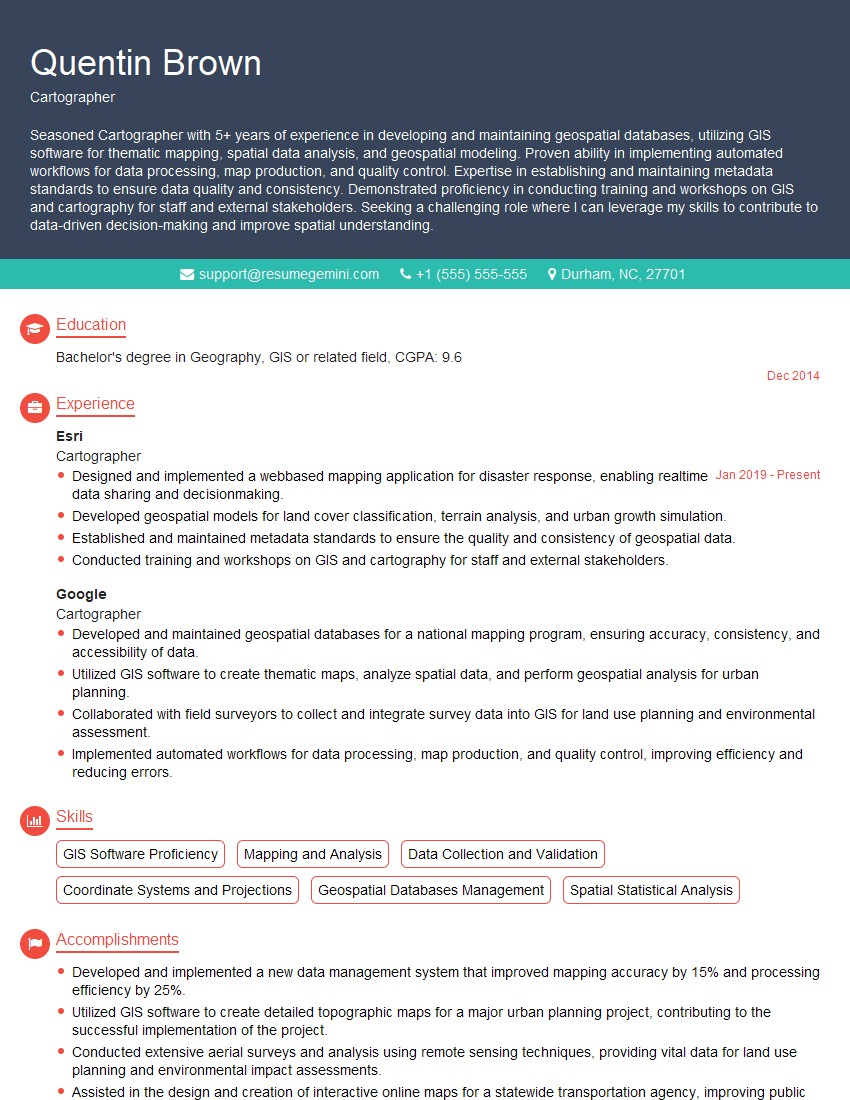
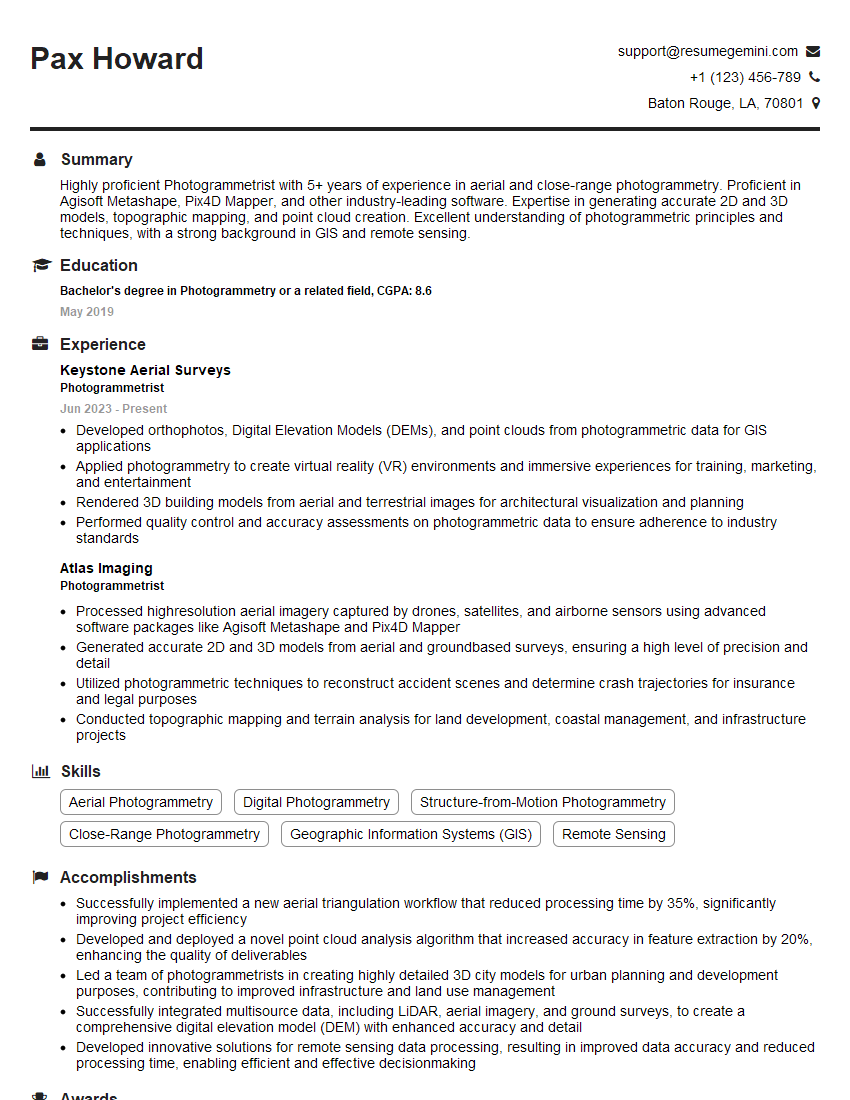
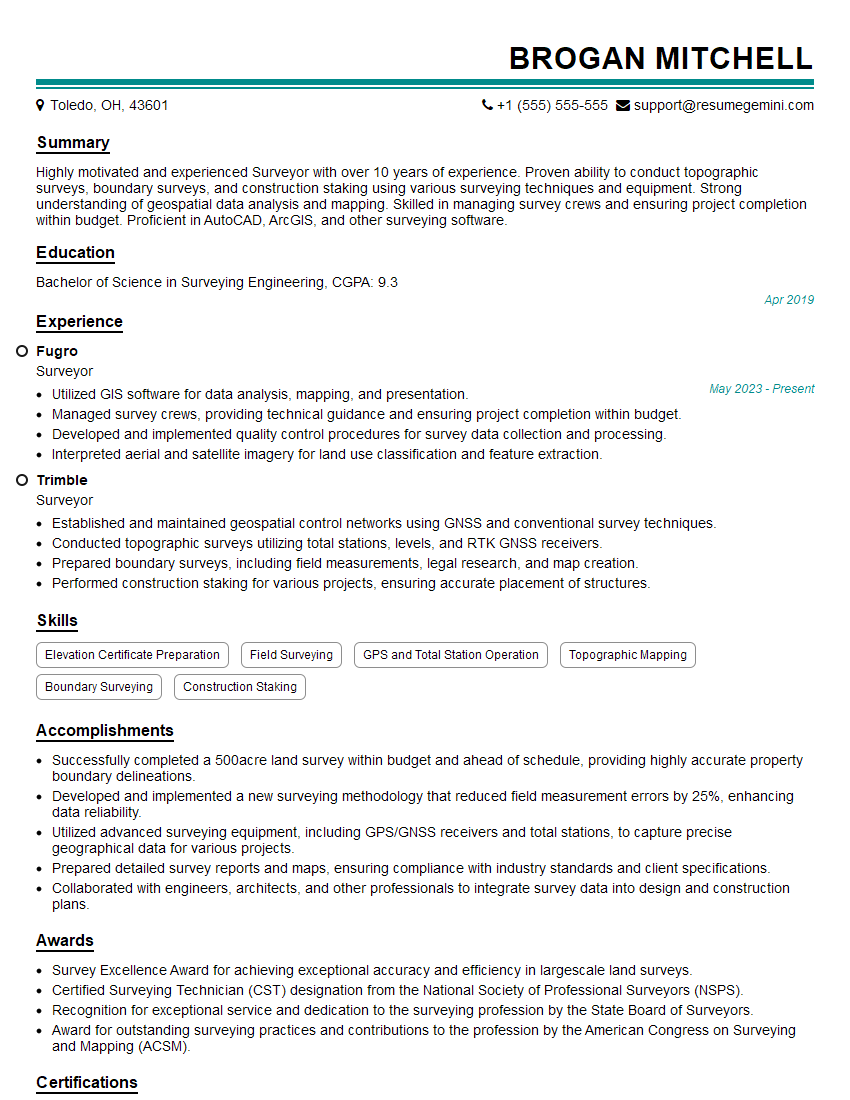
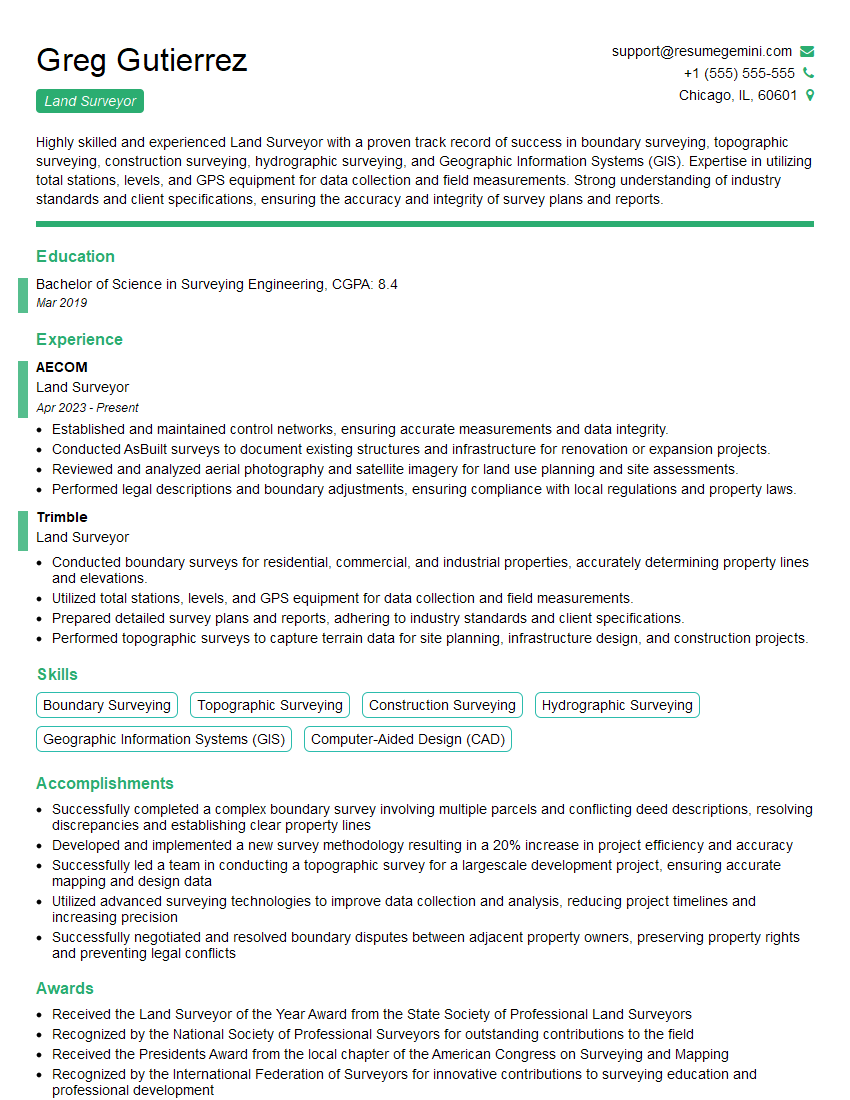
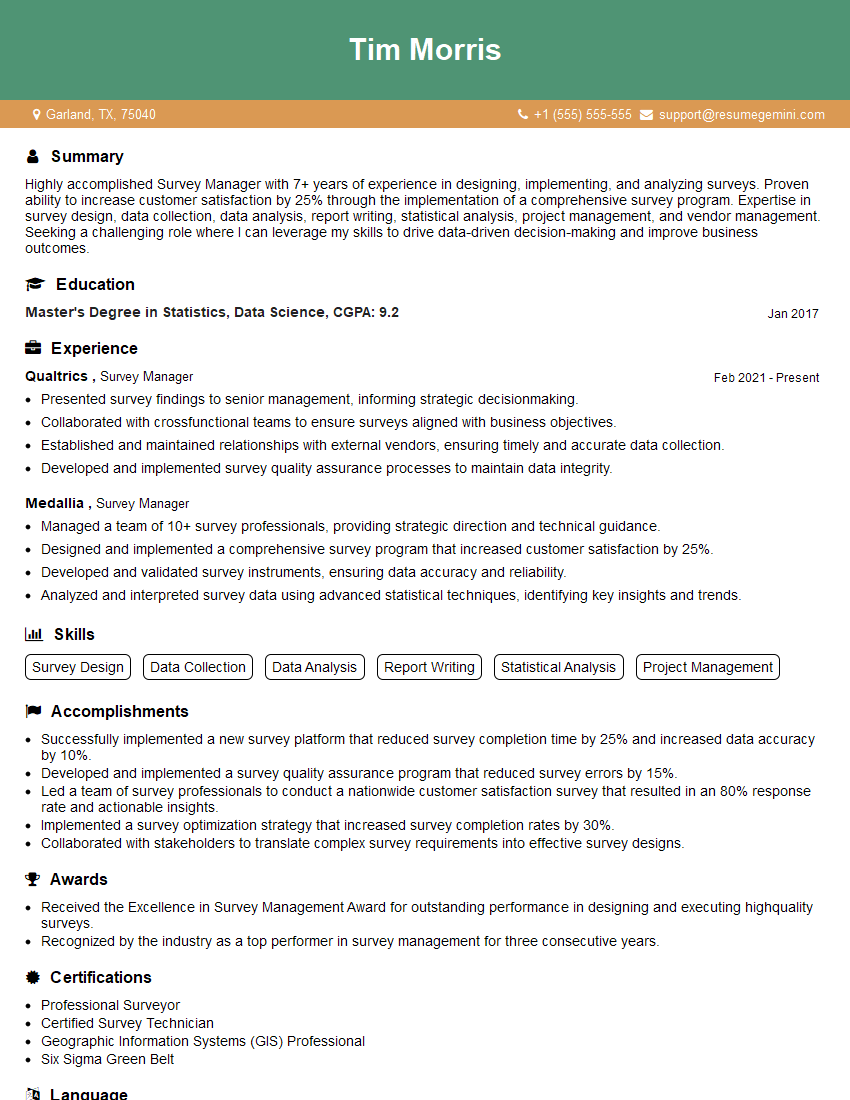
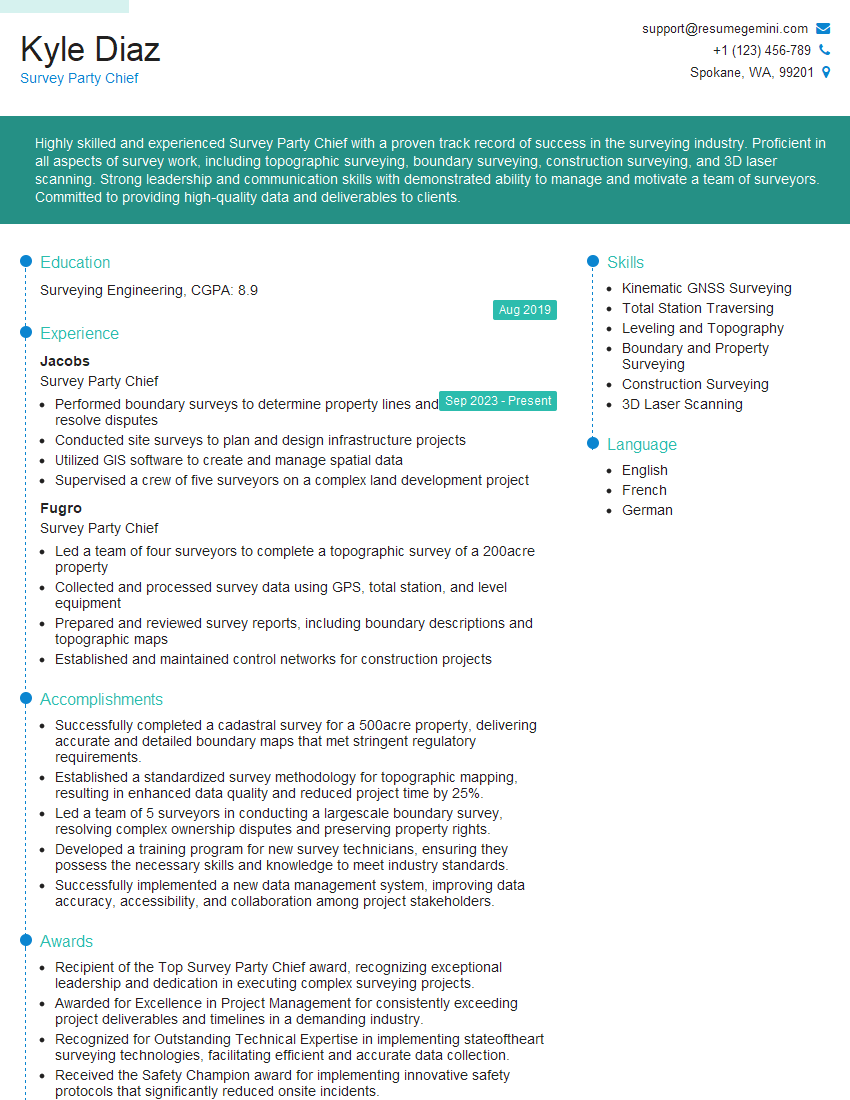
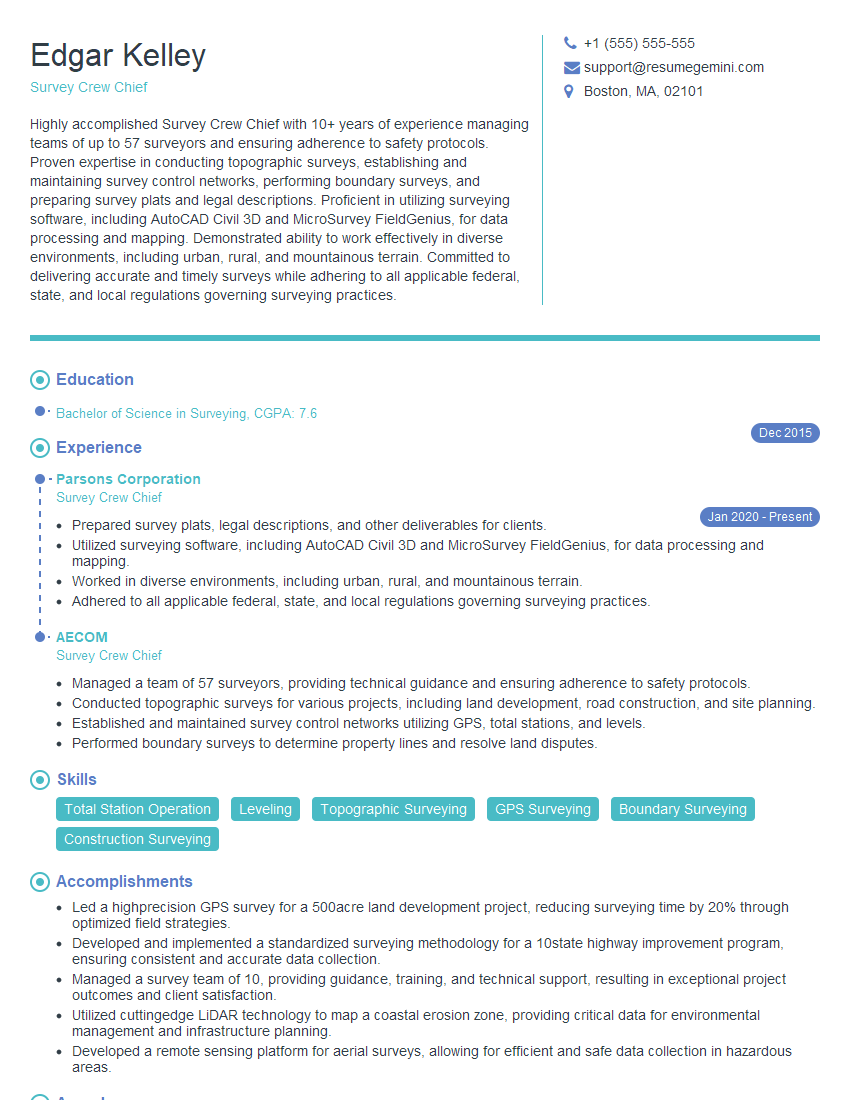
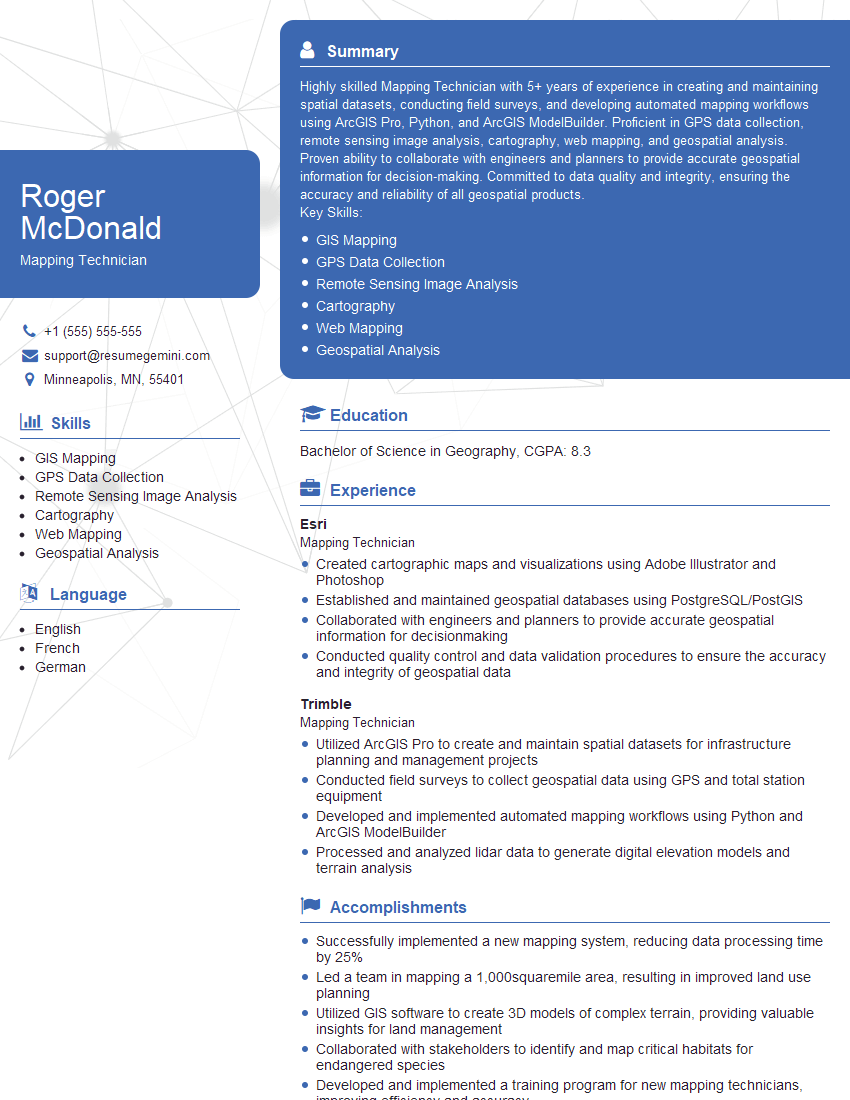
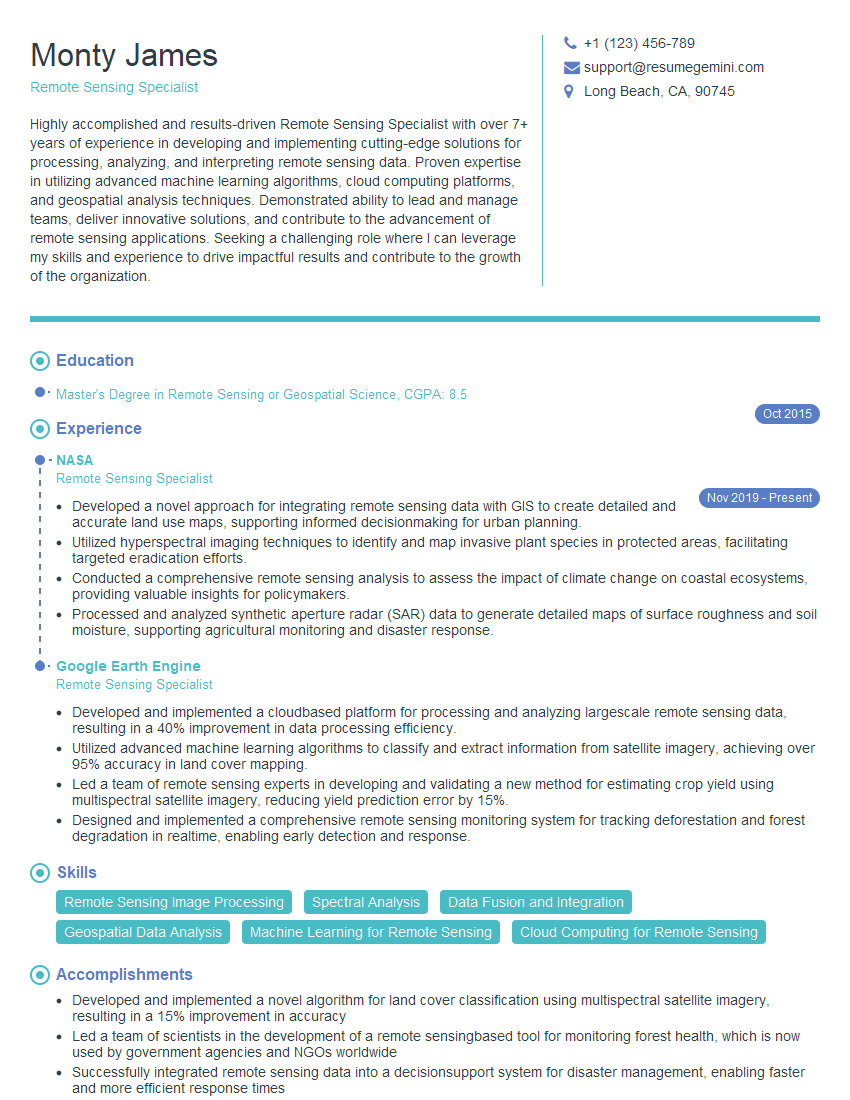
Mastering understanding of mapping and surveying techniques significantly enhances your career prospects in fields like land surveying, GIS, and geomatics. A strong foundation in these techniques is highly sought after by employers. To maximize your job search success, create an ATS-friendly resume that highlights your skills and experience effectively. ResumeGemini is a trusted resource that can help you build a professional and impactful resume. Examples of resumes tailored to mapping and surveying techniques are available to further assist you in this process.
Explore more articles
Users Rating of Our Blogs
Share Your Experience
We value your feedback! Please rate our content and share your thoughts (optional).
What Readers Say About Our Blog
Amazing blog
Interesting Article, I liked the depth of knowledge you’ve shared.
Helpful, thanks for sharing.