Interviews are more than just a Q&A session—they’re a chance to prove your worth. This blog dives into essential Garment Specifications interview questions and expert tips to help you align your answers with what hiring managers are looking for. Start preparing to shine!
Questions Asked in Garment Specifications Interview
Q 1. Explain the importance of detailed garment specifications.
Detailed garment specifications are the cornerstone of successful garment production. Think of them as the blueprint for a garment – without them, you’re building a house without plans. They ensure that everyone involved, from the designer to the factory workers, is on the same page regarding the garment’s design, construction, and quality. Accurate specifications minimize errors, rework, and ultimately, costs. They also ensure consistent quality across multiple production runs and different factories. Without precise specifications, you risk inconsistencies in sizing, fabric choices, and construction methods, leading to a final product that doesn’t meet expectations.
Q 2. What are the key components of a comprehensive garment specification?
A comprehensive garment specification includes several key components. These are essential for clear communication and consistent production. They typically include:
- Garment Description: A clear and concise description of the garment, including its style, intended use, and target market.
- Technical Drawings: Detailed sketches showing the garment’s construction, including measurements, seam allowances, and placement of details.
- Material Specifications: Precise details on the fabric type, composition, weight, width, color, and finish. This might include fabric swatches.
- Construction Details: Step-by-step instructions on how the garment should be constructed, including stitching types, seam finishes, and the use of interfacing or other support materials.
- Measurements: Accurate measurements for each garment size, including body measurements and garment measurements (e.g., chest circumference, sleeve length, etc.). These measurements must be clearly defined and consistent across all sizes.
- Labeling and Packaging Requirements: Specifications for the care labels, size labels, and packaging materials.
- Quality Control Standards: Clearly defined quality control checks to be performed at various stages of production to maintain consistency and adherence to specifications.
Q 3. How do you ensure consistency in garment specifications across different production runs?
Maintaining consistency across production runs requires a robust system of documentation and quality control. First, the garment specifications must be meticulously documented, using standardized terminology and clear visuals. This often involves using a digital specification sheet or Technical Design Package (TDP) which can be easily accessed and updated. Second, regular quality control checks are crucial. These checks involve comparing the actual garment to the specifications at different stages of production, from the initial sample to the finished product. Any discrepancies are addressed immediately and documented. Utilizing digital tools for pattern making and grading also helps minimize variations in measurements across different runs. A well-defined sampling process, where samples are reviewed and approved before mass production begins, is another vital step in ensuring consistency.
For example, if we’re producing a shirt, regular checks of the collar stand height, sleeve length, and button placement are crucial in maintaining the shirt’s exact specifications. Any deviations are addressed through corrective actions, and these actions are documented for future reference, thus preventing the error from repeating.
Q 4. Describe your experience with different types of garment construction techniques.
I have extensive experience with various garment construction techniques, including flat-fell seams, French seams, bound seams, and overlocked seams. My knowledge extends to different types of closures such as zippers, buttons, hooks and eyes, and snaps. I’m also familiar with different pocket constructions (patch, welt, inseam) and various sleeve set-in methods (set-in sleeve, raglan sleeve, kimono sleeve). Experience with different types of collars (shirt collar, mandarin collar, shawl collar) is another critical aspect of my expertise. Understanding the strengths and weaknesses of each technique is vital in choosing the most appropriate method for a given garment and fabric. For example, French seams are ideal for fine fabrics, providing a clean finish and preventing fraying, whereas flat-fell seams are durable and suitable for workwear. My experience includes working with both simple and complex constructions, ranging from basic t-shirts to intricate tailored jackets.
Q 5. How do you handle discrepancies between the design and the garment specification?
Discrepancies between the design and the garment specification are addressed through a collaborative process involving the designer, pattern maker, and production team. The first step is to clearly identify the discrepancy. Is it a minor detail or a significant alteration required? Then, we discuss the feasibility of incorporating the design changes into the existing specification. This involves evaluating the impact on cost, production time, and the overall quality of the garment. If the changes are minor and feasible, we update the specifications accordingly. However, if substantial changes are needed, we carefully assess the potential impact and determine the most efficient way to implement them. Often, a revised sample is created to review and approve the changes before proceeding to full production. Clear communication and documentation throughout the entire process are crucial in ensuring that everyone understands the changes and their implications.
Q 6. Explain your experience with different fabric types and their suitability for various garments.
My expertise includes working with a wide array of fabrics, including woven fabrics like cotton, linen, silk, wool, and synthetic blends; and knit fabrics such as jersey, rib knit, and interlock. I understand the properties of each fabric type, including drape, texture, weight, and its suitability for different garments. For example, lightweight cotton is suitable for summer dresses, whereas heavier wool is more appropriate for winter coats. Silk’s luxurious drape makes it ideal for evening wear, while durable denim is suitable for jeans. I also have experience with different fabric finishes such as dyeing, printing, and coating, and their impact on the garment’s final appearance and performance. Knowing the limitations of specific fabrics is as important as understanding their strengths. For instance, using a delicate silk for a high-impact sportswear garment would be inappropriate due to its lack of durability.
Q 7. How do you ensure the accuracy of measurements in garment specifications?
Accuracy in measurements is paramount in garment specifications. Several strategies ensure this accuracy. Firstly, we use precise measuring tools, such as measuring tapes calibrated to specific standards. Secondly, we follow standardized measurement procedures to ensure consistency. This includes taking measurements on a standardized body form or mannequin, ensuring the fabric is laid flat and smooth when taking measurements, and using proper techniques to avoid distortion. Digital pattern-making software plays a vital role in maintaining accuracy by offering precise grading and scaling capabilities. Finally, regular quality checks during the sampling and production phases help to verify the accuracy of the measurements against the specifications. Any discrepancies are immediately addressed. Using a robust quality control system, including regular checks of critical measurements during production, helps minimize errors and maintain consistent sizing across all garments.
Q 8. How do you incorporate size grading into garment specifications?
Size grading is the process of systematically adjusting a base garment pattern to create a range of sizes. It’s crucial for ensuring a consistent fit across various body types. We typically use a grading software or spreadsheet, inputting the base measurements and applying specific grading rules (e.g., adding 1 inch to the chest circumference for each size increase). These rules vary depending on the garment type and target market. For example, grading a tailored men’s shirt might require more precise adjustments to the sleeve and shoulder areas compared to a more relaxed-fit t-shirt.
The process involves defining grading increments (e.g., 1 inch per size) for key measurements like chest, waist, hip, and sleeve length. These increments are applied consistently across all pattern pieces. We also consider ease allowances—the extra fabric needed for comfort and movement—which might also scale with size. Accurate grading ensures the final garment fits well across the intended size range, preventing ill-fitting products and customer returns.
For instance, if the base size is a Medium with a chest circumference of 40 inches, and we use a 1-inch increment per size, the Large would have a 42-inch chest, and the Extra-Large would have a 44-inch chest. However, this is a simplification. Actual grading is more nuanced, often involving non-linear adjustments and consideration of body proportions to maintain balance and style across sizes.
Q 9. Describe your process for creating a technical drawing.
Creating a technical drawing, or tech pack, is a crucial step in garment production. It serves as a visual and technical guide for manufacturers. My process typically involves several stages:
- Gathering Information: I start by collecting all the design details, including sketches, measurements, fabric specifications, and any special construction requirements. This often involves collaborating with designers and pattern makers.
- Creating the Base Drawing: Using specialized CAD software (I’ll detail which software I use later), I create the base drawing, showing the garment’s overall shape, seams, and key features like pockets, collars, and closures. This usually starts with a flat sketch, showing front and back views.
- Adding Details: I then add precise measurements for each component, including seam allowances. This requires a thorough understanding of both the design and the production process, ensuring accuracy and feasibility.
- Specifications and Notes: I include detailed specifications such as fabric type, color, weight, and fiber content. I also add notes detailing any special construction techniques, like stitching types or finishing requirements. Clear labeling and annotations are vital for avoiding misunderstandings.
- Review and Finalization: Before finalizing the technical drawing, it’s reviewed with the design team and relevant stakeholders to ensure accuracy and clarity. Any necessary corrections are made before it goes to production.
The end result is a comprehensive technical drawing that acts as the blueprint for the garment, enabling the factory to understand exactly what to produce and to the correct specifications. The clarity and thoroughness of this document are pivotal to successful manufacturing.
Q 10. What software are you proficient in for creating and managing garment specifications?
I’m proficient in several software packages for creating and managing garment specifications. My core competencies lie in Adobe Illustrator for detailed illustrations and technical drawings. I also utilize Lectra Modaris for pattern making and grading, which significantly streamlines the process and ensures accuracy. For managing specifications and tech packs, I utilize both PLM (Product Lifecycle Management) systems and spreadsheets, depending on project size and client requirements. My familiarity with these tools allows for efficient creation, version control, and seamless collaboration with global teams. These programs all enable precise measurements, annotations, and efficient communication.
Q 11. How do you handle changes or revisions in garment specifications during production?
Handling changes or revisions in garment specifications during production requires a methodical approach to maintain quality and avoid delays. Firstly, all changes are documented formally and communicated clearly to all stakeholders (design, production, and quality control). A change order or revision control system is utilized to track and manage these alterations. This often involves updating the technical drawings and specifications with version numbers and dates. We then assess the impact of each change—does it affect materials, production timelines, or costs? If significant, the factory and client are notified immediately to discuss solutions. We often use a collaborative platform for real-time updates and discussions, ensuring everyone is on the same page. Implementing change control minimizes confusion and prevents errors, crucial in fast-paced production environments. Transparency and clear communication are key to resolving issues promptly and efficiently.
Q 12. How do you ensure that the garment specifications are compliant with industry standards?
Ensuring compliance with industry standards is paramount. This involves familiarity with various standards and regulations, including those related to safety (e.g., flammability), ethical sourcing (e.g., fair labor practices), and environmental impact (e.g., restricted substances). I regularly consult resources like the Global Recycled Standard (GRS) or Oeko-Tex Standard 100 to ensure materials and processes meet relevant guidelines. We incorporate these requirements into the garment specifications, clearly outlining the necessary certifications and tests. We conduct regular audits and quality checks throughout the production process to maintain compliance. Proactive monitoring and documentation are essential to ensure that our garments adhere to all relevant regulations and ethical standards, minimizing potential risks and maintaining credibility with clients and consumers.
Q 13. Explain your experience in working with different global suppliers and their respective specification requirements.
I have extensive experience collaborating with global suppliers across various regions, including those in Asia, Europe, and North America. Each supplier has its own specific requirements and preferred methods for handling specifications. Some prioritize detailed tech packs with precise measurements and illustrations, while others rely more heavily on sample approvals. The key is adaptability. I tailor my approach based on the supplier’s capabilities and communication preferences. Clear, concise communication, along with a thorough understanding of their production processes and capacity, is essential. I’ve learned to anticipate potential challenges based on regional differences and adjust the specifications accordingly to ensure seamless production. For example, I might adjust tolerances based on the technology and skill level of the factory. This adaptable approach facilitates smooth collaborations and minimizes potential misunderstandings.
Q 14. How do you manage timelines and deadlines in a fast-paced garment manufacturing environment?
Managing timelines and deadlines in fast-paced garment manufacturing demands meticulous planning and proactive communication. I typically start by developing a detailed project timeline, breaking down the process into key stages with clear deadlines for each. This involves considering lead times for fabric sourcing, pattern making, sampling, production, and shipping. Regular progress meetings with the production team and suppliers are crucial for monitoring progress and addressing any potential delays. Proactive risk management is important – identifying potential bottlenecks early on and developing contingency plans. Efficient communication tools, such as project management software, are used to track progress, share updates, and facilitate collaboration. Flexibility and adaptability are essential; unforeseen issues may arise, requiring adjustments to the timeline. Open communication helps mitigate problems and prevents delays, ensuring projects are delivered on time and to the required standards.
Q 15. How do you identify potential problems in garment specifications before production starts?
Identifying potential problems in garment specifications before production begins is crucial for preventing costly rework and delays. My approach involves a multi-step process focusing on meticulous review and analysis.
- Detailed Spec Review: I thoroughly examine every aspect of the specification, including measurements, fabric type, construction details, and finishing requirements. I look for inconsistencies, ambiguities, and unrealistic expectations. For instance, specifying a very intricate embroidery detail on a low-cost, mass-produced garment would be flagged as a potential problem.
- Technical Feasibility Check: I assess the feasibility of each specification element considering the chosen manufacturing methods and available resources. Can the specified fabric drape properly for the design? Is the seam allowance sufficient for the fabric weight and construction technique? These are critical considerations.
- Comparative Analysis: I compare the specifications to similar past projects to identify potential pitfalls. If a similar garment had fit issues in the past due to a specific detail, I would highlight that risk and suggest adjustments.
- Prototyping and Testing: Creating prototypes and conducting thorough fit tests on representative body forms are vital. This allows for early identification of design flaws, fit issues, or construction challenges. This is especially important for complex designs or innovative techniques.
- Material Sourcing Verification: I check the availability and consistency of the specified fabrics. Delays or changes in material properties could significantly impact the final product and lead to production delays.
By proactively addressing these potential issues during the specification phase, we can avoid costly errors and ensure a smoother, more efficient production process. This approach saves time and money by minimizing production issues before they arise.
Career Expert Tips:
- Ace those interviews! Prepare effectively by reviewing the Top 50 Most Common Interview Questions on ResumeGemini.
- Navigate your job search with confidence! Explore a wide range of Career Tips on ResumeGemini. Learn about common challenges and recommendations to overcome them.
- Craft the perfect resume! Master the Art of Resume Writing with ResumeGemini’s guide. Showcase your unique qualifications and achievements effectively.
- Don’t miss out on holiday savings! Build your dream resume with ResumeGemini’s ATS optimized templates.
Q 16. Describe your experience with quality control processes related to garment specifications.
My experience in quality control is extensive, encompassing all stages of garment production. I leverage a combination of in-process checks, random sampling, and final inspection to ensure adherence to the specifications.
- In-process Inspections: Regular checks throughout the production process, from cutting and sewing to finishing and packaging, are essential to catch errors early. This includes verifying seam allowances, stitch quality, and adherence to pattern markings.
- Random Sampling: Randomly selected garments are thoroughly examined at different stages of production to ensure consistency and detect any potential issues that might not be apparent through regular inspections. This statistical sampling ensures representative quality evaluation.
- Final Inspection: A rigorous final inspection is carried out before shipping to ensure that all garments meet the defined quality standards and specifications. This includes a comprehensive visual check, measurement verification, and sometimes functional testing.
- Defect Tracking and Analysis: A detailed record is kept of any defects discovered during the inspection process, and the root causes are analyzed to prevent similar errors from occurring in future productions. This data-driven approach leads to process improvements.
- AQL (Acceptable Quality Limit): I am familiar with and apply appropriate Acceptable Quality Limits to define the acceptable level of defects in a batch. This approach balances quality assurance with production efficiency.
This multi-faceted quality control strategy ensures high-quality garments that meet the specifications and customer expectations, minimizing waste and ensuring customer satisfaction.
Q 17. What are the different types of fit issues you have encountered and how did you address them?
Fit issues are common challenges in garment production. I’ve encountered various types, including:
- Size Discrepancies: Inconsistent measurements across sizes, leading to ill-fitting garments. This is usually addressed through detailed grading and pattern adjustments.
- Ease and Drape Issues: Insufficient ease (extra fabric allowance) can result in garments feeling too tight, whereas excessive ease can lead to a sloppy appearance. This requires careful consideration of fabric properties and design style.
- Balance and Proportion Issues: Poorly balanced proportions (e.g., sleeves too long or short compared to the body) can make a garment look unflattering. Adjusting pattern blocks and conducting fit sessions are key here.
- Specific Area Fit Problems: These include issues like tightness across the bust, too-tight shoulders, or a gapping neckline. Each problem requires careful analysis and specific pattern adjustments.
To address these fit issues, I use a systematic approach involving:
- Detailed Fit Sessions: Conducting fitting sessions on different body types to identify fit problems early.
- Pattern Adjustments: Making necessary adjustments to the pattern based on the feedback from fit sessions.
- Grading Review: Verifying the accuracy and consistency of the grading process to ensure correct sizing across the range.
- Sample Adjustments: Making adjustments to samples to resolve fit issues before mass production.
By thoroughly addressing fit issues at each stage, we create garments that fit well and look good on the intended customer base.
Q 18. How do you collaborate with designers and production teams to create accurate and effective garment specifications?
Collaboration is key to creating accurate and effective garment specifications. My approach involves:
- Open Communication: Regular meetings and open discussions with designers and production teams are essential to ensure everyone understands the design concept and technical requirements.
- Design Review: I actively participate in design reviews to ensure the design is technically feasible and can be translated into accurate specifications.
- Technical Sketches & Diagrams: Detailed technical sketches and diagrams are used to clarify design elements, stitch types, and construction techniques.
- Specification Sharing & Feedback: I facilitate the review and feedback process for specifications, ensuring that all stakeholders have a chance to contribute and comment.
- Prototyping & Testing: We collaboratively work on prototypes and conduct fit tests to verify specifications and resolve any discrepancies.
- Production Planning Involvement: I actively participate in production planning to ensure that the specifications are compatible with available resources and manufacturing capabilities.
By fostering a collaborative environment and promoting open communication, we create specifications that are both technically sound and aligned with the design vision. This approach minimizes misunderstandings and ensures a smooth transition from design to production.
Q 19. Explain your understanding of tolerance levels in garment specifications.
Tolerance levels in garment specifications refer to the acceptable range of variation from the specified measurements. They acknowledge that achieving precise measurements in mass production is unrealistic and impractical. Think of it like this: If you specify a sleeve length of 24 inches, you won’t expect every single sleeve to be exactly 24 inches. Some will be slightly longer, some slightly shorter.
These tolerances are expressed in terms of plus or minus (+/-) a certain amount. For example, a tolerance of +/- 0.5 inches for a sleeve length means that any sleeve length between 23.5 inches and 24.5 inches would be acceptable.
The specific tolerance level depends on various factors, including:
- Garment Type: Formal wear generally requires tighter tolerances than casual wear.
- Fabric Type: Stretchy fabrics allow for more leeway than rigid fabrics.
- Production Methods: More automated methods might allow for tighter tolerances.
- Customer Expectations: High-end brands might demand tighter tolerances.
Defining appropriate tolerance levels is critical to balance quality standards with production feasibility and cost-effectiveness. Setting them too tight could increase production costs and lead to unnecessary rejection of acceptable garments, while setting them too loose could compromise quality and fit.
Q 20. How do you manage communication and feedback regarding garment specifications?
Managing communication and feedback regarding garment specifications requires a systematic and efficient approach. I utilize several methods to ensure clarity and timely responses:
- Centralized Communication Platform: We utilize a project management system or shared digital platform (e.g., Google Drive, Sharepoint) to share specifications, track feedback, and manage revisions. This ensures all parties have access to the most up-to-date information.
- Regular Meetings: We hold regular meetings to review specifications, discuss feedback, and resolve any outstanding issues. The frequency of these meetings is adjusted based on project complexity and deadlines.
- Version Control: A version control system is used to track changes, ensuring that everyone works from the most current version of the specification document. This prevents confusion and ensures everyone is aligned.
- Clear Communication Protocols: Clear protocols for feedback submission and response times are established and communicated to all parties, ensuring efficient feedback cycles.
- Documentation of Changes: All revisions and feedback are meticulously documented, along with the rationale for each change, maintaining a clear audit trail.
This approach ensures that communication is streamlined, efficient, and transparent, leading to fewer misunderstandings and improved accuracy in garment specifications.
Q 21. How do you handle issues with fabric sourcing and its impact on garment specifications?
Fabric sourcing significantly impacts garment specifications. Issues can arise from several factors:
- Fabric Availability: Delays or unavailability of specified fabrics can cause production delays and require changes to the specifications. I mitigate this by identifying multiple sourcing options and establishing strong relationships with reliable suppliers.
- Fabric Quality Variations: Variations in fabric quality (e.g., color, weight, texture) from different batches can affect the final product. To address this, I ensure rigorous quality checks of all incoming fabrics and establish clear acceptance criteria for quality parameters.
- Fabric Properties: The actual properties of the sourced fabric might differ from the initial specifications. This necessitates careful analysis and potential adjustments to the garment design or construction methods to accommodate the actual fabric characteristics.
- Cost Variations: Unexpected changes in fabric costs can impact the overall project budget. Contingency planning and transparent communication with stakeholders about cost fluctuations are key here.
To handle these issues effectively, I employ:
- Thorough Fabric Testing: Rigorous testing of all sourced fabrics to verify quality and consistency.
- Alternative Fabric Sourcing: Identifying backup fabric sources to avoid delays caused by unavailability.
- Specification Adjustments: Adjusting garment specifications to accommodate the actual characteristics of the sourced fabric.
- Open Communication: Maintaining open communication with designers, production teams, and suppliers about any potential issues and necessary adjustments.
By proactively managing these potential challenges, we minimize the impact of fabric sourcing issues on garment specifications and overall project success.
Q 22. Describe your experience with different types of trims and their impact on garment construction.
Trims are the finishing touches that elevate a garment from basic to sophisticated. My experience encompasses a wide range, from basic zippers and buttons to more intricate embellishments like embroidery, lace, and distinctive hardware. The choice of trim significantly impacts garment construction and cost.
- Zippers: The type of zipper (metal, plastic, invisible) dictates the sewing techniques and the overall look. A heavier-duty metal zipper requires more robust stitching than a delicate invisible zipper. I’ve worked with projects where the zipper choice directly influenced the final garment aesthetic and durability.
- Buttons: Button size, material (plastic, wood, metal), and attachment method (shank, sew-through) all impact the construction process. For instance, working with delicate shell buttons requires careful hand-sewing to avoid damage, impacting production time and cost.
- Interfacings: These non-woven fabrics add structure and support to the garment. The correct interfacing is crucial; using an inappropriate one can result in a poor drape or a stiff, uncomfortable feel. I’ve seen projects where choosing the right interfacing was key to achieving the desired silhouette and quality.
- Embellishments: Embroidery, lace, and other embellishments require specialized techniques and often impact the manufacturing process. Complex embroideries might demand specialized machines and skilled labor, leading to higher costs.
Understanding the properties and limitations of different trims is vital for creating accurate specifications and managing expectations during production. Choosing appropriate trims ensures a high-quality, durable, and aesthetically pleasing final product.
Q 23. How familiar are you with different labeling requirements and how do you ensure compliance?
Labeling requirements vary significantly by country and region, encompassing mandatory information like fiber content, country of origin, care instructions, and manufacturer details. I’m well-versed in various labeling regulations, including those of the EU, the US (FTC), and Canada (Competition Act). Ensuring compliance is a critical aspect of my work.
My approach to compliance involves a multi-step process:
- Research: I thoroughly research the specific labeling requirements for the target market. This includes accessing official government resources and consulting industry experts.
- Specification Integration: I explicitly include the necessary labeling information within the garment specifications document. This ensures that the manufacturer understands the exact requirements and can incorporate them correctly.
- Verification: I meticulously review the labels from the manufacturer to ensure they adhere to all applicable regulations and accurately reflect the garment’s composition and origin.
- Documentation: All labeling-related documentation is carefully stored and archived. This ensures traceability and helps with addressing any potential compliance issues.
Failure to comply with labeling regulations can lead to significant penalties, including product recalls and legal action. My commitment to thorough research and careful verification ensures that all projects adhere to the applicable laws and regulations.
Q 24. How do you utilize technical sketches and pattern pieces to create accurate garment specifications?
Technical sketches and pattern pieces form the backbone of accurate garment specifications. They provide a visual and technical blueprint for the manufacturer.
My process involves:
- Sketch Analysis: I carefully analyze the technical sketches, noting details like garment silhouette, seam lines, pocket placement, and embellishments. This provides the overall design vision.
- Pattern Piece Examination: I study the pattern pieces to understand the precise construction details, such as seam allowances, grading, and fabric layout. This ensures consistent sizing and accurate cutting.
- Specification Development: Based on the sketches and patterns, I create detailed specifications, including fabric requirements, construction details (e.g., stitching methods, interfacing usage), trim specifications, and measurement tolerances. I’ll include tables for dimensions, material quantities and even reference images for clarity.
- Communication: I often use annotations directly on the sketches and patterns, clarifying ambiguous details or providing additional instructions for the manufacturer. This ensures a common understanding.
For example, a technical sketch might show a particular type of pleat. The pattern piece reveals the precise angles and measurements needed to recreate that pleat consistently. My specifications document combines this visual information with written instructions, ensuring the manufacturer can faithfully reproduce the design.
Q 25. What are some common challenges you face while working with garment specifications, and how do you overcome them?
Several challenges arise while working with garment specifications. Communication gaps between designers, manufacturers, and quality control teams top the list.
- Communication Barriers: Misunderstandings about terminology, measurements, or construction techniques can easily lead to errors. I overcome this by using clear, concise language, incorporating detailed diagrams, and employing consistent units of measurement.
- Fabric Sourcing: Finding fabrics that meet both the design requirements and the production capacity can be difficult. I address this by working closely with fabric suppliers and conducting thorough fabric testing before finalizing specifications.
- Cost Management: Balancing design aesthetics with production costs is a constant challenge. I mitigate this by thoroughly exploring alternative materials and construction techniques while maintaining the desired quality.
- Time Constraints: Deadlines can be tight, requiring efficient workflow management. I prioritize tasks, utilize project management tools, and maintain clear communication channels to stay on schedule.
Proactive communication, rigorous testing, and detailed documentation are crucial for minimizing these challenges and ensuring the final product aligns with the initial vision.
Q 26. How do you ensure the sustainability and ethical considerations are factored into your garment specifications?
Sustainability and ethical considerations are paramount. I incorporate these into my garment specifications by focusing on several key aspects:
- Sustainable Materials: I prioritize the use of eco-friendly fabrics like organic cotton, recycled materials, or innovative sustainable alternatives. Specifications clearly define the required certifications (e.g., GOTS, OEKO-TEX) to ensure compliance.
- Ethical Production: I specify ethical manufacturing practices, such as fair wages, safe working conditions, and adherence to international labor standards. This is often done by working with factories that have appropriate certifications (e.g., BSCI, Fair Trade).
- Waste Reduction: I optimize fabric layouts in the pattern design phase to minimize fabric waste during cutting. This reduces both costs and environmental impact.
- Durable Design: I aim to create garments that are durable and long-lasting to reduce the frequency of replacement and minimize environmental impact over the garment’s lifecycle.
Transparency is key. The specifications clearly communicate these sustainability and ethical requirements, ensuring the entire supply chain shares these values.
Q 27. Describe your experience working with different costing methods and their impact on garment specifications.
I’m familiar with various costing methods, including cost breakdown, costing by operation, and value engineering. The choice of method impacts the garment specifications because it dictates how the costs are allocated and tracked during production.
- Cost Breakdown: This method involves analyzing each component of the garment’s cost (fabric, trims, labor, overhead) and identifying areas for potential savings. This information feeds directly into the specifications by influencing material choices and construction methods.
- Costing by Operation: This method focuses on the cost of each individual production step (cutting, sewing, finishing). Accurate specifications are crucial here as any ambiguity can inflate production time and costs.
- Value Engineering: This involves evaluating the value proposition of each element of the garment and exploring alternatives to reduce costs while maintaining quality. I’ll often use this to look at material substitutions, or changes in construction.
For example, if cost breakdown reveals that fabric costs are high, the specifications might be revised to incorporate a more cost-effective alternative that still meets the design requirements. A clear understanding of costing methods is essential for creating efficient, cost-effective specifications.
Q 28. Explain your familiarity with different testing methods for fabrics and garments.
My familiarity with fabric and garment testing encompasses various methods, crucial for ensuring quality and compliance.
- Fabric Testing: I’m proficient in tests like tensile strength (measuring fabric durability), abrasion resistance (measuring fabric’s ability to withstand wear and tear), colorfastness (measuring the resistance of color to fading), and flammability tests (measuring the flammability of fabrics).
- Garment Testing: This involves evaluating the finished garment for dimensional stability (checking for shrinkage or stretching), seam strength (measuring the strength of the seams), and overall performance based on the intended use. We often use standard test methods based on international or national standards (like ASTM or ISO).
These tests provide crucial data that informs the garment specifications. For instance, if a fabric’s colorfastness is poor, the specifications might incorporate recommendations for care instructions or suggest an alternative fabric. By incorporating the results of these tests, we ensure the final garment meets quality standards and performs as expected.
Key Topics to Learn for Garment Specifications Interview
- Understanding Technical Drawings: Learn to interpret technical sketches, identifying key components like seams, stitching, and fabric placement.
- Fabric Knowledge: Demonstrate familiarity with various fabric types, their properties (weight, drape, stretch), and suitability for different garments.
- Measurement and Sizing: Understand standard sizing systems, tolerance levels, and how to interpret and apply measurements accurately.
- Construction Details: Master the terminology and understanding of various garment construction techniques, including different seam types, closures, and finishing methods.
- Pattern Making Principles: Showcase knowledge of basic pattern making concepts and their relevance to accurate garment specifications.
- Quality Control and Standards: Explain your understanding of quality control processes and industry standards related to garment manufacturing.
- Production Planning and Efficiency: Discuss your knowledge of how garment specifications impact production timelines and efficiency.
- Problem-Solving in Specifications: Demonstrate your ability to identify and resolve inconsistencies or ambiguities in garment specifications.
- Global Standards and Compliance: Show familiarity with international standards and regulations relevant to garment production and labeling.
- Software and Technology: Discuss your experience with relevant software used in garment design and specification creation (e.g., CAD software).
Next Steps
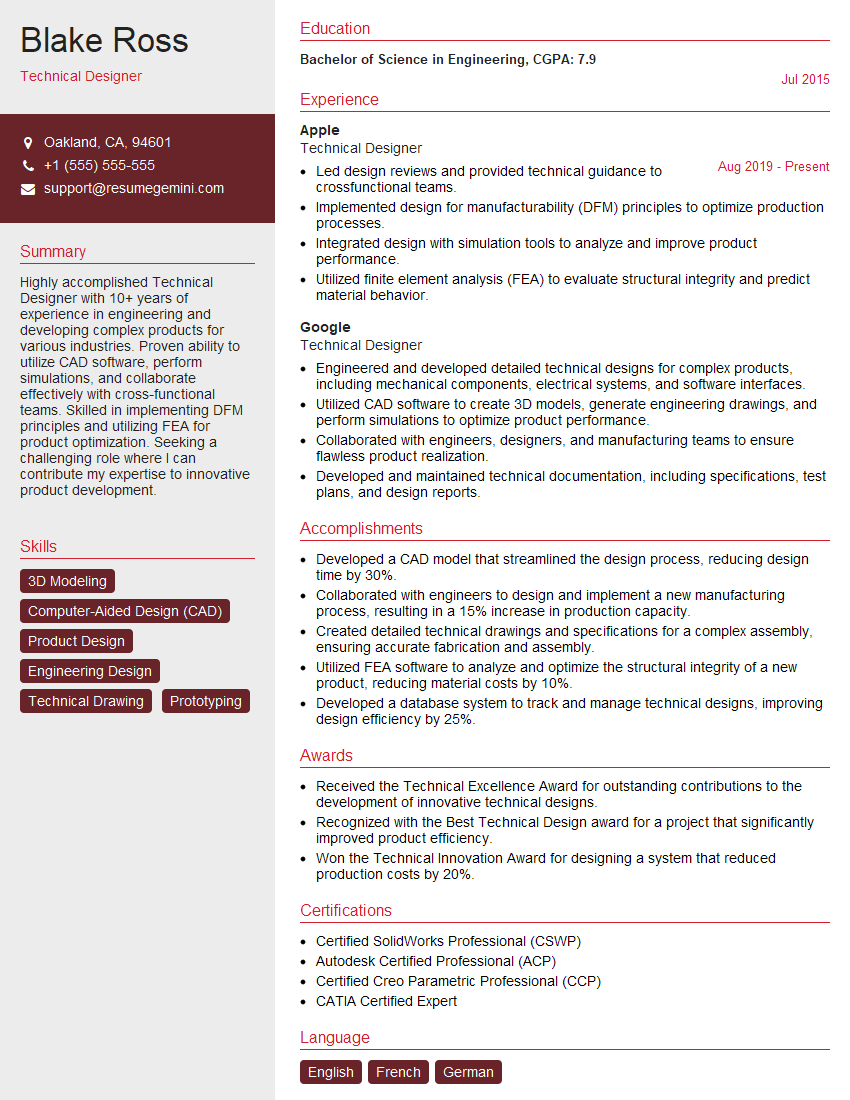
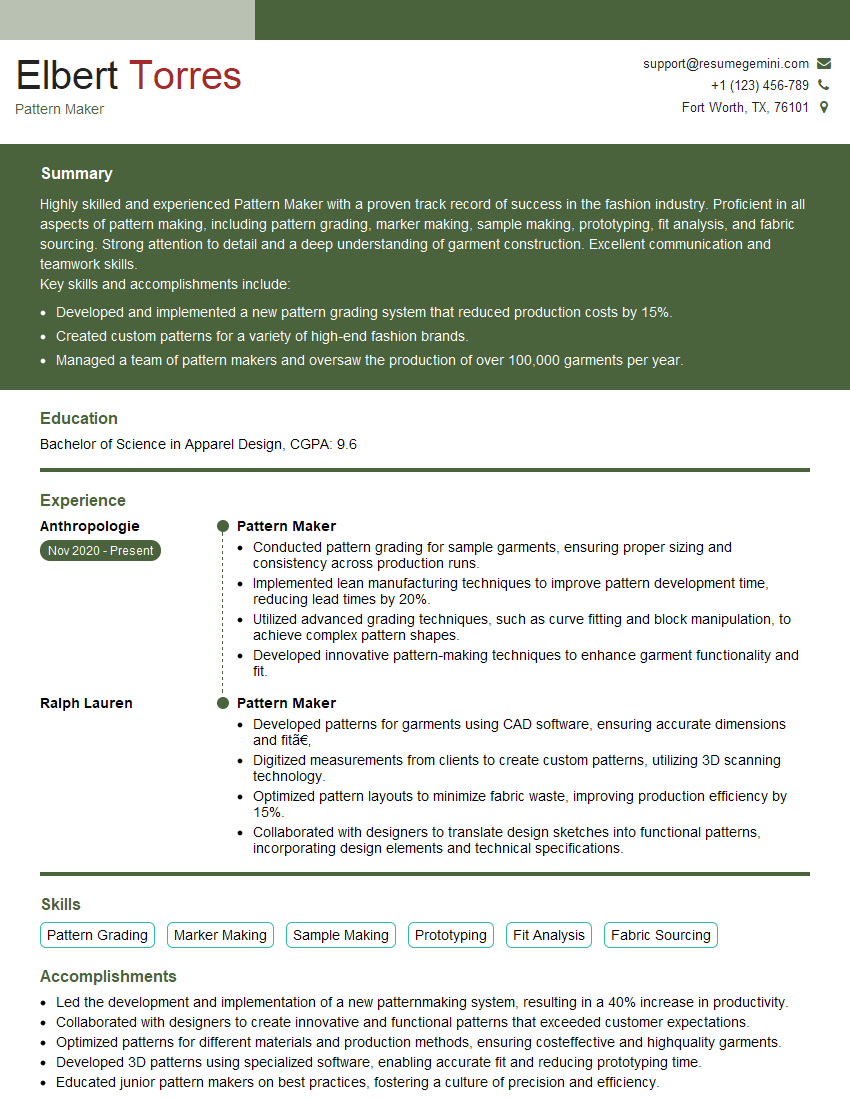
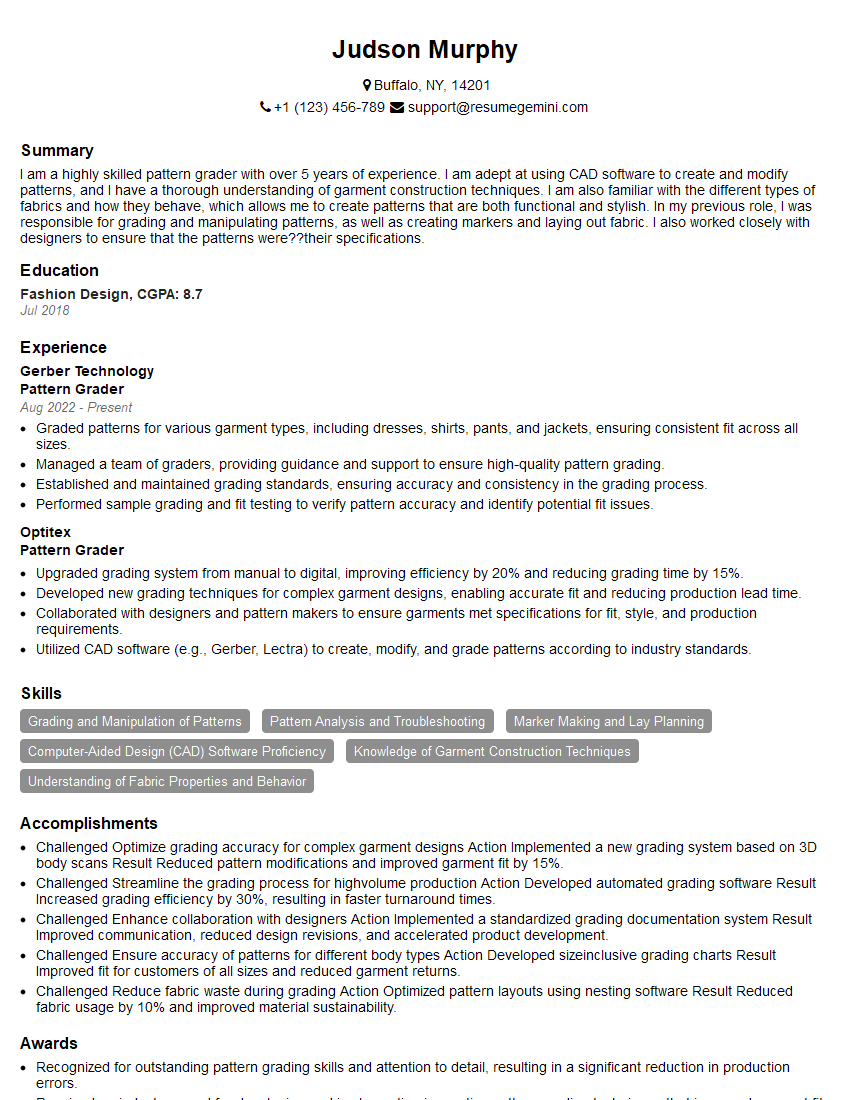
Mastering garment specifications is crucial for advancement in the fashion and apparel industry. A strong understanding of these concepts showcases your technical expertise and problem-solving abilities, opening doors to more challenging and rewarding roles. To significantly boost your job prospects, create an ATS-friendly resume that highlights your skills and experience effectively. ResumeGemini is a trusted resource to help you build a professional resume that stands out. Examples of resumes tailored to Garment Specifications are available to guide you in crafting a compelling application.
Explore more articles
Users Rating of Our Blogs
Share Your Experience
We value your feedback! Please rate our content and share your thoughts (optional).
What Readers Say About Our Blog
Amazing blog
hello,
Our consultant firm based in the USA and our client are interested in your products.
Could you provide your company brochure and respond from your official email id (if different from the current in use), so i can send you the client’s requirement.
Payment before production.
I await your answer.
Regards,
MrSmith
hello,
Our consultant firm based in the USA and our client are interested in your products.
Could you provide your company brochure and respond from your official email id (if different from the current in use), so i can send you the client’s requirement.
Payment before production.
I await your answer.
Regards,
MrSmith
These apartments are so amazing, posting them online would break the algorithm.
https://bit.ly/Lovely2BedsApartmentHudsonYards
Reach out at BENSON@LONDONFOSTER.COM and let’s get started!
Take a look at this stunning 2-bedroom apartment perfectly situated NYC’s coveted Hudson Yards!
https://bit.ly/Lovely2BedsApartmentHudsonYards
Live Rent Free!
https://bit.ly/LiveRentFREE
Interesting Article, I liked the depth of knowledge you’ve shared.
Helpful, thanks for sharing.
Hi, I represent a social media marketing agency and liked your blog
Hi, I represent an SEO company that specialises in getting you AI citations and higher rankings on Google. I’d like to offer you a 100% free SEO audit for your website. Would you be interested?