Interviews are more than just a Q&A session—they’re a chance to prove your worth. This blog dives into essential Interior and Exterior Finishes interview questions and expert tips to help you align your answers with what hiring managers are looking for. Start preparing to shine!
Questions Asked in Interior and Exterior Finishes Interview
Q 1. Describe your experience with different types of paint and their applications.
My experience with paints spans a wide range of types, each suited for specific applications. For instance, alkyd paints, also known as oil-based paints, offer excellent durability and a rich, deep color, making them ideal for exterior applications like trim and doors where they can withstand harsh weather conditions. However, they have longer drying times and require mineral spirits for cleanup. Acrylic paints, or water-based paints, are much more popular for interior work due to their low odor, quick drying time, and ease of cleanup with water. They come in various sheens, from matte to high-gloss, allowing for diverse aesthetic effects. Latex paints are a subset of acrylics, known for their flexibility and ability to bridge minor cracks in walls, making them a good choice for many interior projects. For specialized needs, I’ve worked with epoxy paints for high-performance coatings on floors and other surfaces demanding extreme durability and chemical resistance, and chalk paints for a vintage, distressed look on furniture. The choice of paint always depends on the substrate, desired finish, and environmental factors.
For example, I recently completed a project where the client wanted a durable, low-maintenance finish for their exterior siding. Given the climate and the client’s budget, we chose a high-quality acrylic exterior paint, which balanced excellent protection with a relatively quick application process.
Q 2. Explain the process of preparing a surface for painting.
Preparing a surface for painting is crucial for a long-lasting, professional-looking finish. It’s a multi-step process that begins with thorough cleaning. This often involves washing the surface with a suitable detergent and water to remove dirt, grease, mildew, or other contaminants. Next, any loose or peeling paint must be completely scraped off, and any holes or imperfections should be filled with spackle or wood filler and sanded smooth. For porous surfaces like drywall, a primer is essential to ensure good adhesion and prevent the paint from being absorbed unevenly. A primer also helps to seal stains and provide a uniform base for the top coat. Finally, before painting, the surface should be lightly sanded to create a smooth, even texture that promotes better paint adhesion. Proper surface preparation is often as important, if not more so, than the paint itself in achieving a high-quality result.
Think of it like baking a cake; you wouldn’t skip prepping the pan, would you? Similarly, without surface preparation, your paint job will be flawed from the start.
Q 3. What are the common issues encountered during interior finishing and how do you address them?
Common interior finishing issues range from simple to complex. Cracked or peeling paint often indicates poor surface preparation or moisture problems, requiring repair and repainting. Uneven paint application results from using an incorrect roller or brush, improper technique, or inadequate surface prep; this is usually remedied with careful sanding and repainting. Mildew or mold growth points to moisture issues that need to be addressed before repainting to avoid recurrence. In such cases, I’d use a mildew-resistant primer and ensure proper ventilation to resolve the root cause. Poor adhesion could stem from the wrong paint for the surface, improper cleaning, or too much existing gloss. A suitable primer or deglossing agent often solves this.
In one project, I encountered severe water damage behind a wall, causing extensive peeling paint. Addressing the water source, repairing the damaged wall, and using a mildew-resistant primer and paint were crucial steps in restoring the wall to its former glory.
Q 4. How do you ensure proper ventilation during painting projects?
Proper ventilation during painting is paramount for both health and safety. Oil-based paints and many primers release volatile organic compounds (VOCs) that are harmful if inhaled. In interior spaces, this necessitates opening windows and doors to create cross-ventilation, ideally using fans to accelerate airflow. For larger projects, or when working with particularly strong-smelling paints, using respirators is crucial to protect the respiratory system. In some cases, depending on the size and nature of the project, I might even utilize air purifiers or negative air machines to further enhance air quality.
Always err on the side of caution. A little extra ventilation is far better than risking your health.
Q 5. What safety measures do you implement when working with hazardous materials?
Safety is my top priority when working with hazardous materials. This starts with reading and understanding the Safety Data Sheets (SDS) for every product I use. I always wear appropriate personal protective equipment (PPE), including gloves, safety glasses, and respirators as needed, and ensure adequate ventilation as discussed. I store hazardous materials in designated areas, away from ignition sources and children. Spills are cleaned up immediately and according to the product-specific instructions. I also make sure to dispose of leftover materials responsibly, following local regulations.
For example, when working with strong solvents, I always wear nitrile gloves, eye protection, and a respirator to prevent skin and eye irritation and respiratory problems.
Q 6. Explain your experience with different types of wood finishes.
My experience with wood finishes includes a variety of products, each imparting different characteristics to the wood. Oil-based finishes, like linseed oil or tung oil, penetrate deep into the wood, providing excellent durability and water resistance. They enhance the natural beauty of the wood grain but can take longer to dry and cure. Water-based finishes, such as polyurethane or acrylic, are faster drying, low-odor options, available in various sheens. They offer good protection but may not penetrate as deeply as oil-based finishes. Stains are primarily used to color wood without significantly altering its texture, available in water-based and oil-based formulations. Finally, varnishes primarily protect the wood while adding a glossy or semi-gloss finish.
I once worked on restoring antique furniture where the client wanted to retain the rich color and patina of the old wood. We carefully selected a tung oil finish that would allow the natural beauty of the wood to shine through, while providing lasting protection.
Q 7. Describe the process of applying stain and sealant to wood surfaces.
Applying stain and sealant to wood surfaces is a process that requires precision and attention to detail. First, the wood surface needs to be properly prepared; sanded smooth and cleaned to remove any dust or debris. Then, stain is applied following the manufacturer’s instructions, usually using a brush, rag, or spray. The technique often involves wiping away excess stain to avoid pooling or uneven color. Allow the stain to dry completely before applying sealant. The choice of sealant – varnish, polyurethane, or other options – depends on the desired finish and the level of protection needed. Sealant is usually applied in thin, even coats, allowing each coat to dry before applying the next. The number of coats depends on the desired level of protection and the type of sealant used. Proper surface preparation, consistent application, and sufficient drying time are all essential for a flawless finish.
Imagine the stain as the base color of a painting, and the sealant as the protective layer that keeps the painting looking vibrant.
Q 8. What are the different types of drywall finishes?
Drywall finishes are crucial for achieving a smooth, paintable surface on interior walls and ceilings. The level of finish impacts the final look and feel of a room. Different types cater to various needs and aesthetic preferences.
- Level 0: This is a basic finish, rarely seen in finished spaces, leaving the drywall tape and nail holes visible. It’s suitable only for areas that will receive a textured finish like a heavy knockdown.
- Level 1: This finish is fairly smooth but still shows minor imperfections. It’s suitable for walls that will be covered with wallpaper or a heavily textured finish.
- Level 2: This is a more refined finish, suitable for most residential applications. It requires careful taping and filling, resulting in a smooth surface ready for paint.
- Level 3: This is the highest level of finish, characterized by an exceptionally smooth, flawless surface. It requires meticulous attention to detail and is ideal for areas requiring a high-gloss paint finish.
- Level 4: This level goes beyond what’s generally needed in residential settings, achieving a near-perfect finish visible only under very close examination. It is used in high-end commercial projects or specialized applications like showrooms.
Choosing the right level depends on the project’s budget, the final desired aesthetic, and the type of wall covering that will be used.
Q 9. How do you handle inconsistencies in existing surfaces before applying finishes?
Inconsistencies in existing surfaces are a common challenge. Before applying any finish, thorough preparation is paramount. This involves a systematic approach that ensures a strong and uniform base for the new finish.
- Assessment: Start with a careful inspection to identify all imperfections – holes, cracks, loose paint, uneven surfaces, etc. Document these for later reference.
- Surface Cleaning: Clean the surfaces thoroughly to remove dust, debris, grease, or mildew. Use appropriate cleaning agents depending on the surface type.
- Repairing Imperfections: Address all holes and cracks using appropriate fillers and patching compounds. Allow sufficient drying time before sanding.
- Sanding and Leveling: Sand down any uneven surfaces until they are smooth and even. Use varying grits of sandpaper, starting with coarser grits for larger imperfections and finishing with finer grits for a smooth finish. Prime any patched areas.
- Priming: Apply a primer to create a uniform surface for the final finish. Primer enhances adhesion and provides a consistent color base.
Think of it like baking a cake – you wouldn’t skip preparing the pan or mixing the ingredients correctly! Proper surface preparation is the foundation for a flawless finish that will last.
Q 10. What are the common problems associated with exterior finishes and how do you prevent them?
Exterior finishes face harsh environmental conditions, leading to several common problems. Prevention is key to extending their lifespan and maintaining the building’s aesthetic appeal.
- Moisture Damage: Water penetration can cause rot, mildew, and peeling paint. Prevention involves proper flashing, caulking, and the selection of moisture-resistant materials.
- UV Degradation: Sunlight’s ultraviolet rays can fade and degrade exterior paints and finishes. Using high-quality paints with UV inhibitors and regular maintenance can mitigate this.
- Thermal Expansion and Contraction: Temperature fluctuations can cause materials to expand and contract, leading to cracks and gaps. Choosing appropriate materials with flexibility and using expansion joints can address this.
- Mildew and Mold Growth: Damp conditions promote the growth of mildew and mold. Regular cleaning and the use of mildew-resistant paints can help.
Regular inspections and proactive maintenance, such as repainting or sealing, are crucial to avoid costly repairs down the line. A small investment in preventive care can save significant expenses in the long run.
Q 11. What types of siding are you familiar with and their installation processes?
I have extensive experience with various siding types and their installation. The choice depends on factors like budget, aesthetic preferences, and climate.
- Vinyl Siding: Easy to install, low maintenance, and relatively inexpensive. Installation involves overlapping panels and securing them with nails or clips.
- Fiber Cement Siding: Durable, fire-resistant, and requires less maintenance than wood. Installation is similar to vinyl, but requires more careful handling due to its weight.
- Wood Siding: Offers a classic look but requires more maintenance and is susceptible to rot and insect damage. Installation involves careful nailing or screwing, ensuring proper spacing and alignment.
- Metal Siding: Durable, low maintenance, and available in various styles. Installation often involves interlocking panels or individual sheets fastened to framing.
- Brick and Stone Veneer: Provides a high-end look and is durable. Installation is more complex and typically requires professional expertise.
Each siding type has specific installation requirements; careful adherence to manufacturer’s instructions is crucial to ensure a proper and long-lasting installation. For example, proper ventilation behind certain types of siding is vital to prevent moisture buildup.
Q 12. Explain your experience with stucco application and repair.
My experience with stucco encompasses both application and repair. Stucco is a durable and aesthetically pleasing exterior finish, but proper technique is essential for success.
Application: This involves preparing the substrate (usually lath or wire mesh), applying base coats, and finishing with a textured or smooth top coat. Proper moisture control during the curing process is critical to prevent cracking. I’ve worked with different stucco mixes, from traditional cement-based to modern acrylic formulations.
Repair: Repairing stucco involves carefully matching the existing texture and color. Cracks need to be cleaned, filled with appropriate patching compound, and then finished to blend seamlessly. I utilize various techniques depending on the extent and nature of the damage; some involve removing a section of the stucco and reapplying.
One challenging project involved repairing extensive stucco damage on a historic building. It required meticulous matching of the original texture and color, as well as careful attention to avoid damaging the underlying structure. The successful completion of this project highlights the importance of attention to detail and understanding the material’s properties.
Q 13. How do you handle moisture problems in exterior finishes?
Moisture problems in exterior finishes are a significant concern, potentially leading to severe damage. Addressing them requires a multi-pronged approach focusing on both prevention and remediation.
- Identify the Source: Determining the source of moisture is the first step – is it leaking roofs, faulty flashing, poor drainage, or capillary action from the ground?
- Repair Leaks and Damages: Once the source is identified, repair any leaks or damages to the building envelope. This may involve roof repairs, replacing damaged flashing, or improving drainage systems.
- Improve Ventilation: Ensure proper ventilation to prevent moisture accumulation. This can include adding vents, improving attic ventilation, or installing vapor barriers.
- Waterproofing Treatments: Apply waterproofing membranes or sealants to prevent water penetration. Choose products appropriate for the specific material and situation.
- Mold Remediation: If mold growth is present, professional mold remediation may be necessary.
Ignoring moisture issues can lead to costly repairs, compromising structural integrity and indoor air quality. Early detection and proactive intervention are crucial.
Q 14. What are the different types of exterior paints and their suitable applications?
Exterior paints offer varying properties and are selected based on the substrate, climate, and desired aesthetic. Each type has its strengths and weaknesses.
- Acrylic Latex Paints: Versatile, durable, and relatively easy to apply. They are suitable for most exterior surfaces, offering good resistance to fading and mildew.
- Oil-Based Paints: Offer excellent durability and water resistance, but are slower to dry and require solvents for cleanup. They are better suited for trim and other areas requiring high durability.
- Enamels: High-gloss paints that provide excellent protection and a smooth finish. They are often used for trim and doors but require meticulous surface preparation.
- Specialty Paints: These include paints formulated for specific purposes, such as those resistant to mildew, algae, or high temperatures. For instance, paints with reflective pigments are becoming increasingly popular to reduce energy costs in warm climates.
Choosing the right paint is crucial for both aesthetics and longevity. Factor in local climate conditions and substrate properties when making the selection. It’s always best to consult with a paint professional for specific recommendations.
Q 15. How do you manage a project timeline and budget for finishing projects?
Managing a finishing project’s timeline and budget requires meticulous planning and proactive monitoring. It’s like orchestrating a symphony – each instrument (task) needs to play its part at the right time and in harmony with the others.
First, I create a detailed work breakdown structure (WBS) that breaks down the project into smaller, manageable tasks. This allows for accurate time estimation for each task, considering factors like material delivery, curing times, and potential unforeseen delays. For example, painting a large room involves prepping the walls, applying primer, painting multiple coats, and finally, cleaning up. Each stage is timed separately.
Next, I develop a comprehensive budget, factoring in material costs, labor costs, equipment rentals (if any), and contingency funds for unexpected issues. I use project management software to track progress against the schedule and budget. Regular progress meetings with the client and the team are crucial for identifying potential problems early and implementing corrective actions. For example, if material delivery is delayed, we adjust the schedule accordingly. Transparency is key. I provide regular updates to the client on the project’s progress, including any potential cost or schedule changes.
Finally, I utilize various techniques for risk management. This can include having backup plans, selecting reliable contractors, and building in buffer time into the schedule. Think of it as having a safety net – if one part of the plan falters, you have alternatives in place.
Career Expert Tips:
- Ace those interviews! Prepare effectively by reviewing the Top 50 Most Common Interview Questions on ResumeGemini.
- Navigate your job search with confidence! Explore a wide range of Career Tips on ResumeGemini. Learn about common challenges and recommendations to overcome them.
- Craft the perfect resume! Master the Art of Resume Writing with ResumeGemini’s guide. Showcase your unique qualifications and achievements effectively.
- Don’t miss out on holiday savings! Build your dream resume with ResumeGemini’s ATS optimized templates.
Q 16. Describe your experience working with different types of tile.
My experience with tile encompasses a wide range of materials and applications, both interior and exterior. I’ve worked extensively with ceramic tile, porcelain tile, natural stone tile (such as marble, granite, and travertine), glass tile, and mosaic tile. Each type presents unique challenges and requires specialized knowledge for proper installation and finishing.
For instance, ceramic tile is relatively easy to work with, but requires careful consideration of grout selection for water resistance in wet areas like bathrooms. Porcelain tile, on the other hand, is more durable but can be more difficult to cut and install precisely. Natural stone tiles like marble are beautiful but require more careful handling to prevent chipping and staining. They also often need sealing to prevent water damage. Glass tile, beautiful and reflective, demands precise spacing and setting to avoid cracking. Mosaic tiles, while visually striking, are very time-consuming to install due to their small size.
My expertise extends to understanding the differences in tile sizes, thicknesses, and finishes, ensuring proper substrate preparation for optimal adhesion and longevity. I know how to handle different grout types and sealants to achieve both a beautiful aesthetic and long-lasting results. I’ve worked on projects ranging from simple backsplashes to elaborate custom designs, always adapting my techniques to the specific tile material and project requirements.
Q 17. Explain the importance of surface preparation before applying finishes.
Surface preparation is paramount for any finishing project. It’s the foundation upon which the entire finish relies – much like building a house on a solid foundation. Neglecting proper preparation invariably leads to poor adhesion, premature failure, and costly rework.
The process involves several steps, which vary depending on the substrate and the type of finish being applied. Common steps include cleaning the surface to remove dirt, grease, dust, and loose particles. This might involve using a pressure washer, detergent, or solvents depending on the material. Next, repairing any cracks, holes, or damage using appropriate fillers and patching compounds. Then, sanding or smoothing the surface to achieve a uniform texture is crucial. Finally, priming the surface, if necessary, will enhance adhesion and ensure a uniform finish. For example, when painting drywall, priming is crucial to prevent the drywall from absorbing the paint unevenly.
Failing to prepare the surface adequately results in issues such as peeling paint, cracking tile grout, and bubbling finishes. These issues not only compromise the aesthetic appeal but also lead to costly repairs down the line. Therefore, investing time in proper surface preparation is a crucial part of efficient and effective finishing work.
Q 18. How do you ensure the proper curing of finishes?
Ensuring proper curing of finishes is essential for achieving the desired durability and performance. Curing is the process where the finish hardens and develops its final properties. This involves understanding the specific requirements for each type of finish, which are often detailed on the manufacturer’s data sheet.
Factors that affect curing include temperature, humidity, and ventilation. For instance, some epoxy coatings require a specific temperature range and low humidity for optimal curing. Excessive humidity can cause blistering, while low temperatures can slow down the curing process. Proper ventilation is often essential to allow for the release of solvents or moisture during the curing process. Over-ventilation could however cause some products to dry too quickly, negatively impacting their strength and appearance.
I always follow the manufacturer’s instructions meticulously, maintaining consistent environmental conditions throughout the curing period. This might involve using heaters, dehumidifiers, or fans to control the environment as needed. I also avoid disturbing the finish during the curing process as much as possible to prevent damage or imperfections. After the curing period is complete, I perform a final inspection to ensure the finish has cured properly and meets the required specifications. This careful attention to detail ensures the longevity and performance of the applied finishes.
Q 19. What are your preferred methods for cleaning up after finishing work?
Clean-up after finishing work is as important as the application process itself. A thorough and efficient clean-up prevents safety hazards, protects the client’s property, and ensures a professional image. My methods involve using appropriate personal protective equipment (PPE), including gloves, masks, and eye protection, throughout the entire process.
I begin by carefully collecting and disposing of waste materials, such as paint cans, rags, and debris, according to local regulations. I use specific cleaning solvents or solutions recommended by the finish manufacturer, carefully following their instructions. Spills are cleaned up immediately to prevent staining or damage. For water-based finishes, I typically use water and mild soap. For solvent-based finishes, I use the appropriate solvent recommended by the manufacturer, taking care to dispose of it properly. Tools and equipment are cleaned thoroughly to prevent hardening of materials, thus ensuring they’re ready for future use.
Finally, I perform a thorough final cleaning of the work area, ensuring that all surfaces are free of dust, debris, and paint splatters. This final inspection guarantees that the project is left clean, tidy, and free from any hazards.
Q 20. How do you deal with unexpected problems during a finishing project?
Unexpected problems are inevitable in any finishing project. My approach is to stay calm, assess the situation, and implement solutions systematically. It’s a bit like troubleshooting a complex computer problem – a methodical approach is crucial.
First, I thoroughly investigate the nature of the problem, documenting it with photos and notes. Then, I consult with the client and relevant stakeholders to understand their expectations and priorities. Next, I explore potential solutions, weighing their costs, time implications, and impact on the project’s overall outcome. For example, if a section of paint peels, I assess the cause (poor surface preparation, incompatible products, etc.) and decide whether to repair the affected area or re-do it entirely.
Transparency is crucial. I communicate the problem, proposed solutions, and associated costs and timeline impacts promptly to the client. This proactive approach minimizes surprises and fosters trust. Then, I implement the chosen solution, closely monitoring its effectiveness. If the problem persists, I may need to seek expert advice or consider alternative approaches. Finally, I document the problem, the solution implemented, and the lessons learned to prevent similar issues in future projects. This meticulous approach allows me to adapt effectively to unforeseen circumstances, maintain project momentum, and deliver successful results.
Q 21. Describe your experience with different types of epoxy coatings.
My experience with epoxy coatings spans various types, each with distinct properties and applications. These coatings are incredibly versatile, offering superior durability, chemical resistance, and aesthetic appeal in various settings.
I’ve worked with solvent-based epoxies, which offer rapid curing times, but require careful ventilation due to volatile organic compounds (VOCs). Water-based epoxies are more environmentally friendly and easier to clean up, but may have slightly longer curing times. High-build epoxies are ideal for filling imperfections and providing a smooth, even surface, while self-leveling epoxies are perfect for creating a seamless, glossy finish. I’ve also used specialty epoxies with specific properties, such as UV resistance for outdoor applications or chemical resistance for industrial settings.
Proper surface preparation is paramount when applying epoxy coatings. This includes cleaning, degreasing, and ensuring a completely dry and even surface. I’ve used epoxy coatings in various applications, including flooring, countertops, and protective coatings for metal surfaces. Each application requires a different approach, taking into account factors such as thickness, curing time, and the specific needs of the project. My experience enables me to select the optimal epoxy type and application technique to achieve the desired results and ensure a long-lasting and high-quality finish.
Q 22. What are the common causes of paint peeling and how can they be prevented?
Paint peeling is a common problem with several underlying causes. Think of it like a poorly adhered sticker – if the base isn’t properly prepared or the adhesive (paint) isn’t compatible, it will lift and peel. The most frequent culprits include:
- Poor surface preparation: Failing to properly clean, sand, and prime the surface before painting is a major offender. Dirt, grease, old paint, and loose debris prevent the new paint from adhering correctly. Imagine trying to stick a sticker to a dusty window – it won’t stick!
- Moisture problems: Water trapped behind the paint, whether from leaks, rising damp, or insufficient drying time, will cause blistering and peeling. Think of it like a balloon expanding and pushing the paint off.
- Incompatible paint: Applying oil-based paint over a latex base (or vice versa) without proper priming creates a weak bond, leading to peeling. It’s like trying to glue two different materials together without the right adhesive.
- Insufficient drying time: Applying a second coat before the first is fully dry traps moisture and weakens the adhesion. Think of it like trying to build a house on a foundation that isn’t fully set.
- Extreme temperatures: Painting in extremely hot or cold conditions can affect drying and adhesion.
Prevention involves meticulous preparation: Clean the surface thoroughly, scrape off loose paint, sand smooth, and apply a suitable primer before painting. Ensure the surface is completely dry before applying paint and allow adequate drying time between coats. Choose the right type of paint for the surface and existing paint. Addressing moisture problems like leaks is crucial before repainting.
Q 23. How do you determine the correct amount of paint needed for a project?
Calculating the required paint amount is crucial for efficient project management and avoiding unnecessary waste. It’s more than just simple area calculation; you need to consider several factors.
First, calculate the surface area of all surfaces to be painted. For walls, multiply height by width. For ceilings, calculate the length and width. Then add the areas together. Let’s say you have 2 walls at 10ft x 8ft, another 2 at 12ft x 8ft, and a ceiling at 10ft x 12ft. The total area will be (10*8*2) + (12*8*2) + (10*12) = 400 sq ft.
Next, account for doors and windows. Subtract their areas from the total. For example, if you have a door (3ft x 7ft = 21 sq ft) and two windows (each 3ft x 4ft = 12 sq ft), you’d subtract 45 sq ft: 400 - 45 = 355 sq ft.
Finally, consider the paint’s coverage stated on the can (usually expressed in sq ft per gallon). Most paints cover approximately 350-400 sq ft per gallon. If your surface area is 355 sq ft, one gallon should suffice, but it is always better to buy slightly more to account for variations and additional coats.
Remember: this is an estimate. Factors like surface texture (rough surfaces require more paint) and the number of coats will influence the final amount needed. It’s always wise to overestimate slightly rather than running short.
Q 24. Explain your experience with the use of different types of finishing tools and equipment.
My experience encompasses a wide range of finishing tools and equipment, from traditional methods to advanced technology. I’m proficient in using:
- Hand tools: brushes (various sizes and bristle types for different paints and surfaces), rollers (for efficient coverage on large areas), paint scrapers (for removing old paint), sandpaper (for surface preparation), and putty knives (for filling imperfections).
- Spray equipment: Airless sprayers (for fast and even coverage on large surfaces), HVLP sprayers (for finer finishes with less overspray), and specialized spray guns for specific applications (e.g., texture coatings).
- Power tools: Sanding machines (for faster and more even surface preparation), and specialized tools like caulking guns (for sealing gaps and cracks).
I understand the importance of selecting the right tool for the job. For example, a high-quality brush with fine bristles is essential for achieving a smooth finish on trim, while a thicker roller is better suited for walls. Similarly, spray equipment allows for rapid coverage, but necessitates careful preparation and control to avoid overspray.
Throughout my career, I’ve consistently prioritized safety while operating equipment and adhered to all relevant safety regulations, including proper ventilation and personal protective equipment (PPE).
Q 25. What are some common causes of cracking in exterior finishes?
Cracking in exterior finishes is often a sign of underlying issues, like a lack of flexibility or movement in the substrate (the surface beneath the finish). It’s like a fragile layer on top of something moving or changing shape.
- Movement in the substrate: Expansion and contraction of wood due to temperature and moisture changes, settling of the building, or movement in the underlying structure can all cause cracking. Think of it like a dry lake bed cracking in the sun and heat.
- Poor adhesion: Insufficient preparation of the surface, improper priming, or the use of incompatible paints can lead to poor adhesion, which increases the likelihood of cracking.
- Lack of flexibility in the finish: Rigid finishes that lack the ability to expand and contract with the substrate are prone to cracking. Imagine a stiff plastic wrap stretched over a balloon. When the balloon expands, the plastic cracks.
- Excessive thickness of the coating: Applying thick coats of paint that don’t have time to dry properly before the next coat increases the chances of cracking. It is similar to a very thick layer of clay which is prone to cracking as it dries.
- Exposure to the elements: Extreme temperature fluctuations and UV radiation weaken the finish, increasing vulnerability to cracking. This is like prolonged exposure to the sun deteriorating plastic over time.
Prevention involves selecting flexible paints and primers designed for exterior use, proper surface preparation, and applying thin, even coats. Using caulking to seal cracks and joints can also prevent stress on the finish.
Q 26. How do you match existing colors when repairing or refinishing surfaces?
Matching existing colors accurately is crucial for seamless repairs and refinishing. It’s like completing a puzzle; the new piece must perfectly fit the existing ones.
My approach involves several steps:
- Collect a sample: Obtain a small, unweathered sample of the existing paint from an inconspicuous area. This sample serves as the color reference.
- Analyze the sample: I use a color matching tool or take the sample to a paint store with color matching capabilities. Many professional stores have spectrophotometers that accurately scan the paint and generate a precise color formula.
- Test the match: Before applying the matched paint to the entire surface, I always perform a small test patch in an inconspicuous location. This allows for adjustments to the color formula if necessary and allows the paint to be tested under the same conditions as the damaged area.
- Apply the paint: If the test patch shows a satisfactory match, I proceed with painting the repaired or refinished area.
Using a high-quality paint is paramount in matching existing colors. The paint should also be the same type (oil-based, latex, etc.) as the original to improve adhesion and reduce the risk of mismatch.
Q 27. Explain your understanding of the environmental impact of different finishing materials.
Environmental responsibility is a critical consideration in my work. Different finishing materials have varying impacts on the environment throughout their lifecycle, from manufacturing and transportation to application and disposal.
- VOCs (Volatile Organic Compounds): Many traditional paints contain VOCs, which contribute to air pollution. Low-VOC or zero-VOC paints are a more sustainable alternative, reducing harmful emissions. Think of it like choosing a car with better fuel efficiency.
- Sustainability of materials: Using recycled materials in primers and paints, or opting for paints made with renewable resources, reduces the environmental burden. It’s like choosing products made from recycled materials.
- Durability and longevity: Choosing durable and long-lasting finishes reduces the frequency of repainting, minimizing the need for material production and disposal. It’s like investing in a product that lasts longer, reducing the need for replacement.
- Proper disposal: Disposing of paint and other finishing materials responsibly by following local regulations is essential. Never pour paint down the drain or into the garbage; proper disposal protects our environment.
I incorporate sustainable practices by selecting eco-friendly materials whenever possible, minimizing waste, and adhering to environmentally responsible disposal procedures. Prioritizing durability minimizes the environmental impact over the product’s lifetime.
Q 28. Describe your experience working on large-scale finishing projects.
I have extensive experience managing and executing large-scale finishing projects. These projects often involved intricate coordination, meticulous planning, and efficient resource management.
For instance, I was involved in the exterior refinishing of a large apartment complex. This project demanded careful scheduling to minimize disruption to residents, detailed planning to manage the large quantities of materials and personnel, and rigorous quality control to ensure a uniform finish across the entire complex. My responsibilities included overseeing surface preparation, paint selection, color matching, crew management, and budget tracking.
In another large-scale project, I worked on the interior finishing of a new office building. This involved coordinating with various subcontractors, managing material deliveries, and ensuring adherence to strict deadlines. Such projects necessitate exceptional organization, communication, and problem-solving abilities.
In both these cases, successful project completion hinged on proactive planning, open communication with stakeholders, and a commitment to achieving consistent, high-quality results within budget and schedule constraints. My background allows me to handle the complexities and challenges inherent in large projects efficiently and effectively.
Key Topics to Learn for Interior and Exterior Finishes Interview
- Interior Finishes: Wall Finishes & Treatments: Understanding various materials (paint, wallpaper, plaster, paneling), their application techniques, and suitability for different environments. Consider factors like durability, maintenance, and aesthetic appeal.
- Interior Finishes: Flooring: Knowledge of different flooring types (hardwood, tile, carpet, laminate), their installation methods, pros and cons, and considerations for traffic, maintenance, and acoustics. Practical application includes understanding subflooring preparation and appropriate adhesives.
- Interior Finishes: Ceiling Finishes: Exploring options like drywall, acoustic tiles, textured ceilings, and their applications in different settings. This includes understanding the importance of proper lighting integration and fire safety regulations.
- Exterior Finishes: Siding Materials: Familiarity with various siding options (vinyl, wood, brick, fiber cement), their lifespan, maintenance requirements, and suitability for different climates and architectural styles. Problem-solving includes addressing moisture damage and proper installation techniques.
- Exterior Finishes: Roofing Systems: Understanding different roofing materials (asphalt shingles, tile, metal), their installation processes, lifespan, and maintenance needs. This includes knowledge of roofing terminology and common repair techniques.
- Exterior Finishes: Exterior Paint & Coatings: Knowledge of paint types, their application methods, and the importance of proper surface preparation for optimal adhesion and longevity. This includes understanding the impact of weather conditions and choosing the right paint for different surfaces.
- Sustainability and Green Building Practices: Understanding the use of eco-friendly materials and techniques in both interior and exterior finishes, including low-VOC paints, recycled materials, and energy-efficient design considerations.
- Building Codes and Regulations: Familiarity with relevant building codes and regulations concerning finishes, fire safety, and accessibility.
- Cost Estimation and Budgeting: Understanding how to estimate material costs and labor for various finishing projects.
Next Steps
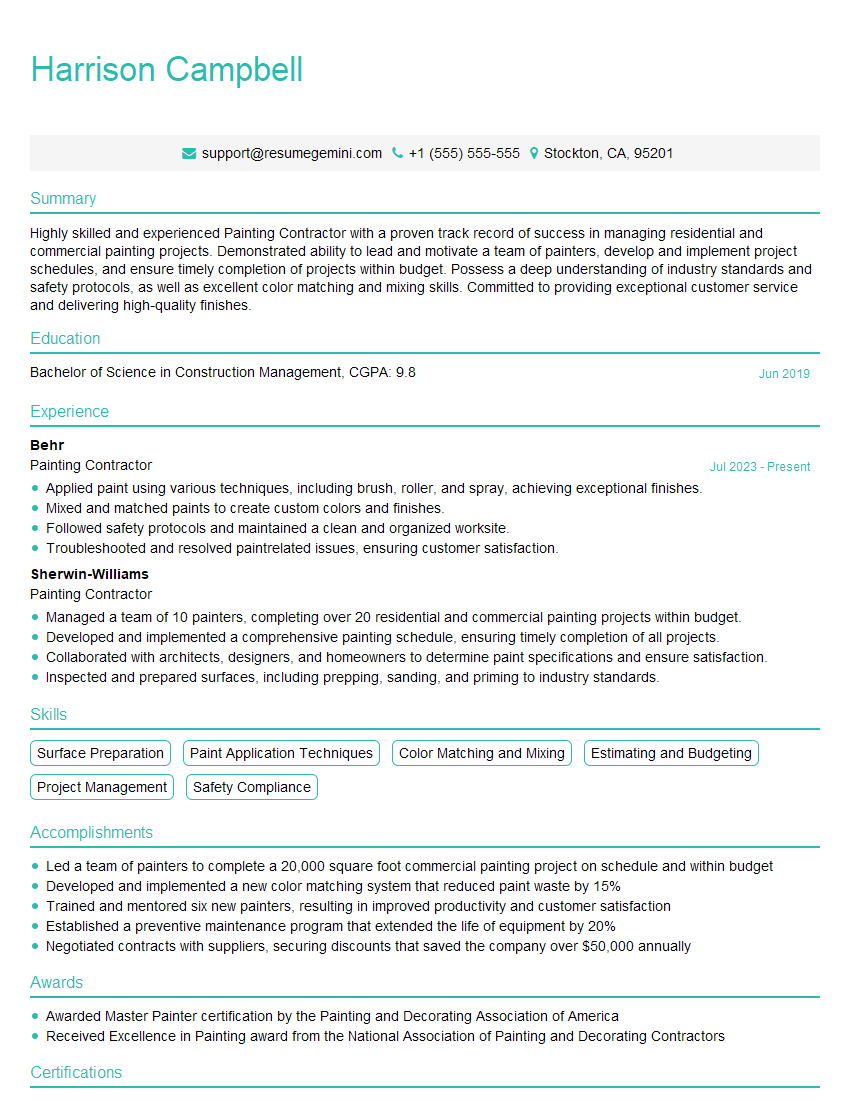
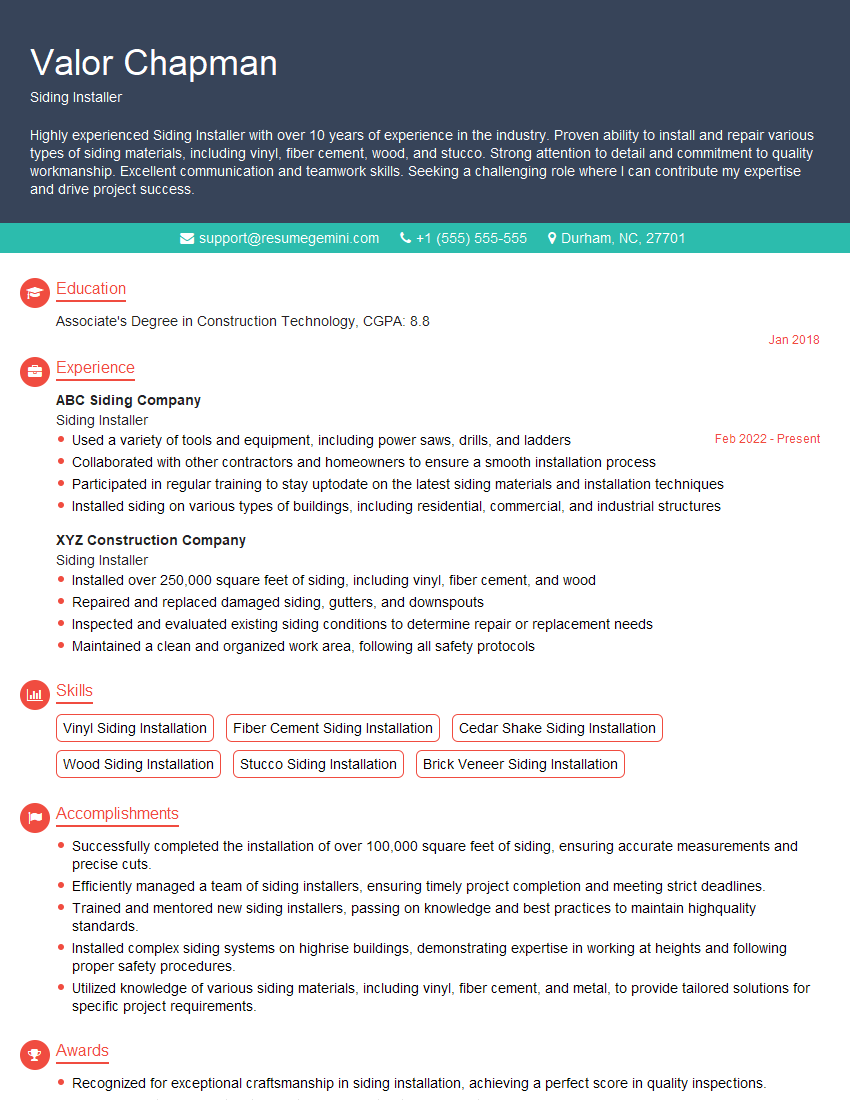
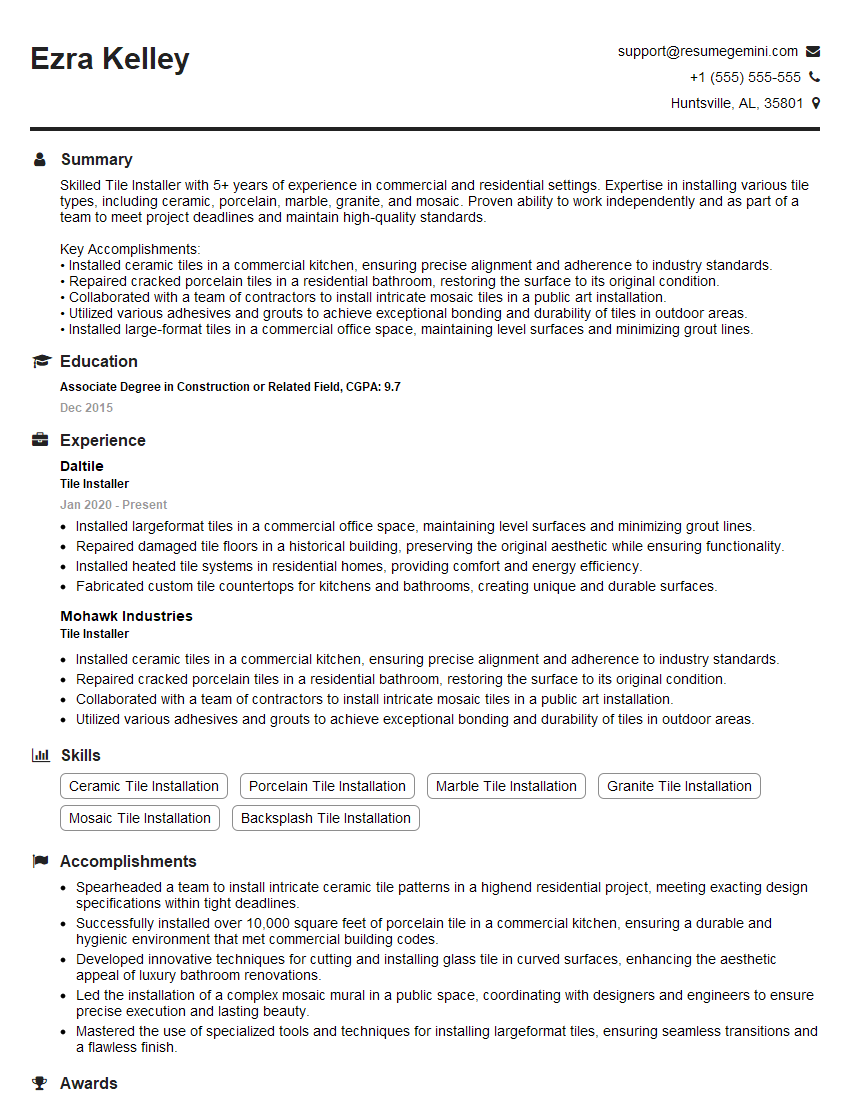
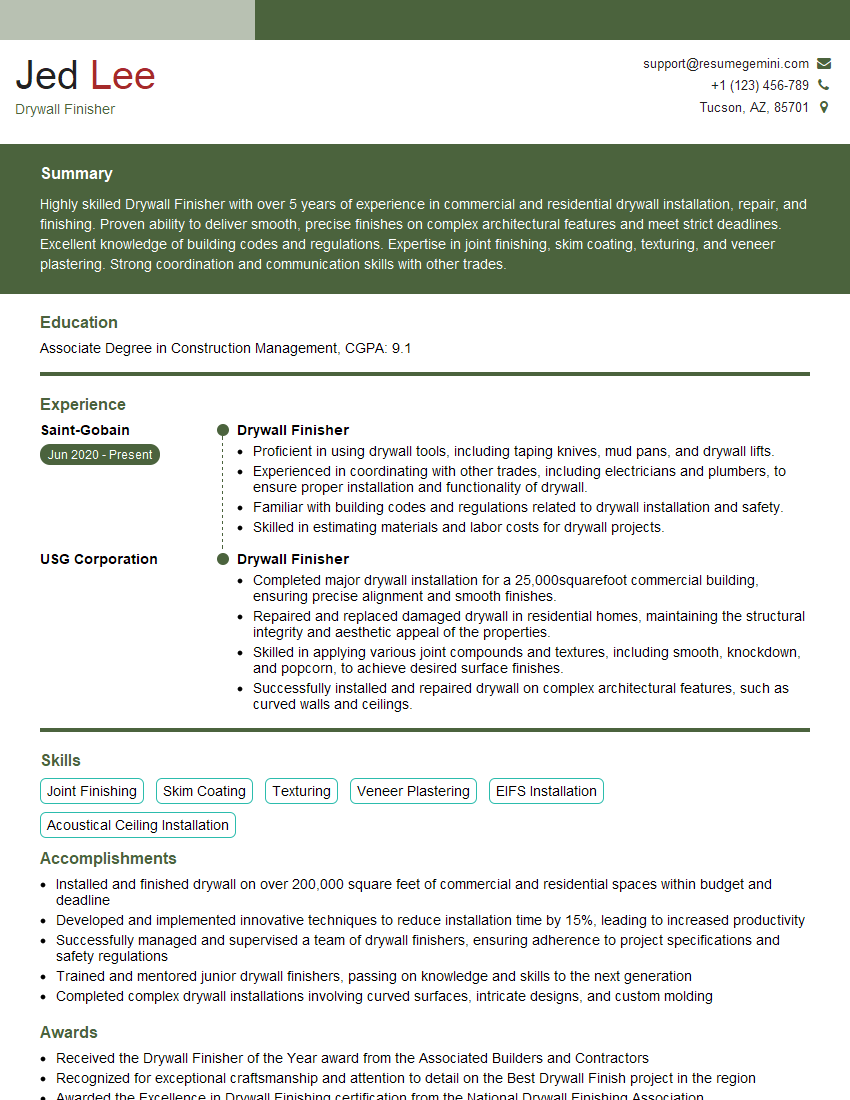
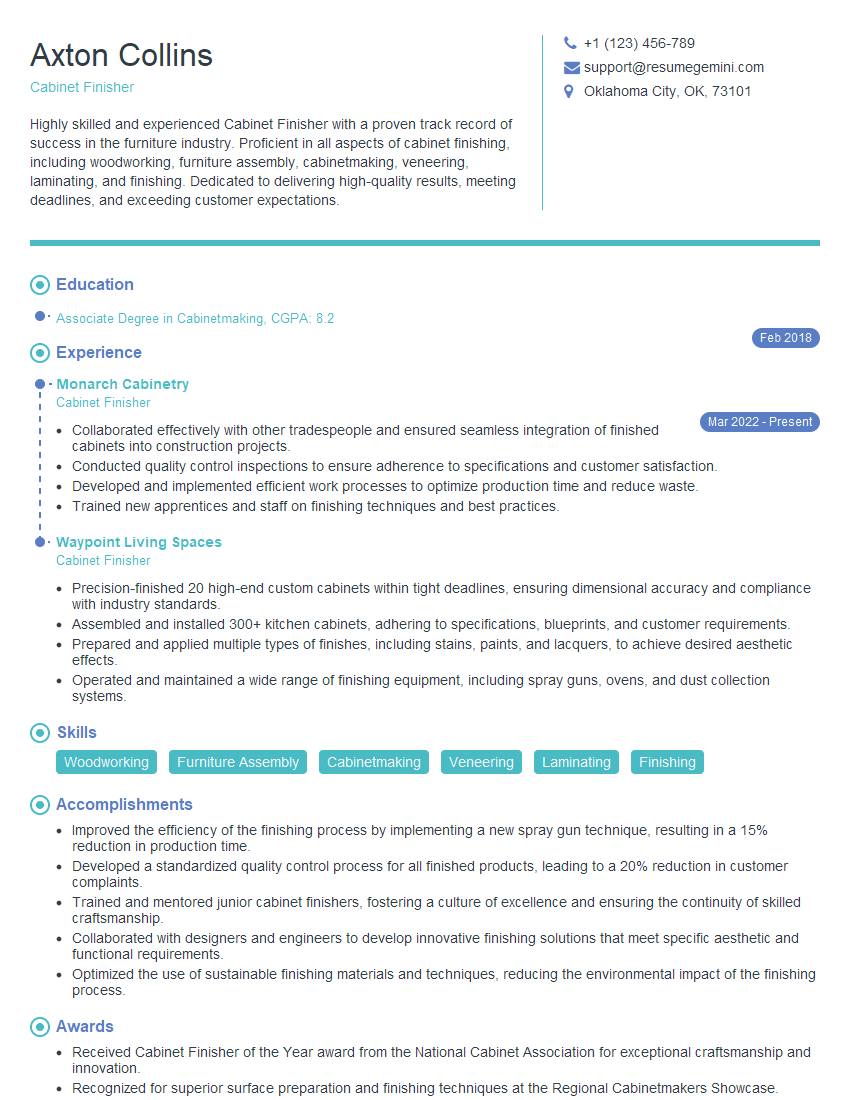
Mastering Interior and Exterior Finishes is crucial for career advancement in the construction and design industries. A strong understanding of these topics demonstrates your technical expertise and problem-solving abilities, making you a highly sought-after candidate. To enhance your job prospects, create an ATS-friendly resume that highlights your skills and experience effectively. ResumeGemini is a trusted resource to help you build a professional and impactful resume. Examples of resumes tailored to Interior and Exterior Finishes are available to guide you through the process. Take the next step towards your dream career today!
Explore more articles
Users Rating of Our Blogs
Share Your Experience
We value your feedback! Please rate our content and share your thoughts (optional).
What Readers Say About Our Blog
hello,
Our consultant firm based in the USA and our client are interested in your products.
Could you provide your company brochure and respond from your official email id (if different from the current in use), so i can send you the client’s requirement.
Payment before production.
I await your answer.
Regards,
MrSmith
hello,
Our consultant firm based in the USA and our client are interested in your products.
Could you provide your company brochure and respond from your official email id (if different from the current in use), so i can send you the client’s requirement.
Payment before production.
I await your answer.
Regards,
MrSmith
These apartments are so amazing, posting them online would break the algorithm.
https://bit.ly/Lovely2BedsApartmentHudsonYards
Reach out at [email protected] and let’s get started!
Take a look at this stunning 2-bedroom apartment perfectly situated NYC’s coveted Hudson Yards!
https://bit.ly/Lovely2BedsApartmentHudsonYards
Live Rent Free!
https://bit.ly/LiveRentFREE
Interesting Article, I liked the depth of knowledge you’ve shared.
Helpful, thanks for sharing.
Hi, I represent a social media marketing agency and liked your blog
Hi, I represent an SEO company that specialises in getting you AI citations and higher rankings on Google. I’d like to offer you a 100% free SEO audit for your website. Would you be interested?