Interviews are more than just a Q&A session—they’re a chance to prove your worth. This blog dives into essential Performing routine maintenance on equipment interview questions and expert tips to help you align your answers with what hiring managers are looking for. Start preparing to shine!
Questions Asked in Performing routine maintenance on equipment Interview
Q 1. Describe your experience with preventative maintenance procedures.
Preventative maintenance is all about proactively addressing potential equipment issues before they become major problems. Think of it like regular check-ups at the doctor – better to catch small things early than wait for a major crisis. My experience encompasses a wide range of preventative procedures, from simple visual inspections and lubrication schedules to more complex tasks like calibrating instruments and replacing worn parts according to manufacturers’ recommendations.
For example, in my previous role at a manufacturing plant, I implemented a preventative maintenance program for our assembly line robots. This involved daily lubrication checks, weekly functional tests, and monthly detailed inspections including the replacement of worn-out brushes and sensor checks. This reduced downtime by 40% within the first six months.
- Visual Inspections: Regularly checking for wear, tear, leaks, or loose connections.
- Lubrication Schedules: Following manufacturer guidelines to keep moving parts properly lubricated.
- Calibration: Ensuring instruments and tools provide accurate readings.
- Component Replacement: Proactively replacing parts nearing the end of their lifespan to prevent failures.
Q 2. Explain the importance of following safety protocols during equipment maintenance.
Safety is paramount in equipment maintenance. A single lapse can lead to serious injury or even death. Following safety protocols isn’t just a rule; it’s a fundamental responsibility. My approach centers around a ‘think before you act’ mentality, always prioritizing safety over speed. This involves thorough risk assessments before any work begins. I always ensure I have the right personal protective equipment (PPE), such as safety glasses, gloves, and hearing protection, and that the equipment is properly locked out and tagged out to prevent accidental startup. Training is also crucial; I regularly refresh my knowledge on safety procedures and best practices.
For instance, before working on a high-voltage electrical panel, I’d always follow a detailed lockout/tagout procedure, verifying power is off with a voltage tester before beginning work. This step-by-step process is non-negotiable and helps prevent electrical shocks.
Q 3. How do you troubleshoot malfunctioning equipment?
Troubleshooting malfunctioning equipment requires a systematic approach, combining technical knowledge with problem-solving skills. I typically start by carefully observing the problem, noting any unusual sounds, smells, or visual cues. Next, I’ll consult the equipment’s manuals and schematics to understand its workings and identify potential causes. Then I systematically check components, using diagnostic tools like multimeters or specialized equipment as needed. This process often involves isolating the faulty component through a process of elimination.
Let’s say a conveyor belt stops unexpectedly. I’d first check the power supply, then the motor, the belt itself (for tears or obstructions), and the sensors controlling its operation. If the problem persists, I’d move on to checking control systems and programming if relevant. Thorough documentation throughout the process is essential for future reference.
Q 4. What are your methods for documenting maintenance activities?
Accurate and thorough documentation is the cornerstone of effective maintenance. I use a combination of methods to record all maintenance activities. This includes detailed work orders, specifying the task performed, date, time, parts used, and any unusual findings. Digital tools like CMMS (Computerized Maintenance Management Systems) software are also indispensable. They help maintain a central repository of records, track equipment history, and schedule future maintenance tasks efficiently.
In the past, I’ve used a combination of paper-based work orders and a CMMS system called UpKeep. The paper forms were crucial for recording on-site details while the UpKeep system allowed for centralized tracking, reporting, and analysis of maintenance data across multiple equipment units.
Q 5. What types of equipment maintenance software are you familiar with?
I’m familiar with several CMMS software packages, including UpKeep, Fiix, and SAP PM. These systems provide functionalities such as work order management, inventory tracking, preventative maintenance scheduling, and reporting. My experience involves using these tools to track maintenance history, schedule preventative maintenance tasks, manage inventory, generate reports, and analyze maintenance costs. This allows for better resource allocation and identification of areas for improvement in maintenance strategies.
For instance, UpKeep’s mobile app allows for real-time updates on work orders in the field, enhancing communication and efficiency.
Q 6. Describe your experience with different types of lubrication techniques.
Lubrication is critical for reducing friction, wear, and extending the lifespan of equipment. My experience encompasses various lubrication techniques, including grease lubrication, oil lubrication (both drip and forced feed), and specialized lubrication such as those using synthetic oils or high-temperature greases. The choice of lubricant and application method depends on the specific equipment and its operating conditions. I always adhere to manufacturers’ recommendations regarding the type and quantity of lubricant to use.
For example, grease lubrication is often suitable for slow-moving parts that require infrequent lubrication, while forced-feed oil lubrication is essential for high-speed, high-temperature applications to ensure continuous lubrication. Correct application is key; too little lubricant can cause wear while too much can lead to contamination and damage.
Q 7. How do you prioritize maintenance tasks based on urgency and impact?
Prioritizing maintenance tasks is crucial for maximizing uptime and minimizing disruptions. I use a combination of factors, including urgency (how quickly the issue needs addressing) and impact (the severity of the potential consequences if the issue is left unaddressed). A risk-based approach is frequently employed, assigning priority levels based on the potential risks associated with delaying maintenance. This might involve a weighted scoring system, prioritizing critical equipment or tasks with high failure consequences.
For example, a failing cooling system on a critical piece of machinery would get higher priority than a minor cosmetic issue on a less important piece of equipment. A systematic approach using a prioritized task list, regularly reviewed and updated, helps ensure resources are allocated effectively.
Q 8. How do you identify potential equipment failures before they occur?
Predictive maintenance is key to identifying potential equipment failures before they occur. It’s about moving beyond reactive repairs (fixing things after they break) to proactive strategies. This involves a multi-pronged approach:
Regular Inspections: Visual inspections, checking for wear and tear, loose connections, leaks, unusual noises, or vibrations are fundamental. Think of it like a doctor’s check-up – regular observation catches small issues before they escalate.
Data Monitoring: Modern equipment often has sensors that collect data on performance parameters like temperature, pressure, vibration frequency, and power consumption. Analyzing this data using software can reveal patterns indicative of impending failure. For example, a gradual increase in bearing temperature might foreshadow a bearing failure.
Predictive Analytics: Sophisticated algorithms can analyze historical data and sensor readings to predict when a component is likely to fail. This allows for scheduled maintenance before a catastrophic failure happens, minimizing downtime and preventing costly repairs.
Condition-Based Monitoring (CBM): This involves directly measuring the condition of equipment components. For instance, oil analysis can detect the presence of metal particles indicating wear in internal components. This provides a direct assessment of the component’s health.
For example, in a manufacturing plant, regularly checking the vibration levels of a critical motor using a vibration sensor and comparing it to established baseline values can warn of impending bearing failure, allowing for preventative replacement before production is disrupted.
Q 9. Explain your experience with root cause analysis in equipment maintenance.
Root cause analysis (RCA) is crucial for preventing equipment failures from recurring. My approach typically follows the ‘5 Whys’ technique, combined with a thorough examination of the equipment and its operating environment.
5 Whys: This iterative questioning method helps to drill down to the root cause. For instance, if a pump fails, I wouldn’t just replace it. I’d ask ‘Why did the pump fail?’ (e.g., bearing failure). ‘Why did the bearing fail?’ (e.g., lack of lubrication). ‘Why was there a lack of lubrication?’ (e.g., faulty lubrication system). ‘Why did the lubrication system fail?’ (e.g., clogged filter). ‘Why was the filter clogged?’ (e.g., inadequate maintenance schedule). This reveals the true root cause – the inadequate maintenance schedule – which can be addressed through improved procedures.
Beyond the 5 Whys, I use other RCA tools such as fault tree analysis and fishbone diagrams to visually represent potential causes and their relationships. It’s about systematically identifying the underlying problem, not just treating the symptom. This rigorous approach prevents recurring issues and improves overall equipment reliability. For example, during an incident where a conveyor belt frequently jammed, using RCA revealed the root cause to be inconsistent material size feeding the system. Solving this upstream issue eliminated the recurring jam problem.
Q 10. Describe a time you had to adapt maintenance procedures to solve an unexpected problem.
During a power outage, our backup generator failed to start. The standard procedure was to check the fuel level and battery. However, both were fine. After initial troubleshooting, it became clear the problem stemmed from a corroded connection within the generator’s control system, not mentioned in the standard operating procedure.
Instead of relying solely on the existing procedures, I utilized my understanding of electrical systems. I carefully inspected all connections, discovering the corroded wire. I cleaned the connection, and the generator started immediately. This experience highlighted the importance of adaptability in maintenance; sometimes, you need to go beyond the standard procedures and use your diagnostic skills to solve unique problems.
This led me to update our maintenance procedures to include a specific check for corrosion in the generator’s control system, preventing similar issues in the future.
Q 11. What are your preferred methods for managing inventory of maintenance parts?
I prefer a combination of methods for managing maintenance parts inventory: a computerized maintenance management system (CMMS) and a well-organized physical storage system.
CMMS: A CMMS software tracks parts usage, automatically generates re-order points, and provides an overview of current stock levels. It helps optimize inventory levels, preventing shortages or overstocking. This allows for informed decision-making regarding ordering parts.
Physical Organization: A clearly labeled and organized storage area is crucial for quick access to parts. Parts should be categorized and stored based on equipment type or function. Regular inventory checks, both physical and in the CMMS, are crucial to ensure accuracy.
ABC Analysis: Classifying parts into A (high value/high usage), B (medium value/usage), and C (low value/usage) categories helps prioritize inventory control efforts. A-class parts require stricter monitoring and control, while C-class parts can have simpler tracking methods.
Using this combined approach maintains a balance between efficient parts management and cost control.
Q 12. How familiar are you with using diagnostic tools for equipment troubleshooting?
I’m highly proficient in using various diagnostic tools for equipment troubleshooting. My experience spans a variety of tools, including:
Multimeters: For measuring voltage, current, and resistance in electrical systems.
Oscilloscope: For analyzing waveforms and identifying electrical issues in complex circuits.
Infrared (IR) cameras: For detecting overheating components, which can indicate potential failures.
Vibration analyzers: For assessing the health of rotating machinery by measuring vibration levels.
Pressure gauges and transducers: For monitoring pressure in hydraulic and pneumatic systems.
Specialized diagnostic software: Many modern machines have built-in diagnostic systems accessible through software interfaces. I am familiar with interpreting the diagnostic codes and identifying the potential problem.
Using these tools, I can diagnose problems quickly and accurately, minimizing downtime and preventing costly repairs.
Q 13. Explain your experience with hydraulic or pneumatic systems maintenance.
I have extensive experience maintaining both hydraulic and pneumatic systems. My expertise encompasses:
Hydraulics: I can troubleshoot leaks, inspect and replace seals, analyze hydraulic fluid condition, diagnose pump and valve issues, and understand the principles of hydraulic circuits. I am familiar with hydraulic schematics and can perform preventative maintenance tasks such as filter changes and fluid flushes.
Pneumatics: My pneumatic system experience includes diagnosing air leaks using leak detectors, replacing pneumatic components such as cylinders and valves, understanding pneumatic schematics and controlling pneumatic systems. I am also experienced in adjusting air pressure regulators and troubleshooting pressure-related issues.
In both systems, I focus on identifying the root cause of problems rather than just addressing the symptoms. For example, a recurring hydraulic leak might point to a worn pump seal or a cracked fitting, requiring more than just tightening a loose connection. A methodical approach to troubleshooting is essential in both hydraulic and pneumatic systems.
Q 14. What safety certifications do you hold related to equipment maintenance?
I hold the following safety certifications relevant to equipment maintenance:
OSHA 10-Hour General Industry Certification: This certification covers general workplace safety practices, hazard recognition, and safety regulations.
Lockout/Tagout (LOTO) Certification: This certification ensures safe work practices when servicing or repairing equipment that poses a potential energy hazard.
Certified Industrial Electrician (Specific certification name will vary depending on location and issuing body): This covers safe practices for working with electrical equipment.
I am also trained in the safe handling and disposal of hazardous materials commonly used in equipment maintenance, such as hydraulic fluids and refrigerants. Safety is paramount in my work, and I adhere strictly to all relevant safety regulations and procedures.
Q 15. How do you ensure compliance with safety regulations during maintenance work?
Safety is paramount in equipment maintenance. My approach to ensuring compliance begins with a thorough understanding of all relevant regulations, including OSHA standards and any company-specific safety protocols. Before commencing any task, I conduct a comprehensive risk assessment, identifying potential hazards and implementing control measures. This might involve using lockout/tagout procedures to de-energize equipment, wearing appropriate personal protective equipment (PPE) like safety glasses, gloves, and hearing protection, and ensuring adequate ventilation in confined spaces. I also meticulously follow established safety procedures, like using proper lifting techniques to avoid injuries. For example, during a recent compressor maintenance project, we utilized a confined space entry permit system, complete with atmospheric monitoring and a standby rescue team, to ensure the safety of personnel working inside the compressor housing. Regular safety briefings and toolbox talks reinforce safe work practices and keep everyone informed of potential risks.
Career Expert Tips:
- Ace those interviews! Prepare effectively by reviewing the Top 50 Most Common Interview Questions on ResumeGemini.
- Navigate your job search with confidence! Explore a wide range of Career Tips on ResumeGemini. Learn about common challenges and recommendations to overcome them.
- Craft the perfect resume! Master the Art of Resume Writing with ResumeGemini’s guide. Showcase your unique qualifications and achievements effectively.
- Don’t miss out on holiday savings! Build your dream resume with ResumeGemini’s ATS optimized templates.
Q 16. How do you stay current with advancements in equipment maintenance technology?
The field of equipment maintenance is constantly evolving, so continuous learning is crucial. I stay updated through several avenues. I actively participate in professional development workshops and training sessions offered by industry associations and equipment manufacturers. These often cover new technologies and best practices. I also subscribe to industry journals and online publications, reading articles and case studies on innovative maintenance techniques. Furthermore, I leverage online learning platforms to access courses on advanced diagnostics and predictive maintenance strategies. For instance, I recently completed a course on using vibration analysis to detect early signs of equipment failure, which significantly improved our preventative maintenance program and reduced downtime. Keeping abreast of these developments ensures we’re using the most efficient and effective maintenance strategies.
Q 17. Describe your experience with working on electrical systems in equipment.
I have extensive experience working with electrical systems in various types of equipment. My experience includes troubleshooting electrical faults, replacing faulty components like motors, sensors, and control circuits, and performing preventative maintenance on electrical panels and wiring. I’m proficient in using electrical testing equipment such as multimeters, meggers, and insulation resistance testers to diagnose problems accurately. Before undertaking any electrical work, I always ensure the power is properly isolated and locked out to prevent electrical shock. For instance, I once successfully diagnosed and repaired a faulty motor control circuit in a large industrial pump, preventing significant production downtime. My understanding of electrical safety procedures and adherence to lockout/tagout protocols are absolute priorities. I always work within the confines of my qualifications and refer more complex issues to appropriately licensed electricians when necessary.
Q 18. What is your experience with CMMS (Computerized Maintenance Management System)?
My experience with CMMS (Computerized Maintenance Management Systems) is significant. I’ve used several different systems throughout my career, including [mention specific CMMS systems if comfortable, e.g., IBM Maximo, SAP PM]. I’m proficient in using CMMS to schedule preventative maintenance tasks, track work orders, manage inventory, and generate reports on maintenance costs and equipment performance. I understand how to input data accurately, maintain accurate records, and extract valuable information for informed decision-making. For example, using a CMMS, I helped identify a pattern of recurring failures in a specific piece of equipment, leading to proactive changes in our maintenance schedule that reduced repair costs considerably. A CMMS is an invaluable tool for optimizing maintenance processes and improving overall equipment effectiveness.
Q 19. How do you handle conflicts or disagreements with other maintenance personnel?
Conflicts can arise in any team environment. My approach to resolving disagreements is centered around open communication and collaboration. I believe in actively listening to all perspectives, clearly stating my concerns, and seeking common ground. I focus on finding solutions that benefit the entire team and the overall maintenance objectives. If a resolution cannot be reached through direct discussion, I escalate the issue to a supervisor or manager for mediation. For example, I once had a disagreement with a colleague regarding the best approach to a repair. Through respectful discussion and a collaborative review of our individual approaches, we found a solution that was superior to either of our initial proposals. Maintaining a professional and respectful demeanor is key to resolving conflicts constructively.
Q 20. How do you track and manage maintenance costs effectively?
Effective maintenance cost tracking is essential. I utilize a combination of techniques to manage these costs. Firstly, I meticulously track all expenses related to maintenance, including labor costs, parts, and materials. This data is carefully documented and entered into the CMMS. I then analyze these costs using the CMMS reporting features to identify trends, potential areas for cost savings, and the overall return on investment for different maintenance strategies. For example, by analyzing historical data on part failures, we were able to negotiate a better price with our supplier for frequently replaced components, resulting in significant cost savings. Regular cost reviews and performance evaluations enable continuous optimization of our maintenance budget.
Q 21. Describe your experience with different types of welding and cutting techniques (if applicable).
While my primary focus is on routine maintenance, I do possess experience with various welding and cutting techniques. I am proficient in [mention specific techniques e.g., MIG welding, TIG welding, oxy-fuel cutting]. My experience primarily involves repair work on equipment components, such as repairing damaged metal parts or fabricating small replacement parts. I always prioritize safety when performing welding or cutting, ensuring proper ventilation, wearing appropriate PPE, and adhering to all relevant safety standards. Before undertaking any welding or cutting, I meticulously prepare the work area and ensure proper ground connections to prevent accidents. Safety is my utmost concern during any welding or cutting operation.
Q 22. How do you contribute to a safe and efficient work environment in a maintenance team?
Safety and efficiency are paramount in any maintenance team. My contribution starts with meticulous adherence to safety protocols – always wearing appropriate PPE (Personal Protective Equipment), following lockout/tagout procedures religiously, and proactively identifying and mitigating potential hazards. For example, before working on a machine, I ensure it’s completely de-energized and locked out to prevent accidental starts. Beyond personal safety, I actively participate in safety meetings, contribute to hazard identification reports, and suggest improvements to work processes to prevent accidents. Efficiency comes from organized work practices: utilizing CMMS (Computerized Maintenance Management System) for scheduling, prioritizing tasks based on urgency and impact, and optimizing tool and parts availability to minimize downtime. For instance, I helped implement a new inventory management system that reduced equipment downtime by 15% by improving the availability of spare parts.
Q 23. Explain your experience with different types of bearings and their maintenance.
I have extensive experience with various bearing types, including ball bearings, roller bearings (cylindrical, tapered, spherical), and sleeve bearings. Maintenance varies depending on the bearing type and application. For example, ball bearings in high-speed applications require more frequent lubrication and vibration monitoring than those in low-speed applications. My maintenance procedures include visual inspections for signs of wear (scoring, pitting, discoloration), checking for excessive play or noise, and measuring vibration levels. Lubrication is crucial; I’m proficient in selecting the right grease or oil based on operating conditions and bearing type. For example, I once identified a failing tapered roller bearing in a conveyor system by noticing slight vibration and a subtle change in noise during operation. Replacing it preemptively prevented a major production halt. I also have experience with bearing alignment techniques using dial indicators, ensuring proper shaft and housing alignment to avoid premature bearing failure.
Q 24. Describe your experience with scheduled and unscheduled maintenance procedures.
Scheduled maintenance is proactive and aims to prevent equipment failures. This involves following manufacturer’s recommendations and performing routine tasks like lubrication, inspections, and minor adjustments at set intervals. Unscheduled maintenance, on the other hand, addresses unexpected breakdowns or malfunctions. I’m adept at both. For scheduled maintenance, I rely heavily on CMMS to track and schedule tasks, ensuring adherence to the maintenance plan. For unscheduled maintenance, my approach is systematic: quickly assessing the situation, identifying the root cause (often involving troubleshooting), performing the necessary repairs, and documenting everything thoroughly. For instance, I recently handled an unscheduled maintenance event where a pump failed during a critical production run. By quickly diagnosing the problem as a faulty seal, I managed to replace it within an hour, minimizing production disruption.
Q 25. How familiar are you with interpreting technical manuals and schematics?
I’m highly proficient in interpreting technical manuals and schematics. This is crucial for understanding equipment operation, troubleshooting malfunctions, and performing maintenance tasks. I can confidently read electrical schematics, pneumatic diagrams, hydraulic diagrams, and mechanical drawings. My approach is methodical; I start by understanding the overall system, then focus on specific components and their interactions. I often use highlighting and annotation techniques to clarify complex systems and mark critical components for easy identification. For example, I recently used a hydraulic schematic to diagnose a leak in a press machine; by tracing the hydraulic lines, I quickly pinpointed the faulty component and initiated repairs.
Q 26. How do you ensure the accuracy and completeness of your maintenance records?
Accuracy and completeness in maintenance records are critical for ensuring accountability, traceability, and facilitating future maintenance activities. I maintain detailed records, including dates, times, work performed, parts used, and any observations. I use CMMS to ensure that all work is properly documented, including any changes made to the equipment or its settings. Digital photographs and videos are also used to record the condition of equipment before and after maintenance. For example, I consistently record the readings of critical parameters like temperature, pressure, and vibration levels before and after maintenance, enabling trend analysis and early detection of potential issues. This has proved invaluable in predicting and preventing future equipment failures.
Q 27. Explain your understanding of TPM (Total Productive Maintenance) principles.
TPM (Total Productive Maintenance) is a philosophy that focuses on maximizing equipment effectiveness and minimizing downtime through proactive involvement of all employees. My understanding includes its core principles: autonomous maintenance (operators performing basic maintenance), planned maintenance (scheduled preventive tasks), and improvement activities (continuous improvement projects). I believe in engaging operators in basic maintenance tasks to foster ownership and improve their understanding of the equipment. I’ve successfully implemented TPM elements in past roles, leading to significant reductions in equipment downtime and improved overall efficiency. For example, I trained operators on simple lubrication procedures, reducing the workload on the maintenance team and empowering them to address minor issues quickly.
Q 28. How do you handle situations where equipment malfunctions during critical production time?
Equipment malfunctions during critical production time require a swift and effective response. My approach is based on a structured problem-solving methodology: first, I assess the situation to understand the nature and impact of the malfunction. Then, I prioritize the repair based on its impact on production. Next, I work to quickly isolate the problem and determine the root cause. This often involves using diagnostic tools, reviewing maintenance logs, and consulting technical documentation. Once the cause is identified, I select the appropriate repair strategy, taking into account safety, efficiency, and the availability of parts. I keep stakeholders updated on progress and, if needed, I escalate to senior personnel for support. Finally, I thoroughly document the entire event, including the cause, corrective actions, and any lessons learned, to prevent future occurrences. For example, during a peak production period, a critical compressor unexpectedly failed. By quickly identifying a broken pressure switch and having a spare part on hand, I restored operation within 30 minutes, minimizing production loss.
Key Topics to Learn for Performing Routine Maintenance on Equipment Interview
- Preventive Maintenance Schedules: Understanding the importance of scheduled maintenance, creating and adhering to preventative maintenance plans, and the impact of neglecting routine checks.
- Equipment Inspection Techniques: Mastering visual inspections, identifying wear and tear, detecting potential malfunctions, and utilizing appropriate diagnostic tools. Practical application: Describing your experience with specific inspection methods and tools used on different types of equipment.
- Basic Repair and Troubleshooting: Knowing the common issues with specific equipment, performing minor repairs, and identifying when to escalate problems to more experienced technicians. Practical application: Explaining your problem-solving approach when encountering equipment malfunctions.
- Safety Procedures and Regulations: Demonstrating knowledge of relevant safety protocols, including lockout/tagout procedures, personal protective equipment (PPE) usage, and hazard identification. Practical application: Describing instances where you prioritized safety during maintenance procedures.
- Record Keeping and Documentation: Understanding the importance of accurate and detailed record-keeping, including maintenance logs, repair reports, and inventory management. Practical application: Explaining your experience with different record-keeping systems and software.
- Understanding Equipment Manuals and Technical Specifications: Demonstrating the ability to interpret technical manuals, understand equipment specifications, and apply this knowledge to maintenance tasks. Practical application: Describing how you utilize technical documentation to troubleshoot issues.
Next Steps
Mastering routine equipment maintenance is crucial for career advancement in many industries. It demonstrates your reliability, problem-solving skills, and commitment to safety – all highly valued attributes. To significantly improve your job prospects, focus on creating an ATS-friendly resume that highlights your skills and experience effectively. ResumeGemini is a trusted resource to help you build a professional and impactful resume that will catch the eye of recruiters. We provide examples of resumes tailored to the “Performing routine maintenance on equipment” field to help you get started. Take the next step towards your dream job!
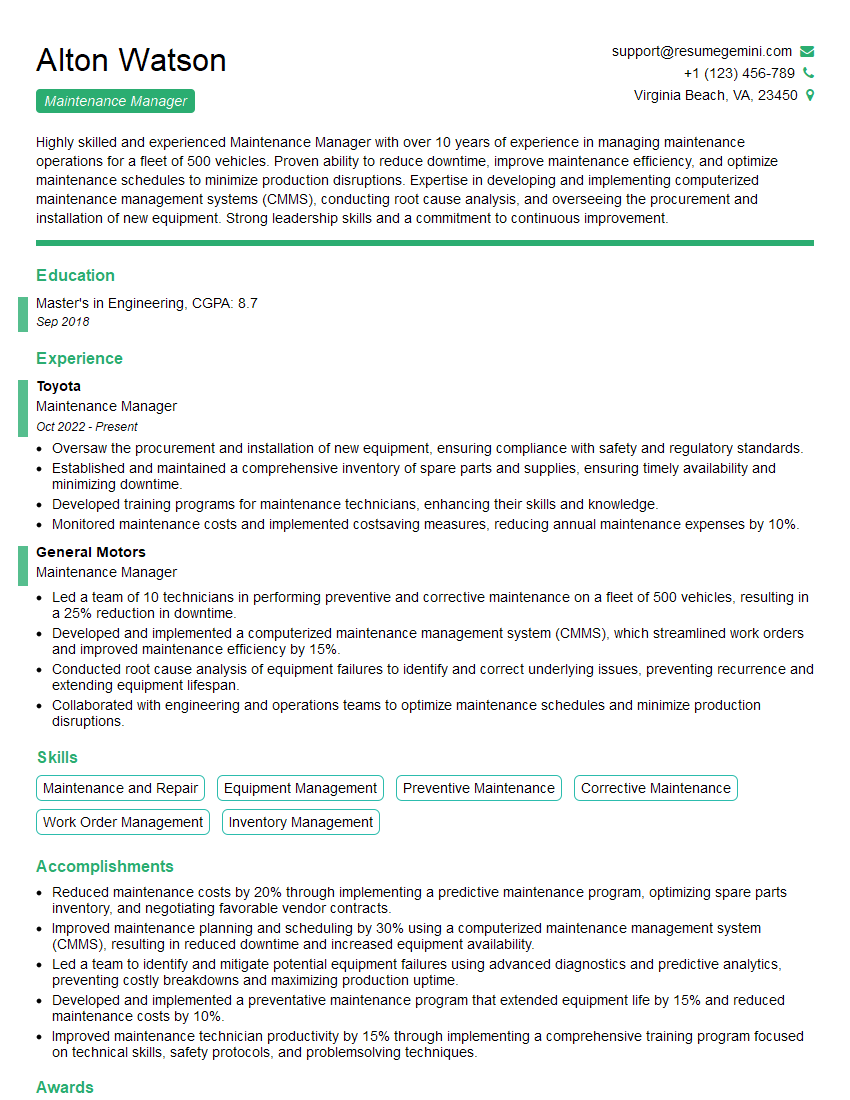
Maintenance Manager Resume Sample
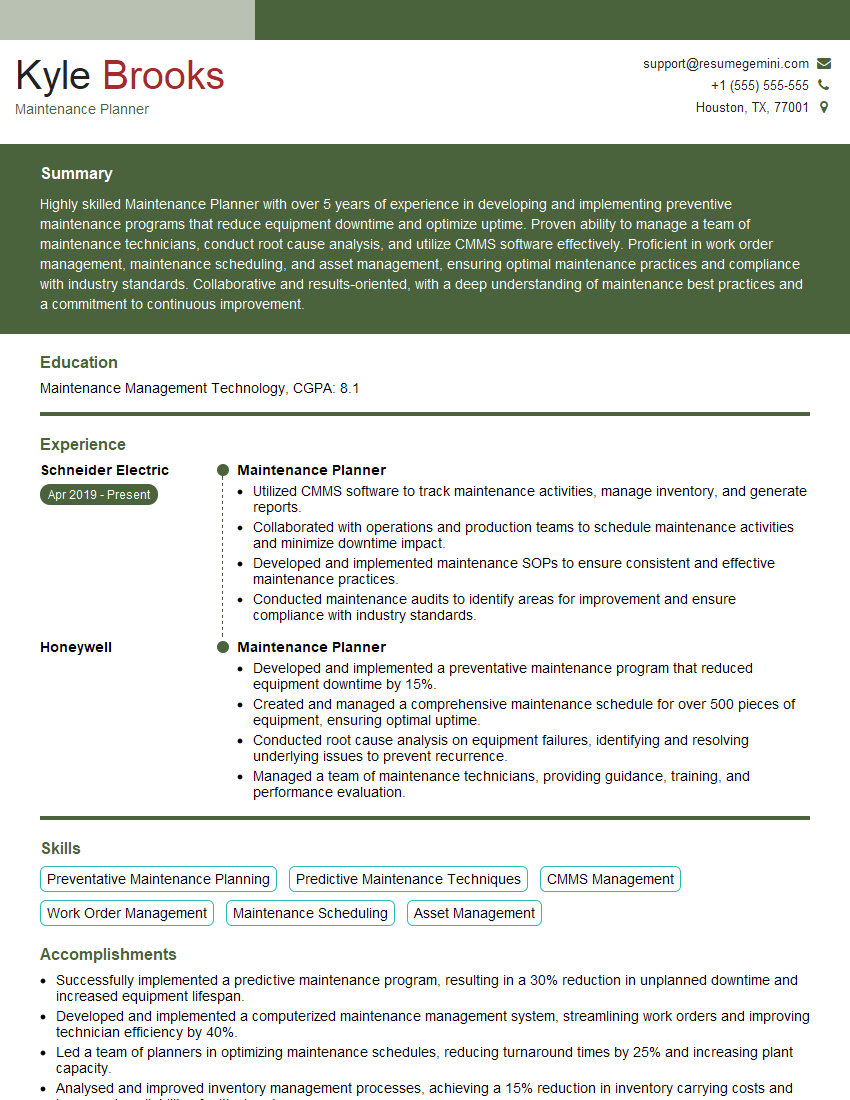
Maintenance Planner Resume Sample
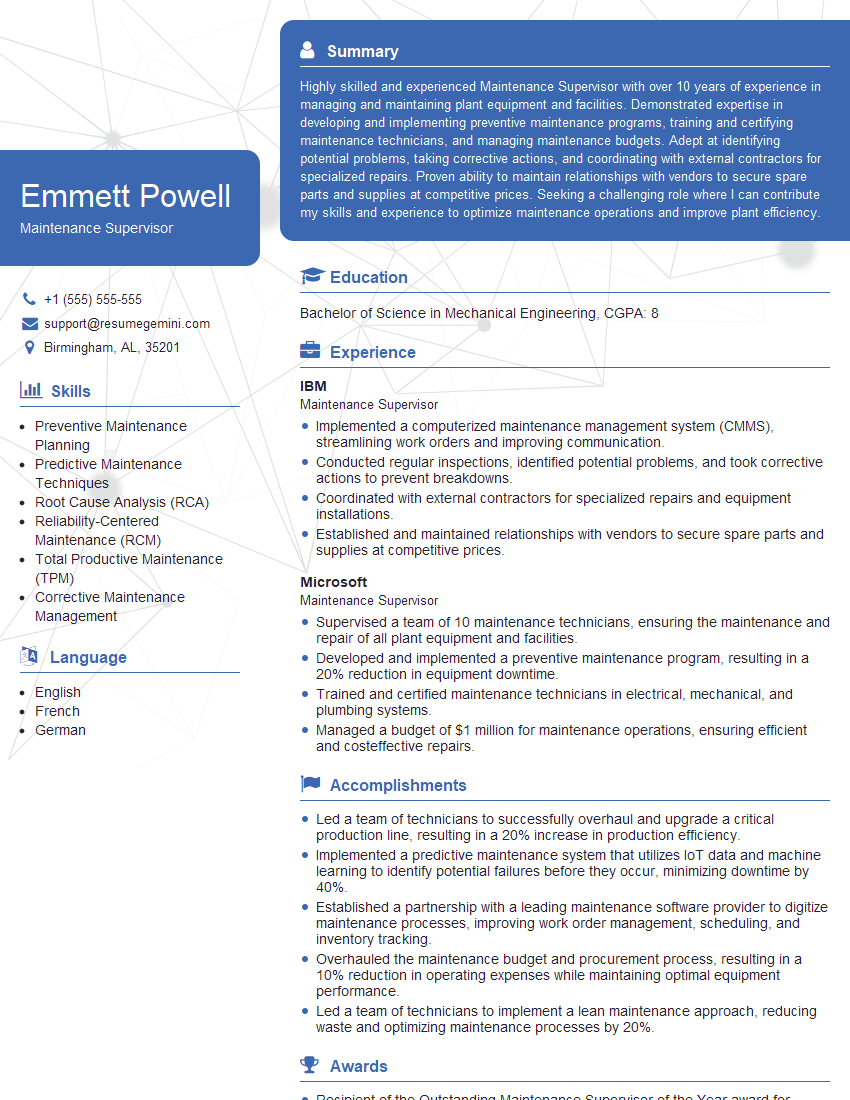
Maintenance Supervisor Resume Sample
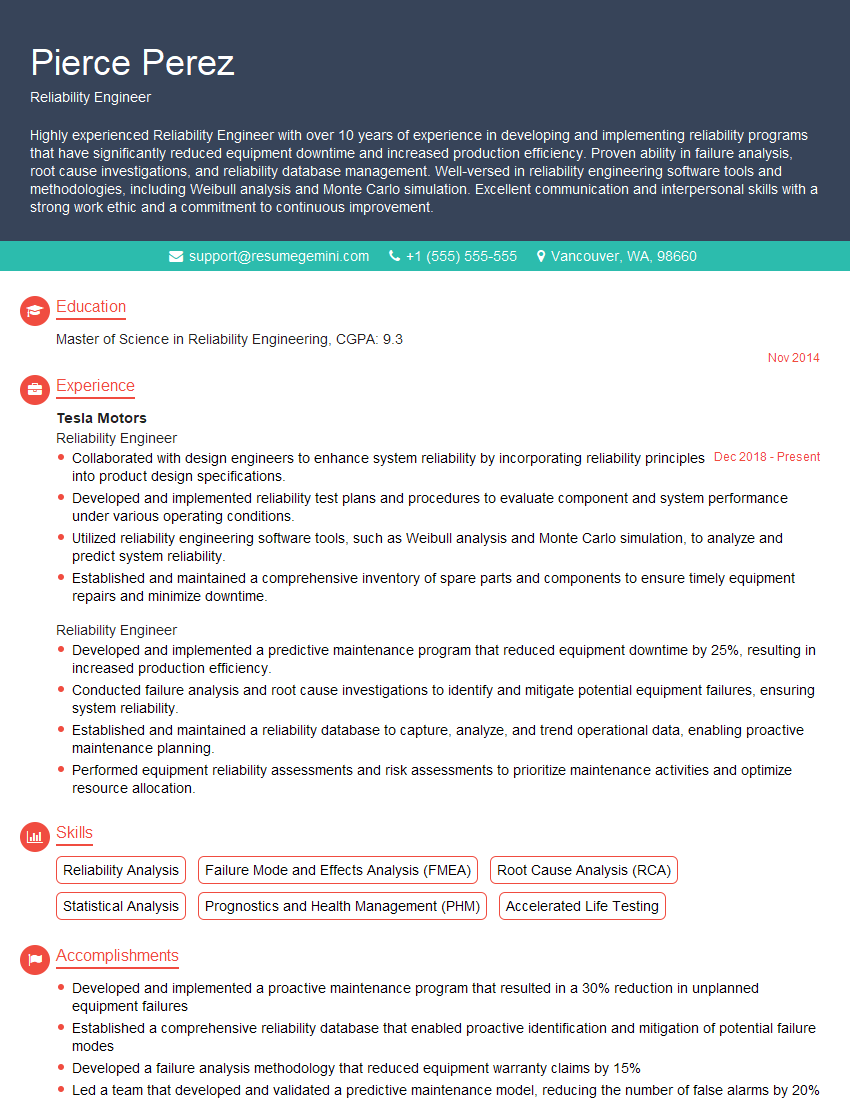
Reliability Engineer Resume Sample
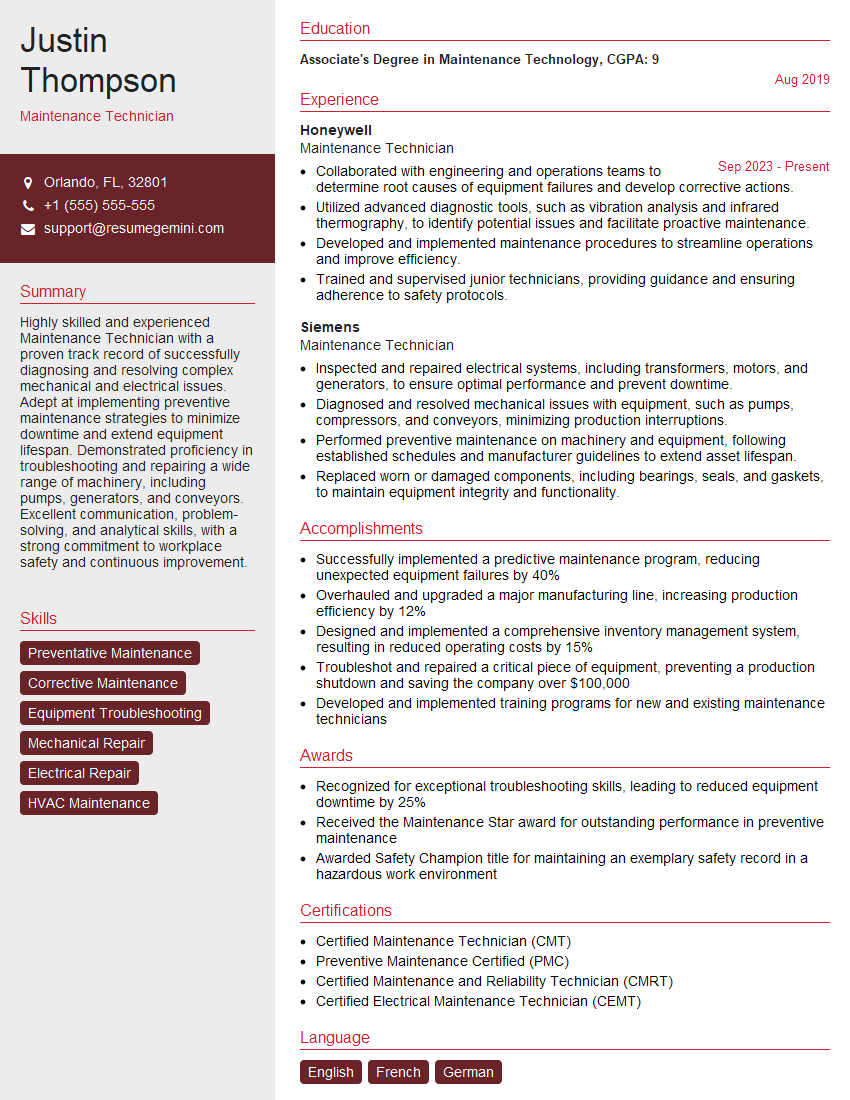
Maintenance Technician Resume Sample
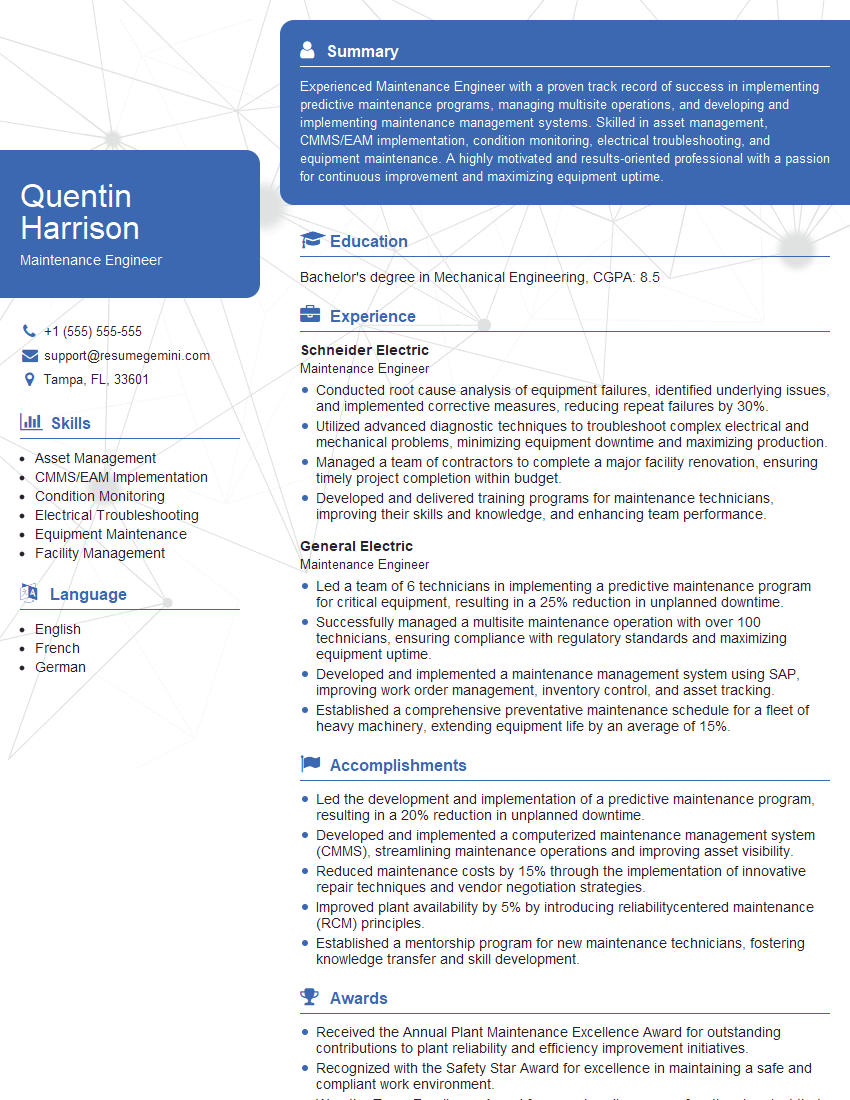
Maintenance Engineer Resume Sample
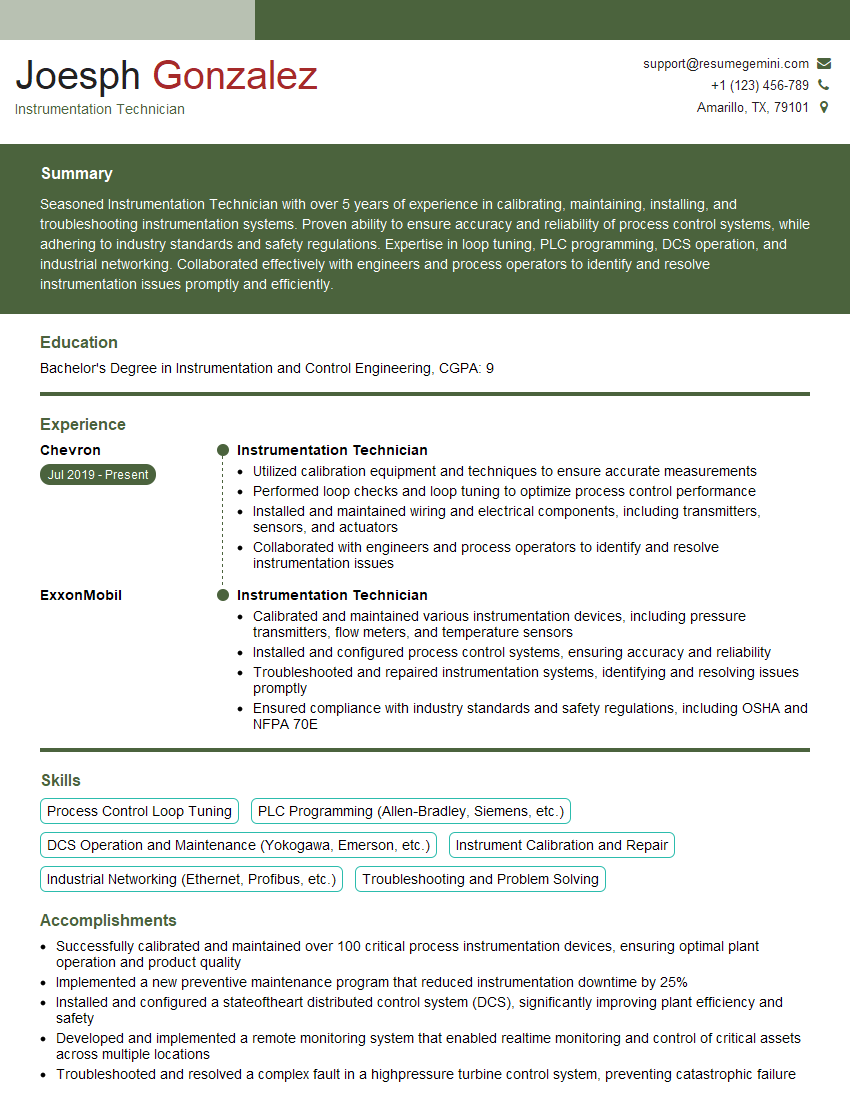
Instrumentation Technician Resume Sample
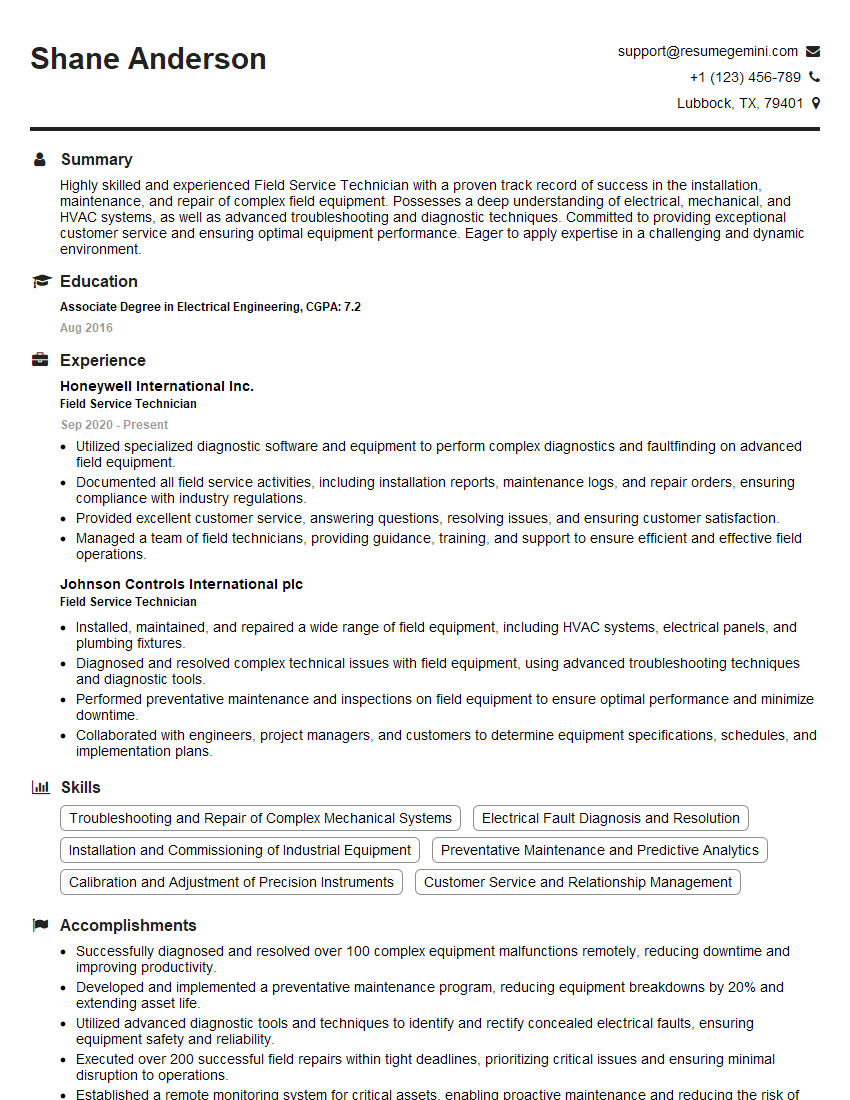
Field Service Technician Resume Sample
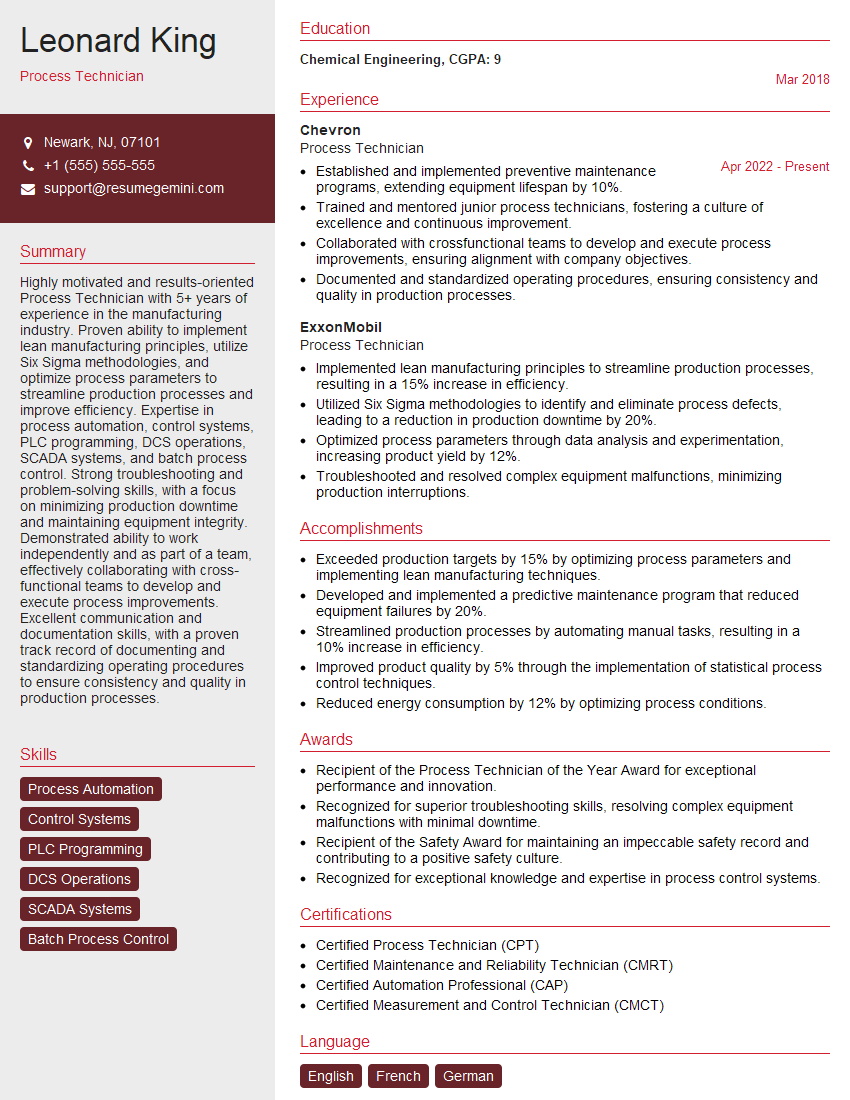
Process Technician Resume Sample
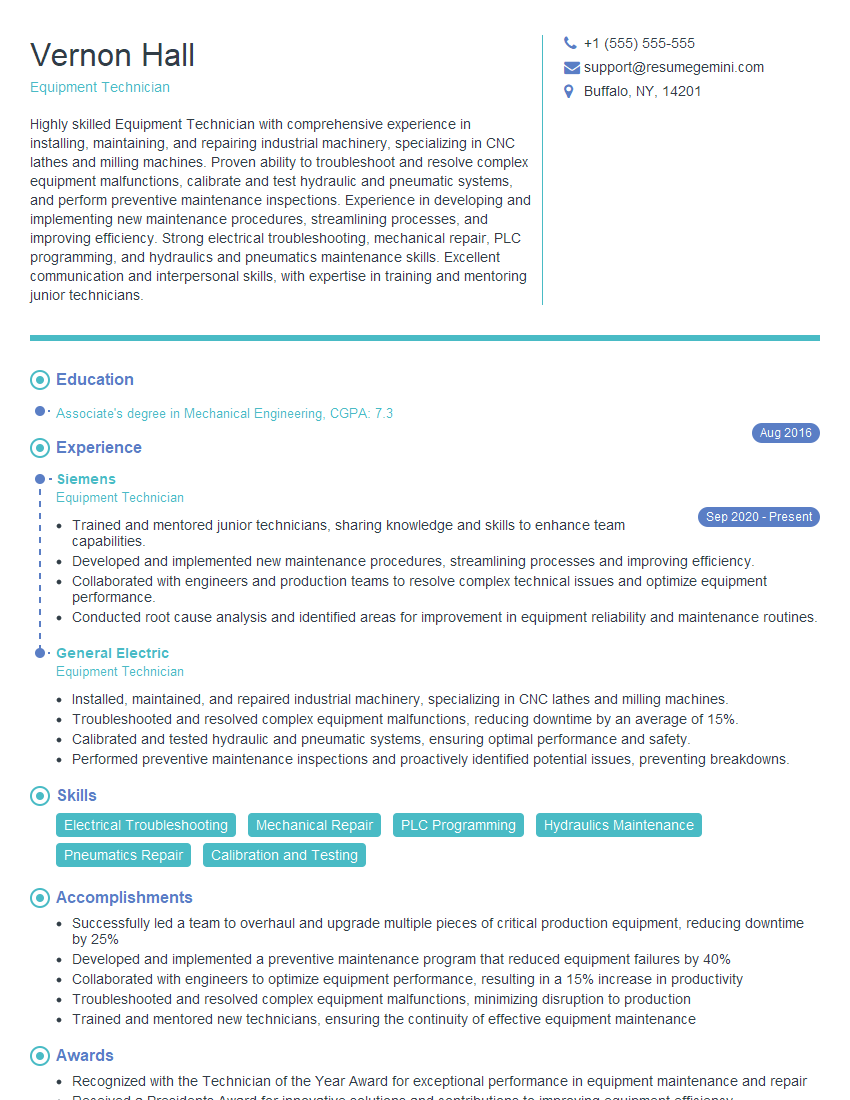
Equipment Technician Resume Sample
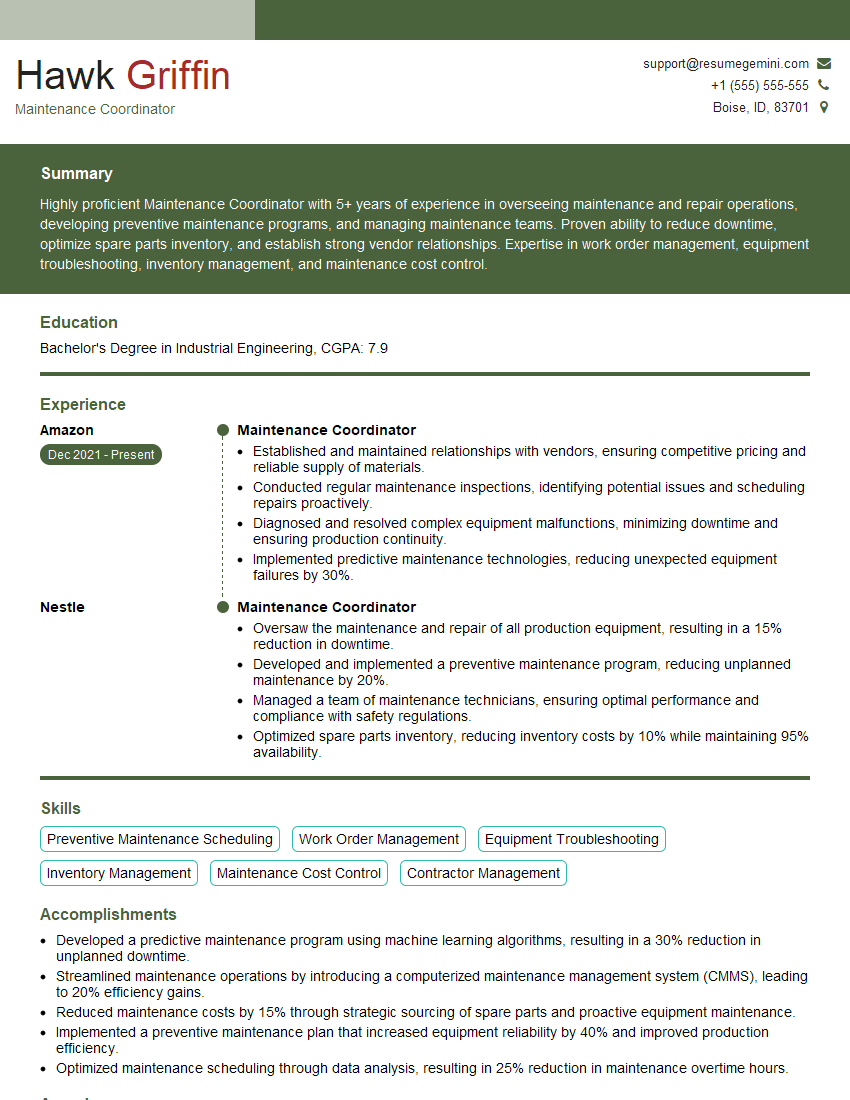
Maintenance Coordinator Resume Sample
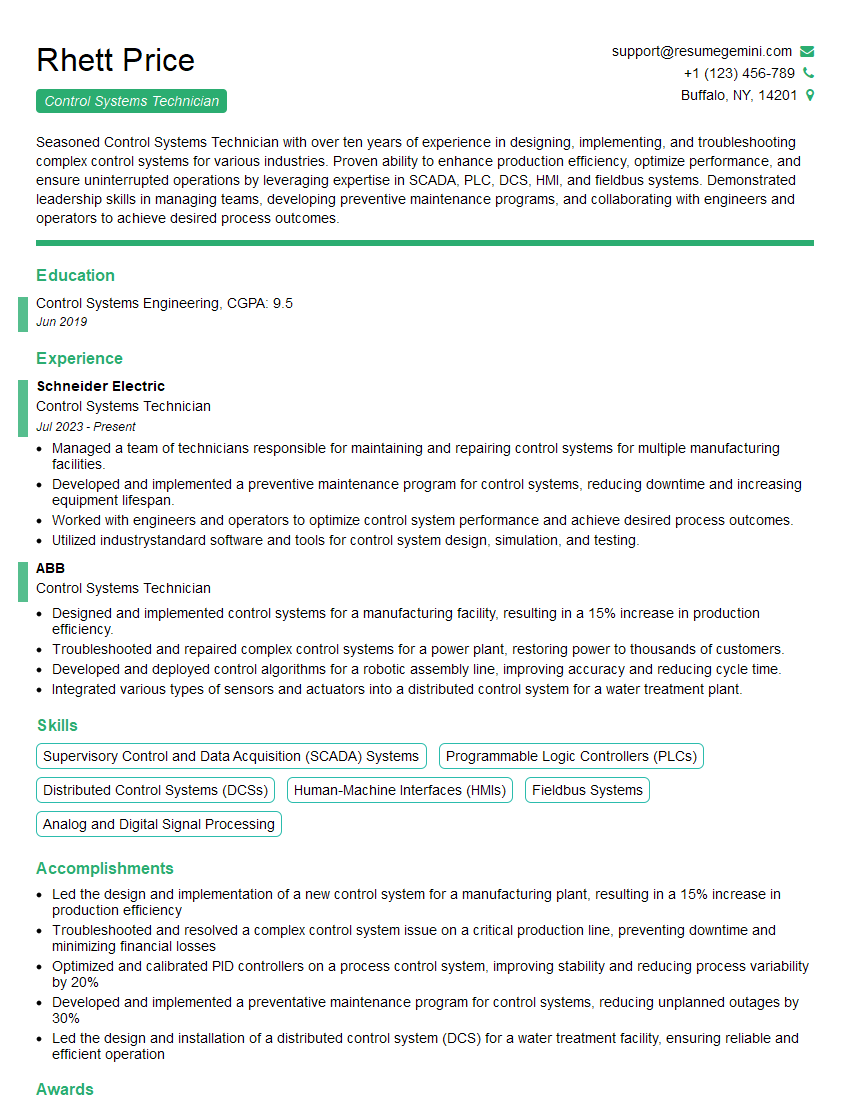
Control Systems Technician Resume Sample

Electrical Maintenance Technician Resume Sample
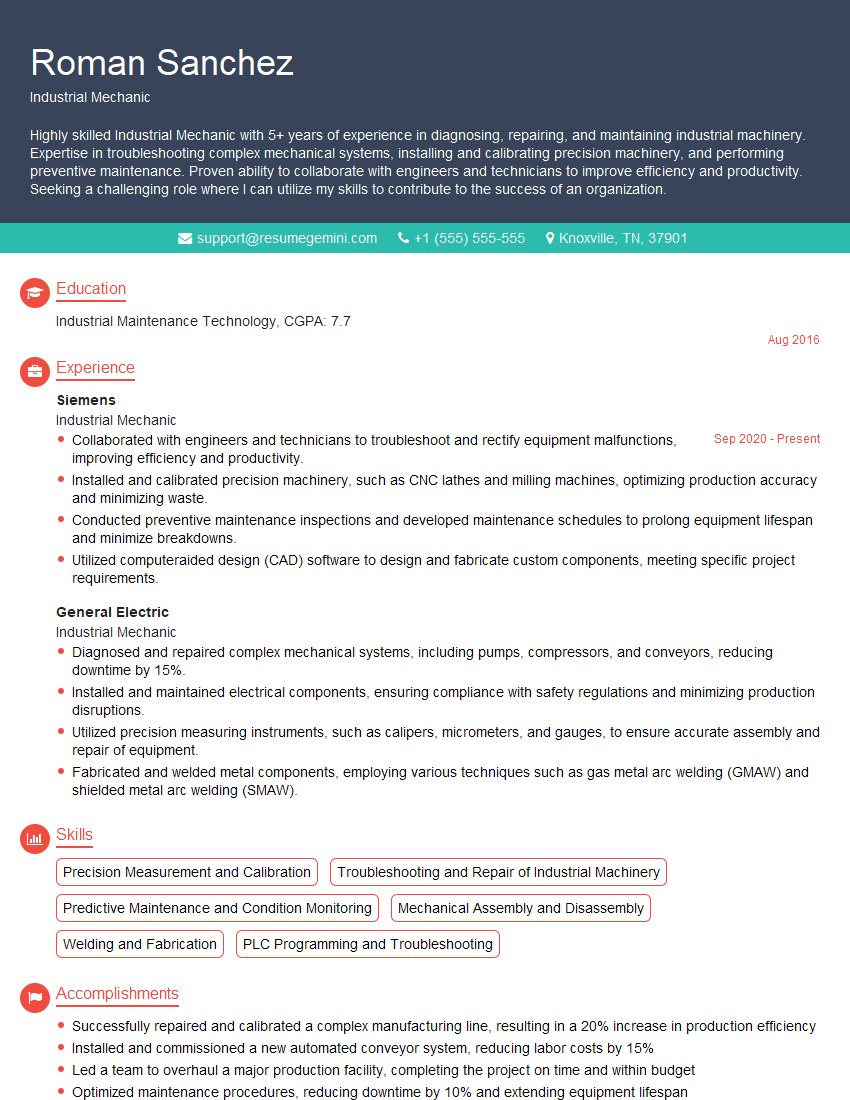
Industrial Mechanic Resume Sample
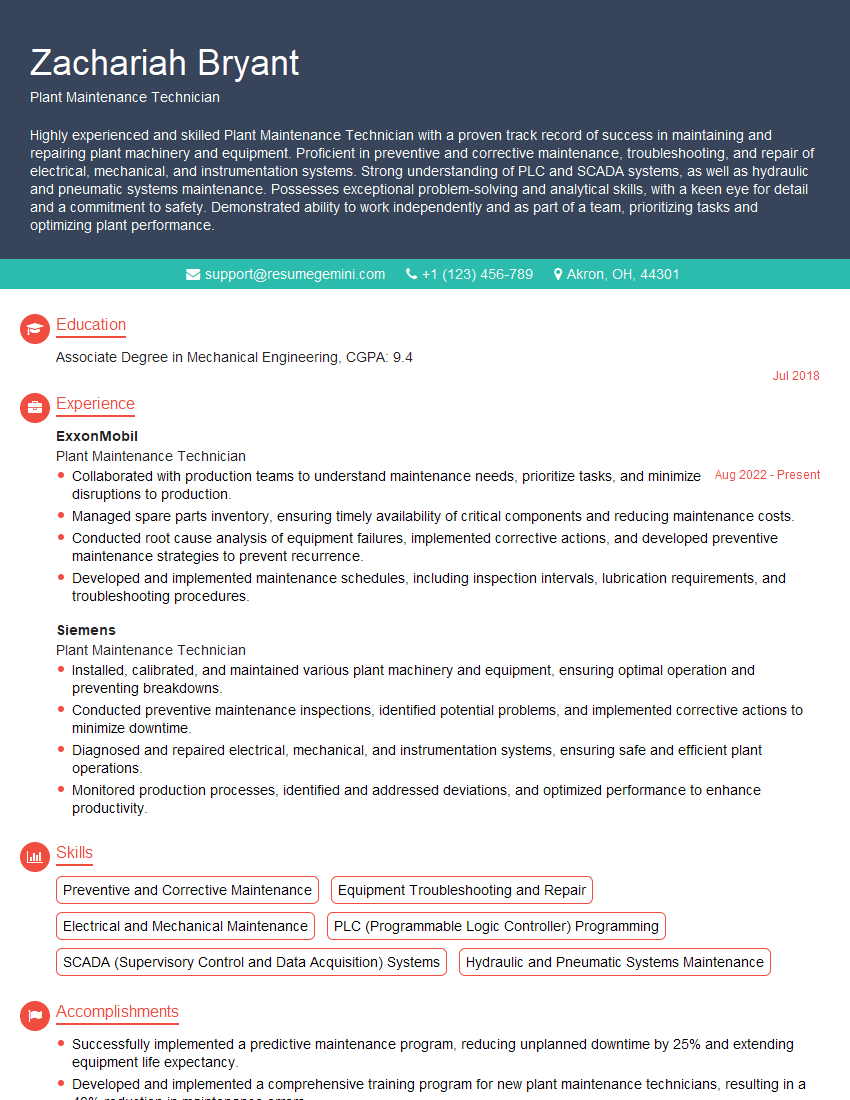
Plant Maintenance Technician Resume Sample
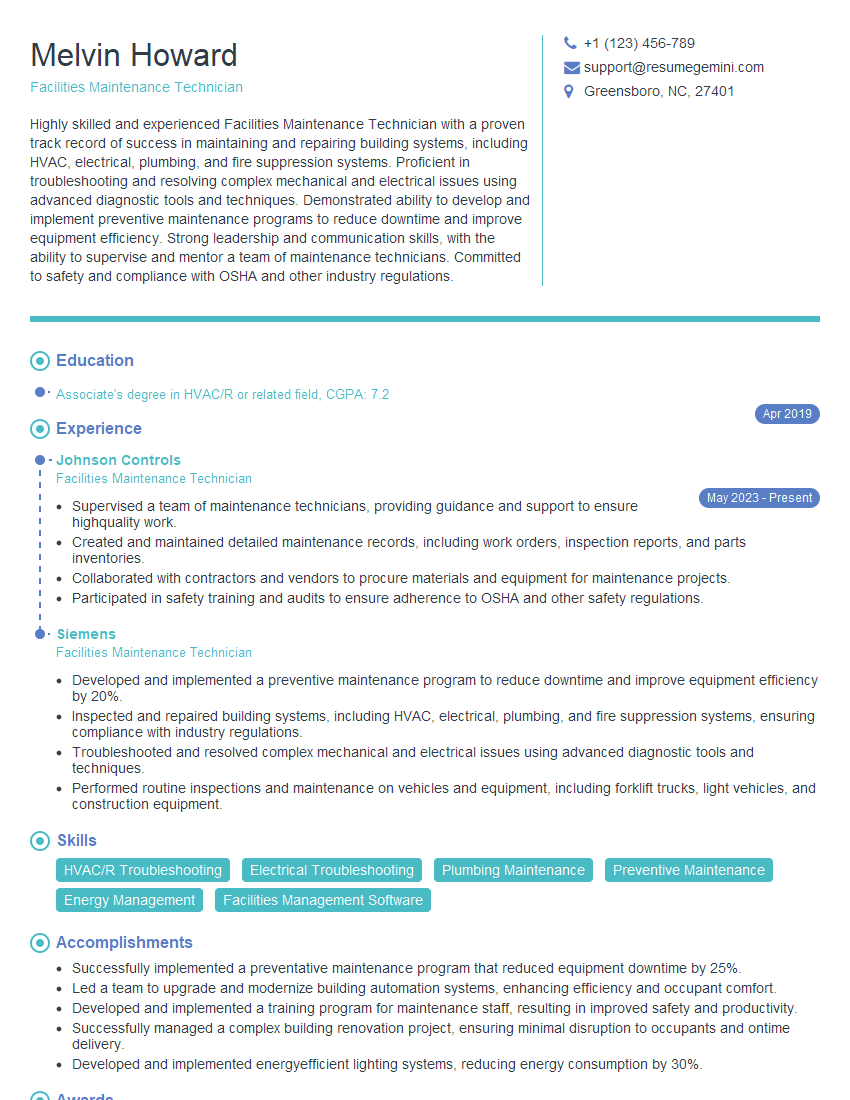
Facilities Maintenance Technician Resume Sample
- Maintenance Manager
- Maintenance Planner
- Maintenance Supervisor
- Reliability Engineer
- Maintenance Technician
- Maintenance Engineer
- Instrumentation Technician
- Field Service Technician
- Process Technician
- Equipment Technician
- Maintenance Coordinator
- Control Systems Technician
- Electrical Maintenance Technician
- Industrial Mechanic
- Plant Maintenance Technician
- Facilities Maintenance Technician
Explore more articles
Users Rating of Our Blogs
Share Your Experience
We value your feedback! Please rate our content and share your thoughts (optional).
What Readers Say About Our Blog
hello,
Our consultant firm based in the USA and our client are interested in your products.
Could you provide your company brochure and respond from your official email id (if different from the current in use), so i can send you the client’s requirement.
Payment before production.
I await your answer.
Regards,
MrSmith
hello,
Our consultant firm based in the USA and our client are interested in your products.
Could you provide your company brochure and respond from your official email id (if different from the current in use), so i can send you the client’s requirement.
Payment before production.
I await your answer.
Regards,
MrSmith
These apartments are so amazing, posting them online would break the algorithm.
https://bit.ly/Lovely2BedsApartmentHudsonYards
Reach out at [email protected] and let’s get started!
Take a look at this stunning 2-bedroom apartment perfectly situated NYC’s coveted Hudson Yards!
https://bit.ly/Lovely2BedsApartmentHudsonYards
Live Rent Free!
https://bit.ly/LiveRentFREE
Interesting Article, I liked the depth of knowledge you’ve shared.
Helpful, thanks for sharing.
Hi, I represent a social media marketing agency and liked your blog
Hi, I represent an SEO company that specialises in getting you AI citations and higher rankings on Google. I’d like to offer you a 100% free SEO audit for your website. Would you be interested?