Every successful interview starts with knowing what to expect. In this blog, we’ll take you through the top Field Verification and Testing of Signal Systems interview questions, breaking them down with expert tips to help you deliver impactful answers. Step into your next interview fully prepared and ready to succeed.
Questions Asked in Field Verification and Testing of Signal Systems Interview
Q 1. Explain the difference between signal attenuation and signal distortion.
Signal attenuation and signal distortion are two distinct but often related problems encountered in signal transmission. Attenuation refers to the reduction in signal strength as it travels over a distance or through a medium. Think of it like sound fading away as you move farther from the source. The signal loses amplitude but maintains its original shape, albeit weaker. Distortion, on the other hand, is a change in the signal’s waveform. It’s like someone is ‘muddying’ the sound – adding unwanted frequencies or changing the timing of the signal’s components. This can lead to misinterpretation of the signal at the receiving end.
For example, attenuation might be seen in a long fiber optic cable where the light signal gradually weakens. Distortion could result from interference causing the signal to become ‘noisy’ or irregular, perhaps due to reflections within the cable.
Q 2. Describe your experience with various signal testing equipment (e.g., spectrum analyzers, oscilloscopes).
I have extensive experience using a variety of signal testing equipment. Spectrum analyzers are indispensable for identifying the frequency components of a signal and detecting interference sources. I’ve used them to pinpoint unwanted signals impacting a cellular network, for instance, identifying the specific frequencies causing interference and their relative strengths. Oscilloscopes are crucial for visualizing the time-domain characteristics of a signal – observing its shape, amplitude, and timing. I’ve used oscilloscopes to analyze jitter (variations in timing) in high-speed data transmissions, allowing for the identification of problematic components or connections.
Beyond these, I’m proficient with network analyzers, signal generators, and power meters, tailoring my equipment selection to the specific signal type and testing requirements of the project. My experience spans various technologies including RF, microwave, and optical signals.
Q 3. How do you troubleshoot signal degradation in a field environment?
Troubleshooting signal degradation in the field requires a systematic approach. I typically begin by establishing a baseline – what is the expected signal strength and quality? Then, I move to identify the point of degradation. This often involves progressively narrowing down the possible sources of the problem. For example, if we suspect a problem with a wireless link, I might check the antenna connections, test for signal strength at different points along the signal path (using a signal strength meter), and investigate potential interference sources nearby (using a spectrum analyzer).
I document every step meticulously, recording signal measurements and observations. If the issue is intermittent, I might incorporate logging tools or specialized equipment to capture data when the problem occurs. Furthermore, knowledge of the specific signal protocol and system architecture plays a crucial role in effective troubleshooting.
Q 4. What are common sources of signal interference and how do you mitigate them?
Common sources of signal interference include electromagnetic interference (EMI) from nearby electrical equipment, radio frequency interference (RFI) from other radio transmitters, intermodulation distortion caused by the mixing of multiple signals, and ground loops which create unwanted current loops in the system. Weather conditions can also affect signal propagation.
Mitigation strategies vary depending on the source. EMI/RFI can often be reduced by using shielded cables, proper grounding techniques, and filters. Careful frequency planning can help avoid intermodulation distortion. Ground loops can be addressed through proper grounding practices, using isolation transformers, or other specialized techniques. For weather related issues, signal boosting or redundancy can be considered.
Q 5. Explain your understanding of signal-to-noise ratio (SNR) and its significance in signal testing.
Signal-to-noise ratio (SNR) is a crucial measure of signal quality, representing the ratio of the signal power to the noise power. A higher SNR indicates a stronger signal relative to the background noise. Think of it as the clarity of a voice in a crowded room – a high SNR means the voice is easily heard, while a low SNR makes it difficult to understand.
In signal testing, SNR is critical because it determines the reliability of the signal. A low SNR can lead to errors, data loss, or misinterpretations. We aim for a SNR that ensures reliable communication, the acceptable threshold varying depending on the application – high-bandwidth applications often require significantly higher SNRs than low-bandwidth ones.
Q 6. Describe your experience with different modulation techniques.
I have experience with various modulation techniques, including Amplitude Modulation (AM), Frequency Modulation (FM), Phase Shift Keying (PSK), and Quadrature Amplitude Modulation (QAM), among others. The choice of modulation technique depends on factors such as bandwidth requirements, power efficiency, and susceptibility to noise and interference. For instance, AM is simpler but less efficient and more susceptible to noise than more advanced techniques like QAM used in modern digital communication systems.
My experience includes testing and analyzing the performance of these modulations in different environments, assessing their robustness against noise, and optimizing parameters for optimal signal quality. This involves employing specialized equipment to generate and analyze modulated signals and understanding the trade-offs involved in selecting a suitable modulation scheme for a given application.
Q 7. How do you ensure the accuracy and reliability of your field test results?
Ensuring accurate and reliable field test results is paramount. This involves several key steps. Firstly, I always calibrate all test equipment before and after each test session, following manufacturer guidelines and maintaining meticulous calibration records. Secondly, I employ multiple measurement techniques and compare results to identify any discrepancies. For example, I might use both spectrum analysis and direct signal measurements to verify the results. Thirdly, environmental factors such as temperature and humidity are carefully considered and recorded, as they can influence signal behavior. Finally, all data is carefully documented, including test setup, environmental conditions, and any observations made during the test.
Ultimately, a methodical approach, careful calibration, and a thorough understanding of potential error sources are fundamental to obtaining trustworthy field test results. This ensures the data accurately reflects the signal’s performance and supports informed decision-making.
Q 8. What are your experience with different types of cabling and connectors and their impact on signal integrity?
My experience encompasses a wide range of cabling and connectors, understanding their crucial role in signal integrity. Signal integrity refers to the accuracy and quality of a signal as it travels through a system. Different cable types, like coaxial, twisted-pair, and fiber optic, each possess unique characteristics affecting signal quality. Coaxial cables, for instance, are excellent for high-frequency signals due to their shielding, minimizing signal loss and interference. However, they are bulkier and less flexible than twisted-pair cables, which are better suited for lower-frequency applications. Fiber optic cables, on the other hand, offer superior bandwidth and immunity to electromagnetic interference, ideal for long-distance transmission.
Connectors, too, play a vital role. The quality of the connection, the impedance matching between the connector and cable, and the connector’s shielding all impact signal integrity. A poorly terminated connector, for example, can introduce signal reflections and attenuation, degrading the signal quality. I have extensive hands-on experience working with various connectors, such as BNC, RJ45, SMA, and optical fiber connectors, understanding their specific applications and proper termination techniques to maintain optimal signal integrity. I’ve encountered situations where a seemingly minor issue with a connector, like a loose connection or improper crimping, resulted in significant signal degradation, highlighting the importance of meticulous attention to detail in this area. Troubleshooting such issues requires methodical investigation using tools like time-domain reflectometers (TDRs) and network analyzers.
Q 9. How do you document field test procedures and results?
Field test procedures and results are meticulously documented using a combination of methods to ensure accuracy and traceability. This typically involves creating a detailed test plan outlining the specific tests to be performed, the equipment to be used, and the acceptance criteria. During testing, observations are documented in real-time using standardized forms or digital tools, capturing key parameters such as signal strength, latency, error rates, and any anomalies observed. Photographs and videos are often used to visually document the test setup and significant findings.
After the field testing is complete, a comprehensive report is generated, summarizing the findings, including all raw data, graphs illustrating key performance indicators, and an analysis of the results against the pre-defined acceptance criteria. This report clearly highlights any areas where the system fell short of expectations and provides recommendations for improvement. The documentation adheres to established standards, ensuring clarity and facilitating future analysis or audits. For instance, I use a standardized template for reporting, including sections for equipment calibration, test procedures, results, analysis, and conclusions. This systematic approach ensures consistent and reliable documentation.
Q 10. Explain your experience with test plans and reporting.
Test plans are the cornerstone of successful field testing, outlining the scope, objectives, methodology, and acceptance criteria for each test. They are developed collaboratively with stakeholders, ensuring everyone understands the goals and procedures. A well-structured test plan ensures that the testing is efficient, comprehensive, and focuses on the most critical aspects of the system. My experience includes developing test plans for various signal systems, ranging from simple point-to-point links to complex network infrastructures. I usually include detailed descriptions of the test environment, equipment requirements, test procedures, and data analysis methods.
Reporting on the test results is equally critical. A clear and concise report presents the findings in an easily understandable format, accompanied by supporting data and visuals. The report addresses whether the system met the acceptance criteria, identifies any discrepancies, and proposes solutions for any issues discovered. I’ve used various reporting tools and techniques, adapting them based on the specific project requirements. For instance, in one project, I used a dedicated test management software to document the test cases, track progress, and automatically generate comprehensive reports.
Q 11. What are your experience with different types of wireless technologies (e.g., cellular, Wi-Fi, Bluetooth)?
My experience with wireless technologies spans several domains, including cellular (2G, 3G, 4G, and 5G), Wi-Fi (802.11a/b/g/n/ac/ax), and Bluetooth. Each technology presents unique challenges and considerations during field testing. Cellular testing involves assessing signal strength, data throughput, latency, and call quality under various conditions, including different locations and network congestion levels. This often involves using specialized test equipment to simulate various network conditions. Wi-Fi testing focuses on signal coverage, throughput, and security, requiring tools to measure signal strength, analyze interference sources, and evaluate network performance. Bluetooth testing assesses range, data transfer rates, and reliability, with a focus on device pairing and compatibility.
Understanding the nuances of each technology and the associated regulatory compliance requirements is vital for comprehensive testing. For example, interference from other wireless devices can significantly impact the performance of a Wi-Fi network, requiring careful consideration of the test environment to minimize interference. I’ve encountered situations where unexpected interference sources, such as microwave ovens or cordless phones, significantly impacted the test results, highlighting the importance of a controlled test environment. Properly mitigating such interference ensures accurate and reliable testing.
Q 12. How do you handle unexpected issues or challenges during field testing?
Handling unexpected issues during field testing is a crucial aspect of my role. My approach is systematic and involves a combination of troubleshooting techniques, problem-solving skills, and effective communication. When an unexpected problem arises, my first step is to systematically document the issue, including the specific circumstances and observed symptoms. This careful documentation allows for accurate analysis and reporting later. Then, I use a structured troubleshooting process, starting with a thorough check of the test setup, equipment calibration, and environmental factors.
If the problem persists, I leverage my experience to identify potential causes. This might involve analyzing signal traces, checking for connectivity issues, or investigating potential interference sources. If the problem requires expertise beyond my immediate capabilities, I communicate with the relevant team members to collaborate on finding a solution. Effective communication with the team and the client is essential, keeping them updated on the progress and any potential impact on the project timeline. For example, in one instance, a sudden power outage interrupted a crucial test. By quickly identifying an alternative power source and adapting the test schedule, we minimized the impact on the overall project timeline. Adaptability and problem-solving skills are critical for successfully navigating unexpected challenges in the field.
Q 13. Explain your understanding of electromagnetic compatibility (EMC) and its relevance to signal systems.
Electromagnetic compatibility (EMC) is the ability of electronic equipment to function correctly in its intended electromagnetic environment without introducing unacceptable electromagnetic disturbances to anything else. It’s crucial for signal systems because electromagnetic interference (EMI) can severely degrade signal quality, causing malfunctions or data loss. EMI can originate from various sources, including other electronic devices, power lines, and even natural phenomena like lightning. Understanding EMC principles and implementing appropriate measures is paramount to ensuring the reliability and stability of signal systems.
My experience includes conducting EMC testing and ensuring compliance with relevant standards. This often involves using specialized equipment like spectrum analyzers and EMI receivers to measure radiated and conducted emissions from the signal system. Implementing mitigation techniques like shielding, grounding, and filtering is crucial in minimizing EMI. I’ve worked on projects where EMI issues caused significant problems, highlighting the importance of proactive EMC design and testing. For instance, I once encountered interference from a nearby radio transmitter affecting the performance of a wireless sensor network. By implementing appropriate shielding and filtering, we effectively mitigated the interference and ensured the reliable operation of the system.
Q 14. Describe your experience with different types of antennas and their characteristics.
My experience encompasses various antenna types, including dipole antennas, patch antennas, horn antennas, and yagi antennas. Each antenna type possesses unique characteristics, including gain, bandwidth, polarization, and radiation pattern, which dictate their suitability for specific applications. Dipole antennas, for instance, are simple and widely used, while patch antennas are commonly employed in wireless communication systems due to their compact size and ease of integration. Horn antennas offer high gain and directionality, while yagi antennas are known for their high gain and narrow beamwidth.
Selecting the appropriate antenna is critical to optimize signal transmission and reception. Factors such as frequency, desired range, environmental conditions, and polarization all influence the choice of antenna. I’ve worked on projects requiring antenna optimization and alignment for optimal signal performance. This often involves using tools like antenna analyzers and field strength meters to measure antenna characteristics and fine-tune its position for maximum signal strength and minimal interference. For example, in one project, we encountered challenges with signal coverage in a building due to the use of an unsuitable antenna. By carefully selecting and positioning a high-gain directional antenna, we significantly improved signal coverage and reliability.
Q 15. How do you validate that a signal system meets its specified performance requirements?
Validating a signal system against its performance requirements involves a multi-stage process combining theoretical analysis, simulation, and rigorous field testing. We begin by meticulously reviewing the system’s specifications, identifying key performance parameters like signal strength, latency, noise levels, and data integrity. This forms the basis of our test plan.
Next, we design field tests to simulate real-world operating conditions. This might involve transmitting signals over various terrains, distances, and environmental conditions. We use specialized equipment to accurately measure the system’s performance and compare it to the pre-defined specifications. For example, we might use a spectrum analyzer to measure signal strength and noise levels, or a network analyzer to measure latency and packet loss. Any deviations from the specified parameters are meticulously documented and analyzed. Finally, we interpret the data to either confirm that the system meets the performance criteria or identify areas needing improvement or further investigation. A crucial aspect is the use of statistical methods to account for variations inherent in field testing.
Imagine testing a new cellular network. Our tests would verify whether the signal strength remains above a certain threshold across various locations, even in areas with obstacles like buildings. We’d analyze call setup times (latency) and data transfer rates to validate performance against the promised network speed. Any issues would lead to further investigation and potential adjustments to the system or the network infrastructure.
Career Expert Tips:
- Ace those interviews! Prepare effectively by reviewing the Top 50 Most Common Interview Questions on ResumeGemini.
- Navigate your job search with confidence! Explore a wide range of Career Tips on ResumeGemini. Learn about common challenges and recommendations to overcome them.
- Craft the perfect resume! Master the Art of Resume Writing with ResumeGemini’s guide. Showcase your unique qualifications and achievements effectively.
- Don’t miss out on holiday savings! Build your dream resume with ResumeGemini’s ATS optimized templates.
Q 16. What are the key performance indicators (KPIs) you monitor during field testing?
Key Performance Indicators (KPIs) during field testing are tailored to the specific signal system, but generally include:
- Signal Strength (RSSI): Measured in dBm, this indicates the power level of the received signal. Low RSSI can indicate signal attenuation or interference.
- Signal-to-Noise Ratio (SNR): This is the ratio of signal power to noise power, indicating the signal’s clarity. A higher SNR means less noise corruption.
- Latency: The time delay between signal transmission and reception. Critical for real-time applications.
- Packet Loss: The percentage of data packets that fail to reach their destination. High packet loss suggests network congestion or other issues.
- Bit Error Rate (BER): The number of bit errors per transmitted bits, representing the accuracy of data transmission. A low BER is essential for reliable communication.
- Availability: The percentage of time the system is operational and functioning correctly. Crucial for assessing system reliability.
We utilize specialized software and hardware to monitor these KPIs in real-time, logging the data for later analysis. The specific tools depend on the signal system; for instance, a network protocol analyzer might be used for IP-based communication systems, whereas a spectrum analyzer might be utilized for radio frequency systems.
Q 17. Explain your process for calibrating testing equipment.
Calibrating testing equipment is paramount to ensure accurate and reliable results. Our process is a multi-step procedure:
- Traceability: All our equipment is traceable to national or international standards. This means its calibration can be linked back to a known, accurate standard.
- Regular Calibration: We adhere to a strict calibration schedule, with frequent checks based on the equipment’s usage and manufacturer’s recommendations. High-precision equipment might require monthly calibration, while others might be calibrated annually.
- Calibration Procedure: Calibration is conducted using standardized procedures and certified calibration equipment. This might involve comparing the equipment’s readings to a known standard, using a signal generator producing precise signals.
- Documentation: All calibration activities, including dates, results, and any corrective actions, are meticulously documented. This ensures traceability and allows for auditing purposes.
- Calibration Records: The calibration certificates are maintained and readily available for review. These certificates validate that the equipment meets its specifications and can be relied upon for accurate measurements.
For example, we might use a calibrated signal generator to produce a known signal strength, and then check the accuracy of our spectrum analyzer’s reading against that known value. Any deviation would necessitate adjustment or repair of the analyzer.
Q 18. How do you ensure the safety of yourself and your team during field testing?
Safety is our top priority. Our field testing procedures incorporate several measures to mitigate risks:
- Risk Assessment: Before each field test, a thorough risk assessment is performed, identifying potential hazards and developing mitigation strategies. This includes considering environmental factors like weather, terrain, and proximity to high-voltage lines.
- Safety Training: All team members undergo comprehensive safety training, covering topics like electrical safety, working at heights, and emergency procedures. Regular refresher courses are mandatory.
- Personal Protective Equipment (PPE): We always use appropriate PPE, including high-visibility clothing, safety helmets, and gloves, depending on the site conditions.
- Site Safety Procedures: We strictly adhere to all site-specific safety rules and regulations, collaborating closely with site personnel and management.
- Emergency Procedures: Clear emergency procedures are defined and practiced regularly. This includes emergency contact information, first aid supplies, and communication protocols.
Imagine testing a signal system near a busy highway. Our risk assessment would include precautions against traffic, and we’d ensure our team is clearly visible through high-visibility vests. We’d also plan for potential weather issues and have backup plans in case of severe conditions.
Q 19. Describe your experience with remote testing and diagnostics.
My experience with remote testing and diagnostics is extensive, particularly with systems that incorporate remote monitoring capabilities. This involves utilizing remote access tools and software to troubleshoot and analyze signal systems without physically being present at the site. This is especially useful for geographically dispersed systems or those in challenging environments. Remote access allows for real-time monitoring of KPIs, remote configuration of system parameters, and remote troubleshooting of issues. Often this involves secure network connections and specialized software.
For instance, we can utilize secure shell (SSH) connections to access remote servers hosting the system’s monitoring data, allowing us to analyze logs and identify potential problems. We also use remote diagnostic tools embedded in the signal system itself to conduct self-testing and diagnostics. The ability to collect data remotely, and even take control of certain system functions, significantly improves efficiency and reduces downtime. Furthermore, we utilize specialized software to visualize and analyze remotely collected data, often using cloud-based platforms for data storage and analysis.
Q 20. What are your experience with different types of data acquisition systems?
I’m proficient with a wide array of data acquisition systems (DAS), adapting my approach to the specific signal characteristics and testing requirements. This includes both hardware and software components.
- Hardware DAS: This includes oscilloscopes for high-speed signal capture, spectrum analyzers for frequency analysis, signal generators for controlled signal injection, and data loggers for continuous long-term monitoring. The choice depends on the specific signal type (e.g., analog, digital, RF).
- Software DAS: I have extensive experience with various software packages for data acquisition, analysis, and visualization. These often include features for data logging, real-time display, and post-processing analysis, supporting various data formats and signal types. Some utilize custom scripting or programming to tailor analysis workflows. For example, software such as LabVIEW, MATLAB, or specialized network protocol analyzers are frequently employed.
My experience spans various applications, from simple systems using basic data loggers to complex, multi-channel systems requiring synchronized data acquisition across multiple devices. I also have expertise in integrating different DAS components to create customized solutions for specific testing scenarios, ensuring efficient and accurate data collection.
Q 21. How do you interpret and analyze complex signal data?
Interpreting and analyzing complex signal data requires a combination of technical expertise, analytical skills, and the use of specialized tools. The process usually involves:
- Data Cleaning: This initial step involves removing or correcting any errors or outliers in the collected data. This might involve identifying and removing noise, correcting for sensor drift, or handling missing data points. The goal is to ensure that the data is accurate and reliable for analysis.
- Data Transformation: Often, raw data needs to be transformed before it can be effectively analyzed. This might involve filtering, smoothing, or converting data into a more suitable format (e.g., Fourier transforms for frequency analysis).
- Statistical Analysis: Statistical methods are crucial for determining trends, correlations, and significant variations within the data. This might involve calculating averages, standard deviations, correlations, or using more sophisticated statistical models.
- Visualization: Data visualization is key to effectively communicating findings. We use various tools to create graphs, charts, and other visual representations to highlight key patterns and trends within the data.
- Correlation with System Behavior: The final step involves correlating the data analysis results with the observed system behavior. This allows us to identify the causes of any anomalies or issues, such as poor signal quality or system malfunctions.
For instance, if we observe increased latency, we might use frequency analysis to identify potential interference sources that could be causing the delays. By combining statistical analysis with visualization, we can effectively communicate our findings and propose appropriate solutions.
Q 22. Explain your experience with troubleshooting signal timing issues.
Troubleshooting signal timing issues requires a systematic approach combining theoretical understanding with practical field experience. It often involves identifying discrepancies between expected and observed signal behavior. This might manifest as red light violations, extended yellow intervals, or conflicts between different signal phases.
My approach starts with a thorough review of the signal timing plan, comparing it against the actual field observations using specialized equipment like signal timing analyzers and loop detectors. I’d then look for potential causes such as:
- Hardware malfunctions: Faulty controllers, sensors, or actuators can cause timing inconsistencies.
- Software glitches: Bugs in the signal controller’s programming can lead to unexpected behavior.
- Environmental factors: Extreme temperatures or power fluctuations can affect signal performance.
- Communication problems: Issues with communication networks between controllers and other devices can disrupt timing.
For example, I once encountered a situation where a seemingly minor software bug caused a signal to cycle through its phases too quickly, leading to short yellow intervals and potential safety hazards. By meticulously reviewing the controller’s code and deploying updated firmware, we resolved the issue, proving the importance of both field observation and software expertise.
Q 23. Describe your proficiency in using relevant software tools for signal analysis.
Proficiency in signal analysis software is crucial for efficient field verification. I’m adept at using various tools, including:
- Synchro: For detailed analysis of signal timing plans and real-time data collection.
- Signal timing software (various vendors): These tools provide functionalities for simulation, optimization, and performance evaluation of traffic signal systems.
- Data acquisition systems: These integrate with sensors to capture real-time traffic data, which is then analyzed to understand signal performance in relation to actual traffic flow.
- Spreadsheet software (Excel, Google Sheets): For data organization, analysis, and report generation.
I understand how to interpret the data generated by these software tools to identify bottlenecks, anomalies, and areas requiring adjustments. For instance, using Synchro, I can compare planned signal timings against actual timings to pinpoint deviations. I can then use this data to suggest improvements to the timing plan or identify potential hardware failures.
Q 24. How do you manage time effectively during field testing projects?
Effective time management in field testing is crucial, especially considering weather changes, unexpected issues and traffic delays. My strategy is built on careful planning, prioritization, and adaptability. I begin by creating a detailed schedule, allocating specific time slots for each task and location, factoring in potential delays. A key aspect is to maintain open communication with the team and stakeholders to manage expectations and re-prioritize if necessary.
For instance, in a recent project, I anticipated potential traffic congestion impacting data acquisition at a specific site. I planned the field test around the expected lighter traffic times, significantly reducing delays. Furthermore, I utilize mobile apps to track progress, log findings, and report issues promptly, streamlining workflow and enhancing efficiency.
Q 25. Explain your experience with working with different stakeholders (e.g., clients, engineers, technicians).
Collaboration is key to successful field testing. I have extensive experience working with diverse stakeholders, including clients, engineers, technicians, and contractors. Clear, concise communication is paramount. I ensure everyone understands project objectives, timelines, and individual responsibilities. Regular meetings and progress reports maintain transparency and allow for timely problem-solving.
I remember a project where we faced unexpected delays due to permit issues. I promptly contacted the client, explaining the situation, and collaboratively explored solutions, including adjusting the testing schedule or finding alternative locations. This transparent communication ensured we maintained a positive working relationship, minimizing the impact of the delay.
Q 26. How do you prioritize tasks during field testing?
Prioritization during field testing hinges on identifying critical tasks and potential risks. I use a risk-based approach, prioritizing tasks that have the greatest potential impact on project success and safety. Tasks are categorized by urgency and importance, and a clear prioritization matrix guides the team’s efforts.
For example, verifying the functionality of pedestrian signals and ensuring safe operation takes precedence over less critical tasks like fine-tuning signal timing for minor improvements. Using this method allows for efficient resource allocation and focuses our efforts on the most important aspects of the test.
Q 27. Describe a situation where you had to adapt your testing procedures due to unforeseen circumstances.
During a recent project, heavy rainfall caused unexpected flooding at one of our testing sites. This resulted in the temporary unavailability of the equipment and rendered our initial testing plan impractical. I immediately convened a team meeting to brainstorm alternative solutions. We decided to re-route our testing sequence, prioritizing sites unaffected by the weather, and adjusting our data collection methods to accommodate the conditions.
We also utilized simulation software to supplement our field data, allowing us to still meet the project deadlines despite the setbacks. This demonstrated adaptability and the importance of having contingency plans for unforeseen circumstances.
Q 28. How do you ensure that your field test data is secure and confidential?
Data security and confidentiality are paramount. I adhere to strict protocols to protect sensitive information collected during field tests. This includes secure data storage (encrypted hard drives and cloud storage with access controls), secure data transmission (using VPNs and encrypted communication channels), and restricted access to data based on roles and responsibilities. All data is handled in accordance with relevant data privacy regulations.
Furthermore, we maintain detailed documentation of data handling procedures, including access logs, to maintain a comprehensive audit trail. This layered approach minimizes the risk of unauthorized access or data breaches and ensures compliance with industry best practices.
Key Topics to Learn for Field Verification and Testing of Signal Systems Interview
- Signal Propagation and Attenuation: Understanding how signals behave in different environments (urban, rural, indoor), factors affecting signal strength, and methods for calculating path loss.
- Testing Equipment and Procedures: Familiarity with various test instruments (e.g., spectrum analyzers, signal generators, power meters), and standard testing procedures for verifying signal quality and performance.
- Troubleshooting Signal Issues: Developing practical problem-solving skills to identify and resolve signal interference, noise, and other impairments affecting system performance. This includes analyzing test results and applying theoretical knowledge to diagnose problems.
- Network Protocols and Standards: Understanding relevant communication protocols (e.g., cellular, Wi-Fi, satellite) and industry standards related to signal system verification and testing. This may include understanding of compliance requirements.
- Data Analysis and Reporting: Effectively collecting, analyzing, and interpreting test data; presenting results clearly and concisely in technical reports. This includes using appropriate software tools for data visualization and analysis.
- Safety Procedures and Regulations: Adherence to safety regulations and best practices during fieldwork, including working at heights, handling equipment, and working near electrical hazards.
- System Integration and Deployment: Understanding the overall process of integrating and deploying signal systems in different environments, and the role of testing in this process.
Next Steps
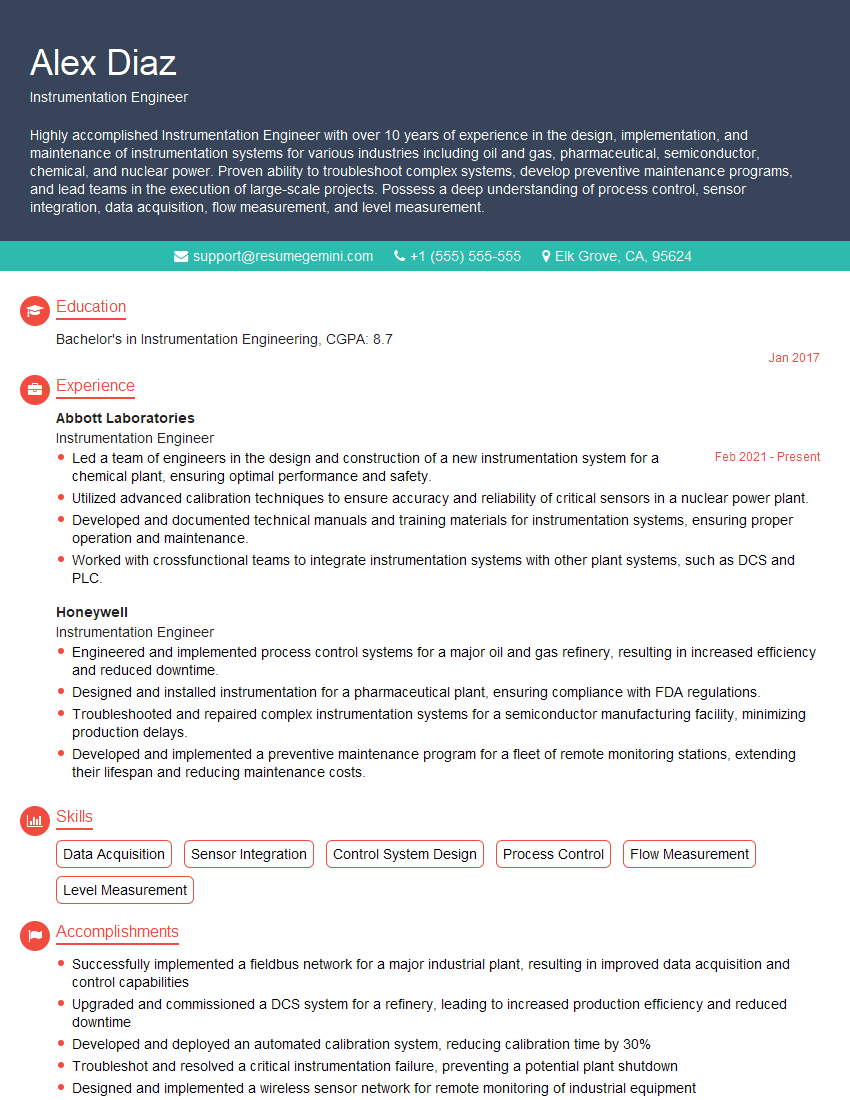
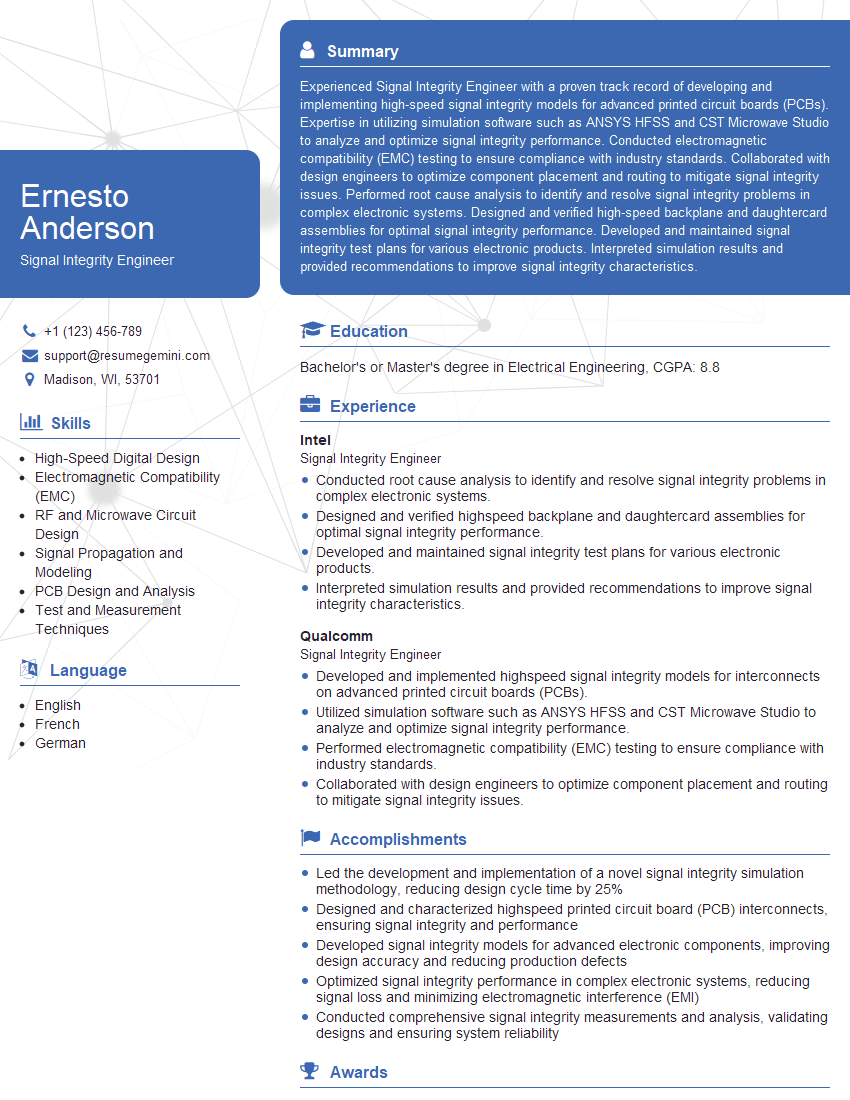
Mastering Field Verification and Testing of Signal Systems opens doors to exciting career opportunities in a rapidly growing technological landscape. Proficiency in this area demonstrates valuable practical skills and technical expertise highly sought after by employers. To significantly boost your job prospects, it’s crucial to present your qualifications effectively. Creating an ATS-friendly resume is essential for ensuring your application gets noticed by recruiters. We strongly recommend using ResumeGemini to craft a professional and impactful resume that highlights your skills and experience in this field. ResumeGemini offers a streamlined process, and we provide examples of resumes tailored specifically to Field Verification and Testing of Signal Systems to help you get started.


Explore more articles
Users Rating of Our Blogs
Share Your Experience
We value your feedback! Please rate our content and share your thoughts (optional).
What Readers Say About Our Blog
hello,
Our consultant firm based in the USA and our client are interested in your products.
Could you provide your company brochure and respond from your official email id (if different from the current in use), so i can send you the client’s requirement.
Payment before production.
I await your answer.
Regards,
MrSmith
hello,
Our consultant firm based in the USA and our client are interested in your products.
Could you provide your company brochure and respond from your official email id (if different from the current in use), so i can send you the client’s requirement.
Payment before production.
I await your answer.
Regards,
MrSmith
These apartments are so amazing, posting them online would break the algorithm.
https://bit.ly/Lovely2BedsApartmentHudsonYards
Reach out at [email protected] and let’s get started!
Take a look at this stunning 2-bedroom apartment perfectly situated NYC’s coveted Hudson Yards!
https://bit.ly/Lovely2BedsApartmentHudsonYards
Live Rent Free!
https://bit.ly/LiveRentFREE
Interesting Article, I liked the depth of knowledge you’ve shared.
Helpful, thanks for sharing.
Hi, I represent a social media marketing agency and liked your blog
Hi, I represent an SEO company that specialises in getting you AI citations and higher rankings on Google. I’d like to offer you a 100% free SEO audit for your website. Would you be interested?