The thought of an interview can be nerve-wracking, but the right preparation can make all the difference. Explore this comprehensive guide to Knowledge of garment terminology and industry jargon interview questions and gain the confidence you need to showcase your abilities and secure the role.
Questions Asked in Knowledge of garment terminology and industry jargon Interview
Q 1. Define ‘selvedge’ and explain its importance in garment construction.
Selvedge is the self-finished edge of a fabric woven on a loom. Unlike cut edges that fray easily, the selvedge is tightly woven and prevents unraveling. Think of it as the fabric’s natural, reinforced border.
Its importance in garment construction is significant for several reasons:
- Durability: Selvedge’s tightly woven structure adds strength and prevents seam fraying, leading to longer-lasting garments.
- Stability: Using selvedge in critical areas like seams provides better shape retention and prevents distortion.
- Aesthetics: In high-end garments, selvedge can be a desirable aesthetic feature, showcasing the quality of the fabric. The distinct selvedge edge can be deliberately incorporated into the design for a unique look.
- Pattern Matching: When working with patterned fabrics, using the selvedge as a reference point helps ensure accurate pattern matching in seams.
For instance, denim jackets often feature exposed selvedge details on the cuffs or pockets, highlighting the quality of the fabric. In contrast, a less durable fabric might require additional finishing along the cut edges to prevent fraying.
Q 2. What is the difference between a French seam and a flat felled seam?
Both French seams and flat-felled seams are strong and durable seam finishes, often used in high-quality garments, but they differ significantly in construction and appearance:
French Seam: A French seam encloses all raw edges within the seam. It’s constructed by sewing the garment pieces together with a narrow seam allowance, then trimming the seam allowance, turning the fabric inside out, and sewing a second seam which encloses all the raw edges. This creates a clean, neat finish, ideal for sheer or delicate fabrics.
Flat-felled Seam: A flat-felled seam is more robust and typically used in heavier fabrics like denim or canvas. One seam allowance is folded over and stitched down to the other seam allowance, completely enclosing the raw edges. This results in a strong, durable seam with a distinct raised seam on one side.
In short: A French seam is enclosed and neat, suitable for fine fabrics. A flat-felled seam is robust and visible, better for sturdy fabrics. Think of a luxurious silk blouse utilizing a French seam for its delicate nature, and sturdy workwear relying on the strength of a flat-felled seam.
Q 3. Explain the significance of ‘grain line’ in pattern making.
The grain line refers to the direction of the warp (lengthwise) and weft (crosswise) yarns in woven fabrics. It’s crucial in pattern making because fabric behaves differently depending on the direction of the grain.
Significance:
- Garment Hang & Drape: Cutting along the lengthwise grain (straight grain) results in garments that hang properly and drape well. Cutting against the grain can cause distortion and unwanted wrinkles.
- Stability & Stretch: Fabrics stretch more along the crosswise grain than the lengthwise grain. Understanding this allows designers to control how a garment stretches and fits.
- Pattern Alignment: Accurate placement of the grain line is essential for ensuring the pattern pieces fit together correctly and maintain the intended shape of the finished garment.
Ignoring the grain line can lead to a garment that is misshapen, ill-fitting, and unstable. Imagine a skirt where the fabric is cut off-grain – it might stretch unevenly causing the hemline to hang unevenly or the skirt to twist.
Q 4. Describe the various types of closures used in garments (e.g., zippers, buttons, hooks).
Garments use a variety of closures depending on the style, function, and fabric. Here are some common types:
- Zippers: Offer a versatile closure, available in various lengths, colors, and types (e.g., metal, plastic, invisible). They are used in many garments like dresses, pants, and jackets.
- Buttons: A classic and widely used closure, ranging from simple to decorative. They can be sewn directly onto the garment or attached to buttonholes.
- Hooks and Eyes: Small, functional closures often used in conjunction with zippers or other fastenings for added security or as a hidden closure on delicate fabrics.
- Snaps: Small, pressure-fastening closures; often used on shirts, children’s clothing, or as an additional fastening.
- Velcro: A hook-and-loop fastener, quick and easy to use, often found in children’s wear or sportswear.
- Drawstrings: Used for closures in garments like hoodies, trousers, and bags. They offer a casual and flexible closure.
- Buckles: Mainly used for belts and bags, and sometimes incorporated as decorative or functional elements in garments.
The choice of closure is critical. A delicate blouse would utilize small, elegant buttons or hooks and eyes, while sturdy workwear might opt for strong zippers or snaps.
Q 5. What are the key differences between woven and knit fabrics?
Woven and knit fabrics have distinct structures and properties, leading to different uses in garment construction:
Woven Fabrics: Woven fabrics are created by interlacing two sets of yarns at right angles—the warp (lengthwise) and weft (crosswise). They tend to have more structure and stability, less stretch, and often a crisper drape. Examples include cotton poplin, linen, silk, and denim.
Knit Fabrics: Knit fabrics are formed by interlocking loops of a single yarn. They are typically more flexible, stretchy, and drape differently than woven fabrics. They range from fine knits like jersey to heavier knits like rib and fleece. Examples include cotton jersey, rib knit, and double knit.
Key Differences summarized:
- Structure: Woven fabrics are interlaced yarns; knit fabrics are interlocking loops.
- Stretch: Knit fabrics generally have more stretch than woven fabrics.
- Drape: Woven fabrics usually have a crisper drape; knit fabrics often have a softer, more fluid drape.
- Durability: Woven fabrics often are more durable than knits, though some heavy knits are quite robust.
- Sewing: Working with knits requires different techniques than working with woven fabrics due to their stretch.
Consider a tailored suit demanding the structured drape of a woven fabric like wool, whereas a comfortable t-shirt benefits from the elasticity and softness of a knit fabric like cotton jersey.
Q 6. Explain the concept of ‘ease’ in garment construction.
Ease in garment construction refers to the extra fabric added to a garment pattern to allow for comfort and movement. It’s the difference between the body measurements and the finished garment measurements.
Types of ease:
- Fitting Ease: The extra fabric added to ensure the garment fits comfortably without being too tight. It accounts for the body’s curves and allows for ease of movement.
- Design Ease: Extra fabric added for styling purposes, such as creating fullness or drape. This isn’t necessarily for comfort, but for the aesthetic look.
- Sewing Ease: This small amount of added fabric accounts for the shrinkage that might occur during the stitching or finishing process.
The amount of ease required varies depending on the garment style, fabric type, and personal preference. Too little ease results in a tight-fitting garment, while too much ease leads to a loose, ill-fitting garment. Imagine a snug-fitting dress needing minimal ease, whereas a loose-fitting blouse would require significantly more ease for comfort and drape.
Q 7. What is a ‘mock-up’ and why is it crucial in the apparel design process?
A mock-up, also known as a toile, is a test garment made from inexpensive fabric to check the fit and design of a pattern before cutting into the final fabric. It’s a crucial step in the apparel design process because it allows for adjustments and refinements without wasting expensive materials.
Why it’s crucial:
- Fit Testing: A mock-up allows designers to identify and correct any fit issues before cutting the final fabric. It enables adjustments to be made to ensure the garment fits the intended body shape and size perfectly.
- Design Refinements: The mock-up helps assess the overall design and identify any necessary changes in the pattern or construction details. This might involve altering the length, adjusting the seam lines, or making changes to the closure design.
- Fabric Drape & Behavior: It allows the designer to observe how the chosen fabric drapes and behaves, ensuring the pattern translates well into the final garment. This is important because different fabrics can drape and hang differently.
- Cost Savings: By identifying and correcting issues during the mock-up stage, designers avoid wasting expensive fabrics and labor on a garment that might not fit or look as intended.
A simple cotton muslin is often used for mock-ups due to its inexpensive nature and easy sewability. Making a mock-up is time-saving in the long run, preventing expensive mistakes and ensuring a well-fitting and well-designed final garment.
Q 8. Describe different types of collars and their construction techniques.
Collars are a crucial element of garment design, influencing both style and fit. Their construction varies widely depending on the desired look and the garment type. Here are a few examples:
- Shirt Collar: This is perhaps the most common type, typically featuring a pointed or rounded shape. Construction involves interfacing for structure, precise stitching to maintain shape, and often the addition of collar stays for crispness. The collar points are carefully shaped and pressed. The collar is then attached to the neckline using a variety of methods, such as a continuous bound or a separate facing.
- Mandarin Collar: A stand-up collar that lies flat against the neck without points. It’s known for its minimalist aesthetic and is often constructed with a single piece of fabric folded over and stitched. Interfacing might be used to add stiffness.
- Peter Pan Collar: A rounded, flat collar that sits above the neckline, usually attached with a decorative stitch. It’s typically made from a softer fabric and often lacks interfacing for a more delicate appearance.
- Shawl Collar: This collar features large lapels that wrap around the neck, often seen in jackets and coats. Construction involves careful shaping and grading of the lapel pieces to achieve a smooth and balanced drape. Interfacing is crucial for structure and support.
Construction techniques often involve pattern grading, precise cutting, and careful stitching to ensure clean finishes and proper fit. The choice of interfacing – a stiffening fabric – is crucial in determining the collar’s final structure and crispness.
Q 9. What are the common methods for finishing seams?
Seam finishing is essential for durability and a professional appearance. It prevents fraying and enhances the garment’s overall quality. Common methods include:
- Serging/Overlocking: A machine stitch that encloses the raw edges of the seam, preventing fraying. It’s fast and efficient, commonly used in mass production.
- Zigzag Stitch: A machine stitch that creates a zig-zag pattern over the raw edges. It’s simpler than serging but offers less protection against fraying.
- Pinking Shears: Cutting the seam allowance with pinking shears creates a serrated edge that minimizes fraying. This method is suitable for less-stressed seams.
- French Seam: This involves enclosing the raw edges within the seam itself, creating a neat and durable finish. It’s ideal for lightweight fabrics.
- Hong Kong Finish: This involves binding the seam allowance with bias tape for a clean and professional finish, often used in high-end garments.
The choice of seam finish depends on factors such as the fabric type, the garment’s construction, and the desired level of durability and finish.
Q 10. Explain the terms ‘cut and sew’ and ‘knitting’.
Cut and Sew refers to the traditional garment manufacturing process where individual fabric pieces are cut from fabric rolls and then sewn together to form the final garment. This method offers greater design flexibility as various fabrics and construction techniques can be used. Think of your classic button-down shirt or tailored trousers – mostly cut and sew.
Knitting, on the other hand, creates fabric by interlooping yarns. Knitted fabrics are flexible and often stretchy. Garments made from knitted fabrics might be produced using a variety of methods, including flat knitting or circular knitting machines. A sweater or a t-shirt are quintessential knitted garments. While some finishing (like seams and hems) might require cut-and-sew techniques, the primary fabric creation is through knitting.
Q 11. What are the standard units of measurement used in the garment industry?
The garment industry primarily uses the inch and centimeter as units of measurement. Inches are more common in the United States and some other countries, while centimeters are the standard in much of the rest of the world. Millimeters are also frequently used for finer measurements, especially when detailing pattern pieces.
Measurements are taken for various aspects including body measurements (for pattern making), fabric width (for yardage calculations), and finished garment dimensions. Consistency in measurement units is crucial to avoid errors during pattern making, cutting, and construction.
Q 12. Explain the difference between a ‘topstitching’ and a ‘basting’ stitch.
Both topstitching and basting are types of stitching, but they serve different purposes:
- Topstitching: A decorative or functional stitch that is visible on the outside of the garment. It is used to secure seams, add detail, and enhance the garment’s overall appearance. Topstitching is usually done with a strong thread that complements the fabric color and enhances the design. It’s a permanent stitch.
- Basting: A temporary stitch used to hold fabric pieces together before final stitching. Basting stitches are usually long and loose, allowing for easy removal once the permanent seams are stitched. It’s a crucial step in garment construction to ensure accurate alignment of fabric pieces.
Think of basting as the ‘scaffolding’ of a building; it holds everything in place until the construction is complete. Topstitching is like the finishing touch, adding visual appeal and strength.
Q 13. What is a ‘spec sheet’ and what information does it contain?
A spec sheet, or specification sheet, is a crucial document in the garment industry that provides detailed instructions for manufacturing a garment. It contains all the necessary information for the factory to create the garment consistently. A comprehensive spec sheet includes:
- Style Number: A unique identifier for the garment.
- Description: A brief overview of the garment.
- Sketch or Technical Drawing: A visual representation of the garment.
- Fabric Details: Type, composition, color, weight, and width of the fabric.
- Measurements: Body measurements or finished garment dimensions (length, width, etc.).
- Construction Details: Seam allowances, seam finishes, closures, and any unique construction techniques.
- Trim Details: Buttons, zippers, labels, and other embellishments.
- Quality Standards: Acceptable tolerances for measurements and overall quality.
A well-defined spec sheet is essential for smooth communication between the designer, manufacturer, and quality control personnel, reducing errors and ensuring consistent production.
Q 14. Describe the process of grading a pattern.
Grading a pattern involves systematically enlarging or reducing the size of a master pattern to create different sizes of the same garment. This is done using specialized software or manually by adding or subtracting increments of measurement to the pattern pieces. The process needs precise adjustments to maintain the garment’s design proportions across all sizes. Incorrect grading can lead to ill-fitting garments.
The process usually involves adjusting the pattern’s main body pieces first, followed by sleeves, collars, and other smaller components. Each size increment is determined according to standard industry size charts or specific brand sizing guidelines. Professional pattern graders use specialized software to automate this process, ensuring accuracy and efficiency. For example, a size small pattern would be graded up to a medium, large, extra-large, and so on, maintaining the same style and proportions throughout.
Q 15. Explain the importance of quality control in garment manufacturing.
Quality control (QC) in garment manufacturing is paramount. It’s the systematic process of ensuring that every stage of production, from fabric selection to final packaging, meets pre-defined standards. Without rigorous QC, a brand’s reputation can be severely damaged by defects, leading to returns, customer dissatisfaction, and financial losses. Imagine a high-end brand releasing a batch of shirts with inconsistent stitching – the damage to their image would be substantial.
QC involves various checks, including:
- Fabric Inspection: Assessing the quality of raw materials for defects like holes, discoloration, or inconsistencies in weave.
- In-Process Checks: Monitoring the cutting, sewing, and finishing processes to catch errors early.
- Final Inspection: A thorough examination of the finished garments for defects in stitching, seams, and overall appearance.
- Measurement Checks: Verifying that garments adhere to specified dimensions and tolerances.
Effective QC not only minimizes defects but also optimizes efficiency by identifying and rectifying issues early, preventing costly rework and waste.
Career Expert Tips:
- Ace those interviews! Prepare effectively by reviewing the Top 50 Most Common Interview Questions on ResumeGemini.
- Navigate your job search with confidence! Explore a wide range of Career Tips on ResumeGemini. Learn about common challenges and recommendations to overcome them.
- Craft the perfect resume! Master the Art of Resume Writing with ResumeGemini’s guide. Showcase your unique qualifications and achievements effectively.
- Don’t miss out on holiday savings! Build your dream resume with ResumeGemini’s ATS optimized templates.
Q 16. What are some common fabric defects?
Fabric defects can arise at various stages of production, from raw material sourcing to the finishing process. Some common defects include:
- Weaving Defects: These can include slubs (thickened areas in yarn), holes, broken ends, and mispicks (incorrectly interlaced yarns).
- Knitting Defects: Common defects in knitted fabrics include dropped stitches, ladders (runs in the fabric), and holes.
- Dyeing Defects: These might involve uneven dyeing (resulting in color variations), shading (differences in color intensity across the fabric), and bleeding (color running when washed).
- Finishing Defects: These could be creases, wrinkles, shrinkage problems, or damage from handling and processing.
Identifying and classifying these defects is crucial for efficient quality control and for determining the cause and preventing recurrence. For example, slubs in a woven fabric might indicate a problem with the spinning process, while uneven dyeing might point to issues with the dyeing equipment or procedure.
Q 17. How do you identify different types of fibers (e.g., cotton, silk, polyester)?
Fiber identification is crucial for quality control and accurate labeling. Several methods exist, with some being more readily accessible than others:
- Burn Test: This involves carefully burning a small fiber sample and observing the smell, ash residue, and how the fiber burns. Cotton burns relatively quickly with an ash-like residue and a smell similar to burning paper. Silk burns slowly with a smell like burning hair and leaves a brittle bead. Polyester melts rather than burning.
- Microscopic Examination: Using a microscope, the fiber’s shape, cross-section, and surface characteristics can be analyzed to identify the fiber type. Cotton fibers have a characteristic twisted ribbon-like structure, while polyester fibers are typically smooth and round.
- Chemical Tests: Sophisticated chemical tests can be used to analyze the fiber’s chemical composition for definitive identification.
While the burn test is a simple method, it requires caution and practice to avoid injury and ensure accurate interpretation. Microscopic examination requires specialized equipment, while chemical testing is often reserved for laboratories.
Q 18. Explain the concept of ‘colorfastness’.
Colorfastness refers to a fabric’s resistance to color loss or change under various conditions such as washing, light exposure, rubbing, and perspiration. It’s a critical quality factor, especially for garments that will be frequently washed or exposed to sunlight. Imagine a bright red shirt losing its vibrancy after a single wash – that would be a major quality issue.
Colorfastness is measured using standardized tests, such as the AATCC (American Association of Textile Chemists and Colorists) tests. These tests assess the degree of color fading under specific conditions, providing a numerical rating. A higher rating indicates better colorfastness.
Factors affecting colorfastness include the type of dye used, the dyeing process, and the fabric itself. For instance, some dyes are inherently more colorfast than others, and certain fabric types may be more susceptible to fading than others.
Q 19. What are the different types of garment construction methods?
Garment construction methods vary depending on the garment type, desired aesthetic, and cost considerations. Common methods include:
- Flat-Bed Sewing: Used for simple garments where pieces are sewn together flat on a table.
- Overlocking/Serging: A finishing stitch that encloses raw edges to prevent fraying and improve durability.
- Chainstitching: A fast, economical stitch often used for seams that won’t be under significant stress.
- Coverstitching: A decorative and durable stitch often used for hemlines and other finishing details.
- Construction using CAD (Computer-Aided Design): Modern techniques use CAD for pattern making and grading. It offers high precision and efficiency.
Choosing the right construction method is crucial for achieving the desired quality, durability, and aesthetic of a garment. For instance, using a strong chainstitch for a seam that experiences a lot of stress (like the side seam of pants) is ill-advised. A more robust lockstitch would be preferable.
Q 20. What are some common issues encountered during garment production?
Garment production faces various challenges. Some common issues include:
- Fabric Defects: As discussed earlier, defects in the raw fabric can lead to costly rework or rejection of entire batches.
- Stitching Problems: Uneven stitching, skipped stitches, or broken needles can result in faulty garments.
- Measurement Inaccuracies: Errors in pattern making or cutting can lead to sizing inconsistencies.
- Labor Shortages/Skill Gaps: Finding and retaining skilled labor remains a challenge in many garment manufacturing regions.
- Supply Chain Disruptions: Delays or disruptions in the supply of raw materials or components can halt production.
Addressing these issues requires proactive measures, such as implementing robust quality control systems, investing in advanced technology, and developing strong relationships with suppliers.
Q 21. How do you troubleshoot problems related to fabric shrinkage or distortion?
Fabric shrinkage and distortion are significant concerns in garment manufacturing. They can lead to ill-fitting garments and customer dissatisfaction. Troubleshooting involves identifying the root cause and implementing corrective measures.
Shrinkage: This is often caused by improper pre-treatment of the fabric, such as inadequate preshrinking or incorrect washing instructions. The solution lies in ensuring proper pre-treatment, using appropriate washing techniques, and specifying shrinkage tolerances.
Distortion: This can result from uneven tension during cutting or sewing, improper heat-setting, or the fabric’s inherent properties. To mitigate distortion, focus on maintaining consistent tension during the cutting and sewing processes, using appropriate heat-setting methods, and selecting fabrics that are less prone to distortion. For example, using a preshrunk fabric will dramatically reduce shrinkage-related issues.
In both cases, careful monitoring of the production process, thorough quality control checks, and the use of appropriate testing methods are key to preventing and addressing shrinkage and distortion issues.
Q 22. Explain the role of a technical designer in the apparel industry.
A technical designer in the apparel industry acts as the bridge between design and production. They take the creative vision of a designer and translate it into detailed, production-ready technical specifications. This involves creating technical drawings, specifying materials, developing construction methods, and ensuring the garment can be manufactured efficiently and cost-effectively.
Think of them as the architects of clothing. While the designer envisions the ‘look,’ the technical designer ensures it’s buildable and will meet quality standards. They’re responsible for grading (sizing) patterns, creating detailed specifications for manufacturers, and resolving any fit or production issues that arise.
- Technical Drawings: Creating precise illustrations showing garment construction details.
- Bill of Materials (BOM): Specifying all materials, trims, and components needed for production.
- Production Patterns: Generating graded patterns suitable for various sizes.
- Fit Analysis: Evaluating the fit and making necessary adjustments.
Q 23. Describe the different stages of the garment lifecycle.
The garment lifecycle encompasses all stages, from concept to disposal. It can be broadly categorized as follows:
- Concept & Design: Initial sketches, mood boards, and design development.
- Pattern Making & Grading: Creating the base pattern and generating patterns for various sizes.
- Sourcing & Manufacturing: Selecting materials, choosing manufacturers, and overseeing production.
- Quality Control: Inspecting garments for defects and ensuring quality standards are met.
- Distribution & Retail: Getting the garment to the consumer through various channels.
- End of Life & Recycling/Disposal: Considering the environmental impact and responsible disposal or recycling.
Understanding this lifecycle is crucial for sustainable and ethical practices in the apparel industry. Each stage presents opportunities for optimization and reducing waste.
Q 24. How do you interpret a technical drawing for garment construction?
Interpreting a technical drawing requires a strong understanding of garment construction and pattern making. These drawings are not just artistic representations; they contain precise information about seams, stitch types, fabric placement, and other construction details. I approach it systematically:
- Identify the Garment Type: Understanding the basic structure (e.g., shirt, dress, pants) informs interpretation.
- Analyze the Line Drawings: Examine the line art to understand the garment’s shape, seamlines, and key design elements.
- Examine the Construction Details: Pay close attention to markings indicating seam allowances, stitch types, interfacing placement, and button/pocket placements.
- Understand the Fabric Grainlines: Observe the grainline markings to understand how the fabric should be cut to maintain drape and shape.
- Check Measurements: Verify all dimensions and measurements to ensure consistency and accuracy.
For example, a symbol for a French seam indicates a specific type of seam finish, requiring a particular construction method. Understanding these symbols is key to accurate garment replication.
Q 25. What are some common CAD software used in the apparel industry?
Several CAD (Computer-Aided Design) software packages are widely used in the apparel industry, each with its strengths and weaknesses. Some prominent examples include:
- Adobe Illustrator: Primarily for design and illustration, but widely used for creating technical flats and prints.
- CLO 3D: A powerful 3D design and simulation software ideal for visualizing fit and drape before production.
- Optitex: A comprehensive CAD system used for pattern making, grading, and marker making.
- Gerber Technology Software: Offers a suite of solutions for pattern making, grading, and cutting-room operations.
The choice of software often depends on the specific needs of the company and its design process. Some companies may use a combination of these tools to maximize efficiency and accuracy.
Q 26. Explain the concept of ‘fit’ and its importance in garment design.
Fit refers to how well a garment conforms to the body. It’s a crucial aspect of garment design, impacting both aesthetics and comfort. A garment with a good fit enhances its overall appeal and wearer satisfaction. Poor fit, however, can lead to discomfort, restricted movement, and ultimately, customer dissatisfaction and returns.
Achieving good fit involves understanding body measurements, considering ease allowances (extra fabric for comfort and movement), and manipulating the pattern to create the desired silhouette. Factors such as fabric drape, stretch, and construction methods also influence fit. Fit is assessed through various methods, including draping (creating a garment directly on a dress form), digital fitting using 3D software, and physical fittings on live models. Experienced fit specialists are essential for fine-tuning patterns and achieving the desired fit across different sizes.
Q 27. What are some sustainable practices in garment manufacturing?
Sustainable practices in garment manufacturing are becoming increasingly important to minimize the industry’s environmental footprint. Key strategies include:
- Sustainable Materials: Using eco-friendly fabrics like organic cotton, recycled fibers, and innovative materials with low environmental impact.
- Water Conservation: Implementing water-efficient dyeing and finishing processes.
- Energy Efficiency: Utilizing renewable energy sources and optimizing production processes to reduce energy consumption.
- Waste Reduction: Minimizing fabric waste through efficient cutting techniques and utilizing fabric scraps creatively.
- Ethical Labor Practices: Ensuring fair wages, safe working conditions, and responsible sourcing of materials.
- Recycling and Upcycling: Developing processes for recycling textile waste and upcycling old garments into new products.
Adopting these practices not only protects the environment but also enhances brand image and resonates with environmentally conscious consumers.
Q 28. Describe your experience with different types of sewing machines.
My experience encompasses a wide range of sewing machines, from basic industrial machines to specialized ones. This includes:
- Single-needle machines: Used for various sewing operations like straight stitching, topstitching, and seams.
- Double-needle machines: Create double-stitched seams with increased strength and durability.
- Overlock (serger) machines: Used for finishing seams and preventing fraying, providing a neat and professional finish.
- Coverstitch machines: Create a flat, decorative stitch often used for hems and necklines.
- Buttonhole machines: Specialized machines for creating various types of buttonholes efficiently.
My expertise extends to troubleshooting and maintenance of these machines, ensuring efficient production and high-quality stitching. I’m proficient in adjusting stitch settings, tension, and needle selection to achieve optimal results for different fabrics and applications.
Key Topics to Learn for Garment Terminology and Industry Jargon Interviews
- Fabric Types & Properties: Understanding natural (cotton, silk, wool) and synthetic (polyester, nylon, spandex) fibers, their characteristics (drape, weight, texture), and appropriate end uses. Consider how these properties impact garment construction and performance.
- Garment Construction Techniques: Familiarize yourself with various sewing methods (e.g., flat-felled seams, French seams, bound seams), pattern making principles (e.g., grading, slopers), and different types of closures (zippers, buttons, hooks & eyes). Be ready to discuss the advantages and disadvantages of each technique in relation to garment style and function.
- Pattern Design & Grading: Learn the basics of pattern design, including understanding different body measurements, creating a base pattern, and grading patterns for various sizes. Understand how pattern adjustments impact the final garment fit and appearance.
- Manufacturing Processes: Gain knowledge of the different stages involved in garment manufacturing, from fabric sourcing and cutting to sewing, finishing, and quality control. Understand the role of different machinery and technologies used in the process.
- Industry Standards & Regulations: Familiarize yourself with industry standards related to sizing, labeling, and safety regulations. Understand the importance of compliance and ethical sourcing practices.
- Technical Specifications & Measurements: Master the understanding and interpretation of technical design specifications, including measurements, tolerances, and construction details. Be prepared to discuss how these specifications translate into the final product.
- Quality Control & Assurance: Understand the importance of quality control throughout the manufacturing process and the methods used to identify and resolve defects. Be prepared to discuss strategies for maintaining high quality standards.
- Sustainability & Ethical Sourcing: Demonstrate awareness of sustainable and ethical practices within the garment industry, including responsible material sourcing, waste reduction, and fair labor practices.
Next Steps
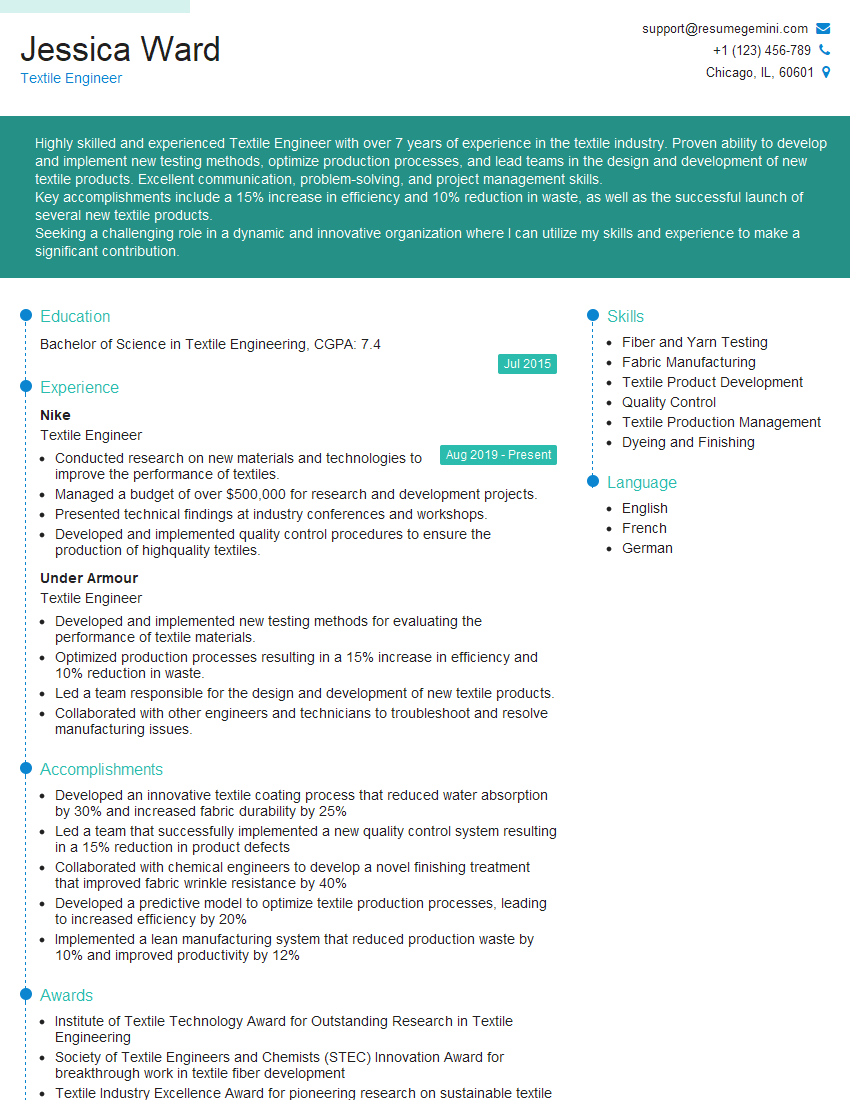
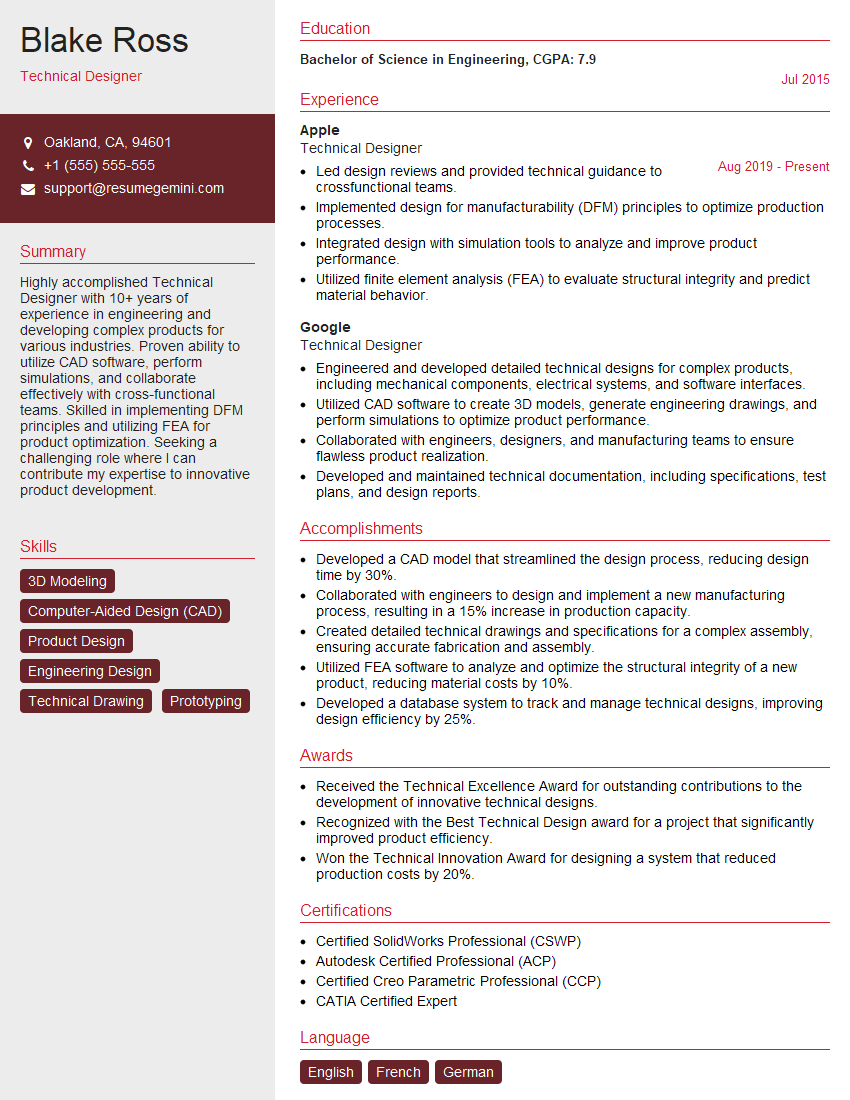
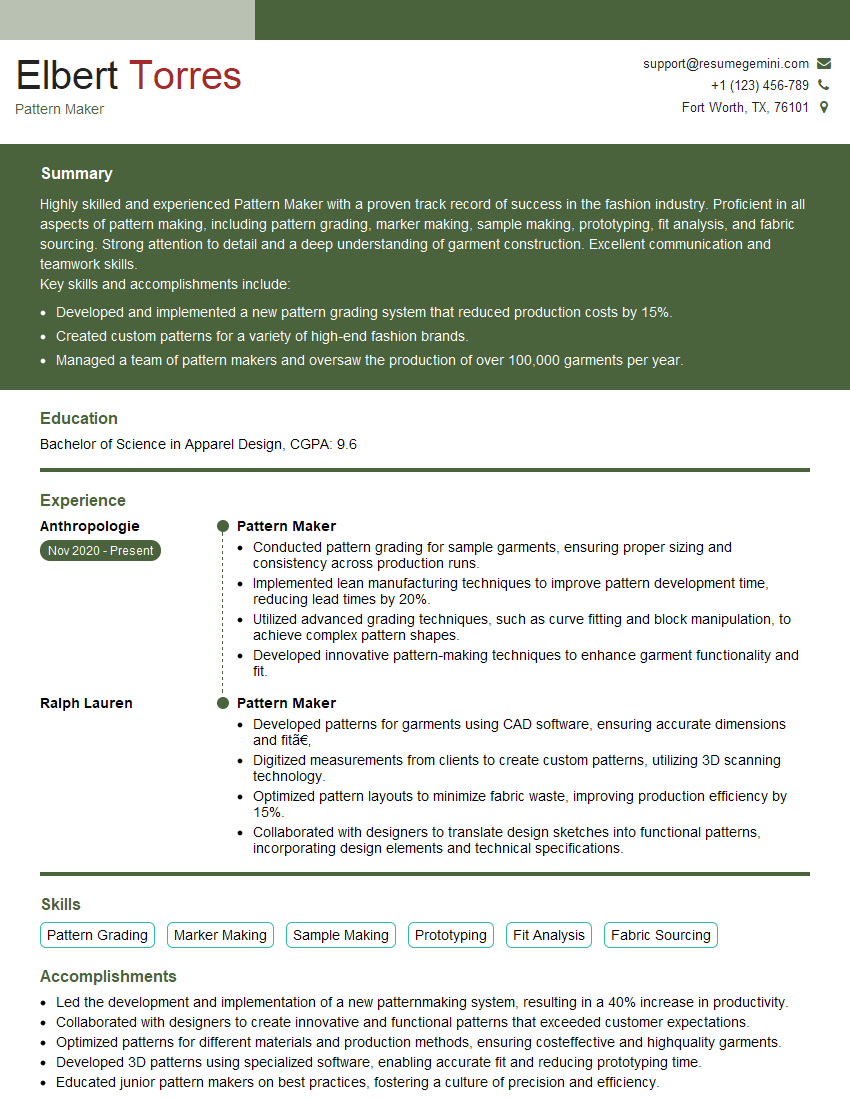
Mastering garment terminology and industry jargon is crucial for career advancement in the fashion and apparel industry. A strong understanding of these concepts demonstrates your expertise and professionalism, making you a highly desirable candidate. To further enhance your job prospects, create an ATS-friendly resume that highlights your skills and experience effectively. ResumeGemini is a trusted resource that can help you build a professional and impactful resume. We offer examples of resumes tailored to showcasing expertise in garment terminology and industry jargon, helping you present yourself in the best possible light to potential employers.

Explore more articles
Users Rating of Our Blogs
Share Your Experience
We value your feedback! Please rate our content and share your thoughts (optional).
What Readers Say About Our Blog
hello,
Our consultant firm based in the USA and our client are interested in your products.
Could you provide your company brochure and respond from your official email id (if different from the current in use), so i can send you the client’s requirement.
Payment before production.
I await your answer.
Regards,
MrSmith
hello,
Our consultant firm based in the USA and our client are interested in your products.
Could you provide your company brochure and respond from your official email id (if different from the current in use), so i can send you the client’s requirement.
Payment before production.
I await your answer.
Regards,
MrSmith
These apartments are so amazing, posting them online would break the algorithm.
https://bit.ly/Lovely2BedsApartmentHudsonYards
Reach out at [email protected] and let’s get started!
Take a look at this stunning 2-bedroom apartment perfectly situated NYC’s coveted Hudson Yards!
https://bit.ly/Lovely2BedsApartmentHudsonYards
Live Rent Free!
https://bit.ly/LiveRentFREE
Interesting Article, I liked the depth of knowledge you’ve shared.
Helpful, thanks for sharing.
Hi, I represent a social media marketing agency and liked your blog
Hi, I represent an SEO company that specialises in getting you AI citations and higher rankings on Google. I’d like to offer you a 100% free SEO audit for your website. Would you be interested?