Interviews are opportunities to demonstrate your expertise, and this guide is here to help you shine. Explore the essential Genetics and Genomics interview questions that employers frequently ask, paired with strategies for crafting responses that set you apart from the competition.
Questions Asked in Genetics and Genomics Interview
Q 1. Explain the central dogma of molecular biology.
The central dogma of molecular biology describes the flow of genetic information within a biological system. It’s a fundamental principle explaining how DNA, RNA, and proteins are interconnected. Simply put, it states that information flows from DNA to RNA to protein.
- DNA Replication: DNA makes a copy of itself, ensuring genetic information is passed on during cell division.
- Transcription: The DNA sequence is transcribed (copied) into a messenger RNA (mRNA) molecule. This mRNA carries the genetic code from the DNA in the nucleus to the ribosomes in the cytoplasm.
- Translation: The mRNA sequence is translated into a polypeptide chain (a sequence of amino acids) by ribosomes. This polypeptide chain folds to form a functional protein.
Think of it like this: DNA is the master blueprint, mRNA is a working copy, and the protein is the final product. This process is crucial for all life forms, as proteins carry out most of the functions within a cell. Errors in this process can lead to genetic diseases.
Q 2. Describe the difference between genotype and phenotype.
Genotype and phenotype are two related but distinct concepts describing an organism’s genetic makeup and observable traits, respectively.
- Genotype: This refers to the complete set of genes or genetic material present in an organism. It’s essentially the organism’s genetic code, represented by the sequence of DNA bases (A, T, C, G). For example, a person’s genotype might include the genes for eye color, height, and susceptibility to certain diseases. Genotype is inherited from parents.
- Phenotype: This encompasses all the observable characteristics of an organism, including physical traits (e.g., height, eye color, hair color), biochemical traits (e.g., blood type), and behavioral traits. The phenotype is the result of the interaction between the genotype and the environment.
Consider eye color: The genes responsible for eye color are part of the genotype. The actual color of the eyes (blue, brown, green) is the phenotype. Two individuals can have different genotypes for eye color but the same phenotype (both brown eyes), or the same genotype but different phenotypes due to environmental factors or other gene interactions. This demonstrates that the phenotype is not solely determined by the genotype.
Q 3. What are the different types of mutations and their consequences?
Mutations are alterations in the DNA sequence. These changes can have various consequences, ranging from harmless to lethal. Types include:
- Point mutations: These involve changes in a single nucleotide base.
- Substitution: One base is replaced with another (e.g., A replaced with G). This can lead to a silent mutation (no change in amino acid), missense mutation (change in amino acid), or nonsense mutation (premature stop codon).
- Insertion: One or more bases are added to the sequence, causing a frameshift if not a multiple of three.
- Deletion: One or more bases are removed from the sequence, also causing a frameshift if not a multiple of three.
- Chromosomal mutations: These affect larger segments of chromosomes.
- Deletion: A portion of the chromosome is lost.
- Duplication: A portion of the chromosome is duplicated.
- Inversion: A segment of the chromosome is reversed.
- Translocation: A segment of one chromosome breaks off and attaches to another chromosome.
Consequences can range from no effect to severe diseases. A silent point mutation might have no noticeable effect. A missense mutation could alter protein function, leading to a disease like sickle cell anemia. Frameshift mutations often result in non-functional proteins. Chromosomal mutations can have drastic effects, leading to developmental disorders or cancers.
Q 4. Explain the process of polymerase chain reaction (PCR).
Polymerase Chain Reaction (PCR) is a revolutionary laboratory technique used to amplify a specific DNA segment exponentially. It’s a powerful tool for various applications, including disease diagnosis, forensic science, and genetic research.
The process involves several cycles, each consisting of three steps:
- Denaturation: The DNA sample is heated to approximately 95°C to separate the double-stranded DNA into single strands.
- Annealing: The temperature is lowered to around 55-65°C to allow short DNA sequences called primers to bind to their complementary sequences on the single-stranded DNA. Primers define the region to be amplified.
- Extension: The temperature is raised to 72°C, the optimal temperature for DNA polymerase. The polymerase enzyme synthesizes new DNA strands complementary to the template DNA, extending from the primers.
Each cycle doubles the number of DNA copies. After multiple cycles, a specific DNA segment is amplified millions or billions of times. Think of it as a molecular photocopier, specifically targeting and copying a small piece of DNA. This is crucial for obtaining sufficient DNA for analysis when only a tiny amount is initially available.
Q 5. Describe various DNA sequencing technologies.
DNA sequencing technologies determine the order of nucleotides (A, T, C, G) in a DNA molecule. Several methods exist, each with its strengths and weaknesses:
- Sanger Sequencing (Chain-termination method): This is a classic method that uses dideoxynucleotides to terminate DNA synthesis at specific points. It’s relatively accurate but low-throughput.
- Next-Generation Sequencing (NGS): This umbrella term encompasses various high-throughput technologies, offering massive parallel sequencing. Examples include Illumina sequencing (sequencing by synthesis), Ion Torrent sequencing (measuring H+ ion release), and Nanopore sequencing (detecting changes in electrical current).
- Third-Generation Sequencing: These technologies, like PacBio SMRT sequencing and Nanopore sequencing, offer long read lengths and can sequence single molecules, facilitating the analysis of complex genomes and epigenetic modifications. However, error rates tend to be higher than NGS.
NGS technologies have revolutionized genomics by enabling large-scale genome sequencing at relatively low cost, greatly impacting our understanding of human diseases, evolution, and microbial diversity.
Q 6. What is CRISPR-Cas9 and its applications?
CRISPR-Cas9 is a revolutionary gene-editing technology derived from a bacterial defense system. It’s a powerful tool for precisely targeting and modifying DNA sequences.
The system consists of two key components:
- Cas9: An enzyme that acts as molecular scissors, cutting DNA at a specific location.
- guide RNA (gRNA): A short RNA molecule that guides Cas9 to the target DNA sequence. The gRNA is designed to be complementary to the target DNA sequence, ensuring Cas9 cuts at the desired location.
By designing a gRNA to target a specific gene, scientists can use CRISPR-Cas9 to:
- Knockout genes: Disrupt or delete a gene, studying its function.
- Knockin genes: Insert a new gene or modify an existing one.
- Correct mutations: Repair disease-causing mutations.
CRISPR-Cas9 has applications in various fields, including:
- Gene therapy: Correcting genetic defects to treat diseases.
- Drug discovery: Identifying drug targets and developing new therapies.
- Agriculture: Improving crop yields and pest resistance.
However, ethical considerations regarding its use are paramount, prompting rigorous discussion and regulations.
Q 7. Explain the concept of genetic linkage and mapping.
Genetic linkage refers to the tendency of genes located close together on the same chromosome to be inherited together. Genetic mapping uses this principle to determine the relative positions of genes on a chromosome.
Genes that are far apart on a chromosome are more likely to undergo recombination (crossing over) during meiosis, resulting in independent assortment. Conversely, genes that are closely linked are less likely to recombine and are inherited together more frequently. The frequency of recombination between two genes is proportional to the distance between them.
Genetic mapping is achieved by analyzing the frequency of recombination between genes in a population. The distance between genes is measured in centimorgans (cM), where 1 cM represents a 1% recombination frequency. Linkage maps depict the relative positions of genes on a chromosome based on recombination frequencies.
For example, if two genes have a recombination frequency of 10%, they are considered to be 10 cM apart. This information is valuable in understanding gene organization and can be used to identify and clone genes, helping with diagnosis, prognosis, and treatment of inherited diseases.
Q 8. How are genome-wide association studies (GWAS) conducted?
Genome-wide association studies (GWAS) are powerful tools used to identify genetic variations associated with a particular disease or trait. Imagine searching for a needle in a haystack – GWAS helps us pinpoint specific genetic ‘needles’ (variants) that correlate with a specific ‘haystack’ (disease or trait).
A GWAS typically involves comparing the genomes of a large group of individuals with a particular disease (cases) to a group of individuals without the disease (controls). We look for single nucleotide polymorphisms (SNPs), which are common variations in the DNA sequence, that are significantly more frequent in the case group than the control group. These significantly associated SNPs are then further investigated to understand their role in the disease’s development.
Step-by-step process:
- Sample Collection and Genotyping: Collect DNA samples from a large number of cases and controls. Use high-throughput genotyping technologies to measure millions of SNPs across the genome.
- Statistical Analysis: Perform statistical tests (like chi-squared tests or logistic regression) to identify SNPs that are significantly more or less frequent in cases compared to controls.
- Multiple Testing Correction: Adjust for multiple comparisons to reduce the chance of finding false positives. Methods like Bonferroni correction or false discovery rate (FDR) are commonly employed.
- Replication: Independently replicate the findings in a new, independent cohort to ensure the association isn’t due to chance.
- Functional Studies: Conduct experiments to investigate how the identified SNPs influence gene expression or protein function to confirm their role in the disease.
Example: A GWAS might reveal a strong association between a specific SNP near a gene involved in cholesterol metabolism and an increased risk of heart disease. This suggests that this genetic variant influences cholesterol levels and therefore increases heart disease risk.
Q 9. Describe different types of inheritance patterns (e.g., autosomal dominant, recessive, X-linked).
Inheritance patterns describe how traits are passed from parents to offspring. They are determined by the location of the gene on a chromosome and whether the trait is dominant or recessive.
- Autosomal Dominant: Only one copy of a mutated gene is needed to express the trait. Affected individuals usually have at least one affected parent. Example: Huntington’s disease.
- Autosomal Recessive: Two copies of a mutated gene are required to express the trait. Affected individuals often have unaffected parents, who are carriers (have one copy of the mutated gene). Example: Cystic fibrosis.
- X-linked Recessive: The mutated gene is located on the X chromosome. Males are more frequently affected because they only have one X chromosome. Females usually need two copies of the mutated gene to be affected. Example: Hemophilia.
- X-linked Dominant: The mutated gene is located on the X chromosome. Females are more likely to be affected and may experience milder symptoms than males because they have two X chromosomes. Example: Rett Syndrome.
Understanding inheritance patterns is crucial for genetic counseling and predicting the risk of passing on genetic conditions to future generations. For example, knowing a trait is autosomal recessive would lead to a different approach to genetic screening and family planning than if it were autosomal dominant. Pedigree analysis, visual representations of family inheritance patterns, plays a vital role in determining the type of inheritance.
Q 10. What are single nucleotide polymorphisms (SNPs) and their significance?
Single nucleotide polymorphisms (SNPs) are variations at a single position in a DNA sequence. Think of them as tiny spelling mistakes in the genome’s instruction manual. Most SNPs are harmless and don’t affect health, but some can influence a person’s susceptibility to disease or affect their response to drugs.
Significance of SNPs:
- Disease Association: SNPs are commonly used in GWAS to identify genes associated with diseases, such as diabetes, cancer, and heart disease.
- Pharmacogenomics: SNPs can influence how individuals respond to medications (pharmacogenetics), leading to personalized medicine approaches. A person’s SNP profile might predict their response to a particular drug, enabling doctors to tailor their prescription.
- Population Genetics: SNPs are valuable for studying human evolution, migration patterns, and population structure.
- Forensic Science: SNPs can be used for DNA fingerprinting and identifying individuals.
Example: A SNP in the APOE gene is associated with an increased risk of Alzheimer’s disease. This means individuals with this particular SNP variation are more likely to develop the condition.
Q 11. Explain the concept of epigenetics.
Epigenetics refers to heritable changes in gene expression that do not involve alterations to the underlying DNA sequence. Imagine it like adding sticky notes or annotations to your genome’s instruction manual – these annotations can change how the instructions are read and interpreted without changing the original text.
Mechanisms of Epigenetic Modifications:
- DNA Methylation: Addition of a methyl group (CH3) to DNA, typically silencing gene expression.
- Histone Modification: Chemical changes to histone proteins around which DNA is wrapped, affecting DNA accessibility and gene expression.
- Non-coding RNAs: Small RNA molecules that regulate gene expression.
Significance of Epigenetics:
- Development: Epigenetic changes are crucial for normal development and cellular differentiation.
- Disease: Epigenetic alterations have been linked to various diseases, including cancer, autoimmune disorders, and neurodevelopmental disorders.
- Environmental Influences: Environmental factors, such as diet, stress, and exposure to toxins, can induce epigenetic changes.
Example: Studies have shown that maternal diet during pregnancy can influence the epigenetic modifications in offspring, affecting their risk of developing certain diseases later in life.
Q 12. What are copy number variations (CNVs) and their implications?
Copy number variations (CNVs) are structural variations in the genome that involve duplications or deletions of DNA segments ranging from 1 kilobase to several megabases. Imagine having extra copies or missing pages in your genome’s instruction manual.
Implications of CNVs:
- Disease Association: CNVs have been implicated in numerous genetic disorders, including intellectual disability, autism spectrum disorder, and schizophrenia.
- Phenotypic Variation: CNVs can contribute to normal human variation in traits like height, weight, and other characteristics.
- Evolutionary Significance: CNVs play a role in genome evolution, contributing to genetic diversity and adaptation.
Example: A duplication of a region on chromosome 16 has been linked to an increased risk of autism spectrum disorder. The extra copies of the genes in that region may disrupt normal brain development. The detection of CNVs utilizes techniques like comparative genomic hybridization (CGH) arrays and next-generation sequencing.
Q 13. Describe the ethical considerations of genetic testing and gene editing.
Genetic testing and gene editing technologies raise several ethical considerations, highlighting the importance of responsible innovation and careful regulation.
Ethical Considerations of Genetic Testing:
- Privacy and Confidentiality: Genetic information is highly sensitive and its protection is paramount. Ensuring data security and preventing discrimination based on genetic information are key.
- Informed Consent: Individuals undergoing genetic testing must be fully informed of the potential benefits, risks, and limitations of the test before giving their consent.
- Incidental Findings: Genetic tests may uncover unexpected information about other genetic conditions, raising ethical dilemmas regarding disclosure and psychological impact.
- Genetic Discrimination: The potential for insurance companies, employers, or other entities to discriminate based on genetic information is a major concern.
Ethical Considerations of Gene Editing:
- Germline Editing: Editing the germline (sperm and egg cells) permanently alters the genetic makeup of future generations, raising concerns about unintended consequences and potential for eugenics.
- Off-target Effects: Gene editing tools may inadvertently modify unintended regions of the genome, potentially causing harmful effects.
- Accessibility and Equity: Ensuring equitable access to gene editing technologies is essential to avoid exacerbating existing health disparities.
- Societal Impact: The long-term impact of widespread gene editing on society, including ethical, social, and cultural implications, needs careful consideration.
Responsible development and implementation of genetic technologies require robust ethical guidelines, regulations, and public dialogue to ensure they are used safely and beneficially.
Q 14. Explain different methods for gene expression analysis (e.g., microarrays, RNA-Seq).
Gene expression analysis studies the levels of mRNA transcripts in a cell or tissue to understand which genes are active and to what extent. This provides insights into cellular processes, disease mechanisms, and responses to treatments.
Methods for Gene Expression Analysis:
- Microarrays: This older technology uses small DNA probes attached to a solid surface to measure the abundance of mRNA transcripts. Each probe corresponds to a specific gene. The intensity of the signal from each probe indicates the expression level of the corresponding gene. Think of it as a snapshot of all the active genes in a sample.
- RNA Sequencing (RNA-Seq): A more modern technique that directly sequences the mRNA transcripts in a sample. This provides higher resolution and sensitivity than microarrays, allowing for the detection of novel transcripts, isoforms, and other variations in gene expression. RNA-Seq is akin to a detailed movie of the active genes.
Comparison: Microarrays are less expensive and easier to perform than RNA-Seq, but RNA-Seq provides more comprehensive information about gene expression. The choice of method depends on factors such as the research question, budget, and available resources.
Example: RNA-Seq could be used to analyze the gene expression changes in cancer cells after treatment with a chemotherapeutic agent. This could reveal changes in the expression of genes involved in cell growth, apoptosis (programmed cell death), or drug resistance.
Q 15. How is bioinformatics used in genomics research?
Bioinformatics is absolutely crucial in genomics research. Think of genomics as generating a massive amount of raw data – the sequences of DNA and RNA. Bioinformatics provides the tools and techniques to organize, analyze, and interpret this data, turning it into meaningful biological insights. It’s like having a giant puzzle with millions of pieces; bioinformatics provides the strategies and software to assemble and understand the complete picture.
Specifically, bioinformatics is used for tasks like genome assembly (putting together the fragmented DNA sequences), gene prediction (identifying where genes are located on the genome), sequence alignment (comparing sequences to find similarities and differences), phylogenetic analysis (constructing evolutionary relationships between organisms), and variant calling (identifying variations in DNA sequences that might be associated with disease).
For example, imagine researchers sequencing the genome of a new bacterial species. Bioinformatics tools would be essential for assembling the millions of short DNA reads into a complete genome sequence, identifying genes within the genome, and comparing it to known bacterial genomes to understand its evolutionary relationships and potential pathogenicity.
Career Expert Tips:
- Ace those interviews! Prepare effectively by reviewing the Top 50 Most Common Interview Questions on ResumeGemini.
- Navigate your job search with confidence! Explore a wide range of Career Tips on ResumeGemini. Learn about common challenges and recommendations to overcome them.
- Craft the perfect resume! Master the Art of Resume Writing with ResumeGemini’s guide. Showcase your unique qualifications and achievements effectively.
- Don’t miss out on holiday savings! Build your dream resume with ResumeGemini’s ATS optimized templates.
Q 16. What are some common bioinformatics tools and databases used in genomics?
The bioinformatics landscape is vast, but some commonly used tools and databases include:
- Databases: NCBI GenBank (a repository of nucleotide and protein sequences), UniProt (a database of protein sequences and annotations), Ensembl (a database of genome annotations and comparative genomics data).
- Sequence Alignment Tools: BLAST (Basic Local Alignment Search Tool) for comparing sequences, MUSCLE (Multiple Sequence Comparison by Log-Expectation) for multiple sequence alignment.
- Genome Assembly Tools: SPAdes, Velvet, and Unicycler for assembling genomic sequences from short reads.
- Gene Prediction Tools: AUGUSTUS, GeneMark, and Glimmer for predicting gene locations in genomic sequences.
- Variant Calling Tools: GATK (Genome Analysis Toolkit), FreeBayes, and Samtools for identifying variations in DNA sequences.
These are just a few examples; the choice of tools depends heavily on the specific research question and the type of data being analyzed. Often, researchers utilize pipelines, which combine multiple tools to perform complex analyses.
Q 17. Describe different approaches to gene therapy.
Gene therapy aims to treat or prevent disease by modifying a patient’s genes. Several approaches exist:
- Gene augmentation therapy: This involves adding a functional copy of a gene to compensate for a non-functional gene. This is common for diseases caused by a single gene defect, like cystic fibrosis.
- Gene inhibition therapy: This approach silences or reduces the expression of a disease-causing gene. RNA interference (RNAi) technology, using siRNA or shRNA, is a common method.
- Gene editing therapy: This uses techniques like CRISPR-Cas9 to precisely modify or correct a gene’s sequence. This offers the potential to correct genetic defects directly.
Different delivery methods are used to introduce the therapeutic gene into the target cells, including viral vectors (like adeno-associated viruses or retroviruses) and non-viral methods (like lipid nanoparticles). The choice of approach and delivery method depends on factors such as the target gene, the disease, and the patient’s condition.
For example, in gene augmentation therapy for cystic fibrosis, a functional copy of the CFTR gene is delivered to lung cells to restore chloride ion transport. In gene editing therapy for sickle cell anemia, CRISPR-Cas9 can be used to correct the mutation in the beta-globin gene.
Q 18. Explain the difference between homologous and non-homologous recombination.
Both homologous and non-homologous recombination are DNA repair mechanisms, but they differ significantly in their mechanisms and outcomes.
Homologous recombination uses a homologous DNA sequence (similar sequence from another chromosome or a template) as a template to repair a DNA break. This results in high-fidelity repair, minimizing errors. It’s like having a spare copy of a page in a book to fix a tear – you use the spare to perfectly replace the damaged part. This is crucial for maintaining genome stability.
Non-homologous end joining (NHEJ) repairs double-strand breaks without using a homologous template. It directly joins the broken ends of the DNA, which can lead to small insertions or deletions at the repair site. This is a faster but less accurate mechanism. Imagine fixing a tear in the book by just taping the edges together – it’s quick but might not be perfect and could potentially lose some text.
The choice between these mechanisms depends on the cell cycle stage and the availability of a homologous template. Homologous recombination is predominantly used during late S and G2 phases, while NHEJ is more active throughout the cell cycle.
Q 19. How do you interpret a phylogenetic tree?
A phylogenetic tree is a branching diagram that depicts the evolutionary relationships among different species or groups of organisms. The branches represent evolutionary lineages, and the branching points (nodes) represent common ancestors. The length of the branches often reflects the evolutionary distance or time elapsed since divergence.
Interpreting a phylogenetic tree involves identifying:
- Root: The base of the tree, representing the common ancestor of all the organisms in the tree.
- Branches: Represent evolutionary lineages. Longer branches generally indicate greater evolutionary divergence.
- Nodes: Represent common ancestors (speciation events).
- Tips (leaves): Represent the extant (currently living) species or groups being compared.
For example, a phylogenetic tree might show that humans and chimpanzees share a more recent common ancestor than humans and dogs. The closer two species are on the tree, the more closely related they are, implying a more recent common ancestor.
It’s important to note that phylogenetic trees are hypotheses; they represent our best understanding of evolutionary relationships based on available data (like DNA sequences). The accuracy of a phylogenetic tree depends on the quality and quantity of data used to construct it.
Q 20. What are the challenges in analyzing next-generation sequencing (NGS) data?
Next-Generation Sequencing (NGS) generates massive amounts of data, bringing unique challenges to its analysis:
- High Data Volume: The sheer volume of data generated requires significant computational resources and efficient storage solutions. Analyzing terabytes of data demands specialized high-performance computing clusters.
- Data Processing: Raw NGS data requires extensive preprocessing steps such as quality control, adapter trimming, and read alignment to a reference genome. This often involves complex bioinformatics pipelines.
- Data Accuracy: NGS data can contain errors, particularly in the form of sequencing errors and PCR artifacts. Careful quality control and error correction steps are vital for accurate analysis.
- Computational Complexity: Many downstream analyses, like variant calling, genome assembly, and gene expression analysis, are computationally intensive and require specialized algorithms and software.
- Data Interpretation: Interpreting NGS data requires a deep understanding of biology and statistics. Identifying biologically meaningful signals from the noise of the data requires careful planning and analysis.
- Data Storage and Management: Long-term storage and management of large NGS datasets pose significant challenges, demanding robust data management systems.
Addressing these challenges requires expertise in bioinformatics, computational biology, and statistics. Effective data management strategies, optimized algorithms, and careful experimental design are all crucial for successful NGS data analysis.
Q 21. Explain the concept of haplotypes and linkage disequilibrium.
Let’s understand these concepts in the context of a genome:
Haplotypes: A haplotype is a combination of alleles (different versions of a gene) at closely linked loci (positions) on a chromosome. Imagine a chromosome as a string of beads, where each bead represents a gene variant. A haplotype is a specific arrangement of these beads along the chromosome. Since we inherit one chromosome from each parent, we usually have two haplotypes for each chromosome.
Linkage Disequilibrium (LD): LD refers to the non-random association of alleles at different loci. In simpler terms, if certain alleles at different genes tend to be inherited together more often than expected by chance, they are in LD. This often happens because the genes are physically close together on the chromosome, so recombination (shuffling of genes during meiosis) is less likely to separate them. This is like inheriting a set of linked beads together more often than you would expect them to separate.
LD is crucial for genome-wide association studies (GWAS) because it allows researchers to identify genetic markers (SNPs) that are associated with a trait or disease. Even if the causative mutation isn’t directly typed in the study, its linked SNPs will show association, making it easier to pinpoint disease regions. High LD reduces the number of markers required to capture variation across the genome.
Q 22. Describe different types of genomic variations.
Genomic variations are differences in DNA sequences between individuals or populations. These variations are the foundation of genetic diversity and can range from single nucleotide changes to large-scale chromosomal rearrangements. They are crucial for understanding human health, evolution, and disease.
- Single Nucleotide Polymorphisms (SNPs): These are the most common type of variation, involving a change in a single nucleotide base (A, T, C, or G). For example, a SNP might change the DNA sequence from ATGC to ATTC. SNPs can be found throughout the genome and can affect gene function or regulation.
- Insertions and Deletions (Indels): These variations involve the insertion or deletion of one or more nucleotides in the DNA sequence. A small indel might be a single base pair insertion, while larger ones can encompass entire genes. Indels can cause frameshift mutations if they disrupt the reading frame of a gene, leading to non-functional proteins.
- Copy Number Variations (CNVs): These variations involve changes in the number of copies of a specific DNA segment. An individual might have one, two, or more copies of a particular gene or region. CNVs can be quite large, involving thousands of base pairs, and can significantly alter gene expression.
- Structural Variations: These are large-scale variations that affect the structure of chromosomes. They include inversions (reversal of a DNA segment), translocations (movement of a DNA segment to a different chromosome), and duplications (extra copies of a DNA segment).
Understanding these variations is critical in various fields like medicine (diagnosing genetic disorders), forensics (DNA fingerprinting), and evolutionary biology (studying the relationships between species).
Q 23. What are the applications of genomics in personalized medicine?
Genomics plays a transformative role in personalized medicine by tailoring medical decisions to an individual’s genetic makeup. This allows for more precise and effective treatment strategies.
- Pharmacogenomics: This field utilizes genomic information to predict individual responses to drugs. For example, certain genetic variations can affect how a patient metabolizes a particular medication, allowing for the selection of the most appropriate drug and dose to maximize effectiveness and minimize adverse effects.
- Diagnostic Testing: Genomic sequencing can identify genetic mutations associated with various diseases, enabling early diagnosis and intervention. For instance, identifying a BRCA1 or BRCA2 mutation can facilitate early detection and preventative measures for breast and ovarian cancer.
- Cancer Treatment: Genomic profiling of tumors can identify specific genetic alterations driving cancer growth, leading to targeted therapies. For example, the presence of a specific gene mutation might make a patient eligible for a targeted therapy that inhibits the activity of that gene product.
- Risk Prediction: Genomic information can help assess an individual’s risk of developing certain diseases, facilitating proactive lifestyle changes or preventative measures. For example, assessing someone’s genetic predisposition for heart disease could encourage lifestyle changes to reduce their risk.
The ultimate goal is to move towards preventative, predictive, and personalized medicine, making healthcare more effective and efficient.
Q 24. How does gene expression regulation work?
Gene expression regulation is a complex process that controls which genes are transcribed into mRNA and subsequently translated into proteins. It ensures that genes are expressed at the right time, in the right place, and at the right level. Think of it as a sophisticated orchestra conductor ensuring all instruments play in harmony.
- Transcriptional Regulation: This is the primary level of control, involving factors that influence the binding of RNA polymerase to the gene’s promoter region. Promoters are DNA sequences that signal the start of a gene. Transcription factors, proteins that bind to specific DNA sequences, can either activate or repress transcription.
- Post-Transcriptional Regulation: This involves mechanisms that regulate the processing and stability of mRNA molecules. These processes include RNA splicing (removing non-coding introns from pre-mRNA), RNA editing (altering the mRNA sequence), and RNA interference (RNAi), where small RNA molecules can degrade or inhibit mRNA translation.
- Translational Regulation: This controls the rate at which mRNA is translated into proteins. Factors influencing translation include the availability of ribosomes, tRNA molecules, and initiation factors.
- Post-Translational Regulation: This level of regulation involves modifying proteins after they have been synthesized. Modifications such as phosphorylation, glycosylation, or ubiquitination can alter protein activity, localization, or stability.
Dysregulation of gene expression is implicated in numerous diseases, including cancer, where genes involved in cell growth and division are often overexpressed.
Q 25. Describe the role of different types of RNA (mRNA, tRNA, rRNA).
Different types of RNA play distinct and crucial roles in gene expression and cellular function. They work together in a coordinated manner to ensure the accurate transfer of genetic information.
- mRNA (messenger RNA): mRNA carries the genetic information from DNA to the ribosomes, where it is translated into proteins. It’s the intermediate messenger between DNA and protein synthesis. Imagine mRNA as a blueprint carrying instructions from the architect (DNA) to the construction workers (ribosomes).
- tRNA (transfer RNA): tRNA molecules carry specific amino acids to the ribosomes during translation. Each tRNA molecule recognizes a specific codon (a three-nucleotide sequence on mRNA) and brings the corresponding amino acid. They act like delivery trucks bringing building materials (amino acids) to the construction site (ribosomes).
- rRNA (ribosomal RNA): rRNA is a major component of ribosomes, the cellular machinery responsible for protein synthesis. rRNA molecules form the structural core of the ribosome and catalyze the peptide bond formation between amino acids. They are like the foreman, overseeing the entire construction process of proteins.
Proper function of all three RNA types is essential for accurate and efficient protein synthesis, which is fundamental for all cellular processes.
Q 26. Explain the process of DNA replication.
DNA replication is the process by which a cell makes an exact copy of its DNA before cell division. It is a remarkably accurate process, ensuring the faithful transmission of genetic information from one generation to the next. This process is semi-conservative, meaning each new DNA molecule consists of one original strand and one newly synthesized strand.
- Initiation: The process begins at specific sites on the DNA molecule called origins of replication. Enzymes unwind the DNA double helix, creating a replication fork.
- Elongation: DNA polymerase enzymes synthesize new DNA strands by adding nucleotides complementary to the template strands. This process occurs in a 5′ to 3′ direction. Leading strands are synthesized continuously, while lagging strands are synthesized in short fragments called Okazaki fragments.
- Termination: Replication stops when the entire DNA molecule has been copied. The newly synthesized DNA molecules are then separated and packaged into new chromosomes.
DNA replication is a complex process involving many enzymes and proteins that work together to ensure high fidelity. Errors during replication can lead to mutations, which can have various consequences.
Q 27. What are the different stages of mitosis and meiosis?
Mitosis and meiosis are two types of cell division with distinct purposes and outcomes. Mitosis produces two identical daughter cells, while meiosis produces four genetically diverse haploid gametes (sex cells).
- Mitosis:
- Prophase: Chromosomes condense and become visible.
- Metaphase: Chromosomes align at the metaphase plate.
- Anaphase: Sister chromatids separate and move to opposite poles.
- Telophase: Chromosomes decondense, and nuclear envelopes reform.
- Cytokinesis: The cell divides into two daughter cells.
- Meiosis: Meiosis involves two rounds of cell division (Meiosis I and Meiosis II).
- Meiosis I:
- Prophase I: Homologous chromosomes pair up and exchange genetic material through crossing over.
- Metaphase I: Homologous chromosome pairs align at the metaphase plate.
- Anaphase I: Homologous chromosomes separate and move to opposite poles.
- Telophase I and Cytokinesis: Two haploid daughter cells are formed.
- Meiosis II: Similar to mitosis, but starts with haploid cells; sister chromatids separate, resulting in four haploid daughter cells.
- Meiosis I:
Mitosis is essential for growth and repair, while meiosis is crucial for sexual reproduction and genetic diversity. Errors in either process can lead to chromosomal abnormalities.
Q 28. How is genetic information used in forensic science?
Genetic information, particularly DNA, is a powerful tool in forensic science. It allows investigators to identify individuals, link suspects to crime scenes, and solve cold cases. The technique is called DNA fingerprinting or DNA profiling.
The process involves extracting DNA from biological samples like blood, hair, saliva, or semen. Specific regions of the genome, called short tandem repeats (STRs), which show high variability between individuals, are amplified using PCR (polymerase chain reaction). The resulting DNA fragments are then separated by size using electrophoresis, generating a unique pattern of bands for each individual. This pattern serves as a DNA fingerprint.
Applications include:
- Identifying suspects: Matching DNA from a crime scene to a suspect’s DNA.
- Exonerating the wrongly accused: Comparing DNA evidence to exclude innocent individuals.
- Identifying victims: Matching DNA from remains to missing persons databases.
- Paternity testing: Determining biological relationships between individuals.
DNA fingerprinting relies on the high degree of individual variation in STRs. It’s a powerful tool but subject to limitations such as sample degradation or contamination.
Key Topics to Learn for Genetics and Genomics Interview
- Mendelian Genetics: Understand inheritance patterns, Punnett squares, and pedigree analysis. Explore exceptions to Mendelian inheritance.
- Molecular Genetics: Master DNA replication, transcription, translation, and gene regulation. Consider practical applications in gene therapy and diagnostics.
- Genomics: Learn about genome sequencing technologies, bioinformatics tools for analyzing large datasets, and applications in personalized medicine.
- Population Genetics: Understand Hardy-Weinberg equilibrium, genetic drift, and natural selection. Explore the applications in evolutionary biology and conservation genetics.
- Cytogenetics: Familiarize yourself with chromosome structure, karyotyping, and chromosomal abnormalities. Consider their role in diagnosing genetic disorders.
- Genetic Engineering & Biotechnology: Understand CRISPR-Cas9 technology, gene cloning, and other techniques used in genetic manipulation. Consider ethical implications and applications in agriculture and medicine.
- Bioinformatics & Data Analysis: Develop skills in using bioinformatics tools and statistical methods to analyze genomic data. Practice interpreting results and drawing conclusions.
- Ethical, Legal, and Social Implications (ELSI): Be prepared to discuss the ethical considerations surrounding genetic testing, gene editing, and data privacy.
Next Steps
Mastering Genetics and Genomics opens doors to exciting and impactful careers in research, healthcare, biotechnology, and more. A strong foundation in these fields is highly sought after, offering excellent opportunities for growth and innovation. To maximize your job prospects, creating an ATS-friendly resume is crucial. ResumeGemini can help you build a professional and effective resume that highlights your skills and experience, significantly improving your chances of landing your dream job. We provide examples of resumes tailored to Genetics and Genomics to help guide you through the process. Use ResumeGemini to craft a resume that showcases your expertise and helps you stand out from the competition.
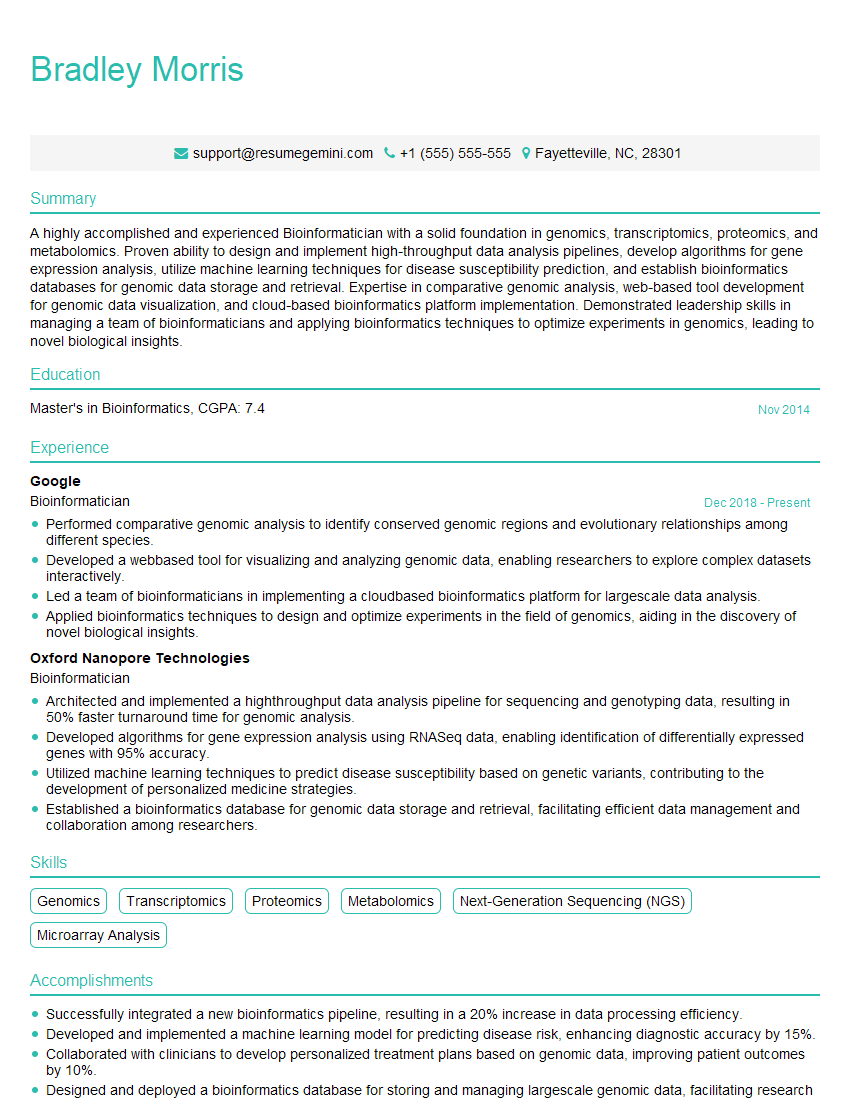
Bioinformatician Resume Sample
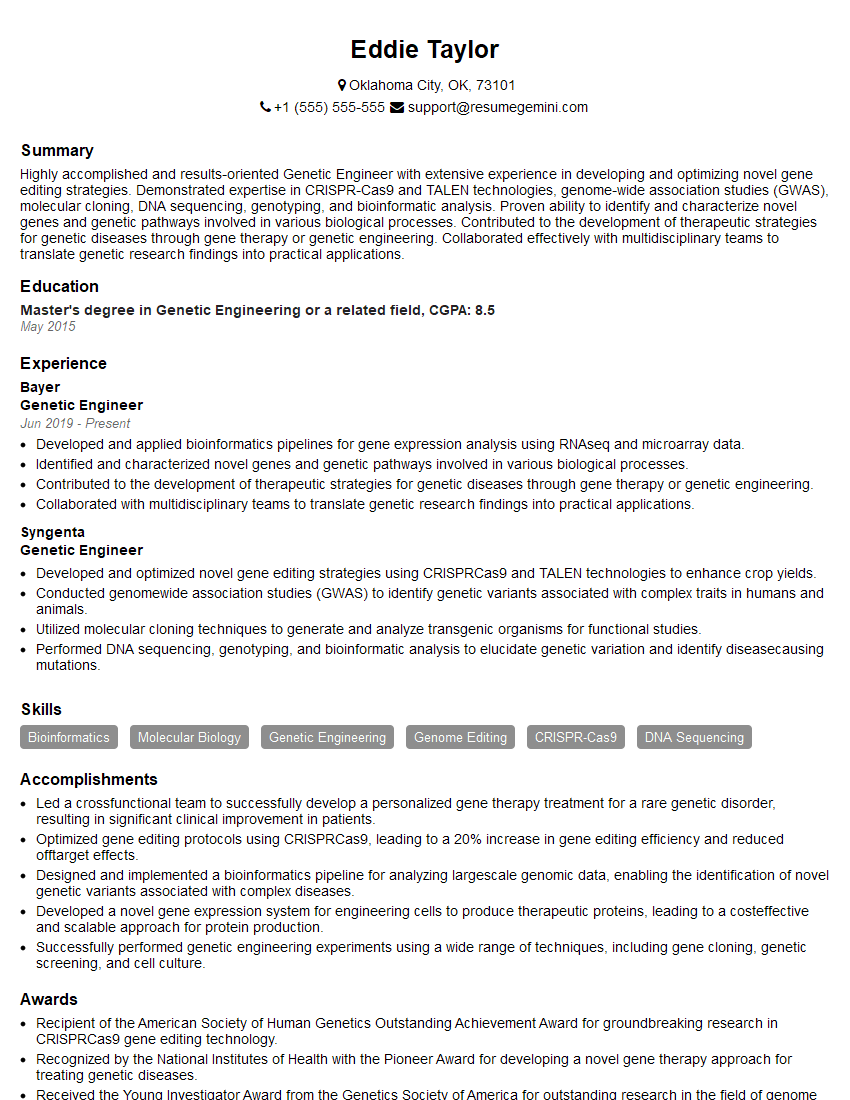
Genetic Engineer Resume Sample
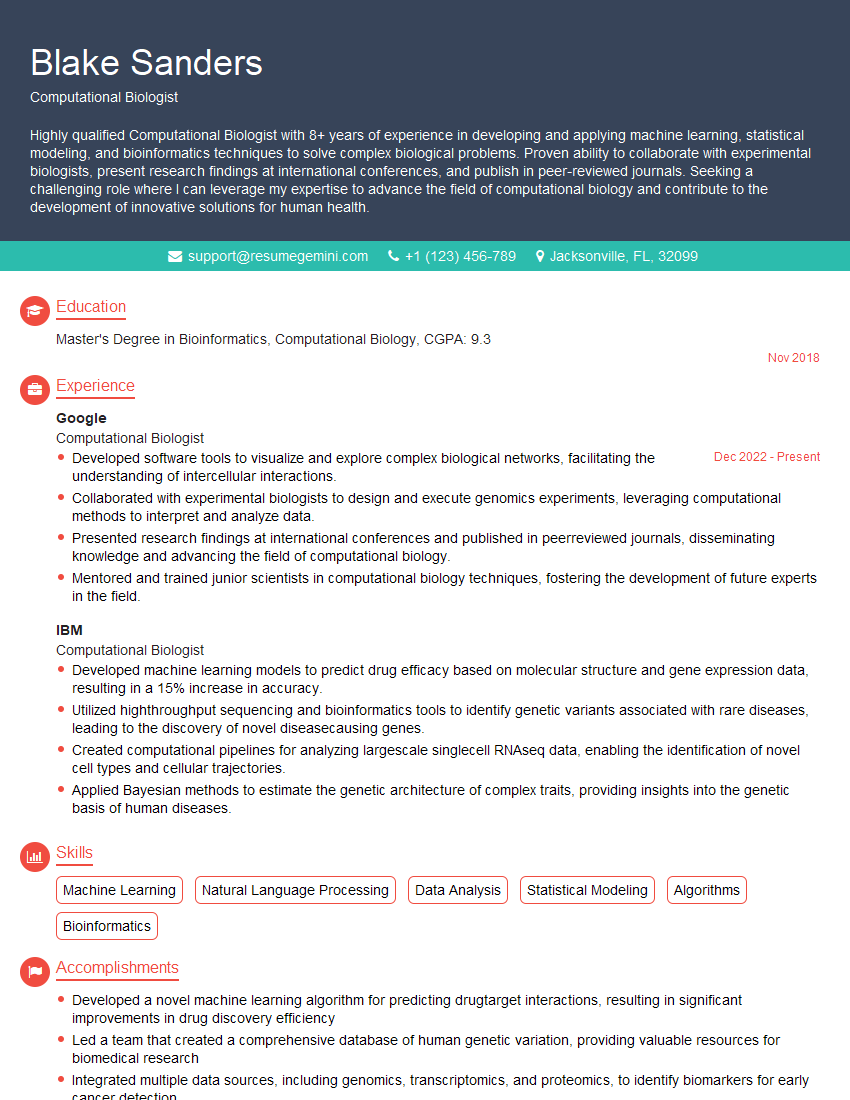
Computational Biologist Resume Sample
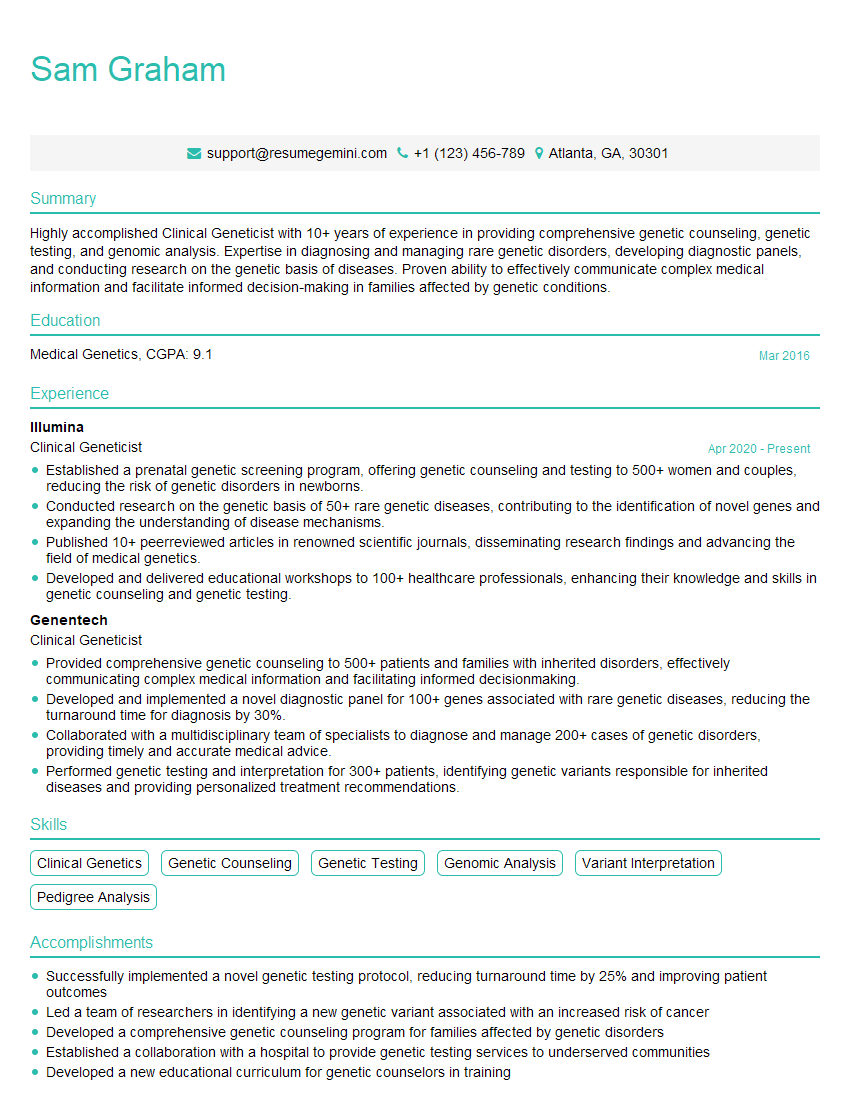
Clinical Geneticist Resume Sample
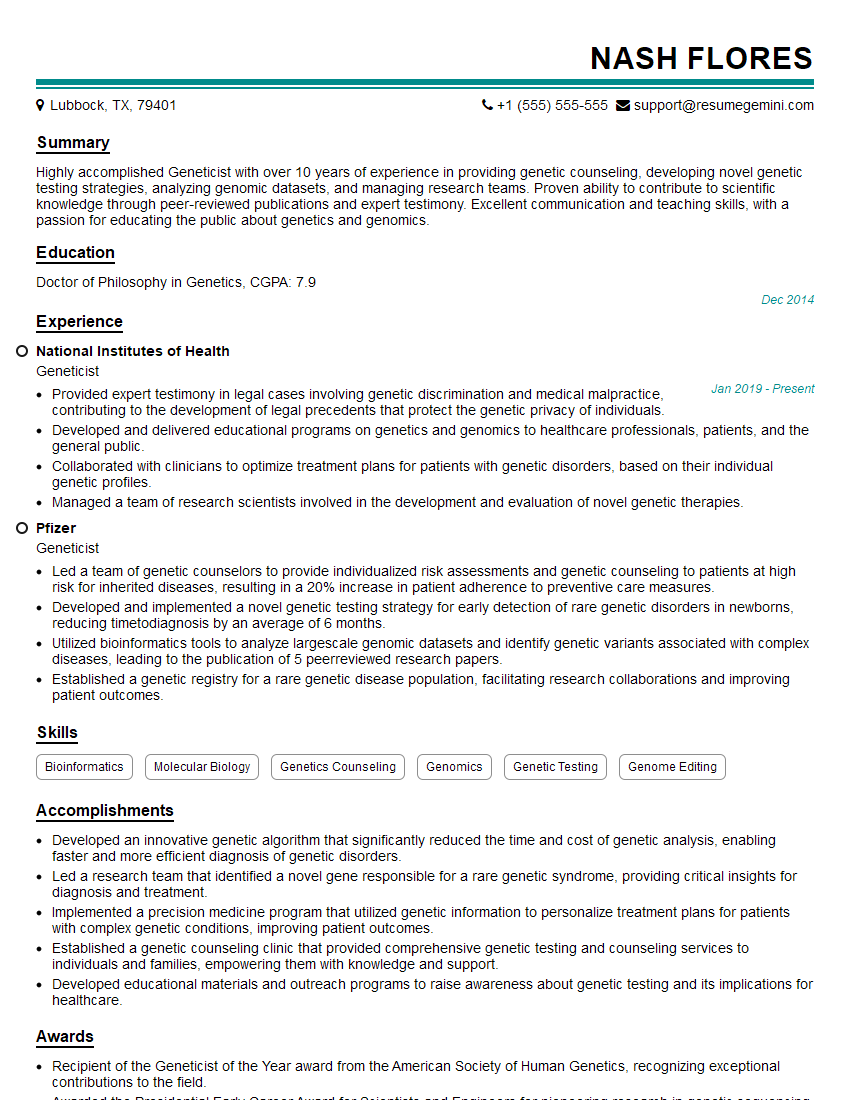
Geneticist Resume Sample
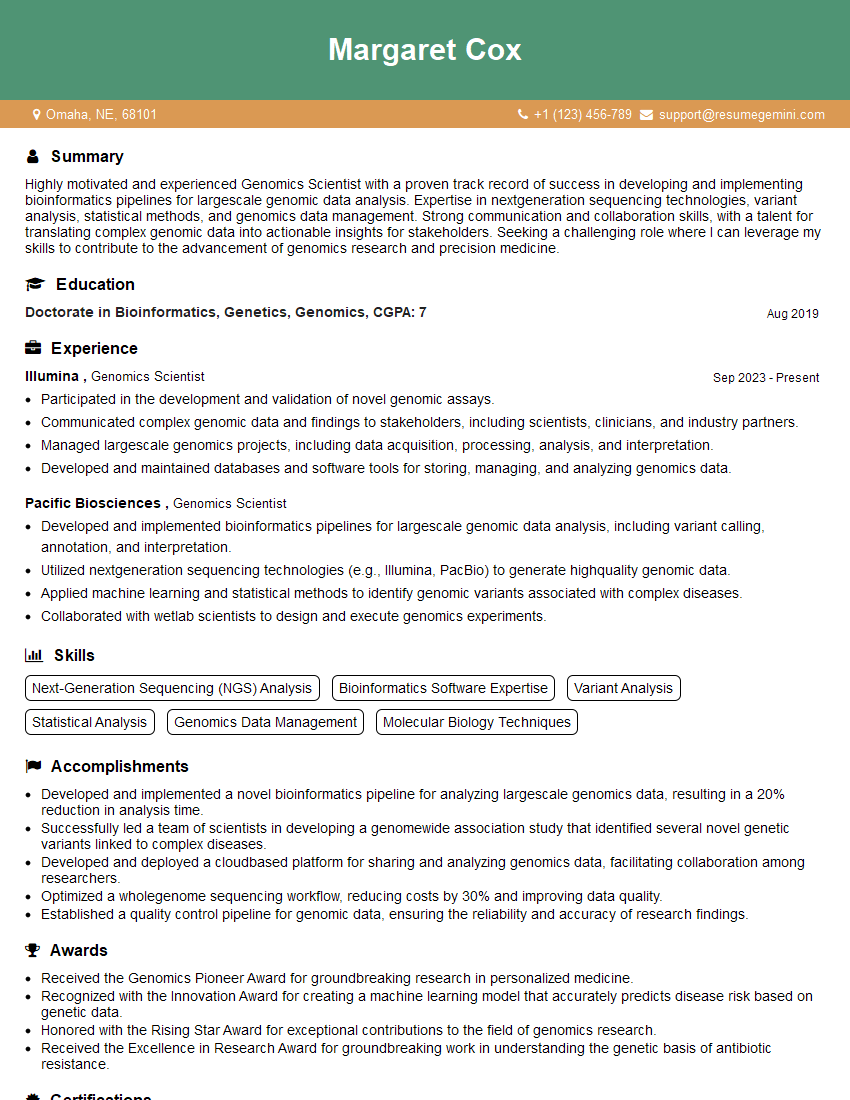
Genomics Scientist Resume Sample
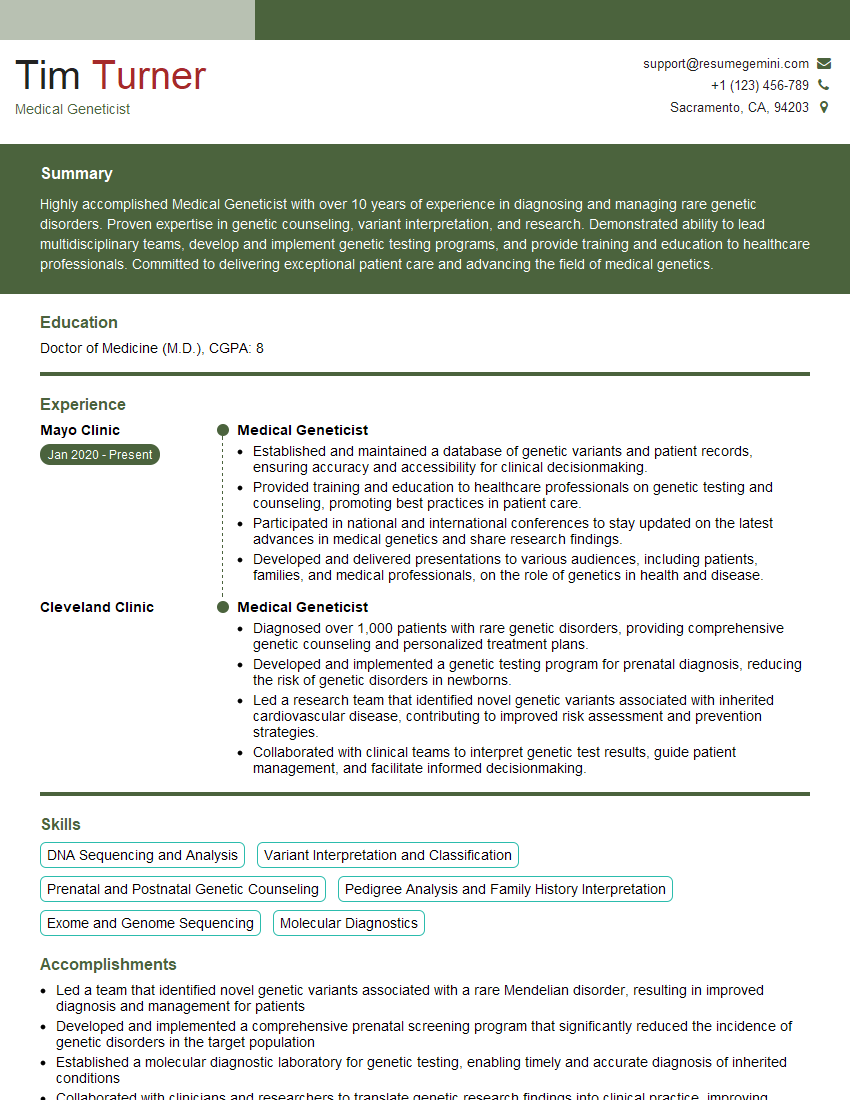
Medical Geneticist Resume Sample
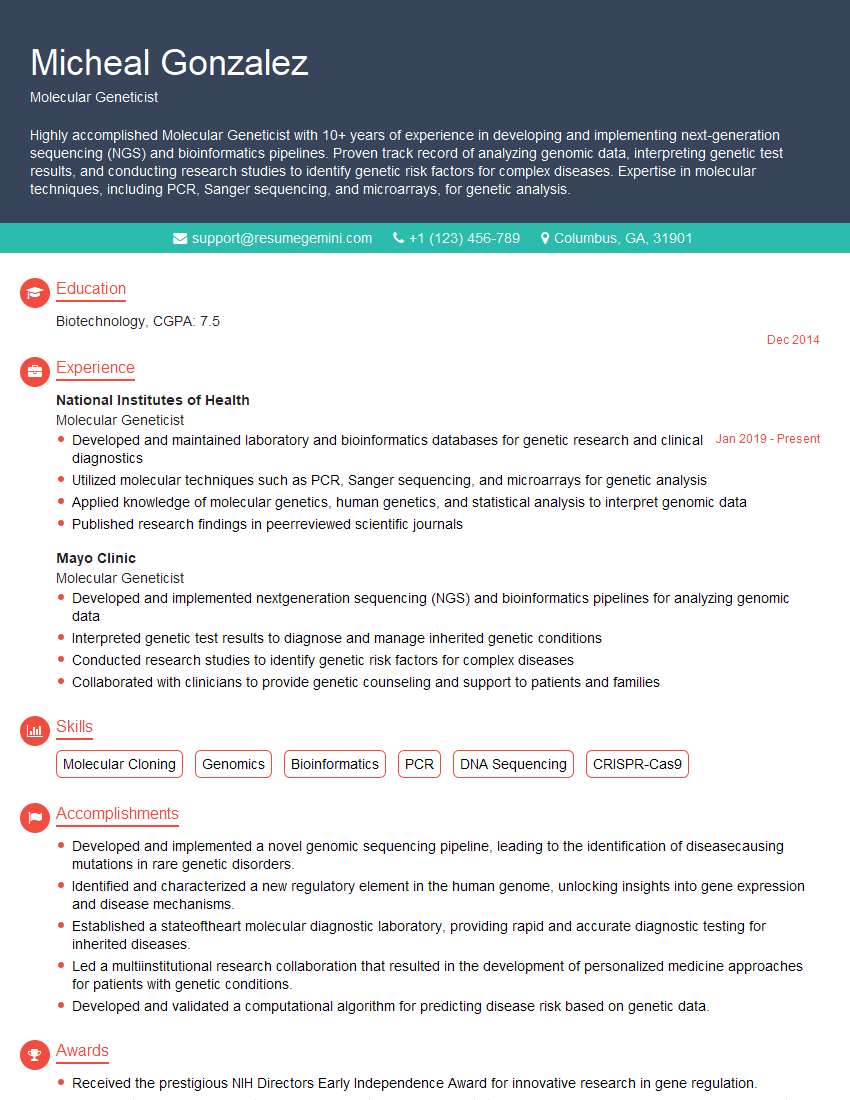
Molecular Geneticist Resume Sample
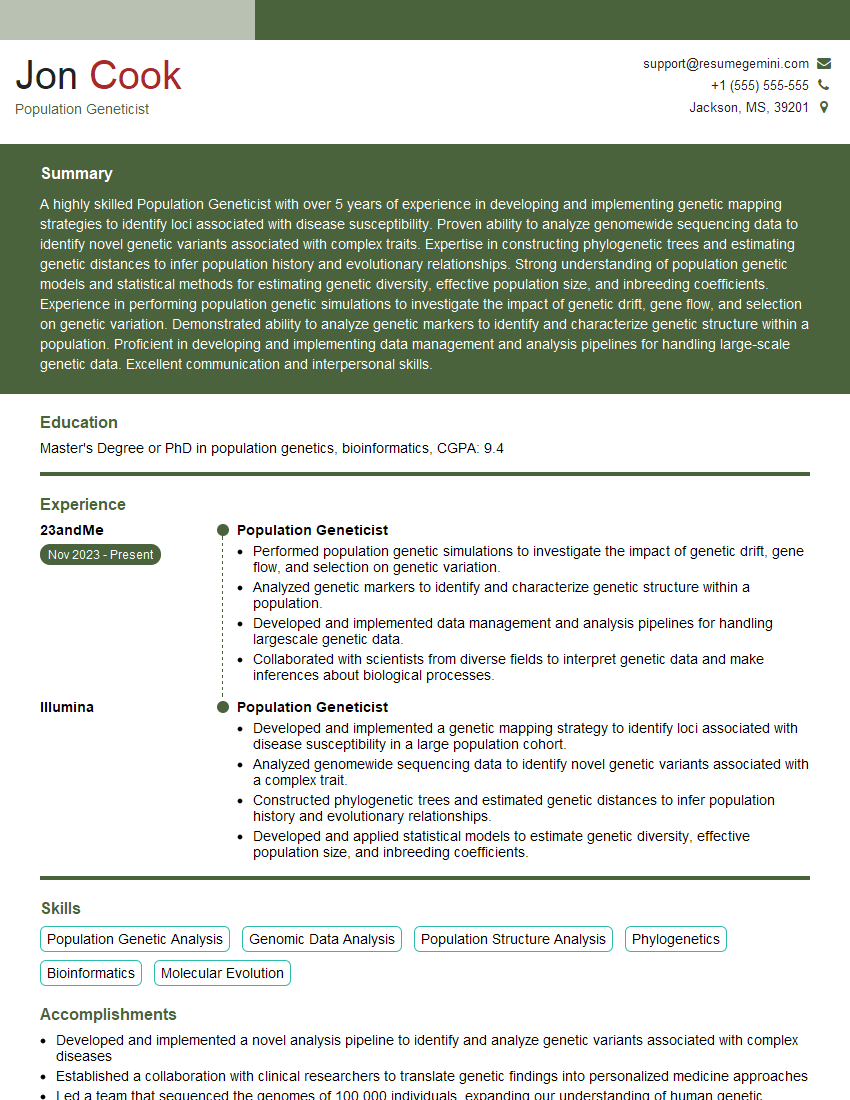
Population Geneticist Resume Sample
Explore more articles
Users Rating of Our Blogs
Share Your Experience
We value your feedback! Please rate our content and share your thoughts (optional).
What Readers Say About Our Blog
Amazing blog
hello,
Our consultant firm based in the USA and our client are interested in your products.
Could you provide your company brochure and respond from your official email id (if different from the current in use), so i can send you the client’s requirement.
Payment before production.
I await your answer.
Regards,
MrSmith
hello,
Our consultant firm based in the USA and our client are interested in your products.
Could you provide your company brochure and respond from your official email id (if different from the current in use), so i can send you the client’s requirement.
Payment before production.
I await your answer.
Regards,
MrSmith
These apartments are so amazing, posting them online would break the algorithm.
https://bit.ly/Lovely2BedsApartmentHudsonYards
Reach out at BENSON@LONDONFOSTER.COM and let’s get started!
Take a look at this stunning 2-bedroom apartment perfectly situated NYC’s coveted Hudson Yards!
https://bit.ly/Lovely2BedsApartmentHudsonYards
Live Rent Free!
https://bit.ly/LiveRentFREE
Interesting Article, I liked the depth of knowledge you’ve shared.
Helpful, thanks for sharing.
Hi, I represent a social media marketing agency and liked your blog
Hi, I represent an SEO company that specialises in getting you AI citations and higher rankings on Google. I’d like to offer you a 100% free SEO audit for your website. Would you be interested?