Every successful interview starts with knowing what to expect. In this blog, we’ll take you through the top Terrazzo Inlay interview questions, breaking them down with expert tips to help you deliver impactful answers. Step into your next interview fully prepared and ready to succeed.
Questions Asked in Terrazzo Inlay Interview
Q 1. Describe the different types of terrazzo inlay materials.
Terrazzo inlay offers a stunning array of material choices, contributing to its unique versatility. The primary components are aggregates and a binder. Aggregates, the visually prominent part, come in various types:
- Marble chips: These provide classic elegance and come in a wide spectrum of colors and veining patterns. Think of the timeless beauty of a white Carrara marble inlay.
- Granite chips: Offering durability and a wider range of colors, including deep blacks, reds, and greens, granite adds a robust feel to the design.
- Quartz chips: Known for their hardness and resistance to staining, quartz chips are a practical choice for high-traffic areas. Their consistent colors provide a modern aesthetic.
- Glass chips: Introduce a vibrant, shimmering element, adding a playful, contemporary touch. Different colors and textures of glass can create captivating effects.
- Recycled materials: Increasingly popular, recycled glass, porcelain, or other materials contribute to sustainability and add unique character.
The binder, typically a cementitious mixture or resin, holds the aggregates together and forms the matrix of the inlay. The choice of binder impacts durability, color consistency, and the overall finish.
Q 2. Explain the process of creating a terrazzo inlay design.
Creating a terrazzo inlay design is a meticulous process. It begins with planning:
- Design conceptualization: The design, whether intricate or simple, is sketched or digitally rendered. This involves choosing aggregate types, colors, and the overall pattern.
- Template creation: A template, often made from durable materials like plywood or metal, is crafted precisely to the design’s specifications. This is crucial for accurate placement of the aggregates.
- Aggregate preparation: The chosen aggregates are carefully sized, cleaned, and sometimes pre-mixed according to the desired color gradations within the design.
- Laying the inlay: The template is placed on the prepared substrate (usually concrete). The binder is poured and the aggregates are precisely positioned within the template, following the design plan. This step requires patience and attention to detail to ensure the design integrity.
- Grinding and polishing: Once the binder has cured, the excess material is ground away, and the surface is polished to reveal the design and achieve the desired sheen. Multiple steps of grinding with increasingly finer abrasives are usually required.
Imagine crafting a mosaic, but instead of individual tiles, you’re arranging aggregates within a flowing binder. The precision required mirrors that of fine craftsmanship.
Q 3. What are the common challenges faced during terrazzo inlay installation?
Terrazzo inlay installation presents several challenges:
- Substrate preparation: An uneven or improperly prepared substrate will lead to cracking or instability of the finished inlay. Proper leveling and curing of the base are critical.
- Aggregate segregation: During the pouring and setting process, heavier aggregates may settle, leading to inconsistencies in the design. Proper mixing and careful placement are essential to prevent this.
- Color consistency: Achieving consistent color throughout a large inlay can be difficult, particularly with natural aggregates whose colors may vary slightly. Careful selection and blending are key.
- Curing time: The curing process requires specific temperature and humidity conditions to avoid cracking or other imperfections. Environmental factors can significantly impact the outcome.
- Precision and detail: Creating intricate designs requires a high level of skill and precision in placing the aggregates within the template.
Experienced installers anticipate these issues and have developed techniques to mitigate them. Regular quality control checks throughout the process are key to success.
Q 4. How do you ensure the proper curing of terrazzo inlay?
Proper curing is paramount for the longevity and integrity of terrazzo inlay. This involves controlling several factors:
- Temperature: Maintaining a consistent temperature within the recommended range for the specific binder used (typically between 60-75°F or 15-24°C) is essential for proper hydration and hardening.
- Humidity: Excessive moisture can weaken the binder, while insufficient moisture can hinder proper curing. Ideally, moderate humidity is maintained.
- Protection from direct sunlight: Direct sunlight can cause rapid drying and cracking, so the inlay should be shielded during the crucial initial curing period.
- Curing time: Allowing sufficient curing time according to the manufacturer’s specifications is non-negotiable. Rushing the process will almost certainly compromise the inlay’s structural integrity.
- Controlled environment (if possible): In sensitive applications or when climate control is feasible, providing a controlled environment further ensures proper curing.
Think of it like baking a cake: you need the right temperature and time to get the desired result. Improper curing leads to a weakened and less durable terrazzo.
Q 5. What are the different methods for polishing terrazzo inlay?
Polishing terrazzo inlay involves a multi-step process using increasingly finer abrasives:
- Coarse grinding: Initial grinding removes excess material and levels the surface. This stage usually employs diamond grinding tools with progressively finer grits.
- Fine grinding: Fine grinding removes scratches left from the coarser stage and prepares the surface for polishing.
- Polishing: Polishing uses progressively finer abrasives (often diamond polishing pads) to achieve a smooth, glossy surface. The final polish often employs polishing compounds to enhance the shine.
- Sealing (optional): A sealant can protect the finished inlay from staining and enhance its durability. The choice of sealant depends on the application and desired level of protection.
The process is akin to carefully refining a gemstone: each step reveals more of the inherent beauty and brings out the desired luster. The result is a smooth, polished surface that reflects light beautifully and is easy to maintain.
Q 6. How do you repair damaged terrazzo inlay?
Repairing damaged terrazzo inlay requires matching the original material as closely as possible. The process depends on the type and extent of damage:
- Small chips or cracks: These can often be filled with a matching epoxy resin or specialized terrazzo repair compound, carefully colored to match the surrounding area. After curing, the repair area is ground and polished to blend seamlessly.
- Larger sections: More extensive damage may require replacing a section of the inlay. This involves carefully removing the damaged area, preparing the substrate, and creating a new inlay section that precisely matches the original design and surrounding areas.
Careful color matching is crucial for a seamless repair. It often requires mixing pigments to achieve the exact shade of the original material. The goal is to make the repair virtually invisible.
Q 7. What safety precautions are necessary when working with terrazzo inlay materials?
Working with terrazzo inlay materials requires adherence to specific safety protocols:
- Respiratory protection: Dust generated during grinding and polishing can be harmful. Respirators with appropriate filters are essential.
- Eye protection: Safety glasses or goggles must be worn at all times to protect against flying debris.
- Hearing protection: Grinding and polishing equipment can be very noisy. Hearing protection is crucial to prevent hearing damage.
- Hand protection: Gloves should be worn to protect hands from abrasives and chemicals.
- Proper ventilation: Adequate ventilation is necessary to remove dust and fumes generated during the process.
- Safe handling of chemicals: When using binders, sealants, or other chemicals, follow the manufacturer’s instructions and wear appropriate protective gear.
Safety should be the top priority. Failing to take these precautions can result in serious injury. Always follow established safety guidelines and procedures.
Q 8. Explain the importance of proper surface preparation before installing terrazzo inlay.
Proper surface preparation is paramount for a successful terrazzo inlay installation. Think of it like building a house – you wouldn’t start constructing without a solid foundation. A poorly prepared surface will lead to issues such as cracking, uneven settling, and ultimately, a compromised aesthetic.
The process typically involves:
- Cleaning: Thoroughly removing all dust, debris, grease, and old adhesive from the substrate. This often involves sweeping, vacuuming, and potentially pressure washing.
- Repairing: Addressing any cracks, holes, or imperfections in the substrate. This might involve filling cracks with epoxy or patching damaged areas.
- Priming: Applying a primer to ensure proper adhesion between the substrate and the terrazzo inlay. The type of primer depends on the substrate material (concrete, plywood, etc.).
- Leveling: Achieving a perfectly flat and level surface. This often involves using self-leveling compounds to fill any remaining inconsistencies.
For example, if you’re installing a terrazzo inlay on a concrete floor, any residual moisture could lead to expansion and cracking in the finished product. Similarly, if there are significant undulations in the substrate, the inlay won’t lay flat, causing issues with the grout lines and overall appearance.
Q 9. What tools and equipment are essential for terrazzo inlay work?
The tools and equipment for terrazzo inlay work are diverse, ranging from basic hand tools to specialized machinery. The exact requirements depend on the project’s scale and complexity, but some essentials include:
- Grinders: Angle grinders with diamond blades for cutting and shaping the terrazzo pieces.
- Polishers: For achieving a smooth, polished finish. This could range from hand-held polishers to larger, more powerful machines.
- Mixing Equipment: For precisely mixing the terrazzo binder and pigments. This can include buckets, mixing paddles, and possibly a mortar mixer for larger projects.
- Measuring Tools: Accurate measuring tapes, squares, and levels are critical for precise layout and cutting.
- Safety Gear: This is crucial, including safety glasses, dust masks (to protect against silica dust), and hearing protection.
- Various Hand Tools: Mallet, chisels, trowels, brushes for cleaning and applying grout.
- Templates and Jigs: For creating complex patterns accurately and efficiently.
For instance, a sophisticated inlay pattern would require precision cutting tools and potentially CNC machinery for complex curves or shapes. Conversely, a simpler design might only require hand tools and basic cutting equipment.
Q 10. How do you calculate the amount of materials needed for a terrazzo inlay project?
Calculating material quantities for a terrazzo inlay project requires careful planning and precise measurements. It’s not just about estimating the surface area; you also need to account for waste and potential errors.
The process typically involves:
- Detailed Drawings: Creating detailed drawings of the inlay design, indicating the size and quantities of each color and type of aggregate.
- Area Calculation: Precisely measuring the surface area of the inlay to be installed.
- Aggregate Volume: Calculating the volume of each aggregate type needed, based on the design and depth of the inlay. This often involves considering the percentage of each aggregate in the mix.
- Binder Calculation: Estimating the amount of binder (cement or resin) needed. This is typically expressed as a ratio relative to the aggregate volume.
- Waste Factor: Adding a waste factor (typically 10-15%) to account for cutting losses and potential errors. Complex designs require higher waste factors.
For example, a project involving several different colored aggregates will require a separate calculation for each, taking into account their relative proportions within the overall design. This detailed calculation helps prevent material shortages and reduces the risk of delays.
Q 11. Describe your experience with different terrazzo inlay patterns and designs.
My experience encompasses a wide range of terrazzo inlay patterns and designs, from simple geometric shapes to intricate floral motifs and abstract compositions. I’ve worked with both traditional and contemporary styles, adapting my techniques to meet the specific requirements of each project.
Some examples include:
- Geometric Inlays: These are classic and versatile, using simple shapes like squares, rectangles, circles, and triangles to create repeating patterns.
- Floral Inlays: More complex and often custom-designed, these designs use curved lines and organic forms to create visually stunning pieces.
- Abstract Inlays: These allow for greater creativity and freedom of expression, using a mix of shapes, colors, and textures to create a unique aesthetic.
- Custom Logos and Designs: I’ve worked on projects incorporating company logos, custom lettering, and bespoke designs reflecting the client’s vision.
One memorable project involved creating a custom inlay incorporating a client’s family crest. The level of detail required was challenging, necessitating careful planning and precise execution. It showcases the versatility and artistry possible with terrazzo inlay.
Q 12. How do you handle color matching in terrazzo inlay?
Color matching is crucial for achieving the desired aesthetic in terrazzo inlay. Inaccurate color matching can detract significantly from the overall effect. The process typically involves:
- Sample Creation: Creating small test samples with different pigment combinations to visually compare against color swatches or the client’s specified colors.
- Careful Pigment Selection: Choosing high-quality pigments that are compatible with the binder and will maintain their color over time. Exposure to UV light can alter the color of some pigments.
- Lighting Consistency: Viewing color samples under consistent lighting conditions, to avoid misinterpretations due to changing light.
- Batch Consistency: Maintaining consistent pigment proportions in each batch of terrazzo mix to avoid color variations across the inlay.
For instance, one time a client specified a very specific shade of green. It took several attempts, refining the pigment mix slightly each time, until we achieved the precise hue they desired. Careful documentation and record-keeping are crucial to achieve color consistency across larger projects.
Q 13. What are the different types of grout used with terrazzo inlay?
The type of grout used with terrazzo inlay depends on several factors, including the application, the type of terrazzo, and aesthetic preferences. Different grout types offer varying degrees of durability, color options, and ease of application.
Common grout types include:
- Epoxy Grout: Highly durable and resistant to stains and chemicals. It’s ideal for high-traffic areas, but it can be more expensive and requires specialized application techniques.
- Cement Grout: More affordable than epoxy grout, but less stain-resistant and durable. It’s suitable for areas with less traffic but requires proper sealing to prevent staining.
- Unsanded Grout: Used for narrow grout lines and for a smoother finish.
- Sanded Grout: Used for wider grout lines and provides greater strength.
Choosing the right grout is essential to ensure the long-term integrity and visual appeal of the installation. For example, in a high-traffic commercial setting, epoxy grout would be preferable for its superior durability. In a less demanding residential setting, a high-quality cement grout might be sufficient.
Q 14. How do you ensure the longevity and durability of a terrazzo inlay installation?
Ensuring the longevity and durability of a terrazzo inlay installation involves careful attention to detail throughout the entire process, from surface preparation to final sealing. It’s about creating a robust and aesthetically pleasing surface that can withstand the test of time.
Key factors include:
- Proper Substrate Preparation: As previously discussed, a solid and well-prepared substrate is the foundation for a durable installation.
- High-Quality Materials: Using high-quality aggregates, binders, and pigments helps ensure the longevity and aesthetic appeal of the installation.
- Accurate Mixing and Installation: Precise mixing and careful installation techniques minimize the risk of cracking and other defects.
- Proper Grout Selection and Application: Choosing the right grout and applying it correctly prevents water damage and cracking.
- Sealing: Applying a high-quality sealant protects the terrazzo from staining and wear. This is particularly important for porous materials like cement.
- Regular Maintenance: Regular cleaning and maintenance, including periodic resealing, are vital for preserving the terrazzo inlay’s appearance and durability.
For example, neglecting to seal the terrazzo can lead to staining and damage from water or other liquids. Regular cleaning helps prevent dirt buildup and preserves the original beauty of the work. Following a preventative maintenance schedule is a key factor in extending the lifespan of your terrazzo installation.
Q 15. What are the common causes of cracking or chipping in terrazzo inlay?
Cracking or chipping in terrazzo inlay is usually a result of stresses within the material or its bonding to the substrate. Think of it like a delicate mosaic – if the base isn’t stable or the pieces aren’t properly secured, things can break.
- Insufficient Substrate Preparation: Poorly leveled or cracked substrates won’t provide a stable base, leading to stress on the inlay and causing fractures. Imagine trying to build a sandcastle on unstable sand – it’s bound to crumble.
- Improper Mixing of Terrazzo: Incorrect proportions of cement, aggregates, and pigments can result in a weak mix that’s prone to cracking. This is like baking a cake – if you don’t follow the recipe exactly, the result won’t be strong.
- Thermal Shock: Rapid temperature fluctuations can cause expansion and contraction, leading to stress within the terrazzo and cracking. This is similar to how repeated freezing and thawing can damage roads.
- Impact Damage: Heavy impacts or dropping objects on the terrazzo can cause chipping, especially around edges. Imagine dropping a heavy pot on a delicate ceramic tile – the result would be similar.
- Moisture Movement: Moisture entering and leaving the substrate can cause expansion and contraction, leading to stress on the terrazzo and cracking. This is analogous to the way wood warps when it absorbs too much moisture.
Career Expert Tips:
- Ace those interviews! Prepare effectively by reviewing the Top 50 Most Common Interview Questions on ResumeGemini.
- Navigate your job search with confidence! Explore a wide range of Career Tips on ResumeGemini. Learn about common challenges and recommendations to overcome them.
- Craft the perfect resume! Master the Art of Resume Writing with ResumeGemini’s guide. Showcase your unique qualifications and achievements effectively.
- Don’t miss out on holiday savings! Build your dream resume with ResumeGemini’s ATS optimized templates.
Q 16. How do you troubleshoot common problems during terrazzo inlay installation?
Troubleshooting terrazzo inlay installation problems requires a systematic approach, much like diagnosing a car engine problem. You need to identify the cause before you can find a solution.
- Visual Inspection: Carefully examine the installed inlay for any visible cracks, chips, or unevenness. Look for areas that seem weak or poorly bonded.
- Testing Adhesion: Gently try to pry up sections of the inlay to check its adhesion to the substrate. Poor adhesion often indicates improper preparation or mixing.
- Investigate Substrate: If adhesion is poor, inspect the substrate for cracks, unevenness, or moisture issues. These may require remediation before further installation.
- Check for Moisture: Use a moisture meter to check the moisture content of the substrate. High moisture can lead to poor adhesion and future problems.
- Analyze the Mix: If the terrazzo itself seems weak, it might indicate an issue with the mix ratios. Review the specifications and ensure proper proportions were used.
Based on the findings, solutions can range from simple grinding and polishing to complete removal and reinstallation.
Q 17. Describe your experience with different types of terrazzo finishes.
My experience encompasses a wide range of terrazzo finishes, each offering unique aesthetic and performance characteristics. It’s like choosing the right paint for a room – you need the right one for the desired effect.
- Honed Finish: This provides a smooth, matte surface, ideal for areas requiring low reflectivity. It’s like a finely smoothed stone, elegant and understated.
- Polished Finish: Offers a high-gloss, reflective surface with a luxurious appearance. This is like a highly polished mirror, reflecting light beautifully.
- Satin Finish: This produces a semi-gloss sheen, offering a balance between the matte look of a honed finish and the high gloss of a polished finish. It’s like a smooth silk, sophisticated yet not overly flashy.
- Antique Finish: This involves etching or acid washing to create a distressed or aged look, adding character and visual interest. It’s like adding patina to a piece of antique furniture.
The choice of finish significantly influences the final look and feel of the terrazzo inlay, requiring careful consideration of the overall design and intended use.
Q 18. What is your experience with restoring damaged terrazzo surfaces?
Restoring damaged terrazzo is a meticulous process requiring specialized skills and tools. It’s similar to restoring a classic car – you need the right expertise to bring it back to its former glory.
My experience includes:
- Crack Repair: Small cracks can be filled with epoxy resin carefully matched to the terrazzo color. Larger cracks might require more extensive repair, potentially involving section replacement.
- Chip Repair: Missing chips can be filled with specialized patching compounds and then ground and polished to blend seamlessly with the surrounding terrazzo.
- Stain Removal: Depending on the type and severity of the stain, various cleaning methods might be employed, from simple cleaning solutions to more aggressive techniques.
- Surface Grinding and Polishing: This is often a necessary step to remove scratches, discoloration, or unevenness, restoring the terrazzo to a smooth, even surface.
Successful restoration involves careful assessment of the damage, selection of appropriate materials and techniques, and meticulous execution to maintain the integrity and aesthetic appeal of the terrazzo.
Q 19. Explain the process of sealing terrazzo inlay to protect it from staining.
Sealing terrazzo inlay is crucial for protecting it from staining and other damage. Think of it as applying a protective coat of armor.
The process typically involves:
- Surface Preparation: The terrazzo surface must be thoroughly cleaned and dried to ensure proper adhesion of the sealant.
- Sealant Selection: Choosing the right sealant is essential. Penetrating sealers soak into the terrazzo, enhancing its durability, while topical sealers create a protective film on the surface.
- Application: The sealant is applied evenly using a roller, brush, or sprayer, following the manufacturer’s instructions precisely. Multiple coats may be necessary for optimal protection.
- Curing Time: Allow sufficient curing time for the sealant to fully harden before subjecting the terrazzo to heavy traffic or exposure to water.
Regular resealing is recommended to maintain the protective barrier and prolong the life of the terrazzo.
Q 20. How do you ensure the proper adhesion of terrazzo inlay to the substrate?
Ensuring proper adhesion of terrazzo inlay to the substrate is paramount for its longevity and structural integrity. It’s like building a strong foundation for a house.
Key steps include:
- Substrate Preparation: The substrate must be clean, dry, and level. Any cracks, debris, or loose material must be removed. This ensures a strong bonding surface.
- Primer Application: Applying a suitable primer improves adhesion between the terrazzo and the substrate. Think of it like glue for the terrazzo.
- Proper Mixing: The terrazzo mix must be prepared according to the manufacturer’s instructions, ensuring proper consistency and workability. This creates a strong and durable inlay.
- Controlled Setting: Maintaining appropriate temperature and humidity during the setting process is crucial to prevent cracking or other issues. This ensures a stable and consistent cure.
Neglecting these steps can lead to poor adhesion, resulting in cracking, lifting, or other problems.
Q 21. What are the environmental considerations when working with terrazzo inlay?
Environmental considerations are crucial when working with terrazzo inlay, especially regarding material sourcing and disposal. It’s important to be mindful of the impact on the planet.
- Sustainable Materials: Prioritizing the use of recycled aggregates and locally sourced materials minimizes the environmental footprint. This reduces transportation needs and supports local businesses.
- Waste Management: Proper disposal of construction waste is crucial. Separating materials for recycling or responsible disposal helps minimize landfill burden and protects the environment.
- VOC Emissions: Selecting low-VOC (volatile organic compounds) sealants and adhesives reduces air pollution and creates a healthier work environment. This protects both workers and the surrounding environment.
- Water Usage: Minimizing water usage during installation and cleaning helps conserve resources. This is especially important in water-stressed regions.
By carefully considering these aspects, we can ensure that terrazzo projects are not only beautiful but also environmentally responsible.
Q 22. Describe your experience with working on large-scale terrazzo inlay projects.
My experience with large-scale terrazzo inlay projects spans over 15 years, encompassing projects ranging from expansive hotel lobbies to intricate museum floors. I’ve overseen projects involving hundreds of square meters of inlaid terrazzo, requiring meticulous planning, coordination of large teams, and careful management of complex logistics. One memorable project involved creating a custom design for a 500m² lobby floor, which demanded precise coordination with the architectural team, fabricators, and installation crews. This included managing material sourcing, colour matching, and quality control across multiple stages of production and installation to maintain a consistent design throughout such a large area. The successful completion of this project highlighted the importance of detailed planning, proactive risk management, and strong communication throughout the entire project lifecycle.
Q 23. What is your familiarity with different types of aggregates used in terrazzo?
My familiarity with aggregates used in terrazzo is extensive. I’m proficient in selecting and specifying a wide variety of materials, each impacting the final aesthetic and durability of the finished product. This includes:
- Natural aggregates: Marble chips, granite, quartz, and recycled glass are common choices, each offering unique colour variations and textural qualities. For instance, white Carrara marble chips create a classic, elegant look, while recycled glass adds a contemporary and sustainable touch.
- Synthetic aggregates: These provide consistent colour and size, offering greater control over the final appearance. They are also a more cost-effective option in some cases.
- Metallic aggregates: Bronze, brass, and stainless steel are used to create striking visual effects, adding a touch of luxury and modernity to the design. The choice depends heavily on the desired aesthetic and the overall design scheme.
Understanding the properties of different aggregates – their hardness, colour fastness, and potential for staining – is critical for making informed decisions that ensure the long-term performance and visual appeal of the terrazzo inlay.
Q 24. How do you manage project timelines and budgets for terrazzo inlay projects?
Managing project timelines and budgets for terrazzo inlay projects requires a structured approach. I use a combination of project management software and meticulous planning to ensure projects are completed on time and within budget. The process begins with a detailed breakdown of tasks, including material procurement, fabrication, installation, and finishing. Each task is assigned a realistic timeframe and cost estimate. Regular progress meetings with the team and client allow for early identification and mitigation of potential delays or cost overruns. Contingency planning is crucial; unforeseen issues, such as material shortages or unexpected site conditions, are accounted for with buffer time and funds. Transparent and regular communication keeps all stakeholders informed and fosters a collaborative approach to problem-solving.
Q 25. How do you communicate effectively with clients and colleagues about terrazzo inlay projects?
Effective communication is paramount in terrazzo inlay projects. I prioritize clear, concise communication with clients and colleagues through various methods:
- Regular meetings: These allow for open discussion of project progress, potential challenges, and design adjustments.
- Detailed documentation: Comprehensive drawings, specifications, and progress reports ensure everyone is on the same page.
- Visual aids: Samples, mock-ups, and renderings help clients visualize the final product and make informed decisions.
- Open communication channels: Email, phone calls, and project management software are used to ensure prompt responses and efficient information exchange.
Active listening and proactive communication help build strong relationships and ensure all stakeholders feel valued and informed. Addressing concerns promptly and transparently promotes trust and a positive collaborative environment.
Q 26. What are your preferred methods for quality control during terrazzo inlay installation?
My quality control methods begin at the design stage, with meticulous attention to detail in the creation of the design layouts. During fabrication, I rigorously inspect the quality of the materials, ensuring they meet the specified standards. On-site, I implement a multi-stage inspection process:
- Substrate inspection: Ensuring the underlying surface is properly prepared and level.
- Aggregate inspection: Checking for consistent colour and size distribution in the mix.
- Installation inspection: Monitoring the accuracy of the installation and adherence to design specifications.
- Finishing inspection: Verifying that the final polishing and sealing meet the required standards.
Detailed documentation of each stage, including photographs and inspection reports, provides a verifiable record of quality control measures throughout the project lifecycle. Regular quality checks prevent costly rework and ensure the final product meets the highest standards.
Q 27. Describe your experience with using CAD software for terrazzo inlay design.
I’m proficient in using CAD software such as AutoCAD and Vectorworks for terrazzo inlay design. CAD allows for precise creation of intricate designs, accurate material quantity calculations, and seamless integration with other aspects of the building design. I use it to create detailed drawings, including scale models and 3D renderings, which aid in client communication and help ensure the accuracy of the final product. The software’s ability to manipulate complex geometric patterns and seamlessly integrate different materials ensures design accuracy and efficiency. For example, I’ve used CAD to design and detail intricate geometric patterns incorporating multiple aggregates and colours, achieving precise control over the placement and proportions of each element. The resulting designs are both aesthetically pleasing and structurally sound.
Q 28. What are the latest trends and advancements in terrazzo inlay technology?
The terrazzo inlay industry is constantly evolving. Current trends include:
- Sustainable materials: Increased use of recycled aggregates and eco-friendly binders.
- Digital design and fabrication: Advanced CAD software and CNC machining techniques allow for greater design complexity and precision.
- Customizable designs: Clients are increasingly seeking unique, bespoke designs that reflect their personal style and brand identity.
- Metallic and textured finishes: These add a level of sophistication and visual interest.
- Large format tiles: These offer greater efficiency in installation and reduce grout lines.
These advancements are driving innovation and expanding the creative possibilities of terrazzo inlay, allowing for the creation of truly unique and inspiring designs.
Key Topics to Learn for Terrazzo Inlay Interview
- Material Selection & Properties: Understanding the different types of aggregates, binders, and pigments used in Terrazzo inlay, and their impact on the final product’s durability, aesthetics, and cost-effectiveness.
- Design & Layout: Proficiency in creating intricate and visually appealing designs, including sketching, drafting, and utilizing CAD software for precise layouts and pattern creation.
- Fabrication Techniques: Mastering the practical aspects of Terrazzo inlay creation, including surface preparation, aggregate placement, polishing techniques, and finishing processes.
- Color Theory & Matching: Understanding color harmony and mixing techniques to achieve specific design goals and seamlessly blend colors and materials.
- Installation & Maintenance: Knowledge of proper installation methods to ensure longevity and durability, as well as understanding maintenance procedures for preserving the quality of the finished inlay.
- Troubleshooting & Problem-Solving: Identifying and resolving common issues during the fabrication and installation process, such as cracking, pitting, and color inconsistencies.
- Safety Procedures & Regulations: Adherence to safety protocols related to working with materials, tools, and equipment in a Terrazzo Inlay environment.
- Sustainability & Eco-Friendly Practices: Understanding the environmental impact of Terrazzo Inlay and exploring sustainable material choices and manufacturing processes.
Next Steps
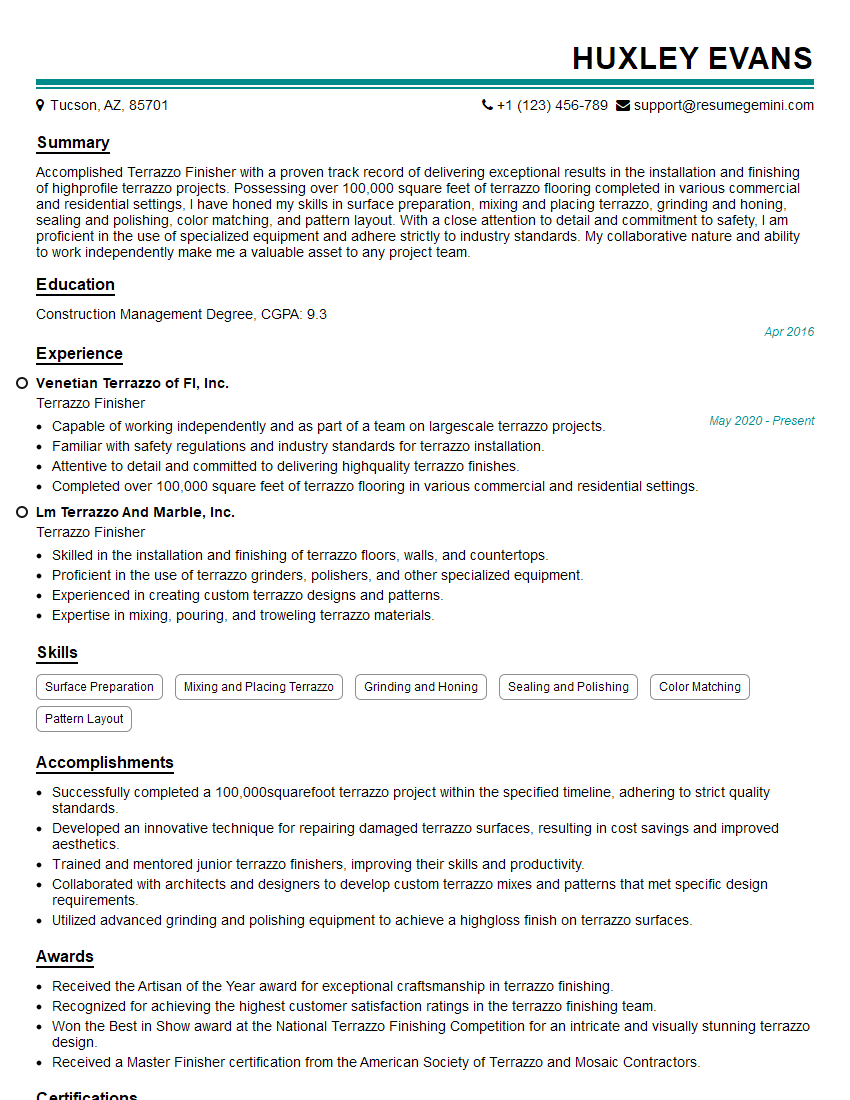
Mastering Terrazzo Inlay opens doors to exciting opportunities in the construction, design, and restoration industries. A strong understanding of this specialized craft significantly enhances your marketability and allows you to pursue high-demand roles. To make the most of your skills, it’s crucial to present yourself effectively. Creating an ATS-friendly resume is key to getting your application noticed by potential employers. We highly recommend using ResumeGemini to build a professional and impactful resume that highlights your Terrazzo Inlay expertise. ResumeGemini provides tools and resources to craft a compelling narrative, ensuring your qualifications stand out. Examples of resumes tailored to Terrazzo Inlay are available to guide you.

Explore more articles
Users Rating of Our Blogs
Share Your Experience
We value your feedback! Please rate our content and share your thoughts (optional).
What Readers Say About Our Blog
hello,
Our consultant firm based in the USA and our client are interested in your products.
Could you provide your company brochure and respond from your official email id (if different from the current in use), so i can send you the client’s requirement.
Payment before production.
I await your answer.
Regards,
MrSmith
hello,
Our consultant firm based in the USA and our client are interested in your products.
Could you provide your company brochure and respond from your official email id (if different from the current in use), so i can send you the client’s requirement.
Payment before production.
I await your answer.
Regards,
MrSmith
These apartments are so amazing, posting them online would break the algorithm.
https://bit.ly/Lovely2BedsApartmentHudsonYards
Reach out at [email protected] and let’s get started!
Take a look at this stunning 2-bedroom apartment perfectly situated NYC’s coveted Hudson Yards!
https://bit.ly/Lovely2BedsApartmentHudsonYards
Live Rent Free!
https://bit.ly/LiveRentFREE
Interesting Article, I liked the depth of knowledge you’ve shared.
Helpful, thanks for sharing.
Hi, I represent a social media marketing agency and liked your blog
Hi, I represent an SEO company that specialises in getting you AI citations and higher rankings on Google. I’d like to offer you a 100% free SEO audit for your website. Would you be interested?