Are you ready to stand out in your next interview? Understanding and preparing for Medical Photography Knowledge interview questions is a game-changer. In this blog, we’ve compiled key questions and expert advice to help you showcase your skills with confidence and precision. Let’s get started on your journey to acing the interview.
Questions Asked in Medical Photography Knowledge Interview
Q 1. Describe your experience with different types of medical cameras and imaging systems.
My experience encompasses a wide range of medical cameras and imaging systems, from basic DSLR cameras used for surgical documentation to sophisticated specialized equipment like dermatoscopes for high-resolution skin imaging and endoscopic cameras for minimally invasive procedures. I’m proficient with both still and video capture techniques. I’ve worked with various manufacturers including Canon, Nikon, and Olympus, understanding the nuances of their respective sensor technologies and image processing capabilities. For instance, I’ve used Canon’s EOS series for its versatility in surgical settings, capturing clear images even in challenging lighting conditions. My experience also extends to integrating digital imaging systems with hospital Picture Archiving and Communication Systems (PACS) for efficient storage and retrieval of medical images. This includes understanding DICOM (Digital Imaging and Communications in Medicine) standards and workflows for seamless image transfer and management.
- DSLR Cameras: Canon EOS series, Nikon D series
- Dermatoscopes: Various brands offering polarized and non-polarized options
- Endoscopic Cameras: Olympus and other leading manufacturers
- PACS Integration: Experience with various PACS systems and DICOM standards
Q 2. Explain your workflow for capturing and processing medical images.
My workflow for capturing and processing medical images is meticulously structured to maintain accuracy and consistency. It begins with careful pre-capture planning, including assessing lighting, ensuring patient comfort and consent, and selecting the appropriate camera and settings for the specific procedure or condition. Image acquisition is followed by a rigorous post-processing phase utilizing specialized software. This involves adjustments for brightness, contrast, and color balance to optimize image clarity and detail without compromising the integrity of the original image data. I also perform image annotation where necessary, adding relevant information like patient identifiers (coded appropriately for privacy) and procedural details. Finally, images are archived according to hospital protocols and securely stored within the PACS system.
- Pre-capture planning: Lighting assessment, patient preparation, camera selection.
- Image acquisition: Capturing images with appropriate settings and focus.
- Post-processing: Adjusting brightness, contrast, color balance, and sharpness. Annotating images with relevant information.
- Archiving and storage: Securely storing images within the PACS system according to hospital protocols.
Q 3. How do you ensure the accuracy and integrity of medical images?
Accuracy and integrity are paramount in medical photography. I ensure this through several key practices. First, I rigorously calibrate my equipment regularly, ensuring consistent color accuracy and sharpness. Second, I maintain meticulous records of all image capture and processing steps, documenting any adjustments made to ensure traceability. Third, I adhere strictly to established protocols for image capture and handling, avoiding any manipulation that could compromise the diagnostic value or lead to misinterpretation. For example, I would never digitally alter a lesion’s size or appearance. Fourth, I use image management software that supports digital signature features to provide an additional layer of authentication and prevent unauthorized modification.
- Equipment calibration: Regular checks of camera settings and color accuracy.
- Meticulous record-keeping: Detailed documentation of all processing steps.
- Adherence to protocols: Following established guidelines to avoid manipulation or alteration.
- Digital signatures: Utilizing software features for authentication and preventing unauthorized changes.
Q 4. What are the ethical considerations in medical photography?
Ethical considerations are central to medical photography. Patient consent is absolutely crucial before capturing any images. This consent must be informed, meaning the patient understands the purpose of the photographs, how they will be used, and who will have access to them. Respect for patient dignity and privacy is paramount; I always ensure the patient is appropriately draped and positioned to minimize any exposure of sensitive areas. Confidentiality must be maintained at all times, with images stored securely and only accessed by authorized personnel. Image manipulation for purposes other than diagnostic or educational uses is ethically unacceptable. Moreover, it’s crucial to be mindful of cultural sensitivities and ensure that image capture and use aligns with patient values and beliefs.
Q 5. Describe your knowledge of HIPAA regulations and patient privacy.
My understanding of HIPAA (Health Insurance Portability and Accountability Act) regulations is comprehensive. I’m acutely aware of the Protected Health Information (PHI) that medical images represent and am trained in strict adherence to HIPAA regulations. This includes proper patient identification using coded identifiers rather than names or other direct identifiers, secure storage of images in HIPAA-compliant systems, and controlled access restrictions. I understand the implications of non-compliance, which can lead to serious penalties. My work practices reflect a deep commitment to patient privacy and data security, ensuring that all my actions comply with the law.
Q 6. How do you handle challenging lighting situations in medical photography?
Challenging lighting situations are common in medical photography. I utilize several strategies to overcome these. For low-light situations, I may increase ISO settings on my camera, but carefully monitor noise levels to avoid image degradation. I always prioritize using external lighting sources, such as diffused flash units or adjustable LED lights. Careful positioning of these lights is key to minimizing harsh shadows and reflections while illuminating the area of interest effectively. In situations with intense ambient light, I might use diffusers or reflectors to soften the light and reduce glare. Post-processing adjustments, such as selective brightening or shadow recovery, are performed judiciously to correct lighting imbalances without compromising the integrity of the image.
Q 7. What software are you proficient in for image editing and management?
My proficiency extends to various software packages crucial for image editing and management. I’m adept at using Adobe Photoshop for advanced image manipulation, focusing on non-destructive editing techniques. Adobe Lightroom is used for efficient image organization and cataloging. I also have experience with specialized medical imaging software that enables measurements, annotations, and other functionalities essential for clinical reporting. Furthermore, I am familiar with PACS systems and their associated image management tools. I prioritize using software that complies with DICOM standards for seamless integration with hospital systems and maintains image integrity.
- Adobe Photoshop: Advanced image editing and manipulation.
- Adobe Lightroom: Image organization, cataloging, and basic adjustments.
- Specialized Medical Imaging Software: Software enabling measurements, annotations, and clinical reporting.
- PACS System Software: Image management tools within the hospital’s PACS system.
Q 8. Explain your experience with image archiving and retrieval systems.
My experience with image archiving and retrieval systems spans several years and various platforms. I’m proficient in utilizing Picture Archiving and Communication Systems (PACS), a crucial element in modern medical imaging workflows. These systems allow for the secure storage, efficient retrieval, and easy management of vast quantities of medical images, ensuring quick access for diagnosis and consultation. I’ve worked with both vendor-specific PACS and more generic solutions, gaining experience in integrating them with hospital information systems (HIS) and radiology information systems (RIS) for seamless data flow. For instance, in my previous role, I managed the migration of a large medical imaging archive from a legacy system to a cloud-based PACS, significantly improving access speeds and reducing storage costs. This involved careful data validation, ensuring no image loss or corruption during the transition. I also have experience with DICOM (Digital Imaging and Communications in Medicine) standards, which are essential for interoperability between different imaging devices and software.
I understand the importance of metadata management within PACS, ensuring accurate patient identification, image modality, and other crucial details are correctly associated with each image. This is vital for legal and regulatory compliance, preventing misidentification and enabling effective image searching and retrieval. Furthermore, I’m adept at troubleshooting system errors, identifying performance bottlenecks, and implementing security measures to protect patient data confidentiality and integrity.
Q 9. How do you troubleshoot technical issues with medical imaging equipment?
Troubleshooting technical issues with medical imaging equipment requires a systematic approach combining theoretical knowledge with practical problem-solving skills. My approach typically involves a structured process. Firstly, I assess the issue, identifying the type of equipment malfunction, the symptoms, and any error messages displayed. This initial assessment allows me to focus my efforts. Secondly, I check the most likely sources of the problem, which might include power supply, connections, software glitches, or even a simple user error. I might examine cables for damage, check power settings, and review the equipment’s operating manuals. If the problem is software related, I’ll attempt basic troubleshooting, like restarting the system or checking for software updates. For more complex issues, I usually consult the manufacturer’s technical support or relevant documentation.
For example, I once encountered a problem with a digital camera’s auto-focus system repeatedly failing. Through methodical investigation, I discovered a slight misalignment in the lens, which I then carefully adjusted, resolving the issue. In other situations, deeper troubleshooting may necessitate running diagnostic tests on the equipment or contacting specialized technicians. Documentation of troubleshooting steps, resolutions, and preventative measures is crucial for future reference and ensures continuous smooth operations.
Q 10. Describe your experience working with medical professionals in a clinical setting.
Working with medical professionals in a clinical setting requires excellent communication, collaboration, and an understanding of the clinical workflow. I’ve consistently prioritized building strong relationships with clinicians, which significantly improves the efficiency and quality of medical photography procedures. This involves actively listening to their needs, anticipating their requirements, and clearly communicating my actions. For example, I’ve worked closely with dermatologists to photograph skin lesions, ensuring accurate representation of color, texture, and size for diagnosis and monitoring purposes. This includes understanding and adhering to their specific protocols for image acquisition, documentation, and patient consent.
My collaboration with surgeons involved capturing high-resolution images of surgical procedures, both for teaching purposes and for creating detailed medical records. This required precise timing, sterile technique adherence, and a deep understanding of surgical protocols to avoid interfering with the procedure. I value the importance of maintaining patient confidentiality and complying with all relevant ethical and legal guidelines. Ultimately, building trust and efficient communication with clinicians is fundamental to providing a valuable medical photography service.
Q 11. What is your experience with macro and microscopic photography in a medical context?
My experience encompasses both macro and microscopic photography in medical contexts. Macro photography, involving close-up shots of relatively large subjects, is frequently used to document wounds, skin lesions, surgical sites, or other anatomical details. I use specialized lenses and lighting techniques to achieve high-resolution images with excellent depth of field, allowing for accurate visualization of fine details. For example, I’ve used macro photography to meticulously document the progression of a patient’s wound healing over time.
Microscopic photography, on the other hand, involves capturing images at the cellular or tissue level using microscopes coupled with cameras. This technique is crucial in pathology, histology, and other fields requiring analysis of microscopic structures. I have experience with various microscopy techniques including bright-field, dark-field, and fluorescence microscopy, adjusting settings to optimize image quality and clarity. I understand the importance of proper sample preparation, staining, and imaging protocols to ensure accurate and reproducible results. Post-processing techniques, such as image stitching and enhancement, are often employed to create comprehensive images.
Q 12. How do you maintain the sterility of equipment during medical photography procedures?
Maintaining sterility during medical photography procedures is paramount to prevent infection and ensure patient safety. My approach is guided by strict adherence to established protocols and infection control practices. This starts with proper hand hygiene and the use of sterile gloves before handling any equipment or coming into contact with the patient. All equipment that comes into contact with the patient or sterile field is sterilized or disinfected before and after each procedure, using appropriate agents and methods as specified by infection control guidelines.
For example, camera lenses and any other equipment used near the surgical site are thoroughly cleaned and disinfected using approved disinfectants, following manufacturer guidelines carefully. Disposable covers are utilized where appropriate to prevent contamination. Aseptic techniques, such as maintaining a sterile field and avoiding unnecessary touching of equipment, are rigorously observed. Furthermore, thorough cleaning and disinfection of the entire workspace after each procedure is crucial in reducing the risk of cross-contamination. Appropriate waste disposal protocols are also strictly followed to ensure a safe and sterile environment.
Q 13. Explain your understanding of different image file formats and their applications.
Understanding different image file formats and their applications is essential in medical photography. The choice of format significantly impacts image quality, file size, and compatibility with different software. Common formats include:
- JPEG (Joint Photographic Experts Group): Widely used for its balance of image quality and file size compression. Excellent for general-purpose medical images, particularly those intended for viewing and sharing in digital format, such as patient education material.
- TIFF (Tagged Image File Format): A lossless format preserving all image data, ideal for archiving and high-resolution images requiring meticulous detail and potential future editing, often used in research and legal documentation.
- DICOM (Digital Imaging and Communications in Medicine): A specialized medical imaging format containing essential patient information and image metadata, necessary for integration with PACS and other medical imaging systems. It’s crucial for diagnostic purposes where accurate image data integrity is critical.
- PNG (Portable Network Graphics): A lossless format supporting transparency, suitable for images requiring precise color reproduction or graphics overlays. It may be a good choice for some anatomical illustrations.
The selection of the appropriate format depends heavily on the intended application. For diagnostic purposes, DICOM is almost always mandatory. For archiving, TIFF is a preferred choice due to its lossless compression. JPEG is a useful compromise between quality and file size for less critical applications.
Q 14. How do you ensure image quality is consistent across different projects?
Ensuring consistent image quality across different projects involves meticulous attention to detail and the establishment of standardized protocols. This begins with calibrating and regularly maintaining all equipment, including cameras, lenses, and lighting systems. Color calibration is particularly crucial, ensuring consistent color reproduction across various devices and conditions. I use color charts and specialized software to periodically check and adjust color balance. Standardization of image acquisition parameters, such as lighting, aperture, ISO, and exposure settings, is essential to minimize variations between images.
Furthermore, establishing clear guidelines for image processing and post-processing ensures consistency. This includes defining acceptable levels of image enhancement and standardizing the methods used for adjustments such as contrast, brightness, and sharpness. Using standardized software and workflows ensures consistency in image handling and processing. Regular review of acquired images helps to identify any deviations from the established protocols, providing an opportunity for corrective actions and continuous improvement in image quality control.
Q 15. Describe your experience with color correction and image enhancement techniques.
Color correction and image enhancement are crucial in medical photography to ensure accurate representation and diagnostic value. My experience encompasses a wide range of techniques, from basic adjustments like brightness and contrast to more advanced methods like color balancing, white balance correction, and noise reduction.
- Color Balancing: I use tools to adjust the individual color channels (red, green, blue) to ensure accurate skin tones and avoid artificial hues that might mask subtle details. For instance, correcting a bluish tint often present in shadow areas of a wound photograph is vital for proper assessment.
- White Balance Correction: Different light sources (fluorescent, incandescent, sunlight) affect the color temperature. Accurate white balance correction is essential to achieve consistent color reproduction across multiple images taken under varying conditions. Imagine comparing two photos of a lesion – one taken under fluorescent hospital lighting, and another under natural light; correct white balance ensures their color comparability.
- Noise Reduction: Digital images often contain noise (random variations in pixel values), which can obscure fine details. I use sophisticated algorithms to reduce noise without blurring important features, ensuring clearer images for diagnosis or publication.
- Sharpening: While critical for detail, over-sharpening can introduce artifacts. I apply sharpening carefully to enhance fine details while preserving image integrity.
I’m proficient in using software like Adobe Photoshop and Lightroom, as well as dedicated medical imaging software, to perform these enhancements, always ensuring that the final image accurately reflects the original subject matter and maintains its diagnostic relevance.
Career Expert Tips:
- Ace those interviews! Prepare effectively by reviewing the Top 50 Most Common Interview Questions on ResumeGemini.
- Navigate your job search with confidence! Explore a wide range of Career Tips on ResumeGemini. Learn about common challenges and recommendations to overcome them.
- Craft the perfect resume! Master the Art of Resume Writing with ResumeGemini’s guide. Showcase your unique qualifications and achievements effectively.
- Don’t miss out on holiday savings! Build your dream resume with ResumeGemini’s ATS optimized templates.
Q 16. How do you manage large volumes of medical images efficiently?
Managing large volumes of medical images efficiently requires a structured approach, combining robust storage, efficient organization, and metadata management. I typically use a combination of strategies:
- Digital Asset Management (DAM) systems: These centralized platforms allow for efficient storage, retrieval, and organization of images using keywords, patient identifiers, and other metadata. This ensures quick access to specific images.
- Cloud storage with version control: Cloud services provide scalable storage and allow for backups and version control, protecting against data loss and enabling collaborative work.
- File naming conventions: A consistent file naming convention (e.g., using patient ID, date, and image type) is crucial for efficient searching and organization. This eliminates the time wasted searching for files based on ambiguous names.
- Image compression: Using lossless compression techniques (like TIFF or JPEG 2000) preserves image quality while reducing file sizes for easier storage and transfer. For archiving, lower resolution images can be employed without sacrificing crucial diagnostic detail.
In addition, I utilize image database software to create searchable catalogs of my medical image collection, drastically reducing retrieval times and enhancing workflow efficiency. This allows for quick location of specific images based on relevant search terms.
Q 17. Explain your familiarity with different types of medical imaging modalities (e.g., X-ray, MRI, CT).
My familiarity with medical imaging modalities is extensive, covering various techniques such as X-rays, MRIs, CT scans, and ultrasound. While my primary expertise lies in capturing and processing photographic images, I understand the crucial differences and limitations of each modality:
- X-rays: I understand the principles of X-ray imaging, including the importance of proper positioning and radiation safety. I know how to work with both digital and traditional X-ray images and understand how to adapt my photography techniques for effective image capture of external injuries that may require supplementary X-Ray information.
- MRI: I am knowledgeable about the various MRI sequences and their applications, and understand how to effectively capture images for publication or presentation that illustrate the MRI findings. I understand that the digital nature of MRI images lends itself to simple integration with photo editing programs.
- CT scans: Similarly, I understand the principles of CT scanning and how to properly interpret and incorporate these scans into image-based documentation or presentations when it’s relevant. The 3D nature can present challenges, but I am equipped to create illustrative 2D renderings.
- Ultrasound: Although I don’t directly capture ultrasound images, I understand how to integrate them appropriately into my documentation and presentations when needed, often as supporting evidence.
This broad understanding allows me to work effectively with medical teams, integrate various imaging modalities into my photography, and create comprehensive visual documentation.
Q 18. What is your experience with creating medical presentations or publications using images?
I have significant experience creating medical presentations and publications using images. My approach emphasizes clarity, accuracy, and visual appeal. I understand that presentations and publications serve very different purposes.
- Presentations: For presentations, I prioritize creating visually striking images that are easily understood by a diverse audience, often using high-impact visuals to highlight key findings or procedures. I typically use PowerPoint or similar presentation software, carefully considering image size, resolution, and visual hierarchy.
- Publications: For publications (journals, textbooks), I create images according to the specific requirements of the publication, paying close attention to resolution, image formats, and captioning. Accuracy and adherence to scientific standards are paramount here, demanding careful attention to detail and adherence to relevant guidelines.
I am skilled in using various software tools for image editing and layout, ensuring that images are seamlessly integrated into the overall design and message of the presentation or publication. I regularly work with physicians and researchers to ensure that my visual work effectively communicates their findings.
Q 19. How do you comply with legal and regulatory requirements for medical images?
Compliance with legal and regulatory requirements for medical images is critical. This involves several key areas:
- Patient privacy (HIPAA, GDPR): I strictly adhere to all relevant privacy regulations, ensuring that patient identifiers are removed or anonymized from images used for any purpose other than direct patient care. I understand the sensitive nature of medical images and maintain a strict policy of confidentiality.
- Image security: I implement secure storage and access protocols to prevent unauthorized access or disclosure of medical images. This includes password protection, encryption, and restricted access controls to safeguard sensitive patient data.
- Informed consent: I ensure that patients provide informed consent before any photographs are taken, clarifying the purpose of the images and how they will be used. This includes obtaining written or documented verbal consent, depending on the institutional protocols.
- Image integrity: I maintain rigorous documentation of image acquisition and processing, ensuring that no alterations compromise the image’s diagnostic or evidentiary value. Any alterations made are clearly documented and justified.
My commitment to these regulations underscores my responsibility to protect patient privacy and maintain the integrity of medical records.
Q 20. Explain your understanding of image resolution and its importance in medical photography.
Image resolution is paramount in medical photography, as it directly impacts the diagnostic quality and detail captured. Resolution is measured in pixels per inch (PPI) or dots per inch (DPI). Higher resolution means more detail; think of it like a digital mosaic: more tiles (pixels) provide a more precise and nuanced picture.
- Diagnostic Imaging: High resolution is essential for detailed examination of anatomical structures or lesions. Low resolution can obscure critical details, potentially leading to misdiagnosis. For instance, a high-resolution image of a skin lesion allows for precise assessment of its borders and texture, crucial for determining the nature of the lesion.
- Publication and Presentations: Resolution is crucial for crisp, clear images in presentations and publications. Low-resolution images appear blurry and unprofessional, detracting from the credibility of the work. Journals often specify minimum resolution requirements for submitted images.
- Image Scaling: While you can enlarge a low-resolution image, the result will be blurry and pixelated. High-resolution images can be scaled down without a significant loss of quality, offering flexibility.
I consistently use high-resolution cameras and ensure appropriate settings to capture images that meet the demands of diagnostic needs and publication standards. Understanding resolution is crucial for selecting the right camera settings, optimizing image storage, and avoiding potential issues with image quality.
Q 21. How do you handle difficult or emotionally challenging situations during photography sessions?
Medical photography can involve emotionally challenging situations, such as photographing patients with severe injuries or illnesses. My approach emphasizes empathy, professionalism, and respect:
- Empathy and Sensitivity: I always approach each photography session with sensitivity and understanding, recognizing the vulnerability of the patient. I strive to create a comfortable and safe environment.
- Communication: Clear and compassionate communication is key. I explain the purpose of the photographs, answer questions, and address any concerns the patient or their family may have.
- Professional Demeanor: I maintain a professional demeanor throughout the process, ensuring that my actions are respectful and considerate. My focus remains on capturing accurate and clinically relevant images, while also being mindful of the human aspect.
- Collaboration with Medical Team: I work closely with the medical team to ensure that all imaging needs are met while respecting the patient’s emotional well-being. This collaborative approach creates a supportive environment.
In situations involving particularly sensitive content, I may involve a member of the medical team or a patient advocate to ensure the comfort and dignity of the patient are preserved throughout the process. The goal is always to provide professional, high-quality images while maintaining a compassionate and respectful approach.
Q 22. Describe your experience working with diverse patient populations.
Throughout my career, I’ve had the privilege of working with a remarkably diverse patient population, ranging in age, ethnicity, and health conditions. This experience has instilled in me a deep understanding of the importance of sensitivity, cultural awareness, and effective communication. For instance, I’ve photographed patients from various cultural backgrounds, each with unique needs and preferences regarding modesty and comfort during the photographic process. I always prioritize building rapport and ensuring the patient feels safe and respected. In cases where language barriers existed, I’ve collaborated with interpreters or used visual aids to facilitate clear communication and ensure I obtain high-quality images while upholding patient dignity.
- Example: Working with a non-English speaking elderly patient, I used simple gestures and clear visual cues to demonstrate the photographic process, ensuring their comfort and cooperation throughout the procedure.
- Example: When photographing a patient with a visible disability, I took extra care to position them comfortably and to avoid any potentially insensitive angles or actions.
Q 23. What is your approach to maintaining a professional and respectful demeanor in clinical settings?
Maintaining a professional and respectful demeanor in clinical settings is paramount. My approach is built on three core pillars: communication, empathy, and professionalism. I always introduce myself clearly, explain the purpose of the photography, and answer any questions patients may have, using language that is easy to understand. I ensure patient privacy by strictly adhering to HIPAA guidelines and hospital protocols. Empathy is crucial; I strive to create a calm and comfortable environment for patients, acknowledging their anxiety or discomfort, and always obtaining informed consent. Professionalism extends to my attire, punctuality, and overall conduct, reflecting the respect I have for the medical team and the patients under their care.
- Example: If a patient appears anxious, I’ll take the time to explain the procedure in detail, answer their questions, and address their concerns before proceeding.
- Example: I consistently wear appropriate attire, maintain a clean work area, and demonstrate respect for the privacy of other patients and medical staff.
Q 24. How do you collaborate effectively with a medical team to achieve photographic goals?
Effective collaboration with the medical team is crucial for achieving photographic goals. I believe in open communication and proactive engagement. Before any procedure, I discuss the photographic requirements with the physician or surgeon, clarifying the desired images, necessary angles, and any specific clinical details that need to be captured. During the procedure, I maintain clear communication, ensuring that my actions don’t disrupt the workflow. Afterward, I provide the team with high-quality images promptly, often in digital formats convenient for medical records or presentations.
- Example: In a surgical setting, I work closely with the surgical team, anticipating their needs and ensuring the photographic documentation doesn’t interfere with the operation’s sterile field.
- Example: I actively participate in pre-operative planning sessions to ensure I understand the goals of the procedure and can prepare accordingly, ensuring my equipment is adequately calibrated and ready for use.
Q 25. Describe a time you had to solve a complex technical problem in medical photography.
During a dermatological photography session, we encountered a significant challenge: capturing high-resolution images of a lesion located in a deeply shadowed area of the patient’s back. Standard lighting techniques proved inadequate due to the complex skin folds and the limited access to the area. To overcome this, I implemented a multi-step solution. First, I used a combination of ring flash and diffused lighting to minimize harsh shadows. Second, I employed a macro lens to achieve the necessary close-up detail. Third, and most crucially, I strategically used a small, flexible fiber optic light source, guided by a colleague, to illuminate the lesion directly from an optimal angle, creating a much clearer image. This solution demonstrated my ability to adapt and problem-solve in challenging situations.
Q 26. How do you stay up-to-date with the latest advancements in medical photography technology?
Staying current with advancements in medical photography technology is an ongoing process that requires continuous learning. I achieve this through several avenues. I regularly attend conferences and workshops organized by organizations like the American Medical Photographers Association (AMPA) and participate in webinars and online courses offered by leading imaging technology companies. I subscribe to relevant journals and publications, keeping up with the latest research and innovations in imaging technology, including advancements in digital cameras, lighting equipment, and image processing software. Additionally, I actively network with fellow professionals in the field to share experiences and exchange knowledge. This ensures that my skills and knowledge remain cutting-edge and highly relevant within the industry.
Q 27. What are your salary expectations for this role?
My salary expectations for this role are in the range of [Insert Salary Range] annually. This is based on my experience, skills, and the requirements of this position. I am open to discussing this further and am confident that my contributions will justify this compensation.
Q 28. Do you have any questions for me?
I have several questions to help me better understand this opportunity. First, can you describe the specific equipment and software used within the department? Second, what are the primary photographic tasks and responsibilities associated with this role? Finally, what are the opportunities for professional development and continuing education within this organization?
Key Topics to Learn for Medical Photography Knowledge Interview
- Image Acquisition Techniques: Understanding various imaging modalities (macro, close-up, surgical photography), lighting techniques (natural, artificial, flash), and camera settings crucial for capturing high-quality medical images.
- Image Processing and Enhancement: Mastering software like Adobe Photoshop and Lightroom for adjustments, retouching, and preparing images for publication or presentations. This includes color correction, noise reduction, and sharpening techniques specific to medical imagery.
- Medical Terminology and Anatomy: Demonstrating a strong understanding of anatomical structures and relevant medical terminology to ensure accurate image labeling and communication with medical professionals.
- Legal and Ethical Considerations: Familiarity with HIPAA regulations, patient consent, and ethical guidelines related to handling and sharing medical images.
- Equipment Maintenance and Troubleshooting: Knowledge of camera maintenance, troubleshooting common technical issues, and understanding the functionality of various photographic equipment used in medical settings.
- Workflow and Organization: Demonstrating an understanding of efficient image management, archiving, and retrieval systems to ensure smooth workflow and compliance with regulations.
- Communication and Collaboration: Highlighting skills in effectively communicating with medical staff, patients, and other professionals involved in the image acquisition and utilization process.
- Specialized Medical Photography: Exploring niche areas like surgical photography, dermatological photography, or ophthalmic photography to showcase specialized skills and knowledge.
Next Steps
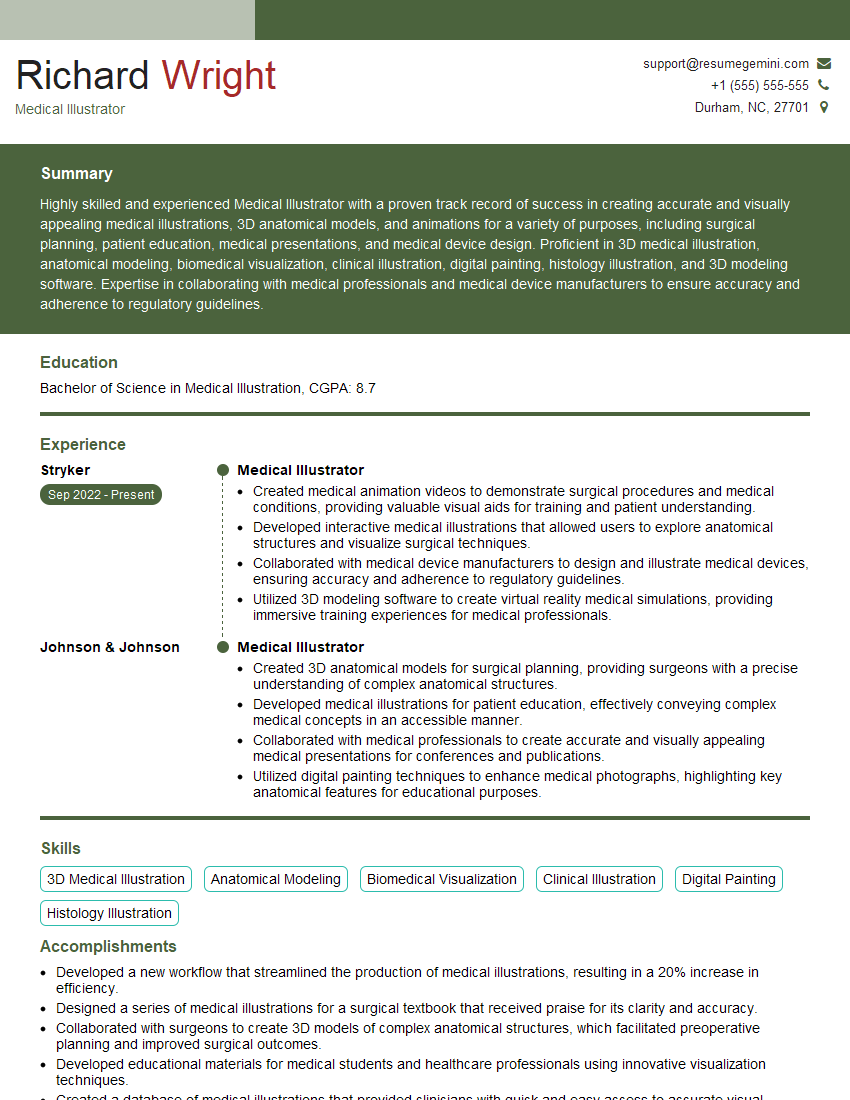
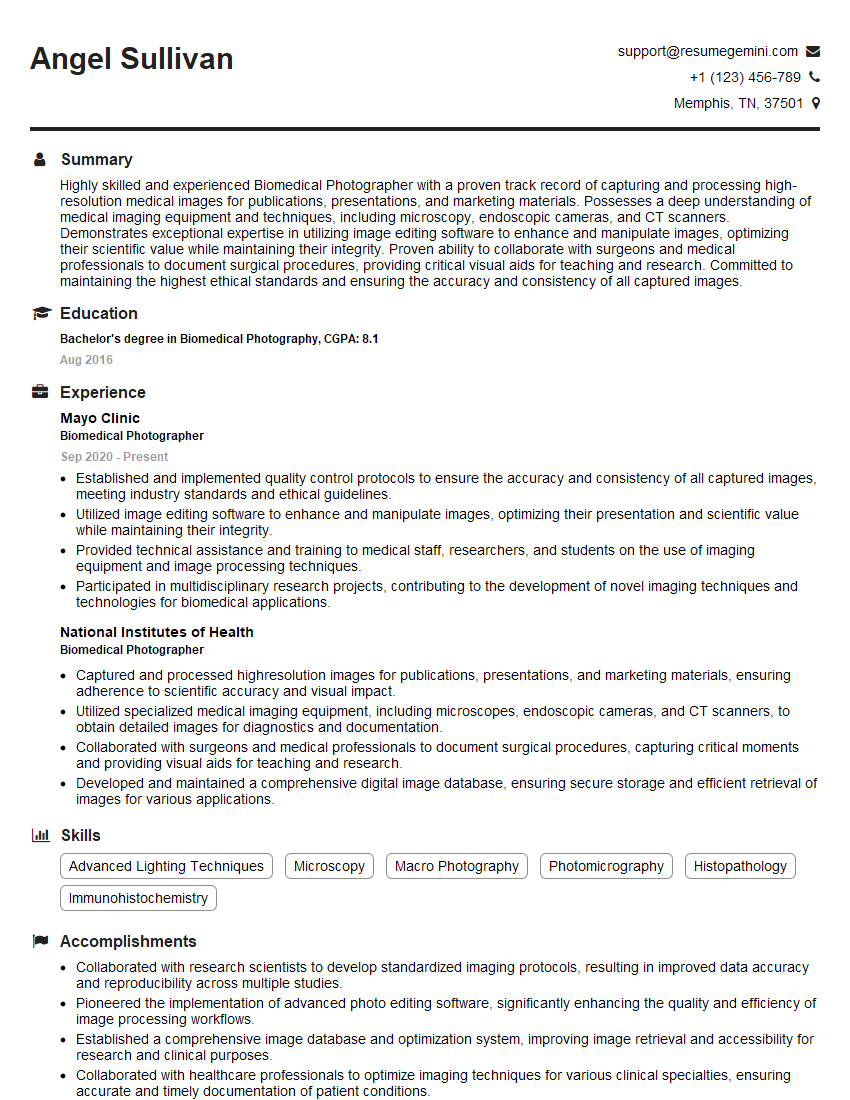
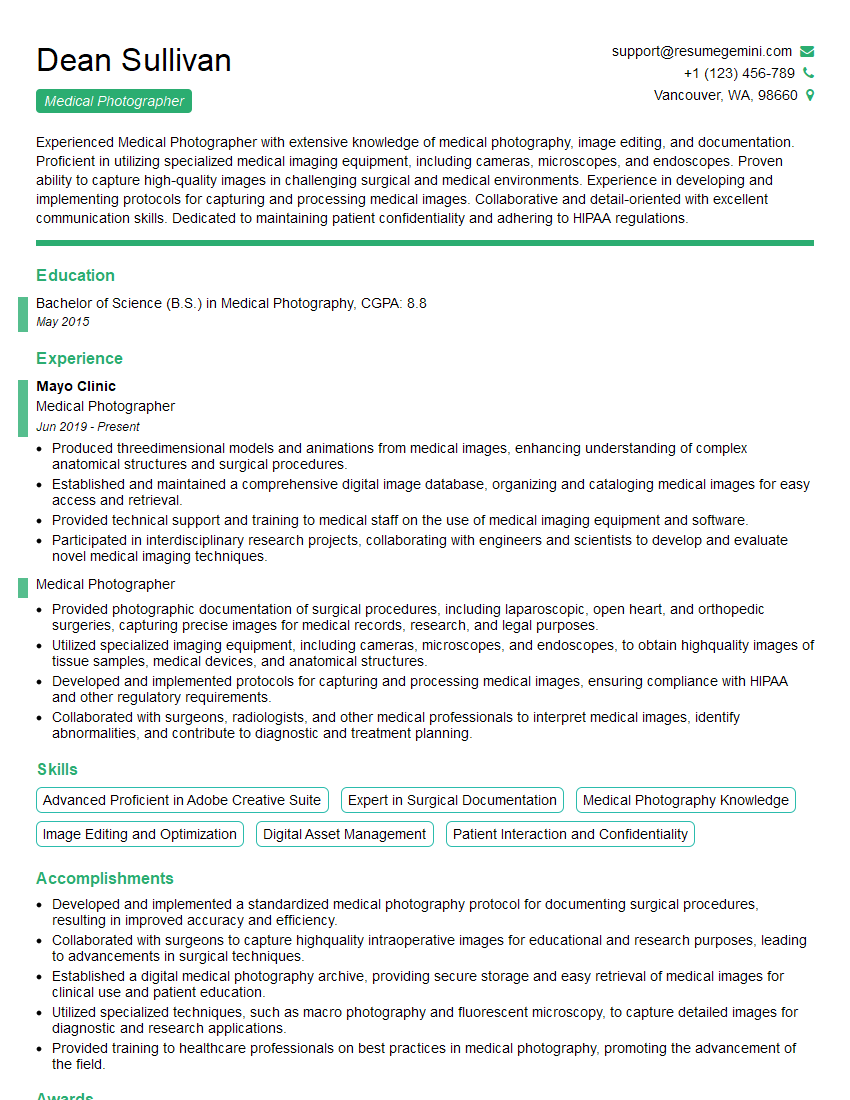
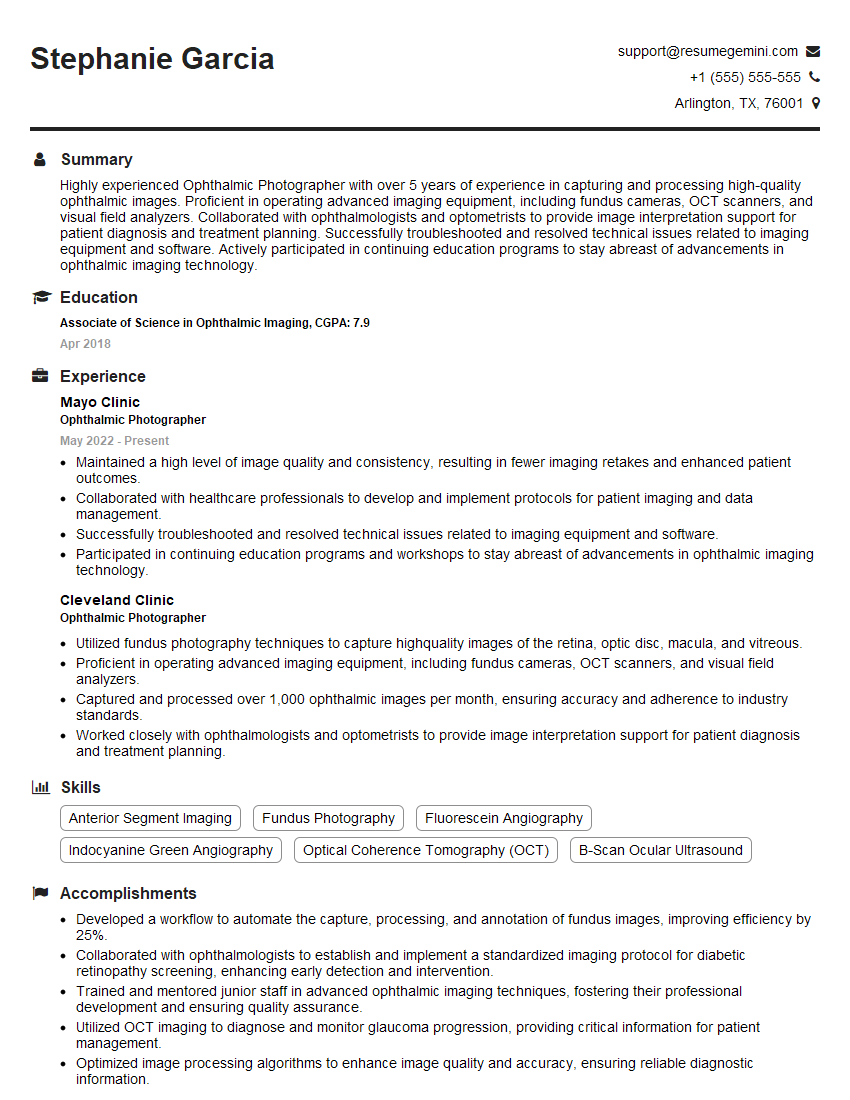
Mastering Medical Photography Knowledge is crucial for career advancement, opening doors to specialized roles and higher earning potential within the healthcare industry. A well-crafted resume is your key to unlocking these opportunities. An ATS-friendly resume ensures your application gets noticed by recruiters and hiring managers. To build a truly impactful resume, leverage the power of ResumeGemini. ResumeGemini offers a user-friendly platform and provides examples of resumes tailored to Medical Photography Knowledge, helping you present your skills and experience effectively. Take the next step in your career journey and craft a resume that showcases your expertise – use ResumeGemini today!
Explore more articles
Users Rating of Our Blogs
Share Your Experience
We value your feedback! Please rate our content and share your thoughts (optional).
What Readers Say About Our Blog
hello,
Our consultant firm based in the USA and our client are interested in your products.
Could you provide your company brochure and respond from your official email id (if different from the current in use), so i can send you the client’s requirement.
Payment before production.
I await your answer.
Regards,
MrSmith
hello,
Our consultant firm based in the USA and our client are interested in your products.
Could you provide your company brochure and respond from your official email id (if different from the current in use), so i can send you the client’s requirement.
Payment before production.
I await your answer.
Regards,
MrSmith
These apartments are so amazing, posting them online would break the algorithm.
https://bit.ly/Lovely2BedsApartmentHudsonYards
Reach out at [email protected] and let’s get started!
Take a look at this stunning 2-bedroom apartment perfectly situated NYC’s coveted Hudson Yards!
https://bit.ly/Lovely2BedsApartmentHudsonYards
Live Rent Free!
https://bit.ly/LiveRentFREE
Interesting Article, I liked the depth of knowledge you’ve shared.
Helpful, thanks for sharing.
Hi, I represent a social media marketing agency and liked your blog
Hi, I represent an SEO company that specialises in getting you AI citations and higher rankings on Google. I’d like to offer you a 100% free SEO audit for your website. Would you be interested?