The thought of an interview can be nerve-wracking, but the right preparation can make all the difference. Explore this comprehensive guide to Machine Learning for Bioinformatics interview questions and gain the confidence you need to showcase your abilities and secure the role.
Questions Asked in Machine Learning for Bioinformatics Interview
Q 1. Explain the difference between supervised, unsupervised, and reinforcement learning in the context of bioinformatics.
In bioinformatics, machine learning algorithms are broadly categorized into supervised, unsupervised, and reinforcement learning, each with distinct applications.
- Supervised learning uses labeled datasets, where each data point is associated with a known outcome. For example, we might have a dataset of gene sequences labeled as either cancerous or non-cancerous. The algorithm learns to map input features (gene sequence characteristics) to the output (cancerous/non-cancerous). Common algorithms include Support Vector Machines (SVMs) and Random Forests used for gene classification or predicting protein-protein interactions based on known interactions.
- Unsupervised learning tackles datasets without pre-assigned labels. A common application is clustering genes with similar expression patterns to identify potential functional relationships or pathways. Algorithms like k-means clustering or hierarchical clustering are frequently employed here. Imagine grouping patients based on their gene expression profiles without prior knowledge of their disease status – this helps uncover hidden subgroups.
- Reinforcement learning involves an agent that learns to interact with an environment to maximize a reward. In bioinformatics, this could involve designing optimal drug molecules or predicting the effects of gene mutations by trial and error, learning from the outcomes (rewards or penalties) in a simulated environment. This is a relatively newer area in bioinformatics, but holds great promise for drug discovery and personalized medicine.
Q 2. Describe various feature selection techniques used in bioinformatics machine learning.
Feature selection is crucial in bioinformatics because genomic datasets are often high-dimensional (many features, e.g., genes) and noisy. Selecting the most relevant features improves model performance, reduces computational costs, and enhances interpretability. Here are some common techniques:
- Filter methods: These rank features based on statistical measures independent of any learning algorithm. Examples include correlation with the target variable (e.g., Pearson correlation for continuous targets), mutual information (for both continuous and discrete targets), or chi-squared test (for categorical features). These are computationally efficient but may miss interactions between features.
- Wrapper methods: These evaluate subsets of features based on the performance of a chosen machine learning algorithm. Recursive Feature Elimination (RFE) is a popular example, where features are iteratively removed based on their importance scores from a model. This is more computationally expensive than filter methods but can capture feature interactions, potentially leading to better performance.
- Embedded methods: These integrate feature selection within the model training process. Regularization techniques like L1 (LASSO) and L2 (Ridge) regression add penalties to the model complexity, effectively shrinking the coefficients of less important features. Tree-based methods like Random Forest naturally perform feature selection through their splitting criteria. These offer a balance between computational cost and performance.
The choice of feature selection method depends on the specific dataset, computational resources, and the desired level of interpretability.
Q 3. How do you handle imbalanced datasets in bioinformatics applications?
Imbalanced datasets, where one class significantly outnumbers others (e.g., many healthy samples and few diseased samples), are a common challenge in bioinformatics. This can lead to biased models that perform poorly on the minority class. Here are some strategies:
- Resampling techniques: Oversampling the minority class (creating copies or synthetic samples using techniques like SMOTE – Synthetic Minority Over-sampling Technique) or undersampling the majority class (removing samples randomly or strategically) can balance the class distribution. However, oversampling can lead to overfitting, while undersampling might discard valuable information.
- Cost-sensitive learning: Assign higher misclassification costs to the minority class during model training. This penalizes the model more heavily for misclassifying minority class samples, forcing it to pay more attention to this class. Many algorithms (e.g., SVMs, Random Forests) allow incorporating class weights to achieve this.
- Anomaly detection techniques: If the minority class represents anomalies or outliers (e.g., rare genetic mutations), consider using anomaly detection algorithms instead of standard classification. One-class SVMs, isolation forests, or local outlier factor (LOF) are suitable examples.
- Ensemble methods: Combining multiple models trained on different balanced subsets of the data can improve robustness and reduce bias.
The optimal approach depends on the specific dataset and the characteristics of the imbalance.
Q 4. What are some common challenges in applying machine learning to genomic data?
Applying machine learning to genomic data presents several challenges:
- High dimensionality: Genomic data often contains tens of thousands of features, requiring careful feature selection or dimensionality reduction techniques.
- Data noise and heterogeneity: Experimental errors and batch effects can introduce noise. Different sequencing technologies and sample preparation methods contribute to data heterogeneity.
- Data sparsity: Many genomic datasets have missing values, requiring imputation strategies or robust algorithms that can handle missing data.
- Interpretability: Understanding why a model makes a specific prediction is crucial in bioinformatics. Complex models like deep neural networks can be difficult to interpret, requiring additional techniques like SHAP (SHapley Additive exPlanations) values.
- Computational cost: Analyzing large genomic datasets requires significant computational resources and efficient algorithms.
- Generalizability: Models trained on one dataset might not generalize well to other datasets due to differences in population, experimental protocols, or data processing steps.
Addressing these challenges requires careful data preprocessing, feature engineering, algorithm selection, and rigorous model evaluation.
Q 5. Explain the concept of cross-validation and its importance in bioinformatics machine learning.
Cross-validation is a crucial technique for assessing the generalization performance of a machine learning model, especially in bioinformatics where data is often limited. It involves splitting the dataset into multiple folds (e.g., k-fold cross-validation). The model is trained on k-1 folds and tested on the remaining fold. This process is repeated k times, with each fold serving as the test set once. The average performance across all folds provides a more robust estimate of the model’s generalization ability than a single train-test split.
Importance in bioinformatics: Cross-validation helps prevent overfitting, where the model performs well on the training data but poorly on unseen data. This is particularly important in bioinformatics, where datasets are often small and noisy. It provides a more reliable measure of how well the model will perform on new, independent samples, crucial for making accurate predictions in real-world applications.
For instance, in predicting disease risk from genomic data, cross-validation ensures that the model isn’t simply memorizing the training samples but learning generalizable patterns applicable to new patients.
Q 6. Discuss different evaluation metrics used for classification and regression tasks in bioinformatics.
The choice of evaluation metrics depends on the specific task (classification or regression) and the goals of the analysis.
- Classification: Common metrics include:
- Accuracy: The proportion of correctly classified samples.
- Precision: The proportion of true positives among all predicted positives.
- Recall (Sensitivity): The proportion of true positives among all actual positives.
- F1-score: The harmonic mean of precision and recall, balancing the trade-off between them.
- AUC (Area Under the ROC Curve): Measures the ability of the model to distinguish between classes across different thresholds. Useful for imbalanced datasets.
- Regression: Common metrics include:
- Mean Squared Error (MSE): The average squared difference between predicted and actual values.
- Root Mean Squared Error (RMSE): The square root of MSE, providing a more interpretable measure in the same units as the target variable.
- Mean Absolute Error (MAE): The average absolute difference between predicted and actual values, less sensitive to outliers than MSE.
- R-squared (Coefficient of Determination): Represents the proportion of variance in the target variable explained by the model.
Selecting appropriate metrics is vital for evaluating model performance and making informed decisions in bioinformatics applications.
Q 7. How would you approach the problem of predicting protein secondary structure using machine learning?
Predicting protein secondary structure using machine learning involves training a model to predict the local conformation (alpha-helix, beta-sheet, or coil) of amino acid residues in a protein sequence. Here’s a potential approach:
- Data acquisition: Obtain a dataset of protein sequences with known secondary structures. Datasets like DSSP (Dictionary of Secondary Structure of Proteins) are commonly used. Each sequence is represented as a string of amino acids.
- Feature engineering: Extract relevant features from the amino acid sequences. These could include:
- Amino acid composition: The frequency of each amino acid type.
- Physicochemical properties: Hydrophobicity, charge, size, etc., of amino acids.
- Sequence-based features: Window-based features capturing local sequence patterns (e.g., using a sliding window to consider neighboring amino acids).
- Position-specific scoring matrices (PSSMs): derived from multiple sequence alignments, providing information about conserved regions and functional motifs.
- Model selection: Choose a suitable machine learning algorithm. Popular choices include:
- Support Vector Machines (SVMs): Effective for high-dimensional data.
- Neural networks (Recurrent Neural Networks (RNNs), particularly LSTMs): Can capture long-range dependencies in the amino acid sequence.
- Hidden Markov Models (HMMs): Classically used in sequence analysis, modeling the transitions between secondary structure states.
- Model training and evaluation: Train the chosen model using cross-validation to prevent overfitting and obtain a robust performance estimate. Evaluate performance using metrics like accuracy, precision, recall, and F1-score.
- Prediction: Use the trained model to predict the secondary structure of new, unseen protein sequences.
This is a simplified overview. The specific details of feature engineering and model selection might need adjustments based on the dataset size, computational resources, and desired accuracy.
Q 8. Describe your experience with different deep learning architectures applicable to bioinformatics problems (e.g., CNNs, RNNs).
Deep learning architectures have revolutionized bioinformatics. Convolutional Neural Networks (CNNs) excel at analyzing image-like data, such as microscopy images of cells or genomic sequence representations. Their convolutional layers effectively capture local patterns, crucial for identifying motifs in DNA or protein sequences or detecting features in cellular images. Recurrent Neural Networks (RNNs), particularly Long Short-Term Memory (LSTM) networks, are ideal for sequential data like time-series gene expression data or protein sequences where the order of elements matters. LSTMs handle long-range dependencies better than standard RNNs, allowing for modeling complex relationships within the sequences. For instance, I’ve used CNNs to classify microscopic images of cancerous cells based on texture and shape, achieving high accuracy compared to traditional image analysis methods. Similarly, I’ve applied LSTMs to predict protein secondary structure from amino acid sequences, outperforming simpler methods. Other architectures like Graph Neural Networks (GNNs) are increasingly used to model protein-protein interactions and metabolic networks, capturing complex relationships between nodes (proteins or metabolites) and edges (interactions). Choosing the right architecture depends heavily on the data type and the problem being addressed.
Q 9. Explain how you would handle missing data in a bioinformatics dataset.
Missing data is a common challenge in bioinformatics. The best approach depends on the nature of the data and the extent of missingness. Simple imputation methods, like replacing missing values with the mean or median, are quick but can bias results if missingness is not random. More sophisticated techniques are often preferred. For example, k-Nearest Neighbors (KNN) imputation uses the values of similar data points to estimate missing values. Multiple Imputation creates multiple plausible datasets to account for uncertainty in imputed values, leading to more robust results. For gene expression data, I’ve successfully used Bayesian methods to impute missing values, incorporating prior knowledge about gene expression patterns. Sometimes, however, it’s more appropriate to exclude data points with extensive missing information if the data loss is significant enough to compromise the integrity of the results. The choice ultimately hinges on a careful assessment of the data quality and the potential impact on the downstream analysis. It’s often beneficial to compare the performance of multiple imputation methods and select the one that best aligns with the overall study goals.
Q 10. What are some common bioinformatics databases you have worked with?
My work extensively uses several key bioinformatics databases. UniProt is frequently used for protein sequence and annotation data. It’s invaluable for tasks such as protein homology analysis and prediction of protein function. NCBI’s GenBank is a crucial resource for nucleotide sequence data, enabling research on genomics and evolutionary studies. I’ve also worked with KEGG (Kyoto Encyclopedia of Genes and Genomes) for pathways and metabolic information. KEGG is fundamental for network analysis and understanding the functional context of genes. Furthermore, depending on the project, I might also utilize specialized databases such as TCGA (The Cancer Genome Atlas) for cancer genomics data or specialized databases focused on specific organisms or pathways, thereby selecting the databases most suited for my research objectives.
Q 11. Discuss your experience with different programming languages and tools used in bioinformatics (e.g., Python, R, Bioconductor).
Python is my primary language for bioinformatics due to its extensive libraries like Scikit-learn, TensorFlow, and PyTorch, enabling diverse machine learning tasks. Biopython provides tools specifically for bioinformatics operations such as sequence manipulation and phylogenetic analysis. R is another important tool, particularly strong for statistical analysis and data visualization with packages like Bioconductor, which offers a comprehensive suite of tools for bioinformatics. I frequently use Bioconductor packages for microarray data analysis and gene set enrichment analysis. My workflow often involves using Python for deep learning model development and R for downstream statistical analysis and visualization. Command-line tools like SAMtools and BWA are also essential for sequence alignment and variant calling.
Q 12. How would you build a machine learning model to predict drug efficacy?
Predicting drug efficacy is a complex problem demanding a multi-faceted approach. I would start by carefully curating a dataset containing relevant features, such as chemical properties of the drug, gene expression profiles in target cells, and measured efficacy data (e.g., IC50 values). Feature selection would be crucial, aiming to identify the most predictive features and mitigate overfitting. I might employ techniques like recursive feature elimination or L1 regularization. Depending on the data, several algorithms could be suitable. For example, if I have a rich feature space, I might explore random forests or gradient boosting machines (GBMs) for their ability to handle non-linear relationships and high dimensionality. If the data has strong temporal dependencies (e.g., time-course gene expression), recurrent neural networks (RNNs) might be considered. Rigorous model validation is paramount, involving techniques like k-fold cross-validation and independent test set evaluation, to ensure that the model generalizes well to unseen data and accurately predicts drug efficacy on new compounds. This is frequently improved with careful considerations of hyperparameter tuning for the chosen model using grid search or Bayesian optimization methods.
Q 13. Explain your understanding of different dimensionality reduction techniques and their applications in bioinformatics.
Dimensionality reduction is vital in bioinformatics due to the often high dimensionality of datasets (e.g., thousands of genes in gene expression studies). Principal Component Analysis (PCA) is a classic linear technique that identifies principal components capturing the most variance in the data. This is valuable for visualization and reducing noise. t-distributed Stochastic Neighbor Embedding (t-SNE) is a non-linear technique excellent for visualizing high-dimensional data in lower dimensions. While useful for visualization, it is not ideal for feature selection or downstream modeling. Autoencoders, a type of neural network, can learn complex non-linear relationships to perform dimensionality reduction, potentially capturing more relevant information than linear methods. The choice depends on the specific context. PCA is a good starting point for linear dimensionality reduction and visualization. t-SNE is helpful for visualization, especially when visualizing clusters in high-dimensional space. Autoencoders offer a more powerful approach when non-linear relationships are important and can be valuable when seeking to retain information crucial for downstream modeling.
Q 14. How do you select the appropriate machine learning algorithm for a given bioinformatics problem?
Selecting the right machine learning algorithm is crucial for success. It depends on several factors: the type of data (continuous, categorical, sequential), the size of the dataset, the nature of the problem (classification, regression, clustering), and the interpretability requirements. For example, simple linear regression is suitable for linear relationships with small datasets, while support vector machines (SVMs) can be effective for high-dimensional classification problems. Random forests offer good performance and robustness across diverse datasets. Deep learning methods are powerful for large datasets but require substantial computational resources and may be less interpretable than simpler models. For high-throughput screening data, I might choose random forests for efficiency and interpretability. For analyzing sequence data, recurrent neural networks might be more appropriate. Start with simpler models; if performance is insufficient, consider more complex ones. Always validate rigorously and select the model that provides the best balance of performance and interpretability.
Q 15. Describe your experience with cloud computing platforms for bioinformatics data analysis (e.g., AWS, Google Cloud, Azure).
My experience with cloud computing platforms for bioinformatics is extensive. I’ve worked extensively with AWS, Google Cloud, and Azure, leveraging their services for various stages of bioinformatics analysis, from data storage and preprocessing to model training and deployment. For instance, on AWS, I’ve utilized S3 for storing massive genomic datasets, EC2 for running computationally intensive tasks like genome alignment and variant calling, and EMR for distributed processing of large-scale data using Spark. On Google Cloud, I’ve used similar services, namely Google Cloud Storage, Compute Engine, and Dataproc. Azure’s Blob Storage, Virtual Machines, and HDInsight have provided equivalent functionality. The choice of platform often depends on factors such as cost-effectiveness, the specific tools and libraries available, and existing infrastructure within a project. A crucial aspect of my work involves optimizing resource allocation and managing costs efficiently across these platforms. I have experience building pipelines using tools like CloudFormation (AWS), Terraform (multi-cloud), and Deployment Manager (Google Cloud) to ensure reproducibility and scalability.
Career Expert Tips:
- Ace those interviews! Prepare effectively by reviewing the Top 50 Most Common Interview Questions on ResumeGemini.
- Navigate your job search with confidence! Explore a wide range of Career Tips on ResumeGemini. Learn about common challenges and recommendations to overcome them.
- Craft the perfect resume! Master the Art of Resume Writing with ResumeGemini’s guide. Showcase your unique qualifications and achievements effectively.
- Don’t miss out on holiday savings! Build your dream resume with ResumeGemini’s ATS optimized templates.
Q 16. What are your preferred methods for visualizing and interpreting results from bioinformatics machine learning models?
Visualizing and interpreting results from bioinformatics machine learning models requires a multifaceted approach. I heavily rely on tools like Python libraries such as Matplotlib, Seaborn, and Plotly for creating static and interactive plots. For example, I use scatter plots to visualize the relationship between gene expression levels and disease phenotypes, heatmaps to represent the correlation between different genes, and ROC curves to assess the performance of classification models. Beyond these, I use more specialized tools such as Circos for visualizing genomic data, and ggplot2 in R for creating publication-quality figures. Beyond simple visualizations, I often employ dimensionality reduction techniques like PCA or t-SNE to explore high-dimensional data and identify patterns. The interpretation phase is equally important and involves considering statistical significance, biological context, and potential biases in the data and models. For instance, if a model predicts a certain biomarker strongly, I would validate it with independent datasets and explore the underlying biological mechanisms to confirm the findings and rule out potential artifacts.
Q 17. How would you approach the task of identifying disease biomarkers using machine learning?
Identifying disease biomarkers using machine learning is a complex process that typically involves several steps. First, I would carefully curate and preprocess the data, which might include genomic data (e.g., gene expression, SNPs), clinical data (e.g., age, gender, disease status), and other relevant information. This involves handling missing values, normalizing data, and potentially performing feature selection to reduce dimensionality and improve model performance. Next, I would select appropriate machine learning models depending on the nature of the problem. For classification tasks (e.g., predicting disease presence/absence), I might use Support Vector Machines (SVMs), Random Forests, or Gradient Boosting Machines. For regression tasks (e.g., predicting disease severity), I would employ regression models like linear regression or support vector regression. Model selection would also take into account factors such as data size, complexity of relationships, and interpretability requirements. After model training, rigorous model evaluation is essential. This involves using techniques like cross-validation, to avoid overfitting and ensure generalizability. Finally, I would interpret the results by identifying the most important features (biomarkers) that contribute to the model’s predictions. This involves analyzing feature importance scores provided by the model, as well as performing biological validation using external databases and literature.
Q 18. Explain your experience with different types of sequence alignment algorithms.
My experience with sequence alignment algorithms encompasses both global and local alignment methods. Global alignment algorithms, such as Needleman-Wunsch, aim to find the optimal alignment across the entire length of two sequences, while local alignment algorithms, such as Smith-Waterman, identify regions of similarity within sequences. I’m familiar with the dynamic programming principles underlying these algorithms and understand their computational complexities. I’ve utilized these algorithms extensively using tools like BLAST (Basic Local Alignment Search Tool) for identifying homologous sequences in databases, and ClustalW for multiple sequence alignment. Furthermore, I have experience working with faster heuristic-based alignment methods, such as FASTA, which are particularly useful when dealing with large datasets. The choice of algorithm depends greatly on the specific application and the nature of the sequences being compared. For instance, if identifying short, conserved regions within larger sequences is important, then a local alignment method would be preferred. Conversely, for comparing the overall similarity of two relatively short sequences, global alignment would be more appropriate. Understanding the strengths and limitations of each algorithm is key to applying them effectively.
Q 19. Discuss your understanding of phylogenetic tree construction and its applications in bioinformatics.
Phylogenetic tree construction is a crucial aspect of bioinformatics, allowing us to visualize the evolutionary relationships between different species or genes. I’m familiar with various methods used in constructing phylogenetic trees, including distance-based methods (e.g., UPGMA, Neighbor-Joining), character-based methods (e.g., maximum parsimony, maximum likelihood), and Bayesian methods. These methods utilize sequence data (DNA, RNA, protein) to infer evolutionary relationships. The choice of method depends on factors such as the amount of data available, the characteristics of the data, and the desired level of accuracy. For example, maximum likelihood methods generally produce more accurate trees than distance-based methods, but they are computationally more intensive. Phylogenetic trees have many applications in bioinformatics, including inferring evolutionary history, identifying conserved regions in sequences, and understanding the spread of infectious diseases. I have used phylogenetic trees in projects involving comparative genomics, evolutionary biology, and epidemiology. Assessing the reliability of phylogenetic trees using bootstrapping or Bayesian posterior probabilities is a crucial step, and I always incorporate such analyses in my workflow to ensure the robustness of the inferred relationships.
Q 20. How do you handle noisy data in bioinformatics applications?
Noisy data is a significant challenge in bioinformatics, stemming from various sources such as experimental errors, technical artifacts, and biological variability. My approach to handling noisy data involves a combination of strategies. Firstly, I perform rigorous quality control checks on the raw data to identify and remove outliers or artifacts. This often involves visualizing the data and applying statistical tests to detect anomalies. Secondly, I employ data preprocessing techniques such as data transformation (e.g., logarithmic transformation to stabilize variance), normalization (e.g., z-score normalization to center and scale data), and smoothing (e.g., moving average to reduce noise). For high-dimensional data, feature selection techniques can reduce the impact of noisy features. Furthermore, robust statistical methods that are less sensitive to outliers are often preferred. For instance, I might use median instead of mean for calculating central tendencies. Finally, I incorporate techniques that explicitly model noise into the machine learning models, such as regularisation, which can help prevent overfitting to noisy data and improve generalisation performance. The specific techniques applied depend strongly on the nature and extent of noise present in the data.
Q 21. What are some ethical considerations in applying machine learning to bioinformatics data?
Ethical considerations in applying machine learning to bioinformatics data are paramount. Privacy is a major concern, especially when dealing with sensitive patient information like genomic data and medical records. Strict adherence to data privacy regulations (e.g., HIPAA, GDPR) is critical, involving data anonymization or de-identification techniques where possible. Bias is another significant issue; machine learning models can inherit and amplify biases present in the training data, potentially leading to unfair or discriminatory outcomes. Careful consideration of potential biases in datasets, and techniques for bias mitigation, such as data augmentation or algorithmic fairness measures, are essential. Furthermore, ensuring transparency and explainability of machine learning models is important. ‘Black box’ models, where the decision-making process is opaque, can be problematic in healthcare settings, particularly when high-stakes decisions are involved. Finally, responsible data sharing and collaboration are crucial. Open access to data and methods can promote scientific progress but needs to be balanced with ethical considerations of data privacy and intellectual property. Throughout my work, I prioritize these ethical considerations and strive to apply machine learning responsibly and ethically.
Q 22. Explain your understanding of regularization techniques and their use in machine learning.
Regularization techniques are crucial in machine learning to prevent overfitting, where a model learns the training data too well and performs poorly on unseen data. They achieve this by adding a penalty to the model’s complexity, discouraging it from learning overly intricate relationships that might not generalize well.
Two common types are L1 (LASSO) and L2 (Ridge) regularization. L1 regularization adds a penalty proportional to the absolute value of the model’s coefficients, while L2 adds a penalty proportional to the square of the coefficients. L1 tends to produce sparse models (many coefficients become zero), useful for feature selection, whereas L2 shrinks coefficients towards zero but rarely sets them exactly to zero.
Example: Imagine fitting a polynomial curve to a scatter plot. Without regularization, a high-degree polynomial might perfectly fit all training points, but wildly oscillate between them, performing poorly on new data. Regularization would constrain the polynomial’s complexity, producing a smoother, more generalizable curve. In bioinformatics, this is vital when dealing with high-dimensional datasets like gene expression profiles where overfitting is a significant concern.
Q 23. Describe your experience with different model optimization techniques (e.g., hyperparameter tuning).
Model optimization is paramount for achieving optimal performance. My experience encompasses various techniques, including grid search, random search, and Bayesian optimization for hyperparameter tuning. Grid search exhaustively explores a predefined grid of hyperparameter combinations, while random search randomly samples from the hyperparameter space. Bayesian optimization leverages a probabilistic model to guide the search efficiently, often requiring fewer iterations to find optimal parameters.
I’ve also employed techniques like cross-validation (k-fold, stratified k-fold) to rigorously evaluate model performance and avoid overestimating generalization ability. Furthermore, I’ve used early stopping during training to prevent overfitting by monitoring performance on a validation set and halting training when improvement plateaus. In practical application, I select optimization strategies based on the computational resources available and the complexity of the model.
For instance, in a project involving the classification of protein structures, I used Bayesian optimization to tune the hyperparameters of a support vector machine (SVM) due to its efficiency, whereas for a less computationally intensive linear regression on gene expression data, a simple grid search sufficed.
Q 24. How would you approach the problem of predicting gene expression levels using machine learning?
Predicting gene expression levels is a common task in bioinformatics. My approach would involve several key steps:
- Data Preprocessing: This includes handling missing values (imputation or removal), normalization (e.g., quantile normalization, log transformation), and potentially feature selection to reduce dimensionality and improve model performance.
- Feature Engineering: I’d explore incorporating relevant features beyond raw gene expression data, such as genomic annotations (promoter regions, transcription factor binding sites), clinical data (patient age, treatment), or other omics data (e.g., methylation, miRNA expression).
- Model Selection: The choice of model depends on the nature of the data and the prediction task (regression for continuous expression levels). Linear regression, support vector regression (SVR), random forest regression, or neural networks could be suitable candidates. I’d carefully consider the interpretability requirements.
- Model Training and Evaluation: I’d utilize cross-validation techniques to rigorously assess model performance using appropriate metrics such as Mean Squared Error (MSE), R-squared, or Mean Absolute Error (MAE). Hyperparameter tuning would be crucial for optimal results.
- Model Deployment and Interpretation: Once a robust model is trained, it can be deployed for prediction. Furthermore, I’d analyze feature importance to gain biological insights into the factors influencing gene expression.
Q 25. Explain your understanding of different clustering algorithms and their applications in bioinformatics.
Clustering algorithms group similar data points together, which is immensely useful in bioinformatics for tasks such as identifying gene co-expression modules, classifying cell types based on gene expression profiles, or discovering protein families based on sequence similarity.
K-means clustering is a popular algorithm that partitions data into k clusters by iteratively assigning points to the closest centroid. Hierarchical clustering builds a dendrogram illustrating the relationships between clusters, useful for visualizing cluster hierarchy. DBSCAN (Density-Based Spatial Clustering of Applications with Noise) identifies clusters based on data point density, suitable for discovering clusters of arbitrary shapes.
Example: In a gene expression study, hierarchical clustering could reveal groups of genes with similar expression patterns across different experimental conditions, potentially pointing towards functional relationships. In proteomics, k-means clustering could group proteins based on their physicochemical properties, facilitating the identification of protein families.
Q 26. Discuss your experience with ensemble methods in machine learning.
Ensemble methods combine multiple base learners (e.g., decision trees, support vector machines) to improve prediction accuracy and robustness. Popular examples include random forests, which aggregate predictions from multiple decision trees trained on different subsets of data and features, and gradient boosting machines (GBM), which iteratively build trees that correct the errors of previous trees.
My experience includes using ensemble methods extensively in bioinformatics projects. For instance, in a genomics project involving the prediction of disease risk from genomic data, a random forest classifier outperformed individual classifiers due to its ability to handle high dimensionality and non-linear relationships. The increased robustness and accuracy is a significant advantage in critical bioinformatics applications.
Stacking and bagging are other common ensemble techniques. Stacking combines the predictions of multiple models using a meta-learner, while bagging trains multiple models on different bootstrapped samples of the data. The choice of ensemble method often depends on factors like dataset size, computational constraints, and desired model interpretability.
Q 27. How do you ensure the reproducibility and robustness of your machine learning models in bioinformatics?
Reproducibility and robustness are paramount in bioinformatics. To ensure these, I employ several strategies:
- Detailed Documentation: meticulously documenting the entire workflow, including data sources, preprocessing steps, model parameters, and evaluation metrics. This includes version control for code using tools like Git.
- Reproducible Code: Writing modular and well-documented code using scripting languages (e.g., Python with Jupyter notebooks) that captures the entire process from data acquisition to model evaluation. This allows for easy replication of experiments and avoids ambiguity.
- Data Management: Maintaining a well-organized data repository with clear versioning and metadata. This ensures data integrity and traceability.
- Robustness Checks: Employing cross-validation and other techniques to assess model performance across different data subsets, ensuring the model is not overly sensitive to specific data points or features. Investigating model sensitivity to hyperparameter changes is also vital.
- Open-Source Tools and Libraries: Using established and widely used open-source tools and libraries wherever possible, to promote transparency and facilitate reproducibility by others.
In essence, a focus on transparent and repeatable methodologies is key to ensuring the reliability and validity of bioinformatics machine learning models.
Key Topics to Learn for Machine Learning for Bioinformatics Interview
- Fundamental Machine Learning Algorithms: Understand the theory and practical application of algorithms like linear regression, logistic regression, support vector machines (SVMs), decision trees, random forests, and naive Bayes within a bioinformatics context. Consider their strengths and weaknesses for different bioinformatics tasks.
- Sequence Analysis and Prediction: Explore the application of machine learning to predict protein structure, gene function, and regulatory elements from DNA or protein sequences. Understand techniques like Hidden Markov Models (HMMs) and Recurrent Neural Networks (RNNs) in this context.
- Genomic Data Analysis: Learn how machine learning is used for tasks such as gene expression analysis (microarray and RNA-Seq data), identifying disease biomarkers, and predicting drug response. Familiarity with dimensionality reduction techniques (PCA, t-SNE) and clustering algorithms is crucial.
- Bioinformatics Databases and Tools: Demonstrate understanding of common bioinformatics databases (e.g., UniProt, NCBI) and tools used for data preprocessing, analysis, and visualization. This shows practical experience and a working knowledge of the field.
- Model Evaluation and Selection: Master techniques for evaluating machine learning models in bioinformatics, including metrics like precision, recall, F1-score, AUC, and appropriate cross-validation strategies. Understand the challenges of imbalanced datasets and how to address them.
- Deep Learning in Bioinformatics: Explore the applications of deep learning architectures like Convolutional Neural Networks (CNNs) for image analysis (e.g., microscopy images) and Recurrent Neural Networks (RNNs) and Long Short-Term Memory networks (LSTMs) for sequence analysis. Understand the advantages and limitations of deep learning approaches compared to traditional machine learning.
- Ethical Considerations and Data Privacy: Demonstrate awareness of ethical considerations in using patient data and applying machine learning in bioinformatics. Understand issues related to data privacy and bias in algorithms.
Next Steps
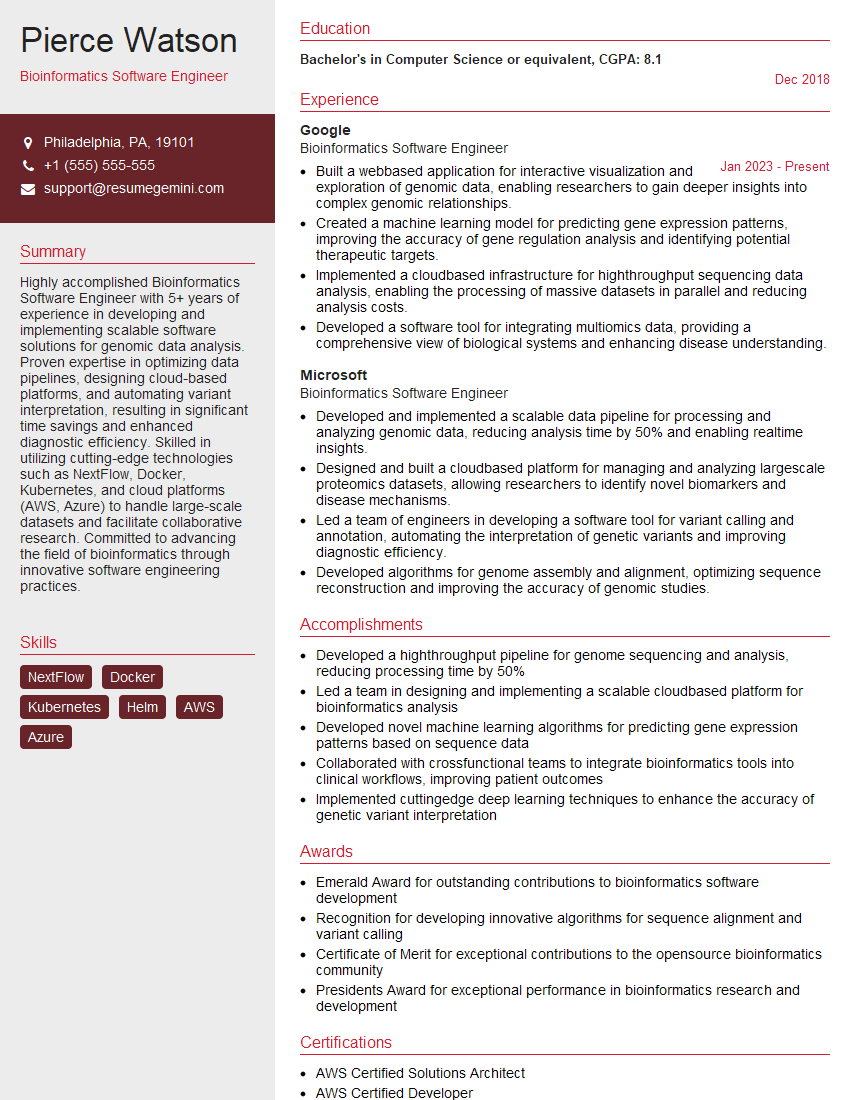
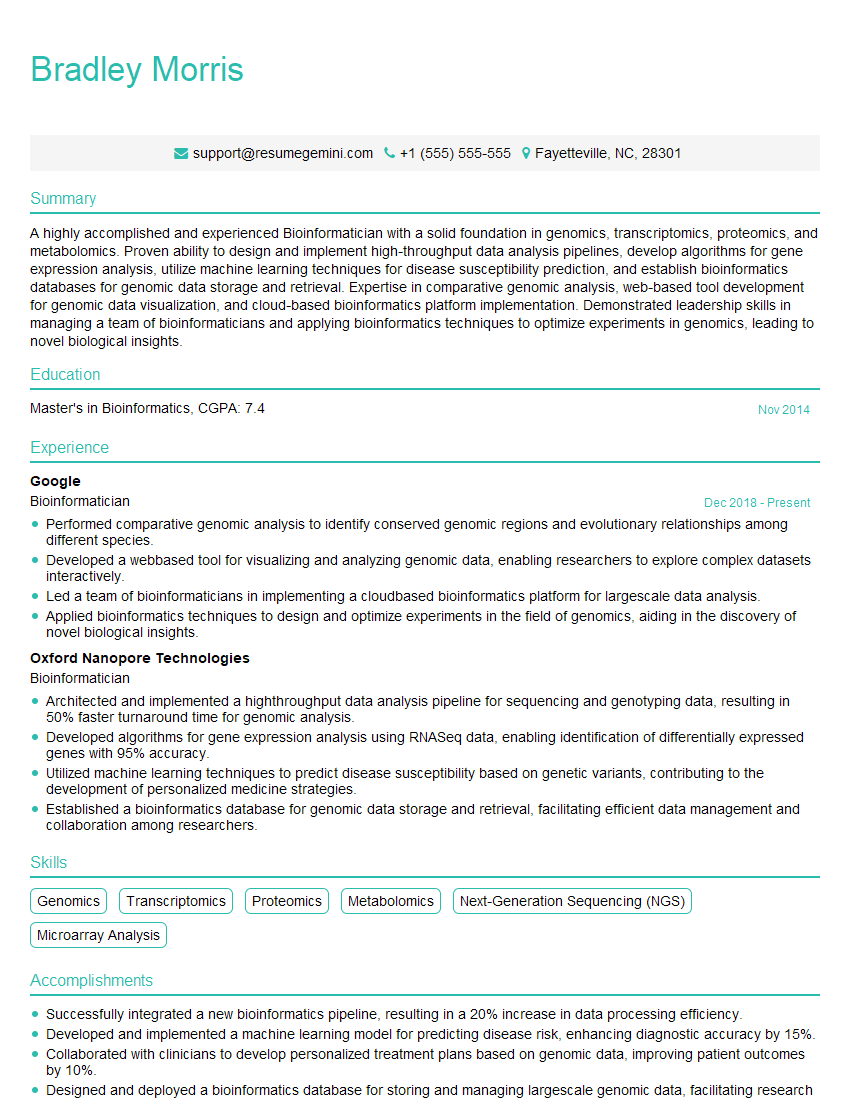
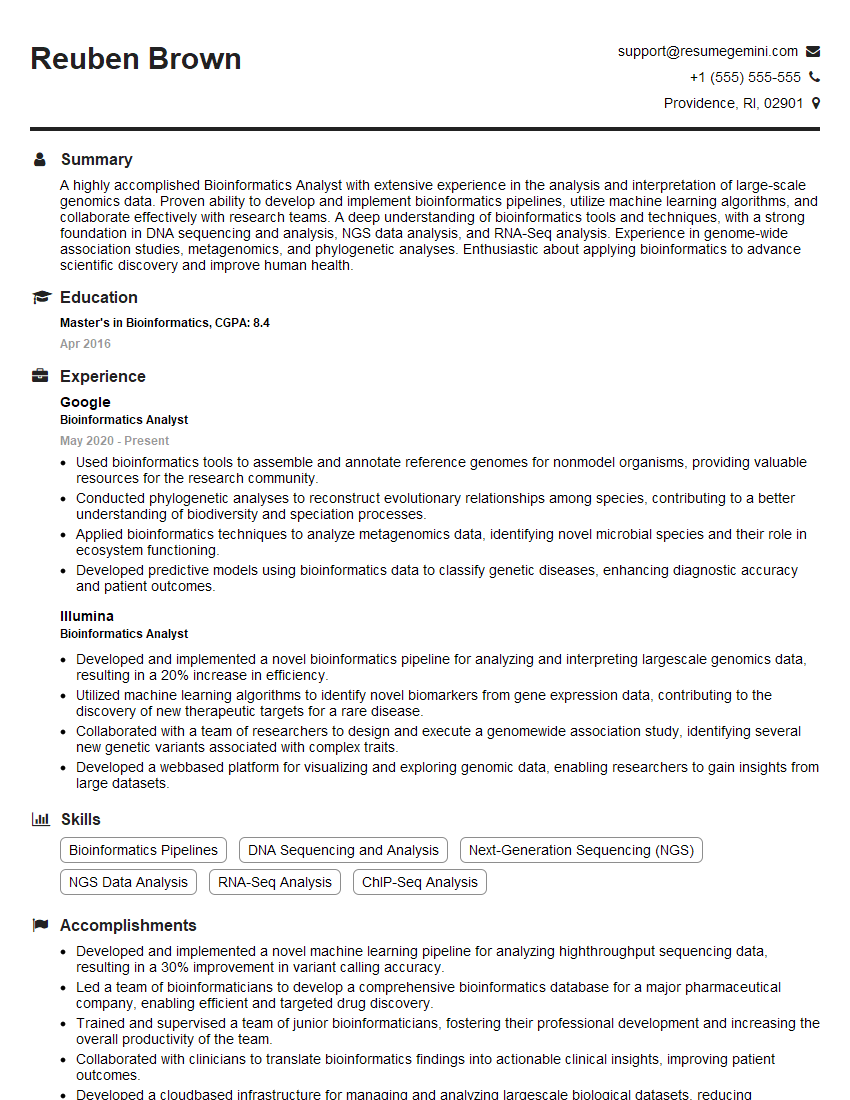
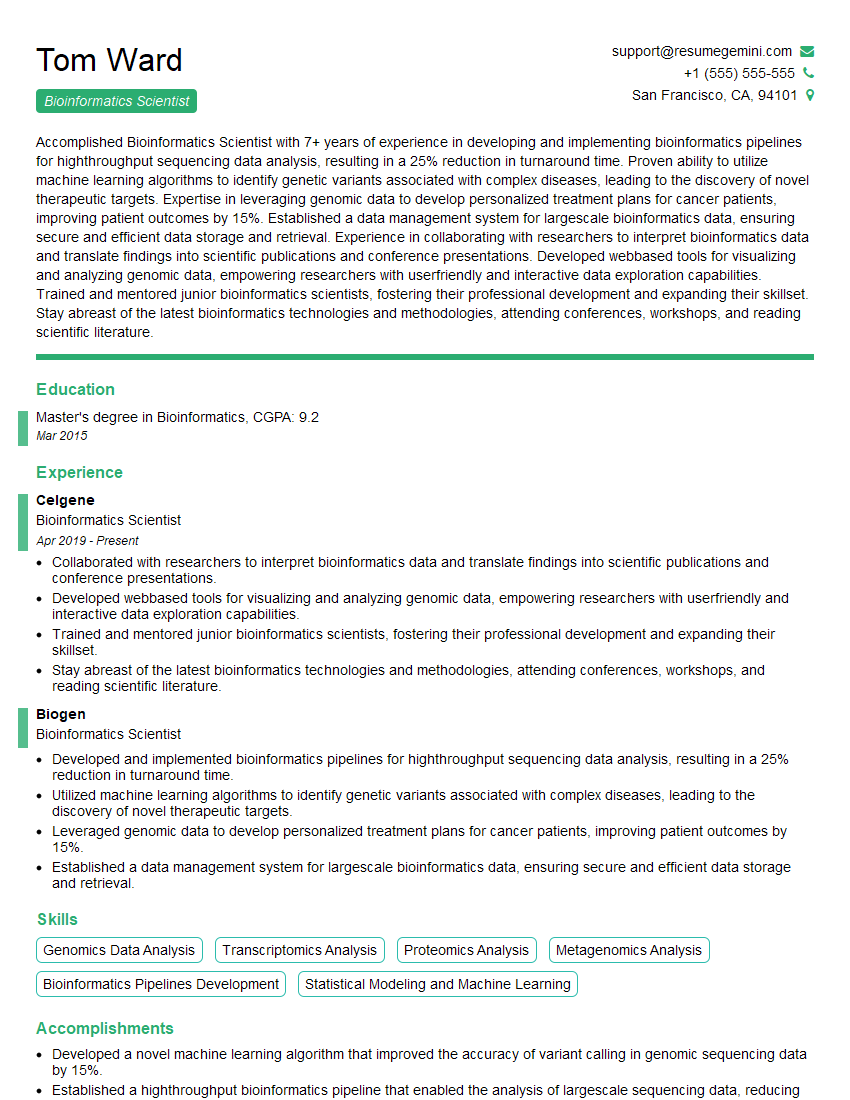
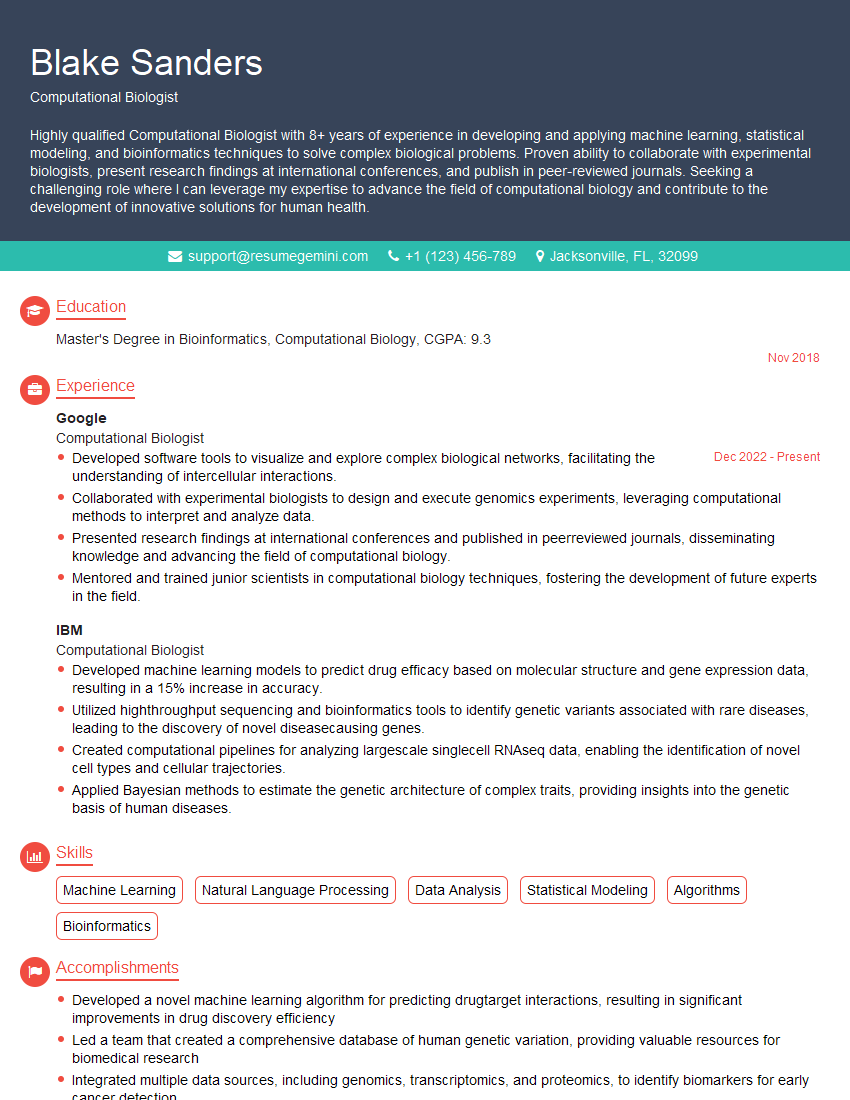
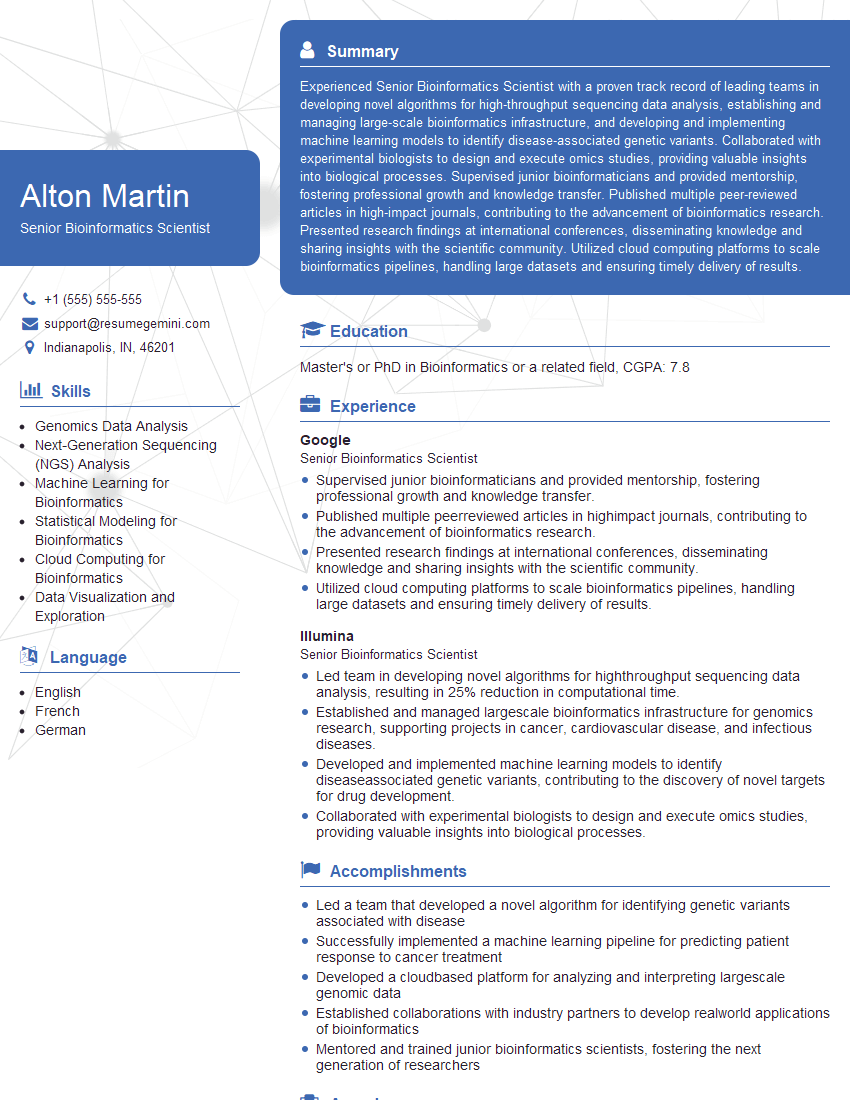
Mastering Machine Learning for Bioinformatics opens doors to exciting and impactful careers in drug discovery, personalized medicine, and genomic research. To maximize your job prospects, crafting a compelling and ATS-friendly resume is crucial. ResumeGemini is a trusted resource that can significantly enhance your resume-building experience, helping you showcase your skills and experience effectively. Examples of resumes tailored to Machine Learning for Bioinformatics are available to help guide you. Invest the time to create a professional resume that highlights your unique contributions and qualifications – it’s a vital step in your job search journey.
Explore more articles
Users Rating of Our Blogs
Share Your Experience
We value your feedback! Please rate our content and share your thoughts (optional).
What Readers Say About Our Blog
hello,
Our consultant firm based in the USA and our client are interested in your products.
Could you provide your company brochure and respond from your official email id (if different from the current in use), so i can send you the client’s requirement.
Payment before production.
I await your answer.
Regards,
MrSmith
hello,
Our consultant firm based in the USA and our client are interested in your products.
Could you provide your company brochure and respond from your official email id (if different from the current in use), so i can send you the client’s requirement.
Payment before production.
I await your answer.
Regards,
MrSmith
These apartments are so amazing, posting them online would break the algorithm.
https://bit.ly/Lovely2BedsApartmentHudsonYards
Reach out at [email protected] and let’s get started!
Take a look at this stunning 2-bedroom apartment perfectly situated NYC’s coveted Hudson Yards!
https://bit.ly/Lovely2BedsApartmentHudsonYards
Live Rent Free!
https://bit.ly/LiveRentFREE
Interesting Article, I liked the depth of knowledge you’ve shared.
Helpful, thanks for sharing.
Hi, I represent a social media marketing agency and liked your blog
Hi, I represent an SEO company that specialises in getting you AI citations and higher rankings on Google. I’d like to offer you a 100% free SEO audit for your website. Would you be interested?