Cracking a skill-specific interview, like one for Dowel Pin Inspection Certification, requires understanding the nuances of the role. In this blog, we present the questions you’re most likely to encounter, along with insights into how to answer them effectively. Let’s ensure you’re ready to make a strong impression.
Questions Asked in Dowel Pin Inspection Certification Interview
Q 1. Explain the different types of dowel pins and their applications.
Dowel pins are cylindrical fasteners used to align parts, prevent relative movement, and accurately locate components in machinery and assemblies. They come in various types, each suited for specific applications.
- Straight Dowel Pins: These are the most common type, featuring a cylindrical shape with parallel sides. They are widely used in applications requiring simple alignment and location.
- Tapered Dowel Pins: These pins have a slight taper, allowing for a tighter fit and greater holding power. They are often preferred when resisting higher loads or vibrations is crucial. Think of them as self-locking—the taper ensures a secure fit.
- Grooved Dowel Pins: These pins have grooves or slots along their length, typically to reduce friction during installation and improve the ability to accommodate variations in component dimensions or thermal expansion. They’re helpful in situations with tight tolerances.
- Spring Dowel Pins: These pins provide a more compliant fastening solution, able to absorb some shock and vibration. They’re useful where parts might need a bit of ‘give’.
- Headed Dowel Pins: These pins have a head on one end, facilitating easier handling and installation. The head also adds strength.
Applications range from simple furniture assembly to precision aerospace components. For instance, straight dowel pins might secure parts in a car door, while tapered dowel pins are vital for the precise alignment of aircraft engine components.
Q 2. Describe the various methods used for measuring dowel pin dimensions.
Measuring dowel pin dimensions requires precision, and several methods are employed depending on the required accuracy and available equipment.
- Micrometers: These provide highly accurate measurements of diameter and length. They are the workhorse for precise dowel pin inspection.
- Vernier Calipers: Offer a good balance of accuracy and ease of use, suitable for many inspection tasks. They are less precise than micrometers but faster for routine measurements.
- Optical Comparators: These instruments project a magnified image of the dowel pin onto a screen, allowing for visual inspection of shape, dimensions, and surface finish. They are useful for detecting subtle flaws.
- Coordinate Measuring Machines (CMMs): For advanced quality control, CMMs offer highly accurate three-dimensional measurements. They’re particularly important for complex shapes or large batches of pins.
- Go/No-Go Gauges: These gauges are simple but effective for quickly determining whether a dowel pin falls within acceptable tolerances. They’re great for rapid, mass-production quality checks.
The choice of method depends on factors like the required accuracy, quantity of pins to be inspected, and the resources available.
Q 3. What are the common defects found in dowel pins during inspection?
Common defects found during dowel pin inspection include:
- Diameter variations: The pin may be undersized or oversized compared to the specification.
- Length variations: The pin might be too short or too long.
- Surface imperfections: Scratches, pitting, or burrs can weaken the pin or prevent proper fitting.
- Bends or bows: These indicate damage or improper handling.
- Material defects: Internal voids or cracks within the pin material compromise strength and reliability. These are often hard to find without specialized testing.
- Poor surface finish: Rough surfaces can interfere with proper mating with mating holes.
Detecting these defects is crucial to avoid assembly problems, malfunctions, and potential safety hazards. The method of defect detection depends on the defect. For example, diameter variations are easily found with micrometers, while internal cracks might need X-ray inspection.
Q 4. How do you ensure accurate measurements using different measuring instruments?
Accurate measurements require careful technique and attention to detail, regardless of the instrument used. Here are some key considerations:
- Proper calibration: Ensure all measuring instruments are calibrated regularly to certified standards. Calibration is crucial for accuracy.
- Cleanliness: Keep both the measuring instrument and the dowel pin clean and free from debris to avoid inaccurate readings.
- Correct technique: Use the instrument as per manufacturer instructions to avoid error. This includes proper positioning and application of force.
- Multiple measurements: Take multiple readings at different points on the dowel pin to account for potential variations in shape.
- Environmental factors: Temperature and humidity can affect measurements. Use a climate-controlled environment whenever possible.
- Operator skill: Proper training and experience in using the measurement equipment are crucial for consistent and accurate results.
For example, when using a micrometer, ensure the anvil and spindle are clean, and apply a gentle, even pressure to avoid damaging the pin or getting a false reading.
Q 5. What are the acceptable tolerances for dowel pin dimensions based on industry standards?
Acceptable tolerances for dowel pin dimensions are defined by industry standards and the specific application requirements. These are usually specified on engineering drawings. Common standards include ISO, ANSI, and DIN. The tolerances are typically expressed as plus or minus values (+/-), indicating the allowable deviation from the nominal dimension.
For example, a dowel pin specified as 10.00mm +/- 0.05mm means the acceptable diameter range is between 9.95mm and 10.05mm. Tighter tolerances indicate higher precision requirements, often reflecting higher costs of manufacturing and inspection.
The choice of tolerance depends on the criticality of the application. A less critical application might accept larger tolerances, whereas aerospace or medical devices require much tighter control.
Q 6. How do you interpret engineering drawings related to dowel pin specifications?
Interpreting engineering drawings for dowel pin specifications requires careful attention to detail. The drawing should clearly indicate:
- Nominal dimensions: The desired diameter and length of the dowel pin.
- Tolerances: The allowable variations in diameter and length.
- Material: The type of material used to make the dowel pin (e.g., steel, brass, aluminum).
- Surface finish: The required roughness or smoothness of the pin surface.
- Heat treatment: If any heat treatment has been performed on the pin (influencing its strength and hardness).
- Quantity: The number of dowel pins required.
A thorough understanding of the drawing’s symbology and conventions is critical for proper interpretation. Any ambiguity should be clarified with the design engineer before proceeding with the inspection.
Q 7. Explain the process of using a micrometer to measure dowel pin diameter.
Using a micrometer to measure dowel pin diameter is a precise process. Here’s a step-by-step guide:
- Clean the surfaces: Ensure both the micrometer’s anvil and spindle are clean and free from debris.
- Open the micrometer: Open the micrometer jaws sufficiently to allow insertion of the dowel pin.
- Insert the pin: Gently insert the dowel pin between the anvil and spindle, ensuring it is centered and perpendicular to the measuring faces. Avoid applying excessive force.
- Close the micrometer: Slowly close the micrometer jaws until they lightly contact the dowel pin. You should feel a slight resistance.
- Read the measurement: Read the measurement on the micrometer’s thimble and sleeve. This usually involves reading a main scale and a rotating thimble.
- Record the measurement: Record the measurement, including the units (usually millimeters or inches). It’s best practice to repeat the measurement several times and record the results to check for consistency.
- Clean and store: Clean the micrometer after use and store it properly to prevent damage.
Practicing proper technique is essential to obtaining accurate measurements. Remember to always refer to the micrometer’s operating instructions for specifics.
Q 8. How do you use a caliper to measure dowel pin length?
Measuring dowel pin length with a caliper is straightforward but requires precision. First, ensure the caliper is clean and properly zeroed. Then, gently but firmly place the jaws of the caliper around the dowel pin, ensuring the measurement is taken from the end of the pin to the other end. Avoid applying excessive pressure to prevent damage to the pin or inaccurate reading. Read the measurement from the caliper’s scale, taking note of the units (usually millimeters or inches). For increased accuracy, particularly with smaller dowel pins, use a vernier caliper which provides higher precision measurements. It’s crucial to take multiple readings at different points along the pin’s length to account for any slight variations or imperfections. Record each measurement carefully. If the difference between measurements is larger than an acceptable tolerance, the dowel pin may be rejected.
Example: Let’s say we’re inspecting a dowel pin that should be exactly 25mm long. We take three measurements: 24.98mm, 25.01mm, and 25.00mm. These readings fall within an acceptable tolerance (for example, +/- 0.05mm), so the pin would be deemed acceptable. However, if one measurement was significantly different (e.g., 24.80mm), further investigation would be required.
Q 9. Describe the process of verifying dowel pin straightness.
Verifying dowel pin straightness involves checking for any bends or deviations from a perfectly straight line. A simple and effective method is to use a precision straight edge or surface plate. Place the dowel pin on the flat surface and observe it carefully for any visible bends or warps. A magnifying glass can be helpful in detecting minute imperfections. Alternatively, you can use a dial indicator, which provides a more precise measurement of deviation from straightness. This is done by resting the pin on two supports, moving the indicator along the pin’s length, and checking the readings to ensure they remain within acceptable tolerance. Another technique involves using a surface plate and a height gauge to check for deviations along the pin’s axis. If any significant deviation is detected from straightness, the pin is usually rejected, as it may compromise the assembly’s structural integrity.
Example: Using a straight edge, if you observe even a slight bend or curvature along the dowel pin, it will signify a deviation from straightness and may indicate a manufacturing defect. A dial indicator might give a quantitative reading of the bend, allowing for a more objective assessment.
Q 10. What is the importance of proper dowel pin installation?
Proper dowel pin installation is crucial for ensuring accurate alignment and a secure fit between two parts in an assembly. Improper installation can lead to misalignment, reduced strength, and potential failure of the entire assembly. If a dowel pin is installed incorrectly – for example, crooked or loose – the assembled components won’t align properly which can cause stress concentration in surrounding areas leading to premature failure under load. Dowel pins also prevent relative movement between parts. They ensure the parts remain consistently aligned and don’t shift or move over time, which could cause damage or malfunction, particularly in applications requiring high precision or strength.
Example: In a machine tool application, precisely aligned dowel pins ensure that the moving parts fit together securely and accurately, maintaining the machine’s operational efficiency and precision. Incorrect dowel pin installation in such a scenario might lead to malfunctions, even potentially causing costly downtime or serious damage.
Q 11. How do you handle discrepancies or inconsistencies found during inspection?
When discrepancies or inconsistencies are found during dowel pin inspection, a systematic approach is crucial. First, carefully document the nature and extent of the discrepancies, including detailed measurements and observations. It’s important to note any specific features of the dowel pin that might have caused the deviation from standard requirements. This step involves documenting where the defect is located on the pin, the type of defect (e.g., bend, diameter variation), and the extent of deviation from the specifications.
Next, analyze the root cause. This might involve examining the manufacturing process, reviewing the equipment used, or checking the raw materials. If the cause is identified, corrective actions are implemented to prevent further occurrences. Depending on the severity of the discrepancy, the dowel pin might be rejected, reworked, or a suitable concession might be applied based on the engineering documentation and project’s specifications. A detailed report summarizing the findings, the corrective actions taken, and the disposition of the affected parts should be maintained as part of the quality control documentation.
Q 12. What are your preferred quality control methodologies for dowel pin inspection?
My preferred quality control methodologies for dowel pin inspection combine statistical process control (SPC) with visual inspection techniques. SPC involves collecting and analyzing data from a sample of dowel pins to monitor the manufacturing process and identify any trends or variations that could indicate a problem. This statistical analysis identifies patterns and helps prevent widespread defects.
Visual inspection, conducted throughout the production process, is crucial for identifying obvious defects such as bends or surface imperfections early in the process. This method helps with rapid identification and correction of defects which is very useful when large quantities of dowel pins are involved. A combination of these techniques ensures that a high standard of quality is consistently maintained, leading to enhanced process reliability, reduced costs and customer satisfaction. Regular calibration of all measuring equipment is also essential for maintaining accuracy and consistency in measurements.
Q 13. Explain your experience with different types of inspection equipment.
My experience encompasses a range of inspection equipment, including:
- Vernier Calipers: For precise length and diameter measurements.
- Dial Indicators: For detecting variations in straightness and surface flatness.
- Micrometers: For extremely accurate diameter measurements.
- Optical Comparators: For detailed visual inspection of surface features and dimensions.
- Coordinate Measuring Machines (CMMs): For highly accurate, three-dimensional measurements of complex dowel pins.
The choice of equipment depends on the required precision and the complexity of the dowel pins being inspected. For routine checks, vernier calipers and dial indicators might suffice; however, for critical applications, CMMs may be necessary to assure accuracy. Each device is subject to regular calibration to ensure the reliability of the results.
Q 14. How do you maintain accurate records of inspection data?
Maintaining accurate records of inspection data is critical for traceability, quality control, and compliance. I utilize a combination of digital and paper-based systems. A digital database tracks all inspection results, including date, time, inspector, part number, dimensions, test methods and results, and any discrepancies found. This allows for efficient data retrieval and analysis. The database is structured to make finding information fast and simple.
Paper-based records, in the form of inspection reports, provide a backup and are essential for auditing purposes. Each report is uniquely identified and contains all relevant details from the digital database. The reports are signed by the inspector and stored according to company procedures. This dual-system approach maintains redundancy, and data accessibility is never compromised. Furthermore, the inspection data forms a crucial component of the overall quality control reports, contributing to continuous improvement strategies.
Q 15. Describe your experience using statistical process control (SPC) in quality control.
Statistical Process Control (SPC) is crucial for maintaining consistent quality in dowel pin production. I’ve extensively used control charts, specifically X-bar and R charts, to monitor key characteristics like diameter and length. These charts visually represent the variation in measurements over time, allowing for early detection of trends or shifts indicating potential problems. For example, if the average diameter consistently drifts outside the control limits, it signals a need to investigate the manufacturing process for root causes, such as tool wear or material inconsistencies. I also leverage capability analysis to determine if the process is capable of meeting the specified tolerances. This involves calculating Cp and Cpk indices which provide a quantitative assessment of process performance relative to the customer’s requirements. In one instance, I identified a gradual increase in the variation of dowel pin length using an X-bar and R chart, tracing it back to a slightly loose component in the automated production line which was addressed and resolved.
Career Expert Tips:
- Ace those interviews! Prepare effectively by reviewing the Top 50 Most Common Interview Questions on ResumeGemini.
- Navigate your job search with confidence! Explore a wide range of Career Tips on ResumeGemini. Learn about common challenges and recommendations to overcome them.
- Craft the perfect resume! Master the Art of Resume Writing with ResumeGemini’s guide. Showcase your unique qualifications and achievements effectively.
- Don’t miss out on holiday savings! Build your dream resume with ResumeGemini’s ATS optimized templates.
Q 16. Explain your understanding of GD&T (Geometric Dimensioning and Tolerancing) as it relates to dowel pins.
Geometric Dimensioning and Tolerancing (GD&T) is essential for precisely defining the acceptable variations in dowel pin dimensions and geometry. It goes beyond simple plus/minus tolerances by specifying features of size, form, orientation, location, and runout. For dowel pins, this might include specifying a cylindrical tolerance zone for the diameter to control roundness, a positional tolerance to ensure accurate placement within a mating hole, and a straightness tolerance for the pin’s overall alignment. Using GD&T symbols and notations on engineering drawings ensures that everyone involved in the manufacturing and inspection process understands the exact requirements. For example, a symbol indicating a cylindrical tolerance zone around the dowel pin diameter clearly communicates the allowable deviation from perfect roundness. This approach helps prevent misinterpretations and ensures consistent quality, reducing potential assembly issues.
Q 17. How do you identify and report non-conforming dowel pins?
Identifying non-conforming dowel pins involves a multi-stage process. First, I use calibrated measuring instruments like micrometers, calipers, and optical comparators to verify that the dimensions and geometric characteristics fall within the specified tolerances defined by the GD&T on the blueprint. Any deviation outside these limits immediately flags a non-conforming part. Beyond dimensions, visual inspection plays a role. Scratches, burrs, cracks, or other surface imperfections that could compromise functionality are also considered non-conforming. Each non-conforming pin is carefully documented, recording the specific deviation and the measuring instrument used. This information is then compiled into a non-conformance report, which includes detailed descriptions, photographs (where applicable), and the lot number or batch ID to aid in identifying the source of the defect.
Q 18. What actions do you take when a non-conforming dowel pin is discovered?
When a non-conforming dowel pin is discovered, immediate actions are taken to prevent further production of faulty parts. The non-conforming pins are segregated and quarantined to prevent accidental use. A thorough investigation follows to determine the root cause of the non-conformity. This might involve examining the manufacturing process, inspecting the machinery used, analyzing the raw material, or reviewing operator procedures. Once the root cause is identified, corrective actions are implemented to prevent recurrence. These actions could range from adjusting machine settings to replacing worn-out tools, retraining operators, or even modifying the manufacturing process itself. A corrective action report documents the findings, the actions taken, and the preventative measures to ensure future compliance. Finally, the non-conforming dowel pins are either scrapped, reworked (if feasible and cost-effective), or subjected to further investigation to explore potential concessions depending on the severity of the defect.
Q 19. Describe your experience with different types of material used for dowel pins.
I have extensive experience with various dowel pin materials, each offering a unique set of properties. Common materials include steel (various grades, including hardened and low carbon), brass, stainless steel, and aluminum. Steel dowel pins are frequently chosen for their high strength and durability, making them suitable for high-stress applications. Brass dowel pins are preferred when electrical conductivity or corrosion resistance is paramount. Stainless steel offers excellent corrosion resistance but might be slightly less strong than certain steel grades. Aluminum dowel pins are lightweight and often used where weight reduction is important. The selection of material always depends on the specific application requirements, considering factors such as load-bearing capacity, environmental conditions, and cost.
Q 20. Explain your understanding of the impact of material imperfections on dowel pin performance.
Material imperfections significantly impact dowel pin performance and reliability. For example, inclusions (foreign particles within the material) or internal voids can weaken the pin, potentially leading to premature failure under stress. Surface imperfections like cracks or porosity can act as stress concentrators, making the pin more susceptible to fracture. Inclusions can also create pathways for corrosion, which further compromises the mechanical properties. These imperfections can lead to issues ranging from reduced shear strength and poor fit to catastrophic failure during assembly or operation. Careful material selection and thorough incoming inspection procedures, such as visual examination and ultrasonic testing, are critical to mitigate the risks associated with material imperfections.
Q 21. How do you ensure the proper calibration of your measuring instruments?
Ensuring the proper calibration of measuring instruments is paramount to accurate inspection. We follow a rigorous calibration schedule based on manufacturer recommendations and industry best practices. Each measuring instrument (micrometers, calipers, optical comparators) is calibrated at regular intervals using certified traceable standards. Calibration is performed by qualified personnel, documenting the results and any necessary adjustments. Calibration certificates are maintained to demonstrate traceability to national or international standards. Out-of-tolerance instruments are immediately removed from service until recalibrated. We also employ regular checks and validations using control standards to ensure the continued accuracy of our instruments between scheduled calibrations. This multi-layered approach minimizes measurement error and ensures that inspection results accurately reflect the true condition of the dowel pins.
Q 22. Describe your proficiency in using various software for data analysis and reporting.
My proficiency in data analysis and reporting software is extensive. I’m highly proficient in using statistical software packages like Minitab and JMP for analyzing inspection data, identifying trends, and generating comprehensive reports. I also have experience with spreadsheet software such as Microsoft Excel and Google Sheets, leveraging advanced functions like pivot tables and macros for data manipulation and visualization. For instance, I’ve used Minitab to perform capability analysis on dowel pin diameter measurements, generating control charts to monitor process stability and identify potential sources of variation. Similarly, I’ve created interactive dashboards in Excel to present key inspection metrics to management, allowing them to quickly grasp the overall quality of the dowel pins. My experience also extends to database management systems (DBMS) like Access and SQL, enabling me to efficiently manage large datasets generated from automated inspection systems.
Q 23. Explain your experience with root cause analysis in relation to dowel pin defects.
Root cause analysis is critical in improving dowel pin quality. When encountering defects, I employ a structured approach, often using the 5 Whys technique or a Fishbone diagram (Ishikawa diagram). For example, if a batch of dowel pins showed excessive surface roughness, I wouldn’t just note the defect. I’d ask ‘Why is the surface rough?’ The answers might lead to issues like improper machining parameters, dull tooling, or contamination of the cutting fluid. Each ‘why’ would lead to a deeper understanding, ultimately revealing the root cause. I then document the findings and implement corrective actions, which might include adjusting machine settings, replacing tooling, or implementing improved cleaning procedures. This process ensures that the defect is not just addressed but eliminated from the production process. Data analysis plays a significant role, helping to identify recurring patterns or correlations between defects and specific process parameters.
Q 24. How do you prioritize inspection tasks to ensure efficient workflow?
Prioritizing inspection tasks involves a multi-faceted approach. I consider several factors including urgency, criticality, and potential risk. For example, if a critical component requires dowel pins with extremely tight tolerances, I prioritize the inspection of those pins. Similarly, I would prioritize any batch flagged by the automated inspection system as having a high probability of defects. I often use a Kanban system or a simple priority matrix to visually manage my workload, ensuring that the most crucial tasks are completed first. This system helps me allocate my time effectively and minimizes the risk of delays or compromising product quality.
Q 25. Describe a situation where you had to troubleshoot a problem during the inspection process.
During a recent inspection, the automated measurement system began producing inconsistent readings for dowel pin length. After initially checking for obvious issues like calibration, I realized the problem stemmed from a build-up of debris on the sensor. My troubleshooting involved a systematic approach: I first checked the system’s calibration, confirmed it was within the acceptable range, then investigated potential environmental factors. This led to identifying the sensor contamination as the root cause. I carefully cleaned the sensor, recalibrated the system, and confirmed consistent, accurate measurements. This experience highlighted the importance of regular maintenance and thorough investigation when unusual readings occur. Documentation of the issue, resolution, and corrective actions were immediately recorded in the system logs to prevent future recurrence.
Q 26. How do you maintain a clean and organized workspace to ensure accuracy during inspection?
Maintaining a clean and organized workspace is fundamental to ensuring accurate inspections. My workspace is meticulously organized. I have designated areas for different tools, instruments, and samples. All instruments are regularly cleaned and calibrated to maintain their accuracy. This helps avoid cross-contamination and reduces the risk of errors. For example, I use anti-static mats to prevent electrostatic discharge (ESD) damage to sensitive components. A clean workspace minimizes distractions and helps maintain focus, enhancing the precision and reliability of my inspections. Regular cleaning and organization are not just about neatness; they are an integral part of ensuring data integrity.
Q 27. Explain how you manage your time effectively to meet deadlines during inspection.
Effective time management is crucial in meeting inspection deadlines. I begin by breaking down larger tasks into smaller, manageable steps. I use task management tools, such as project management software, to schedule my workload, setting realistic deadlines for each step. I regularly monitor my progress and adapt my schedule as needed, accounting for any unforeseen delays. Prioritization, as discussed earlier, plays a key role. By focusing on the most important tasks first, I can ensure that critical deadlines are met, even if unforeseen circumstances arise. Moreover, I avoid multitasking to ensure accuracy and maintain focus on each individual task.
Q 28. How do you stay updated on the latest standards and best practices related to dowel pin inspection?
Staying updated on the latest standards and best practices is paramount. I actively participate in professional organizations related to quality control and manufacturing, attending conferences and workshops to stay abreast of industry trends. I regularly review relevant industry publications, journals, and online resources. This continuous learning helps me understand evolving standards, new inspection techniques, and advancements in measurement technology. I also participate in internal training sessions to ensure my knowledge remains current within our company’s specific standards and procedures. By consistently seeking knowledge, I maintain my expertise and ensure that our inspection processes remain aligned with the best practices in the industry.
Key Topics to Learn for Dowel Pin Inspection Certification Interview
- Understanding Dowel Pin Specifications: Mastering tolerances, dimensions, materials (e.g., steel, brass), and surface finishes crucial for accurate inspection.
- Visual Inspection Techniques: Develop proficiency in identifying defects like cracks, bends, burrs, and dimensional inconsistencies using various tools (calipers, micrometers).
- Non-Destructive Testing (NDT) Methods: Familiarize yourself with relevant NDT techniques applicable to dowel pin inspection, understanding their principles and limitations.
- Practical Application: Prepare examples of how you’ve applied your knowledge in real-world scenarios, focusing on problem-solving and decision-making during inspection processes.
- Quality Control and Documentation: Learn about standard operating procedures (SOPs) for recording inspection results, adhering to industry best practices, and maintaining accurate documentation.
- Troubleshooting Common Issues: Anticipate potential problems encountered during inspection and develop strategies for resolving them efficiently and safely.
- Safety Procedures: Demonstrate a thorough understanding of safety regulations and best practices related to handling tools and materials during the inspection process.
- Industry Standards and Regulations: Gain familiarity with relevant industry standards and regulations governing dowel pin inspection and quality control.
Next Steps
Mastering Dowel Pin Inspection Certification significantly enhances your career prospects, opening doors to higher-paying roles and greater responsibility within the manufacturing and engineering sectors. To maximize your job search success, crafting a strong, ATS-friendly resume is paramount. ResumeGemini can help you build a professional resume that showcases your skills and experience effectively. We provide examples of resumes tailored specifically for candidates with Dowel Pin Inspection Certification to help you get started. Take the next step towards your dream career today!

Quality Control Supervisor Resume Sample
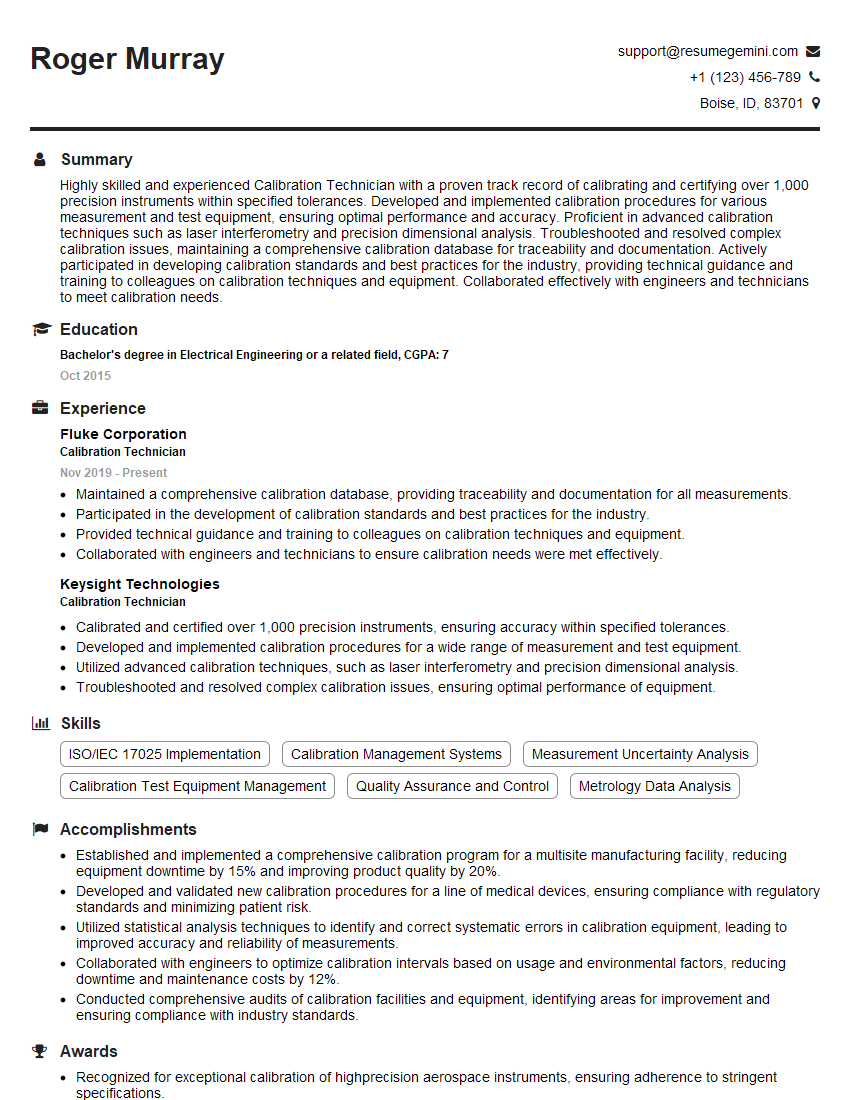
Calibration Technician Resume Sample

Metrology Technician Resume Sample
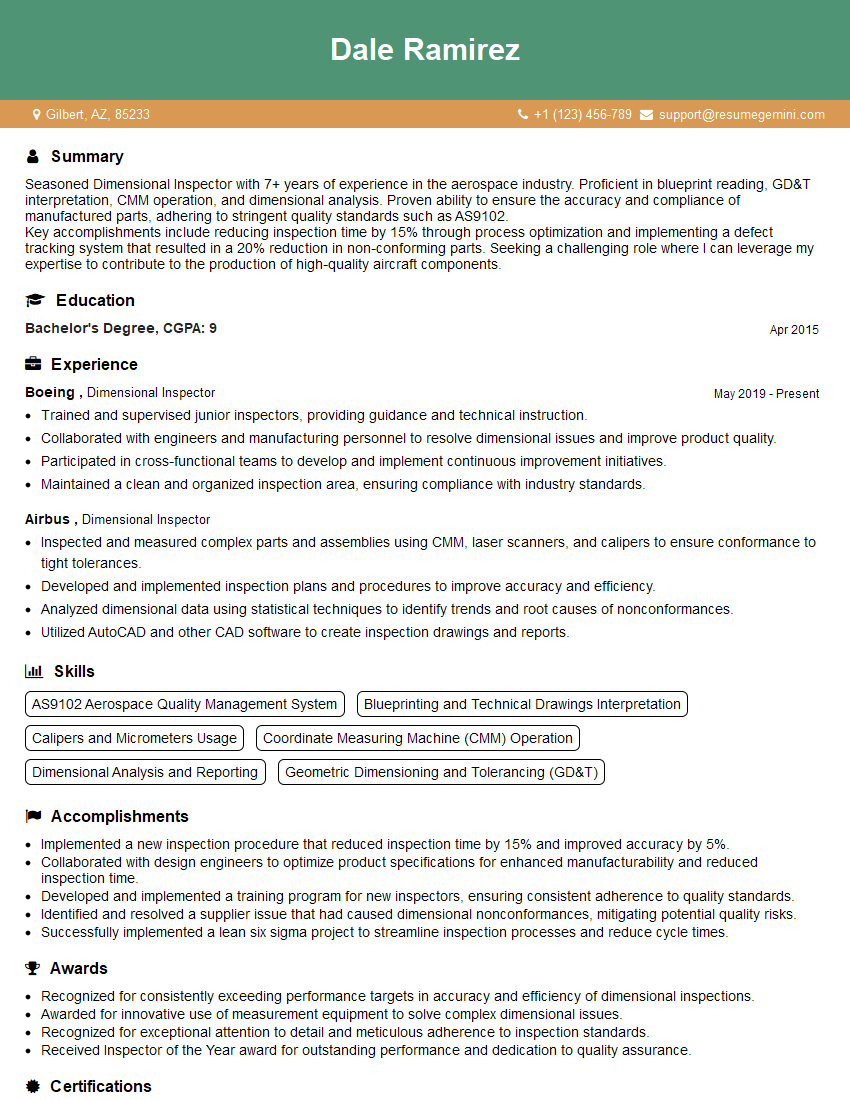
Dimensional Inspector Resume Sample
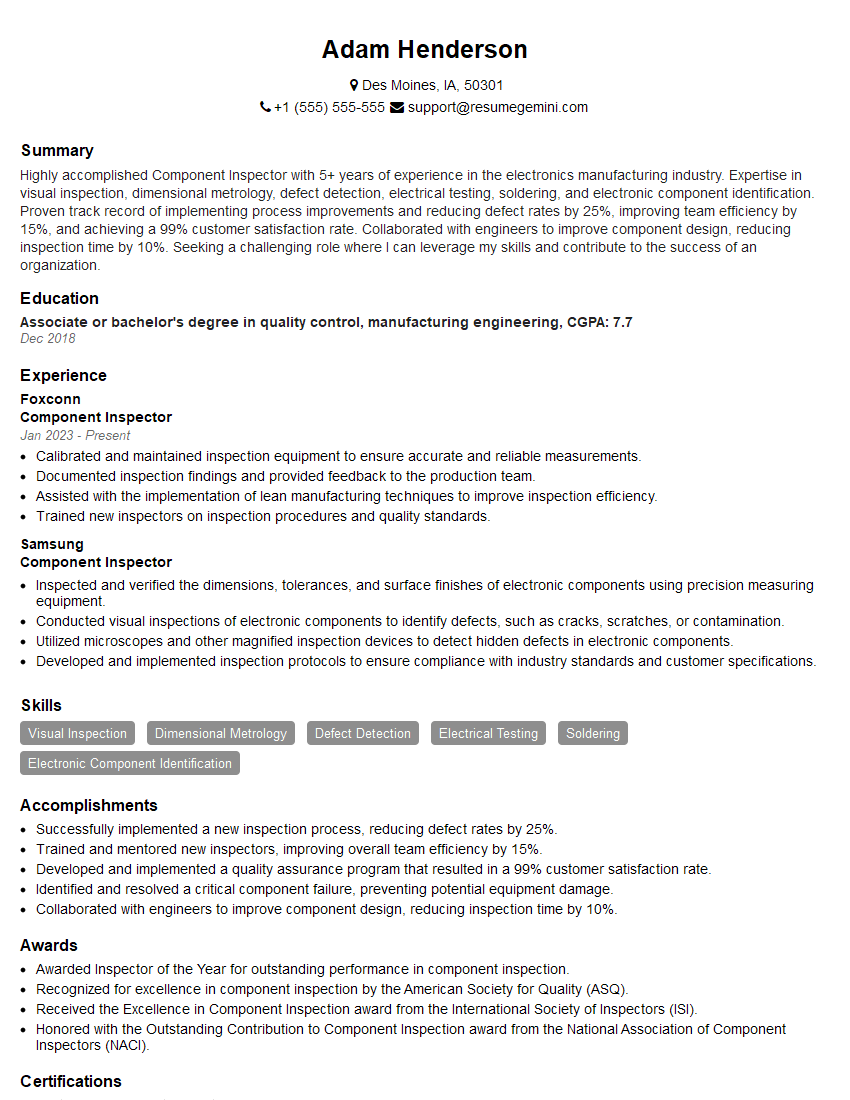
Component Inspector Resume Sample

Parts Inspector Resume Sample

Precision Inspector Resume Sample

Quality Systems Technician Resume Sample

Senior Quality Control Inspector Resume Sample
Explore more articles
Users Rating of Our Blogs
Share Your Experience
We value your feedback! Please rate our content and share your thoughts (optional).
What Readers Say About Our Blog
Amazing blog
Interesting Article, I liked the depth of knowledge you’ve shared.
Helpful, thanks for sharing.