Cracking a skill-specific interview, like one for Waterway Stabilization, requires understanding the nuances of the role. In this blog, we present the questions you’re most likely to encounter, along with insights into how to answer them effectively. Let’s ensure you’re ready to make a strong impression.
Questions Asked in Waterway Stabilization Interview
Q 1. Explain the different types of erosion affecting waterways.
Waterway erosion is the process by which water removes soil and rock from the banks and bed of a waterway. Several types exist, each with unique characteristics and impacts.
- Hydraulic Erosion: This is the most common type, where the sheer force of flowing water dislodges and transports sediment. Think of a powerful river carving a canyon – that’s hydraulic erosion in action. The velocity and volume of the flow are key factors.
- Abrasion: This occurs when sediment carried by the water acts like sandpaper, grinding away at the banks and bed. Imagine pebbles bouncing along the bottom of a stream, slowly wearing away the rock.
- Cavitation: This is a less common but significant type, particularly in high-velocity flows. It involves the formation and collapse of vapor bubbles in the water, creating localized high-pressure impacts that erode the waterway’s surface. It’s like tiny, repeated explosions wearing down the material.
- Bank Slumping: This involves the sudden collapse of large sections of the bank, often triggered by saturation of the soil due to high water tables or heavy rainfall. It’s like a landslide, but underwater.
Understanding these different erosion types is crucial for designing effective stabilization strategies, as each requires a tailored approach.
Q 2. Describe various methods for bank stabilization.
Bank stabilization techniques aim to protect waterways from erosion and maintain their integrity. The chosen method depends on factors like the type of erosion, the severity of the problem, and the environmental context. Here are a few:
- Bioengineering: This involves using living plants to stabilize banks. This is often the most environmentally friendly option. Examples include planting native vegetation, using live stakes, or creating vegetated filter strips. The roots bind the soil, preventing erosion and providing natural filtration.
- Structural Methods: These involve installing physical structures to protect the banks. Common examples include riprap (placed rocks), gabions (wire baskets filled with rocks), retaining walls (made of concrete, stone, or other materials), and geotextiles (fabric barriers that reinforce the soil).
- Sediment Management: This focuses on reducing the amount of sediment entering the waterway. Techniques include implementing best management practices (BMPs) on agricultural land and construction sites to minimize soil erosion, building sediment basins or settling ponds, and restoring degraded riparian zones (areas along the banks).
- Channel Modifications: In some cases, modifying the channel itself can help reduce erosion. This could involve widening the channel, creating gentler slopes, or installing structures to redirect the flow of water.
Often, a combination of methods is employed for optimal results. For example, a riprap revetment might be coupled with vegetation planting to create a durable and ecologically sound solution.
Q 3. What are the common causes of sedimentation in rivers and streams?
Sedimentation, the accumulation of sediment in rivers and streams, is a significant concern affecting water quality and habitat. Several factors contribute:
- Soil Erosion: This is the primary source. Agricultural practices, deforestation, and construction activities expose soil to erosion by wind and water, leading to increased sediment loads in waterways. Think of a heavy rain washing away topsoil from a field directly into a nearby stream.
- Bank Erosion: As discussed earlier, erosion of the riverbanks contributes significant amounts of sediment to the water column.
- Natural Geological Processes: Natural weathering and erosion of rocks and soil contribute to sediment loads, but human activities often exacerbate this natural process.
- Mining and Industrial Activities: Mining operations and industrial discharges often release large quantities of sediment into waterways, causing severe pollution and habitat destruction.
- Urban Runoff: Stormwater runoff from urban areas carries significant amounts of sediment, pollutants, and debris into rivers and streams.
Reducing sedimentation requires addressing the underlying causes, such as implementing soil conservation practices, managing stormwater effectively, and regulating industrial discharges.
Q 4. How do you assess the effectiveness of a waterway stabilization project?
Assessing the effectiveness of a waterway stabilization project requires a multi-faceted approach combining quantitative and qualitative data collection.
- Monitoring Erosion Rates: Measuring changes in bank erosion rates before, during, and after implementation is crucial. Techniques include using erosion pins, surveying, and remote sensing technologies.
- Sediment Load Measurements: Monitoring changes in sediment loads upstream and downstream of the project site provides quantitative data on the project’s effectiveness in reducing sediment transport.
- Vegetation Monitoring: For bioengineering projects, monitoring vegetation survival rates, growth, and coverage is essential to assess the success of the approach.
- Water Quality Monitoring: Assessing water quality parameters (such as turbidity and nutrient levels) helps determine the project’s impact on water quality.
- Habitat Assessment: Evaluating changes in the aquatic and riparian habitats provides a measure of ecological success.
- Visual Inspections: Regular visual inspections can detect unexpected changes or potential problems that require attention.
The effectiveness of the project should be evaluated against the project goals and objectives, using a combination of data and expert judgment.
Q 5. Explain the role of vegetation in waterway stabilization.
Vegetation plays a vital role in waterway stabilization. It acts as a natural defense against erosion and contributes to a healthy ecosystem.
- Root Systems: Plant roots bind soil particles together, creating a more stable bank and reducing susceptibility to erosion. The roots act like a natural reinforcing mesh.
- Stems and Leaves: Aboveground vegetation intercepts rainfall, reducing the erosive force of surface runoff. The stems and leaves also slow down water flow, reducing its erosive power.
- Organic Matter: Decomposing plant matter improves soil structure, increasing its water-holding capacity and reducing erosion. It acts like a natural soil conditioner.
- Habitat Creation: Vegetation provides habitat for various aquatic and riparian species, promoting biodiversity and ecosystem health. This includes providing shade to regulate water temperature and offering food and shelter for fish and other animals.
Selecting the right vegetation species, considering factors such as soil type, water level fluctuations, and sunlight availability, is crucial for successful bioengineering projects. Native species are generally preferred for their adaptability and ecological benefits.
Q 6. Describe different types of retaining structures used in waterway projects.
Retaining structures are crucial components in many waterway stabilization projects, offering physical protection against erosion and bank instability. Several types exist:
- Revetments: These are protective layers placed on the bank’s surface, commonly made of riprap (loose rocks), gabions (wire baskets filled with rocks), or concrete blocks. They dissipate the energy of flowing water and protect the underlying soil.
- Retaining Walls: These are vertical or near-vertical structures designed to hold back soil and prevent bank collapse. They are typically made of concrete, stone, or other durable materials. They are effective but can be expensive and may have significant environmental impacts.
- Bulkheads: These are vertical walls, often made of timber, steel, or concrete sheet piling, used primarily in areas with high water levels and significant bank erosion. They provide strong bank support but can interfere with natural processes.
- Cribs: These are structures made of timber or other materials, often filled with rock, providing a permeable structure that promotes the establishment of vegetation. They’re effective and relatively environmentally friendly.
- Geotextiles: These are fabrics that reinforce the bank soil, improving its stability. They can be used alone or in combination with other structures to enhance their effectiveness. They’re often used as a filter or separator layer.
The selection of the appropriate retaining structure should be based on a thorough assessment of the site conditions and project requirements.
Q 7. What are the environmental considerations when stabilizing a waterway?
Environmental considerations are paramount in waterway stabilization projects. Ignoring them can have significant negative ecological consequences.
- Habitat Impacts: Construction activities can disrupt aquatic and riparian habitats. Careful planning and construction techniques are necessary to minimize impacts. This includes minimizing disturbance during construction, protecting sensitive habitats, and implementing erosion control measures.
- Water Quality: Some stabilization methods can alter water quality. For example, some materials used in construction might leach pollutants into the water. Selecting environmentally friendly materials and employing best management practices (BMPs) during construction are essential.
- Fish Passage: Structures can obstruct fish migration routes. Designing structures with fish passage considerations, such as using permeable materials or incorporating fish ladders, is vital for maintaining fish populations.
- Riparian Vegetation: Protecting and restoring riparian vegetation is crucial for maintaining ecosystem health. Choosing appropriate planting species and minimizing disturbance to existing vegetation are important.
- Sedimentation: As previously discussed, minimizing sediment production and transport during and after construction is critical to maintaining water quality and habitat health.
Environmental impact assessments (EIAs) are often required to evaluate potential impacts and ensure projects are designed and implemented in an environmentally responsible manner.
Q 8. How do you mitigate the impacts of a waterway stabilization project on aquatic life?
Mitigating the impact of waterway stabilization projects on aquatic life is paramount. We employ a multi-pronged approach prioritizing minimal disturbance and habitat preservation. This begins with a thorough pre-construction assessment to identify sensitive species and habitats. We then utilize techniques like phased construction, minimizing in-water work, and implementing best management practices (BMPs) to reduce sediment and pollutant runoff.
- Selective clearing: Only removing vegetation absolutely necessary, leaving buffer zones along the banks.
- Temporary erosion and sediment control measures: Using silt fences, straw bales, and other temporary measures during construction to prevent sediment from entering the waterway.
- Fish passage design: Incorporating fish-friendly structures like rock ramps or culverts to ensure the free movement of fish.
- Habitat restoration: Planting native vegetation to restore riparian habitats after construction, providing food and shelter for aquatic life.
For instance, on a recent project near a salmon spawning area, we implemented a phased construction approach, working on sections of the bank sequentially, to minimize disruption to the fish and their eggs. We also used bioengineered techniques, planting live willow stakes to stabilize the banks naturally and create new habitat.
Q 9. What are the key factors to consider when selecting materials for bank stabilization?
Material selection for bank stabilization is critical, balancing cost-effectiveness, environmental impact, and long-term performance. Key factors include:
- Hydraulic stability: The ability of the material to withstand the forces of water flow and erosion. For high-velocity flows, we might choose rock riprap, while for gentler slopes, bioengineered solutions like live staking may suffice.
- Durability: Materials must resist degradation from weathering, biological activity (e.g., burrowing animals), and chemical changes.
- Environmental compatibility: Using locally sourced materials minimizes transportation costs and environmental impact, while selecting materials that don’t leach harmful substances into the water is crucial. We avoid materials like treated timber in sensitive environments.
- Cost: Balancing cost against lifespan is essential. A more expensive, longer-lasting solution can be more economical in the long run than a cheaper, shorter-lived one.
- Aesthetic considerations: Blending materials with the natural landscape is important to maintain the visual appeal of the waterway.
For example, in a project restoring a stream in a park, we used locally sourced cobbles and boulders for riprap, integrating them seamlessly into the existing landscape. This minimized environmental disruption and enhanced the park’s aesthetic appeal.
Q 10. Explain the principles of hydraulic modeling in waterway design.
Hydraulic modeling uses mathematical equations and computer software to simulate water flow and sediment transport in waterways. It’s a crucial tool for designing effective and sustainable stabilization projects. By modeling different scenarios, we can optimize design parameters to minimize erosion and flooding.
- Defining the model domain: This involves specifying the area of the waterway to be modeled, including the geometry of the channel, banks, and surrounding topography.
- Setting boundary conditions: This involves specifying the inflow and outflow conditions, water surface elevation, and other parameters that influence water flow.
- Calibrating the model: Comparing model results to actual field data to ensure accuracy.
- Running simulations: Testing different design scenarios to evaluate their performance under various flow conditions.
For example, we might use a model to simulate the impact of different riprap designs on water velocity and erosion potential. This allows us to select the optimal design that minimizes erosion while maintaining flow capacity. Software such as HEC-RAS is commonly used.
Q 11. How do you conduct a site assessment for a waterway stabilization project?
A thorough site assessment is foundational to any successful waterway stabilization project. It involves a multi-faceted approach encompassing:
- Topographic surveying: Creating detailed maps of the waterway and its surroundings, including elevation, slope, and cross-sectional profiles.
- Hydrological analysis: Determining flow rates, water depths, and velocities under different conditions (e.g., high flows, low flows).
- Geotechnical investigation: Assessing soil properties (e.g., shear strength, permeability) to determine stability and erosion susceptibility.
- Biological assessment: Identifying aquatic and riparian vegetation, along with any endangered species present.
- Hydraulic analysis: Modeling flow patterns using hydraulic software to understand the forces acting on the banks.
- Regulatory review: Ensuring compliance with all relevant environmental regulations.
For instance, during a recent assessment, we discovered an unexpected subsurface instability, which was only revealed through geotechnical investigations. This led us to adjust our design, ensuring project success and avoiding future failures.
Q 12. Describe your experience with different types of erosion control mats.
I’ve extensive experience with various erosion control mats, each offering unique properties suited for different applications.
- Coconut fiber mats: Biodegradable and environmentally friendly; suitable for gentle slopes and vegetated areas. They promote vegetation growth, stabilizing the soil and reducing erosion.
- Jute mats: Similar to coconut fiber but potentially less durable. Cost-effective for less demanding applications.
- Synthetic mats: Durable and long-lasting, suitable for high-energy environments. They’re often made from polypropylene or other durable materials and are designed to withstand high flows and erosion. They can sometimes hinder vegetation growth.
- Hybrid mats: Combine the benefits of both natural and synthetic materials. For example, a synthetic mesh core with a coconut fiber covering can offer both durability and environmental compatibility.
The selection depends on factors such as site-specific conditions, water velocity, sediment load, and project objectives. I’ve successfully employed coconut mats in riparian restoration projects and synthetic mats in high-velocity stream bank stabilization.
Q 13. How do you determine the appropriate design life for a waterway stabilization project?
Determining the design life is crucial for ensuring cost-effectiveness and long-term stability. Factors influencing design life include:
- Material durability: The lifespan of the chosen materials, considering degradation from weathering and other factors.
- Hydrological conditions: The frequency and magnitude of floods and other high-flow events.
- Geotechnical conditions: The stability of the soil and potential for erosion or landslides.
- Maintenance plan: A well-defined maintenance plan can extend the design life significantly.
We typically adopt a design life that accounts for the anticipated lifespan of the materials and the frequency of extreme hydrological events. For instance, a project with high-quality materials and a robust maintenance plan might have a design life of 50 years, whereas a project with less durable materials and limited maintenance might have a shorter design life, perhaps 25 years. It’s common to incorporate a safety factor in the design to account for uncertainties.
Q 14. What are the regulatory requirements for waterway stabilization projects in your area?
Regulatory requirements for waterway stabilization projects vary depending on location, but generally involve obtaining necessary permits and adhering to environmental regulations. These often include:
- Clean Water Act (CWA) permits: Securing permits from the appropriate authorities (e.g., the Army Corps of Engineers) for work in or near navigable waters.
- National Environmental Policy Act (NEPA) compliance: Ensuring that the project undergoes an environmental review process to assess potential environmental impacts.
- State and local permits: Complying with state and local regulations regarding water quality, wetland protection, and other environmental concerns.
- Endangered Species Act (ESA) compliance: Avoiding or minimizing impacts to endangered or threatened species and their habitats.
Non-compliance can lead to delays, fines, and even project termination. We always initiate the permitting process early in the project planning phase, working closely with regulatory agencies to ensure compliance and obtain all necessary approvals.
Q 15. Explain your experience with GIS and its application in waterway management.
Geographic Information Systems (GIS) are invaluable tools in waterway management. They allow us to integrate and analyze various spatial data layers, providing a comprehensive understanding of the waterway and its surroundings. This includes bathymetry data (water depth), riverbed topography, vegetation maps, soil characteristics, land use patterns, and even historical flood data.
In my experience, I’ve used GIS to:
- Create detailed waterway models: This helps visualize erosion patterns, identify areas prone to instability, and plan effective stabilization strategies. For example, by overlaying erosion rate data with soil type maps, I can pinpoint areas requiring immediate attention.
- Assess environmental impact: GIS allows for the precise mapping of sensitive habitats and the simulation of the effects of stabilization projects on these areas. This ensures environmentally responsible decision-making.
- Monitor project progress: Before-and-after comparisons using aerial imagery and LiDAR data integrated within a GIS platform help quantify the effectiveness of stabilization measures and track changes over time.
- Optimize resource allocation: By analyzing spatial data, we can strategically allocate resources to the areas with the highest need, improving the efficiency and cost-effectiveness of projects. For example, we can prioritize areas with high erosion rates or close to critical infrastructure.
In essence, GIS provides a visual and analytical framework for informed decision-making throughout the entire lifecycle of a waterway stabilization project.
Career Expert Tips:
- Ace those interviews! Prepare effectively by reviewing the Top 50 Most Common Interview Questions on ResumeGemini.
- Navigate your job search with confidence! Explore a wide range of Career Tips on ResumeGemini. Learn about common challenges and recommendations to overcome them.
- Craft the perfect resume! Master the Art of Resume Writing with ResumeGemini’s guide. Showcase your unique qualifications and achievements effectively.
- Don’t miss out on holiday savings! Build your dream resume with ResumeGemini’s ATS optimized templates.
Q 16. How do you manage risks associated with waterway stabilization projects?
Risk management in waterway stabilization is paramount. We employ a multi-faceted approach involving:
- Thorough site investigation: This includes geotechnical investigations (discussed later), hydrological analysis (understanding water flow and volume), and ecological assessments to identify potential hazards. For example, we need to assess the risk of landslides affecting the waterway.
- Hazard identification and assessment: We systematically identify potential risks, such as erosion, flooding, scour, and structural failure, and assess their likelihood and severity. This often involves using probabilistic methods.
- Risk mitigation strategies: Based on the risk assessment, we develop and implement strategies to reduce the likelihood and impact of identified hazards. This could involve using specific materials, employing innovative design techniques, or implementing monitoring systems.
- Contingency planning: We develop plans to address unforeseen events or emergencies, such as unexpected floods or equipment failure. This often involves having backup plans and alternative solutions ready.
- Regular monitoring and evaluation: We continually monitor the performance of stabilization structures and the overall condition of the waterway to detect and address problems early on. This allows for timely adjustments to the project.
Imagine a scenario where a riverbank is eroding rapidly near a residential area. Our risk assessment would highlight the potential for damage to properties and lives. Mitigation might involve constructing a reinforced retaining wall and implementing a monitoring system to detect any movement or instability.
Q 17. Describe your experience with different types of monitoring equipment used in waterway projects.
Monitoring equipment is crucial for assessing the effectiveness of stabilization measures and ensuring the long-term stability of the waterway. I have experience using a range of equipment, including:
- Total Stations and GPS: Used for precise surveying to monitor ground movement and changes in the riverbank geometry.
- Inclinometers: Installed in boreholes to measure lateral movements in soil and embankment slopes, providing early warning signs of instability.
- Piezometers: Measure pore water pressure in the soil, which is a key indicator of stability. Changes in pore water pressure can indicate the potential for landslides or erosion.
- Acoustic Doppler Current Profilers (ADCPs): Measure water velocity and flow patterns, crucial for understanding erosion processes and scour potential.
- Water level sensors: Monitor water levels for flood prediction and to assess the effects of stabilization measures on water flow.
- Erosion pins and markers: Provide a simple and cost-effective method to track erosion rates.
The choice of equipment depends on the specific project needs and the type of hazards being monitored. For example, in a project involving a steep slope, we might use inclinometers to detect early signs of instability, while in a river channel, we might utilize ADCPs to study flow patterns and scour.
Q 18. How do you interpret data collected from waterway monitoring equipment?
Interpreting data from waterway monitoring equipment requires a thorough understanding of geotechnical principles and hydrological processes. I typically follow these steps:
- Data acquisition and quality control: Ensure the data is accurate and reliable by checking for any anomalies or errors. This might involve comparing data from multiple sensors or using statistical analysis.
- Data analysis: Analyze the collected data using appropriate software and statistical methods to identify trends and patterns. For instance, we might plot water level data over time to identify flood events or analyze inclinometer data to detect slope movements.
- Correlation with other data: Integrate the monitoring data with other information, such as rainfall data, geological surveys, and hydrological models, to get a comprehensive understanding of the system.
- Risk assessment: Based on the analysis, we assess the risk of failure and the effectiveness of implemented stabilization measures. This might involve developing probability models.
- Reporting and decision making: Communicate the findings clearly and concisely in reports and use the data to make informed decisions regarding project management and future interventions.
For example, if inclinometer data shows significant movement in a slope, we’ll investigate further and potentially implement remedial measures to prevent failure.
Q 19. What are the different types of geotechnical investigations relevant to waterway stabilization?
Geotechnical investigations are fundamental to successful waterway stabilization. They help us understand the soil and rock properties that affect the stability of the waterway. Relevant investigations include:
- Soil boring and sampling: Obtaining soil samples to determine their engineering properties, such as shear strength, permeability, and compressibility. This information is essential for designing appropriate stabilization structures.
- In-situ testing: Conducting tests in the field, such as cone penetration tests (CPTs) and vane shear tests, to assess soil strength and other properties.
- Laboratory testing: Analyzing soil samples in the lab to determine their physical and mechanical properties. This includes determining the Atterberg limits (liquid limit, plastic limit) and the grain-size distribution.
- Seismic refraction surveys: Determining the depth to bedrock and identifying subsurface layers. This helps us understand the foundation conditions for any structures we’ll be building.
- Ground Penetrating Radar (GPR): Used to map subsurface features, such as buried pipes or voids, which can affect stability.
Consider a riverbank stabilization project. Soil boring would determine the type of soil, its strength, and its potential to erode. This information informs the design of retaining walls or other stabilization structures, ensuring they are appropriately sized and anchored.
Q 20. Explain your experience with the design and construction of riprap structures.
Riprap structures are commonly used for bank protection and channel stabilization. My experience encompasses all aspects of their design and construction, from initial site assessment to final inspection.
Design: This involves considering factors like:
- Hydraulic design: Determining the required size and thickness of the riprap to withstand the forces of the water flow. This often involves hydraulic modeling.
- Geotechnical design: Ensuring the riprap is adequately supported by the underlying soil or foundation. This might require geotextiles or other filter layers.
- Stability analysis: Evaluating the stability of the riprap structure under various loading conditions, including wave action and potential scour.
Construction: This requires careful consideration of:
- Material selection: Choosing the right type and size of rock for the riprap, taking into account its durability, availability, and cost.
- Placement techniques: Ensuring proper placement of the rock to create a stable and interlocking structure. This often involves using heavy machinery.
- Quality control: Regular inspection during construction to ensure that the riprap meets the design specifications and is properly installed.
For example, I once worked on a project where we used large, angular riprap to protect a riverbank prone to erosion. Careful placement and proper grading ensured the long-term stability of the structure.
Q 21. Describe your familiarity with different types of gabions and their applications.
Gabions are wire mesh containers filled with rocks, commonly used for erosion control and bank stabilization. I’m familiar with various types, each with specific applications:
- Reno Mattresses: Flat, flexible gabions used for lining channels or stabilizing slopes with low flow velocities. They’re excellent for protecting against gradual erosion.
- Standard Gabions: Rectangular containers suitable for constructing retaining walls or check dams in areas with moderate flow velocities. They provide good strength and stability.
- Gabion Baskets: Smaller, more flexible gabions useful for filling crevices or stabilizing small sections of a bank.
- High-strength gabions: Made from heavier gauge wire and used in higher velocity flows or areas requiring enhanced stability. They offer greater resistance to scour and erosion.
The choice of gabion type depends on several factors, including the flow regime, soil conditions, and the specific stabilization needs. For instance, Reno mattresses are ideal for lining a riverbed to prevent scour, while standard gabions might be used to create a retaining wall to stabilize a steep riverbank.
Q 22. How do you address challenges related to budget constraints in waterway projects?
Budget constraints are a common challenge in waterway stabilization projects. Addressing this requires a multi-pronged approach focusing on prioritizing, value engineering, and phased implementation. First, we rigorously prioritize project elements based on their impact on overall stability and risk mitigation. This involves a thorough cost-benefit analysis, considering both short-term and long-term costs. For instance, we might prioritize erosion control measures in high-risk areas over less critical sections. Value engineering plays a crucial role in identifying cost-effective alternatives without compromising project goals. This could involve exploring different materials, construction methods, or even adjusting the project scope. Finally, phasing the project allows for smaller, more manageable budget allocations over time. This enables us to complete critical sections first while securing additional funding for later phases. For example, a large-scale bank stabilization project could be divided into smaller sections, each with its own budget, allowing for flexibility and progress even with limited initial resources.
Q 23. How do you communicate technical information to non-technical stakeholders?
Communicating complex technical information to non-technical stakeholders requires clear, concise, and visual communication. I avoid jargon and use plain language, employing analogies and metaphors to illustrate complex concepts. For instance, explaining sediment transport using the analogy of a river carrying sand can be effective. Visual aids, such as maps, diagrams, and charts, are invaluable for conveying data and project progress. I find that interactive presentations and workshops, where stakeholders can actively participate and ask questions, foster understanding and build trust. Finally, I always tailor my communication to the specific audience and their level of understanding, ensuring the information is relevant and accessible to everyone involved.
Q 24. Describe your experience with different types of sediment traps and their effectiveness.
My experience encompasses various sediment trap designs, each with its strengths and limitations. Check dams are effective in reducing sediment load in smaller streams, acting as barriers to trap sediment behind them. However, they can lead to upstream sedimentation if not properly designed and maintained. Sediment basins, often used in larger projects, are excavated areas designed to capture sediment. They are effective but require considerable space and regular dredging. Vegetated filter strips are a more environmentally friendly approach, using vegetation to slow water flow and trap sediment naturally. They are less effective in high-flow conditions but excellent for filtering finer sediments. The choice of sediment trap depends heavily on the specific site conditions, sediment characteristics, and budget. For instance, in a high-energy stream with coarse sediment, a check dam might be appropriate, whereas a vegetated filter strip would be more suitable for a gentle slope with fine sediments.
Q 25. How do you manage conflicts between environmental protection and engineering needs?
Managing conflicts between environmental protection and engineering needs demands a collaborative and multidisciplinary approach. I start by identifying all stakeholders and their concerns early in the project. This includes environmental agencies, local communities, and engineering teams. Open communication and transparency are crucial. We conduct thorough environmental impact assessments (EIAs) to identify potential conflicts and develop mitigation strategies. For instance, if a stabilization project threatens a sensitive habitat, we might explore alternative designs or implement compensatory mitigation measures, such as habitat restoration in another area. Finding a balance involves negotiation and compromise. We explore innovative solutions that minimize environmental impacts while meeting the engineering requirements. For example, bioengineering techniques can often provide a more environmentally friendly alternative to traditional hard engineering solutions.
Q 26. Explain your experience with the use of bioengineering techniques in waterway stabilization.
Bioengineering techniques are crucial for creating sustainable and environmentally friendly waterway stabilization projects. I’ve extensive experience using live staking, willow wattles, and vegetated geotextiles. Live staking involves planting live cuttings of willow or other suitable species along the banks to create a living root system that stabilizes the soil. Willow wattles are bundles of live willow branches woven together and placed along the bank, providing immediate erosion control and eventually developing into a strong, living structure. Vegetated geotextiles combine the benefits of geotextiles with vegetation, providing both immediate erosion protection and long-term stabilization. In one project, we used a combination of live staking and vegetated geotextiles to stabilize a highly erodible bank along a river. The bioengineering techniques resulted in a successful and aesthetically pleasing solution that promoted biodiversity and improved the overall ecosystem health.
Q 27. How do you ensure the long-term sustainability of a waterway stabilization project?
Ensuring long-term sustainability requires a holistic approach that considers multiple factors. First, we need robust design that accounts for future changes in climate and hydrological conditions. This involves using climate change projections to anticipate future scenarios and design accordingly. Second, a comprehensive monitoring program is vital to track the performance of the stabilization measures and identify potential issues early on. This might involve regular inspections, sediment monitoring, and vegetation assessments. Third, community engagement and education are crucial for long-term success. Local communities need to understand the importance of maintaining the stabilized area and their role in preventing future erosion. For example, educating landowners about appropriate land management practices upstream can significantly enhance the longevity of the project. Finally, a well-defined maintenance plan is essential to address potential repairs and ensure the continued effectiveness of the stabilization measures over the long term.
Q 28. Describe your experience with project management software and its application in waterway projects.
I have extensive experience using various project management software, primarily Microsoft Project and Primavera P6. These tools are essential for planning, scheduling, and tracking progress on complex waterway projects. Microsoft Project is excellent for smaller projects, allowing us to create detailed schedules, assign tasks, track resources, and manage budgets. Primavera P6 is more suited for larger, more complex projects, offering advanced features such as resource leveling, critical path analysis, and risk management capabilities. For example, in a large-scale river restoration project, we used Primavera P6 to manage the project schedule, track the progress of multiple teams, and allocate resources effectively. The software facilitated communication and collaboration among team members and stakeholders, leading to efficient project execution and timely completion.
Key Topics to Learn for Waterway Stabilization Interview
- Sediment Transport and Deposition: Understanding fluvial processes, sediment dynamics, and their impact on waterway stability. Practical application includes predicting erosion and sedimentation patterns.
- Hydraulic Engineering Principles: Applying principles of fluid mechanics, open-channel flow, and hydraulic structures (e.g., levees, revetments) to design stabilization solutions. Consider real-world case studies of successful (and unsuccessful) projects.
- Coastal and Riverine Morphology: Analyzing the geomorphic characteristics of waterways and their influence on erosion and stability. This includes understanding factors like bank erosion, channel migration, and delta formation.
- Erosion and Control Measures: Identifying types of erosion (e.g., bank erosion, scour) and evaluating the effectiveness of different control measures (e.g., vegetation, riprap, gabions). Think critically about the cost-effectiveness and environmental impact of various solutions.
- Water Quality Considerations: Understanding the impact of waterway stabilization projects on water quality and the importance of integrating ecological considerations into project design. This might involve discussing nutrient cycling or habitat restoration.
- Environmental Impact Assessments: Familiarize yourself with the process of conducting environmental impact assessments for waterway stabilization projects and the relevant regulations.
- Project Management and Planning: Understanding the phases of a waterway stabilization project, from initial assessment to implementation and monitoring. Consider budgeting, scheduling, and stakeholder engagement.
- Modeling and Simulation Techniques: Familiarity with numerical models used for simulating waterway processes and predicting the effectiveness of stabilization measures.
Next Steps
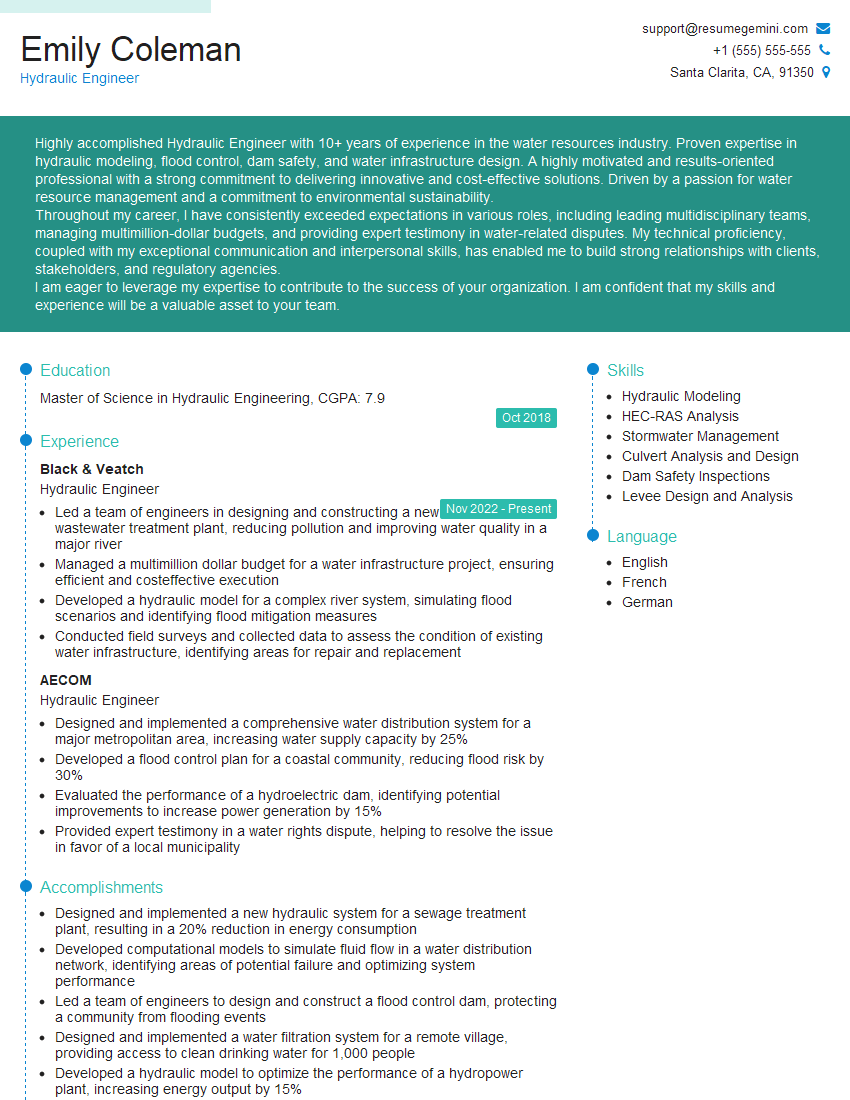
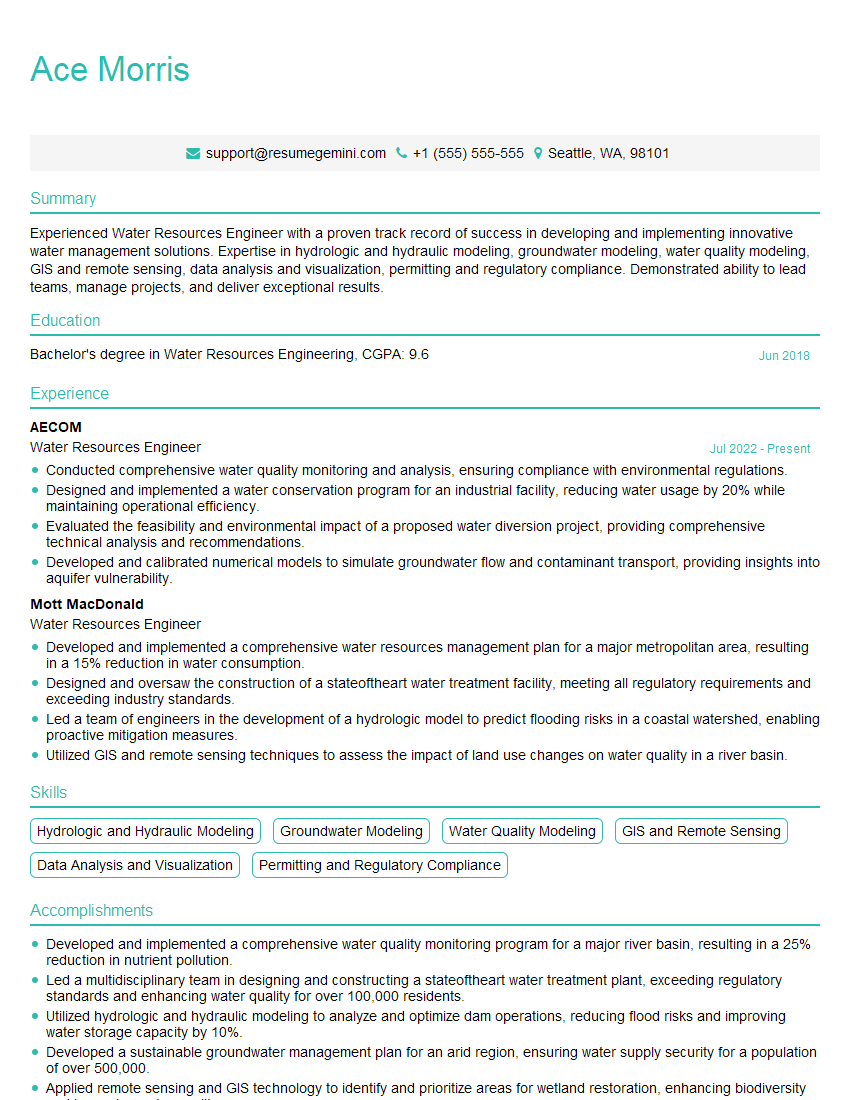
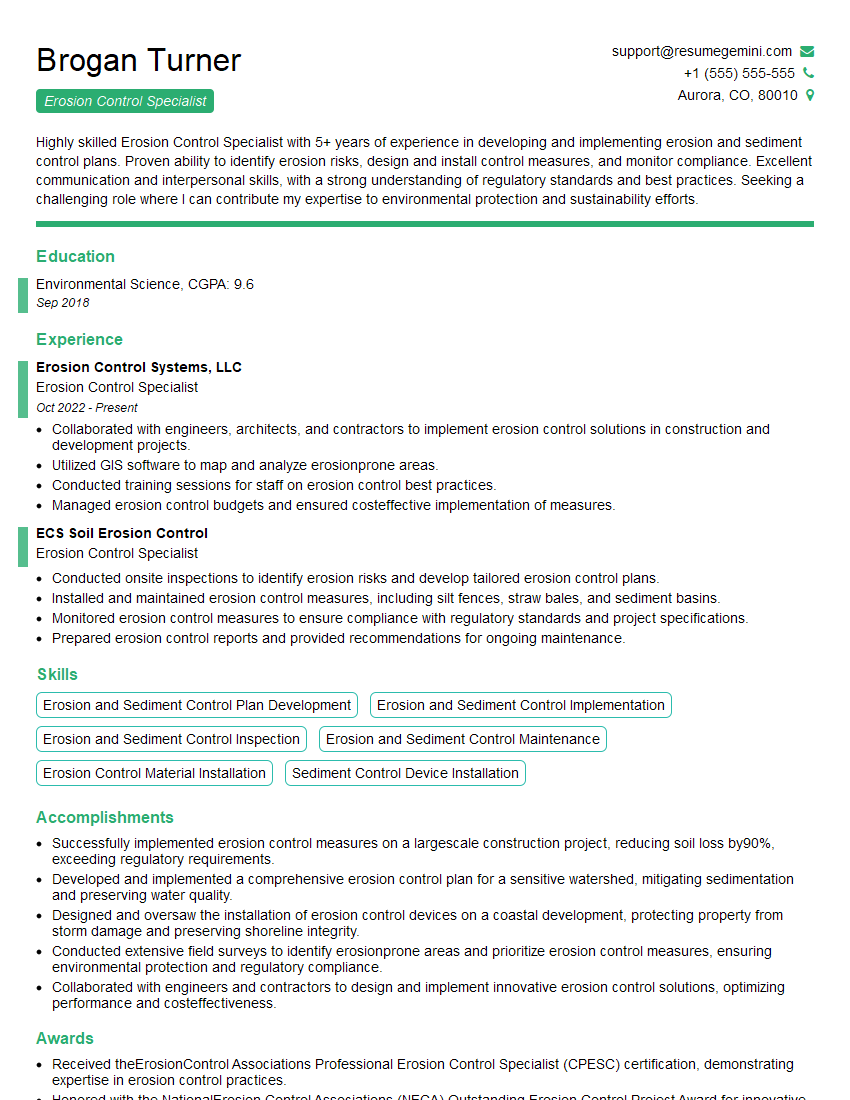
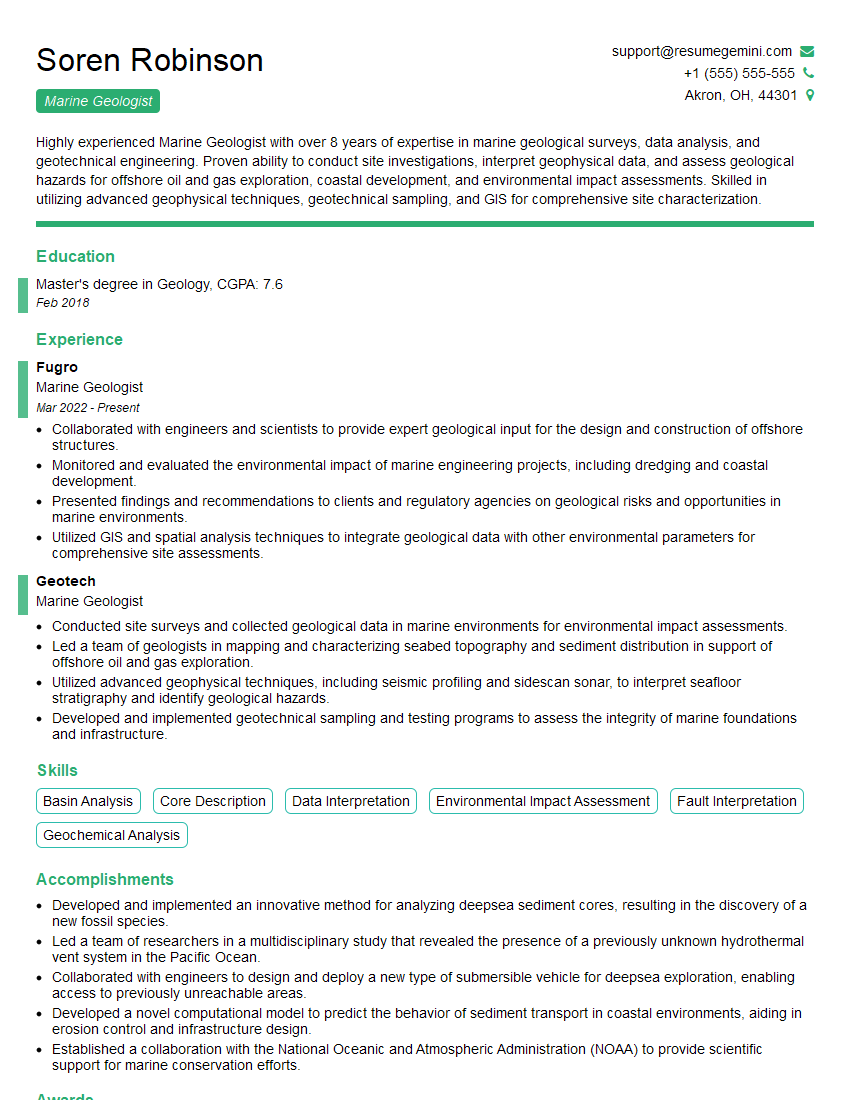
Mastering Waterway Stabilization opens doors to exciting and impactful careers in environmental engineering and related fields. It demonstrates a commitment to sustainable infrastructure and environmental protection, highly valued skills in today’s job market. To maximize your job prospects, creating a strong, ATS-friendly resume is crucial. ResumeGemini can significantly enhance your resume-building experience, helping you craft a compelling document that highlights your skills and experience effectively. Examples of resumes tailored to Waterway Stabilization are available to help guide your creation. Invest time in refining your resume – it’s your first impression with potential employers.
Explore more articles
Users Rating of Our Blogs
Share Your Experience
We value your feedback! Please rate our content and share your thoughts (optional).
What Readers Say About Our Blog
Amazing blog
hello,
Our consultant firm based in the USA and our client are interested in your products.
Could you provide your company brochure and respond from your official email id (if different from the current in use), so i can send you the client’s requirement.
Payment before production.
I await your answer.
Regards,
MrSmith
hello,
Our consultant firm based in the USA and our client are interested in your products.
Could you provide your company brochure and respond from your official email id (if different from the current in use), so i can send you the client’s requirement.
Payment before production.
I await your answer.
Regards,
MrSmith
These apartments are so amazing, posting them online would break the algorithm.
https://bit.ly/Lovely2BedsApartmentHudsonYards
Reach out at BENSON@LONDONFOSTER.COM and let’s get started!
Take a look at this stunning 2-bedroom apartment perfectly situated NYC’s coveted Hudson Yards!
https://bit.ly/Lovely2BedsApartmentHudsonYards
Live Rent Free!
https://bit.ly/LiveRentFREE
Interesting Article, I liked the depth of knowledge you’ve shared.
Helpful, thanks for sharing.
Hi, I represent a social media marketing agency and liked your blog
Hi, I represent an SEO company that specialises in getting you AI citations and higher rankings on Google. I’d like to offer you a 100% free SEO audit for your website. Would you be interested?