Interviews are more than just a Q&A session—they’re a chance to prove your worth. This blog dives into essential Scooping and Portioning interview questions and expert tips to help you align your answers with what hiring managers are looking for. Start preparing to shine!
Questions Asked in Scooping and Portioning Interview
Q 1. What are the different methods for scooping and portioning food?
Scooping and portioning food involves various methods, each suited to different food types and service styles. The primary methods can be categorized as:
- Volume Measurement: This uses tools like measuring cups, ladles, and scoops to measure ingredients by volume (e.g., cups, ounces, milliliters). This is ideal for liquids and free-flowing solids like rice or sugar.
- Weight Measurement: This uses portion scales to weigh ingredients precisely, ensuring consistent portion sizes regardless of density. This is particularly crucial for items like meat, vegetables, or sauces where density varies.
- Visual Estimation: While less precise, experienced chefs often use visual cues like the size of a serving spoon or the diameter of a plate to estimate portion sizes. This method relies on extensive practice and knowledge of typical serving sizes.
- Pre-portioned Packaging: Utilizing pre-portioned ingredients from suppliers (e.g., individual packets of sauce or pre-weighed meat patties) simplifies portion control and reduces waste. This is common in fast-food chains or catering.
- Template-based Portioning: This involves using stencils or guides to shape and portion foods like cookies, pastries, or meat patties. This ensures consistent shape and size, improving presentation.
The choice of method depends on the food being served, the desired accuracy, and available resources. For example, a fine-dining restaurant might prioritize weight measurement for precision, while a cafeteria might rely on volume measurement and visual estimation for speed and efficiency.
Q 2. How do you ensure consistent portion sizes when scooping and portioning?
Consistent portion sizes are essential for cost control, customer satisfaction, and maintaining a consistent brand image. To achieve consistency, I employ several strategies:
- Calibration and Maintenance: Regularly calibrate portion scales and check the volume markings on measuring tools to ensure accuracy. This is essential as wear and tear can affect accuracy over time.
- Standardized Recipes: Using standardized recipes with clearly defined portion sizes eliminates guesswork and helps maintain consistency across various staff members.
- Training and Practice: Thoroughly train staff on the correct use of portioning tools and the importance of adhering to standardized recipes. Regular practice builds muscle memory and improves consistency.
- Visual Aids: Using visual aids like diagrams or photos illustrating ideal portion sizes can enhance consistency, especially when dealing with visually similar items.
- Portion Control Tools: Utilizing portion scoops, ladles, or pre-weighed containers significantly reduces variation compared to freehand scooping.
Imagine making a pasta dish – using a ladle consistently ensures each plate has the correct amount of pasta. Similarly, pre-weighed meat patties ensure every customer receives the same serving size.
Q 3. What tools and equipment are used for accurate scooping and portioning?
Accurate scooping and portioning require specialized tools. The choice of tools depends on the type of food and level of precision required:
- Portion Scales: Electronic or mechanical scales provide the most accurate measurement by weight. They are vital for precise portion control, particularly for high-value ingredients.
- Measuring Cups and Spoons: Essential for measuring volumes of liquids and dry ingredients. Using nested sets ensures efficient storage and easy access.
- Ladles: Ideal for portioning liquids like soups, sauces, and stews. Different ladle sizes allow for different portion amounts.
- Portion Scoops: Available in various sizes, these scoops provide consistent portions of dry ingredients like ice cream, rice, or mashed potatoes.
- Volume-Based Dispensers: These are useful for dispensing viscous liquids or semi-solids, controlling dispensing rates.
- Portion Control Rings: Used for shaping and portioning foods like burgers, meatloaf, or cookies, these ensure consistent size and presentation.
In a professional kitchen, having a complete set of these tools ensures efficiency and consistency across different preparations. I find investing in quality equipment pays off in the long run by minimizing waste and improving accuracy.
Q 4. Explain the importance of proper portion control in food service.
Proper portion control is paramount in food service for various reasons:
- Cost Control: Accurate portioning minimizes food waste, directly impacting the restaurant’s profitability. Over-portioning leads to unnecessary expenses, while under-portioning can lead to customer dissatisfaction.
- Customer Satisfaction: Consistent portion sizes ensure customers receive the expected value for their money. This contributes to a positive dining experience and increases customer loyalty.
- Nutritional Balance: Controlling portion sizes is crucial for maintaining nutritional balance in meals, helping customers manage their calorie intake and promote healthy eating habits.
- Inventory Management: Accurate portioning simplifies inventory tracking and forecasting, allowing for efficient ordering and reducing the risk of spoilage.
- Menu Engineering: Understanding the portion size and cost of each menu item is vital for creating profitable menus that meet customer expectations and business goals.
For example, if we serve a steak, under-portioning it may lead to customer complaints and a bad review, whereas over-portioning would cut into our profits. Finding the balance is key to success.
Q 5. How do you handle discrepancies in portion sizes?
Discrepancies in portion sizes are inevitable, but they should be minimized through consistent procedures and attention to detail. When discrepancies occur, I address them systematically:
- Identify the Cause: Determine whether the issue stems from equipment malfunction (e.g., an improperly calibrated scale), staff error (e.g., incorrect use of measuring tools), or variation in the ingredients themselves (e.g., inconsistent density of a vegetable).
- Implement Corrective Action: Address the root cause – calibrate the equipment, retrain staff, or adjust recipes as needed to account for ingredient variations.
- Documentation: Keep records of any discrepancies, including the cause and the corrective actions taken. This helps track trends and identify potential issues before they become major problems.
- Quality Control Checks: Implement regular quality control checks to ensure consistent portion sizes across all meals. Sampling and double-checking portions are crucial.
- Employee Feedback: Encourage staff to report any inconsistencies they notice; their feedback can be invaluable in identifying and resolving issues early.
For instance, if a batch of mashed potatoes is unusually dense, I would adjust the portion size served accordingly to maintain the correct weight or volume.
Q 6. Describe your experience with using portion scales and measuring cups.
I have extensive experience using portion scales and measuring cups in various culinary settings. I’m proficient in using both electronic and mechanical scales, understanding their limitations and calibration requirements. I can accurately weigh ingredients to the nearest gram or ounce, ensuring consistency in my preparations.
With measuring cups, I’m adept at using different sizes and understanding the importance of proper leveling techniques to avoid overfilling or underfilling. I regularly check for any damage or wear and tear that could affect the accuracy of these tools.
In my previous role, I was responsible for training new staff on the proper use of these tools, emphasizing the importance of accuracy for cost control and maintaining consistent quality across all our dishes. I’ve consistently demonstrated accuracy and efficiency in using these tools, contributing significantly to the overall success of our kitchen operations.
Q 7. How do you maintain hygiene and sanitation while scooping and portioning?
Maintaining hygiene and sanitation during scooping and portioning is paramount to prevent foodborne illnesses. My approach is comprehensive and follows strict guidelines:
- Hand Hygiene: Frequent handwashing with soap and water is essential before and after handling food. Hand sanitizer is used when handwashing facilities are unavailable.
- Clean Equipment: All scooping and portioning tools are thoroughly cleaned and sanitized before and after each use. This includes washing with hot soapy water, rinsing, and air drying or using a sanitizing solution.
- Food Storage: Food is stored properly to prevent cross-contamination. This involves using separate cutting boards and utensils for raw and cooked foods, and ensuring proper temperature control for perishable items.
- Work Surface Sanitation: Work surfaces are regularly cleaned and sanitized to prevent the spread of bacteria. This is especially critical in high-traffic areas.
- Proper Waste Disposal: Food waste is disposed of appropriately to avoid attracting pests and maintaining a clean work environment.
Think of it like this: clean tools and practices are as important as the recipe itself. Neglecting hygiene can compromise not only the safety but also the reputation of any food establishment.
Q 8. What are the common challenges in scooping and portioning and how do you overcome them?
Common challenges in scooping and portioning often revolve around consistency, speed, and food safety. Inconsistent portion sizes lead to customer dissatisfaction and potential financial losses. Speed becomes crucial during peak hours, and maintaining hygiene prevents cross-contamination.
- Inconsistency: This is overcome by using standardized tools like portion scoops, cups, and scales. Regular calibration and training ensure everyone uses the equipment correctly. For example, a properly sized ice cream scoop will always deliver the same amount of ice cream, regardless of who is using it.
- Speed: Efficient workflow is key. This involves pre-portioning ingredients where possible, organizing workspaces to minimize movement, and using the right tools for the job. Think of it like an assembly line – each step streamlined for maximum efficiency.
- Food Safety: This is addressed through proper handwashing, using sanitized equipment, and following FIFO (First-In, First-Out) principles for ingredient storage to minimize waste and prevent spoilage.
Q 9. How do you adapt your scooping and portioning techniques for different food items?
Adapting scooping and portioning techniques depends heavily on the food’s properties. Viscous liquids require different tools than solid, granular items.
- Liquids (soups, sauces): Ladles are ideal. Size selection depends on portion size. A smaller ladle for appetizers, a larger one for entrees. Consistent pouring technique ensures accurate portioning.
- Semi-solids (yogurt, mashed potatoes): Portioning cups or spoons work well. Using a leveler ensures consistent fill. The consistency of the food might require a slightly different approach (more pressure for firmer foods).
- Solids (rice, vegetables): Scoops or portioning cups are suitable. Using a scale ensures precise weighing, particularly important for dishes with specific nutritional requirements.
- Granular items (cereal, sugar): Measuring cups or spoons are essential for accurate portioning. Careful handling prevents spills and ensures precise measurement.
Q 10. How do you ensure the quality and presentation of food after scooping and portioning?
Maintaining quality and presentation after scooping and portioning is paramount for a positive customer experience. It’s the final touch that elevates the dish.
- Neatness: Avoid spills and uneven portions. Use clean tools and proper techniques to ensure a visually appealing presentation.
- Temperature: Maintain proper food temperatures, especially with hot or cold items. This might involve using insulated containers or warming trays.
- Garnishing: Adding a simple garnish can enhance the visual appeal and create a more professional look. This could be a sprig of herbs, a drizzle of sauce, or a sprinkle of spices.
- Plating: The method of plating influences the overall presentation. Consider factors such as the shape and size of the plate and the arrangement of the food.
Q 11. Describe your experience with different portioning techniques (e.g., using ladles, scoops, portioning cups).
My experience spans various portioning tools. Each has its strengths and weaknesses depending on the food item and volume.
- Ladles: Excellent for liquids and semi-liquids, offering good control over pouring. Different sizes allow for versatility.
- Scoops: Ideal for portioning ice cream, mashed potatoes, or other semi-solid foods. Numbered scoops ensure consistent portions.
- Portioning cups: Offer precise control, especially when dealing with dry ingredients or solid foods that need to be measured accurately. They’re crucial for maintaining consistency across multiple servings.
- Scales: Essential for accurate weighing of ingredients, particularly in settings with strict nutritional requirements. They are invaluable for ensuring consistent portions based on weight, rather than just volume.
Q 12. How do you manage time effectively while scooping and portioning during peak hours?
During peak hours, time management is crucial. Preparation and teamwork are essential.
- Pre-preparation: Pre-portioning ingredients as much as possible reduces time spent during service. Think chopping vegetables or pre-measuring sauces ahead of time.
- Workflow Optimization: Streamline the process. Arrange ingredients and tools in a logical order to minimize movement.
- Teamwork: Collaborate with colleagues to ensure a smooth, efficient workflow. Clear communication and task delegation are vital.
- Prioritization: Focus on the most time-sensitive tasks first. Prioritize based on order volume and preparation time.
Q 13. What is your understanding of food safety regulations related to scooping and portioning?
Food safety regulations concerning scooping and portioning are vital to prevent contamination and ensure public health. These regulations often encompass aspects of hygiene, temperature control, and cross-contamination prevention.
- Hand hygiene: Frequent handwashing is non-negotiable. Using appropriate hand sanitizers is also important, especially between handling different food types.
- Equipment sanitation: Regular cleaning and sanitization of all equipment (scoops, ladles, cups, etc.) is crucial. This prevents the transfer of bacteria or other harmful substances.
- Temperature control: Maintaining proper food temperatures is critical, especially for potentially hazardous foods. This means ensuring hot foods remain hot and cold foods remain cold to prevent bacterial growth.
- FIFO (First-In, First-Out): This method of stock rotation helps ensure that older food items are used before newer ones, preventing spoilage and reducing waste.
Q 14. How do you identify and prevent cross-contamination during scooping and portioning?
Cross-contamination is a significant food safety concern. It involves the transfer of harmful substances from one food to another. Preventing it requires careful attention to detail.
- Dedicated Utensils: Use separate utensils for different food items, especially raw and cooked foods. Avoid using the same spoon to serve both raw meat and cooked vegetables.
- Color-coded Utensils: This system helps visually identify utensils for specific food categories, minimizing accidental cross-contamination.
- Thorough Cleaning: Sanitize all utensils and surfaces between handling different food items. Regular cleaning is essential, even between similar foods.
- Proper Storage: Store raw and cooked foods separately to prevent contact and the transfer of pathogens.
Q 15. Describe your experience with FIFO (First-In, First-Out) method in relation to scooping and portioning.
FIFO, or First-In, First-Out, is a crucial inventory management principle that significantly impacts scooping and portioning, especially when dealing with perishable goods. It ensures that the oldest items are used first, minimizing spoilage and waste. In a restaurant kitchen, for example, imagine we receive a new batch of pre-portioned chicken breast. We would place these new portions behind the older ones. This ensures we use the older chicken first, preventing it from exceeding its use-by date.
Applying FIFO to scooping and portioning involves strategically organizing your ingredients. This might involve rotating containers on shelves, clearly labeling items with dates, and diligently monitoring stock levels. Using a FIFO system streamlines your workflow, reduces food waste, and maintains the highest quality of ingredients.
- Practical Example: Imagine you have two tubs of ice cream – one delivered yesterday and one delivered a week ago. Following FIFO, you scoop from the older tub first.
- Restaurant Application: In a buffet setting, FIFO helps maintain the freshest food offerings by replacing the older items with newer ones.
Career Expert Tips:
- Ace those interviews! Prepare effectively by reviewing the Top 50 Most Common Interview Questions on ResumeGemini.
- Navigate your job search with confidence! Explore a wide range of Career Tips on ResumeGemini. Learn about common challenges and recommendations to overcome them.
- Craft the perfect resume! Master the Art of Resume Writing with ResumeGemini’s guide. Showcase your unique qualifications and achievements effectively.
- Don’t miss out on holiday savings! Build your dream resume with ResumeGemini’s ATS optimized templates.
Q 16. How do you handle food waste during scooping and portioning?
Minimizing food waste during scooping and portioning requires a multifaceted approach. Precise measuring and portion control are fundamental. Using standardized scoops and portioning tools helps to avoid over-portioning. For example, using a #12 scoop ensures consistent portion sizes across all servings. Accurate portioning reduces waste by preventing over-preparation.
Careful planning is key. Accurate forecasting of demand helps to prepare only what’s needed. This strategy prevents excess food from being prepared and ultimately discarded. Leftovers, if safe and appropriate, can be repurposed creatively into different menu items – minimizing waste and maximizing resource utilization. For instance, leftover roasted vegetables can be incorporated into soups or frittatas.
Finally, employee training is paramount. Staff should be educated on proper portioning techniques and the importance of minimizing waste. Regular monitoring of waste levels helps identify areas for improvement and refine our strategies.
Q 17. How do you work with different types of scooping utensils and their appropriate uses?
Different scooping utensils are designed for various food types and portion sizes. Understanding their appropriate uses is crucial for efficiency and accuracy.
- Spoons: Ideal for softer foods like yogurt, sauces, or ice cream, depending on the size.
- Scoops (numbered scoops): These are standardized measuring tools (e.g., a #12 scoop delivers 1/12 of a gallon). They are essential for consistent portioning in restaurants and catering. Using a #16 scoop provides smaller portions than a #12.
- Cups and ladles: These are used for liquids and semi-liquids, allowing for greater flexibility in portioning. The size of the cup or ladle dictates the portion size.
- Tongs and serving spoons: Used for larger portions of items like vegetables, meats, or appetizers.
Selecting the right utensil improves both efficiency and the presentation of your food. Using a scoop instead of a spoon for ice cream, for instance, leads to faster serving and prevents messy portions.
Q 18. What are some common mistakes to avoid while scooping and portioning?
Several common mistakes can impact the accuracy and efficiency of scooping and portioning.
- Inconsistent scooping technique: Overfilling or underfilling scoops leads to uneven portion sizes. Proper training and standardized procedures are essential to overcome this.
- Ignoring food density: Scooping the same amount of a dense food (e.g., mashed potatoes) versus a light food (e.g., whipped cream) results in significant variations in portion weight. Adjusting scooping techniques based on food density is crucial for accuracy.
- Lack of proper tools: Using inappropriate utensils for specific food types can lead to messy portions, wasted food, and inefficiency.
- Poor ingredient organization: Lack of organization makes it difficult to access ingredients quickly, slowing down the entire process. A well-organized workspace significantly improves workflow.
- Improper cleaning and maintenance: Dirty or damaged utensils can impact portion accuracy and hygiene.
Avoiding these mistakes through proper training and attention to detail ensures consistent, high-quality results.
Q 19. How do you ensure accuracy when scooping and portioning different densities of food?
Addressing the varying densities of food requires careful attention to detail and often, the use of a scale in addition to volume-based measuring tools.
For example, a scoop of mashed potatoes will weigh more than a scoop of whipped cream, even if the scoops are identical. We can compensate for this by either weighing each portion using a kitchen scale or by using different scoops for different foods to achieve the desired portion size by weight.
Alternatively, you could pre-portion ingredients by weight into smaller containers. This eliminates the need to continuously weigh each portion and drastically improves efficiency. This is especially useful for large-scale portioning in industrial or restaurant settings.
Regular calibration of your tools – scales and scoops – is also essential for maintaining the highest level of accuracy.
Q 20. How do you adapt your techniques for visually appealing portioning?
Visually appealing portioning goes beyond just the quantity; it involves presentation.
Consider using attractive serving dishes or containers. This simple change can significantly improve the perception of the food. For example, serving ice cream in a clear glass rather than a plain bowl offers a more aesthetically pleasing presentation.
Employing techniques like layering different ingredients, using garnishes, or arranging food artistically enhances the visual appeal. A carefully arranged salad, for instance, looks much more inviting than a haphazardly piled one.
Color contrast is another key element. Balancing colors on a plate creates a more visually pleasing presentation.
Consistent portion sizes also play a role in visual appeal. Uniformity in portions makes the food look more professional and appetizing.
Q 21. How do you maintain efficiency while ensuring high quality in scooping and portioning?
Maintaining efficiency and high quality in scooping and portioning is a balancing act. It requires well-planned preparation, proper training, and the use of appropriate tools.
Having pre-portioned ingredients ready to use speeds up the process without sacrificing quality. Utilizing standardized scoops and ladles ensures consistent portion sizes across the board.
A clean and well-organized workspace facilitates smooth and efficient operations, reducing wasted time searching for ingredients or tools.
Cross-training staff ensures flexibility and reduces downtime due to staff absences. Finally, regular quality checks help identify potential issues and ensures consistently high standards.
Q 22. Explain your experience with different types of portion control equipment.
My experience encompasses a wide range of portion control equipment, from simple measuring cups and spoons to sophisticated electronic scales and portioning scoops. I’m proficient with volumetric measuring tools like graduated cylinders and liquid measuring cups for liquids and various sized scoops for dry ingredients, ensuring accuracy depending on the recipe’s needs. I’ve also worked extensively with digital scales, offering precise measurements in grams, ounces, and other units, crucial for recipes demanding high accuracy. For larger-scale operations, I have experience with automated portioning systems that dispense pre-determined amounts of ingredients quickly and efficiently. For example, in a previous role, we used a specialized ice cream scoop with a calibrated mechanism to ensure consistent portion sizes for sundaes, and in another role we used a high-speed portioning machine for pre-packaged salads. The choice of equipment always depends on the product, the volume required, and the desired level of precision.
Q 23. Describe a time you had to quickly adjust your portioning techniques due to unexpected changes.
During a particularly busy lunch rush, our main potato supplier unexpectedly delivered a smaller-than-usual shipment. We needed to adjust our portion sizes for our loaded baked potatoes immediately to avoid running out. My quick solution involved communicating the issue to the kitchen staff and switching from using our standard 1/2-cup scoop to a slightly smaller 1/3-cup scoop. We then clearly communicated the adjusted portion size to customers to avoid complaints. We also carefully tracked our remaining supplies and proactively adjusted preparation techniques – such as offering smaller side dishes – to manage the shortage effectively. This experience highlighted the importance of adaptability and clear communication in fast-paced culinary settings.
Q 24. How do you handle situations where ingredient quantities are not exact?
When ingredient quantities aren’t exact, I maintain accuracy by employing a combination of techniques. First, I carefully weigh or measure the available ingredients to determine the exact amount on hand. Then, I recalculate the recipe proportions accordingly. For example, if a recipe calls for 100 grams of flour but I only have 80 grams, I reduce the other ingredients proportionally by 20%. This ensures the recipe maintains its balance and flavor profile. In some cases, I might substitute similar ingredients, but only after ensuring they won’t drastically alter the final product. Accurate record-keeping is crucial; documenting these adjustments helps maintain consistency in future preparations.
Q 25. How do you ensure consistency in scooping and portioning across different shifts or employees?
Consistency across shifts and employees is paramount. We achieve this through comprehensive training that emphasizes proper scooping and portioning techniques. I use visual aids like charts and diagrams showing the correct scoop size for various ingredients and demonstrate the correct scooping techniques, stressing the importance of level scoops and avoiding overpacking. Regular quality checks, using pre-weighed samples as benchmarks and detailed standard operating procedures (SOPs), ensure everyone follows the established protocols. The use of calibrated equipment further enhances consistency. We also incorporate regular retraining sessions to reinforce best practices and address any questions or concerns.
Q 26. How familiar are you with various units of measurement (e.g., grams, ounces, cups)?
I’m highly familiar with a wide range of units of measurement. I can seamlessly convert between grams, ounces, cups, milliliters, and liters, adapting to the requirements of any recipe or situation. My understanding extends to both metric and imperial systems. For instance, I can quickly convert a recipe from cups to grams, ensuring accurate portion control, even if the original recipe is in a different unit system. This adaptability makes me efficient and versatile in various culinary settings.
Q 27. How do you contribute to cost control through accurate scooping and portioning?
Accurate scooping and portioning directly contribute to cost control. By preventing over-portioning, we minimize food waste and reduce ingredient costs. For example, consistently using the correct scoop size for a particular ingredient ensures we use only the required amount, saving money on ingredients that could otherwise be wasted. Precise portioning also aids in accurate costing for menu items. This ensures that the selling price accurately reflects the cost of ingredients and helps maintain profitability.
Q 28. What are your strategies for maintaining accuracy and consistency over long periods of time while scooping and portioning?
Maintaining accuracy and consistency over extended periods requires a multi-faceted approach. Regular calibration of equipment – such as scales and measuring tools – is crucial. I also employ a system of self-checks and cross-checks, regularly comparing my portions to established standards. Consistent attention to detail, combined with taking short, deliberate breaks to prevent fatigue-related errors, is also important. Staying hydrated and maintaining a focused mindset also reduces the likelihood of errors. Finally, keeping a detailed log of any discrepancies and adjustments enables continuous improvement and ensures the long-term accuracy of our portioning methods.
Key Topics to Learn for Scooping and Portioning Interview
- Understanding Portion Control: Learn the importance of accurate portioning for cost control, customer satisfaction, and maintaining consistent product quality. Explore different portioning techniques and tools.
- Scooping Techniques and Efficiency: Master various scooping methods for different food types (e.g., ice cream, salads, dry ingredients). Practice efficient scooping techniques to minimize waste and maximize speed without sacrificing accuracy.
- Hygiene and Safety Protocols: Understand and demonstrate knowledge of food safety regulations, proper handwashing techniques, and the safe handling of scooping tools and serving utensils.
- Inventory Management and Waste Reduction: Learn how accurate scooping contributes to minimizing food waste and efficient inventory management. Explore strategies for reducing spillage and optimizing portion sizes.
- Equipment Knowledge: Familiarize yourself with various scooping tools and equipment, their proper use, maintenance, and cleaning procedures. This includes understanding different scoop sizes and their applications.
- Problem-Solving in Portioning: Prepare to discuss how you would handle situations such as inconsistent ingredient sizes, equipment malfunctions, or unexpected customer requests regarding portion sizes.
- Adaptability and Teamwork: Demonstrate your ability to adapt to different work environments, team dynamics, and varying levels of customer demand. Highlight your collaborative spirit and ability to work efficiently under pressure.
Next Steps
Mastering scooping and portioning techniques is crucial for success in many food service roles. These skills demonstrate attention to detail, efficiency, and a commitment to providing a high-quality customer experience. This directly translates to career advancement opportunities and higher earning potential. To increase your chances of landing your dream job, focus on creating an ATS-friendly resume that highlights these valuable skills. ResumeGemini is a trusted resource for building professional resumes that get noticed. They offer examples of resumes tailored to the Scooping and Portioning field to help you create a compelling application that showcases your abilities effectively.
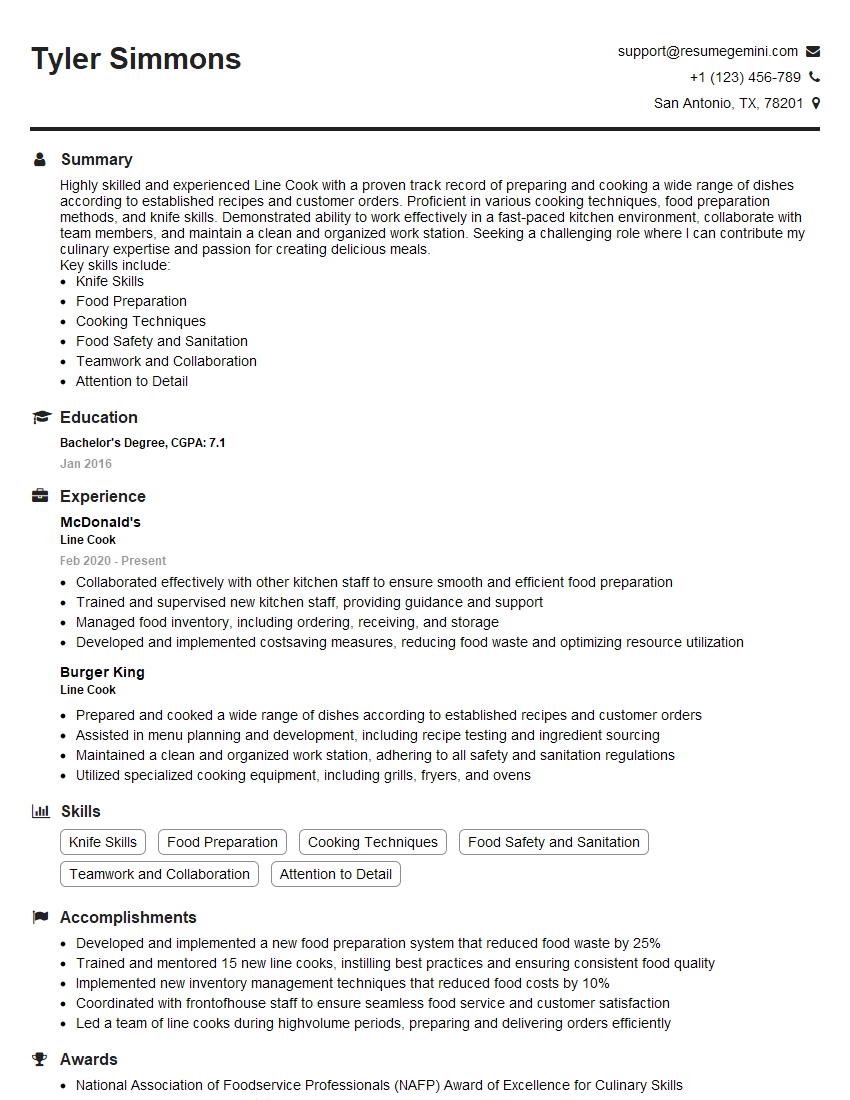
Line Cook Resume Sample
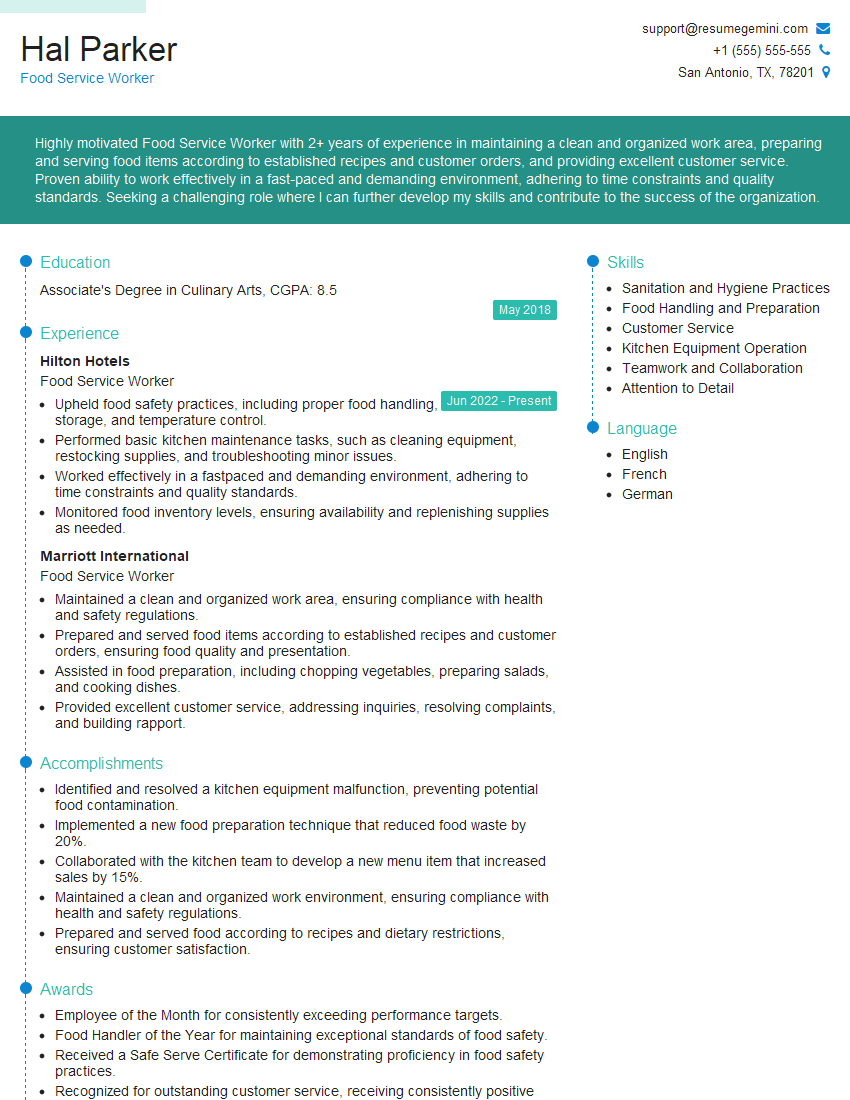
Food Service Worker Resume Sample
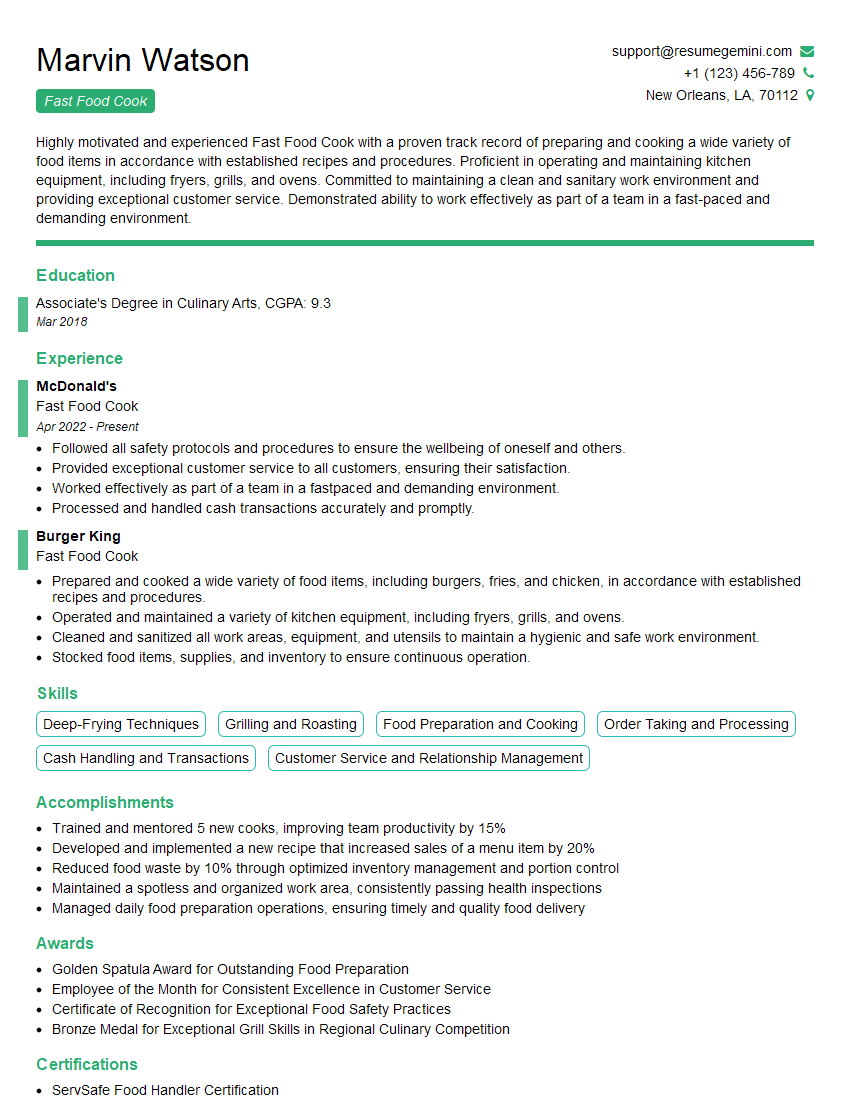
Fast Food Cook Resume Sample
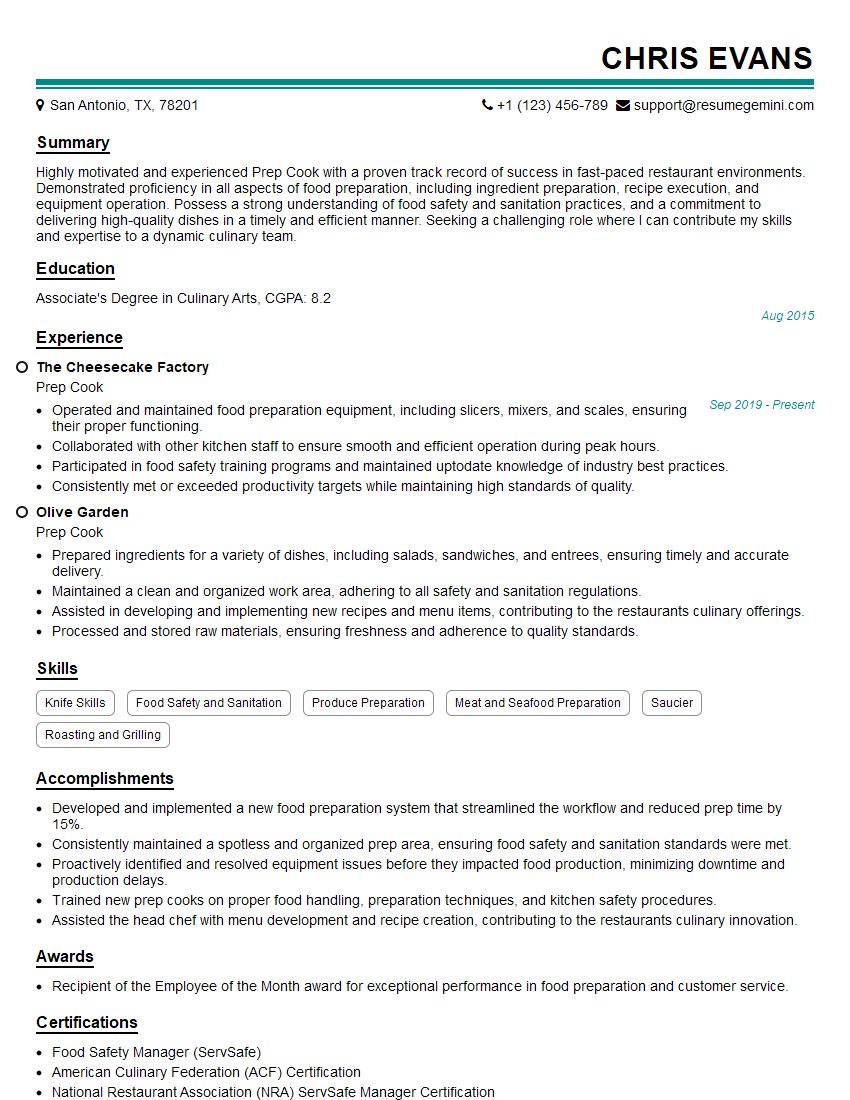
Prep Cook Resume Sample
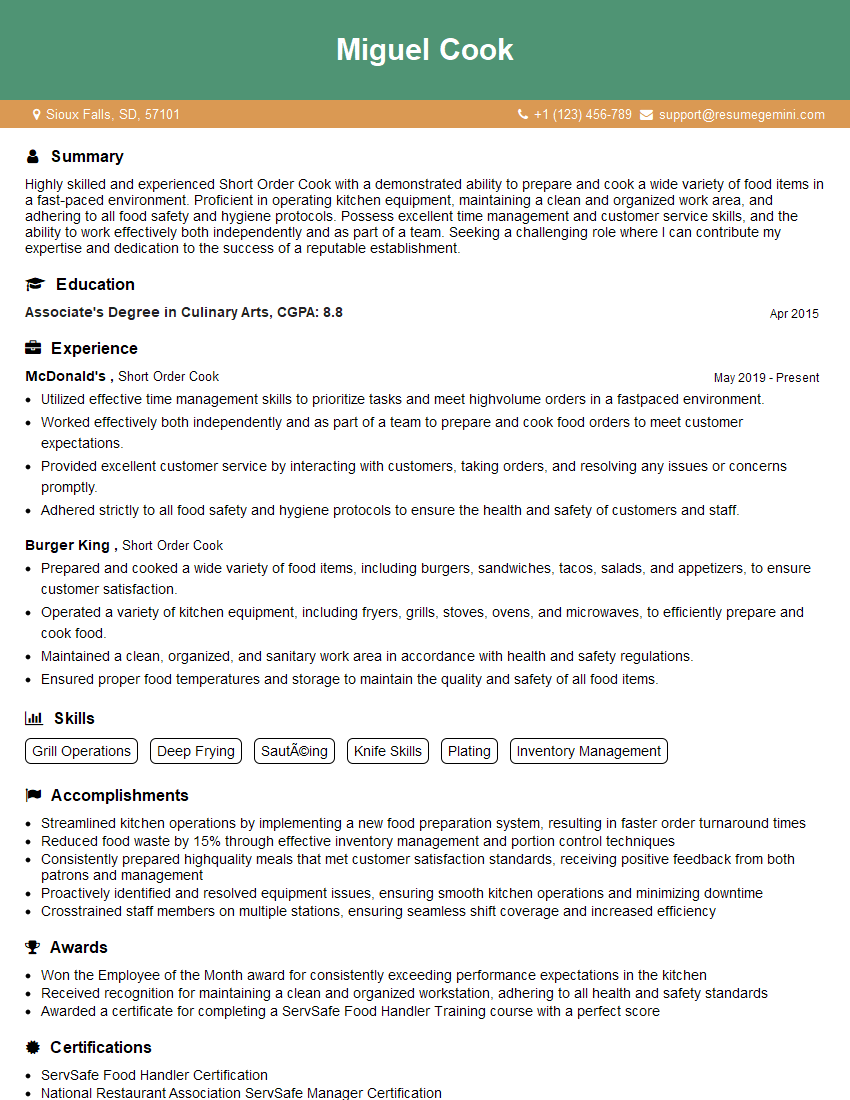
Short Order Cook Resume Sample
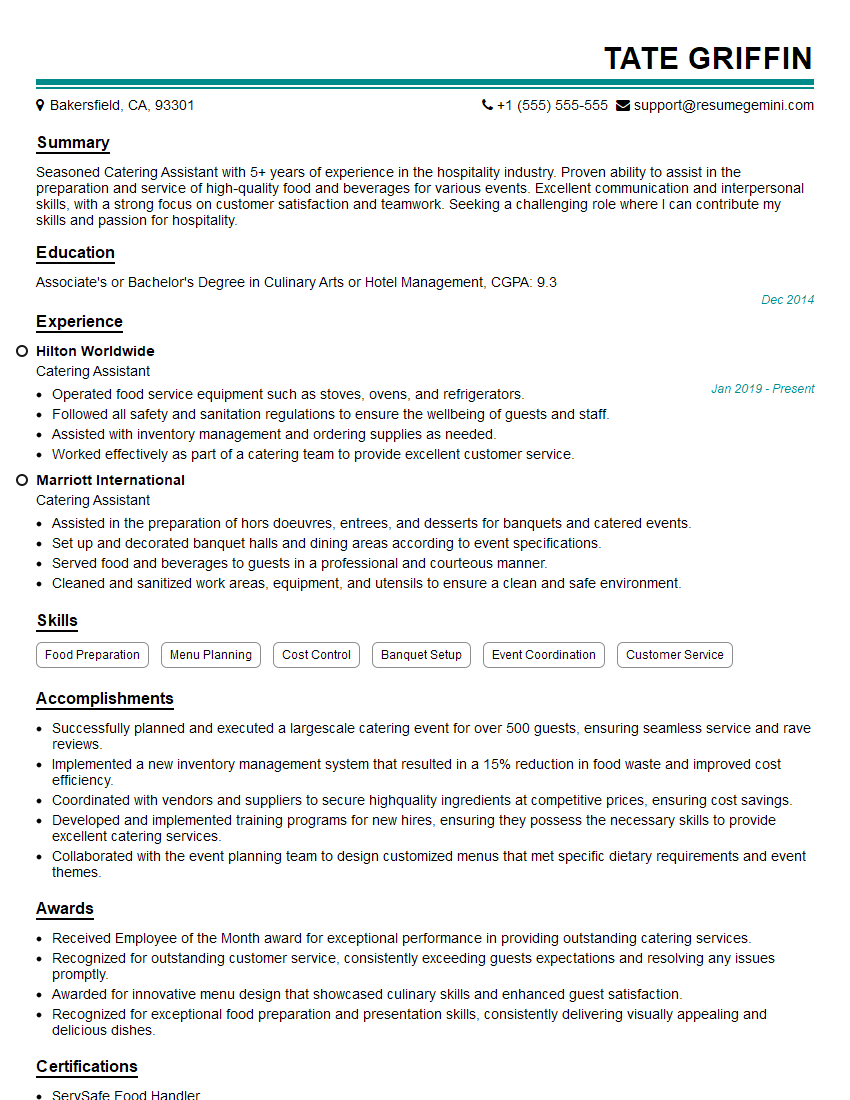
Catering Assistant Resume Sample
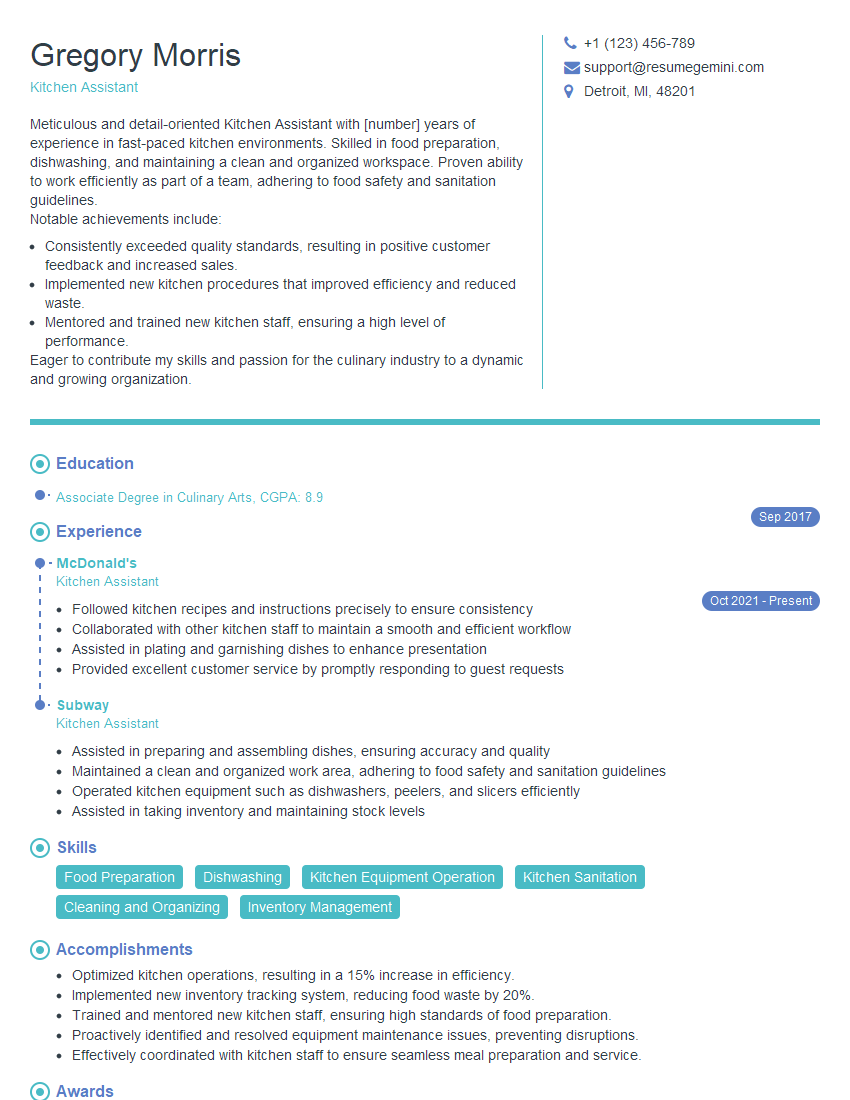
Kitchen Assistant Resume Sample
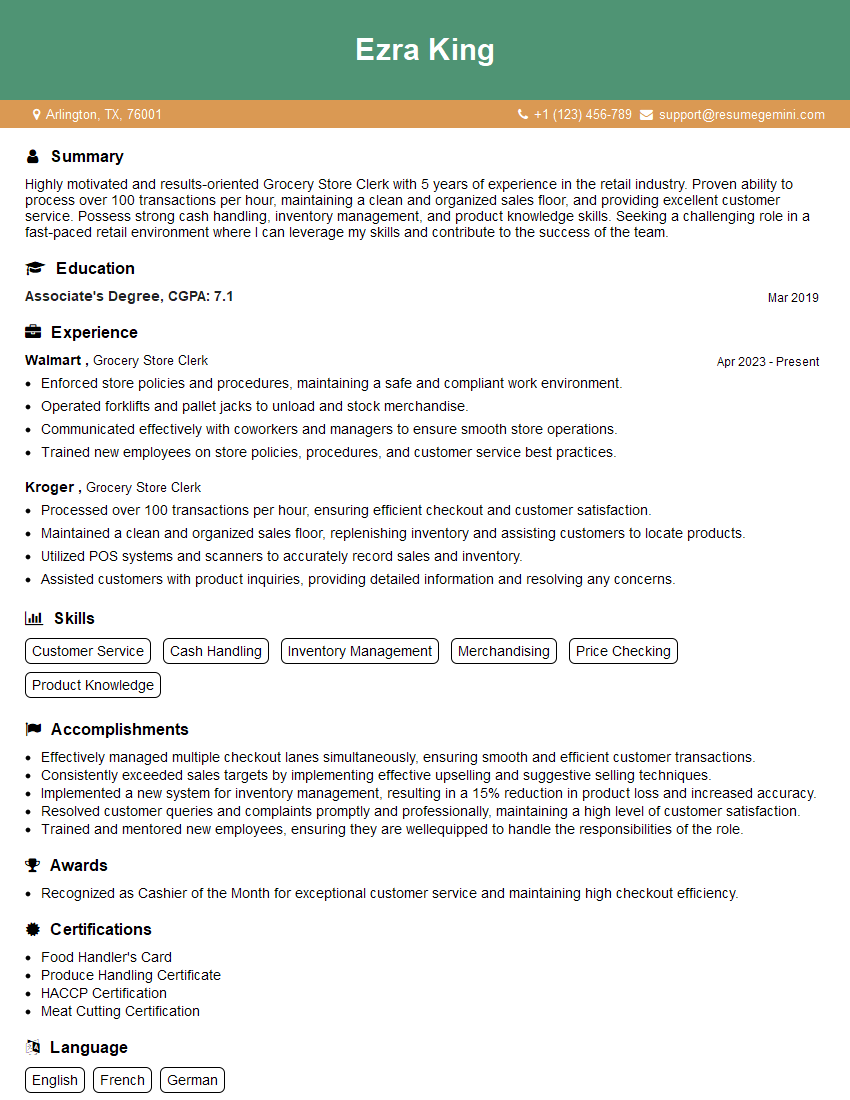
Grocery Store Clerk Resume Sample

Measurement Specialist Resume Sample
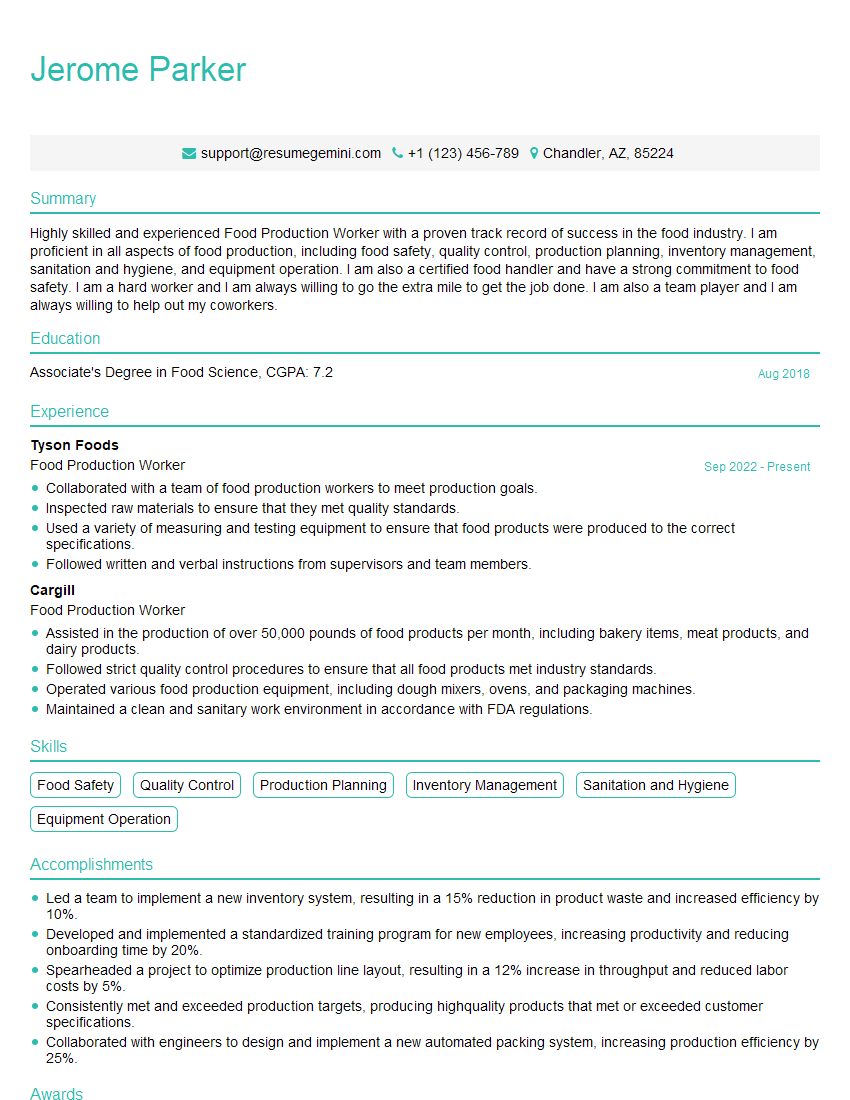
Food Production Worker Resume Sample
Explore more articles
Users Rating of Our Blogs
Share Your Experience
We value your feedback! Please rate our content and share your thoughts (optional).
What Readers Say About Our Blog
hello,
Our consultant firm based in the USA and our client are interested in your products.
Could you provide your company brochure and respond from your official email id (if different from the current in use), so i can send you the client’s requirement.
Payment before production.
I await your answer.
Regards,
MrSmith
hello,
Our consultant firm based in the USA and our client are interested in your products.
Could you provide your company brochure and respond from your official email id (if different from the current in use), so i can send you the client’s requirement.
Payment before production.
I await your answer.
Regards,
MrSmith
These apartments are so amazing, posting them online would break the algorithm.
https://bit.ly/Lovely2BedsApartmentHudsonYards
Reach out at [email protected] and let’s get started!
Take a look at this stunning 2-bedroom apartment perfectly situated NYC’s coveted Hudson Yards!
https://bit.ly/Lovely2BedsApartmentHudsonYards
Live Rent Free!
https://bit.ly/LiveRentFREE
Interesting Article, I liked the depth of knowledge you’ve shared.
Helpful, thanks for sharing.
Hi, I represent a social media marketing agency and liked your blog
Hi, I represent an SEO company that specialises in getting you AI citations and higher rankings on Google. I’d like to offer you a 100% free SEO audit for your website. Would you be interested?