Preparation is the key to success in any interview. In this post, we’ll explore crucial Experience in Patient Safety Programs and Risk Minimization Plans interview questions and equip you with strategies to craft impactful answers. Whether you’re a beginner or a pro, these tips will elevate your preparation.
Questions Asked in Experience in Patient Safety Programs and Risk Minimization Plans Interview
Q 1. Describe your experience implementing a patient safety program.
Implementing a patient safety program requires a multi-faceted approach focusing on proactive risk mitigation and reactive incident management. My experience involves leading the development and implementation of such a program at [Previous Organization Name], a [Type of Healthcare Facility]. This involved several key phases:
- Needs Assessment: We started by identifying our facility’s specific risks through analyzing incident reports, reviewing national safety guidelines, and conducting staff surveys to understand their perspectives and identify areas needing improvement.
- Program Design: Based on the needs assessment, we developed a comprehensive program encompassing policies, procedures, training, and quality improvement initiatives. This included establishing clear roles and responsibilities for patient safety, defining reporting mechanisms, and outlining a process for investigating and addressing incidents.
- Implementation and Training: We rolled out the program through phased implementation, starting with pilot projects and gradually expanding across the facility. Comprehensive training was provided to all staff on new procedures, incident reporting, and the importance of patient safety.
- Monitoring and Evaluation: We established key performance indicators (KPIs) to monitor the program’s effectiveness. This included tracking incident rates, identifying trends, and assessing staff adherence to new procedures. Regular reviews and updates were conducted to ensure the program remained relevant and effective.
For instance, we successfully reduced medication errors by 25% within the first year by implementing a new barcoding system and enhancing medication reconciliation processes. This demonstrates the effectiveness of a well-designed and implemented patient safety program.
Q 2. How do you conduct a root cause analysis of a patient safety incident?
Root Cause Analysis (RCA) is a systematic process used to identify the underlying causes of patient safety incidents, going beyond simply identifying what happened to understand why it happened. My approach typically follows these steps:
- Incident Description: A detailed and unbiased description of the incident is gathered, including timelines and perspectives from involved individuals.
- Data Collection: Relevant data is collected from various sources, such as medical records, incident reports, interview transcripts, and equipment logs.
- Cause Identification: Using tools like the ‘five whys’ technique or a fishbone diagram, we systematically investigate the contributing factors. We ask ‘why’ repeatedly to delve deeper into each contributing factor until we reach the root causes – the fundamental issues that allowed the incident to occur.
- Action Plan Development: Based on the identified root causes, we develop a comprehensive action plan with specific, measurable, achievable, relevant, and time-bound (SMART) goals. This plan includes preventive measures to reduce the likelihood of similar incidents.
- Implementation and Follow-up: The action plan is implemented, and progress is monitored closely. A follow-up RCA is often conducted to assess the effectiveness of the implemented changes.
For example, in a case of a medication error, a superficial analysis might point to a nurse’s oversight. However, a thorough RCA might reveal underlying issues like inadequate staffing levels, confusing medication labeling, or a lack of effective double-checking procedures. Addressing these root causes is crucial for preventing future errors.
Q 3. Explain your understanding of the Joint Commission’s National Patient Safety Goals.
The Joint Commission’s National Patient Safety Goals (NPSGs) are evidence-based standards aimed at improving patient safety and reducing medical errors. My understanding encompasses the ongoing evolution of these goals and their critical role in establishing a culture of safety. Key areas covered by the NPSGs include:
- Identifying Patients Correctly: Using at least two identifiers to ensure the right patient receives the right care.
- Improving Staff Communication: Implementing methods to ensure timely and effective communication among healthcare professionals.
- Using Medications Safely: Reducing medication errors through various strategies like barcoding, automated dispensing systems, and medication reconciliation.
- Preventing Infection: Implementing infection control protocols to minimize the risk of healthcare-associated infections (HAIs).
- Identifying Patient Safety Risks: Proactively identifying and mitigating risks, especially those related to falls, pressure ulcers, and other potential hazards.
- Preventing Surgical Errors: Implementing procedures to verify the correct surgical site, procedure, and patient.
Compliance with NPSGs is not just a regulatory requirement; it’s a commitment to providing the safest possible care. I’ve consistently ensured our facilities adhere to the NPSGs through regular audits, training programs, and the implementation of evidence-based practices.
Q 4. What methods do you use to assess and mitigate risks in a healthcare setting?
Assessing and mitigating risks in a healthcare setting involves a proactive approach that combines qualitative and quantitative methods. My process includes:
- Risk Identification: Using a variety of methods, including Failure Mode and Effects Analysis (FMEA), checklists, and hazard identification workshops, to identify potential hazards and vulnerabilities.
- Risk Analysis: Evaluating the likelihood and severity of each identified risk using tools such as risk matrices. This helps prioritize risks based on their potential impact.
- Risk Mitigation Strategies: Developing and implementing strategies to reduce or eliminate identified risks. This might involve implementing new procedures, purchasing new equipment, providing additional training, or changing workflows.
- Risk Monitoring and Review: Regularly monitoring the effectiveness of mitigation strategies and updating the risk assessment as needed. This ensures that the risk management program remains relevant and effective.
For example, a risk assessment might identify a high risk of falls among elderly patients. Mitigation strategies could include implementing fall prevention protocols, providing fall risk assessments, and using assistive devices. Regular monitoring allows us to measure the effectiveness of these interventions and adjust our approach as needed.
Q 5. Describe your experience with incident reporting and tracking systems.
I have extensive experience with various incident reporting and tracking systems, ranging from simple spreadsheet-based systems to sophisticated electronic health record (EHR) integrated platforms. My experience includes:
- System Selection and Implementation: I have been involved in selecting and implementing incident reporting systems, ensuring the chosen system meets the needs of the organization and integrates seamlessly with existing systems.
- Data Management: I understand the importance of accurate and timely data entry, ensuring data integrity and consistency. This includes establishing clear reporting guidelines and providing training to staff.
- Data Analysis and Reporting: I am proficient in analyzing incident data to identify trends, patterns, and areas needing improvement. This data is used to inform risk mitigation strategies and quality improvement initiatives. I can generate reports that clearly communicate findings to stakeholders.
- System Maintenance and Improvement: I understand the need for regular system maintenance and updates to ensure data accuracy and system functionality. I actively participate in system reviews and make recommendations for improvement.
In a previous role, I implemented a new electronic incident reporting system that significantly improved the efficiency and accuracy of reporting, leading to a more robust understanding of our facility’s safety challenges.
Q 6. How do you measure the effectiveness of a patient safety program?
Measuring the effectiveness of a patient safety program relies on a combination of quantitative and qualitative data. Key metrics I use include:
- Incident Rates: Tracking the frequency of various types of incidents (e.g., falls, medication errors, pressure ulcers). A decrease in these rates signifies improved safety.
- Near Miss Reporting: Monitoring the number of near misses reported. An increase in near miss reporting, if coupled with a decrease in actual incidents, suggests an improved culture of safety where staff are comfortable reporting potential hazards.
- Patient Satisfaction: Gathering patient feedback on their experience with safety protocols and their perception of safety within the facility. Higher satisfaction scores correlate with improved safety.
- Staff Satisfaction and Engagement: Assessing staff perception of the safety culture and their level of engagement in safety initiatives. Engaged staff are more likely to actively contribute to safety improvements.
- Compliance with NPSGs and other regulations: Tracking adherence to relevant regulations and standards. High compliance rates indicate a strong commitment to patient safety.
Beyond numbers, qualitative data gathered through staff interviews, focus groups, and observations helps understand the underlying factors influencing safety performance and identify areas needing additional focus.
Q 7. What is your approach to communicating patient safety risks and incidents to stakeholders?
Communicating patient safety risks and incidents to stakeholders requires a clear, concise, and timely approach tailored to each audience. My approach involves:
- Identifying Stakeholders: Clearly defining all relevant stakeholders, including staff, patients, families, governing bodies, and regulatory agencies.
- Selecting Appropriate Communication Channels: Using a variety of communication methods, such as email, meetings, newsletters, and reports, to ensure information reaches all stakeholders effectively.
- Developing Clear and Concise Messages: Creating messages that are easy to understand, avoiding technical jargon and using plain language. Information should be tailored to the audience’s level of understanding and need to know.
- Maintaining Transparency and Open Communication: Being open and honest about incidents and risks, and actively addressing questions and concerns from stakeholders.
- Regular Reporting and Updates: Providing regular updates on patient safety performance and any actions taken to mitigate risks. This fosters trust and demonstrates commitment to continuous improvement.
When communicating sensitive information about a specific incident, I would follow established privacy regulations and ensure confidentiality. For instance, sharing information about a patient safety event with the staff would focus on lessons learned and improvement strategies, while communication to regulatory bodies would follow specific reporting guidelines.
Q 8. How do you ensure compliance with relevant patient safety regulations?
Ensuring compliance with patient safety regulations requires a multi-faceted approach. It starts with a thorough understanding of all applicable regulations, such as those from agencies like the Joint Commission (in the US) or equivalent bodies in other countries. This understanding extends to interpreting the regulations, not just reading them. We must then translate these regulations into practical, actionable steps within the organization.
This involves creating and maintaining comprehensive policies and procedures that align with these regulations. Regular audits are crucial – both internal audits to assess our own compliance and external audits to ensure we meet regulatory expectations. These audits should be documented meticulously, and any identified gaps should trigger immediate corrective actions with follow-up to ensure lasting improvements. Furthermore, we must proactively stay updated on any changes or amendments to these regulations. This often involves subscribing to relevant updates, attending professional development courses, and actively participating in industry discussions. Finally, robust documentation throughout the process is paramount for demonstrating compliance.
For example, if a regulation mandates specific hand hygiene practices, we wouldn’t just have a policy stating this; we’d implement observation programs, provide regular training on proper techniques, ensure adequate supplies of hand sanitizer are available at all access points, and track compliance rates. Addressing any deficiencies is a continuous improvement process. We treat any non-compliance as a learning opportunity to refine our protocols and strengthen our systems.
Q 9. Describe your experience with developing and implementing risk minimization plans.
Developing and implementing risk minimization plans is a systematic process that begins with a thorough risk assessment. This involves identifying potential hazards, analyzing their likelihood and severity, and then prioritizing them based on their risk score. I’ve used various methodologies (I’ll discuss those in a later answer) to conduct these assessments, always involving relevant stakeholders – clinicians, administrators, and even patients when appropriate – to gain a comprehensive perspective.
Once risks are prioritized, we develop specific mitigation strategies. These strategies aren’t merely theoretical; they are actionable steps. For example, if a risk assessment reveals a high incidence of medication errors related to poor medication administration procedures, our mitigation strategy might include implementing a barcode medication administration system, revising medication administration protocols with improved checks and balances, and providing comprehensive training to all staff involved.
Implementation involves clear communication, training, and ongoing monitoring. We use various tools, such as dashboards and reports, to track the effectiveness of our mitigation strategies. This allows for regular review and adjustments as needed. We also document everything – the risk assessment, the mitigation plan, its implementation, and the outcomes – to provide an auditable trail and demonstrate accountability.
In one instance, I led the development of a risk minimization plan for a new surgical procedure. We anticipated potential risks like bleeding, infection, and nerve damage. Our plan included pre-operative checklists, enhanced sterile techniques, post-operative monitoring protocols, and a defined escalation process for managing complications. This resulted in a significant reduction in complications.
Q 10. How do you prioritize risk mitigation efforts?
Prioritizing risk mitigation efforts requires a systematic approach that considers both the likelihood and severity of potential harm. I typically employ a risk matrix, a tool that visually represents the likelihood and impact of various risks. Risks are plotted on this matrix, allowing for easy prioritization based on their risk score (likelihood x impact).
However, simply relying on numerical scores isn’t sufficient. We also consider factors like the potential impact on patient safety, regulatory requirements, and available resources. For example, a risk with a relatively low likelihood but extremely high severity (e.g., a rare but potentially fatal complication) might be prioritized higher than a more frequent risk with less severe consequences.
Further, I use data from incident reports, near misses, and quality indicators to inform the prioritization process. This data-driven approach allows us to focus on the risks that are most likely to cause harm and allocate our resources accordingly. We may also use techniques such as Failure Mode and Effects Analysis (FMEA) to systematically identify potential failure points in processes and determine their potential effects on patients. Ultimately, transparency and open communication with stakeholders are key in ensuring that everyone understands and agrees upon the prioritization of risk mitigation efforts.
Q 11. Explain your familiarity with different risk assessment methodologies.
I’m familiar with several risk assessment methodologies, each with its own strengths and weaknesses. Some of the most common ones I’ve used include:
- Failure Mode and Effects Analysis (FMEA): A systematic approach to identifying potential failures in a process and assessing their potential effects. This is particularly useful for complex processes.
- Fault Tree Analysis (FTA): A deductive technique that works backward from an undesirable event to identify the underlying causes. This is good for investigating specific incidents or near misses.
- Hazard and Operability Study (HAZOP): A structured qualitative technique used to identify potential hazards and operability problems in a system or process. Often used in process industries but adaptable to healthcare.
- Root Cause Analysis (RCA): A technique used to investigate incidents or near misses to identify the underlying causes. Various methods like the ‘5 Whys’ technique fall under this umbrella.
The choice of methodology depends on the specific context. For instance, FMEA might be suitable for assessing the risks associated with a new medical device, while RCA is more appropriate for investigating a medication error. My experience includes applying a combination of these methodologies to create a comprehensive understanding of the risks within a given context. I would choose the right tool for the specific problem at hand and would supplement this with qualitative methods like interviews or focus groups to get a full picture of the situation.
Q 12. How do you manage conflicting priorities within a patient safety program?
Managing conflicting priorities within a patient safety program requires careful planning, strong communication, and a clear understanding of the overall goals. I address this challenge by using a prioritization framework that considers both the urgency and importance of each task.
The urgent and important tasks are addressed immediately. Urgent but less important tasks might require delegation or temporary postponement, while less urgent but important tasks are carefully scheduled and planned for. This framework requires clear and frequent communication with all stakeholders involved. This ensures everyone understands the rationale behind the prioritization decisions and their roles in achieving the overall goals. This requires regular meetings and updates, using clear and concise communication techniques. Transparency is critical in building trust and buy-in.
Sometimes, difficult decisions need to be made about resource allocation. This often involves explaining trade-offs to stakeholders, justifying the choices made based on objective data and risk assessments. Data-driven decision-making becomes extremely important in these instances, allowing for more objective and transparent prioritization of patient safety initiatives. Negotiation and collaboration amongst stakeholders are vital to navigating these challenging situations.
Q 13. Describe your experience with patient safety education and training.
Patient safety education and training is a cornerstone of any effective patient safety program. My experience includes developing and delivering training programs across various levels of the organization, from frontline staff to senior management. These programs address a range of topics relevant to patient safety, including medication safety, infection prevention, fall prevention, and communication skills.
My approach emphasizes interactive learning techniques to enhance knowledge retention and promote practical application. This includes using case studies, simulations, and role-playing exercises to make the training engaging and relevant. I also ensure that training is tailored to the specific roles and responsibilities of the participants. For instance, nurses will receive different training than physicians or administrative staff.
We regularly evaluate the effectiveness of our training programs using feedback mechanisms such as post-training assessments and observations of practice. The feedback informs the continuous improvement and updates of our training materials and methods, ensuring that the training remains relevant and effective. Using a blended learning approach, combining online modules with hands-on sessions, has proven particularly effective in reaching diverse learners and accommodating busy schedules.
Q 14. How do you foster a culture of safety within a healthcare organization?
Fostering a culture of safety is not a one-time event but an ongoing process that requires consistent effort and commitment from everyone in the organization. It begins with leadership buy-in and commitment to prioritizing patient safety above all else. This means allocating sufficient resources to support patient safety initiatives and holding individuals accountable for their roles in maintaining a safe environment.
Open communication is critical. Creating a culture where staff feel comfortable reporting errors and near misses without fear of retribution is vital. This is often facilitated through effective incident reporting systems, coupled with a non-punitive approach to error analysis focusing on systems improvement instead of individual blame.
Regular feedback, recognition, and reward systems reinforce positive safety behaviors. Celebrating successes, even small ones, helps to build morale and reinforce the importance of safety. Creating a shared understanding of safety goals and expectations through transparent communication, team meetings, and consistent messaging helps to foster a sense of collective responsibility. Promoting a just culture, where individuals are held accountable for their actions but not punished for unavoidable errors, promotes open communication and learning from mistakes.
Finally, continuous improvement is key. Regular safety rounds, audits, and data analysis help to identify areas for improvement and ensure that the culture of safety remains a top priority. It’s like building a strong foundation; it requires continual maintenance and updates.
Q 15. Describe a time you had to address a significant patient safety concern.
In my previous role at City General Hospital, we experienced a concerning increase in medication errors related to a new electronic medication administration record (eMAR) system. Specifically, there were several instances of nurses administering incorrect dosages due to the system’s confusing interface. This wasn’t just a near miss; it posed a significant risk to patient safety.
My response involved a multi-pronged approach. First, I immediately convened a meeting with the IT department, nursing leadership, and frontline nurses to assess the problem. We held focus groups with the nurses using the eMAR system to identify specific pain points and suggestions for improvements. We analyzed the reported errors to pinpoint common causes and patterns.
Then, we implemented temporary workarounds, including double-checking dosages manually and providing additional training on the eMAR system. We also worked with the IT department to redesign confusing elements of the interface, prioritizing clarity and simplicity. Finally, we established a robust feedback system where nurses could report issues and receive prompt responses. This systematic approach significantly reduced medication errors within three months.
Career Expert Tips:
- Ace those interviews! Prepare effectively by reviewing the Top 50 Most Common Interview Questions on ResumeGemini.
- Navigate your job search with confidence! Explore a wide range of Career Tips on ResumeGemini. Learn about common challenges and recommendations to overcome them.
- Craft the perfect resume! Master the Art of Resume Writing with ResumeGemini’s guide. Showcase your unique qualifications and achievements effectively.
- Don’t miss out on holiday savings! Build your dream resume with ResumeGemini’s ATS optimized templates.
Q 16. What are some key performance indicators (KPIs) you use to track patient safety performance?
Key Performance Indicators (KPIs) for patient safety are crucial for monitoring progress and identifying areas needing improvement. Think of them as vital signs for your safety program. I typically use a combination of leading and lagging indicators.
- Lagging Indicators (outcomes): These reflect what has already happened. Examples include:
- Adverse event rates (e.g., medication errors, falls, pressure ulcers)
- Hospital-acquired infection rates
- Mortality rates associated with preventable adverse events
- Leading Indicators (processes): These measure the strength of processes intended to prevent adverse events. Examples include:
- Near miss reporting rates
- Compliance with safety protocols (e.g., hand hygiene, medication reconciliation)
- Staff adherence to safety checklists
- Timeliness and thoroughness of incident investigations
By tracking both, we get a comprehensive view of our performance, allowing us to both react to issues and proactively prevent future ones.
Q 17. How do you use data to inform patient safety improvements?
Data is the cornerstone of effective patient safety improvement. I utilize a data-driven approach, moving beyond simply counting incidents to understanding the root causes.
My process usually involves these steps: 1. Data Collection: Gather data from various sources, including incident reports, near miss reports, electronic health records, and patient satisfaction surveys. 2. Data Analysis: Use statistical methods and data visualization tools (e.g., control charts, run charts) to identify trends, patterns, and outliers. 3. Root Cause Analysis: Employ techniques like the “5 Whys” or Fishbone diagrams to delve into the underlying causes of identified problems. 4. Intervention Design and Implementation: Develop and implement targeted interventions based on the data analysis. 5. Evaluation: Continuously monitor the effectiveness of interventions through ongoing data analysis and make adjustments as needed.
For example, if we see a spike in falls on a particular unit, we’d analyze the data to see if it’s related to staffing levels, patient acuity, environmental factors, or medication side effects. This targeted analysis allows us to develop effective interventions, rather than implementing generic solutions.
Q 18. What is your experience with near miss reporting and analysis?
Near miss reporting is invaluable; it provides insights into potential failures before they cause harm. It’s like a safety net catching potential problems before they lead to a fall. I’ve extensive experience implementing and analyzing near miss reporting systems.
My approach involves establishing a non-punitive reporting culture – emphasizing that reporting near misses is a way to improve safety, not to assign blame. I use various methods for data collection including anonymous online forms, suggestion boxes, and direct staff engagement during meetings.
Analysis focuses on identifying common themes and root causes. We use tools like Pareto charts to highlight the most frequent near misses. This data is used to target areas for improvement, such as modifying processes, improving training, or enhancing equipment. A key aspect is feedback to staff—letting them know that their reports are valued and are leading to system improvements.
Q 19. How do you engage frontline staff in patient safety initiatives?
Frontline staff are the eyes and ears of patient safety. Their engagement is paramount. I employ a multi-faceted approach to ensure their involvement.
- Empowerment and Ownership: I involve staff in identifying safety concerns, designing solutions, and evaluating the effectiveness of improvements. This fosters a sense of ownership and responsibility.
- Two-way Communication: Regular meetings, feedback sessions, and surveys are essential to understand their perspective and address their concerns. This open communication creates a trust-based relationship.
- Training and Education: Providing comprehensive training on patient safety protocols, techniques like root cause analysis, and reporting procedures equips staff with the knowledge and skills they need.
- Recognition and Rewards: Acknowledging and rewarding staff for their contributions to patient safety motivates continued engagement and reinforces a safety-first culture.
For example, at one facility, we established a ‘Safety Champion’ program where frontline staff were trained to lead safety initiatives on their units. This directly involved them in making improvements, increasing their commitment to patient safety.
Q 20. Describe your familiarity with Failure Mode and Effects Analysis (FMEA).
Failure Mode and Effects Analysis (FMEA) is a proactive risk assessment tool used to identify potential failures in a process and their consequences. It’s like a pre-flight checklist for a complex system, allowing you to anticipate and mitigate potential problems before they occur.
My experience with FMEA includes its application in various healthcare settings, from medication administration processes to surgical procedures. I am proficient in leading FMEA workshops, facilitating multidisciplinary teams to brainstorm potential failure modes, assess their severity, occurrence, and detectability, and prioritize risks.
The output of an FMEA is a prioritized list of risks, guiding the development of mitigation strategies. For example, an FMEA of a medication dispensing process might reveal a high risk of medication errors due to illegible handwriting on medication orders. The team could then implement a solution such as switching to electronic prescribing to reduce this risk.
Q 21. How do you ensure the sustainability of a patient safety program?
Sustainability of a patient safety program isn’t a one-time achievement; it’s an ongoing commitment. To ensure long-term success, I focus on several key areas:
- Integration into the Organizational Culture: Patient safety must be woven into the fabric of the organization, not treated as a separate initiative. This requires strong leadership support and commitment from all levels.
- Continuous Improvement and Monitoring: Regular review of KPIs, data analysis, and adjustments to interventions are crucial. The program should be dynamic, adapting to changes and emerging challenges.
- Resource Allocation: Sufficient resources—financial, human, and technological—must be consistently dedicated to the program. This includes training, education, and technological upgrades.
- Staff Engagement and Empowerment: As mentioned before, maintaining staff buy-in and actively involving them in the safety processes is key to sustained success. Their contributions and perspectives are essential for ongoing improvement.
- External Benchmarking and Collaboration: Comparing performance to industry benchmarks and learning from other organizations enhances best practices and helps identify areas for further development.
Ultimately, a sustainable patient safety program is one that’s integrated into the organization’s DNA, continuously evolving, and supported by strong leadership and engaged staff.
Q 22. What are some common barriers to effective patient safety programs, and how have you overcome them?
Effective patient safety programs often face significant hurdles. Common barriers include a lack of resources (financial, personnel, time), insufficient leadership commitment, a culture of blame rather than learning, inadequate communication across departments, and resistance to change.
In my experience, overcoming these requires a multi-pronged approach. For instance, when facing resource constraints, I’ve successfully prioritized initiatives by focusing on high-impact areas using data-driven risk assessments. This allowed us to demonstrate return on investment and secure additional resources.
To foster a culture of safety, I’ve implemented a ‘Just Culture’ framework, emphasizing learning from errors rather than punishment. This involved training staff on reporting systems, ensuring confidentiality, and highlighting successful near-miss reporting. To improve communication, I established regular cross-departmental meetings and implemented a standardized reporting system to ensure consistent information sharing.
Finally, change management strategies, including clear communication, training, and phased implementation, have proven invaluable in successfully introducing new safety protocols and technologies.
Q 23. How do you handle situations where patient safety concerns are not immediately addressed?
When patient safety concerns aren’t addressed promptly, my immediate action is to escalate the issue through the appropriate channels. This often involves documenting the concern meticulously, including date, time, individuals involved, and the specific safety risk. I then notify my supervisor and relevant stakeholders, such as the department head or risk management team.
Simultaneously, I work to implement immediate mitigating actions to reduce the risk to patients. This might involve temporary changes in procedures, additional staff supervision, or patient relocation if necessary. I then follow up to ensure the root cause of the problem is identified and addressed through a formal root cause analysis (RCA). This process typically involves a multidisciplinary team and results in the development and implementation of corrective and preventive actions to prevent recurrence.
Regular follow-up meetings and monitoring are essential to ensure these actions are effective. A key aspect is maintaining transparent communication throughout the entire process to keep all stakeholders informed and engaged.
Q 24. What is your experience with using technology to improve patient safety?
Technology plays a crucial role in enhancing patient safety. I’ve had extensive experience with electronic health records (EHRs) for reducing medication errors through barcoding and clinical decision support systems (CDSS). These systems provide real-time alerts for potential drug interactions or contraindications, significantly reducing the risk of adverse events.
Furthermore, I’ve worked with telehealth platforms to improve remote patient monitoring, allowing for earlier detection of potential problems and timely interventions. I’ve also implemented automated systems for fall risk assessments and alerts, significantly reducing the incidence of falls.
Data analytics are critical; we leverage EHR data to identify trends and patterns in adverse events, allowing us to proactively address safety concerns before they escalate. For example, by analyzing medication error reports, we identified a recurring pattern related to a specific medication and implemented targeted training and process improvements to mitigate the risk.
Q 25. Explain your understanding of human factors related to patient safety.
Human factors engineering focuses on understanding how human capabilities and limitations impact safety. It’s about designing systems and processes that account for human error, not just blaming individuals. For example, cognitive biases like confirmation bias – where we tend to favor information confirming pre-existing beliefs – can lead to missed diagnoses or errors in judgment. Understanding these biases allows us to design systems that mitigate their influence.
In my work, I’ve applied human factors principles to improve workflow design in medication administration. By simplifying processes and reducing cognitive workload, we’ve reduced medication errors. This involved analyzing the current workflow, identifying bottlenecks and potential error points, and redesigning the process to be more intuitive and user-friendly. Clear labeling, standardized procedures, and adequate lighting are simple but effective human factors interventions.
Another example is the implementation of checklists to ensure consistent adherence to safety protocols, minimizing the impact of human memory lapses or fatigue. Human factors engineering is about creating a safer system, not just a safer individual.
Q 26. Describe your experience with developing and presenting patient safety reports.
Developing and presenting patient safety reports involves a structured approach. I begin by collecting data from various sources including incident reports, near-misses, and quality metrics. This data is then analyzed to identify trends, patterns, and root causes of safety events. The report itself clearly outlines the findings, including the number and type of events, contributing factors, and the impact on patients.
The presentation of these reports requires a balanced approach. It’s crucial to present the data objectively, focusing on the facts and avoiding assigning blame. I utilize clear visuals, such as charts and graphs, to effectively communicate complex data. The presentation is tailored to the audience, considering their level of expertise and interest. For instance, a report presented to a board of directors would focus on high-level trends and implications for the organization, while a report for a clinical team would delve into more specific details and actionable steps.
The ultimate goal is to educate, advocate for change, and drive improvements in patient safety.
Q 27. How do you collaborate with other departments to improve patient safety?
Collaboration is paramount in improving patient safety. I actively engage with various departments including nursing, pharmacy, physicians, administration, and engineering. This is facilitated through regular meetings, joint task forces, and shared decision-making. A successful example was a collaboration with nursing and pharmacy to improve medication reconciliation processes. We convened a joint task force representing both departments to identify challenges, brainstorm solutions, and develop and implement a new standardized process.
Another key aspect is fostering open communication and mutual respect. A collaborative environment allows for the sharing of different perspectives and expertise, leading to more effective solutions. In situations where disagreements arise, I prioritize a constructive dialogue focusing on shared goals and a commitment to patient safety. This often involves compromise and a willingness to adapt solutions based on feedback from different stakeholders.
Q 28. How do you stay current on best practices in patient safety?
Staying current on best practices in patient safety requires continuous learning and professional development. I actively participate in professional organizations such as The Joint Commission and the Institute for Healthcare Improvement (IHI). I regularly attend conferences, webinars, and workshops to learn about the latest advancements in patient safety research and practice.
I also closely follow reputable journals and publications in the field, such as the Journal of Patient Safety and the BMJ Quality & Safety. Furthermore, I maintain a professional network of colleagues with whom I exchange information and share best practices. Staying informed is a continuous process that requires dedication and a commitment to lifelong learning. This proactive approach ensures I’m equipped with the most current knowledge and strategies to optimize patient safety initiatives.
Key Topics to Learn for Experience in Patient Safety Programs and Risk Minimization Plans Interview
- Understanding Patient Safety Frameworks: Familiarize yourself with key frameworks like the Joint Commission’s standards, National Patient Safety Goals, and relevant international guidelines. Consider the theoretical underpinnings of these frameworks and how they influence practical application.
- Risk Assessment and Mitigation Strategies: Master the process of identifying, analyzing, and prioritizing risks within a healthcare setting. Practice articulating different risk mitigation strategies and their implementation, including examples from your experience. Be prepared to discuss both proactive and reactive approaches.
- Incident Reporting and Root Cause Analysis: Understand the importance of thorough incident reporting and the various methods for conducting root cause analyses (RCA). Practice applying RCA techniques to hypothetical scenarios and explaining how findings inform improvements in patient safety protocols.
- Developing and Implementing Patient Safety Programs: Discuss your experience in designing, implementing, and evaluating patient safety programs. Highlight your contributions to program development, including the selection of appropriate metrics and evaluation methods.
- Performance Improvement and Quality Metrics: Demonstrate your understanding of key performance indicators (KPIs) related to patient safety and quality. Be ready to explain how data analysis informs improvements in patient safety programs and how to communicate this data effectively.
- Communication and Collaboration: Emphasize your ability to effectively communicate patient safety concerns to various stakeholders, including healthcare professionals, administrators, and patients. Discuss collaborative approaches to problem-solving and conflict resolution within a patient safety context.
- Regulatory Compliance and Legal Aspects: Showcase your understanding of relevant regulations and legal considerations related to patient safety and risk management. Be prepared to discuss how compliance is maintained and how potential legal issues are addressed.
Next Steps
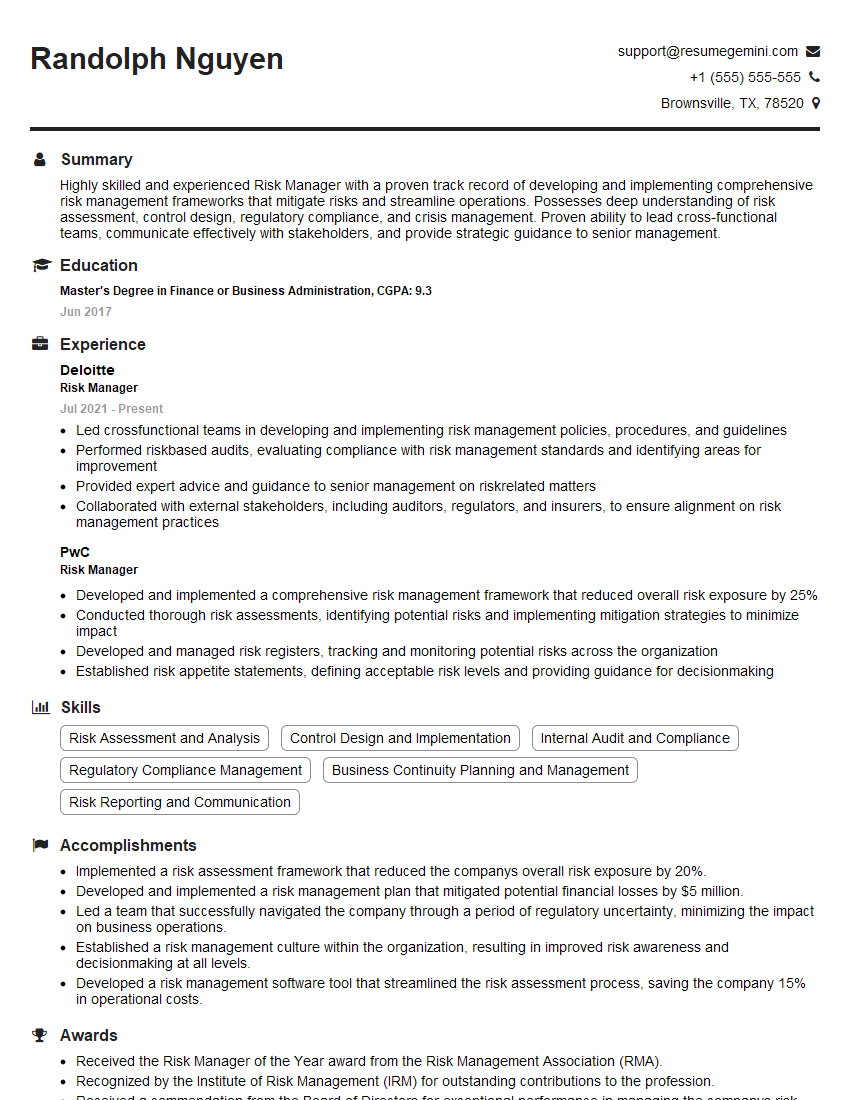
Mastering Experience in Patient Safety Programs and Risk Minimization Plans is crucial for career advancement in healthcare. A strong understanding of these concepts significantly increases your marketability and positions you for leadership roles. To enhance your job prospects, create an ATS-friendly resume that effectively highlights your skills and experience. ResumeGemini is a trusted resource that can help you build a professional and impactful resume tailored to the specific requirements of your target roles. Examples of resumes tailored to Experience in Patient Safety Programs and Risk Minimization Plans are available to guide you through the process.
Explore more articles
Users Rating of Our Blogs
Share Your Experience
We value your feedback! Please rate our content and share your thoughts (optional).
What Readers Say About Our Blog
hello,
Our consultant firm based in the USA and our client are interested in your products.
Could you provide your company brochure and respond from your official email id (if different from the current in use), so i can send you the client’s requirement.
Payment before production.
I await your answer.
Regards,
MrSmith
hello,
Our consultant firm based in the USA and our client are interested in your products.
Could you provide your company brochure and respond from your official email id (if different from the current in use), so i can send you the client’s requirement.
Payment before production.
I await your answer.
Regards,
MrSmith
These apartments are so amazing, posting them online would break the algorithm.
https://bit.ly/Lovely2BedsApartmentHudsonYards
Reach out at [email protected] and let’s get started!
Take a look at this stunning 2-bedroom apartment perfectly situated NYC’s coveted Hudson Yards!
https://bit.ly/Lovely2BedsApartmentHudsonYards
Live Rent Free!
https://bit.ly/LiveRentFREE
Interesting Article, I liked the depth of knowledge you’ve shared.
Helpful, thanks for sharing.
Hi, I represent a social media marketing agency and liked your blog
Hi, I represent an SEO company that specialises in getting you AI citations and higher rankings on Google. I’d like to offer you a 100% free SEO audit for your website. Would you be interested?