Unlock your full potential by mastering the most common Knowledge of Geology and Rock Mechanics interview questions. This blog offers a deep dive into the critical topics, ensuring you’re not only prepared to answer but to excel. With these insights, you’ll approach your interview with clarity and confidence.
Questions Asked in Knowledge of Geology and Rock Mechanics Interview
Q 1. Explain the difference between stress and strain in rock mechanics.
In rock mechanics, stress and strain are fundamental concepts describing how rocks respond to forces. Think of it like this: stress is the cause, and strain is the effect.
Stress is the force applied per unit area within a rock mass. Imagine squeezing a block of rock in a vice – the force exerted by the vice on the rock is stress. It’s measured in Pascals (Pa) or megapascals (MPa). There are different types of stress: compressive (squeezing), tensile (pulling apart), and shear (sliding).
Strain, on the other hand, is the deformation or change in shape or volume of the rock in response to the applied stress. It’s a dimensionless quantity, often expressed as a percentage or ratio. If you squeeze the rock block, it will slightly shorten and widen – that change in dimensions is strain. Strain can be elastic (recoverable, like stretching a rubber band) or plastic (permanent, like bending a metal rod).
Understanding the relationship between stress and strain is crucial for predicting rock failure and designing stable structures in rock.
Q 2. Describe the Mohr-Coulomb failure criterion and its limitations.
The Mohr-Coulomb failure criterion is a widely used model to predict the failure of rocks and soils under combined stress states. It states that failure occurs when the shear stress on a plane exceeds the material’s shear strength. This strength is a function of the normal stress on that plane and the material properties: cohesion and the angle of internal friction.
Mathematically, the criterion is represented as: τ = c + σn tan(φ) where:
τis the shear stresscis the cohesion (material’s inherent strength)σnis the normal stressφis the angle of internal friction (resistance to sliding)
Imagine a block of rock resting on an inclined plane. The Mohr-Coulomb criterion helps determine the slope angle at which the block will slide (failure).
Limitations of the Mohr-Coulomb criterion include:
- Simplicity: It’s a simplified model that doesn’t account for complex factors like rock fabric, pore water pressure, or the influence of intermediate principal stresses.
- Brittle materials only: It’s less accurate for ductile materials.
- Stress path dependency: It assumes a material’s strength doesn’t depend on its stress history. This is not always true.
- No tensile strength: The original formulation doesn’t explicitly consider tensile failure.
Despite these limitations, it remains a valuable tool in preliminary analyses due to its simplicity and ease of application.
Q 3. What are the different types of rock mass classifications and their applications?
Rock mass classifications are systems used to characterize the engineering properties of rock masses. They are crucial for geotechnical design and risk assessment in projects like tunnels, slopes, and foundations. Different classifications emphasize various aspects, leading to diverse systems.
Some common types include:
- RMR (Rock Mass Rating): A widely used system that considers factors like rock strength, RQD (Rock Quality Designation), spacing of discontinuities, condition of discontinuities, groundwater conditions, and orientation of structures.
- Q-system (Barton et al.): Another popular system that quantifies rock mass quality based on six parameters: RQD, joint roughness number (Jr), joint alteration number (Ja), joint water reduction factor (Jw), stress reduction factor (SRF), and the orientation of discontinuities.
- GSI (Geological Strength Index): A system based on visual assessment of rock mass quality that takes into account the rock’s intact strength and structural characteristics.
Applications of these classifications include:
- Tunnel design: Determining support requirements and assessing stability.
- Slope stability analysis: Predicting the likelihood of landslides.
- Foundation design: Evaluating bearing capacity and settlement.
- Rock excavation planning: Estimating blasting requirements and equipment selection.
The choice of classification depends on the project’s specific needs and available data.
Q 4. How do you determine the in-situ stress state in a rock mass?
Determining the in-situ stress state is critical for understanding rock behavior and designing safe engineering projects. Several methods are employed, each with its strengths and limitations:
- Overcoring techniques: A borehole is drilled, and a smaller-diameter core is subsequently extracted. Strain gauges mounted in the borehole measure the stress relief during core extraction. This method provides relatively accurate measurements, but it can be expensive and time-consuming.
- Hydraulic fracturing (hydrofracturing): Fluid is injected into a borehole until a fracture is created in the rock. The pressure at fracture initiation provides an estimate of the minimum horizontal stress. This method is effective for determining horizontal stresses but less reliable for vertical stress.
- Borehole breakouts: These are characteristic elliptical or teardrop-shaped enlargements of boreholes caused by the relief of horizontal stresses. Analyzing breakout shapes and orientations provides insights into the stress state.
- Acoustic emission monitoring: This technique involves monitoring acoustic signals generated by the rock mass under stress. Changes in acoustic activity can indicate stress changes, including failure events. This is useful for real time monitoring in certain application.
- Inclinometer measurements: Inclinometers installed in boreholes can measure displacement in the rock mass. Analysis of the displacement pattern can provide insights into the stress field, but is indirect.
The best approach depends on the site conditions, project requirements, and available resources. Often, a combination of methods is used to achieve a robust stress assessment.
Q 5. Explain the concept of effective stress and its significance in geotechnical engineering.
Effective stress is a crucial concept in geotechnical engineering. It represents the portion of the total stress acting on a soil or rock element that is carried by the solid skeleton (the rock itself), excluding the pore pressure (the pressure of fluids in the pores of the rock). Think of it like this: the total stress is the weight of everything above a point, while effective stress is the weight carried by the solid rock grains.
The relationship is expressed as: σ' = σ - u where:
σ'is the effective stressσis the total stressuis the pore water pressure
Significance: Effective stress governs the strength and deformation characteristics of rock and soil. High pore water pressure (u) reduces the effective stress (σ’), leading to reduced shear strength and increased susceptibility to failure, similar to how wet sand is less stable than dry sand. In design, engineers need to account for pore water pressure changes (during construction or due to rainfall) to assess rock strength and stability.
Effective stress principles are used in: slope stability analysis, foundation design, and tunnel design, amongst others.
Q 6. Describe different methods for rock strength testing.
Various methods exist for determining rock strength, each suitable for different scenarios and providing different types of strength parameters.
- Uniaxial Compressive Strength (UCS) Test: The most common test. A cylindrical rock sample is subjected to a compressive load until failure. The stress at failure is the UCS, a measure of compressive strength. It’s simple and widely used but only provides one strength parameter.
- Triaxial Shear Test: A rock sample is subjected to confining pressure (pressure around the sample) and an axial load. This test provides a more comprehensive evaluation of rock strength under various stress conditions, yielding Mohr-Coulomb parameters (cohesion and angle of internal friction).
- Brazilian Tensile Strength Test: A disk-shaped sample is loaded diametrically until it splits. The resulting tensile strength is relatively simple to measure but might overestimate true tensile strength.
- Point Load Test: A simple and inexpensive test. A rock fragment is loaded at two opposite points until it fails. This test is suitable for in-situ testing, but the results need to be standardized to get reliable strength.
- Indirect Tensile Strength Test: Similar to the Brazilian test, but the load is applied along the longer axis of a rectangular sample. The tensile strength can be calculated from the load and dimensions.
The selection of a suitable test depends on the project requirements, available equipment, and the properties of the rock being investigated. Careful sample preparation is crucial to ensure representative results.
Q 7. What are the factors influencing slope stability?
Slope stability, the resistance of a slope to failure, is influenced by a complex interplay of factors. These can be broadly categorized as:
- Geotechnical Factors:
- Rock strength and mass properties: The intact strength of the rock, the presence of discontinuities (joints, faults, bedding planes), and the overall quality of the rock mass significantly affect stability. Weak rocks, highly fractured rock masses, and unfavorable discontinuity orientations promote instability.
- Soil type and properties: If soil is present on the slope, its strength characteristics and water content are crucial.
- Groundwater conditions: High pore water pressure reduces effective stress, weakening the slope and increasing the likelihood of failure. This is especially significant in clay-rich soils.
- Geometrical Factors:
- Slope angle and height: Steeper slopes are inherently more unstable, and taller slopes have a larger mass of material prone to failure.
- Slope geometry: The shape and configuration of the slope influences stress distribution and stability.
- External Factors:
- Seismic activity: Earthquakes can induce significant ground shaking and increase the risk of slope failure.
- Rainfall and erosion: Rainfall can increase pore water pressure and trigger landslides. Erosion weakens the slope, reducing its stability.
- Human activities: Excavation, loading, and deforestation can destabilize slopes.
Assessing slope stability involves analyzing these factors through methods like limit equilibrium analysis, numerical modeling, or in-situ testing. Careful consideration of all these factors is crucial for designing stable slopes and mitigating the risk of landslides.
Q 8. Explain the principles of rock bolt design and installation.
Rock bolt design and installation are crucial in stabilizing rock masses, preventing failures like rockfalls and landslides. The process involves selecting appropriate bolt type, length, and grouting material based on rock mass characteristics and the intended application.
Principles:
- Rock Mass Characterization: This is the foundation. We need to understand the rock’s strength, jointing patterns, weathering, and in-situ stresses. Geological mapping and rock mass classification systems like the RMR (Rock Mass Rating) or Q-system are used.
- Bolt Selection: Various bolt types exist, including fully grouted bolts (providing full support along the length), resin-grouted bolts (effective in fractured rock), and tensioned bolts (creating compressive stress in the rock). The choice depends on the rock mass conditions and the required support.
- Length Determination: Bolts must extend into stable, competent rock beyond the zone of influence of the potential failure. Analytical methods and empirical rules are used, often involving consideration of factors like joint spacing and orientation.
- Grouting: This is critical for transferring load effectively from the rock to the bolt. The grout needs to be compatible with the rock and the bolt material, ensuring complete filling of the borehole to create a strong, cohesive unit.
- Installation: Proper drilling techniques are crucial to avoid damage to the surrounding rock. The installation process must ensure the bolt is firmly anchored and correctly oriented.
Example: In a tunnel excavation, fully grouted bolts might be used in strong, massive rock, whereas resin-grouted bolts could be used in heavily fractured sections to consolidate the fractured rock around the tunnel perimeter.
Q 9. How do you assess the risk of rockfalls and landslides?
Assessing rockfall and landslide risk involves a multi-faceted approach, integrating geological mapping, geotechnical investigations, and numerical modeling. It’s a crucial part of hazard mitigation.
Assessment Steps:
- Geological Mapping and Characterization: Identify potential failure surfaces (joints, bedding planes, faults) and their geometry. Assess the rock mass strength, weathering, and hydrological conditions (water infiltration can significantly reduce strength).
- Slope Stability Analysis: Methods such as limit equilibrium analysis (e.g., Janbu, Bishop methods) are used to determine the factor of safety (FoS) of the slope. A FoS below 1.0 indicates potential instability.
- Rockfall Analysis: This uses trajectory modeling, incorporating factors like rock size, shape, and initial velocity to predict the rock’s path and impact zone. This helps in defining risk zones and mitigation strategies.
- Landslide Susceptibility Mapping: This involves using GIS (Geographic Information System) techniques to integrate various data layers (geology, topography, land use) to map areas with a high probability of landslides.
- Monitoring: Instrumentation such as inclinometers, extensometers, and displacement sensors are used to monitor rock mass movements, providing early warning signs of potential instability.
Example: A highway cut through a mountainous region requires detailed slope stability analysis to determine if retaining structures or rock bolts are needed. Rockfall analysis helps plan mitigation measures like rockfall barriers or nets to protect the highway from falling rocks.
Q 10. Describe different ground improvement techniques used in geotechnical engineering.
Ground improvement techniques aim to enhance the engineering properties of soil or rock, making them suitable for construction purposes. These techniques can significantly reduce project costs and risks.
Techniques:
- Compaction: Increases soil density by reducing void space. Methods include vibratory rollers, sheepsfoot rollers, and dynamic compaction.
- Stabilization: Improves soil strength and stiffness by adding binding agents like cement, lime, or fly ash. This is common for weak, expansive soils.
- Drainage: Reduces pore water pressure, enhancing soil strength and stability. Techniques include installing drainage layers, wells, or ditches.
- Deep Mixing: In-situ mixing of soil with a binding agent (e.g., cement) to create columns of improved material.
- Soil Reinforcement: Using geosynthetics (geotextiles, geogrids, geomembranes) to increase the strength and stability of soil masses.
- Vibroflotation: Using vibrations to densify loose, saturated sands and gravels, creating a dense stratum.
Example: Constructing a high-rise building on soft clay might require deep mixing or the installation of deep piles to support the foundation. Improving the drainage conditions in a slope prone to landslides could involve installing drains and terraces to mitigate the risk.
Q 11. What are the common types of geological discontinuities and their impact on rock mass behavior?
Geological discontinuities are surfaces of weakness within a rock mass, significantly impacting its behavior and stability.
Common Types and Impact:
- Joints: Fractures with little to no displacement. They reduce rock mass strength and can act as pathways for water infiltration, leading to weathering and instability.
- Faults: Fractures with significant displacement. They represent zones of weakness and potential instability, often associated with earthquakes.
- Bedding Planes: Natural layering in sedimentary rocks. They can be planes of weakness, especially if they are steeply inclined.
- Fissures: Small, irregular fractures. They contribute to rock mass fragmentation and permeability.
Impact on Rock Mass Behavior:
- Reduced Strength: Discontinuities weaken the rock mass, reducing its ability to resist stress.
- Increased Permeability: Discontinuities act as pathways for water flow, affecting rock mass stability and chemical weathering.
- Anisotropy: Rock mass properties vary depending on the orientation of discontinuities, making behavior complex.
- Failure Mechanisms: Discontinuities control the mode of failure, influencing whether the failure occurs as toppling, sliding, or block collapse.
Example: In a slope stability analysis, the orientation and spacing of joints are critical factors in determining the factor of safety. A steeply dipping joint set parallel to the slope would significantly reduce its stability.
Q 12. Explain the concept of permeability and its measurement in rocks.
Permeability is a measure of a rock’s ability to transmit fluids (water, oil, gas). It’s a crucial property for groundwater exploration, reservoir engineering, and waste disposal.
Concept:
Permeability depends on the interconnectedness of pores and fractures within the rock. High permeability indicates easy fluid flow, while low permeability indicates restricted flow.
Measurement:
- Laboratory Methods: Techniques like permeameters are used on rock samples to measure permeability under controlled conditions. The most common is the constant head method.
- Field Methods: These methods involve pumping tests, slug tests, and packer tests to determine permeability in situ. Pumping tests involve pumping water from a well and measuring the drawdown in the surrounding area, allowing estimation of aquifer permeability.
Units: Permeability is typically expressed in Darcy (D) or millidarcy (mD).
Example: A highly permeable sandstone aquifer would allow for easy groundwater extraction, while a low-permeability shale formation would act as an aquitard (a layer that restricts groundwater flow).
Q 13. How do you interpret geological maps and cross-sections?
Geological maps and cross-sections are fundamental tools for understanding subsurface geology. They represent the spatial distribution of rock units, structures, and other geological features.
Interpretation:
- Geological Maps: These show the surface distribution of different rock units, using color codes and symbols. The interpretation involves understanding the age relationships of rock units, identifying faults and folds, and assessing the geological history of the area.
- Cross-sections: These are vertical slices through the earth, showing the subsurface geology. They are created by projecting geological information from surface mapping and subsurface data (e.g., boreholes) onto a vertical plane. Interpretation involves understanding the geometry of geological structures and their relationships in three dimensions.
Key Elements in Interpretation:
- Rock Unit Identification: Correctly identify different rock types based on their symbols and descriptions.
- Structural Interpretation: Analyze the geometry and orientation of faults, folds, and other structural features.
- Stratigraphic Relationships: Determine the age and relative sequence of rock units.
- Correlation: Relate information from different parts of the map or cross-section to build a comprehensive understanding of the geology.
Example: A geological map showing a series of folded sedimentary rocks can be used to predict the location of potential landslides. A cross-section through a fault zone reveals the amount of displacement and the potential for future movement.
Q 14. Describe different methods for groundwater exploration and management.
Groundwater exploration and management are essential for water resource planning and sustainable development. Effective methods depend on the geological context and the scale of the project.
Exploration Methods:
- Geophysical Surveys: Techniques like electrical resistivity tomography (ERT), seismic refraction, and electromagnetic surveys are used to map subsurface geological formations and identify potential aquifers.
- Hydrogeological Investigations: This involves drilling boreholes to collect samples and perform pumping tests to characterize aquifers. Borehole logging provides valuable information about subsurface lithology, water levels, and permeability.
- Remote Sensing: Satellite imagery and aerial photography can identify surface features that indicate the presence of groundwater, such as vegetation patterns and drainage networks.
Management Methods:
- Aquifer Monitoring: Regular monitoring of groundwater levels, quality, and recharge rates is crucial for sustainable management.
- Artificial Recharge: Techniques like injection wells and spreading basins can be used to replenish aquifers.
- Groundwater Modeling: Numerical models simulate groundwater flow and predict the impact of various management scenarios.
- Water Allocation and Regulation: Policies and regulations are needed to manage groundwater withdrawals and protect groundwater resources.
Example: A coastal area experiencing seawater intrusion might require monitoring of groundwater salinity and implementation of artificial recharge schemes to maintain freshwater quality. In arid regions, groundwater models are crucial for evaluating the sustainability of groundwater extraction for agriculture and other uses.
Q 15. What are the key considerations for designing foundations in challenging geological conditions?
Designing foundations in challenging geological conditions requires a multi-faceted approach, prioritizing thorough site investigation and understanding the complex interplay between soil and rock mechanics. Key considerations include:
- Lithology and stratigraphy: Identifying the types of rock, their layering (stratigraphy), and potential discontinuities (faults, joints) is crucial. Weak or fractured rock requires special foundation design considerations, potentially necessitating deeper foundations or ground improvement techniques.
- Rock strength and deformability: Laboratory and in-situ testing determines the rock’s compressive strength, tensile strength, and modulus of elasticity. This information guides the selection of appropriate foundation type and size. For instance, a foundation on weak shale will require a larger footprint than one on strong granite.
- Groundwater conditions: High water tables can significantly reduce the effective stress on the rock mass, leading to instability. Detailed hydrogeological studies are essential to predict water levels and potential for seepage. Drainage measures may be required.
- Seismic activity: In seismically active regions, the foundation design must account for earthquake-induced ground shaking and potential liquefaction (if unconsolidated materials are present). This often involves employing seismic isolation techniques or designing for higher seismic loads.
- Slope stability: Foundations situated on slopes are susceptible to landslides or rockfalls. Slope stability analysis is crucial to ensure safety. This may involve terracing, retaining walls, or other mitigation measures.
- Potential for ground deformation: Ground subsidence, swelling clays, or expansive soils can cause foundation settlement and damage. These issues necessitate appropriate mitigation strategies such as deep foundations or pre-loading.
For example, constructing a dam in a region with highly fractured rock would require extensive grouting to seal the fractures and improve the rock mass’s overall strength before the foundation is constructed.
Career Expert Tips:
- Ace those interviews! Prepare effectively by reviewing the Top 50 Most Common Interview Questions on ResumeGemini.
- Navigate your job search with confidence! Explore a wide range of Career Tips on ResumeGemini. Learn about common challenges and recommendations to overcome them.
- Craft the perfect resume! Master the Art of Resume Writing with ResumeGemini’s guide. Showcase your unique qualifications and achievements effectively.
- Don’t miss out on holiday savings! Build your dream resume with ResumeGemini’s ATS optimized templates.
Q 16. Explain the role of geophysics in site investigation.
Geophysics plays a vital role in site investigation by providing cost-effective, non-destructive methods to characterize subsurface geology at a larger scale than direct drilling. It complements drilling data and allows for efficient planning of borehole locations. Common geophysical techniques include:
- Seismic refraction and reflection surveys: These methods use seismic waves to determine the subsurface layer velocities and depths, providing information on rock types and discontinuities. Seismic reflection provides detailed images of subsurface layers, similar to an ultrasound.
- Electrical resistivity tomography (ERT): This technique measures the electrical resistivity of the subsurface, which is sensitive to variations in rock type, moisture content, and fracturing. It’s particularly useful for identifying potential groundwater pathways or zones of weakness.
- Ground-penetrating radar (GPR): GPR uses high-frequency electromagnetic waves to image shallow subsurface features, such as buried utilities, cavities, or geological interfaces.
- Magnetic and gravity surveys: These methods detect variations in the Earth’s magnetic and gravitational fields, which can indicate the presence of certain rock types or geological structures. For example, differences in magnetic susceptibility can help identify iron-rich zones.
Imagine planning a large tunnel project. Geophysical surveys would initially map the entire area, identifying potential fault zones or geological features that need more detailed investigation with boreholes. This targeted drilling approach maximizes efficiency and reduces costs.
Q 17. How do you analyze the results of laboratory and field testing in rock mechanics?
Analyzing laboratory and field testing results in rock mechanics involves a systematic approach combining quantitative data analysis and qualitative interpretation. The process typically includes:
- Data quality control: Checking for inconsistencies, outliers, and potential errors in the collected data is the first step.
- Statistical analysis: Descriptive statistics (mean, standard deviation, etc.) summarize the data, while more advanced statistical methods may be used to identify correlations between different parameters.
- Empirical strength criteria: Results from laboratory tests (uniaxial compressive strength, tensile strength, etc.) are used to determine the rock mass strength using empirical criteria like Hoek-Brown or Mohr-Coulomb failure criteria. These criteria incorporate parameters like the rock’s intact strength and its degree of fracturing.
- Constitutive modeling: This involves creating mathematical models that describe the rock mass’s behavior under stress. These models often require input parameters from both laboratory and field tests, including modulus of elasticity, Poisson’s ratio, and strength parameters.
- Correlation with geological observations: The numerical data needs to be interpreted within the context of the observed geological features. For instance, low strength values may correlate with the presence of fractures or weathered zones seen in the field.
- Uncertainty quantification: Inherent uncertainty in both testing and modeling should be accounted for, using probabilistic methods to evaluate the range of possible outcomes.
For example, if a laboratory test shows a high uniaxial compressive strength but field observations reveal extensive jointing, the actual strength used in the design will reflect the weakened rock mass, not just the intact rock strength.
Q 18. Describe different methods for rock excavation and support.
Rock excavation and support methods vary depending on rock type, geometry of the excavation, and desired stability. Some common methods include:
- Drilling and blasting: This is a traditional method, suitable for hard and massive rocks. Precise blasting techniques minimize damage to the surrounding rock mass.
- Mechanical excavation: Using excavators, rippers, or roadheaders, this approach is suitable for less resistant rock types. The choice of equipment depends on the rock’s strength and fracturing.
- Tunnel boring machines (TBMs): TBMs are highly efficient for large-diameter tunnels, particularly in softer to moderately strong rocks. Different types of TBMs exist, optimized for specific rock conditions.
- Rock support systems: These are essential to ensure the stability of excavations and prevent rockfalls or collapse. Common support systems include:
- Shotcrete: A sprayed concrete layer providing immediate support.
- Rock bolts: Anchors inserted into the rock mass to reinforce it.
- Mesh and wire netting: To contain loose rock fragments.
- Reinforced concrete linings: Provides structural support for tunnels and underground openings.
For example, excavating a deep tunnel in a fractured rock mass would likely involve drilling and blasting followed by the installation of rock bolts, shotcrete, and perhaps a final reinforced concrete lining to ensure long-term stability.
Q 19. What are the environmental considerations in geological engineering projects?
Environmental considerations are paramount in geological engineering projects. They must address potential impacts on air, water, and land, ensuring compliance with relevant environmental regulations. Key aspects include:
- Water pollution: Excavation and blasting can release contaminants into groundwater or surface water. Proper management of dewatering and sediment control is crucial.
- Air quality: Dust generated during excavation and blasting can affect air quality. Mitigation strategies include dust suppression techniques and air quality monitoring.
- Noise pollution: Construction activities generate considerable noise. Mitigation measures may include noise barriers and scheduling restrictions.
- Waste management: The disposal of excavated rock and other construction materials needs careful planning to avoid environmental damage. Recycling or reuse of materials should be prioritized.
- Habitat disruption: Projects can disrupt natural habitats. Environmental impact assessments (EIAs) are required to identify and mitigate potential impacts, often involving habitat restoration or relocation strategies.
- Greenhouse gas emissions: Construction equipment and transportation contribute to greenhouse gas emissions. Strategies to reduce emissions include adopting more efficient equipment and reducing transportation distances.
For instance, constructing a quarry requires careful planning to minimize its impact on the surrounding ecosystem, including strategies to manage water runoff, re-vegetate disturbed areas, and control dust emissions.
Q 20. Explain the principles of numerical modeling in rock mechanics.
Numerical modeling in rock mechanics uses computational methods to simulate the behavior of rock masses under various loading conditions. It complements laboratory and field testing, providing insights into complex geotechnical problems. The principles involve:
- Finite element method (FEM): A widely used technique that divides the rock mass into smaller elements, allowing for the analysis of complex geometries and material properties. FEM software solves a system of equations based on equilibrium and constitutive relations.
- Discrete element method (DEM): This approach models individual rock blocks and their interactions, particularly useful for analyzing fractured rock masses and problems involving discontinuities.
- Constitutive models: Mathematical descriptions of rock behavior under stress, such as elastic, elasto-plastic, or damage models. The choice of model depends on the rock properties and the nature of the problem.
- Boundary conditions: Defining the external loads and constraints on the model is crucial for accurate results. This involves specifying the loads applied to the rock mass and its interaction with surrounding materials.
- Mesh generation: Discretizing the rock mass into a mesh of elements for numerical analysis. The mesh density affects the accuracy of the results.
- Model validation and verification: Comparing model predictions with field observations and laboratory test results is critical to ensure the accuracy and reliability of the model.
For example, before constructing a large underground cavern, numerical modeling can predict stress distributions and potential for instability, helping engineers design appropriate support systems.
Q 21. How do you handle uncertainty in geotechnical design?
Uncertainty is inherent in geotechnical design due to the variability of geological conditions and limitations in testing and modeling. Handling uncertainty requires a robust and probabilistic approach:
- Probabilistic analysis: Instead of relying on single-value estimates, probabilistic methods use statistical distributions to represent the uncertainty in input parameters (e.g., rock strength, soil properties). This leads to a range of possible outcomes rather than a single deterministic result.
- Sensitivity analysis: Identifying which input parameters have the greatest impact on the output (e.g., factor of safety) allows engineers to focus on reducing uncertainty in those key parameters. This is often done by running multiple simulations with varying input values.
- Reliability analysis: This approach quantifies the probability of failure, providing a measure of the design’s robustness. It considers the variability in both material properties and loads.
- Geotechnical risk assessment: This involves identifying potential hazards and evaluating their likelihood and consequences. This helps prioritize mitigation strategies.
- Factor of safety: While a traditional approach, a larger factor of safety accounts for uncertainties, providing an additional margin of safety. However, it should be used judiciously, considering the overall economic and environmental implications.
- Adaptive design: Incorporating provisions for adjustments during construction, based on observations during the project, helps manage uncertainties that emerge during the construction phase. Regular monitoring and feedback are key.
For example, designing a retaining wall in a region with highly variable soil properties would involve probabilistic analysis, evaluating the probability of failure for a range of soil strength values. The design would aim to achieve an acceptable probability of failure, rather than just satisfying a deterministic factor of safety.
Q 22. Describe your experience with different types of geological software.
Throughout my career, I’ve extensively utilized various geological software packages, each tailored to specific tasks. For geological modeling and visualization, I’m proficient in Leapfrog Geo, a powerful 3D modeling software that allows for the creation of complex geological models from drillhole data and other subsurface information. Its intuitive interface and robust capabilities have proven invaluable in projects involving resource estimation and mine planning. I also have significant experience with Rocscience’s suite of software, including RS2 and Slide, which are crucial for analyzing rock mass stability and slope stability. These programs allow me to perform detailed numerical modeling to assess potential hazards and design effective mitigation strategies. Furthermore, my experience extends to GIS software like ArcGIS, essential for managing and analyzing spatial data, integrating geological information with other relevant datasets such as topography and land use. Finally, I’m familiar with specialized software for geomechanical analysis, such as FLAC and ABAQUS, which are used for complex finite element modeling of rock masses under various loading conditions.
Q 23. Explain the concept of rockburst and its mitigation strategies.
A rockburst is a sudden and violent release of energy within a rock mass, often occurring in deep underground excavations. Imagine a pressurized container suddenly rupturing – that’s similar to a rockburst. The stored elastic energy in the rock mass, accumulated due to stress concentration around the excavation, is abruptly released, resulting in the ejection of rock fragments at high velocity. This poses a significant threat to underground mine safety and structural integrity.
Mitigation strategies focus on reducing the stress concentration and controlling the energy release. These include:
- Stress relief techniques: These involve creating openings or boreholes to relieve stress in the surrounding rock mass. This is like puncturing a balloon to prevent it from bursting.
- Support systems: Robust support systems, such as rock bolts, shotcrete, and steel sets, are crucial to contain the rock mass and prevent catastrophic failure. This is akin to reinforcing a structure to withstand pressure.
- Reinforcement techniques: Grouting and other reinforcement methods can improve the rock mass’s strength and stability. Think of this as patching cracks to improve the structural integrity of a wall.
- Excavation techniques: Careful excavation techniques, such as controlled blasting and staged excavation, can minimize stress disturbances during the construction phase. This is like carefully peeling an orange to avoid damaging the fruit.
- Monitoring systems: Implementing real-time monitoring systems to detect early warning signs of rockburst activity is vital. These might include seismic monitoring or stress monitoring devices, acting like an early warning system.
The specific mitigation strategy is tailored to the project’s unique geological conditions and the predicted rockburst risk, often involving a combination of these techniques.
Q 24. How do you assess the stability of underground openings?
Assessing the stability of underground openings is a crucial aspect of geotechnical engineering. It involves a multi-faceted approach that combines geological mapping, geomechanical characterization, and numerical modeling. Think of it like conducting a thorough health check for an underground structure.
The process typically involves:
- Geological mapping and characterization: This involves detailed mapping of the rock mass, identifying discontinuities (fractures, joints), and assessing the rock’s strength and weathering characteristics. This forms the basis for understanding the rock mass’s behavior.
- Geomechanical testing: In-situ and laboratory testing programs are essential to quantify the rock mass’s strength parameters (e.g., compressive strength, tensile strength, shear strength). This testing provides the numbers needed for the stability analysis.
- Numerical modeling: Finite element analysis (FEA) or other numerical modeling techniques are used to simulate the stress and deformation behavior of the rock mass around the opening under various loading conditions. This allows us to predict potential failure mechanisms.
- Support design: Based on the stability assessment, appropriate support systems are designed to reinforce the underground opening and prevent potential collapses. This ensures the safety and longevity of the structure.
- Monitoring: Continuous monitoring of the underground opening is crucial to detect any signs of instability or deformation. This allows for timely interventions if necessary.
By integrating these elements, we can accurately assess the stability of underground openings and design effective mitigation measures.
Q 25. Describe your experience with different types of in-situ testing methods.
My experience encompasses a wide range of in-situ testing methods, each suited to different geological conditions and project requirements. These methods provide critical data for understanding the rock mass’s mechanical properties and behavior in its natural state.
I have extensive experience with:
- Point Load Testing (PLT): A simple and effective method for determining the compressive strength of intact rock samples. It’s often used as a quick assessment.
- Schmidt Hammer Testing: A widely used method for evaluating the rock’s hardness and strength. It’s non-destructive and easily portable.
- Lugeon Testing: Used to assess the permeability of rock masses, providing essential information for groundwater management and stability analysis.
- Pressuremeter Testing (PMT): This tests the rock’s deformability and strength, providing input for numerical modeling. It offers more comprehensive data than simpler methods.
- Crosshole and Downhole Seismic Testing: These geophysical methods use seismic waves to characterize the rock mass’s physical properties, such as velocity and discontinuities. They provide information about the subsurface on a larger scale.
The choice of in-situ testing method depends on factors such as project objectives, site accessibility, and rock mass characteristics. A well-planned testing program is crucial to ensure the reliability and accuracy of the data obtained.
Q 26. How do you manage and interpret geological data?
Managing and interpreting geological data is a crucial aspect of my work. It’s not just about collecting data; it’s about transforming raw information into actionable insights. This involves several steps:
- Data acquisition and collation: This involves gathering data from various sources, including drilling logs, geophysical surveys, laboratory testing results, and geological maps. Data is often heterogeneous and requires careful organization.
- Data validation and quality control: It’s vital to ensure data accuracy and consistency. This involves identifying and correcting errors or inconsistencies in the data set.
- Data analysis and interpretation: This involves using statistical and geostatistical methods to analyze data and draw meaningful conclusions. This often includes creating geological models and interpreting structural features.
- Data visualization and communication: Effective communication of geological information is essential. This involves creating maps, cross-sections, 3D models, and reports to effectively convey insights to stakeholders.
- Database management: Using databases and GIS software for efficient data management, storage, retrieval, and sharing is key to collaboration.
My experience with various software packages enables me to manage large volumes of complex geological data efficiently, ensuring that the data is readily available and easily interpreted to support informed decision-making.
Q 27. What are the ethical considerations in geological and geotechnical practice?
Ethical considerations in geological and geotechnical practice are paramount. Our work directly impacts public safety, environmental protection, and economic development, so maintaining the highest ethical standards is non-negotiable.
Key ethical considerations include:
- Competence and Professionalism: Always practicing within the boundaries of my expertise, continuously updating knowledge, and maintaining professional integrity.
- Objectivity and Impartiality: Presenting findings accurately and honestly, avoiding conflicts of interest, and ensuring that decisions are based on sound scientific principles.
- Safety and Risk Management: Prioritizing public and worker safety by conducting thorough risk assessments and implementing appropriate mitigation measures.
- Environmental Responsibility: Minimizing the environmental impact of projects and complying with relevant environmental regulations.
- Client Confidentiality: Maintaining client confidentiality and protecting sensitive geological information.
- Transparency and Communication: Communicating effectively with clients, stakeholders, and the public, providing clear and understandable information.
Adherence to professional codes of conduct, such as those established by geological societies, is essential for ensuring ethical practice in the field.
Q 28. Explain your approach to problem-solving in challenging geological situations.
My approach to problem-solving in challenging geological situations is systematic and iterative. I rely on a structured approach, drawing upon my experience and knowledge to develop effective solutions.
My approach typically involves:
- Problem Definition: Clearly defining the problem and its scope, identifying the key challenges and objectives.
- Data Collection and Analysis: Gathering all relevant geological, geotechnical, and engineering data. This might involve fieldwork, laboratory testing, and literature review.
- Hypothesis Formulation: Developing potential hypotheses or explanations for the observed geological phenomenon.
- Modeling and Analysis: Using numerical modeling or analytical methods to test hypotheses and evaluate potential solutions.
- Solution Development and Implementation: Developing and implementing appropriate solutions, taking into account safety, cost-effectiveness, and environmental considerations.
- Monitoring and Evaluation: Continuously monitoring the performance of the implemented solutions and making adjustments as needed.
I find that embracing uncertainty and adapting my approach based on new data and insights is essential for successfully navigating complex geological challenges. It’s a continuous learning process, where each project presents a unique set of opportunities to enhance my problem-solving skills.
Key Topics to Learn for Knowledge of Geology and Rock Mechanics Interview
- Fundamental Geology: Understanding of rock formations, mineral identification, geological processes (e.g., weathering, erosion, sedimentation), plate tectonics, and geological maps. Consider practical application in site characterization.
- Structural Geology: Analysis of rock structures (faults, folds, joints), stress and strain analysis, and their influence on rock mass behavior. Think about how this applies to slope stability assessments or tunnel design.
- Rock Mechanics Principles: Stress-strain relationships, strength criteria (e.g., Mohr-Coulomb), elastic and inelastic behavior of rocks, rock mass classification systems (e.g., RMR, Q-system). Explore case studies demonstrating the application of these principles.
- In-situ Testing Methods: Familiarity with common field testing techniques (e.g., rock core testing, plate load tests, geophysical surveys) and their interpretation. Discuss limitations and potential sources of error.
- Numerical Modeling: Understanding of finite element analysis (FEA) and its application to solve rock mechanics problems. Focus on interpreting model results and their limitations.
- Rock Mass Characterization: Techniques for describing the discontinuities and overall quality of rock masses. This includes jointing patterns, RQD, and other indices. Consider the influence of these properties on engineering design.
- Engineering Applications: Experience or understanding of the application of geology and rock mechanics principles in various engineering fields (e.g., mining, civil engineering, geotechnical engineering, petroleum engineering). Prepare examples from your own experience or research.
- Problem-Solving Approaches: Develop your ability to approach complex geological and rock mechanics problems systematically, using both qualitative and quantitative methods. Practice breaking down problems into smaller, manageable components.
Next Steps
Mastering Knowledge of Geology and Rock Mechanics is crucial for career advancement in many high-demand fields. A strong understanding of these principles significantly enhances your problem-solving skills and opens doors to exciting opportunities. To maximize your job prospects, focus on creating an ATS-friendly resume that showcases your skills and experience effectively. ResumeGemini is a trusted resource that can help you build a professional and impactful resume. They provide examples of resumes tailored to Knowledge of Geology and Rock Mechanics, offering valuable guidance for your job search.
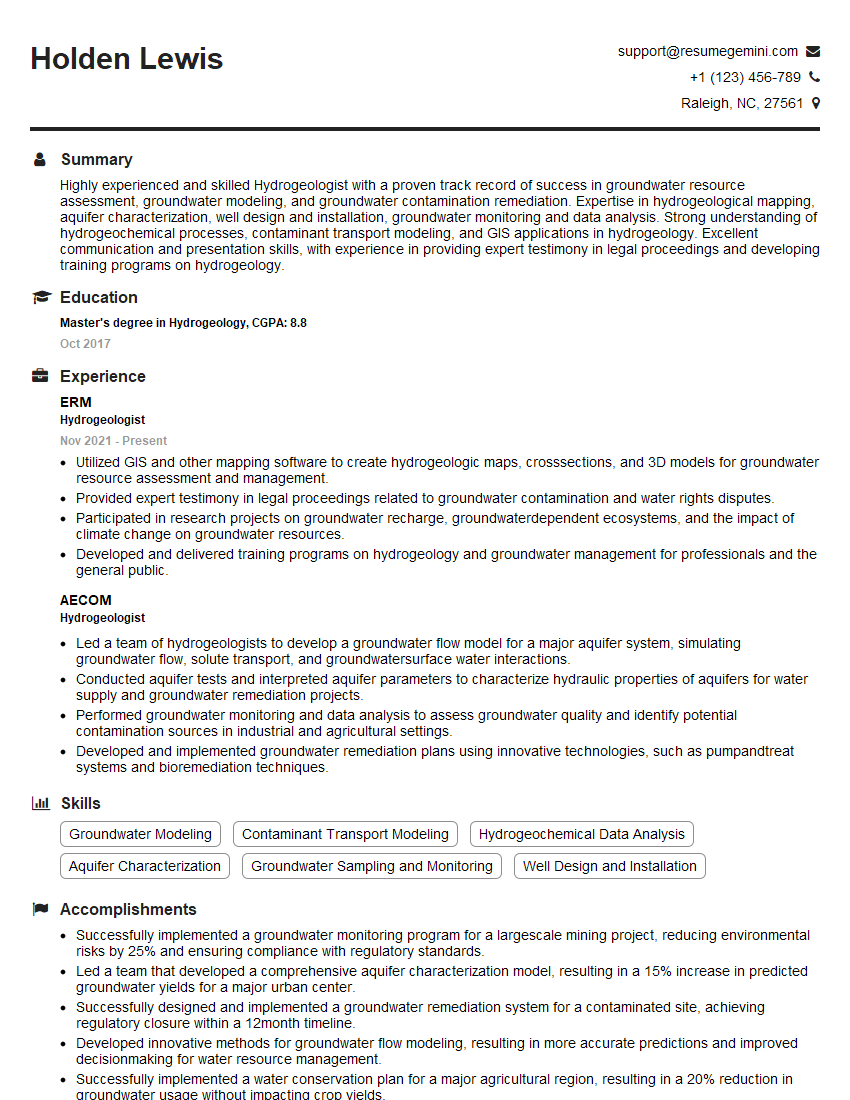
Hydrogeologist Resume Sample

Foundation Engineer Resume Sample

Geological Engineer Resume Sample
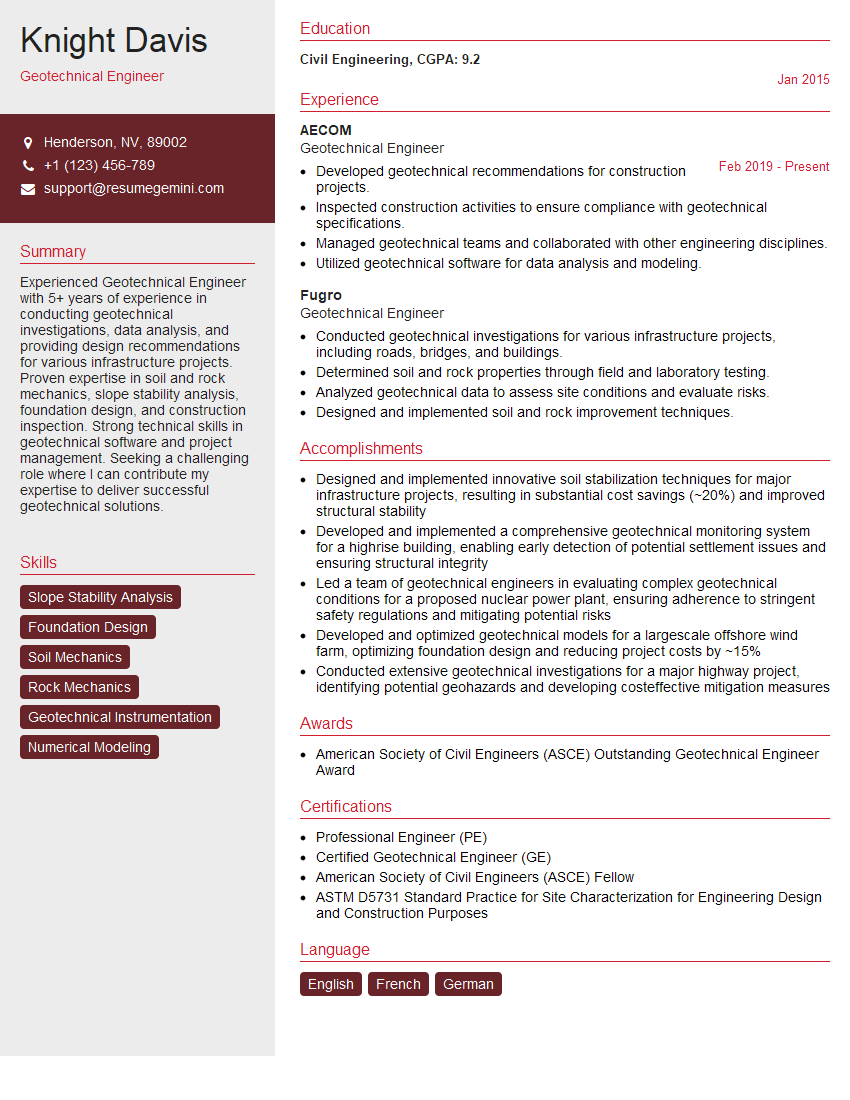
Geotechnical Engineer Resume Sample

Reservoir Engineer Resume Sample

Exploration Geologist Resume Sample
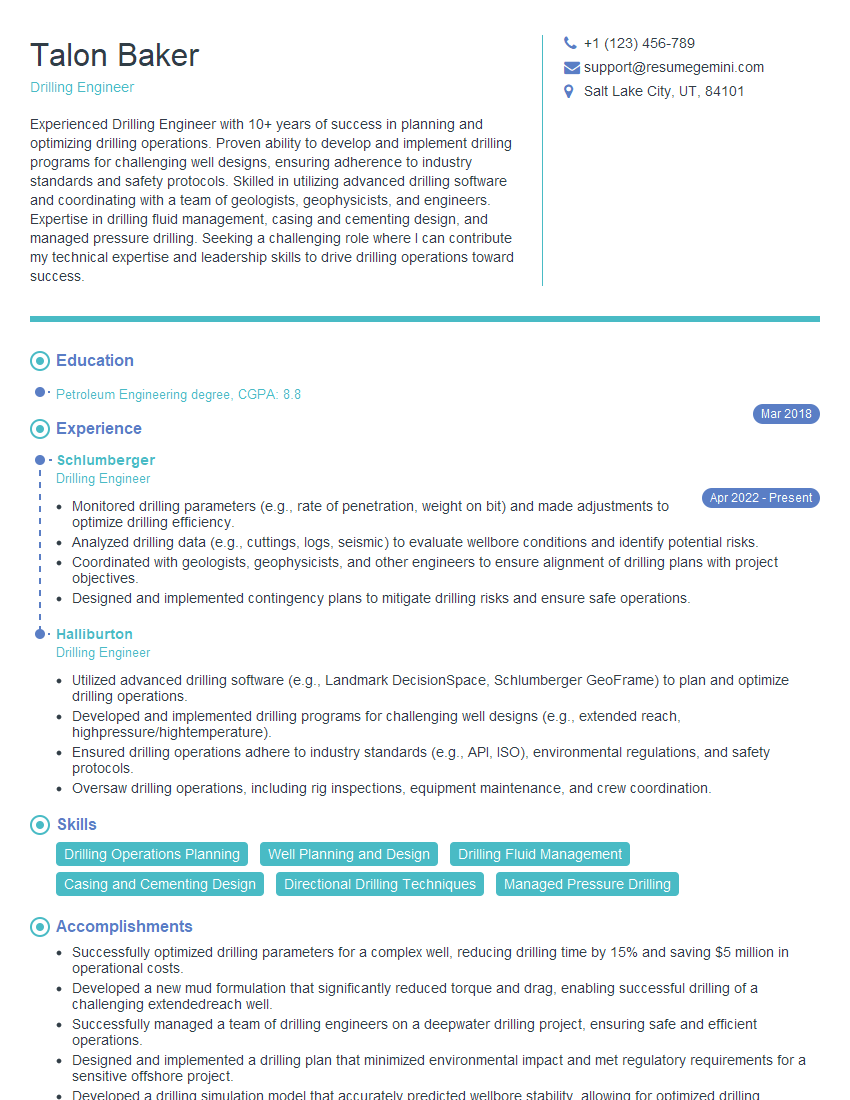
Drilling Engineer Resume Sample

Engineering Geologist Resume Sample

Environmental Geologist Resume Sample

Geophysicist Resume Sample

Petroleum Geologist Resume Sample

Research Geologist Resume Sample
Explore more articles
Users Rating of Our Blogs
Share Your Experience
We value your feedback! Please rate our content and share your thoughts (optional).
What Readers Say About Our Blog
hello,
Our consultant firm based in the USA and our client are interested in your products.
Could you provide your company brochure and respond from your official email id (if different from the current in use), so i can send you the client’s requirement.
Payment before production.
I await your answer.
Regards,
MrSmith
hello,
Our consultant firm based in the USA and our client are interested in your products.
Could you provide your company brochure and respond from your official email id (if different from the current in use), so i can send you the client’s requirement.
Payment before production.
I await your answer.
Regards,
MrSmith
These apartments are so amazing, posting them online would break the algorithm.
https://bit.ly/Lovely2BedsApartmentHudsonYards
Reach out at [email protected] and let’s get started!
Take a look at this stunning 2-bedroom apartment perfectly situated NYC’s coveted Hudson Yards!
https://bit.ly/Lovely2BedsApartmentHudsonYards
Live Rent Free!
https://bit.ly/LiveRentFREE
Interesting Article, I liked the depth of knowledge you’ve shared.
Helpful, thanks for sharing.
Hi, I represent a social media marketing agency and liked your blog
Hi, I represent an SEO company that specialises in getting you AI citations and higher rankings on Google. I’d like to offer you a 100% free SEO audit for your website. Would you be interested?