The thought of an interview can be nerve-wracking, but the right preparation can make all the difference. Explore this comprehensive guide to Filling Finishing interview questions and gain the confidence you need to showcase your abilities and secure the role.
Questions Asked in Filling Finishing Interview
Q 1. Explain the process of filling and finishing in pharmaceutical manufacturing.
Filling and finishing in pharmaceutical manufacturing encompasses the final stages of drug production, where the active pharmaceutical ingredient (API) is combined with excipients and packaged for distribution. It’s a highly regulated process, crucial for ensuring product quality, safety, and efficacy. The process typically involves several key steps:
- Filling: Accurately dispensing the formulated drug product (liquid, solid, or semi-solid) into its designated container (vial, bottle, blister pack, etc.). This requires precise measurement and control to maintain consistent dosage.
- Closure/Sealing: Securing the container to prevent contamination and maintain product integrity. This might involve capping bottles, sealing vials, or heat-sealing blister packs.
- Labeling: Applying labels with necessary information like product name, dosage, expiry date, batch number, and warnings.
- Inspection: Visually inspecting the finished product for defects, such as damaged containers, incorrect labeling, or foreign particles.
- Packaging: Grouping filled and finished units into cartons or larger containers for shipping and distribution. This step often involves secondary packaging, such as placing cartons into boxes for increased protection.
Think of it like baking a cake: the filling is like adding the batter to the baking pan, and the finishing is like icing, decorating, and packaging the cake for sale. Every step must be precise to ensure a consistent and high-quality final product.
Q 2. Describe your experience with different filling methods (e.g., liquid, powder, tablet).
My experience spans various filling methods, each with unique challenges and requirements.
- Liquid Filling: I’ve worked extensively with aseptic filling lines for sterile injectables, using methods like peristaltic pumps and volumetric fillers to achieve high accuracy and precision. For example, I was involved in the validation of a new peristaltic pump system for a highly viscous ophthalmic solution, ensuring its ability to deliver consistent doses while minimizing shear stress on the product.
- Powder Filling: My experience includes auger filling for powder-based formulations like capsules and sachets. Here, the focus is on minimizing dust generation and ensuring uniform powder distribution within the container, particularly crucial for products with low bulk density. I successfully troubleshooted a powder bridging issue in an auger filler by optimizing the hopper design and introducing a vibratory feeder.
- Tablet Filling: I have considerable experience with high-speed tablet counting and filling lines, using technologies like blister packaging and bottle filling. A key challenge here is ensuring accurate tablet counts and preventing tablet breakage. I led a project that improved tablet orientation during blister sealing, reducing breakage rates by 15%.
In each case, thorough understanding of the product properties and equipment capabilities is crucial for optimal filling performance.
Q 3. What are the critical quality attributes (CQAs) you monitor in filling and finishing?
Critical Quality Attributes (CQAs) are the parameters that must be consistently controlled to ensure the quality of the finished product. In filling and finishing, key CQAs include:
- Fill weight/volume: Ensuring consistent dosage across all units. We use statistical process control (SPC) to monitor this closely.
- Container integrity: Checking for leaks, cracks, or other defects in the primary and secondary packaging. This often involves visual inspection and leak testing.
- Label accuracy: Verifying that all labels are correctly applied and contain accurate information. Automated label verification systems are commonly used.
- Particle count: Monitoring the presence of particulate matter in sterile products using specialized counting equipment. Limits are set according to regulatory requirements.
- Microbial contamination: Ensuring the absence of microbial contaminants in sterile products through sterility testing and environmental monitoring.
- Packaging integrity: Ensuring that the secondary packaging protects the product from damage during shipping and handling.
Deviations from these CQAs could lead to product recalls or regulatory non-compliance. Therefore, meticulous monitoring and documentation are essential.
Q 4. How do you ensure the accuracy and precision of filling processes?
Accuracy and precision in filling are paramount. We employ several strategies to achieve this:
- Calibration and validation of equipment: Regular calibration of filling machines, scales, and other measuring devices ensures accurate dispensing. Validation protocols demonstrate that the equipment consistently performs within the required specifications.
- Statistical Process Control (SPC): We continuously monitor filling parameters like fill weight and volume using SPC charts to identify trends and potential deviations from the target. This allows for timely corrective actions.
- In-process checks: Regular sampling and testing of filled units during the process provide early warnings of potential problems. This includes visual inspection and weight checks.
- Automated systems: Modern filling lines utilize automated systems with integrated sensors and controls to ensure precise filling and consistent quality.
- Operator training: Well-trained operators are essential for identifying and addressing potential issues, ensuring adherence to standard operating procedures (SOPs).
For instance, we implemented a new weight check system that automatically rejected units outside the specified weight range, significantly reducing the risk of under- or over-filled containers.
Q 5. What are your experience with different types of packaging materials?
My experience encompasses a wide range of packaging materials, each selected based on its compatibility with the drug product and regulatory requirements. These include:
- Glass vials and ampoules: Commonly used for sterile injectables, chosen for their inertness and barrier properties. The selection process considers the type of glass (Type I, II, or III) based on the product’s pH and stability.
- Plastic bottles (e.g., HDPE, PET): Widely used for oral solid dosage forms and liquids, offering advantages like lightweight and cost-effectiveness. We rigorously test for leaching and permeation to ensure product compatibility.
- Blister packs (e.g., PVC/PVDC): Offer individual unit packaging for tablets and capsules, providing protection from moisture and oxygen. The choice of material considers the product’s sensitivity to oxygen and moisture.
- Cartons and boxes: Used for secondary packaging, providing protection during shipping and handling. Material selection considers factors like printability, durability, and recyclability.
Material selection is a critical aspect of packaging development, demanding a thorough understanding of material properties and their interaction with the drug product. For example, we recently transitioned from PVC blister packs to a more sustainable alternative, ensuring equivalent barrier properties and compliance with environmental regulations.
Q 6. Describe your experience with cleaning validation in a filling and finishing environment.
Cleaning validation is a critical aspect of ensuring product quality and preventing cross-contamination in a filling and finishing environment. It involves demonstrating that cleaning procedures effectively remove residues from previous batches, thus preventing carryover contamination to subsequent batches. This process typically includes:
- Defining cleaning procedures: Developing detailed written procedures specifying cleaning agents, equipment, and monitoring methods. These procedures should be easy to follow and validated.
- Establishing cleaning limits: Setting acceptable limits for residues of the previous batch on equipment surfaces. These limits are often based on regulatory guidelines and toxicological considerations.
- Sampling and analysis: Collecting samples from equipment surfaces after cleaning to analyze the presence of residues. Various analytical techniques such as HPLC and swab testing are used.
- Data analysis and reporting: Analyzing the collected data to demonstrate that cleaning procedures consistently meet the established limits. Comprehensive documentation is essential for regulatory compliance.
I have extensive experience in developing and executing cleaning validation studies, including the design of sampling plans and the interpretation of analytical data. For instance, I led a project to improve the cleaning process of a high-speed tablet press, resulting in a significant reduction in cleaning time and improved cleaning efficacy.
Q 7. Explain your understanding of GMP (Good Manufacturing Practices) in filling and finishing.
Good Manufacturing Practices (GMP) are a set of guidelines that ensure the quality, safety, and efficacy of pharmaceutical products. In filling and finishing, GMP compliance is paramount. Key aspects of GMP in this area include:
- Personnel training and hygiene: Operators must receive thorough training on GMP principles and proper hygiene practices to minimize contamination risks.
- Equipment qualification and maintenance: Equipment must be properly qualified and regularly maintained to ensure accurate and reliable performance. Regular calibration and preventive maintenance schedules are essential.
- Environmental control: Maintaining a clean and controlled environment to minimize contamination risks, often through the use of cleanrooms and controlled environments.
- Material management: Proper storage and handling of materials to prevent deterioration and contamination.
- Documentation and record-keeping: Meticulous documentation of all processes, including batch records, cleaning logs, and deviation reports. This is essential for traceability and audit trail.
- Change control: A formal process for managing and approving any changes to processes, equipment, or materials. This ensures that any change does not compromise product quality.
GMP compliance is not just a set of rules; it’s a culture of quality that must be ingrained in every aspect of the manufacturing process. Non-compliance can lead to serious consequences, including regulatory actions, product recalls, and damage to reputation. My experience includes leading internal audits, and I actively participate in continuous improvement initiatives to enhance our GMP compliance.
Q 8. How do you troubleshoot common issues in filling and finishing lines?
Troubleshooting filling and finishing lines requires a systematic approach. I begin by identifying the nature of the problem – is it a filling issue (incorrect fill volume, leaks), a sealing issue (poor seal integrity, contamination), or a labeling issue (misalignment, incorrect label application)?
My troubleshooting strategy involves:
- Visual Inspection: A thorough visual check of the entire line, looking for obvious problems like leaks, spills, or misaligned equipment.
- Data Analysis: Reviewing process data – fill weights, seal strength, production rates – to identify trends or deviations from the norm. This often involves checking process control charts (e.g., SPC charts).
- Component Verification: Inspecting individual components, like fill heads, sealing jaws, or label applicators, for wear, damage, or miscalibration. For example, a worn fill head might lead to inconsistent fill volumes.
- Systematic Elimination: If the issue isn’t immediately apparent, I’ll isolate sections of the line to pinpoint the source of the problem. I might temporarily bypass certain components to see if it resolves the issue.
- Calibration and Adjustment: Once the root cause is identified, I’ll calibrate or adjust the relevant equipment. For instance, adjusting the fill head settings to correct fill weight inconsistencies or recalibrating a label applicator to ensure proper label placement.
For example, I once solved a problem of inconsistent seal integrity by noticing a slight misalignment in the sealing jaws during a routine visual inspection. A minor adjustment corrected the issue, preventing product contamination.
Q 9. What is your experience with automated filling and finishing equipment?
I have extensive experience with automated filling and finishing equipment, including high-speed fillers (both volumetric and net weight), cappers, sealers (induction, heat, crimp), labelers (pressure-sensitive, wrap-around), and case packers. My expertise spans various technologies, from PLC-controlled systems to robotic integration.
I’m proficient in operating, maintaining, and troubleshooting this equipment. For instance, I’ve worked with filling lines capable of processing thousands of units per hour, using advanced sensors to ensure accurate fill levels and quality control. I’m familiar with various brands of equipment and comfortable adapting to new technologies.
My experience includes working with automated systems that incorporate vision systems for quality control, detecting defects such as improper sealing or label misplacement. I also have experience with integrating these systems into existing production lines, often involving the re-configuration and optimization of existing lines to improve efficiency.
Q 10. How do you ensure the integrity of seals and closures during the finishing process?
Ensuring seal and closure integrity is critical for product safety and quality. My approach involves a multi-faceted strategy:
- Proper Equipment Calibration: Regular calibration of sealing equipment (e.g., torque meters for cappers, leak detectors for sealers) is paramount. This ensures consistent sealing force and pressure.
- Quality Control Checks: Implementing robust quality control checks, including visual inspection and destructive testing (e.g., leak testing a sample of finished products), to verify seal integrity. Techniques like dye penetration testing can help identify micro-leaks.
- Material Selection: Using appropriate materials for closures and seals – materials compatible with the product and ensuring adequate sealing properties. Consider factors like temperature and product compatibility.
- Process Monitoring: Continuously monitoring process parameters like torque, sealing time, and temperature to identify and rectify any deviations that might compromise seal integrity. This often involves using data loggers and process control software.
- Operator Training: Ensuring that operators are properly trained in the correct handling and operation of the sealing equipment to prevent damage or misuse.
For example, I once identified a recurring problem with loose caps on a particular product line. By carefully analyzing the torque data from the capper, we discovered a gradual decline in torque over time due to wear and tear. Replacing the capper’s sealing jaws solved the problem.
Q 11. Describe your experience with different types of labeling equipment and techniques.
My experience encompasses a broad range of labeling equipment and techniques, including pressure-sensitive labelers, wrap-around labelers, and sleeve labelers. I’m familiar with both manual and automated labeling systems.
I understand the nuances of different labeling technologies and their respective applications. For example, pressure-sensitive labelers are best for small, irregularly shaped products, while wrap-around labelers are more suitable for cylindrical containers. I’ve worked with various label materials, including paper, film, and synthetic materials.
My expertise extends to troubleshooting labeling issues, including label misalignment, wrinkling, tearing, and incorrect label application. I know how to adjust label placement, calibrate label dispensers, and select appropriate label materials to ensure optimal results. Furthermore, I’m experienced in integrating labeling systems with other equipment in the filling and finishing line.
Q 12. How do you handle deviations and out-of-specification results?
Handling deviations and out-of-specification results requires immediate action to prevent further issues and ensure product quality. My process involves:
- Immediate Investigation: A thorough investigation to understand the root cause of the deviation. This often involves reviewing data logs, inspecting equipment, and interviewing operators.
- Containment: Isolating the affected batches to prevent further processing or distribution. This may involve quarantining the product until the issue is resolved.
- Corrective Actions: Implementing corrective actions to address the root cause of the deviation. This could involve equipment adjustments, process changes, or operator retraining.
- Root Cause Analysis: Using a structured approach, like the 5 Whys or Fishbone diagrams, to understand the underlying causes of the deviation and prevent recurrence.
- Documentation: Meticulously documenting the entire process, including the deviation, investigation, corrective actions, and preventive measures, to support continuous improvement.
For example, if we find out-of-specification fill weights, we would first isolate that batch, then investigate the fill head settings, check for blockages in the fill system, and then calibrate the system as needed. We’d document all findings and corrective actions.
Q 13. What is your experience with change control procedures in filling and finishing?
Change control procedures are critical in filling and finishing to ensure the safety, quality, and consistency of products. My experience involves implementing and managing change control procedures following established guidelines such as Good Manufacturing Practices (GMP).
The process generally includes:
- Change Request Submission: Formal submission of a change request, detailing the proposed change, its rationale, and potential impact.
- Risk Assessment: Evaluating the potential risks associated with the change, including potential impacts on product quality, safety, and regulatory compliance.
- Validation/Verification: Conducting validation or verification studies to demonstrate that the implemented change does not adversely affect product quality or process performance.
- Implementation: Implementing the change according to a predefined plan, with appropriate monitoring and controls.
- Documentation: Maintaining thorough documentation of the entire change control process, including change requests, risk assessments, validation results, and implementation records.
I’ve been involved in various change control processes, from simple equipment adjustments to significant process changes. The key is a rigorous, documented process that minimizes risks and ensures smooth transitions.
Q 14. How do you maintain accurate records and documentation in filling and finishing?
Maintaining accurate records and documentation is crucial for regulatory compliance, process optimization, and troubleshooting. In filling and finishing, this involves a comprehensive system of record-keeping.
My approach includes:
- Batch Records: Maintaining detailed batch records, including production dates, times, equipment used, materials used, and operator information. This also includes recording any deviations or out-of-specification results.
- Equipment Logs: Keeping meticulous equipment logs, detailing maintenance activities, calibrations, and any repairs. This helps in tracking equipment performance and identifying potential problems.
- Process Control Charts: Using statistical process control charts to track key process parameters and identify trends or deviations.
- Quality Control Records: Maintaining records of quality control checks, including inspection results, test data, and any corrective actions taken.
- Electronic Data Management: Using electronic data management systems to manage and store all relevant records in a secure and easily accessible manner. This often involves using MES (Manufacturing Execution Systems) and LIMS (Laboratory Information Management Systems).
Accurate record-keeping is not just about compliance; it’s a valuable tool for continuous improvement. Analyzing historical data allows us to identify trends, optimize processes, and improve product quality over time.
Q 15. Explain your experience with different types of inspection techniques (visual, automated).
My experience encompasses a wide range of inspection techniques, both visual and automated, crucial for ensuring product quality and compliance in filling and finishing. Visual inspection involves a meticulous examination of each product or container for defects like leaks, cracks, label misalignment, and foreign particle contamination. This often requires trained personnel and standardized checklists to maintain consistency. I’ve personally utilized this technique extensively, leading to the identification and resolution of various quality issues, such as a batch of improperly sealed vials that were detected during visual inspection, preventing them from reaching the market.
Automated inspection, on the other hand, leverages technology like vision systems, weight checkers, and leak detectors to perform high-speed, objective assessments. These systems can analyze thousands of products per hour, identifying subtle variations impossible for the human eye to catch reliably. For instance, I worked with a high-speed fill line equipped with a vision system that detected minute variations in fill volume, preventing significant losses due to underfilling. My experience also includes the integration and validation of such automated systems, ensuring they’re properly calibrated and maintained for optimum performance. I’m proficient in analyzing data generated by these systems, identifying trends and potential issues proactively.
Career Expert Tips:
- Ace those interviews! Prepare effectively by reviewing the Top 50 Most Common Interview Questions on ResumeGemini.
- Navigate your job search with confidence! Explore a wide range of Career Tips on ResumeGemini. Learn about common challenges and recommendations to overcome them.
- Craft the perfect resume! Master the Art of Resume Writing with ResumeGemini’s guide. Showcase your unique qualifications and achievements effectively.
- Don’t miss out on holiday savings! Build your dream resume with ResumeGemini’s ATS optimized templates.
Q 16. What is your experience with maintaining a clean and sanitary work environment?
Maintaining a clean and sanitary work environment is paramount in the filling and finishing industry, as it directly impacts product quality, safety, and compliance. My experience involves adhering to strict Good Manufacturing Practices (GMP) guidelines and implementing rigorous cleaning and sanitization procedures. This includes following specific Standard Operating Procedures (SOPs) for equipment cleaning, using validated cleaning agents and sanitizers, and conducting regular environmental monitoring. I’ve led training sessions for colleagues on proper cleaning techniques and GMP principles, fostering a culture of hygiene and safety. In one instance, I noticed a pattern of minor contamination incidents that were traced to insufficient cleaning of a specific piece of equipment. By revising the cleaning SOP and investing in a more effective sanitizing agent, we successfully eliminated the problem and significantly improved the overall cleanliness of our work environment.
Q 17. Describe your experience with root cause analysis in filling and finishing.
Root cause analysis (RCA) is critical for preventing recurring issues in filling and finishing. My experience involves using various RCA methodologies like the ‘5 Whys’ technique, fault tree analysis, and fishbone diagrams to systematically investigate deviations and production failures. I’m adept at gathering data from different sources – production records, equipment logs, environmental monitoring data – to identify the underlying causes of problems. For example, we experienced a series of fill volume deviations. Through a thorough RCA process, we discovered that the issue was caused by a combination of slightly worn filling needles and inconsistent pressure regulation in the filling system. By replacing the needles and recalibrating the pressure system, we resolved the issue and implemented preventative maintenance schedules to mitigate future occurrences.
Q 18. How do you ensure compliance with regulatory requirements?
Ensuring compliance with regulatory requirements is a top priority in filling and finishing. My experience involves understanding and implementing various regulatory standards, including GMP, cGMP (current GMP), ISO 9001 (quality management system), and relevant agency-specific guidelines (e.g., FDA, EMA). This involves maintaining comprehensive documentation, conducting regular audits, and participating in inspections. I’ve actively contributed to the development and implementation of quality management systems, ensuring traceability of materials and processes, and maintaining accurate batch records. In one instance, I helped our company successfully navigate an FDA inspection by providing complete and accurate documentation related to our validation processes and cleaning procedures.
Q 19. What is your experience with process validation in filling and finishing?
Process validation is crucial to demonstrate that our filling and finishing processes consistently produce high-quality products meeting predetermined specifications. My experience involves developing and executing validation protocols, including IQ (Installation Qualification), OQ (Operational Qualification), and PQ (Performance Qualification). This requires a detailed understanding of the equipment and processes, developing test plans, collecting and analyzing data, and compiling comprehensive validation reports. For instance, I was involved in the validation of a new high-speed filling line, which included validating the accuracy and precision of the filling process, the effectiveness of the cleaning and sanitization procedures, and the integrity of the container closure system. This meticulous process ensured we could confidently deliver high-quality products consistently.
Q 20. How do you manage time effectively in a fast-paced filling and finishing environment?
Time management is essential in a fast-paced filling and finishing environment. My approach involves prioritizing tasks based on urgency and importance, using tools like Kanban boards or project management software to visualize workflows and track progress. I also practice effective delegation, clear communication, and proactive problem-solving to prevent delays. For example, during peak production seasons, I utilize lean manufacturing principles to streamline processes, eliminate bottlenecks, and improve overall efficiency. Moreover, I encourage team collaboration and proactively address potential issues before they impact production timelines.
Q 21. What are your skills in using specialized equipment and software in filling and finishing?
My skills encompass a wide range of specialized equipment and software used in filling and finishing. I’m proficient in operating and maintaining various filling machines (e.g., peristaltic pumps, piston fillers, vial fillers), capping machines, labeling machines, and inspection systems. I have experience with different types of software used for production planning, quality control, and data analysis (e.g., MES systems, LIMS). Furthermore, I am comfortable using statistical software for data analysis and process capability studies. My understanding of these tools and technologies allows me to optimize processes, identify areas for improvement, and contribute to the efficient and reliable operation of the filling and finishing line.
Q 22. Describe your experience working with different types of containers and closures.
My experience encompasses a wide range of containers and closures used in filling and finishing, from simple glass bottles and plastic tubes to complex multi-component systems with specialized seals. I’ve worked extensively with various materials, including glass, various plastics (PET, HDPE, PP), and metals (aluminum, tin). Closure types include screw caps, crimp seals, flip-top closures, and pumps, each requiring specific handling and considerations during the filling process to ensure product integrity and prevent leakage. For example, working with glass bottles requires careful handling to prevent breakage, while plastic containers demand consideration for material compatibility with the product and potential for warping under certain conditions. I am familiar with the regulatory requirements and best practices for selecting appropriate containers and closures based on product characteristics (viscosity, sterility requirements, etc.) and intended shelf life.
- Glass Bottles: Experience with various sizes and shapes, including consideration for fragility during handling and filling.
- Plastic Bottles & Tubes: Expertise in selecting the right plastic type for product compatibility and regulatory compliance (e.g., FDA approval for food and drug applications).
- Metal Containers: Familiarity with different types of metal containers (e.g., cans, tins), including sealing processes and considerations for corrosion.
- Closures: Extensive experience with different closure mechanisms, including screw caps, crimp seals, and dispensing systems, considering factors such as leak-proof seals and tamper evidence.
Q 23. How do you ensure the safety of personnel working in filling and finishing areas?
Ensuring personnel safety is paramount in filling and finishing. My approach is multi-faceted, incorporating robust safety protocols, training programs, and regular audits. This includes adhering strictly to Good Manufacturing Practices (GMP), implementing lockout/tagout procedures for machinery, and providing personal protective equipment (PPE) such as safety glasses, gloves, and lab coats. We also use machine guarding to prevent accidental contact with moving parts. Regular safety training sessions cover hazard identification, emergency procedures, and the safe handling of chemicals and machinery. For example, we conduct thorough training on the proper use of forklifts and the handling of hazardous materials. Additionally, regular safety audits and incident reporting systems allow for continuous improvement and proactive risk mitigation. We implement a system of ‘near-miss’ reporting, encouraging employees to report even minor incidents that could potentially lead to accidents.
Example PPE Policy: All personnel must wear safety glasses, gloves, and lab coats when working in the filling and finishing area.Q 24. What is your experience with preventative maintenance in filling and finishing?
Preventative maintenance (PM) is crucial for minimizing downtime and maximizing efficiency. My experience involves developing and implementing comprehensive PM schedules for all filling and finishing equipment. This includes regular inspections, lubrication, cleaning, and part replacements based on manufacturer recommendations and historical data. We utilize computerized maintenance management systems (CMMS) to track maintenance activities, spare parts inventory, and scheduled maintenance events. For example, we schedule routine cleaning and calibration of filling machines to maintain accuracy and prevent product contamination. Regular lubrication of conveyor belts minimizes wear and tear and prevents breakdowns. A well-maintained PM program also extends the life of equipment, reducing overall maintenance costs in the long run.
- CMMS Utilization: Tracking and scheduling PM activities for improved efficiency and cost reduction.
- Scheduled Inspections: Regular visual inspections of equipment for wear and tear, potential leaks, and other issues.
- Calibration and Validation: Regular calibration and validation of filling machines and other critical equipment to ensure accuracy and compliance.
Q 25. How do you manage inventory control in a filling and finishing environment?
Effective inventory control is vital to avoid stockouts and minimize waste. My experience includes implementing and managing inventory control systems that track raw materials, packaging components, and finished goods. We use a combination of manual and automated systems, including barcode scanning and inventory management software. This allows for real-time tracking of inventory levels, facilitating timely procurement of materials and preventing production delays. We employ the First-In, First-Out (FIFO) method to manage inventory, ensuring that older materials are used first, thereby preventing product spoilage or expiration. Regular inventory audits are conducted to reconcile physical inventory with system records. We also use demand forecasting to predict future needs and optimize inventory levels. This minimizes storage costs while ensuring sufficient materials are available to meet production demands.
- FIFO Method: Ensuring the oldest materials are used first to reduce spoilage and waste.
- Inventory Management Software: Utilizing software to track inventory levels and automate ordering processes.
- Regular Audits: Conducting regular audits to verify accuracy of inventory records.
Q 26. What is your experience with different types of sterilization methods?
I have experience with various sterilization methods, including steam sterilization (autoclaving), dry heat sterilization, ethylene oxide (EtO) sterilization, and gamma irradiation. The choice of method depends on the nature of the product and its packaging. For example, steam sterilization is commonly used for heat-stable materials and products, while EtO sterilization is suited for heat-sensitive materials. Gamma irradiation is effective for sterilizing large quantities of products and is frequently used for medical devices and pharmaceuticals. I am well-versed in the validation and qualification procedures for each method, ensuring that the sterilization process consistently achieves the required sterility assurance level (SAL). This includes monitoring critical parameters like temperature, pressure, and exposure time and maintaining detailed records of sterilization cycles. We also ensure that all sterilization equipment is regularly calibrated and maintained to meet regulatory requirements.
- Steam Sterilization (Autoclaving): Commonly used for heat-stable materials and products.
- Dry Heat Sterilization: Suitable for materials that cannot withstand steam sterilization.
- Ethylene Oxide (EtO) Sterilization: Used for heat-sensitive materials and medical devices.
- Gamma Irradiation: Effective for sterilizing large quantities of products.
Q 27. Explain your understanding of different types of aseptic filling techniques.
Aseptic filling techniques are crucial for maintaining the sterility of products, especially those sensitive to heat or other sterilization methods. My experience includes working with various aseptic filling methods, including blow-fill-seal (BFS), aseptic bag-in-box filling, and aseptic vial filling. BFS is a process that simultaneously forms, fills, and seals containers in a sterile environment, minimizing the risk of contamination. Aseptic bag-in-box filling is suited for liquid products that are sensitive to oxygen and light. Aseptic vial filling involves filling pre-sterilized vials in a controlled environment under sterile conditions. Each method requires strict adherence to GMP and rigorous validation processes to ensure consistent sterility. Critical control points include maintaining a sterile environment, validating the sterilization process, and ensuring the integrity of the container closure system. I am familiar with the design and operation of aseptic filling equipment and the implementation of environmental monitoring programs to prevent contamination.
- Blow-Fill-Seal (BFS): A highly efficient aseptic filling method for forming, filling, and sealing containers simultaneously.
- Aseptic Bag-in-Box Filling: Suitable for products sensitive to oxygen and light.
- Aseptic Vial Filling: Used for filling pre-sterilized vials in a sterile environment.
Q 28. Describe your experience with quality control testing methods in filling and finishing.
Quality control (QC) testing is essential for ensuring product quality and safety. My experience encompasses a wide range of QC tests, including visual inspection, fill level measurement, leak testing, sterility testing, and particulate matter testing. We employ various analytical methods to ensure product conformity to established specifications, including HPLC (High-Performance Liquid Chromatography) and microbiology testing to detect potential contamination. Visual inspection ensures the absence of defects in containers and closures. Fill level measurement verifies the accuracy of the filling process. Leak testing guarantees the integrity of the container closure system. Sterility testing confirms the absence of viable microorganisms. Particulate matter testing checks for the presence of foreign particles. All QC testing data is meticulously documented and analyzed to identify trends and implement corrective actions as needed. We use statistical process control (SPC) methods to monitor the filling process and identify potential deviations from established parameters. We maintain a comprehensive QC documentation system ensuring full traceability and regulatory compliance.
- Visual Inspection: Checking for defects in containers and closures.
- Fill Level Measurement: Ensuring accurate filling volumes.
- Leak Testing: Verifying the integrity of container closure systems.
- Sterility Testing: Confirming the absence of viable microorganisms.
- Particulate Matter Testing: Detecting the presence of foreign particles.
Key Topics to Learn for Filling Finishing Interview
- Filling Processes: Understanding various filling methods (e.g., volumetric, gravimetric, net weight), their applications, and limitations. Consider the impact of different filling equipment on product quality and efficiency.
- Packaging Materials and Selection: Knowledge of different packaging materials (e.g., plastics, glass, metal) and their suitability for various products. Explore the criteria for selecting appropriate packaging based on product characteristics and regulatory compliance.
- Finishing Techniques: Familiarity with different finishing techniques such as labeling, sealing, capping, and coding. Analyze the pros and cons of each method in relation to speed, cost, and product integrity.
- Quality Control and Assurance: Understanding quality control procedures in filling and finishing, including inspection methods, statistical process control (SPC), and root cause analysis for defects. Be prepared to discuss strategies for maintaining consistent product quality.
- Production Line Efficiency and Optimization: Analyze bottlenecks and inefficiencies in filling and finishing lines. Discuss strategies for improving throughput, reducing waste, and optimizing overall production efficiency.
- Safety and Hygiene: Understanding and adhering to safety regulations and hygiene protocols within a filling and finishing environment. Be ready to discuss best practices for maintaining a safe and clean workspace.
- Troubleshooting and Problem-Solving: Develop your ability to diagnose and resolve common issues encountered in filling and finishing operations. Practice describing your approach to problem-solving, emphasizing methodical and data-driven techniques.
- Regulatory Compliance: Familiarity with relevant industry regulations and standards (e.g., GMP, FDA) related to filling and finishing processes. Understanding how these regulations impact production practices is crucial.
Next Steps
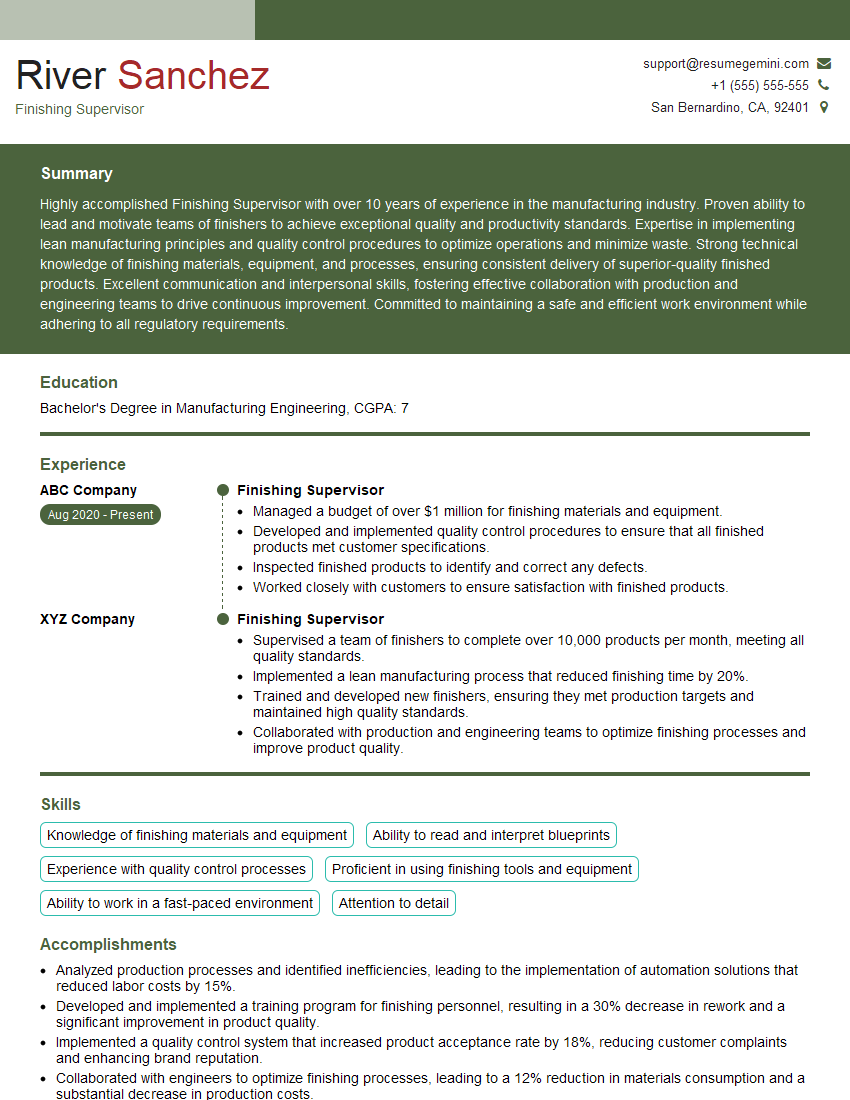
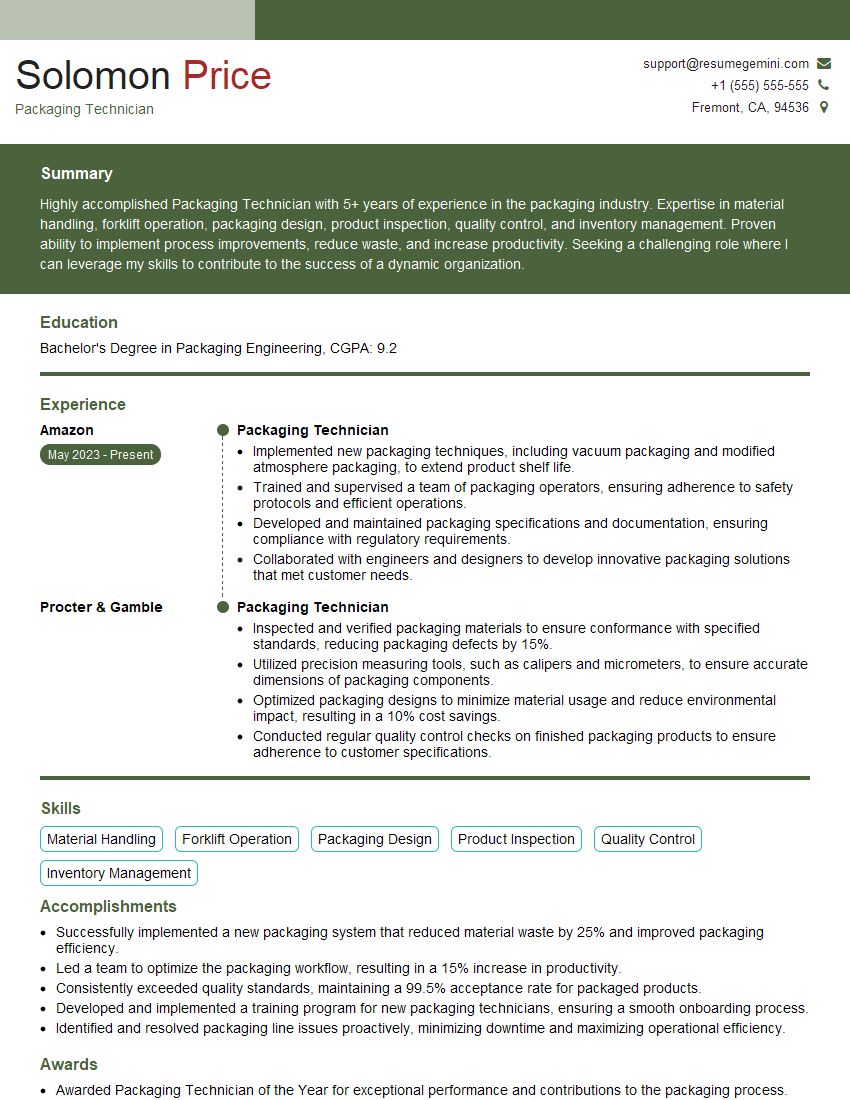
Mastering Filling Finishing principles is key to advancing your career in manufacturing and packaging. A strong understanding of these processes showcases your technical expertise and problem-solving capabilities, leading to greater opportunities for growth and higher-level roles. To maximize your job prospects, creating an ATS-friendly resume is crucial. ResumeGemini is a trusted resource to help you build a professional and impactful resume that highlights your skills and experience effectively. Examples of resumes tailored specifically to Filling Finishing positions are available to help you get started.
Explore more articles
Users Rating of Our Blogs
Share Your Experience
We value your feedback! Please rate our content and share your thoughts (optional).
What Readers Say About Our Blog
hello,
Our consultant firm based in the USA and our client are interested in your products.
Could you provide your company brochure and respond from your official email id (if different from the current in use), so i can send you the client’s requirement.
Payment before production.
I await your answer.
Regards,
MrSmith
hello,
Our consultant firm based in the USA and our client are interested in your products.
Could you provide your company brochure and respond from your official email id (if different from the current in use), so i can send you the client’s requirement.
Payment before production.
I await your answer.
Regards,
MrSmith
These apartments are so amazing, posting them online would break the algorithm.
https://bit.ly/Lovely2BedsApartmentHudsonYards
Reach out at [email protected] and let’s get started!
Take a look at this stunning 2-bedroom apartment perfectly situated NYC’s coveted Hudson Yards!
https://bit.ly/Lovely2BedsApartmentHudsonYards
Live Rent Free!
https://bit.ly/LiveRentFREE
Interesting Article, I liked the depth of knowledge you’ve shared.
Helpful, thanks for sharing.
Hi, I represent a social media marketing agency and liked your blog
Hi, I represent an SEO company that specialises in getting you AI citations and higher rankings on Google. I’d like to offer you a 100% free SEO audit for your website. Would you be interested?