Preparation is the key to success in any interview. In this post, we’ll explore crucial Assay Development and Validation interview questions and equip you with strategies to craft impactful answers. Whether you’re a beginner or a pro, these tips will elevate your preparation.
Questions Asked in Assay Development and Validation Interview
Q 1. Explain the difference between assay development and assay validation.
Assay development and assay validation are two distinct but interconnected phases in the lifecycle of any analytical method. Think of building a house: development is like designing and constructing the house, while validation is like inspecting it to ensure it meets building codes and is safe and functional.
Assay development focuses on creating a new assay or adapting an existing one for a specific purpose. This involves selecting appropriate reagents, optimizing the procedure, and establishing preliminary performance characteristics. It’s an iterative process of experimentation and refinement.
Assay validation, on the other hand, is a systematic process of proving that the developed assay is fit for its intended purpose. It’s a rigorous evaluation of the assay’s performance characteristics, demonstrating its accuracy, precision, and reliability. Validation ensures that the assay produces consistent and trustworthy results.
Q 2. Describe the stages involved in assay development.
Assay development is a multi-stage process. While the exact steps can vary depending on the assay type and application, a general framework includes:
- Defining the Assay Objectives: Clearly defining the analyte, the sample matrix, the required sensitivity, and the desired throughput.
- Assay Principle Selection: Choosing the most suitable method, such as ELISA, HPLC, or mass spectrometry, based on the analyte and objectives.
- Reagent Selection and Optimization: Identifying and optimizing the concentrations of reagents like antibodies, enzymes, and substrates to achieve optimal performance.
- Method Optimization: Fine-tuning the assay parameters, such as incubation times, temperatures, and washing steps, to maximize sensitivity, specificity, and reproducibility.
- Preliminary Performance Evaluation: Conducting initial experiments to assess the assay’s basic performance characteristics, including sensitivity, linearity, and precision.
- Assay Standardization: Developing a standardized protocol to ensure consistency and reproducibility of results across different users and laboratories.
Imagine developing a new blood glucose assay – you’d need to select the right enzyme, optimize the reaction conditions, and define the measurement range before moving on to validation.
Q 3. What are the key performance characteristics of a validated assay?
A validated assay must demonstrate several key performance characteristics. These characteristics ensure the assay is reliable and fit for its intended purpose. These include:
- Specificity: The ability of the assay to measure only the target analyte without interference from other substances.
- Sensitivity: The lowest concentration of analyte that can be reliably measured.
- Linearity: The assay’s ability to produce results proportional to the concentration of the analyte over a defined range.
- Accuracy: How close the measured values are to the true values.
- Precision: The reproducibility of the assay, indicated by low variability in repeated measurements.
- Range: The concentration range over which the assay provides reliable results.
- Robustness: The assay’s ability to withstand minor variations in the assay conditions without significant impact on results.
- Stability: The stability of the reagents and the assay’s performance over time.
For instance, a validated ELISA for a specific protein should consistently measure only that protein, provide accurate quantification across a specific concentration range, and be unaffected by minor changes in temperature or reagent concentration.
Q 4. How do you determine the appropriate sample size for assay validation?
Determining the appropriate sample size for assay validation is crucial for obtaining statistically robust results. It depends on several factors, including the desired precision, the variability of the assay, and the number of validation parameters being assessed. Statistical power calculations are often employed to determine the minimum sample size required to detect meaningful differences with a predetermined level of confidence. Software or statistical tables can be used for these calculations, taking into account the anticipated variability and desired margin of error. Generally, a larger sample size is preferred to ensure greater confidence in the validation results.
A common approach involves using power analysis software to determine the minimum sample size needed to achieve a specified power (e.g., 80%) for detecting a clinically meaningful difference between groups at a specific significance level (e.g., alpha = 0.05). The sample size calculation also considers the expected variability of the assay, often estimated from pilot studies.
Q 5. Explain the concept of linearity in assay validation.
Linearity in assay validation refers to the ability of an assay to produce results that are directly proportional to the concentration of the analyte within a specific range. In simpler terms, if you double the concentration of the analyte, the assay should ideally double the measured signal. This linear relationship is essential for accurate quantification. Linearity is assessed by analyzing the correlation between the measured signal and the known concentrations of the analyte. A high correlation coefficient (typically above 0.98) indicates good linearity. Deviations from linearity can indicate problems with the assay procedure or interferences from other substances in the sample.
Imagine plotting concentration on the x-axis and response on the y-axis; a perfectly linear assay would show a straight line. In practice, perfect linearity is rare, but the assay must show a good fit within an acceptable range (the linear range).
Q 6. What are the different types of assay validation parameters?
Assay validation parameters encompass a broad range of characteristics needed to ensure the reliability of the assay. They typically include:
- Specificity: Selectivity for the target analyte.
- Sensitivity: Limit of detection (LOD) and limit of quantification (LOQ).
- Linearity: Proportional response to analyte concentration.
- Accuracy: Closeness to the true value (recovery studies).
- Precision: Reproducibility (repeatability and intermediate precision).
- Range/Dynamic Range: Concentration range with acceptable accuracy and precision.
- Robustness: Resistance to minor variations in assay conditions.
- Stability: Shelf-life of reagents and stability of the assay over time.
- Matrix effects: Influence of the sample matrix on results.
The specific parameters chosen will depend upon the intended use of the assay and regulatory requirements.
Q 7. How do you assess the accuracy and precision of an assay?
Assessing accuracy and precision involves using statistical methods and comparative analyses. Accuracy assesses how close the measured values are to the true values, while precision reflects the reproducibility of the measurements.
Accuracy is often determined through recovery studies, where known amounts of analyte are added to a sample matrix and measured by the assay. The percentage of the added analyte recovered indicates the assay’s accuracy. For instance, if you spike a sample with 100 ng/mL of a protein and the assay measures 95 ng/mL, the recovery is 95%, indicating reasonably good accuracy.
Precision is assessed by performing replicate measurements at different analyte concentrations. The standard deviation or coefficient of variation (CV) is used to quantify the variability of the measurements. Lower CV values indicate higher precision. Repeatability (intra-assay precision) evaluates the variation within a single run, while intermediate precision examines the variation between runs on different days or by different analysts.
Both accuracy and precision are essential for a reliable assay. High accuracy with low precision suggests systematic error, while low accuracy with high precision suggests random error.
Q 8. What are the regulatory requirements for assay validation in your industry?
Regulatory requirements for assay validation vary depending on the industry and the intended use of the assay. For example, in the pharmaceutical industry, assay validation follows guidelines set by regulatory bodies like the FDA (Food and Drug Administration) and EMA (European Medicines Agency). These guidelines emphasize the need for robust validation procedures to ensure accuracy, precision, specificity, and reliability of the assay results, which are crucial for drug development and quality control. Key parameters include linearity, range, accuracy, precision, limit of detection (LOD), limit of quantitation (LOQ), specificity, robustness, and stability. Failure to meet these regulatory requirements can lead to significant delays in drug approval or even rejection of the drug itself.
For example, in a pharmaceutical setting, an ELISA (enzyme-linked immunosorbent assay) used to measure the concentration of a drug in patient samples would need to be rigorously validated to ensure it provides reliable and accurate results that can be used to assess drug efficacy and safety. This validation process involves demonstrating that the assay performs consistently and accurately under various conditions and across different batches of reagents.
In other industries, such as environmental testing or clinical diagnostics, different regulatory bodies and guidelines apply, but the general principles of ensuring accuracy, reliability, and traceability remain crucial.
Q 9. How do you handle outliers in assay data?
Handling outliers in assay data is crucial for maintaining the integrity of the results. Outliers, which are data points significantly different from other observations, can be caused by various factors, including experimental errors, sample contamination, or genuine biological variation. Before discarding any data point, a thorough investigation is essential. We first visually inspect the data using scatter plots or box plots to identify potential outliers. Statistical methods, such as Grubbs’ test or Dixon’s test, can be applied to determine if an outlier is statistically significant. However, simply removing outliers without understanding the underlying cause is not recommended. It’s critical to investigate the potential reasons for the outlier. This might involve re-running the assay, examining the sample preparation process, or checking for instrument malfunctions. If the outlier is due to a clear error (e.g., a pipetting mistake), it can be excluded. If the reason cannot be determined, the outlier might be included in the analysis, but with a clear explanation and justification in the report. Documenting all steps undertaken to address outliers is vital for maintaining transparency and data integrity. Alternatively, robust statistical methods that are less sensitive to outliers, like median instead of mean, can be used for data analysis.
Q 10. What statistical methods are used in assay validation?
Assay validation utilizes a range of statistical methods to assess the performance characteristics. Linearity is often evaluated using linear regression analysis, determining the correlation coefficient (R²) and assessing the fit of the data to the regression model. Precision is determined using measures like standard deviation and coefficient of variation (CV) across replicate measurements. Accuracy is assessed by comparing the measured values to known or expected values, often using methods like percent recovery. The limit of detection (LOD) and limit of quantitation (LOQ) are calculated using statistical approaches based on the background noise and the variability of the assay. Analysis of variance (ANOVA) may be employed to compare different assay batches or experimental groups. For assessing the specificity, we use methods to eliminate the interference from other components. In addition to these, we can use other statistical methods like t-tests and paired t-tests to compare the means of different groups, and non-parametric methods are used when data doesn’t meet assumptions of normality.
Q 11. Describe your experience with method transfer of an assay.
Method transfer involves moving an established assay from one laboratory or platform to another while ensuring its performance characteristics remain consistent. In my experience, this process begins with a comprehensive understanding of the original assay method, including all protocols, reagent preparations, and instrument settings. We then transfer the method to the new laboratory, following strict adherence to the original protocol. This step is followed by a detailed validation study in the new laboratory, which replicates all the validation parameters from the original validation study. The key is to rigorously compare the results from the original and transferred methods, paying close attention to any discrepancies and systematically investigating and addressing those differences. For example, if the precision is lower in the transferred method, this might signal a need to reoptimize certain parameters like incubation times, or reagent concentrations, or even consider different equipment settings. This iterative process of optimizing and validating, meticulously documented, ensures that the assay performs consistently across both settings. We make sure that all aspects, including instrument calibration and reagent quality, are meticulously controlled. Detailed documentation and a thorough comparison of the data obtained from both laboratories are crucial for successful method transfer. Documentation of any deviations from the original protocol, along with a justification and validation of the changes, are necessary to ensure compliance.
Q 12. How do you troubleshoot assay problems?
Troubleshooting assay problems requires a systematic approach. I begin with a review of the assay protocol and a careful examination of the raw data, looking for patterns or anomalies. This often involves creating control charts to visualize trends over time. If the problem is related to a specific batch of reagents, we use appropriate control experiments to test the impact of each component. For example, if the signal is unexpectedly low, this could be due to degradation of reagents, improper mixing, or temperature inconsistencies. Investigating each step of the assay, from sample preparation to detection, is critical. It’s often useful to test a range of concentrations to see if the problem is related to the sample itself. Keeping a detailed record of experiments, including all changes, is key to understanding the cause of the problem and identifying solutions. The use of appropriate controls, including positive, negative and blank controls, in each run aids greatly in pinpointing the source of the problem.
Q 13. Explain your experience with different types of assays (e.g., ELISA, HPLC, etc.).
My experience encompasses a broad range of assay types. I’m proficient in ELISA (enzyme-linked immunosorbent assay), a widely used technique for detecting and quantifying substances like proteins or hormones, known for its sensitivity and relatively simple setup. I’ve also worked extensively with HPLC (high-performance liquid chromatography), which separates and quantifies components in a mixture based on their interactions with the stationary and mobile phases; crucial for analyzing complex samples with multiple components. Furthermore, I have experience with other techniques such as cell-based assays, used to study cell viability, proliferation, or other cellular processes; and qPCR (quantitative polymerase chain reaction), which is used to amplify and quantify specific DNA or RNA sequences, invaluable for studying gene expression or detecting pathogens. My experience is not limited to these, but also extends to various other techniques depending on the specific application.
Q 14. What software are you proficient in for data analysis and reporting?
I’m proficient in several software packages for data analysis and reporting. My expertise includes GraphPad Prism, a powerful tool for data analysis and visualization, including statistical analysis and graph creation. I also use Microsoft Excel extensively for data management and basic statistical calculations. Furthermore, I’m familiar with specialized software packages depending on the specific assay type. For example, for HPLC data analysis, I use Empower or Chromeleon software. For specialized assays, I adapt to the specific software provided by the instrument manufacturer. In addition to data analysis, I also use dedicated LIMS (Laboratory Information Management System) software for managing samples, experiments, and results, ensuring compliance with quality standards and effective lab management. My experience spans a wide range of software relevant to assay development and validation, which helps to ensure the reliability and efficiency of my work.
Q 15. How do you ensure the quality and integrity of assay data?
Ensuring the quality and integrity of assay data is paramount in any scientific endeavor. It’s like building a house – a shaky foundation leads to a crumbling structure. We employ a multi-layered approach, starting with meticulous experimental design. This involves carefully selecting appropriate controls (positive, negative, and blanks) to account for background noise and non-specific signals. Each assay is rigorously validated, verifying its accuracy (how close the measurement is to the true value), precision (reproducibility of measurements), and linearity (consistent response across a concentration range).
We utilize robust statistical analysis, such as ANOVA and regression analysis, to assess data quality. Outliers are investigated thoroughly; they might indicate experimental error, equipment malfunction, or genuine biological variation. Data is meticulously documented in electronic laboratory notebooks (ELNs) with complete audit trails, including instrument calibrations, reagent lot numbers, and personnel involved. Regular quality control checks, including running known standards and using proficiency testing materials, are incorporated into the workflow. Finally, adhering to Good Laboratory Practices (GLP) or Good Manufacturing Practices (GMP), depending on the context, guarantees that our data is reliable and defensible.
Career Expert Tips:
- Ace those interviews! Prepare effectively by reviewing the Top 50 Most Common Interview Questions on ResumeGemini.
- Navigate your job search with confidence! Explore a wide range of Career Tips on ResumeGemini. Learn about common challenges and recommendations to overcome them.
- Craft the perfect resume! Master the Art of Resume Writing with ResumeGemini’s guide. Showcase your unique qualifications and achievements effectively.
- Don’t miss out on holiday savings! Build your dream resume with ResumeGemini’s ATS optimized templates.
Q 16. Describe your experience with writing SOPs and protocols.
I have extensive experience in developing and implementing Standard Operating Procedures (SOPs) and protocols for various assays, from ELISA and Western blots to more complex cell-based and flow cytometric assays. A well-written SOP is crucial for reproducibility and consistency. It’s like a recipe – if the instructions are unclear, the final product won’t be what you expected. My SOPs typically include a detailed description of the assay principle, reagents and materials, step-by-step procedures with clear visuals where necessary (photos, diagrams), quality control checks, data analysis methods, and troubleshooting steps. I also incorporate version control, ensuring that everyone is using the most up-to-date version. For protocols, the focus is on the experimental design, including sample preparation, controls, and experimental parameters. I’ve found that incorporating user feedback and regular reviews significantly improve the clarity and effectiveness of both SOPs and protocols.
Q 17. How do you manage your time effectively when working on multiple assays?
Juggling multiple assays effectively requires strategic time management. I use a project management approach, prioritizing tasks based on deadlines and importance. This often involves creating a detailed timeline or Gantt chart that outlines the various steps for each assay, identifying potential bottlenecks and dependencies. I break down large projects into smaller, manageable tasks, which allows for better tracking of progress and helps to prevent feeling overwhelmed. I also leverage technology – using electronic lab notebooks and LIMS systems to track samples and data efficiently. Effective delegation, when possible, is key. Finally, I schedule dedicated blocks of time for specific tasks, minimizing distractions and maximizing focus. Think of it like a conductor orchestrating a symphony – each instrument (assay) needs attention, but a coordinated effort leads to a beautiful outcome.
Q 18. How do you collaborate with other scientists and teams?
Collaboration is fundamental in assay development. I thrive in team environments, actively contributing my expertise and valuing the input of others. Clear and open communication is key. I utilize various tools, including regular meetings, shared document platforms, and email, to keep everyone informed of progress, challenges, and potential solutions. I strive to be a proactive team member, anticipating potential needs and proactively offering assistance. When working with other scientists, I actively listen to their perspectives, ensuring that all aspects are considered. In one instance, collaborating with a bioinformatician was crucial for analyzing complex flow cytometry data, resulting in a much deeper understanding of our experimental results. This collaborative spirit ensures we leverage the strengths of everyone involved, leading to better outcomes.
Q 19. Describe a time when you had to overcome a technical challenge in assay development.
During the development of a cell-based assay for assessing drug efficacy, we encountered significant variability in our cell response. Initially, we suspected the drug itself, but after extensive troubleshooting, it became apparent the problem stemmed from inconsistent cell seeding density. We systematically investigated factors like cell passage number, seeding time, and incubation conditions. We implemented a new standardized cell seeding method using automated cell counters and image analysis to precisely control cell density. This meticulous approach significantly improved assay reproducibility and reduced variability, ultimately allowing us to generate robust and reliable data. The experience highlighted the importance of thorough investigation and the impact even seemingly small details can have on assay performance. It’s a perfect example of how persistent problem-solving can overcome significant technical roadblocks.
Q 20. What are your strengths and weaknesses in assay development and validation?
My strengths lie in my systematic approach to assay development and validation. I’m adept at troubleshooting complex technical issues, employing a logical and methodical approach to identify and resolve problems. I also have strong analytical skills, proficient in using various statistical software packages to analyze data and interpret results. My weakness, if I had to identify one, would be the tendency to be detail-oriented to the point of perfectionism, which can occasionally slow down the process. However, I’m actively working on balancing thoroughness with efficiency by prioritizing tasks and setting realistic timelines. This self-awareness is crucial for continuous improvement in my work.
Q 21. How do you stay current with advancements in assay technology?
Staying current with advancements in assay technology is essential for remaining competitive and producing high-quality work. I actively engage in several strategies: regularly attending scientific conferences and workshops, reviewing relevant scientific literature (journals, review articles), and participating in online courses and webinars. I also closely follow industry leaders and key opinion leaders in the field, and I engage in professional networking through scientific societies and online forums. This multifaceted approach allows me to stay informed about new technologies, improved methodologies, and emerging trends in assay development and validation, ensuring my skillset remains relevant and cutting-edge.
Q 22. What are some common pitfalls to avoid in assay development and validation?
Assay development and validation is a meticulous process, and several pitfalls can lead to inaccurate or unreliable results. These pitfalls often stem from insufficient planning or a lack of attention to detail.
- Poorly Defined Objectives: Starting without clear, measurable, achievable, relevant, and time-bound (SMART) goals is a major issue. For example, if your goal is to detect a specific analyte, you need to define the required sensitivity, specificity, and dynamic range upfront. Without these, validation efforts become ambiguous.
- Insufficient Sample Size: Using too few samples during validation can lead to inaccurate estimations of assay performance characteristics like precision and accuracy. The sample size needs to be statistically appropriate to demonstrate the assay’s reliability.
- Inadequate Reagent Characterization: Not fully characterizing reagents – their stability, purity, and potential interference – can lead to significant variability in assay performance. Think of it like baking a cake; if your ingredients are not consistently measured and of high quality, your cake will be inconsistent.
- Ignoring Matrix Effects: Assay performance can vary drastically depending on the sample matrix (e.g., blood, serum, urine). If the assay isn’t validated across relevant matrices, results could be misleading. For example, an assay developed and validated with purified standards might perform poorly in a complex biological sample.
- Lack of Robustness Testing: A robust assay should perform consistently under different conditions (temperature fluctuations, reagent variations). Failing to assess robustness can lead to inaccurate results in real-world settings. We’ll discuss robustness in more detail in the next question.
Avoiding these pitfalls requires careful planning, thorough reagent characterization, rigorous statistical analysis, and a focus on practical applicability.
Q 23. Explain the concept of robustness in assay validation.
Robustness in assay validation refers to the assay’s ability to remain unaffected by small, deliberate variations in the assay procedure. It’s essentially a measure of the assay’s resilience to minor changes in experimental conditions. Think of it like a sturdy bridge that can withstand minor tremors without collapsing. A robust assay provides reliable results even with some inconsistencies in the process.
We evaluate robustness by intentionally introducing small, controlled variations in parameters such as temperature, incubation times, reagent concentrations, or instrument settings. We then compare the assay’s performance under these varied conditions to its performance under standard conditions. Significant deviations indicate a lack of robustness, suggesting areas that require optimization or improved control.
For instance, we might assess the effect of a ±2°C variation in incubation temperature on the assay’s signal and observe the resulting change in the coefficient of variation (CV). A low CV across the range of temperatures would suggest robustness. The International Council for Harmonisation (ICH) guidelines provide a framework for evaluating assay robustness.
Q 24. How do you ensure the stability of an assay over time?
Ensuring assay stability over time is critical for maintaining data reliability. We achieve this through a combination of strategies:
- Proper Storage Conditions: Reagents and samples must be stored under optimal conditions (temperature, light exposure, humidity) as specified by the manufacturer or determined through stability studies. This might involve using -80°C freezers, light-protective containers, or desiccant packs.
- Regular Calibration and QC: Frequent calibration using certified reference materials and regular quality control (QC) samples help detect any drift in assay performance. QC samples are run alongside experimental samples to monitor the assay’s performance throughout the study and check for any systematic errors.
- Stability Studies: We perform dedicated stability studies to determine the shelf life of reagents and the stability of the assay signal over time under various storage conditions. This involves analyzing the assay’s performance at different time points and identifying any significant degradation of components.
- Freeze-Thaw Cycles: For samples that need to be frozen and thawed repeatedly, we assess the impact of freeze-thaw cycles on the assay signal to ensure consistent results.
- Documentation: Meticulous record-keeping and documentation are essential. This includes the details of storage conditions, calibration dates, QC results, and any observations related to assay stability. This allows for comprehensive tracking and analysis over time.
By implementing these strategies, we can significantly extend the useful life of the assay and ensure the reliability of the results generated.
Q 25. Describe your experience with automation in assay development.
I have extensive experience with automation in assay development, particularly using liquid handling robots and automated plate readers. Automation significantly improves assay throughput, reduces variability, and minimizes human error. I’ve been involved in the development and implementation of automated workflows for various assays, including ELISA, cell-based assays, and qPCR.
In one project, we automated a previously manual ELISA assay for detecting a specific biomarker. This involved programming a liquid handling robot to perform all steps, from sample preparation and reagent dispensing to plate washing and signal detection. The automated system increased the assay throughput tenfold while significantly reducing the coefficient of variation (CV) from 15% to under 5%, showcasing the dramatic improvement in precision and efficiency. Furthermore, automation enables higher sample volumes and high-throughput screening which would be impossible manually.
My expertise also extends to integrating automated systems with LIMS (Laboratory Information Management Systems) for improved data management and traceability. I’m proficient in programming automation software such as Tecan EVOware and Hamilton Venus.
Q 26. What are your salary expectations?
My salary expectations are in line with the industry standard for a domain expert with my level of experience and expertise in assay development and validation. Considering my proven track record of success, coupled with my proficiency in automation and regulatory compliance, I am targeting a salary range of [Insert Salary Range Here]. However, I am open to discussion and am more interested in a mutually beneficial arrangement that values my contributions and aligns with the overall compensation strategy of your organization.
Q 27. Do you have any questions for me?
Yes, I do. I’d like to learn more about the specific challenges the team is facing in assay development. Understanding the current workflows, technological limitations, and future research goals will help me assess how my skills and expertise can best contribute to the team’s success. Also, I’m interested in learning more about the opportunities for professional development and career advancement within the company.
Key Topics to Learn for Assay Development and Validation Interview
- Assay Design and Selection: Understanding the principles behind choosing the appropriate assay type (e.g., ELISA, HPLC, mass spectrometry) based on the target analyte and project goals. Consider factors like sensitivity, specificity, and throughput.
- Assay Validation: Deep dive into the critical parameters of assay validation including accuracy, precision, linearity, range, limit of detection (LOD), limit of quantitation (LOQ), and robustness. Understand how to document and interpret validation data.
- Method Development and Optimization: Explore the iterative process of optimizing assay parameters (e.g., reagent concentrations, incubation times, temperature) to achieve optimal performance. This includes troubleshooting common issues and developing solutions.
- Data Analysis and Interpretation: Master the techniques for analyzing assay data, identifying outliers, and drawing statistically sound conclusions. Familiarity with statistical software is beneficial.
- Regulatory Compliance: Gain an understanding of relevant regulatory guidelines (e.g., GLP, GMP) and their impact on assay development and validation in pharmaceutical or biomedical settings.
- Troubleshooting and Problem-solving: Develop your ability to identify and resolve common issues encountered during assay development and validation, such as unexpected results, high variability, or instrument malfunctions. Showcase your analytical and critical thinking skills.
- Automation and High-Throughput Screening (HTS): Discuss experience or knowledge of automated assay platforms and their application in high-throughput screening environments. This demonstrates adaptability to modern laboratory techniques.
Next Steps
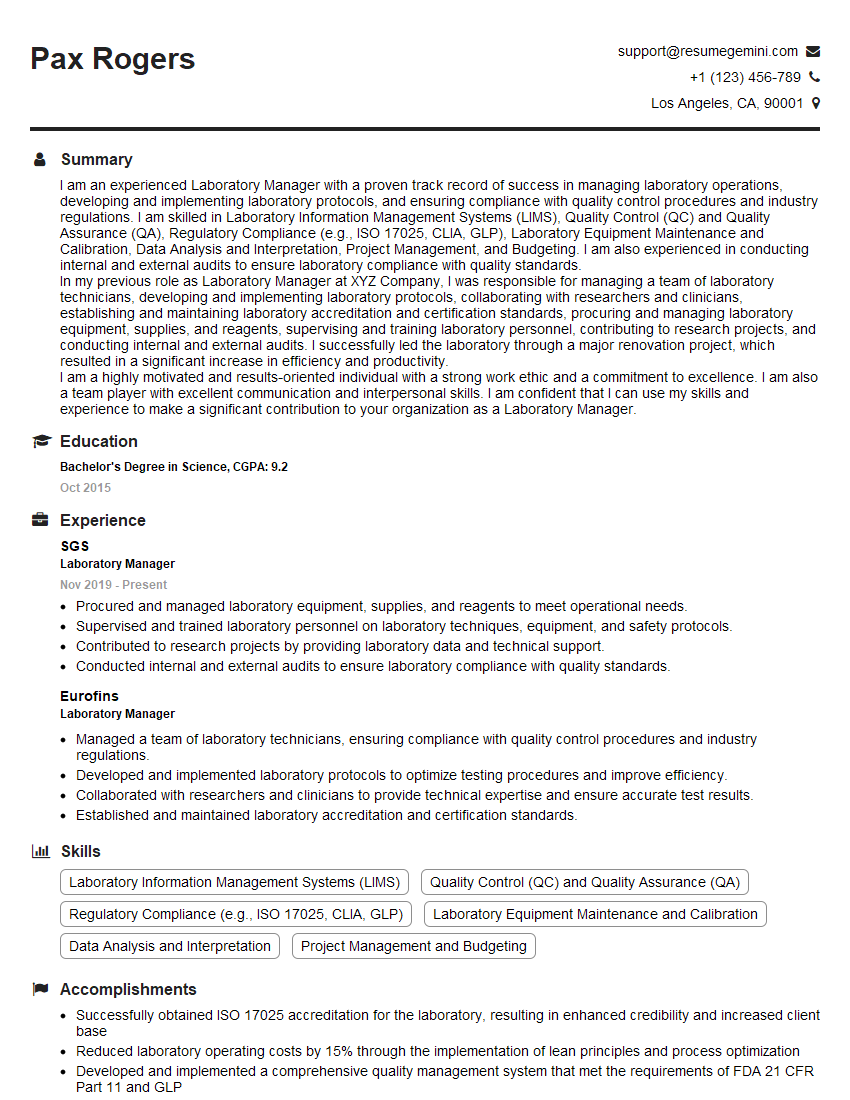
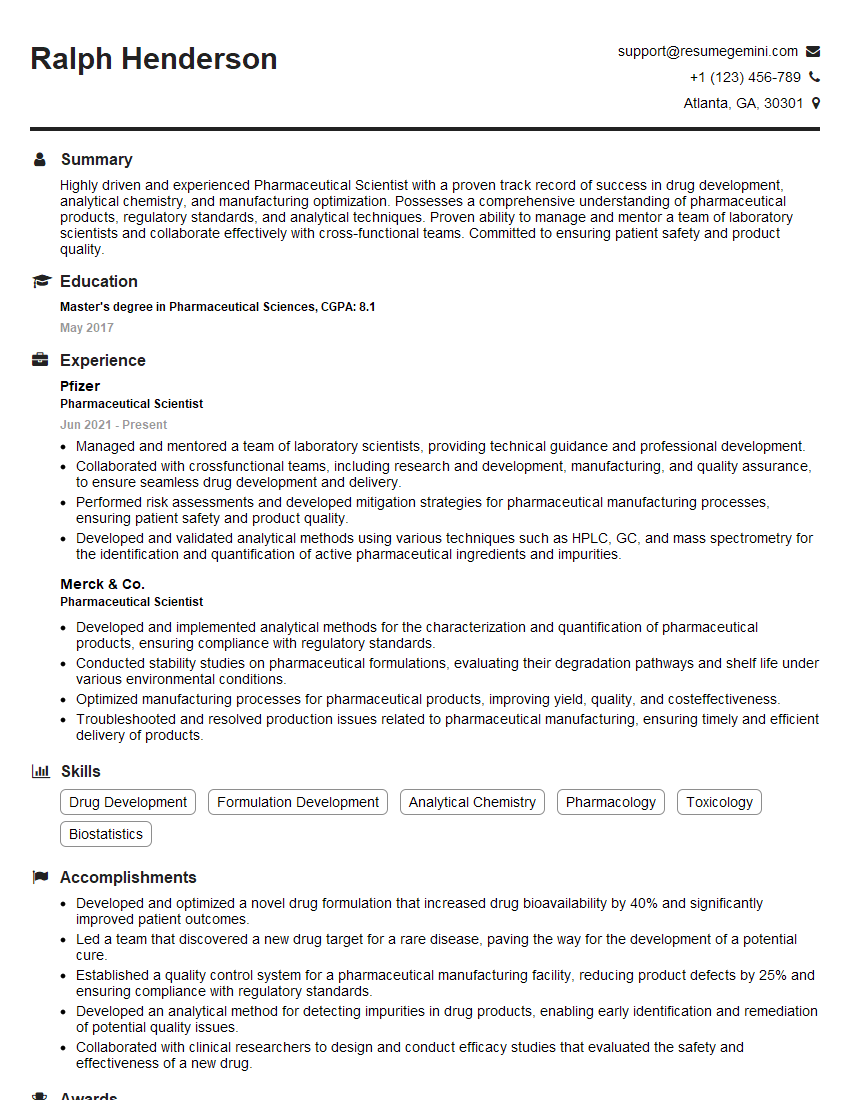
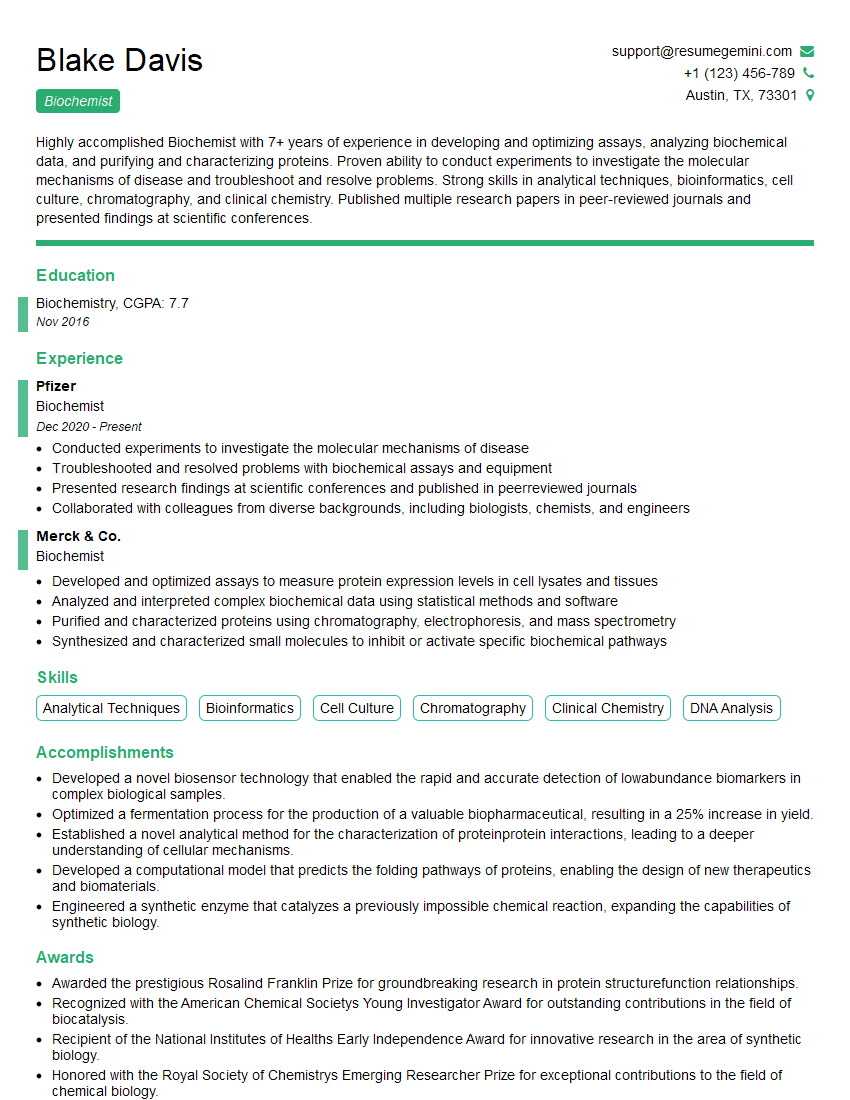
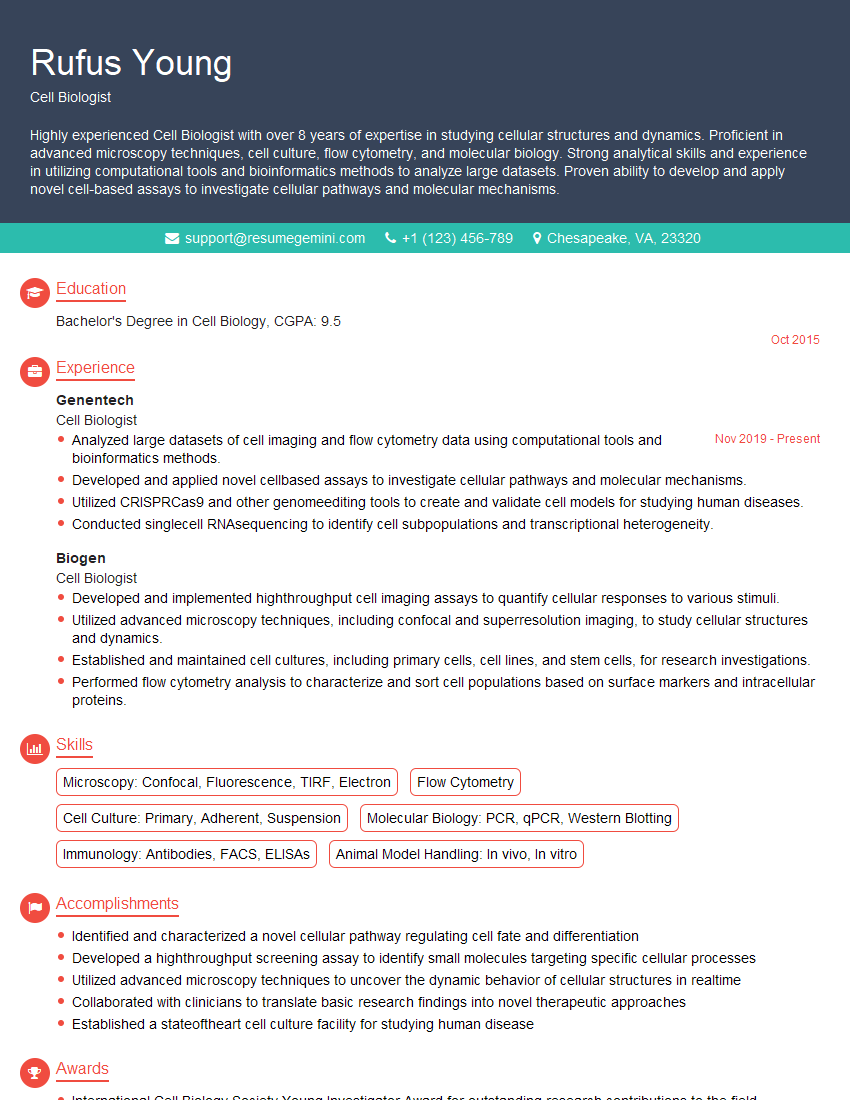
Mastering Assay Development and Validation is crucial for career advancement in scientific research, pharmaceutical development, and related fields. A strong understanding of these concepts significantly enhances your marketability and opens doors to more challenging and rewarding roles. To maximize your job prospects, create an ATS-friendly resume that effectively showcases your skills and experience. ResumeGemini is a trusted resource to help you build a professional and impactful resume. They provide examples of resumes tailored to Assay Development and Validation, helping you present your qualifications in the most compelling way possible.


Explore more articles
Users Rating of Our Blogs
Share Your Experience
We value your feedback! Please rate our content and share your thoughts (optional).
What Readers Say About Our Blog
hello,
Our consultant firm based in the USA and our client are interested in your products.
Could you provide your company brochure and respond from your official email id (if different from the current in use), so i can send you the client’s requirement.
Payment before production.
I await your answer.
Regards,
MrSmith
hello,
Our consultant firm based in the USA and our client are interested in your products.
Could you provide your company brochure and respond from your official email id (if different from the current in use), so i can send you the client’s requirement.
Payment before production.
I await your answer.
Regards,
MrSmith
These apartments are so amazing, posting them online would break the algorithm.
https://bit.ly/Lovely2BedsApartmentHudsonYards
Reach out at [email protected] and let’s get started!
Take a look at this stunning 2-bedroom apartment perfectly situated NYC’s coveted Hudson Yards!
https://bit.ly/Lovely2BedsApartmentHudsonYards
Live Rent Free!
https://bit.ly/LiveRentFREE
Interesting Article, I liked the depth of knowledge you’ve shared.
Helpful, thanks for sharing.
Hi, I represent a social media marketing agency and liked your blog
Hi, I represent an SEO company that specialises in getting you AI citations and higher rankings on Google. I’d like to offer you a 100% free SEO audit for your website. Would you be interested?