Interviews are opportunities to demonstrate your expertise, and this guide is here to help you shine. Explore the essential Site Inspection and Monitoring interview questions that employers frequently ask, paired with strategies for crafting responses that set you apart from the competition.
Questions Asked in Site Inspection and Monitoring Interview
Q 1. Describe your experience with different types of site inspections (e.g., pre-construction, during construction, post-construction).
My experience encompasses all phases of construction site inspections: pre-construction, during construction, and post-construction. Each phase demands a different focus and set of priorities.
- Pre-construction inspections focus on verifying site conditions, confirming utility locations, and ensuring the site is prepared for the commencement of work. This includes checking for potential hazards, reviewing site plans for compliance, and identifying any discrepancies between the plans and the actual site conditions. For example, I once identified a previously undocumented underground gas line during a pre-construction inspection, preventing a potentially catastrophic accident.
- During-construction inspections are crucial for quality control and safety. I monitor adherence to plans and specifications, ensuring that the work is being executed according to the approved methods and that safety protocols are being followed. This involves regular site walks, observing work practices, and checking materials. A common example is verifying the correct installation of scaffolding or ensuring proper fall protection is in place.
- Post-construction inspections verify the final product meets the agreed-upon standards, and building codes. This includes checking for any defects, omissions, or safety hazards. A detailed inspection report is generated, highlighting any necessary corrections before final project acceptance. For example, I may identify minor cosmetic issues or ensure all safety systems, such as fire alarms, are functional.
Q 2. Explain your familiarity with relevant safety regulations and codes (e.g., OSHA, ANSI).
My familiarity with safety regulations and codes is extensive. I have a thorough understanding of OSHA (Occupational Safety and Health Administration) guidelines and ANSI (American National Standards Institute) standards, specifically those related to construction. This includes knowledge of regulations concerning fall protection, hazard communication, personal protective equipment (PPE), confined space entry, and lockout/tagout procedures. I regularly review updated codes to ensure my practices are current. For instance, I’m well-versed in OSHA’s requirements for fall protection, which mandates specific types of fall protection based on the height and nature of the work being performed.
Beyond OSHA and ANSI, I’m also familiar with other relevant codes and regulations that vary by location and project type, ensuring compliance across diverse projects.
Q 3. How do you handle discrepancies or non-compliance issues discovered during an inspection?
Discrepancies or non-compliance issues are handled systematically. The first step is to clearly document the issue with photographs, measurements, and detailed descriptions. Next, I discuss the findings with the relevant project personnel, such as the contractor or project manager, explaining the nature of the non-compliance and the potential consequences.
We work collaboratively to determine a corrective action plan, and this plan is documented, including timelines for completion. I then follow up to ensure the corrective actions are implemented effectively and that the issue is resolved. In cases of severe non-compliance, where safety is compromised, I may recommend work stoppage until the issues are addressed. For example, if inadequate fall protection is observed, I would immediately halt the work until proper safety measures are put in place.
Q 4. What methods do you use to document inspection findings (e.g., reports, photos, videos)?
Thorough documentation is paramount. My method involves a multi-faceted approach that includes:
- Detailed written reports: These reports include clear descriptions of the inspection, the findings, photographs, and any recommendations for corrective actions. They are formatted consistently for easy review and comparison across projects.
- High-resolution photographs: Photographs provide visual evidence of the findings, capturing the context and details of any discrepancies or deficiencies. I use a calibrated camera to ensure accurate measurements.
- Video recordings (when necessary): Videos are useful for capturing dynamic processes or situations that are difficult to convey with static images, such as the operation of machinery or the movement of personnel.
- Digital checklists: These improve efficiency and ensure consistency in inspections. I use software to create customized checklists relevant to specific project types and phases.
All documentation is clearly labelled, date-stamped, and stored securely for easy retrieval and auditing.
Q 5. Describe your experience with different inspection tools and equipment.
My experience with inspection tools and equipment is extensive. I’m proficient in using various tools, depending on the specific needs of the inspection. These include:
- Measuring tapes and laser distance meters: For accurate measurements of dimensions and distances.
- Levels and plumb bobs: For verifying verticality and horizontality.
- Moisture meters: For detecting moisture content in building materials.
- Thermal imaging cameras: To identify heat loss, moisture intrusion, or electrical issues.
- NDT (Non-Destructive Testing) equipment (where applicable): Such as ultrasonic testing equipment or ground penetrating radar for assessing the integrity of materials and structures without causing damage.
- Specialized software for data analysis: For example, analyzing data from thermal imaging or moisture meters, enabling more effective identification of potential problems.
Q 6. How do you prioritize inspection tasks and manage your time effectively on a project site?
Prioritizing inspection tasks and managing time effectively on a project site requires a structured approach. I typically begin by reviewing the project plans and specifications to understand the scope of work and the critical areas requiring attention. Then I develop a prioritized checklist based on safety concerns, potential risks, and the critical path of the construction schedule.
I use a combination of time management techniques, such as scheduling specific time slots for particular inspection tasks and using visual aids (e.g., site maps with marked inspection points) to optimize my movements and minimize wasted time. Regular communication with the project team ensures that my schedule is aligned with their workflow, and allows for unforeseen issues or delays to be proactively handled. For example, I might schedule a pre-pour inspection of concrete foundations prior to pouring so that issues can be resolved before the critical step of pouring is started.
Q 7. What is your experience with using inspection software or databases?
I have extensive experience using various inspection software and databases. This includes software for creating and managing inspection checklists, recording findings, generating reports, storing photographs and videos, and managing project documentation. My experience also encompasses using software designed for specific types of inspections, such as those related to structural integrity or environmental compliance. This allows for more efficient data analysis and reporting, and streamlines communication with other project stakeholders.
Furthermore, I’m familiar with cloud-based platforms for managing inspection data, ensuring accessibility and collaboration across teams. This reduces paperwork, enhances efficiency, and facilitates compliance with industry best practices.
Q 8. How do you communicate inspection findings to clients, contractors, or management?
Communicating inspection findings effectively is crucial for project success. My approach involves tailoring the communication method and content to the audience. For clients, I prioritize clear, concise reports summarizing key findings, using plain language and avoiding technical jargon where possible. I’ll include high-quality photos and diagrams to illustrate points. For contractors, I focus on actionable recommendations, detailing specific corrective actions needed to address deficiencies. This often involves a collaborative discussion to ensure they understand the requirements and can implement solutions efficiently. With management, I provide a high-level overview of project status and potential risks, highlighting areas requiring attention and outlining potential cost and schedule implications. I also leverage project management software for easy access and tracking of inspection reports and recommended actions. For example, if a significant structural issue is discovered, I’ll provide a detailed report to the client outlining the problem, potential consequences, and recommended remediation, with supporting evidence. Meanwhile, the contractor receives a more detailed breakdown of the required repairs, including specifications and timelines.
Q 9. How do you ensure the accuracy and completeness of your inspection reports?
Accuracy and completeness are paramount in inspection reports. I achieve this through a multi-step process. First, I use a standardized checklist tailored to the specific inspection type, ensuring consistent coverage of all relevant aspects. Second, I meticulously document all observations, using precise measurements, clear descriptions, and photographic evidence. I employ calibrated instruments where appropriate (e.g., laser distance meters for precise measurements). Third, all data is double-checked for accuracy before report generation. Finally, the report undergoes a final review process, often involving peer review, to identify and correct any discrepancies or omissions. For instance, during a concrete inspection, I wouldn’t just note ‘cracks observed,’ but specify their location, size, depth, and orientation, coupled with photographic documentation, This level of detail minimizes ambiguity and ensures the report is comprehensive and leaves no room for misinterpretations. I also maintain a detailed log of all inspection activities, including dates, times, weather conditions, and personnel involved, to maintain full transparency and traceability.
Q 10. Describe your experience with environmental site assessments.
My experience with environmental site assessments is extensive, encompassing Phase I, II, and III assessments. Phase I involves a review of historical records to identify potential environmental concerns. Phase II involves sampling and testing to confirm the presence or absence of contamination. Phase III involves remediation activities to address any discovered contamination. I’m proficient in identifying potential sources of contamination such as underground storage tanks (USTs), past industrial activities, and hazardous waste disposal practices. I’m familiar with various environmental regulations (e.g., CERCLA, RCRA) and reporting requirements. For example, during a Phase II assessment, I’d oversee the collection of soil and groundwater samples, ensuring proper chain of custody and laboratory analysis. The results then inform the report, which details the extent of contamination and recommendations for remediation, if necessary. I also understand the importance of working with qualified environmental consultants and regulatory agencies to ensure compliance and protect human health and the environment.
Q 11. How do you identify and mitigate potential safety hazards on a construction site?
Identifying and mitigating safety hazards is a core responsibility. My approach involves a systematic process beginning with a thorough site walk-through, identifying potential hazards like exposed wires, unprotected openings, inadequate scaffolding, and unsafe equipment operation. I then assess the risk level associated with each hazard, considering factors like likelihood and severity. High-risk hazards are addressed immediately through corrective actions, which might involve stopping work until a hazard is mitigated, requiring immediate corrective actions by the contractor. For example, if I observe workers operating machinery without appropriate safety gear, I’ll immediately halt the operation and address it with the site supervisor, reinforcing safety protocols. For lower-risk hazards, I’ll document them in the inspection report and follow up on corrective actions. Furthermore, I’ll proactively suggest preventative measures to reduce future hazards, integrating safety discussions into daily progress meetings. This proactive approach ensures a safe working environment and prevents accidents.
Q 12. What are your strategies for working effectively with diverse teams on a project?
Effective collaboration is key to successful projects. My strategy involves fostering open communication and mutual respect. I start by actively listening to each team member’s perspective, acknowledging their expertise and contributions. I encourage open dialogue and constructive feedback, creating a safe space for concerns to be raised. I utilize collaborative project management tools to facilitate information sharing and track progress effectively. I also actively seek common ground, focusing on shared goals and objectives, minimizing conflict and maximizing efficiency. For example, working with a team that includes engineers, contractors, and subcontractors from diverse backgrounds, I actively promote inclusivity by using inclusive language, actively seeking diverse opinions, and demonstrating cultural sensitivity. This approach not only fosters team cohesion but also leverages the unique strengths of each member to achieve project objectives.
Q 13. Explain your understanding of quality control procedures in site inspection.
Quality control in site inspection involves adhering to established standards and best practices to ensure the quality of construction. This includes verifying that materials meet specifications, workmanship is to a high standard, and that the project complies with relevant codes and regulations. My approach involves meticulous documentation, consistent checks against plans and specifications, and rigorous testing where necessary (e.g., concrete strength testing, soil density testing). I utilize checklists and standard operating procedures to maintain consistency and accuracy. Regular progress meetings are essential for early identification and resolution of quality issues. For instance, during a structural steel inspection, I’d verify that the steel grade and dimensions meet the specifications, that welding is performed to the required standards and that proper inspections of welds have been performed. Non-compliance would be documented and immediate actions would be requested from the contractors. This rigorous approach ensures adherence to quality standards and reduces the risk of costly rework later in the project.
Q 14. How familiar are you with various construction materials and their inspection requirements?
I possess a comprehensive understanding of various construction materials and their associated inspection requirements. My knowledge covers concrete (including testing for compressive strength, slump, and air entrainment), steel (including verification of grade and surface finish), timber (including checking for defects and moisture content), masonry (including assessing brickwork and mortar), and roofing materials (including assessing for leaks and proper installation). I am also familiar with specialized materials such as high-performance concrete and composite materials and their specialized inspection techniques. For example, during a concrete pour, I would verify the mix design, check the slump to ensure workability, and ensure that proper curing procedures are being followed to obtain the desired strength. I understand the implications of using substandard materials and their impact on project quality, cost, and schedule, therefore ensuring quality materials are used is a key aspect of my inspections.
Q 15. Describe your experience in developing and implementing inspection plans.
Developing and implementing effective inspection plans requires a systematic approach. It begins with clearly defining the scope of the inspection, identifying the specific objectives, and understanding the relevant regulations and standards. This forms the foundation of a comprehensive plan.
For example, I recently developed an inspection plan for a large-scale construction project. The scope included structural integrity, safety compliance, and adherence to the project’s specifications. The plan outlined specific checkpoints, frequency of inspections, the team responsible, and the reporting methods. We used a checklist system to ensure consistency and thoroughness across all inspections. This checklist included detailed photographic evidence requirements for each checkpoint, enhancing documentation and traceability.
Then, the implementation phase involved coordinating with the project team, assigning roles and responsibilities, scheduling inspections, and ensuring that the necessary resources were available. Regular monitoring of the implementation process, including feedback from the inspection team and adjustments to the plan as needed, are crucial for success. For instance, we discovered a gap in our initial plan regarding soil testing, prompting an immediate revision to incorporate this critical aspect.
Career Expert Tips:
- Ace those interviews! Prepare effectively by reviewing the Top 50 Most Common Interview Questions on ResumeGemini.
- Navigate your job search with confidence! Explore a wide range of Career Tips on ResumeGemini. Learn about common challenges and recommendations to overcome them.
- Craft the perfect resume! Master the Art of Resume Writing with ResumeGemini’s guide. Showcase your unique qualifications and achievements effectively.
- Don’t miss out on holiday savings! Build your dream resume with ResumeGemini’s ATS optimized templates.
Q 16. How do you handle difficult or confrontational situations with contractors or stakeholders?
Handling difficult or confrontational situations requires diplomacy, clear communication, and a focus on finding mutually acceptable solutions. My approach involves actively listening to the concerns of all parties involved, focusing on facts rather than emotions, and maintaining a professional and respectful demeanor. I always aim to establish a collaborative environment, even in tense situations.
In one instance, a contractor strongly disagreed with a safety violation I’d identified during an inspection. Instead of immediate confrontation, I patiently explained the specific regulation being violated, presented photographic evidence, and highlighted the potential risks involved. By providing clear and objective evidence, I helped them understand the importance of compliance. We then collaborated on a corrective action plan, ensuring they understood their responsibilities and had the support to rectify the issue. The outcome was a constructive resolution and a strengthened working relationship.
Q 17. Describe a time you had to identify and resolve a critical issue during a site inspection.
During an inspection of a chemical processing plant, I identified a critical safety issue: a significant leak in a primary containment vessel. The leak, while small, posed a considerable risk given the hazardous nature of the chemicals involved. My immediate response involved initiating the facility’s emergency protocols and securing the area. This included evacuating nearby personnel and notifying the appropriate authorities.
The next step was to thoroughly document the situation, including photographs, measurements, and detailed notes. I then collaborated with the plant’s engineering team to determine the cause of the leak and develop a plan for immediate remediation. This involved temporarily shutting down the affected system, assessing the damage, and implementing a repair strategy. The issue was promptly addressed, preventing a potentially catastrophic event. Post-incident analysis identified a failure in regular preventative maintenance as the root cause, leading to improvements in their maintenance schedule and employee training.
Q 18. How do you stay updated on the latest changes in regulations and best practices related to site inspection?
Staying current on changes in regulations and best practices is paramount. I achieve this through a multi-pronged approach. I regularly subscribe to industry journals and newsletters such as those published by relevant professional organizations. I actively participate in professional development courses and workshops, often focusing on emerging technologies and updated safety standards. Online resources, government websites, and industry-specific databases provide up-to-date information on legal changes and best practices. Finally, networking with other professionals in the field during conferences and through online forums allows for the exchange of knowledge and insights on the latest developments.
Q 19. What is your approach to risk management in site inspection?
My approach to risk management during site inspections is proactive and systematic. It starts with a comprehensive risk assessment before the inspection begins. This involves identifying potential hazards, assessing their likelihood and severity, and prioritizing them based on their potential impact. A clear methodology is then used to outline mitigation strategies. For example, working at heights necessitates fall protection plans and appropriate personal protective equipment.
During the inspection itself, I consistently monitor for unexpected risks and document any deviations from established safety procedures. This helps to ensure that any emerging hazards are identified and addressed promptly. A structured reporting system enables the timely communication of identified risks to relevant stakeholders, facilitating swift and efficient corrective actions. Following the inspection, a thorough review of the identified risks and the effectiveness of mitigation strategies is performed to inform future inspections and improve overall risk management practices.
Q 20. How do you ensure the confidentiality of sensitive information obtained during inspections?
Confidentiality is critical. I adhere to strict protocols to protect sensitive information obtained during inspections. This includes only accessing information relevant to the inspection, limiting access to authorized personnel, and using secure data storage and transmission methods. All data is stored securely in password-protected systems and in compliance with any applicable data privacy regulations. Written reports only include necessary information; sensitive details are omitted unless specifically required for safety or regulatory purposes.
Furthermore, I ensure that all personnel involved in the inspection understand their obligations regarding confidentiality. This is usually reinforced through signed non-disclosure agreements, reminding everyone of their responsibility to protect sensitive data. Any data disposal follows secure procedures to prevent unauthorized access or disclosure.
Q 21. Describe your experience with using GPS or other mapping technology in site inspections.
I have extensive experience using GPS and mapping technology to enhance the efficiency and accuracy of site inspections. GPS devices allow for precise location tracking, facilitating the documentation of specific findings and their location on site. This is particularly helpful when dealing with large or complex sites, ensuring that all areas are inspected thoroughly and that the findings are accurately recorded. Software such as ArcGIS or Google Earth is utilized to create digital maps that include inspection data, allowing for better visualization and analysis of the site conditions.
For example, during a pipeline inspection, GPS technology helped us accurately document the location of corrosion damage, enabling the repair crew to quickly locate and address the issue. The digital mapping tools provided a clear visual representation of the pipeline’s condition, facilitating effective planning and execution of repair operations. Moreover, these tools allow for historical data analysis for predictive maintenance and ongoing monitoring.
Q 22. Explain your understanding of legal liabilities associated with site inspections.
Legal liabilities in site inspections stem from the responsibility to identify and report hazards that could lead to accidents, injuries, or property damage. Negligence in conducting thorough inspections can expose individuals and companies to significant legal repercussions. This could involve lawsuits from injured workers, fines from regulatory bodies for non-compliance, or claims from clients for project delays or damages caused by overlooked issues.
For example, failing to identify a hazardous material spill during a construction site inspection and reporting it could result in worker exposure and subsequent legal action. Similarly, neglecting to spot a structural defect that later causes collapse could lead to substantial financial and legal penalties. Therefore, a robust inspection process that adheres to relevant safety regulations, industry best practices, and clearly documented findings is crucial to mitigating these risks.
I always ensure that my inspection reports are detailed, accurate, and timestamped, providing a clear audit trail. Furthermore, I’m thoroughly familiar with relevant OSHA (or equivalent) regulations and ensure compliance throughout the inspection process.
Q 23. How do you adapt your inspection approach to different types of projects or sites?
Adapting my inspection approach depends heavily on the project type and site context. For instance, a residential construction site requires a different approach than a large-scale industrial facility. Residential projects focus more on building codes, quality of materials, and workmanship. Industrial sites necessitate a deeper understanding of operational safety, hazardous materials, and potentially complex machinery.
- Residential: I prioritize visual inspections, checking for proper installation of components, adherence to building codes, and overall quality of workmanship. I use checklists tailored to specific stages of construction (foundation, framing, etc.).
- Commercial: These inspections often involve more complex systems, requiring specialized knowledge of HVAC, fire protection, and electrical systems. Checklists incorporate these systems, and often include consultations with specialists.
- Industrial: Safety is paramount. Inspections involve identifying potential hazards, ensuring adherence to stringent safety regulations, and documenting potentially hazardous conditions. Often, specialized equipment and personnel are required.
The key is to tailor checklists, methods, and the depth of inspection to the specific project and its inherent risks. I always begin by clearly understanding the project scope, relevant regulations, and potential hazards before starting an inspection.
Q 24. Describe your experience with performing inspections in challenging weather conditions.
Inspecting in challenging weather conditions demands extra precautions and adjustments. Safety is always the top priority. For instance, strong winds can create hazards from falling objects, while heavy rain or snow can obscure critical details or make access difficult.
I’ve experienced several instances where severe weather forced a temporary halt to the inspection, or required the use of specialized equipment (like waterproof cameras) and safety gear (including harnesses and safety lines). I always have a backup plan, including alternative inspection dates, and adjust the timeline accordingly. Detailed documentation is crucial; photographs, videos, and notes specifically mentioning weather conditions are included in the report to provide complete context and justification for any limitations in the inspection.
Example: During a bridge inspection in a blizzard, we had to utilize specialized equipment to assess the bridge’s structural integrity without putting our team at risk. The report detailed the challenges and limitations posed by the weather, highlighting areas needing re-inspection once conditions improved.
Q 25. How do you balance the need for thorough inspections with project timelines and budgets?
Balancing thoroughness with project timelines and budgets necessitates efficient planning and prioritization. While comprehensive inspections are vital, it’s crucial to focus on high-risk areas and critical aspects first. I develop a risk-based approach, prioritizing inspections that address potential safety hazards and significant cost impacts. This involves:
- Prioritized Checklists: Checklists are tailored to identify critical aspects first, optimizing time spent.
- Risk Assessment: Identifying potential risks allows for focused inspections, avoiding unnecessary checks.
- Effective Communication: Open communication with project managers and stakeholders establishes realistic expectations for the scope and duration of the inspection.
Sometimes, compromises need to be made. For example, if budget constraints limit the scope of testing for certain aspects of a structure, this limitation is clearly communicated in the report. However, this trade-off is always documented with clear reasoning and risk considerations.
Q 26. Explain your experience with using different types of inspection checklists and forms.
I have extensive experience using various types of inspection checklists and forms, from simple, pre-printed forms to highly customized digital checklists.
- Pre-printed Forms: These are suitable for routine inspections where the scope is standardized. They maintain consistency and ease of data entry.
- Custom Checklists: For complex projects or specialized inspections, I create customized checklists based on specific project requirements and relevant codes. These checklists often incorporate sections for photos, notes, and specific measurements.
- Digital Checklists: Software-based digital checklists offer benefits like automated data collection, improved reporting, and real-time data analysis. This approach enhances efficiency and reduces errors. I use software that allows for offline use as well.
Regardless of the format, I ensure that all checklists are clear, concise, and easy to understand, using standard terminology and consistent formatting. This consistency is crucial for maintaining accuracy and minimizing potential misunderstandings.
Q 27. How do you utilize data analysis from site inspections to improve project efficiency?
Data analysis from site inspections is crucial for optimizing project efficiency and proactively identifying potential problems. I utilize data from inspections to identify trends, highlight recurring issues, and improve future inspections.
For example, if inspection data reveals a consistent problem with a specific type of material or installation method, this information can be used to implement corrective actions, revise specifications, or provide additional training to the construction crew. Similarly, tracking the frequency and severity of specific types of defects over time can help anticipate potential problems and implement proactive solutions before they escalate into major issues. This allows for better resource allocation and risk management.
I use data visualization techniques like charts and graphs to communicate findings effectively to project stakeholders, enabling them to make informed decisions based on evidence and data-driven insights.
Q 28. Describe your experience with reviewing and interpreting engineering drawings and specifications.
Reviewing and interpreting engineering drawings and specifications is a fundamental aspect of my work. It allows me to understand the intended design, verify that the construction adheres to the plans, and identify potential discrepancies or deviations. I’m proficient in reading various types of drawings, including architectural, structural, mechanical, electrical, and plumbing (MEP) drawings.
My approach involves systematically reviewing each drawing, comparing it to the actual construction progress, and noting any discrepancies or inconsistencies. This includes checking dimensions, materials, and installation methods against the specifications. I use advanced software where necessary to assist in the interpretation of complex drawings. Any discrepancies are clearly documented in the inspection report with photographic evidence, and recommendations are provided for addressing the issues. I am also experienced in identifying potential conflicts or omissions in the drawings or specifications, which can prevent costly rework later in the project.
Key Topics to Learn for Site Inspection and Monitoring Interview
- Safety Regulations and Compliance: Understanding and applying relevant health and safety regulations, including OSHA or equivalent standards, during inspections. Practical application includes identifying potential hazards and recommending corrective actions.
- Inspection Methodologies: Mastering various inspection techniques, from visual inspections to using specialized equipment. Practical application involves documenting findings accurately and comprehensively using checklists, photos, and reports.
- Data Collection and Analysis: Effectively collecting and analyzing data from inspections to identify trends, assess risks, and inform decision-making. Practical application includes using data to create reports highlighting areas needing improvement.
- Reporting and Communication: Clearly and concisely communicating inspection findings to stakeholders through written reports, presentations, and verbal updates. Practical application involves tailoring communication to the audience’s technical understanding.
- Problem-Solving and Root Cause Analysis: Identifying the root cause of observed issues and developing effective solutions. Practical application includes using techniques like the 5 Whys to understand underlying problems.
- Technological Proficiency: Familiarity with relevant software and hardware used in site inspection and monitoring, such as data logging devices, GPS systems, and reporting software. Practical application involves demonstrating competency in utilizing these tools efficiently.
- Environmental Impact Assessment: Understanding the environmental implications of site activities and incorporating this understanding into inspection procedures. Practical application includes identifying potential environmental hazards and recommending mitigation strategies.
Next Steps
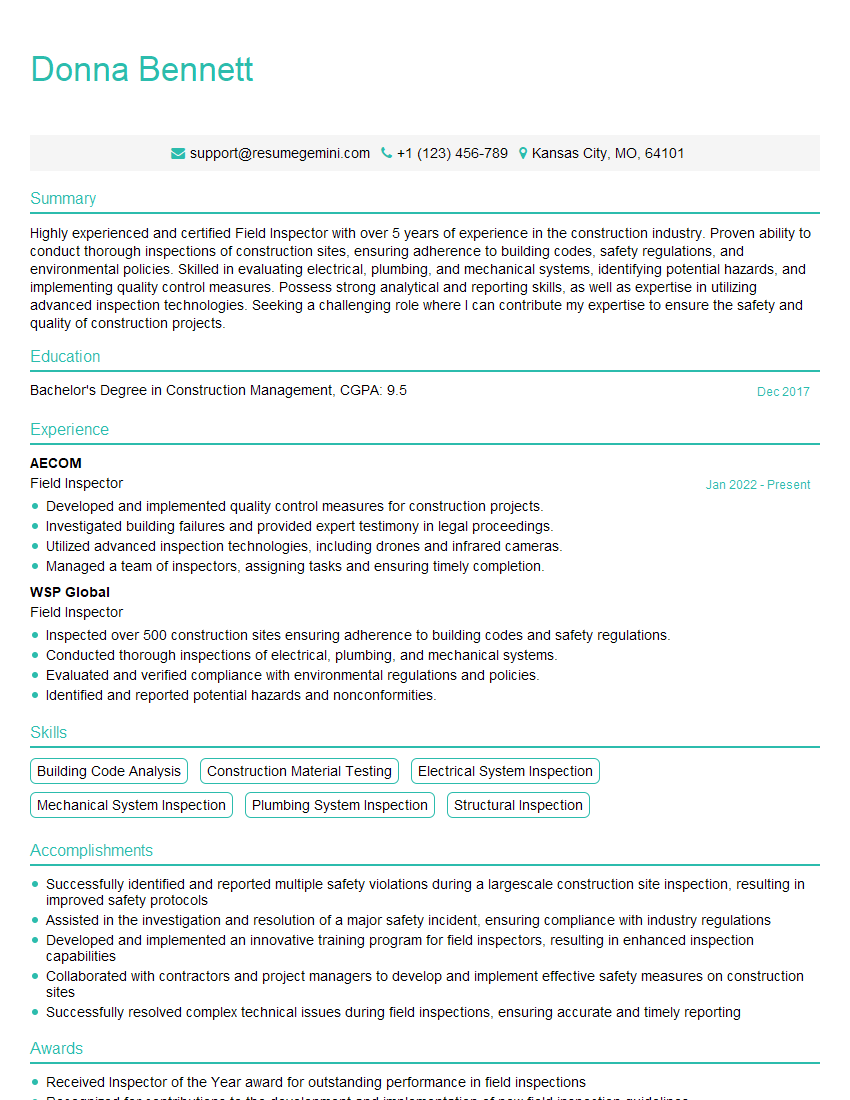
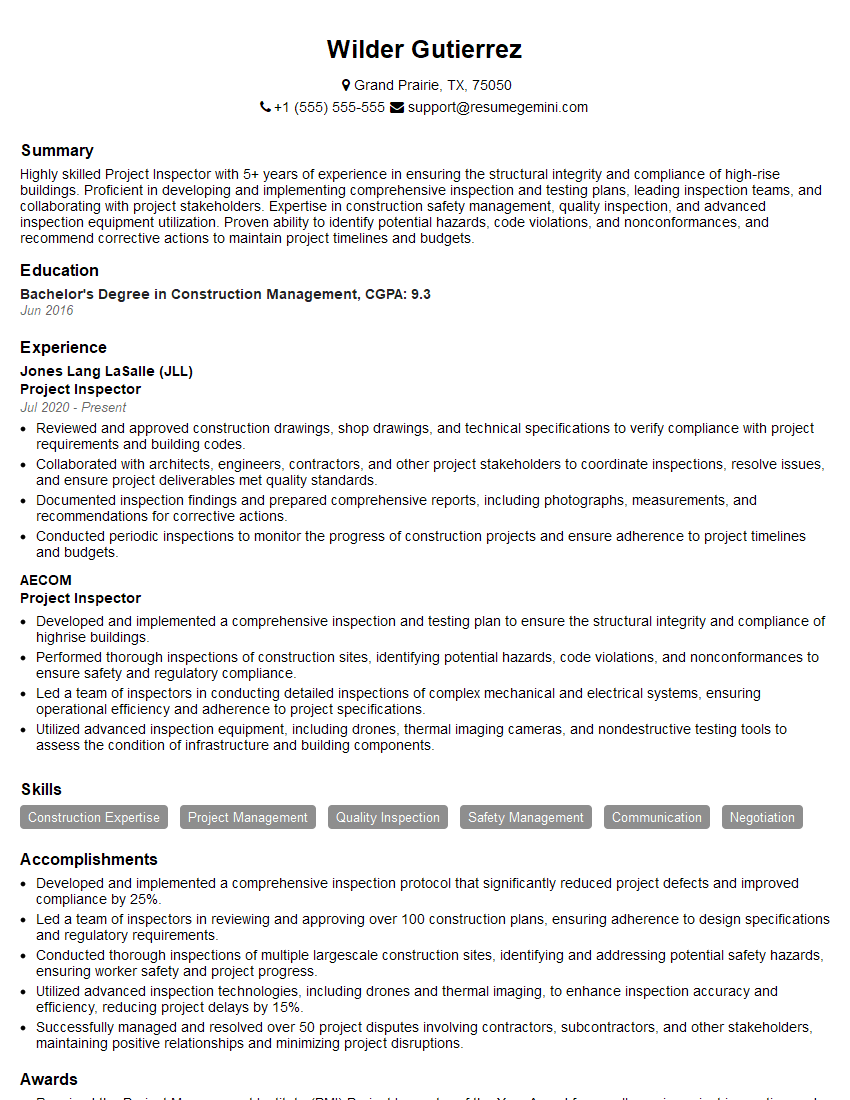
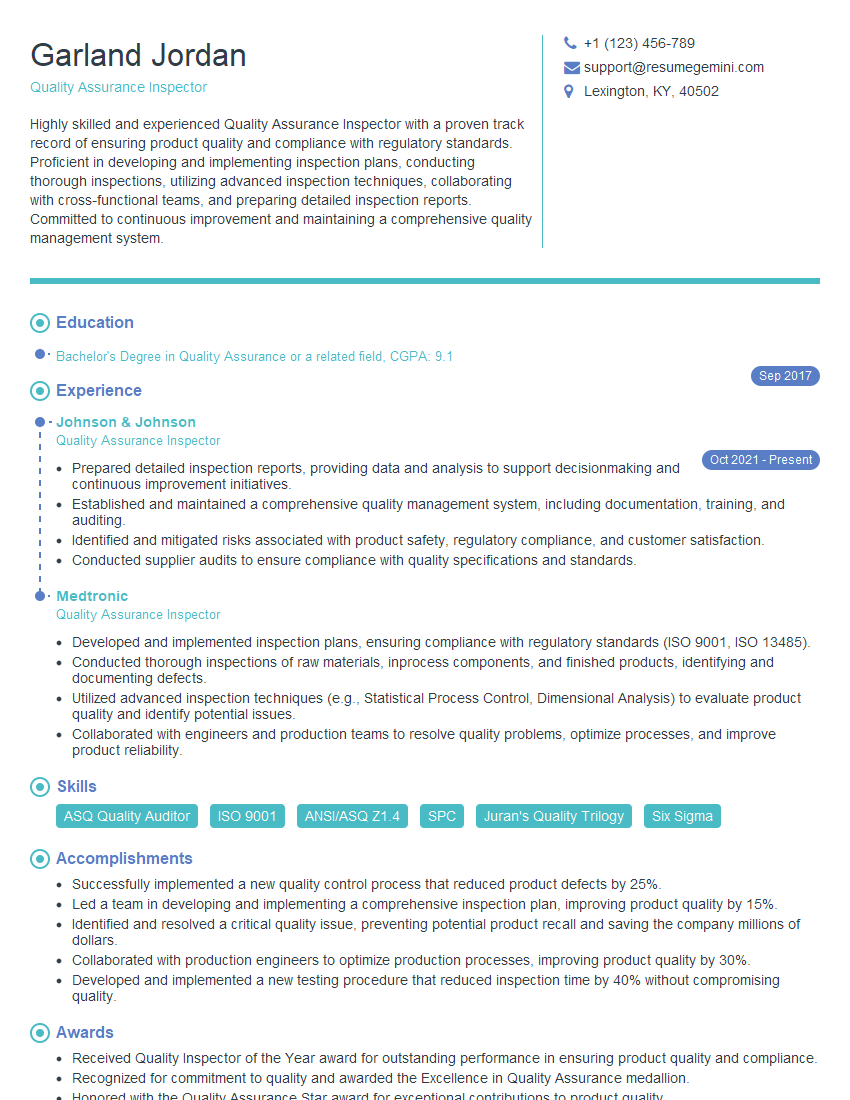
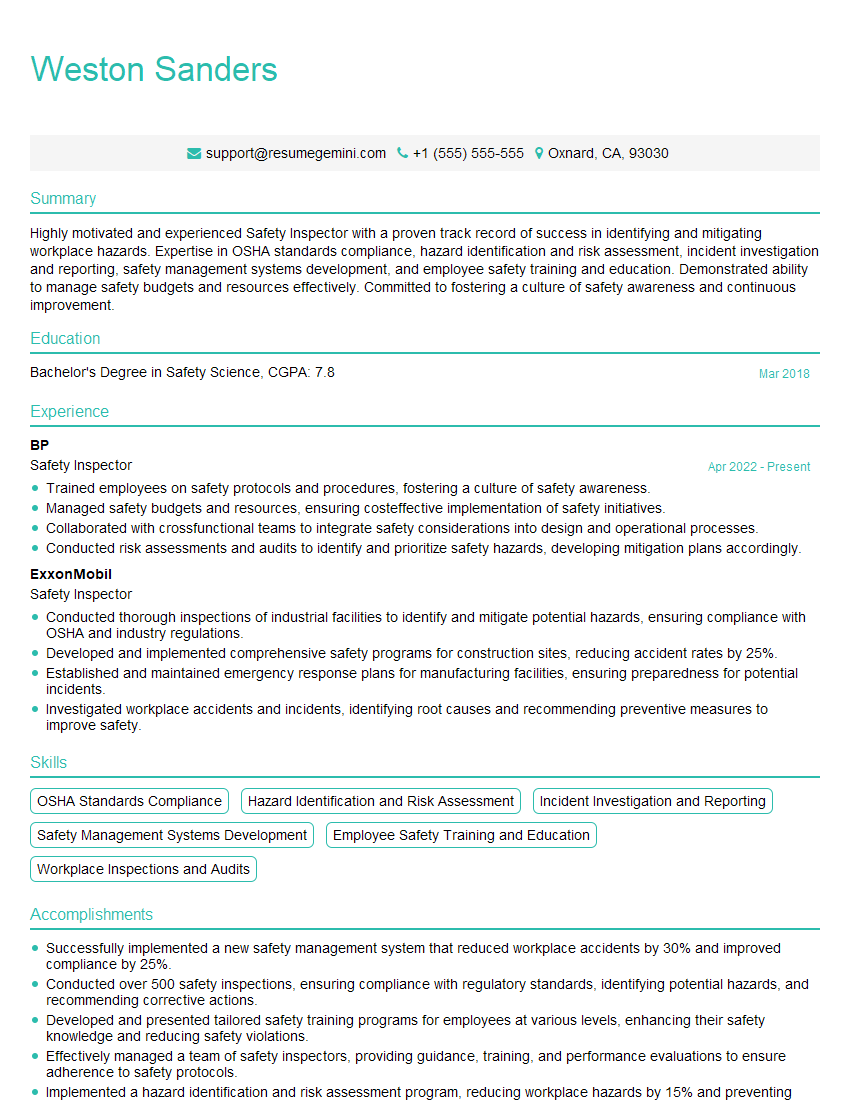
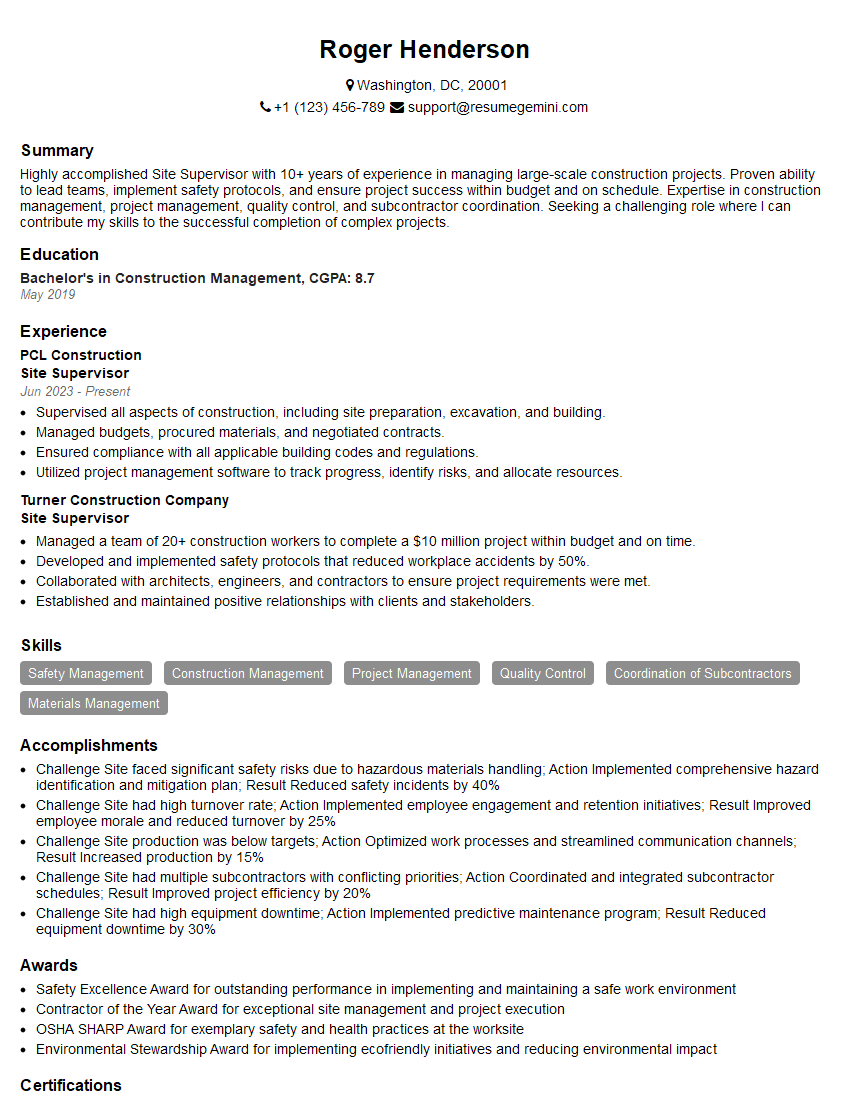
Mastering Site Inspection and Monitoring opens doors to rewarding careers with excellent growth potential in various industries. A strong understanding of these principles is highly valued by employers. To significantly boost your job prospects, invest time in crafting an ATS-friendly resume that showcases your skills and experience effectively. ResumeGemini is a trusted resource that can help you build a professional and impactful resume. We offer examples of resumes tailored to Site Inspection and Monitoring roles to guide you in creating a compelling application. Take the next step towards your dream career – build your best resume with ResumeGemini today!

Explore more articles
Users Rating of Our Blogs
Share Your Experience
We value your feedback! Please rate our content and share your thoughts (optional).
What Readers Say About Our Blog
hello,
Our consultant firm based in the USA and our client are interested in your products.
Could you provide your company brochure and respond from your official email id (if different from the current in use), so i can send you the client’s requirement.
Payment before production.
I await your answer.
Regards,
MrSmith
hello,
Our consultant firm based in the USA and our client are interested in your products.
Could you provide your company brochure and respond from your official email id (if different from the current in use), so i can send you the client’s requirement.
Payment before production.
I await your answer.
Regards,
MrSmith
These apartments are so amazing, posting them online would break the algorithm.
https://bit.ly/Lovely2BedsApartmentHudsonYards
Reach out at [email protected] and let’s get started!
Take a look at this stunning 2-bedroom apartment perfectly situated NYC’s coveted Hudson Yards!
https://bit.ly/Lovely2BedsApartmentHudsonYards
Live Rent Free!
https://bit.ly/LiveRentFREE
Interesting Article, I liked the depth of knowledge you’ve shared.
Helpful, thanks for sharing.
Hi, I represent a social media marketing agency and liked your blog
Hi, I represent an SEO company that specialises in getting you AI citations and higher rankings on Google. I’d like to offer you a 100% free SEO audit for your website. Would you be interested?