Unlock your full potential by mastering the most common Observatory Operations and Maintenance interview questions. This blog offers a deep dive into the critical topics, ensuring you’re not only prepared to answer but to excel. With these insights, you’ll approach your interview with clarity and confidence.
Questions Asked in Observatory Operations and Maintenance Interview
Q 1. Describe your experience maintaining telescope optics.
Maintaining telescope optics is crucial for obtaining high-quality astronomical data. It’s a multi-faceted process encompassing cleaning, coating maintenance, and alignment. My experience involves working with both reflective and refractive systems, ranging from small research telescopes to larger observatory-class instruments.
For example, cleaning a primary mirror requires meticulous procedures to avoid scratching the delicate reflective coating. This involves using specialized cleaning solutions, brushes, and swabs in a cleanroom environment under strict protocols to minimize contamination. We regularly inspect the coatings for degradation using interferometry, which reveals even microscopic imperfections. If the coating shows signs of deterioration, recoating might become necessary—a process requiring specialized expertise and equipment. Furthermore, aligning the optical components is critical to maintain the telescope’s focal point and image quality, which is typically done using precise adjustment mechanisms and laser-based alignment techniques.
In one instance, I identified a subtle decentering issue in a Cassegrain telescope’s secondary mirror through careful analysis of star images using a Shack-Hartmann wavefront sensor. By making minute adjustments to the mirror’s mount, we restored the telescope to optimal performance.
Q 2. Explain the process of calibrating astronomical instruments.
Calibrating astronomical instruments is essential to ensure the accuracy and reliability of the data they collect. This process involves comparing the instrument’s measurements to known standards or reference points. It often involves a combination of hardware and software adjustments.
The process generally begins with a thorough pre-calibration check to identify any mechanical or electronic issues that could influence the results. Then, we move onto specific calibration steps depending on the instrument. For example, a spectrograph might need wavelength calibration using a known emission line source like a neon lamp. Photometric instruments require calibration to remove biases, such as dark current and flat fielding using sets of dark and flat-field images. This eliminates the effects of detector noise and uneven sensitivity across the detector.
Software plays a key role. We use specialized calibration routines and algorithms to apply corrections to the raw data, removing instrumental artifacts and improving signal-to-noise ratio. Finally, post-calibration checks are performed to validate the accuracy and consistency of the results. We compare our calibrated measurements to established datasets or predictions from models to assess the quality of the calibration.
Q 3. How do you troubleshoot problems with observatory data acquisition systems?
Troubleshooting problems in observatory data acquisition systems demands a systematic and methodical approach. It often requires a deep understanding of both the hardware and software components involved. The initial step is careful examination of error logs and status reports, to pinpoint the source of the problem.
For instance, if we lose data during an observation, it could be due to a software crash, a hardware failure in the data transmission pathway (e.g., network connectivity), or even a problem with the instrument’s data recording mechanism. We can use remote diagnostics tools and monitoring software to determine this. If network issues are indicated, we check the network hardware and connections. If the problem lies within the software, debugging tools might be used to isolate and fix the specific code causing the error. If the issue stems from faulty hardware, we might need to replace a component, like a data acquisition card, which might require replacing a part.
In one instance, intermittent data drops during observations were traced to a failing hard drive in our data storage system. By replacing the hard drive and restoring the data from backups, we resolved the problem, highlighting the importance of redundant systems and regular data backups.
Q 4. What are the common maintenance procedures for a reflecting telescope?
Reflecting telescopes, especially large ones, require regular maintenance to preserve their optical performance and structural integrity. Common procedures include:
- Mirror Cleaning: As previously mentioned, this is a crucial process, requiring specialized tools and procedures to avoid damage to the delicate reflective coating.
- Collimation: Regular alignment of the optical components (primary and secondary mirrors) is vital for maintaining optimal image quality. This is usually done using laser collimation tools or through visual alignment techniques using a Cheshire eyepiece.
- Bearing Lubrication: The telescope’s bearings require periodic lubrication to ensure smooth and precise tracking. The type and frequency of lubrication depends on the specific bearing type.
- Environmental Protection: The telescope’s enclosure must be properly maintained to protect the optics from dust, moisture, and temperature fluctuations. This includes regular cleaning, inspection of the seals, and monitoring of the environmental control system.
- Structural Checks: Periodic inspections of the telescope structure are essential to detect any signs of wear, corrosion, or structural damage.
Ignoring these procedures can lead to degraded image quality, inaccurate pointing, and potentially costly repairs.
Q 5. What are your experience with remote telescope control systems?
My experience with remote telescope control systems is extensive. I’ve worked with various systems, from simple web-based interfaces to sophisticated software packages that control all aspects of telescope operation, data acquisition, and environmental monitoring. This involves expertise in networking, security protocols, and remote diagnostics.
These systems typically allow for remote scheduling of observations, instrument control, data transfer, and real-time monitoring of telescope status. Remote control significantly enhances efficiency, allowing for observations to be conducted remotely, even from locations far from the observatory. For example, we utilize remote monitoring software to remotely troubleshoot issues and often schedule maintenance windows outside peak observation times. Security is critical in these systems, employing robust authentication and encryption methods to protect the telescope and the data.
I’ve been involved in the implementation and upgrades of several remote control systems, including integrating new instruments and enhancing the data security of the remote observatory systems.
Q 6. How do you ensure data integrity in an observatory environment?
Ensuring data integrity in an observatory environment is paramount. This involves a multi-layered approach addressing data acquisition, storage, processing, and archiving.
Data Acquisition: We employ robust data acquisition systems with redundancy, implementing checks to ensure data quality during the acquisition phase itself. This involves regularly checking the calibration of instruments, validating data consistency, and incorporating error detection and correction mechanisms within our data acquisition software. We often use checksums and other data validation techniques.
Data Storage: Data is stored on redundant storage systems, often using RAID configurations or cloud storage to prevent data loss due to hardware failures. Regular backups are performed to offsite locations.
Data Processing: Our data processing pipelines include rigorous quality control checks and validation steps, using version control systems for the software and archiving both the raw and processed data.
Data Archiving: Long-term data archiving adheres to international standards and best practices, ensuring the long-term preservation and accessibility of the data.
Q 7. Describe your experience with preventative maintenance schedules.
Preventative maintenance schedules are critical for minimizing downtime and maximizing the operational lifespan of observatory equipment. We develop these schedules based on manufacturer recommendations, operational experience, and risk assessments. These schedules typically encompass a range of activities, categorized by frequency (daily, weekly, monthly, annually).
Daily Checks: These might include visual inspections of the telescope and its surroundings, checks of the environmental control system, and testing of basic instrument functionality. Weekly Checks: More in-depth checks of critical systems, such as the telescope’s pointing accuracy and the performance of the data acquisition system. Monthly Checks: This might include more thorough cleaning and lubrication of mechanical components. Annual Checks: This would include more extensive preventative maintenance activities, such as complete instrument recalibration and detailed inspections of structural elements. These schedules are regularly reviewed and updated based on operational needs and equipment performance.
For example, we use a Computerized Maintenance Management System (CMMS) to track maintenance activities, schedule tasks, and generate reports. This enables proactive maintenance, preventing potential problems before they lead to costly downtime.
Q 8. Explain your knowledge of various telescope mounts (Alt-Az, Equatorial).
Telescope mounts are crucial for accurately pointing and tracking celestial objects. The two most common types are Alt-Azimuth (Alt-Az) and Equatorial mounts.
- Alt-Azimuth Mounts: These mounts rotate around two axes: altitude (up and down) and azimuth (horizontally). Think of it like a ship’s gun turret. They’re simpler to build and less expensive, making them popular for smaller telescopes. However, they require more complex computer control to compensate for the Earth’s rotation, as the telescope needs constant adjustments to track a star. This is known as field rotation.
- Equatorial Mounts: These mounts have one axis aligned with the Earth’s axis of rotation (polar alignment). This means only one motor is needed to track stars, significantly simplifying tracking. They’re more complex and expensive but offer superior tracking performance, especially for long-exposure astrophotography. Think of it like a clock; as the Earth rotates, the telescope moves in tandem. A common type is the German Equatorial mount, featuring a right ascension and declination axis.
Choosing the right mount depends on factors like budget, telescope size, and intended observations. For instance, a large research telescope might need the superior tracking of an Equatorial mount, while a smaller amateur telescope might use an Alt-Az mount for its simpler design. I’ve personally worked with both types extensively and appreciate the strengths and challenges of each.
Q 9. How do you handle emergency situations during observatory operations?
Emergency situations in an observatory require quick thinking and a structured response. My approach involves a series of steps:
- Assess the situation: Determine the nature of the emergency (e.g., power outage, equipment malfunction, fire, injury). This involves quickly identifying the source and potential impact.
- Ensure safety: Prioritize the safety of personnel and equipment. This might involve evacuating the building, shutting down systems, or contacting emergency services.
- Implement emergency procedures: Our observatory has detailed emergency protocols for various scenarios. Following these procedures is critical, as it ensures a coordinated response.
- Damage control: Once the immediate threat is addressed, focus on mitigating any damage. This might involve stabilizing equipment, assessing damage, and securing the site.
- Post-incident review: After the emergency, we conduct a thorough review to identify root causes, improvements to our procedures, and potential preventative measures. This is vital for preventing similar incidents in the future.
For example, during a severe thunderstorm, we’ve followed our emergency protocol to shut down all sensitive instruments, secure the dome, and ensure all personnel are in a safe location. This methodical approach ensures minimal disruption and damage.
Q 10. What are your skills in troubleshooting electrical problems in an observatory setting?
Troubleshooting electrical problems in an observatory environment demands a combination of technical skills and safety awareness. My expertise includes:
- Understanding observatory power systems: I’m proficient in analyzing AC and DC power distribution, uninterruptible power supplies (UPS), and grounding systems crucial for protecting sensitive equipment.
- Diagnosing faults: I can use multimeters, oscilloscopes, and other diagnostic tools to pinpoint problems in electrical circuits, motors, and control systems. For instance, I recently identified a faulty power supply causing intermittent issues with the telescope’s drive system by tracing voltage drops.
- Safe working practices: I’m fully trained in electrical safety procedures, including lockout/tagout, and always prioritize safety when working with high-voltage systems.
- Preventative maintenance: I perform regular checks of wiring, connections, and safety devices to proactively identify and address potential problems, preventing more significant failures. Regular cleaning of electrical contacts is a preventative measure I strongly advocate for.
I’m confident in my ability to diagnose and resolve a wide range of electrical issues, ensuring the smooth and safe operation of the observatory’s systems.
Q 11. Describe your experience with different types of astronomical detectors (CCD, CMOS).
Astronomical detectors are the eyes of the observatory, capturing the faint light from celestial objects. I have significant experience with both CCDs (Charge-Coupled Devices) and CMOS (Complementary Metal-Oxide-Semiconductor) sensors.
- CCDs: These have been the workhorse of astronomy for decades, known for their high sensitivity and low noise. I’ve worked extensively with various CCD cameras, understanding their cooling requirements, readout modes, and bias/dark current correction methods. Cooling to minimize thermal noise is critical for deep exposures.
- CMOS: CMOS sensors are becoming increasingly popular in astronomy due to their faster readout speeds and lower power consumption. They also offer advantages for certain types of observations. However, they can be more susceptible to noise compared to cooled CCDs in low-light conditions. I have experience in optimizing the readout settings of different CMOS cameras to balance speed and noise.
The choice between CCD and CMOS depends on the specific observational requirements. For faint object detection, a cooled CCD often provides superior results; for fast time-resolved observations or large field-of-view surveys, a CMOS sensor might be advantageous. I’ve had practical experience calibrating and troubleshooting both types of detectors in various observational setups.
Q 12. How familiar are you with astronomical software packages (e.g., IRAF, PyEphem)?
Proficiency in astronomical software packages is essential for data reduction, analysis, and telescope control. I’m familiar with several packages, including:
- IRAF (Image Reduction and Analysis Facility): This powerful but older package is still widely used for its robust image processing capabilities. I have extensive experience using IRAF for tasks such as bias subtraction, flat-fielding, and cosmic ray removal.
- PyEphem: This Python library is incredibly useful for astronomical calculations, such as ephemeris generation (predicting the position of celestial objects), telescope pointing, and scheduling observations. I’ve used PyEphem extensively to automate observing tasks and optimize telescope pointing.
- Other packages: I also have experience with other software tools like DS9 (image viewer), and various Python-based packages for data analysis (e.g., Astropy, SciPy). My experience also extends to custom scripting for data processing and telescope control using software like MaximDL and TheSkyX.
My programming skills are not limited to the use of these packages. I am adept at developing custom scripts and tools using Python and other languages to manage and analyze astronomical data, efficiently automating various observatory operations.
Q 13. What are your skills in maintaining environmental control systems in an observatory?
Maintaining a stable and controlled environment is crucial for optimal telescope performance and the preservation of sensitive equipment. My experience includes:
- Temperature control: I understand the importance of maintaining a stable temperature within the observatory dome and instrument enclosures to minimize thermal distortions and fluctuations. This includes understanding and troubleshooting HVAC systems, temperature sensors, and control systems. A stable temperature minimizes thermal gradients causing image distortions.
- Humidity control: Controlling humidity prevents condensation and corrosion of optical components and electronics. I’m experienced in maintaining humidity within acceptable ranges and identifying issues with dehumidification systems.
- Air quality: Dust and other airborne particles can compromise optical performance. I’m familiar with air filtration systems and procedures for maintaining clean air conditions within the observatory. Regular air filter replacements are vital in this aspect.
- Vibration control: Minimizing vibrations is vital for high-resolution observations. I have experience in evaluating vibration sources and implementing measures to reduce vibrations from various sources, including nearby machinery and wind.
For instance, I’ve successfully diagnosed and resolved a problem with the observatory’s HVAC system that was causing excessive temperature fluctuations, leading to improved image quality.
Q 14. How do you prioritize maintenance tasks based on urgency and impact?
Prioritizing maintenance tasks requires a structured approach that balances urgency and impact. I use a system that combines a risk assessment matrix with a preventative maintenance schedule.
- Risk assessment: Each maintenance task is assessed based on two factors: the likelihood of failure and the impact of that failure on observatory operations. Tasks with high likelihood and high impact are prioritized.
- Preventative maintenance schedule: A detailed schedule is maintained for routine tasks such as cleaning optical surfaces, lubricating moving parts, and checking electrical systems. These tasks are scheduled based on manufacturer recommendations and past experience.
- Corrective maintenance: Problems identified during routine checks or emergency situations are prioritized based on urgency. A critical failure of a main system would receive immediate attention.
- Resource allocation: Prioritization helps allocate resources (time, personnel, budget) effectively to the most crucial tasks.
For example, a cracked dome window would be given immediate attention due to its high impact (potential damage from weather) and high likelihood of causing further issues. Routine cleaning of a secondary mirror is a preventative task scheduled regularly to prevent dust buildup and degradation of image quality.
Q 15. What is your experience with weather monitoring and its impact on observations?
Weather monitoring is absolutely crucial for successful observatory operations. Adverse weather conditions directly impact the quality of astronomical observations. My experience encompasses utilizing a range of tools, from on-site weather stations providing real-time data on temperature, humidity, wind speed, and cloud cover, to sophisticated forecasting models that predict atmospheric conditions several days in advance. I’ve used this data to make critical decisions such as scheduling observations, deploying protective covers for telescopes, and even deciding whether to postpone an observing run altogether.
For example, high winds can induce vibrations in the telescope structure, degrading the image quality. Similarly, high humidity can lead to dew formation on the telescope mirrors, obscuring the view. I’ve personally managed situations where an unexpected storm forced us to rapidly secure the equipment, preventing potentially costly damage. The ability to interpret weather data and proactively mitigate its impact on observations is fundamental to efficient and productive observatory operations.
Career Expert Tips:
- Ace those interviews! Prepare effectively by reviewing the Top 50 Most Common Interview Questions on ResumeGemini.
- Navigate your job search with confidence! Explore a wide range of Career Tips on ResumeGemini. Learn about common challenges and recommendations to overcome them.
- Craft the perfect resume! Master the Art of Resume Writing with ResumeGemini’s guide. Showcase your unique qualifications and achievements effectively.
- Don’t miss out on holiday savings! Build your dream resume with ResumeGemini’s ATS optimized templates.
Q 16. Describe your experience with the safety procedures and regulations in an observatory.
Safety is paramount in an observatory environment. My experience includes rigorous adherence to established safety protocols, encompassing everything from proper handling of potentially hazardous chemicals used in cleaning optical surfaces, to working at heights when maintaining the telescope structure. We use detailed safety checklists for each task, ensuring that all personnel understand and follow risk assessment procedures. Regular safety training and drills are conducted to maintain a high level of awareness among the team.
I’ve developed and implemented emergency response plans, including procedures for equipment malfunction, fire, and even severe weather events. For instance, we conduct regular drills to ensure the safe evacuation of the observatory during an emergency. These procedures, combined with clear communication protocols, ensure the safety of personnel and the protection of equipment.
Q 17. Explain your understanding of data archiving and retrieval methods.
Data archiving and retrieval are critical for ensuring the long-term value of astronomical observations. My approach involves a multi-layered strategy using robust data management systems. This includes implementing a hierarchical data storage structure, utilizing redundant storage to prevent data loss, and implementing rigorous metadata management to ensure data findability and reproducibility. We typically use a combination of on-site and off-site storage to protect against catastrophic events like fire or theft.
The system supports efficient data retrieval, using sophisticated search capabilities that allow astronomers to locate specific data sets based on various criteria such as observation date, target object, and instrument used. I am proficient in using database management systems and data analysis tools for organizing and accessing archived data. We use standardized data formats, ensuring compatibility and interoperability across different analysis platforms. Furthermore, I ensure our system complies with data standards and regulations relevant to astronomical research.
Q 18. How familiar are you with different types of telescope enclosures and their maintenance?
I’m familiar with a variety of telescope enclosures, ranging from simple roll-off-roof designs to sophisticated rotating domes. Each type requires a unique maintenance strategy. Roll-off-roof structures need regular checks for alignment, lubrication, and corrosion prevention. Rotating domes require more extensive maintenance, including inspection and lubrication of the drive mechanisms, as well as monitoring for wear and tear on the structure itself. I understand the importance of regular preventative maintenance, such as cleaning and painting, to extend the lifespan of these enclosures.
For example, I’ve overseen the replacement of worn-out seals in a dome’s rotating mechanism, preventing water ingress and ensuring the structure’s longevity. I also have experience in troubleshooting and repairing mechanical systems within enclosures, such as the ventilation systems that control the internal temperature and humidity.
Q 19. How do you ensure the security of an observatory’s infrastructure and data?
Observatory security encompasses both physical security and data security. For physical security, we utilize a multi-layered approach including perimeter fencing, security cameras, access control systems, and 24/7 monitoring. For data security, we implement robust access control measures, encrypting sensitive data both in transit and at rest. We regularly update our software to patch vulnerabilities and follow best practices for network security.
Regular security audits are conducted to identify potential weaknesses in our systems. Furthermore, we have protocols in place to manage and respond to security incidents. For instance, we have established procedures for handling data breaches and conducting thorough investigations.
Q 20. What is your experience with managing budgets and resources related to observatory maintenance?
Managing observatory budgets and resources requires careful planning and prioritization. My experience includes developing and managing annual budgets, allocating resources effectively, and tracking expenditures. I use budget management software to monitor spending against budget allocations, ensuring that funds are used efficiently and responsibly. I am skilled at justifying budget requests to funding agencies and demonstrating the value of the observatory’s operations.
I prioritize preventative maintenance to avoid costly repairs down the line. For example, proactive cleaning of optical components prevents the need for expensive refurbishment or replacement. I also carefully evaluate the cost-effectiveness of different maintenance options, ensuring that resources are allocated optimally to maximize the return on investment.
Q 21. Describe your approach to training new observatory staff.
Training new observatory staff is a crucial aspect of maintaining a safe and productive work environment. My approach is structured and systematic, combining classroom instruction with hands-on training. The curriculum covers all aspects of observatory operations, including safety procedures, equipment operation, data handling, and maintenance techniques. Mentorship is a key component of our training program, pairing new staff with experienced colleagues for practical guidance.
We use a combination of written materials, demonstrations, and simulations to convey the necessary knowledge and skills. Regular assessments ensure that trainees have mastered the relevant concepts and procedures. Continuous professional development is also encouraged to keep staff up-to-date with the latest advances in technology and best practices in observatory operations.
Q 22. How do you handle conflicts between research needs and maintenance requirements?
Balancing research needs and maintenance is crucial for efficient observatory operations. It’s a delicate dance, as downtime for maintenance can interrupt crucial observations, while neglecting maintenance can lead to equipment failure and lost data, far exceeding the cost of planned maintenance.
We use a scheduling system that prioritizes observations based on several factors: scientific importance, weather conditions, and the required instrument configuration. Maintenance tasks are scheduled strategically, often during periods of poor weather or when less critical observations are planned. A strong communication channel between the research team and the maintenance team is paramount. For instance, if a specific instrument needs calibration, we’ll coordinate this with the research team to minimize disruption, perhaps scheduling it during the moon’s brightest phase when deep-sky observations are less effective.
We also employ a preventative maintenance schedule, proactively identifying potential issues before they become major problems. This reduces unplanned downtime, making the scheduling process more predictable and allowing us to better accommodate both research and maintenance needs. This proactive approach avoids the costly and time-consuming reactive maintenance that disrupts research more significantly.
Q 23. What is your understanding of the principles of adaptive optics?
Adaptive optics (AO) is a technology that corrects for the blurring effects of atmospheric turbulence on astronomical images. Imagine looking at a star through a shimmering heat haze – that’s what atmospheric turbulence does to telescope views. AO systems use deformable mirrors to counteract this distortion in real-time. These mirrors have thousands of actuators that can change their shape hundreds or even thousands of times per second, responding to measurements of atmospheric distortion made by a wavefront sensor.
A wavefront sensor measures the distortions in the incoming starlight, and a control system calculates the necessary corrections. These corrections are then applied to the deformable mirror, which refocuses the light to produce a sharper image. This process allows for significantly sharper images of astronomical objects, especially at visible and near-infrared wavelengths.
Think of it like this: you’re trying to read text that is blurry because you are looking through a wavy glass. Adaptive optics is like having a ‘self-adjusting glass’ that constantly adjusts itself to compensate for the waviness, making the text clearly readable.
Q 24. How do you stay current with the latest advancements in observatory technology?
Staying current in observatory technology requires a multi-pronged approach. I regularly attend conferences and workshops, such as SPIE Astronomical Telescopes + Instrumentation, to learn about the latest innovations and advancements in instrumentation, control systems, and data analysis techniques. I also actively participate in professional organizations like the Astronomical Society of the Pacific, which provide access to publications and networking opportunities.
I actively read peer-reviewed journals like ‘Publications of the Astronomical Society of the Pacific’ and ‘The Astrophysical Journal’ as well as industry publications to remain aware of new developments in telescope design, detector technology, and data processing pipelines. Online resources, such as arXiv preprints, provide early access to research breakthroughs. Furthermore, I maintain a strong professional network, engaging in discussions and collaborations with colleagues in the field to stay abreast of emerging trends and best practices.
Q 25. Describe your experience with troubleshooting networking issues in an observatory setting.
Troubleshooting network issues in an observatory is unique due to the remote location, specialized equipment, and the critical nature of uninterrupted data transmission. I have extensive experience using network monitoring tools like SolarWinds and Nagios to identify network bottlenecks and outages. My experience includes troubleshooting issues related to fiber optic cables, network switches, routers, and wireless communication systems.
In one instance, we experienced intermittent data loss during a crucial observation run. Using packet analyzers, we traced the issue to a faulty network switch in a remote instrument enclosure. The solution involved replacing the switch, and we implemented a redundant backup system to prevent future disruptions. This highlighted the importance of preventative maintenance and redundant systems in critical observatory infrastructure.
I am proficient in using various network protocols, including TCP/IP, UDP, and fiber channel, and I am familiar with various network security measures crucial for protecting sensitive observatory data. We routinely conduct network security audits to ensure that our network is secure and protected from cyber threats.
Q 26. How familiar are you with software used for telescope scheduling and control?
I’m proficient in several telescope scheduling and control software packages, including those based on the INDI (Instrument Neutral Distributed Interface) standard, and others proprietary to individual observatories. My experience encompasses both the planning and execution phases of observation runs. This includes designing observing sequences, optimizing telescope pointing and tracking, and managing the data acquisition process.
I’ve worked extensively with software for generating observation schedules that optimize observing time given constraints like weather forecasts, target visibility, and instrument availability. This frequently involves developing custom scripts to automate routine tasks, ensuring seamless transitions between observations and minimizing manual intervention. I understand the importance of efficient scheduling to maximize scientific output and minimize lost observing time.
Q 27. What is your experience with working in a collaborative research environment?
Collaboration is inherent to modern astronomical research. My experience involves working closely with astronomers, engineers, and technicians across various disciplines. I’m skilled in effective communication, coordination, and conflict resolution within team environments.
In my previous role, I participated in a large international collaboration, where we jointly operated a network of telescopes across several continents. This required seamless coordination of observing schedules, data sharing, and resource allocation. This experience fostered my abilities in diplomacy, understanding diverse perspectives, and finding consensus to achieve common goals. The success of these collaborations heavily relies on open communication, clear task assignments, and mutual respect amongst team members.
Q 28. Explain your understanding of the impact of light pollution on astronomical observations.
Light pollution, the excessive illumination of the night sky due to artificial light sources, significantly impacts astronomical observations. It washes out faint astronomical objects, making them difficult or impossible to detect. This reduces the sensitivity of telescopes, diminishing the quality and quantity of scientific data.
The effect is particularly pronounced for observations of faint objects like distant galaxies or supernovae. To mitigate the impact, observatories are often located in remote areas with minimal light pollution. Additionally, some observatories employ specialized techniques to reduce the impact of light pollution, including using narrow-band filters that isolate specific wavelengths of light or implementing sophisticated data reduction techniques that subtract out the contribution of artificial light sources. The design and operation of future observatories incorporate significant measures to minimize light pollution’s effect, underscoring its growing importance in preserving the scientific value of astronomical observations.
Key Topics to Learn for Observatory Operations and Maintenance Interview
- Telescope Systems: Understanding the mechanics, optics, and control systems of various telescope types (e.g., refractors, reflectors). Practical application: Troubleshooting malfunctions in telescope pointing or focusing mechanisms.
- Instrumentation and Detectors: Knowledge of different detectors (CCD, CMOS, spectrographs), their limitations, and calibration techniques. Practical application: Diagnosing signal noise or data artifacts in astronomical images.
- Data Acquisition and Processing: Familiarity with data acquisition software, data reduction pipelines, and common data formats (FITS). Practical application: Developing scripts to automate data processing and quality control.
- Observatory Infrastructure: Understanding the environmental control systems (e.g., temperature, humidity), power systems, and safety protocols of an observatory. Practical application: Performing preventative maintenance on critical infrastructure components.
- Remote Observing and Control: Experience with remote telescope operation, network communication protocols, and software interfaces. Practical application: Troubleshooting network connectivity issues affecting remote observations.
- Safety Procedures and Emergency Response: Knowledge of observatory-specific safety regulations, emergency procedures, and hazard identification. Practical application: Responding effectively to equipment malfunctions or emergency situations.
- Troubleshooting and Problem-Solving: Developing a systematic approach to diagnose and resolve technical issues, utilizing logical reasoning and available resources. Practical application: Identifying the root cause of a recurring software error.
- Maintenance Scheduling and Documentation: Understanding the importance of preventative maintenance, scheduling practices, and detailed record-keeping. Practical application: Creating and managing a comprehensive maintenance schedule for observatory equipment.
Next Steps
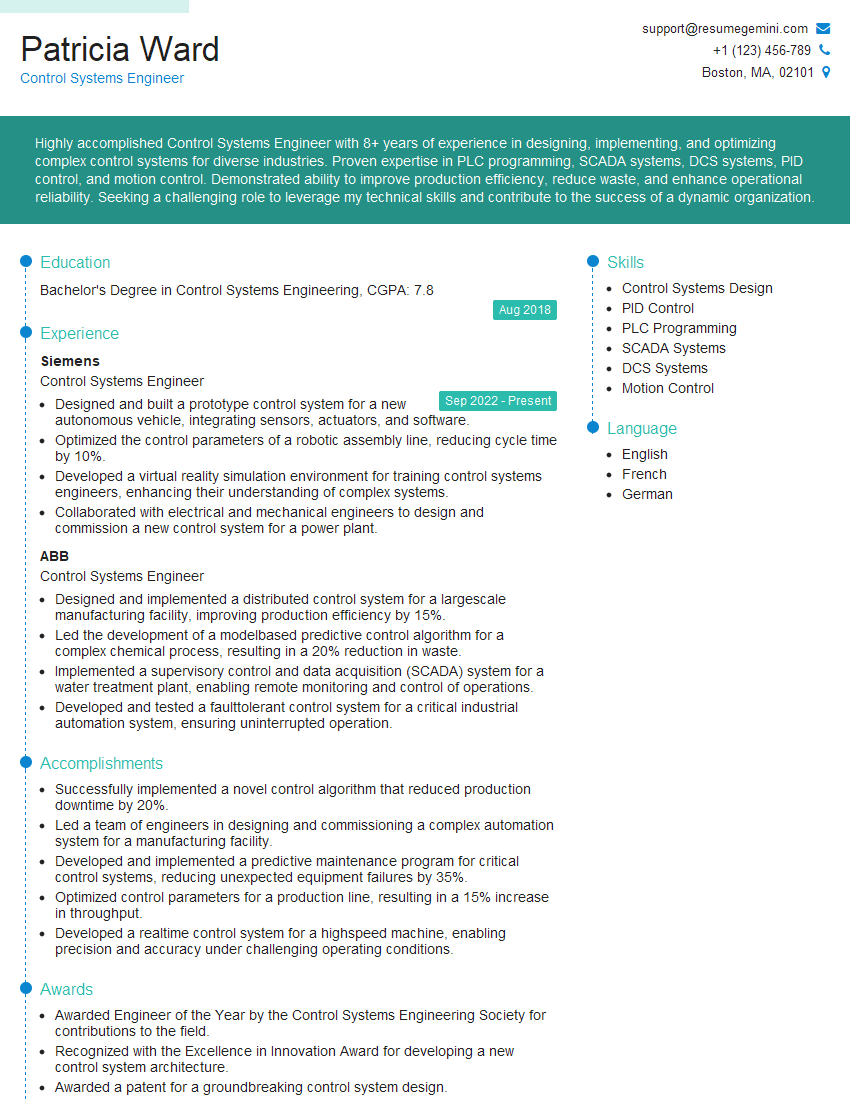
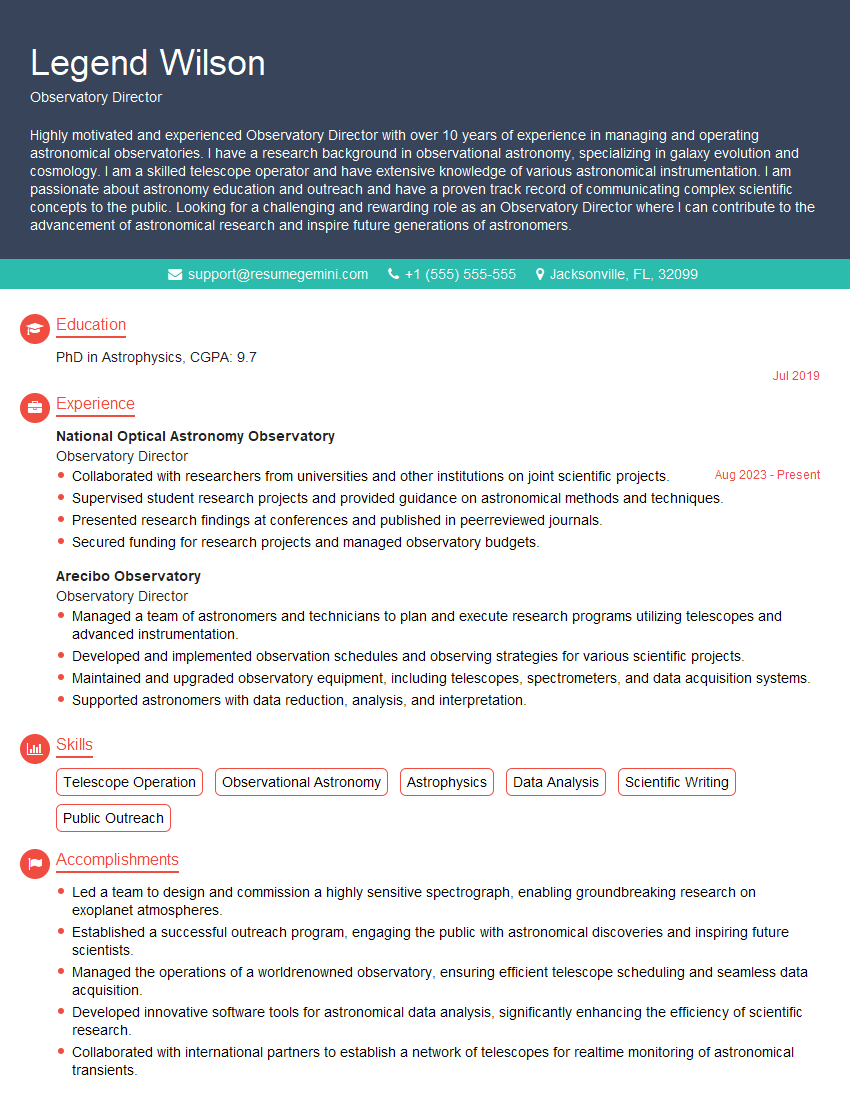
Mastering Observatory Operations and Maintenance is crucial for a rewarding career in astronomy and related fields. It opens doors to specialized roles with significant responsibility and the opportunity to contribute to cutting-edge research. To maximize your job prospects, creating an ATS-friendly resume is essential. ResumeGemini is a trusted resource that can help you build a professional and impactful resume. They provide examples of resumes tailored to Observatory Operations and Maintenance, allowing you to craft a document that showcases your skills and experience effectively. Take the next step towards your dream career today!
Explore more articles
Users Rating of Our Blogs
Share Your Experience
We value your feedback! Please rate our content and share your thoughts (optional).
What Readers Say About Our Blog
hello,
Our consultant firm based in the USA and our client are interested in your products.
Could you provide your company brochure and respond from your official email id (if different from the current in use), so i can send you the client’s requirement.
Payment before production.
I await your answer.
Regards,
MrSmith
hello,
Our consultant firm based in the USA and our client are interested in your products.
Could you provide your company brochure and respond from your official email id (if different from the current in use), so i can send you the client’s requirement.
Payment before production.
I await your answer.
Regards,
MrSmith
These apartments are so amazing, posting them online would break the algorithm.
https://bit.ly/Lovely2BedsApartmentHudsonYards
Reach out at [email protected] and let’s get started!
Take a look at this stunning 2-bedroom apartment perfectly situated NYC’s coveted Hudson Yards!
https://bit.ly/Lovely2BedsApartmentHudsonYards
Live Rent Free!
https://bit.ly/LiveRentFREE
Interesting Article, I liked the depth of knowledge you’ve shared.
Helpful, thanks for sharing.
Hi, I represent a social media marketing agency and liked your blog
Hi, I represent an SEO company that specialises in getting you AI citations and higher rankings on Google. I’d like to offer you a 100% free SEO audit for your website. Would you be interested?