Unlock your full potential by mastering the most common Customer Research interview questions. This blog offers a deep dive into the critical topics, ensuring you’re not only prepared to answer but to excel. With these insights, you’ll approach your interview with clarity and confidence.
Questions Asked in Customer Research Interview
Q 1. Explain the difference between qualitative and quantitative customer research methods.
Qualitative and quantitative customer research methods differ fundamentally in their approach to data and analysis. Qualitative research explores the why behind customer behavior, focusing on in-depth understanding of experiences, perspectives, and motivations. It uses methods like interviews and focus groups to gather rich, descriptive data. Think of it like conducting a deep dive into the heart of a specific issue. Quantitative research, on the other hand, measures and quantifies customer behavior, using numerical data to identify patterns and trends. Surveys and A/B testing are common quantitative methods. This is more like taking a wide-angle lens to capture a broader picture of customer behavior.
For example, imagine you’re researching customer dissatisfaction with a new software product. Qualitative research might involve interviewing frustrated users to understand their specific pain points, while quantitative research could involve a survey to determine the percentage of users experiencing similar problems. Both approaches offer valuable insights, but they provide different types of information and should often be used in tandem for a comprehensive understanding.
Q 2. Describe your experience with various data collection methods (e.g., surveys, interviews, focus groups, usability testing).
Throughout my career, I’ve extensively used various data collection methods. Surveys are excellent for gathering large-scale quantitative data on customer preferences, satisfaction, and demographics. I have experience designing and deploying both online and offline surveys, employing branching logic and ensuring respondent anonymity to maximize participation and data quality. Interviews, both structured and unstructured, provide rich qualitative insights. I’ve conducted hundreds of interviews, learning to create a comfortable environment that encourages open and honest feedback. Focus groups allow for dynamic group discussions, revealing nuanced perspectives and uncovering unanticipated themes. I’ve skillfully moderated focus groups, facilitating insightful discussions and ensuring all participants contribute. Finally, usability testing is crucial for evaluating product design. I’ve conducted both in-person and remote usability tests, carefully observing user interactions to identify areas for improvement and making data-driven design recommendations. Each method offers a unique lens into the customer experience, and my expertise lies in selecting the most appropriate approach for each research objective.
Q 3. How do you define and measure customer satisfaction?
Customer satisfaction is a measure of how well a product or service meets or exceeds customer expectations. It’s not just about the absence of problems; it’s about delighting the customer and creating a positive experience. We measure this using a variety of metrics, including:
- Customer Satisfaction Score (CSAT): This is often a simple rating scale (e.g., 1-5 or 1-10) asking customers how satisfied they were with a specific interaction or product feature.
- Net Promoter Score (NPS): This metric asks customers how likely they are to recommend your product or service to others. A higher score indicates greater loyalty and advocacy.
- Customer Effort Score (CES): This assesses how easy it was for the customer to interact with your product or service. Lower scores indicate less effort and higher satisfaction.
These metrics, alongside qualitative feedback from interviews and focus groups, provide a holistic view of customer satisfaction. We can then identify areas for improvement and track changes over time to monitor the effectiveness of interventions.
Q 4. What are some key metrics you track to assess the success of a customer research project?
To assess the success of a customer research project, I track several key metrics:
- Achieved research objectives: Did the research successfully answer the initial questions? This is the most critical metric.
- Actionable insights: Did the research provide clear recommendations that can inform business decisions? I ensure the insights are relevant and actionable.
- Data quality: Was the data collected reliable and valid? This includes assessing response rates, participant demographics, and data completeness.
- Time and budget adherence: We track project timelines and costs against the original plan, highlighting areas for efficiency in future projects.
- Stakeholder satisfaction: We assess the satisfaction level of stakeholders (marketing, product development, etc.) with the research process and deliverables.
By monitoring these metrics, we can evaluate the overall effectiveness and return on investment of our customer research initiatives.
Q 5. How do you identify and prioritize research questions?
Identifying and prioritizing research questions is a crucial first step. It involves a combination of business needs, strategic goals, and understanding existing customer knowledge gaps. I typically use a structured approach:
- Define Business Objectives: What are the key business problems we aim to solve? What decisions need to be made?
- Identify Knowledge Gaps: What do we already know about our customers? Where are the gaps in our understanding?
- Formulate Research Questions: Develop clear, concise, and measurable research questions that directly address the identified knowledge gaps and business objectives.
- Prioritize Questions: Rank research questions by their potential impact on business decisions and feasibility of answering them within the project’s timeframe and resources. We employ techniques like prioritization matrices to aid in this.
For instance, if we see declining customer retention, we might prioritize research questions focused on identifying reasons for churn over those focusing on brand perception, as the former is more directly linked to a pressing business issue.
Q 6. Describe your experience with sample selection and ensuring research representativeness.
Sample selection is vital for ensuring research representativeness. A representative sample accurately reflects the characteristics of the target population, allowing us to generalize findings to a larger group. I employ various sampling techniques, including:
- Probability sampling: (e.g., simple random sampling, stratified sampling) ensures every member of the population has a known chance of being selected, leading to more generalizable results.
- Non-probability sampling: (e.g., convenience sampling, snowball sampling) is often used when probability sampling is impractical, but it’s crucial to acknowledge the limitations in generalizability.
When selecting a sample, I carefully consider the target population’s demographics, psychographics, and behavior to ensure the sample accurately reflects the diversity within the group. I also calculate the required sample size using appropriate statistical methods to achieve a desired level of precision and confidence. For example, if we are studying customer preferences related to age, we would ensure that our sample includes proportionate representation across different age groups within our target market. This allows us to avoid biased findings.
Q 7. How do you analyze qualitative data (e.g., thematic analysis, grounded theory)?
Analyzing qualitative data involves identifying patterns, themes, and insights within the collected data. I commonly use techniques such as:
- Thematic analysis: This involves systematically identifying, analyzing, and reporting patterns (themes) within data. This process includes coding data, identifying themes, reviewing themes, and defining and naming themes.
- Grounded theory: This is an iterative process of data collection and analysis where themes and theories emerge from the data itself, rather than being imposed beforehand. This is useful for generating new theory from observations.
My process involves meticulous transcription, careful coding of data segments, identifying recurring themes, and creating detailed reports summarizing findings. I use qualitative data analysis software to assist in this process, allowing for efficient coding, searching, and visualization of themes. Using software ensures accuracy and allows efficient organization of large datasets, highlighting key recurring words or phrases which may represent an underlying theme.
Q 8. How do you analyze quantitative data (e.g., statistical significance, regression analysis)?
Analyzing quantitative data involves using statistical methods to understand patterns and relationships within numerical customer data. This often starts with descriptive statistics (mean, median, standard deviation) to get a basic understanding of the data’s distribution. Then, we delve into inferential statistics to draw conclusions about a larger population based on a sample.
Statistical Significance: This determines if observed differences or relationships are likely due to chance or a real effect. We use p-values; a p-value less than a pre-determined significance level (e.g., 0.05) suggests the results are statistically significant. For instance, if we’re comparing customer satisfaction scores between two product versions, a significant p-value indicates a real difference, not just random variation.
Regression Analysis: This helps us understand the relationship between a dependent variable (e.g., customer purchase amount) and one or more independent variables (e.g., age, income, marketing exposure). Linear regression, for example, helps model a straight-line relationship. We analyze the coefficients to see the impact of each independent variable on the dependent variable. A positive coefficient indicates a positive relationship. For example, a higher income might predict a higher purchase amount. Multiple regression can handle multiple independent variables simultaneously.
I often use statistical software like SPSS or R to perform these analyses. Understanding the assumptions behind each statistical test is crucial to ensure the results are reliable. For example, linear regression assumes a linear relationship between variables and normally distributed residuals.
Q 9. What are some common challenges in customer research, and how have you overcome them?
Customer research presents many challenges. One common issue is getting access to the right participants. Recruiting a representative sample can be difficult and expensive, especially for niche markets. To overcome this, I’ve used techniques like snowball sampling (referrals from existing participants), online panels, and carefully crafted screening questionnaires to target the specific demographics and behaviours I need.
Another challenge is low response rates, which can bias results. To combat this, I focus on creating engaging surveys and providing clear incentives (e.g., gift cards, discounts). I also experiment with different survey lengths and delivery methods (email, in-app, etc.).
Data interpretation can also be tricky. Sometimes, findings are ambiguous or contradict initial hypotheses. To address this, I employ triangulation—using multiple data sources and methods to verify results. This could mean combining survey data with qualitative interview findings for a more comprehensive understanding.
Finally, there’s the challenge of keeping up with changing customer behavior. Trends and preferences evolve constantly, so regular research is essential. To overcome this, I implement continuous research cycles incorporating pulse surveys and ongoing data analysis to track these trends.
Q 10. Describe your experience with creating and presenting research reports and insights.
Creating and presenting research reports requires a structured approach. I start by defining clear objectives, outlining the methodology, and presenting the findings in a compelling and digestible format.
My reports usually include:
- Executive summary: A concise overview of key findings and recommendations.
- Methodology: Details on how the research was conducted (sample size, data collection methods, analysis techniques).
- Findings: Presentation of data with relevant charts and graphs.
- Insights: Interpretation of the findings, drawing conclusions and highlighting implications for the business.
- Recommendations: Actionable suggestions based on the research insights.
For presentations, I use clear and concise language, avoiding jargon. I focus on visuals to communicate complex information effectively. I tailor the presentation to the audience’s level of understanding and their specific interests. I usually include an interactive Q&A session to foster a deeper understanding and address audience queries.
For example, in a recent project analyzing customer feedback on a new app feature, I presented a report with key findings like user satisfaction scores, feature usage patterns, and areas for improvement. This helped the product team prioritize development efforts.
Q 11. How do you ensure the ethical considerations of customer research are addressed?
Ethical considerations are paramount in customer research. I adhere to strict guidelines to ensure participant privacy and data security. This includes:
- Informed consent: Participants must be fully informed about the research purpose, procedures, and their rights before participation.
- Anonymity and confidentiality: Protecting participant identity and ensuring data is used responsibly and not disclosed to unauthorized parties.
- Data security: Implementing appropriate measures to protect data from unauthorized access, use, or disclosure.
- Transparency: Being open and honest with participants about how their data will be used.
- Avoiding coercion: Ensuring participants feel free to withdraw from the research at any time without penalty.
Before initiating any research project, I obtain ethical approval from relevant review boards or committees. I carefully review and update my protocols to ensure they align with evolving ethical standards.
Q 12. Explain your experience with using research software (e.g., Qualtrics, SPSS, NVivo).
I have extensive experience using various research software. Qualtrics is my go-to platform for creating and distributing online surveys. Its branching logic, customizable templates, and robust data export capabilities are invaluable. I use it for both quantitative and qualitative data collection. For example, I’ve used Qualtrics to design A/B testing surveys for website design and landing pages.
SPSS is my primary tool for quantitative data analysis. I’m proficient in performing statistical tests, regression analyses, and creating insightful visualizations. For instance, I have used SPSS to analyze customer purchase patterns, identifying key factors driving sales.
NVivo is a qualitative data analysis software I use for managing and analyzing interview transcripts, focus group recordings, and other qualitative data. Its features for coding, theming, and visualizing qualitative data are crucial for understanding customer attitudes and opinions. In a recent project, I used NVivo to analyze customer feedback from open-ended survey questions to identify unmet needs.
Q 13. How do you incorporate customer research insights into product development or marketing strategies?
Integrating customer research insights into product development and marketing is crucial for success. I ensure that the insights directly inform decisions by:
- Prioritizing features: Using customer feedback to prioritize feature development in product roadmaps. For example, if research shows that a particular feature is highly valued but poorly implemented, it will be prioritized for improvement.
- Improving user experience: Identifying pain points and usability issues in products or services based on user testing and feedback. This informs design changes and improvements to the overall user experience.
- Targeting marketing campaigns: Segmenting customers based on research insights and tailoring marketing messages accordingly. For example, customer personas derived from research can guide campaign messaging, channel selection and overall marketing strategy.
- Setting pricing strategies: Understanding customer price sensitivity and willingness to pay using research to inform pricing decisions.
I usually work closely with product managers, designers, and marketers to ensure that research findings are properly implemented. It’s important to communicate these insights effectively and create a shared understanding of how they should shape strategies.
Q 14. Describe your experience working with cross-functional teams (e.g., product, marketing, engineering).
Collaboration is a cornerstone of successful customer research. I thrive in cross-functional environments, working effectively with product, marketing, and engineering teams. My approach emphasizes clear communication, active listening, and a shared understanding of project goals.
I often facilitate workshops and collaborative sessions to ensure that everyone understands the research objectives, findings, and recommendations. I actively seek feedback and incorporate insights from various team members to gain diverse perspectives. I translate complex research findings into actionable insights that can be readily understood and implemented by teams with different backgrounds and expertise.
For example, in a recent project focusing on improving a mobile app, I worked closely with the product team to define the research objectives and questions, with the marketing team to identify target audiences, and with the engineering team to discuss the feasibility of implementing proposed changes based on research findings.
Q 15. How do you manage research projects within budget and timeline constraints?
Managing research projects within budget and timeline constraints requires a meticulous approach from the outset. It’s not just about sticking to a schedule; it’s about optimizing resource allocation to achieve the maximum impact within the given limitations. This begins with a well-defined scope, clearly outlining research objectives, target audience, and deliverables. Then, I develop a detailed project plan, breaking down the research into manageable tasks with assigned timelines and budgets. This plan is regularly reviewed and adjusted as needed, using agile methodologies to adapt to unforeseen challenges. For example, in a recent project on customer satisfaction for a SaaS company, we initially budgeted for 500 surveys. However, upon pilot testing, we discovered a few ambiguities in the questions that might skew results. Instead of proceeding with the flawed survey, we revised it, slightly increasing the budget and delaying the timeline by a week, but ultimately ensuring higher-quality data and a more robust analysis. I also prioritize using efficient research methods. For instance, instead of conducting extensive in-person interviews, we might leverage online surveys or focus groups to reduce costs and increase speed. Regular communication with stakeholders is key to manage expectations and proactively address potential issues, keeping the project on track.
Career Expert Tips:
- Ace those interviews! Prepare effectively by reviewing the Top 50 Most Common Interview Questions on ResumeGemini.
- Navigate your job search with confidence! Explore a wide range of Career Tips on ResumeGemini. Learn about common challenges and recommendations to overcome them.
- Craft the perfect resume! Master the Art of Resume Writing with ResumeGemini’s guide. Showcase your unique qualifications and achievements effectively.
- Don’t miss out on holiday savings! Build your dream resume with ResumeGemini’s ATS optimized templates.
Q 16. Describe your experience with A/B testing and other experimental research methodologies.
A/B testing and other experimental methodologies are invaluable tools in my research arsenal. A/B testing, in its simplest form, involves comparing two versions of something (e.g., a website, an email, an advertisement) to determine which performs better. I’ve extensively used A/B testing to optimize website conversion rates, email open rates, and even the effectiveness of different marketing messaging. For example, I worked with an e-commerce company to test different product descriptions. One version focused on features, and the other focused on benefits. The A/B test clearly showed that the benefit-oriented description led to significantly higher click-through rates. Beyond A/B testing, I’m experienced with multivariate testing (testing multiple variables simultaneously), factorial designs (allowing us to assess the interaction between variables), and randomized controlled trials (RCTs). The choice of methodology depends greatly on the research question. For a quick and cost-effective evaluation of small changes, A/B testing is ideal. But if we’re exploring the impact of multiple interconnected variables, a more sophisticated experimental design like factorial designs are needed. The key is meticulous planning, careful execution (including randomization to mitigate bias), and rigorous data analysis to ensure the validity and reliability of the results.
Q 17. How do you handle conflicting research findings?
Conflicting research findings are a reality in customer research, and handling them requires a systematic approach. First, I carefully review the methodologies used in each study to identify any potential biases or limitations. Were the samples representative? Were the data collection methods robust? Were the analyses appropriate? Then, I look at the context of each study—the time period, the market conditions, and the specific questions being addressed. Sometimes, seemingly conflicting results reflect subtle differences in the research design or the target audience. For instance, two studies might find different levels of customer satisfaction with a product, but one study may have targeted long-time users and the other new users, leading to different responses. I frequently triangulate findings by combining data from multiple sources. Qualitative data (e.g., interviews) can help explain seemingly contradictory quantitative results (e.g., survey data). The goal is to synthesize the information to arrive at a comprehensive understanding, even if it means acknowledging areas of uncertainty. Transparent communication with stakeholders about the limitations of the research and the possible explanations for discrepancies is crucial.
Q 18. How do you ensure the validity and reliability of your research findings?
Ensuring the validity and reliability of research findings is paramount. Validity refers to whether the research measures what it intends to measure, while reliability refers to the consistency of the measurements. To ensure validity, I meticulously design the research instrument (surveys, interviews, etc.), using established scales and validated measures whenever possible. I carefully define concepts and operationalize variables to minimize ambiguity. Pilot testing is crucial to identify any flaws in the research design or instrument before large-scale data collection. To enhance reliability, I use standardized procedures for data collection and analysis. I employ techniques like inter-rater reliability checks (when applicable) to ensure consistency in coding or interpretation. For quantitative research, I use appropriate statistical techniques to assess the reliability of scales and measures. For qualitative research, I use rigorous transcription and coding methods to ensure accuracy and consistency. Moreover, I always clearly document the research methodology and data analysis steps to allow for replication and verification by others, a key aspect of building trust in the findings. Transparency is key.
Q 19. What is your experience with customer segmentation and persona development?
Customer segmentation and persona development are essential for effective targeting and personalization. Customer segmentation involves grouping customers based on shared characteristics, such as demographics, behavior, or needs. This can be achieved using various techniques, including clustering algorithms and rule-based segmentation. I have extensive experience using these techniques to segment customers based on their purchasing behavior, engagement levels, and responses to marketing campaigns. For example, for an online retailer, I segmented customers into high-value, medium-value, and low-value groups based on their lifetime value (LTV). Persona development then takes this a step further, creating detailed representations of ideal customers within each segment. These personas are not just demographic descriptions; they encompass behavioral patterns, motivations, frustrations, and goals. Each persona might have a name, a backstory, a typical day, and quotes representing their sentiments. This helps us understand the customer’s world and make more effective decisions about product development, marketing, and customer service.
Q 20. How familiar are you with different customer journey mapping techniques?
Customer journey mapping is a powerful tool for understanding the customer experience across all touchpoints. I’m familiar with various techniques, including service blueprints, which visually represent all the steps involved in delivering a service. I also use empathy maps, which allow us to understand the customer’s thoughts, feelings, and actions at different stages of their interaction with a company. For example, I worked with a bank to map out the customer journey for opening a new account, identifying pain points such as long wait times and confusing paperwork. We used this map to recommend improvements to the process, streamlining the application procedure and providing clear, concise instructions. Another technique is the user story map, which focuses on the user’s tasks and goals, highlighting the steps required to achieve them. The choice of technique depends on the research goals and the level of detail required. The most effective maps, however, are those that are both insightful and actionable. They should identify areas for improvement and guide the development of strategies to enhance the customer experience.
Q 21. Describe your experience with competitive analysis and benchmarking.
Competitive analysis and benchmarking are essential for understanding the competitive landscape and identifying opportunities for improvement. Competitive analysis involves systematically assessing the strengths and weaknesses of competitors, including their products, services, marketing strategies, and customer base. This often involves analyzing their website content, marketing materials, customer reviews, and financial reports. Benchmarking then compares a company’s performance against industry best practices or the performance of top competitors. I’ve used both these approaches in numerous projects to help companies assess their competitive positioning and identify areas for innovation. For instance, I helped a technology startup benchmark its customer service response times against industry leaders, identifying a significant opportunity to improve speed and efficiency. This involved comparing key metrics like average response time, customer satisfaction scores, and resolution rates. The findings were used to develop a targeted improvement plan, resulting in a substantial reduction in response times and an increase in customer satisfaction. Both competitive analysis and benchmarking should be ongoing processes, allowing companies to adapt to the ever-changing market dynamics.
Q 22. How do you stay current with the latest trends and best practices in customer research?
Staying current in customer research requires a multi-pronged approach. It’s not just about reading the latest journal articles (though that’s important!), but actively participating in the community and seeking diverse perspectives.
- Conferences and Workshops: Attending industry conferences like the UXPA International Conference or the User Research Conference allows me to network with other researchers, hear about cutting-edge methodologies, and learn from case studies.
- Professional Organizations: Membership in organizations like the UX Professionals’ Association (UXPA) provides access to resources, webinars, and a community of practice. This keeps me updated on new tools and trends.
- Online Resources and Publications: I regularly follow industry blogs, podcasts (like the NN/g UX Podcast), and publications like the Nielsen Norman Group’s website for insights and best practices. I also subscribe to newsletters specializing in customer research and data analytics.
- Continuous Learning: I actively seek out online courses and workshops on new research methodologies, data analysis techniques, and relevant software. Platforms like Coursera, edX, and LinkedIn Learning are excellent resources.
By combining these strategies, I ensure I’m not just aware of the latest trends, but also understand their practical application and limitations.
Q 23. Describe a time when you had to adapt your research plan based on unexpected findings.
During a project for a new mobile banking app, we initially planned to focus solely on usability testing with a target demographic of young adults (18-25). Our initial findings, however, revealed a surprising level of frustration among older users (55+) who were struggling with the app’s navigation and interface elements, despite having high levels of smartphone usage. This was unexpected, as our initial market research pointed to a focus on younger demographics.
We immediately adapted our research plan. We added a new research phase targeting older users (55+), using both usability testing and in-depth interviews to understand their specific needs and pain points. This involved:
- Recruiting Participants: We adjusted our recruitment strategy to specifically target the older demographic, utilizing online panels and partnerships with senior centers.
- Modifying the Protocol: We modified our usability testing scripts and interview guides to focus on the challenges faced by older users.
- Analyzing Data: We integrated the findings from both the original and revised research phases to create a more holistic understanding of user needs.
The result was a significantly improved app design, addressing the needs of a wider user base than initially anticipated. This highlighted the importance of being flexible and data-driven in customer research. It’s crucial to remain open to unexpected findings and willing to adapt the research plan accordingly.
Q 24. How do you effectively communicate complex research findings to non-technical audiences?
Communicating complex research findings to non-technical audiences requires clear, concise, and engaging storytelling. Instead of focusing on statistical significance and technical details, I emphasize the practical implications and business value of the findings.
- Visualizations: I use charts, graphs, and infographics to visually represent data and make it more accessible. A simple bar chart illustrating customer satisfaction scores is far more impactful than a table of raw data.
- Storytelling: I present findings as a narrative, focusing on key insights and highlighting user quotes or anecdotes to bring the data to life. For example, instead of saying ‘conversion rates decreased by 15%’, I might say ‘We discovered that many users were abandoning the checkout process because they found the form confusing. This resulted in a 15% decrease in conversion rates.’
- Plain Language: I avoid technical jargon and use simple language that everyone can understand. If I must use technical terms, I define them clearly.
- Key Takeaways and Recommendations: I summarize the key findings and present clear, actionable recommendations based on the research. This helps stakeholders understand how to apply the insights to make informed decisions.
By focusing on clear communication, impactful visuals, and a compelling narrative, I ensure that stakeholders understand the value of customer research and can use the insights to improve their products and services.
Q 25. How do you prioritize different research methodologies given project constraints?
Prioritizing research methodologies under project constraints requires a careful evaluation of various factors, including budget, timeline, and the specific research questions. A useful framework is to consider the trade-offs between speed, depth, and breadth of information gathered.
- Surveys: Best for quickly gathering broad quantitative data from a large sample size. Great for understanding demographics, preferences, and overall satisfaction, but limited in providing deep qualitative insights. This is a good choice when you have a large budget but tight timeline.
- Usability testing: Provides in-depth qualitative data on user behavior and experience. It’s effective for identifying usability issues but can be time-consuming and expensive. This is best used when you have more time and budget.
- Interviews: Ideal for exploring complex issues and gathering rich qualitative insights. Allows for probing questions and deeper understanding, but takes more time and resources than surveys. This would be appropriate for exploratory research or when dealing with niche topics.
- A/B testing: Useful for measuring the effectiveness of specific design changes or marketing campaigns. Provides quantitative data on user behavior but is limited in explaining *why* users behave in a certain way. This can be useful for specific testing and validation of assumptions.
In practice, I often use a mixed-methods approach, combining different methodologies to get a more comprehensive understanding of the issue. For example, I might conduct a survey to get a broad overview, then follow up with interviews or usability testing to explore key findings in more detail. This approach allows for efficient resource allocation and generation of actionable insight.
Q 26. What are your preferred methods for recruiting participants for research studies?
Recruiting participants for research studies requires a strategic approach that ensures the right people are involved. My preferred methods depend on the target audience and the research objectives.
- Online Panels: Services like Amazon Mechanical Turk (MTurk), Prolific, and Respondent provide access to large and diverse participant pools. This is efficient for larger studies but requires careful screening to ensure quality data. This allows for quick data collection.
- Social Media and Online Communities: Reaching potential participants through relevant social media groups or online forums can be effective, particularly for niche target audiences. This method requires more targeted outreach but can ensure participants are highly relevant.
- Internal Employee Networks: If the research focuses on internal users, leveraging employee networks can provide quick and cost-effective access to participants.
- Partnerships: Collaborating with universities, organizations, or community groups can help access specific demographics or expertise. This method might require more planning but allows for access to specialized groups.
- Incentives: Offering incentives, such as gift cards or cash payments, increases participation rates. The incentive should be appropriate to the time commitment required from participants.
Regardless of the recruitment method, it is crucial to develop a detailed participant recruitment plan that includes screening criteria to ensure the sample is representative of the target population. This ensures data quality and generalizability.
Q 27. How do you use customer research to inform business decisions?
Customer research is the cornerstone of effective business decision-making. It provides the crucial data and insights necessary to understand user needs, preferences, and pain points. I use customer research to inform decisions in several key areas:
- Product Development: Research informs design choices, features, and functionalities, ensuring that products are user-centered and meet market demands. For example, feedback from usability testing can lead to design improvements that enhance user experience.
- Marketing and Messaging: Research helps craft compelling marketing messages and strategies, tailoring campaigns to resonate with specific target audiences. Understanding customer preferences informs messaging decisions.
- Pricing and Positioning: Research provides insights into customer willingness to pay and helps determine the optimal price point for products and services. This ensures successful pricing strategy.
- Service Improvement: Feedback from customer surveys and interviews can highlight areas for service improvements, ultimately leading to increased customer satisfaction and loyalty. Identifying pain points in service delivery is critical.
- Investment Decisions: Research helps evaluate the potential success of new product ideas or market opportunities, providing data-driven insights to guide investment decisions. This reduces risk and ensures informed resource allocation.
By integrating customer research findings into all aspects of the business, organizations can make data-driven decisions that enhance customer experience, increase profitability, and drive growth.
Key Topics to Learn for Customer Research Interview
- Qualitative Research Methods: Understanding and applying techniques like user interviews, focus groups, and ethnographic studies. Practical application: Designing interview guides and analyzing qualitative data to identify user needs and pain points.
- Quantitative Research Methods: Utilizing surveys, A/B testing, and data analytics to gather numerical data and measure user behavior. Practical application: Interpreting survey results to inform product development decisions and track key performance indicators (KPIs).
- Customer Journey Mapping: Visualizing the customer’s experience across all touchpoints to identify areas for improvement. Practical application: Using journey maps to uncover friction points and opportunities for enhanced user experience.
- User Personas & Segmentation: Creating representative profiles of target users and grouping them into segments based on shared characteristics. Practical application: Tailoring product features and marketing strategies to specific user segments.
- Data Analysis & Interpretation: Analyzing research data (both qualitative and quantitative) to draw meaningful conclusions and make data-driven recommendations. Practical application: Presenting research findings clearly and concisely to stakeholders, supporting your conclusions with evidence.
- Research Design & Methodology: Understanding different research approaches and selecting the most appropriate methodology for a given research question. Practical application: Developing a comprehensive research plan, including defining objectives, target audience, and data collection methods.
- Ethical Considerations in Research: Understanding and adhering to ethical guidelines when conducting research, ensuring data privacy and informed consent. Practical application: Implementing appropriate measures to protect participant anonymity and maintain data security.
Next Steps
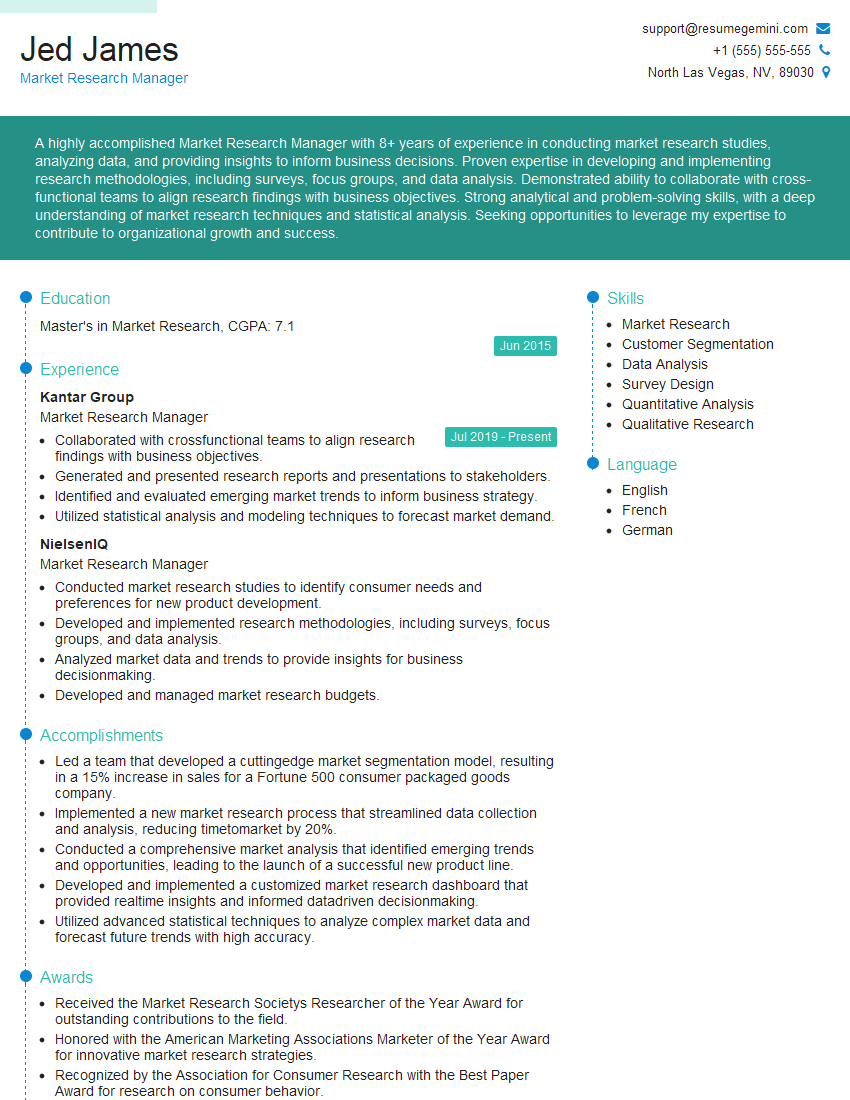
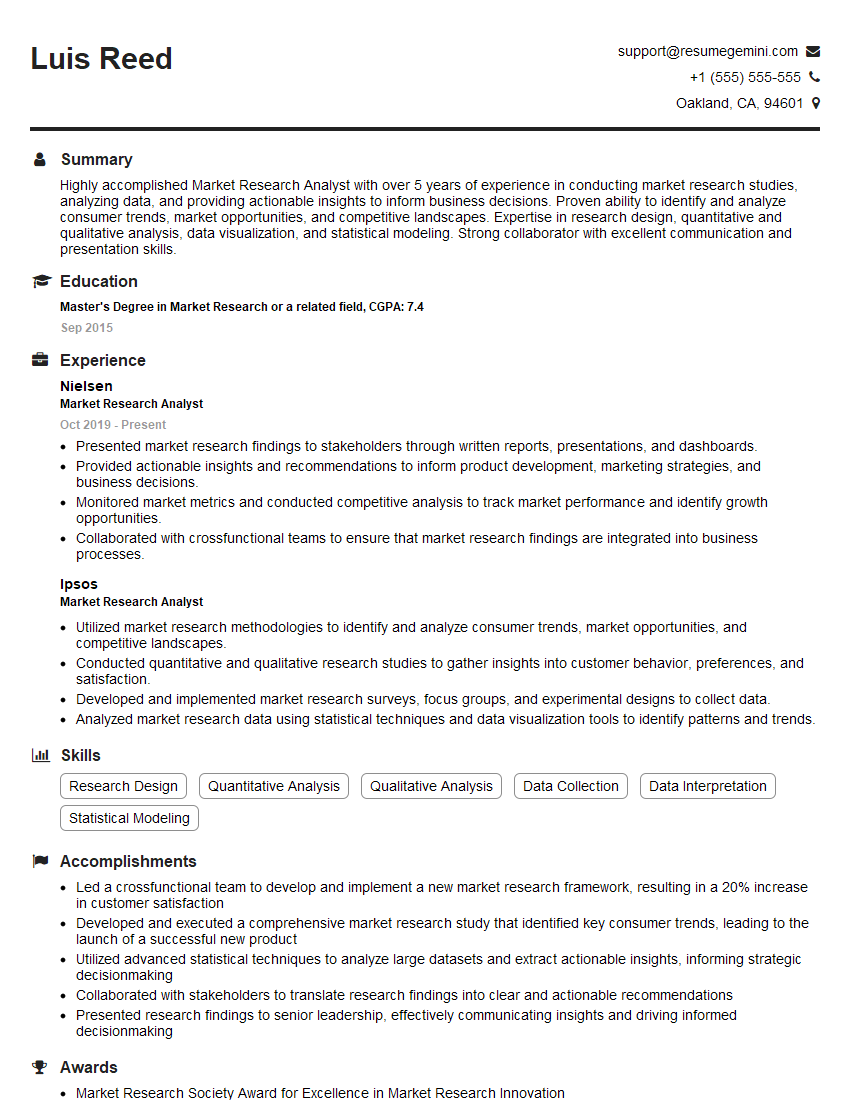
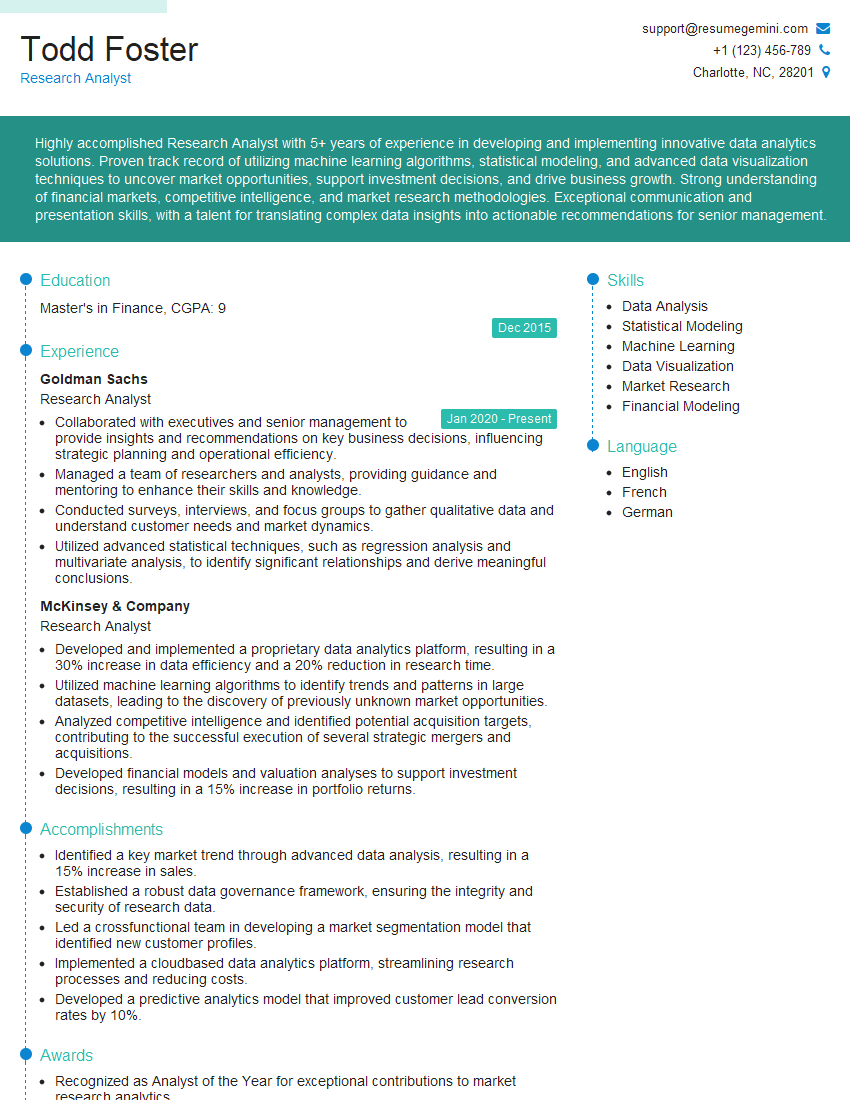
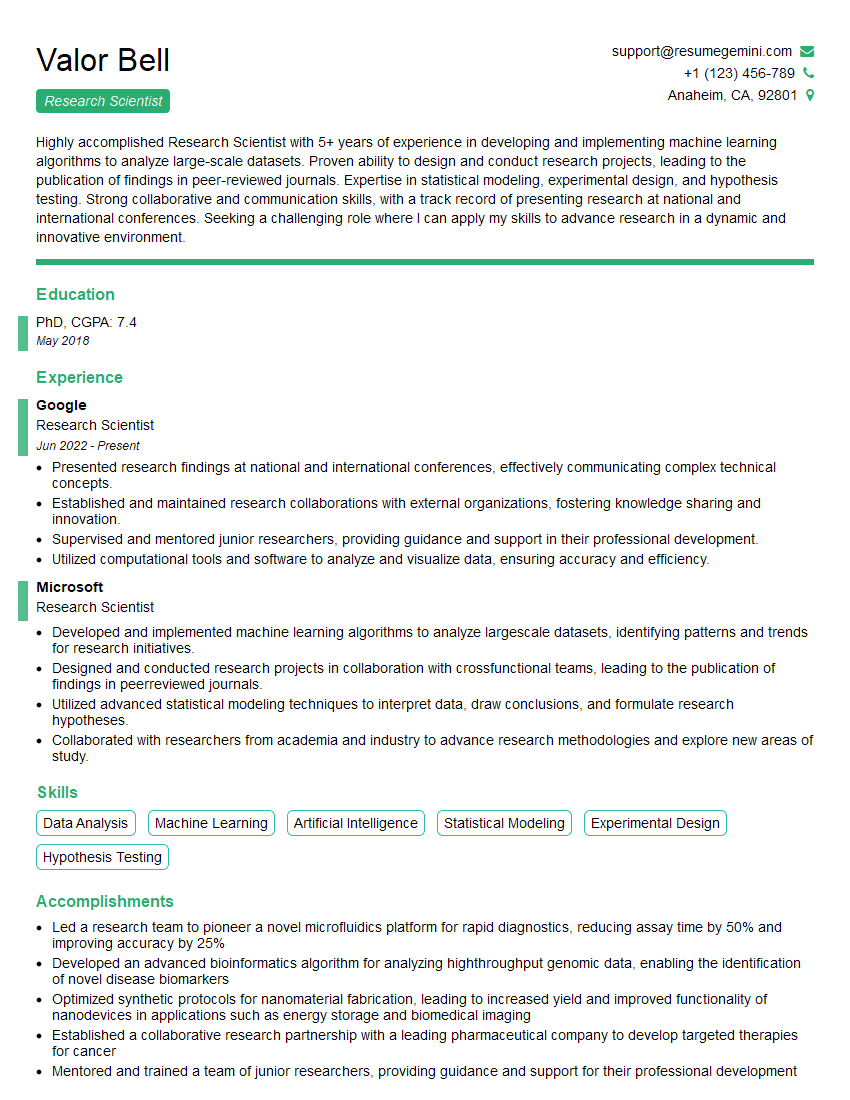
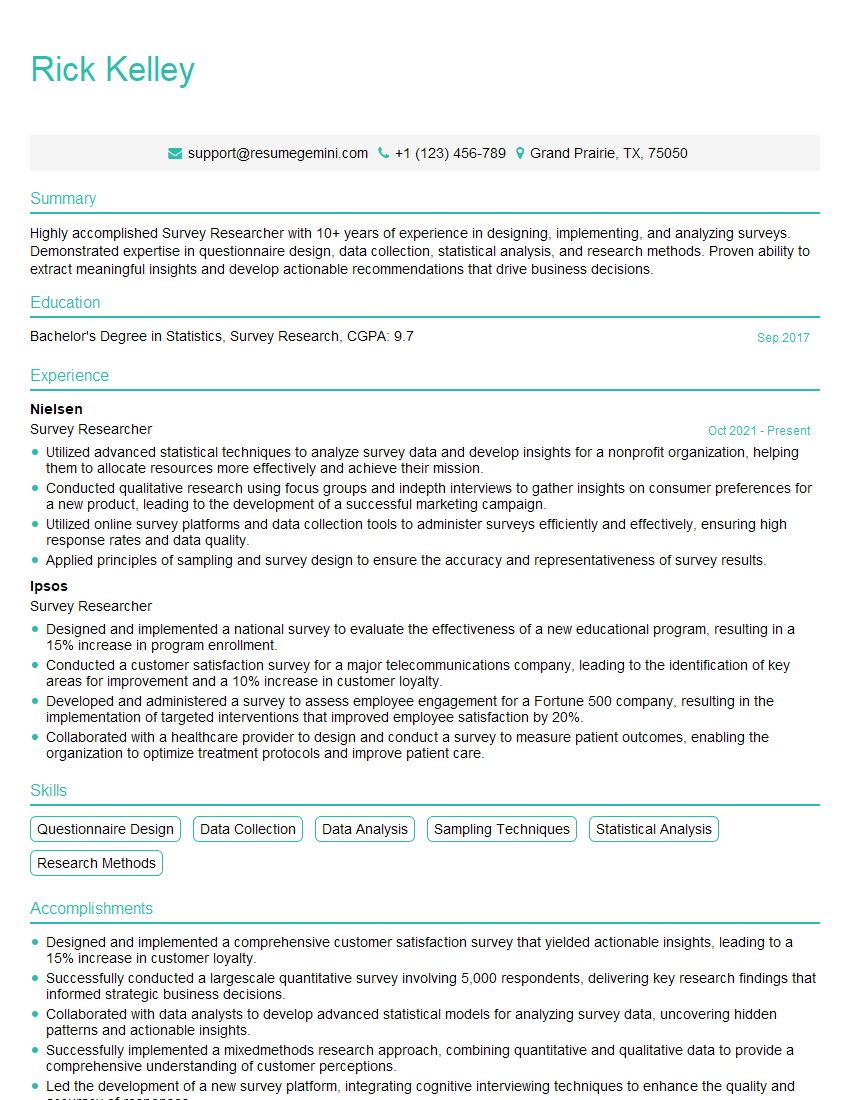
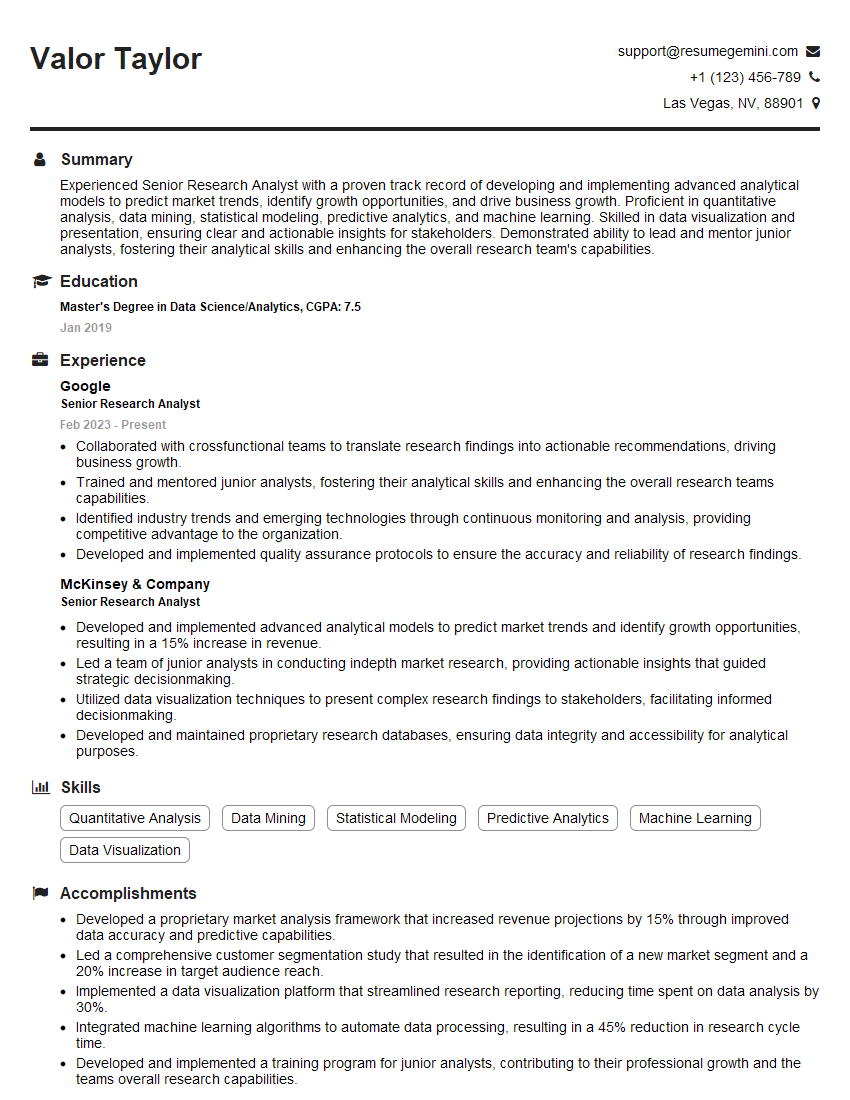
Mastering Customer Research is crucial for career advancement in today’s data-driven world. Strong research skills are highly valued across numerous industries, opening doors to exciting and impactful roles. To maximize your job prospects, focus on creating an ATS-friendly resume that showcases your skills and experience effectively. ResumeGemini is a trusted resource to help you build a professional and compelling resume. They provide examples of resumes tailored to Customer Research roles, giving you a head start in crafting your perfect application.
Explore more articles
Users Rating of Our Blogs
Share Your Experience
We value your feedback! Please rate our content and share your thoughts (optional).
What Readers Say About Our Blog
Amazing blog
hello,
Our consultant firm based in the USA and our client are interested in your products.
Could you provide your company brochure and respond from your official email id (if different from the current in use), so i can send you the client’s requirement.
Payment before production.
I await your answer.
Regards,
MrSmith
hello,
Our consultant firm based in the USA and our client are interested in your products.
Could you provide your company brochure and respond from your official email id (if different from the current in use), so i can send you the client’s requirement.
Payment before production.
I await your answer.
Regards,
MrSmith
These apartments are so amazing, posting them online would break the algorithm.
https://bit.ly/Lovely2BedsApartmentHudsonYards
Reach out at BENSON@LONDONFOSTER.COM and let’s get started!
Take a look at this stunning 2-bedroom apartment perfectly situated NYC’s coveted Hudson Yards!
https://bit.ly/Lovely2BedsApartmentHudsonYards
Live Rent Free!
https://bit.ly/LiveRentFREE
Interesting Article, I liked the depth of knowledge you’ve shared.
Helpful, thanks for sharing.
Hi, I represent a social media marketing agency and liked your blog
Hi, I represent an SEO company that specialises in getting you AI citations and higher rankings on Google. I’d like to offer you a 100% free SEO audit for your website. Would you be interested?