The right preparation can turn an interview into an opportunity to showcase your expertise. This guide to Knowledge of band saw safety interview questions is your ultimate resource, providing key insights and tips to help you ace your responses and stand out as a top candidate.
Questions Asked in Knowledge of band saw safety Interview
Q 1. Describe the different types of band saws and their applications.
Band saws come in various types, each suited for different applications. The key differentiators are size, blade type, and intended use.
- Vertical Band Saws: These are the most common type found in woodworking shops and metalworking facilities. They are used for cutting wood, metal, and plastics, often in straight lines but capable of curves depending on blade type and material thickness. Think of them as the workhorse of the band saw world.
- Horizontal Band Saws: These saws have a horizontal blade and are primarily used for cutting metal, often in larger pieces. They are commonly seen in industrial settings and are excellent for cutting thick sections of material.
- Portable Band Saws: Smaller, more compact versions, ideal for on-site work or smaller projects where mobility is key. They usually handle lighter materials and thinner cuts.
- Scroll Saws (Jewelry Band Saws): Much smaller and more intricate than their larger counterparts, scroll saws are precision instruments used for intricate curves and delicate work, often in wood or metal for crafting and jewelry making.
The choice of band saw depends entirely on the type of work being undertaken. A woodworker might prefer a vertical band saw for shaping lumber, while a metal fabricator might rely on a horizontal band saw or a portable option for cutting thicker steel components. Precision work necessitates a scroll saw.
Q 2. Explain the proper procedures for setting up a band saw.
Setting up a band saw correctly is crucial for safety and accuracy. The process involves several key steps:
- Ensure a Stable Workspace: The saw should be on a solid, level surface to prevent vibrations and maintain stability during operation. Uneven surfaces can lead to inaccurate cuts and even dangerous blade wander.
- Check Blade Tension: The blade must be properly tensioned according to the manufacturer’s instructions. Too loose, and it will wander and break; too tight, and it will stress the blade and the saw itself. Tension should usually be adjusted with a tensioning knob and checked by a visual inspection of blade alignment.
- Adjust Blade Tracking: The blade should run true and centered within the guides. Poor tracking increases blade wear and the risk of accidents. Adjustment is typically achieved through guide post adjustments.
- Check and Adjust Guide Height: The upper and lower guides need to be adjusted to a height appropriate for the blade and thickness of the material being cut. The guides should be positioned close to the material without touching the blade. Adjusting guides incorrectly can result in the blade deflecting and breaking.
- Inspect and Clean: Before each use, check for any obstructions or loose parts, clean the surface around the saw, and ensure that all guards are in place and functioning correctly. A clear work area reduces the risk of accidents.
Following these steps ensures the band saw is ready for safe and efficient operation, reducing the chance of incidents.
Q 3. What are the critical safety features of a band saw?
Several safety features are essential on a band saw to prevent injury:
- Blade Guard: A completely enclosed blade guard is essential to protect the operator from contact with the moving blade, except for the small area needed for cutting. This is the single most important safety feature.
- Upper and Lower Blade Guides: These maintain blade tracking, reducing the risk of blade deflection and breakage. They should be kept clean and properly adjusted.
- Rip Fence: A rip fence provides a sturdy guide for straight cuts, particularly crucial when cutting boards to consistent widths. Using a rip fence dramatically reduces the chance of kickback and binds.
- Emergency Stop Button: Easily accessible and clearly marked, it should halt the saw immediately in case of any unforeseen circumstances.
- Table Insert: A table insert allows the material to be flush with the table surface, preventing the blade from pinching the material, preventing kickback. The appropriate size insert must be used for various cutting tasks.
- Dust Collection System: Many band saws offer a port for dust collection. This minimizes exposure to airborne particles and improves visibility.
Regular inspection and maintenance of these safety features are paramount to ensure they function correctly and provide adequate protection.
Q 4. How do you inspect a band saw before operation?
Pre-operation inspection is vital to prevent accidents. Follow these steps:
- Visual Inspection: Carefully examine the saw for loose parts, damaged components, or any signs of wear and tear. Pay attention to the blade, guides, and guards.
- Blade Check: Inspect the blade for any cracks, teeth damage, or excessive rust. Replace a damaged blade immediately – it is critical.
- Guide Alignment: Verify that the upper and lower blade guides are properly aligned and adjusted, and that there are no obstructions in their path.
- Tension Check: Ensure that the blade tension is correct according to the manufacturer’s specifications.
- Guard Functionality: Confirm that all guards are in place and securely fastened. The blade guard is especially critical.
- Power Cord and Electrical Connections: Inspect the power cord for any damage and ensure that all electrical connections are secure.
If any problems are found, address them before operating the saw. Never compromise on safety.
Q 5. What are the correct procedures for blade installation and tensioning?
Installing and tensioning a band saw blade requires care and precision. Incorrect procedures can lead to blade breakage and injury.
- Blade Selection: Choose the correct blade for the material and type of cut. Use the right blade for the job.
- Installation: Carefully feed the blade through the upper and lower wheels, ensuring it is seated correctly in the blade guides. Use the manufacturer’s recommended installation procedure.
- Tension Adjustment: Adjust blade tension following the manufacturer’s instructions. Use the tensioning mechanism to achieve the correct tension, typically indicated by a tension gauge or specified in the manual. Tighten the blade gradually to avoid snapping it.
- Tracking Adjustment: Once tensioned, adjust the blade tracking using the provided mechanisms. The blade should run true and centered in the guides. Use the adjustment wheels to correct the alignment if necessary.
- Test Run: Before starting a serious cut, run the saw at a slow speed to ensure the blade is tracking correctly and is free from excessive vibration.
Always refer to the manufacturer’s instructions, as procedures vary slightly between different band saw models.
Q 6. How do you identify and address a broken or damaged band saw blade?
A broken or damaged blade poses a significant safety hazard. Immediate action is necessary.
- Turn off the Saw: Immediately switch off the band saw and disconnect the power supply.
- Inspect the Blade: Carefully examine the blade to identify the nature and extent of the damage. Look for cracks, bends, or missing teeth.
- Replace the Blade: If the blade is damaged, replace it with a new blade of the correct type and size. Follow the blade installation instructions meticulously.
- Investigate the Cause: Attempt to determine the cause of the blade breakage. Was the blade dull? Was it improperly tensioned? Was the material too hard or too thick? Addressing the root cause prevents future failures.
Never attempt to repair a broken blade. Replacement is the only safe option. A broken blade can cause severe injury.
Q 7. Explain the proper techniques for feeding material into a band saw.
Proper feeding techniques are essential for safe and efficient band saw operation.
- Steady and Controlled Feed: Feed the material into the blade at a slow and steady rate, avoiding jerky movements. Do not force the material.
- Firm Grip: Maintain a firm grip on the workpiece to prevent kickback or unexpected movement.
- Use Push Sticks and Push Blocks: For smaller pieces or intricate cuts, use push sticks or push blocks to keep your fingers away from the blade. Never use your fingers as guides.
- Avoid Tilting: While some cutting requires slight tilting, avoid excessive tilting, which increases the risk of blade binding or breakage.
- Material Support: Ensure adequate support for the entire length of the workpiece to prevent sagging or binding.
- Start with a Test Cut: On unfamiliar materials, start with a test cut to determine the optimal feed rate and blade speed.
Practicing proper feeding techniques can save you from injury, increase cutting precision, and help prevent damage to both the blade and the saw.
Q 8. Describe the safety precautions for handling different materials on a band saw.
Handling different materials on a band saw requires adjusting your technique to account for their specific properties. Harder materials like hardwoods or metals require slower feed rates and potentially a higher tooth count blade to prevent excessive heat buildup and blade breakage. Softer materials like softwoods or plastics may require a lower tooth count blade and a more gentle feed rate to avoid tear-out. Always consider the grain direction of the wood; cutting with the grain is generally safer and produces cleaner cuts.
- Hardwoods (e.g., oak, maple): Use a slower feed rate, a blade with a higher tooth count (more teeth per inch), and ensure the blade is sharp. Consider using a thinner blade for intricate cuts.
- Softwoods (e.g., pine, fir): A slightly faster feed rate can be used with a lower tooth count blade. Be mindful of tear-out, especially on the exit side of the cut.
- Metals (e.g., aluminum, steel): Requires specialized blades designed for metal cutting. Use cutting fluid to lubricate the blade and prevent overheating. Feed rate should be extremely slow and controlled.
- Plastics: Use a blade with a coarser tooth and a slower feed rate to avoid melting or chipping the plastic.
Remember to always consult the manufacturer’s recommendations for your specific blade and material.
Q 9. What are the emergency procedures in case of a band saw malfunction?
Emergency procedures for band saw malfunctions prioritize safety and minimizing potential injury. The first step is always to immediately turn off the machine using the power switch, not the emergency stop unless the situation requires immediate power cut off. Never reach into the moving blade area.
- Blade Breakage: Immediately turn off the machine. Do not attempt to remove broken pieces until the saw is completely stopped and unplugged. Contact a qualified technician for blade replacement.
- Material Jam: Turn off the saw. Carefully assess the situation. If possible, use a sturdy, non-metallic tool to gently dislodge the material. Never force it.
- Power Failure: Remain alert. Don’t attempt to restart the saw until power is fully restored. Check the power supply before attempting to use it again.
- Injury: Immediately seek first aid. Contact emergency services if necessary. Report the incident to your supervisor.
Regular maintenance and inspections are crucial to preventing malfunctions. A well-maintained band saw is significantly safer.
Q 10. How do you maintain proper blade tracking and alignment?
Proper blade tracking and alignment are essential for safe and accurate cuts. Misalignment can lead to blade breakage, inaccurate cuts, and kickbacks. Most band saws have adjustment mechanisms for both tracking (side-to-side movement) and alignment (vertical position).
- Tracking Adjustment: Use the tracking adjustment knob or lever to center the blade within the saw guides. The blade should run as close to the center of the guide wheels as possible without rubbing. Check often.
- Alignment Adjustment: Ensure the blade is running perpendicular to the table. Incorrect alignment can cause the blade to bind or wander, leading to inaccurate cuts or kickbacks.
- Guide Adjustment: Maintain proper blade pressure against the guide wheels. Check your manuals for correct tension and maintain this tension. Loose guides can lead to blade wander.
Regularly check the blade tracking and alignment before each use. A poorly maintained saw poses a significant risk to safety.
Q 11. Explain the importance of using appropriate personal protective equipment (PPE) when operating a band saw.
Appropriate Personal Protective Equipment (PPE) is paramount when operating a band saw. It minimizes the risk of serious injury from flying debris, blade breakage, or accidental contact with the blade.
- Eye Protection: Safety glasses with side shields are a must. They protect against flying debris and dust.
- Hearing Protection: Earplugs or earmuffs should be worn, especially when cutting hardwoods or metals. Band saws can generate significant noise.
- Hand Protection: Cut-resistant gloves are recommended for added hand protection, particularly when handling materials that may splinter.
- Dust Mask/ Respirator: A dust mask or respirator is necessary when working with materials that generate fine dust, such as hardwoods or certain plastics.
- Clothing: Wear close-fitting clothing that won’t get caught in the moving parts. Avoid loose sleeves, scarves, or jewelry.
Imagine cutting without eye protection – a small piece of wood could easily cause serious eye damage. PPE is an investment in your safety.
Q 12. What are the common hazards associated with band saw operation?
Several hazards are associated with band saw operation if proper safety precautions aren’t followed. Awareness of these hazards is crucial for safe operation.
- Kickbacks: When the blade is pinched or binds, the wood or material can be thrown back towards the operator with significant force.
- Blade Breakage: This can occur due to improper blade tension, dull blades, or cutting inappropriate materials. Broken blades can cause severe injury.
- Pinch Points: The area between the blade and the table, as well as other moving parts of the saw, present pinch points capable of causing severe injuries.
- Burns: Excessive friction when cutting certain materials can lead to burns on the hands or arms.
- Dust Inhalation: Inhaling fine wood dust or metal particles can lead to respiratory problems.
- Noise Exposure: Prolonged exposure to the noise generated by band saws can cause hearing damage.
Regular inspections and safety training are essential to mitigating these risks.
Q 13. How do you prevent kickbacks on a band saw?
Kickbacks are a significant hazard with band saws. They occur when the blade binds and the material is suddenly thrown back towards the operator. Preventing kickbacks involves several strategies.
- Proper Blade Selection: Use the correct blade for the material being cut. A dull blade or a blade with an inappropriate tooth count increases the risk of kickbacks.
- Consistent Feed Rate: Avoid forcing the material. Feed it smoothly and consistently at a rate appropriate for the material and blade.
- Appropriate Blade Tension: Correct blade tension is critical. An improperly tensioned blade is more likely to bind and cause a kickback.
- Use of Push Sticks and Feed Fingers: Always use push sticks and feed fingers, especially when cutting small pieces or making intricate cuts.
- Avoid Cutting Curves Too Tightly: Avoid making very tight curves; this can lead to binding. Allow a larger radius for curves.
- Keep Your Hands Clear: Always keep your fingers and hands clear of the blade path. Avoid reaching across the blade.
Remember, prevention is better than cure. Adhering to these precautions reduces the risk of kickbacks dramatically.
Q 14. How do you handle jams or binding of material in a band saw?
Jams or binding of material in a band saw can be dangerous. Never attempt to free a jammed piece while the saw is running.
- Turn Off the Saw: Always turn off the saw and unplug it before attempting to remove the jammed material.
- Assess the Situation: Carefully examine where the material is jammed to determine the best course of action.
- Use Appropriate Tools: Use a non-metallic tool, such as a wooden dowel or a push stick, to gently dislodge the material. Never use your hands.
- Avoid Forcing: Never force the material. Excessive force could damage the blade or the machine.
- If Necessary, Seek Assistance: If you are unable to remove the jammed material, seek assistance from a more experienced operator or a qualified technician.
Preventing jams starts with proper setup and operation. Ensure that the material is properly supported and that the blade is sharp and correctly tensioned.
Q 15. Describe the procedures for cleaning and lubricating a band saw.
Cleaning and lubricating your band saw is crucial for its longevity and safe operation. Think of it like maintaining your car – regular upkeep prevents major problems down the line. The process involves several key steps:
- Power Down and Disconnect: Always begin by unplugging the saw and ensuring the power switch is off. Safety first!
- Brush and Vacuum: Use a brush to remove sawdust and debris from all accessible areas, including the wheels, guides, and table. Then, use a vacuum cleaner with a brush attachment to thoroughly clean the saw’s interior and hard-to-reach spots. Avoid compressed air, as it can force debris deeper into the machine.
- Blade Cleaning: Carefully wipe the blade with a clean cloth, removing any resin buildup or metal shavings. Be mindful of the blade’s sharp edges.
- Lubrication: Apply a high-quality band saw lubricant (check your manufacturer’s recommendations) to the blade guides and wheels. A few drops are usually sufficient. Too much lubricant can attract more debris.
- Check Tension: After cleaning and lubricating, ensure the blade tension is correctly adjusted according to the manufacturer’s instructions. Incorrect tension can cause blade breakage or inaccurate cuts.
Remember to consult your band saw’s specific manual for detailed instructions and recommended lubricants. Regular cleaning and lubrication, ideally after every use or at least weekly, significantly extends the lifespan of your saw and maintains its cutting precision and safety.
Career Expert Tips:
- Ace those interviews! Prepare effectively by reviewing the Top 50 Most Common Interview Questions on ResumeGemini.
- Navigate your job search with confidence! Explore a wide range of Career Tips on ResumeGemini. Learn about common challenges and recommendations to overcome them.
- Craft the perfect resume! Master the Art of Resume Writing with ResumeGemini’s guide. Showcase your unique qualifications and achievements effectively.
- Don’t miss out on holiday savings! Build your dream resume with ResumeGemini’s ATS optimized templates.
Q 16. What are the lockout/tagout procedures for a band saw?
Lockout/Tagout (LOTO) procedures are paramount for band saw safety. They ensure that the machine cannot be accidentally energized while maintenance or repairs are being performed. Here’s how it works:
- Turn Off the Power: Locate the main power switch for the band saw and turn it completely off.
- Lockout: Attach a lockout device (a padlock or similar) to the power switch or disconnect switch. This physically prevents the power from being turned back on.
- Tagout: Attach a tag to the lockout device clearly indicating that the machine is locked out, who locked it out, and the reason for the lockout. This provides a visual warning to others.
- Verify Zero Energy: After locking out the power, verify that the saw is completely de-energized. This might involve checking that the blade is stationary and unable to move.
- Tagout Removal: Only the person who applied the lockout device can remove it. Once the maintenance or repair is complete and the area is deemed safe, the lockout and tagout devices are removed, and the power can be restored.
LOTO procedures are not just a formality; they’re a life-saving measure that prevents serious injury or even death. Always ensure that proper LOTO procedures are followed before undertaking any maintenance or repair on a band saw.
Q 17. How do you perform regular maintenance checks on a band saw?
Regular maintenance checks are essential for maintaining the band saw’s operational efficiency and safety. These checks should be done before each use and more thoroughly at regular intervals (e.g., monthly or as recommended by the manufacturer):
- Blade Condition: Check for signs of wear, damage, or misalignment (discussed in more detail in question 4).
- Wheel Alignment: Ensure the upper and lower wheels are properly aligned. Misalignment can lead to blade tracking problems and premature wear.
- Guide Alignment and Condition: Check the guides for wear, damage, or misalignment. They should be properly adjusted to support the blade without excessive friction.
- Table and Fence: Inspect the table and fence for damage, ensuring they are firmly secured and parallel.
- Lubrication: Verify that all lubricated parts have sufficient lubricant.
- Fasteners: Check all bolts, screws, and other fasteners to ensure they’re tight and secure.
- Electrical Connections: Inspect electrical cords, plugs, and connections for any signs of damage or wear.
A well-maintained band saw is a safe band saw. Regular checks help identify potential problems early on, preventing accidents and costly repairs.
Q 18. What are the signs of a worn or damaged band saw blade?
A worn or damaged band saw blade is a serious safety hazard. Recognizing the signs is vital. Look for:
- Set Reduction: The teeth lose their set (the slight outward bend), leading to a straighter blade and poor cutting performance. The blade may also vibrate excessively.
- Cracks or Breaks: Examine the blade for any cracks, especially near the welds or teeth. Even small cracks can propagate and lead to catastrophic blade failure.
- Tooth Damage: Look for chipped, broken, or bent teeth. This affects cutting quality and can cause the blade to bind or break.
- Rust or Corrosion: Rust weakens the blade and can compromise its integrity.
- Excessive Wear: The blade may appear thinner or duller than usual. This is often accompanied by reduced cutting efficiency and increased vibration.
- Blade Tracking Issues: The blade may wander off the wheels, indicating misalignment or problems with the blade guides.
If you observe any of these signs, replace the blade immediately. Using a damaged blade is incredibly dangerous and can result in serious injury.
Q 19. How do you dispose of broken band saw blades safely?
Disposing of broken band saw blades safely requires caution. They are extremely sharp and potentially hazardous. Follow these steps:
- Handle with Care: Use heavy-duty gloves and other appropriate personal protective equipment (PPE) when handling broken blades. Never touch the blade’s teeth directly.
- Secure the Blade: Wrap the broken blade tightly in heavy-duty cardboard or place it in a sturdy container to prevent accidental cuts.
- Proper Disposal: Dispose of the blade according to local regulations. This may involve placing it in a designated sharp objects container or recycling center. Never throw broken blades in the regular trash.
- Document Disposal: If your workplace requires it, keep records of how the broken blades were handled and disposed of. This is important for safety and regulatory compliance.
Safety is paramount when handling broken blades. Improper disposal poses risks to both you and the environment.
Q 20. Explain the importance of following manufacturer’s instructions for operating a band saw.
Following the manufacturer’s instructions is not just a suggestion; it’s a fundamental aspect of safe band saw operation. The manufacturer’s manual contains critical information regarding:
- Safe Operating Procedures: Detailed instructions on how to use the saw safely and correctly.
- Blade Selection and Installation: Specifications for suitable blades and procedures for safe blade installation and tensioning.
- Maintenance and Lubrication: Recommended lubricants and maintenance schedules to ensure optimal performance and safety.
- Safety Features: Information on how to properly use the saw’s built-in safety features (e.g., blade guards, emergency stops).
- Troubleshooting: Guidance on how to address common problems and malfunctions safely.
Ignoring these instructions can lead to accidents, injuries, and damage to the saw. Treat the manual as a vital resource for safe and effective band saw use.
Q 21. What are the regulations and standards related to band saw safety in your region?
Specific regulations and standards for band saw safety vary by region. However, many jurisdictions adhere to or are guided by overarching safety standards like those set by OSHA (Occupational Safety and Health Administration) in the United States or similar organizations in other countries. These often cover areas such as:
- Personal Protective Equipment (PPE): Requirements for wearing safety glasses, hearing protection, and other appropriate PPE when operating a band saw.
- Machine Guarding: Regulations on the use of appropriate blade guards and other safety guards to prevent accidental contact with the blade.
- Lockout/Tagout Procedures: Strict adherence to lockout/tagout procedures for maintenance and repairs.
- Training and Certification: Requirements for proper training and, in some cases, certification before operating a band saw.
- Emergency Procedures: Plans for responding to emergencies involving the band saw.
It’s crucial to familiarize yourself with the specific safety regulations and standards applicable in your region to ensure compliance and workplace safety. Contact your local regulatory authority for detailed information.
Q 22. Describe your experience with different types of band saw blades.
My experience with band saw blades spans various types, each suited for different materials and cuts. I’m proficient with skip-tooth blades, ideal for rough cuts in wood due to their aggressive tooth design; hook-tooth blades, excellent for curved cuts because of their ability to follow curves smoothly; and fine-tooth blades, perfect for precise cuts and intricate work in wood or metal, as their smaller teeth ensure a smoother finish. I’ve also worked extensively with blades of varying materials, such as high-speed steel (HSS) and bi-metal blades, each offering different levels of durability and performance. Choosing the right blade significantly impacts cutting efficiency and safety. For example, using a fine-tooth blade for rough cuts is inefficient and can lead to blade breakage. Conversely, using a skip-tooth blade for intricate work can result in a rough, unsatisfactory finish.
In my experience, understanding the blade’s tooth configuration (skip-tooth, hook-tooth, etc.), material (HSS, bi-metal, etc.), and tooth pitch (teeth per inch) is crucial for selecting the correct blade for the job. I always carefully inspect each blade before use, checking for cracks, damage, or uneven set, as a faulty blade poses a significant safety risk.
Q 23. How do you address a situation where a coworker is not following safety procedures on a band saw?
Safety is paramount. If I observe a coworker not following band saw safety procedures, my first step is a direct, private conversation. I would approach the situation calmly and respectfully, pointing out the specific unsafe behavior. For instance, if they’re not using the push stick, I’d explain the increased risk of hand injury and demonstrate the correct technique. My goal is not to reprimand, but to educate and ensure their understanding.
If the unsafe behavior continues after my initial intervention, I’d escalate the issue to my supervisor. Maintaining a safe work environment requires collective responsibility. Safety isn’t just about following rules; it’s about fostering a culture where everyone looks out for each other.
Q 24. Explain the importance of training and competency assessment for band saw operators.
Training and competency assessment are fundamental to safe band saw operation. Think of it like learning to drive – you wouldn’t jump behind the wheel without lessons and a driving test. Similarly, operating a band saw requires proper training on safe techniques, blade selection, emergency procedures, and machine maintenance.
A competency assessment, typically involving practical demonstrations and theoretical testing, verifies the operator’s understanding and ability to safely operate the machine. This ensures operators know how to handle different materials, adjust the blade tension, and recognize potential hazards. Insufficient training can lead to accidents, injuries, and damaged equipment.
Q 25. How do you contribute to a safe working environment when using a band saw?
Contributing to a safe environment begins with meticulous adherence to safety protocols. This includes regular machine inspections – checking for blade tension, alignment, and any signs of damage. I always ensure the blade guard is in place and functioning correctly, and I never operate the saw without proper personal protective equipment (PPE), such as safety glasses and hearing protection. Furthermore, I maintain a clean and organized workspace, removing any debris that could create tripping hazards or interfere with the operation of the machine. I also actively participate in safety meetings and contribute to ongoing safety improvements within the team.
Q 26. Describe your experience with troubleshooting band saw problems.
Troubleshooting band saw problems often involves a systematic approach. For instance, if the blade keeps breaking, I’d systematically check for factors such as blade tension (too tight or too loose), blade alignment (tracking), and the type of blade in relation to the material being cut. If the saw is vibrating excessively, I’d inspect the blade for damage or misalignment, check the table for stability and the motor mount for firmness. A thorough understanding of the machine’s mechanics is key to effective troubleshooting.
I often document any issues encountered and the steps taken to resolve them. This helps in preventing similar issues in the future and aids in maintaining a record of machine performance.
Q 27. What are your strategies for preventing accidents on a band saw?
Accident prevention is a proactive process. My strategies include rigorous adherence to safety procedures, regular machine inspections, and proper blade selection for the material being cut. I always use push sticks or other appropriate feeding devices to keep hands clear of the blade. Moreover, I emphasize maintaining a clear workspace, free of distractions and potential hazards. Training others on safe operating procedures is also a crucial aspect of accident prevention. Regular safety meetings and the reinforcement of best practices are key in creating a culture of safety.
Q 28. How do you stay up-to-date with the latest band saw safety standards and best practices?
Staying current with band saw safety standards and best practices involves continuous learning. I regularly consult relevant safety manuals and industry publications. Participation in workshops and training sessions keeps me updated on new technologies and improved safety procedures. Furthermore, I actively seek out information from reputable sources like OSHA (Occupational Safety and Health Administration) and other professional organizations. Staying informed ensures I’m employing the most up-to-date safety measures and contributing to a safer work environment.
Key Topics to Learn for a Band Saw Safety Interview
- Band Saw Operation: Understanding the different types of band saws, their components, and how to properly set up and operate them for various materials and cuts.
- Blade Selection and Maintenance: Knowing how to choose the appropriate blade for different materials and thicknesses, proper blade tensioning, tracking, and recognizing signs of wear and tear.
- Safety Procedures and Protocols: Mastering the use of safety guards, push sticks, featherboards, and other safety devices; understanding emergency shutdown procedures and lockout/tagout protocols.
- Material Handling and Workpiece Preparation: Safe techniques for handling and securing materials; proper methods for cutting different materials to minimize risks.
- Personal Protective Equipment (PPE): Knowing which PPE is necessary for operating a band saw (e.g., safety glasses, hearing protection, gloves) and ensuring its proper use.
- Identifying and Addressing Hazards: Recognizing potential hazards associated with band saw operation (e.g., kickback, blade breakage) and implementing preventative measures.
- Troubleshooting and Maintenance: Understanding common band saw problems, such as blade tracking issues or power malfunctions, and performing basic maintenance tasks.
- Relevant Safety Regulations and Standards: Familiarity with OSHA or other applicable safety regulations pertaining to band saw operation.
- Practical Application: Be prepared to discuss real-world scenarios and how you would apply safety procedures in various situations. Consider examples from past experience.
Next Steps
Mastering band saw safety is crucial for career advancement in many skilled trades. A strong understanding of these principles demonstrates your commitment to workplace safety and your ability to perform your job effectively and responsibly. To enhance your job prospects, create an ATS-friendly resume that highlights your skills and experience. ResumeGemini is a trusted resource that can help you build a professional and impactful resume. Examples of resumes tailored to highlight expertise in band saw safety are available through ResumeGemini, showcasing the best way to present your qualifications.

Operations Manager Resume Sample

Plant Manager Resume Sample

Production Manager Resume Sample
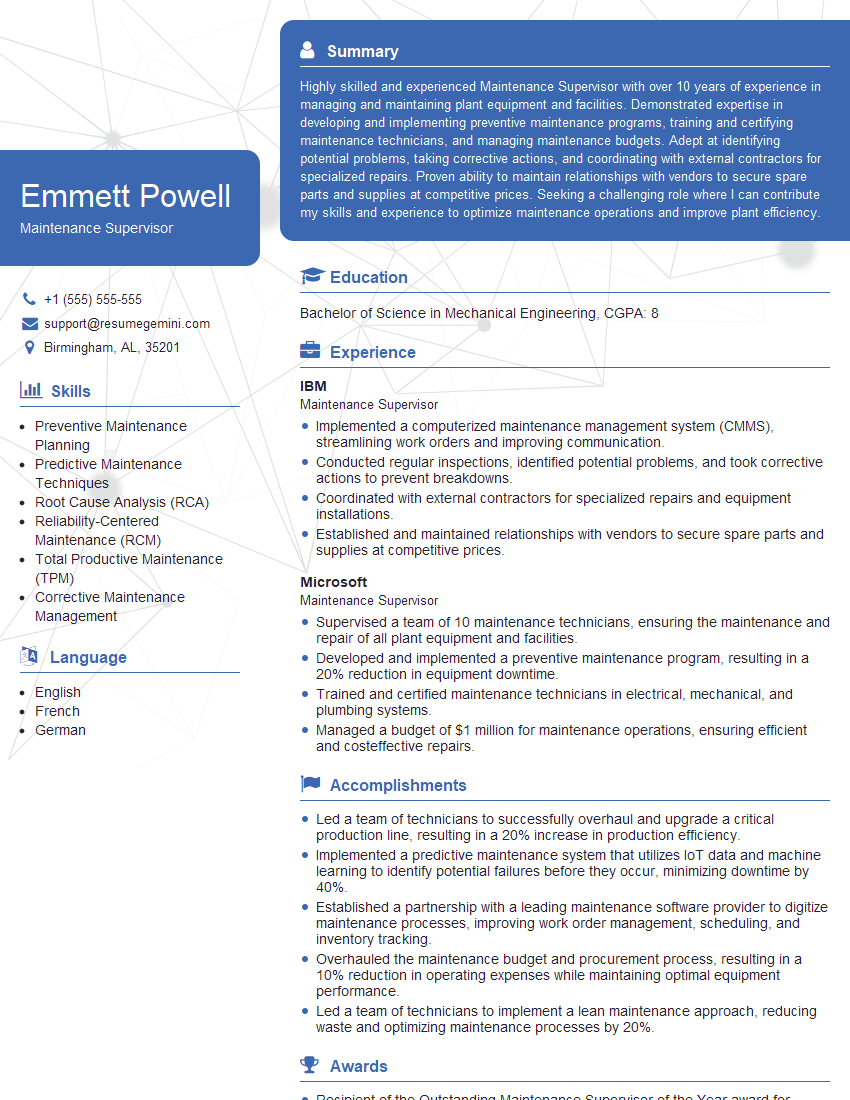
Maintenance Supervisor Resume Sample

Production Supervisor Resume Sample

Compliance Officer Resume Sample
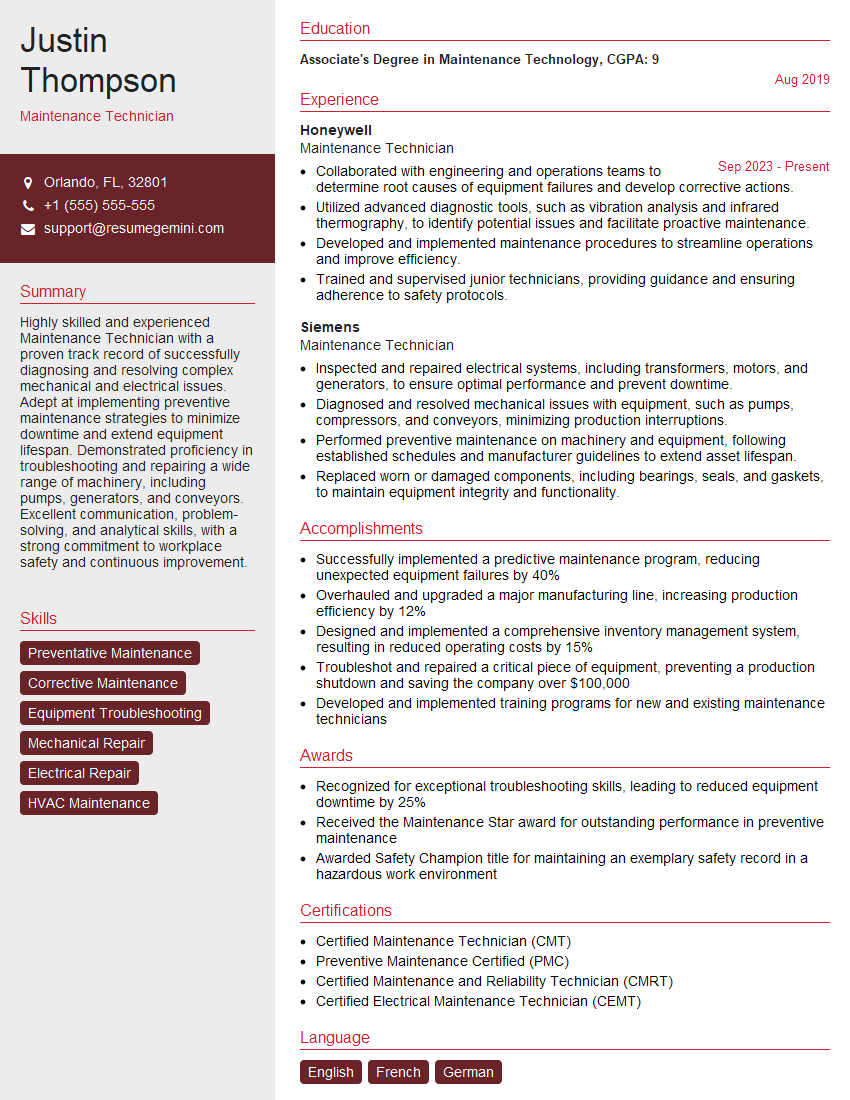
Maintenance Technician Resume Sample
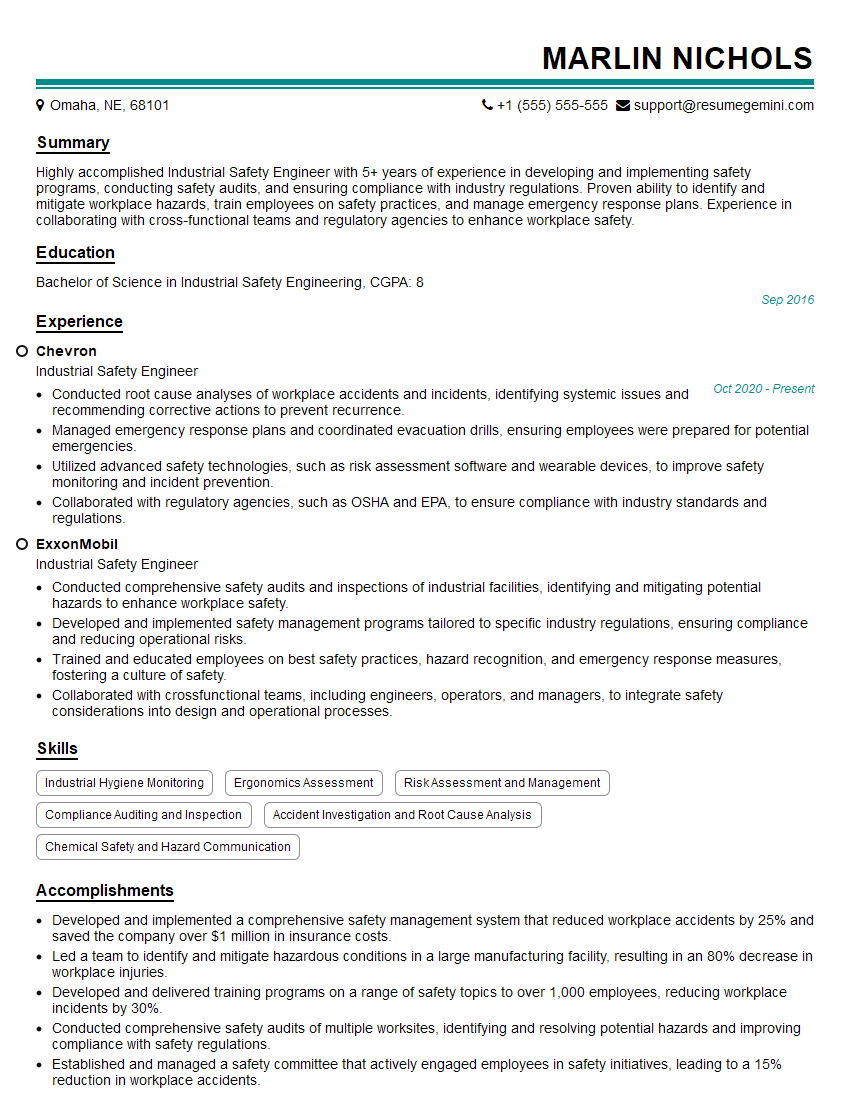
Industrial Safety Engineer Resume Sample
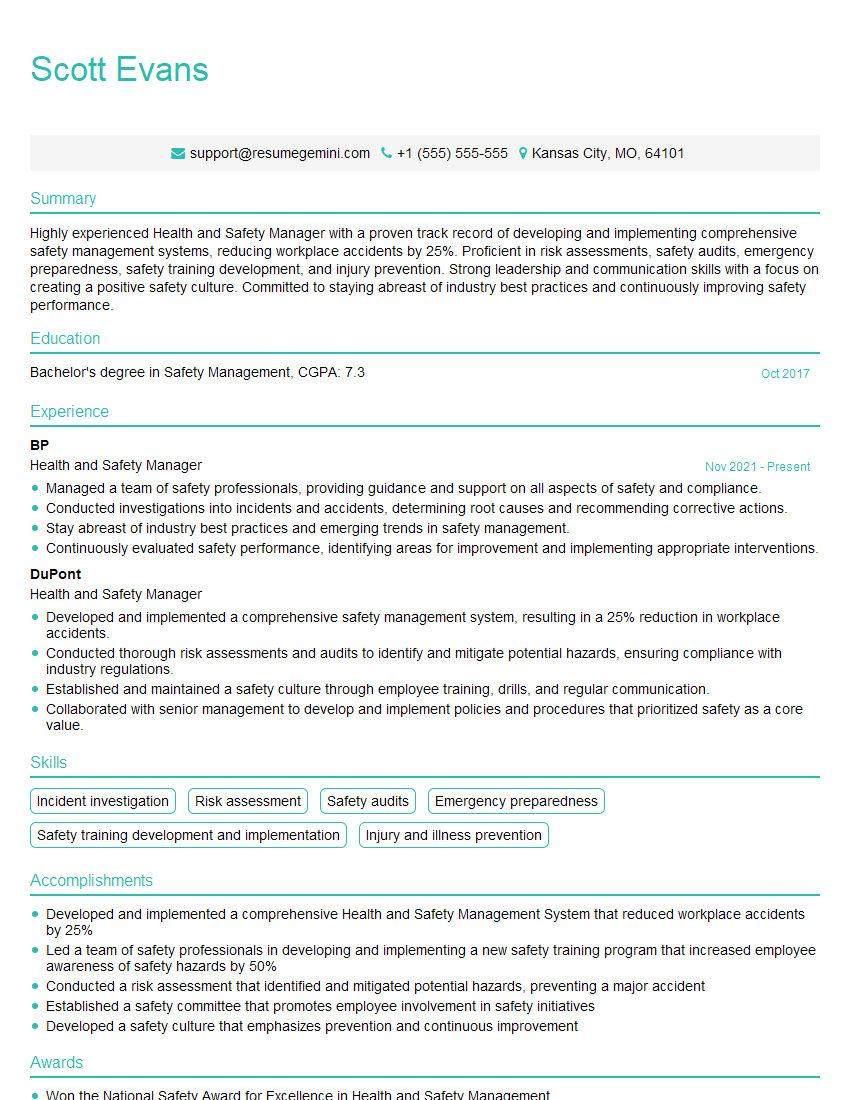
Health and Safety Manager Resume Sample
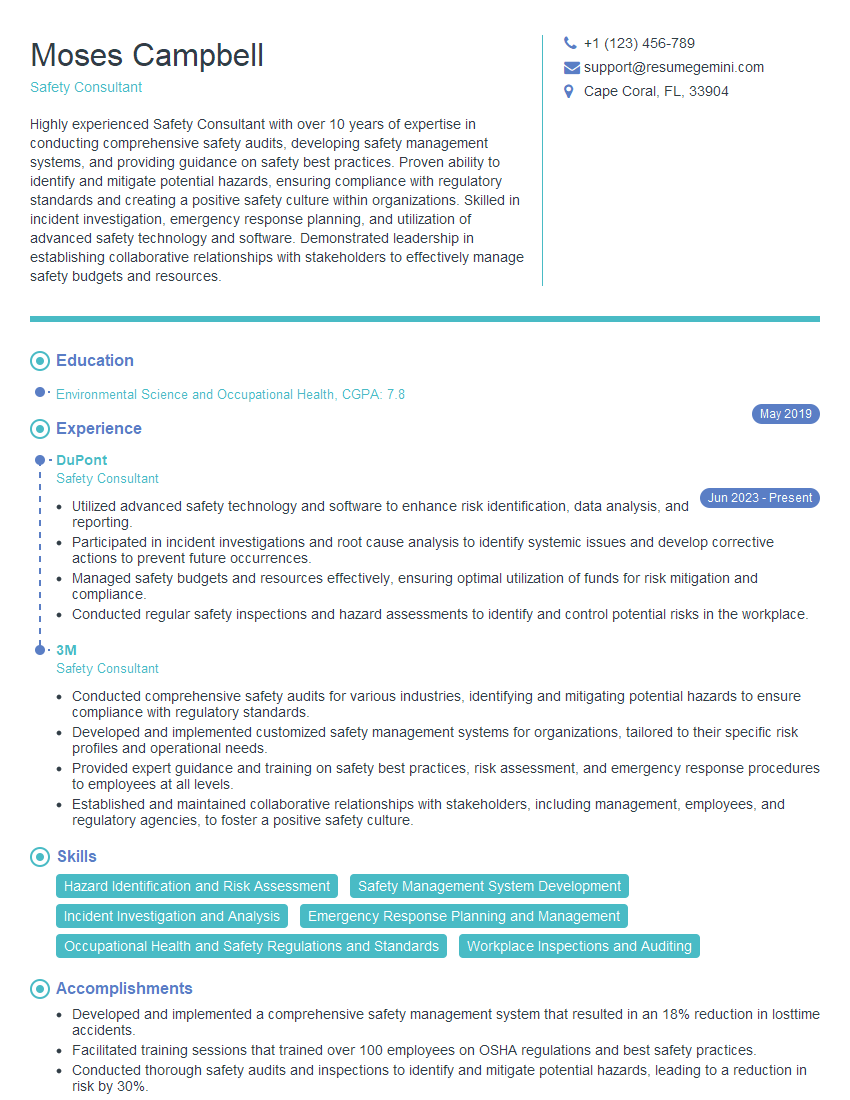
Safety Consultant Resume Sample

Manufacturing Engineer Resume Sample

Manufacturing Technician Resume Sample
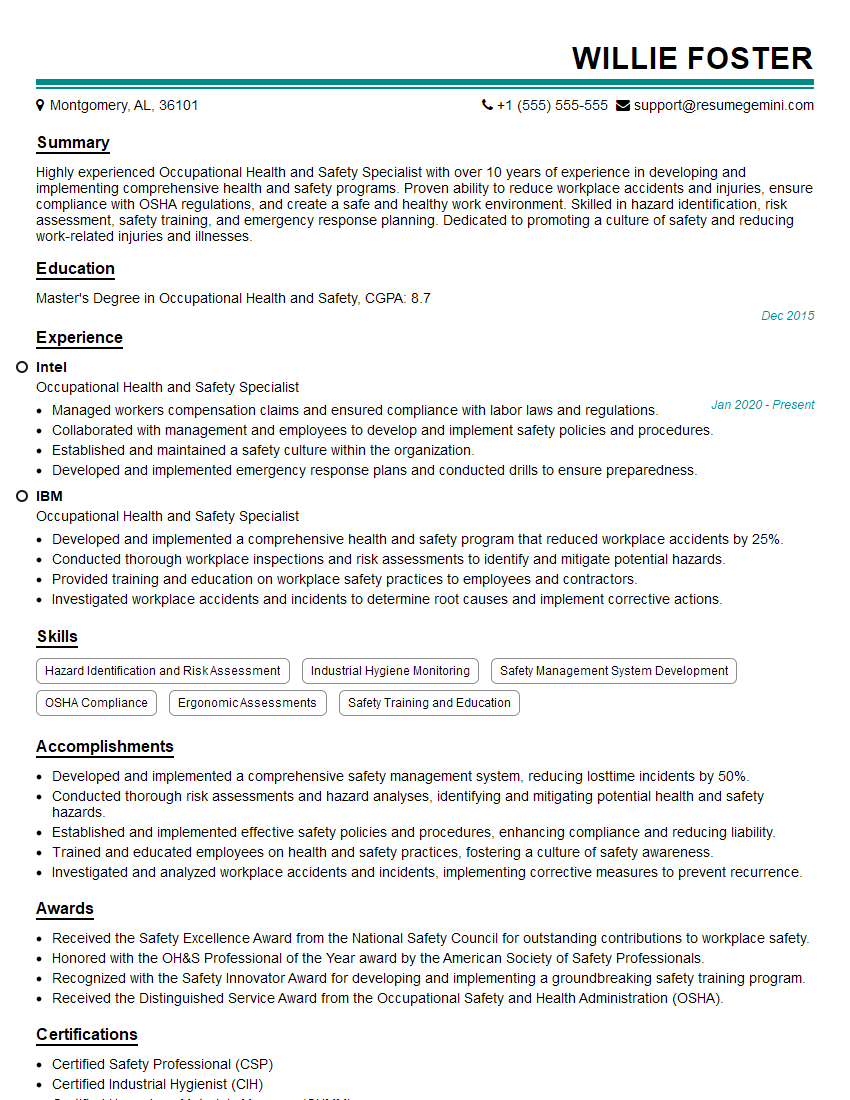
Occupational Health and Safety Specialist Resume Sample
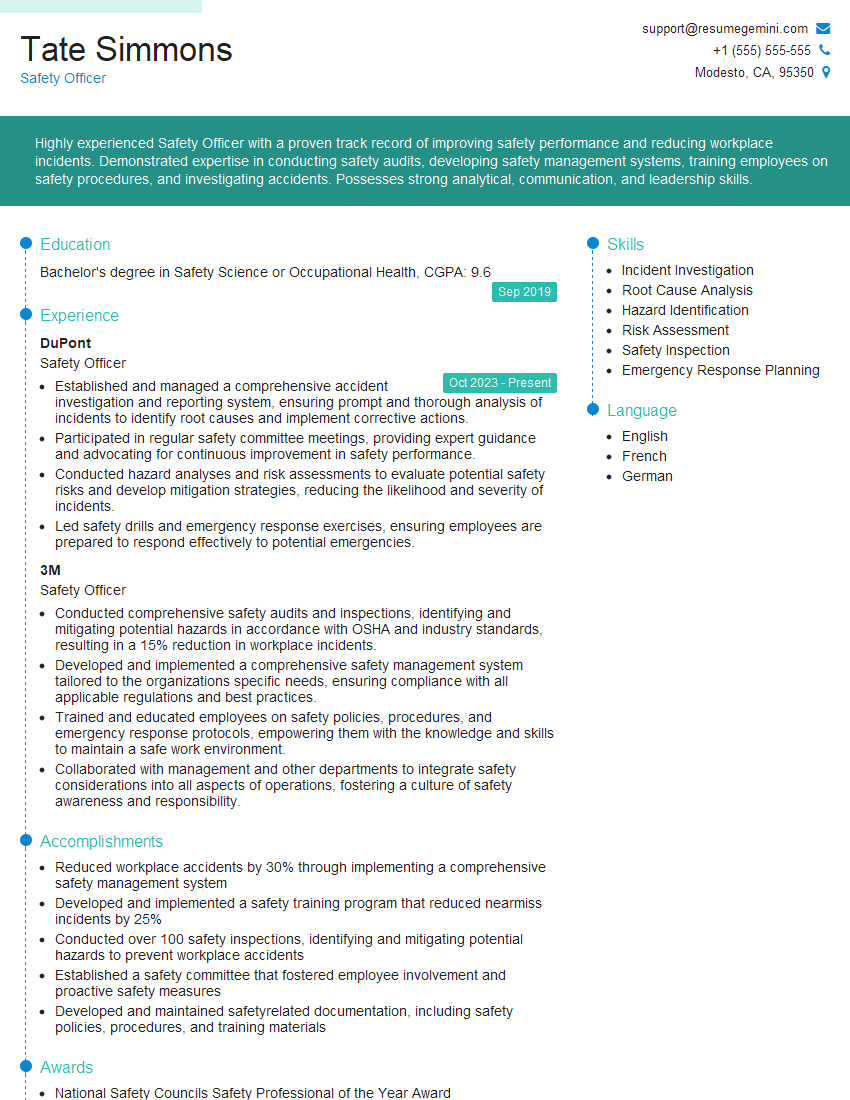
Safety Officer Resume Sample

Industrial Mechanic Resume Sample
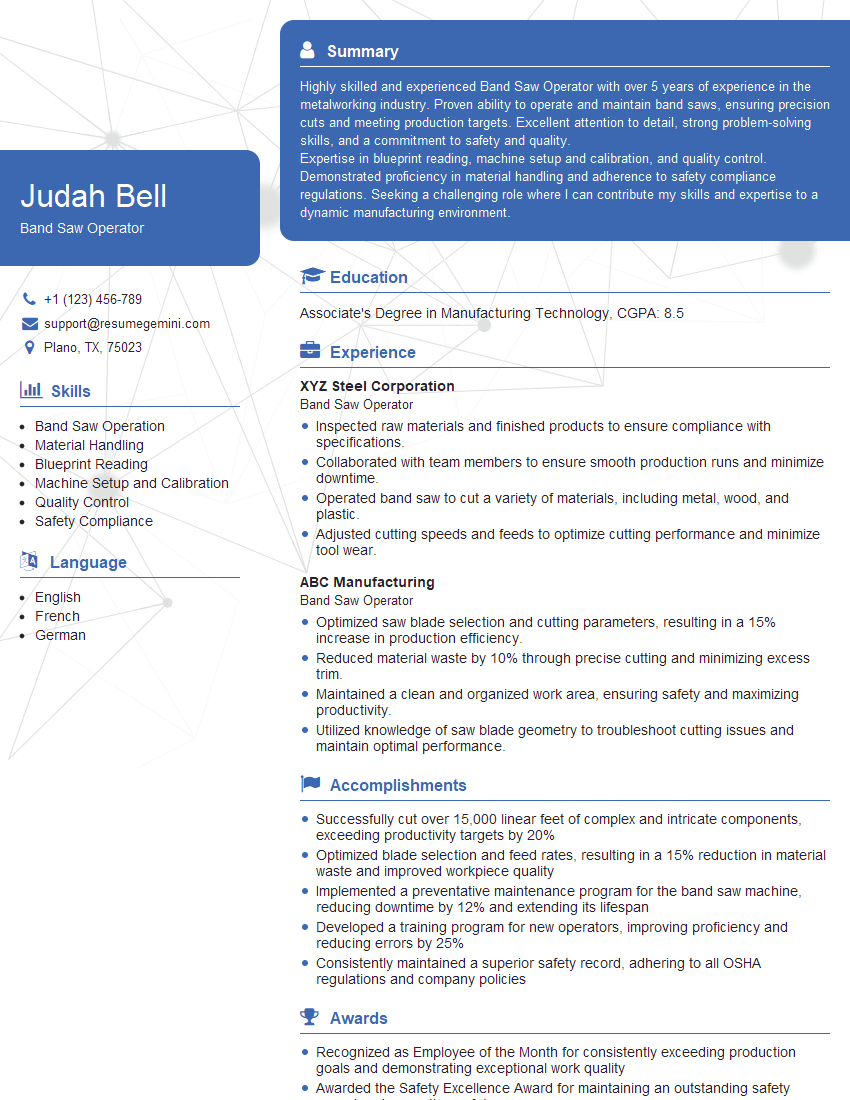
Band Saw Operator Resume Sample

Quality Control Inspector Resume Sample
- Operations Manager
- Plant Manager
- Production Manager
- Maintenance Supervisor
- Production Supervisor
- Compliance Officer
- Maintenance Technician
- Industrial Safety Engineer
- Health and Safety Manager
- Safety Consultant
- Manufacturing Engineer
- Manufacturing Technician
- Occupational Health and Safety Specialist
- Safety Officer
- Industrial Mechanic
- Band Saw Operator
- Quality Control Inspector
Explore more articles
Users Rating of Our Blogs
Share Your Experience
We value your feedback! Please rate our content and share your thoughts (optional).
What Readers Say About Our Blog
Amazing blog
hello,
Our consultant firm based in the USA and our client are interested in your products.
Could you provide your company brochure and respond from your official email id (if different from the current in use), so i can send you the client’s requirement.
Payment before production.
I await your answer.
Regards,
MrSmith
hello,
Our consultant firm based in the USA and our client are interested in your products.
Could you provide your company brochure and respond from your official email id (if different from the current in use), so i can send you the client’s requirement.
Payment before production.
I await your answer.
Regards,
MrSmith
These apartments are so amazing, posting them online would break the algorithm.
https://bit.ly/Lovely2BedsApartmentHudsonYards
Reach out at BENSON@LONDONFOSTER.COM and let’s get started!
Take a look at this stunning 2-bedroom apartment perfectly situated NYC’s coveted Hudson Yards!
https://bit.ly/Lovely2BedsApartmentHudsonYards
Live Rent Free!
https://bit.ly/LiveRentFREE
Interesting Article, I liked the depth of knowledge you’ve shared.
Helpful, thanks for sharing.
Hi, I represent a social media marketing agency and liked your blog
Hi, I represent an SEO company that specialises in getting you AI citations and higher rankings on Google. I’d like to offer you a 100% free SEO audit for your website. Would you be interested?