Interviews are opportunities to demonstrate your expertise, and this guide is here to help you shine. Explore the essential Structural Support Design interview questions that employers frequently ask, paired with strategies for crafting responses that set you apart from the competition.
Questions Asked in Structural Support Design Interview
Q 1. Explain the difference between static and dynamic analysis in structural design.
Static analysis assumes loads are applied slowly and remain constant, allowing us to ignore inertia and dynamic effects. Think of a building under its own weight and the weight of furniture – these are relatively static loads. Dynamic analysis, on the other hand, considers the effects of time-varying loads, such as wind, earthquakes, or moving vehicles. These loads cause acceleration and inertia, significantly affecting the structural response. Imagine the sway of a skyscraper in a strong wind – that’s a dynamic effect we must account for.
In practice, we use static analysis for simpler structures and load cases where dynamic effects are negligible. For instance, a small residential building might be adequately analyzed using static methods. However, for tall buildings, bridges, or structures subjected to significant dynamic loads, dynamic analysis using techniques like modal analysis or time-history analysis is essential to accurately predict structural behavior and ensure safety. The choice between the two hinges on the complexity of the structure and the nature of the loads it will experience.
Q 2. Describe your experience with finite element analysis (FEA) software.
I have extensive experience utilizing various FEA software packages, including ANSYS, ABAQUS, and SAP2000. My proficiency spans from model creation and meshing to performing linear and nonlinear analyses, interpreting results, and generating comprehensive reports. For example, in a recent project involving the design of a pedestrian bridge, I used ABAQUS to model the complex interaction between the bridge deck, supporting beams, and the foundation under various load scenarios, including pedestrian traffic and seismic activity. This allowed us to optimize the design for structural efficiency and ensure its longevity.
I’m comfortable with both 2D and 3D modeling, utilizing different element types (e.g., beams, shells, solids) appropriate for specific structural components. My experience also encompasses post-processing and visualization of results, identifying critical stress areas, and validating the design against relevant building codes.
Q 3. How do you determine the appropriate safety factors for a given structural design?
Determining appropriate safety factors is crucial for structural integrity. We don’t simply use a single universal factor; it depends on various factors, including the material properties, load uncertainties, construction quality, and the consequences of failure. Building codes provide guidance on minimum safety factors, but engineers often consider additional factors based on professional judgment and risk assessment.
For example, a factor of safety of 1.5 might be acceptable for a simple structure with relatively predictable loads and minor consequences of failure. However, for a critical structure like a nuclear power plant, where failure could have catastrophic consequences, a much higher safety factor, potentially over 3 or even higher, would be employed. We typically use partial safety factors that account for uncertainties in the load (e.g., live load, dead load) and the material’s resistance (e.g., concrete compressive strength, steel yield strength).
The selection process is iterative, incorporating experience, engineering judgment, and code requirements to ensure a safe and reliable design within acceptable risk parameters.
Q 4. What are the common methods for analyzing and designing reinforced concrete structures?
Reinforced concrete design involves a combination of analytical and empirical methods. Common methods include:
- Ultimate Strength Design (USD): This method focuses on the structure’s capacity to resist ultimate loads, considering failure mechanisms like concrete crushing and steel yielding. It uses factored loads and material strengths.
- Working Stress Design (WSD): This older method uses allowable stresses and service loads, ensuring stresses remain below the allowable limits. It’s less commonly used now due to the greater accuracy of USD.
- Moment-Curvature Analysis: This method provides a more detailed analysis of the behavior of reinforced concrete sections under bending, considering the nonlinear material behavior.
Designing reinforced concrete structures requires a deep understanding of material behavior, including the interaction between concrete and steel reinforcement. We use design aids, such as charts and software, to simplify calculations and ensure compliance with relevant building codes. Proper detailing of reinforcement is also crucial to prevent cracking and ensure structural integrity.
Q 5. Explain the principles of steel structure design, including different connection types.
Steel structure design utilizes the high strength and ductility of steel. The design process typically involves:
- Load determination: Defining all loads acting on the structure (dead loads, live loads, wind loads, seismic loads).
- Member analysis: Determining internal forces (axial forces, bending moments, shears) in individual structural members.
- Member design: Selecting appropriate steel sections to resist these internal forces, ensuring they meet strength and stability requirements.
- Connection design: Designing joints to transfer forces effectively between members. This is crucial for the overall structural integrity.
Common connection types include:
- Bolted connections: Using high-strength bolts to connect members. Design considerations include bolt shear, bearing, and tension.
- Welded connections: Joining members by welding. Design considerations include weld strength and fatigue.
- Riveted connections: While less common now, riveted connections offer a strong and durable joint.
Steel design often involves considering factors like stability (buckling), fatigue, and corrosion. Software such as RISA or STAAD.Pro are frequently used for analysis and design.
Q 6. Describe your experience with different structural materials (steel, concrete, timber).
My experience encompasses a wide range of structural materials. With steel, I’m adept at designing various structural elements, from simple beams and columns to complex trusses and space frames, utilizing different steel grades and connection types to optimize the design. In concrete design, my expertise includes reinforced concrete structures, prestressed concrete, and understanding the material’s time-dependent behavior (creep and shrinkage). Timber design requires a different approach, considering the material’s anisotropy and susceptibility to decay and insect infestation. I am familiar with design standards for different timber species and connection methods.
For example, I recently worked on a project using a hybrid steel-concrete composite structure, capitalizing on the benefits of each material (steel for strength and concrete for stiffness and fire resistance). This required a deep understanding of material properties and their interaction in a composite section.
Q 7. How do you account for seismic loads in structural design?
Seismic loads are critical to consider, particularly in earthquake-prone regions. The design process involves:
- Seismic hazard analysis: Determining the potential ground motions at the site based on geological data and seismic history.
- Structural analysis: Performing dynamic analysis, such as response spectrum analysis or time-history analysis, to determine the seismic forces acting on the structure.
- Structural design: Designing the structure to withstand these seismic forces, incorporating features like ductile detailing of reinforced concrete members, base isolation, and energy dissipation devices.
Seismic design aims to ensure the structure remains safe and functional following an earthquake. This often necessitates considering the structure’s ability to withstand both elastic and inelastic deformations. Building codes provide specific requirements for seismic design, including design forces and detailing provisions.
For instance, in designing a multi-story building in a seismically active zone, we would use advanced dynamic analysis methods and incorporate design elements to enhance ductility (ability to deform plastically without collapsing), such as closely spaced reinforcement and shear walls.
Q 8. What are your experiences with wind load calculations and design considerations?
Wind load calculations are crucial for ensuring the structural stability of buildings, especially in areas prone to high winds. My experience encompasses using various methods, from simplified procedures for smaller structures to sophisticated computational fluid dynamics (CFD) analysis for complex geometries. This involves understanding and applying relevant wind codes, such as ASCE 7, to determine the design wind pressure. These pressures are then translated into forces acting on the structure.
For example, consider a tall skyscraper. We wouldn’t simply apply a uniform wind pressure across its entire facade. Instead, we account for factors like wind direction, building height, and the surrounding terrain to create a more realistic and conservative load model. The design considerations extend beyond simply resisting the force; it involves ensuring adequate stiffness to prevent excessive sway and designing elements to resist uplift forces. I have extensive experience in designing wind bracing systems, optimizing building shapes to minimize wind loads, and selecting appropriate materials with sufficient strength and ductility to withstand the dynamic effects of wind.
In practice, I often work with specialized software to model wind pressures and analyze structural response. This allows me to evaluate the structural integrity of the building under various wind conditions and make informed design choices to ensure safety and longevity.
Q 9. How do you handle soil-structure interaction in your designs?
Soil-structure interaction (SSI) is the complex interplay between a structure and the supporting soil. Ignoring SSI can lead to inaccurate predictions of structural response and potential failure. My approach to handling SSI involves a multi-step process. First, I perform a thorough geotechnical investigation to determine the soil properties, such as shear strength, modulus of elasticity, and density. This often involves reviewing geotechnical reports and collaborating with geotechnical engineers.
Next, I use appropriate analytical techniques or finite element analysis (FEA) software to model the soil-structure interaction. The level of complexity of the analysis depends on the project’s specifics. For simpler structures, simplified methods like Winkler’s model or more advanced elastic half-space models might suffice. For complex structures or crucial projects, FEA software becomes necessary to simulate the interaction accurately.
For example, during the design of a bridge pier, we must carefully consider the soil’s ability to support the loads imposed by the bridge superstructure and account for potential settlement or deformation of the soil under load. This usually involves designing a suitable foundation system—considering the soil conditions and seismic requirements—and verifying that the foundation can adequately transfer the structural loads into the ground without causing excessive settlement or failure.
Q 10. Explain the concept of load path and its importance in structural design.
The load path is the continuous route through which loads are transferred from their point of application to the supporting foundation. Imagine it like a game of dominoes: If one domino falls, it triggers a chain reaction. Similarly, in a structure, loads follow a defined path from the roof to the foundation.
The importance of understanding and designing a clear load path cannot be overstated. A well-defined load path ensures that loads are distributed efficiently and safely, preventing overloading or stress concentration in specific members. This directly impacts the structural integrity and the safety of the building. A poorly defined load path could lead to unforeseen structural issues, such as cracking or collapse.
For instance, consider a simple building. The roof loads (snow, dead load) are transferred down to the beams, then to the columns, and finally to the foundation. Each element in this chain must be designed to safely support its share of the load. Disruptions in this path, such as missing connections or improperly sized members, could lead to structural failure. Efficient load path design minimizes material usage and reduces overall structural costs.
Q 11. What are your experiences with different types of foundations (e.g., shallow, deep)?
My experience with foundations spans various types, including shallow and deep foundations. Shallow foundations, such as spread footings, strip footings, and raft foundations, are suitable for structures with relatively low loads and where the soil is strong enough to support the load without excessive settlement. Spread footings, for instance, are used for individual columns, while raft foundations are used for large, uniformly distributed loads.
Deep foundations, such as piles and caissons, are necessary for structures with heavy loads or where the soil is weak or unstable at shallow depths. Piles are driven or bored into the ground, transferring the loads to a deeper, stronger soil stratum. Caissons are large, often cylindrical, structures used for very heavy loads or in water. The selection of foundation type is driven by factors such as soil bearing capacity, groundwater level, structural loads, and site constraints. I have extensive experience in designing and selecting the appropriate foundation type based on rigorous geotechnical investigations and analysis.
For example, a high-rise building in an area with soft soil would almost certainly require deep foundations, such as piles, to transfer the significant loads to a suitable soil stratum. Conversely, a small residential building on strong bedrock may only require shallow footings. The chosen foundation must be optimized for cost, constructability, and long-term performance.
Q 12. How do you verify the structural integrity of existing structures?
Verifying the structural integrity of existing structures requires a systematic and thorough approach. It often starts with a visual inspection to identify any visible signs of damage, such as cracks, corrosion, or deterioration. This is followed by non-destructive testing (NDT) methods, like ultrasonic testing or ground-penetrating radar (GPR), to assess the condition of the structure internally without causing damage.
Depending on the findings, we may conduct more in-depth investigations, which can include destructive testing (taking core samples), load testing (applying controlled loads to assess the structure’s response), and detailed structural analysis using FEA software to determine load-carrying capacity and identify potential weaknesses. The final step is reporting findings, recommendations for repairs or strengthening, and outlining the next course of action based on the analysis.
For example, when assessing an aging bridge, we may use GPR to locate potential voids or cracks within the concrete deck and piers. Load testing on select members might be performed to verify their strength. Based on the collected data, we would prepare a comprehensive report detailing the structural condition of the bridge, recommending necessary repairs or retrofits to ensure continued safe operation.
Q 13. Describe your experience with building codes and regulations.
Building codes and regulations are the cornerstone of safe and reliable structural design. I have extensive experience with various codes, primarily focusing on the International Building Code (IBC) and other relevant local codes. My work involves understanding specific requirements for design loads, material properties, construction methods, and safety factors. These codes provide a minimum standard that must be met to ensure the safety and habitability of buildings.
Beyond merely adhering to the codes, I actively seek to understand the underlying principles and engineering judgment behind the requirements. This allows me to make informed decisions, optimize designs, and potentially propose alternative solutions while still meeting or exceeding the code’s minimum requirements. Compliance with codes is not just a checklist; it’s a fundamental aspect that ensures structures are built to withstand expected loads and provide a safe environment. I always make sure to stay up-to-date with any amendments or revisions to these codes to maintain my expertise and ensure compliance with current standards.
For instance, while designing a structure in a high seismic zone, I would meticulously follow the seismic design provisions specified in the IBC or relevant regional seismic codes. This involves designing the structure to withstand the anticipated ground motions, accounting for dynamic effects, and selecting suitable materials and detailing methods to ensure its resilience in the face of an earthquake.
Q 14. Explain the process of structural detailing and drawing preparation.
Structural detailing is the process of translating the structural design into precise drawings and specifications that guide construction. It’s a critical step that transforms conceptual ideas into reality. The process involves creating detailed drawings that clearly indicate dimensions, material specifications, connection details, reinforcement layouts (for reinforced concrete), and fabrication requirements. Accuracy and clarity are crucial to prevent misinterpretations during construction.
The drawing preparation process involves utilizing CAD software to create precise and detailed drawings that follow industry standards. This software enables us to accurately represent the complex geometry of structures and associated details. I have experience with various CAD software, such as AutoCAD and Revit, enabling efficient and accurate production of drawings for various building types. The process also involves coordinating with other disciplines like architectural and MEP engineering to ensure the structural design seamlessly integrates with the overall building design.
For example, detailing a steel beam connection involves specifying the type of connection (e.g., welded, bolted), the size and number of bolts or welds, and the dimensions of the connection plates. This information must be clearly communicated in the drawings, along with notes and specifications, to allow fabricators to construct the connection accurately and reliably. Clear and accurate detailing is essential for avoiding construction errors and ensures the building is constructed as intended.
Q 15. What software are you proficient in for structural analysis and design?
My proficiency in structural analysis and design software is extensive. I’m highly experienced with industry-standard programs such as ETABS, SAP2000, and RISA-3D for 3D modeling, analysis, and design of various structures. I also utilize AutoCAD for detailed drafting and design drawings, and I’m comfortable with specialized software like ABAQUS for finite element analysis (FEA) when more complex simulations are required. For example, during a recent project involving a complex steel frame structure, I leveraged ETABS to perform a nonlinear analysis considering material nonlinearities and geometric imperfections, which was crucial for accurate assessment of the structure’s behavior under extreme loads.
Beyond these, I’m proficient in scripting languages like Python to automate tasks and enhance workflow efficiency in structural modelling, data analysis, and report generation. This improves turnaround time and reduces the potential for human error, ensuring high-quality deliverables. For instance, I wrote a Python script to automate the generation of design drawings based on the analytical results from ETABS, significantly speeding up the detailing process.
Career Expert Tips:
- Ace those interviews! Prepare effectively by reviewing the Top 50 Most Common Interview Questions on ResumeGemini.
- Navigate your job search with confidence! Explore a wide range of Career Tips on ResumeGemini. Learn about common challenges and recommendations to overcome them.
- Craft the perfect resume! Master the Art of Resume Writing with ResumeGemini’s guide. Showcase your unique qualifications and achievements effectively.
- Don’t miss out on holiday savings! Build your dream resume with ResumeGemini’s ATS optimized templates.
Q 16. How do you manage and prioritize multiple projects simultaneously?
Managing multiple projects effectively involves a structured approach. I employ project management methodologies like Agile, breaking down large projects into smaller, manageable tasks with clearly defined deadlines and responsibilities. This allows for better tracking of progress and efficient resource allocation. I utilize tools like Microsoft Project or Smartsheet to maintain a comprehensive overview of all active projects, deadlines, and team assignments.
Prioritization is key. I use a combination of factors such as project urgency, client importance, and potential impact to determine which tasks require immediate attention. Regular meetings with project teams ensure clear communication and address any roadblocks promptly. Open communication is crucial for successful concurrent project management, keeping stakeholders informed of progress and any potential challenges.
Q 17. Describe your experience with structural failure investigations.
I have extensive experience in structural failure investigations, involving both field inspections and detailed analytical assessments. My involvement typically includes: visiting the site to document the damage, collecting data through various means (photography, measurements, material testing), performing detailed analysis using appropriate software (FEA, hand calculations), identifying the root cause of the failure, and providing recommendations for remediation or prevention of similar incidents.
For instance, I was involved in an investigation of a collapsed retaining wall. My work included assessing the soil conditions, reviewing the original design documents, performing a finite element analysis to simulate the failure mechanism, and identifying inadequacies in the original design in terms of soil pressure calculations and wall stability assessment. The findings were critical in determining the liability and informing the design of a new, safer retaining wall.
Q 18. Explain your understanding of buckling and column design.
Buckling is a sudden, significant change in shape of a structural member under compressive loads, usually leading to instability and potential failure. Column design must explicitly consider this phenomenon to ensure safety. The design process involves determining the critical buckling load (the load at which buckling initiates) and ensuring that the applied load remains well below this critical value.
Several factors influence column buckling, including the column’s length, cross-sectional geometry, material properties, and end conditions (fixed, pinned, free). We use various methods to analyze column buckling, including Euler’s formula for slender columns and more complex approaches like the secant formula for short and intermediate columns which account for material nonlinearities. The design is often governed by relevant building codes which provide allowable stresses and buckling factors. The selection of the appropriate design methodology depends on the slenderness ratio, a parameter reflecting the relative importance of bending and compression. It’s a crucial aspect of ensuring structural integrity.
Q 19. How do you handle uncertainties and risks in structural design?
Uncertainties and risks are inherent in structural design. I address them through a combination of techniques: probabilistic analysis (considering variations in material properties, loads, and geometric dimensions), detailed risk assessments, and the use of safety factors. Probabilistic methods such as Monte Carlo simulations can help quantify the likelihood of different failure scenarios.
Safety factors are incorporated into the design equations to account for uncertainties that cannot be accurately quantified. Detailed risk assessments are performed at the initial stages to identify potential risks and develop mitigation strategies. For example, in designing a bridge structure, the risk of flood events is carefully considered. By incorporating higher-strength materials or designing a higher freeboard, we can mitigate potential flood damage risks. A comprehensive approach combining these techniques is crucial for safe and reliable design.
Q 20. What are the different types of structural analysis methods you’re familiar with?
I’m familiar with a range of structural analysis methods, including:
- Linear Static Analysis: Used for determining the response of a structure under static loads, assuming linear elastic behavior of materials.
- Linear Dynamic Analysis: Used for analyzing the dynamic response of a structure to time-varying loads, such as earthquakes or wind.
- Nonlinear Static Analysis: Used for analyzing structures exhibiting nonlinear behavior due to factors like material yielding or large displacements.
- Nonlinear Dynamic Analysis: This method considers both nonlinear material behavior and dynamic loads, often used for simulating complex scenarios.
- Finite Element Analysis (FEA): A numerical technique for analyzing the stress and displacement within structures with complex geometries or material properties, offering high accuracy.
The choice of method depends on the specific project requirements, complexities of the structure, and the nature of the loads. For instance, for a high-rise building under seismic loads, a nonlinear dynamic analysis may be required to capture the structure’s complex behavior during an earthquake.
Q 21. Describe your experience with design optimization techniques.
Design optimization techniques are integral to modern structural engineering. My experience includes utilizing various methods to minimize material usage, weight, or cost while meeting performance requirements.
I’ve employed topology optimization to identify the most efficient distribution of material within a component, leading to weight reduction and cost savings. I’ve also used size optimization techniques to determine the optimal dimensions of structural members, balancing strength and economy. For example, in designing a steel truss bridge, I used topology optimization to remove unnecessary material resulting in a lighter, more cost-effective structure that still met all strength and stability criteria. Software packages like OptiStruct or similar add-ons to ETABS and SAP2000 greatly assist this process. Automated iterative approaches greatly refine the designs.
Q 22. How do you ensure the sustainability and environmental impact of your designs?
Sustainability is paramount in modern structural design. We achieve this through a multi-pronged approach focusing on material selection, energy efficiency, and lifecycle assessment. For material selection, I prioritize using recycled content where possible, specifying materials with lower embodied carbon, and opting for locally sourced materials to reduce transportation emissions. For energy efficiency, I incorporate design features that minimize energy consumption during the building’s operation, such as optimizing building orientation for natural light and ventilation. Finally, conducting a thorough lifecycle assessment helps identify potential environmental impacts throughout the building’s entire lifespan, from material extraction to demolition, allowing for informed decisions to minimize negative consequences.
For example, in a recent project, we substituted traditional concrete with a high-performance, low-carbon concrete mix containing recycled aggregates, resulting in a significant reduction in the project’s carbon footprint. This involved collaboration with material suppliers to identify suitable and cost-effective options that met the project’s structural requirements.
Q 23. How familiar are you with different types of connections (e.g., bolted, welded)?
I possess extensive experience with various connection types, including bolted, welded, and riveted connections. My understanding encompasses their strengths, weaknesses, and suitability in different applications. Bolted connections offer flexibility and ease of assembly, ideal for situations requiring frequent disassembly or where welding is impractical. Welded connections provide superior strength and rigidity, especially in high-stress applications. Riveted connections, while less common now, still hold value in specific scenarios, particularly where high fatigue resistance is crucial. The selection of the appropriate connection type depends on factors such as the material properties, load requirements, fabrication constraints, and the overall design goals.
For instance, in a steel structure where high seismic resistance is necessary, welded connections would be prioritized due to their high strength and stiffness. In contrast, a prefabricated modular building might utilize bolted connections for ease of assembly and transportation. Furthermore, understanding the design codes (like AISC or Eurocodes) for these connections is crucial for ensuring safe and efficient designs.
Q 24. Describe your experience working with contractors and construction teams.
Collaboration with contractors and construction teams is integral to successful project delivery. I believe in fostering open communication and a collaborative environment from the initial design phases. This involves clearly communicating design intent, addressing potential constructability issues proactively, and being receptive to feedback from the construction team. I regularly participate in site visits and construction meetings to ensure the design is being implemented as intended and to identify any unforeseen challenges. My experience includes working closely with various trades – steel erectors, concrete contractors, and MEP installers – to ensure the seamless integration of different building systems.
A successful example is a high-rise project where proactive engagement with the steel erector led to modifications in the design, simplifying the erection process and reducing construction time significantly. This involved redesigning some connection details to facilitate easier assembly, highlighting the importance of early collaboration and shared problem-solving.
Q 25. Explain your understanding of shear wall design.
Shear walls are structural elements designed to resist lateral loads, such as those caused by wind or earthquakes. They function by transferring these lateral forces down to the foundation. The design involves considering factors such as the wall’s height, thickness, material properties (concrete, masonry, or steel), and the expected lateral loads. Design calculations determine the required wall thickness and reinforcement (in the case of concrete or masonry) to ensure adequate strength and stability. Detailed analysis may use finite element methods to accurately model the wall’s behavior under different loading conditions.
The design process includes selecting appropriate materials and detailing reinforcement to ensure adequate shear capacity and prevent brittle failure. Furthermore, connections between the shear wall and the rest of the structure are critical and must be meticulously designed to ensure proper force transfer. Ignoring these connections can lead to catastrophic failure. For example, inadequate detailing at the base of the shear wall can lead to premature failure under seismic loading.
Q 26. How do you address potential constructability issues in your designs?
Constructability is a crucial aspect of design. I actively engage in Value Engineering and constructability reviews throughout the design process to identify and mitigate potential issues. This involves close coordination with the construction team, understanding their limitations and capabilities, and adapting the design to improve buildability. I utilize Building Information Modeling (BIM) extensively to visualize and analyze the design from a construction perspective, identifying clashes and potential problems before construction begins. This proactive approach reduces cost overruns, delays, and rework during the construction phase.
In a recent project involving a complex steel structure, BIM analysis revealed interference between the steel columns and the HVAC ductwork. By collaborating with the MEP engineers, we adjusted the column positions slightly, avoiding costly rework on-site and maintaining the structural integrity of the design.
Q 27. What are your strengths and weaknesses in structural support design?
My strengths lie in my strong analytical abilities, proficiency in structural analysis software, and experience in managing complex projects. I’m adept at problem-solving, finding creative solutions to challenging design problems, and communicating effectively with diverse teams. However, my weakness, which I actively work to improve, is time management when faced with multiple concurrent high-priority projects. I’m implementing strategies like improved project prioritization and delegation to address this.
Q 28. Describe a challenging structural design project you’ve worked on and how you overcame the challenges.
One challenging project involved designing the structural support system for a large-span industrial building in a seismically active region. The project presented challenges in balancing cost-effectiveness with the stringent seismic requirements. The initial design exceeded the budget constraints. To overcome this, we explored various design alternatives, including optimizing the structural layout, utilizing high-strength steel, and employing innovative connection designs. We also utilized advanced analysis techniques, such as nonlinear time-history analysis, to ensure the design met the seismic codes effectively. Ultimately, the final design was both cost-effective and met the rigorous seismic demands, showcasing the successful application of innovative solutions and diligent problem-solving.
Key Topics to Learn for Structural Support Design Interview
- Load Analysis and Design: Understanding different types of loads (dead, live, wind, seismic), load paths, and methods for calculating stresses and deflections. Practical application includes designing columns for a high-rise building or beams for a bridge.
- Material Properties and Behavior: Deep understanding of steel, concrete, timber, and composite materials; their strengths, weaknesses, and behavior under different loading conditions. Practical application involves selecting appropriate materials based on project requirements and cost-effectiveness.
- Structural Analysis Techniques: Proficiency in methods like force methods, displacement methods, and finite element analysis (FEA). Practical application includes using software like SAP2000 or ETABS to analyze complex structures.
- Design Codes and Standards: Familiarity with relevant building codes (e.g., ACI, AISC) and design standards. Practical application includes ensuring designs meet safety regulations and compliance requirements.
- Connection Design: Understanding different types of structural connections (bolted, welded, etc.) and their design considerations. Practical application involves designing efficient and reliable connections for various structural members.
- Stability and Buckling: Analyzing and designing structures to prevent instability and buckling failures. Practical application includes designing slender columns and bracing systems.
- Seismic Design: Understanding seismic loads and design principles for earthquake-resistant structures. Practical application includes designing structures in seismically active regions.
- Sustainability and Green Design: Knowledge of sustainable design practices and environmentally friendly materials in structural engineering. Practical application includes designing structures with minimal environmental impact.
Next Steps
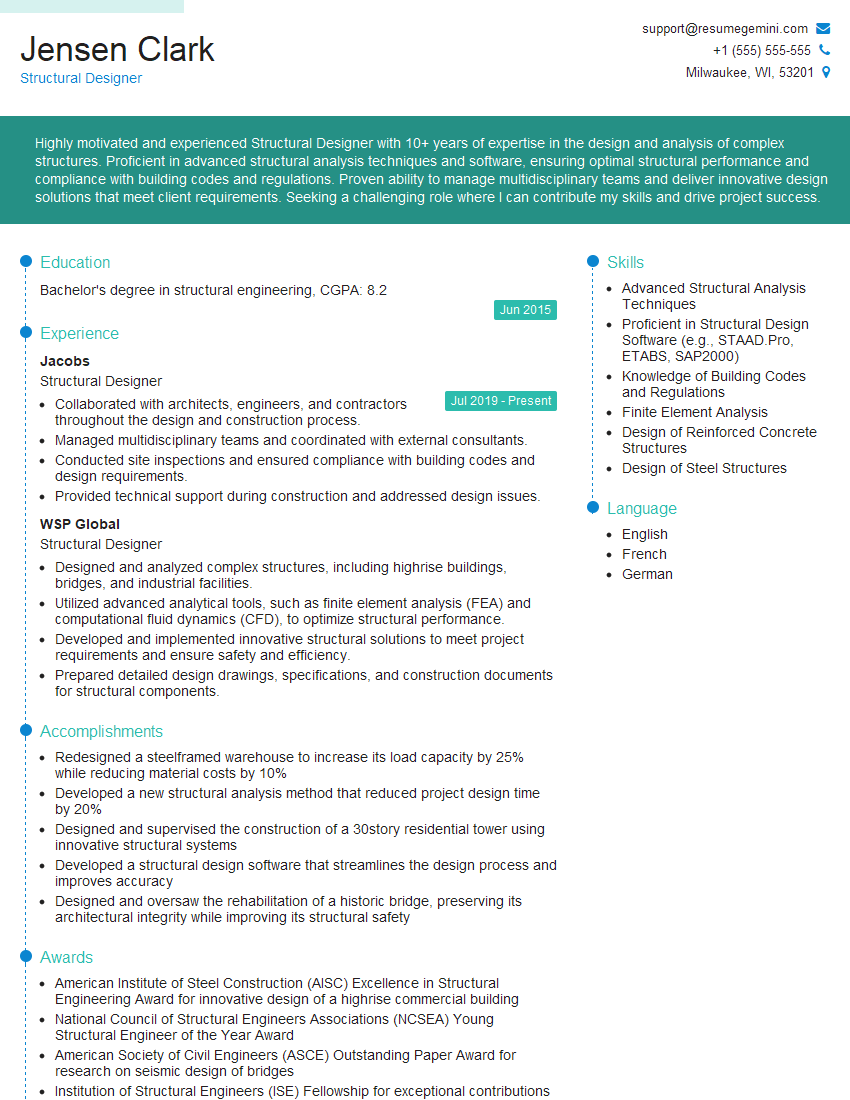
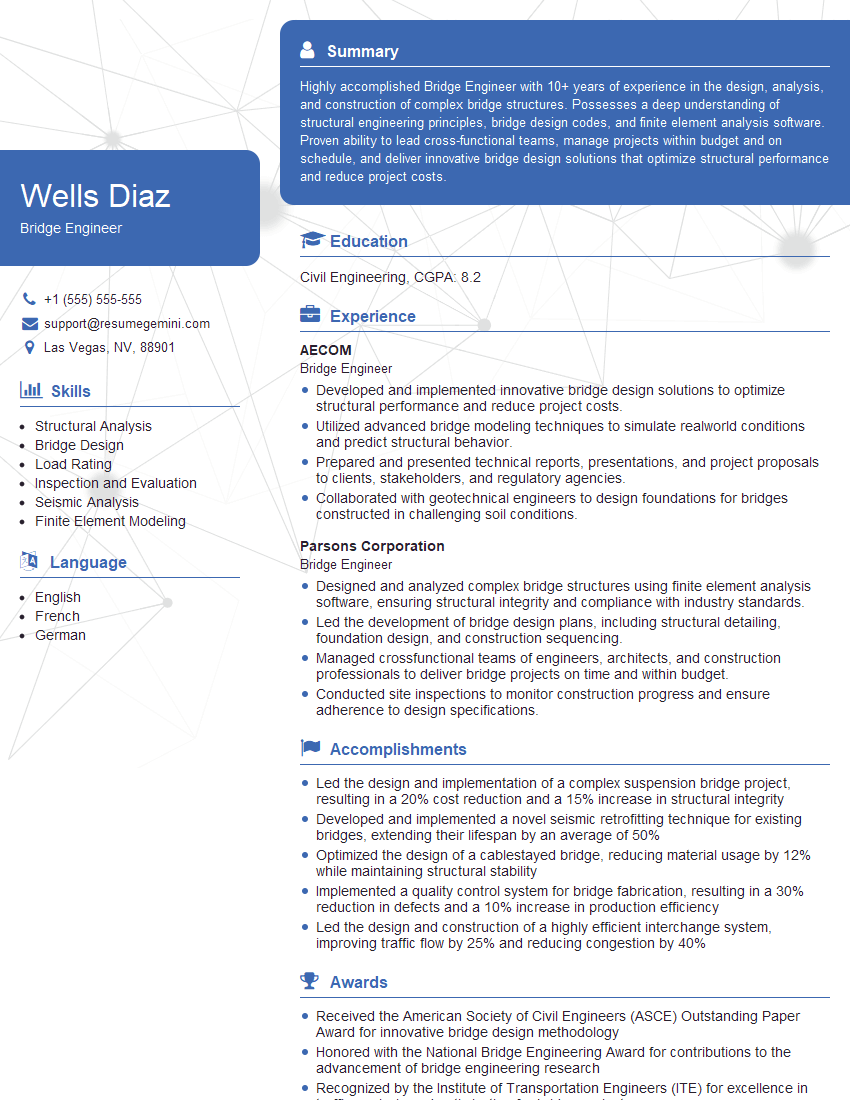
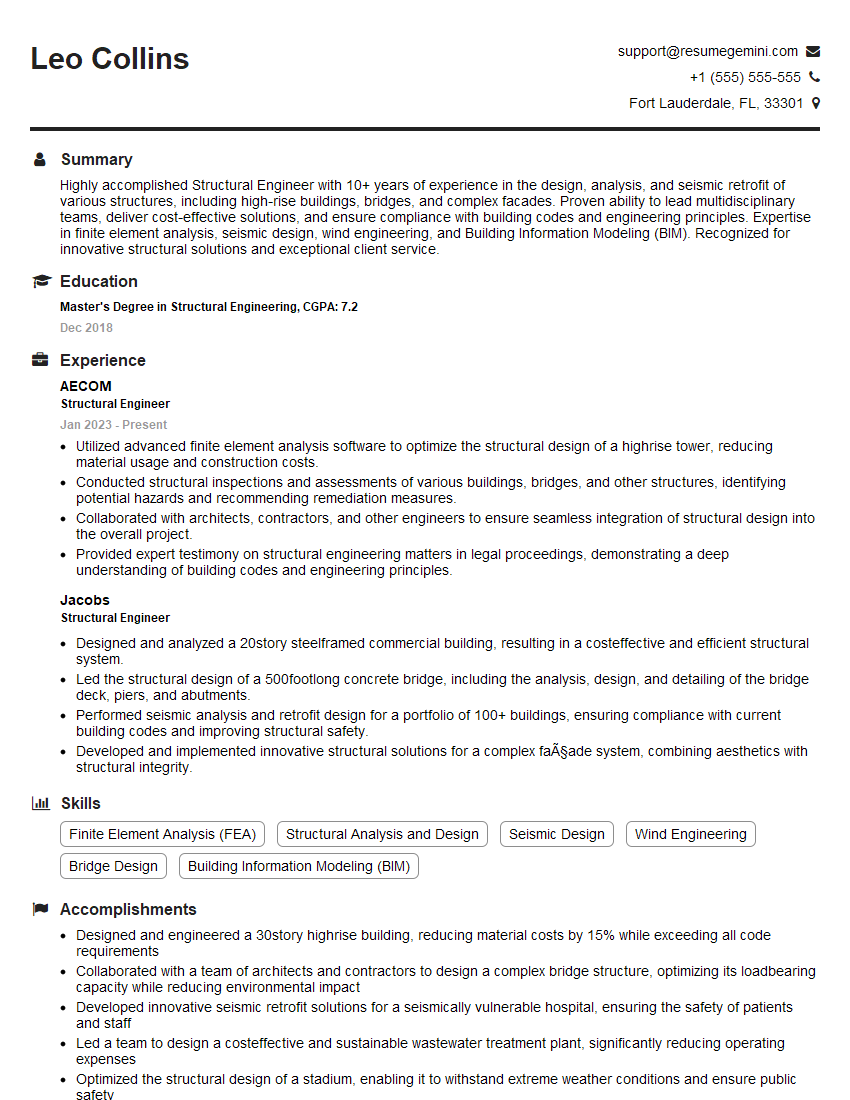
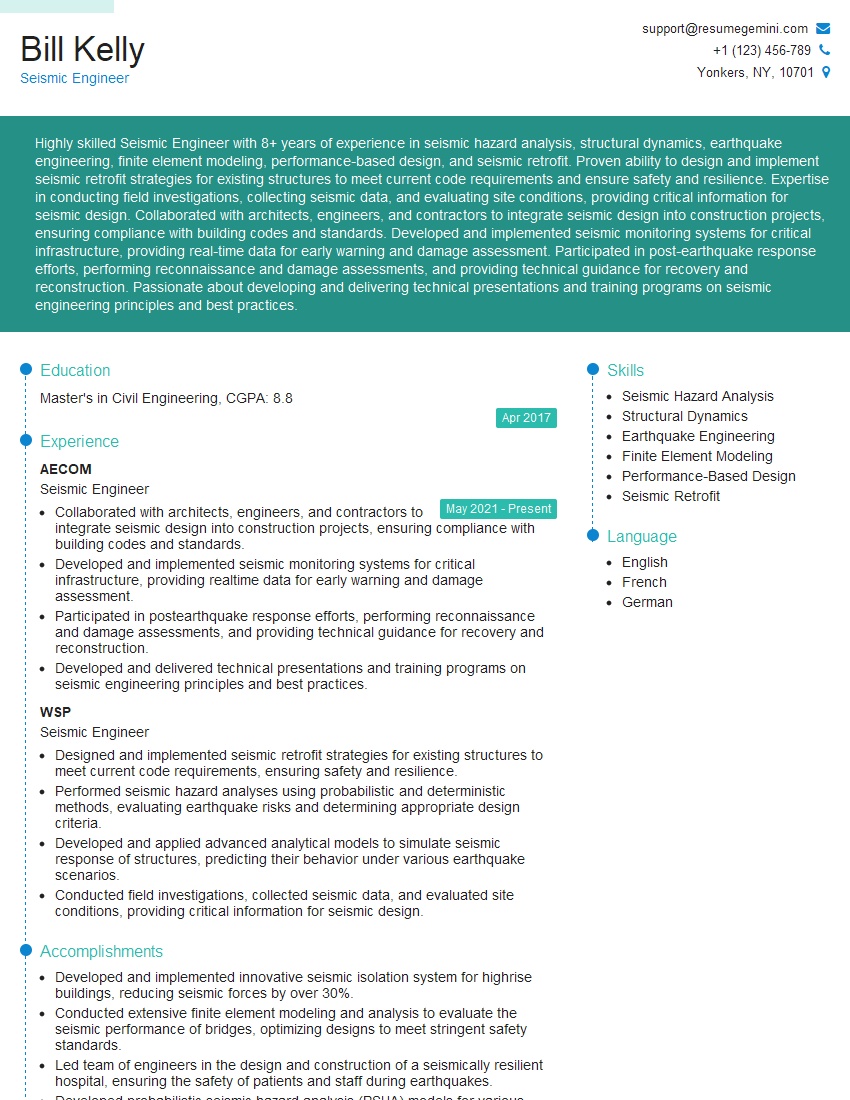
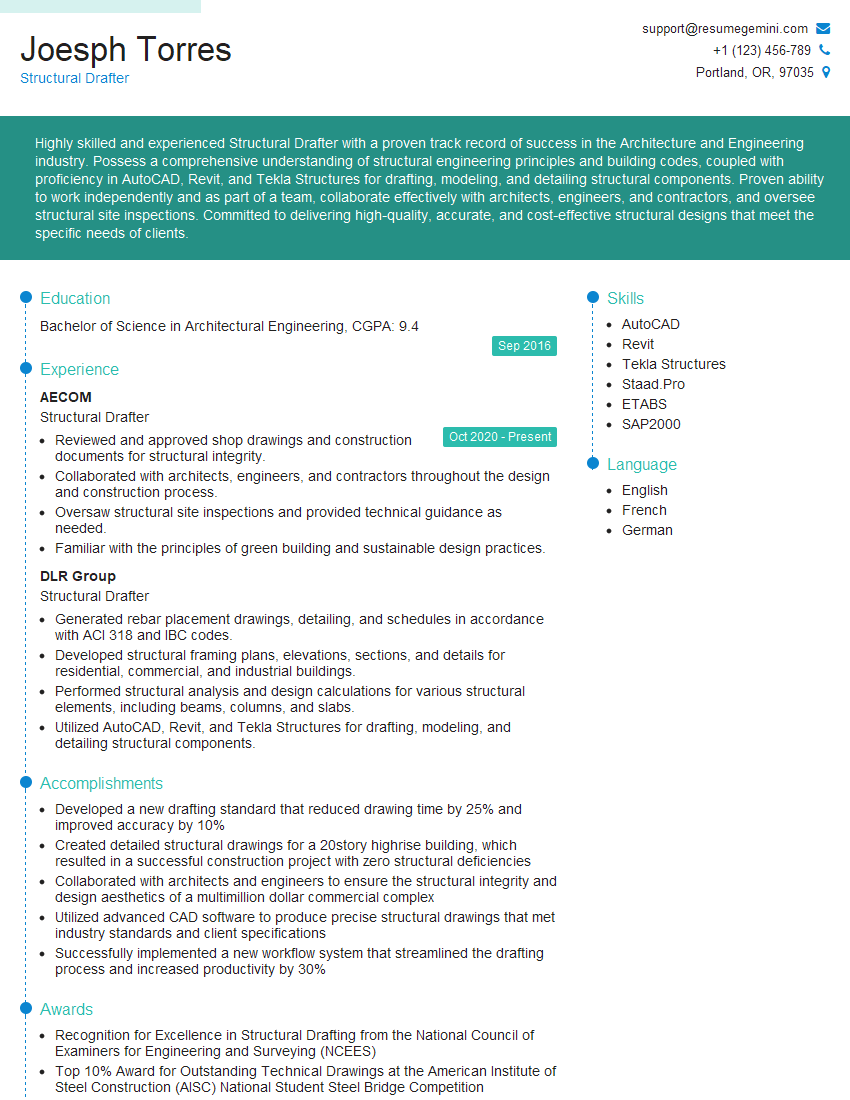
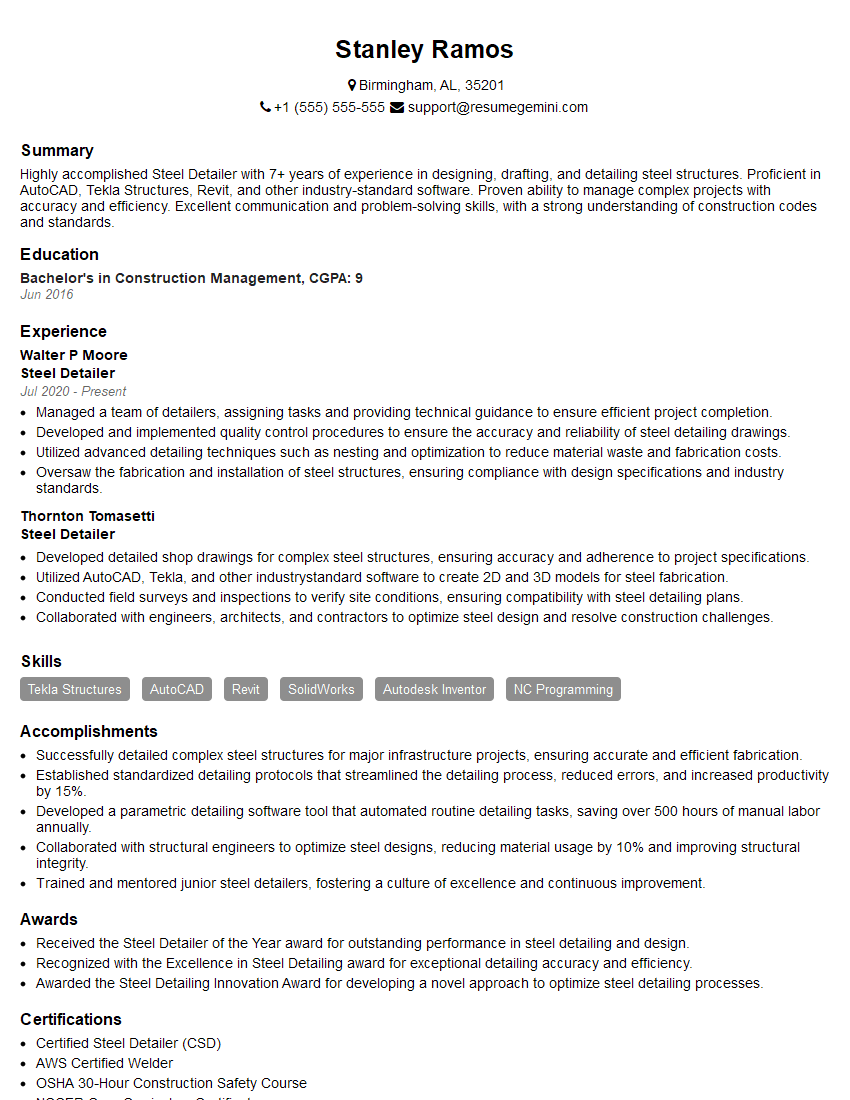
Mastering Structural Support Design opens doors to exciting and challenging career opportunities, offering significant growth potential in the construction and infrastructure industries. To maximize your job prospects, it’s crucial to present your skills and experience effectively. An ATS-friendly resume is key to getting your application noticed by recruiters and hiring managers. ResumeGemini is a trusted resource that can help you build a professional and impactful resume. They provide examples of resumes tailored to Structural Support Design, ensuring your application stands out from the competition. Invest the time to create a strong resume – it’s an investment in your future success.
Explore more articles
Users Rating of Our Blogs
Share Your Experience
We value your feedback! Please rate our content and share your thoughts (optional).
What Readers Say About Our Blog
Amazing blog
hello,
Our consultant firm based in the USA and our client are interested in your products.
Could you provide your company brochure and respond from your official email id (if different from the current in use), so i can send you the client’s requirement.
Payment before production.
I await your answer.
Regards,
MrSmith
hello,
Our consultant firm based in the USA and our client are interested in your products.
Could you provide your company brochure and respond from your official email id (if different from the current in use), so i can send you the client’s requirement.
Payment before production.
I await your answer.
Regards,
MrSmith
These apartments are so amazing, posting them online would break the algorithm.
https://bit.ly/Lovely2BedsApartmentHudsonYards
Reach out at BENSON@LONDONFOSTER.COM and let’s get started!
Take a look at this stunning 2-bedroom apartment perfectly situated NYC’s coveted Hudson Yards!
https://bit.ly/Lovely2BedsApartmentHudsonYards
Live Rent Free!
https://bit.ly/LiveRentFREE
Interesting Article, I liked the depth of knowledge you’ve shared.
Helpful, thanks for sharing.
Hi, I represent a social media marketing agency and liked your blog
Hi, I represent an SEO company that specialises in getting you AI citations and higher rankings on Google. I’d like to offer you a 100% free SEO audit for your website. Would you be interested?