Are you ready to stand out in your next interview? Understanding and preparing for Ophthalmic Imaging and Diagnostics interview questions is a game-changer. In this blog, we’ve compiled key questions and expert advice to help you showcase your skills with confidence and precision. Let’s get started on your journey to acing the interview.
Questions Asked in Ophthalmic Imaging and Diagnostics Interview
Q 1. Explain the principles of Optical Coherence Tomography (OCT).
Optical Coherence Tomography (OCT) is a non-invasive imaging technique that uses low-coherence interferometry to produce high-resolution cross-sectional images of the retina and other tissues. Imagine it like a very precise ultrasound, but instead of sound waves, it uses light. A light source emits near-infrared light, and the device measures how much light is reflected back from different tissue layers. The time it takes for the light to return provides information about the depth of the reflecting surface, creating a detailed, three-dimensional image.
The principle relies on the interference of light waves. When light waves from the source and light waves reflected from the tissue meet, they interfere constructively (creating a bright signal) only if the path lengths are very similar. This allows for precise measurement of distances within the tissue, yielding high-resolution images with micrometer-level precision. This is particularly valuable for visualizing subtle changes in retinal structure that may not be apparent with other imaging modalities.
Q 2. Describe the different types of OCT scans and their applications.
There are several types of OCT scans, each with specific applications:
- Time-Domain OCT (TD-OCT): This older technology is simpler but slower and less sensitive. It’s less commonly used now.
- Spectral-Domain OCT (SD-OCT): This is the most common type, offering faster image acquisition and higher sensitivity than TD-OCT. It’s widely used for retinal imaging, detecting macular degeneration, diabetic retinopathy, glaucoma, and other retinal diseases.
- Swept-Source OCT (SS-OCT): This advanced technique provides even faster image acquisition and deeper penetration than SD-OCT, enabling imaging of larger volumes of tissue. It’s particularly useful for imaging the optic nerve and choroid.
- Optical Coherence Tomography Angiography (OCTA): This non-invasive technique uses OCT to visualize the retinal and choroidal vasculature without the need for dye injection. It’s crucial for evaluating blood flow changes related to various retinal diseases.
For example, SD-OCT is routinely used in the diagnosis and monitoring of age-related macular degeneration (AMD), allowing clinicians to assess the thickness and structure of the macula, identify drusen (small deposits beneath the retina), and track disease progression. OCTA, on the other hand, would be the preferred method to visualize the retinal microvasculature in a patient with suspected diabetic retinopathy to assess perfusion and detect areas of ischemia.
Q 3. How do you interpret an OCT image? What are the key features to look for?
Interpreting an OCT image requires a systematic approach. You start by identifying key anatomical landmarks, like the retinal nerve fiber layer (RNFL), the ganglion cell layer (GCL), the inner nuclear layer (INL), the outer nuclear layer (ONL), the photoreceptor layer (PRL), and the retinal pigment epithelium (RPE). Then, you assess the thickness and structure of these layers, looking for any abnormalities.
Key features to look for include:
- Layer thickness changes: Thinning of specific layers, particularly the RNFL in glaucoma or the ONL in macular degeneration, is highly significant.
- Presence of fluid: Subretinal fluid, intraretinal fluid, and cystoid macular edema can be readily identified.
- Presence of lesions: Drusen, hyperreflective foci, and other lesions are easily visualized and characterized.
- Vascular abnormalities: OCTA can reveal changes in blood vessel density and perfusion.
For instance, in a patient with suspected glaucoma, we look for RNFL thinning, which is a hallmark of the disease. In a patient with diabetic macular edema, we look for intraretinal fluid and thickening of the retinal layers.
Q 4. Explain the procedure for performing fluorescein angiography.
Fluorescein angiography is an imaging technique that uses a fluorescent dye, fluorescein, to visualize the retinal and choroidal vasculature. The procedure involves:
- Preparation: The patient’s pupils are dilated with eye drops.
- Injection: A small amount of fluorescein dye is injected intravenously into a vein in the patient’s arm.
- Imaging: A series of photographs are taken of the retina using a specialized camera with a special filter that selectively blocks visible light and only allows the fluorescence of the fluorescein dye to be captured. Images are captured at regular intervals for about 10 minutes after injection to capture early, mid, and late phases of dye transit through the vasculature.
- Post-procedure care: Patient is monitored for any adverse reactions, which are uncommon.
The dye circulates through the bloodstream and highlights the blood vessels in the retina and choroid. This allows for detailed visualization of the vasculature, revealing any leakage, blockage, or other abnormalities.
Q 5. What are the potential complications of fluorescein angiography?
Although generally safe, fluorescein angiography has potential complications:
- Allergic reactions: These are rare but can range from mild skin reactions to more severe anaphylaxis.
- Nausea and vomiting: Some patients experience these as a result of the dye injection.
- Temporary staining: The dye can temporarily stain the skin and urine yellow-orange. Patients should be informed of this potential side effect.
- Rare but serious complications: These may include retinal detachment and injection site reactions.
A thorough patient history should be taken to assess any potential risk factors or contraindications. For example, prior allergic reactions to iodine-based contrast agents may increase risk for an allergic reaction to fluorescein. Detailed patient counseling, including these risks, should precede the procedure.
Q 6. How do you interpret a fluorescein angiogram? What are the key findings?
Interpreting a fluorescein angiogram involves analyzing the sequence of images taken over time. We look for:
- Filling phase: This shows the initial perfusion of the retinal and choroidal vessels.
- Early phase: This helps assess vessel patency and identify leakage or blockages.
- Mid and Late phases: These help assess areas of dye leakage from the choroidal or retinal vessels and the overall dynamics of the circulation.
Key findings include:
- Leakage: This can indicate diabetic retinopathy, age-related macular degeneration, or other conditions.
- Blockages: This can indicate vascular occlusions or other vascular pathologies.
- Neovascularization: The formation of new, abnormal blood vessels is a sign of several eye diseases, including diabetic retinopathy and AMD.
For example, in a patient with suspected diabetic retinopathy, we might observe microaneurysms (small bulges in the capillaries) and areas of retinal leakage during the later phases of the angiogram.
Q 7. Describe the principles of visual field testing.
Visual field testing assesses the extent of a person’s peripheral vision. It maps the area where a person can see while looking straight ahead. The tests rely on the detection of light stimuli presented at various locations within the visual field. Imagine it like shining a light at different points around your vision, and noting whether you can see the light or not.
Several techniques are used:
- Automated Perimetry: This is the most common method, using a computer-controlled system to present light stimuli at various locations and intensities. The patient presses a button when they see the light.
- Manual Perimetry: A less common method where the examiner manually presents stimuli, often a target, and records the patient’s responses.
These tests help detect and monitor conditions such as glaucoma, stroke, brain tumors, and other neurological disorders that can affect vision. The results are presented as a visual field map, showing areas of visual loss (scotomas) and areas of normal vision.
Q 8. What are the different types of visual field tests and their applications?
Visual field tests assess the extent of a patient’s peripheral vision. Different methods exist, each with specific applications. Think of it like mapping the landscape of your vision – identifying blind spots or areas of reduced sensitivity.
Static Perimetry (Humphrey Field Analyzer, Octopus): This is the gold standard. A small light stimulus appears at various points in the visual field, and the patient indicates whether they see it. The results are displayed on a visual field map highlighting areas of vision loss. It’s crucial for diagnosing glaucoma, strokes affecting the visual pathways, and other neurological conditions.
Kinetic Perimetry: A light target moves across the visual field, and the patient signals when they detect it. This is less precise than static perimetry but offers a quicker assessment. It can be helpful in initial screenings or patients with cognitive challenges.
Automated Frequency Doubling Perimetry (FDT): This uses flickering stimuli at different frequencies, which are particularly sensitive to detecting early glaucomatous damage. It’s often used as a screening tool or to monitor progression in glaucoma.
Confrontation Visual Field Testing: A quick, bedside assessment where the examiner compares their visual field to the patient’s. While less precise, it’s helpful for initial screening and identifying gross visual field defects.
Q 9. How do you interpret a visual field test result?
Interpreting a visual field test requires careful examination of the visual field map. It’s not simply about identifying blind spots; it’s about understanding the pattern of vision loss.
We look for:
Location of defects: A localized defect might suggest a retinal problem; a more widespread defect could indicate optic nerve damage (e.g., glaucoma) or neurological problems.
Shape and size of defects: The shape and size provide clues about the underlying pathology. Scotomas (blind spots) can have various shapes.
Severity of defects: The degree of sensitivity loss (represented by different shades of gray or numbers on the map) indicates the extent of damage.
Patterns of defects: Specific patterns often correlate with particular diseases. For instance, arcuate scotomas are classic in glaucoma, while hemianopias (loss of half the visual field) often indicate brain lesions.
Comparing the visual field to the patient’s history, other clinical findings, and imaging results is crucial for a precise diagnosis.
Q 10. Explain the use of ultrasound in ophthalmic diagnostics.
Ultrasound in ophthalmology employs high-frequency sound waves to create images of the eye’s internal structures. Unlike light-based imaging, ultrasound can penetrate opaque tissues, making it valuable for assessing structures not easily visualized with other modalities. Imagine it as a highly detailed sonar for your eye.
A-scan biometry: Measures axial length of the eye for cataract surgery planning, ensuring accurate intraocular lens power calculation.
B-scan ultrasonography: Provides two-dimensional images of the eye, particularly useful in visualizing the vitreous humor, retina, choroid, and sclera. Essential for diagnosing retinal detachments, vitreous hemorrhages, tumors, and other posterior segment pathologies.
U-scan (dynamic B-scan): Allows for real-time visualization of ocular movement and dynamic changes within the eye.
In essence, ultrasound provides a detailed view of eye structures often hidden from other imaging modalities. It is particularly useful in patients with opaque media (e.g., cataracts, vitreous hemorrhage) obscuring visualization.
Q 11. What are the limitations of ultrasound in ophthalmic imaging?
While ultrasound is powerful, it has limitations:
Image resolution: Ultrasound images aren’t as sharp as those from optical coherence tomography (OCT) or other high-resolution imaging techniques. Details can be less clear.
Operator dependence: The quality of the ultrasound image heavily relies on the skill and experience of the operator. Proper technique is essential for optimal results.
Acoustic shadowing and artifacts: Dense structures within the eye can create shadows, obscuring underlying tissues. Artifacts can also lead to misinterpretations.
Limited penetration in some cases: While ultrasound can penetrate opaque media, very dense structures might still limit visualization.
These limitations need to be considered while interpreting ultrasound images, and often, complementary imaging methods are needed for a complete assessment.
Q 12. Describe the process of image acquisition and processing in ophthalmic imaging.
Image acquisition and processing in ophthalmic imaging involves several steps. The process varies slightly depending on the specific modality, but common features include:
Image Acquisition: This involves capturing the raw image data using the imaging modality (e.g., capturing light reflections in OCT, sound waves in ultrasound, or X-rays in radiography).
Image Pre-processing: This stage involves adjusting the raw data to enhance image quality. Techniques include noise reduction, artifact correction, and contrast enhancement. It’s like enhancing a photo to make the details clearer.
Image Segmentation: This step involves separating different tissues or structures within the image to analyze them individually. This might involve algorithms that identify retinal layers or blood vessels.
Image Analysis: Here, the processed images are quantitatively analyzed, providing measurements of thickness, volume, or other parameters. These measurements can be compared against established norms to identify abnormalities.
Image Post-processing: This final step might involve creating reports or visualizations of the data that are easily interpreted by clinicians. 3D renderings are often used to visualize complex structures.
Software plays a pivotal role in this entire process, incorporating sophisticated algorithms for image enhancement, analysis, and interpretation. This is where the data transforms from raw signals into clinically useful information.
Q 13. What quality control measures are necessary for ophthalmic imaging equipment?
Quality control for ophthalmic imaging equipment is crucial for accurate diagnoses and consistent results. Regular quality control measures are essential. Imagine it as a regular check-up for your medical equipment.
Regular Calibration: Ophthalmic imaging devices require periodic calibration to ensure accuracy. This often involves using standardized phantoms (test objects with known characteristics) to assess image quality and measurements.
Image Quality Assessment: Routine checks are needed to ensure proper image clarity, resolution, and contrast. This may include evaluating images for artifacts or noise.
Maintenance and Cleaning: Regular maintenance, including cleaning the lenses and other components, prevents image degradation and extends equipment lifespan.
Performance Monitoring: Tracking key performance indicators (KPIs) such as image acquisition time, processing speed, and error rates, helps identify potential problems and ensure efficiency. This can involve log files and performance reports.
These measures help maintain equipment accuracy, reducing the possibility of misdiagnosis due to faulty equipment.
Q 14. How do you troubleshoot common problems with ophthalmic imaging equipment?
Troubleshooting ophthalmic imaging equipment requires a systematic approach. Knowing the specific equipment is crucial, but here’s a general framework:
Identify the Problem: Describe the exact issue. Is the image blurry? Is there a software error? Is the equipment not powering up?
Check the Obvious: Make sure the equipment is properly connected, powered, and calibrated. Verify settings are correctly configured.
Consult Manuals and Documentation: The manufacturer’s manuals often contain troubleshooting guides and frequently asked questions.
Test with Known Good Components: If possible, use a known good probe or other component to rule out hardware failures.
Check for Software Updates: Outdated software can cause malfunctions. Ensure the software is up to date.
Contact Technical Support: If you can’t resolve the problem, contact the manufacturer’s technical support team for assistance.
A systematic approach, good record-keeping, and prompt communication with technical support ensures minimal downtime and reliable image acquisition.
Q 15. Explain the importance of maintaining patient confidentiality in ophthalmic imaging.
Maintaining patient confidentiality in ophthalmic imaging is paramount. It’s not just about following regulations like HIPAA (in the US) or GDPR (in Europe); it’s about upholding the ethical responsibility we have to protect sensitive patient information. This includes visual data, which can be incredibly revealing about an individual’s health and personal characteristics.
We employ several strategies to ensure confidentiality. This begins with secure storage of images on HIPAA-compliant servers with access control lists meticulously defining who can view specific images. Patient identifiers are handled with extreme care, often replaced with anonymized codes during research or sharing with colleagues. All personnel are rigorously trained on data protection policies and procedures, and we regularly conduct audits to ensure adherence. Finally, physical security of imaging equipment and storage facilities is maintained to prevent unauthorized access.
For example, I once had a case where a patient’s image was accidentally accessible to someone outside the approved team. We immediately implemented a review of our access protocols, reinforced training, and conducted a thorough investigation to identify the root cause and prevent future incidents. This demonstrated the importance of proactive measures to maintain patient confidentiality and prevent breaches.
Career Expert Tips:
- Ace those interviews! Prepare effectively by reviewing the Top 50 Most Common Interview Questions on ResumeGemini.
- Navigate your job search with confidence! Explore a wide range of Career Tips on ResumeGemini. Learn about common challenges and recommendations to overcome them.
- Craft the perfect resume! Master the Art of Resume Writing with ResumeGemini’s guide. Showcase your unique qualifications and achievements effectively.
- Don’t miss out on holiday savings! Build your dream resume with ResumeGemini’s ATS optimized templates.
Q 16. Describe your experience with different ophthalmic imaging modalities.
My experience spans a wide range of ophthalmic imaging modalities. I’m proficient in using and interpreting images from:
- Optical Coherence Tomography (OCT): I’ve extensively used OCT for retinal imaging, including spectral-domain (SD-OCT) and swept-source (SS-OCT) technologies. This includes analyzing macular thickness, identifying retinal pathologies like macular edema and diabetic retinopathy, and assessing glaucoma progression.
- Fundus Photography and Autofluorescence Imaging (FAF): I’m experienced in capturing and analyzing fundus images to detect retinal diseases, such as age-related macular degeneration (AMD), and using FAF to assess the health of retinal pigment epithelium.
- Fluorescein Angiography (FA) and Indocyanine Green Angiography (ICGA): I have experience in interpreting these angiographic techniques to identify vascular abnormalities in the retina and choroid, crucial in diagnosing conditions like neovascular AMD and retinal vascular occlusions.
- Visual Field Testing (VF): While not strictly an imaging modality, interpreting visual field data is essential for assessing glaucomatous damage and other visual field defects.
- Ultrasound Biomicroscopy (UBM): I’ve used UBM to assess the anterior segment of the eye, including the angle structures, for glaucoma diagnosis and management.
My experience extends beyond image acquisition; I’m adept at correlating findings across different modalities to arrive at a comprehensive diagnosis.
Q 17. What software are you proficient in for ophthalmic image analysis?
I’m proficient in several ophthalmic image analysis software packages. My expertise includes:
- Heidelberg Engineering software suite (Heidelberg Engineering OCT, HRT, etc.): This suite is indispensable for analyzing OCT and HRT (Heidelberg Retina Tomograph) data. I’m skilled in using its built-in measurement tools, creating custom reports, and performing quantitative analysis of retinal layer thickness and optic nerve head morphology.
- Zeiss software (CIRRUS HD-OCT etc.): Similar to Heidelberg’s suite, I can expertly use Zeiss software to analyze OCT images and generate reports. My expertise includes utilizing the built-in tools for precise measurements and evaluating various retinal parameters.
- Other specialized software: I’m also familiar with other image analysis packages used for fluorescein angiography and fundus photography analysis, including those used for automated image segmentation and quantitative analysis of vascular abnormalities.
Beyond these specific software packages, I possess strong programming skills (e.g., Python, MATLAB) enabling me to develop custom image processing algorithms when needed for more advanced analyses.
Q 18. How do you ensure the accuracy and reliability of ophthalmic imaging results?
Ensuring accuracy and reliability in ophthalmic imaging is a multifaceted process. It starts with rigorous quality control of the imaging equipment itself. Regular calibration and maintenance are crucial to minimize artifacts and ensure consistent image quality. We use standardized protocols for image acquisition to minimize variability and ensure images are comparable over time. This includes carefully controlling parameters like exposure, focusing, and scan settings for each modality.
Furthermore, image interpretation relies on a strong foundation in ophthalmology and expertise in the specific imaging modalities. I regularly participate in continuing medical education to stay updated on the latest advancements and best practices. When faced with ambiguous results, I always cross-reference findings with other clinical information, such as the patient’s history, symptoms, and results from other tests. In complex cases, I consult with colleagues or specialists to ensure a comprehensive and accurate assessment. Finally, we maintain detailed records of all imaging procedures and results for traceability and quality assurance.
Q 19. Describe your experience with image archiving and communication systems (PACS).
I have extensive experience working with Picture Archiving and Communication Systems (PACS). These systems are essential for efficient management and storage of ophthalmic images. My experience includes using PACS for image storage, retrieval, and distribution. I’m proficient in using PACS to view images from various modalities, generate reports, and share images with colleagues and referring physicians. I understand the importance of efficient workflow optimization within a PACS environment and the use of its associated tools for image annotation and reporting.
For example, in a busy clinic setting, our PACS system allows rapid access to a patient’s entire imaging history, aiding in the efficient diagnosis and monitoring of conditions like glaucoma. The ability to quickly retrieve and share images with colleagues reduces diagnostic turnaround time and contributes to improved patient care.
Q 20. How do you handle challenging or ambiguous imaging findings?
Handling challenging or ambiguous imaging findings requires a systematic approach. First, I carefully review the images, paying close attention to any unusual or unexpected findings. I compare these findings with the patient’s clinical history and symptoms. I then consider the limitations of the imaging modalities themselves – artifacts, resolution limitations, and potential sources of error – to determine if they might explain the ambiguity.
If the findings remain unclear, I consult relevant literature, engage in peer-review discussions with colleagues, or even consider a second opinion from a specialist. Sometimes, additional imaging modalities may be necessary to clarify the situation. This might involve requesting repeat imaging, conducting fluorescein angiography, or obtaining optical coherence tomography (OCT) images if they weren’t already performed. The goal is to ensure that all reasonable avenues have been explored before making a conclusion.
For example, an ambiguous finding on OCT could be resolved by correlating it with findings from fundus photography or visual field testing. This holistic approach ensures greater diagnostic accuracy and helps avoid misinterpretations that could lead to incorrect treatment decisions.
Q 21. How do you communicate complex imaging results to ophthalmologists?
Communicating complex imaging results to ophthalmologists requires clear, concise, and accurate reporting. I tailor my communication style to the ophthalmologist’s level of expertise and the complexity of the findings. I use precise and non-technical language when necessary, explaining technical terms clearly and providing contextual information. I always include relevant measurements and quantifiable data to support my interpretation. Furthermore, I avoid presenting only the raw data; instead, I highlight the key clinical implications of the findings in a way that is easy to understand and relevant to the clinical decision-making process.
For example, rather than simply stating “there is an area of hyperreflectivity in the outer retina,” I would explain, in a way relevant to the referring physician, “The OCT shows thickening of the retinal inner layers, consistent with macular edema. The thickness is measured at X microns and shows a significant increase since the last exam three months ago, which could indicate worsening disease progression. This should be discussed with the patient and the appropriate treatment plan considered.” Visual aids such as annotated images or simplified diagrams can also enhance communication and aid understanding.
Q 22. Describe your experience with patient education regarding ophthalmic imaging procedures.
Patient education is paramount in ophthalmic imaging. Before any procedure, I explain the purpose of the test, the process involved, and what the images will reveal in terms the patient can easily understand. For example, when explaining Optical Coherence Tomography (OCT), I’d use analogies like comparing the eye’s layers to layers of a cake, showing how OCT creates a detailed cross-sectional image. I address any concerns or anxieties they might have, answering their questions patiently and thoroughly. I also ensure they understand the importance of remaining still during the scan to obtain clear images. I provide written instructions and contact information for follow-up questions, emphasizing the importance of adhering to any pre- or post-procedure instructions like dilating eye drops. This approach ensures patients are well-informed, comfortable, and cooperative, leading to successful imaging and accurate diagnoses.
Q 23. What are the safety precautions associated with ophthalmic imaging procedures?
Safety is the highest priority in ophthalmic imaging. We strictly adhere to protocols to minimize risks. For instance, before any procedure involving lasers, we ensure the patient wears appropriate protective eyewear. For procedures using contrast agents, we carefully assess the patient’s medical history for allergies. We maintain a sterile environment and follow strict hand hygiene protocols. Proper patient positioning is crucial to prevent injury and ensure image quality. We constantly monitor the patient’s comfort and well-being during the procedure and promptly address any issues, such as discomfort or signs of adverse reactions. We also carefully manage equipment and ensure all safety checks are performed before commencement of procedures. Regular equipment maintenance and calibration are essential aspects of ensuring the safety of the imaging process. All staff are thoroughly trained on safety procedures and emergency protocols.
Q 24. How do you maintain the hygiene and sterilization of equipment used in ophthalmic imaging?
Maintaining hygiene and sterilization is critical to prevent infection. We adhere to rigorous protocols for cleaning and sterilizing all ophthalmic imaging equipment. This includes using appropriate disinfectants on surfaces after each use, following manufacturer’s instructions for cleaning and sterilization of probes and hand pieces, and using sterile drapes and gloves during procedures. Equipment is regularly checked for any signs of damage or wear, and any malfunctioning equipment is immediately taken out of service for repair or replacement. We meticulously maintain detailed logs of equipment maintenance and sterilization procedures, ensuring compliance with all relevant health and safety regulations. This rigorous approach safeguards both the patient’s health and the integrity of the equipment, ultimately contributing to accurate diagnostic results. For instance, we utilize autoclaves for high-level disinfection of certain instruments, and we regularly service our OCT machines to ensure proper functioning and image quality.
Q 25. Describe your experience working in a fast-paced clinical environment.
I thrive in fast-paced clinical environments. My experience has equipped me with the ability to prioritize tasks effectively, manage multiple patients simultaneously, and adapt quickly to changing demands. In my previous role, we often saw a high volume of patients, requiring me to efficiently perform imaging procedures while maintaining the highest standards of quality and patient care. I am adept at managing interruptions, maintaining composure under pressure, and seamlessly integrating into a team environment to ensure efficient workflow. My organizational skills and ability to anticipate potential challenges enable me to remain calm and productive even when faced with multiple urgent tasks. For instance, during a particularly busy morning, I successfully coordinated the scheduling of multiple imaging procedures, ensuring that all patients were seen promptly and their images analyzed efficiently.
Q 26. How do you stay updated with the latest advancements in ophthalmic imaging technology?
Staying abreast of advancements in ophthalmic imaging is essential. I actively participate in continuing medical education (CME) courses and workshops, focusing on new technologies and techniques. I regularly review peer-reviewed journals and attend industry conferences to learn about the latest developments in imaging modalities like OCT-Angiography, swept-source OCT, and advanced image analysis software. I also engage with online professional networks and participate in relevant online forums to discuss new findings and share experiences with colleagues. Moreover, I actively seek opportunities to engage with industry representatives to better understand the capabilities and limitations of new instruments. This proactive approach ensures that I remain at the forefront of the field, providing my patients with the best possible care and utilizing the most advanced diagnostic tools.
Q 27. How do you manage your time effectively to meet deadlines in a busy ophthalmology practice?
Effective time management in a busy ophthalmology practice involves meticulous planning and prioritization. I use scheduling software to optimize appointment times, minimizing wait times for patients. I prioritize urgent cases and utilize a system for managing my workload, ensuring that critical tasks are completed promptly. I proactively anticipate potential delays and adjust my schedule accordingly. I avoid multitasking and instead focus on completing one task at a time, ensuring accuracy and efficiency. Furthermore, I maintain a clear communication channel with colleagues and other staff members, keeping everyone informed about my progress and potential roadblocks. This structured approach allows me to meet deadlines consistently without compromising on the quality of my work or patient care. For example, I might prioritize urgent OCT scans for patients with suspected retinal detachment, ensuring those patients are seen and treated promptly.
Q 28. Describe a situation where you had to solve a technical problem related to ophthalmic imaging.
During a routine OCT scan, the machine unexpectedly malfunctioned, displaying an error message indicating a hardware failure. Instead of panicking, I systematically approached the problem. First, I verified the error message, checking the machine’s manual for troubleshooting guidance. I then checked all connections and power supplies, ensuring everything was securely connected. After confirming that the issue was not resolved, I contacted the equipment’s technical support team. Following their guidance, I performed some basic hardware checks and determined that a specific component needed to be replaced. I carefully documented all the steps and the communication with the support team. In the meantime, I rerouted the patient to another available OCT machine, minimizing any disruption to the patient flow. Once the faulty part was replaced by the technician, the OCT machine resumed its normal operations. The systematic approach allowed us to minimize downtime and quickly resolve the problem ensuring uninterrupted patient service.
Key Topics to Learn for Ophthalmic Imaging and Diagnostics Interview
- Fundamentals of Optical Imaging: Understanding the principles of light interaction with ocular tissues, including refraction, reflection, and scattering. This forms the basis for interpreting various imaging modalities.
- Optical Coherence Tomography (OCT): Mastering OCT principles, image acquisition, and interpretation. Focus on differentiating normal and pathological findings, including various retinal and macular diseases.
- Fluorescein Angiography (FA) and Indocyanine Green Angiography (ICGA): Learn the techniques, image interpretation, and clinical applications of these crucial vascular imaging modalities. Practice differentiating various vascular pathologies.
- Fundus Photography and Autofluorescence Imaging: Understand the image acquisition techniques and the interpretation of various features, including pigmentary changes and drusen.
- Visual Field Testing and Interpretation: Familiarize yourself with different types of visual field tests and the interpretation of their results in the context of various neurological and ophthalmological conditions.
- Image Processing and Analysis: Develop a strong understanding of basic image processing techniques and their application to enhance image quality and aid in diagnosis.
- Practical Applications: Consider case studies and scenarios where you apply your knowledge to diagnose and manage various ophthalmic conditions using these imaging techniques. Think critically about differential diagnoses.
- Troubleshooting and Problem-Solving: Be prepared to discuss common challenges encountered in ophthalmic imaging, such as artifacts and image quality issues, and how to address them effectively.
- Emerging Technologies: Explore advancements in ophthalmic imaging, such as adaptive optics and spectral-domain OCT, to showcase your knowledge of the field’s evolution.
Next Steps
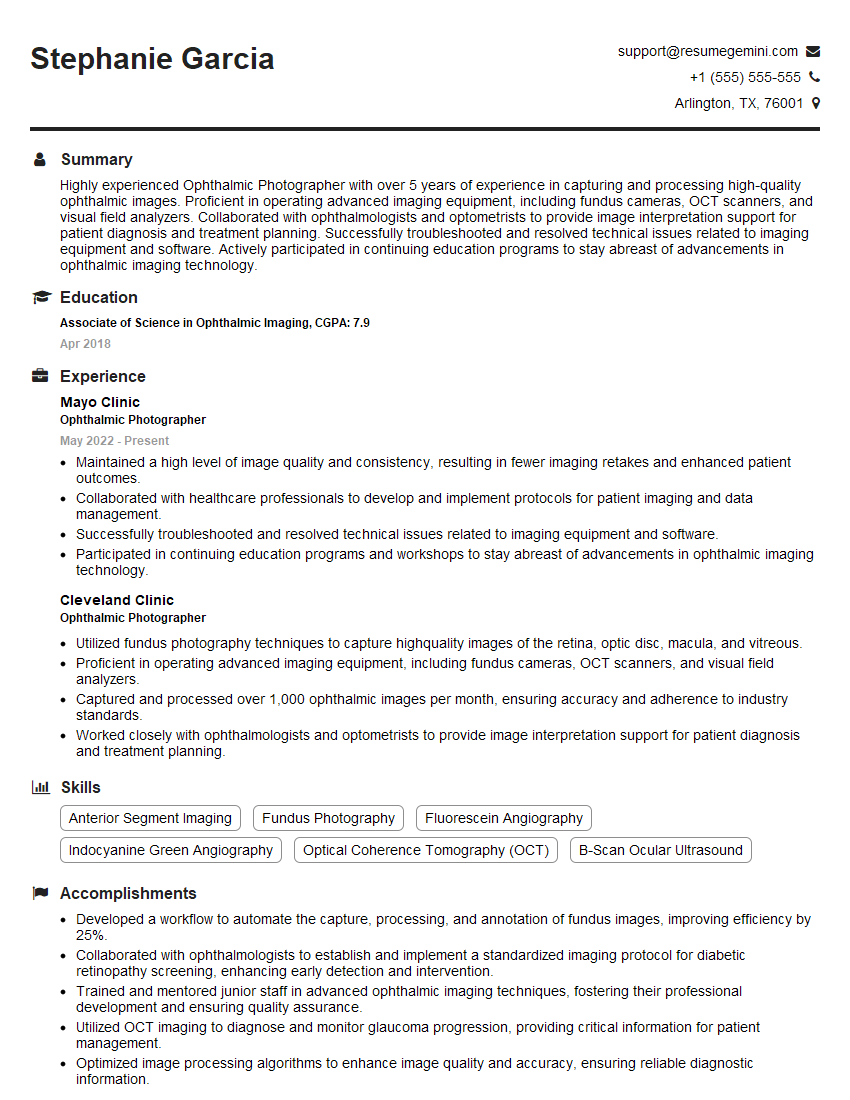
Mastering Ophthalmic Imaging and Diagnostics is crucial for career advancement in this rapidly evolving field. A strong understanding of these techniques is highly valued by employers and directly translates to improved patient care and diagnostic accuracy. To enhance your job prospects, it’s essential to create a compelling and ATS-friendly resume that highlights your skills and experience effectively. We strongly recommend using ResumeGemini, a trusted resource, to build a professional and impactful resume. ResumeGemini provides examples of resumes tailored to Ophthalmic Imaging and Diagnostics, offering a practical guide to showcasing your qualifications effectively. Take the next step in your career journey – craft a resume that truly reflects your expertise.
Explore more articles
Users Rating of Our Blogs
Share Your Experience
We value your feedback! Please rate our content and share your thoughts (optional).
What Readers Say About Our Blog
Amazing blog
hello,
Our consultant firm based in the USA and our client are interested in your products.
Could you provide your company brochure and respond from your official email id (if different from the current in use), so i can send you the client’s requirement.
Payment before production.
I await your answer.
Regards,
MrSmith
hello,
Our consultant firm based in the USA and our client are interested in your products.
Could you provide your company brochure and respond from your official email id (if different from the current in use), so i can send you the client’s requirement.
Payment before production.
I await your answer.
Regards,
MrSmith
These apartments are so amazing, posting them online would break the algorithm.
https://bit.ly/Lovely2BedsApartmentHudsonYards
Reach out at BENSON@LONDONFOSTER.COM and let’s get started!
Take a look at this stunning 2-bedroom apartment perfectly situated NYC’s coveted Hudson Yards!
https://bit.ly/Lovely2BedsApartmentHudsonYards
Live Rent Free!
https://bit.ly/LiveRentFREE
Interesting Article, I liked the depth of knowledge you’ve shared.
Helpful, thanks for sharing.
Hi, I represent a social media marketing agency and liked your blog
Hi, I represent an SEO company that specialises in getting you AI citations and higher rankings on Google. I’d like to offer you a 100% free SEO audit for your website. Would you be interested?