Are you ready to stand out in your next interview? Understanding and preparing for Interventional Pain Management interview questions is a game-changer. In this blog, we’ve compiled key questions and expert advice to help you showcase your skills with confidence and precision. Let’s get started on your journey to acing the interview.
Questions Asked in Interventional Pain Management Interview
Q 1. Describe your experience with fluoroscopy-guided procedures.
Fluoroscopy is a real-time X-ray imaging technique that allows us to visualize the needle and its trajectory during interventional pain procedures. My experience encompasses a wide range of fluoroscopy-guided procedures, including epidural steroid injections, facet joint injections, selective nerve root blocks, and medial branch blocks. I’m proficient in utilizing fluoroscopy to accurately target anatomical structures, minimizing risks of complications such as nerve injury or vascular puncture. For instance, during a transforaminal epidural steroid injection, fluoroscopy helps ensure the medication is precisely delivered to the targeted nerve root, maximizing therapeutic benefit and reducing the risk of unintended effects. The image guidance provided by fluoroscopy is absolutely crucial for precision and safety in these minimally invasive procedures.
I routinely review fluoroscopic images before, during, and after the procedure to confirm accurate needle placement and to assess for any potential complications. I’m also experienced in utilizing the various fluoroscopy settings and techniques to optimize image quality and reduce radiation exposure to both the patient and myself. This involves utilizing pulsed fluoroscopy and low dose radiation protocols whenever possible.
Q 2. Explain the differences between nerve blocks and spinal cord stimulation.
Nerve blocks and spinal cord stimulation (SCS) are both interventional pain management techniques but target pain differently. A nerve block involves injecting a local anesthetic and often a steroid medication near a specific nerve to temporarily interrupt pain signals. It’s like temporarily muting a specific pain pathway. Think of it as a targeted, temporary pain relief. The effects are temporary, lasting from hours to weeks depending on the type of block and medication used. Examples include cervical nerve root blocks for neck pain, or lumbar nerve blocks for radiculopathy.
Spinal cord stimulation (SCS), on the other hand, is a more permanent option that involves implanting a device that delivers electrical impulses to the spinal cord. These impulses interfere with pain signals traveling to the brain. It’s like having a built-in pain-management system. SCS offers long-term pain relief, potentially lasting for years. It’s usually reserved for patients with chronic pain that hasn’t responded well to other treatments, such as failed back surgery syndrome.
The key difference lies in the mechanism and duration of action. Nerve blocks are temporary, targeted interventions, whereas SCS is a long-term, more complex treatment offering chronic pain modulation.
Q 3. How do you manage patients with opioid-induced hyperalgesia?
Opioid-induced hyperalgesia (OIH) is a condition where chronic opioid use paradoxically increases pain sensitivity. Managing OIH requires a multi-faceted approach that focuses on opioid reduction or cessation, whenever safely possible, while simultaneously addressing the underlying pain. This is often a delicate balancing act.
My strategy involves a gradual tapering of opioids under close monitoring, often in conjunction with non-opioid pain medications such as gabapentinoids or antidepressants, which can help manage both neuropathic and nociceptive pain components often seen in OIH. I also incorporate non-pharmacological interventions such as physical therapy, cognitive behavioral therapy (CBT), and other interventional techniques like nerve blocks or spinal cord stimulation, when indicated. Regular patient assessments are crucial to monitor for opioid withdrawal symptoms and pain levels. The goal is to find the optimal balance between pain relief and minimizing opioid use, ultimately aiming for opioid discontinuation if feasible and safe for the patient.
Q 4. What are the contraindications for epidural steroid injections?
Epidural steroid injections, while effective for some, carry contraindications. These include:
- Active infection: Injecting steroids into an infected area can spread the infection.
- Bleeding disorders: The risk of bleeding at the injection site is increased in patients with coagulation disorders.
- Recent spinal surgery: Injection into an unstable spinal segment can increase risk of complications.
- Allergy to corticosteroids: A history of allergic reaction necessitates careful consideration or alternative treatment.
- Spinal stenosis or other spinal pathology: In certain severe cases, the risk of worsening the condition may outweigh the benefits.
- Pregnancy or breastfeeding: The effects of corticosteroids on the fetus or infant are not fully known.
A thorough patient history and physical examination are essential before considering an epidural steroid injection to identify any contraindications and ensure patient safety. Specific imaging studies (MRI, CT) may be needed to rule out contraindications and help to properly plan the procedure.
Q 5. Discuss your approach to managing chronic back pain.
Managing chronic back pain requires a holistic and individualized approach. I typically begin with a comprehensive assessment focusing on the patient’s history, physical examination, and imaging studies to identify the underlying cause(s).
My approach involves a combination of:
- Conservative management: This forms the cornerstone of initial treatment and includes patient education, physical therapy, exercise programs, and weight management.
- Pharmacological interventions: Non-opioid analgesics, antidepressants, and anticonvulsants may be used depending on the nature of the pain (nociceptive vs. neuropathic).
- Interventional pain management: Techniques such as epidural steroid injections, facet joint injections, nerve blocks, and radiofrequency ablation can be considered if conservative measures fail.
- Multidisciplinary care: Collaboration with other specialists like physiatrists, psychologists, and neurosurgeons is often crucial for optimizing patient outcomes.
Each patient’s journey is unique. For example, a patient with predominantly mechanical back pain will receive a different treatment plan from a patient with radiculopathy or a failed back surgery syndrome. The goal is to improve function, reduce pain, and enhance quality of life.
Q 6. Explain the risks and benefits of radiofrequency ablation.
Radiofrequency ablation (RFA) is a minimally invasive procedure that uses heat to destroy targeted nerve tissue, thereby providing pain relief. It’s like selectively turning off a faulty circuit. It’s frequently used for facet joint pain, neuropathic pain, or other chronic pain conditions where targeted nerve disruption is beneficial.
Benefits: RFA can provide significant and long-lasting pain relief (months to years) in select patients. It is minimally invasive, requiring only a small incision, and has a relatively short recovery time. It is a good alternative for those who have not responded to conservative treatments.
Risks: While generally safe, RFA carries potential risks including infection, bleeding, nerve injury (though rare with proper technique and imaging guidance), and temporary or permanent paresthesia (numbness or tingling).
A detailed explanation of the procedure, risks, and potential benefits is always given to the patient prior to the procedure. I carefully evaluate each patient’s suitability for RFA, considering their specific clinical presentation, medical history, and alternative treatment options. Post-procedure monitoring and follow-up appointments are crucial to assess the effectiveness and identify any potential complications.
Q 7. How do you differentiate between neuropathic and nociceptive pain?
Differentiating between neuropathic and nociceptive pain is crucial for effective treatment. Nociceptive pain arises from damage to or stimulation of tissues, such as skin, muscles, or joints. It’s the typical pain you experience after an injury, a burning sensation, or localized aching. Think of it as straightforward pain signaling that something is wrong in your tissues.
Neuropathic pain, on the other hand, results from damage or dysfunction of the nervous system itself. This is often described as burning, shooting, stabbing, or electric shock-like pain. It often arises from conditions like nerve compression, diabetes, or multiple sclerosis. Imagine the pain as the wiring system of the body itself being damaged; it doesn’t just signal injury but rather malfunctions in the signals themselves.
Clinical presentation, history of injury or underlying neurological condition, and the characteristics of pain itself (e.g., burning, tingling, allodynia – pain from normally non-painful stimuli) help distinguish between these types. Detailed history, thorough physical and neurological examination, and advanced imaging modalities such as MRI can help to pinpoint the specific diagnosis and inform treatment strategies, tailoring them to the specific mechanism of the pain.
Q 8. What is your experience with implantable pain pumps?
Implantable pain pumps are sophisticated devices delivering medication directly to the spinal cord or epidural space, providing long-term pain relief for patients with chronic, intractable pain. My experience encompasses the entire process, from patient selection and pre-operative planning to implantation, programming, and post-operative management, including troubleshooting and pump refills. I’ve worked with various pump types, each with its own strengths and weaknesses, such as programmable pumps offering flexibility in medication delivery and reservoir size variations affecting refill frequency. A key aspect of my work is carefully assessing patient suitability – considering their medical history, pain characteristics, and psychological factors. For instance, I recently managed a patient with severe, intractable back pain following a failed spinal fusion, who benefited immensely from an intrathecal pain pump delivering morphine. Careful monitoring for side effects and regular follow-up appointments are crucial to optimize therapy and minimize complications.
Q 9. Describe your experience with managing post-surgical pain.
Managing post-surgical pain requires a multimodal approach, integrating pharmacological and non-pharmacological strategies. My experience involves tailoring pain management plans to individual patient needs and surgical procedures. This includes preemptive analgesia – initiating pain management before surgery to minimize pain sensitization – and using a combination of opioids, NSAIDs, and regional anesthesia techniques. For example, a patient undergoing major abdominal surgery might receive a combined regimen of intravenous opioids, patient-controlled analgesia (PCA), and regional nerve blocks to effectively manage both acute and chronic post-surgical pain. I also emphasize non-pharmacological methods, such as physical therapy, early mobilization, and education on pain coping mechanisms. Regularly assessing the patient’s pain levels and adjusting the plan accordingly is paramount for achieving optimal pain control and minimizing the risks associated with prolonged opioid use.
Q 10. How do you counsel patients on the risks and benefits of different interventional pain management techniques?
Counseling patients is crucial. I approach this using a shared decision-making model, thoroughly explaining each procedure’s risks and benefits in terms they understand, using clear language and avoiding medical jargon. We discuss alternative treatments, potential complications (e.g., infection, bleeding, nerve damage), and realistic expectations for pain relief. I present the information in a balanced manner, emphasizing the potential for success while acknowledging the possibility of failure. For example, when discussing spinal cord stimulation, I explain that it doesn’t work for everyone, and that a trial period is often necessary to assess its effectiveness. I also address patients’ concerns and answer their questions openly and honestly. Open communication fosters trust and empowers patients to make informed decisions that align with their personal goals and preferences.
Q 11. What is your approach to managing failed back surgery syndrome?
Failed back surgery syndrome (FBSS) presents a significant challenge. My approach involves a comprehensive evaluation using imaging (MRI, CT), neurological examination, and a thorough review of the patient’s medical history. This helps identify the specific source of pain, be it discogenic pain, facet joint pain, or nerve root compression. Treatment is tailored based on the findings, and often involves a combination of interventions, including epidural steroid injections, facet joint injections, nerve root blocks, and radiofrequency ablation. In select cases, I consider spinal cord stimulation or intrathecal drug delivery systems. For example, a patient with FBSS and persistent radiculopathy might benefit from a combination of selective nerve root blocks and physical therapy. Close monitoring, regular follow-up appointments, and open communication with the patient are vital throughout the treatment process.
Q 12. How do you assess a patient’s candidacy for interventional pain management?
Assessing candidacy for interventional pain management involves a multi-step process. First, a thorough history and physical exam help identify the underlying pain generator. This is followed by imaging studies (X-ray, CT, MRI) to pinpoint the source of pain and rule out other pathologies. Neurological examination assesses sensory and motor function to identify nerve involvement. Psychologic factors, such as depression or anxiety, are also considered since they significantly influence pain perception and treatment response. Finally, I consider patient expectations, their overall health status, and their ability to adhere to post-procedural instructions. Only after a comprehensive evaluation do I determine the suitability of a patient for specific interventional procedures. Those with unrealistic expectations or significant comorbidities might be less suitable candidates for certain complex procedures.
Q 13. Describe your experience with ultrasound-guided injections.
Ultrasound-guided injections are a cornerstone of my practice. Ultrasound provides real-time visualization of anatomical structures, allowing precise needle placement and minimizing the risk of complications. This technique is crucial for many procedures, including nerve blocks, joint injections, and trigger point injections. For example, I routinely use ultrasound to guide facet joint injections for patients with facet joint pain. The ultrasound allows for accurate needle placement into the joint, ensuring optimal medication delivery and reducing the risk of accidental injections into adjacent structures. Furthermore, I utilize ultrasound to guide injections in challenging cases, such as patients with obesity or anatomical variations, improving accuracy and safety. My extensive experience with ultrasound enhances the precision and efficacy of my interventional procedures.
Q 14. What is your approach to managing complex regional pain syndrome (CRPS)?
Complex Regional Pain Syndrome (CRPS) is a debilitating condition requiring a multidisciplinary approach. My strategy emphasizes early intervention, utilizing a combination of pharmacological and interventional techniques. This often includes regional nerve blocks, sympathetic nerve blocks, and intravenous regional anesthesia (Bier block). Physical and occupational therapy plays a crucial role in improving function and reducing pain. In addition to these, I incorporate psychological therapies to address the emotional aspects of chronic pain, such as cognitive behavioral therapy (CBT). The goal is to interrupt the pain cycle, reduce inflammation, and improve functional outcomes. Each case requires an individualized treatment plan because CRPS can manifest differently in different patients. For example, a patient with CRPS in their hand might require a combination of stellate ganglion blocks, physical therapy, and mirror therapy, whereas another patient might need a different treatment approach. Regular monitoring and adjustments to the treatment plan are vital for effective management.
Q 15. How do you manage patients with medication-resistant pain?
Managing medication-resistant pain requires a multi-modal approach that goes beyond simply increasing opioid dosages. It’s crucial to understand that ‘resistance’ doesn’t necessarily mean the medication isn’t working at all; it might mean the current regimen isn’t optimally addressing the underlying pain mechanisms.
My strategy involves a thorough reassessment of the patient’s pain profile, including location, character, intensity, and aggravating/relieving factors. This is often coupled with a review of their current medications, including any potential drug interactions.
- Interventional Techniques: This might involve procedures like epidural steroid injections, nerve blocks (e.g., facet joint injections, radiofrequency ablation), or implantable devices like spinal cord stimulators. The choice depends heavily on the source and type of pain.
- Pharmacological Adjustments: We explore alternative analgesic pathways. This may include switching to different classes of medications (e.g., from opioids to non-opioid analgesics, adding adjuvant medications like antidepressants or anticonvulsants), optimizing existing medication dosages, or exploring the addition of topical analgesics.
- Rehabilitation and Lifestyle Changes: Physical therapy, occupational therapy, and cognitive behavioral therapy (CBT) are crucial. Improving mobility, strengthening muscles, and addressing psychological factors are essential to address the whole person. For instance, a patient with chronic back pain might benefit from strengthening exercises to stabilize the spine, reducing reliance on medication alone.
- Multidisciplinary Approach: Collaboration with pain psychologists, physical therapists, and other specialists is critical. A team approach ensures the patient receives comprehensive, coordinated care.
For example, I recently managed a patient with chronic neuropathic pain resistant to various opioid and non-opioid combinations. Through a combination of lumbar epidural steroid injections, a tailored physical therapy program, and CBT, we significantly reduced her pain levels and improved her functional capacity. We also successfully transitioned her off high-dose opioids by gradually substituting them with alternative medications and therapies.
Career Expert Tips:
- Ace those interviews! Prepare effectively by reviewing the Top 50 Most Common Interview Questions on ResumeGemini.
- Navigate your job search with confidence! Explore a wide range of Career Tips on ResumeGemini. Learn about common challenges and recommendations to overcome them.
- Craft the perfect resume! Master the Art of Resume Writing with ResumeGemini’s guide. Showcase your unique qualifications and achievements effectively.
- Don’t miss out on holiday savings! Build your dream resume with ResumeGemini’s ATS optimized templates.
Q 16. What are your preferred techniques for managing headaches?
Managing headaches, particularly chronic migraines, often requires a tailored approach considering the headache type and its underlying cause. A detailed history, including headache triggers, location, character, and associated symptoms, is crucial.
- Acute Migraine Management: For acute migraine attacks, I often recommend a combination of over-the-counter analgesics (such as ibuprofen or naproxen) and triptans (such as sumatriptan) or other acute migraine medications, based on the patient’s response.
- Preventive Strategies: For chronic migraine sufferers, I emphasize prophylactic treatments. This might involve medications like beta-blockers, anticonvulsants (like topiramate), or CGRP inhibitors (like erenumab). I also discuss lifestyle modifications such as regular sleep patterns, stress management techniques, and dietary changes (limiting trigger foods like aged cheese or red wine).
- Interventional Techniques: In cases of medication-refractory migraines or specific triggers, interventional techniques like occipital nerve blocks, greater occipital nerve stimulation, or sphenopalatine ganglion blocks may be considered.
For example, a patient with frequent migraines unresponsive to over-the-counter medication benefited significantly from a combination of prophylactic topiramate and Botox injections targeting specific facial muscles. We also incorporated biofeedback techniques into their management plan to help them manage stress, a significant migraine trigger.
Q 17. Explain the role of psychological factors in chronic pain management.
Psychological factors play a significant role in chronic pain, often exacerbating its intensity and duration. It’s not simply a matter of ‘all in their head’; it’s a complex interaction between the brain and the body.
Chronic pain can lead to depression, anxiety, and sleep disturbances, which in turn worsen the pain experience. This creates a vicious cycle. Conversely, pre-existing psychological conditions can make individuals more vulnerable to developing chronic pain or perceiving pain more intensely.
- Depression and Anxiety: These conditions alter the way the brain processes pain signals, making pain feel more intense and pervasive. Treating these conditions is therefore crucial for effective pain management.
- Catastrophizing: Patients who catastrophize (exaggerate the impact of pain) tend to experience more severe pain and disability. Cognitive behavioral therapy (CBT) helps to reframe negative thoughts and beliefs.
- Stress and Coping Mechanisms: Stress exacerbates pain. Learning effective coping strategies, such as mindfulness, relaxation techniques, and stress management programs, is essential.
- Social Support: Lack of social support can worsen pain perception and outcomes. Identifying and strengthening social support networks is an important component of care.
For instance, a patient with fibromyalgia often experienced heightened pain during periods of high stress or anxiety. By incorporating CBT and relaxation techniques into their treatment plan, alongside medication, we improved their ability to manage their stress and pain levels significantly.
Q 18. Describe your experience with using advanced imaging modalities in interventional pain management.
Advanced imaging modalities are essential for precise diagnosis and guiding interventional procedures. They significantly enhance the safety and efficacy of interventions.
- Fluoroscopy: This real-time X-ray imaging is indispensable for most interventional procedures. It allows us to visualize the needle’s path and ensure accurate placement of medication or other devices (e.g., during epidural injections or facet joint injections).
- CT Scan: CT scans provide detailed anatomical information, crucial for planning complex procedures, particularly those involving the spine. CT guidance helps navigate through bone structures accurately and safely.
- Ultrasound: Ultrasound provides real-time images of soft tissues, which is valuable for procedures targeting peripheral nerves or joints. It’s particularly useful in situations where fluoroscopy might be less effective (e.g., nerve blocks in the extremities).
- MRI: MRI offers excellent soft-tissue contrast and helps identify subtle abnormalities that may contribute to pain. It’s often used for pre-procedural planning to understand the anatomy and the exact location of the pain generator.
For example, when performing a radiofrequency ablation of a facet joint, we typically use fluoroscopy to guide the needle to the target nerve. Pre-procedure MRI scans help us confirm the diagnosis and precisely identify the target joint.
Q 19. How do you determine the appropriate dosage and type of medication for pain management?
Determining the appropriate medication dosage and type is a crucial aspect of pain management, involving careful consideration of multiple factors. A ‘one-size-fits-all’ approach is ineffective and potentially dangerous.
The process begins with a thorough assessment of the patient’s pain, including its location, intensity, duration, character (e.g., sharp, dull, burning), and aggravating/relieving factors. This informs the initial choice of medication class and dosage.
- Patient-Specific Factors: Age, weight, comorbidities (other medical conditions), renal or hepatic function, and current medications all significantly influence medication selection and dosing.
- Pain Type: The type of pain (e.g., neuropathic, nociceptive, inflammatory) determines the most appropriate medication class. For example, neuropathic pain often responds better to antidepressants or anticonvulsants, while inflammatory pain might benefit from NSAIDs.
- Stepwise Approach: We often start with non-opioid analgesics (e.g., NSAIDs, acetaminophen) and gradually progress to stronger medications if needed, always prioritizing the lowest effective dose. Opioids are reserved for severe pain and used cautiously, given their potential for dependence and side effects.
- Regular Monitoring: Close monitoring of pain levels, medication effectiveness, and side effects is crucial. Dosages are adjusted as needed based on individual patient responses.
For example, an elderly patient with osteoarthritis might initially be prescribed a low dose of NSAIDs. If pain persists, the dosage might be adjusted or a second analgesic added. The renal function of this patient would be frequently checked to monitor the safety of the NSAID.
Q 20. What are your strategies for managing patients with substance abuse issues?
Managing patients with substance abuse issues adds a layer of complexity to pain management. It requires a careful balance between providing adequate pain relief and preventing further substance misuse.
- Comprehensive Assessment: A thorough assessment of the patient’s substance use history is critical. This includes identifying the type and frequency of substance use, as well as any history of withdrawal symptoms.
- Medication Management: Opioid prescribing is approached with extreme caution, utilizing risk stratification tools and considering non-opioid alternatives whenever possible. Regular urine drug screening and close monitoring are implemented.
- Referral to Specialized Care: Referral to addiction specialists or substance abuse treatment programs is essential. These specialists can provide evidence-based treatment options like medication-assisted treatment (MAT), counseling, and support groups.
- Pain Management Strategies: A multi-modal approach, emphasizing non-pharmacological strategies (e.g., physical therapy, CBT, mindfulness), minimizes the reliance on opioids and addresses the underlying psychological factors contributing to both pain and substance abuse.
- Collaboration: Close collaboration with addiction specialists, counselors, and other members of the healthcare team is crucial for effective management. Regular communication ensures comprehensive and coordinated care for the patient.
For instance, a patient with chronic back pain and a history of opioid misuse required a multidisciplinary approach involving a reduction of opioid dose, enrollment in a MAT program, and weekly sessions with a pain psychologist to work through underlying anxiety.
Q 21. How do you monitor patients for complications after interventional procedures?
Post-procedural monitoring is crucial to ensure patient safety and identify any potential complications following interventional procedures. The level of monitoring depends on the procedure’s complexity and the patient’s overall health.
- Immediate Post-Procedure Monitoring: This involves observing for immediate complications such as bleeding, infection, or nerve damage, usually in a recovery area. Vital signs are closely monitored.
- Follow-up Appointments: Regular follow-up appointments are scheduled to assess pain levels, functional improvement, and the presence of any complications. This allows for timely intervention if needed.
- Imaging Studies: In certain cases, post-procedure imaging studies (e.g., X-rays, CT scans) might be conducted to confirm the placement of implants or assess for bleeding or other complications.
- Pain Management: Post-procedure pain management includes prescribing appropriate analgesics and providing instructions on managing pain at home.
- Patient Education: Patients are educated about potential complications and advised on when to seek immediate medical attention (e.g., signs of infection, increased pain).
For example, after a lumbar epidural steroid injection, patients are monitored for signs of infection (fever, localized swelling), bleeding (hematoma), or worsening neurological symptoms (e.g., new weakness or numbness). They are given clear instructions regarding activity restrictions and medication use and are scheduled for a follow-up appointment in a week to assess their progress.
Q 22. Describe your experience with working collaboratively with other healthcare professionals.
Effective interventional pain management relies heavily on collaborative teamwork. My experience consistently involves close collaboration with a multidisciplinary team, including anesthesiologists, neurosurgeons, physiatrists, neurologists, physical therapists, psychologists, and primary care physicians. This collaborative approach is crucial for optimizing patient care.
For example, in cases of complex regional pain syndrome (CRPS), I work closely with physical therapists to develop a tailored rehabilitation program that complements the interventional procedures. With psychologists, we address the psychological impact of chronic pain and integrate cognitive behavioral therapy (CBT) into the treatment plan. Regular case conferences and shared decision-making meetings with the entire team ensure a holistic approach and consistent communication, ultimately leading to improved patient outcomes.
Furthermore, I actively participate in patient hand-offs, ensuring seamless transitions between different stages of care. Open communication and mutual respect are paramount in this collaborative model. I believe that the combined expertise of the team significantly enhances our ability to manage challenging pain cases effectively.
Q 23. What is your approach to patient education and shared decision-making in pain management?
Patient education and shared decision-making are cornerstones of my pain management philosophy. I believe patients are active participants in their care, and their understanding of their condition and treatment options is vital for successful outcomes. I employ a patient-centered approach where I explain the pathophysiology of their pain in simple, understandable terms, avoiding medical jargon whenever possible. I use visual aids like diagrams and illustrations to clarify complex concepts. I thoroughly discuss the potential benefits, risks, and alternatives to each treatment option, ensuring patients are empowered to make informed decisions.
For instance, before performing a spinal cord stimulator implant, I spend considerable time educating the patient about the procedure, including the potential benefits, risks of infection, and the need for ongoing follow-up care. I encourage them to ask questions and address any concerns they may have. I facilitate shared decision-making by collaboratively weighing the potential benefits against the risks and considering the patient’s personal preferences and goals.
This process fosters trust and improves adherence to the treatment plan. Patient satisfaction and engagement are significantly enhanced when patients feel heard and actively involved in their care journey.
Q 24. Describe a time when you had to manage a difficult or complex pain case.
I once encountered a patient with severe, intractable post-surgical pain following a complex spinal fusion. Traditional analgesic medications proved ineffective, and the patient experienced significant functional limitations. The pain was widespread, radiating down both legs, and was accompanied by debilitating neuropathic symptoms.
After a thorough evaluation, including imaging studies and neurological examination, we hypothesized that the pain was due to a combination of nerve root compression and neuropathic changes. We implemented a multi-modal treatment strategy. This included targeted epidural steroid injections to reduce inflammation, followed by a series of facet joint injections to address the source of pain in the spine. Simultaneously, we incorporated a comprehensive rehabilitation program with physical therapy and pain psychology. We also introduced a trial of a spinal cord stimulator (SCS) to manage the intractable neuropathic pain component.
The case was challenging due to the complex nature of the pain and the patient’s emotional distress. However, through careful planning, a multidisciplinary approach, and persistent monitoring and adjustments to the treatment plan, we eventually achieved significant pain relief and improved functional capacity for the patient.
Q 25. How do you stay up-to-date on the latest advancements in interventional pain management?
Staying current in interventional pain management requires continuous learning and engagement with the latest advancements. I actively participate in professional organizations such as the American Society of Anesthesiologists (ASA) and the American Academy of Pain Medicine (AAPM). Attending national and international conferences, workshops, and continuing medical education (CME) courses are crucial for gaining insights into new techniques and technologies.
I regularly review peer-reviewed journals and research publications in interventional pain management to stay abreast of groundbreaking research. Moreover, I participate in online forums and professional networks to discuss case studies and share best practices with other specialists in the field. This approach ensures that I remain knowledgeable about the latest evidence-based treatments and technologies and can incorporate them into my practice when appropriate.
Q 26. What are your long-term goals in interventional pain management?
My long-term goals in interventional pain management center on improving patient outcomes through innovation and research. I aspire to enhance the efficacy and safety of existing procedures and explore novel interventional techniques to address unmet clinical needs. I am particularly interested in minimally invasive procedures and the application of advanced imaging technologies to improve targeting and reduce complications.
Furthermore, I am keen on contributing to the advancement of the field through research and publication. I aim to mentor and train future generations of interventional pain specialists, ensuring the field continues to evolve and meet the growing demand for effective pain management solutions.
Q 27. Describe your experience with quality improvement initiatives related to pain management.
I have been actively involved in various quality improvement initiatives aimed at enhancing the effectiveness and efficiency of pain management services. For instance, I’ve participated in implementing structured protocols for opioid prescribing, utilizing a risk stratification approach to identify patients who might be at higher risk of developing opioid-related adverse effects. This includes incorporating regular urine drug screens and behavioral health assessments.
Another initiative involved developing and implementing a comprehensive pain management pathway for patients with specific conditions, such as low back pain or post-surgical pain. This pathway outlines clear treatment guidelines, including initial evaluation, interventional procedures, and rehabilitation programs. The pathway aims to improve the consistency and timeliness of care while reducing variability in treatment approaches.
Regular audits of our pain management processes help us identify areas for improvement, measure the effectiveness of our interventions, and ensure that we are adhering to evidence-based guidelines. This continuous improvement cycle allows us to optimize patient outcomes and resource utilization.
Q 28. What is your experience with different types of nerve stimulators?
My experience encompasses a wide range of nerve stimulators, including spinal cord stimulators (SCS), dorsal root ganglion (DRG) stimulators, and peripheral nerve stimulators (PNS). SCS are frequently used for the management of chronic neuropathic pain conditions, particularly failed back surgery syndrome and complex regional pain syndrome. I have extensive experience in the implantation and programming of SCS systems, including the selection of appropriate leads and parameters to optimize therapeutic efficacy while minimizing side effects.
DRG stimulators target the dorsal root ganglion, offering a more focal approach to pain modulation compared to SCS. I have experience with the implantation and programming of DRG stimulators in patients with chronic pain that hasn’t responded to other treatments. PNS are used to target peripheral nerves directly, providing pain relief in specific areas. I have utilized PNS in cases of localized neuropathic pain, such as post-herpetic neuralgia. The selection of the appropriate type of nerve stimulator depends on the specific characteristics of the patient’s pain and their anatomy. Pre-implantation testing, such as trial stimulation, is essential to ensure the effectiveness of the stimulation and patient satisfaction.
Key Topics to Learn for Interventional Pain Management Interview
- Diagnostic Procedures: Understanding various imaging techniques (fluoroscopy, ultrasound) and their application in identifying pain generators. Practical application: Describing your experience interpreting images to guide interventional procedures.
- Injection Techniques: Mastering various injection techniques (epidural, facet joint, selective nerve root blocks) and their indications. Practical application: Explaining the nuances of selecting appropriate techniques based on patient presentation and imaging findings.
- Pharmacology: Comprehensive knowledge of analgesics, anesthetics, and steroids used in interventional pain management. Practical application: Discussing the rationale behind your medication choices, including dosage and potential side effects.
- Complications and Management: Identifying and managing potential complications associated with interventional procedures (e.g., bleeding, infection, nerve injury). Practical application: Describing your approach to risk mitigation and emergency response protocols.
- Patient Selection and Communication: Understanding criteria for patient selection and the importance of effective communication and shared decision-making. Practical application: Illustrating your ability to build rapport with patients and explain procedures clearly.
- Advanced Techniques: Familiarity with advanced procedures like radiofrequency ablation, spinal cord stimulation, and drug delivery systems. Practical application: Discussing your experience or theoretical understanding of these advanced modalities.
- Ethical Considerations: Understanding ethical principles related to pain management, including informed consent and opioid prescribing guidelines. Practical application: Demonstrating an understanding of responsible opioid prescribing practices and ethical decision making.
Next Steps
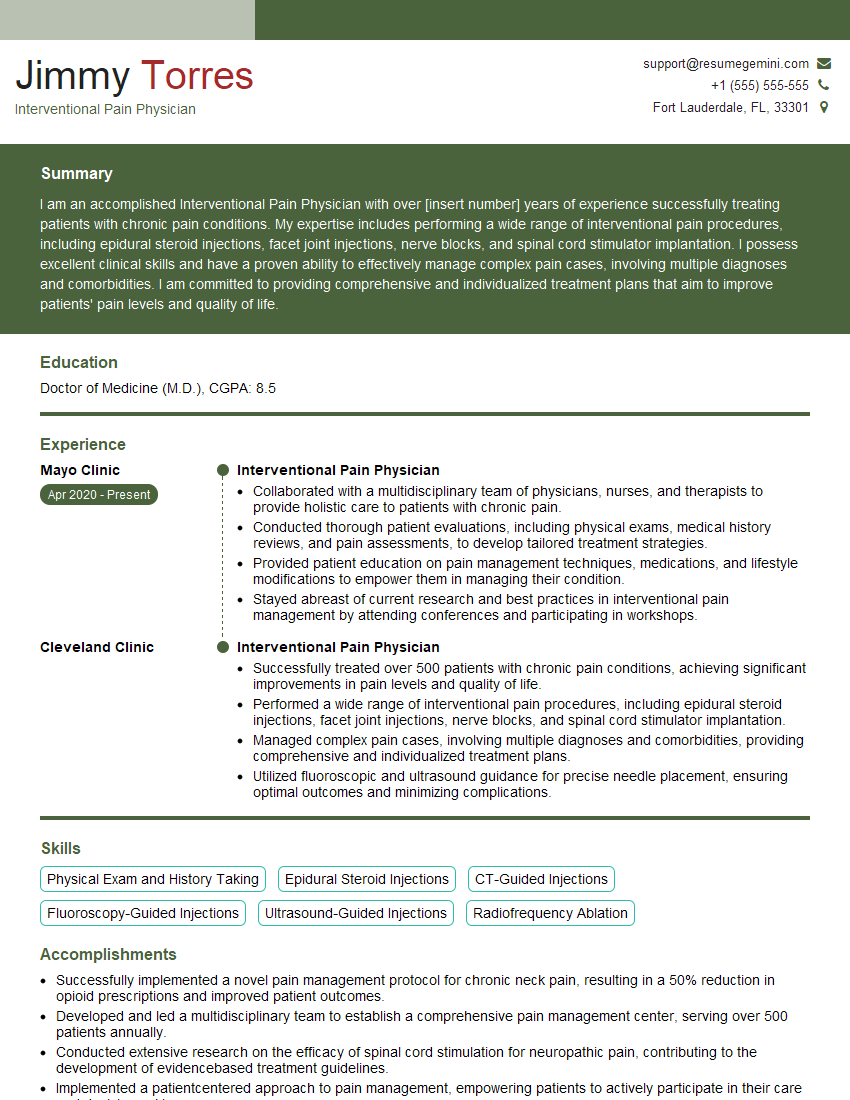
Mastering Interventional Pain Management opens doors to a rewarding career with significant impact on patients’ lives. To advance your career prospects, it’s crucial to present yourself effectively. Creating an ATS-friendly resume is key to ensuring your application gets noticed by recruiters. ResumeGemini is a trusted resource that can help you build a professional and impactful resume. Leverage ResumeGemini’s expertise to craft a compelling document that highlights your skills and experience. Examples of resumes tailored to Interventional Pain Management are available to guide you.
Explore more articles
Users Rating of Our Blogs
Share Your Experience
We value your feedback! Please rate our content and share your thoughts (optional).
What Readers Say About Our Blog
Amazing blog
hello,
Our consultant firm based in the USA and our client are interested in your products.
Could you provide your company brochure and respond from your official email id (if different from the current in use), so i can send you the client’s requirement.
Payment before production.
I await your answer.
Regards,
MrSmith
hello,
Our consultant firm based in the USA and our client are interested in your products.
Could you provide your company brochure and respond from your official email id (if different from the current in use), so i can send you the client’s requirement.
Payment before production.
I await your answer.
Regards,
MrSmith
These apartments are so amazing, posting them online would break the algorithm.
https://bit.ly/Lovely2BedsApartmentHudsonYards
Reach out at BENSON@LONDONFOSTER.COM and let’s get started!
Take a look at this stunning 2-bedroom apartment perfectly situated NYC’s coveted Hudson Yards!
https://bit.ly/Lovely2BedsApartmentHudsonYards
Live Rent Free!
https://bit.ly/LiveRentFREE
Interesting Article, I liked the depth of knowledge you’ve shared.
Helpful, thanks for sharing.
Hi, I represent a social media marketing agency and liked your blog
Hi, I represent an SEO company that specialises in getting you AI citations and higher rankings on Google. I’d like to offer you a 100% free SEO audit for your website. Would you be interested?