Cracking a skill-specific interview, like one for Set Up and Tear Down, requires understanding the nuances of the role. In this blog, we present the questions you’re most likely to encounter, along with insights into how to answer them effectively. Let’s ensure you’re ready to make a strong impression.
Questions Asked in Set Up and Tear Down Interview
Q 1. Describe your experience with efficient setup and teardown procedures.
Efficient setup and teardown hinge on meticulous planning and execution. My approach involves a three-pronged strategy: pre-event planning, streamlined processes, and post-event analysis.
Pre-event planning includes creating detailed checklists, assigning roles and responsibilities to team members, and confirming all equipment and resources are available. I utilize project management software to visualize the workflow, assigning deadlines and dependencies. For example, before a large conference, I’d create a Gantt chart detailing the setup of the registration desk, the exhibition booths, and the auditorium, noting the interdependencies like needing electricity before setting up audio-visual equipment.
Streamlined processes involve optimizing workflows. This means employing techniques like parallel task execution (having multiple teams work simultaneously on independent tasks) and utilizing efficient tools and equipment. For instance, instead of manually carrying items one by one, we use dollies and hand trucks to move larger quantities simultaneously. I also champion the use of modular staging and pre-assembled display units to significantly reduce on-site setup time.
Post-event analysis focuses on identifying areas for improvement. After each event, I conduct a thorough debrief with the team to analyze what worked well, what could be improved, and to document these lessons learned for future projects. This continuous improvement cycle is crucial for refining efficiency over time. For example, we found that using color-coded labels on cables drastically reduced troubleshooting time during teardown, allowing us to complete the process more quickly.
Q 2. What safety protocols do you follow during setup and teardown?
Safety is paramount. My safety protocols are comprehensive and encompass every stage of setup and teardown. They include:
- Risk assessment: A thorough pre-event assessment identifies potential hazards (e.g., electrical hazards, tripping hazards, lifting injuries) and develops mitigation strategies.
- Proper training: All team members receive training on safe lifting techniques, equipment operation, and emergency procedures.
- Personal protective equipment (PPE): We ensure all team members wear appropriate PPE, such as safety glasses, gloves, and steel-toe boots, depending on the task.
- Clear communication: We establish clear communication channels and procedures to ensure everyone is aware of potential risks and can communicate any concerns immediately.
- Safe work practices: We adhere to strict safe work practices, such as securing cables to prevent tripping, using proper lifting techniques, and never overloading equipment.
- Emergency preparedness: We have a well-defined emergency plan in place, including procedures for handling accidents and contacting emergency services.
We regularly review and update our safety protocols to reflect best practices and industry standards. We treat every safety incident as a learning opportunity, using it to reinforce safe working practices and prevent future accidents.
Q 3. How do you prioritize tasks during a time-sensitive setup or teardown?
Prioritizing tasks during a time-sensitive setup or teardown involves a combination of planning, delegation, and adaptability.
I use a prioritization matrix based on urgency and importance (Eisenhower Matrix). Tasks are categorized into: Urgent & Important (immediate action), Important but Not Urgent (scheduled), Urgent but Not Important (delegate), and Neither Urgent nor Important (eliminate). This allows me to focus on critical path tasks first and delegate or eliminate less crucial activities. For example, if a keynote speaker needs their microphone checked immediately (Urgent & Important), it takes precedence over setting up the welcome banners (Important but Not Urgent).
Effective communication is crucial during time-sensitive operations. The team uses clear, concise communication channels (e.g., walkie-talkies, dedicated communication software) to ensure everyone is informed of changing priorities and potential delays. Regular check-ins help track progress and address any emerging issues swiftly.
Q 4. Explain your experience with different types of event setups (e.g., conferences, trade shows).
My experience spans various event setups, including conferences, trade shows, corporate events, and galas. Each event type presents unique challenges and requirements.
Conferences often involve complex audio-visual setups, multiple presentation rooms, registration desks, and networking areas. This requires detailed planning and coordination of multiple teams. I’ve worked on conferences ranging from small, intimate gatherings to large-scale international events, each demanding a tailored approach to setup and teardown.
Trade shows typically involve exhibition booths, product demonstrations, and high foot traffic. Setup often requires constructing booths and arranging displays to maximize visibility and engagement. I have experience with both custom booth construction and using pre-fabricated modules, choosing the option best suited to the event and budget. Tear down in trade show environments necessitates efficient processes to minimize disruption to other exhibitors.
Corporate events and galas often focus on creating a specific ambiance and setting. This involves meticulous attention to detail, including lighting, décor, and seating arrangements. I have experience in handling diverse event styles, from formal dinners to casual networking events, adapting my setup and teardown procedures to reflect the unique character of each event.
Q 5. How do you handle unexpected challenges during setup or teardown?
Unexpected challenges are inevitable. My approach involves proactive problem-solving and adaptability.
Proactive problem-solving includes pre-emptive measures such as having backup equipment, contingency plans, and readily available solutions to common issues. This includes having extra cables, power strips, and tools at hand. For example, if a projector malfunctions, we have a backup projector ready to go immediately.
Adaptability involves thinking on my feet and finding creative solutions under pressure. If a crucial piece of equipment arrives late, I might need to reschedule tasks or adjust the setup to accommodate the delay. My experience in resource management allows me to quickly re-allocate resources or find alternative solutions to keep the event moving forward. For example, if a key member of the team falls ill, I immediately re-assign their tasks to other qualified team members.
Documentation and Communication are crucial. Thorough documentation of unexpected issues and their resolution helps prevent similar problems in the future. Clear communication to all stakeholders is paramount to ensuring transparency and collaboration in addressing these challenges.
Q 6. Describe your experience with inventory management for setup and teardown.
Inventory management is crucial for efficient and cost-effective setup and teardown. My approach involves a multi-step process:
- Detailed inventory list: I maintain a comprehensive list of all equipment and materials, including specifications and quantities. I use a spreadsheet or database to track this information, updating it after each event.
- Barcoding/RFID tagging: To streamline tracking, I often utilize barcoding or RFID tagging to identify and track individual items quickly and accurately.
- Pre-event checks: Before each event, I conduct a thorough inventory check to ensure all necessary items are present and in good working order. I also verify that the quantities are sufficient.
- Post-event inventory: After each event, a detailed post-event inventory is performed to ensure all equipment is accounted for and returned to its proper storage location. This includes checking for damage or missing items.
- Regular maintenance: I schedule regular equipment maintenance to minimize downtime and replacements. This includes periodic cleaning, testing, and repair of equipment.
This systematic approach helps ensure that we have the right equipment at the right time, minimize equipment loss or damage, and track costs efficiently. Using inventory management software further improves accuracy and efficiency.
Q 7. How do you ensure the safe and proper handling of equipment during setup and teardown?
Safe and proper equipment handling is critical for preventing damage, injury, and operational disruptions.
Training: Thorough training of all team members on proper lifting techniques, equipment operation, and safety procedures is essential. This includes training on the safe handling of fragile or heavy equipment.
Protective measures: We use protective packaging, covers, and padding to protect equipment during transport and storage. We utilize appropriate dollies, hand trucks, and other equipment to minimize strain during lifting and movement.
Proper storage: Equipment is stored in a clean, dry, and secure location to protect it from damage and theft. We organize storage to facilitate quick retrieval during future events. We use clearly labeled shelves and containers to improve efficiency.
Regular inspections: We perform regular inspections of all equipment to identify and address any potential issues before they cause problems. This includes checking cables, connections, and any potential wear and tear.
Following these procedures minimizes the risk of damage or injury and ensures that equipment remains in optimal condition for future events. It also shows respect for the equipment and the company’s investment in it.
Q 8. What tools and technologies are you familiar with for efficient setup and teardown?
Efficient setup and teardown relies heavily on the right tools and technologies. My experience encompasses a wide range, from basic hand tools like screwdrivers and wrenches to sophisticated power tools and specialized equipment. For example, I’m proficient with various types of lighting equipment, including LED panels and moving heads, and experienced in setting up sound systems using mixers, amplifiers, and speakers. I’m also familiar with rigging hardware and safety procedures. In terms of technology, I use project management software like Asana or Trello to track tasks and deadlines, inventory management systems to keep track of equipment, and CAD software to plan complex setups. Furthermore, I’m comfortable using various testing equipment to ensure all systems are functioning correctly before, during, and after an event.
- Hand Tools: Screwdrivers, wrenches, hammers, pliers, tape measures
- Power Tools: Drills, saws, cable cutters, staplers
- Audio/Visual Equipment: Mixers, amplifiers, speakers, microphones, lighting consoles, LED panels, projectors, screens
- Rigging Hardware: Chains, ropes, shackles, pulleys, trussing
- Software: Asana, Trello, inventory management systems, CAD software, testing equipment
Q 9. How do you coordinate with other team members during setup and teardown?
Coordination is paramount for seamless setup and teardown. I believe in clear and consistent communication. Before any event, I work with the team to establish roles and responsibilities. We use a combination of pre-event meetings, detailed checklists, and real-time communication (often walkie-talkies or a dedicated communication system) during the process. We employ a system where each team member is responsible for a specific area or task, reducing overlaps and potential conflicts. For example, one team might focus on sound, another on lighting, and a third on stage setup. Regular check-ins ensure everyone is on track and address any unforeseen issues promptly. This proactive communication minimizes delays and ensures a smooth workflow.
I also find that using a shared digital platform, like a cloud-based document, enables us to easily share updates, schematics, and any relevant changes to the plan. This transparency significantly streamlines the process.
Q 10. Describe your experience working under pressure to meet deadlines.
I thrive under pressure and have extensive experience meeting tight deadlines. For instance, during a recent outdoor concert where a sudden storm threatened to delay the event, we had to quickly adapt our setup strategy. By prioritizing essential elements and working as a cohesive unit, we successfully completed the setup within a shortened timeframe, ensuring the concert went on as scheduled. My approach in high-pressure situations focuses on clear prioritization, efficient delegation, and maintaining a calm and focused demeanor to guide the team. Maintaining open communication and adapting quickly to unexpected changes are critical in these scenarios. I’ve learned that a well-planned strategy and the ability to improvise when necessary are crucial to successfully navigating tight deadlines.
Q 11. How do you maintain organization and cleanliness during setup and teardown?
Organization and cleanliness are non-negotiable for efficient setup and teardown. Before we even begin, we create a detailed plan with designated areas for each piece of equipment. We use color-coded labels and clearly marked storage areas. During the process, we regularly tidy up, disposing of any unnecessary materials. After each stage, we meticulously clean our workspace, ensuring the area is left in a better state than when we arrived. This contributes to safety, prevents damage, and ensures a professional appearance. It is important to follow the venue’s guidelines and policies regarding waste disposal. Furthermore, we maintain an inventory throughout the process, checking off items as they are used and stored, which helps prevent loss or damage.
Q 12. Explain your experience with load-in and load-out procedures.
Load-in and load-out procedures are critical for safety and efficiency. I’m experienced with various loading techniques, from hand-carrying smaller items to using forklifts and dollies for larger, heavier equipment. Before we begin, we perform a risk assessment, identifying any potential hazards and implementing appropriate safety measures. We carefully plan the loading order, ensuring that items are loaded and unloaded in a way that minimizes the risk of damage or injury. We always prioritize the safety of both the equipment and the crew. This includes securing equipment properly on vehicles to prevent shifting during transit, using appropriate lifting techniques, and adhering to all relevant safety regulations. Proper documentation of all equipment loaded and unloaded helps with inventory control and claims processing in case of damage.
Q 13. How do you ensure the security of equipment and materials during setup and teardown?
Security is a major concern. We implement a multi-layered approach. Firstly, we always have designated personnel responsible for keeping an eye on the equipment. Secondly, valuable equipment is stored in locked cases or secure areas when not in use. Thirdly, we utilize security cameras or employ on-site security personnel where feasible. We also meticulously document everything, including serial numbers and photos, to aid in recovery in case of theft or loss. Depending on the location and the value of the equipment, insurance coverage is considered. The security measures employed are tailored to the specific requirements of each event and venue.
Q 14. What is your experience with different types of venue setups (e.g., indoor, outdoor)?
I have experience with diverse venue setups. Indoor setups often involve working within existing infrastructure, adapting to the space’s limitations. Outdoor setups present additional challenges, like weather conditions and the need for temporary structures. For example, I’ve worked in large stadiums, intimate theatres, outdoor festivals, and corporate events. Each requires a different approach to planning and execution. Adaptability is key, requiring me to understand the unique aspects of each location and adjust my strategies accordingly, including factors like power availability, ground conditions, and access points. I’m comfortable working with site-specific plans and adapting to unforeseen circumstances.
Q 15. How familiar are you with different types of rigging equipment?
My familiarity with rigging equipment is extensive, encompassing various types used in diverse setups. This includes chain hoists (manual and electric), come-alongs, wire rope slings, webbing slings, shackles, turnbuckles, and various types of anchors and bases. I’m proficient in understanding their weight capacities, safe working loads (SWL), and appropriate applications. For example, I know the difference between a wire rope sling’s various configurations (e.g., choker, basket hitch) and how each affects its SWL. I’m also experienced with inspecting equipment for wear and tear, identifying potential hazards, and ensuring compliance with safety standards.
- Chain Hoists: I can safely operate and maintain both manual and electric chain hoists, ensuring proper load distribution and preventing damage.
- Wire Rope Slings: I understand the importance of inspecting wire rope slings for fraying, kinking, or damage before each use and can identify appropriate sling types for different loads and lifting angles.
- Webbing Slings: I know how to select the correct webbing sling for the job based on factors like load capacity and material compatibility.
Career Expert Tips:
- Ace those interviews! Prepare effectively by reviewing the Top 50 Most Common Interview Questions on ResumeGemini.
- Navigate your job search with confidence! Explore a wide range of Career Tips on ResumeGemini. Learn about common challenges and recommendations to overcome them.
- Craft the perfect resume! Master the Art of Resume Writing with ResumeGemini’s guide. Showcase your unique qualifications and achievements effectively.
- Don’t miss out on holiday savings! Build your dream resume with ResumeGemini’s ATS optimized templates.
Q 16. What is your experience with troubleshooting technical issues during setup?
Troubleshooting is a critical part of my workflow. I approach technical issues systematically, starting with a thorough assessment of the problem. This involves identifying the symptoms, examining the equipment involved, and checking all connections and power sources. I prioritize safety throughout this process, ensuring power is disconnected when necessary before any repairs or adjustments. For instance, during a recent event, a projector failed to power on. After checking the power outlet and cable connections, I discovered a loose internal connection within the projector itself, which I was able to carefully fix. I maintain a detailed log of troubleshooting steps and solutions for future reference.
My experience includes resolving issues with audio-visual equipment (projectors, microphones, speakers), lighting systems, staging components, and rigging mechanisms. I’m comfortable utilizing diagnostic tools and manuals when needed, and I’m always ready to escalate complex problems to more senior technicians if necessary.
Q 17. How do you adapt to changing plans and requirements during setup and teardown?
Adaptability is crucial in this field. I’m skilled at remaining calm and efficiently adjusting to changing plans and requirements, often under pressure. This includes managing unexpected changes in equipment availability, venue limitations, or last-minute alterations to the event schedule. I employ a flexible, iterative approach, prioritizing the most essential elements first and adjusting the sequence of tasks as needed. For example, if a crucial piece of equipment is delayed, I’ll prioritize setting up alternative solutions or adjusting the event timeline to accommodate the delay. Open communication with the event team is essential in managing these changes successfully. I always keep the safety of the crew and attendees as my top priority.
Q 18. Describe a time you had to improvise during a setup or teardown.
During a large outdoor concert setup, a significant wind gust damaged a crucial section of the lighting truss. We were short on time and replacement parts weren’t readily available. Instead of delaying the entire event, I collaborated with the rigging team to devise a temporary, safe solution using available materials. We rerouted certain light fixtures, reinforcing the remaining structure, and adding extra support cables. This improvisation ensured the event could proceed without compromising safety, and the issue was addressed permanently after the event concluded. This experience highlighted the importance of creative problem-solving under pressure while maintaining rigorous safety protocols.
Q 19. How do you ensure compliance with all relevant safety regulations?
Safety is paramount. I strictly adhere to all relevant safety regulations, including OSHA (Occupational Safety and Health Administration) standards and any site-specific requirements. This involves regular equipment inspections, using appropriate personal protective equipment (PPE) like harnesses, gloves, and safety glasses, and following established lockout/tagout procedures for electrical work. Before commencing any setup or teardown, I conduct a thorough risk assessment, identifying potential hazards and developing mitigation strategies. I ensure all crew members receive thorough safety briefings and understand their responsibilities. Furthermore, I always emphasize safe working practices and encourage everyone to report any unsafe conditions immediately.
Q 20. Explain your process for documenting setup and teardown procedures.
My documentation process is methodical and comprehensive. I utilize a combination of digital and physical documentation. Digital documentation involves using spreadsheets or dedicated software to record equipment inventory, setup configurations, and troubleshooting notes. I also use digital photography and video to document the setup process and any unique aspects of the event. Physical documentation involves creating detailed diagrams and flowcharts illustrating the setup and teardown sequence, including the location of equipment and critical connections. This allows for easy replication and training of other crew members. All documentation is clearly labeled, dated, and stored securely for easy retrieval. This ensures consistency, allows for efficient troubleshooting, and aids in training new team members.
Q 21. How do you handle damaged or missing equipment during setup or teardown?
Handling damaged or missing equipment involves a multi-step process. First, I document the damage or missing item, including details like the extent of the damage and the item’s serial number (if applicable). Then, I immediately report the issue to the relevant supervisor or event manager. If the damage is minor and doesn’t compromise safety, I might attempt a temporary repair, but only if I’m qualified and it aligns with safety regulations. If the equipment is unusable, I’ll work with the event team to find a suitable replacement or adjust the setup to mitigate the impact of the missing item. Finally, I ensure the damaged or missing equipment is handled according to company policy, which often involves filing an incident report and initiating the replacement or repair process.
Q 22. What is your experience with using different types of hand tools?
My experience with hand tools spans over 10 years, encompassing a wide range of applications in setup and teardown operations. I’m proficient with tools such as hammers, screwdrivers (Phillips and flathead), wrenches (adjustable and socket), pliers (needle-nose, slip-joint), saws (hand saws, hacksaws), levels, measuring tapes, and utility knives. I understand the nuances of each tool – for example, the importance of choosing the right hammer for the job, the proper technique for using a hacksaw to avoid broken blades, and the safe handling of sharp instruments. I’ve used these tools in various settings, from constructing temporary stages for events to disassembling intricate exhibition displays. I always prioritize safety and proper tool maintenance, ensuring tools are sharp, clean, and in good working order.
For example, during a recent trade show setup, I utilized a variety of hand tools to assemble custom display units from pre-fabricated components. Accurate measurements and the correct use of screwdrivers were crucial to ensure the structural integrity and aesthetic appeal of the finished product.
Q 23. What is your experience with using different types of power tools?
My proficiency extends to a variety of power tools, including drills (both corded and cordless), impact drivers, circular saws, jig saws, sanders (orbital and belt), and various types of grinders. I’m familiar with the safety protocols associated with each tool, including appropriate safety glasses, hearing protection, and dust masks. I understand the importance of regular maintenance, such as changing drill bits, replacing saw blades, and ensuring the tools are properly grounded. I’m also adept at using specialized power tools as needed for specific projects. For instance, I’ve used a pneumatic staple gun for attaching fabric to display backdrops and a heat gun for shaping plastic components.
In one instance, we were tasked with rapidly constructing a temporary wall using pre-cut wooden panels. Using a cordless drill and appropriate screws, I was able to assemble the wall quickly and accurately, helping the team meet a tight deadline. The impact driver greatly reduced the time taken to complete the project compared to using only hand tools.
Q 24. Describe your experience with blueprint reading and understanding technical drawings.
Blueprint reading and interpreting technical drawings are essential skills for me. I can confidently decipher various types of technical drawings, including orthographic projections, isometric drawings, and schematics. I understand symbols, dimensions, specifications, and material notations. My ability to visualize three-dimensional structures from two-dimensional drawings is well-developed, and I can identify potential challenges or inconsistencies early in the process. I frequently use these skills to interpret architectural plans for event setups and to understand the assembly instructions for pre-fabricated components.
I remember one project where the blueprints specified unusual angles and dimensions for a custom display stand. By carefully reviewing the drawings and paying close attention to the details, I was able to successfully construct the stand according to the specifications, resulting in a unique and functional exhibit.
Q 25. How familiar are you with different types of materials used in setup (e.g., wood, metal, plastic)?
My experience encompasses working with a wide range of materials, including various types of wood (softwoods like pine and hardwoods like oak), different metals (steel, aluminum, and sometimes even more specialized materials like stainless steel), and various plastics (PVC, acrylic, etc.). I understand the properties of each material – for instance, the strength and durability of different woods, the malleability of certain metals, and the potential for warping or cracking in certain plastics. This understanding informs my choice of tools and techniques during setup and teardown.
For example, when working with metal components, I’m mindful of using the appropriate tools to avoid damaging the material. When handling wood, I ensure proper safety precautions are taken to avoid splinters. And when working with plastics, I understand the potential for breakage and take the necessary steps to prevent damage during assembly and disassembly.
Q 26. How do you ensure compliance with all relevant health and safety regulations?
Compliance with health and safety regulations is paramount in my work. I’m familiar with OSHA guidelines and other relevant safety standards. My practices include consistently using appropriate personal protective equipment (PPE), such as safety glasses, hearing protection, work gloves, and steel-toe boots, depending on the task. I adhere strictly to safe lifting procedures, utilizing proper lifting techniques and seeking assistance when necessary for heavy objects. I’m trained in the safe handling and storage of hazardous materials and am knowledgeable about emergency procedures, including the location of fire extinguishers and emergency exits. I also ensure that the work area is kept clean, organized, and free from hazards.
Before starting any project, I always conduct a thorough risk assessment to identify potential hazards and develop strategies to mitigate them. This proactive approach ensures a safe working environment for myself and my colleagues.
Q 27. Describe your experience working in a team environment on a time-sensitive setup and teardown project.
I have extensive experience working in team environments on time-sensitive setup and teardown projects. Effective communication and collaboration are key to success in these situations. I’m comfortable delegating tasks, providing support to team members, and working efficiently under pressure. I actively participate in team briefings, contribute to problem-solving, and adhere to project timelines. My ability to anticipate potential bottlenecks and proactively address challenges contributes to efficient project completion.
One memorable project involved setting up an elaborate exhibit for a major conference within a very tight timeframe. By working collaboratively with my team, efficiently dividing tasks, and maintaining clear communication, we successfully completed the setup before the deadline, showcasing excellent teamwork and time management skills. Open communication and flexibility were critical to handling unexpected issues that arose during the process.
Q 28. What are your strategies for managing stress and fatigue during long setup or teardown shifts?
Managing stress and fatigue during long shifts requires a multi-faceted approach. Prioritizing physical health is key; I maintain a regular sleep schedule and ensure adequate hydration and nutrition throughout the workday. Regular breaks are crucial to prevent burnout, allowing time for rest and refueling. Maintaining positive interactions with my team helps to boost morale and reduce stress. I also utilize techniques such as mindfulness and deep breathing exercises to manage stress levels. In addition, I always ensure the work is properly planned to avoid unnecessary rushing and pressure at the end. A well-organized and planned project greatly reduces stress.
When facing particularly demanding projects, I break down large tasks into smaller, more manageable ones, focusing on achieving small, consistent wins to maintain motivation and combat feelings of being overwhelmed.
Key Topics to Learn for Set Up and Tear Down Interview
- Understanding the Scope: Defining the precise boundaries of the setup and teardown process. This includes identifying all necessary components and resources.
- Efficiency and Optimization: Strategies for minimizing setup time and maximizing resource utilization. Consider factors like parallel processing and resource allocation.
- Safety Protocols and Procedures: Prioritizing safety throughout the setup and teardown process. This involves understanding and adhering to relevant safety regulations and best practices.
- Troubleshooting and Problem Solving: Developing effective strategies for identifying and resolving issues that may arise during setup or teardown. This includes anticipating potential problems and developing contingency plans.
- Documentation and Reporting: Maintaining clear and concise documentation of the setup and teardown process. This includes recording any modifications, issues encountered, and lessons learned.
- Hardware and Software Considerations: Understanding the specific hardware and software requirements for the setup and teardown process, and the potential compatibility issues.
- Clean-up and Restoration: Ensuring that the environment is returned to its original state after the process is complete. This involves proper disposal or storage of materials and equipment.
- Teamwork and Collaboration: Working effectively within a team to ensure efficient and coordinated setup and teardown. This involves clear communication and task delegation.
Next Steps
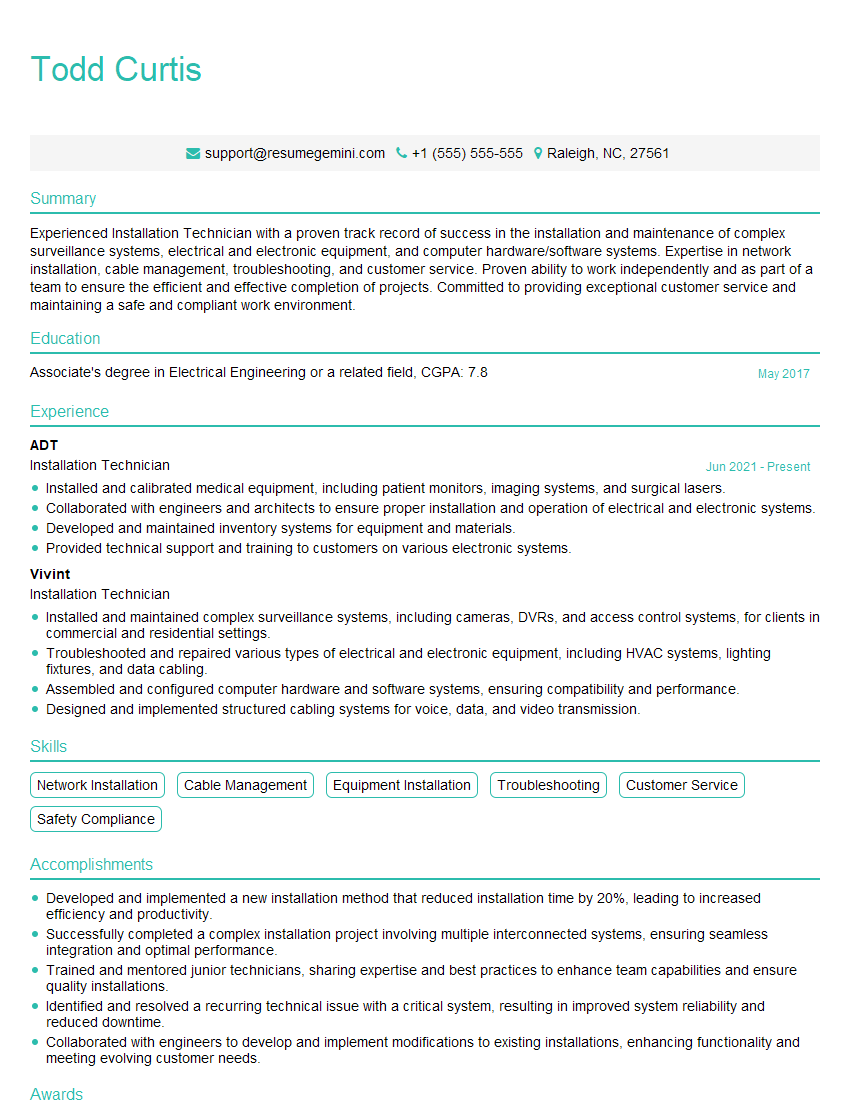
Mastering Set Up and Tear Down techniques is crucial for demonstrating efficiency, problem-solving skills, and attention to detail – highly valued attributes in many roles. A strong understanding of these processes significantly enhances your career prospects across various industries. To further boost your job search, crafting an ATS-friendly resume is essential. This ensures your application gets noticed by recruiters and hiring managers. We highly recommend using ResumeGemini to build a professional and impactful resume. ResumeGemini provides excellent tools and resources, and includes examples of resumes tailored to highlight Set Up and Tear Down expertise, helping you present your skills effectively to potential employers.
Explore more articles
Users Rating of Our Blogs
Share Your Experience
We value your feedback! Please rate our content and share your thoughts (optional).
What Readers Say About Our Blog
Amazing blog
hello,
Our consultant firm based in the USA and our client are interested in your products.
Could you provide your company brochure and respond from your official email id (if different from the current in use), so i can send you the client’s requirement.
Payment before production.
I await your answer.
Regards,
MrSmith
hello,
Our consultant firm based in the USA and our client are interested in your products.
Could you provide your company brochure and respond from your official email id (if different from the current in use), so i can send you the client’s requirement.
Payment before production.
I await your answer.
Regards,
MrSmith
These apartments are so amazing, posting them online would break the algorithm.
https://bit.ly/Lovely2BedsApartmentHudsonYards
Reach out at BENSON@LONDONFOSTER.COM and let’s get started!
Take a look at this stunning 2-bedroom apartment perfectly situated NYC’s coveted Hudson Yards!
https://bit.ly/Lovely2BedsApartmentHudsonYards
Live Rent Free!
https://bit.ly/LiveRentFREE
Interesting Article, I liked the depth of knowledge you’ve shared.
Helpful, thanks for sharing.
Hi, I represent a social media marketing agency and liked your blog
Hi, I represent an SEO company that specialises in getting you AI citations and higher rankings on Google. I’d like to offer you a 100% free SEO audit for your website. Would you be interested?