Feeling uncertain about what to expect in your upcoming interview? We’ve got you covered! This blog highlights the most important Asphalt Paving Operations interview questions and provides actionable advice to help you stand out as the ideal candidate. Let’s pave the way for your success.
Questions Asked in Asphalt Paving Operations Interview
Q 1. Explain the different types of asphalt mixes and their applications.
Asphalt mixes are categorized based on their aggregate type, binder content, and intended application. The choice of mix significantly impacts the pavement’s performance and lifespan.
- Dense-graded mixes: These are the most common type, featuring a wide range of aggregate sizes that are tightly packed together. They’re highly durable and suitable for high-volume roads and highways. Think of it like a well-built brick wall – each brick (aggregate) is carefully placed to ensure stability.
- Open-graded mixes: These mixes have a larger void space between aggregates, allowing for better water drainage. They’re ideal for porous pavements designed to reduce hydroplaning and improve skid resistance, often used in parking lots or areas with significant rainfall.
- Stone matrix asphalt (SMA): SMA mixes use a high percentage of binder and special fillers to create a strong, stable structure, resisting deformation even under heavy loads. They’re excellent for high-traffic areas and steep grades, acting as a robust, almost unyielding surface.
- Polymer-modified asphalt (PMA): Adding polymers to the binder improves the mix’s flexibility, durability, and resistance to cracking. This is like adding reinforcing fibers to concrete – it significantly increases its strength and longevity. They are often used in areas subject to harsh weather conditions or heavy traffic.
Selecting the appropriate asphalt mix depends on factors such as traffic volume, climate, and budget. For instance, a high-traffic highway would benefit from a dense-graded or SMA mix, while a lightly trafficked residential street might use a more economical dense-graded mix.
Q 2. Describe the process of asphalt pavement compaction.
Asphalt pavement compaction is crucial for achieving optimal density and performance. It involves using heavy machinery to reduce the air voids in the asphalt layer, creating a solid, stable surface. The process typically involves multiple passes with rollers of varying sizes and weights.
- Initial compaction: This is done immediately after paving using smaller rollers to shape the surface and achieve initial density. Think of it like gently pressing down on freshly laid clay to even out the surface.
- Intermediate compaction: Larger, heavier rollers are used to further densify the layer and achieve near-final density. This is like using a heavier tool to ensure that the surface is truly compact.
- Final compaction: This involves precise rolling to achieve the target density and create a smooth, even surface. It’s similar to meticulously polishing the surface to ensure that the texture and feel is exactly what is desired.
The success of compaction is heavily reliant on factors such as asphalt temperature, roller type, speed, and number of passes. Inadequate compaction can lead to early pavement failure, causing potholes, rutting, and premature cracking.
Q 3. What are the key factors to consider when designing an asphalt pavement structure?
Designing an asphalt pavement structure requires careful consideration of several key factors, ensuring the pavement can withstand anticipated traffic loads and environmental conditions for its design life.
- Traffic loading: The anticipated volume and weight of vehicles determine the required thickness and strength of the pavement layers. A highway with heavy trucks requires a thicker, stronger pavement than a residential street.
- Subgrade conditions: The strength and stability of the soil beneath the pavement must be evaluated and improved if necessary. A weak subgrade can lead to pavement failure, like building a house on a weak foundation.
- Climate: Temperature variations and precipitation affect the pavement’s performance. Hot climates necessitate asphalt mixes with higher resistance to rutting, while cold climates require mixes resistant to cracking due to freeze-thaw cycles. Imagine how pavement in Alaska would need to be different from pavement in Arizona.
- Materials: The quality and properties of the asphalt binder and aggregates are critical. Using inferior materials compromises the pavement’s durability and lifespan.
- Drainage: Proper drainage is essential to prevent water from accumulating within the pavement structure, which can cause damage. It’s like ensuring your house’s roof properly directs water away from the foundation.
Engineers use specialized software and empirical methods to design pavements, combining the considerations above to determine the optimal layer thicknesses and material properties.
Q 4. How do you ensure proper asphalt pavement density?
Ensuring proper asphalt pavement density is crucial for its long-term performance. Density is measured using nuclear density gauges, which measure the density in-situ. The target density is determined based on the mix design and specifications.
Several techniques and measures aid in achieving proper density:
- Proper compaction procedures: Following the recommended compaction parameters, such as number of roller passes, roller type, and rolling speed, ensures efficient density achievement.
- Monitoring asphalt temperature: Compacting asphalt within its optimal temperature range is critical for achieving target density. Too low a temperature makes it difficult to compact, and too high will cause rapid cooling and poor compaction.
- Using quality control testing: Regular density testing during construction verifies the quality of compaction and allows for adjustments if needed. It is imperative to perform several density tests across the area to avoid over- or under-compaction in any area.
- Employing experienced operators: Skilled compaction equipment operators know how to optimize roller placement and maneuvers to achieve uniform density across the pavement surface.
Failing to achieve the specified density results in a weaker pavement, prone to premature damage. Imagine building a sandcastle too loosely – it will easily crumble.
Q 5. What are the common causes of asphalt pavement cracking and how can they be prevented?
Asphalt pavement cracking is a common distress that reduces the pavement’s lifespan and serviceability. It can manifest in various forms, each with its root cause.
- Alligator cracking: This pattern of interconnected cracks resembles alligator skin and typically results from fatigue caused by repeated traffic loading and inadequate base support. This is like the gradual degradation of the material due to overuse and lack of support.
- Longitudinal cracking: These cracks run parallel to the pavement’s centerline and often stem from poor base preparation, inadequate drainage, or insufficient joint construction. Poor drainage can work like a wedge to lift the asphalt.
- Transverse cracking: These cracks run perpendicular to the centerline and can be caused by thermal stresses, shrinkage due to moisture loss, or inadequate joint sealing. Temperature changes can cause expansion and contraction that leads to cracks.
- Reflective cracking: These cracks appear directly above existing cracks in the underlying layer and are typically a reflection of base or subbase problems. This is like the cracks showing up on a thin layer of paint above a cracked wall.
Prevention strategies include proper base preparation, selecting suitable asphalt mixes, implementing effective drainage systems, using appropriate joint construction techniques, and utilizing polymer-modified binders to enhance flexibility and crack resistance.
Q 6. Explain the importance of quality control in asphalt paving operations.
Quality control in asphalt paving is essential to ensure the pavement meets design specifications and provides the intended service life. It involves rigorous monitoring and testing at each stage of construction.
- Material testing: This includes testing aggregates, asphalt binder, and the final mix for properties such as gradation, density, and stability, guaranteeing materials meet the specified requirements.
- Construction process monitoring: This involves verifying the accuracy of paving thickness, compaction density, temperature control during compaction, and proper installation of joints and other pavement details.
- In-place testing: Regular testing during and after construction to verify that all criteria are being met. This is done using tools to measure the pavement’s actual properties to ensure they are acceptable.
- Documentation: Maintaining detailed records of all testing results, measurements, and any issues encountered during construction is crucial.
A robust quality control program helps identify and address potential problems early on, preventing costly repairs and ensuring a durable, high-quality pavement. Ignoring quality control is like building a house without checking for structural integrity – disaster awaits.
Q 7. What are the different types of asphalt paving equipment and their functions?
Various equipment is essential for efficient and high-quality asphalt paving operations. Each piece plays a specific role in the overall process.
- Asphalt pavers: These machines receive hot asphalt mix from trucks and spread it evenly onto the prepared base, ensuring consistent thickness and smoothness. It’s like a giant cake-icing machine for roads.
- Rollers: These comprise static, pneumatic, and vibratory rollers, used for compacting the asphalt to achieve the required density. Different rollers are used at different stages of the compaction process.
- Asphalt distributors: These trucks spray asphalt binder onto the base layer before paving, enhancing adhesion and stability. This is like applying glue before putting down wallpaper.
- Finishers: These machines smooth out the asphalt layer after initial paving, creating a uniform and level surface. They take care of the finer details, similar to a plasterer finishing the walls of a house.
- Loaders and trucks: These transport materials to and from the job site and help with the logistics of the whole process. Like support vehicles for the whole team.
The selection and efficient use of this equipment determine the speed, quality, and overall success of the project. Poorly maintained or improperly operated equipment will hinder the construction process.
Q 8. Describe your experience with asphalt pavement maintenance and repair techniques.
My experience encompasses a wide range of asphalt pavement maintenance and repair techniques, from minor crack sealing to major overlays. I’m proficient in identifying various distress types, such as alligator cracking, potholes, and rutting, which helps determine the appropriate repair method. For instance, small cracks might be addressed with crack sealing using hot-applied asphalt emulsion or polyurethane, while larger cracks or potholes often require patching with asphalt concrete. More extensive damage may necessitate a full-depth repair, involving removing the damaged section and replacing it with new asphalt pavement. I also have experience with techniques like slurry sealing, micro-surfacing, and preventative maintenance programs to extend pavement life.
For example, on a recent project, we employed infrared thermography to detect subsurface voids before implementing a preventative maintenance program, which ultimately saved the client significant costs in the long run. This allowed for targeted repairs, preventing costly and disruptive full-scale reconstruction. My experience also includes working with various materials, including recycled asphalt pavement (RAP) for environmentally friendly and cost-effective solutions.
Q 9. How do you manage a paving crew effectively and ensure safety compliance?
Managing a paving crew effectively involves a blend of leadership, communication, and safety protocols. I prioritize clear communication of daily goals and tasks, ensuring everyone understands their roles and responsibilities. Daily pre-job safety meetings are crucial, where we review the site-specific hazards and reiterate safety procedures, emphasizing the use of Personal Protective Equipment (PPE) and safe operating procedures for all equipment. I actively foster a collaborative team environment, encouraging feedback and open dialogue to address any concerns or issues immediately.
Safety compliance is paramount. I maintain meticulous records of all safety training, certifications, and incidents. We use a robust system for reporting near misses and accidents, analyzing root causes and implementing corrective actions. Regular site inspections ensure compliance with all relevant safety regulations and best practices. For example, I implemented a buddy system for all crew members operating heavy equipment, which has significantly reduced accidents on our projects.
Q 10. What are the environmental considerations in asphalt paving projects?
Environmental considerations are a key aspect of modern asphalt paving projects. We focus on minimizing the environmental impact through several strategies. This includes using recycled materials like RAP (Recycled Asphalt Pavement) in the mix design, reducing the need for virgin aggregates and minimizing waste generation. We carefully manage stormwater runoff during construction, preventing pollutants from entering waterways. The use of low-VOC (Volatile Organic Compound) asphalt binders reduces harmful emissions during the paving process. Dust control measures, such as using water trucks or specialized dust suppressants, are implemented to mitigate air pollution. Careful site selection and adherence to environmental regulations are also crucial aspects of minimizing our environmental footprint.
For instance, on a recent project near a sensitive wetland area, we implemented a robust erosion and sediment control plan, exceeding regulatory requirements to protect the local ecosystem. We also ensured that all waste materials were properly disposed of, in accordance with local and national regulations.
Q 11. Explain your experience with different types of asphalt binders.
My experience encompasses various asphalt binders, including PG (Performance Graded) binders, which are commonly used due to their temperature-dependent performance. I understand the importance of selecting the appropriate binder grade based on climatic conditions and traffic loads. I’ve worked with both unmodified and modified binders, including those modified with polymers such as styrene-butadiene-styrene (SBS) and atactic polypropylene (APP). Modified binders offer enhanced performance characteristics, such as improved durability, fatigue resistance, and rutting resistance. I understand the testing procedures involved in characterizing asphalt binders, such as viscosity, penetration, and softening point testing, and how these properties affect the overall pavement performance.
For example, in a high-traffic area with extreme temperature variations, selecting a PG 76-22 binder would ensure optimal pavement performance. The ‘76’ represents the high-temperature grade and ‘22’ represents the low-temperature grade. The choice of binder significantly affects the longevity and cost-effectiveness of the project.
Q 12. How do you handle unexpected weather conditions during asphalt paving?
Unexpected weather conditions pose significant challenges in asphalt paving. A robust contingency plan is crucial for mitigating these risks. This involves having procedures in place to protect the work area from rain, allowing for proper compaction and curing of the asphalt. In the event of rain, we immediately cover the freshly laid asphalt, or if necessary, temporarily halt operations. Similarly, extreme heat requires modifications to the paving schedule and potential adjustments to the asphalt mix design to ensure proper workability and prevent premature hardening. Cold weather requires preheating the asphalt mix and potential use of anti-strip additives to prevent stripping of the binder from the aggregate.
For example, during a recent project, an unexpected downpour occurred. Our pre-planned mitigation strategy, which involved immediately covering the laid asphalt with tarps, prevented significant rework. This demonstrated the importance of comprehensive planning and rapid response to unexpected weather.
Q 13. What is your experience with asphalt pavement testing and analysis?
I have extensive experience with asphalt pavement testing and analysis, both in the field and in the laboratory. This includes performing various tests to assess the quality of materials and the structural integrity of the pavement. Common field tests include density testing (Nuclear Gauge), air voids determination, and visual inspections for distress types. Laboratory testing involves more detailed analysis of the asphalt binder and aggregate properties, such as gradation analysis, stability testing (Marshall test), and dynamic modulus testing. I am proficient in interpreting the test results to identify potential problems and ensure the pavement meets the required specifications.
For example, I once detected a high air void content in a pavement section during field testing, which indicated potential for early deterioration. This led to a thorough investigation and ultimately, preventative maintenance, avoiding costly repairs later.
Q 14. How do you manage project timelines and budgets in asphalt paving projects?
Managing project timelines and budgets requires meticulous planning and execution. I begin with a detailed project schedule that accounts for all tasks, including site preparation, material procurement, paving operations, and quality control. A comprehensive budget is developed, considering material costs, labor costs, equipment rental, and contingency funds. Regular progress meetings track the project’s progress against the schedule and budget. Any deviations are immediately identified and addressed through proactive measures, such as adjusting the work plan or securing additional resources. Effective communication with clients and subcontractors is crucial to ensure transparency and accountability.
For example, on a recent large-scale project, we used project management software to track progress and costs in real-time. This enabled us to identify a potential budget overrun early on and adjust our resource allocation to stay within budget without compromising the project’s quality or timeline.
Q 15. Describe your experience with different paving techniques (e.g., full-depth reclamation).
My experience encompasses a wide range of paving techniques, including full-depth reclamation (FDR), which is a particularly effective method for rehabilitating deteriorated pavements. FDR involves removing the existing pavement down to a predetermined depth, typically the subgrade, and then recompacting and stabilizing the base material before placing a new asphalt layer. This differs from traditional overlays, which only address the surface. I’ve also worked extensively with other techniques such as cold in-place recycling (CIR), where the existing asphalt is pulverized, mixed with an emulsion, and relaid. This is a cost-effective alternative to FDR, especially suitable for less severely damaged pavements. I’ve also used various types of asphalt overlays, from simple surface treatments to thicker structural overlays depending on project needs. Each technique requires a different approach to equipment selection, material specification and quality control. For example, the equipment needed for FDR is much more heavy-duty than what’s needed for a simple seal coat.
In one project, we used FDR on a heavily trafficked highway section. The existing pavement was severely cracked and rutted. By using FDR, we were able to create a more stable base, resulting in a longer-lasting and smoother road surface. This saved money in the long run by extending the lifespan of the road compared to just doing an overlay that would have needed further repair soon after.
Career Expert Tips:
- Ace those interviews! Prepare effectively by reviewing the Top 50 Most Common Interview Questions on ResumeGemini.
- Navigate your job search with confidence! Explore a wide range of Career Tips on ResumeGemini. Learn about common challenges and recommendations to overcome them.
- Craft the perfect resume! Master the Art of Resume Writing with ResumeGemini’s guide. Showcase your unique qualifications and achievements effectively.
- Don’t miss out on holiday savings! Build your dream resume with ResumeGemini’s ATS optimized templates.
Q 16. How do you ensure proper material handling and storage on a paving job site?
Proper material handling and storage are paramount to ensure project success and prevent material degradation. This begins with selecting the appropriate storage area – a level, well-drained site protected from the elements is ideal. We utilize stockpiles for aggregates and store asphalt binder in designated tanks, adhering strictly to manufacturer recommendations for temperature control. Segregation of materials is crucial; aggregates are stored separately by type and size, preventing contamination and ensuring consistent mix design. Proper labeling and inventory tracking are also employed using both physical and digital systems to ensure we know exactly what we have and where it is at all times. Regular inspections ensure that materials are protected from weather, theft and contamination. We carefully monitor aggregate moisture content to maintain ideal compaction properties. Any damaged materials or those showing signs of degradation are immediately removed from the site.
Imagine this: if we improperly stored our aggregates, exposing them to rain, they’d become saturated, impacting the mix design and leading to poor compaction and premature pavement failure. Our meticulous storage procedures prevent such scenarios.
Q 17. What are your experience with different types of aggregate used in asphalt?
My experience includes working with various aggregate types, each having unique properties impacting the overall asphalt mix performance. Common aggregates include crushed stone (limestone, granite, quartzite), crushed gravel, and recycled materials like reclaimed asphalt pavement (RAP). The choice depends on factors such as availability, cost, and performance requirements. For instance, dense-graded aggregates are suitable for high-traffic areas due to their stability. We also consider the angularity and grading of the aggregates; angular aggregates typically provide better interlocking and stability than rounded ones. In one project, we used a blend of crushed granite and RAP to meet both cost and performance targets. The RAP incorporation provided a sustainable option and reduced the environmental impact of the project. Each aggregate type has to meet specific gradation requirements to ensure proper compaction and performance of the asphalt mix.
Proper aggregate selection is crucial. Using the wrong type or size can lead to issues like voids, poor compaction, rutting, and even premature pavement failure. We always perform thorough testing to verify that the aggregate meets the specified requirements before using it in the project.
Q 18. How do you deal with conflicts or disagreements within a paving crew?
Conflict resolution is an essential skill in managing a paving crew. My approach is proactive and emphasizes open communication. I address disagreements promptly and directly, fostering a respectful environment where crew members feel comfortable expressing their concerns. I encourage them to voice their perspectives, actively listen to understand their viewpoints, and work collaboratively to find mutually acceptable solutions. If the issue involves technical aspects, I draw upon my expertise to clarify misunderstandings and ensure that everyone adheres to established best practices. Mediation, when necessary, helps find common ground. In cases of persistent conflicts or serious breaches of conduct, formal disciplinary procedures are followed. This approach creates a positive and productive work environment.
For example, in one instance, a dispute arose over the proper use of a piece of equipment. Instead of letting it escalate, I facilitated a discussion between the involved crew members, clarified the operating procedures, and ensured everyone understood the safety guidelines. The conflict was resolved peacefully, preventing any disruption in the project schedule.
Q 19. Explain your experience with different types of pavement markings and their application.
My experience includes applying various pavement markings, from thermoplastic and epoxy to painted lines. Thermoplastic markings, known for their durability and longevity, are ideal for high-traffic areas. Epoxy markings are also durable and offer high visibility. Painted lines, while less durable, are cost-effective for temporary or low-traffic areas. The application method varies based on the type of marking material. Thermoplastic is applied hot using specialized equipment, ensuring a uniform and consistent line. Epoxy requires meticulous surface preparation for optimal adhesion. For painted lines, appropriate spray equipment and proper surface treatment are necessary for adequate longevity. We use specialized equipment to ensure the proper line width and accurate placement, often aided by GPS technology for large projects. Safety is paramount, with appropriate traffic control measures in place during application.
One project required intricate pavement markings for a complex intersection. We used a combination of thermoplastic and epoxy to create clear, durable markings that improved traffic flow and safety. Proper planning and execution were critical for this complex task.
Q 20. What safety measures are crucial in asphalt paving operations?
Safety is the utmost priority in asphalt paving operations. Our safety protocols cover every aspect of the job, from personal protective equipment (PPE) to traffic control. All crew members are mandated to wear appropriate PPE, including safety glasses, hard hats, gloves, high-visibility vests, and hearing protection. Traffic control is implemented rigorously to protect both workers and the public using appropriate signage, barricades, and flaggers. Regular safety meetings and training sessions reinforce safe work practices and address potential hazards. Equipment is routinely inspected and maintained to prevent malfunctions. Hot asphalt poses a significant burn risk; proper handling procedures are strictly enforced. We also conduct regular site inspections to identify and rectify potential hazards, and we maintain detailed records of all safety incidents and corrective actions.
Imagine the consequences of a single safety lapse: a worker could suffer serious burns, or an accident could lead to significant injuries or fatalities. Our commitment to safety is unwavering because it protects our people and the public.
Q 21. How do you calculate the amount of asphalt needed for a specific project?
Calculating the amount of asphalt needed involves several steps. First, the project area needs precise measurement, typically obtained through surveying. This area is converted into square yards or square meters. Next, the required asphalt thickness is determined based on design specifications, considering factors like traffic volume and pavement structure. This thickness is usually provided in inches or millimeters. This information is then used to calculate the volume of asphalt required for the project: Area × Thickness. This volume is then converted to tons or cubic meters based on the density of the asphalt mix, which can vary based on aggregate type and mix design. Finally, we often add a contingency percentage to account for losses and waste during the paving process. The resulting figure is the estimated total amount of asphalt needed for the project.
Example: Area = 1000 sq yd, Thickness = 4 inches, Density = 140 lb/cu ft. Volume = 1000 sq yd * (4 in / 36 in/yd) = 111.1 cu yd. Weight = 111.1 cu yd * 27 cu ft/cu yd * 140 lb/cu ft = 419,700 lbs or ~210 tons. (Adding a 5% contingency would bring it to approximately 220 tons).
Q 22. Describe your experience with using different types of rollers.
My experience encompasses a wide range of rollers, from the smaller, pneumatic-tired rollers ideal for initial asphalt compaction and achieving good contact with the surface, to the larger, static steel-wheeled rollers crucial for achieving the final density and smoothness. I’ve worked extensively with tandem rollers, which are excellent for intermediate compaction due to their combination of static and vibratory capabilities. I also have significant experience with vibratory rollers, particularly useful in achieving high densities in thicker asphalt layers. The choice of roller depends heavily on the project’s specifics – the type of asphalt, the layer thickness, the required density, and even the ambient temperature. For example, on a recent highway project, we started with pneumatic rollers for the initial lift, followed by tandem rollers for the intermediate lift, and finished with a large vibratory roller for the final layer to ensure optimal compaction and a smooth, long-lasting surface. Understanding the nuances of each roller type and their application is key to achieving a high-quality pavement.
Q 23. What are the common problems faced in asphalt paving and their solutions?
Common problems in asphalt paving often stem from inadequate preparation or unforeseen circumstances. For instance, insufficient compaction can lead to rutting and premature pavement failure. This can be mitigated by using the right rollers and ensuring proper rolling patterns and overlap. Another frequent issue is segregation of the asphalt mix, where the larger aggregates separate from the finer material, resulting in uneven texture and weakness. This problem is addressed through proper mix design, temperature control during paving, and appropriate placement techniques. Weather conditions also play a crucial role. Rain can wash away unbound aggregates during the paving process, so careful monitoring and potential delays are necessary. Similarly, excessively hot or cold temperatures impact the workability and compaction of the asphalt. To counteract this, we adjust the paving schedule and utilize preheating or cooling techniques as needed. Finally, improper base preparation, such as inadequate drainage or insufficient strength of the base layer, can cause structural failures. Addressing these through rigorous quality control checks at each stage of construction is critical.
Q 24. How do you ensure the smooth and consistent application of asphalt?
Ensuring smooth and consistent asphalt application involves a multi-faceted approach, starting with proper mix design and quality control of the asphalt material itself. The paving process itself demands precise coordination between the paver, rollers, and supporting equipment. We utilize paving machines equipped with automatic screeds to achieve consistent mat thickness and surface texture. Precise paving speeds, coupled with skilled operators who meticulously adjust the screed for consistent material distribution, are also key. Real-time monitoring of mat thickness with automated systems helps maintain consistent pavement profile. Furthermore, the compaction process must be carefully managed; we use overlapping passes with rollers, ensuring that the entire surface receives uniform compaction. Regular testing and quality assurance checks during the process confirm that we are consistently meeting specifications. For example, on a recent project, continuous monitoring revealed a slight variation in mat thickness, prompting immediate adjustments to the paver’s settings, preventing a larger issue later on. This proactive approach minimizes inconsistencies and yields a high-quality finish.
Q 25. Explain your experience with asphalt recycling and reuse methods.
I have extensive experience with asphalt recycling and reuse methods, recognizing their environmental and economic benefits. I’m proficient in both cold in-place recycling (CIR) and hot in-place recycling (HIR). CIR involves mixing the existing asphalt pavement with a rejuvenator and stabilizing agent directly on-site using specialized equipment. It’s a cost-effective way to extend the life of existing pavements, and I’ve witnessed firsthand the improved performance when properly executed. HIR involves milling the existing asphalt, mixing it with new asphalt binder, and repaving it. It’s best for significant pavement distress. My experience also includes utilizing reclaimed asphalt pavement (RAP) as a component in new asphalt mixes. RAP is a sustainable approach, reducing the need for virgin aggregates and lowering the overall carbon footprint. The key to successful asphalt recycling is understanding the characteristics of the existing pavement and selecting the appropriate recycling method and mix design to optimize the performance of the reclaimed material. In one particular project, using RAP resulted in a 15% reduction in project costs while maintaining the required pavement quality.
Q 26. What are your proficiency levels in using specialized asphalt paving software?
I’m proficient in using several specialized asphalt paving software packages, including AsphaltPro and Pavement Designer. My skills extend beyond basic data entry; I can effectively utilize these tools for project planning, mix design optimization, quantity take-offs, cost estimation, and performance modeling. I understand the importance of accurate data input and interpretation of the output to ensure reliable project outcomes. I’m also comfortable using GPS-based technology for accurate pavement profiling and monitoring of construction progress. The software significantly enhances project management efficiency and optimizes resource allocation. For example, using AsphaltPro on a recent project helped us accurately predict the quantities of asphalt required, minimizing waste and material costs.
Q 27. How do you interpret and utilize asphalt pavement design specifications?
Interpreting and utilizing asphalt pavement design specifications is crucial for ensuring a durable and functional pavement structure. I’m experienced in reading and understanding design documents, including those conforming to AASHTO standards. This includes interpreting design parameters such as layer thicknesses, material specifications, density requirements, and performance criteria. I’m capable of translating these specifications into practical construction procedures, including selecting the appropriate equipment, materials, and construction methodologies. Furthermore, I know how to incorporate quality control protocols to ensure that the constructed pavement adheres to the specified requirements. Any deviation is thoroughly documented and addressed promptly. For instance, understanding the design’s specified gradation and binder content allows me to make informed decisions on material selection and avoid issues such as early pavement distress.
Q 28. What are your strategies for managing asphalt paving projects under pressure and tight deadlines?
Managing asphalt paving projects under pressure and tight deadlines requires a structured and proactive approach. I utilize proven project management techniques, including detailed scheduling, regular progress monitoring, and proactive risk management. Effective communication with all stakeholders, including clients, subcontractors, and the project team, is essential to keep everyone informed and aligned. I utilize real-time tracking of project progress, identifying potential delays or challenges early on to allow for timely intervention. This includes employing contingency plans to address unexpected situations, such as inclement weather or equipment malfunctions. Maintaining a close monitoring of resources—materials, equipment, and labor—is paramount to ensure efficient project execution. On a recent fast-track project, employing such strategies enabled us to complete the work ahead of schedule despite facing several unforeseen challenges, demonstrating my ability to manage pressure and deliver results effectively.
Key Topics to Learn for Asphalt Paving Operations Interview
- Material Properties: Understanding the characteristics of asphalt binders, aggregates, and their impact on mix design and pavement performance. Practical application: Explaining how different aggregate types affect the durability and longevity of a paved surface.
- Paving Equipment & Techniques: Familiarity with various paving machines (pavers, rollers, etc.), their operation, maintenance, and troubleshooting. Practical application: Describing the process of achieving a smooth, even pavement surface using different types of rollers and understanding the implications of improper compaction.
- Quality Control & Assurance: Knowledge of testing methods (density, air voids, etc.) used to ensure pavement quality meets specifications. Practical application: Explaining how to interpret test results and take corrective actions to address deficiencies.
- Project Management & Scheduling: Understanding project timelines, resource allocation, and coordination with other trades. Practical application: Describing a scenario where you had to manage unexpected delays or challenges on a paving project.
- Safety Regulations & Procedures: Adherence to OSHA standards and best practices for workplace safety. Practical application: Explaining how to implement safety protocols on a paving job site and identify potential hazards.
- Asphalt Recycling & Sustainability: Understanding environmentally friendly practices in asphalt paving, including recycling and reclaimed asphalt pavement (RAP) utilization. Practical application: Describing the benefits of incorporating RAP into new asphalt mixes.
- Problem-Solving & Troubleshooting: Ability to identify and resolve issues that may arise during paving operations, such as segregation, raveling, or rutting. Practical application: Detailing your approach to diagnose and correct a paving problem encountered in the field.
Next Steps
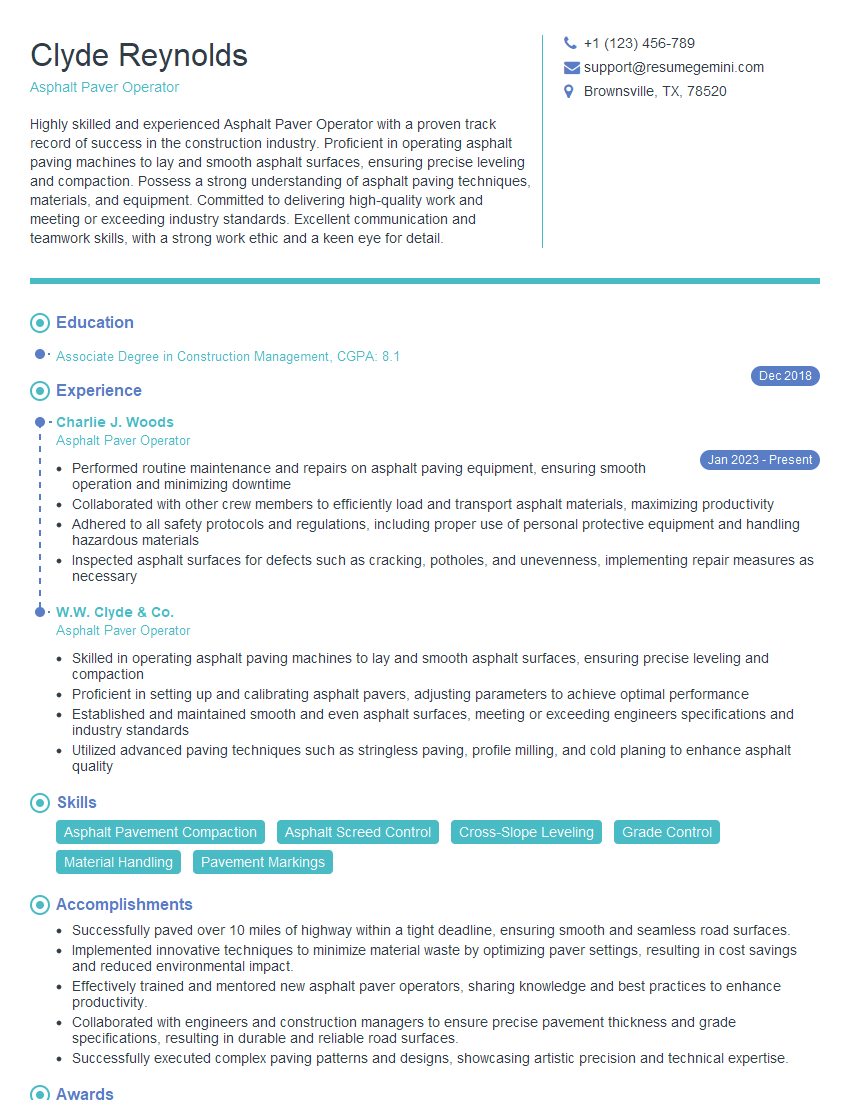
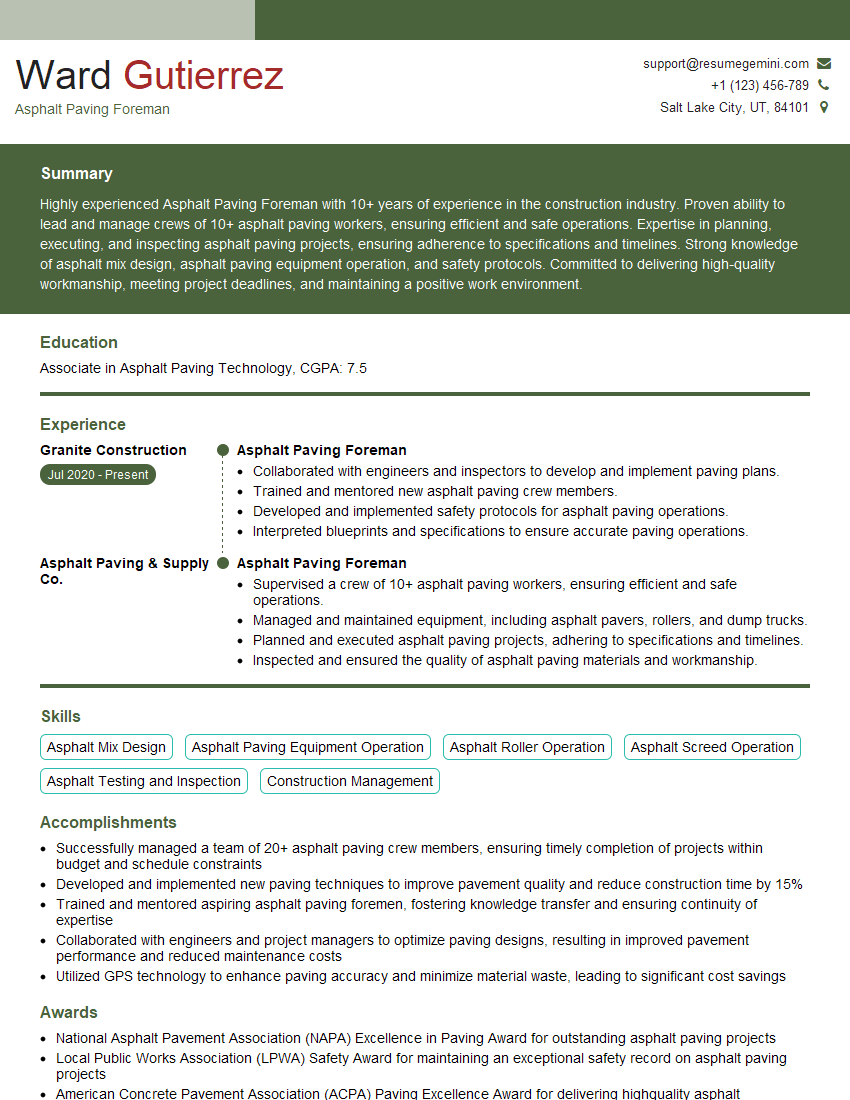
Mastering Asphalt Paving Operations is crucial for career advancement in this dynamic industry. A strong understanding of these principles opens doors to leadership roles, specialized training, and higher earning potential. To maximize your job prospects, creating an ATS-friendly resume is paramount. ResumeGemini is a trusted resource to help you build a professional resume that highlights your skills and experience effectively. Examples of resumes tailored to Asphalt Paving Operations are available, providing you with valuable templates and guidance to showcase your qualifications.

Explore more articles
Users Rating of Our Blogs
Share Your Experience
We value your feedback! Please rate our content and share your thoughts (optional).
What Readers Say About Our Blog
Amazing blog
hello,
Our consultant firm based in the USA and our client are interested in your products.
Could you provide your company brochure and respond from your official email id (if different from the current in use), so i can send you the client’s requirement.
Payment before production.
I await your answer.
Regards,
MrSmith
hello,
Our consultant firm based in the USA and our client are interested in your products.
Could you provide your company brochure and respond from your official email id (if different from the current in use), so i can send you the client’s requirement.
Payment before production.
I await your answer.
Regards,
MrSmith
These apartments are so amazing, posting them online would break the algorithm.
https://bit.ly/Lovely2BedsApartmentHudsonYards
Reach out at BENSON@LONDONFOSTER.COM and let’s get started!
Take a look at this stunning 2-bedroom apartment perfectly situated NYC’s coveted Hudson Yards!
https://bit.ly/Lovely2BedsApartmentHudsonYards
Live Rent Free!
https://bit.ly/LiveRentFREE
Interesting Article, I liked the depth of knowledge you’ve shared.
Helpful, thanks for sharing.
Hi, I represent a social media marketing agency and liked your blog
Hi, I represent an SEO company that specialises in getting you AI citations and higher rankings on Google. I’d like to offer you a 100% free SEO audit for your website. Would you be interested?