Unlock your full potential by mastering the most common Baggage Loading interview questions. This blog offers a deep dive into the critical topics, ensuring you’re not only prepared to answer but to excel. With these insights, you’ll approach your interview with clarity and confidence.
Questions Asked in Baggage Loading Interview
Q 1. Explain the process of loading baggage onto an aircraft.
Loading baggage onto an aircraft is a meticulously planned and executed process that prioritizes safety and efficiency. It begins with the baggage being sorted and tagged at the check-in counter. Then, it’s transported to the aircraft via conveyor belts, baggage carts, or other specialized equipment. The baggage handlers then load the bags into designated compartments within the aircraft, carefully following a pre-determined loading plan to ensure weight and balance. This plan considers the weight and location of cargo, passengers, and fuel. The entire process is overseen by ground crew who meticulously track and verify the loading, ensuring all bags are accounted for and loaded safely.
Think of it like a giant three-dimensional Tetris game: each bag needs to fit perfectly and in the most efficient way possible to maximize space and maintain balance. Any incorrect placement could compromise the flight’s stability.
Q 2. Describe different types of baggage handling equipment.
Baggage handling equipment varies widely depending on the airport size and aircraft type. Common equipment includes:
- Belt Loaders: These conveyor belts transport bags from the terminal to the aircraft’s hold.
- Baggage Tractors: Small tractors tow carts loaded with baggage to the aircraft.
- Passenger Boarding Bridges with Integrated Conveyors: Some gates have integrated systems that allow baggage to be directly loaded onto the plane via the jet bridge.
- Lower Deck Loaders: Specialized equipment for loading lower cargo holds, often involving hydraulic lifts and platforms.
- Container Loaders: Used for larger aircraft or high-volume operations; containers are pre-loaded with baggage and then lifted into the aircraft.
- Automated Guided Vehicles (AGVs): These driverless robots are increasingly common, navigating autonomously to move baggage around the airport.
The selection of equipment is crucial; it directly impacts efficiency, safety, and overall cost.
Q 3. How do you ensure the weight and balance of baggage on an aircraft?
Ensuring weight and balance is paramount for safe flight. Before loading begins, the flight crew provides a weight and balance manifest to the ground crew. This manifest specifies the maximum allowable weight and the center of gravity limits for the aircraft. The ground crew meticulously weigh each piece of baggage, utilizing scales integrated with their baggage handling systems. They use specialized software to input this weight data, along with the weight of fuel, passengers, and cargo, into a weight and balance program. This program calculates the aircraft’s center of gravity and total weight. If the calculated center of gravity falls outside the acceptable limits, the ground crew adjusts the baggage loading plan to ensure the aircraft remains within safe operational parameters. Any discrepancies are immediately reported to the flight crew for their consideration.
Imagine balancing a seesaw: if the weight isn’t distributed evenly, it will tilt. Similarly, an unbalanced aircraft is at risk of instability.
Q 4. What safety procedures do you follow when loading baggage?
Safety is the top priority. Our safety procedures include:
- Proper training: All baggage handlers undergo rigorous training on safe loading practices, equipment operation, and emergency procedures.
- Personal Protective Equipment (PPE): Gloves, safety shoes, and high-visibility vests are mandatory.
- Regular equipment inspections: To ensure the equipment is in perfect working order and poses no risk to personnel or baggage.
- Clear communication: Effective communication between ground crew, flight crew, and other airport personnel is essential.
- Following standardized procedures: Adherence to established guidelines and checklists for every step of the loading process.
- Emergency response plans: Procedures are in place to deal with potential incidents, such as equipment malfunctions or injuries.
We perform regular safety audits and briefings to ensure that everyone is aware of best practices and potential hazards.
Q 5. How do you handle oversized or overweight baggage?
Oversized or overweight baggage requires special handling. Overweight bags may exceed the weight limits set by the airline, which can affect weight and balance calculations. Oversized bags might not fit into standard baggage containers or compartments and might require special loading procedures or even need to be transported as cargo. These bags are often identified during check-in. We use specialized equipment such as heavy-duty carts and slings to handle them safely. Their weight and dimensions are meticulously recorded and reported to the flight crew. In some cases, oversized or overweight baggage may be refused if it poses a safety risk or violates airline regulations. Clear communication with the passenger is vital in these situations.
Think of it like moving furniture: a larger, heavier piece requires extra care and potentially different tools.
Q 6. How do you identify and handle fragile or perishable items?
Fragile or perishable items require extra caution. These are often identified through special baggage tags or markings. They are usually loaded carefully, avoiding stacking other items on top. They might be placed in designated areas within the aircraft’s hold to minimize the risk of damage during transit. Perishable items need to be transported under conditions that prevent spoilage – for example, they might require temperature-controlled environments. Special handling procedures, such as using extra padding or protective packaging, are followed to ensure these items arrive at their destination intact. We meticulously document the handling of these items to ensure traceability.
Just as you would handle a delicate vase with extra care, we treat fragile items accordingly.
Q 7. What is your experience with baggage tracking systems?
I have extensive experience with baggage tracking systems, both manual and automated. Manual systems rely on barcodes and tags to track baggage throughout its journey. Automated systems often use Radio-Frequency Identification (RFID) tags, allowing real-time tracking and location updates. These systems can integrate with other airport systems, providing complete visibility of baggage movement from check-in to arrival. I am proficient in using these systems to identify delayed or lost baggage and to ensure efficient baggage handling. The data provided by these systems is crucial for optimizing the loading process and for improving overall baggage handling efficiency and reducing delays. In my experience, reliable tracking systems are critical for minimizing customer inconvenience and maintaining operational excellence. I’ve worked extensively with systems from various vendors and can troubleshoot issues effectively.
Think of it like GPS for your luggage; it allows us to monitor its location and status in real-time, ensuring a smooth journey for every bag.
Q 8. Describe your experience with different types of aircraft loading procedures.
My experience encompasses loading procedures for a wide range of aircraft, from small regional jets to large wide-body airliners. The procedures differ significantly based on aircraft type, primarily due to variations in weight and balance limitations, cargo hold configurations, and available loading equipment.
Narrow-body aircraft (e.g., Boeing 737, Airbus A320): These typically have a single main deck cargo hold with relatively straightforward loading. We utilize belt loaders and container systems, focusing on efficient placement to maintain the aircraft’s center of gravity.
Wide-body aircraft (e.g., Boeing 777, Airbus A380): These have multiple cargo holds, often with lower decks accessible through large cargo doors. Loading becomes more complex, requiring careful planning and coordination to manage the weight distribution across all holds. Specialized equipment like container dollies and onboard loading systems are often used.
Cargo aircraft (e.g., Boeing 747-400F, Antonov An-124): These are optimized for cargo, with huge main decks and sometimes lower decks. The focus is on maximizing cargo volume and weight while adhering to strict safety guidelines for securing different types of freight. Specialized equipment and techniques are essential for handling oversized and heavy cargo.
In all cases, adherence to the Aircraft Load Manifest is paramount. This document dictates the precise weight and balance constraints for a safe flight. Deviations require careful consideration and often necessitate adjustment of the loading plan.
Q 9. How do you prioritize baggage loading based on flight schedules?
Prioritizing baggage loading based on flight schedules involves a combination of careful planning and real-time adaptation. We prioritize bags destined for flights departing earliest to ensure timely turnaround.
This involves:
Flight Schedule Review: We meticulously examine the departure times of all flights scheduled for the day. This helps us anticipate the required resources and personnel allocation.
Baggage Sorting and Prioritization: We categorize baggage based on flight departure time, ensuring that bags for early flights are processed and loaded first. We might even pre-sort bags into designated areas for efficient loading based on the aircraft and gate assignment.
Real-time Adjustments: Unexpected delays or changes to the flight schedule require immediate adjustments to the loading sequence. We utilize communication systems to relay updates and collaborate with other ground crews to manage shifting priorities.
Imagine it like a busy kitchen: the chef (flight dispatcher) provides the menu (flight schedule), and we (baggage handlers) prioritize preparing the dishes (loading the bags) based on when they need to be served (flight departure).
Q 10. How do you manage baggage during inclement weather?
Inclement weather necessitates extra precautions during baggage loading. Safety is paramount for both personnel and the baggage itself.
Reduced Visibility: In reduced visibility conditions such as heavy fog or snow, loading procedures need to be slower and more deliberate. Enhanced communication and additional lighting are crucial. We may also utilize ground guides to direct equipment more safely.
High Winds: Strong winds can make handling baggage difficult. We take steps to secure loose items and potentially delay or halt loading until the conditions improve. Using wind-breaks and extra securing measures may become necessary.
Precipitation: Rain or snow can damage baggage. Appropriate protective measures, such as using tarpaulins or sheltered loading areas, are employed to keep baggage dry.
Extreme Temperatures: Extreme heat or cold might damage certain items, and appropriate handling measures must be implemented, such as avoiding prolonged exposure to direct sunlight in hot weather or keeping temperature-sensitive items away from freezing temperatures.
During severe weather, safety protocols take precedence, and sometimes loading needs to be temporarily suspended.
Q 11. Explain your experience with baggage security procedures.
Baggage security is a critical aspect of our work. We rigorously adhere to security protocols, working closely with airport security personnel. This involves:
Screening Procedures: We ensure that all baggage undergoes appropriate screening processes, either by using x-ray machines or by manual inspection, according to security regulations.
Security Tags and Seals: We carefully apply security tags and seals to baggage to prevent unauthorized access. Any tampering is immediately reported to the relevant authorities.
Restricted Items: We are trained to identify and handle restricted items correctly. These items, as per regulations, will be appropriately dealt with in accordance with security procedures.
Suspicious Baggage: We are trained to spot suspicious items and report any concerns to airport security immediately.
Our role is to ensure the safety and security of the passengers and the aircraft by maintaining the integrity of the baggage handling process. We are vigilant in detecting and reporting anything out of the ordinary.
Q 12. How do you deal with delays or disruptions in baggage loading?
Delays and disruptions are an unavoidable part of baggage handling. Our response involves a combination of flexibility, communication, and problem-solving.
Communication: We communicate delays immediately to the relevant parties, including flight crews, ground operations, and passenger services. Clear and concise communication minimizes further disruption.
Prioritization: We re-prioritize baggage loading based on the revised flight schedules and available resources. This may mean focusing on the most time-sensitive flights.
Resource Allocation: If the delay necessitates additional resources, we will request extra personnel or equipment to expedite the process.
Problem Identification & Resolution: If a delay is caused by a specific problem (e.g., equipment malfunction, security issue), we work quickly to identify and resolve the issue. Sometimes, this requires coordination with maintenance or security personnel.
For example, if a conveyor belt malfunctions, we’ll swiftly switch to manual loading, communicate the delay and the plan to mitigate the delay, and possibly request spare equipment. Clear, effective communication prevents the problem from snowballing into larger, more significant disruptions.
Q 13. Describe your problem-solving skills in relation to baggage loading challenges.
My problem-solving skills in baggage handling are honed by years of experience managing unforeseen challenges. I approach problems systematically:
Identify the Problem: Accurately defining the issue is the first step. Is it a delay, an equipment malfunction, a staffing shortage, or a security concern?
Gather Information: I collect relevant data such as the severity of the issue, available resources, and potential solutions. This often involves collaborating with other team members.
Develop Solutions: I brainstorm multiple solutions, considering their feasibility, efficiency, and safety implications.
Implement the Best Solution: I select the most effective solution and execute it, monitoring its impact and making any necessary adjustments.
Documentation & Learning: After the issue is resolved, I document the incident, including the cause, solutions implemented, and lessons learned to improve future procedures.
For instance, if a large piece of baggage won’t fit into the designated compartment, I might explore alternative locations, adjust the loading plan, or potentially contact the passenger for re-evaluation of the baggage content.
Q 14. How do you communicate effectively with other ground crew members?
Effective communication is crucial in baggage handling. We use a combination of verbal and non-verbal cues, along with technological aids.
Clear and Concise Verbal Communication: Using plain language, avoiding jargon, and confirming understanding are key. We use standardized terminology to ensure consistent understanding across teams.
Non-verbal Communication: Hand signals, pointing, and visual cues are essential, especially in noisy environments. Maintaining eye contact and demonstrating clear body language improves communication clarity.
Technological Aids: We utilize radios, headsets, and digital systems to share information efficiently, ensuring quick updates during loading operations and in cases of delays.
Teamwork and Collaboration: Active listening, seeking clarification, and providing constructive feedback are integral parts of our communication strategy. We emphasize collaboration to identify and solve problems quickly.
Imagine a well-oiled machine: each part (ground crew member) needs to communicate effectively to ensure smooth and efficient operation. Clear communication prevents bottlenecks and ensures the timely loading and safe transport of baggage.
Q 15. How do you ensure the efficient and timely loading of baggage?
Efficient and timely baggage loading hinges on meticulous planning and execution. It’s like orchestrating a complex symphony – each instrument (piece of baggage) needs to be in the right place at the right time to ensure a harmonious performance (on-time departure).
- Pre-flight planning: We use advanced software to predict baggage volume based on passenger manifests and historical data, allowing us to optimize loading strategies. This includes assigning baggage to specific compartments based on weight, destination, and handling requirements.
- Optimized loading procedures: We follow established procedures, including utilizing specialized equipment like conveyor belts and baggage carts, to move baggage quickly and safely. This minimizes downtime and reduces the risk of delays.
- Crew coordination: Effective communication between ground staff and flight crew is crucial. Real-time updates on loading progress prevent bottlenecks and ensure the aircraft is ready for departure on schedule. For instance, if a particular compartment is filling up faster than anticipated, we can adjust the loading sequence to prevent imbalances.
- Contingency planning: We anticipate potential disruptions, such as unexpected baggage surges or equipment malfunctions. We have backup plans in place to minimize the impact on loading times. This might involve deploying additional personnel or using alternative loading methods.
For example, during peak seasons, we proactively increase staffing levels and streamline our procedures to handle the increased volume of baggage. In case of a conveyor belt malfunction, we have backup systems and manual handling procedures to ensure minimal disruption.
Career Expert Tips:
- Ace those interviews! Prepare effectively by reviewing the Top 50 Most Common Interview Questions on ResumeGemini.
- Navigate your job search with confidence! Explore a wide range of Career Tips on ResumeGemini. Learn about common challenges and recommendations to overcome them.
- Craft the perfect resume! Master the Art of Resume Writing with ResumeGemini’s guide. Showcase your unique qualifications and achievements effectively.
- Don’t miss out on holiday savings! Build your dream resume with ResumeGemini’s ATS optimized templates.
Q 16. What is your understanding of weight and balance limitations for different aircraft types?
Understanding weight and balance limitations is paramount to aircraft safety. Each aircraft type has specific Center of Gravity (CG) limits, which dictate the acceptable distribution of weight throughout the aircraft. Exceeding these limits can compromise stability and handling, potentially leading to catastrophic consequences.
We use sophisticated weight and balance software to calculate the aircraft’s CG based on passenger weight, cargo weight (including baggage), fuel weight, and other factors. This software provides us with detailed load sheets, indicating the maximum allowable baggage weight and the optimal distribution of baggage within the aircraft’s designated compartments. For instance, heavier bags are generally loaded towards the front or rear of the aircraft to maintain balance.
Different aircraft have varying load capacities and CG limitations. A Boeing 747 has significantly larger capacity and different weight distribution requirements compared to an ATR 72 regional turboprop. We must consult the aircraft’s specific flight manual and adhere strictly to its guidelines. Failure to do so can result in flight cancellation or serious safety concerns.
Q 17. How do you maintain a safe working environment while loading baggage?
Safety is our utmost priority. We implement stringent safety protocols to minimize risks associated with baggage handling. Imagine it’s like working in a busy construction site – proper safety precautions are essential.
- Personal Protective Equipment (PPE): All staff are required to wear appropriate PPE, including safety shoes, gloves, and high-visibility vests, to protect against injuries from heavy objects or moving equipment.
- Proper lifting techniques: Training on proper lifting techniques and the use of mechanical lifting aids ensures that staff don’t injure themselves when handling heavy bags.
- Hazard identification and control: Regular safety inspections and risk assessments identify potential hazards, such as obstructions or damaged equipment, allowing us to take preventive measures.
- Emergency procedures: Comprehensive emergency response plans are in place to handle situations like equipment malfunctions or injuries.
For instance, we regularly conduct training sessions on proper use of baggage tugs and conveyor belts, reinforcing safe working practices. Any equipment malfunction is immediately reported and rectified to prevent accidents.
Q 18. Describe your experience with baggage handling systems and technology.
I have extensive experience with modern baggage handling systems and technologies. These systems are crucial for optimizing efficiency, improving tracking, and enhancing security.
- Automated baggage handling systems (ABHS): I’m proficient in operating and maintaining ABHS, including conveyor systems, automated sortation systems, and baggage tracking systems. These systems greatly reduce manual handling and improve throughput.
- Baggage tracking systems: I’m familiar with various baggage tracking systems, which use RFID tags or barcodes to monitor baggage movement throughout the entire process. This enhances accountability and helps locate missing baggage quickly.
- Data analysis and reporting: I utilize data analytics to identify bottlenecks and areas for improvement in our baggage handling processes, leading to better efficiency and reduced delays.
For example, I’ve worked with systems that provide real-time visibility of baggage location, enabling proactive issue resolution and improved customer service. This technology allows us to identify and address potential delays much faster and inform passengers proactively about their baggage’s status.
Q 19. How do you manage the different types of baggage (checked, carry-on, oversized)?
Managing different baggage types requires a structured approach. Think of it as a well-organized warehouse, with designated areas for each product type.
- Checked baggage: This is processed through the main baggage handling system, weighed, tagged, and sorted according to flight and destination.
- Carry-on baggage: Passengers handle carry-on baggage themselves, though we often have dedicated staff to assist passengers with oversized or unusual carry-on items.
- Oversized baggage: This requires special handling due to size and weight restrictions. It often needs manual loading and may require pre-approval or additional charges.
We have specific procedures for each type to ensure efficient loading and to comply with safety regulations. For example, oversized baggage is carefully assessed to ensure it meets dimensional and weight limits and won’t cause an imbalance on the aircraft.
Q 20. What is your experience with baggage reconciliation?
Baggage reconciliation is the process of verifying that all checked baggage loaded onto an aircraft matches the passenger manifest. It’s like comparing two sets of books to make sure all the entries match.
We use sophisticated software systems to compare the baggage tags scanned during loading with the passenger manifest. Any discrepancies are investigated to identify missing or misplaced baggage. This process is critical for ensuring passenger satisfaction and maintaining security. In my experience, the accurate and timely completion of baggage reconciliation reduces delays and minimizes the risk of baggage mishandling. We employ several methods including manual checking of barcodes and electronic tracking systems.
Q 21. How do you handle lost, damaged, or delayed baggage?
Handling lost, damaged, or delayed baggage requires a compassionate and efficient approach. It’s about ensuring the passenger’s inconvenience is minimized.
- Lost baggage: We initiate a search for missing baggage using tracking systems. If the baggage isn’t located, we initiate the claim process and coordinate with the passenger to arrange for reimbursement or replacement items.
- Damaged baggage: Damaged baggage is carefully assessed, and documentation is completed to support claims. We collaborate with insurance providers to facilitate claims processing.
- Delayed baggage: We track the location of delayed baggage and update passengers on its expected arrival time. We coordinate the delivery of delayed baggage to the passenger as soon as it arrives at its destination.
For example, I’ve worked with passenger service agents to arrange for replacement essential items for passengers with lost luggage, minimizing disruption to their travel plans. Open and honest communication with passengers is essential in these stressful situations.
Q 22. What are your strategies for optimizing baggage loading efficiency?
Optimizing baggage loading efficiency is crucial for on-time departures and smooth airport operations. My strategies revolve around three key areas: weight and balance, space utilization, and process streamlining.
Weight and Balance: This involves strategically placing heavy bags towards the aircraft’s center of gravity to ensure stability during flight. We use sophisticated software and weight distribution charts to achieve this. For example, we might prioritize loading heavier bags in the lower cargo compartments first, followed by progressively lighter bags in upper compartments. This minimizes fuel consumption and improves safety.
Space Utilization: Efficiently filling the cargo hold is paramount. This requires careful planning and potentially using specialized loading equipment such as container systems or automated loaders. Imagine it like a Tetris game – we need to fit as many bags as possible without leaving excessive empty space, reducing the need for multiple loading cycles.
Process Streamlining: This is about refining the workflow. We can achieve this through improved communication between baggage handlers, ground crews, and pilots, reducing unnecessary delays and optimizing the sequence of loading bags based on their destination and handling requirements. Utilizing barcode scanning and RFID technology for quicker bag identification and sorting also greatly contributes to streamline the process. For example, implementing a system where bags are pre-sorted by destination improves overall loading speed by as much as 20%.
Q 23. How do you adhere to company safety policies and procedures?
Safety is my top priority. I strictly adhere to all company safety policies and procedures, including those related to:
- Personal Protective Equipment (PPE): Always wearing appropriate gloves, safety shoes, and high-visibility vests in designated areas.
- Equipment Operation: Following all instructions and safety protocols related to operating baggage handling equipment such as belt loaders, container dollies, and tugs.
- Lifting Techniques: Utilizing proper lifting techniques and seeking assistance when handling heavy bags to prevent injuries. I’d never attempt to lift something beyond my capabilities.
- Emergency Procedures: Being fully aware of emergency procedures, including evacuation plans and reporting procedures for accidents or incidents.
- Hazardous Materials: Identifying and handling hazardous materials according to company and IATA regulations. This involves carefully reviewing manifest and handling accordingly.
Regular safety training and refresher courses are essential for maintaining up-to-date knowledge and ensuring adherence to best practices. I actively participate in all such training programs.
Q 24. How do you adapt to changing work schedules or demands?
Adaptability is key in this fast-paced environment. I’ve handled unexpected schedule changes by effectively prioritizing tasks, collaborating with colleagues, and communicating proactively with supervisors. For example, if a flight is delayed or a priority changes unexpectedly, I can quickly adjust my plan, focusing on the most time-sensitive loads first. Similarly, when faced with a higher than usual volume of baggage, I coordinate with other handlers to ensure efficient distribution of the workload, preventing bottlenecks and delays.
I’m comfortable working in both independent and team-based environments. I understand that flexibility and quick thinking are crucial aspects of successful baggage handling. I’m also proactive in acquiring additional skills through training, constantly aiming to improve my performance and overall efficiency.
Q 25. Describe a time you had to troubleshoot a problem related to baggage handling.
During a particularly busy holiday season, one of our belt loaders malfunctioned midway through loading a large aircraft. This caused a significant delay and a potential backlog. My first step was to ensure the safety of my colleagues and the equipment itself. Then, I immediately reported the issue to my supervisor and the maintenance team.
While waiting for the maintenance team, I collaborated with my team to manually offload the bags already on the belt loader to minimize further delays. We prioritized the bags for the most immediate flights. Once the maintenance crew arrived, I assisted them by providing information about the nature of the malfunction and what we had already done. The quick response and collaborative efforts from both our team and maintenance ensured minimal disruption to subsequent flights. The experience highlighted the importance of quick thinking, teamwork and clear communication in resolving unexpected issues.
Q 26. How familiar are you with the IATA regulations regarding baggage handling?
I am very familiar with IATA regulations regarding baggage handling. My knowledge covers areas such as:
Dangerous Goods Regulations (DGR): Identifying and handling dangerous goods correctly, ensuring compliance with IATA’s stringent regulations. This includes proper packaging, labeling, and documentation.
Baggage Tracing Procedures: Following established procedures for locating and returning lost or delayed baggage. This involves using tracking systems and effectively documenting any issues.
Weight and Balance Requirements: Understanding and complying with weight and balance limitations for various aircraft types, ensuring safe and efficient loading procedures.
Security Regulations: Adhering to security protocols to prevent unauthorized access to aircraft and baggage.
I regularly review updates to these regulations to stay informed of any changes or new guidelines. Staying current with these regulations is crucial for maintaining the highest standards of safety and compliance within the baggage handling industry.
Q 27. What are your career aspirations in the baggage handling industry?
My career aspirations in the baggage handling industry involve progressing into a supervisory or management role where I can contribute to improving efficiency and safety standards. I envision myself leveraging my experience and knowledge to mentor new team members and implement innovative solutions to enhance airport operations. I’m particularly interested in exploring the implementation of cutting-edge technology like AI and automated systems to optimize the baggage handling process. My long-term goal is to contribute to making baggage handling a smoother, safer, and more efficient part of air travel for everyone.
Key Topics to Learn for Baggage Loading Interview
- Safety Procedures and Regulations: Understanding and applying all relevant safety protocols, including weight distribution, securing baggage, and hazard identification. This includes awareness of company-specific policies and industry best practices.
- Efficient Loading Techniques: Mastering various loading techniques to optimize space utilization, minimize handling time, and prevent damage to baggage and aircraft. Consider practical applications like loading different baggage sizes and types efficiently.
- Weight and Balance Considerations: Understanding the importance of weight distribution for aircraft stability and safety. This includes practical knowledge of using scales and documentation to ensure compliance.
- Baggage Handling Equipment: Familiarity with various equipment used in baggage loading, including belt loaders, container loaders, and dollies. Be prepared to discuss safe operation and maintenance procedures.
- Problem-Solving and Adaptability: Demonstrate your ability to troubleshoot unexpected issues, adapt to changing situations (e.g., delays, equipment malfunctions), and maintain efficiency under pressure. Think about how you’ve solved problems in previous roles involving teamwork and quick thinking.
- Teamwork and Communication: Highlighting your ability to collaborate effectively with ground crews, pilots, and other team members to ensure smooth and efficient baggage handling. This includes clear communication and adherence to instructions.
- Knowledge of Different Aircraft Types: Understanding the unique loading requirements for various aircraft types and sizes. This demonstrates attention to detail and commitment to safety.
Next Steps
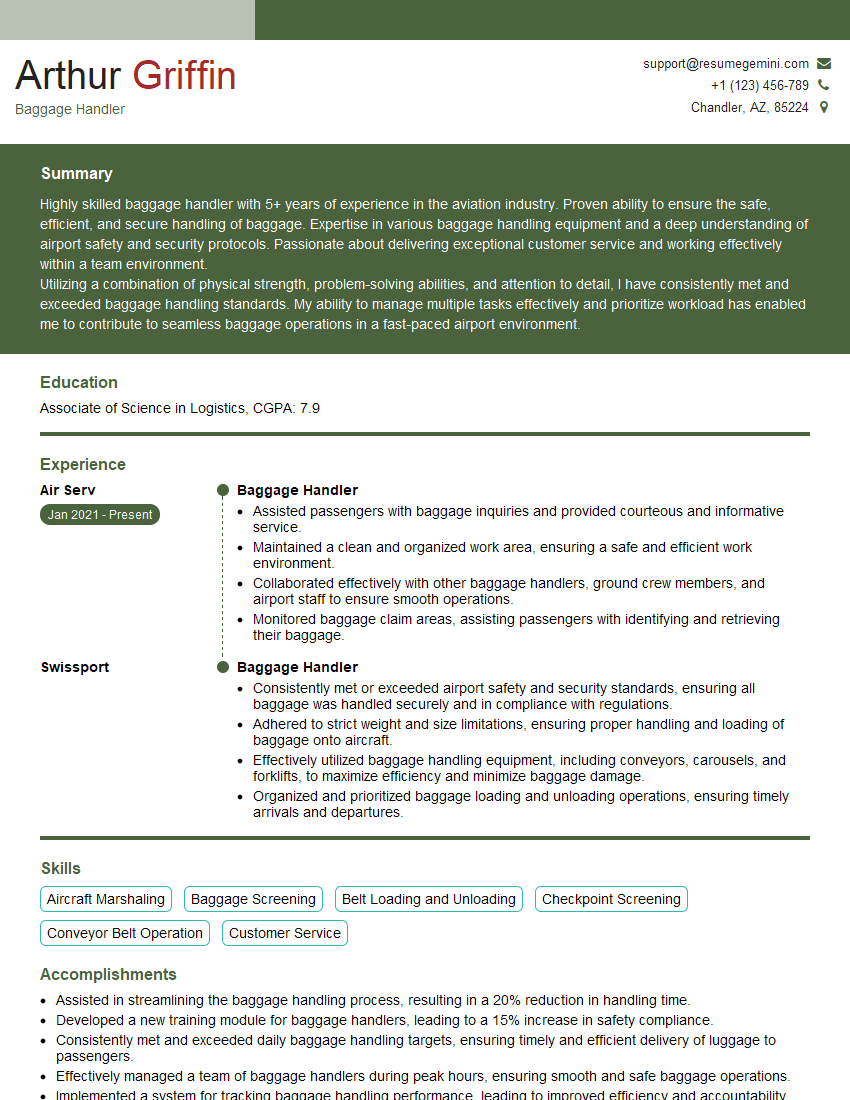
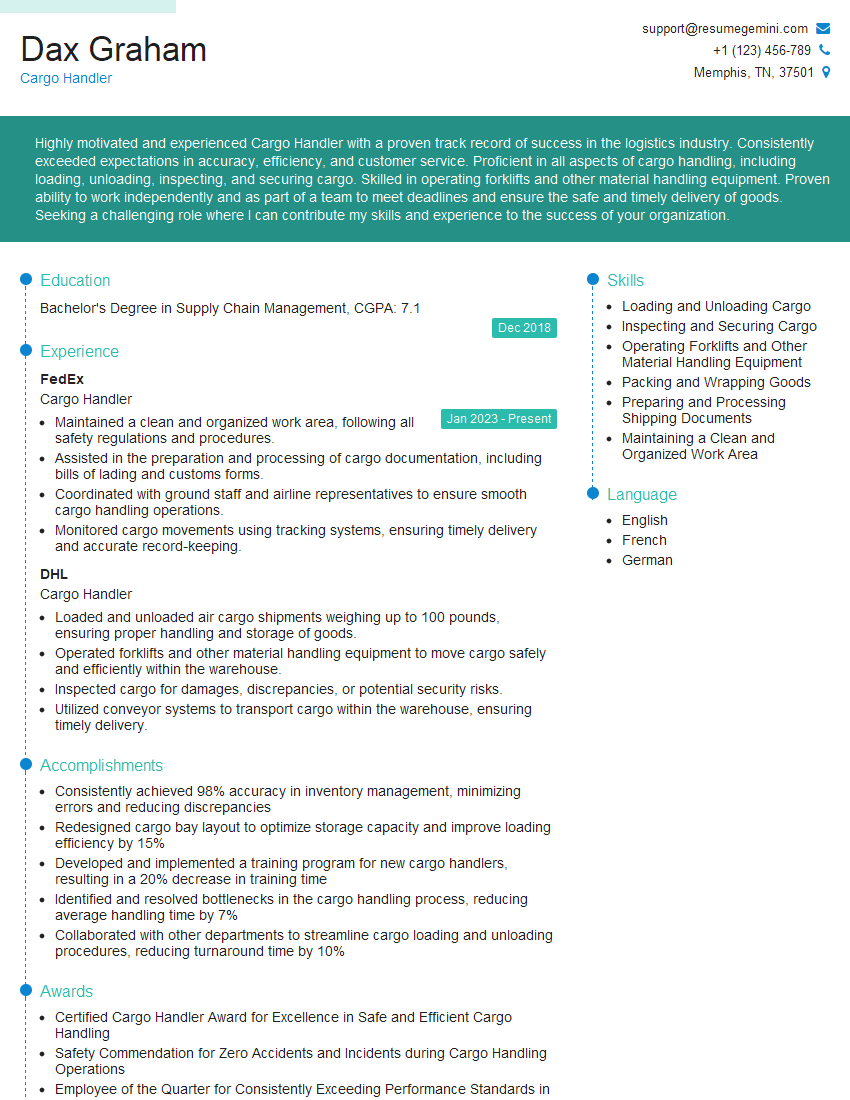
Mastering baggage loading is a crucial skill that opens doors to numerous opportunities within the aviation industry, offering potential for career advancement and specialization. To significantly boost your job prospects, it’s essential to craft a professional and ATS-friendly resume that highlights your skills and experience effectively. ResumeGemini is a trusted resource to help you build a compelling resume that stands out. Examples of resumes tailored to the Baggage Loading field are available to guide you through the process.
Explore more articles
Users Rating of Our Blogs
Share Your Experience
We value your feedback! Please rate our content and share your thoughts (optional).
What Readers Say About Our Blog
Amazing blog
hello,
Our consultant firm based in the USA and our client are interested in your products.
Could you provide your company brochure and respond from your official email id (if different from the current in use), so i can send you the client’s requirement.
Payment before production.
I await your answer.
Regards,
MrSmith
hello,
Our consultant firm based in the USA and our client are interested in your products.
Could you provide your company brochure and respond from your official email id (if different from the current in use), so i can send you the client’s requirement.
Payment before production.
I await your answer.
Regards,
MrSmith
These apartments are so amazing, posting them online would break the algorithm.
https://bit.ly/Lovely2BedsApartmentHudsonYards
Reach out at BENSON@LONDONFOSTER.COM and let’s get started!
Take a look at this stunning 2-bedroom apartment perfectly situated NYC’s coveted Hudson Yards!
https://bit.ly/Lovely2BedsApartmentHudsonYards
Live Rent Free!
https://bit.ly/LiveRentFREE
Interesting Article, I liked the depth of knowledge you’ve shared.
Helpful, thanks for sharing.
Hi, I represent a social media marketing agency and liked your blog
Hi, I represent an SEO company that specialises in getting you AI citations and higher rankings on Google. I’d like to offer you a 100% free SEO audit for your website. Would you be interested?