Are you ready to stand out in your next interview? Understanding and preparing for Compression and Limiting interview questions is a game-changer. In this blog, we’ve compiled key questions and expert advice to help you showcase your skills with confidence and precision. Let’s get started on your journey to acing the interview.
Questions Asked in Compression and Limiting Interview
Q 1. Explain the difference between compression and limiting.
Compression and limiting are both dynamics processing techniques used in audio engineering to control the dynamic range of a signal. The key difference lies in their approach: compression reduces the dynamic range by attenuating louder signals, while limiting prevents signals from exceeding a predefined threshold, essentially ‘clipping’ any peaks that pass it. Think of it like this: a compressor smooths out the peaks and valleys of a sound, while a limiter acts as a hard ceiling, ensuring the signal never goes above a certain level. A compressor will gradually reduce the volume of loud sounds relative to softer sounds, whereas a limiter acts like a brick wall—anything above the threshold is immediately suppressed.
Q 2. Describe the attack and release times in a compressor and their effects.
Attack and release times define how quickly a compressor reacts to changes in the input signal’s level. Attack time determines the speed at which the compressor engages after a signal crosses the threshold. A fast attack (e.g., 1ms) will quickly reduce loud transients, often used on drums to control punch. A slow attack (e.g., 50ms) will allow transients to pass through largely unaffected, common in vocals to retain their natural feel. Release time dictates how long it takes for the compressor to disengage after the input signal falls below the threshold. A fast release (e.g., 10ms) might cause pumping or breathing artifacts, where the volume rhythmically fluctuates. A slow release (e.g., 500ms) results in a smoother overall sound but risks losing punch or dynamics, sometimes sounding mushy.
For instance, imagine compressing a snare drum. A fast attack will tame the initial impact, while a slower release would make the decay smoother and fuller. With vocals, slower attack and release times allow for a more natural, dynamic sound.
Q 3. What is the purpose of a compressor’s ratio setting?
The ratio setting in a compressor defines the amount of gain reduction applied to the input signal once it surpasses the threshold. It’s expressed as a ratio, such as 4:1 or 10:1. A 4:1 ratio means for every 4dB that the signal exceeds the threshold, the output is reduced by 1dB. A higher ratio (e.g., 10:1) results in more aggressive compression and a squashed sound, while a lower ratio (e.g., 2:1) provides more subtle compression, preserving more dynamics. For instance, a higher ratio might be suitable for a bass guitar to ensure it sits nicely in the mix without muddying up the low end, whereas a lower ratio might be preferred for vocals to retain nuances in their performance.
Q 4. How does the threshold setting affect compression?
The threshold setting determines the level at which compression begins. Any signal exceeding the threshold will be affected by the compressor’s settings (ratio, attack, release). Setting a higher threshold means only louder peaks will be compressed, leaving quieter parts unaffected, resulting in subtle compression. A lower threshold triggers compression for more of the signal, increasing the overall effect. Imagine a vocalist with inconsistent volume. A lower threshold will even out the entire vocal performance, while a higher threshold would only tame the loudest parts.
Q 5. Explain the concept of knee in a compressor.
The ‘knee’ setting in a compressor determines the transition between uncompressed and compressed audio. A ‘hard knee’ results in a sudden and abrupt transition at the threshold, while a ‘soft knee’ creates a gradual transition, reducing the harshness of the compression. A soft knee blends compression more smoothly into the signal, making it more transparent and less noticeable, especially at higher ratios. This is particularly useful for preserving the subtle dynamics of things like vocals or acoustic instruments. A hard knee, on the other hand, provides more aggressive compression and is useful for taming extremely loud peaks.
Q 6. What is gain reduction and how is it visualized?
Gain reduction is the amount of attenuation applied to the audio signal by the compressor. It’s measured in decibels (dB) and visually represented on a compressor’s meter. A higher gain reduction indicates stronger compression. You’ll typically see a meter displaying the amount of dB reduction in real-time, allowing you to visually monitor how the compressor is shaping the dynamics. For example, if the meter shows 6dB of gain reduction, it means the compressor has lowered the volume of the input signal by 6dB. Watching this meter is essential to avoiding over-compression, and to dial in the perfect amount of compression.
Q 7. What are the different types of compressor circuits (e.g., opto, FET, VCA)?
Different compressor circuits offer unique sonic characteristics:
- Opto-compressors: Utilize photocells (light-sensitive resistors) to control gain reduction. They offer a smooth, warm, and often ‘musical’ compression that often gently ‘squishes’ a signal, very pleasing for vocals and other delicate sounds.
- FET (Field-Effect Transistor) compressors: Employ transistors for gain reduction. They tend to be faster and more aggressive than opto-compressors, providing a punchier sound. They are useful for adding punch or controlling dynamics on bass or drums.
- VCA (Voltage Controlled Amplifier) compressors: Use integrated circuits to control gain reduction, often characterized by precision and versatility. They offer a clean and transparent sound, suited for many applications but especially useful where precise control is crucial. They are extremely versatile and can be programmed to very specific settings, giving the user fine-grained control over the compression.
The choice of compressor circuit depends heavily on the desired sound and the specific audio material being processed. Experimentation is key to understanding the subtle nuances of each type.
Q 8. How does a limiter differ from a compressor?
Compressors and limiters are both dynamics processors that control the volume of an audio signal, but they do so in fundamentally different ways. A compressor reduces the dynamic range of a signal by attenuating louder peaks, while preserving the overall character. Think of it like a smooth, gradual volume control. A limiter, on the other hand, prevents the signal from exceeding a predetermined threshold. It’s like a hard ceiling on the volume; anything above the threshold is abruptly reduced. In essence, a limiter is a compressor with a very high ratio and a fast attack time.
Imagine a vocalist singing. A compressor might gently reduce the peaks of their loudest notes, making them less jarring and more consistent in volume. A limiter would prevent any of their notes, no matter how powerful, from exceeding a specific loudness level, ensuring nothing clips (distorts).
Q 9. What is the role of a lookahead function in a limiter?
The lookahead function in a limiter is crucial for its effectiveness. It’s a small delay, typically a few milliseconds, that allows the limiter to ‘see’ the incoming audio signal before it reaches the threshold. This allows for a more precise and transparent reduction of peaks, preventing unwanted artifacts and improving the overall sound quality.
Without lookahead, the limiter would react to the peak *after* it has already exceeded the threshold, potentially resulting in a harsh, ‘pumping’ effect. Lookahead enables the limiter to anticipate and smoothly reduce the incoming signal before it even crosses the threshold.
Q 10. Explain brickwall limiting and its potential drawbacks.
Brickwall limiting refers to a type of limiting where the output level is strictly constrained to a specific threshold. It’s like having an absolute volume limit; no signal can exceed this point. This is achieved by employing a very high ratio and fast attack and release times. While it’s effective in preventing clipping, it can introduce audible artifacts such as pumping, distortion, and a loss of transient detail, creating a compressed and less dynamic sound.
The drawbacks stem from the abruptness of the level reduction. The quick attack time can make transient sounds, like snare drum hits, sound brittle or less impactful. The high ratio can make the audio sound unnatural and ‘squashed.’ Moreover, excessive brickwall limiting can introduce inter-sample peaks which can cause unintended distortion further downstream in the processing chain.
Q 11. How do you choose the appropriate compression settings for vocals?
Choosing compression settings for vocals is highly dependent on the specific vocal performance and the desired outcome. There’s no one-size-fits-all approach. However, here are some guidelines:
- Ratio: Start with a low ratio (2:1 to 4:1) for a subtle effect, and increase as needed. Higher ratios (8:1 and above) will result in more aggressive compression.
- Threshold: Adjust the threshold to reduce the level of the loudest vocal peaks to a comfortable level. Aim for a reduction of 3 to 6 dB.
- Attack: A slower attack (10-30ms) will allow some of the initial transient of the vocal to pass through, adding to the natural character. A faster attack will result in more aggressive compression.
- Release: A medium to slow release (50ms-300ms) is typically used to prevent pumping and maintain a natural vocal sound.
- Makeup Gain: Add enough makeup gain to compensate for the level reduction from compression, restoring the overall signal level.
Experiment with different settings, listening carefully to how the compression affects the clarity, character, and overall feel of the vocals. Remember, less is often more.
Q 12. How do you choose the appropriate compression settings for drums?
Drum compression often involves compressing individual drum elements (kick, snare, toms, etc.) separately for better control. The approach depends on the desired sound.
- Kick Drum: Often requires a high ratio (8:1 to 12:1) and a fast attack (1-5ms) to punch up the low end and control the dynamics. The release time is typically a bit longer.
- Snare Drum: Moderate ratio (4:1 to 6:1), a faster attack (5-20ms) to control the initial transient, and a faster release (50-100ms).
- Toms: Generally lighter compression (2:1 to 4:1), with slower attack and release times to retain their natural feel.
The goal for drums is to achieve a punchy, tight sound with a good balance of transient and sustain. You want the compression to help the drum fit within the mix, not to make it sound crushed.
Q 13. How do you choose the appropriate compression settings for bass?
Bass compression is key to achieving a solid, controlled low-end. The approach depends on the bass type and genre.
- Ratio: Typically a moderate ratio (4:1 to 8:1) is effective to even out the dynamics without losing too much punch.
- Threshold: Adjust to tame the loudest peaks without excessively reducing the sustain.
- Attack: A slow attack (20-50ms) helps retain the bass’s punch and low-end definition. A fast attack will reduce the attack of the note.
- Release: A medium-slow release (100-300ms) or even longer is often used to prevent pumping.
Over-compressing the bass can make it sound thin, lifeless, and less impactful, so careful adjustment of parameters is crucial.
Q 14. What are common pitfalls to avoid when using compression?
Common pitfalls to avoid when using compression include:
- Over-compression: This leads to a loss of dynamics and a lifeless, unnatural sound. Start with subtle compression and gradually increase it until you reach the desired effect.
- Incorrect Attack and Release settings: Improperly chosen attack and release times can result in pumping (a rhythmic variation in volume) or a lack of punch and clarity. Experiment with these settings to find what best suits the material.
- Ignoring the makeup gain: After applying compression, make sure to restore the signal’s level with makeup gain. Failing to do so will result in a quiet and weak signal.
- Using too much compression on already compressed material: Double or triple compression can lead to an unnatural and unnatural sound.
- Using the wrong type of compressor for the job: Different compressors have different characteristics and are best suited to different instruments and styles.
Remember to always listen critically to your audio and adjust the settings accordingly. Experimentation is key to mastering the art of compression.
Q 15. What are common pitfalls to avoid when using limiting?
Limiting, while crucial for preventing clipping and maintaining consistent loudness, can easily introduce unwanted artifacts if not handled carefully. Common pitfalls include:
- Over-limiting: Pushing the limiter too hard results in a lifeless, compressed sound lacking dynamics and punch. Imagine squeezing all the air out of a balloon – it loses its shape and character. A subtle approach is key.
- Incorrect Attack and Release Times: Inappropriate settings can lead to pumping (rhythmic volume fluctuations) or sluggish response. Fast attack times might catch transient peaks too aggressively, while slow release times can create a muddy, smeared sound. Experiment with different settings to find the sweet spot for your material.
- Ignoring the Input Signal: Before limiting, ensure the signal is appropriately balanced and processed. If you’re trying to limit a signal already too hot, the limiter will have to work overtime, potentially distorting the sound or introducing more artifacts.
- Lack of Gain Staging: Poor gain staging before limiting can cause the limiter to work too hard. This necessitates careful adjustment of levels throughout your signal chain, to avoid putting too much demand on the limiter.
- Overreliance on Limiting: Limiting is a corrective tool, not a creative one. Relying solely on it to fix loudness issues that stem from a poorly mixed signal is not a good practice. Address issues such as improper dynamics processing earlier in the mixing chain.
Remember that limiting should be used as a final stage of the mastering process to ensure that the audio levels remain within a safe range for playback and broadcasting.
Career Expert Tips:
- Ace those interviews! Prepare effectively by reviewing the Top 50 Most Common Interview Questions on ResumeGemini.
- Navigate your job search with confidence! Explore a wide range of Career Tips on ResumeGemini. Learn about common challenges and recommendations to overcome them.
- Craft the perfect resume! Master the Art of Resume Writing with ResumeGemini’s guide. Showcase your unique qualifications and achievements effectively.
- Don’t miss out on holiday savings! Build your dream resume with ResumeGemini’s ATS optimized templates.
Q 16. Describe how compression can be used for creative effects.
Compression, beyond its typical role in loudness control, is a powerful creative tool. It can be used to sculpt the sonic character of instruments and vocals, adding impact and shaping dynamics. Here are some examples:
- Parallel Compression: Sending a copy of the signal to a heavily compressed bus and blending it with the original creates a fuller, richer sound, adding body without losing the original signal’s dynamics. This is frequently used on drums and vocals.
- Creative Attack and Release Settings: Experimenting with faster attack times can add punch and impact, while longer release times can enhance sustain and create a more organic feel. For example, a short attack and a very long release on a snare drum adds a subtle ‘bloom’ to the sound.
- Emphasis on Specific Frequencies: Using multi-band compression, you can target specific frequencies for more or less compression, accentuating or reducing certain elements. Boosting the low-end frequencies while slightly compressing the mid-range can give a bassline more impact without muddying the overall mix.
- Creating Unusual Rhythmic Effects: Using a compressor with a sidechain input triggered by another audio source can create rhythmic pumping effects. This technique is often used to create a ‘ducking’ effect, where one element of the mix reduces in volume to allow another to be heard more clearly.
Think of compression as a sculptor’s tool, carefully shaping the sound to achieve a desired aesthetic rather than just reducing the dynamic range.
Q 17. Describe how limiting can be used for creative effects.
While limiting is primarily used to prevent clipping, creative applications exist. It’s often about controlled distortion and textural enhancement, rather than just loudness:
- Adding Grit and Texture: Using a limiter aggressively on certain elements can introduce subtle harmonic distortion, adding grit and character. This can work well with heavily saturated electric guitars or vocals to give a more ‘vintage’ feel.
- Creating a Consistent Level: Limiting, when used subtly, helps to ensure that the dynamic range of a track remains consistent throughout, even if the instruments have inherently different dynamic levels. This results in a polished and well-balanced mix.
- Controlled Transient Enhancement: Fast attack and release settings on a limiter can accentuate the transient peaks of sounds, adding sharpness and punch. This can be very useful for drums and percussion to make them cut through the mix.
- Enhancing the Perceived Loudness: This isn’t technically a creative application, but the resulting effect can influence the creative outcome of a track. A track with consistent and maximized loudness (achieved with limiting) may sound better in the context of a specific genre.
It is important to note that these creative applications should be done with careful attention and experimentation, as overuse can easily lead to undesirable artifacts or a lack of dynamic range. This is why it is often used as the last step in mastering.
Q 18. Explain the concept of parallel compression.
Parallel compression involves sending a copy of your audio signal to a separate compressor, then blending the processed and unprocessed signals together. The compressor on the parallel channel is typically set aggressively, creating a more compressed and saturated sound. The unprocessed signal retains the original dynamics. Blending these together gives you the best of both worlds: the body and punch of heavy compression, and the airy feel and dynamics of the original signal. This is frequently employed on drum busses and vocals to add weight and punch without losing the nuances of the original performance.
Example: Imagine you’re processing a snare drum. You send a copy to a compressor set with a high ratio and fast attack/release, resulting in a punchy, compressed snare. You then blend this with the original snare signal, controlling the mix balance to find the perfect combination of punch and dynamics.
Q 19. Explain the concept of multi-band compression.
Multi-band compression divides the audio frequency spectrum into several bands, allowing you to apply compression independently to each band. This gives you granular control over the dynamics of different frequency ranges. For example, you might compress the low frequencies to control muddiness, compress the mid-range to balance vocal presence, and leave the high frequencies untouched to maintain air and clarity. This approach is highly effective in mastering and mixing, where precision control over different frequency ranges is necessary.
Example: In a rock mix, you might use multi-band compression to tame the low-end boominess of the bass guitar without affecting the sparkle of the cymbals. You might reduce some dynamics in the mid-range to avoid harsh vocals.
Q 20. How can you prevent pumping artifacts when using compression?
Pumping artifacts, that rhythmic fluctuation in volume, often occur when the compressor’s attack and release times are inappropriately set for the material. Here’s how to mitigate this:
- Slow Down the Attack Time: A faster attack time will cause the compressor to react immediately to transient peaks, leading to pumping. A slower attack time allows the compressor to catch the sustained part of the signal, reducing the effect. Experiment to find the perfect balance.
- Adjust the Release Time Carefully: Too short a release time can cause the compressor to pump between cycles of the music. Increase the release time to allow the signal to slowly return to its uncompressed level.
- Use a Knee: A soft knee reduces the aggressive ‘hit’ of the compression, reducing pumping and creating a smoother response. This provides a gradual transition instead of an abrupt reduction in volume.
- Sidechain Compression: If pumping is caused by a specific frequency, sidechain compression can help. By using a low-pass filter on the sidechain, you are only triggering the compression based on low frequencies, which usually cause pumping. This will help to avoid pumping from conflicting frequencies.
- Try Parallel Compression: The use of parallel compression can also minimize pumping effects. The compressor is used more aggressively on a separate track, and then this heavily compressed track is mixed back in with the original signal.
Remember, finding the right balance between compression and retaining natural dynamics is crucial. Experimentation is key. Listen to the changes closely.
Q 21. How can you prevent distortion when using limiting?
Distortion from limiting stems from pushing the signal beyond its peak levels. Prevention involves a multi-pronged approach:
- Proper Gain Staging: Ensure the signal isn’t too hot before it reaches the limiter. This starts at the source and continues throughout the mixing and mastering process. Adequate headroom is crucial.
- Use a Look-Ahead Limiter: Look-ahead limiters anticipate incoming peaks, allowing them to react more smoothly and reduce distortion. This technique gives the limiter a small window to anticipate an incoming peak, allowing for a smoother reduction in volume.
- Adjust the Threshold Carefully: Setting the threshold too high forces the limiter to work harder, increasing the risk of distortion. Start with a high threshold and gradually reduce it until a satisfactory level of limiting is achieved.
- Control the Output Gain: Don’t overly compensate for the reduction in level caused by limiting. Overcompensating will push the signal too hard and increase distortion.
- High-Quality Limiter: Employ a limiter that is known for its transparency and low distortion characteristics. There are many on the market, ranging from sophisticated plugins to simple hardware processors.
Think of the limiter as a safety net—it should catch the peaks without significantly altering the character of the sound. It’s always best to prevent distortion before it happens rather than try to fix it later.
Q 22. What is the difference between hard and soft knee compression?
The key difference between hard and soft knee compression lies in how gradually the compression effect is applied. Imagine a road curving. A soft knee is like a gentle, sweeping curve; the compression starts subtly and increases gradually as the signal gets louder. This creates a more natural-sounding effect, preserving the nuances of the audio. A hard knee, on the other hand, is like a sharp turn – the compression kicks in abruptly once a certain threshold is crossed. It’s more aggressive and creates a more pronounced effect, often used for more drastic dynamic control.
Think of a vocalist. A soft knee might be preferable for preserving the subtle dynamics in their performance, while a hard knee might be better suited for taming harsh peaks in a drum track.
Q 23. Explain the relationship between compression and loudness.
Compression and loudness are intrinsically linked. Compression reduces the dynamic range of an audio signal, meaning the difference between the loudest and quietest parts is lessened. By reducing this dynamic range, you effectively increase the average loudness of the signal. More specifically, compression boosts quieter parts and reduces louder parts to achieve this average level increase.
For example, a heavily compressed track might sound louder than an uncompressed track even though the peak levels might be similar. This is because the compression evens out the volume, bringing the quieter parts up, resulting in a higher perceived loudness.
Q 24. How does dynamic range affect the perceived loudness of audio?
Dynamic range is the difference between the loudest and quietest parts of an audio signal. A wide dynamic range means there’s a big difference between the peaks and troughs, while a narrow dynamic range means the volume stays relatively consistent. This significantly impacts perceived loudness.
A track with a wide dynamic range might sound more dynamic and engaging, with moments of quiet intimacy and sudden bursts of energy. However, it might also seem less loud on average compared to a track with a narrower dynamic range (heavily compressed). A track with a narrow dynamic range will typically sound louder overall but potentially less nuanced or dynamic.
Q 25. Describe the use of gain staging in relation to compression and limiting.
Gain staging is the practice of setting appropriate levels at each stage of the audio chain, including before and after compression and limiting. It’s crucial for preventing clipping and maximizing the quality of your dynamic processing. Proper gain staging allows you to use compression and limiting effectively without creating unwanted distortion or artifacts.
For instance, if you feed a compressor a signal that’s already clipping (exceeding its maximum level), the compressor won’t be able to effectively control the dynamics, and you’ll end up with a distorted, unpleasant sound. By adjusting the gain before compression, you ensure the signal is at an optimal level for the compressor to work its magic.
Q 26. How do you troubleshoot a poorly compressed or limited track?
Troubleshooting a poorly compressed or limited track involves systematic investigation. First, check your gain staging: Is the signal level appropriate for the compressor/limiter? Is there clipping before the dynamic processor? Then analyze the compressor/limiter settings: Are the ratio, threshold, attack, and release times suitable for the audio material? Too much compression can result in a lifeless, ‘pumping’ sound, while too little leaves the dynamics unmanaged.
Next, consider the attack and release times. A slow attack can result in unwanted pumping, while a fast attack can create harshness. A fast release might result in too much gain reduction, whereas a slow release might cause a muddy sound. Finally, experiment with different compressors/limiters – different plugins have distinct characteristics.
A practical example: If your drums sound squashed and lifeless, try reducing the compression ratio, increasing the attack time, and experimenting with different release times to find a balance between control and natural dynamics.
Q 27. Explain the concept of RMS level and its importance in dynamic processing.
RMS (Root Mean Square) level represents the average power of a signal over time. It’s a more accurate representation of perceived loudness than peak level, which only measures the highest point in the signal. In dynamic processing, RMS is crucial because it allows for more consistent gain reduction or limiting based on the average loudness instead of only responding to transient peaks.
Many compressors and limiters use RMS detection to control the dynamics, ensuring a more even and natural sound. Peak level alone can create artifacts from over-compression of momentary peaks and a less even loudness. RMS detection provides a better overall control.
Q 28. What are some common software plugins for compression and limiting?
The audio plugin market offers a wide range of compression and limiting options. Popular choices include:
- FabFilter Pro-C 2: Known for its versatile features and transparent sound.
- Waves CLA-76: Emulates the classic hardware compressor, offering a warm and punchy character.
- UAD LA-2A: Another emulation of a vintage hardware compressor, renowned for its smooth and gentle compression.
- Izotope Ozone: A mastering suite that includes powerful compression and limiting capabilities.
- Logic Pro X’s built-in compressor: Often sufficient for many applications.
The best choice depends on your specific needs and workflow; some plugins are better suited for certain tasks like mastering or mixing individual instruments. It’s advisable to experiment to find your preferences.
Key Topics to Learn for Compression and Limiting Interview
- Dynamic Range and its Importance: Understanding the concept of dynamic range in audio and its impact on perceived loudness and clarity. Explore the perceptual effects of different dynamic ranges.
- Compression Techniques: Mastering various compression techniques, including ratio, threshold, attack, release, and knee. Understand the practical application of these parameters in different audio scenarios (e.g., vocals, drums, mastering).
- Limiter Functionality and Purpose: Differentiate between compression and limiting. Learn how limiters prevent signal clipping and maintain peak levels. Explore the use of look-ahead in limiters.
- Gain Staging and Headroom: Understanding the crucial role of gain staging in achieving optimal results with compression and limiting. Learn how to manage headroom effectively to avoid distortion.
- Signal Flow and Processing Order: Understand how compression and limiting interact with other audio effects in a signal chain. Learn the importance of the order of effects in achieving the desired outcome.
- Common Compression and Limiting Plugins: Familiarize yourself with the characteristics and usage of popular compression and limiting plugins (without mentioning specific names, focus on general plugin types and functionalities).
- Troubleshooting Common Issues: Learn to identify and resolve common problems encountered when using compression and limiting, such as pumping, breathing, and unwanted artifacts.
- A/B Comparisons and Critical Listening: Develop your critical listening skills to effectively evaluate the impact of different compression and limiting settings. Practice A/B comparisons to refine your understanding of subtle differences.
- Understanding Different Metering Systems: Learn how to interpret different metering systems (e.g., LUFS, RMS, Peak) used in audio mastering and broadcasting. Understand their importance in achieving consistent loudness across different platforms.
Next Steps
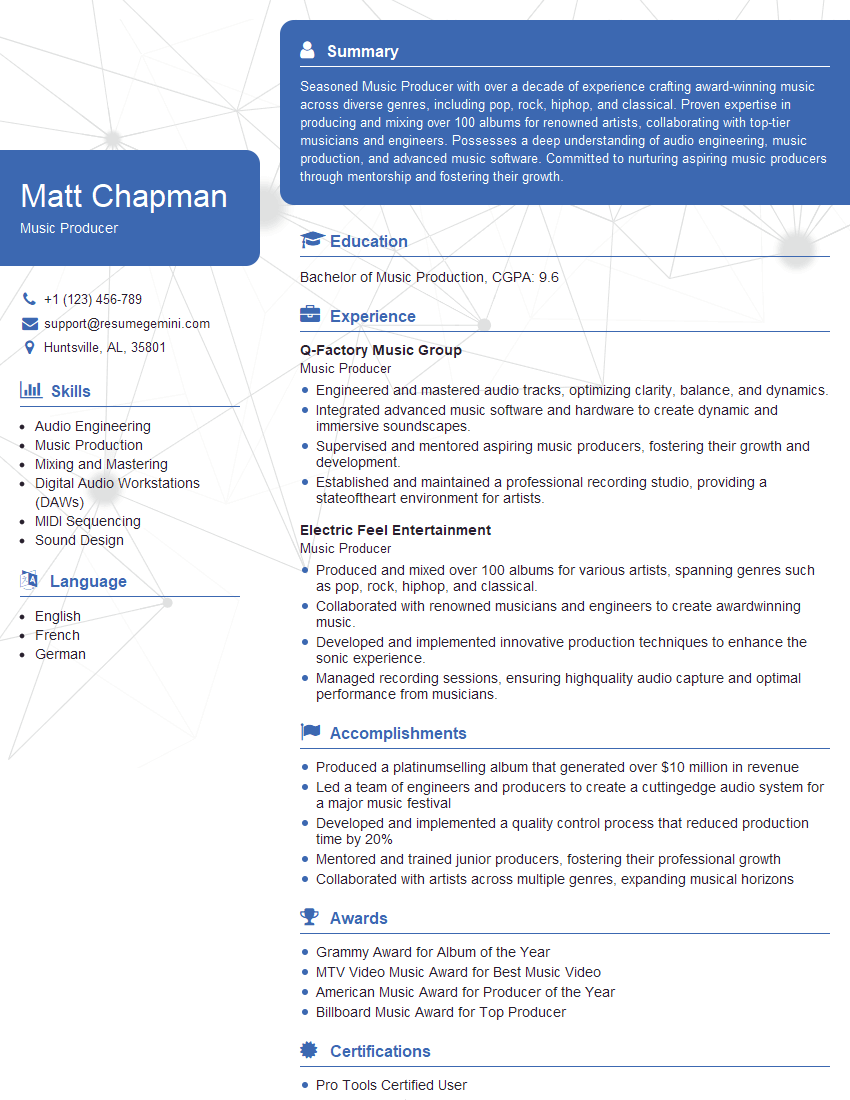
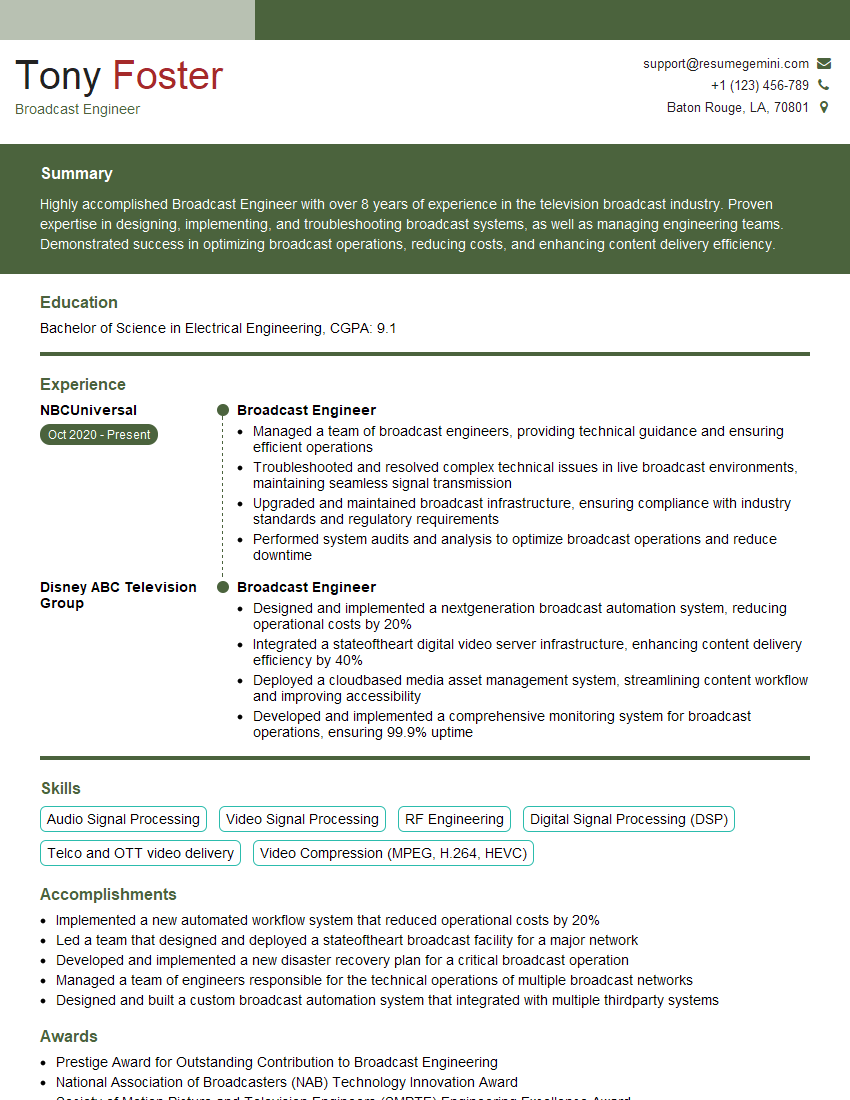
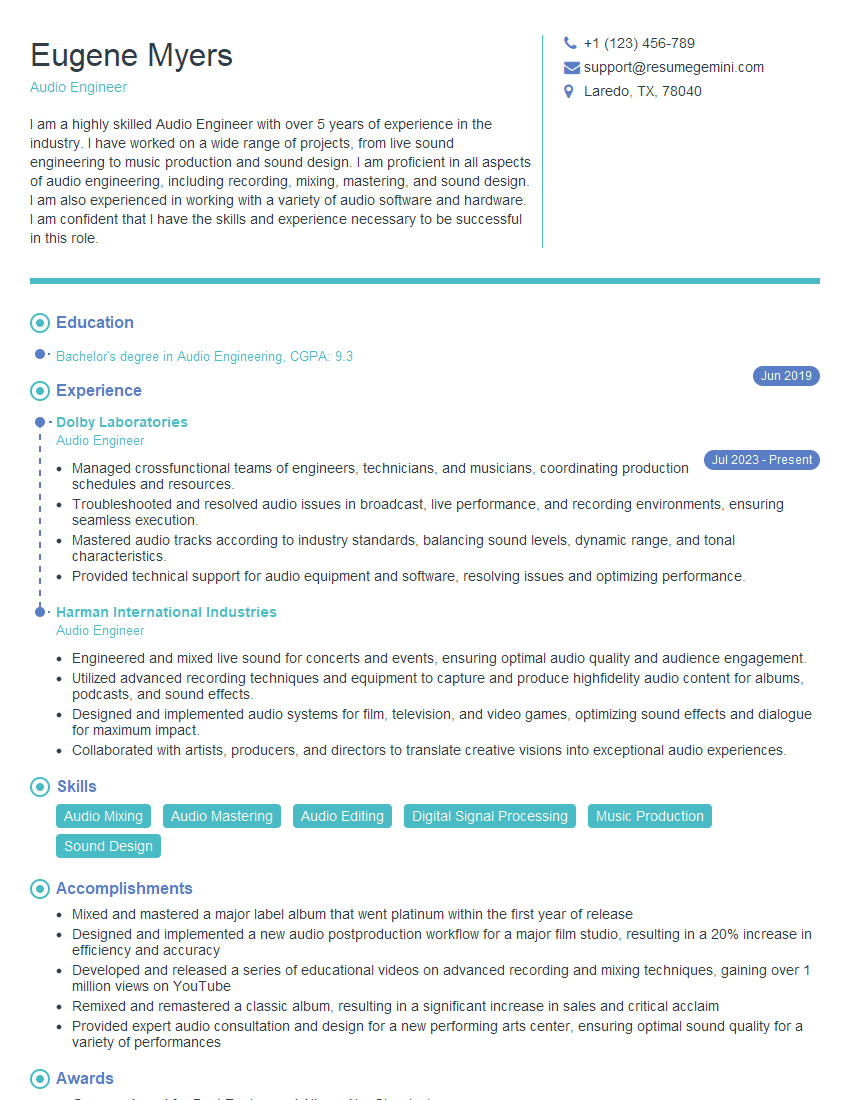
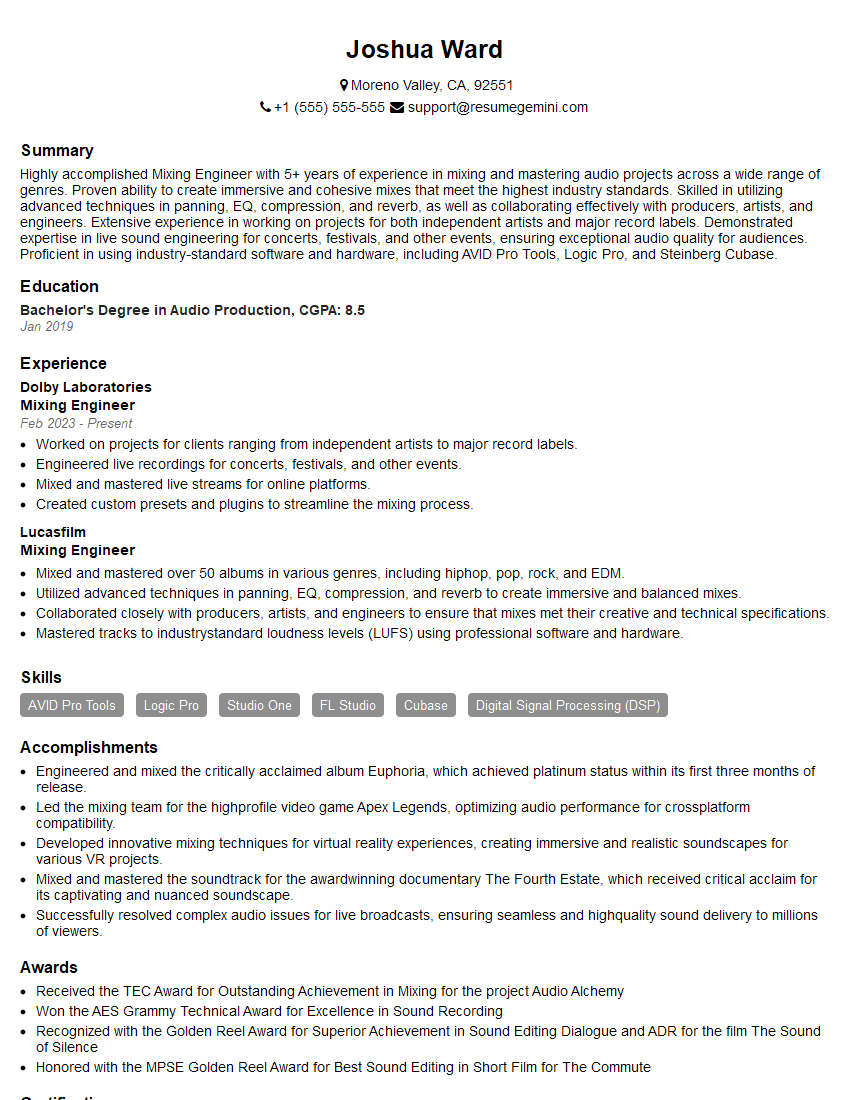
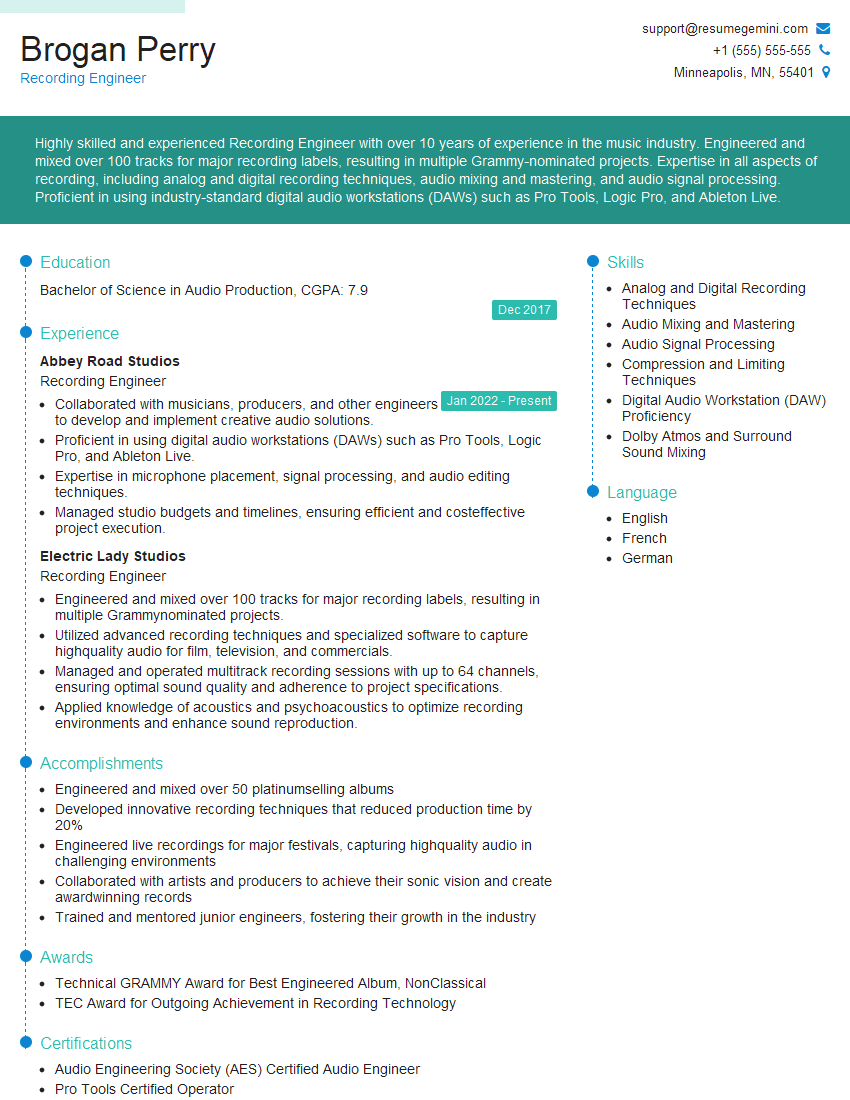
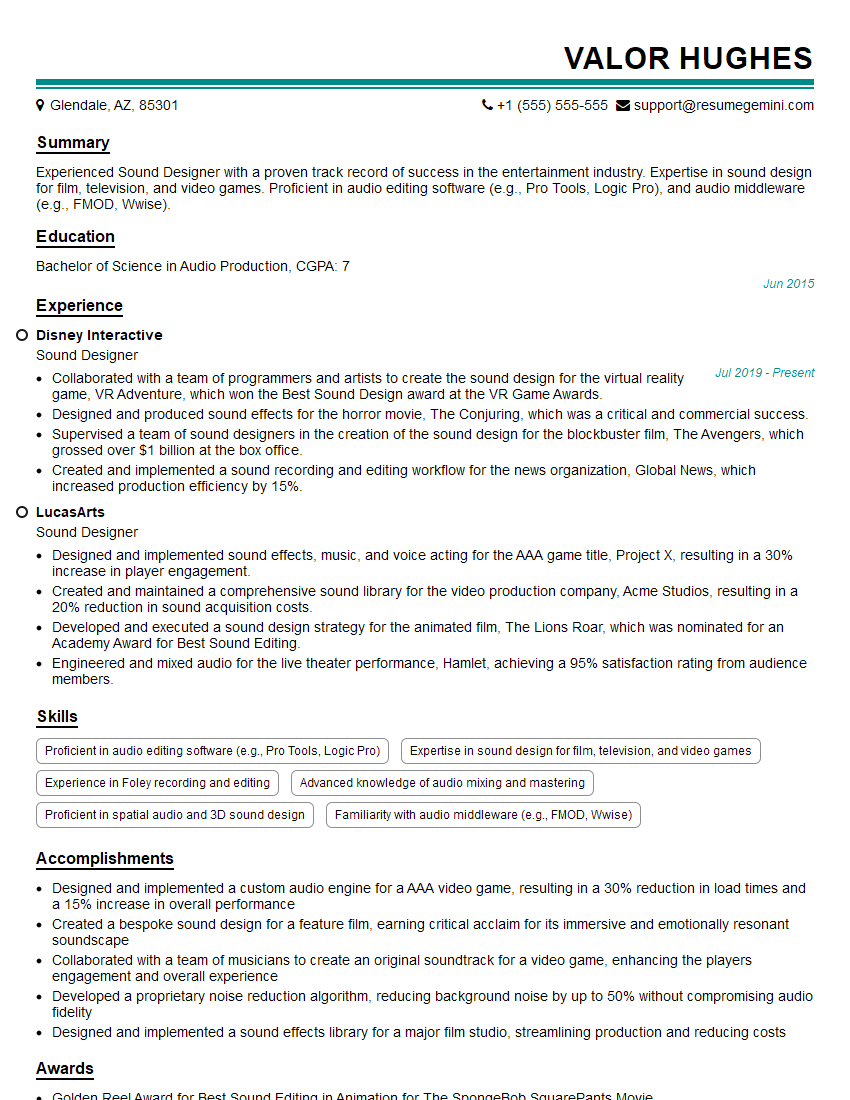
Mastering compression and limiting is crucial for career advancement in audio engineering, music production, and related fields. A strong understanding of these techniques demonstrates a high level of technical proficiency and problem-solving skills, making you a highly competitive candidate. To maximize your job prospects, crafting an ATS-friendly resume is essential. ResumeGemini is a trusted resource to help you build a professional and effective resume that highlights your skills and experience. Examples of resumes tailored to Compression and Limiting are available to guide you in this process.

Explore more articles
Users Rating of Our Blogs
Share Your Experience
We value your feedback! Please rate our content and share your thoughts (optional).
What Readers Say About Our Blog
Amazing blog
hello,
Our consultant firm based in the USA and our client are interested in your products.
Could you provide your company brochure and respond from your official email id (if different from the current in use), so i can send you the client’s requirement.
Payment before production.
I await your answer.
Regards,
MrSmith
hello,
Our consultant firm based in the USA and our client are interested in your products.
Could you provide your company brochure and respond from your official email id (if different from the current in use), so i can send you the client’s requirement.
Payment before production.
I await your answer.
Regards,
MrSmith
These apartments are so amazing, posting them online would break the algorithm.
https://bit.ly/Lovely2BedsApartmentHudsonYards
Reach out at BENSON@LONDONFOSTER.COM and let’s get started!
Take a look at this stunning 2-bedroom apartment perfectly situated NYC’s coveted Hudson Yards!
https://bit.ly/Lovely2BedsApartmentHudsonYards
Live Rent Free!
https://bit.ly/LiveRentFREE
Interesting Article, I liked the depth of knowledge you’ve shared.
Helpful, thanks for sharing.
Hi, I represent a social media marketing agency and liked your blog
Hi, I represent an SEO company that specialises in getting you AI citations and higher rankings on Google. I’d like to offer you a 100% free SEO audit for your website. Would you be interested?