Feeling uncertain about what to expect in your upcoming interview? We’ve got you covered! This blog highlights the most important Cybersecurity Risk Mitigation interview questions and provides actionable advice to help you stand out as the ideal candidate. Let’s pave the way for your success.
Questions Asked in Cybersecurity Risk Mitigation Interview
Q 1. Explain the NIST Cybersecurity Framework.
The NIST Cybersecurity Framework (CSF) is a voluntary framework developed by the National Institute of Standards and Technology (NIST) to help organizations manage and reduce their cybersecurity risks. It’s not a prescriptive standard, meaning it doesn’t dictate specific controls, but rather provides a flexible approach that organizations can tailor to their unique needs and circumstances. Think of it as a roadmap, guiding you through the process rather than giving you turn-by-turn directions.
The framework is structured around five core functions:
- Identify: This involves understanding your organization’s assets, systems, and data, as well as the associated risks. It’s like taking inventory of your valuables and identifying potential threats.
- Protect: This focuses on developing and implementing safeguards to protect your assets. This includes access controls, data encryption, and security awareness training – essentially, putting locks on your doors and installing an alarm system.
- Detect: This involves establishing mechanisms to identify cybersecurity events, such as intrusions or malware infections. This is like having security cameras and intrusion detection systems to monitor for suspicious activity.
- Respond: This outlines procedures to take when a cybersecurity incident occurs. This includes incident response plans, communication protocols, and recovery strategies – your plan for when the alarm goes off.
- Recover: This focuses on restoring systems and operations after an incident. This involves data backups, recovery plans, and lessons learned – getting back to normal after the incident is dealt with.
Each function is further broken down into categories and subcategories, providing a more granular level of detail. The CSF also includes a set of tiers, from basic (Tier 1) to advanced (Tier 4), allowing organizations to assess their current cybersecurity posture and identify areas for improvement. It’s a valuable tool for aligning cybersecurity activities with business objectives and demonstrating due diligence.
Q 2. Describe the difference between risk assessment and risk management.
Risk assessment and risk management are closely related but distinct concepts. Risk assessment is the process of identifying and analyzing potential threats and vulnerabilities. It’s about understanding what could go wrong and how likely it is to happen. Think of it as a detective gathering evidence to understand a crime scene. Risk management, on the other hand, is the overall process of addressing risks, including assessing, mitigating, monitoring, and communicating about them. It encompasses the entire lifecycle of dealing with risk – from identifying threats to implementing controls and continuously monitoring the effectiveness of those controls. It’s the detective’s entire investigation, leading to an arrest and solution.
In short: Risk assessment informs risk management. You can’t effectively manage risks without first understanding what those risks are.
Q 3. What are the key components of a robust risk mitigation plan?
A robust risk mitigation plan needs several key components to be effective:
- Risk Inventory: A comprehensive list of identified risks, categorized by likelihood and impact. This forms the foundation of your plan.
- Mitigation Strategies: Detailed plans for addressing each identified risk, including specific actions, timelines, and responsible parties. This is your action plan.
- Resource Allocation: A clear definition of the budget, personnel, and other resources required to implement the mitigation strategies. You can’t fight a fire without water.
- Implementation Plan: A step-by-step guide outlining how the mitigation strategies will be implemented, including timelines and milestones. This keeps everyone on track.
- Monitoring and Evaluation: A plan for regularly monitoring the effectiveness of the mitigation strategies and making adjustments as needed. It’s critical to assess if your plan actually works.
- Communication Plan: A plan for communicating risks and mitigation efforts to stakeholders, including management, employees, and customers. Transparency is key.
- Contingency Planning: A plan for handling unexpected events and escalating issues effectively. Always have a backup plan.
Without all these components, your mitigation plan will be incomplete and ineffective. It’s like building a house without a foundation – it might look good, but it won’t stand the test of time.
Q 4. How do you prioritize risks?
Risk prioritization is crucial because resources are always limited. We can’t fix everything at once. A common method is using a risk matrix that considers both the likelihood and impact of each risk. Likelihood refers to the probability of the risk occurring, while impact represents the severity of the consequences if the risk materializes.
Here’s a simple example:
- High Likelihood, High Impact: This is a critical risk requiring immediate attention (e.g., a critical system vulnerability with a high chance of exploitation).
- High Likelihood, Low Impact: This risk should be addressed, but it may not be the top priority (e.g., a minor denial-of-service attack).
- Low Likelihood, High Impact: This risk requires monitoring and planning, even if immediate action isn’t needed (e.g., a catastrophic natural disaster).
- Low Likelihood, Low Impact: This risk can often be accepted (e.g., a minor software bug with minimal consequences).
More sophisticated methods involve quantitative risk analysis, assigning numerical values to likelihood and impact for a more objective prioritization. Ultimately, the prioritization should align with the organization’s risk appetite and business objectives.
Q 5. Explain the concept of quantitative and qualitative risk analysis.
Quantitative and qualitative risk analysis are two different approaches to evaluating risks. Qualitative risk analysis uses descriptive terms (e.g., high, medium, low) to assess the likelihood and impact of risks. It’s simpler and faster, often used for initial assessments or when limited data is available. Think of it as a general overview. Quantitative risk analysis, on the other hand, uses numerical data and statistical methods to calculate the probability and financial impact of risks. This approach is more precise but requires more data and expertise. It’s like a detailed financial report.
Example: Imagine assessing the risk of a data breach. Qualitative analysis might categorize the likelihood as ‘high’ and the impact as ‘severe.’ Quantitative analysis might estimate the probability of a breach at 20% and the potential financial loss at $1 million, leading to an expected loss of $200,000 (20% * $1 million).
Q 6. What are some common risk mitigation strategies?
Common risk mitigation strategies include:
- Risk Avoidance: Eliminating the activity that creates the risk altogether. For example, not offering a service that’s too risky to secure.
- Risk Reduction: Implementing controls to reduce the likelihood or impact of a risk. This could include installing firewalls, using strong passwords, or implementing security awareness training.
- Risk Transfer: Shifting the risk to a third party, such as through insurance or outsourcing. Cyber insurance is a common example.
- Risk Acceptance: Accepting the risk and its potential consequences. This is usually done for low-likelihood, low-impact risks.
- Risk Mitigation: Implementing measures to reduce the impact of a risk if it occurs. This could involve having a disaster recovery plan or data backups.
The best strategy depends on the specific risk and the organization’s risk appetite. Often, a combination of strategies is employed.
Q 7. How do you identify and assess vulnerabilities?
Identifying and assessing vulnerabilities involves a multi-faceted approach. It starts with understanding your assets and their configurations, then using various techniques to find weaknesses.
- Vulnerability Scanning: Automated tools scan systems and applications for known vulnerabilities, comparing their configuration against a database of known weaknesses. This is like a health check for your systems.
- Penetration Testing: Simulated attacks are launched against systems to identify exploitable vulnerabilities. This is a more in-depth investigation, like a professional security audit.
- Security Assessments: Manual reviews of security controls and practices. This involves examining policies, procedures, and configurations to identify gaps. This is a more holistic review of the overall security posture.
- Code Reviews: Examining application source code for security flaws. Essential for developing secure software.
- Threat Modeling: Identifying potential threats and analyzing how they could exploit vulnerabilities. It’s about proactively thinking like an attacker.
Once vulnerabilities are identified, they are assessed based on their severity and potential impact. This involves considering factors such as the likelihood of exploitation, the potential damage, and the availability of exploits. Prioritization is key, focusing resources on the most critical vulnerabilities first.
Q 8. What are your preferred methods for conducting vulnerability assessments?
Vulnerability assessments are crucial for identifying weaknesses in an organization’s security posture. My preferred approach is a multi-layered strategy combining automated and manual methods. Automated vulnerability scanning tools, like Nessus or OpenVAS, are used for initial discovery, providing a broad overview of potential vulnerabilities across systems and applications. These tools efficiently identify known vulnerabilities based on their signatures in databases like the National Vulnerability Database (NVD). However, automated scans have limitations; they can’t discover zero-day exploits or configuration issues not readily identified by signatures. Therefore, I supplement automated scans with manual penetration testing (discussed further in the next question), focusing on critical systems and applications. This combined approach ensures comprehensive coverage, identifying both known and unknown weaknesses. I also utilize specialized tools for specific technologies, like database vulnerability scanners for SQL injection detection or web application scanners for cross-site scripting vulnerabilities. The results are then meticulously analyzed, prioritizing vulnerabilities based on their severity and potential impact, ultimately informing risk mitigation strategies.
Q 9. Describe your experience with penetration testing.
Penetration testing, or ethical hacking, simulates real-world attacks to identify exploitable vulnerabilities. My experience encompasses a wide range of penetration testing methodologies, including black box, white box, and grey box testing. In a black box test, I have no prior knowledge of the system, mirroring a real attacker’s perspective. This approach helps identify vulnerabilities that might be missed in a more familiar internal test. White box tests provide complete system knowledge, allowing for a more thorough examination of internal components and configuration issues. Grey box tests represent a middle ground, offering some system information to focus the testing process. I’ve successfully conducted penetration tests across various environments, including network infrastructure, web applications, and cloud platforms. For instance, in one engagement, I identified a critical SQL injection vulnerability in a web application by exploiting a poorly parameterized database query – a common scenario that automated tools may only partially detect. My reports always include detailed findings, steps to reproduce vulnerabilities, and prioritized remediation recommendations.
Q 10. How do you measure the effectiveness of risk mitigation efforts?
Measuring the effectiveness of risk mitigation is crucial for demonstrating its success. I use a combination of quantitative and qualitative metrics. Quantitative metrics include a reduction in the number and severity of vulnerabilities identified through subsequent vulnerability assessments or penetration testing. For example, a successful mitigation strategy would show a decrease in the number of critical vulnerabilities from 20 to 5 after implementing security patches. Key Risk Indicators (KRIs), like the number of security incidents or breaches, are also tracked. A lower number of incidents demonstrates the effectiveness of mitigation efforts. Qualitative metrics involve reviewing the efficiency and effectiveness of implemented security controls, assessing the impact of security awareness training, and gathering feedback from security audits. I also analyze the time taken to respond to and remediate security incidents, aiming for a continuous improvement cycle. A reduction in mean time to resolution (MTTR) showcases a more robust and responsive security posture.
Q 11. Explain the importance of incident response planning in risk mitigation.
Incident response planning is paramount for effective risk mitigation. A well-defined incident response plan outlines procedures for identifying, analyzing, containing, eradicating, recovering from, and learning from security incidents. Without a plan, organizations face chaos and potentially catastrophic consequences when an incident occurs. A strong plan dictates clear communication channels, escalation procedures, and responsibilities for each team member. For instance, the plan should specify who is responsible for forensic analysis, system restoration, and communicating with stakeholders. Regular tabletop exercises and simulations help teams practice the plan and identify areas for improvement. This proactive approach significantly reduces downtime, minimizes damage, and helps limit the financial and reputational impact of incidents. Essentially, the incident response plan acts as a ‘fire drill’ for your cybersecurity team, ensuring they are prepared for the inevitable.
Q 12. How do you communicate risk effectively to both technical and non-technical audiences?
Communicating risk effectively requires tailoring the message to the audience. For technical audiences, I use precise terminology and detailed reports, including technical explanations of vulnerabilities and remediation steps. For non-technical audiences, I employ clear, concise language, focusing on the potential impact of risks, such as financial losses or reputational damage, rather than technical jargon. I often use visualizations like charts and graphs to present risk information in an easily digestible format. For example, I might present the likelihood and impact of a data breach using a risk matrix, visually depicting its potential severity. Storytelling and real-world examples also enhance understanding and engagement across all audiences. Analogies like comparing a firewall to a home security system can help bridge the knowledge gap and promote a better understanding of security concepts.
Q 13. Describe your experience with regulatory compliance (e.g., GDPR, HIPAA, PCI DSS).
My experience with regulatory compliance encompasses several frameworks, including GDPR, HIPAA, and PCI DSS. I understand the specific requirements and controls mandated by each framework and have helped organizations implement effective programs to achieve and maintain compliance. For instance, with GDPR, I’ve assisted in implementing data protection impact assessments (DPIAs), ensuring data minimization, and establishing processes for handling data subject requests. With HIPAA, my work has focused on securing protected health information (PHI), implementing access controls, and ensuring compliance with breach notification requirements. PCI DSS compliance necessitates a thorough understanding of payment card data security, and I’ve helped businesses implement strong security controls around point-of-sale systems and payment processing infrastructure. My approach emphasizes risk-based assessments, focusing on areas of highest risk and prioritizing controls based on the specific requirements of each framework.
Q 14. What are the key elements of a security awareness training program?
A successful security awareness training program is multi-faceted. It begins with understanding the organization’s specific risks and tailoring the training content to address those risks. The training should go beyond simple awareness and delve into practical skills and scenarios. For instance, employees should be trained on how to identify phishing emails, secure their passwords, and report suspicious activity. Regular training sessions are crucial, delivered using varied formats, including e-learning modules, interactive workshops, and phishing simulations. Gamification techniques and real-world examples can enhance engagement and knowledge retention. The program should include clear communication channels for reporting security incidents and a mechanism to measure the effectiveness of the training, perhaps through regular quizzes or phishing tests. Ultimately, a successful security awareness program fosters a culture of security within the organization, making every employee a part of the security team.
Q 15. How do you handle conflicting priorities in risk mitigation?
Conflicting priorities in risk mitigation are a common challenge. Think of it like juggling – you have multiple balls (risks) in the air, each demanding attention. My approach involves a structured prioritization framework. First, I conduct a thorough risk assessment, quantifying the likelihood and impact of each risk. This might involve using a risk matrix or a more sophisticated quantitative model. Then, I prioritize based on a combination of factors: likelihood of occurrence, potential impact (financial, reputational, operational), and regulatory compliance requirements. High-likelihood, high-impact risks always take precedence. Sometimes, this means making tough choices – for example, delaying a less critical project to address a more immediate threat. To effectively manage these competing priorities, I use tools like project management software to track progress and regularly communicate with stakeholders, ensuring transparency and buy-in throughout the process. This collaborative approach helps align expectations and secure the necessary resources to address the most critical risks first.
Career Expert Tips:
- Ace those interviews! Prepare effectively by reviewing the Top 50 Most Common Interview Questions on ResumeGemini.
- Navigate your job search with confidence! Explore a wide range of Career Tips on ResumeGemini. Learn about common challenges and recommendations to overcome them.
- Craft the perfect resume! Master the Art of Resume Writing with ResumeGemini’s guide. Showcase your unique qualifications and achievements effectively.
- Don’t miss out on holiday savings! Build your dream resume with ResumeGemini’s ATS optimized templates.
Q 16. Describe a time you successfully mitigated a significant security risk.
In a previous role, we discovered a critical vulnerability in our web application that allowed unauthorized access to sensitive customer data. This was a high-priority issue, potentially exposing us to significant legal and reputational damage. My team and I immediately implemented a multi-faceted mitigation strategy. First, we deployed a temporary patch to reduce the immediate risk while a permanent solution was developed. Then, we conducted a full vulnerability assessment to identify the root cause and any other potential weaknesses. Concurrently, we started an incident response process, logging all events, containing the breach, and notifying potentially affected customers. The permanent solution involved upgrading the application’s framework, implementing robust input validation and authorization checks, and enhancing our logging and monitoring capabilities. Post-incident analysis revealed the importance of regular security audits and penetration testing to prevent future similar issues. This successful mitigation not only prevented a major data breach but also refined our overall security posture, strengthening our incident response capabilities.
Q 17. Explain the concept of residual risk.
Residual risk is the risk that remains after you’ve implemented all your mitigation controls. Think of it as the unavoidable level of risk that you accept. It’s impossible to eliminate all risks; some level of uncertainty always remains. For example, even with robust firewalls and intrusion detection systems, there’s still a chance of a successful cyberattack. Managing residual risk involves understanding its limitations and accepting it as a calculated business decision. Regular risk assessments and reviews are critical in monitoring residual risk and adjusting controls accordingly. Documentation and communication around residual risk are also crucial, ensuring that stakeholders understand the accepted level of risk and are prepared to manage the consequences should a breach occur.
Q 18. How do you stay up-to-date on the latest cybersecurity threats and vulnerabilities?
Staying current in cybersecurity is a continuous process. I leverage several methods to stay informed. I subscribe to reputable cybersecurity publications and newsletters (like SANS Institute, KrebsOnSecurity), actively participate in online communities and forums (like Reddit’s r/netsec), and follow industry experts on social media platforms like Twitter and LinkedIn. Regularly attending webinars and conferences provides valuable insights and networking opportunities. Participating in industry-specific certifications, like the CISSP, keeps me abreast of best practices and emerging threats. I also regularly review vulnerability databases like the National Vulnerability Database (NVD) and exploit databases to understand newly discovered vulnerabilities. Critically, I analyze threat intelligence feeds and reports to anticipate emerging trends and threats specific to my industry and organization.
Q 19. What are some common types of cyberattacks and how can they be mitigated?
There are numerous types of cyberattacks, but some common ones include:
- Phishing: Deceptive attempts to acquire sensitive information like usernames, passwords, and credit card details. Mitigation: Security awareness training, email filtering, multi-factor authentication (MFA).
- Malware: Malicious software designed to damage or disable systems. Mitigation: Anti-virus software, regular software updates, network segmentation, and strong endpoint security.
- Denial-of-Service (DoS) attacks: Overwhelming a system with traffic, making it unavailable to legitimate users. Mitigation: Redundancy, robust infrastructure, DDoS mitigation services.
- SQL Injection: Exploiting vulnerabilities in database applications to gain unauthorized access. Mitigation: Input validation, parameterized queries, secure coding practices.
- Ransomware: Encrypting data and demanding a ransom for its release. Mitigation: Regular backups, security awareness training, endpoint detection and response (EDR) solutions.
Effective mitigation requires a multi-layered approach, combining technical controls (firewalls, intrusion detection systems) with administrative controls (access control policies, security awareness training), and physical controls (secured facilities, access badges) to create a robust defense strategy.
Q 20. Describe your experience with security information and event management (SIEM) tools.
I have extensive experience with SIEM tools, including Splunk, QRadar, and LogRhythm. These tools are invaluable for centralized log management, security monitoring, threat detection, and incident response. My experience encompasses everything from deploying and configuring these tools to developing custom dashboards and alerts to monitor critical security events. I’m proficient in using SIEM tools to analyze security logs, correlate events, detect anomalies, and investigate security incidents. I’ve used SIEM data to identify trends, assess vulnerabilities, and improve our overall security posture. For example, by analyzing logs from multiple sources, we were able to detect a sophisticated insider threat attempt before it could cause significant damage. My proficiency extends to using SIEM data for compliance reporting, demonstrating our adherence to various regulatory frameworks.
Q 21. How do you ensure the confidentiality, integrity, and availability (CIA triad) of data?
Ensuring the Confidentiality, Integrity, and Availability (CIA triad) of data is fundamental to cybersecurity.
- Confidentiality: Protecting data from unauthorized access. This is achieved through access control measures (role-based access control, encryption), strong authentication (multi-factor authentication), and data loss prevention (DLP) tools. For sensitive data, encryption both in transit and at rest is paramount.
- Integrity: Ensuring data accuracy and reliability. This involves using checksums and hashing algorithms to detect data modifications, implementing version control systems, and using digital signatures to verify authenticity. Regularly scheduled backups and disaster recovery plans also play a critical role.
- Availability: Guaranteeing timely and reliable access to data when needed. This involves implementing redundancy (backup servers, load balancers), disaster recovery plans, and business continuity strategies. Regular system maintenance, robust infrastructure, and capacity planning are vital to ensuring high availability.
The CIA triad is interconnected; a breach in one area often compromises the others. A holistic approach combining technical, administrative, and physical controls is necessary to effectively protect data.
Q 22. Explain your understanding of threat modeling.
Threat modeling is a systematic approach to understanding and mitigating potential security threats to a system or application. Think of it as a preemptive strike against vulnerabilities before they’re exploited. It involves identifying potential threats, vulnerabilities, and impacts, allowing us to prioritize security controls and resources effectively. We don’t just react to incidents; we actively hunt for weaknesses beforehand.
The process typically involves several steps: defining the system’s scope, identifying threats (e.g., data breaches, denial-of-service attacks), identifying vulnerabilities (e.g., SQL injection, cross-site scripting), analyzing the likelihood and impact of each threat, and developing mitigation strategies. There are various methods, including STRIDE (Spoofing, Tampering, Repudiation, Information disclosure, Denial of service, Elevation of privilege) and PASTA (Process for Attack Simulation and Threat Analysis), each tailored to different contexts.
For example, when designing a new e-commerce platform, I would use threat modeling to identify potential vulnerabilities like insecure data storage, weak authentication mechanisms, or lack of input validation. This allows me to design security controls from the outset, reducing the risk of costly breaches later.
Q 23. What are your preferred methods for conducting risk assessments?
My preferred methods for conducting risk assessments combine qualitative and quantitative approaches to provide a holistic view. I frequently employ techniques like:
- NIST Cybersecurity Framework: Provides a structured approach to identify, assess, and manage cybersecurity risks based on five functions: Identify, Protect, Detect, Respond, and Recover. It’s widely adopted and offers a good balance of flexibility and standardization.
- OWASP Risk Rating Methodology: Excellent for web application security. This method combines likelihood and impact scores to generate a risk rating, which helps in prioritizing remediation efforts. It guides us to focus on the most critical vulnerabilities first.
- Quantitative Risk Analysis: Utilizing statistical methods to assess the probability and financial impact of risks. This often involves assigning monetary values to potential losses, which makes it easier to justify security investments to stakeholders. I use this frequently when demonstrating return-on-investment (ROI) for security projects.
- Vulnerability Scanning and Penetration Testing: These active assessments help to uncover and validate potential vulnerabilities in systems and applications. This provides practical, real-world insight into the effectiveness of existing security controls.
The choice of method depends heavily on the context. A smaller project might benefit from a more streamlined approach, while a large enterprise application demands a rigorous, multi-faceted assessment.
Q 24. What is the role of security controls in mitigating risks?
Security controls are the safeguards or measures implemented to mitigate identified risks. Think of them as the armor protecting your system. They can be categorized into several types, including:
- Preventive Controls: These aim to prevent security incidents from occurring in the first place. Examples include firewalls, intrusion detection systems (IDS), access controls, and strong passwords.
- Detective Controls: Designed to detect security incidents that have already occurred. These might include security information and event management (SIEM) systems, audit logs, and intrusion detection systems (IDS) in alert mode.
- Corrective Controls: These are implemented to address security incidents after they have been detected. Incident response plans, data recovery procedures, and vulnerability patching fall under this category.
- Compensating Controls: These are used when a primary control is not feasible or effective. For example, if a physical security control like a guard is unavailable, video surveillance might serve as a compensating control.
Effective risk mitigation relies on a layered approach, using a combination of these controls to create a robust defense. A single control is rarely sufficient; it’s about creating multiple layers of security to ensure that even if one layer fails, others can still protect the system.
Q 25. How do you handle stakeholder expectations regarding risk?
Managing stakeholder expectations regarding risk is crucial for effective security. It requires open communication, transparency, and a clear understanding of risk appetite. I achieve this by:
- Clearly Communicating Risk: I present risk information in a way that is easy for non-technical stakeholders to understand. I avoid jargon and use visual aids like charts and graphs.
- Establishing a Shared Understanding of Risk Appetite: It’s essential to determine the organization’s tolerance for risk. This allows me to tailor security controls and investments to align with their strategic goals and financial constraints.
- Regular Reporting and Updates: I provide regular reports on the organization’s security posture, highlighting key risks, mitigation efforts, and progress towards objectives. This ensures stakeholders remain informed and engaged.
- Proactive Risk Communication: Instead of just reacting to incidents, I proactively communicate potential risks and their potential impact. This allows for preemptive measures and avoids surprises.
For example, if a high-level risk is identified, I’ll not only report the risk but also propose different mitigation strategies with their respective costs and benefits, allowing stakeholders to make informed decisions.
Q 26. Explain your experience with using risk registers.
Risk registers are central to my risk management process. They act as a centralized repository for documenting, tracking, and managing identified risks. I’ve used risk registers extensively throughout my career, typically including the following information for each risk:
- Risk ID: A unique identifier for each risk.
- Risk Description: A clear and concise description of the risk.
- Likelihood: An assessment of the probability of the risk occurring (e.g., low, medium, high).
- Impact: An assessment of the potential consequences if the risk occurs (e.g., low, medium, high).
- Risk Owner: The individual responsible for managing the risk.
- Mitigation Strategies: Proposed actions to reduce the likelihood or impact of the risk.
- Status: The current status of the risk (e.g., open, in progress, closed).
I use risk registers not only to track progress but also to prioritize mitigation efforts based on the risk’s likelihood and impact. Regular reviews and updates are essential to ensure the risk register remains current and relevant. I often integrate this with project management software for better tracking and collaboration.
Q 27. Describe your experience with different risk management frameworks.
My experience encompasses several risk management frameworks, each with its strengths and weaknesses:
- ISO 27001: This international standard provides a comprehensive framework for establishing, implementing, maintaining, and continually improving an information security management system (ISMS). I find it particularly useful for larger organizations needing a robust and certified security program.
- NIST Cybersecurity Framework: As mentioned earlier, its flexible and widely adopted approach makes it highly adaptable to various organizations and contexts. Its focus on five key functions provides a clear roadmap for cybersecurity improvement.
- COBIT: A framework focusing on IT governance and management. I’ve used COBIT to align IT security with business objectives and ensure that security investments are directly supporting strategic goals.
- ITIL: While not strictly a security framework, ITIL principles, especially regarding incident management and problem management, are crucial for effectively responding to and mitigating security incidents.
The selection of the right framework depends on the organization’s size, industry, regulatory requirements, and specific security needs. I often integrate elements from multiple frameworks to create a tailored approach that addresses the organization’s unique challenges.
Q 28. How do you prioritize security investments?
Prioritizing security investments is a balancing act between risk, cost, and business impact. I use a multi-faceted approach:
- Risk-Based Prioritization: This is the most crucial element. I prioritize investments based on the likelihood and impact of the identified risks, as assessed in the risk assessment. The higher the risk, the higher the priority.
- Return on Investment (ROI): I calculate the potential financial return on different security investments. This helps justify investments to stakeholders and ensures that resources are allocated efficiently.
- Regulatory Compliance: Compliance requirements often dictate certain security investments. Meeting these requirements is non-negotiable.
- Business Impact Analysis: I analyze the potential impact of a security breach on the business. This helps to prioritize investments that protect critical assets and functions.
- Cost-Benefit Analysis: I weigh the cost of implementing a security control against its potential benefits. This helps to ensure that investments are cost-effective and provide a reasonable return.
Using a combination of these methods helps to make data-driven decisions about where to invest limited security resources, ensuring maximum protection for the organization.
Key Topics to Learn for Cybersecurity Risk Mitigation Interview
- Risk Assessment & Analysis: Understanding methodologies like NIST Cybersecurity Framework, OWASP, and ISO 27005. Practical application: Analyzing vulnerabilities and threats within a given system architecture to prioritize mitigation efforts.
- Threat Modeling: Identifying potential threats and vulnerabilities using various techniques (e.g., STRIDE, DREAD). Practical application: Developing a threat model for a specific application or system to proactively address potential risks.
- Vulnerability Management: Processes for identifying, assessing, and remediating vulnerabilities. Practical application: Explaining your experience with vulnerability scanning tools, patch management, and incident response.
- Security Controls & Implementation: Designing and implementing technical and administrative controls (e.g., firewalls, intrusion detection systems, access control lists, security awareness training). Practical application: Discussing the selection and implementation of appropriate security controls based on risk assessments.
- Incident Response & Disaster Recovery: Developing and practicing incident response plans and disaster recovery strategies. Practical application: Describing your experience with incident handling, including containment, eradication, recovery, and post-incident activities.
- Compliance & Regulatory Frameworks: Understanding relevant regulations and compliance standards (e.g., HIPAA, GDPR, PCI DSS). Practical application: Explaining how to ensure compliance with relevant regulations in a given scenario.
- Data Loss Prevention (DLP): Strategies and technologies for preventing sensitive data breaches. Practical application: Discussing the implementation and effectiveness of DLP solutions.
- Security Awareness Training & Education: Importance of educating users on cybersecurity best practices. Practical application: Developing and delivering effective security awareness training programs.
- Metrics & Reporting: Tracking and reporting on key security metrics to demonstrate the effectiveness of mitigation efforts. Practical application: Presenting relevant data to stakeholders to illustrate the impact of implemented security controls.
Next Steps
Mastering Cybersecurity Risk Mitigation is crucial for career advancement, opening doors to leadership roles and high-impact positions. A strong resume is your key to unlocking these opportunities. Crafting an ATS-friendly resume that highlights your skills and experience is paramount. We encourage you to leverage ResumeGemini, a trusted resource, to build a professional and impactful resume that showcases your expertise in Cybersecurity Risk Mitigation. Examples of resumes tailored to this field are available to guide you.
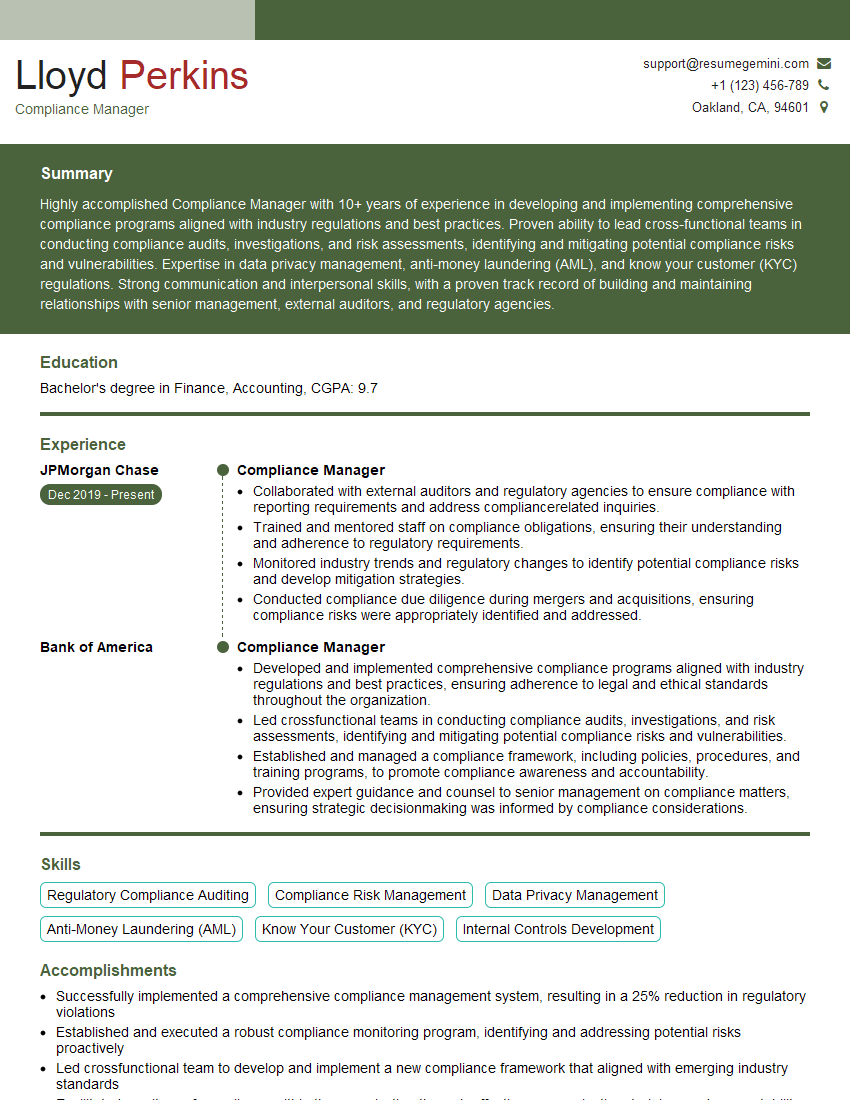
Compliance Manager Resume Sample
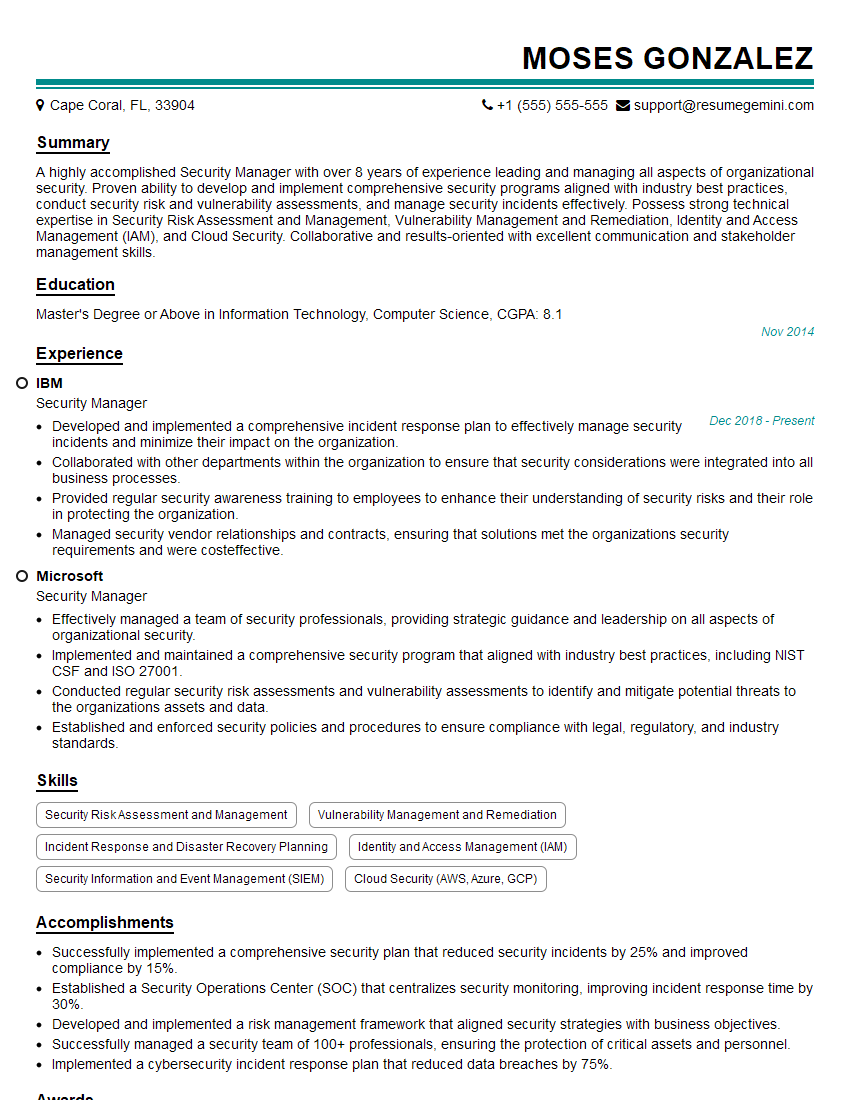
Security Manager Resume Sample
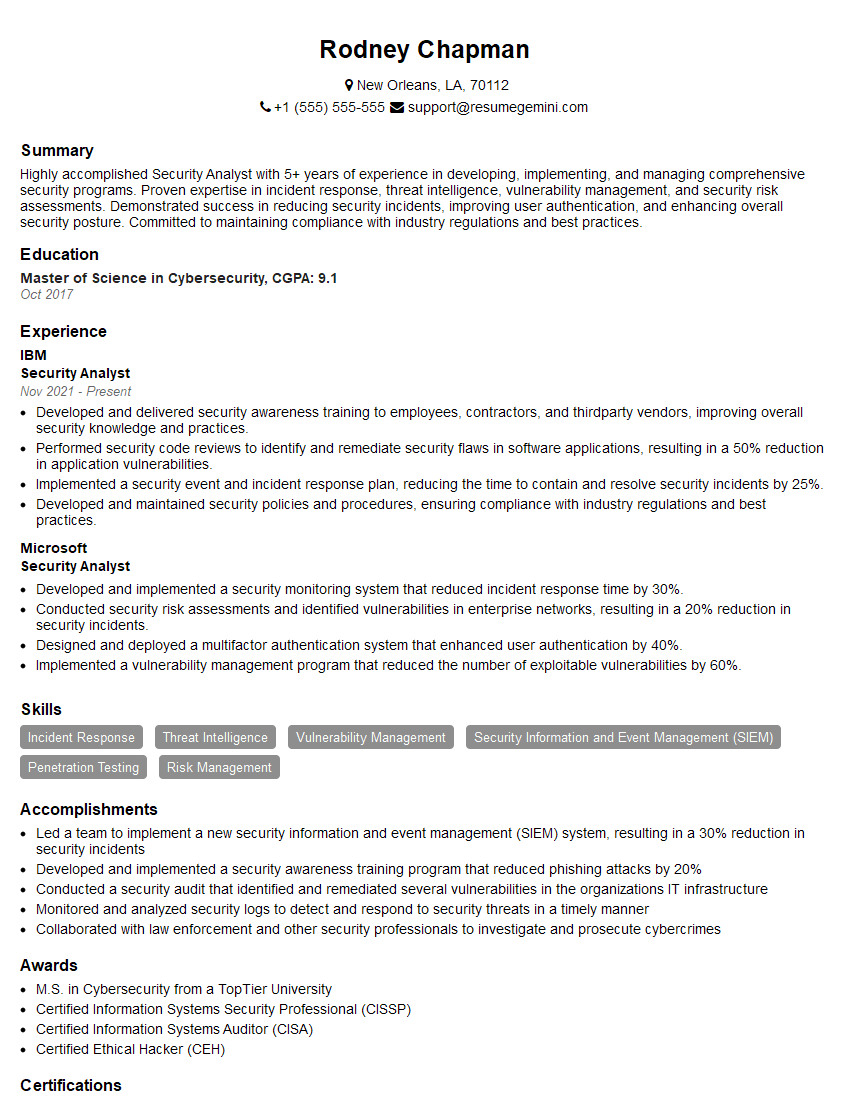
Security Analyst Resume Sample
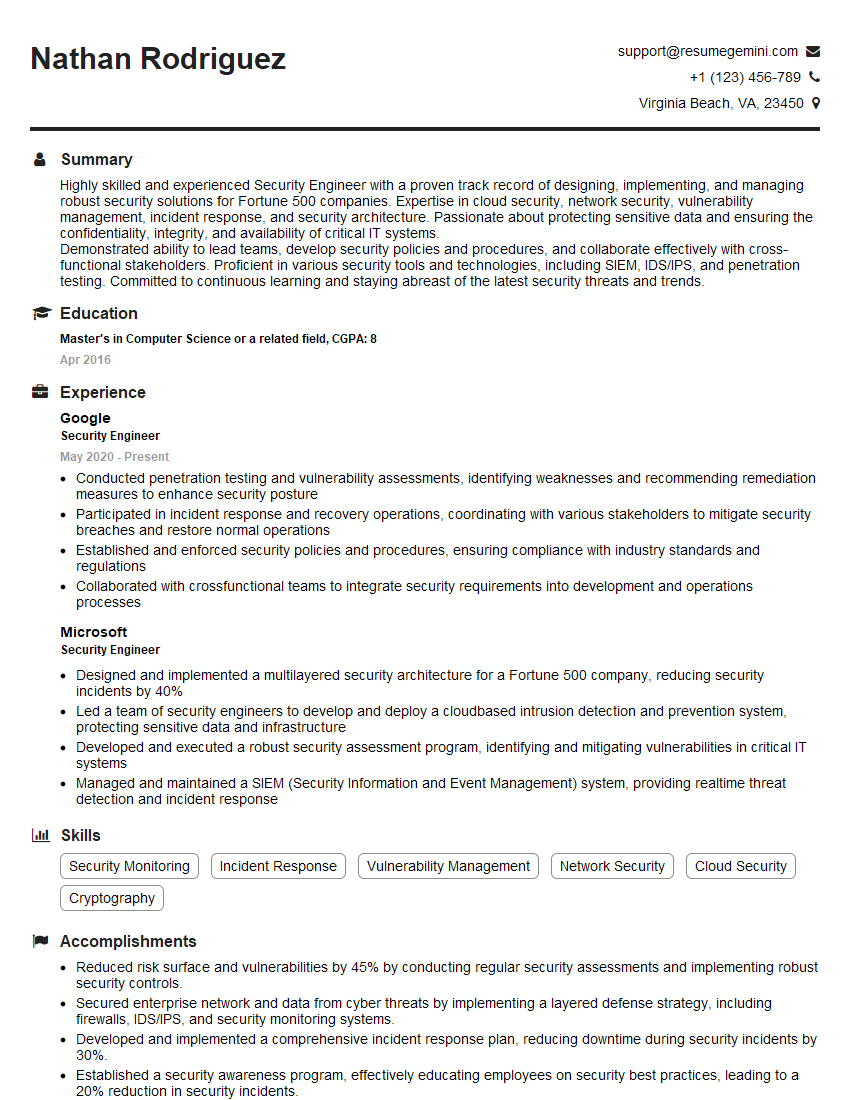
Security Engineer Resume Sample
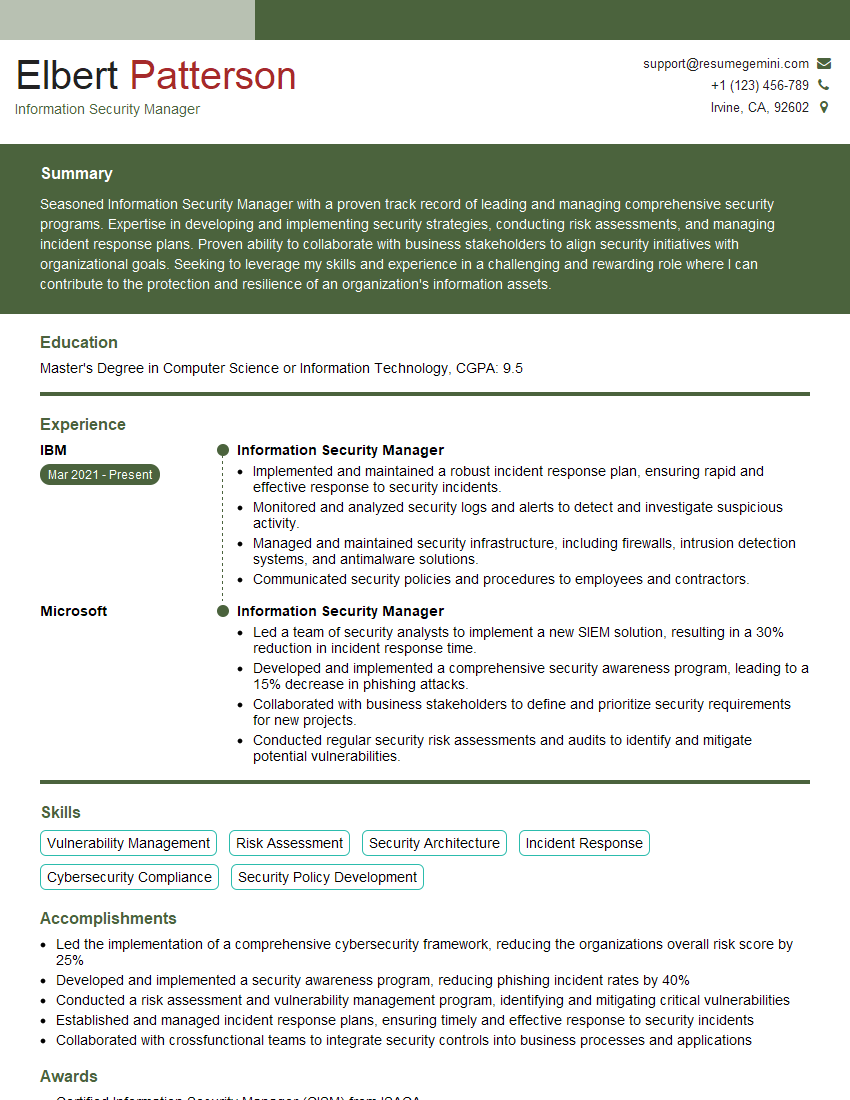
Information Security Manager Resume Sample
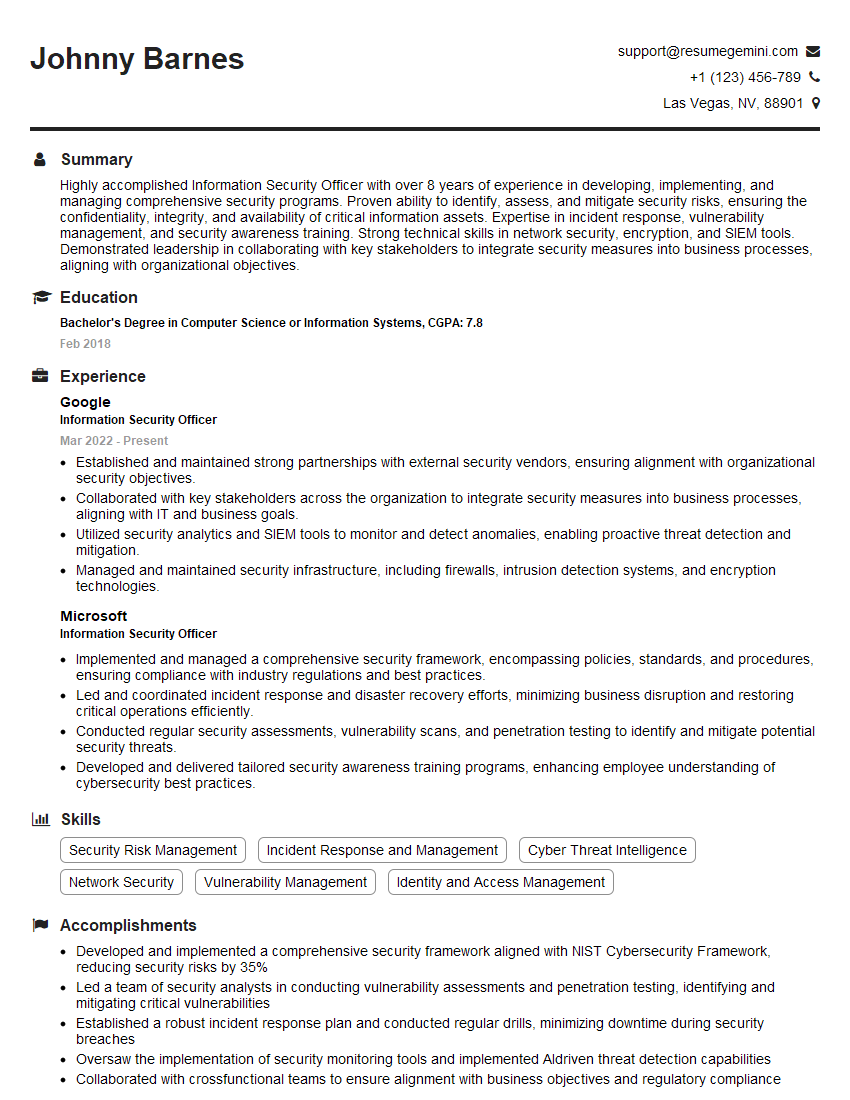
Information Security Officer Resume Sample
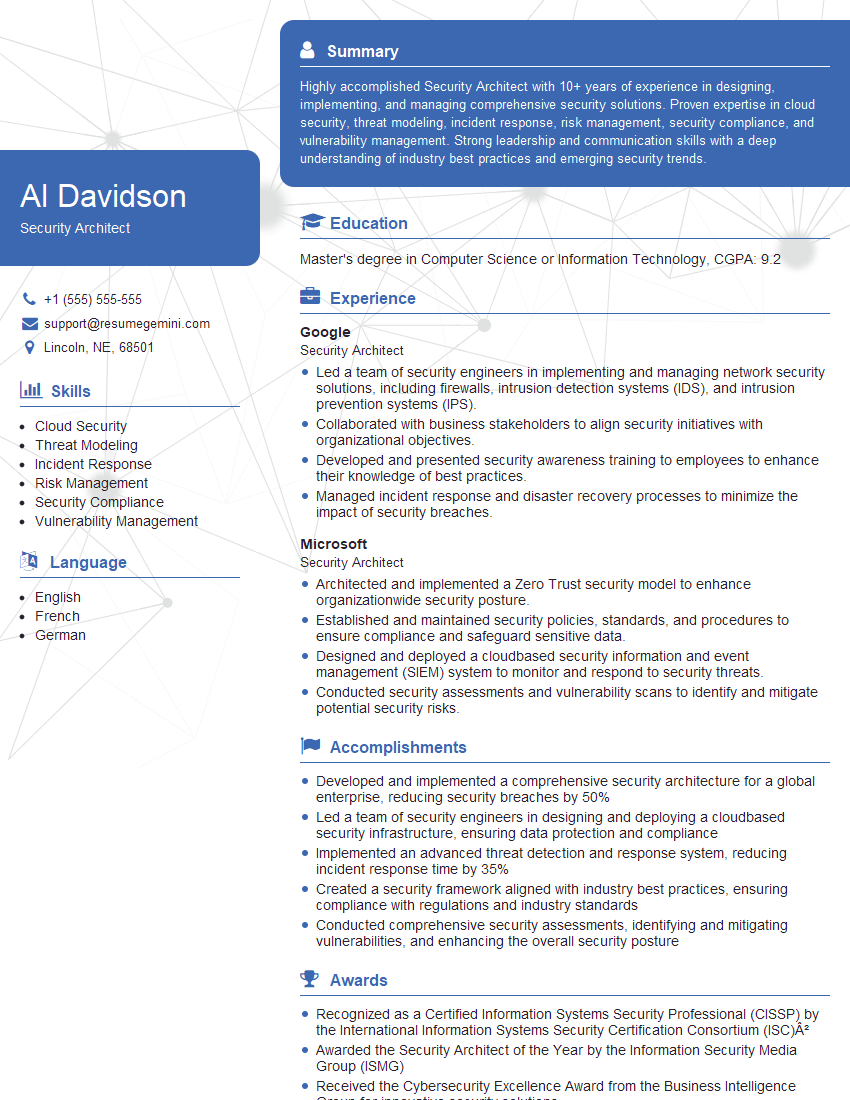
Security Architect Resume Sample
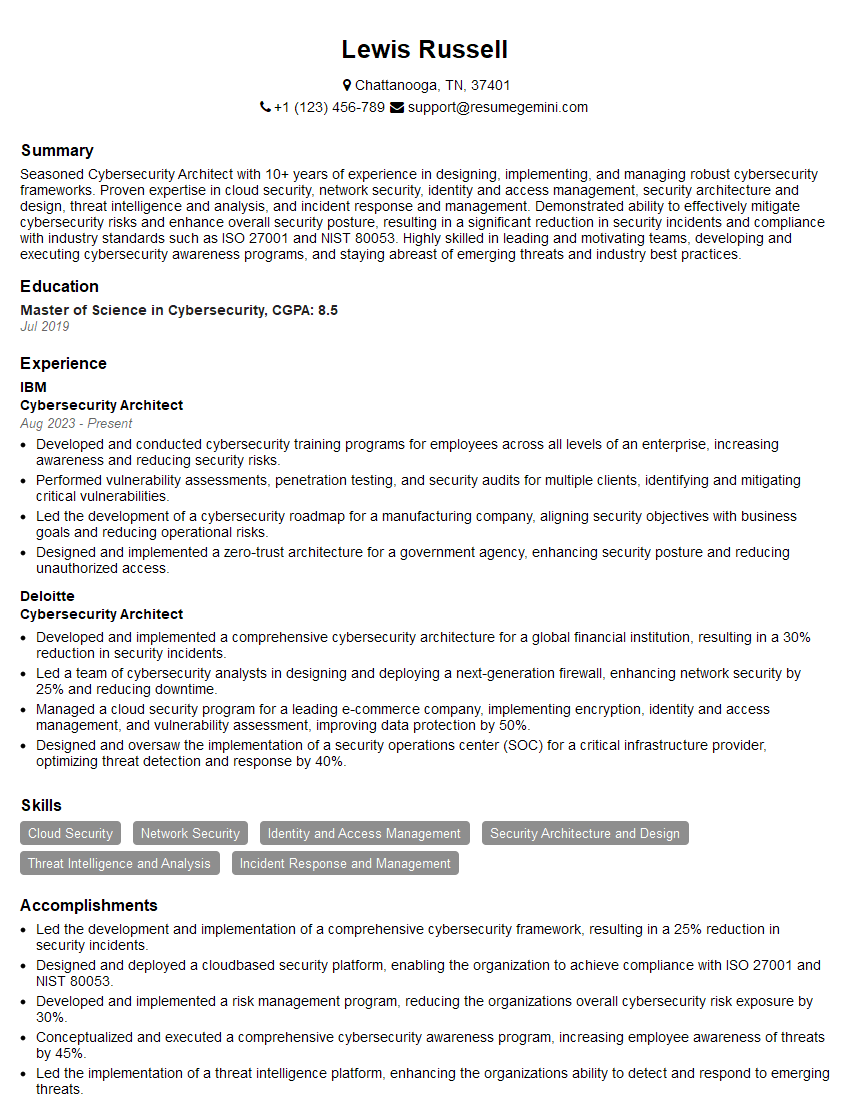
Cybersecurity Architect Resume Sample
Cloud Security Engineer Resume Sample
Explore more articles
Users Rating of Our Blogs
Share Your Experience
We value your feedback! Please rate our content and share your thoughts (optional).
What Readers Say About Our Blog
Amazing blog
hello,
Our consultant firm based in the USA and our client are interested in your products.
Could you provide your company brochure and respond from your official email id (if different from the current in use), so i can send you the client’s requirement.
Payment before production.
I await your answer.
Regards,
MrSmith
hello,
Our consultant firm based in the USA and our client are interested in your products.
Could you provide your company brochure and respond from your official email id (if different from the current in use), so i can send you the client’s requirement.
Payment before production.
I await your answer.
Regards,
MrSmith
These apartments are so amazing, posting them online would break the algorithm.
https://bit.ly/Lovely2BedsApartmentHudsonYards
Reach out at BENSON@LONDONFOSTER.COM and let’s get started!
Take a look at this stunning 2-bedroom apartment perfectly situated NYC’s coveted Hudson Yards!
https://bit.ly/Lovely2BedsApartmentHudsonYards
Live Rent Free!
https://bit.ly/LiveRentFREE
Interesting Article, I liked the depth of knowledge you’ve shared.
Helpful, thanks for sharing.
Hi, I represent a social media marketing agency and liked your blog
Hi, I represent an SEO company that specialises in getting you AI citations and higher rankings on Google. I’d like to offer you a 100% free SEO audit for your website. Would you be interested?