The right preparation can turn an interview into an opportunity to showcase your expertise. This guide to Destination Storytelling interview questions is your ultimate resource, providing key insights and tips to help you ace your responses and stand out as a top candidate.
Questions Asked in Destination Storytelling Interview
Q 1. Describe your understanding of destination storytelling.
Destination storytelling is more than just promoting a place; it’s about crafting an engaging narrative that connects with potential visitors on an emotional level. It’s about weaving together the destination’s unique attributes – its history, culture, people, landscapes, and experiences – into a compelling story that inspires wanderlust and encourages travel. Think of it as marketing with a heart – it’s about evoking feelings and creating a desire to experience the destination firsthand, rather than simply listing its features.
For example, instead of simply saying “Visit our beautiful beaches,” a destination story might focus on a local fisherman’s tale of generations spent on those very shores, painting a picture of the area’s history, the community’s connection to the sea, and the serenity of the coastal life. This approach moves beyond factual information to create an immersive experience for the audience.
Q 2. How do you identify the unique selling proposition (USP) of a destination?
Identifying a destination’s Unique Selling Proposition (USP) requires deep research and a keen understanding of the target audience. It’s about pinpointing what makes that destination truly special and different from its competitors. This involves a multi-faceted approach:
- Competitive Analysis: Researching similar destinations to understand what they offer and how the target destination can differentiate itself.
- Audience Research: Understanding the needs, desires, and travel motivations of the target audience. What are they looking for in a travel experience?
- Resource Inventory: Identifying the destination’s key assets – natural beauty, cultural attractions, historical significance, unique activities, culinary offerings, etc.
- SWOT Analysis: Evaluating the destination’s Strengths, Weaknesses, Opportunities, and Threats.
For instance, a small coastal town might differentiate itself not by its beaches alone (which many destinations offer), but by its unique artisan crafts, its focus on sustainable tourism, or its thriving culinary scene emphasizing locally sourced ingredients. The USP should be concise, memorable, and accurately reflect the destination’s true essence.
Q 3. Explain how you would develop a compelling narrative for a specific destination.
Developing a compelling narrative requires a structured approach:
- Define the Target Audience: Who are you trying to reach? Couples? Families? Adventure seekers? This will shape the story’s tone and style.
- Craft a Central Theme: What’s the overarching message? Is it about adventure, relaxation, cultural immersion, or a blend of these? This forms the backbone of your narrative.
- Develop Characters and Setting: Inject real people and places into the story. Use local characters to showcase authenticity and provide relatable experiences. Describe the destination vividly using evocative language that engages the reader’s senses.
- Create a Plot: The narrative should have a beginning, middle, and end. A journey, a discovery, a transformation – give the story an arc that keeps the audience engaged.
- Choose the Right Medium: Consider various platforms – videos, blogs, podcasts, social media – to deliver the story in the most effective way for the target audience.
For example, a story about a historic city could focus on a local historian who guides visitors through hidden alleyways, revealing the city’s captivating past and the lives of its inhabitants. This humanizes the history and provides a tangible connection for the audience.
Q 4. What are the key elements of a successful destination storytelling campaign?
A successful destination storytelling campaign hinges on several key elements:
- Authenticity: The story must reflect the destination’s true character and avoid over-romanticizing or misrepresenting it.
- Emotional Connection: It should evoke feelings and resonate with the target audience’s aspirations and desires.
- Compelling Visuals: High-quality photography and videography are crucial to showcasing the destination’s beauty and unique features.
- Consistent Branding: Maintaining a consistent brand voice and visual identity across all platforms is vital for building recognition and trust.
- Clear Call to Action: Guide the audience towards the next step – booking a trip, visiting a website, or learning more about the destination.
- Multi-platform Strategy: Reach the target audience through various channels, adapting the story to suit each platform.
Think of a successful campaign as a well-orchestrated symphony; each element plays a vital role in creating a harmonious and engaging whole.
Q 5. How do you incorporate authentic local voices and perspectives into destination storytelling?
Incorporating authentic local voices is paramount for creating genuine and impactful destination stories. This can be achieved through:
- Interviews and Testimonials: Featuring stories from local residents, business owners, and community leaders.
- Collaborations with Local Artists and Creators: Partnering with local photographers, filmmakers, writers, and musicians to showcase their perspectives and talent.
- Participatory Storytelling: Engaging locals in the storytelling process, empowering them to share their experiences and narratives.
- Translation and Cultural Sensitivity: Ensuring the stories are accurately translated and respectful of local cultures and traditions.
This ensures that the stories are not just told *about* the destination, but *by* the destination, fostering a sense of authenticity and community ownership.
Q 6. How do you measure the success of a destination storytelling initiative?
Measuring the success of a destination storytelling initiative involves a mix of quantitative and qualitative metrics:
- Website Traffic and Engagement: Analyzing website visits, bounce rates, time spent on site, and social media engagement.
- Search Engine Optimization (SEO) Rankings: Tracking keyword rankings to understand how well the destination is being found online.
- Social Media Analytics: Monitoring social media mentions, shares, and sentiment.
- Booking Data: Tracking increases in hotel bookings, tour reservations, and flight tickets.
- Brand Awareness Surveys: Conducting surveys to assess changes in brand awareness and perception.
- Visitor Feedback: Gathering feedback from visitors through surveys, reviews, and testimonials.
Combining these metrics provides a holistic view of the campaign’s effectiveness in driving awareness, engagement, and ultimately, tourism.
Q 7. What are some common challenges in destination storytelling, and how would you address them?
Challenges in destination storytelling can include:
- Lack of Resources: Limited budgets and personnel can hinder the creation of high-quality content.
- Maintaining Authenticity: Striking a balance between promoting the destination and remaining truthful and respectful of local cultures.
- Reaching the Target Audience: Identifying and engaging with the right audience on the appropriate platforms.
- Measuring Success: Accurately assessing the impact of the storytelling initiative.
- Competition: Standing out from other destinations vying for attention.
Addressing these challenges involves strategic planning, resource allocation, collaboration with local stakeholders, consistent monitoring, and adaptive strategies. For instance, leveraging cost-effective digital marketing techniques can overcome budget limitations, while collaborations with local influencers can help reach niche audiences. Continuous monitoring and adaptation are crucial to ensuring the campaign remains relevant and effective.
Q 8. Discuss the role of visual storytelling in promoting a destination.
Visual storytelling is paramount in destination marketing because it transcends language barriers and connects with audiences on an emotional level. A single, well-crafted image or video can evoke a feeling of wanderlust, excitement, or tranquility far more effectively than text alone. Think of it like this: words describe a sunset, but a stunning photograph *shows* the vibrant colors and peaceful atmosphere, creating a much stronger memory and desire to experience it firsthand.
We use a variety of visuals, including high-quality photography and videography showcasing breathtaking landscapes, vibrant local culture, unique activities, and delicious cuisine. We also incorporate user-generated content (UGC) to add authenticity and social proof. For example, stunning drone footage of a pristine beach paired with a short video showcasing a local artisan creating traditional pottery creates a holistic narrative that appeals to a broad audience.
Beyond the aesthetics, careful consideration is given to visual composition, color palettes, and overall mood to ensure consistency with the destination’s brand identity. This carefully planned approach allows for a powerful, memorable, and persuasive message.
Q 9. How do you tailor your storytelling approach to different target audiences?
Tailoring storytelling to different audiences is crucial for maximizing impact. We segment our audiences based on demographics (age, income, family status), psychographics (interests, values, lifestyle), and travel behavior (budget, travel style, preferred activities). For instance, a family-oriented campaign will focus on child-friendly activities, safe environments, and family-budget-friendly accommodation options, using bright, cheerful imagery.
In contrast, a campaign targeting luxury travelers will showcase high-end resorts, exclusive experiences, and sophisticated imagery emphasizing relaxation and exclusivity. Similarly, adventurous travelers will respond better to narratives highlighting adrenaline-pumping activities, challenging terrains, and stunning natural wonders. This requires a diverse range of storytelling formats and messaging, each carefully curated to resonate with the specific target segment.
Q 10. How do you incorporate digital marketing strategies into destination storytelling?
Digital marketing is interwoven with destination storytelling. We leverage various platforms like Instagram, Facebook, TikTok, and YouTube for visually-rich content. These platforms allow for highly targeted advertising, reaching specific audience segments based on their interests and demographics. We utilize SEO optimization for blog posts and website content to improve organic search visibility. This ensures our storytelling reaches a wider audience.
Paid advertising campaigns on social media and search engines drive traffic to our website and other digital assets. We also use email marketing to nurture leads and keep audiences engaged with relevant content, fostering a sense of connection and anticipation. Data analytics are continuously monitored to assess campaign effectiveness, informing future strategy and content creation. This iterative process is crucial for successful digital destination storytelling.
Q 11. Describe your experience using different storytelling formats (e.g., blog posts, videos, social media).
My experience spans various storytelling formats. Blog posts offer in-depth narratives, allowing for detailed descriptions of a destination’s culture, history, and attractions. Videos provide a dynamic, immersive experience, showcasing a destination’s beauty and excitement through captivating visuals and sound. Social media platforms like Instagram and TikTok are ideal for short, engaging content that encourages user interaction, fostering a sense of community.
For example, a blog post might delve into the history of a local artisan craft, whereas a short video on Instagram could showcase the process of creating that craft. Facebook can feature longer-form videos or interactive quizzes that engage users. This multi-platform approach ensures broad reach and caters to different consumption habits. We also incorporate interactive elements, such as polls and quizzes, to increase audience engagement.
Q 12. How do you ensure the consistency of brand messaging across all storytelling channels?
Maintaining brand consistency across all channels is vital for building a strong, recognizable identity. We begin with a detailed brand style guide that outlines the destination’s voice, tone, visual identity (logo, color palette, fonts), and key messaging. This guide serves as a central reference for all content creators, ensuring that all communications align seamlessly.
Regular internal communication and training sessions ensure everyone understands and adheres to the brand guidelines. We employ centralized content management systems to streamline the process and facilitate consistency. Regular audits of all content ensure alignment with the brand voice and visual identity, preventing inconsistencies and maintaining a cohesive brand experience.
Q 13. How do you stay updated on current trends in destination storytelling?
Staying updated on trends is continuous. I actively follow industry publications, attend conferences and workshops, and network with other professionals in the destination marketing field. I also regularly monitor social media trends and analyze competitor campaigns to identify best practices and emerging opportunities. This constant learning ensures that our storytelling remains innovative, relevant, and impactful.
Utilizing tools that track social media analytics, website traffic, and engagement metrics provides crucial data for analyzing what resonates with audiences. This allows for real-time adjustments and optimization of our strategy. We also regularly conduct audience research to gain a deeper understanding of their evolving needs and preferences.
Q 14. Describe a time you had to adapt your storytelling approach due to unforeseen circumstances.
During a campaign promoting a coastal region, an unexpected hurricane caused widespread damage. Our initial campaign focused heavily on the region’s pristine beaches and watersports. We had to quickly adapt our storytelling approach. Instead of highlighting the idyllic scenery, we shifted the narrative to emphasize the resilience of the local community, highlighting their recovery efforts and rebuilding process.
We worked closely with local businesses and residents to share their stories of perseverance. We featured images and videos showcasing the community’s strength and determination, emphasizing the region’s long-term recovery and future tourism potential. This shift in narrative not only avoided insensitive marketing but also fostered empathy and support from the audience, demonstrating that we understood and responded appropriately to the situation.
Q 15. How familiar are you with SEO best practices for destination storytelling?
SEO best practices are crucial for effective destination storytelling. It’s not enough to craft compelling narratives; they need to be discoverable. My approach integrates SEO from the initial concept phase. This includes keyword research focused on terms potential visitors use when searching for destinations like ‘best hiking trails in Banff’ or ‘romantic getaways in Tuscany’. I then weave these keywords naturally into website copy, blog posts, meta descriptions, and image alt text. Furthermore, I leverage schema markup to enhance search engine understanding of our content, ensuring that the rich information we provide—like opening hours, location details, and pricing—is clearly presented. Finally, building high-quality backlinks through collaborations with travel bloggers and relevant publications significantly boosts organic search visibility.
For example, if we’re marketing a charming coastal town, we’d target keywords like ‘best coastal walks,’ ‘seaside hotels,’ and ‘things to do in [town name].’ This ensures our content shows up when people actively search for these experiences.
Career Expert Tips:
- Ace those interviews! Prepare effectively by reviewing the Top 50 Most Common Interview Questions on ResumeGemini.
- Navigate your job search with confidence! Explore a wide range of Career Tips on ResumeGemini. Learn about common challenges and recommendations to overcome them.
- Craft the perfect resume! Master the Art of Resume Writing with ResumeGemini’s guide. Showcase your unique qualifications and achievements effectively.
- Don’t miss out on holiday savings! Build your dream resume with ResumeGemini’s ATS optimized templates.
Q 16. How do you leverage user-generated content to enhance destination storytelling?
User-generated content (UGC) is invaluable for authentic destination storytelling. It provides unfiltered perspectives that resonate deeply with potential travelers. I actively encourage UGC by running contests, creating branded hashtags, and highlighting stunning photos and videos submitted by visitors on our social media platforms and website. This fosters a sense of community and helps us showcase the destination through the eyes of those who’ve experienced it firsthand. Moreover, UGC enhances credibility, as potential tourists trust genuine reviews and personal experiences more than traditional marketing materials. Analyzing UGC also helps identify trending activities and visitor preferences, allowing us to refine our storytelling strategy based on real-time feedback.
For instance, if many visitors post pictures of a local café, we might highlight that café in our blog, showcasing its unique atmosphere and coffee. This leverages the existing positive perception created by visitors.
Q 17. Explain how you would use data analytics to inform your destination storytelling strategy.
Data analytics plays a crucial role in informing our destination storytelling strategy. By tracking website traffic, social media engagement, and conversion rates, we gain valuable insights into what resonates with our audience and what needs improvement. Google Analytics provides data on visitor demographics, their interests, and the effectiveness of our campaigns. This allows us to understand which stories are driving bookings and which need refinement. We analyze search queries to identify keywords that attract our target audience and improve our content accordingly. Furthermore, A/B testing allows us to compare different versions of our stories to determine which approach is more impactful, ultimately optimizing our messaging and creative approach for maximum impact.
For example, if we notice a significant drop-off in engagement on a particular social media post, we’d analyze the data to understand why. Perhaps the visuals were weak, the copy wasn’t engaging, or the timing of the post was off. This allows for iterative improvement and continuous optimization.
Q 18. How do you balance creative storytelling with the need for factual accuracy?
Balancing creative storytelling with factual accuracy is paramount. While emotional narratives are crucial for engaging audiences, they must be grounded in truth. We achieve this balance by combining rigorous fact-checking with creative license. Our team researches extensively, verifies information with local experts, and uses accurate imagery. However, we also use literary techniques like vivid descriptions and emotional appeals to make our stories memorable. Think of it like a documentary filmmaker – using facts as a base while employing cinematic techniques to enhance storytelling.
For instance, a story about a historic building might emphasize its historical significance through factual details while also evoking the emotions of past inhabitants through descriptive language and compelling visuals.
Q 19. What is your approach to managing multiple storytelling projects simultaneously?
Managing multiple storytelling projects requires a structured approach. We utilize project management software to track deadlines, tasks, and resources. Each project has a designated team leader responsible for overseeing the process. We prioritize tasks based on deadlines and importance, using Agile methodologies to ensure flexibility and adapt to changing needs. Regular team meetings are held to track progress and address any challenges. Clear communication channels are crucial to avoid confusion and ensure everyone is on the same page.
Imagine juggling multiple story threads – one about the history of a region, another about its wildlife, and yet another about its culinary scene. Project management tools enable us to manage these complexities smoothly.
Q 20. Describe your experience working with stakeholders in a destination storytelling project.
Working with stakeholders in destination storytelling is a collaborative process. It involves building strong relationships with tourism boards, local businesses, community leaders, and content creators. We start with thorough briefings to understand their goals, target audiences, and brand guidelines. We then conduct regular check-ins throughout the project, providing updates and seeking feedback. Open communication is essential to ensuring everyone feels heard and valued. Transparent reporting on progress and challenges allows for collaborative problem-solving. This ensures that our storytelling aligns perfectly with the destination’s overall marketing strategy and reflects its unique character and values.
For example, if a local artist is crucial to showcasing a region’s cultural heritage, we’d directly collaborate with them, ensuring they are accurately represented and their contributions are suitably acknowledged.
Q 21. How do you ensure ethical considerations are addressed in your storytelling approach?
Ethical considerations are at the forefront of our storytelling approach. We aim to represent destinations accurately and responsibly, avoiding misleading or stereotypical portrayals. We are committed to sustainability and promoting responsible tourism. This involves showcasing the positive impact of tourism on local communities and highlighting eco-friendly practices. We ensure that any images or stories we use are properly licensed or obtained with permission. Additionally, we strive to avoid perpetuating harmful stereotypes or presenting a romanticized version of reality that ignores local challenges. Our goal is to create authentic and respectful narratives that benefit both visitors and residents alike.
For instance, if we’re featuring a local community, we would ensure their voices are heard and that the stories we tell reflect their actual perspectives and not imposed narratives. We also prioritize sustainability by showcasing eco-tourism options and avoiding promotion of activities that harm the environment.
Q 22. How would you handle negative reviews or feedback about a destination?
Negative reviews are inevitable in destination marketing. Instead of ignoring them, I view them as valuable opportunities for improvement and a chance to demonstrate responsiveness. My approach is multifaceted:
- Acknowledge and Respond Promptly: I address each review individually, acknowledging the guest’s experience and expressing empathy. A simple, ‘We appreciate your feedback and are sorry to hear about your experience,’ goes a long way.
- Investigate and Address Concerns: I investigate the issues raised to determine if there’s a pattern or systemic problem needing attention. This could involve contacting the local business mentioned or reviewing internal processes.
- Offer Solutions: Where possible, I offer appropriate solutions, such as a discount on a future visit or connecting the guest with the relevant party to resolve the issue. This shows commitment to improvement.
- Learn and Adapt: I analyze negative reviews to identify recurring themes. This allows me to refine marketing materials, adjust destination strategies, and improve the overall visitor experience. For example, if multiple reviews mention a lack of clear signage, I would work with local authorities to improve wayfinding.
- Highlight Positive Experiences: While addressing negative reviews, I also actively promote positive experiences through testimonials, user-generated content, and high-quality visuals. This provides a balanced perspective.
For instance, if a review criticizes the cleanliness of a beach, I wouldn’t dismiss it. I’d work with the local council to improve waste management, promote responsible tourism practices and even highlight the initiatives undertaken to address the issue in subsequent marketing materials.
Q 23. What tools or technologies do you use to create engaging destination stories?
Creating engaging destination stories requires a blend of creativity and technology. I utilize a variety of tools:
- High-Quality Photography and Videography: Stunning visuals are crucial. I work with professional photographers and videographers to capture the essence of the destination, showcasing its beauty and culture.
- Storytelling Platforms: I leverage platforms like Instagram, YouTube, and TikTok to connect with audiences through visually-rich, short-form content. This allows me to tell stories in a dynamic and accessible way.
- Interactive Maps and Virtual Tours: These tools allow potential visitors to explore the destination before they arrive, immersing them in the experience. Tools like Google Maps integration and 360° video tours are indispensable.
- Content Management Systems (CMS): A robust CMS like WordPress facilitates the creation and management of a destination website, blog, and other digital assets. This allows for easy updates and consistent brand messaging.
- Data Analytics: Tools like Google Analytics provide insights into audience engagement, allowing me to refine my content strategy and ensure effectiveness. This helps tailor the stories to resonate with specific visitor segments.
- Drone Technology: Drone footage offers unique perspectives and adds dramatic visual elements to destination stories, especially for showcasing landscapes or showcasing events.
For example, a short video showcasing a local artisan crafting traditional pottery, combined with engaging captions on Instagram, can create a powerful narrative around the destination’s culture.
Q 24. How do you build and maintain relationships with local communities and businesses?
Building strong relationships with local communities and businesses is the cornerstone of authentic destination storytelling. My approach involves:
- Direct Engagement: I actively participate in community events, attend local meetings, and engage in open dialogue with residents and business owners. This helps build trust and understanding.
- Collaboration: I work collaboratively with local businesses to develop marketing initiatives, showcasing their products and services within the broader destination narrative. This creates a win-win scenario.
- Community Involvement: I support local initiatives and participate in projects that benefit the community. This demonstrates commitment and strengthens relationships.
- Transparency and Communication: I maintain open communication channels, keeping stakeholders informed about marketing plans and seeking their feedback. This ensures alignment and avoids misunderstandings.
- Mutual Benefit: I focus on creating partnerships that provide mutual benefit. Local businesses gain increased visibility, while the destination benefits from authentic stories and increased tourism.
For example, I might partner with a local restaurant to create a culinary tour, highlighting regional dishes and showcasing the chef’s story as part of a broader destination narrative. This not only benefits the restaurant but also enriches the visitor experience.
Q 25. How do you identify and address potential cultural sensitivities in destination storytelling?
Cultural sensitivity is paramount in destination storytelling. To address this, I follow these steps:
- Research and Understanding: Thorough research into the local culture, traditions, and customs is essential. This involves consulting local experts, community leaders, and academic sources.
- Respectful Representation: I ensure that all representations of the local culture are accurate, respectful, and avoid stereotypes. This requires careful consideration of language, imagery, and narrative.
- Collaboration with Local Communities: I work closely with local communities to ensure that the stories I tell are authentic and reflect their perspectives. This ensures accuracy and avoids misrepresentation.
- Avoiding Appropriation: I actively avoid cultural appropriation by ensuring that any cultural elements used in storytelling are presented respectfully and within their proper context. This is crucial for ethical storytelling.
- Seeking Feedback: I actively seek feedback from local communities throughout the storytelling process to ensure accuracy and avoid unintentional offense. This ensures diverse voices are represented.
For instance, when showcasing indigenous art, I would ensure that the artists are properly credited, their work is presented in its cultural context, and appropriate permissions are obtained. I would actively avoid simplistic or stereotypical depictions.
Q 26. How do you create a sense of place and evoke emotional connections through your storytelling?
Evoking a sense of place and emotional connection requires more than just showcasing beautiful imagery; it requires crafting narratives that resonate with the audience on a deeper level. I use several techniques:
- Sensory Details: I incorporate descriptive language that engages all five senses – sight, sound, smell, taste, and touch – to immerse the reader in the destination. This creates a more vivid and memorable experience.
- Personal Stories: I weave personal stories of local residents into my narratives, humanizing the destination and giving it a face. This helps build empathy and connection.
- Emotional Resonance: I use language and imagery that evoke emotion, creating a sense of wonder, awe, or excitement. This is key to forging a lasting connection.
- Authenticity: Authenticity is key. Stories should feel genuine and avoid overly polished or manufactured narratives. This enhances credibility and emotional impact.
- Story Arcs: Using a classic story structure with a beginning, middle and end, including challenges and resolutions allows for a more impactful and engaging experience.
For example, instead of simply stating ‘the beach is beautiful,’ I might describe the sound of the waves crashing against the shore, the smell of salt in the air, and the feeling of warm sand between your toes. This creates a more immersive and evocative experience.
Q 27. Discuss your experience with crisis communication in the context of destination marketing.
Crisis communication is crucial in destination marketing. A negative event, like a natural disaster or a safety incident, can significantly impact tourism. My approach involves:
- Swift and Accurate Information Dissemination: In a crisis, timely and accurate communication is paramount. I leverage all available channels – social media, websites, press releases – to disseminate information quickly and transparently.
- Empathy and Compassion: I express empathy and compassion for those affected, acknowledging the impact of the event. This builds trust and shows concern.
- Collaboration with Authorities: I work closely with local authorities, emergency services, and other stakeholders to ensure that information is coordinated and consistent. This prevents confusion and misinformation.
- Transparency and Honesty: I maintain transparency and honesty in my communication, avoiding speculation or downplaying the situation. This builds credibility and trust.
- Long-Term Recovery Strategy: After the immediate crisis, I develop a long-term communication strategy focused on rebuilding trust and promoting the destination’s recovery. This involves highlighting resilience and positive aspects.
For instance, during a hurricane, I would promptly update the destination website with safety information, evacuation instructions, and resources for those affected. Post-hurricane, I’d focus on showcasing the destination’s resilience and highlighting recovery efforts to reassure potential visitors.
Q 28. How do you use storytelling to drive tourism and economic growth in a destination?
Storytelling is a powerful tool for driving tourism and economic growth. By crafting compelling narratives, I aim to:
- Inspire Travel: Engaging stories inspire people to visit the destination by showcasing its unique attractions, culture, and experiences. This creates demand.
- Highlight Unique Selling Points: Storytelling allows me to highlight the destination’s unique features and differentiate it from competitors. This positions it attractively in the travel market.
- Target Specific Audiences: I tailor my stories to resonate with specific target audiences, creating a sense of belonging and encouraging visitation from those segments.
- Promote Local Businesses: By showcasing local businesses and artisans within the destination narrative, I drive traffic and revenue to these entities, boosting the local economy.
- Extend the Tourist Season: Well-crafted stories can extend the tourist season by highlighting off-season attractions and activities, distributing tourism revenue more evenly.
For example, a story about a local artisan’s unique craft, coupled with information on nearby accommodations and restaurants, not only promotes the artisan but also encourages visitors to spend more time and money in the destination.
Key Topics to Learn for Destination Storytelling Interview
- Understanding the Target Audience: Identifying the needs, desires, and motivations of different traveler segments (e.g., adventure seekers, families, luxury travelers).
- Crafting Compelling Narratives: Developing engaging stories that showcase the unique character and experiences of a destination, going beyond typical travel brochures.
- Visual Storytelling: Utilizing impactful imagery, video, and other visual elements to enhance the narrative and create emotional resonance.
- Channel Strategy: Selecting the appropriate platforms and channels to reach the target audience effectively (e.g., social media, websites, blogs, influencer marketing).
- Brand Building & Destination Marketing: Understanding how storytelling contributes to building a strong destination brand and achieving marketing objectives.
- Measuring Success: Defining key performance indicators (KPIs) and tracking the effectiveness of storytelling campaigns.
- Cultural Sensitivity & Authenticity: Respecting the local culture and avoiding stereotypes while creating authentic and responsible storytelling.
- Content Creation & Management: Developing high-quality, consistent, and engaging content across various formats.
- SEO & Content Optimization: Implementing SEO best practices to improve the visibility of destination storytelling content.
- Crisis Communication & Reputation Management: Developing strategies to address negative narratives or crises that may impact the destination’s image.
Next Steps
Mastering Destination Storytelling is crucial for career advancement in the travel and tourism industry. It allows you to create impactful marketing campaigns, build strong destination brands, and attract visitors. To significantly enhance your job prospects, build an ATS-friendly resume that highlights your skills and experience. We highly recommend using ResumeGemini to craft a compelling and effective resume that showcases your abilities in Destination Storytelling. Examples of resumes tailored to this field are available to help guide you. Investing time in creating a strong resume is a critical step in landing your dream job.
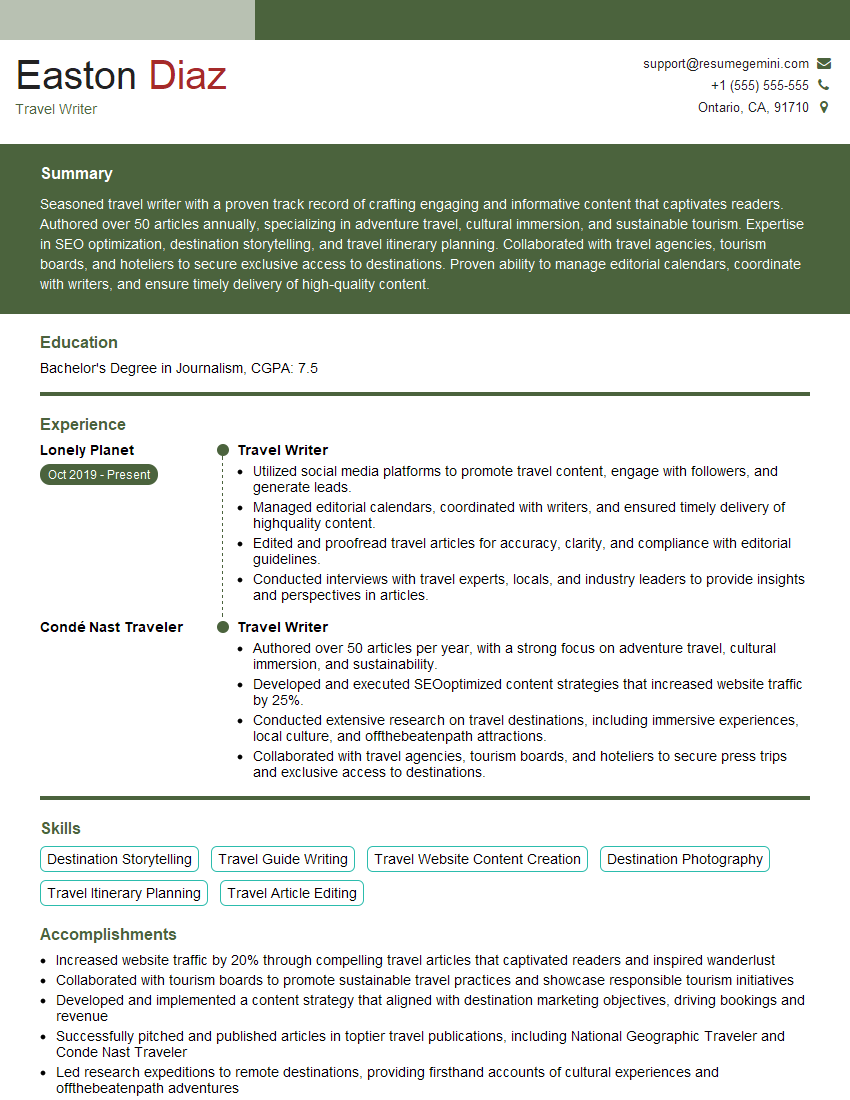
Explore more articles
Users Rating of Our Blogs
Share Your Experience
We value your feedback! Please rate our content and share your thoughts (optional).
What Readers Say About Our Blog
Amazing blog
hello,
Our consultant firm based in the USA and our client are interested in your products.
Could you provide your company brochure and respond from your official email id (if different from the current in use), so i can send you the client’s requirement.
Payment before production.
I await your answer.
Regards,
MrSmith
hello,
Our consultant firm based in the USA and our client are interested in your products.
Could you provide your company brochure and respond from your official email id (if different from the current in use), so i can send you the client’s requirement.
Payment before production.
I await your answer.
Regards,
MrSmith
These apartments are so amazing, posting them online would break the algorithm.
https://bit.ly/Lovely2BedsApartmentHudsonYards
Reach out at BENSON@LONDONFOSTER.COM and let’s get started!
Take a look at this stunning 2-bedroom apartment perfectly situated NYC’s coveted Hudson Yards!
https://bit.ly/Lovely2BedsApartmentHudsonYards
Live Rent Free!
https://bit.ly/LiveRentFREE
Interesting Article, I liked the depth of knowledge you’ve shared.
Helpful, thanks for sharing.
Hi, I represent a social media marketing agency and liked your blog
Hi, I represent an SEO company that specialises in getting you AI citations and higher rankings on Google. I’d like to offer you a 100% free SEO audit for your website. Would you be interested?