The thought of an interview can be nerve-wracking, but the right preparation can make all the difference. Explore this comprehensive guide to Dialog Editing interview questions and gain the confidence you need to showcase your abilities and secure the role.
Questions Asked in Dialog Editing Interview
Q 1. Explain the process of cleaning up dialogue in post-production.
Cleaning up dialogue in post-production is crucial for achieving clear, crisp audio. It’s a multi-step process involving noise reduction, removing unwanted sounds, and enhancing the dialogue’s overall quality. Think of it like editing a rough draft – you need to refine the raw material to make it shine.
Noise Reduction: This involves identifying and attenuating background hums, hisses, or other consistent noises using tools like spectral noise reduction or de-noise plugins. For instance, a constant air conditioning hum can be significantly reduced without affecting the dialogue itself.
Click and Pop Removal: These are transient artifacts often caused by microphone handling or digital glitches. Dedicated tools or manual editing can remove these without impacting the dialogue’s natural flow. Imagine those tiny pops as tiny blemishes on a perfect painting – you want to carefully remove them.
Dialogue Editing: This includes fixing breaths, mouth noises, and other imperfections. Sometimes, minor adjustments might involve shortening or lengthening pauses for better pacing. This stage is where the nuances of the dialogue are addressed.
Leveling and Compression: Adjusting the volume of dialogue to maintain a consistent level throughout the scene improves listenability. Compression reduces dynamic range, preventing loud sections from overpowering quieter ones. Think of this as finding the right balance between the quiet and loud parts of a song, so nothing stands out unnaturally.
Q 2. Describe your experience with Automated Dialogue Replacement (ADR).
Automated Dialogue Replacement (ADR), also known as looping, is a core part of my workflow. I’ve extensively used ADR in various projects, from feature films to documentaries. The process involves re-recording dialogue in a controlled studio environment, often with the original actors, to improve audio quality or replace poorly recorded lines.
My experience encompasses all aspects, from prepping the session – creating a clean audio track, matching the lip sync, preparing the script – to the actual recording and post-production clean-up. For example, in a recent project, we had to replace several lines due to background noise issues during the original shoot. Using ADR, we were able to deliver dialogue with studio-quality clarity, seamlessly integrating it into the final product. I’m proficient in utilizing various techniques to ensure the replaced lines sound natural and maintain consistent character voices.
Q 3. How do you handle noisy background audio when editing dialogue?
Noisy background audio is a common challenge. My approach is multifaceted and depends on the severity and nature of the noise. The goal is to reduce the background noise while preserving the integrity of the dialogue.
Spectral Editing: This allows for precise removal of unwanted frequencies – the noise is usually located in a specific frequency range, thus it can be targeted without impacting the dialogue itself. Imagine carefully removing weeds from a garden without hurting the flowers.
Noise Reduction Plugins: These plugins use algorithms to reduce noise. Careful parameter adjustment is crucial to avoid artifacts or unwanted side effects. Different plugins are suited to various noise types; selecting the appropriate one is key.
Dialogue Isolation Techniques: In some cases, focusing the audio capture on the dialogue using techniques like boom placement or using directional microphones during the initial recording is critical. This makes post-production editing easier.
Sound Replacement/Ambience Creation: In cases where noise is extensive, creating a new clean background using similar sounds can be a more effective solution than trying to remove the original background completely.
Q 4. What software are you proficient in for dialogue editing (Pro Tools, Audition, etc.)?
I am highly proficient in Pro Tools and Adobe Audition. Pro Tools is my go-to for larger, more complex projects due to its powerful features and extensive plugin support. Audition is excellent for quick fixes and smaller projects, especially its spectral editing tools. I’m also familiar with other DAWs, and I can adapt my workflow efficiently across different platforms. My skills extend beyond basic functionality; I can effectively leverage advanced features like automation, MIDI editing, and surround sound mixing when necessary.
Q 5. How do you identify and fix audio artifacts in dialogue tracks?
Identifying and fixing audio artifacts is a crucial part of dialogue editing. It requires a keen ear and familiarity with various audio artifacts and their causes.
Clicks and Pops: These are usually transient and can be addressed with tools like click removal plugins or careful manual editing.
Hums and Buzzes: These are often caused by electrical interference or equipment malfunctions. Spectral editing or noise reduction is often effective.
Distortion: Overly loud signals can cause distortion. This requires careful gain staging and potentially using plugins designed to reduce distortion.
Resampling Issues: This can result in artifacts depending on the resampling algorithms. Correct resampling practices using high-quality algorithms from the beginning are necessary.
My approach involves careful listening and analysis, using a combination of visual and auditory cues to pinpoint the artifacts and apply the most appropriate solution. It’s like a detective work combined with artistic precision.
Q 6. Describe your workflow for syncing dialogue with picture.
Syncing dialogue with picture requires precision and attention to detail. My workflow involves several stages:
Initial Rough Sync: This involves identifying key words or phrases and roughly aligning the audio with the visuals. This can be done manually or with automated tools.
Fine-Tuning: This involves making minute adjustments to align the audio perfectly with the speaker’s mouth movements. Tools like waveform alignment and visual aids are essential. Often subtle adjustments, often measured in milliseconds, are necessary.
Verification: A careful visual and auditory check across the entire scene is necessary to ensure the synchronization is accurate and natural.
Professional tools: I utilize the specialized tools that audio editing software like Pro Tools or Audition provides – specific tools and plug-ins designed for syncing and aligning audio with picture.
A mismatch can be jarring to viewers; precise synchronization is critical for a polished and believable result.
Q 7. How do you manage large audio projects with numerous dialogue tracks?
Managing large audio projects with numerous dialogue tracks requires a structured and organized approach. My strategy involves:
File Organization: Using a clear and consistent naming convention is critical. I often group tracks by scene or character, allowing for easy access and management.
Color Coding: Color-coding tracks according to character, type of audio, or other relevant criteria makes visual identification much easier within the DAW.
Session Management: Regularly saving the project and backing it up is crucial to avoid data loss. Version control or using cloud-based storage adds an extra layer of security.
Submixes and Groups: Creating submixes or groups allows me to manage multiple tracks efficiently. This simplifies the mixing process and makes fine-tuning much more manageable.
Automation and Templates: Whenever possible, utilizing automation tools or creating customizable templates can help streamline repetitive tasks.
Efficient workflow techniques and using the features of the software optimally are key to handle such projects efficiently and preventing errors.
Q 8. What techniques do you use to enhance clarity and intelligibility in dialogue?
Enhancing clarity and intelligibility in dialogue is paramount in post-production. It’s like polishing a gem – the raw material might be good, but the final shine depends on careful work. I employ several techniques, focusing on both the technical and creative aspects.
EQ (Equalization): I carefully adjust the frequency balance to bring out the essential frequencies of the voice and reduce muddiness or harshness. For instance, boosting the frequencies around 2-4kHz can enhance clarity, while cutting excessive bass can reduce muddiness.
Compression: This technique controls the dynamic range, making quieter parts louder and louder parts softer. This leads to a more consistent and easily understood audio level, avoiding sudden jumps in volume. I use gentle compression to maintain the natural feel of the dialogue.
De-essing: Sibilance (hissing ‘s’ sounds) can be distracting. De-essing tools allow me to selectively reduce these harsh frequencies without affecting other parts of the speech.
Dialogue Editing & ADR (Automated Dialogue Replacement): Sometimes, the original recording isn’t perfect. I might need to replace or repair parts of the dialogue with ADR, carefully matching the replacement to the original performance.
Audio Restoration: Removing unwanted background noise and clicks is crucial. This involves using sophisticated noise reduction tools and careful manual cleaning.
Think of it like editing a written script: You wouldn’t leave typos or grammatical errors in the final draft. Similarly, I meticulously refine dialogue in post-production to achieve the best possible result.
Q 9. Explain your understanding of room tone and its importance in dialogue editing.
Room tone is the ambient sound of a location recorded in the absence of other sounds, capturing the background hum or characteristic sounds of a specific environment. It’s incredibly important for creating a believable soundscape and seamlessly integrating dialogue into the scene.
Imagine a conversation taking place in a bustling marketplace versus a quiet library. The room tone reflects this difference. When you introduce dialogue, abrupt silence around the words can feel unnatural and jarring. By subtly mixing in the appropriate room tone, you create a sense of space and continuity. It helps bridge the gaps between dialogue lines, adding depth and realism to the scene and masking any minor edits that might otherwise be noticeable.
When used skillfully, room tone is almost invisible—yet its absence is immediately noticeable.
Q 10. How do you handle dialogue overlap and overlapping sound effects?
Dialogue overlap and overlapping sound effects are common occurrences that require careful handling. The goal is to create a natural-sounding mix where both are audible without muddying the audio. This often involves a creative balancing act.
Dialogue Prioritization: Dialogue typically takes precedence. I’ll lower the volume of overlapping sound effects to ensure that the words remain clear. This may involve automated ducking or manual adjustments.
Frequency Balancing: Using EQ, I might slightly adjust the frequencies of the overlapping elements to minimize clashes. For instance, if a sound effect has a dominant frequency that conflicts with the dialogue, I can slightly attenuate it.
Timing Adjustments: In some instances, minor timing adjustments to either the dialogue or the sound effects can improve clarity. This might involve slightly shortening or lengthening a sound effect or adjusting the timing of a dialogue line to create better separation.
Creative Solutions: Sometimes, the best solution is to subtly alter the sound design to improve compatibility. Perhaps a sound effect needs to be less prominent, or a section of dialogue could be trimmed to avoid a clash.
It’s all about finding that sweet spot where both the dialogue and sound effects work together to create a rich and immersive soundscape without sacrificing intelligibility.
Q 11. What are the common challenges you encounter when editing dialogue?
Dialogue editing presents several challenges. One of the most common is dealing with poor audio quality in the original recording.
Background Noise: This can range from subtle hums to distracting traffic noises. Removing it requires careful application of noise reduction techniques, preserving the natural sound of the voice while eliminating artifacts.
Room Noise: Echoes, reverberation, and other acoustic issues can muddy the clarity of the dialogue. This often necessitates creative use of EQ, compression, and sometimes even de-reverberation plugins.
Dialogue Problems: Issues such as pops, clicks, mouth noises, and inconsistent volume levels can plague recordings. These require painstaking manual cleaning and often necessitate repair using advanced tools.
Synchronization: In multi-camera setups, synchronizing lip movements with the audio can be complex. This requires meticulous attention to detail and often involves specialized lip-sync tools.
Balancing Dialogue with Other Elements: Getting the right balance between dialogue, sound effects, and music is crucial. This involves careful listening and often requires several iterations and refinements.
Overcoming these challenges requires a combination of technical skill, patience, and a good ear.
Q 12. How do you collaborate effectively with other members of the post-production team?
Effective collaboration is crucial in post-production. I regularly interact with sound designers, mixers, and directors to ensure a unified vision. Clear communication is key; I use various methods:
Regular Meetings: We hold regular sessions to discuss progress, address challenges, and share feedback. This helps maintain momentum and prevents misunderstandings.
Version Control: I maintain clear version control for my audio files, making it easy for others to review and comment on my work.
Feedback Incorporation: I actively solicit and incorporate feedback from the team, striving to meet their needs and artistic vision.
Clear Communication: I ensure clear communication of any technical issues or creative limitations that might impact the project. I also provide transparent updates on progress.
Software Collaboration: Many studios utilize collaborative platforms that allow team members to review and comment on projects simultaneously.
Working as a team creates a synergistic environment and leads to a far better final product. It’s less about individual brilliance, and more about a unified vision brought to life.
Q 13. Describe your experience with noise reduction and restoration techniques.
Noise reduction and restoration are essential skills for a dialogue editor. It’s like archaeological excavation – carefully uncovering the underlying treasure while removing debris.
I’m proficient in various techniques:
Spectral Editing: This involves using frequency analysis to identify and remove unwanted noise. It’s like surgically removing unwanted sounds from the audio, often used for hiss, hum, and other consistent noises.
Noise Reduction Plugins: Software like RX (iZotope RX) provides powerful tools for automated and manual noise reduction. These algorithms learn the characteristics of the noise and selectively remove it, reducing unwanted artifacts.
Click and Crackle Removal: These tools identify and repair transient glitches and pops in the audio, restoring the clarity of the signal.
Manual Cleaning: Sometimes, automated tools aren’t enough. Manual cleaning involves using precise editing tools to remove individual glitches or artifacts, painstakingly going through the audio to restore a pristine result.
The goal isn’t to completely eliminate all background sounds, but rather to subtly reduce noise and artifacts to a level where they are imperceptible, allowing the clarity of the dialogue to shine through.
Q 14. Explain your understanding of different audio codecs and their impact on dialogue quality.
Audio codecs determine how audio is compressed and decompressed, affecting the quality of the dialogue significantly.
Lossless Codecs (WAV, AIFF): These codecs preserve all the audio data, resulting in the highest possible quality. They are excellent for archiving and mastering but produce larger files.
Lossy Codecs (MP3, AAC): These codecs discard some audio data during compression to achieve smaller file sizes. This can result in a loss of quality, particularly noticeable in subtle details and dynamic range. Higher bitrates in lossy formats minimize this degradation.
The choice of codec depends on the project requirements. Lossless formats are ideal for the initial stages of post-production, allowing maximum flexibility for editing and processing. Lossy codecs might be used for delivery (streaming or distribution) to achieve smaller file sizes, but care needs to be taken to select a bitrate that minimizes quality loss. In professional settings, higher quality lossy formats like AAC are generally preferred over MP3.
For dialogue, maintaining quality is crucial, therefore it’s beneficial to work with lossless codecs for as long as possible in the production process. Switching to lossy formats should occur only in the final stages of mastering and distribution. The trade-off between file size and quality needs to be carefully assessed.
Q 15. How do you maintain the natural performance of actors while editing their dialogue?
Maintaining a natural performance during dialogue editing is paramount. It’s about preserving the actor’s emotional delivery and subtle nuances, not creating a robotic, perfectly-timed recitation. My approach focuses on a combination of careful selection of takes and subtle adjustments. I always start by listening to all available takes, paying close attention not just to the words, but to the rhythm, pacing, and emotional inflection. I then identify the takes that best capture the scene’s essence. Often, it isn’t a single ‘perfect’ take but rather a combination of multiple takes, pieced together to achieve optimal performance. For example, if an actor’s delivery of one line is slightly off, but the rest of the take is excellent, I might replace that single line with a better rendition from another take, ensuring a seamless transition by matching the surrounding audio’s energy and ambience. This process requires meticulous attention to detail and a deep understanding of acting.
Furthermore, I avoid aggressive manipulation of the audio. Subtle adjustments to timing are preferable to jarring cuts or noticeable manipulations. Tools like audio-to-picture alignment are very helpful but must be applied carefully and sparingly. The goal is to let the actor’s performance shine through, not to impose an unnatural uniformity.
Career Expert Tips:
- Ace those interviews! Prepare effectively by reviewing the Top 50 Most Common Interview Questions on ResumeGemini.
- Navigate your job search with confidence! Explore a wide range of Career Tips on ResumeGemini. Learn about common challenges and recommendations to overcome them.
- Craft the perfect resume! Master the Art of Resume Writing with ResumeGemini’s guide. Showcase your unique qualifications and achievements effectively.
- Don’t miss out on holiday savings! Build your dream resume with ResumeGemini’s ATS optimized templates.
Q 16. What’s your approach to resolving dialogue inconsistencies across multiple takes?
Dialogue inconsistencies across multiple takes are a common challenge. My approach is methodical and starts with thorough listening and note-taking. I meticulously log each take, noting its strengths and weaknesses. This detailed catalog facilitates comparing and contrasting the various takes, aiding in decision making. I pay close attention to word choice, phrasing, and emotional tone. If inconsistencies arise from minor variations (e.g., a slightly different word), I might create a ‘best of’ version by carefully selecting portions from various takes. If inconsistencies stem from more significant differences (e.g., differing emotional states), then I might need to discuss with the director and decide which version best fits the overall narrative direction of the scene.
Sometimes, it’s better to maintain a slight inconsistency if it contributes to the character’s authenticity and believability. Perfect consistency doesn’t always equal a natural performance. The decision-making process is iterative, involving repeated listening and refining until a coherent and natural-sounding dialogue emerges. This often involves trial and error, bouncing between different solutions and evaluating which one feels most appropriate within the scene’s context.
Q 17. How do you ensure consistency in audio levels and EQ across a scene?
Maintaining audio level and EQ consistency across a scene is critical for a professional sound. Inconsistency can drastically impact the viewer’s experience, and is a significant mark of amateur post-production work. My approach incorporates both automated and manual techniques. I typically begin with automated gain control (AGC), utilizing a compressor or limiter to smooth out peaks and valleys in the audio. This establishes a consistent baseline, preventing unwanted volume jumps or dips. However, complete reliance on automation is risky; a human touch remains important. I then carefully adjust the EQ to ensure a balanced sound across different parts of the scene. I typically employ a spectrum analyzer to monitor the audio and identify any frequency imbalances or unwanted artifacts.
Often, subtle changes in the audio environment, like background noises or room tone changes, can lead to differences in sound signature. A consistent room tone is paramount; sometimes I need to blend and match to create a sonic consistency. The key is to achieve a seamless and smooth listening experience without sacrificing the natural sounds of the recording environment.
Q 18. Explain your experience with using reference tracks for dialogue editing.
Reference tracks are invaluable in dialogue editing. They help set the overall tonal quality and consistency. In post-production, I often have a clear reference track that I’m matching to. This could be another scene from the same movie, or even another project with a similar sound design. It assists me in matching the sound design and mixing levels from the dialogue. This improves consistency across the overall project, and even between projects, if the same mix engineer works on many projects.
For example, if I’m editing a historical drama, I might use a reference track from a well-regarded period piece to guide my decisions on EQ, compression, and overall tonal balance. By using a reference track, I can ensure that the final mix adheres to a specific style and aesthetic. It’s a crucial tool for maintaining a high level of professionalism and artistic consistency throughout the production.
Q 19. How do you troubleshoot technical issues that arise during dialogue editing?
Troubleshooting technical issues during dialogue editing requires a systematic approach. I typically start with the most obvious issues, such as dropped frames or sync problems. Visual inspection of waveforms and careful analysis of the timeline are crucial first steps. For sync problems, I often use specialized tools for audio to picture alignment to rectify problems. Dropped frames usually require tracking down the source material to locate and fix the error in the source file.
More complex issues such as audio artifacts or unwanted noise often demand more involved solutions. This could involve identifying the source of the noise (e.g., power hum, microphone hiss) and applying noise reduction techniques using specialized software. When I encounter a persistent problem, I always consult relevant documentation and seek assistance from colleagues if needed. A systematic, methodical approach, combining technical proficiency with collaboration, is key to resolving technical problems efficiently.
Q 20. Describe your process for creating and implementing a dialogue edit.
My dialogue editing process is iterative and involves several key steps. It begins with meticulously logging and organizing all the available takes. Next, I conduct a preliminary selection of takes, choosing those that offer the best performances and audio quality. Then, I create a rough cut of the dialogue, assembling the selected takes to form a basic scene structure. This rough cut is then refined through repeated listening and fine-tuning. During this refinement stage, I pay close attention to timing, rhythm, and transitions. I use audio editing tools to adjust the audio levels, apply EQ, and address any timing issues, aiming for a seamless and natural flow.
Once the rough cut is refined to my satisfaction, it’s crucial to receive feedback from the director, producer, or other stakeholders. This collaboration stage often involves revisions and further adjustments to meet creative needs. This collaborative review and iterative refinement process continues until the final version meets the project’s artistic and technical requirements. It’s a process that emphasizes both technical precision and artistic sensitivity.
Q 21. How do you manage your time effectively to meet deadlines in a fast-paced post-production environment?
Effective time management is essential in the fast-paced world of post-production. I employ several strategies to meet deadlines. Firstly, I prioritize tasks based on urgency and importance, making sure the most critical tasks are completed first. I also break down large tasks into smaller, more manageable chunks. This prevents feeling overwhelmed and allows for more focused work. Detailed planning and outlining of each project are also vital. This allows me to accurately estimate the amount of time each task might take and allocate time appropriately.
Furthermore, I utilize project management tools to track my progress and ensure I stay on schedule. Regular communication with my team is crucial to ensure transparency and to address potential bottlenecks. Effective delegation, when appropriate, helps streamline my workflow. By balancing careful planning with flexible adaptation to unforeseen events, I can consistently deliver high-quality work within tight deadlines.
Q 22. How do you handle constructive feedback on your dialogue edits?
Constructive feedback is crucial for refining dialogue edits. I approach it as an opportunity for growth. My process begins with carefully reading each comment, understanding the critic’s perspective, and identifying the underlying issue. I then evaluate whether the feedback aligns with the project’s overall goals and the intended emotional impact.
For example, if feedback suggests a line feels unnatural, I’ll analyze the rhythm, pacing, and word choice. Does the line lack colloquialisms appropriate for the character? Is the sentence structure too complex? I might experiment with alternative phrasing, adjusting the delivery instructions for the voice actor, or even slightly altering the context leading up to the line. If the feedback involves technical issues like audio levels or clarity, I address those using audio editing software. Finally, I document all changes and revisions, providing a clear explanation of the adjustments made in response to each comment.
Ultimately, my goal isn’t just to fix the identified problems but also to understand *why* they occurred in the first place. This iterative process improves both the final product and my editing techniques for future projects.
Q 23. What is your experience with different audio file formats (WAV, AIFF, etc.)?
I’m proficient in handling various audio file formats commonly used in dialogue editing. WAV (Waveform Audio File Format) is a standard lossless format, ideal for preserving audio quality throughout the editing process. AIFF (Audio Interchange File Format), another lossless format, is often used in professional environments, particularly on macOS systems. I also have experience with other formats like MP3 (though I generally avoid it for dialogue editing due to potential compression artifacts) and Ogg Vorbis, which offers a balance between file size and quality. My familiarity extends to understanding the nuances of each format – their bit depths, sample rates, and compression methods – enabling me to make informed decisions about file handling and conversion based on project requirements.
For instance, when working on a high-fidelity project, I’d always opt for WAV or AIFF to maintain the highest audio fidelity. If a client provides a lower-quality MP3, I would carefully evaluate its suitability and may suggest re-recording if significant degradation is present. I’m also experienced in using software to seamlessly convert between formats when necessary, ensuring compatibility across various platforms and editing workflows.
Q 24. Describe your experience with delivering final dialogue edits for various distribution platforms.
Delivering final dialogue edits for different platforms requires careful consideration of technical specifications and formatting requirements. I have experience delivering audio for broadcast television, streaming services (Netflix, Hulu, etc.), podcasts, and online video platforms (YouTube). This involves understanding and adhering to specific codec requirements, sample rates, bit depths, and channel configurations (stereo, 5.1 surround sound).
For example, a broadcast TV project might require a specific codec and metadata embedding (like captioning information) adhering to industry standards. Streaming platforms often have detailed technical guidelines specifying file formats and encoding parameters to ensure compatibility across a variety of devices. I use professional audio mastering and encoding software to prepare the audio files for each platform, guaranteeing optimal playback quality and compliance with the given specifications. This often entails creating different versions of the same dialogue track optimized for different delivery methods. Proper metadata tagging is critical in facilitating a smooth delivery process and efficient file management.
Q 25. How do you prioritize dialogue edits based on importance and context?
Prioritizing dialogue edits involves a multi-faceted approach that combines technical aspects with creative judgment. I generally prioritize edits based on their impact on the story’s narrative flow, character development, and overall emotional resonance. Issues affecting clarity and intelligibility always take precedence, as these are fundamental to audience comprehension.
My process often involves creating a tiered system:
- Critical Edits: These include fixes for major audio issues (significant noise, significant dialogue dropouts), crucial dialogue clarity problems, or narrative inconsistencies that affect understanding.
- Important Edits: These address issues that impact the overall quality and impact of the dialogue (suboptimal pacing, slightly unnatural delivery, minor audio flaws).
- Minor Edits: These are refinements that enhance the overall polish but aren’t crucial to the narrative’s core (subtle improvements in pacing or intonation).
I document this prioritization clearly and communicate it to the project team to ensure transparency and manage expectations. Using a project management tool like a spreadsheet or dedicated project management software aids in tracking progress and maintaining a clear overview of the prioritized tasks.
Q 26. What is your understanding of audio restoration techniques for damaged dialogue?
Audio restoration for damaged dialogue is a complex process requiring both technical skills and artistic judgment. The approach depends heavily on the nature and extent of the damage. Common techniques include noise reduction, click and pop removal, and spectral repair. I use specialized software like Adobe Audition or iZotope RX to tackle these issues.
For example, if a dialogue track has background hiss, I’d employ noise reduction techniques, carefully balancing noise reduction with preserving the integrity of the dialogue itself. For clicks and pops, I would use specialized tools designed for removing these transient artifacts. More severe damage, like gaps or significant dropouts, might require more advanced techniques such as spectral repair, which attempts to reconstruct missing audio based on surrounding sound, or using AI-based restoration tools. However, it’s important to acknowledge the limitations of restoration – severely damaged audio might still retain some level of artifact even after processing. Transparency about the limits of restoration and setting realistic expectations are crucial.
Q 27. Explain your experience in working with a variety of microphones and recording techniques.
My experience encompasses a wide range of microphones and recording techniques. I understand the characteristics of different microphone types—dynamic, condenser, ribbon—and their suitability for various recording environments and applications. For instance, dynamic mics are robust and handle high sound pressure levels well, making them ideal for loud environments or close-miking situations. Condenser mics provide greater detail and sensitivity, suitable for quieter recordings or capturing subtle nuances in the voice. Ribbon mics offer a unique tonal character and are often used for recording instruments but can also lend a distinctive sound to dialogue.
Recording techniques include understanding microphone placement (e.g., boom placement for film, close-miking for voice-over), the importance of room acoustics (minimizing reflections and reverberations), and handling signal levels to avoid distortion. I’m familiar with various recording setups, from simple setups with a single microphone to more complex multi-microphone arrangements used for capturing dialogue on set. My experience extends to using different preamplifiers and analog-to-digital converters (ADCs) to ensure optimal signal quality and minimize noise. The goal is always to capture clean, clear audio that allows for maximum flexibility during the editing process.
Key Topics to Learn for Dialog Editing Interview
- Substantive Editing: Understanding the nuances of dialogue, including clarity, consistency, and believability. Practical application: Analyzing existing dialogue for inconsistencies in character voice or plot inconsistencies revealed through dialogue.
- Conciseness and Flow: Mastering the art of trimming unnecessary words while maintaining the natural rhythm and flow of conversation. Practical application: Rewriting dialogue to be more impactful and efficient without losing character voice.
- Character Voice and Development: Ensuring each character’s dialogue reflects their unique personality, background, and motivations. Practical application: Identifying and resolving instances where dialogue doesn’t accurately represent a character’s established traits.
- Subtext and Implication: Understanding how unspoken emotions and intentions are conveyed through dialogue. Practical application: Strengthening dialogue by subtly hinting at underlying conflicts or desires.
- Dialogue Structure and Pacing: Creating a compelling narrative through the strategic use of dialogue length, pauses, and interruptions. Practical application: Analyzing pacing in existing scripts and suggesting improvements to create dramatic tension or comedic timing.
- Collaboration and Feedback: Effectively incorporating feedback from writers, directors, and other stakeholders. Practical application: Understanding the process of revision and incorporating constructive criticism.
- Technical Aspects: Understanding formatting conventions, script software, and collaboration tools used in dialogue editing. Practical application: Demonstrating familiarity with industry-standard software and practices.
Next Steps
Mastering dialog editing opens doors to exciting opportunities in film, television, video games, and beyond. A strong command of this skill is highly valued, leading to increased career prospects and higher earning potential. To maximize your chances, crafting an ATS-friendly resume is crucial. ResumeGemini is a trusted resource to help you build a professional and impactful resume that showcases your skills and experience effectively. Examples of resumes tailored to Dialog Editing are available to help you get started.
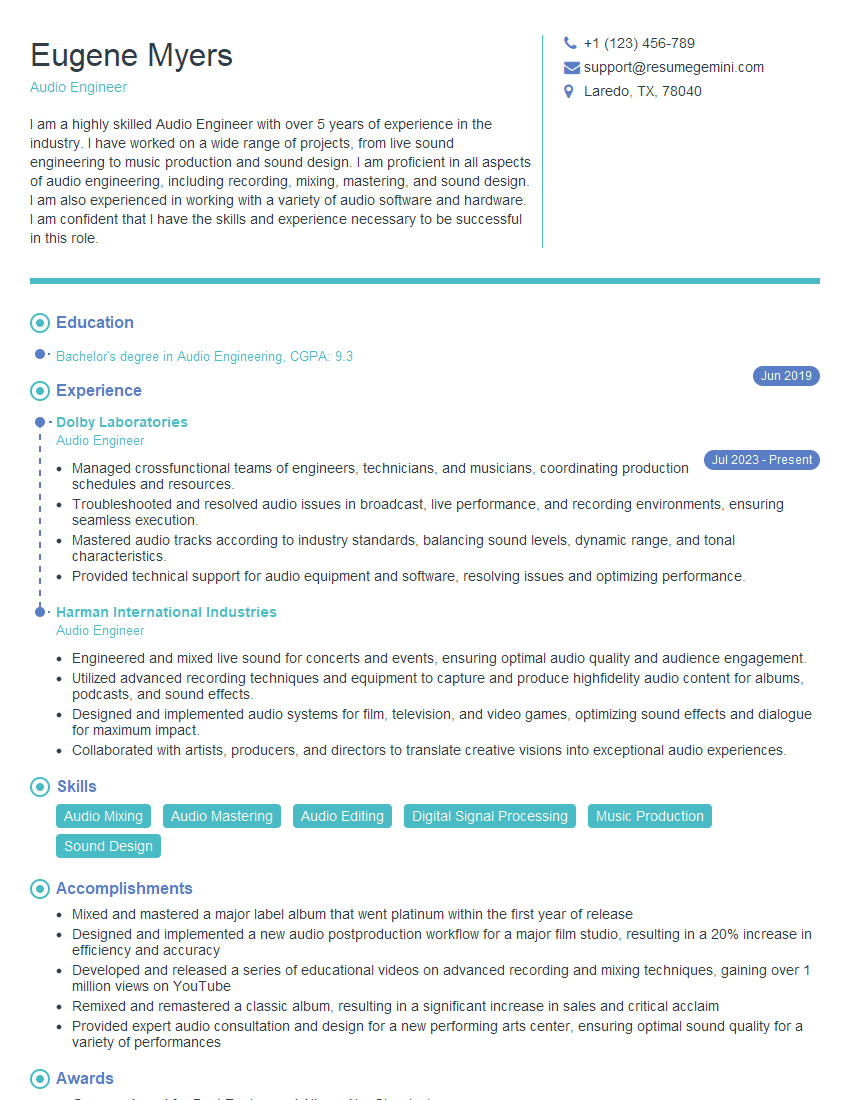
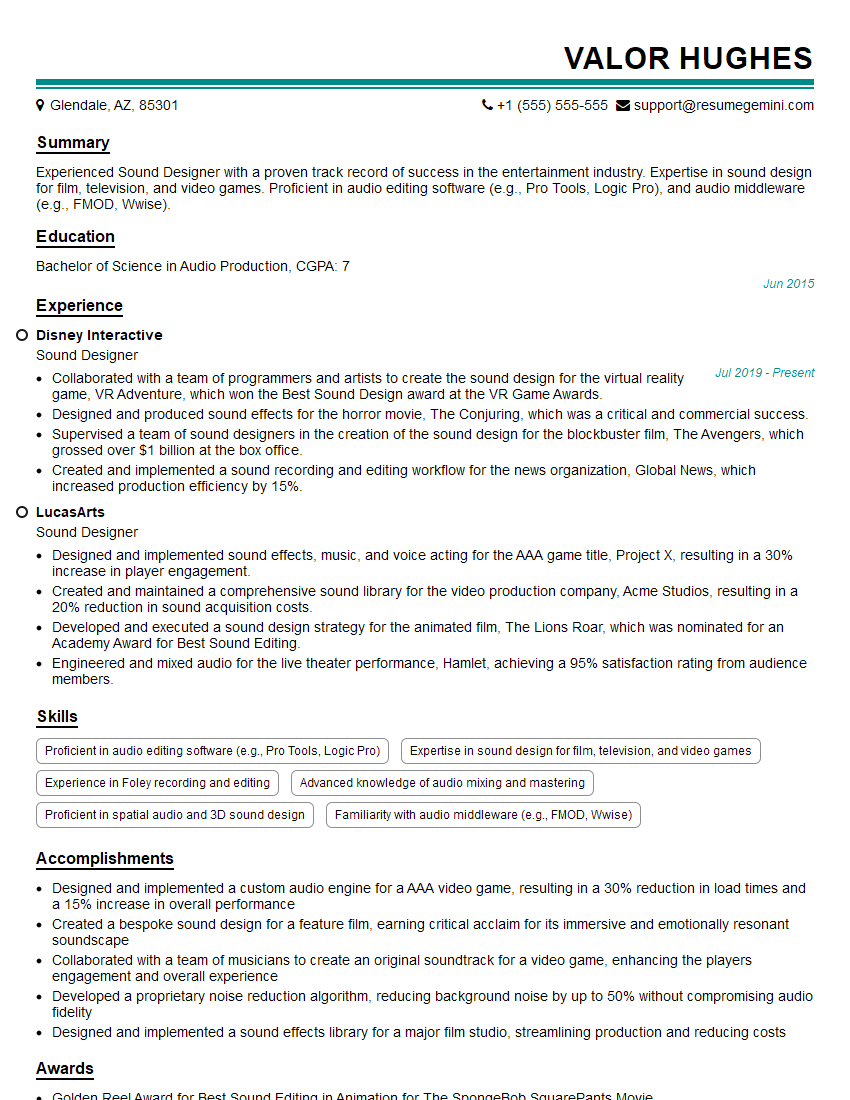
Explore more articles
Users Rating of Our Blogs
Share Your Experience
We value your feedback! Please rate our content and share your thoughts (optional).
What Readers Say About Our Blog
hello,
Our consultant firm based in the USA and our client are interested in your products.
Could you provide your company brochure and respond from your official email id (if different from the current in use), so i can send you the client’s requirement.
Payment before production.
I await your answer.
Regards,
MrSmith
hello,
Our consultant firm based in the USA and our client are interested in your products.
Could you provide your company brochure and respond from your official email id (if different from the current in use), so i can send you the client’s requirement.
Payment before production.
I await your answer.
Regards,
MrSmith
These apartments are so amazing, posting them online would break the algorithm.
https://bit.ly/Lovely2BedsApartmentHudsonYards
Reach out at [email protected] and let’s get started!
Take a look at this stunning 2-bedroom apartment perfectly situated NYC’s coveted Hudson Yards!
https://bit.ly/Lovely2BedsApartmentHudsonYards
Live Rent Free!
https://bit.ly/LiveRentFREE
Interesting Article, I liked the depth of knowledge you’ve shared.
Helpful, thanks for sharing.
Hi, I represent a social media marketing agency and liked your blog
Hi, I represent an SEO company that specialises in getting you AI citations and higher rankings on Google. I’d like to offer you a 100% free SEO audit for your website. Would you be interested?