Unlock your full potential by mastering the most common Diesel Pile Driving Rig Operation interview questions. This blog offers a deep dive into the critical topics, ensuring you’re not only prepared to answer but to excel. With these insights, you’ll approach your interview with clarity and confidence.
Questions Asked in Diesel Pile Driving Rig Operation Interview
Q 1. Describe your experience operating a diesel pile driving rig.
I have over 10 years of experience operating diesel pile driving rigs, working on a wide range of projects, from small residential foundations to large-scale infrastructure developments. My experience encompasses various rig types, including both hydraulic and impact hammers. I’m proficient in all aspects of operation, from pre-job site setup and planning to the actual driving process, and post-job cleanup and maintenance. For instance, on a recent project constructing a bridge, I was responsible for driving over 200 pre-cast concrete piles, meticulously ensuring accurate placement and penetration depths. This involved careful coordination with the engineering team to verify specifications and adjust hammer energy as needed throughout the process.
Q 2. What safety protocols do you follow while operating a diesel pile driving rig?
Safety is paramount in pile driving. My safety protocols begin with a thorough pre-operational inspection of the entire rig, including the hammer, leads, crane, and power systems. I always ensure that all safety equipment, including hard hats, safety glasses, hearing protection, and steel-toe boots are worn by myself and the crew. We maintain a safe working distance from the operation and utilize warning signs and barriers to prevent unauthorized access to the work zone. Before initiating driving, we carefully inspect the pile’s alignment and ensure the ground is stable and free from obstructions. Regular communication with the crane operator and ground crew is crucial to prevent accidents. Furthermore, I meticulously follow all site-specific safety rules and regulations provided by the client or project manager. In the event of any malfunction or safety concern, the operation is immediately halted and corrective actions are taken before resuming.
Q 3. Explain the different types of pile driving hammers and their applications.
There are several types of pile driving hammers, each suited to different applications.
- Diesel Hammers: These are the most common type, utilizing the energy of repeated diesel fuel explosions to drive the pile. They are versatile and relatively cost-effective but can be noisy and produce significant vibration.
- Hydraulic Hammers: These use hydraulic power to generate impact energy. They offer more precise control over impact force, making them suitable for delicate operations or where vibration needs to be minimized. They are generally quieter and produce less vibration than diesel hammers.
- Vibratory Hammers: These hammers use vibration to drive piles into the ground, making them suitable for soft soils. They are quieter and cause less ground vibration than impact hammers but are less effective in hard soils.
- Drop Hammers: These are simpler, gravity-powered hammers where a heavy weight is dropped repeatedly onto the pile. They are often used for smaller projects or when power sources are limited but are less efficient than other types.
The choice of hammer depends on factors like soil conditions, pile type, allowable noise levels, and the project budget. For instance, in a dense clay soil, a diesel hammer with high energy would be suitable, while in a sensitive urban environment, a hydraulic hammer with vibration control might be preferable.
Q 4. How do you determine the appropriate hammer energy for a specific piling job?
Determining the appropriate hammer energy involves several steps. Firstly, the engineering design documents specify the required pile penetration depth and allowable set (the amount of pile displacement per hammer blow). This information is crucial for selecting the correct hammer. Secondly, soil conditions, obtained through geotechnical investigations (e.g., soil borings, cone penetration tests), play a critical role. Hard soils require higher hammer energies than soft soils. Software programs and empirical formulas can help estimate the required hammer energy based on soil parameters and pile characteristics. Throughout the pile driving operation, I monitor the set and adjust the hammer energy as needed to maintain efficiency and prevent damage to the pile or surrounding structures. I may need to reduce hammer energy if the set is consistently small (indicating a very hard soil stratum) or increase it if the set is unexpectedly large.
Q 5. What are the signs of a malfunctioning diesel pile driving rig?
Several signs indicate a malfunctioning diesel pile driving rig. Unusual noises such as loud bangs or grinding sounds are warning signs. Reduced hammer impact energy, evidenced by significantly decreased pile penetration rate or increased set, suggests a problem with the hammer’s hydraulic or mechanical systems. Leaks in the hydraulic system, fuel leaks, or issues with the diesel engine (poor starting, unusual smoke, overheating) indicate potential mechanical failures. Problems with the crane, such as load instability or sluggish operation, also impact safety and pile driving efficiency. In all these cases, I immediately halt the operation, perform a thorough inspection, and if necessary, contact qualified maintenance personnel.
Q 6. How do you perform routine maintenance on a diesel pile driving rig?
Routine maintenance is vital for preventing malfunctions and ensuring the rig’s longevity. This includes daily checks of oil and fuel levels, coolant levels, and hydraulic fluid levels. I regularly inspect all moving parts for wear and tear and lubricate them as needed. I check the hammer for any signs of damage or wear to the ram, anvil, or other components. Filters for both the diesel engine and hydraulic system are changed at the recommended intervals. Regular cleaning of the rig, particularly removing accumulated debris and dirt, prevents corrosion and ensures smooth operation. More extensive servicing, involving detailed inspections and potential component replacements, is conducted periodically according to the manufacturer’s recommendations or as needed. This helps maintain safety and ensure that the equipment is functioning at peak efficiency.
Q 7. Describe your experience with different types of piles (e.g., timber, steel, concrete).
My experience encompasses working with various pile types:
- Timber Piles: These are relatively inexpensive and easy to handle but are susceptible to decay and insect damage, limiting their lifespan and applicability to specific soil conditions. I’ve used them on smaller projects where their cost-effectiveness is advantageous.
- Steel Piles: Steel piles offer high strength and durability. They are commonly used in challenging soil conditions and are suitable for heavy loads. I have significant experience driving steel H-piles and pipe piles in various applications, including bridge construction and retaining walls. These often require precise positioning and careful monitoring during driving.
- Concrete Piles: Precast concrete piles are widely used and offer good strength and durability. I have extensively driven both cast-in-place and precast concrete piles, often coordinating with the concrete supplier and ensuring proper curing times prior to driving.
The selection of pile type depends on factors like project requirements, soil conditions, load capacity, and cost considerations. Each pile type has its own handling and driving characteristics, requiring adjustments to the rig’s setup and operational procedures.
Q 8. Explain the process of setting up and leveling a diesel pile driving rig.
Setting up and leveling a diesel pile driving rig is crucial for safe and efficient operation. It’s like building a stable foundation for a house – if the base isn’t right, the whole structure is at risk. The process involves several key steps:
- Site Preparation: This involves clearing the area of obstructions and ensuring sufficient space for the rig’s footprint and swing radius. We also need to check the ground for any potential hazards, like underground utilities or unstable soil.
- Rig Placement: The rig is carefully positioned using a crane or heavy-duty equipment, ensuring it’s aligned with the planned pile locations. Precise positioning minimizes the need for corrections later on.
- Leveling: We use adjustable outriggers or support legs to level the rig. This is critical; an uneven rig can lead to inaccurate pile driving and potential damage to equipment. We typically employ levels or laser levels to achieve precise leveling, often within a tolerance of a few millimeters.
- Ground Consolidation (If Necessary): For soft or unstable ground, we might need to use ground improvement techniques such as grouting or compaction to create a stable base for the rig.
- Final Checks: Before starting the pile driving, we conduct a thorough inspection of all components, including the hydraulic system, the hammer, and the leads, ensuring everything is in optimal working order.
For example, on a recent project in a coastal area with sandy soil, we had to use extra-long outriggers and carefully compact the ground to provide adequate support for the rig during high-tide conditions.
Q 9. How do you ensure the stability of the rig during operation?
Rig stability is paramount to prevent accidents and ensure accurate pile driving. We employ several strategies:
- Proper Leveling: As mentioned earlier, accurate leveling is fundamental. A level rig distributes the weight evenly, minimizing the risk of tipping or settling.
- Outrigger Deployment: Outriggers provide additional support and distribute the weight of the rig over a larger area. Their proper extension and secure locking mechanisms are verified repeatedly throughout the operation.
- Ground Conditions Assessment: A thorough geotechnical investigation beforehand helps identify potential stability issues and allows for appropriate mitigation strategies, such as ground improvement or alternative rig configurations.
- Weight Distribution: Carefully controlling the weight distribution within the rig helps maintain balance. Heavy components are strategically placed to counterbalance forces during operation.
- Regular Inspections: We perform frequent checks on the rig’s stability throughout the operation, looking for signs of settling or movement. This often involves visual inspection and sometimes also includes the use of levelling instruments.
Think of it like balancing a seesaw – if the weight isn’t distributed equally, it will tilt. The same principle applies to the rig; careful weight distribution and support are essential for stability.
Q 10. What are the common causes of pile driving delays and how do you mitigate them?
Delays in pile driving are frustrating but often unavoidable. Common causes include:
- Unexpected Ground Conditions: Encountering harder-than-expected strata or unforeseen obstructions (e.g., boulders, utilities) can significantly impact progress. We mitigate this through thorough geotechnical investigations before commencement.
- Equipment Malfunctions: Hydraulic failures, hammer malfunctions, or issues with the leads can halt operations. Regular maintenance and proactive inspections minimize this risk.
- Weather Conditions: Extreme weather (high winds, heavy rain) can make operation unsafe or impossible. We plan work around weather forecasts and implement contingency plans.
- Material Delays: Delays in the delivery of piles or other essential materials can bring the project to a standstill. Careful project planning and strong relationships with suppliers help prevent this.
- Site Access Issues: Limited access to the site or difficulties in transporting equipment can cause delays. We need to meticulously plan logistics and transportation beforehand.
Mitigation involves proactive planning, contingency planning (having backup equipment or alternative methods ready), regular maintenance, and effective communication among the team.
Q 11. How do you handle unexpected equipment failures during operation?
Unexpected equipment failures are always a possibility. Our response depends on the severity of the failure:
- Minor Issues: For minor problems, such as a leak in a hydraulic line, we have readily available spare parts and our experienced mechanics can perform on-site repairs.
- Major Issues: For major failures, such as a broken hammer or a significant hydraulic system malfunction, we have emergency procedures in place. This involves contacting our support network for assistance, potentially using a backup rig if feasible, and thoroughly documenting the failure and repair process.
- Safety First: In all cases, safety is paramount. We immediately stop operations if a failure poses a safety risk. The damaged equipment is secured, and the site is assessed for any potential hazards before any work resumes.
- Root Cause Analysis: After a failure, we conduct a thorough root cause analysis to understand why it happened and implement preventative measures to reduce the likelihood of recurrence.
For example, once we experienced a hydraulic pump failure. We immediately secured the rig, contacted our supplier for a replacement pump, and temporarily suspended operations. While waiting, we used the opportunity to conduct a scheduled maintenance check on other equipment.
Q 12. Describe your experience with different soil conditions and their impact on pile driving.
Soil conditions significantly impact pile driving. Different soils require different techniques and equipment:
- Dense Soil (e.g., clay, rock): Requires heavier hammers and more powerful rigs to drive piles effectively. We may need specialized hammers like vibratory hammers or hydraulic breakers.
- Loose Soil (e.g., sand, silt): Can lead to pile instability or settlement. We might use techniques like jetting or casing to improve the stability and ensure sufficient pile embedment.
- Cohesive Soil (e.g., clay): Can exhibit high adhesion, requiring specialized extraction methods. The soil’s shear strength is carefully assessed to determine the appropriate pile driving technique.
- Heterogeneous Soil: Layers of different soil types require adjustments to the driving parameters, and sometimes different piling methods altogether. Detailed geotechnical reports are crucial.
I’ve personally worked on projects with a wide range of soil conditions, from very dense clay in mountainous regions requiring heavy-duty equipment to loose sand near coastlines, which necessitated specialized casing techniques to prevent pile collapse. Adaptability and knowledge of different soil behaviors are key.
Q 13. Explain the importance of proper ground preparation before pile driving.
Proper ground preparation is crucial for a successful pile driving operation and significantly affects safety and efficiency. It’s like preparing a canvas before painting – a smooth, level surface ensures a better outcome. Preparation steps include:
- Site Clearing: Removing any vegetation, debris, or other obstructions from the pile driving area prevents interference with the operation.
- Leveling: Creating a level surface ensures the rig’s stability and accurate pile installation. This may involve excavation or filling.
- Ground Improvement: For weak or unstable soil, techniques such as compaction, grouting, or soil stabilization may be necessary to enhance bearing capacity and prevent settlement.
- Utility Location: Identifying and marking the location of underground utilities prevents accidental damage during pile installation. This often requires pre-construction surveys.
- Access Roads: Ensuring adequate access roads for heavy equipment is vital for smooth transportation of materials and equipment to the work site.
Neglecting ground preparation can lead to delays, costly repairs, and even safety incidents. A properly prepared site lays the groundwork for a smooth and efficient pile driving operation.
Q 14. How do you interpret pile driving logs and reports?
Pile driving logs and reports provide critical information about the driving process and the pile’s integrity. They help us assess the success of the operation and identify potential problems. Interpreting them involves understanding:
- Blow Count: The number of hammer blows required to drive the pile a certain distance. An unusually high blow count may indicate a hard stratum or pile damage.
- Set: The amount of pile penetration per blow. Decreasing set usually means the pile is encountering increased resistance.
- Refusal: When the pile stops moving despite continued hammering. It might indicate the pile has reached a suitable bearing stratum or encountered an impenetrable obstruction.
- Hammer Energy: The energy delivered by the hammer with each blow. This information is essential for calculating pile capacity and ensuring the driving is done correctly.
- Pile Integrity Checks: Data from pile integrity testing such as dynamic or static load tests that verify pile installation and bearing capacity.
We use this data to analyze the pile’s performance, assess its bearing capacity, and make necessary adjustments to the driving parameters if needed. It also serves as crucial documentation for project completion and future reference.
For example, a consistently increasing blow count during driving might signal that we need to adjust the driving parameters, change the type of hammer, or reassess the pile’s design. The log helps us understand and address these potential issues before they escalate.
Q 15. Describe your experience working with different types of pile driving rigs (e.g., leader rigs, vibratory hammers).
My experience encompasses a wide range of diesel pile driving rigs. I’ve extensively worked with leader rigs, which are highly versatile and suitable for a variety of pile types and ground conditions. These rigs offer excellent control and are particularly useful in confined spaces. I’m also proficient with vibratory hammers, which are ideal for driving sheet piles and other types of piles in specific soil conditions where minimizing ground vibrations is crucial. For instance, in a recent project near a historic building, we utilized a vibratory hammer to avoid causing damage to the structure. Furthermore, I have experience with hydraulic hammer rigs, offering a powerful and controlled impact for diverse pile installations. Each rig type has its strengths and weaknesses; selection depends heavily on project specifics including soil conditions, pile type, and proximity to sensitive structures.
- Leader Rigs: Excellent control, versatile for different pile types.
- Vibratory Hammers: Minimizes ground vibrations, ideal for sheet piling.
- Hydraulic Hammer Rigs: Powerful impact, suitable for various pile types.
Career Expert Tips:
- Ace those interviews! Prepare effectively by reviewing the Top 50 Most Common Interview Questions on ResumeGemini.
- Navigate your job search with confidence! Explore a wide range of Career Tips on ResumeGemini. Learn about common challenges and recommendations to overcome them.
- Craft the perfect resume! Master the Art of Resume Writing with ResumeGemini’s guide. Showcase your unique qualifications and achievements effectively.
- Don’t miss out on holiday savings! Build your dream resume with ResumeGemini’s ATS optimized templates.
Q 16. What is your experience with different driving techniques (e.g., impact, vibratory, jetting)?
My expertise extends to various pile driving techniques. Impact driving, using a diesel hammer, is the most common method, providing high impact force for driving piles into the ground. However, I understand its limitations, especially in sensitive environments or when driving long piles. Vibratory driving is a quieter and gentler alternative, effective for sheet piling and in areas where vibration control is paramount, as mentioned previously. Jetting, on the other hand, uses high-pressure water jets to loosen the soil, facilitating easier pile penetration. I choose the appropriate technique based on the project requirements and soil conditions. For instance, if we’re working near an existing structure, vibratory or jetting might be preferable to minimize vibrations. Conversely, denser soils might necessitate the higher impact force of a diesel hammer.
- Impact Driving: High impact force, common method.
- Vibratory Driving: Quieter, gentler, ideal for sensitive environments.
- Jetting: Uses water jets to loosen soil, facilitating easier pile penetration.
Q 17. How do you ensure the accuracy of pile placement?
Ensuring accurate pile placement is critical. We use a combination of methods. Precise pre-construction surveys and site planning form the foundation. This includes establishing a detailed grid system and using GPS or total station equipment for precise location marking. During the driving process, we continuously monitor the pile’s position using laser levels and plumb bobs. Real-time adjustments can be made to the rig’s position to maintain the desired location. Finally, post-installation surveys verify the final pile coordinates, ensuring they meet the specified tolerances. Any deviations are documented and reported. Think of it like building a house—a strong foundation needs accurate placement of every support beam, and this is what we aim for with our piles.
Q 18. What are your experience with different types of pile caps and their installation?
I have experience with various pile caps, including precast concrete, steel, and cast-in-situ concrete caps. The selection depends on factors like load requirements, budget, and construction schedule. Precast concrete caps are often chosen for their speed of installation and pre-fabricated quality control. Steel caps are suitable for high-load applications. Cast-in-situ concrete caps offer greater design flexibility. Installation varies depending on the type; precast caps are simply lifted into place and secured, while cast-in-situ caps require formwork, reinforcement, and concrete pouring. Each type demands specific handling and safety precautions to ensure structural integrity.
Q 19. Explain the process of dismantling and securing a diesel pile driving rig after completion.
Dismantling and securing a diesel pile driving rig is a crucial safety-critical process. We follow a strict step-by-step procedure. First, the rig is thoroughly cleaned and inspected for any damage. Then, components like the hammer, leads, and other attachments are systematically disassembled and carefully stored. Fuel lines are drained and capped to prevent leaks and spills. The rig’s base is secured to prevent movement during transportation. Finally, all loose parts are secured and the rig is transported to a designated storage area. Safety measures, including the use of appropriate lifting equipment and personal protective equipment (PPE), are strictly adhered to throughout the entire process.
Q 20. How do you maintain accurate records of daily operation and maintenance?
Accurate record-keeping is essential for efficiency and accountability. We maintain detailed daily logs that include information such as the number of piles driven, the type of pile, the driving method, fuel consumption, maintenance performed, and any incidents or challenges encountered. We utilize both digital and physical logs. Digital records are stored securely and backed up regularly. This data allows for accurate project costing, trend analysis for maintenance planning, and serves as a valuable resource for future projects. For example, tracking fuel consumption helps us identify areas where efficiency could be improved.
Q 21. How do you calculate fuel consumption and optimize efficiency?
Fuel consumption is closely monitored and optimized. We track fuel levels at the start and end of each shift and use this data, along with the number of piles driven, to calculate fuel efficiency. Regular maintenance, ensuring the rig is operating at peak performance, is key to reducing fuel consumption. Optimizing driving techniques, using the appropriate hammer energy for the specific pile and soil conditions, minimizes wasted fuel. Moreover, operator training plays a significant role in promoting efficient operation. We also consider factors such as weather and terrain when analyzing fuel usage. For example, driving piles in harder soil might require more fuel than driving piles in softer soil.
Q 22. What are the environmental considerations during pile driving operations?
Environmental considerations in pile driving are paramount. We must minimize noise pollution, which can impact wildlife and nearby communities. This often involves using noise mitigation techniques like silencers on hammers or strategically scheduling work during less sensitive times.
Another major concern is vibration. Excessive ground vibrations can damage nearby structures, so we carefully monitor vibration levels using specialized equipment and adjust driving parameters as needed. This might include using different hammer types or employing techniques like pre-drilling or impact reduction systems.
Protecting water resources is critical. We implement measures to prevent soil erosion and runoff contamination during the operation, often involving sediment control barriers and careful management of drilling fluids. We also ensure proper disposal of any waste materials generated during the process, adhering to all relevant environmental regulations.
Finally, we aim to minimize the impact on local flora and fauna. This may involve conducting pre-construction surveys to identify sensitive habitats, and planning our work to avoid causing unnecessary disruption to the ecosystem.
Q 23. Describe your experience with different types of foundation systems.
My experience spans a wide range of foundation systems. I’ve worked extensively with driven piles, including timber, steel H-piles, and precast concrete piles. The choice of pile type often depends on factors such as soil conditions, load capacity requirements, and project budget. For example, steel H-piles are ideal for projects with high load-bearing requirements, while timber piles might be preferable in certain soil types and when cost-effectiveness is prioritized.
I’ve also been involved in projects utilizing bored piles and caissons, which are particularly suitable for unstable soils or when large-diameter foundations are needed. These are significantly different from driven piles as they’re installed by drilling a hole and then placing reinforced concrete into it. The selection of the best foundation system often requires soil investigation and careful design considerations.
My experience also includes working with mini-piles, which are often used for smaller projects or in situations where access is limited. Each method has its own unique challenges and advantages, and my expertise extends to selecting and implementing the most efficient and safe method for each project.
Q 24. What safety measures do you employ to prevent accidents involving the rig?
Safety is always my top priority. Before starting any operation, I conduct a thorough pre-start inspection of the entire rig, checking all components, including the hammer, leads, crane, and safety systems. We also perform daily inspections to identify potential hazards early on.
We utilize personal protective equipment (PPE) rigorously, including safety helmets, safety glasses, high-visibility clothing, and hearing protection. Clear exclusion zones are established around the rig, and warning signs and signals are prominently displayed to keep unauthorized personnel away.
Regular training is crucial, ensuring all crew members are well-versed in safe operating procedures, emergency response protocols, and the proper use of PPE. We use a permit-to-work system for high-risk activities, ensuring every step of the process is carefully reviewed and approved before proceeding. I regularly communicate safety concerns and implement corrective actions promptly to prevent accidents.
Q 25. How do you communicate effectively with other crew members and supervisors?
Effective communication is essential for a safe and efficient operation. I utilize clear and concise language, ensuring all instructions and updates are understood by every crew member. We use both verbal communication and hand signals for critical tasks and situations where noise makes verbal communication challenging.
I maintain open communication with supervisors, providing regular progress reports and promptly addressing any challenges or concerns that arise. We use pre-job briefings to go over plans, safety protocols, and tasks for the day, and post-job debriefings to review what went well and identify areas for improvement. I strive to foster a collaborative environment where everyone feels comfortable raising concerns and sharing feedback.
In addition to face-to-face communication, we sometimes use radio communication, especially on larger projects with multiple work areas, to coordinate activities and ensure effective communication.
Q 26. Describe a time you had to troubleshoot a complex problem with the pile driving rig.
During one project, we experienced a significant delay due to a malfunction in the hydraulic system of the pile driving rig. The hammer wouldn’t operate correctly, and initial troubleshooting attempts didn’t resolve the issue. The problem wasn’t immediately obvious; it wasn’t a simple leak or broken part.
My approach was systematic. First, we systematically checked each component of the hydraulic system, from the pump to the valves and cylinders. We used pressure gauges to pinpoint where the pressure was dropping. After ruling out some potential causes, we carefully inspected the hydraulic lines for any subtle blockages. We discovered a tiny piece of debris lodged inside a crucial valve, restricting the flow of hydraulic fluid.
Once the obstruction was identified and removed, the system started functioning normally. This situation highlighted the value of careful system knowledge, methodical troubleshooting, and the importance of a thorough understanding of hydraulic systems. The quick resolution saved significant time and resources on the project.
Q 27. How do you ensure compliance with all relevant safety regulations and standards?
Compliance with safety regulations is non-negotiable. We strictly adhere to all relevant OSHA (Occupational Safety and Health Administration) standards and any other local or regional regulations that apply to pile driving operations. We maintain detailed records of inspections, maintenance, and training, ensuring all documentation is up-to-date and readily available for audits.
Our operation employs a robust safety management system (SMS). This includes regular safety meetings, incident reporting procedures, and a commitment to continuous improvement. We conduct thorough risk assessments for every project, identifying potential hazards and implementing appropriate control measures. This might involve using specialized equipment, altering work procedures, or providing additional training to reduce risks.
We stay informed about changes in regulations and best practices through continuous professional development and industry publications. We actively participate in safety training programs and stay current with updated guidelines to ensure we are always operating safely and within the framework of all legal requirements.
Q 28. What are your career goals related to pile driving operations?
My career goals revolve around continuing to improve my expertise in diesel pile driving rig operations and safety. I aspire to become a leading expert in the field, sharing my knowledge and contributing to a safer and more efficient work environment. This could involve taking on more supervisory roles, mentoring newer operators, and actively participating in the development of industry best practices.
I’m also interested in exploring opportunities related to the integration of new technologies in pile driving, such as advanced monitoring systems and automation techniques. I believe these can significantly enhance safety and efficiency, and I’m keen to contribute to these advancements. Ultimately, I aim to make a substantial contribution to the industry, promoting safety, productivity, and sustainability.
Key Topics to Learn for Diesel Pile Driving Rig Operation Interview
- Rig Components and Systems: Understanding the function and maintenance of all major components, including the engine, hydraulic system, hammer, lead system, and derrick. This includes preventative maintenance schedules and troubleshooting common issues.
- Pile Driving Techniques: Mastering various driving methods (e.g., impact, vibratory), understanding their applications, and recognizing when to choose one over another based on soil conditions and project requirements. This includes knowledge of different pile types and their suitability for various applications.
- Safety Procedures and Regulations: Demonstrating a thorough understanding of OSHA regulations and best practices for safe operation, including pre-operational checks, fall protection, and emergency procedures. This also encompasses proper communication and teamwork on the job site.
- Data Interpretation and Record Keeping: Knowing how to interpret data from the rig, including readings from sensors and gauges, accurately recording operational data, and understanding how this information contributes to project efficiency and safety.
- Troubleshooting and Problem Solving: Experience with diagnosing and resolving mechanical and operational problems that may arise during operation. Being able to describe your approach to troubleshooting, emphasizing systematic diagnosis and practical solutions.
- Project Planning and Execution: Understanding the role of the pile driving rig within a larger construction project, including the importance of adhering to schedules and working collaboratively with other trades. This includes pre-planning for efficient and effective operation.
Next Steps
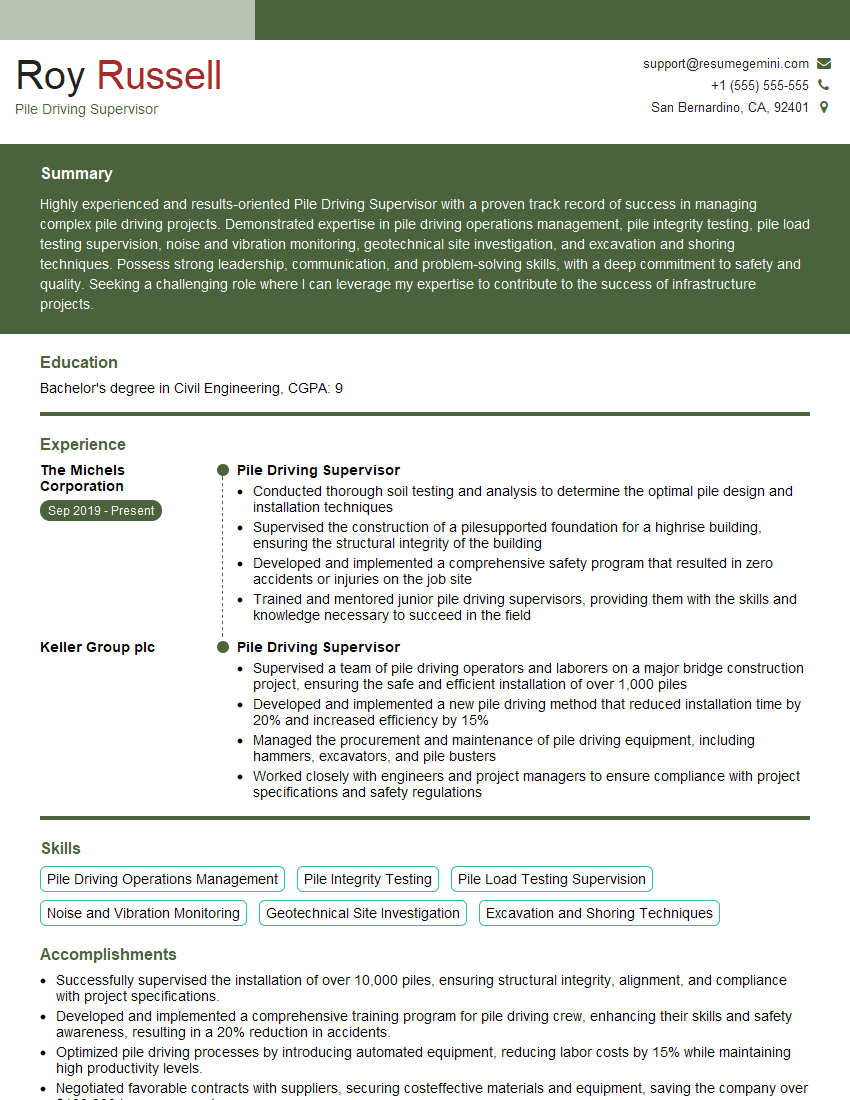
Mastering Diesel Pile Driving Rig Operation opens doors to a rewarding career with excellent earning potential and opportunities for advancement within the construction industry. Your expertise in this specialized field is highly valuable, and showcasing your skills effectively is key to securing your dream job. Creating a strong, ATS-friendly resume is crucial for getting noticed by potential employers. ResumeGemini is a trusted resource to help you build a professional and impactful resume that highlights your abilities and experience.
ResumeGemini offers examples of resumes tailored to Diesel Pile Driving Rig Operation, providing valuable guidance and templates to help you create a document that truly represents your qualifications. Take the next step in your career journey and leverage the power of a well-crafted resume to land your ideal position.
Explore more articles
Users Rating of Our Blogs
Share Your Experience
We value your feedback! Please rate our content and share your thoughts (optional).
What Readers Say About Our Blog
Amazing blog
hello,
Our consultant firm based in the USA and our client are interested in your products.
Could you provide your company brochure and respond from your official email id (if different from the current in use), so i can send you the client’s requirement.
Payment before production.
I await your answer.
Regards,
MrSmith
hello,
Our consultant firm based in the USA and our client are interested in your products.
Could you provide your company brochure and respond from your official email id (if different from the current in use), so i can send you the client’s requirement.
Payment before production.
I await your answer.
Regards,
MrSmith
These apartments are so amazing, posting them online would break the algorithm.
https://bit.ly/Lovely2BedsApartmentHudsonYards
Reach out at BENSON@LONDONFOSTER.COM and let’s get started!
Take a look at this stunning 2-bedroom apartment perfectly situated NYC’s coveted Hudson Yards!
https://bit.ly/Lovely2BedsApartmentHudsonYards
Live Rent Free!
https://bit.ly/LiveRentFREE
Interesting Article, I liked the depth of knowledge you’ve shared.
Helpful, thanks for sharing.
Hi, I represent a social media marketing agency and liked your blog
Hi, I represent an SEO company that specialises in getting you AI citations and higher rankings on Google. I’d like to offer you a 100% free SEO audit for your website. Would you be interested?