The thought of an interview can be nerve-wracking, but the right preparation can make all the difference. Explore this comprehensive guide to Digital Content Editing interview questions and gain the confidence you need to showcase your abilities and secure the role.
Questions Asked in Digital Content Editing Interview
Q 1. Explain your experience with content management systems (CMS) like WordPress.
My experience with Content Management Systems (CMS), particularly WordPress, is extensive. I’ve worked with WordPress for over seven years, building and managing websites for various clients across diverse industries. This encompasses everything from basic theme customization and plugin integration to advanced development using custom post types and shortcodes. I’m proficient in utilizing WordPress’s built-in editor, Gutenberg, as well as other page builders like Elementor and Beaver Builder, enabling me to create visually appealing and functional websites.
For instance, I recently migrated a client’s outdated website from a legacy CMS to WordPress, significantly improving their SEO and user experience. This involved not only migrating the content but also optimizing it for search engines and ensuring all functionalities were preserved. I’m comfortable managing user roles, permissions, and maintaining site security within the WordPress ecosystem.
Beyond basic website management, I have experience working with multisite installations, allowing me to manage multiple websites from a single dashboard. My understanding extends to optimizing WordPress for speed and performance, using techniques such as caching and image optimization to enhance user experience.
Q 2. Describe your process for editing and proofreading digital content.
My editing and proofreading process is meticulous and multi-stage. It begins with a thorough first read, focusing on comprehension and identifying any significant structural issues, logical inconsistencies, or factual inaccuracies. Then, I proceed to a more detailed edit, concentrating on grammar, punctuation, style, and clarity. This step involves checking for consistent tense, voice, and tone throughout the content.
The third stage is proofreading, a careful line-by-line review focusing on catching any remaining errors in spelling, grammar, and punctuation. I often use a combination of manual proofing and grammar/style checking tools to ensure thoroughness. Finally, a final read ensures everything flows smoothly and meets the client’s requirements. I believe in creating a clean, error-free final product that is both engaging and easy to understand.
For example, if I’m editing a long-form article, I might break it into smaller sections, editing each piece independently before combining them for a final review. This prevents errors from being overlooked during the editing process. I always maintain a detailed record of changes and provide clear explanations for any edits made.
Q 3. How do you ensure content is consistent with brand voice and style guidelines?
Maintaining brand consistency is crucial for a cohesive brand image. Before starting any project, I thoroughly review the brand’s style guide, paying close attention to voice, tone, terminology, and formatting guidelines. I use this guide as a reference throughout the editing process, ensuring the content reflects the brand’s personality and target audience.
For example, if a brand’s voice is formal and authoritative, I ensure the language used is sophisticated and avoids colloquialisms. Conversely, a brand with a playful and informal voice would be reflected in the style of writing. I’m adept at adapting my editing style to match diverse brand guidelines, ensuring every piece of content remains on brand.
In cases where a style guide is not explicitly defined, I work closely with the client to develop a clear understanding of their brand’s identity and translate that into a consistent editorial style. This collaborative approach ensures the final product perfectly aligns with the brand’s vision.
Q 4. What strategies do you use to optimize content for SEO?
Optimizing content for SEO involves strategically integrating relevant keywords, improving readability, and building high-quality backlinks. My SEO optimization strategies include keyword research using tools like SEMrush or Ahrefs to identify relevant terms with high search volume and low competition. I then incorporate these keywords naturally throughout the content, avoiding keyword stuffing which can negatively impact SEO.
Further strategies involve optimizing metadata (title tags, meta descriptions), ensuring the content is well-structured with clear headings and subheadings (H1-H6 tags), and using internal and external links to improve website navigation and authority. I prioritize creating high-quality, engaging content that satisfies user intent, which is crucial for higher search engine rankings.
For instance, while editing a blog post, I’d strategically incorporate relevant keywords in the title, headings, and body text, optimizing images with alt text containing relevant keywords. I’d also ensure the content is well-structured and easy for both users and search engines to understand.
Q 5. How familiar are you with AP style or other style guides?
I’m very familiar with AP style and other style guides, including Chicago, MLA, and various corporate style guides. My experience encompasses adapting to different style guides seamlessly, ensuring consistency and accuracy in every project. Understanding the nuances of each style guide, such as date formatting, number styling, and capitalization rules, is essential for producing high-quality, error-free content.
My proficiency allows me to quickly adjust my editing style to meet specific requirements, regardless of the style guide used. I believe this adaptability is a key strength, as different clients and publications have different stylistic preferences. The ability to seamlessly transition between styles enhances efficiency and accuracy.
Q 6. Describe your experience with grammar and style checking tools.
I regularly utilize grammar and style checking tools like Grammarly, ProWritingAid, and Hemingway Editor to enhance the efficiency and accuracy of my editing process. These tools provide valuable support in identifying grammatical errors, stylistic inconsistencies, and potential readability issues. However, I don’t rely solely on these tools. I always perform a thorough manual review to ensure accuracy and context, as automated tools sometimes miss subtle nuances or context-dependent errors.
For example, while Grammarly excels at identifying grammatical errors, it may not always be aware of the specific requirements of a particular style guide. Therefore, a manual review ensures compliance with those style guidelines. My approach combines the speed and efficiency of automated tools with the critical thinking and contextual awareness of a human editor. I see these tools as aids to my process, not replacements for my judgment.
Q 7. How do you handle conflicting deadlines or urgent editing requests?
Handling conflicting deadlines and urgent requests requires effective prioritization and communication. My approach involves immediately assessing the urgency and impact of each request. I utilize project management tools to effectively schedule tasks and track progress, clearly communicating potential delays or challenges to relevant stakeholders. Transparent communication is key to avoiding misunderstandings and managing expectations.
When faced with multiple competing deadlines, I might employ time-blocking techniques to allocate specific time slots for different tasks. I focus on completing the most critical and time-sensitive tasks first. In case of urgent requests that require immediate attention, I’ll reassess the schedule, potentially delaying less urgent tasks to ensure timely delivery of the most important work. Prioritization and clear communication are crucial for managing workload effectively under pressure.
Q 8. How do you collaborate with writers and other stakeholders in the content creation process?
Collaboration is the cornerstone of effective content creation. I believe in a proactive, communicative approach, starting with clearly defined roles and expectations. I typically begin by attending initial brainstorming sessions with writers and stakeholders to understand the content’s goals, target audience, and overall tone. During the editing process, I use collaborative tools like Google Docs or Microsoft Word’s track changes feature to provide detailed feedback and suggestions, fostering a dialogue rather than a one-way critique. This allows for open discussion and ensures everyone’s input is considered. I also regularly schedule check-in meetings to review progress, address any questions, and ensure we’re all aligned on the final product. For example, in a recent project for a tech startup, I worked closely with the marketing team and the lead writer to refine the messaging for a new product launch. Through collaborative sessions and iterative feedback, we successfully crafted compelling copy that resonated with the target audience and achieved the desired marketing outcomes.
Q 9. What is your experience with fact-checking and verifying information?
Fact-checking and verification are paramount to maintaining credibility. My process begins with identifying key claims within the content. I then cross-reference these claims with multiple reliable sources, including peer-reviewed journals, reputable news organizations, government data, and academic databases. I meticulously compare information from different sources to ensure consistency and accuracy. Where discrepancies arise, I conduct further research to reconcile them or flag them for clarification with the content creator. I maintain detailed records of my sources for transparency and to facilitate future auditing. For instance, when editing an article about the impact of climate change on coastal communities, I carefully verified statistics on sea-level rise using data from NASA and the IPCC, ensuring the information presented was accurate and scientifically sound.
Q 10. Explain your approach to editing different content formats (blog posts, website copy, social media, etc.).
My editing approach adapts to the specific requirements of each content format. For blog posts, I focus on clarity, readability, and SEO optimization, ensuring a natural flow and engaging tone. Website copy demands precision and conciseness, often prioritizing calls to action and user experience. Social media posts require a more concise, punchy style, tailored to each platform’s character limits and audience engagement. I always keep the platform’s unique characteristics and audience in mind. For example, a blog post might allow for more in-depth explanations and storytelling, while a tweet needs to be short, impactful, and easily digestible. I use different editing techniques depending on the format. For instance, I might use a more conversational tone for a blog post aimed at a general audience and a more formal tone for website copy addressing a professional audience.
Q 11. How do you identify and correct grammatical errors, typos, and punctuation mistakes?
Identifying and correcting errors is a meticulous process that combines automated tools with careful manual review. I utilize grammar and spell-check software like Grammarly or ProWritingAid as a first pass to catch basic errors. However, I rely heavily on manual proofreading to catch nuances that automated tools might miss – subtle grammatical inconsistencies, context-specific errors, or stylistic inconsistencies. I pay close attention to punctuation, sentence structure, subject-verb agreement, and tense consistency. Additionally, I employ techniques like reading aloud to detect awkward phrasing or jarring transitions. This multi-faceted approach ensures a high level of accuracy and consistency. For example, recently while editing a legal document, I caught a crucial error that automated tools had missed: an incorrect use of a legal term that could have altered the document’s meaning.
Q 12. How do you ensure content is accessible and inclusive for diverse audiences?
Creating accessible and inclusive content involves proactively considering the needs of a diverse audience. I use plain language, avoiding jargon and overly complex sentence structures. I strive for gender-neutral language, and I carefully review content for any potentially biased or offensive wording. I also ensure that images and videos include alt text for visually impaired users. In addition, I consider cultural sensitivities and strive to represent diverse perspectives fairly and accurately. For example, when editing content about healthcare, I ensure the language used is inclusive of all genders and avoids assumptions about individuals’ physical abilities or cultural backgrounds. I also collaborate with colleagues to ensure our content is reviewed by people from different cultural backgrounds and lived experiences to help identify any potential issues of bias.
Q 13. Describe your experience with image editing and caption writing.
I have extensive experience with both image editing and caption writing. My image editing skills focus on optimizing images for clarity and visual appeal, ensuring they align with the brand’s aesthetic and the overall message. This includes adjusting brightness, contrast, cropping, and resizing. I’m proficient in using software such as Adobe Photoshop and GIMP. Caption writing goes beyond simple descriptions. I craft captions that are engaging, informative, and relevant to the image and the overall content strategy. Captions should be concise yet effective, often including relevant hashtags and calls to action. For instance, recently I edited a series of images for a travel blog, optimizing their quality and then writing captions that not only described the images but also included relevant location information and engaging calls to action encouraging user interaction.
Q 14. How do you measure the effectiveness of your content editing work?
Measuring the effectiveness of content editing is crucial. While direct impact is often difficult to isolate, I use various methods to assess my work’s success. Key performance indicators (KPIs) include website analytics (bounce rate, time on page, conversion rates), social media engagement (likes, shares, comments), and feedback from readers and stakeholders. By tracking these metrics, I can identify areas for improvement and demonstrate the value of my contributions. Qualitative feedback is equally important, offering insights into readability, clarity, and overall user experience. For example, if a blog post’s time-on-page significantly increases after my edits, or if I receive positive feedback on the clarity of the language, I consider this a strong indication that my editing improved the overall effectiveness of the content. A reduction in bounce rate often indicates that my edits have helped to make the content more engaging for the reader.
Q 15. How familiar are you with metadata and keyword optimization?
Metadata and keyword optimization are crucial for discoverability and SEO (Search Engine Optimization). Metadata involves adding structured data to your content, like title tags, meta descriptions, and image alt text, which search engines use to understand what your content is about. Keyword optimization is the strategic use of relevant keywords throughout your content to improve search engine rankings. Think of it like this: metadata is the signpost telling search engines where to find your content, and keyword optimization is the detailed map guiding users to the right information within your content.
For example, if I’m editing an article about ‘best hiking boots for women,’ I’d ensure the title tag accurately reflects that, the meta description provides a compelling summary, and the alt text for images accurately describes each boot. I’d also strategically incorporate keywords like ‘women’s hiking boots,’ ‘best hiking boots for trails,’ and ‘waterproof hiking boots’ throughout the text, but naturally and without keyword stuffing.
Career Expert Tips:
- Ace those interviews! Prepare effectively by reviewing the Top 50 Most Common Interview Questions on ResumeGemini.
- Navigate your job search with confidence! Explore a wide range of Career Tips on ResumeGemini. Learn about common challenges and recommendations to overcome them.
- Craft the perfect resume! Master the Art of Resume Writing with ResumeGemini’s guide. Showcase your unique qualifications and achievements effectively.
- Don’t miss out on holiday savings! Build your dream resume with ResumeGemini’s ATS optimized templates.
Q 16. Describe your experience using content calendars or project management tools.
I have extensive experience using content calendars and project management tools like Asana, Trello, and Monday.com. Content calendars help visualize the publication schedule and ensure timely content delivery. Project management tools are invaluable for collaboration, task assignment, deadline tracking, and progress monitoring. For instance, in a recent project involving a series of blog posts, we used Asana to assign writing tasks, track editing milestones, and manage feedback rounds. This ensured smooth workflow and avoided delays.
Using these tools allows for clear communication and accountability. For example, I can easily assign review tasks, set deadlines, and track progress using Asana’s features. We also leverage the commenting feature for efficient feedback exchange, significantly improving the quality and consistency of the final product.
Q 17. How do you provide constructive feedback to writers?
Providing constructive feedback is about guiding writers towards improvement, not criticizing their work. My approach focuses on clarity, specificity, and encouragement. I avoid vague comments like ‘this is confusing’ and instead provide detailed explanations. For example, instead of saying ‘the introduction is weak,’ I’d say, ‘The introduction lacks a clear hook. Consider starting with a compelling anecdote or statistic to engage the reader.’
I always highlight both strengths and weaknesses, emphasizing what the writer did well before addressing areas for improvement. I also prefer to offer solutions rather than just point out problems. If a sentence is awkwardly phrased, I’ll suggest an alternative phrasing. The goal is to empower the writer to improve their skills and produce higher-quality content.
Q 18. How do you adapt your editing style to different target audiences?
Adapting my editing style is paramount. The tone, vocabulary, and style must align perfectly with the target audience. For instance, editing a scientific article requires a formal, precise style with specialized terminology, while editing a blog post for teenagers calls for a conversational, informal style with shorter sentences and relatable examples.
I conduct thorough audience research to understand their demographics, reading level, and preferences before starting the editing process. If the target audience is children, I’ll focus on simplifying language, incorporating visuals, and maintaining a light, playful tone. For a professional audience, I’ll ensure precision, accuracy, and a more formal approach. It’s all about tailoring the content to resonate with the intended readers effectively.
Q 19. What are some common content editing challenges and how do you overcome them?
Common content editing challenges include inconsistent style, factual inaccuracies, poor readability, and meeting tight deadlines. Inconsistent style can be addressed through the use of style guides and thorough proofreading. Fact-checking involves verifying information using reputable sources. Poor readability can be improved by breaking up long paragraphs, simplifying complex sentences, and using strong verbs.
Tight deadlines are a common challenge; I overcome this using time management techniques like prioritizing tasks, breaking down large projects into smaller, manageable chunks, and using collaborative tools to streamline the workflow. If inconsistencies arise despite best efforts, I communicate proactively with the writers and stakeholders to find solutions and manage expectations.
Q 20. How do you stay up-to-date with changes in digital content trends and best practices?
Staying updated is critical in this dynamic field. I subscribe to industry newsletters (like those from Copyblogger or Content Marketing Institute), follow prominent content marketing influencers on social media, and attend webinars and online courses. I also actively participate in online communities and forums where content editors share best practices and discuss current trends.
Furthermore, I regularly review updated style guides (like the Chicago Manual of Style or AP Stylebook), keeping abreast of changes in grammar, punctuation, and style conventions. Reading widely across different publications and analyzing successful content pieces helps me grasp emerging trends and best practices for various content types.
Q 21. Explain your understanding of different content formats and their appropriate use.
Understanding different content formats and their appropriate use is fundamental. Blog posts are ideal for sharing information, news, and opinions in a conversational style. White papers present in-depth research and analysis on a specific topic in a more formal tone. Ebooks provide comprehensive information on a particular subject, often structured with chapters and subheadings. Infographics use visuals to communicate complex data concisely. Videos leverage both audio and visual elements for engaging storytelling.
The choice of format depends on the content’s objective and target audience. For instance, a complex technical topic might be best explained in a white paper or a video tutorial, while a quick update or announcement is better suited for a short blog post or a social media update. Selecting the right format ensures optimal engagement and information delivery.
Q 22. Describe your experience with editing long-form content versus short-form content.
Editing long-form and short-form content requires distinct approaches. Long-form content, like articles or white papers, demands a deeper level of structural editing, ensuring a logical flow of ideas and a compelling narrative arc. This often involves significant restructuring, refining arguments, and ensuring consistent tone and style across potentially thousands of words. Short-form content, such as social media posts or tweets, prioritizes brevity and impact. The focus shifts to concise language, strong calls to action, and optimization for the specific platform’s character limits.
For example, editing a 5,000-word blog post might involve creating a detailed outline, reorganizing sections, removing redundancies, and ensuring smooth transitions between paragraphs. In contrast, editing a tweet might involve simply tightening word choice and adding relevant hashtags for better reach.
Q 23. What tools or software do you find most helpful in your work?
My digital content editing workflow relies heavily on a suite of tools. Grammarly is indispensable for catching grammatical errors and stylistic inconsistencies. ProWritingAid goes beyond grammar, offering in-depth analysis of sentence structure, readability, and overall writing style. For collaborative editing, Google Docs shines with its real-time collaboration features and version history. I also use Adobe Acrobat Pro for PDF editing, particularly when dealing with documents requiring advanced formatting adjustments. Finally, I regularly employ a robust project management tool like Asana to keep track of deadlines and assignments.
Q 24. How do you ensure the clarity and conciseness of digital content?
Clarity and conciseness are paramount in digital content. I achieve this through a multi-step process. First, I carefully read the content to understand its core message. Then, I identify any ambiguous phrasing, jargon, or unnecessary words. I actively look for instances of passive voice, replacing them with active voice whenever possible for improved clarity and flow. Next, I ensure that sentences and paragraphs are well-structured, using concise language and avoiding complex sentence structures unless absolutely necessary. Finally, I test the readability using tools like the Hemingway Editor to identify and address any areas that might confuse readers. For instance, a sentence like ‘The process of completing the task was ultimately successful’ could be simplified to ‘The task was completed successfully’.
Q 25. Explain your approach to editing content for different platforms (e.g., web, mobile, email).
Adapting content for different platforms is crucial for optimal engagement. Web content often benefits from longer paragraphs, strategic use of headings and subheadings, and optimized formatting for readability on various screen sizes. Mobile content requires even greater brevity, concise language, and visually appealing design. Email content needs to be optimized for readability in email clients, often favoring shorter paragraphs and strong subject lines that entice recipients to open the message. For example, a blog post might be condensed for a social media post, using attention-grabbing headlines and concise bullet points to convey the key information. When preparing email content, I would prioritize a clear and concise subject line, while ensuring the body copy is scannable and visually appealing on various devices.
Q 26. How do you prioritize tasks when faced with multiple editing projects?
Prioritizing tasks involves a structured approach. I use a project management system to list all my editing projects, assigning each a deadline and level of urgency. I then prioritize tasks based on their deadlines and impact. Urgent and high-impact projects get immediate attention, while less urgent projects are scheduled accordingly. I often employ the Eisenhower Matrix (urgent/important) to categorize tasks and allocate my time effectively. This ensures that the most critical tasks are completed on time and that I maintain a manageable workload.
Q 27. What is your experience with working remotely or in a collaborative editing environment?
I’m highly proficient in both remote and collaborative editing environments. Remote work has been a significant part of my career, where I rely on clear communication and project management tools to stay connected with clients and collaborators. I am adept at utilizing collaborative tools such as Google Docs and Slack to facilitate seamless teamwork. Providing regular updates and using version control allows for easy tracking of changes and fosters a transparent work process. In collaborative settings, I prioritize clear communication, active listening, and constructive feedback to ensure everyone is aligned and that the final product reflects a shared vision.
Q 28. Describe a time you had to edit content under tight deadlines. How did you manage the situation?
I once had to edit a 3,000-word marketing report with a deadline of just 24 hours. To manage this, I immediately created a detailed timeline, breaking down the editing process into smaller, manageable tasks. I prioritized the most critical sections first, focusing on clarity and accuracy. I also utilized keyboard shortcuts and efficient editing techniques to speed up my workflow. While maintaining high-quality work, I communicated the tight deadline and potential challenges transparently with the client. By focusing on efficiency and clear communication, I successfully delivered the edited report on time and met client expectations. The key was to stay calm, prioritize, and communicate proactively.
Key Topics to Learn for Digital Content Editing Interview
- Content Strategy & Planning: Understanding the editorial calendar, target audience analysis, and content pillars for effective content creation and scheduling.
- Style Guides & Brand Voice: Applying consistent brand guidelines, ensuring accuracy, clarity, and tone across all content formats.
- SEO Optimization: Incorporating relevant keywords, optimizing meta descriptions, and understanding on-page SEO best practices to improve content discoverability.
- Content Formatting & Structure: Mastering HTML, Markdown, and other formatting tools; structuring content for readability and user experience across various platforms.
- Proofreading & Editing Techniques: Applying grammatical rules, identifying and correcting errors in spelling, punctuation, and style; ensuring consistent use of terminology.
- Fact-Checking & Research: Verifying information from reliable sources, ensuring accuracy and credibility of content; mastering research techniques.
- Content Management Systems (CMS): Familiarity with platforms like WordPress, Drupal, or other CMS to manage and update digital content.
- Collaboration & Communication: Working effectively with writers, designers, and other stakeholders to ensure project success and meet deadlines.
- Digital Content Formats: Experience with various content formats, including blog posts, articles, social media copy, website content, and email marketing materials.
- Accessibility & Inclusivity: Adhering to accessibility guidelines (WCAG) to create inclusive and user-friendly content for diverse audiences.
Next Steps
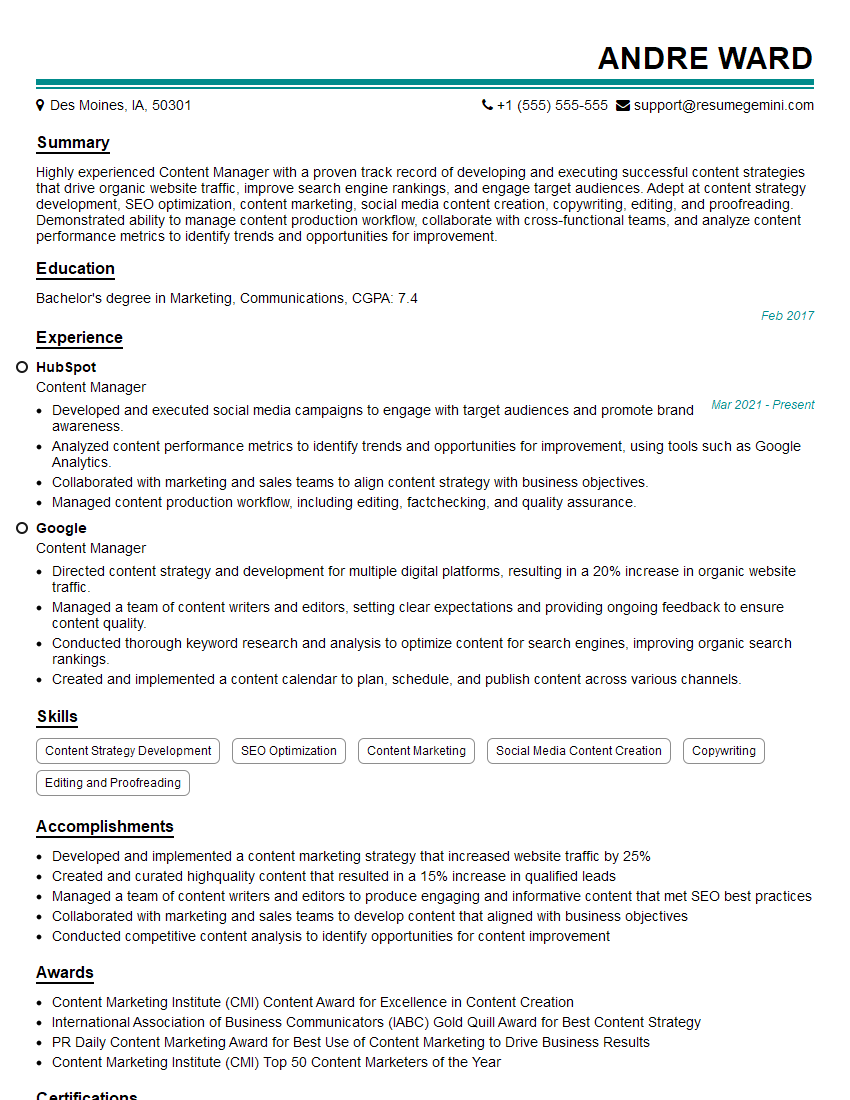
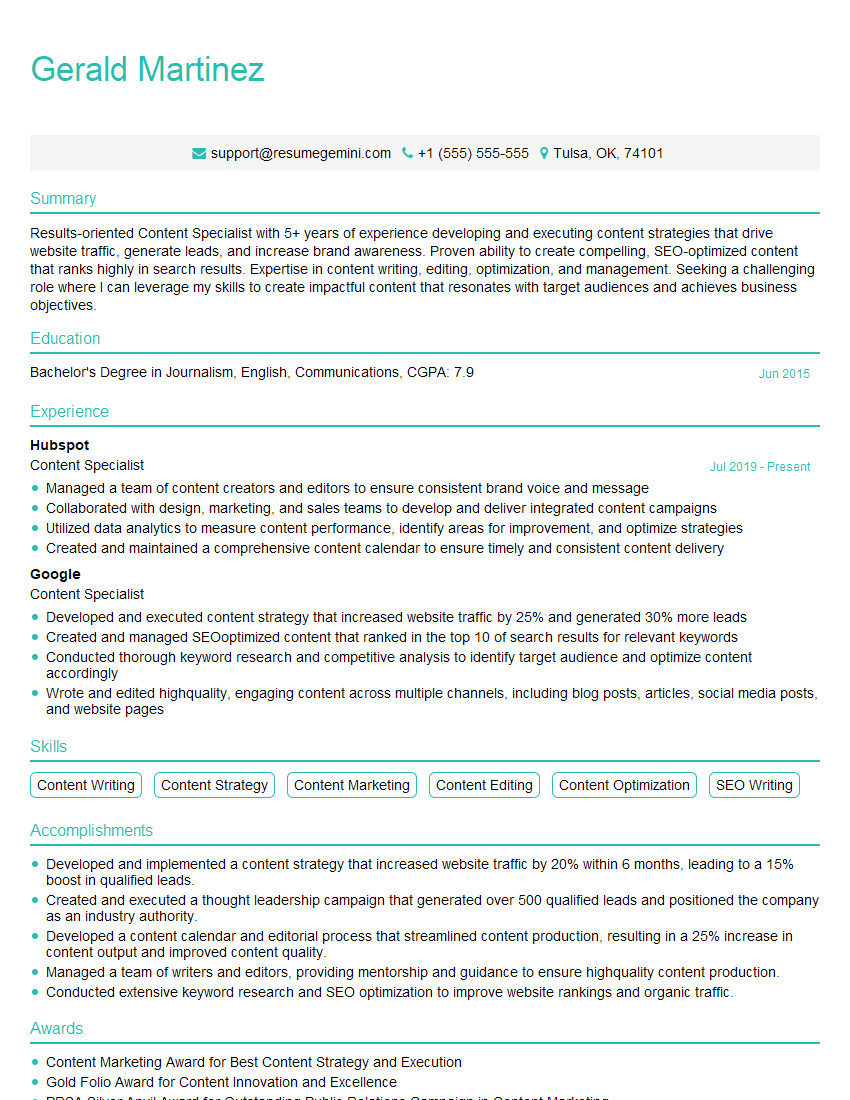
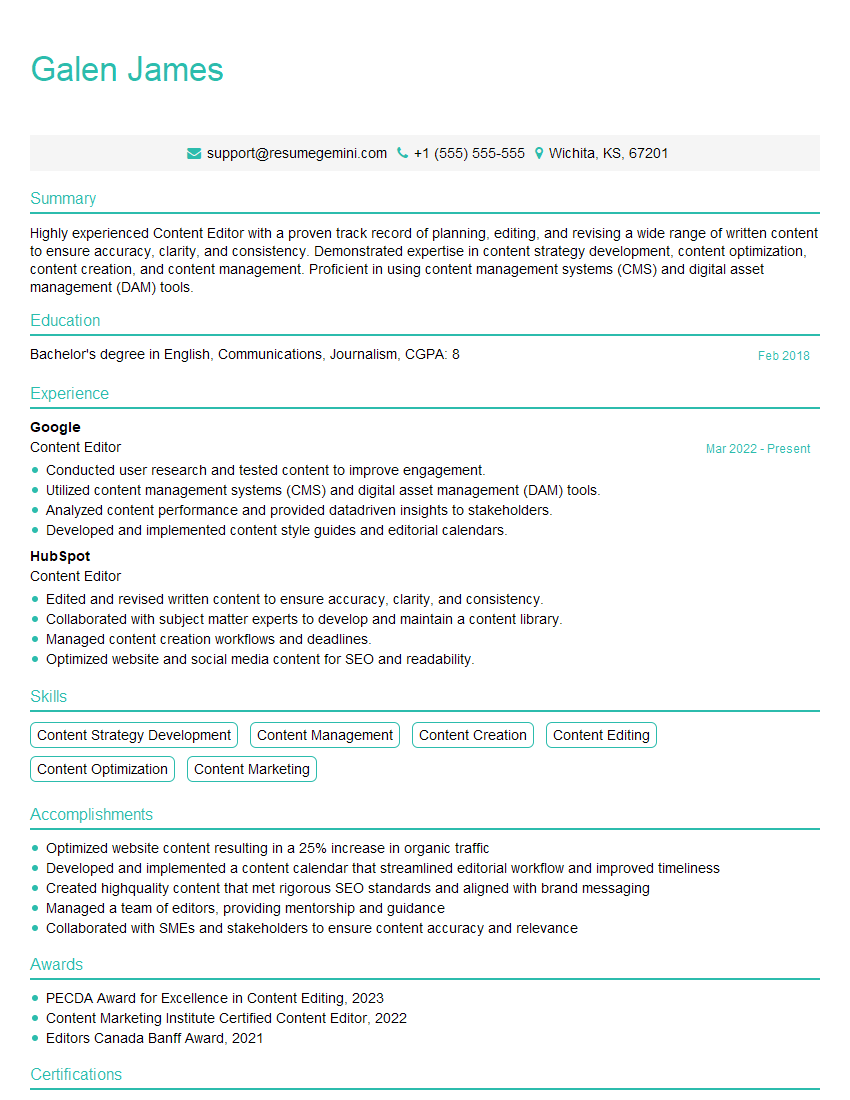
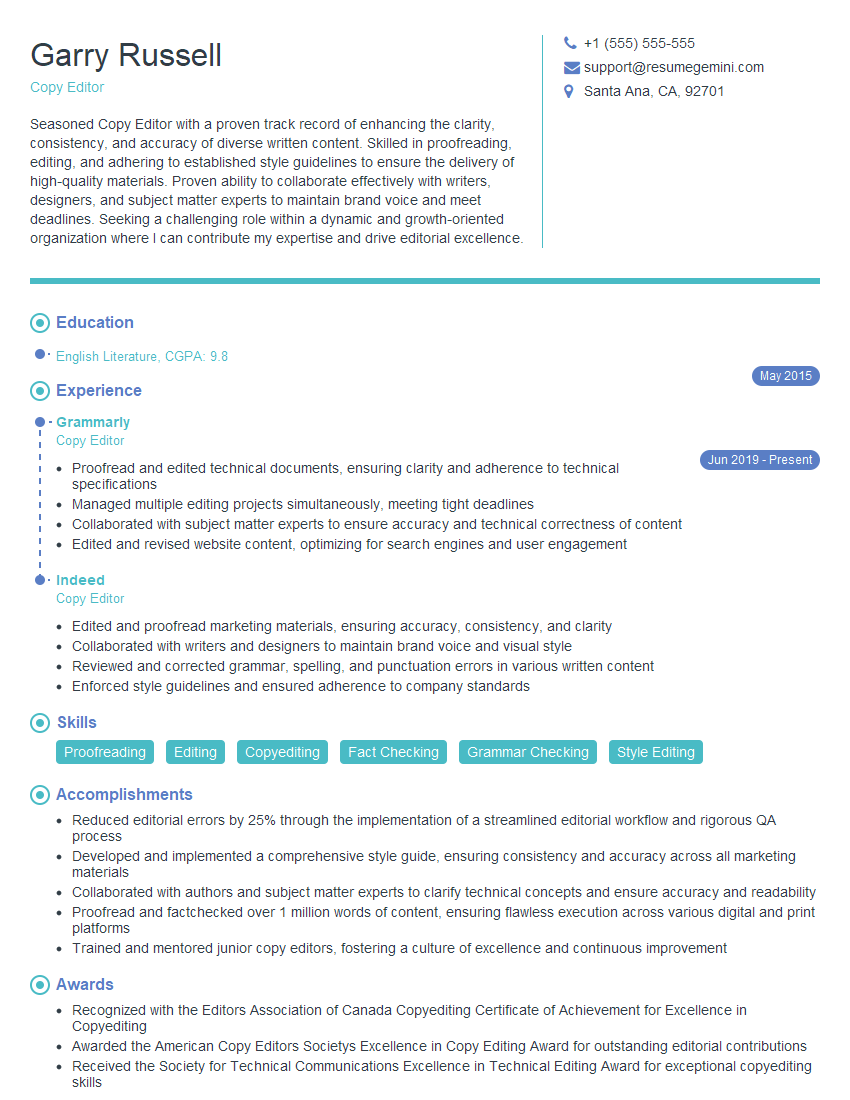
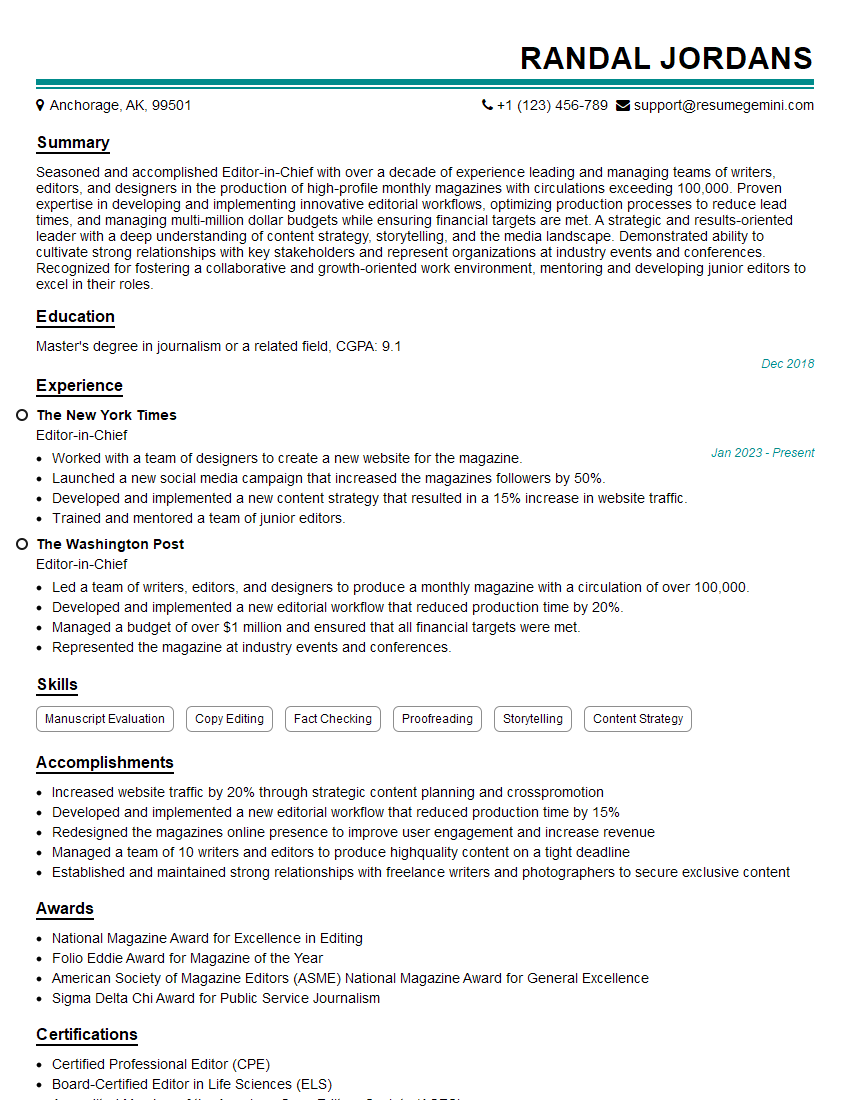
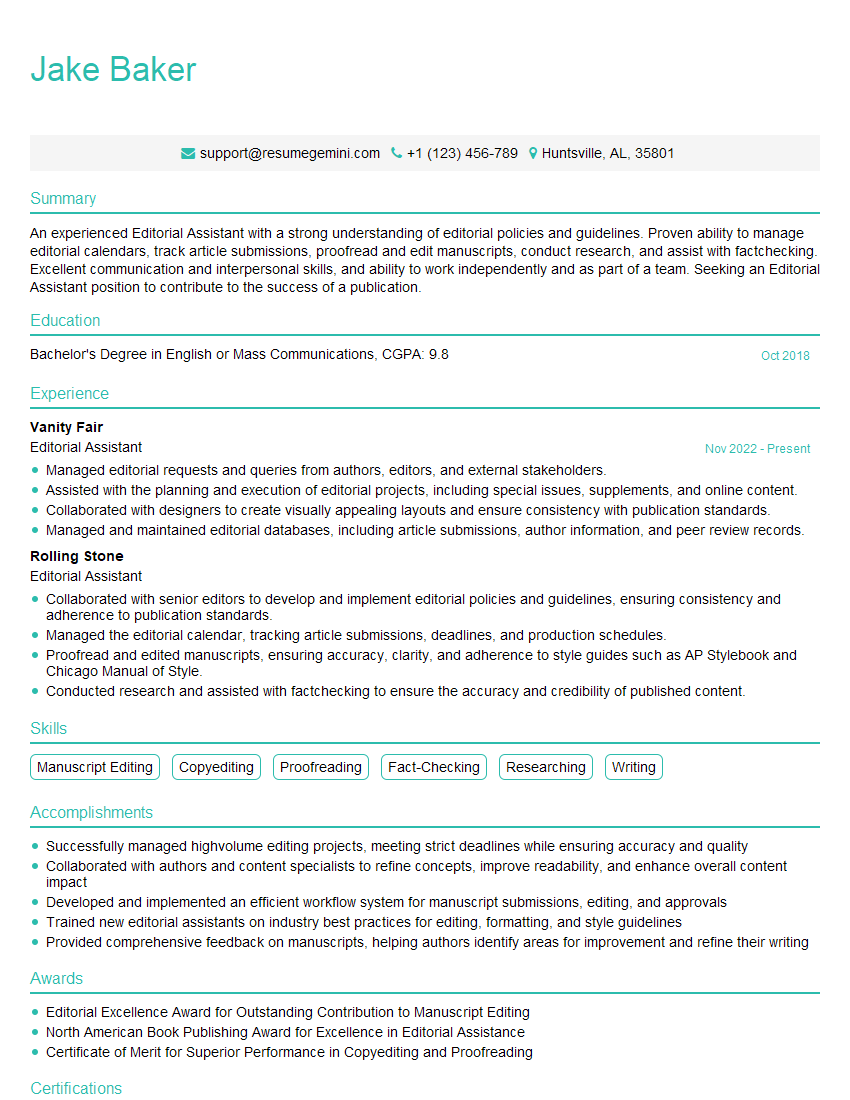
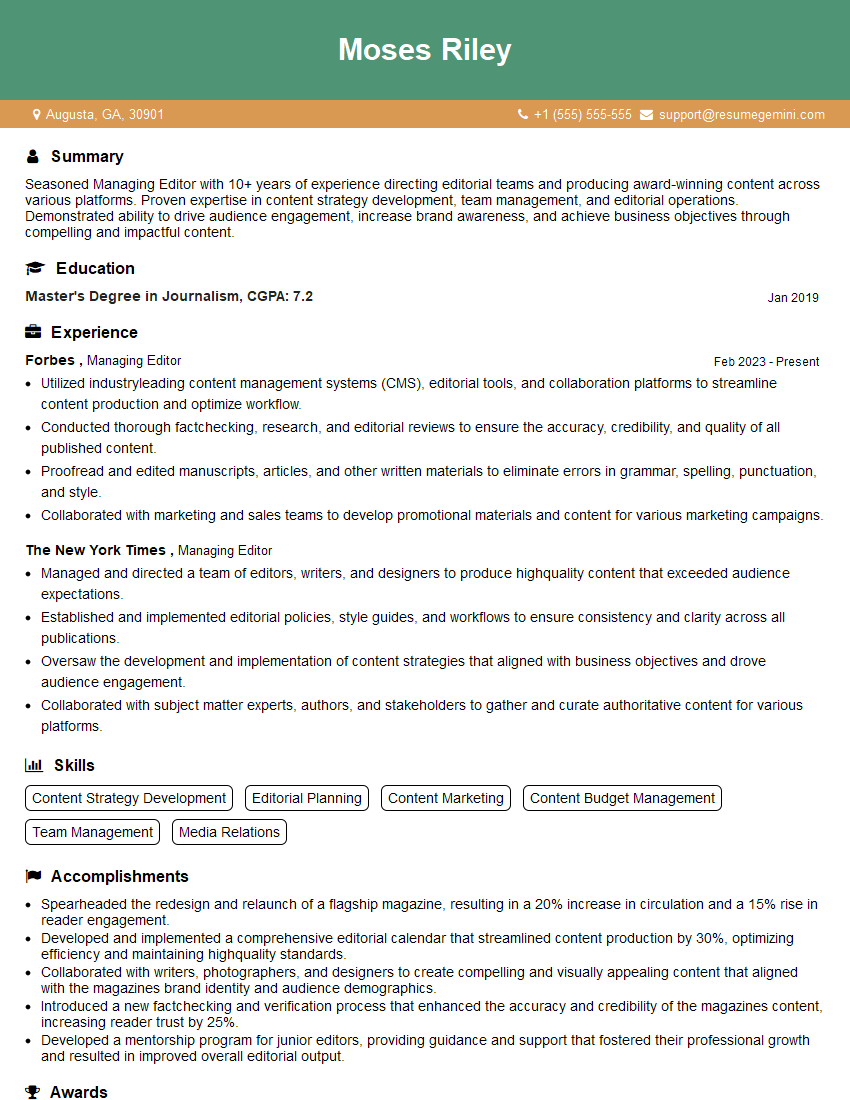
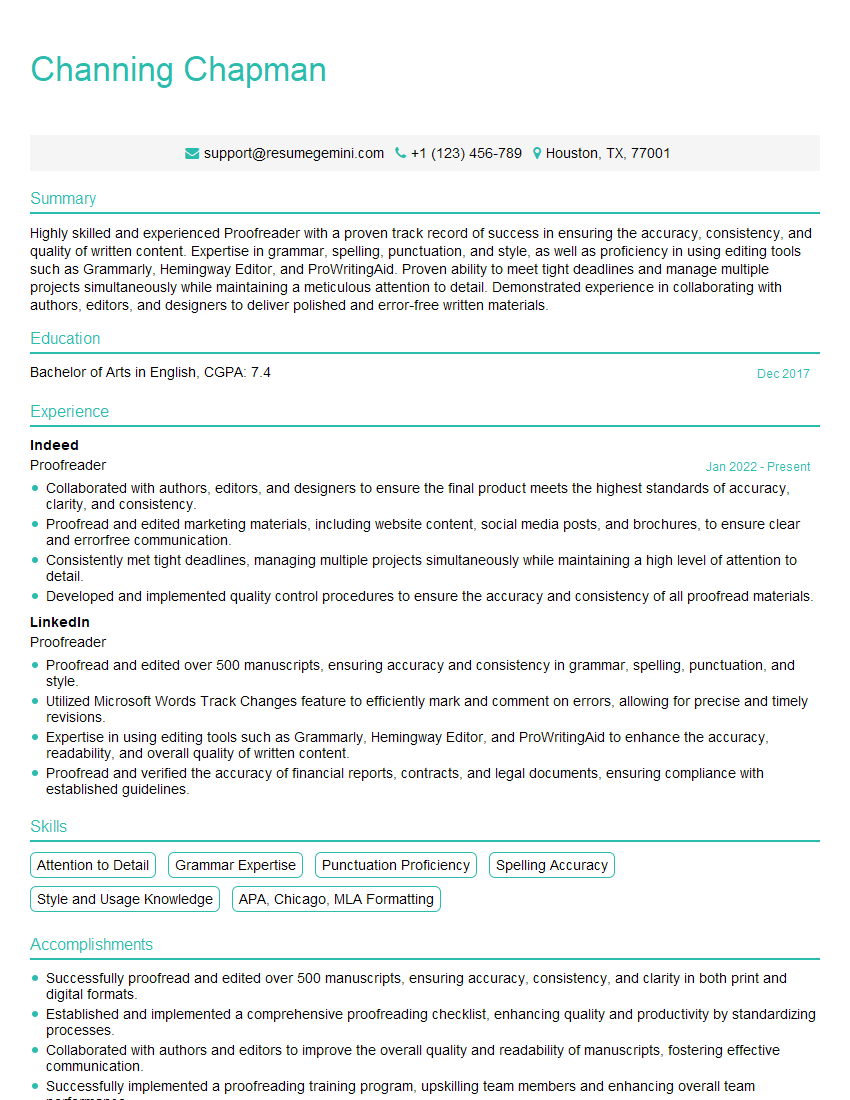
Mastering digital content editing is crucial for a thriving career in today’s digital landscape. It opens doors to exciting roles in various industries and allows you to shape brand narratives and engage audiences effectively. To maximize your job prospects, crafting a compelling and ATS-friendly resume is essential. ResumeGemini is a trusted resource that can help you build a professional resume that showcases your skills and experience effectively. Examples of resumes tailored to Digital Content Editing are available, ensuring your application stands out and lands you that dream interview.

Explore more articles
Users Rating of Our Blogs
Share Your Experience
We value your feedback! Please rate our content and share your thoughts (optional).
What Readers Say About Our Blog
Amazing blog
hello,
Our consultant firm based in the USA and our client are interested in your products.
Could you provide your company brochure and respond from your official email id (if different from the current in use), so i can send you the client’s requirement.
Payment before production.
I await your answer.
Regards,
MrSmith
hello,
Our consultant firm based in the USA and our client are interested in your products.
Could you provide your company brochure and respond from your official email id (if different from the current in use), so i can send you the client’s requirement.
Payment before production.
I await your answer.
Regards,
MrSmith
These apartments are so amazing, posting them online would break the algorithm.
https://bit.ly/Lovely2BedsApartmentHudsonYards
Reach out at BENSON@LONDONFOSTER.COM and let’s get started!
Take a look at this stunning 2-bedroom apartment perfectly situated NYC’s coveted Hudson Yards!
https://bit.ly/Lovely2BedsApartmentHudsonYards
Live Rent Free!
https://bit.ly/LiveRentFREE
Interesting Article, I liked the depth of knowledge you’ve shared.
Helpful, thanks for sharing.
Hi, I represent a social media marketing agency and liked your blog
Hi, I represent an SEO company that specialises in getting you AI citations and higher rankings on Google. I’d like to offer you a 100% free SEO audit for your website. Would you be interested?