Interviews are opportunities to demonstrate your expertise, and this guide is here to help you shine. Explore the essential Door and Window Framing interview questions that employers frequently ask, paired with strategies for crafting responses that set you apart from the competition.
Questions Asked in Door and Window Framing Interview
Q 1. Explain the different types of door and window frames.
Door and window frames come in a variety of materials and styles, each with its own strengths and weaknesses. The most common types include:
- Wood Frames: Traditional and aesthetically pleasing, offering excellent insulation and customization options. However, they require more maintenance than other materials and are susceptible to rot and insect damage if not properly treated.
- Vinyl Frames: Popular for their low maintenance, durability, and energy efficiency. They are resistant to rot, insects, and warping, but can be less aesthetically versatile than wood and may not be as strong.
- Aluminum Frames: Strong, durable, and relatively inexpensive. They are ideal for large windows and sliding doors, but can conduct heat and cold, potentially impacting energy efficiency. Powder coating enhances their aesthetic appeal and durability.
- Composite Frames: Combine the benefits of different materials, often wood and fiberglass or PVC. They offer a balance of strength, durability, low maintenance, and aesthetic versatility, though they are generally more expensive than vinyl or aluminum.
- Fiberglass Frames: Highly durable, resistant to rot, warping, and insects. They are excellent insulators and mimic the look of wood, making them a premium option.
The choice of frame material depends heavily on the project’s budget, desired aesthetic, climate, and maintenance considerations. For example, in a coastal area prone to moisture, vinyl or fiberglass might be preferred over wood.
Q 2. Describe your experience with various framing materials (wood, vinyl, aluminum, composite).
My experience spans over 15 years working with all the major framing materials. With wood, I’ve worked extensively with various species like pine, fir, and redwood, understanding their unique properties and how to properly prime and finish them for longevity. I’m proficient in selecting appropriate grades of lumber for different applications, ensuring structural integrity. With vinyl, I’ve mastered the techniques for precise cuts, ensuring a tight seal and preventing leaks. Aluminum frames require precision and attention to detail during installation, as they can be susceptible to warping if mishandled. I’ve worked with many different aluminum alloys and understand their respective strengths and limitations. My experience with composite frames involves understanding the specific characteristics of the materials used in each composite type to ensure correct installation techniques and avoid common pitfalls.
For example, I once had to replace a rotted wood window frame in a historic building. This involved careful removal, detailed measurements, and the selection of a compatible replacement wood that matched the historical aesthetic. Another time, I installed large aluminum storefront windows, requiring precise measurements and skillful handling to ensure a perfectly aligned and weather-tight installation. Each material presents unique challenges and requires a tailored approach to ensure a successful outcome.
Q 3. How do you ensure accurate measurements for door and window frames?
Accurate measurements are paramount to a successful installation. My process involves a multi-step approach:
- Rough Opening Measurement: I first measure the rough opening – the space in the wall where the frame will be installed – using a laser measuring tool for precision. I record the width, height, and depth, paying close attention to any irregularities in the wall.
- Frame Measurement: Next, I take precise measurements of the window or door frame itself, factoring in any necessary clearances for proper operation and weather sealing.
- Verification and Adjustment: I double-check all measurements, using multiple tools and methods, to eliminate potential errors. Any irregularities in the rough opening are noted and accounted for during the installation process.
- Documentation: I meticulously document all measurements, including any adjustments made, to ensure consistency throughout the installation. I also use photographs to record the details of the rough opening and frame.
Using a combination of precise measuring tools and careful attention to detail, I minimize errors and ensure a perfect fit.
Q 4. What are the key considerations for installing exterior doors and windows?
Installing exterior doors and windows involves several crucial considerations to ensure both performance and longevity:
- Weatherproofing: Proper sealing and flashing are essential to prevent water infiltration and air leaks. This involves using high-quality caulking, weatherstripping, and flashing materials, paying close attention to critical junctions and corners.
- Energy Efficiency: Choosing energy-efficient frames and glass helps reduce energy costs. Factors to consider include the U-value (heat transfer) and solar heat gain coefficient (SHGC) of the glazing.
- Security: Reinforced frames, strong locks, and impact-resistant glass enhance security and protect against intruders.
- Building Codes and Regulations: Adherence to local building codes and regulations is vital to ensure safety and compliance.
- Proper Installation Techniques: Using appropriate fasteners, shims, and techniques prevents sagging and ensures a plumb and level installation.
For example, in a coastal environment, I would prioritize corrosion-resistant materials and enhanced weather sealing to protect against salt spray and moisture damage. In colder climates, I would emphasize energy-efficient glazing to minimize heat loss.
Q 5. Describe your experience with different types of window and door hardware.
I have extensive experience with a wide array of window and door hardware, including:
- Hinges: From basic butt hinges to sophisticated adjustable hinges, I understand the importance of selecting appropriate hinges for the weight and style of the door or window.
- Locks and Latches: I work with various locking mechanisms, including deadbolt locks, multi-point locking systems, and keyed entry systems, ensuring proper installation and functionality.
- Handles and Knobs: I’m familiar with different styles and functionalities, selecting appropriate hardware to complement the overall design and providing ease of use.
- Sliding Hardware: For sliding doors and windows, I’m experienced with rollers, tracks, and guides, ensuring smooth and efficient operation.
- Window Operators: I know how to install and troubleshoot various window operator mechanisms, including crank operators, casement operators, and tilt-and-turn operators.
In one project, I had to replace the aged and malfunctioning hardware on a set of antique French doors. This required sourcing period-correct hardware and meticulous installation to maintain the historical integrity of the doors while ensuring their functionality.
Q 6. How do you handle misaligned frames during installation?
Misaligned frames during installation can be frustrating but are often correctable. My approach involves:
- Identifying the Cause: First, I pinpoint the cause of the misalignment, which could be due to improper measurements, uneven wall surfaces, or faulty frame construction.
- Adjusting Shims: I carefully adjust shims placed between the frame and the rough opening to correct minor misalignments. This ensures the frame is plumb and level.
- Frame Adjustment: For more significant misalignments, I may need to loosen fasteners, adjust the frame, and retighten, ensuring the frame remains square and true.
- Rechecking Measurements: After making adjustments, I thoroughly recheck all measurements and levels to confirm the frame is correctly aligned.
- Remediation for Severe Issues: In cases of severe misalignment, I may need to remove and reinstall the frame, ensuring that the underlying structure is sound and correctly prepared to receive the frame.
The key is patience and careful attention to detail. Rushing the process can lead to further problems down the line.
Q 7. Explain your process for installing a door frame in a new construction setting.
Installing a door frame in new construction is a straightforward process when done correctly. My typical steps are:
- Prepare the Rough Opening: Ensure the rough opening is correctly sized and plumb according to the door frame specifications. Any irregularities in the wall need to be addressed.
- Position the Frame: Carefully position the door frame within the rough opening, ensuring it’s plumb and level using a level and plumb bob. Shims are used to adjust for any irregularities in the wall.
- Secure the Frame: Temporarily secure the frame using appropriate fasteners, ensuring they are evenly spaced and do not over-tighten, potentially damaging the frame. The frame should be securely attached to the framing members.
- Check for Plumb and Square: Double-check for plumb and square using levels in multiple directions. Adjust shims as needed to correct any misalignments before final fastening.
- Final Fastening: Secure the frame permanently with appropriate fasteners, following manufacturer’s recommendations. Remove temporary fasteners.
- Install Threshold (if applicable): For exterior doors, install the threshold, ensuring proper alignment and weather sealing.
- Install Door and Hardware: Install the door and hardware, ensuring proper operation and alignment.
- Caulk and Seal: Caulk and seal any gaps between the frame and the rough opening, preventing air and water infiltration.
Throughout the process, precision and attention to detail are critical to ensure a strong, durable, and properly functioning door frame.
Q 8. How do you ensure proper sealing and insulation around door and window frames?
Proper sealing and insulation around door and window frames are crucial for energy efficiency, weather protection, and preventing air leaks. This involves a multi-layered approach, focusing on the interaction between the frame, the wall, and the glazing unit.
Flashing: A waterproof membrane, typically metal, is installed behind the frame to divert water away from the wall cavity. Think of it as a raincoat for your house, preventing water from seeping in.
Caulk: A flexible sealant is used to fill gaps between the frame and the surrounding wall material. Different types of caulk are suited to different situations; for example, paintable latex caulk for interior applications and silicone caulk for exterior applications that need to withstand more extreme weather.
Weatherstripping: This seals the gaps between the moving parts of the door or window (e.g., around the sash and frame) to further prevent air leakage. There are various types, such as foam tape, rubber seals, or felt strips, each suited for different gaps and movement levels.
Insulation: Proper insulation in the wall cavity surrounding the frame minimizes heat transfer. Common insulation materials include fiberglass batt, spray foam, and cellulose. Ensure the insulation is properly installed to avoid gaps or compression.
For example, on a recent project involving a historic home, we used a combination of lead flashing, high-quality silicone caulk, and durable rubber weatherstripping to ensure a long-lasting, weathertight seal around the newly installed windows. This approach preserved the home’s character while improving its energy performance.
Q 9. What are the common challenges encountered during door and window frame installation?
Installing door and window frames presents several common challenges. These often stem from variations in existing construction, material inconsistencies, and environmental factors.
Out-of-square openings: Existing wall openings are rarely perfectly square or plumb, requiring careful shimming and adjustment to achieve a proper fit for the frame. Using a laser level helps significantly here.
Uneven surfaces: Uneven wall surfaces can compromise the seal around the frame. Carefully prepping the surface by leveling and cleaning is essential for a proper installation.
Material incompatibility: Combining different materials (e.g., wood, vinyl, aluminum) can lead to expansion and contraction issues. It is critical to use appropriate fasteners and sealants suitable for all materials involved.
Weather conditions: Extreme heat, cold, or humidity can affect the installation process and the longevity of the frame. Choosing the right time of year and working quickly and effectively during good weather conditions can help.
Improper measurements: Inaccurate measurements at the beginning of the process can result in the need for significant adjustments on site, delaying the project.
For instance, on a recent project, we encountered an out-of-plumb wall that required extensive shimming to create a level surface for the new window frame. Proper planning and attention to detail were crucial to overcome this hurdle.
Q 10. How do you troubleshoot issues such as drafts or leaks around windows and doors?
Troubleshooting drafts or leaks around windows and doors requires a systematic approach. It starts with careful observation and progresses to targeted solutions.
Visual Inspection: Start by visually inspecting the frame for gaps, cracks, or damage. Look at the sealant, weatherstripping, and glazing for any issues.
Air Pressure Test: Use a smoke pen or a blower door test to identify the exact location of air leaks. Smoke will reveal air movement, and a blower door gives quantitative data on air leakage.
Caulk and Weatherstripping Repair: Once leaks are identified, repair or replace damaged caulk and weatherstripping. Ensure a complete seal around the entire perimeter.
Glazing Inspection: Check for broken or damaged glazing beads (the trim holding the glass). If the seal is compromised, the unit may need to be replaced.
For example, we once discovered a significant air leak around a window due to damaged glazing beads. By replacing the damaged beads and resealing the unit, we effectively eliminated the draft and restored the window’s integrity.
Q 11. Describe your experience working with different types of window and door glazing.
My experience encompasses various types of window and door glazing, each with its own characteristics and installation requirements.
Insulated Glass Units (IGUs): These are the most common type, comprising multiple panes of glass separated by a sealed air or gas-filled space. Proper handling is crucial to avoid damage during installation.
Laminated Glass: This type of glass is comprised of two or more layers bonded together with a polymeric interlayer. It’s known for its strength and safety features, often used in impact-resistant applications.
Tempered Glass: This heat-treated glass is stronger and safer than regular glass and is commonly used in exterior applications where there is a risk of impact or breakage.
Acrylic and Polycarbonate Glazing: These plastics offer excellent impact resistance and insulation properties, but require specific handling and fastening techniques.
I have extensive experience installing all these types of glazing, ensuring proper sealing and alignment to prevent leaks and maintain energy efficiency. Each glazing type has different considerations for setting the glass in the frame and ensuring a tight seal.
Q 12. What safety precautions do you take while installing door and window frames?
Safety is paramount in door and window frame installation. I adhere to strict safety protocols to minimize risks.
Personal Protective Equipment (PPE): Always use appropriate PPE, including safety glasses, gloves, and safety shoes. Hard hats are also essential on larger construction sites.
Fall Protection: When working at heights, use harnesses, lifelines, and other fall protection equipment. Never work without proper fall protection.
Tool Safety: Use tools correctly and maintain them in good condition. Always unplug power tools before maintenance or changing blades.
Material Handling: Use appropriate lifting techniques and equipment for heavy materials. Never attempt to lift loads beyond your capacity.
Site Safety: Be aware of your surroundings, and maintain a clean and organized work area to prevent accidents.
For example, on a recent high-rise project, we used fall protection harnesses and safety nets while installing windows on upper floors, ensuring the safety of the entire team.
Q 13. Explain your familiarity with building codes and regulations related to door and window installation.
I am thoroughly familiar with building codes and regulations related to door and window installation. My understanding encompasses aspects such as energy efficiency standards, structural requirements, safety regulations, and accessibility compliance.
Energy Codes: I understand and apply codes related to U-values (thermal transmittance) and air leakage rates to ensure installations meet energy efficiency standards. This often involves using specific types of glazing and ensuring tight seals.
Structural Requirements: I am aware of the load-bearing capacities of different frame materials and ensure installations meet requirements for structural stability and wind resistance.
Safety Regulations: I am familiar with regulations regarding the use of safety glass, egress requirements for doors, and other safety features to meet building codes.
Accessibility Compliance: I understand and apply regulations related to accessibility for people with disabilities, including requirements for door thresholds, door hardware, and operable windows.
I regularly consult local building codes and relevant standards to ensure compliance. This ensures not only legal compliance but also the safety and longevity of the installation.
Q 14. How do you manage your time and prioritize tasks on a framing project?
Effective time management and task prioritization are essential for successful framing projects. I employ a structured approach that combines planning, scheduling, and efficient execution.
Project Planning: I begin by carefully reviewing blueprints, specifications, and material lists. This ensures that I have a clear understanding of the scope of work and the required materials.
Task Sequencing: I carefully sequence tasks to maximize efficiency. For example, rough framing is typically completed before finishing work, and utility installations may need to happen before wall cladding.
Scheduling: I create a realistic schedule, accounting for potential delays or unforeseen challenges. Using project management software can greatly assist.
Resource Allocation: I allocate resources (materials, labor) effectively to avoid bottlenecks. This often involves close coordination with suppliers and subcontractors.
Regular Monitoring: I monitor progress regularly to identify and address any issues promptly. Daily check-ins help prevent minor issues from escalating.
For example, on a recent large-scale project, we utilized a Gantt chart to track progress against the scheduled timeline, proactively identifying and resolving potential delays before they impacted the overall project completion.
Q 15. Describe your experience working with blueprints and construction plans.
Reading and interpreting blueprints is fundamental to my work. I’m proficient in understanding architectural drawings, specifically focusing on details related to door and window openings – their dimensions, framing specifications, and relationships to other structural elements. I can identify the type of frame required (e.g., wood, metal, composite), the necessary rough openings, and any special requirements, such as fire-rated assemblies. For example, I recently worked on a project where the blueprints specified a complex window installation requiring custom framing to accommodate a curved exterior wall. I carefully analyzed the drawings, ensuring a perfect fit. My experience extends to understanding symbols and notations common in construction plans, such as those indicating insulation requirements, flashing details, and sealant types around frames.
I use the blueprints as a roadmap throughout the entire process, from ordering materials to final installation and inspection. This ensures accuracy and prevents costly mistakes down the line. Any discrepancies or ambiguities in the plans are immediately addressed with the architect or project manager to ensure clarity and prevent costly rework.
Career Expert Tips:
- Ace those interviews! Prepare effectively by reviewing the Top 50 Most Common Interview Questions on ResumeGemini.
- Navigate your job search with confidence! Explore a wide range of Career Tips on ResumeGemini. Learn about common challenges and recommendations to overcome them.
- Craft the perfect resume! Master the Art of Resume Writing with ResumeGemini’s guide. Showcase your unique qualifications and achievements effectively.
- Don’t miss out on holiday savings! Build your dream resume with ResumeGemini’s ATS optimized templates.
Q 16. How do you handle unexpected problems during a door or window installation?
Unexpected problems are a reality in construction. My approach is systematic and focuses on problem-solving and communication. I start by carefully assessing the situation: Is it a structural issue? A material defect? A measurement error?
- Assessment: I take detailed measurements and photos to document the problem.
- Problem Definition: I clearly define the nature of the issue and its potential impact on the project schedule and budget.
- Solution Development: I brainstorm solutions, considering factors like safety, code compliance, and aesthetic impact. I may consult with colleagues or supervisors for input.
- Implementation: Once a solution is agreed upon, I implement it meticulously, documenting all changes made.
- Communication: I keep the project manager and relevant stakeholders informed every step of the way. Transparency is key.
For instance, I once encountered a hidden plumbing pipe during a door installation. I carefully assessed its location, informed the project manager, and worked with the plumber to adjust the framing to accommodate the pipe without compromising the structural integrity of the door frame or plumbing.
Q 17. What is your experience with different types of door and window jambs?
I have extensive experience with various door and window jambs, including wood, metal, and composite materials. The choice of jamb material depends on factors such as the building’s style, budget, and performance requirements.
- Wood Jambs: These offer a classic look and are versatile, suitable for various applications. I’m familiar with different wood species and their properties, considering factors like moisture resistance and durability when selecting a jamb.
- Metal Jambs: These provide superior strength and durability, particularly in high-traffic areas or extreme weather conditions. Steel and aluminum are common choices. My experience includes working with different types of metal finishes and understanding the potential for corrosion.
- Composite Jambs: These combine the benefits of wood and metal, offering strength, durability, and aesthetic appeal. I’m experienced with various composite materials and understand their respective strengths and weaknesses.
Understanding the construction and installation methods for each type of jamb is crucial for a successful installation. For example, the installation techniques for a pre-hung door unit with a wood jamb differ from installing a metal jamb in a rough opening. Each requires specific tools and techniques to ensure a proper fit and function.
Q 18. How do you ensure the structural integrity of a door or window frame?
Ensuring structural integrity is paramount. I achieve this through careful attention to detail at every stage of the installation process. This includes:
- Proper Framing: The rough opening must be accurately sized and plumb (perfectly vertical) and square (perfectly 90-degree angles). Any deviation can weaken the frame and lead to issues like sticking doors or drafty windows.
- Secure Fastening: I use appropriate fasteners (nails, screws) according to the manufacturer’s specifications and the type of framing material. Over-fastening can damage the frame, while under-fastening compromises structural integrity.
- Shimming and Leveling: I carefully shim the frame to ensure it’s perfectly plumb and level, preventing stress and ensuring proper door or window operation.
- Proper Sealant and Flashing: I use appropriate sealant and flashing to create a weathertight seal, preventing water infiltration and protecting the frame from moisture damage.
- Code Compliance: I am always mindful of local building codes and regulations related to door and window installations, ensuring all work meets the required standards.
Imagine installing a window in an exterior wall – proper flashing is critical to prevent water damage. Failing to do so can lead to rot, mold, and structural problems within the wall itself.
Q 19. Explain your experience with installing different types of thresholds.
Thresholds are important for both functionality and aesthetics. My experience encompasses several types:
- Wood Thresholds: These offer a traditional look and can be easily customized to match the flooring. I’m experienced with selecting appropriate wood species based on durability and moisture resistance.
- Metal Thresholds: These provide increased durability and are often chosen for exterior doors, offering a good seal against weather elements. Aluminum and stainless steel are common choices.
- Composite Thresholds: These blend the benefits of wood and metal, offering durability and aesthetic appeal.
- Thresholds with Weatherstripping: This is crucial for exterior doors to prevent air and water infiltration. I understand the different types of weatherstripping and their applications.
The installation method varies depending on the threshold material and the surrounding flooring. Proper installation ensures a smooth transition between flooring materials and prevents tripping hazards. For example, when installing a metal threshold, precise measuring and cutting are critical to achieve a perfect fit and seal.
Q 20. What is your experience with using power tools for framing?
Power tools are essential for efficient and precise framing. My expertise includes using a wide range of tools, ensuring safe and accurate operation.
- Circular Saw: For making precise cuts in framing lumber.
- Reciprocating Saw: Ideal for cutting through various materials, particularly in tight spaces.
- Drill/Driver: For drilling pilot holes and driving screws for secure fastening.
- Miter Saw: Used for making accurate angled cuts, often necessary for mitered corners.
- Nail Gun: Significantly increases speed and efficiency in fastening operations, ensuring consistent nail placement.
Safety is paramount when using power tools. I always follow safety guidelines, using appropriate personal protective equipment (PPE), such as safety glasses, hearing protection, and work gloves. Regular maintenance of tools is crucial for optimal performance and safety.
Q 21. Describe your experience with using hand tools for framing.
While power tools are efficient, hand tools remain indispensable for precise work and finishing details. My experience encompasses:
- Measuring Tools: Tape measure, level, square – for precise measurements and ensuring accurate framing.
- Chisels and Mallet: For fine adjustments and shaping of wood.
- Hand Saw: For precise cutting where power tools are unsuitable.
- Claw Hammer: For driving nails and removing them if needed.
- Screwdrivers: For various fastening applications.
Hand tools allow for greater control and precision, especially in situations where power tools may be too bulky or risk damaging surrounding materials. For example, using a chisel to carefully remove excess wood around a window frame prevents damage to the finished wall surface.
Q 22. How do you ensure a proper fit for doors and windows?
Ensuring a proper fit for doors and windows is paramount for both functionality and aesthetics. It’s a multi-step process that starts long before the actual installation. Firstly, precise measurements are crucial. We use laser measuring tools for accuracy down to the millimeter, accounting for variations in wall thickness and existing framing. Secondly, the framing itself must be perfectly square and plumb. Any deviation here will lead to binding doors or drafty windows. We use levels and squares constantly to check our work. Thirdly, proper shimming is essential. Shims are thin pieces of material used to adjust the frame’s position for a perfect fit before the frame is secured. Finally, the choice of jamb extensions (the part of the frame that extends beyond the wall) is crucial and should be correctly sized for the wall thickness to ensure a flush finish. Think of it like building a house of cards – each piece needs to be precisely placed for stability. A poorly fitted window, for instance, could lead to drafts, water leakage, and even structural problems over time.
Q 23. What are the common causes of door and window frame failures?
Door and window frame failures often stem from a combination of factors. One of the most common is inadequate weatherproofing. Water ingress, whether from rain, snow, or ground moisture, can rot the wood, causing the frame to warp or crack. Poor installation techniques, like insufficient anchoring or improper shimming, are also major culprits, leading to instability and eventual failure. Another frequent cause is using low-quality materials – cheap wood or insufficiently treated lumber is highly susceptible to rot and insect damage. Finally, settling of the foundation can exert uneven pressure on the frames, resulting in cracks and misalignments. Think of it like a tree’s roots: if the foundation shifts, everything above it will be affected. I’ve seen numerous cases where settling caused significant damage, necessitating costly repairs.
Q 24. How do you repair damaged door and window frames?
Repairing damaged door and window frames depends heavily on the extent of the damage. Minor cracks in the frame can often be repaired with wood filler, followed by sanding and repainting. More significant damage, like rotted sections, necessitates replacing the affected parts. This might involve cutting out the damaged area and carefully fitting a replacement piece, ensuring a tight seal to prevent future water damage. For severe cases, replacing the entire frame may be necessary. In some instances, we might use epoxy to strengthen weakened areas of the frame. We always prioritize using durable, weather-resistant materials in the repair, aiming for a fix that’s both structurally sound and aesthetically pleasing. The key is meticulous attention to detail – a patch job that looks good but compromises the frame’s integrity is a recipe for future problems.
Q 25. Describe your experience with working on both residential and commercial projects.
My experience encompasses a wide range of projects, from small residential renovations to large-scale commercial builds. In residential settings, I’ve worked on everything from replacing single windows in older homes to installing custom-designed doors and windows in new constructions. I’ve honed my skills in adapting to unique challenges presented by older homes with irregular framing. Commercial projects, on the other hand, often involve larger volumes and stricter deadlines. I’ve been involved in the construction of high-rise buildings, shopping malls, and office complexes, managing teams and adhering to precise specifications. The scale is different, but the principles of accurate measurement, proper installation, and meticulous attention to detail remain the same regardless of the project size.
Q 26. How do you maintain quality control during the framing process?
Maintaining quality control is an ongoing process, starting with material selection. I always opt for high-quality, appropriately treated lumber. Throughout the framing process, regular checks are carried out using levels, squares, and measuring tools to ensure accuracy. Before installation, each frame is meticulously inspected for any imperfections. This includes checking for squareness, plumbness, and the proper fit of all components. Furthermore, we maintain detailed records of all materials and measurements, aiding in troubleshooting if issues arise. Regular team briefings ensure that everyone is on the same page, understanding the quality standards and expectations. This multi-layered approach minimizes errors and guarantees a consistently high-quality finish.
Q 27. Explain your understanding of the importance of proper flashing and weatherproofing.
Proper flashing and weatherproofing are essential to protect the structure from water damage. Flashing, typically a thin, impermeable material like metal or rubber, acts as a barrier to divert water away from vulnerable areas, such as joints in the framing. Weatherproofing goes further, including the use of sealants, caulking, and weather stripping to create a continuous seal against air and moisture penetration. Without adequate flashing and weatherproofing, water can infiltrate the building envelope, leading to wood rot, mold growth, and even structural instability. Think of it as building a raincoat for your house – it’s the final layer of protection that keeps the inside dry and comfortable. Neglecting this step can lead to significantly higher repair costs down the line.
Q 28. What are your preferred methods for ensuring accurate and efficient cutting of framing materials?
Accuracy and efficiency in cutting framing materials are critical. My preferred method involves using a combination of precision measuring tools and power tools, such as a miter saw and a circular saw, for precise cuts. Before any cutting, I meticulously measure and mark the material, double-checking my measurements to avoid errors. We utilize a chop saw for precise angled cuts, particularly essential for window and door frames. For more intricate cuts, a hand saw, supplemented with a miter box, helps maintain accuracy. A combination of modern power tools and traditional techniques ensures both speed and precision. Investing time in accurate measuring and cutting upfront significantly reduces rework and ensures a clean, professional finish.
Key Topics to Learn for Your Door and Window Framing Interview
- Materials Science: Understanding the properties of wood, vinyl, aluminum, and composite materials used in framing. This includes knowledge of their strengths, weaknesses, and suitability for different applications.
- Construction Techniques: Mastering the practical skills involved in assembling frames, including techniques for accurate measurements, cutting, joining, and fastening. Consider different joining methods and their implications.
- Installation Methods: Familiarity with proper installation procedures for doors and windows, ensuring water tightness, energy efficiency, and structural integrity. Think about different types of installations and their challenges.
- Code Compliance and Safety Regulations: Understanding building codes and safety regulations related to door and window installations. This includes knowledge of relevant standards and best practices.
- Energy Efficiency and Insulation: Knowledge of energy-efficient framing techniques and the role of insulation in improving building performance. Consider the impact of different materials and designs.
- Troubleshooting and Problem-Solving: Ability to identify and resolve common issues encountered during the framing process, such as warping, gaps, and structural weaknesses. This includes practical experience in diagnosing and fixing problems.
- Tools and Equipment: Familiarity with the tools and equipment commonly used in door and window framing, including their proper use and maintenance. Think about power tools, hand tools, and measuring instruments.
- Estimating and Costing: Understanding how to accurately estimate materials and labor costs for door and window framing projects.
Next Steps
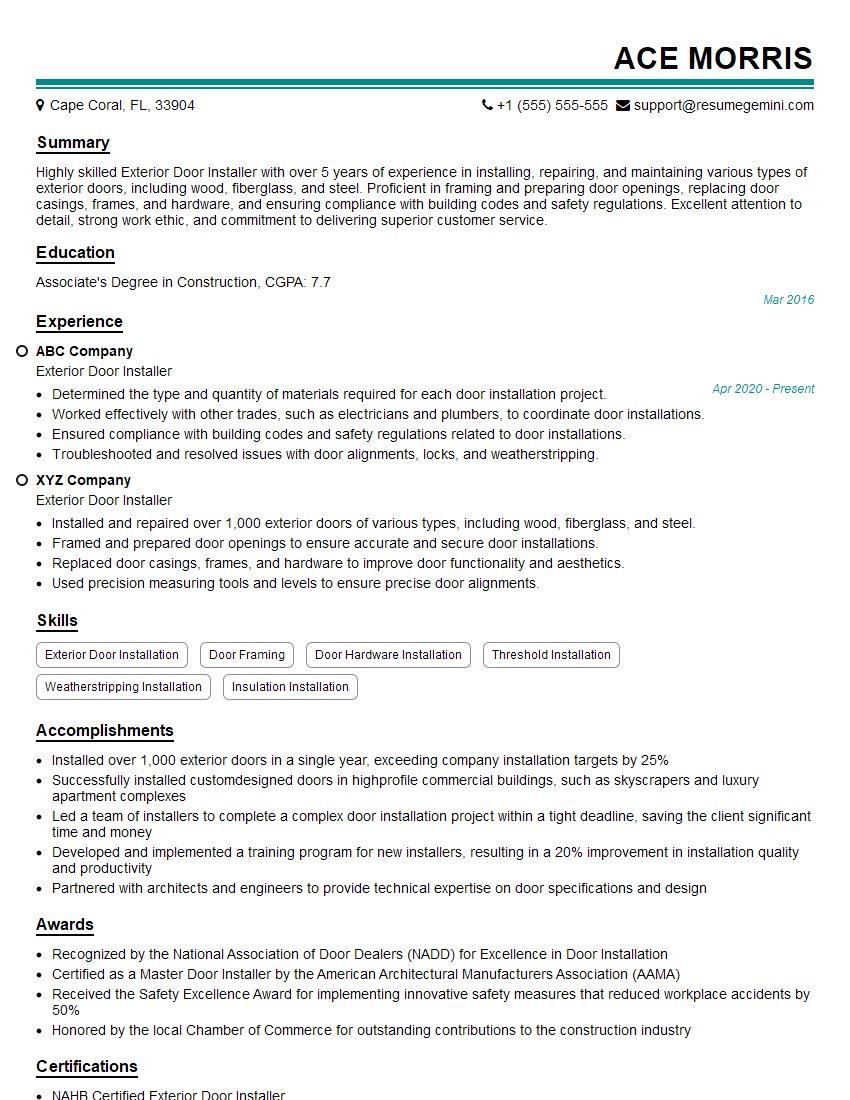
Mastering door and window framing opens doors to diverse and rewarding career opportunities, offering excellent prospects for growth within the construction industry. A strong foundation in these skills will set you apart from the competition. To maximize your job search success, creating a polished and ATS-friendly resume is crucial. ResumeGemini is a trusted resource that can help you build a professional resume that showcases your abilities effectively. We offer examples of resumes tailored specifically to the Door and Window Framing industry to help guide you. Invest the time in crafting a compelling resume – it’s your first impression!

Explore more articles
Users Rating of Our Blogs
Share Your Experience
We value your feedback! Please rate our content and share your thoughts (optional).
What Readers Say About Our Blog
hello,
Our consultant firm based in the USA and our client are interested in your products.
Could you provide your company brochure and respond from your official email id (if different from the current in use), so i can send you the client’s requirement.
Payment before production.
I await your answer.
Regards,
MrSmith
hello,
Our consultant firm based in the USA and our client are interested in your products.
Could you provide your company brochure and respond from your official email id (if different from the current in use), so i can send you the client’s requirement.
Payment before production.
I await your answer.
Regards,
MrSmith
These apartments are so amazing, posting them online would break the algorithm.
https://bit.ly/Lovely2BedsApartmentHudsonYards
Reach out at [email protected] and let’s get started!
Take a look at this stunning 2-bedroom apartment perfectly situated NYC’s coveted Hudson Yards!
https://bit.ly/Lovely2BedsApartmentHudsonYards
Live Rent Free!
https://bit.ly/LiveRentFREE
Interesting Article, I liked the depth of knowledge you’ve shared.
Helpful, thanks for sharing.
Hi, I represent a social media marketing agency and liked your blog
Hi, I represent an SEO company that specialises in getting you AI citations and higher rankings on Google. I’d like to offer you a 100% free SEO audit for your website. Would you be interested?