Feeling uncertain about what to expect in your upcoming interview? We’ve got you covered! This blog highlights the most important Erosion and Sediment Control Maintenance interview questions and provides actionable advice to help you stand out as the ideal candidate. Let’s pave the way for your success.
Questions Asked in Erosion and Sediment Control Maintenance Interview
Q 1. Describe your experience with implementing and maintaining erosion and sediment control measures on construction sites.
My experience spans over a decade, encompassing the full lifecycle of erosion and sediment control (ESC) on various construction projects – from initial site assessment and plan development to ongoing maintenance and final site restoration. I’ve worked on projects ranging from small residential developments to large-scale infrastructure projects, always ensuring compliance with regulations and best practices. I’ve been directly involved in implementing a wide array of BMPs, including silt fences, sediment basins, and temporary erosion control blankets, and I’ve managed teams responsible for their proper installation and ongoing maintenance. A particular challenge I successfully navigated involved a steep slope project where we needed to combine several BMPs – contouring, terracing, and vegetation establishment – to achieve optimal sediment control. This project highlighted the importance of proactive planning and regular monitoring.
For instance, on a recent highway expansion project, we implemented a phased approach to ESC. As each section of the project progressed, we strategically installed and maintained appropriate BMPs to minimize sediment runoff into nearby waterways. This included regular inspections, immediate repairs to damaged BMPs, and prompt adjustments based on weather conditions and site changes.
Q 2. What are the different types of erosion and sediment control best management practices (BMPs)?
Erosion and sediment control best management practices (BMPs) are a diverse set of techniques designed to prevent soil erosion and the transport of sediment into water bodies. They are chosen based on the specific site conditions and potential environmental impacts. Common BMPs include:
- Vegetative BMPs: These utilize plants to stabilize soil and reduce runoff, including seeding, sodding, and using temporary or permanent vegetation.
- Structural BMPs: These are physical barriers that intercept and control sediment. Examples are silt fences, sediment basins (also known as sediment traps), check dams, and straw bales.
- Other BMPs: This category includes practices like mulching (applying a layer of organic material to the soil surface), using erosion control blankets (geotextiles that hold soil in place), and implementing construction entrance ways to remove sediment from vehicles.
The choice of BMPs depends heavily on factors such as the site’s slope, soil type, rainfall intensity, and proximity to sensitive water bodies. A combination of BMPs is often the most effective approach for comprehensive erosion control.
Q 3. Explain the purpose and components of a Stormwater Pollution Prevention Plan (SWPPP).
A Stormwater Pollution Prevention Plan (SWPPP) is a vital document required by many regulatory agencies to minimize pollution from construction sites. Its primary purpose is to prevent pollutants, including sediment, from entering storm drains and ultimately impacting water quality. The plan outlines the specific erosion and sediment control measures that will be implemented and maintained throughout the construction process.
Key components of a SWPPP typically include:
- Site Map: Showing the location of BMPs, drainage patterns, and sensitive areas.
- BMP Descriptions: Detailing the type, location, and maintenance schedule for each BMP.
- Maintenance Schedule: Specifying the frequency of inspections and maintenance activities.
- Emergency Response Plan: Describing actions to take in case of unforeseen events, such as heavy rainfall.
- Training and Certification: Evidence demonstrating that personnel are trained in implementing and maintaining the ESC measures.
The SWPPP is a dynamic document; it needs to be updated as the project progresses and site conditions change.
Q 4. How do you identify potential erosion and sediment control issues on a site?
Identifying potential ESC issues requires a proactive and systematic approach. I typically conduct regular site inspections, paying close attention to areas prone to erosion and sediment runoff. This includes visually inspecting all installed BMPs, checking drainage patterns, and observing areas with exposed soil. I also look for indicators such as:
- Erosion Gullies: Channels carved into the soil by water runoff.
- Sediment Accumulation: Build-up of sediment in waterways or around BMPs.
- Damaged BMPs: Holes in silt fences, clogged sediment basins, or displaced erosion control blankets.
- Exposed Soil: Areas where soil is not properly protected by vegetation or other BMPs.
Beyond visual inspections, reviewing weather forecasts and historical rainfall data helps anticipate potential issues and proactively adjust the ESC plan. Furthermore, utilizing drone imagery and LiDAR data can provide a comprehensive overview of the site and aid in identifying potential problem areas.
Q 5. What are your methods for inspecting and maintaining erosion and sediment control measures?
My inspection and maintenance methods are consistent and thorough. Inspections are conducted at least weekly, or more frequently after significant rainfall events. They involve a systematic walk-through of the entire site, documenting the condition of each BMP and identifying any potential issues. I use checklists to ensure consistency and completeness. Maintenance activities are prioritized based on the severity of the problem.
For example, minor repairs, such as patching holes in silt fences, are done immediately. More significant issues, such as a clogged sediment basin, require more involved repairs that might involve temporary diversions of water flow while the basin is cleaned. All maintenance activities are documented, including the date, time, type of work performed, and personnel involved. This documentation is crucial for demonstrating compliance and for tracking the effectiveness of the ESC measures.
Q 6. How do you handle non-compliance issues related to erosion and sediment control?
Non-compliance issues related to ESC are addressed promptly and decisively. My approach prioritizes corrective action, communication, and documentation. Upon identifying a non-compliance issue, I first determine the root cause. This might involve reviewing the SWPPP, assessing the effectiveness of existing BMPs, or evaluating the impact of site activities. Then, I develop and implement a corrective action plan to address the issue. This might involve repairing or replacing damaged BMPs, modifying site activities, or implementing additional control measures. I carefully document all non-compliance events, corrective actions, and follow-up inspections.
Communication is key. I proactively inform the relevant regulatory agencies and project stakeholders about the issue, the corrective action plan, and its implementation. For recurring or severe issues, I work collaboratively with the project team to revise the SWPPP and improve ESC strategies. Open communication avoids escalation and ensures effective resolution.
Q 7. What regulations and permits are relevant to erosion and sediment control in your area?
The specific regulations and permits related to erosion and sediment control vary depending on the location. However, in my area, relevant regulations often include:
- The Clean Water Act (CWA): This federal law sets standards for water quality and prohibits the discharge of pollutants, including sediment, into waterways without a permit.
- National Pollutant Discharge Elimination System (NPDES) Permits: Construction sites often require an NPDES permit, which specifies ESC requirements and monitoring protocols.
- State and Local Ordinances: Many states and localities have their own specific ESC regulations, which may be more stringent than federal requirements.
Before undertaking any construction project, I always ensure we have all necessary permits and approvals in place and that we are fully compliant with all applicable regulations. Staying updated on the latest regulations is crucial for responsible and effective ESC management.
Q 8. Describe your experience with various erosion control BMPs, such as silt fences, sediment basins, and check dams.
My experience encompasses a wide range of erosion and sediment control best management practices (BMPs). I’ve extensively worked with silt fences, sediment basins, and check dams in various project settings, from small residential developments to large-scale infrastructure projects.
- Silt fences: I’ve been involved in the design, installation, and inspection of silt fences, optimizing their placement to intercept runoff effectively. This includes selecting the appropriate filter fabric based on soil type and anticipated runoff volume, ensuring proper fence height and overlap, and regularly checking for breaches or blockages. For example, on a recent hillside construction project, strategically placed silt fences prevented sediment from reaching a nearby stream, protecting water quality.
- Sediment basins: My experience includes designing sediment basins with appropriate sizing and outlet structures to manage sediment accumulation. This includes understanding hydraulic calculations to ensure adequate storage capacity and implementing proper maintenance schedules to prevent overflows. One project involved modifying an existing basin to increase its efficiency by adding a secondary settling chamber.
- Check dams: I’ve used check dams in various applications, including streambank stabilization and gully control. I’m experienced in selecting the right type of check dam (e.g., rock, log, gabion) based on site conditions and using appropriate construction techniques. In a recent project, we installed a series of small rock check dams to reduce erosion in a drainage ditch, effectively mitigating downstream sedimentation.
This practical experience has allowed me to develop a keen understanding of the strengths and limitations of each BMP and how to best combine them for optimal erosion and sediment control.
Q 9. How do you determine the appropriate erosion and sediment control measures for a specific site?
Determining appropriate erosion and sediment control measures requires a thorough site assessment, considering several key factors. This process typically involves:
- Site Analysis: This includes evaluating the site’s topography, soil type, vegetation, rainfall patterns, and existing drainage systems. Slope steepness is crucial; steeper slopes require more aggressive BMPs. Soil type dictates the erosion risk; highly erodible soils need more protection.
- Construction Activities: Identifying the type and intensity of construction activities, such as excavation, grading, and land clearing. This helps in determining the potential for erosion and the necessary level of protection. More intense activities will require more robust BMPs.
- Regulatory Requirements: Compliance with local, state, and federal regulations regarding erosion and sediment control is crucial. These regulations often specify acceptable levels of sediment discharge and the required BMPs.
- Environmental Sensitivity: Assessing the proximity of sensitive environmental areas, such as wetlands, streams, or endangered species habitats. Protecting these areas requires careful consideration and potentially stricter BMPs.
- BMP Selection: Based on the site analysis, choosing the most appropriate combination of BMPs. This is often iterative and involves considering cost-effectiveness, practicality, and effectiveness.
For example, a steep, erodible slope near a stream might require a combination of silt fences, sediment basins, and possibly bioengineering techniques, while a flatter site with less erodible soil might only need temporary seeding and mulching.
Q 10. Explain the importance of regular maintenance for erosion and sediment control measures.
Regular maintenance is absolutely critical for the effectiveness of erosion and sediment control measures. Neglecting maintenance can lead to BMP failure, rendering them useless and potentially causing significant environmental damage. Imagine a clogged sediment basin overflowing – it defeats its purpose.
Maintenance activities vary depending on the specific BMP, but typically include:
- Regular Inspections: Frequent visual inspections to identify problems like breaches, blockages, or erosion around BMPs. These should be done after significant rainfall events.
- Cleaning: Removing accumulated sediment from sediment basins, silt fences, and other BMPs. The frequency depends on rainfall intensity and sediment load.
- Repair: Repairing any damage to BMPs promptly. This prevents small problems from escalating into larger, more costly issues. This includes repairing fence breaks, fixing damaged outlets, and replacing worn-out filter fabric.
- Vegetation Maintenance: Maintaining vegetation on disturbed areas through re-seeding, mulching, and watering as needed. A healthy vegetative cover helps to stabilize soil and reduce erosion.
A well-maintained erosion and sediment control system is far more effective and economical than one that has been neglected.
Q 11. What are the potential environmental impacts of inadequate erosion and sediment control?
Inadequate erosion and sediment control can have devastating environmental impacts. Sediment runoff can:
- Degrade Water Quality: Turbidity (cloudiness) reduces light penetration, harming aquatic life. Sediment also carries pollutants like pesticides and fertilizers, further compromising water quality and harming aquatic ecosystems. This can lead to the loss of fish populations and degradation of overall stream health.
- Fill Waterways: Sediment deposition can alter stream channels, reduce water flow, and harm aquatic habitats. This can also cause flooding downstream by reducing the channel’s capacity.
- Damage Infrastructure: Sediment can clog culverts, pipes, and other infrastructure, leading to costly repairs or failures. This can also cause damage to bridges and other infrastructure depending on the amount of sediment transported.
- Damage Property: Sediment can damage private property through flooding and soil deposition. This might lead to property damage, decreased property values, and costly legal repercussions.
- Reduce Agricultural Productivity: Sedimentation can reduce the fertility of agricultural lands, impacting crop yields and agricultural productivity.
The cumulative effect of these impacts can have long-term and far-reaching consequences on the environment and human communities.
Q 12. Describe your experience with using erosion and sediment control software or technology.
I have experience using several erosion and sediment control software and technologies, including GIS-based modeling tools, hydrologic modeling software, and various data management systems.
GIS (Geographic Information Systems) software allows me to analyze site topography, soil types, and other factors to create detailed maps and models that inform BMP design and placement. Hydrologic modeling software helps predict runoff volumes and sediment yields, ensuring that BMPs are appropriately sized. Data management systems are essential for tracking inspection results, maintenance activities, and other relevant information. This allows me to track changes and measure the effectiveness of BMPs.
For example, I used a GIS software to model runoff pathways on a complex site, which allowed us to strategically place silt fences and sediment basins to effectively manage runoff and prevent sedimentation. The hydrologic models helped to determine the appropriate size for the basins ensuring they could handle the anticipated runoff volume.
Q 13. How do you communicate effectively with contractors and site personnel regarding erosion and sediment control?
Effective communication is crucial for successful erosion and sediment control. I strive to communicate clearly and concisely with contractors and site personnel, using a combination of methods to ensure everyone understands their responsibilities and the importance of the work.
- Pre-Construction Meetings: Holding clear pre-construction meetings to review the erosion and sediment control plan, assign responsibilities, and answer questions.
- Regular Site Visits: Conducting regular site visits to monitor progress, identify potential problems, and provide guidance.
- Visual Aids: Using maps, diagrams, and photos to illustrate key points and enhance understanding.
- Clear Documentation: Maintaining detailed records of inspections, maintenance activities, and any corrective actions taken. This documentation is important for regulatory compliance and provides a history of the project.
- Open Communication Channels: Establishing clear communication channels, such as email or phone calls, to facilitate quick and efficient communication.
By fostering open communication and building trust, I can ensure that everyone works collaboratively to achieve effective erosion and sediment control.
Q 14. What are the key elements of an effective erosion and sediment control plan?
An effective erosion and sediment control plan (ESCP) is a comprehensive document that outlines the strategies and measures to minimize erosion and sediment runoff during construction. Key elements include:
- Site Description: A detailed description of the site, including topography, soil types, vegetation, and existing drainage systems. This forms the baseline for all subsequent decisions.
- Construction Activities: A detailed description of the construction activities that will be undertaken and their potential to generate erosion and sediment.
- BMP Selection and Design: Selection and design of appropriate BMPs based on the site analysis and construction activities. This should include specifications for each BMP.
- Maintenance Plan: A detailed maintenance plan that specifies the frequency, type, and responsibility for maintenance activities for each BMP. The plan includes a schedule of when each maintenance task should be performed.
- Inspection Program: An inspection program outlining the frequency and methods for inspecting the BMPs to ensure their effectiveness. The frequency of these inspections is crucial in identifying potential issues before they escalate.
- Contingency Plan: A contingency plan to address unexpected events, such as heavy rainfall or BMP failures. This demonstrates foresight and preparedness for unanticipated events.
- Regulatory Compliance: Ensure the plan meets all applicable local, state, and federal regulations. This is vital for legal compliance and avoiding penalties.
A well-developed ESCP acts as a roadmap for successful erosion and sediment control, ensuring environmental protection and project success.
Q 15. Explain your understanding of water quality monitoring related to erosion and sediment control.
Water quality monitoring in erosion and sediment control is crucial for assessing the effectiveness of implemented measures and protecting receiving waters. It involves systematically collecting and analyzing water samples to determine the levels of sediment, pollutants, and other parameters. This data helps us understand the impact of construction activities and land disturbance on water quality.
For example, we might monitor turbidity (cloudiness of water due to suspended sediment), total suspended solids (TSS), and specific pollutants like phosphorus and nitrogen. These parameters are compared to established water quality standards to identify potential exceedances and trigger corrective actions. We often utilize various methods, from simple visual observations to sophisticated laboratory analyses. Regular monitoring allows for timely detection of issues, ensuring that corrective measures are implemented before significant environmental damage occurs. This proactive approach is vital for maintaining compliance with environmental regulations and protecting aquatic ecosystems.
Career Expert Tips:
- Ace those interviews! Prepare effectively by reviewing the Top 50 Most Common Interview Questions on ResumeGemini.
- Navigate your job search with confidence! Explore a wide range of Career Tips on ResumeGemini. Learn about common challenges and recommendations to overcome them.
- Craft the perfect resume! Master the Art of Resume Writing with ResumeGemini’s guide. Showcase your unique qualifications and achievements effectively.
- Don’t miss out on holiday savings! Build your dream resume with ResumeGemini’s ATS optimized templates.
Q 16. How do you address erosion and sediment control challenges during different weather conditions?
Addressing erosion and sediment control challenges across varying weather conditions requires adaptability and proactive planning. During periods of intense rainfall, for instance, we prioritize inspecting and maintaining drainage systems, ensuring they are functioning efficiently and that culverts aren’t blocked. We might increase the frequency of site inspections to promptly address any issues such as erosion rills or sediment accumulation. In contrast, during dry periods, we focus on maintaining vegetation cover, employing dust suppression techniques, and ensuring that exposed soil is adequately stabilized.
For example, in a project I worked on, we implemented temporary sediment basins and used silt fences strategically based on the predicted rainfall intensity. During drier periods, we used hydroseeding to establish vegetation quickly, strengthening the soil and reducing dust generation. Effective weather forecasting and a flexible approach are key to preventing erosion and sediment issues regardless of the prevailing climate.
Q 17. Describe your experience with preparing reports and documentation related to erosion and sediment control.
My experience in preparing erosion and sediment control reports and documentation is extensive. I’m proficient in creating comprehensive reports that include site plans, maps showing erosion control measures, and detailed records of inspections and maintenance activities. These documents often include photographic evidence, data tables summarizing water quality monitoring results, and assessments of the effectiveness of the implemented measures. I am familiar with various reporting formats and ensure compliance with all relevant regulations and permitting requirements.
For example, a typical report I’d prepare would outline the project details, the erosion and sediment control plan (ESCP), a summary of all inspections, any deviations from the ESCP, corrective actions taken, and a final assessment of the effectiveness of the erosion and sediment control measures. This documentation is critical for demonstrating compliance, facilitating communication with stakeholders, and providing a historical record of the project’s environmental performance.
Q 18. What are your strategies for preventing erosion and sediment pollution in sensitive areas?
Preventing erosion and sediment pollution in sensitive areas demands a cautious and multifaceted approach. In such areas, we prioritize the use of best management practices (BMPs) that minimize soil disturbance. This might include employing techniques like contour farming, terracing, and employing filter strips of vegetation to intercept runoff before it reaches sensitive water bodies.
For instance, in a project near a wetland, we implemented a vegetated buffer strip along the waterway. This strip not only filtered out sediment but also provided a habitat for wildlife. Careful site planning, limiting the extent of land clearing, and utilizing erosion control blankets and other temporary measures are vital. Regular monitoring and swift responses to any potential issues are also essential in these delicate ecosystems.
Q 19. How do you manage erosion and sediment control during different phases of a construction project?
Erosion and sediment control management varies throughout the different phases of a construction project. During the pre-construction phase, detailed planning and design of the ESCP are paramount. This includes site analysis, identification of sensitive areas, and selection of appropriate BMPs. During the construction phase, the ESCP is actively implemented and rigorously monitored. Regular inspections are essential to identify and correct problems promptly. Finally, in the post-construction phase, measures are implemented to stabilize the site, promote revegetation, and ensure long-term erosion control. This often involves final grading, seeding, and ongoing maintenance of the installed BMPs.
For instance, in a recent project, we had different teams responsible for pre-construction planning, construction-phase implementation, and post-construction monitoring, ensuring a seamless transition between phases and consistent attention to erosion and sediment control throughout the project lifecycle.
Q 20. What are the common causes of erosion and sediment control failures?
Erosion and sediment control failures often stem from inadequate planning, improper implementation, or insufficient maintenance. Inadequate design of the ESCP, a lack of site-specific considerations, and overlooking the impact of extreme weather events are common causes. Insufficient inspection frequency and slow response to identified problems also contribute to failures. Poor quality materials, improper installation of BMPs, and neglecting post-construction maintenance can also lead to erosion and sediment pollution.
For example, a failure I once witnessed involved inadequate sizing of a sediment basin during a heavy rain event, which resulted in the basin overflowing and releasing sediment into a nearby stream. Proper planning, meticulous installation, and regular maintenance are vital to prevent such occurrences.
Q 21. Explain your understanding of the different soil types and their susceptibility to erosion.
Different soil types exhibit varying degrees of susceptibility to erosion. For instance, sandy soils are highly susceptible to erosion due to their loose structure and low cohesiveness. Conversely, clay soils, while potentially prone to erosion when saturated, often have higher resistance when dry due to their higher cohesiveness. Silt soils represent an intermediate case, exhibiting moderate erosion susceptibility. The soil’s organic matter content significantly influences its erodibility; higher organic matter content generally enhances stability and reduces erosion risk. Soil structure, texture, and permeability all play vital roles in determining its susceptibility to erosion. Understanding these factors is essential for designing effective erosion and sediment control measures.
For example, in a project involving sandy soils, we employed a combination of measures, including the use of erosion control blankets, vegetation establishment through hydroseeding, and the construction of sediment basins, to mitigate the risk of erosion.
Q 22. How do you prioritize erosion and sediment control measures based on risk assessment?
Prioritizing erosion and sediment control measures begins with a thorough risk assessment. We evaluate factors like the soil type, slope, rainfall intensity, proximity to sensitive water bodies, and the type of construction activity. A higher risk translates to higher priority. Think of it like this: a steep slope next to a pristine stream poses a much higher risk of erosion than a gentle slope far from any water source.
This assessment often uses a matrix or scoring system, assigning weights to different risk factors. For instance, a highly erodible soil on a steep slope during a heavy rainfall event would receive a much higher score, demanding immediate and robust control measures like sediment basins, silt fences, and geotextiles. Lower-risk areas might only need basic measures, such as temporary seeding or mulch. This allows for efficient resource allocation and ensures the most vulnerable areas receive the necessary attention first.
- High Risk (Immediate Action): Steep slopes, highly erodible soils, areas near sensitive waterways, intense rainfall.
- Medium Risk (Targeted Action): Moderate slopes, moderately erodible soils, areas further from waterways, moderate rainfall.
- Low Risk (Basic Measures): Gentle slopes, stable soils, areas far from waterways, low rainfall.
Q 23. Describe your experience with training others on erosion and sediment control best practices.
I have extensive experience training construction crews, engineers, and even landowners on erosion and sediment control best practices. My approach combines classroom instruction with hands-on demonstrations. I’ve developed training modules covering everything from regulatory requirements to the proper installation and maintenance of various control measures.
For example, I recently trained a team on the correct placement of silt fences – emphasizing proper staking, overlap, and maintenance checks to prevent breaches. Visual aids, such as diagrams and videos, proved very effective. I also incorporate real-world case studies—both successes and failures—to highlight the importance of proper implementation. Interactive exercises, where trainees practice installing and inspecting controls, solidify their understanding and build confidence. Post-training assessments and site visits ensure knowledge retention and adherence to best practices.
Q 24. What are your problem-solving skills related to erosion and sediment control issues?
My problem-solving approach to erosion and sediment control issues is systematic and data-driven. I start by carefully assessing the problem, identifying the contributing factors through visual inspection, soil analysis, and flow measurements. Then, I develop several potential solutions, considering their effectiveness, cost, and environmental impact.
For instance, if I encounter excessive sediment in a stream, I would investigate upstream sources. This might involve checking the effectiveness of existing controls, assessing the impact of construction activities, or identifying areas of concentrated runoff. Solutions could range from improving existing sediment basins to implementing new controls, like filter socks, or even implementing more sustainable land management practices upstream. The chosen solution is then monitored and adjusted as needed. I am comfortable using software tools for modeling and predicting erosion patterns, and I use this data to support my decision-making and measure the effectiveness of the chosen approach.
Q 25. How do you stay current with the latest regulations and best practices in erosion and sediment control?
Staying current with regulations and best practices is crucial in this field. I actively participate in professional organizations like the [Mention relevant professional organizations], attend conferences and workshops, and subscribe to relevant industry publications. I also regularly review government agency websites for updates on regulations and guidelines.
Furthermore, I maintain a network of colleagues and experts in the field, enabling the exchange of information and best practices. This allows me to learn about new technologies and approaches, such as innovative erosion control blankets or advancements in stormwater management. Continuous learning ensures my work aligns with the latest standards and helps me provide the best possible solutions to clients.
Q 26. Describe a time when you had to troubleshoot a significant erosion and sediment control problem.
During a large-scale construction project, a heavy rainfall event caused a significant breach in a sediment basin, leading to substantial sediment runoff into a nearby wetland. This was a serious problem, as the wetland was a protected habitat. My immediate response involved diverting the flow of water away from the breached area to prevent further damage using temporary diversions and emergency sediment control measures, such as additional silt fences and hay bales.
Once the immediate threat was mitigated, I conducted a thorough investigation to identify the cause of the failure. We discovered that the basin’s outlet structure was undersized and improperly installed. The solution involved rebuilding the outlet structure to the correct specifications and reinforcing the basin’s walls to better withstand future storms. I also implemented a more comprehensive monitoring program to ensure the longevity and effectiveness of the repaired system. The project highlighted the importance of proper design, installation, and regular inspection of erosion and sediment control measures.
Q 27. What are your strengths and weaknesses in relation to erosion and sediment control?
My strengths lie in my thorough understanding of erosion and sediment control principles, my problem-solving skills, and my ability to communicate technical information effectively to diverse audiences. I am also highly organized and detail-oriented, ensuring all projects are completed efficiently and to the highest standard.
One area I’m continually working to improve is my proficiency in using advanced modeling software for more complex erosion prediction scenarios. While I am comfortable with the basics, I recognize the benefit of further developing this skillset to enhance my predictive capabilities and optimize project planning.
Q 28. What are your salary expectations for this role?
My salary expectations for this role are commensurate with my experience and the responsibilities involved. Based on my research of similar positions and my qualifications, I am targeting a salary range of $[Lower Bound] to $[Upper Bound] annually. However, I am open to discussing this further based on the specific details of the position and the overall compensation package.
Key Topics to Learn for Erosion and Sediment Control Maintenance Interview
- Erosion Control Principles: Understanding the fundamental processes of soil erosion and the factors influencing it (e.g., rainfall intensity, soil type, slope). This includes theoretical knowledge of different erosion types and their mechanisms.
- Sediment Control Practices: Practical application of various sediment control measures, including silt fences, straw bales, sediment basins, and check dams. Be prepared to discuss their installation, maintenance, and effectiveness in different scenarios.
- Best Management Practices (BMPs): Knowledge of relevant BMPs for erosion and sediment control, understanding their implementation and compliance requirements. This includes understanding regulatory frameworks and permit requirements.
- Inspection and Monitoring Techniques: Practical skills in conducting regular site inspections, identifying potential erosion and sediment problems, and documenting findings. This includes understanding data collection methods and reporting procedures.
- Maintenance Procedures: Understanding the routine maintenance tasks involved in keeping erosion and sediment control measures effective, including repair, replacement, and cleaning. Be ready to discuss troubleshooting common issues.
- Stormwater Management: Understanding the relationship between erosion and sediment control and overall stormwater management. This includes knowledge of various stormwater management techniques and their interaction with erosion control measures.
- Environmental Regulations and Compliance: Familiarity with relevant environmental regulations and permits related to erosion and sediment control. Be prepared to discuss compliance procedures and potential penalties for non-compliance.
- Problem-Solving and Decision-Making: Demonstrate your ability to identify and solve problems related to erosion and sediment control on construction sites or other relevant projects. Be ready to discuss case studies or examples from your experience.
Next Steps
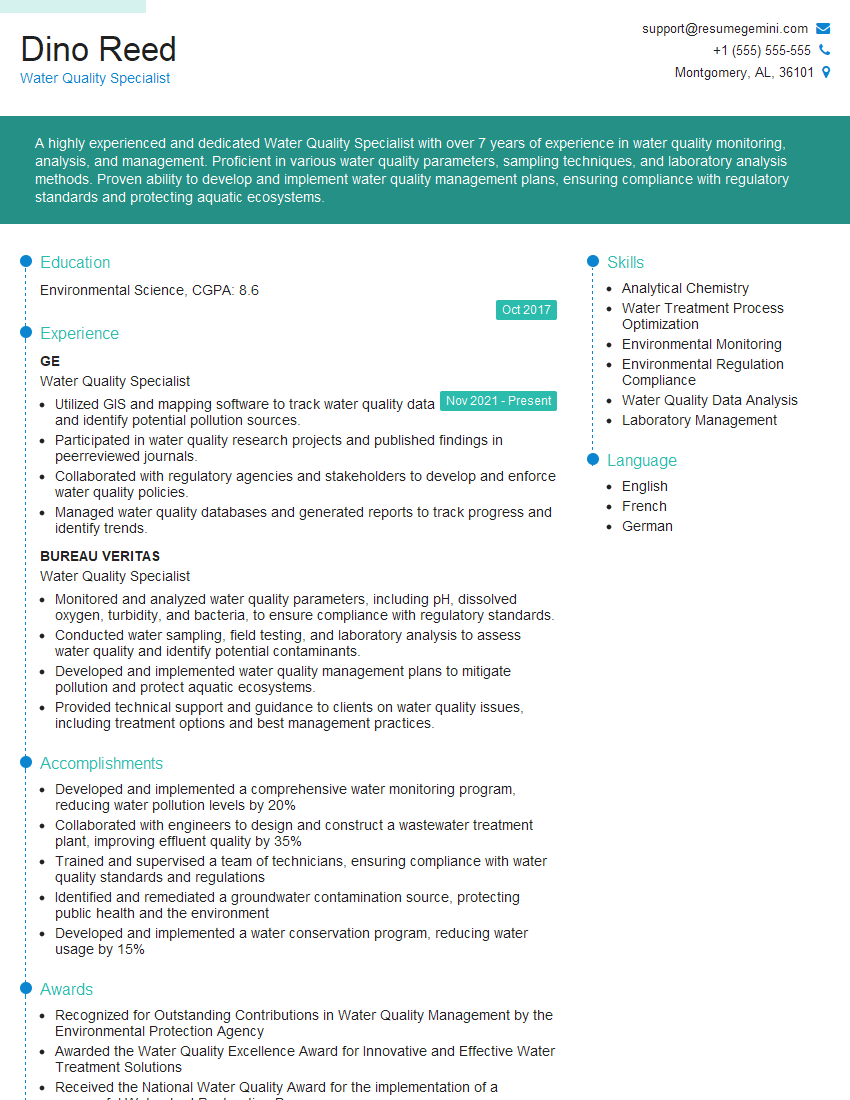
Mastering Erosion and Sediment Control Maintenance opens doors to a rewarding career with excellent growth potential in environmental protection and construction industries. To maximize your job prospects, invest time in crafting an ATS-friendly resume that highlights your skills and experience effectively. ResumeGemini is a trusted resource to help you build a professional and impactful resume that stands out to potential employers. Examples of resumes tailored to Erosion and Sediment Control Maintenance are available to guide you through the process.

Explore more articles
Users Rating of Our Blogs
Share Your Experience
We value your feedback! Please rate our content and share your thoughts (optional).
What Readers Say About Our Blog
Amazing blog
hello,
Our consultant firm based in the USA and our client are interested in your products.
Could you provide your company brochure and respond from your official email id (if different from the current in use), so i can send you the client’s requirement.
Payment before production.
I await your answer.
Regards,
MrSmith
hello,
Our consultant firm based in the USA and our client are interested in your products.
Could you provide your company brochure and respond from your official email id (if different from the current in use), so i can send you the client’s requirement.
Payment before production.
I await your answer.
Regards,
MrSmith
These apartments are so amazing, posting them online would break the algorithm.
https://bit.ly/Lovely2BedsApartmentHudsonYards
Reach out at BENSON@LONDONFOSTER.COM and let’s get started!
Take a look at this stunning 2-bedroom apartment perfectly situated NYC’s coveted Hudson Yards!
https://bit.ly/Lovely2BedsApartmentHudsonYards
Live Rent Free!
https://bit.ly/LiveRentFREE
Interesting Article, I liked the depth of knowledge you’ve shared.
Helpful, thanks for sharing.
Hi, I represent a social media marketing agency and liked your blog
Hi, I represent an SEO company that specialises in getting you AI citations and higher rankings on Google. I’d like to offer you a 100% free SEO audit for your website. Would you be interested?